Mostrando entradas con la etiqueta U of Maryland. Mostrar todas las entradas

sábado, 21 de octubre de 2017

New Research Points to a Genetic Switch That Can Let Our Bodies Talk to Electronics


Shutterstock
IN BRIEF
Our bodies are biologically based and therefore are not equipped to communicate with electronics efficiently. New research could make it possible to genetically engineer our cells to be able to communicate with electronics.

The development has the potential to allow us to eventually build apps that autonomously detect and treat disease.

Microelectronics has transformed our lives. Cellphones, earbuds, pacemakers, defibrillators – all these and more rely on microelectronics’ very small electronic designs and components. Microelectronics has changed the way we collect, process and transmit information.

Such devices, however, rarely provide access to our biological world; there are technical gaps. We can’t simply connect our cellphones to our skin and expect to gain health information. For instance, is there an infection? What type of bacteria or virus is involved? We also can’t program the cellphone to make and deliver an antibiotic, even if we knew whether the pathogen was Staph or Strep. There’s a translation problem when you want the world of biology to communicate with the world of electronics.

The research we’ve just published with colleagues in Nature Communications brings us one step closer to closing that communication gap.
Electronic control of gene expression and cell behaviour in Escherichia coli through redox signalling

ABSTRACT:
The ability to interconvert information between electronic and ionic modalities has transformed our ability to record and actuate biological function. Synthetic biology offers the potential to expand communication ‘bandwidth’ by using biomolecules and providing electrochemical access to redox-based cell signals and behaviours. While engineered cells have transmitted molecular information to electronic devices, the potential for bidirectional communication stands largely untapped. Here we present a simple electrogenetic device that uses redox biomolecules to carry electronic information to engineered bacterial cells in order to control transcription from a simple synthetic gene circuit. Electronic actuation of the native transcriptional regulator SoxR and transcription from the PsoxS promoter allows cell response that is quick, reversible and dependent on the amplitude and frequency of the imposed electronic signals. Further, induction of bacterial motility and population based cell-to-cell communication demonstrates the versatility of our approach and potential to drive intricate biological behaviours.

Source: NATURE COMMS
Rather than relying on the usual molecular signals, like hormones or nutrients, that control a cell’s gene expression, we created a synthetic “switching” system in bacterial cells that recognizes electrons instead. This new technology – a link between electrons and biology – may ultimately allow us to program our phones or other microelectronic devices to autonomously detect and treat disease.

COMMUNICATING WITH ELECTRONS, NOT MOLECULES
One of the barriers scientists have encountered when trying to link microelectronic devices with biological systems has to do with information flow. In biology, almost all activity is made possible by the transfer of molecules like
  • glucose, 
  • epinephrine, 
  • cholesterol and 
  • insulin 
signaling between cells and tissues. Infecting bacteria secrete molecular toxins and attach to our skin using molecular receptors. To treat an infection, we need to detect these molecules to identify the bacteria, discern their activities and determine how to best respond.

Microelectronic devices don’t process information with molecules. A microelectronic device typically has silicon, gold, chemicals like boron or phosphorus and an energy source that provides electrons. By themselves, they’re poorly suited to engage in molecular communication with living cells.

Free electrons don’t exist in biological systems so there’s almost no way to connect with microelectronics. There is, however, a small class of molecules that stably shuttle electrons. These are called “redox” molecules; they can transport electrons, sort of like wire does. The difference is that in wire, the electrons can flow freely to any location within; redox molecules must undergo chemical reactions – oxidation or reduction reactions – to “hand off” electrons.
Bacteria are engineered to respond to a redox molecule activated by an electrode by creating an electrogenetic switch. Bentley and Payne, CC BY-ND

TURNING CELLS ON AND OFF
Capitalizing on the electronic nature of redox molecules, we genetically engineered bacteria to respond to them. We focused on redox molecules that could be “programmed” by the electrode of a microelectronic device. The device toggles the molecule’s oxidation state – it’s either 
  • oxidized (loses an electron) or 
  • reduced (gains an electron). 
The electron is supplied by a typical energy source in electronics like a battery.

We wanted our bacteria cells to turn “on” and “off” due to the applied voltage – voltage that oxidized a naturally occurring redox molecule, pyocyanin.

Electrically oxidizing pyocyanin allowed us to control our engineered cells, turning them on or off so they would synthesize (or not) a fluorescent protein. We could rapidly identify what was happening in these cells because the protein emits a green hue.
(a) Device-mediated electronic input consists of applied potential (blue or red step functions) for controlling the oxidation state of redox-mediators (transduced input). Redox mediators intersect with cells to actuate transcription and, depending on actuated gene-of-interest, control biological output.
(b) The electrogenetic device consists of the region encompassing the gene coding for the SoxR protein and the divergent overlapping PsoxR/PsoxS promoters. A gene of interest is placed downstream of the PsoxS promoter. Pyo (O) initiates gene induction and Fcn(R/O), through interactions with respiratory machinery, allows electronic control of induction level. Fcn (R/O), ferro/ferricyanide; Pyo, pyocyanin. The oxidation state of both redox mediators is colorimetrically indicated (Fcn (O) is yellow pentagon; Fcn (R) is white pentagon; Pyo (O) is blue hexagon; Pyo (R) is grey hexagon). Encircled ‘e−‘ and arrows indicate electron movement.

In another example
, we made bacteria that, when switched on, would swim from a stationary position. Bacteria normally swim in starts and stops referred to as a “run” or a “tumble.” The “run” ensures they move in a straight path. When they “tumble,” they essentially remain in a one spot. A protein called CheZ controls the “run” portion of bacteria’s swimming activity. Our electrogenetic switch turned on the synthesis of CheZ, so that the bacteria could move forward.
Bacteria can naturally join forces as biofilms and work together. CDC/Janice Carr, CC BY
We were also able to electrically signal a community of cells to exhibit collective behavior. We made cells with switches controlling the synthesis of a signaling molecule that diffuses to neighboring cells and, in turn, causes changes in their behavior. Electric current turned on cells that, in turn, “programmed” a natural biological signaling process to alter the behavior of nearby cells. We exploited bacterial quorum sensing – a natural process where bacterial cells “talk” to their neighbors and the collection of cells can behave in ways that benefit the entire community.

Perhaps even more interesting, our groups showed that we could both turn on gene expression and turn it off. By reversing the polarity on the electrode, the oxidized pyocyanin becomes reduced – its inactive form. Then, the cells that were turned on were engineered to quickly revert back to their original state. In this way, the group demonstrated the ability to cycle the electrically programmed behavior on and off, repeatedly.

Interestingly, the on and off switch enabled by pyocyanin was fairly weak. By including another redox molecule, ferricyanide, we found a way to amplify the entire system so that the gene expression was very strong, again on and off. The entire system was robust, repeatable and didn’t negatively affect the cells.

SENSING AND RESPONDING ON A CELLULAR LEVEL
Armed with this advance, devices could potentially electrically stimulate bacteria to make therapeutics and deliver them to a site. For example, imagine swallowing a small microelectronic capsule that could record the presence of a pathogen in your GI tract and also contain living bacterial factories that could make an antimicrobial or other therapyall in a programmable autonomous system.

This current research ties into previous work done here at the University of Maryland where researchers had discovered ways to “record” biological information, by sensing the biological environment, and based on the prevailing conditions, “write” electrons to devices. We and our colleagues “sent out” redox molecules from electrodes, let those molecules interact with the microenvironment near the electrode and then drew them back to the electrode so they could inform the device on what they’d seen. This mode of “molecular communication” is somewhat analogous to sonar, where redox molecules are used instead of sound waves.

These molecular communication efforts were used to identify pathogens, monitor the “stress” in blood levels of individuals with schizophrenia and even determine the differences in melanin from people with red hair. For nearly a decade, the Maryland team has developed methodologies to exploit redox molecules to interrogate biology by directly writing the information to devices with electrochemistry.

Perhaps it is now time to integrate these technologies:

  • Use molecular communication to sense biological function and transfer the information to a device. 
  • Then use the device – maybe a small capsule or perhaps even a cellphone – to program bacteria to make chemicals and other compounds that issue new directions to the biological system. 

It may sound fantastical, many years away from practical uses, but our team is working hard on such valuable applications…stay tuned!

ORIGINAL: Futurism

sábado, 28 de mayo de 2016

UCI chemists create battery technology with off-the-charts charging capacity

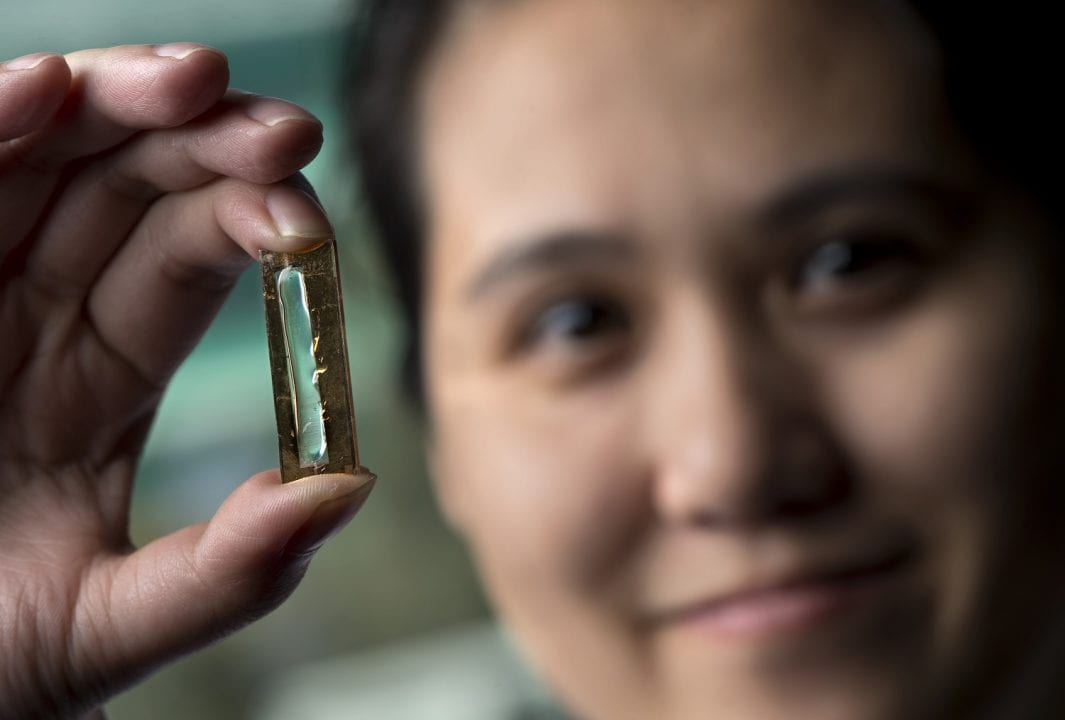
UCI doctoral candidate Mya Le Thai has developed a nanowire-based technology that allows lithium-ion batteries to be recharged hundreds of thousands of times. Steve Zylius / UCI 
All powered up

Irvine, Calif., April 20, 2016 — University of California, Irvine researchers have invented nanowire-based battery material that can be recharged hundreds of thousands of times, moving us closer to a battery that would never require replacement. The breakthrough work could lead to commercial batteries with greatly lengthened lifespans for computers, smartphones, appliances, cars and spacecraft.

Scientists have long sought to use nanowires in batteries. Thousands of times thinner than a human hair, they’re highly conductive and feature a large surface area for the storage and transfer of electrons. However, these filaments are extremely fragile and don’t hold up well to repeated discharging and recharging, or cycling. In a typical lithium-ion battery, they expand and grow brittle, which leads to cracking.

UCI researchers have solved this problem by coating a gold nanowire in a manganese dioxide shell and encasing the assembly in an electrolyte made of a Plexiglas-like gel. The combination is reliable and resistant to failure.

The study leader, UCI doctoral candidate Mya Le Thai, cycled the testing electrode up to 200,000 times over three months without detecting any loss of capacity or power and without fracturing any nanowires. The findings were published today in the American Chemical Society’s Energy Letters.

Hard work combined with serendipity paid off in this case, according to senior author Reginald Penner.

Mya was playing around, and she coated this whole thing with a very thin gel layer and started to cycle it,” said Penner, chair of UCI’s chemistry department. “She discovered that just by using this gel, she could cycle it hundreds of thousands of times without losing any capacity.

That was crazy,” he added, “because these things typically die in dramatic fashion after 5,000 or 6,000 or 7,000 cycles at most.”


The researchers think the goo plasticizes the metal oxide in the battery and gives it flexibility, preventing cracking.

The coated electrode holds its shape much better, making it a more reliable option,” Thai said. “This research proves that a nanowire-based battery electrode can have a long lifetime and that we can make these kinds of batteries a reality.

The study was conducted in coordination with the Nanostructures for Electrical Energy Storage Energy Frontier Research Center at the University of Maryland, with funding from the Basic Energy Sciences division of the U.S. Department of Energy.

About the University of California, Irvine: Currently celebrating its 50th anniversary, UCI is the youngest member of the prestigious Association of American Universities. The campus has produced three Nobel laureates and is known for its academic achievement, premier research, innovation and anteater mascot. Led by Chancellor Howard Gillman, UCI has more than 30,000 students and offers 192 degree programs. It’s located in one of the world’s safest and most economically vibrant communities and is Orange County’s second-largest employer, contributing $4.8 billion annually to the local economy. For more on UCI, visit www.uci.edu.

Media access: Radio programs/stations may, for a fee, use an on-campus ISDN line to interview UC Irvine faculty and experts, subject to availability and university approval. For more UC Irvine news, visit news.uci.edu. Additional resources for journalists may be found at communications.uci.edu/for-journalists.

ORIGINAL: UCI.edu
ON APRIL 20, 2016

viernes, 18 de septiembre de 2015

3-D printed guide helps regrow complex nerves after injury

University of Minnesota. Scientists have developed a first-of-its-kind, 3-D printed guide that helps regrow both the sensory and motor functions of complex nerves after injury. The groundbreaking research has the potential to help more than 200,000 people annually who experience nerve injuries or disease.
This is a 3-D printed nerve regeneration pathway implanted in a rat helped to improve walking in 10 to 12 weeks after implantation. Credit: University of Minnesota College of Science and Engineering

A national team of researchers has developed a first-of-its-kind, 3D-printed guide that helps regrow both the sensory and motor functions of complex nerves after injury. The groundbreaking research has the potential to help more than 200,000 people annually who experience nerve injuries or disease.

Collaborators on the project are from the University of Minnesota, Virginia Tech, University of Maryland, Princeton University, and Johns Hopkins University.

Nerve regeneration is a complex process. Because of this complexity, regrowth of nerves after injury or disease is very rare, according to the Mayo Clinic. Nerve damage is often permanent. Advanced 3D printing methods may now be the solution.

In a new study, published today in the journal Advanced Functional Materials, researchers used a combination of 3D imaging and 3D printing techniques to create a custom silicone guide implanted with biochemical cues to help nerve regeneration. The guide's effectiveness was tested in the lab using rats.

To achieve their results, researchers used a 3D scanner to reverse engineer the structure of a rat's sciatic nerve. They then used a specialized, custom-built 3D printer to print a guide for regeneration. Incorporated into the guide were 3D-printed chemical cues to promote both motor and sensory nerve regeneration. The guide was then implanted into the rat by surgically grafting it to the cut ends of the nerve. Within about 10 to 12 weeks, the rat's ability to walk again was improved.

"This represents an important proof of concept of the 3D printing of custom nerve guides for the regeneration of complex nerve injuries," said University of Minnesota mechanical engineering professor Michael McAlpine, the study's lead researcher. "Someday we hope that we could have a 3D scanner and printer right at the hospital to create custom nerve guides right on site to restore nerve function."

Scanning and printing takes about an hour, but the body needs several weeks to regrow the nerves. McAlpine said previous studies have shown regrowth of linear nerves, but this is the first time a study has shown the creation of a custom guide for regrowth of a complex nerve like the Y-shaped sciatic nerve that has both sensory and motor branches.

"The exciting next step would be to implant these guides in humans rather than rats," McAlpine said. In cases where a nerve is unavailable for scanning, McAlpine said there could someday be a "library" of scanned nerves from other people or cadavers that hospitals could use to create closely matched 3D-printed guides for patients.

In addition to McAlpine, major contributors to the research team include Blake N. Johnson, Virginia Tech; Xiaofeng Jia, University of Maryland and Johns Hopkins University; and Karen Z. Lancaster, Esteban Engel, and Lynn W. Enquist, Princeton University.

This research was funded by grants from the National Institutes of Health, the Defense Advanced Research Projects Agency, the Maryland Stem Cell Research Fund, and the Grand Challenges Program at Princeton University.

To read more about the study entitled "3D Printed Anatomical Nerve Regeneration Pathways," visit the Advanced Functional Materials website.

Story Source:
The above post is reprinted from materials provided by University of Minnesota
Note: Materials may be edited for content and length.

Journal Reference:
Blake N. Johnson, Karen Z. Lancaster, Gehua Zhen, Junyun He, Maneesh K. Gupta, Yong Lin Kong, Esteban A. Engel, Kellin D. Krick, Alex Ju, Fanben Meng, Lynn W. Enquist, Xiaofeng Jia, Michael C. McAlpine. 3D Printed Anatomical Nerve Regeneration Pathways. Advanced Functional Materials, 2015; 


ORIGINAL: ScienceDaily
September 18, 2015

viernes, 5 de junio de 2015

Computer invents new scientific theory without human help for the first time

The mystery of how flatworms regenerate has been solved independently by a computer(Max Delbrück Center)
One of biology's biggest mysteries - how a sliced up flatworm can regenerate into new organisms - has been solved independently by a computer. The discovery marks the first time that a computer has come up with a new scientific theory without direct human help.
The computer invented an accurate model of the inner-workings of a flatworm(UoM)
Computer scientists from the University of Maryland programmed a computer to randomly predict how a worm's genes formed a regulatory network capable of regeneration, before evaluating these predictions through simulation.

After three days of continuously predicting, simulating and evaluating, the computer was able to come up with a core genetic network that explained how the worm's regeneration took place.
The study by Daniel Lobo and Michael Levin, Inferring Regulatory Networks from Experimental Morphological Phenotypes, was published on Thursday (4 June) in the journal PLOS.

"It's not just statistics or number-crunching," Levin told Popular Mechanics. "The invention of models to explain what nature is doing is the most creative thing scientists do. This is the heart and soul of the scientific enterprise. None of us could have come up with this model; we (as a field) have failed to do so after over a century of effort."

Lobo and Levin are now applying the trial-and-error approach to creating scientific models and theories in different areas, including cancer research.

The pair believe that the approach can be used to better understand the process of metastasis, which causes cancer to spread through the body.

However, despite the computer only taking three days to create the worm model, it took the scientists several years to put together the program.
In order to transfer the computer's abilities to other areas, massive databases of scientific experiments would need to be prepared in order to have enough raw material for discoveries to be made.

"This problem, and our approach, is nearly universal," Levin said. "It can be used with anything, where functional data exist but the underlying mechanism is hard to guess.

"As long as you tweak the formal language, build the database of facts in your field, and provide an appropriate simulator, the whole scheme can be used for many, man applications."

ORIGINAL: International Business Times
June 5, 2015

domingo, 17 de mayo de 2015

A Sharp Spike in Honeybee Deaths Deepens a Worrisome Trend

Researchers from Oregon State University testing bees last August for the effects of pesticides. CreditNatalie Behring/Getty Images
A prolonged and mysterious die-off of the nation’s honeybees, a trend worrisome both to beekeepers and to farmers who depend on the insects to pollinate their crops, apparently worsened last year.

In an annual survey released on Wednesday by the Bee Informed Partnership, a consortium of universities and research laboratories, about 5,000 beekeepers reported losing 42.1 percent of their colonies in the 12-month period that ended in April. That is well above the 34.2 percent loss reported for the same period in 2013 and 2014, and it is the second-highest loss recorded since year-round surveys began in 2010.

Most striking, however, was that honeybee deaths spiked last summer, exceeding winter deaths for the first time. Commercial beekeepers, some of whom rent their hives to farmers during pollination seasons, were hit especially hard, the survey’s authors stated.

We expect the colonies to die during the winter, because that’s a stressful season,” said Dennis vanEngelsdorp, an assistant entomology professor at the University of Maryland who directs the survey for the bee partnership. “What’s totally shocking to me is that the losses in summer, which should be paradise for bees, exceeded the winter losses.”

Bees at the Vermont Farm Show. Honeybee deaths last summer exceeded winter deaths for the first time. CreditAndy Duback/Associated Press
Bees are not in danger of extinction, but their health is of major concern to agriculture, where honeybees’ pollination services are estimated to be worth $10 billion to $15 billion a year.

Nobody knows with certainty why honeybee deaths are rising. Beekeepers once expected to lose perhaps 10 percent of their bees in an average year. But deaths began to spike in the middle of the past decade, when a phenomenon in which bees deserted their hives and died en masse, later named colony collapse disorder, began sweeping hives worldwide.

Those mass die-offs have abated somewhat in recent years, experts say, but colonies remain in poor health, and overall death rates remain much higher than in the past.

Dr. vanEngelsdorp said increasingly poor nutrition could be a factor in the rising summer death rate. Rising crop prices have led farmers to plow and plant millions of acres of land that was once home to wildflowers; since 2007, an Agriculture Department program that pays farmers to put sensitive and erosion-prone lands in a conservation reserve has lost an area roughly equal to half of Indiana, and budget cuts promise to shrink the program further. Dr. vanEngelsdrop and other scientists cite two other factors at work in the rising death rate: a deadly parasite, the varroa mite, and pesticides.

In recent years, some experts have focused on neonicotinoids, a class of pesticides used almost universally on some major crops in the United States. The European Commission has banned the use of three variants of the pesticide on flowering plants, citing risks to bees, and questioned whether they should be used at all.


U.S. & POLITICS RETRO REPORT BY RetroReport 9:39The Mystery of the Missing Bees

The Mystery of the Missing Bees
The mystery of Colony Collapse Disorder has brought honeybees into the public eye. But the story of their plight — and its impact — is more complicated. By RetroReport on Publish Date September 28, 2014. 

The Environmental Protection Agency said last month that it was unlikely to approve any new uses of the pesticides until more tests on the risks to bees and other pollinators have been completed.

Neonicotinoid manufacturers say that the pesticides are much safer than others they have supplanted, and that in any case, they are safe when used according to instructions.

In a news release, an entomologist at one of the major neonicotinoid manufacturers, Bayer CropScience LP, called the survey results good news because wintertime bee deaths appeared to have stabilized at a lower rate than in the past. The entomologist, Richard Rogers of the company’s Bee Care Center in Research Triangle Park, N.C., said that scientists had yet to establish a normal range for summer bee deaths.

The annual survey released on Wednesday did not directly address the causes of honeybee deaths. But it said varroa mites were a much bigger problem among so-called backyard beekeepers, who keep fewer than 50 hives, than among commercial beekeepers, who are probably on higher alert for deadly infestations.

The survey’s authors called the spike in summer honeybee deaths troubling, noting that in the past, more bees have died during the winter months than in good weather.

The Bee Informed Partnership has collected data on winter bee deaths since 2006, and it expanded its survey to cover summer deaths in 2010. The surveys are financed largely by the Agriculture Department.

Correction: May 15, 2015 
An earlier version of this article misstated the years that the Bee Informed Partnership started to collect data on bee deaths. Data collection started in 2006 for winter deaths and 2010 for summer deaths, not the other way around.

ORIGINAL: New York Times

MAY 13, 2015

domingo, 23 de marzo de 2014

Study: industrial civilisation headed for 'irreversible collapse'? (Updated)

NOTE: NASA Clarifies Its Role in Civilization-Collapse Study
NASA is distancing itself from a new study that investigates how unsustainable resource exploitation and rising income inequality could potentially lead to the collapse of human civilization as we know it.
NASA officials released this statement on the study today (March 20): "A soon-to-be published research paper, 'Human and Nature Dynamics (HANDY): Modeling Inequality and Use of Resources in the Collapse or Sustainability of Societies' by University of Maryland researchers Safa Motesharrei and Eugenia Kalnay, and University of Minnesota's Jorge Rivas, was not solicited, directed or reviewed by NASA. It is an independent study by the university researchers utilizing research tools developed for a separate NASA activity. As is the case with all independent research, the views and conclusions in the paper are those of the authors alone. NASA does not endorse the paper or its conclusions."

Natural and social scientists develop new model of how 'perfect storm' of crises could unravel global system
This Nasa Earth Observatory image shows a storm system circling around an area of extreme low pressure in 2010, which many scientists attribute to climate change. Photograph: AFP/Getty Images

A new study sponsored by Nasa's Goddard Space Flight Center has highlighted the prospect that global industrial civilisation could collapse in coming decades due to unsustainable resource exploitation and increasingly unequal wealth distribution.

Noting that warnings of 'collapse' are often seen to be fringe or controversial, the study attempts to make sense of compelling historical data showing that "the process of rise-and-collapse is actually a recurrent cycle found throughout history." Cases of severe civilisational disruption due to "precipitous collapse - often lasting centuries - have been quite common."

The research project is based on a new cross-disciplinary 'Human And Nature DYnamical' (HANDY) model, led by applied mathematician Safa Motesharrei of the US National Science Foundation-supported National Socio-Environmental Synthesis Center, in association with a team of natural and social scientists. The study based on the HANDY model has been accepted for publication in the peer-reviewed Elsevier journal, Ecological Economics.

It finds that according to the historical record even advanced, complex civilisations are susceptible to collapse, raising questions about the sustainability of modern civilisation:

"The fall of the Roman Empire, and the equally (if not more) advanced Han, Mauryan, and Gupta Empires, as well as so many advanced Mesopotamian Empires, are all testimony to the fact that advanced, sophisticated, complex, and creative civilizations can be both fragile and impermanent."

By investigating the human-nature dynamics of these past cases of collapse, the project identifies the most salient interrelated factors which explain civilisational decline, and which may help determine the risk of collapse today: namely,  
  • Population, 
  • Climate, 
  • Water, 
  • Agriculture, and  
  • Energy.

These factors can lead to collapse when they converge to generate two crucial social features:
  • "the stretching of resources due to the strain placed on the ecological carrying capacity"; and 
  • "the economic stratification of society into Elites [rich] and Masses (or "Commoners") [poor]
These social phenomena have played "a central role in the character or in the process of the collapse," in all such cases over "the last five thousand years."

Currently, high levels of economic stratification are linked directly to overconsumption of resources, with "Elites" based largely in industrialised countries responsible for both:

"... accumulated surplus is not evenly distributed throughout society, but rather has been controlled by an elite. The mass of the population, while producing the wealth, is only allocated a small portion of it by elites, usually at or just above subsistence levels."

The study challenges those who argue that technology will resolve these challenges by increasing efficiency:

"Technological change can raise the efficiency of resource use, but it also tends to raise both per capita resource consumption and the scale of resource extraction, so that, absent policy effects, the increases in consumption often compensate for the increased efficiency of resource use."

Productivity increases in agriculture and industry over the last two centuries has come from "increased (rather than decreased) resource throughput," despite dramatic efficiency gains over the same period.

Modelling a range of different scenarios, Motesharri and his colleagues conclude that under conditions "closely reflecting the reality of the world today... we find that collapse is difficult to avoid." In the first of these scenarios, civilisation:


".... appears to be on a sustainable path for quite a long time, but even using an optimal depletion rate and starting with a very small number of Elites, the Elites eventually consume too much, resulting in a famine among Commoners that eventually causes the collapse of society. It is important to note that this Type-L collapse is due to an inequality-induced famine that causes a loss of workers, rather than a collapse of Nature."

Another scenario focuses on the role of continued resource exploitation, finding that "with a larger depletion rate, the decline of the Commoners occurs faster, while the Elites are still thriving, but eventually the Commoners collapse completely, followed by the Elites."

In both scenarios, Elite wealth monopolies mean that they are buffered from the most "detrimental effects of the environmental collapse until much later than the Commoners", allowing them to "continue 'business as usual' despite the impending catastrophe." The same mechanism, they argue, could explain how "historical collapses were allowed to occur by elites who appear to be oblivious to the catastrophic trajectory (most clearly apparent in the Roman and Mayan cases)."

Applying this lesson to our contemporary predicament, the study warns that:

"While some members of society might raise the alarm that the system is moving towards an impending collapse and therefore advocate structural changes to society in order to avoid it, Elites and their supporters, who opposed making these changes, could point to the long sustainable trajectory 'so far' in support of doing nothing."

However, the scientists point out that the worst-case scenarios are by no means inevitable, and suggest that appropriate policy and structural changes could avoid collapse, if not pave the way toward a more stable civilisation.

The two key solutions are to
  • reduce economic inequality so as to ensure fairer distribution of resources, and 
  • to dramatically reduce resource consumption by relying on less intensive renewable resources and reducing population growth:
"Collapse can be avoided and population can reach equilibrium if the per capita rate of depletion of nature is reduced to a sustainable level, and if resources are distributed in a reasonably equitable fashion."

The NASA-funded HANDY model offers a highly credible wake-up call to governments, corporations and business - and consumers - to recognise that 'business as usual' cannot be sustained, and that policy and structural changes are required immediately.

Although the study is largely theoretical, a number of other more empirically-focused studies - by KPMG and the UK Government Office of Science for instance - have warned that the convergence of food, water and energy crises could create a 'perfect storm' within about fifteen years. But these 'business as usual' forecasts could be very conservative.

Dr Nafeez Ahmed is executive director of the Institute for Policy Research & Development and author of A User's Guide to the Crisis of Civilisation: And How to Save It among other books. Follow him on Twitter @nafeezahmed

ORIGINAL: The Guardian

lunes, 3 de febrero de 2014

Global Forest Change


Results from time-series analysis of 654,178 Landsat images in characterizing forest extent and change, 2000–2012.

Trees are defined as all vegetation taller than 5m in height and are expressed as a percentage per output grid cell as ‘2000 Percent Tree Cover’. ‘Forest Loss’ is defined as a stand-replacement disturbance, or a change from a forest to non-forest state. ‘Forest Gain’ is defined as the inverse of loss, or a non-forest to forest change entirely within the study period.Forest Loss Year’ is a disaggregation of total ‘Forest Loss’ to annual time scales.

Reference 2000 and 2012 imagery are median observations from a set of quality assessment-passed growing season observations.

ORIGINAL: Earth Engine Partners

by Hansen, Potapov, Moore, Hancher et al.

miércoles, 24 de julio de 2013

Scientists discover what’s killing the bees and it’s worse than you thought

ORIGINAL: Quartz
By Todd Woody @greenwombat 
2013/07/24
Outlawing a type of insecticides is not a panacea. AP Photo/Ben Margot
As we’ve written before, the mysterious mass die-off of honey bees that pollinate $30 billion worth of crops in the US has so decimated America’s apis mellifera population that one bad winter could leave fields fallow. Now, a new study has pinpointed some of the probable causes of bee deaths and the rather scary results show that averting beemageddon will be much more difficult than previously thought.

Scientists had struggled to find the trigger for so-called Colony Collapse Disorder (CCD) that has wiped out an estimated 10 million beehives, worth $2 billion, over the past six years. Suspects have included pesticides, disease-bearing parasites and poor nutrition. But in a first-of-its-kind study published today in the journal PLOS ONE, scientists at the University of Maryland and the US Department of Agriculture have identified a witch’s brew of pesticides and fungicides contaminating pollen that bees collect to feed their hives. The findings break new ground on why large numbers of bees are dying though they do not identify the specific cause of CCD, where an entire beehive dies at once.

When researchers collected pollen from hives on the east coast pollinating cranberry, watermelon and other crops and fed it to healthy bees, those bees showed a significant decline in their ability to resist infection by a parasite called Nosema ceranae. The parasite has been implicated in Colony Collapse Disorder though scientists took pains to point out that their findings do not directly link the pesticides to CCD. The pollen was contaminated on average with nine different pesticides and fungicides though scientists discovered 21 agricultural chemicals in one sample. Scientists identified eight ag chemicals associated with increased risk of infection by the parasite.

Most disturbing, bees that ate pollen contaminated with fungicides were three times as likely to be infected by the parasite. Widely used, fungicides had been thought to be harmless for bees as they’re designed to kill fungus, not insects, on crops like apples.

There’s growing evidence that fungicides may be affecting the bees on their own and I think what it highlights is a need to reassess how we label these agricultural chemicals,Dennis vanEngelsdorp, the study’s lead author, told Quartz.

Labels on pesticides warn farmers not to spray when pollinating bees are in the vicinity but such precautions have not applied to fungicides.

Bee populations are so low in the US that it now takes 60% of the country’s surviving colonies just to pollinate one California crop, almonds. And that’s not just a west coast problem—California supplies 80% of the world’s almonds, a market worth $4 billion.

In recent years, a class of chemicals called neonicotinoids has been linked to bee deaths and in April regulators banned the use of the pesticide for two years in Europe where bee populations have also plummeted. But vanEngelsdorp, an assistant research scientist at the University of Maryland, says the new study shows that the interaction of multiple pesticides is affecting bee health.

The pesticide issue in itself is much more complex than we have led to be believe,” he says. “It’s a lot more complicated than just one product, which means of course the solution does not lie in just banning one class of product.

The study found another complication in efforts to save the bees: US honey bees, which are descendants of European bees, do not bring home pollen from native North American crops but collect bee chow from nearby weeds and wildflowers. That pollen, however, was also contaminated with pesticides even though those plants were not the target of spraying.

It’s not clear whether the pesticides are drifting over to those plants but we need take a new look at agricultural spraying practices,” says vanEngelsdorp.