Mostrando entradas con la etiqueta Protección. Mostrar todas las entradas

domingo, 2 de noviembre de 2014

Bolivia passes "Law of Mother Earth" which gives rights to our planet as a living system


The Law of Mother Earth ("Ley de Derechos de La Madre Tierra") holds the land as sacred and holds it as a living system with rights to be protected from exploitation, and creates 11 distinguished rights for the environment. It was passed by Bolivia's Plurinational Legislative Assembly. This 10 article law is derived from the first part of a longer draft bill, drafted and released by the Pact of Unity by November 2010. Can we please spread this law? There has to be a way for the free market to interoperate with reverence for this planet. Period.

In accordance with the philosophy of Pachamama, it states, "She is sacred, fertile and the source of life that feeds and cares for all living beings in her womb. She is in permanent balance, harmony and communication with the cosmos. She is comprised of all ecosystems and living beings, and their self-organisation."

"It makes world history. Earth is the mother of all," said Vice-President Alvaro García Linera. "It establishes a new relationship between man and nature, the harmony of which must be preserved as a guarantee of its regeneration."

The law enumerates seven specific rights to which Mother Earth and her constituent life systems, including human communities, are entitled to:

  1. To life: It is the right to the maintenance of the integrity of life systems and natural processes which sustain them, as well as the capacities and conditions for their renewal
  2. To the Diversity of Life: It is the right to the preservation of the differentiation and variety of the beings that comprise Mother Earth, without being genetically altered, nor artificially modified in their structure, in such a manner that threatens their existence, functioning and future potential
  3. To water: It is the right of the preservation of the quality and composition of water to sustain life systems and their protection with regards to contamination, for renewal of the life of Mother Earth and all its components
  4. To clean air: It is the right of the preservation of the quality and composition of air to sustain life systems and their protection with regards to contamination, for renewal of the life of Mother Earth and all its components
  5. To equilibrium: It is the right to maintenance or restoration of the inter-relation, interdependence, ability to complement and functionality of the components of Mother Earth, in a balanced manner for the continuation of its cycles and the renewal of its vital processes
  6. To restoration: It is the right to the effective and opportune restoration of life systems affected by direct or indirect human activities
  7. To live free of contamination: It is the right for preservation of Mother Earth and any of its components with regards to toxic and radioactive waste generated by human activities

Sources:

ORIGINAL: Minds
October 19, 2014

sábado, 8 de febrero de 2014

20 more Orangutans from Nyaru Menteng are are going back Home!

February 7, 2014| Orangutan Release Day 1

What a lovely morning in Nyaru Menteng! Kicking off 2014, today 12 rehabilitant orangutans from Nyaru Menteng started the journey to their real home in the Bukit Batikap Conservation Forest

Despite heavy rainfall in the area surrounding the Quarantine Enclosure in Nyaru Menteng, the orangutan release team was high in spirits, excited to start 2014 the way they ended 2013; releasing more orangutans! The first day of the orangutan releases started with the medical team’s preparation. At 4.15 in the morning the medical team and technicians gathered their equipment from the Nyaru Menteng Clinic and proceeded to the Quarantine Enclosure. It was dark and the rain was still drizzling so preparations for the tranquiliser gun and sedation doses took place under torch light. Vet Agus Fahroni coordinated the vet team who were ready to sedate the orangutans. Before starting the process, the team gathered for the final briefing and group prayer for today’s success.


Today, we were going to release 12 orangutans to Bukit Batikap Conservation Forest. They were divided into two groups; the first group consisted of Zena and her son William, Kitty and her daughter Kate, Dita and her daughter Halt, and Noor. While the second group comprised Judy and her son named Son, Hamlet, Joys, and Sarita.

Zena, William’s lovely Mother, was the first to be sedated, followed by Dita, Noor, and Kitty; the young ones William, Kate, and Halt didn’t need sedation.


Sucessfully sedated, they were carefully carried to their transport cages which had been labeled based on their passengers. Zena finally fell asleep and together with William they were the first to be moved to their transport cage. Meanwhile the effects of sedation started kicking in on Noor and she was immediately moved to her transport cage. Dita had also already fallen asleep by then and was ready to be moved. Her little daughter Halt however, was a little bit nervous when her Mother was about to be moved and ran away from her screaming. The vets and technicians tried to calm the tiny two year old. Dita was moved and tailing closely behind was technician Mulyono who was carrying Halt. The sedation worked a bit slower on Kitty. The Medical Team decided to add to the initial dose. After a while she too was finally asleep and moved to her transport cage with her daughter Kate. Just a moment before the cage door was closed, Kitty was given the anti-sedation (reversal) to wake her up.


Halt

All transport cages were delivered by truck to Tjilik Riwut airport in Palangka Raya to be flown to Beringin airport in Muara Teweh.


Meanwhile in Muara Teweh, the weather was reported clear. The team in Muara Teweh was ready to welcome the 12 orangutans from Palangka Raya. The helicopter was also ready to travel to Beringin airport to meet the orangutans as soon as they arrived.


The aircraft which would transport the orangutans had been on standby at Tjilik Riwut airport in Palangka Raya since yesterday. The truck arrived at the airport at 7 in the morning. Soon after, we received the signal to start the loading process.


 This process took around ten minutes. 


Then they were ready to fly!

Beringin Airport Muara Teweh

09.10, the Twin Otter airplane arrived in Beringin airport in Muara Teweh bringing its passengers Kitty and Kate, Zena and William, Dita and Halt, Noor, a representative from Central Kalimantan Conservation and Natural Resources Authority, BOSF Advisor Jacqui Sunderland-Groves, Vet Agus Fahroni, and Technician and HLO Abdul Azis. The process of unloading was immediately completed, and the orangutans were checked by Vet Agus and each given milk. The cargo net was ready and the transport cages were positioned and safely wrapped in it. And off to Batikap!


Palangka Raya: Second Group Preparation


lunes, 4 de noviembre de 2013

Why Should We Care About Animals? | Brian May | Oxford Union

Dr Brian May answers an audience members question during Q & A session after his speech "Save The Badgers" (full speech video at the end) - Oxford Union Society


Brian May says that there is no balance in nature only change in nature. He highlights his view is that every ONE animal matters, not just looking at it from a species wide point of view. Any creature that has feeling is worthy of respect and care.
 

ABOUT BRIAN MAY:
Brian May, musician and astrophysicist, is most widely known as the guitarist, songwriter and occasional singer of the rock band Queen.

He was appointed a CBE in 2005 for services to the music industry and for his charity work. He earned a PhD in astrophysics from Imperial College in 2007 and is currently serving as the 4th Chancellor of Liverpool John Moores University.  

Planet Rock voted May the 7th greatest guitarist of all time, and he was ranked at No. 26 on Rolling Stone magazine's list of the 100 Greatest Guitarists of All Time. In 2012, May was ranked the 2nd greatest guitarist of all time by a Guitar World magazine readers poll.

ABOUT THE OXFORD UNION SOCIETY:

The Union is the world's most prestigious debating society, with an unparalleled reputation for bringing international guests and speakers to Oxford. It has been established for 189 years, aiming to promote debate and discussion not just in Oxford University, but across the globe.


SUBSCRIBE for more speakers ► http://is.gd/OxfordUnion
Sign the Petition to SAVE THE BADGERS @ http://www.save-me.org.uk/
Oxford Union Website @ http://www.oxford-union.org/

martes, 30 de julio de 2013

La ciudad de Buenos Aires promueve el empleo "verde"

ORIGINAL: Noticias Ambientales
26/ 07/ 2013 


La Agencia de Protección Ambiental firmó un convenio con la fundación UOCRA 


La Agencia de Protección Ambiental del Gobierno de la Ciudad de Buenos Aires firmó un convenio con la Fundación UOCRA para llevar adelante un proyecto de educación ambiental laboral que promoverá el empleo verde en la Ciudad de Buenos Aires, y posiciona a la Ciudad como la primera ciudad del país trabajando para una economía verde.

El convenio incluye capacitar a recursos humanos del Gobierno de la Ciudad de Buenos Aires en la construcción de Normas de Competencias Laboral en Empleo Verde lo que permitirá definir los conocimientos y habilidades que se requieren para el desempeño eficiente de los diferentes empleos verdes en la Ciudad. En este sentido, el convenio también prevé que la Fundación UOCRA capacite los primeros trabajadores verdes de la Ciudad bajo este nuevo paradigma que exige la sustentabilidad.

Estas capacitaciones serán gratuitas para los Ciudadanos de la Ciudad de Buenos Aires, ya que son financiadas mediante un premio recibido por la Ciudad otorgado por la Red Metrópolis al Centro de Economía Verde de la Agencia. Las primeras capacitaciones serán para formar instaladores para la provisión de agua caliente sanitaria a través de sistemas solares térmicos y para la provisión de electricidad a través de sistemas solares fotovoltaicos.

Todas estas acciones están enmarcadas bajo las áreas de Educación Ambiental y del Centro de Economía Verde de la Agencia de Protección Ambiental de la Ciudad de Buenos Aires con el objeto de introducir en todos los niveles del sistema educativo, la educación ambiental para la formación de ciudadanos responsables y profesionales comprometidos con el ambiente y entendiendo que la Economía Verde es el vehículo para el desarrollo sustentable.

Según la Organización Mundial del Trabajo, el cambio climático conducirá, a mediano y largo plazo, a un grave trastorno de la actividad económica y social en muchos sectores en todos los continentes. El cambio climático en sí mismo, el proceso de adaptación y los esfuerzos para frenarlo reduciendo las emisiones, tienen repercusiones de gran alcance en el desarrollo económico y social, en los modelos de producción y, por lo tanto, en el empleo, los ingresos y la reducción de la pobreza.

Estas repercusiones implican tanto mayores riesgos como oportunidades para los trabajadores en todos los países, pero en particular para los más vulnerables en los países menos desarrollados. Se estima que el mercado global de productos y servicios ambientales debería aumentar un 100% en los próximos años, alcanzando los 2.740 millones de dólares para el año 2020. La mitad de este mercado se refiere a proyectos de eficiencia energética y el resto a la movilidad sostenible, al suministro de agua segura y de servicios sanitarios y a la gestión de residuos y emisiones.

domingo, 28 de julio de 2013

Teens seek invention protection

March 20, 2013

Increasingly, young researchers seek patents to defend their innovations against theft
Credit: Stuart Burdford / iStock Photo
Naomi Chetan Shah didn’t think much about the air inside her Portland, Ore., home until she was 11. Then the sixth grader began to wonder why her father and brother always had watery eyes and runny noses. They suffered all year. That seemed to rule out seasonal allergies often caused by the pollen from blooming flowers, trees, grasses and weeds.

It took Naomi until high school to sleuth out what caused her family’s health problems. She even invented a computer program to help others diagnose similar problems. Her project earned her a spot as a finalist in this year’s Intel Science Talent Search (STS). This premier research competition is for students in their last year of high school. The Society for Science & the Public (which also publishes Science News for Kids) developed and runs the prestigious science competition.

While Naomi, now 17, hopes her computer program can help others, she doesn’t want anyone to steal her invention either. So she’s seeking to patent it. Governments offer patents for new inventions. These can include new processes, devices, substances or even plant varieties. Anyone who develops such a novelty can submit an application to the government.

Explainer

What is a patent?
In the United States, the Patent and Trademark Office reviews these applications. If this agency does grant Naomi a patent, it will give her the legal right to keep anyone else from making, using or selling her invention in the United States.

For a young inventor, a patent attests that his or her achievement is unprecedented, says John F. Ritter. He is a patent lawyer in New Jersey, and directs Princeton University’s Office of Technology Licensing.

While adult engineers, scientists and other inventors submit most patent applications, there is no age limit. Many young inventors seek patents to protect their inventions, also known as “intellectual property.” The Patent Office has issued at least one patent to a 5-year-old!

This year, 17 of the INTEL STS semifinalists and finalists, including Naomi, either have applied for a patent or have already received one. Additionally, another 20 semifinalists and finalists plan to seek a patent on their inventions.
Naomi Shah investigated how pollutants in indoor air can trigger allergy symptoms, impacting people’s airways — and ability to breathe. Credit: Chris Ayers Photography/SSP


Their experiences suggest that all students who invent something, even if they don’t participate in a science fair, should at least know about patents. And if they are interested in obtaining a patent, they should apply as early as possible!

Scents and sensibility

Naomi credits the U.S. Environmental Protection Agency for launching her six-year investigation into indoor air. Indoor levels of pollutants may be two to five times higher than outdoor levels, according to the agency. That is significant, since most people spend more than 90 percent of their time indoors. Still, Naomi was surprised to learn that very little research had been conducted on the health risks of indoor air pollution.

So starting in middle school, she learned how to collect air samples. Then, she worked with chemists at nearby Portland State University to analyze those samples. She also learned to measure how well the lung inhales and exhales while we breathe.

By high school, Naomi had collected enough data to identify the source of the respiratory problems that afflicted her father and brother. As part of her family’s Indian heritage, they regularly burned incense and scented candles. That released tiny irritating particles into the air. When the family — at Naomi’s recommendation — burned fewer of these products, the girl’s brother and father suffered less.

The young researcher went on to recruit more people for testing. Naomi also sampled the air inside their homes, schools and workplaces. Her sleuthing revealed several types of air pollutants known to trigger allergy symptoms. These included a family of chemicals known as volatile organic compounds, or VOCs. VOCs include toluene, xylene and styrene, used in building materials, paints, furniture and cleaners. Naomi so far has amassed more than 4 million air samples. She has also collected lung health data from more than 100 volunteers.

While in tenth grade at Portland’s Sunset High School, Naomi wrote a computer program to process her data. One year later, she presented this computer program at science fairs and competitions, pointing out its potential use in predicting how indoor air can affect lung health.

Act fast

Naomi realized she should patent her invention if she was going to make her computer program publicly available. With her father’s help, she began to investigate how to do that. She soon learned it was too late. Presenting her invention at science competitions is a form of publishing, she learned. And U.S. patent law says that once inventors publish, or make public, their inventions, they have only 12 months to start the patent application process. Naomi had missed out.

But all was not lost. By modifying her computer program — making it different, and therefore new — she could seek a patent on the revised version.

INTEL STS finalist Catherine Wong was quicker to apply. Soon after Catherine began showing her first invention at science fairs, one of her teachers at Morristown High School in New Jersey recommended that she think about patenting it. For $125, she was able to protect two of her inventions for a year with what are called provisional patents. These are essentially temporary patents. She followed up by applying for a much more expensive standard patent on one of her inventions.

Catherine Wong learned how to build electronic circuits by reading a book. She has created two wireless devices to help doctors and is attempting to patent one of them. Credit: Patrick Thornton/SSP


Catherine, now 17, credits an experience she had while in seventh grade for inspiring the project that landed her in the INTEL STS finals. While visiting a museum exhibit in New York City, called Design for the Other 90%, Catherine learned that most people in the world have little or no access to the products and services available to people in the United States and other industrialized nations. Nearly half of the world has no dependable access to food, clean water or housing.

Explainer

Patent advice from teen inventors

Three years later, Wong enrolled in a high school research science class. While investigating potential projects, she learned that more and more of the world’s people were getting mobile phones. (Today, more than 6 billion people have them!) Catherine decided to create a new type of stethoscope based on the popular handheld communication device.

Such an invention could bring medical help to people living in remote areas with no doctors. The device would work like a regular stethoscope that a doctor places on your chest or back to listen to your heart and lungs. But the device would also work with a cell phone, amplifying the sound enough for a doctor on the other end of the line to hear it clearly, Catherine explains. That way, doctors could diagnose illnesses in faraway patients.

Catherine relied on a book entitled, Make: Electronics, for guidance on how to create the circuits in her “wireless stethoscope.” Once completed, the device was roughly the size of a bar of soap. And what will a doctor hear when it is used? The sound is “much like the drumbeat of your pulse against your ears after a run,” Catherine says.

More recently, Catherine built a second, related device to amplify and record the heart’s electrical activity. It creates a digital record of someone’s heart rate. Both inventions wirelessly transmit the data they pick up from the body to nearby mobile phones.

When time came to apply for a patent for her wireless stethoscope, Catherine quickly learned it could cost tens of thousands of dollars to get needed help from lawyers. Rather than be discouraged, she called roughly 10 patent lawyers before finding a firm that could help her for a more affordable price. Luckily for Catherine, her parents helped by paying the still steep $5,000 bill.

Catherine says that getting her earlier, provisional patent proved useful when the time came to file for a standard patent. “Writing up a provisional patent forces you to break down exactly what you’ve done — the methods, what the benefits are — and to really begin to examine if it is something that is patentable,” she explains.

Avoiding lawyer’s fees

Alison Dana Bick, 19, took a different path to patenting. She invented a way to test for bacterial contamination in drinking water, using common household materials. Rather than apply for a provisional patent, however, Bick went for the whole enchilada. And by filing her own application, she avoided paying expensive fees to lawyers.

It was just that sort of self-reliance that inspired Bick’s invention.
Alison Dana Bick invented a low-cost system to test whether drinking water is contaminated. It uses simple household items, such as cell phones, light and a plastic bag. Credit: Alison Dana Bick

When she was in eighth grade, a major storm hit her hometown of Short Hills, N.J. Afterward, health officials warned the community’s water supply might not be safe to drink. But was it polluted? Bick invented a simple system to evaluate water contamination. It uses a cell phone’s camera, a light (even the light from a second cell phone) and a plastic bag.
  1. First, you fill the bag with water and shine a bright light on it
  2. Next, you take a photo of it. 
  3. Finally, a computer program Bick developed analyzes the photo to determine the concentration of fecal coliform bacteria
These germs point to sewage, which can often taint water following major storms. The project won Bick, now in her second year at Princeton University, a spot as a finalist in the 2011 Intel Science Talent Search.

Bick spent the summer before her final year of high school preparing her patent application. “I want to do research for a living and I thought it would be a great experience to patent this device,” she explains. She relied mainly on information she found online and in a book called Patent It Yourself. She spent less than $200 to file her patent. With its help, and a lot of patience, she has successfully patented her invention.

Of course, inventors don’t have to file for a patent in the country in which they live, notes Haejun “Brian” Cho. The high school senior at Milton Academy, in Milton, Mass., spent the summer after tenth grade in South Korea. There, Brian performed research working with Eric Choi. He’s a materials scientist, mechanical engineer — and family friend. From a laboratory in his apartment, Choi works on a variety of projects, including developing new soaps, using enzymes. Enzymes can remove the pore-blocking oils your skin naturally produces. While working with Choi, Brian invented a process that uses enzymes to replace some of the chemicals used in conventional soaps.

A major challenge is “keeping the enzymes active until they are applied,” explains Brian. That’s because enzymes can easily break down in response to changes in pH or temperature. The teen’s solution was to use microscopic spheres perforated with even tinier holes. Brian first fills the microspheres with the enzyme. Then he coats the little capsules with silicone oil to protect against changes in the environment. After the spheres are blended into soap, the silicone washes away only once it comes into contact with water. That way, the soap releases the enzyme just as you start washing.

With Choi’s assistance, Brian filed for a South Korean patent. It cost approximately $50 and took just six months to receive. Meanwhile, Brian has won a semifinalist’s slot at the 2013 INTEL STS competition for entirely different research into the materials that remain after the supernova explosion of massive stars.

Firm help

Pavan N. Mehrotra, 18, a finalist in the 2013 INTEL STS competition, also expects to receive a patent. Unlike the other teens we have met so far, Mehrotra didn’t have to even apply. The company where he interned applied for him.
Captain of his school’s varsity soccer team, California native Pavan Mehrotra spent last summer working in a corporate lab where he perfected a fuel cell design. It is now being patented. Credit: P. Mehrotra


Mehrotra lives in Simi Valley, Calif., and attends the Sierra Canyon School in nearby Chatsworth. After his junior year of high school, Mehrotra landed a summer internship with nearby Teledyne Scientific & Imaging. Its researchers develop high technology products, including fuel cells. Fuel cells work by converting chemical energy into electrical energy. The technology has interested Mehrotra since he was in middle school.

As an intern — or student worker given the opportunity to learn and practice professional skills — Mehrotra was assigned to a project seeking to merge two types of fuel cells. One was a microbial fuel cell. It uses yeast and sugar to make electricity. But such fuel cells can’t make that much power by themselves, Mehrotra explains. They generate much more electricity when combined with a second fuel cell, one specifically designed to run on alcohol. Luckily, the yeast in the first fuel cell also makes alcohol.

However, merging the two types of fuel cells created problems. In the first fuel cell, the fermenting yeast didn’t just make alcohol, but other byproducts too. Those wastes fouled an expensive catalyst — or substance that speeds up chemical reactions — in the second fuel cell. That dramatically reduced how much electricity the combined fuel cells would make. Luckily, Mehrotra discovered a solution.

He found inspiration for it in the work he was doing on another Teledyne project. It used special membranes with super-tiny holes in them to remove the salt from seawater. Mehrotra reasoned that such membranes could do work in the combined fuel cell too. They would do double-duty, by allowing the alcohol to pass from the first fuel cell to the second, but blocking any of the bothersome byproducts. Through trial and error, the teen eventually discovered what size holes — or pores — would work best in the membrane.

Mehrotra’s mentor at the company, Rahul Ganguli, helped the teen determine that his solution was truly novel. The company applied to patent the invention, although Mehrotra didn’t know that until after returning to school. Teledyne envisions that the fuel cell will someday generate emergency power for soldiers. In time, it may even power consumer devices.
Pavan Mehrotra created this fuel cell. Devices based on its design may one day generate emergency power for U.S. soldiers. Credit: P. Mehrotra


Ritter, the patent attorney at Princeton, notes that most corporations make their employees (including interns) give up their rights to anything they invent at work. So Mehrotra won’t get any money — called royalties — from companies using the patent. Still, the teen is grateful that Teledyne let him enter his invention in the INTEL STS competition.

Cred — and credit

Adults take teen researchers more seriously if they are seeking to patent their inventions, note the students interviewed for this story. Patents help adults look past the fact that “you’re just a high school student,” Catherine Wong explains. Indeed, her patent application helped establish her credibility with a University of Michigan researcher. She is currently working with him to improve her mobile cardiac device.

Patents also help discourage grown-ups from thinking a teen project addresses “a trivial problem or it’s easily stealable, Catherine continues. And even a provisional patent can protect work from being copied by others researchers who might have heard a student talk about his or her invention, she adds. Adds Naomi Shah: Having a patent application suggests that there are good reasons to have confidence in your data and claims.

Finally, a patent is a surefire way of standing out from other students when applying to college. Bick says she is “sure it definitely helped” her get into Princeton University. Indeed, the 2013 INTEL STS finalists interviewed for this article already have won admission to top-tier schools, including Harvard and Stanford universities. As of this writing, none has formally accepted an offer.

Power Words

catalyst A substance that increases the speed of a chemical reaction.

enzymes Substances in plants and animals that increase the speed of biochemical reactions. For example, enzymes in your stomach help break down the food you eat.

fecal coliform bacteria Microbes present in the feces of all warm-blooded animals and humans. These germs are present in sewage, which can contaminate drinking water during storms.

fuel cell A device that converts chemical energy into electrical energy. The most common fuel is hydrogen, which emits only water vapor as a byproduct.

intellectual property An idea, method, process or written work that you have invented or created — and therefore that you initially own.

membrane A thin sheet of material that allows some substances to pass through it.

microbial fuel cell A device that relies on microbes to initiate a chemical reaction to generate electricity. These devices can use waste materials, including sewage and manure, to produce energy cleanly.

patent A legal document that gives inventors control over how their inventions — including devices, machines, materials, processes and substances — are made, used and sold for a set period of time. Currently, this is 20 years from the date you first file for the patent. The U.S. government only grants patents to inventions shown to be unique.

patent claim Claims are the part of the patent application where the inventor defines his or her invention for legal purposes.

patent pending Anyone who has filed for a provisional or standard patent can legally say they have a patent pending.

provisional patent A relatively quick, inexpensive and simple initial U.S. patent application that establishes when you initially filed for your patent. You must file for a standard patent before a year is up to fully protect your invention.

royalty A payment made in exchange for the use of a patented invention.

U.S. Patent Office The federal government agency in charge of U.S. patents.

volatile organic compounds Chemicals whose properties make them liable to escape into the air. They are often chemicals that you can smell in the air.

Word Find (click here to print puzzle)


sábado, 13 de julio de 2013

Ocean Elders call on Putin to protect Antarctica’s ocean

ORIGINAL: Mission Blue
July 14th, 2013


Today Ocean Elders, including Sir Richard Branson, Dr. Sylvia Earle, James Cameron, Jean-Michel Cousteau and Capt. Don Walsh, wrote a letter to Russian president Vladimir Putin calling for the protection of Antarctica’s Southern Ocean at CCAMLR’s meeting in Germany 2013. 
Below is a copy of the letter:

Dear President Putin,

As you are aware, in Bremerhaven, Germany this week (July 11th – 16th) there will be a special meeting to consider marine protected area (MPA) proposals for the Ross Sea and several areas off the coast of East Antarctica. The Ross Sea remains one of the most intact marine ecosystems on the planet, with robust populations of whales, penguins, seals, albatrosses and other species. East Antarctica is a remote region of high ecological importance, home to a significant proportion of the Southern Ocean’s penguins, seabirds, seals and whales. Russia’s position will be crucial to the protection of these areas which are amongst the most iconic areas for marine wildlife on earth.

Russia was a founding member of the Commission for the Conservation of Antarctic Marine Living Resources (CCAMLR) and has an extensive Antarctic exploration history as well as a long tradition of important scientific research. As such, Russia has a critical leadership role to play in determining the future of Antarctica.

CCAMLR’s 2009 decision to establish a network of MPAs was a bold and forward-looking step. Agreeing to designate meaningful MPAs at the CCAMLR meetings this year will help fulfill this commitment. If the Ross Sea and the East Antarctic marine protected areas are designated, they will be the largest in the world and would more than double in size the area of ocean that is afforded significant protection worldwide. This would reaffirm the leadership of CCAMLR member countries on marine conservation of the high seas and leave a substantial legacy for future generations.

The proposed MPAs in these regions offer all CCAMLR Members unprecedented research and monitoring opportunities for scientists to understand how large-scale, fully functioning ecosystems work, and also how such ecosystems are influenced by climate change and ocean acidification. Thus far, the Ross Sea and East Antarctica have been spared the impact of widespread pollution, invasive species, bottom trawling and other large-scale commercial fishing operations that are imperiling other marine areas around the world. But conditions are changing, and the need to take steps to better protect key areas in the Southern Ocean is compelling.

We hope that with your leadership Russia will support the Ross Sea and East Antarctica marine protected area proposals at the Bremerhaven meeting this week. We stand ready to assist in any way.

Kind regards,

Sir Richard Branson James Cameron Jean-Michel Cousteau
Dr. Sylvia Earle Capt. Don Walsh

sábado, 20 de abril de 2013

¡Protección a los páramos en Colombia ya!

ORIGINAL: Avaaz
18 Abril 2013

firma la petición 

Para Juan Gabriel Uribe, Ministro de Medio Ambiente y Federico Rengifo, Ministro de Minas de Colombia

Como ciudadanos preocupados por la conservación del medio ambiente, requerimos que se atengan a las normas y principios que exigen la exclusión de actividades extractivas en páramos y demás zonas de alta sensibilidad ambiental. Esperamos que como servidores del Estado sirvan el interés público y no los intereses de las mineras cuyo único objetivo es el lucro inmediato mediante la devastación ambiental. Fuera locomotoras de los páramos ya. 


28,899 han firmado. Ayúdanos a llegar a 30,000 

En estos momentos los campesinos de Tasco están oponiéndose a la destrucción de uno de los páramos más importantes de Boyacá. Si armamos una protesta gigante que confronte al gobierno ¡podremos fortalecer la lucha por el agua!

Los páramos aseguran el 70% del agua de los colombianos, y ahora el Páramo de Pisba está en manos de una multinacional que quiere triturarlo para sacar carbón. El doble discurso del gobierno de dar títulos mineros y licencias ambientales en paraísos naturales es el peor atentado ambiental. Llegó la hora de apoyar a los defensores de los páramos y exigirle al gobierno que de una vez por todas termine con su hipocresía ambiental.

Los campesinos de Boyacá necesitan nuestro apoyo ahora -- y este mismo viernes le entregaremos la petición directamente a la Viceministra de Ambiente. Firma ya para cuidar los páramos y el agua de Colombia y comparte esta campaña en tus redes sociales.


viernes, 18 de enero de 2013

Protecting global water sources

ORIGINAL: TicoTimes
By Alberto Font
Friday, January 18, 2013 - 

A study by research group Ecosystem Marketplace noted that 80 percent of the world’s countries are facing issues related to threatened water security.
Dave Sherwood
A new study finds that the number of global environmental services programs doubled from 2008-2011.

A report released this week finds that more countries are turning to environmental services programs to protect sensitive water sources.

Facing increasing water scarcity, many countries are turning to environmental service payments to help mitigate the effects of climate change and pollution. 

A study released this week by research group Ecosystem Marketplace, titled “State of Water Resource Protection 2012,” noted that 80 percent of the world’s countries are facing issues related to threatened water security. 

We are witnessing the first stages of a global response that could transform the ways in which we value and manage the world’s hydrologic resources,” said Michael Jenkins, CEO of Forest Trends, a conservation group that manages Ecosystem Marketplace.  (Charting New Waters State of Watershed Payments 2012)

According to Marta Echavarría, a member of Ecosystem Marketplace’s advisory committee, Costa Rica, is a pioneer of environmental service payment programs, established in the 1990s with the creation of the National Forestry Financing Fund, which provides landowners with financial incentives to protect forested areas

Other countries in the region, including Mexico, Ecuador, Brazil and Bolivia, have created similar programs, sometimes offering non-financial incentives. In Bolivia, for example, more than 500 families receive bee farms, fruit trees or other productive input in exchange for efforts to protect water sources. Ecuador pays farmers and indigenous communities to protect their hydrologic resources

From 2008 to 2011, initiatives to protect and restore forests, wetlands and other important ecosystems have doubled in number. The report covers 205 programs around the world, 21 of them in Latin America. Globally, the number of programs has increased by 100 in three years, totaling $8.2 billion in investment, a significantly greater amount than in 2008. 

Ecosystem Marketplace analysts noted that investing in programs to protect water at the source, rather than spending on treatment, could result in considerable savings for governments. It also helps to guarantee water security and provide environmental and social benefits to communities. 

[These programs] definitely curb costs. If we don’t look for natural alternatives, eventually we’re going to have to invest heavily in building large water treatment plants or in transporting potable water long distances,” Echavarría told The Tico Times.

Another problem Latin Americans face is a general lack of water treatment infrastructure. Coupled with the effects of pollution and climate change, the lack of treatment facilities is converting a region rich in hydrologic resources into one that is highly vulnerable to problems with accessing potable water. 

The study notes that China is a global leader in investing in programs to protect hydrologic resources at the source. The Asian giant accounts for 91 percent of global investments in environmental services programs protecting water. Chinese officials, for example, offer new health service benefits for residents in mountainous communities in exchange for better groundwater management, which they say will help improve potable water access.

The lack of secure water sources likely represents the greatest threat for continued economic growth [in China],” the report noted. 

In the United States, officials in New York chose not to invest heavily in new water treatment facilities, opting instead to implement compensation programs for farmers in the Catskills who agreed to work to reduce pollution in regional lakes, rivers and streams that provide New York City with potable water. Thanks to these efforts, New York had enough drinking water to make it through the recent Hurricane Sandy.

The study also notes that 68 other environmental services programs operate in all of North America

The benefits of these hydrologic programs extend well beyond water; they support biodiversity, reduce emissions and provide income to rural families,” said Genevieve Bennett, the report’s lead author.

But private-sector participation in these types of programs remains limited, despite the fact that many companies have reported problems related to water availability. Most of these types of programs are operated by nongovernmental organizations or by governments. 

It could very well be that many companies are taking a wait-and-see approach to see if these programs can be improved upon,” Bennett said. 

But Bennett believes that the market for hydrologic services investment is on the verge of considerable growth, particularly if the global economy begins to improve

The best part of this report is that it tells us that these types of investments are real, they’re growing, and they don’t follow ideological lines. Countries with a neoliberal philosophy are implementing them along with capitalist countries and communist countries like China. We all have to protect our water sources,” Echavarría said.

lunes, 7 de enero de 2013

Building a body, one organ chip at a time

ORIGINAL: Vector
by TOM ULRICH
JANUARY 4, 2013

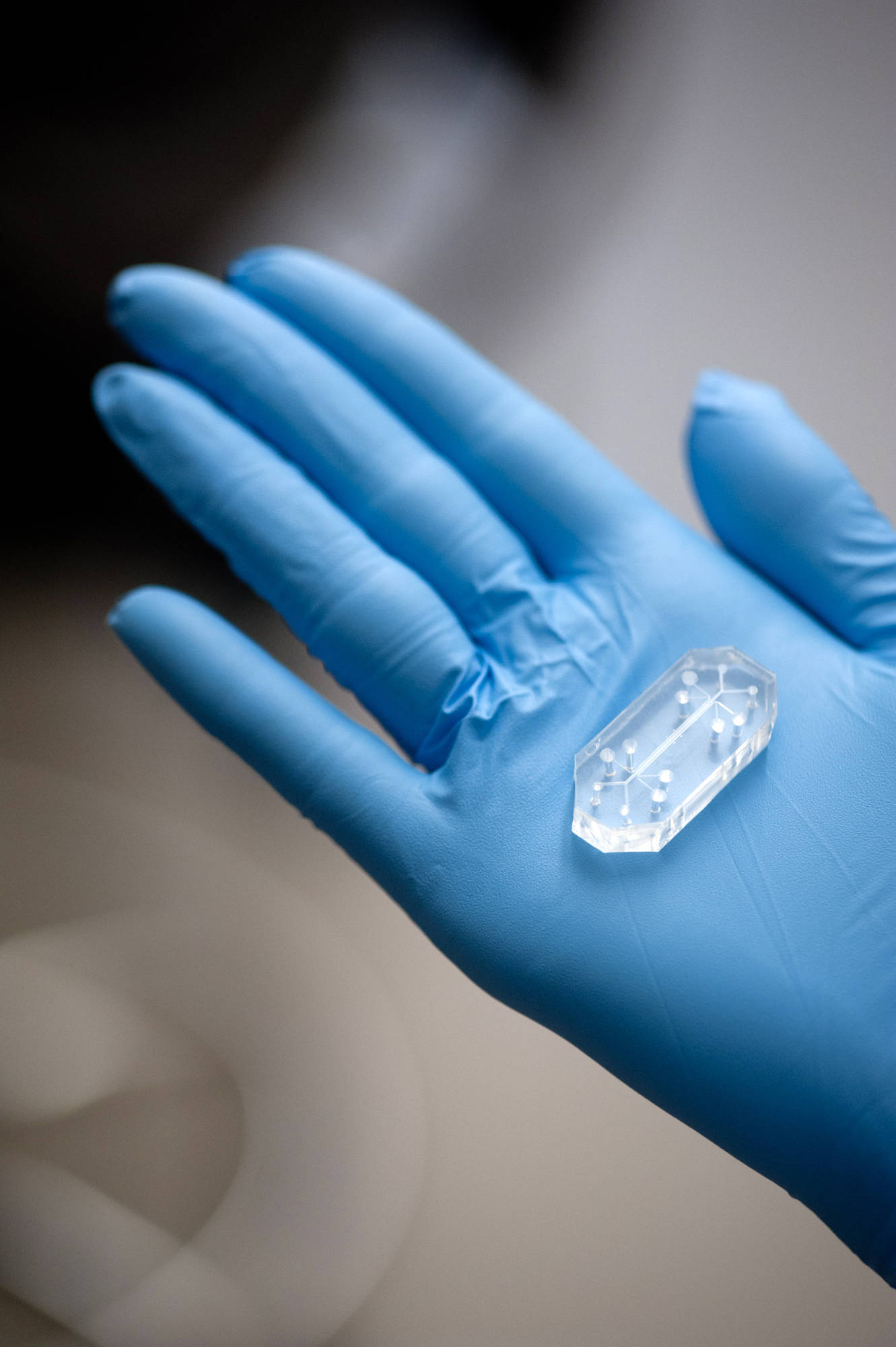
It may not look like it, but it's a lung, just in chip form
They don’t look like much sitting in your hand. A few pieces of clear plastic, each smaller than an Altoids tin, with channels visible inside and holes for plugging tubing into them.

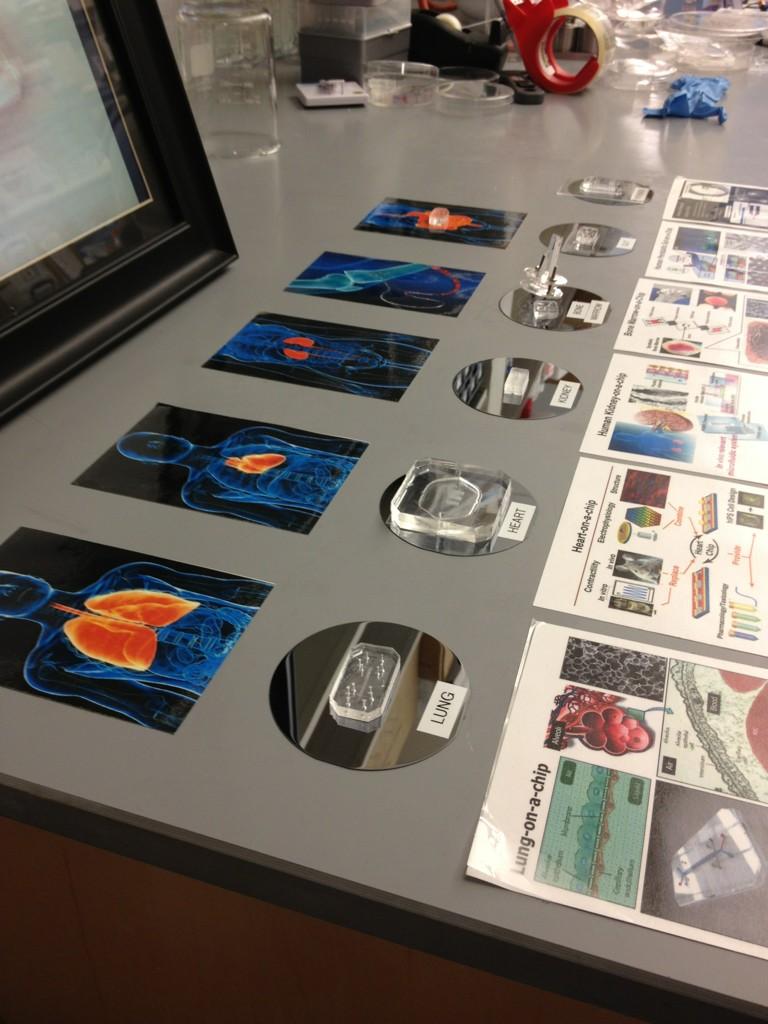
But fill them with cells and treat those cells the right way, and they turn into something amazing: tiny hearts, lungs, guts, kidneys.

They’re “organs on chips,” and they represent what’s probably the most comprehensive effort to date to physically model the functions of whole organs for drug development and disease research.

Developed by a team of biologists and engineers led by Donald Ingber, MD, PhD, a member of Boston Children’s Hospital’s Vascular Biology Program and director of the Wyss Institute for Biologically Inspired Engineering at Harvard, they’re the building blocks for an ambitious project to create an artificial multi-organ system—essentially, a whole body on a chip.

Each of the chips—Ingber’s team is currently developing 10 different organs—is built using microfabrication techniques like those common in the semiconductor industry.This allows us to create features and structures that we can control at the size scale in which cells live, and also apply physiological fluid flows and mechanical forces,” Ingber explains. “We have precise control over where cells live in the device and what they experience.

Going through the motions
The two features Ingber mentioned, flow and force, are instrumental in faithfully mimicking organ function. His lung on a chip, for instance, has a central microfluidic channel that is split into two parallel channels by porous flexible membrane. One side of the membrane is coated with human lung “air sac” cells (over which air can pass), the other with human lung capillary blood vessel cells. A combination of pumps subject the cells to the sensations of continuous blood flow and rhythmic breathing by moving culture medium through the blood vessel channel and applying suction that deforms the cell-coated membrane.

This video from the Wyss Institute explains in more detail:


Those forces incite dramatic responses from the cells in the chips. “You can put endothelial [blood vessel] and epithelial [air sac] cell cultures together, but they won’t reflect the range of functions you see in a real lung,” Ingber says. “This is because respiratory physiology relies on the mechanics of breathing and blood flow.

For instance, once we added breathing motions to the chip,” he adds, “the epithelial cells started producing surfactant, just like what happens in the lining of a normal lung when a baby takes its first breath.
“[O]nce we added breathing motions to the [lung] chip, the epithelial cells started producing surfactant, just like what happens…when a baby takes its first breath.”
Similarly, Ingber’s lab recently revealed that breathing motions were essential for using the lung chip to mimic the pulmonary edema (fluid leakage from blood vessels into the lungs) that occurs in some cancer patients treated with the drug interleukin-2—the first demonstration that chips could model a complex human disease, as well as a drug toxicity.

Ingber’s team has also developed a chip that models the complex environment of the human gut—including its microbial inhabitants. “Once we added a trickling flow of medium and peristaltic motions, the cells in the chip started forming structures similar to intestinal villi,” he says. “Now we’ve added bacteria, and can start to study the relationship between the microbiome and human intestinal disease processes.

Ingber's expanding repertoire of organs-on-chips could soon be linked together to create a whole body on a chip.
With a host of chips now in hand, Ingber and his team are now working with the federal Defense Advanced Research Project Agency to create a system for linking chips representing different organs together. The system will allow broader study of organ physiology and also how drugs affect multiple organs—the first step toward simulating a complete living body.

We want to be able to administer a drug via the ‘gut’ or ‘lungs,’ see how it is metabolized by the ‘liver,’ excreted by the ‘kidney,’ and whether it causes toxicity in the ‘heart,’” says Ingber. “We also want to model a broad range of disease states, like asthma, Crohn’s, radiation exposure and so on.

He’s also talking to the Food and Drug Administration about potentially accepting organ-on-chip data as part of the drug approval process in addition to or, in the future, in lieu of animal data.We’ve only just started the discussion, but we hope they’ll one day accept human organ chip data instead of certain animal studies, just as they’ve begun to accept biomarker data.


domingo, 25 de noviembre de 2012

La Alianza Latinoamericana de Fondos de Agua (ALFA) nace con el fin de proteger los recursos hídricos más amenazados


Alianza por el Agua
Líderes empresariales globales, financieros, del desarrollo y la conservación anunciaron una nueva asociación para proteger recursos hídricos amenazados a lo largo de América Latina y el Caribe.

En una ceremonia de lanzamiento donde el anfitrión de honor fue el Embajador de México en Estados Unidos, Arturo Sarukhan, The Nature Conservancy (TNC), la Fundación FEMSA, el Banco Interamericano de Desarrollo (BID) y el Fondo para el Medio ambiente Mundial (FMAM), anunciaron la Alianza Latinoamericana de Fondos de Agua (ALFA), a través de la cual se busca proteger casi 3 millones de hectáreas de cuencas de agua en Ecuador, Colombia, Perú, Brasil, México y otros países.

Los páramos, bosques nublados, selvas tropicales e incluso los desiertos y los bosques secos, nos proveen del agua necesaria para nuestras vidas. Estos ecosistemas capturan, retienen, filtran y suministran vastas cantidades de agua dulce. Además de brindar agua limpia a las personas, estos sitios son el hábitat de una rica diversidad biológica en todo el planeta.

Sin embargo las cuencas del mundo enfrentan serias amenazas ocasionadas por la contaminación, el desarrollo y el cambio climático. Cuando estos recursos naturales se degradan o desaparecen, millones de personas quedan expuestas al riesgo de la enfermedad y el hambre por falta de agua limpia. Las economías también se ven amenazadas cuando sectores, como por ejemplo el de la caña de azúcar o el manufacturero, no pueden producir sus bienes por no contar con una oferta suficiente de agua limpia.

Según la Organización de las Naciones Unidas, más de 77 millones de personas en América Latina no tienen acceso a agua limpia.

Los Fondos de Agua ofrecen un triple beneficio a las empresas, las comunidades y la naturaleza”, dijo Mark Tercek, presidente y Director General de TNC. “Al invertir en infraestructura verde, como en los bosques o los ríos, las compañías y empresas administradoras del agua ahorran dinero en la construcción de infraestructura gris, como serían los sistemas de filtración. Las comunidades se benefician a través de la generación de ingresos sostenibles y la oferta de agua limpia, además de que los sistemas naturales se protegen y mantienen como hábitat para la vida silvestre al mismo tiempo que nos proporcionan agua limpia”, señaló.

Un componente clave de la Alianza que estamos lanzando hoy es el compromiso de fortalecer el concepto de los Fondos de Agua por medio de investigación científica rigurosa”, dijo Luis Alberto Moreno, presidente del BID. “Vamos a elegir un número pequeño de cuencas en las cuales evaluaremos y perfeccionaremos las técnicas de conservación relacionadas con la cantidad y calidad del agua. Y sólo después implementaremos una estrategia que permita replicar esas técnicas en un número mucho mayor de ciudades y países”, agregó Moreno.

Un fondo de agua es una forma innovadora de pagar por los servicios que aporta la naturaleza y reinvertir ese dinero en la conservación. Debido a que una cuenca sana minimiza los costos de tratar el agua, los fondos atraen contribuciones voluntarias de los grandes usuarios del agua cuenca abajo, como los acueductos, las hidroeléctricas o las industrias. Las utilidades de estas inversiones se asignan a preservar las tierras esenciales cuenca arriba que filtran y regulan la oferta de agua, a través de actividades como la reforestación, el ecoturismo y el monitoreo de los flujos de agua. Los Fondos de Agua también ayudan a crear incentivos para que se generen oportunidades económicas verdes que impactan positivamente sobre las comunidades locales, como por ejemplo la ganadería sustentable.

TNC comenzó a trabajar con Fondos de Agua en 2000, cuando se unió a otros socios de los sectores público y privado para crear el primer Fondo de Agua en Quito, Ecuador. El proyecto comenzó con una inversión de apenas $21,000 dólares y creció hasta $10 millones en solamente una década. El interés generado por el fondo—alrededor de $900,000 dólares anuales—se invierte exitosamente en acciones de conservación local para proteger la biodiversidad. Hoy existen 5 fondos en Ecuador que han ayudado a proteger más de medio millón de hectáreas y han beneficiado a más de 2 millones de usuarios de agua cuenca abajo. En Colombia y Brasil también se han creado Fondos con resultados similares.

Fundación FEMSA, el BID y el FMAM se han unido ahora TNC para crear la primera iniciativa sobre Fondos de Agua a nivel mundial que compromete a los sectores público y privado con la sociedad civil, compartiendo una visión común: preservar las cuencas sanas.

The Nature Conservancy (TNC), Fundación FEMSA, el Banco Interamericano de Desarrollo (BID) y el Fondo para el Medio Ambiente Mundial (FMAM), se unen para crear ALFA, compartiendo una visión común para el futuro: preservar las cuencas sanas y ayudar a proteger importantes fuentes de agua en América Latina, con la conservación ambiental y el crecimiento sostenible como valores eje.

ALFA incorpora inversiones por más de $27 millones de dólares para crear, implementar y capitalizar al menos 32 Fondos de Agua en América Latina y el Caribe, contribuyendo a la conservación de casi 3 millones de hectáreas de cuencas, que a cambio podrían beneficiar hasta a 50 millones de personas.

Es la escala del modelo de la Alianza lo que la hace tan interesante”, dijo José Antonio Fernández, Director General de FEMSA y Presidente del Consejo de la Fundación FEMSA. “Podremos beneficiar a millones de personas en Brasil, México, Colombia y otros países latinoamericanos en solamente 5 años. También es una forma sólida de crear valor económico y social al mismo tiempo, y dejar un legado para las generaciones futuras, que son el núcleo de nuestra filosofía”, concluyó.

Las empresas privadas y administradoras del agua están invirtiendo en los Fondos porque después de hacer cálculos se han percatado de que los mecanismos son efectivos en cuanto a costos para asegurar una mayor calidad y cantidad de agua para los productos y servicios que ofrecen a sus usuarios.

Los socios de la Alianza esperan que en la medida en que más actores reconozcan los beneficios de los Fondos, también se comprometan a trabajar a favor del agua y de las cuencas de América Latina, a favor de la naturaleza y de la gente. La expectativa es que este modelo de conservación de cuencas se pueda adaptar y replicar a otras regiones del mundo como una herramienta para enfrentar retos globales que se traduzcan en una mayor escasez de agua, como es el cambio climático. Estos esfuerzos ya están encaminados en Estados Unidos, las islas del Caribe y de África.

La Alianza mira la próxima Cumbre Mundial de Río +20—a realizarse en tan sólo un año—como una oportunidad de incrementar la escala de este mecanismo innovador.


lunes, 15 de octubre de 2012

Más de 9 mil mariposas murieron para la última instalación de Damien Hirst

ORIGINAL: PijamaSurf
Autor: pijamasurf
14/10/2012

El reconocido artista inglés Damien Hirst vuelve a generar polémica, esta vez por dejar que 9 mil mariposas murieran como parte de su más reciente instalación exhibida en el Tate Modern.


Dos habitaciones sin ventanas en donde se ven colgados de un lienzo blanco algunos capullos de mariposa, mientras otras, ya adultas, revolotean, alimentándose de agua azucarada, fruta y flores puestas en el lugar para tal propósito, a la vista del nutrido grupo de espectadores que acude a un prestigioso museo como el Tate Modern de Londres cuando, además, este presenta la obra de un artista igualmente prestigiado y reconocido.


Grosso modo, en eso consistía una de la instalaciones más recientes del siempre polémico Damien Hirst, denominada “In and Out of Love”, “Dentro y fuera del amor” y en la cual, según la descripción del museo, “se destacan los temas de la vida y la muerte, así como la belleza y el horror, dualidades que prevalecen en buena parte de la obra del artista”.

Sin embargo, en tanto se trata de seres vivos, la controversia fue inevitable. En particular la Royal Society for the Prevention of Cruelty to Animals (RSPCA), organización sin fines de lucro que vela en el Reino Unido por los derechos de los animales, denuncia que durante las 23 semanas que la instalación se exhibió murieron más de 9 mil mariposas.

Según las estimaciones de la RSPCA, cada semana al menos 400 especímenes sustituían a todos los que morían aplastados o heridos por la interacción con los visitantes del Tate o por las condiciones extrañas a su medio en el que eran forzados a vivir. En su hábitat natural, las mariposas de los géneros Caligoy Heliconius, propias de climas tropicales, sobreviven en promedio 9 meses; en la instalación esta esperanza de vida osciló entre unas cuantas horas o varios días.

Habría un lamento nacional si la exhibición involucrara cualquier otro animal, como un perro. Solo porque son mariposas no significa que no merezcan ser tratadas con bondad”, declaró al respecto un vocero de la RSPCA.

La directiva del museo, por su parte, asegura que las mariposas cumplieron con su ciclo de vida normalmente dentro de las habitaciones, incluso un poco mejor, pues “la alta calidad de este entorno” extendió su vida de una manera que en la vida salvaje no sería posible.

Con “Mother and Child Divided”, “Madre e hijo divididos”, Hirst ganó en 1995 el Premio Turner: una vaca y un ternero cortados por mitad y conservados en tanques transparentes llenos de formaldehído. Igualmente célebre es “The Physical Impossibility of Death in the Mind of Someone Living”, “La imposibilidad física de la muerte en la mente de alguien vivo”, en la cual el protagonista es un enorme tiburón, también suspendido en formaldehído.


Estas y otras instalaciones se mostraron en la que fue la primera gran retrospectiva que el Tate Modern dedica al artista, una de las exhibiciones más concurridas del museo, con un promedio de 3 mil visitantes por día.


jueves, 4 de octubre de 2012

4 de Octubre: Día Mundial de los animales

ORIGINAL: Acugranic


El 4 de Octubre, fue instituido para la celebración del Día Mundial de la Protección Animal, en conmemoración del Santo Francisco de Asís, considerado como el primer humano que se concibió a sí mismo en relación con todas las cosas creadas, y que consideraba, sin importar la diferencia, que todos somos criaturas de Dios incluyendo en esto toda la realidad animada e inanimada.

En el año 1929, el 4 de Octubre fue declarado Día Mundial de los Animales, por iniciativa de la Organización Mundial de Protección Animal en congreso celebrado en Viena, y es en 1980 que el Papa Juan Pablo II, lo declaró Patrono de los Animales y de los Ecologistas, momento a partir del cual esta celebración toma más auge a nivel mundial, celebrándose en muchos países con la Bendición de las Mascotas. 

Declaración Universal de los Derechos de los Animales 
Considerando que todo animal posee derechos y que el desconocimiento y desprecio de dichos derechos han conducido y siguen conduciendo al hombre a cometer crímenes contra la naturaleza y los animales, se proclama lo siguiente: 

Artículo No. 1: Todos los animales nacen iguales ante la vida y tienen los mismos derechos a la existencia. 
Artículo No. 2: 
a) Todo animal tiene derecho al respeto. 
b) El hombre, como especie animal, no puede atribuirse el derecho de exterminar a los otros animales o de explotarlos, violando ese derecho. Tiene la obligación de poner sus conocimientos al servicio de los animales. 
c) Todos los animales tienen derecho a la atención, a los cuidados y a la protección del hombre. 
Artículo No. 3 
a) Ningún animal será sometido a malos tratos ni a actos crueles. 
b) Si es necesaria la muerte de un animal, ésta debe ser instantánea, indolora y no generadora de angustia. 
Artículo No. 4 
a) Todo animal perteneciente a una especie salvaje tiene derecho a vivir libre en su propio ambiente natural, terrestre, aéreo o acuático y a reproducirse. 
b) Toda privación de libertad, incluso aquella que tenga fines educativos, es contraria a este derecho. 
Artículo No. 5 
a) Todo animal perteneciente a una especie que viva tradicionalmente en el entorno del hombre tiene derecho a vivir y crecer al ritmo y en las condiciones de vida y de libertad que sean propias de su especie. 
b) Toda modificación de dicho ritmo o dichas condiciones que fuera impuesta por el hombre con fines mercantiles es contraria a dicho derecho. 
Artículo No. 6 
a) Todo animal que el hombre haya escogido como compañero tiene derecho a que la duración de su vida sea conforme a su longevidad natural. 
b) El abandono de un animal es un acto cruel y degradante. 
Artículo No. 7 
Todo animal de trabajo tiene derecho a una limitación razonable del tiempo e intensidad del trabajo, a una alimentación reparadora y al reposo. 
Artículo No. 8 
a) La experimentación animal que implique un sufrimiento físico o psicológico es incompatible con los derechos del animal, tanto si se trata de experimentos médicos, científicos, comerciales, como de otra forma de experimentación. 
b) Las técnicas alternativas deben ser utilizadas y desarrolladas. 
Artículo No. 9 
Cuando un animal es criado para la alimentación debe ser nutrido, instalado y transportado, así como sacrificado, sin que ello resulte para él motivo de ansiedad o dolor. 
Artículo No. 10 
a) Ningún animal debe ser explotado para esparcimiento del hombre. 
b) Las exhibiciones de animales y los espectáculos que se sirvan de animales son incompatibles con la dignidad del animal. 
Artículo No. 11 
Todo acto que implique la muerte de un animal sin necesidad es un biocidio, es decir, un crimen contra la vida. 
Artículo No. 12 
a) Todo acto que implique la muerte de un gran número de animales salvajes es un genocidio, es decir, un crimen contra la especie. 
b) La contaminación y la destrucción del ambiente natural conducen al genocidio. 
Artículo No. 13 
a) Un animal muerto debe ser tratado con respeto. 
b) Las escenas de violencia, en las cuales los animales son víctimas, deben ser prohibidas en el cine y en la televisión, salvo si ellas tienen como fin dar muestra de los atentados contra los derechos del animal. 
Artículo No. 14 
a) Los organismos de protección y salvaguarda de los animales deben ser representados a nivel gubernamental. 
b) Los derechos del animal deben ser defendidos por la ley, como lo son los derechos del hombre. 
Esta declaración fue adoptada por La Liga Internacional de los Derechos del Animal en 1977, que la proclamó al año siguiente. Posteriormente, fue aprobada por la Organización de Naciones Unidas (ONU) y por la Organización de las Naciones Unidas para la Educación, la Ciencia y la Cultura (UNESCO).