Ciencia en Canoa, by Vanessa Restrepo Schild.

Páginas

  • INICIO
  • About
  • The author
  • Opinión colgante
  • Graphic Adventure
  • EcoSecretos
Mostrando entradas con la etiqueta Suiza. Mostrar todas las entradas

martes, 4 de noviembre de 2014

Urban Algae Farm Gobbles Up Highway Air Pollution


A French and Dutch design firm has come up with an elegantly simple way to harness the wonderful power of nature in order to clean up the environment: an algae farm suspended over a small stretch of highway in Geneva, Switzerland.


Gizmodo/Cloud Collective

Algae are a diverse group of organisms that, like plants, generate energy from photosynthesis using sunlight and carbon dioxide, churning out oxygen along the way. Since CO2 is a pollutant that’s produced by car engines, a busy highway riddled with environmentally damaging emissions is the perfect place to set up an urban algae farm.


Cloud Collective
The bioreactor consists of a closed system of transparent, algae-filled tubes that are hooked up to secondary equipment such as filters, pumps and solar panels. Thriving on the abundance of CO2 and sunlight, the algae will bloom and mature inside the tubes, filtering the air before being extracted and used for a variety of applications. According to the company that came up with the idea, Cloud Collective, the material could be used to create biodiesel, green electricity, medication, cosmetic products or even foods. That’s quite an impressive list.

“The functioning and the placement of this bioreactor signal practices of the future: food production in an urban environment, the conservation of green space and the reinterpretation of existing infrastructures,” the Cloud Collective writes on their website.

Cloud Collective

At the moment, the bioreactor is a proof of concept system that was built as part of a garden festival in Geneva, which “focuses on the co-habitation of the urban and the natural within the context of the urban expansion of Geneva.” However, it demonstrates how easy it could be to scale-up and install over larger areas.

Check out Cloud Collective’s video of the system here:


ORIGINAL: IFLScience
by Justine Alford
November 4, 2014

Posted by Unknown at 12:29 0 comments
Enviar por correo electrónicoEscribe un blogCompartir en XCompartir con FacebookCompartir en Pinterest
Etiquetas: Algae, Bioenergía, Biomasa, CO2, Contaminación, Energía, Granja, Suiza, Transporte, Vehículos

domingo, 2 de noviembre de 2014

This Algae Farm Eats Pollution From the Highway Below It


A highway overpass is the last place most of us would think to install a farm. But algae, that wonderful little ecological miracle, is different. Since it consumes sunlight and CO2 and spits out oxygen, places with high emissions are actually the perfect growing area. Which is why this overpass in Switzerland has its own algae farm.

Built this summer as part of a festival in Genève, the farm is actually fairly simple: It thrives on the emissions of cars that pass below it, augmented by sunlight. A series of pumps and filters regulate the system, and over time, the algae matures into what can be turned into any number of usable products. According to the designers behind it, the Dutch and French design firm Cloud Collective, those uses can range from combustable biomass to material for use in cosmetics and other consumer-facing products.

Of course, this is just a proof of concept—an installation to explain how easy it would be to do this on a larger scale. But that's just as important, at this point. Injecting an emerging system like algae into the public consciousness, bit by bit, shows how realistic a larger scale version could really be. [Cloud Collective; DesignBoom]

ORIGINAL: Gizmodo
By Kelsey Campbell-Dollaghan
Posted by Unknown at 8:41 0 comments
Enviar por correo electrónicoEscribe un blogCompartir en XCompartir con FacebookCompartir en Pinterest
Etiquetas: Algae, Bioenergía, Biomasa, CO2, Contaminación, Energía, Granja, Suiza, Transporte, Vehículos

miércoles, 26 de marzo de 2014

Switzerland to host the first Cybathlon, an Olympics for bionic athletes

(Cybathlon)

A coalition of Swiss robotics labs has announced the Cybathlon, the first-ever international competition for athletes who use prosthetics and other aids, will be held in October of 2016.

The competition is modeled after the Olympics and will feature six events:

  • a bike race, 
  • leg race, 
  • wheelchair race, 
  • exoskeleton race, 
  • arm prosthetics race, and 
  • Brain Computer Interface race 
for competitors with full paralysis. The National Centre of Competence in Research (NCCR) Robotics is hosting the competition to spur interest in emerging human-oriented robotics technologies.

Unlike the Olympics, where athletes can use prosthetics only to make themselves as good as able-bodied athletes and not better, Cybathlon competitors are encouraged to use the best technology. Dual prizes will be awarded, one to the athlete and one to the company that created the prosthetic, device, or software.


"The rules of the competition are made in such way that the novel technology will give the pilot an advantage over a pilot that would use a comparable but less advanced or conventional assistive technology," the organization says on its website. "There will be as few technical constraints as possible, in order to encourage the device providers to develop novel and powerful solutions."

Of course, the races will be slower than their Olympic counterparts, but they're also arguably more mind-boggling. The exoskeleton competitors, for example, must walk over a slope, up steps, around pillars, over a see-saw, across a narrow beam, then pick up a bag and carry it, go around tight corners, and then sprint to the finish line.

ORIGINAL: The Verge
By Adrianne Jeffries Email @adrjeffries
March 26, 2014
Posted by Unknown at 21:31 0 comments
Enviar por correo electrónicoEscribe un blogCompartir en XCompartir con FacebookCompartir en Pinterest
Etiquetas: Biónica, Deporte, Empresas, Exoesqueletos, Prótesis, Robótica, Software, Suiza

jueves, 6 de febrero de 2014

This Bionic Hand Allows Amputee to 'Feel' Again

Image credit: alexpb

It seems like every other day we read about some far-out, new technology that makes us scratch our heads and say, "What the heck?" In this series, we'll take a look at all types of crazy new gadgets, apps and other technologies -- and the entrepreneurs dreaming them up.

One thing's for sure: no "bionic man" has ever been able to do this before.

In 2004, Dennis Aabo Sørensen lost his left hand after a firework exploded during a New Year's Eve celebration.

Little did he know that, in order to 'feel' again, all he had to do was wait for prosthetic technology to advance to the stage where electrodes could be surgically implanted in his nerves and connected to a bionic hand.

Nine years later, that day has arrived.

With the help of a high profile team of international robotic experts, Sørensen received said bionic hand, which allowed him to tell the shape and stiffness of objects while blindfolded.

Scientists have been working on the project of touch sensitive prosthetics for years now, but this is said to be the first time that an amputee has experienced real-time touch sensations through a bionic hand. Silvestro Micera -- a researcher who has worked on the project for the past 15 years -- and his team added sensors to the artificial hand, which could detect and measure information about touch, the BBC reported. Using computer algorithms, the researchers converted the electrical signals they emitted into an impulse that sensory nerves could read.

Sørensen, for his part, was in complete awe: "Suddenly you could see my left hand was talking to my brain again and it was magic," he told USA Today, when asked to describe the first moment he could 'feel' again after nine years. "It was surreal. I grabbed the object in my hand and knew it was round. It was a baseball."


Unfortunately, due to safety restrictions (the bionic hand is still a prototype) the sensors were removed from Sørensen's hand after the experiment was completed. But the project's success points to amazing capabilities for prosthetics devices of the future: one day, scientists predict, bionic hands will not only be able to feel, but also detect texture and temperature.

Imagine the ability to feel a previously missing hand closing around an object. And sensory capable bionic arms could also allow amputees to grab things in the dark, as well as perform more nuanced tasks like cracking an egg.

While it could be up to 10 years before sensory-enabled bionic hands like Sørensen's are commercially available, the bionic future looks bright: "These results show the possibilities for amputees," Micera told USA Today, before predicting that the same technology could also be used for prosthetic legs.


ORIGINAL: Entrepreneur
By Laura Entis 
February 6, 2014
Posted by Unknown at 18:56 0 comments
Enviar por correo electrónicoEscribe un blogCompartir en XCompartir con FacebookCompartir en Pinterest
Etiquetas: EPFL, Ortopedia, presión, Realimentación, Robótica, Sensores, Suiza, Temperatura

sábado, 30 de noviembre de 2013

Fabian Oefner: Psychedelic science

By Fabian Oefner "Dancing Colors 08"
Fabian Oefner creates stunning visual representations of natural forces. 

Why you should listen to him: 
Fabian Oefner: Photographer. Creates stunning
visual representations of natural forces.

Fabian Oefner is a photographer and artist who wants to blend the disciplines of art and science. 
His psychedelic images capture natural phenomena and present them in unique and eye-catching ways. To date, subjects have included sound waves, iridescence, even magnetic ferroliquids and fire. His aim: to create images that appeal to both a viewer's heart and brain.

Oefner's photographs have been exhibited in various countries and are part of private collections around the globe. Besides pursuing his own projects, he also works on ad campaigns. He works and lives in Switzerland.


ORIGINAL: TED
Oct 2013 
Posted by Unknown at 20:43 0 comments
Enviar por correo electrónicoEscribe un blogCompartir en XCompartir con FacebookCompartir en Pinterest
Etiquetas: Arte, Ciencia, Fabian Oefner, Fotografía, Suiza, TED

lunes, 26 de agosto de 2013

The gold standard for cell penetration

ORIGINAL: MIT
David L. Chandler, MIT News Office
August 23, 2013

Gold nanoparticles with special coatings can deliver drugs or biosensors to a cell’s interior without damaging it.

Illustration shows the passage of a gold nanoparticle (in orange) covered with a monolayer of hydrophobic/hydrophilic material (shown in blue-green, yellow and red), passing through a cell membrane composed of lipids (white and blue). Graphic courtesy of Reid Van Lehn

Cells are very good at protecting their precious contents — and as a result, it’s very difficult to penetrate their membrane walls to deliver drugs, nutrients or biosensors without damaging or destroying the cell. One effective way of doing so, discovered in 2008, is to use nanoparticles of pure gold, coated with a thin layer of a special polymer. But nobody knew exactly why this combination worked so well, or how it made it through the cell wall.

Now, researchers at MIT and the Ecole Polytechnique de Lausanne in Switzerland have figured out how the process works, and the limits on the sizes of particles that can be used. Their analysis appears in the journal Nano Letters, in a paper by graduate students Reid Van Lehn, Prabhani Atukorale, Yu-Sang Yang and Randy Carney and professors Alfredo Alexander-Katz, Darrell Irvine and Francesco Stellacci.

Until now, says Van Lehn, the paper’s lead author, “the mechanism was unknown. … In this work, we wanted to simplify the process and understand the forces” that allow gold nanoparticles to penetrate cell walls without permanently damaging the membranes or rupturing the cells. The researchers did so through a combination of lab experiments and computer simulations.

The team demonstrated that the crucial first step in the process is for coated gold nanoparticles to fuse with the lipids — a category of natural fats, waxes and vitamins — that form the cell wall. The scientists also demonstrated an upper limit on the size of such particles that can penetrate the cell wall — a limit that depends on the composition of the particle’s coating.

The coating applied to the gold particles consists of a mix of hydrophobic and hydrophilic components that form a monolayer — a layer just one molecule thick — on the particle’s surface. Any of several different compounds can be used, the researchers explain.

“Cells tend to engulf things on the surface,” says Alexander-Katz, an associate professor of materials science and engineering at MIT, but it’s “very unusual” for materials to cross that membrane into the cell’s interior without causing major damage. Irvine and Stellacci demonstrated in 2008 that monolayer-coated gold nanoparticles could do so; they have since been working to better understand why and how that works.

Since the nanoparticles themselves are completely coated, the fact that they are made of gold doesn’t have any direct effect, except that gold nanoparticles are an easily prepared model system, the researchers say. However, there is some evidence that the gold particles have therapeutic properties, which could be a side benefit.

Gold particles are also very good at capturing X-rays — so if they could be made to penetrate cancer cells, and were then heated by a beam of X-rays, they could destroy those cells from within. “So the fact that it’s gold may be useful,” says Irvine, a professor of materials science and engineering and biological engineering and member of the
Koch Institute for Integrative Cancer Research.

Significantly, the mechanism that allows the nanoparticles to pass through the membrane seems also to seal the opening as soon as the particle has passed. “They would go through without allowing even small molecules to leak through behind them,” Van Lehn says.

Irvine says that his lab is also interested in harnessing this cell-penetrating mechanism as a way of delivering drugs to the cell’s interior, by binding them to the surface coating material. One important step in making that a useful process, he says, is finding ways to allow the nanoparticle coatings to be selective about what types of cells they attach to. “If it’s all cells, that’s not very useful,” he says, but if the coatings can be targeted to a particular cell type that is the target of a drug, that could be a significant benefit.

Another potential application of this work could be in attaching or inserting biosensing molecules on or into certain cells, Van Lehn says. In this way, scientists could detect or monitor specific biochemical markers, such as proteins that indicate the onset or decline of a disease or a metabolic process.

In general, attachment to nanoparticles’ surface coatings could provide a key to cells’ interiors for “molecules that normally wouldn’t have any ability to get through the cell membrane,” Irvine says.

Vince Rotello, a professor of chemistry at the University of Massachusetts at Amherst who was not involved in this research, says this work is “careful, well thought out and elegantly presented.” He adds, “This study provides a very interesting alternative mechanism to cell uptake of nanomaterials that could open up new therapeutic pathways.”

The work was supported by the National Science Foundation, the National Cancer Institute and the U.S. Army Research Office.
Posted by Unknown at 15:44 0 comments
Enviar por correo electrónicoEscribe un blogCompartir en XCompartir con FacebookCompartir en Pinterest
Etiquetas: biocomputación, Biología Celular, EPL, Membrana, MIT, Nanomateriales, Oro, Suiza

miércoles, 24 de abril de 2013

High-Concentration Photovoltaic Thermal System From IBM Promises 80% Efficiency, Potable Water, And Air Conditioning

ORIGINAL: SolarLove
Nathan
April 24, 2013

How does a cost-competitive photovoltaic system that is able to concentrate sunlight 2000 times and then capture 80% of the concentrated energy sound? Pretty good, right? Such a system is currently being developed by researchers at IBM Research, Airlight Energy, ETH Zurich, and Interstate University of Applied Sciences Buchs NTB, after winning a three-year $2.4 million grant from the Swiss Commission for Technology and Innovation.
Image Credit: © IBM
And in addition to generating electricity, the system can its<div style="font-size: medium; line-height: 1.5em; text-align: justify;">elf desalinate water and provide air-conditioning, useful features for the sunny and remote regions that the system is designed for.

An economical High Concentration Photovoltaic Thermal (HCPVT) system, that in addition to supplying electricity can desalinate water and provide air conditioning, is the complete package as far as many regions of the world are concerned.

The prototype system makes use of a large parabolic dish, composed of a number of mirror facets, which are coordinated to a sun tracking system. The system automatically repositions itself to the optimum angle for power generation. The sunlight that hits the mirrors is reflected off of them onto a number of microchannel-liquid cooled receivers with triple junction photovoltaic chips. Every one of these 1×1 centimeter chips “can convert 200-250 watts, on average, over a typical eight hour day in a sunny region.” And there are hundreds of these chips in the design, providing a total of about 25 kilowatts of electrical power.


The press release notes:

The photovoltaic chips are mounted on micro-structured layers that pipe liquid coolants within a few tens of micrometers off the chip to absorb the heat and draw it away 10 times more effective than with passive air cooling. The coolant maintains the chips almost at the same temperature for a solar concentration of 2,000 times and can keep them at safe temperatures up to a solar concentration of 5,000 times.

The direct cooling solution with very small pumping power is inspired by the hierarchical branched blood supply system of the human body and has been already tested by IBM scientists in high performance computers, including Aquasar. An initial demonstrator of the multi-chip receiver was developed in a previous collaboration between IBM and the Egypt Nanotechnology Research Center.

“We plan to use triple-junction photovoltaic cells on a micro-channel cooled module which can directly convert more than 30 percent of collected solar radiation into electrical energy and allow for the efficient recovery of an additional 50 percent waste heat,” said Bruno Michel , manager, advanced thermal packaging at IBM Research. “We believe that we can achieve this with a very practical design that is made of lightweight and high strength concrete, which is used in bridges, and primary optics composed of inexpensive pneumatic mirrors — it’s frugal innovation, but builds on decades of experience in microtechnology.

By utilizing such a high concentration of sunlight, and the rather low cost of the design, the researchers think that they can realize a cost per aperture area under $250 per square meter — that is roughly 3 times lower than in similar systems. According to them, “the levelized cost of energy will be less than 10 cents per kilowatt hour (KWh). For comparison, feed in tariffs for electrical energy in Germany are currently still larger than 25 cents per KWh and production cost at coal power stations are around 5-10 cents per KWh.”

One of the innovations of the new system is its collection and repurposing of the “waste heat” generated by solar thermal. By utilizing the heat instead of simply allowing it to dissipate, it becomes possible to cheaply desalinate water and provide cooling via a thermal-driven adsorption chiller, while also solving the overheating problems of solar chips.

In order to efficiently capture the waste heat, the researchers made use of an advanced technology that was already developed and in use, the water-cooling systems for very high-performance computers such as Aquasar and SuperMUC. While that heat is simply reused to provide space heating for the facilities, the captured heat in this instance will be used to heat salty water that is then distiller via vaporization. The researchers say that the system could provide up to “30-40 liters of drinkable water per square meter of receiver area per day, while still generating electricity with a more than 25 percent yield or two kilowatt hours per day.” So with a large array of these systems it would be very possible to provide enough water for a small city/town.

The system also possesses the ability to provide air conditioning, via a thermal driven adsorption chiller. “An adsorption chiller is a device that converts heat into cooling via a thermal cycle applied to an absorber made from silica gel, for example. Adsorption chillers, with water as working fluid, can replace compression chillers, which stress electrical grids in hot climates and contain working fluids that are harmful to the ozone layer.”

Researchers are currently testing a prototype of the HCPVT system at IBM Research — Zurich.

Posted by Unknown at 5:04 0 comments
Enviar por correo electrónicoEscribe un blogCompartir en XCompartir con FacebookCompartir en Pinterest
Etiquetas: Agua, Agua potable, Biomimicry, Buchs NTB, Desalinisación, Energía Limpia, Energía Solar, ETH Zurich, High Concentration Photovoltaic Thermal (HCPVT), IBM, Potabilización, Suiza

miércoles, 3 de abril de 2013

Las cinco ciudades más ecológicas del mundo

ORIGINAL: KienYKe
Por: KIENYKE
marzo 31, 2013

La página web TreeHugger.com eligió las cinco ciudades más ecológicas del mundo con medios de transporte alternativos, voluntad política de sus gobernantes en recolección de basuras y cambio climático, barrios que funcionan con energía solar y planeación urbana con zonas verdes para sus ciudadanos.

Una ciudad ecológica proporciona la menor huella ecológica posible para sus residentes. Esto quiere decir que es respetuosa con el medio ambiente, en términos de uso de la tierra y reducción de las causas que contribuyen al calentamiento global. Estas son las ciudades más ecológicas del mundo:

Portland, Estados Unidos
Es la ciudad más verde de Estados Unidos, el país que más contamina en el mundo. Portland, en el estado de Oregon, al noroeste del país, con más de medio millón de habitantes es un ejemplo de una política medioambiental responsable. Esta ciudad se destaca por el trasporte sostenible con una línea de tranvías y autobuses que se alimentan con biodiesel, además de varios ciclorrutas y áreas verdes por toda la ciudad que en su mayoría se alimentan de energías renovables.

Friburgo, Alemania
Esta ciudad fue reconstruida después de la segunda guerra mundial, desde que se comenzó el diseño fue pensado con los principios del desarrollo sostenible, hay muchas zonas de la ciudad donde no se permiten los coches y es una de las más limpias del mundo. Los ciudadanos y el gobierno local tienen como objetivo reducir sus emisiones de CO2 aplicando una serie de políticas para obtener energía minimizando el impacto sobre el medio ambiente. El diseño urbanístico con 160 Kms de ciclovías, programas de energía solar, eficiencia energética y de transporte aplicado en Friburgo figuran entre los mejores de Europa. Cuenta, además, con un barrio solar con el concepto “energie-plus”, que quiere decir que produce más energía que la que consume, manteniendo un intercambio con la red eléctrica convencional.

Zermatt, Suiza
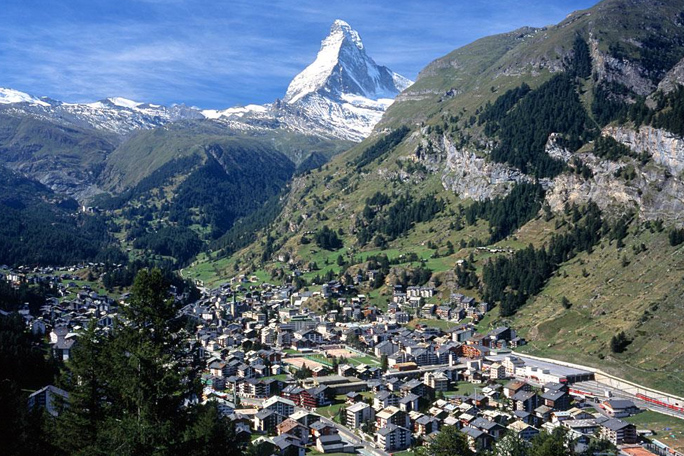
A 4 mil metros de altura y rodeado de montañas, la única forma de llegar a la ciudad es en tren, esta ciudad suiza tiene el privilegio de un centro urbano libre de coches. Los únicos vehículos que circulan son eléctricos. Es uno de los lugares turísticos para aficionados de la naturaleza, ideal para la práctica de deportes como el esquí, el senderismo y el montañismo.

Montreal, Canadá
El gobierno de Montreal es uno de los más comprometidos en la lucha contra el cambio climático, lo demuestran sus programas y estilo de vida de sus ciudadanos. El gobierno de Montreal ha creado la Campaña Internacional de Acción Climática (CAQ) para conseguir algunos de los propósitos ecologistas.

Austin, Estados Unidos
Esta ciudad cuenta con más de 200 parques y reservas, y su modelo de reciclaje es admirado en todo el mundo, todos dirigidos por Ecology Action, una organización que trabaja sin fines lucrativos. Festivales verdes y la Fiesta de los alimentos ecológicos se celebran en esta ciudad. Austin es el hogar de Whole Foods, que se ha convertido en un líder en la lucha contra el uso de los combustibles fósiles.

Posted by Unknown at 5:48 0 comments
Enviar por correo electrónicoEscribe un blogCompartir en XCompartir con FacebookCompartir en Pinterest
Etiquetas: Alemania, Austin, Biocombustible, Canadá, Ciudad, Ecológico, Emisiones de Carbono, Energía Renovable, Estados Unidos, Friburgo, Montreal, Portland, Smart Grid, Suiza, Transporte, Urbanismo, Zermatt

lunes, 11 de marzo de 2013

Scientists to simulate human brain inside a supercomputer

ORIGINAL: CNN
By Barry Neild, CNN 
October 12, 2012 -- Updated 1313 GMT (2113 HKT) | 

Researchers say building a computer simulation could improve understanding and treatments of brain diseases like Alzheimer's. 
STORY HIGHLIGHTS 
  • Human Brain Project will use supercomputers to mimic tangle of neurons and synapses that power our thoughts 
  • Scientists say the simulator could offer new insight into the treatment of brain disease like Parkinson's and Alzheimer's 
  • "Brain in a box" is unlikely to transform into sci-fi-style computer bent on world domination, scientists say 

(CNN) -- There's no escaping the fact that the Human Brain Project, with its billion-dollar plan to recreate the human mind inside a supercomputer, sounds like a science fiction nightmare. 

But those involved hope their ambitious goal of simulating the tangle of neurons and synapses that power our thought processes could offer solutions to tackling conditions such as depression, Parkinson's disease and Alzheimer's. 

The Human Brain venture is the next step in a long-running program that has already succeeded in using computers to create a virtual replica of part of a rat's neocortex -- a section of the brain believed to control higher functions such as conscious thought, movement and reasoning. 

Scientists at its forerunner, the Switzerland-based Blue Brain Project, have been working since 2005 to feed a computer with vast quantities of data and algorithms produced from studying tiny slivers of rodent gray matter. 

"This is a tool for research, not a giant simulated brain that is going to rule the world
Sean Hill, neuroscientist 

Last month they announced a significant advancement when they were able to use their simulator to accurately predict the location of synapses in the neocortex, effectively mapping out the complex electrical brain circuitry through which thoughts travel. 

Henry Markram, the South African-born neuroscientist who heads the project, said the breakthrough would have taken "decades, if not centuries" to chart using a real neocortex. He said it was proof their concept, dubbed "brain in a box" by Nature magazine, would work. 

Read: Mapping out a new era in brain research

Now the team are joining forces with other scientists to create the Human Brain Project. As its name suggests, they aim to scale up their model to recreate an entire human brain. 

It is a step that will need both a huge increase in funding and access to computers so advanced that they have yet to be built. 

If their current bid for €1 billion ($1.3 billion) of European Commission funding over the next 10 years is successful, Markram predicts that his computer neuroscientists are a decade away from producing a synthetic mind that could, in theory, talk and interact in the same way humans do. 

His bold claims have inevitably fueled comparisons to doom-laden popular fiction in which conscious machines turn on their creators and wreak havoc. 

The project's scientists have been referred to as "team Frankenstein" and their computer likened to "Skynet," the virtual intelligence that unleashes a robot war on humanity in the "Terminator" films. 

Sean Hill, a senior computational neuroscientist on the project, laughs at such comparisons. 

He says the computer will primarily become a repository for knowledge about the brain that will allow scientists to conduct experiments without the need to probe inside people's skulls. 

Read: $1 billion mission to reach the Earth's mantle

"This is a tool for research, not a giant simulated brain that is going to rule the world," he said. 

"Right now, we're in a crisis in neuroscience. There's a lot of wonderful data being gathered but we don't have a place where we can put those experimental results together and understand their implications. 

"We are just beginning to appreciate how complex our brains are, far beyond any other device in the known universe
Terry Sejnowski, Salk Institute for Biological Studies 

"The benefit of having this facility is you have a place to integrate the data into a model where you can test predictions and start to learn principles of how the brain operates." 

The computing power needed to build the model is phenomenal. Simply to replicate one of the 10,000 neuron brain cells involved in the rat experiment took the processing capacity usually found in a single laptop. To simulate a fully functioning human brain, it would take billions. 

Hill says that such computational power -- known as exascale -- will be available by the end of the decade. The Human Brain Project's scientists are hoping to work with supercomputer developers to ensure future machines match their requirements. 

But, even as the team touts its experiments as a possible solution to the brain diseases that affect about two billion people worldwide, they have attracted critics who say their work is far too broad in scope to achieve usable results. 

Professor Terry Sejnowski, head of the Computational Neurobiology Laboratory at the Salk Institute for Biological Studies in San Diego, has been quoted as saying the Blue Brain project is "bound to fail." 

Read: How the search for aliens can help sustain life on Earth

He told CNN via email that "progress is being made but there is still a long way to go before we will understand the computational capabilities of cortical circuits." 

He added: "We are just beginning to appreciate how complex our brains are, far beyond any other device in the known universe." 

Sean Hill said the team hoped it was answering skeptics with its achievements so far. 

"It's just a matter of keeping on doing it. Let's keep improving these tools and open them up so that many scientists are engaged and collaborating and using it as common point to bring the data together," he said. 

"The only way to address the critics is to keep working, showing the positive results and do the best we can -- and that is starting to happen."
Posted by Unknown at 5:59 0 comments
Enviar por correo electrónicoEscribe un blogCompartir en XCompartir con FacebookCompartir en Pinterest
Etiquetas: Computación, HBP, Henry Markram, Inteligencia Artificial, Neurociencia, Simulación, Suiza, Supercomputación

domingo, 3 de marzo de 2013

Switzerland Creates Secure Test Site for GM Crops

ORIGINAL: Science Magazine
by Jop de Vrieze
28 February 2013

Secure site. Switzerland will provide security for field trials of genetically modified crops at this research station near Zurich. Credit: Wikimedia
The Swiss government will create a permanently protected area on federal land for experiments with genetically modified (GM) crops. The goal is to enable researchers to run experimental trials without running the risk that the fields will be vandalized and to reduce costs associated with security.

In a paper published today in the journal Trends in Biotechnology, scientists from the Agroscope Reckenholz-Tänikon research station and the University of Zurich detail the plan, which was approved by the Swiss Parliament and officially announced on 7 February.

GM crops are controversial in Europe, and European law requires scientists to notify the public about the precise locations of the fields where they are running experiments. This has led to protests and sometimes vandalism at more than 100 European trials since 2010. One result is that the number of GM field experiments conducted in the European Union dropped from about 250 per year in the late 1990s to fewer than 50 in 2011, the researchers report. In Switzerland, researchers have submitted just six applications for field experiments with GM plants since the late 1990s; authorities rejected two in 1999 because "the social and environmental impacts compared to any possible economic benefits were clearly too high."

In a bid to make such experiments easier, the Swiss Federal Council approved spending €600,000 annually from 2014 to 2017 to create a protected field site of approximately three hectares at the Reckenholz research station, 10 kilometers north of Zurich. Researchers will initially use it to test GM wheat with resistance to powdery mildew, a fungal disease, but they could ultimately plant other crops such as potatoes.

The Reckenholz site is already being used for GM experiments and other types of research. In 2008, a group of more than 30 masked activists threatened researchers at a nearby field site and destroyed about one-third of their experimental plants. In 2009, the researchers used grant funds to install three surveillance cameras, build a double fence with barbed wire and motion sensors, and hire security guards who kept a day-round watch.

The study released today estimates that Swiss researchers running recent GM trials spent 78% of their research funds on security. Now, the Swiss government will carry those costs at the Reckenholz site, enabling researchers to use more of their grants for science.

The move shows that legislators believe approved GM experiments "should be protected and that the research agenda should not be determined by vandals," writes Michael Winzeler, a co-author of the paper and a senior researcher at the Reckenholz station, in an e-mail to ScienceInsider.

The plan comes 5 years after two plant scientists of the University of Leeds in the United Kingdom, Peter Urwin and Howard Atkinson, called for protection of European transgenic crop research in a letter to Nature.

Atkinson says he is pleased with the Swiss plan: "You can't have a policy based on evidence if the data cannot be collected. This site will be good for that."

The Swiss government and public do not have a pro-GM reputation. In 2005, voters approved a 5-year moratorium on the commercial use of GM products, which has been extended until 2017. The moratorium includes an exception for scientific research.

"Still, that record suggests that there is no demand among Swiss citizens for GM plants on their plates, says Marianne Kuenzle, GM specialist at the environmental group Greenpeace Switzerland, which opposes GM technologies. "This field site is a waste of money. If you look at this symbolically, the fact that these studies will happen behind fences shows that there is no public acceptation of this technology." The group says it will scrutinize applications to perform GM crop trials and consider ways to prevent the establishment of the field site.

EuropaBio, the European association for bio-industries, says the Swiss move is both good and bad news. "The biotech industry welcomes this possibility to carry out research but laments that it has to happen under such conditions," the group wrote in a statement. "The need for protected field sites is a sad reflection of the power of anti-science groups, who prevent public and private research to be done in Europe."

Anne Glover, the European Commission's chief scientific adviser, says she strongly supports controlled field trials of GM plants. "[I]t is the only way we can gather evidence on any adverse impacts they may have on humans, animals and the environment as well as gauge their efficacy," she wrote in a statement. "Citizens deserve complete transparency, but they also deserve the possibility to use the best science available to meet some of the most pressing challenges of the 21st century."
Posted by Unknown at 7:57 0 comments
Enviar por correo electrónicoEscribe un blogCompartir en XCompartir con FacebookCompartir en Pinterest
Etiquetas: Agricultura, Agricultura Modificada Geneticamente, Europa, Legislación, Protesta, Prueba, Suiza, U of Zurich

martes, 26 de febrero de 2013

“MicroMAX” - the networked swarm car

ORIGINAL: ZeitNews
FEBRUARY 25, 2013

Rinspeed and Harman develop comprehensive mobility concept and corresponding vehicle. The incarnation of the idea is: “MicroMAX” - the networked swarm car


Frank M. Rinderknecht. 
Founder and CEO of Rinspeed Inc.
Photo: Rinspeed Inc.
At the very latest ever since the publication of Frank Schätzing’s novel “The Swarm”, everyone knows of the potential power of intelligent collectives - much more powerful than merely the sum of all its individuals. With “microMAX” Frank M. Rinderknecht, boss of Swiss creative powerhouse Rinspeed, transfers the idea of swarm intelligence to urban traffic and sets out to do nothing less than to revolutionize it.

The incarnation of the idea is “microMAX,” on display at the Geneva Motor Show, March 7 through 17, 2013. The ingenious commuter vehicle merges personal and public transportation in very clever fashion. In the Rinspeed “microMAX”, renowned manufacturer of top-class automotive multimedia and infotainment systems Harman for the first time introduces its vision of an “urbanSWARM” community concept based on the Harman Cloud platform.

This concept involves combining the company’s individual technical features that are already available commercially today with a comprehensive Cloud-based mobility concept. This allows, for instance, easy access to navigation functions in real time. Based on the information from all vehicles connected to the swarm, the system can modify the routes dynamically to account for current traffic.

Rinderknecht says: “We have developed an intelligent and eco-friendly mobility concept complete with its own vehicle that combines the benefits of personal transportation with those of taxis, car-sharing services and carpool concepts as well as those offered by public transit. It uses the powerful UMTS and LTE data networks in urban centers and operates in real time.”

SIGA LEYENDO »
Posted by Unknown at 6:57 0 comments
Enviar por correo electrónicoEscribe un blogCompartir en XCompartir con FacebookCompartir en Pinterest
Etiquetas: Ambiental, amigable, Computación, Comunicaciones, Inteligencia Colectiva, IoT, Nube, Suiza, Transporte

domingo, 24 de febrero de 2013

Obama Seeking to Boost Study of Human Brain

ORIGINAL: NYTimes
By JOHN MARKOFF
Published: February 17, 2013

The Obama administration is planning a decade-long scientific effort to examine the workings of the human brain and build a comprehensive map of its activity, seeking to do for the brain what the Human Genome Project did for genetics.


Francis S. Collins, the director of the National Institutes of Health, one of the federal agencies involved in the project. Danny Moloshok/Reuters. 
George M. Church, a molecular biologist at Harvard, said he was helping to plan the project, the Brain Activity Map. Jessica Rinaldi/Reuters.
The project, which the administration has been looking to unveil as early as March, will include federal agencies, private foundations and teams of neuroscientists and nanoscientists in a concerted effort to advance the knowledge of the brain’s billions of neurons and gain greater insights into perception, actions and, ultimately, consciousness.

Scientists with the highest hopes for the project also see it as a way to develop the technology essential to understanding diseases like Alzheimer’s and Parkinson’s, as well as to find new therapies for a variety of mental illnesses.

Moreover, the project holds the potential of paving the way for advances in artificial intelligence.

The project, which could ultimately cost billions of dollars, is expected to be part of the president’s budget proposal next month. And, four scientists and representatives of research institutions said they had participated in planning for what is being called the Brain Activity Map project.

The details are not final, and it is not clear how much federal money would be proposed or approved for the project in a time of fiscal constraint or how far the research would be able to get without significant federal financing.

In his State of the Union address, President Obama cited brain research as an example of how the government should “invest in the best ideas.”

“Every dollar we invested to map the human genome returned $140 to our economy — every dollar,” he said. “Today our scientists are mapping the human brain to unlock the answers to Alzheimer’s. They’re developing drugs to regenerate damaged organs, devising new materials to make batteries 10 times more powerful. Now is not the time to gut these job-creating investments in science and innovation.”

Story C. Landis, the director of the National Institute of Neurological Disorders and Stroke, said that when she heard Mr. Obama’s speech, she thought he was referring to an existing National Institutes of Health project to map the static human brain. “But he wasn’t,” she said. “He was referring to a new project to map the active human brain that the N.I.H. hopes to fund next year.”

Indeed, after the speech, Francis S. Collins, the director of the National Institutes of Health, may have inadvertently confirmed the plan when he wrote in a Twitter message: “Obama mentions the #NIH Brain Activity Map in #SOTU.”

A spokesman for the White House Office of Science and Technology Policy declined to comment about the project.

The initiative, if successful, could provide a lift for the economy. “The Human Genome Project was on the order of about $300 million a year for a decade,” said George M. Church, a Harvard University molecular biologist who helped create that project and said he was helping to plan the Brain Activity Map project. “If you look at the total spending in neuroscience and nanoscience that might be relative to this today, we are already spending more than that. We probably won’t spend less money, but we will probably get a lot more bang for the buck.”

Scientists involved in the planning said they hoped that federal financing for the project would be more than $300 million a year, which if approved by Congress would amount to at least $3 billion over the 10 years.

SIGA LEYENDO »
Posted by Unknown at 16:26 0 comments
Enviar por correo electrónicoEscribe un blogCompartir en XCompartir con FacebookCompartir en Pinterest
Etiquetas: Acción, Biología Sintética, Brain Activity Map, Conciencia, Darpa, Estados Unidos, Howard Hughes Medical Institute, Inteligencia Artificial, Nanotecnología, Neurociencia, NIH, NSF, percepción, Suiza

viernes, 23 de noviembre de 2012

Timelapse Flowering of Titan arum 19. November 2012. Basel, Switzerland.

ORIGINAL: The Guardian  YouTube

Flower power: Visitors look at the Arum Titan "Amorphophallus titanum", the largest flower in the world, as it blossoms for a second time at the Botanical Garden in Basel. The flower has a 2.27 meters high yellow pistil and a red-brown petal-shaped funnel.
Photo: Photograph: Sebastien Bozon/AFP/Getty Images
Flower power: Visitors look at the Arum Titan "Amorphophallus titanum", the largest flower in the world, as it blossoms for a second time at the Botanical Garden in Basel, Switzerland. The flower has a 2.27 meters high yellow pistil and a red-brown petal-shaped funnel. 11.21pm GMT

Timelapse Flowering of Titan arum 19. November 2012

Posted by Unknown at 5:11 0 comments
Enviar por correo electrónicoEscribe un blogCompartir en XCompartir con FacebookCompartir en Pinterest
Etiquetas: Basilea, Flor, Jardín Botánico, Suiza, Titan arum

martes, 30 de octubre de 2012

IBM creates carbon nanotubes that stand up straight

ORIGINAL: New Scientist
Paul Marks, chief technology correspondent
30 October 2012

A few weeks ago I was at the IBM lab in Zurich, Switzerland, getting an update on Watson, solar desalination and how magnetic tape will store the big bang's big data. But I was surprised to find the lab's director, Matthias Kaiserswerth, was not nearly as excited as I had expected he would be over the prospects for graphene, the two-dimensional wonder material whose pioneers won the Nobel prize for physics in 2010. Now I know why: IBM has other ideas for the future of electronics.

It turns out IBM has been quietly continuing research on carbon nanotubes, the rolled-up-chicken-wire form of carbon that was the wonder material du jour in the decade before graphene's electronic properties were realised.
A coloured scanning tunnelling micrograph of carbon nanotubes - rolled sheets of carbon atoms, magnified 6 million times. Individual atoms are seen as the bumps on the surface of the tube (Image: Eye Of Science/SPL)

Now the company has revealed what it believes could be the answer to the problem that has dogged nanotube electronics all along: how to pick up the dastardly items - which are only 1 nanometre in diameter - and put them where you want them. They may be great transistors, but if they cannot be placed on a chip they are useless.

Instead of a slavish and hellishly slow pick-and-place operation, IBM's trick is to encourage the nanotubes to organise themselves, with help from some clever chemical engineering.

First the engineers created a solution of nanotubes, coating them with a surfactant that encourages them to dissolve in water. Into this nanotube solution they dipped a silicon dioxide chip carved with hafnium oxide trenches. The process coaxed one nanotube tube into each trench - where the nanotube bonds to the hafnium oxide - creating regular arrays of nanotube-based transistors at a density of 1 billion per square centimetre.

There's a good decade or more to go before they'll know whether this is the technology that'll let nanotubes break silicon's microchip monopoly, but fixing the tubes in place at least gives researchers something to work with. There's more over at the BBC.

Journal reference: Nature Nanotechnology, DOI: 10.1038/nnano.2012.189


BBC.
Carbon nanotubes fit by the thousands onto a chip
By Jason PalmerScience and technology reporter, BBC News
Carbon nanotubes' electronic properties have long been lauded but still have not made it into chips
Scientists have demonstrated methods that could see higher-performance computer chips made from tiny straws of carbon called nanotubes.

Carbon nanotubes have long been known to have electronic properties superior to current silicon-based devices.

But difficulties in manipulating them have hampered nanotube-based chips.

The experiments, reported in Nature Nanotechnology, show a kind of two-part epoxy approach to individually place the nanotubes at high density.

The race is on in the semiconductor chip industry to replace current silicon technology - methods to make smaller and therefore faster devices will soon come up against physical limits on just how small a silicon device can be.

Study co-author James Hannon, a materials scientist at IBM, said that there are few realistic successors to silicon's throne.

"The problem is you have to put it in to production on a 10- or 15-year time scale, so the kinks have to be worked out in the next few years," he said.

"If you look at all the possibilities out there, there are very few that have actually produced an electronic device that would outperform silicon - there are exotic things out there but they're all still at the 'PowerPoint stage'."

Though single nanotubes have shown vastly superior speed and energy characteristics in lab demonstrations, the challenge has been in so-called integration - getting billions of them placed onto a chip with the precision the industry now demands.Superior speed

Current chips are made using lithography, in which large wafers of silicon are layered with other materials of different electronic properties and then devices are simply "etched" out using a focused beam of electrons or charged atoms.
The two molecules on the chip and nanotube work like a two-part epoxy

To address the integration challenge, Dr Hannon and his colleagues came up with a solution - two of them in fact.

The first was a chemical that coats nanotubes and makes them soluble in water.

The second was a solution that binds to the first chemical and to the element hafnium, but not to silicon.

The team used standard techniques to etch a pattern of channels in hafnium deposited on silicon.

Then they simply "double-dipped" the chip into the two solutions - one chemical stuck to the hafnium, and the other chemical acted as the second part of a two-part epoxy, tightly binding nanotubes to the hafnium regions on the chip but not to silicon.

The result was a series of neatly aligned nanotube devices, already wired up within the pattern, at a density of a billion per square centimetre.Challenges remain

"That's one nanotube every 150 or 200 (billionths of a metre) or so," explained Dr Hannon. "That's not good enough to make a microprocessor yet - it's a factor of 10 away.

"But it's a factor of 100 better than has been done previously."

The demonstration is a "huge improvement", but Dr Hannon said several issues are still to be solved.

They incude finding more efficient ways to sort through nanotubes - which are made in a wide variety of sizes and types - to select in large quantity and high accuracy the kind suitable for devices.

The etching process that sets the ultimate size of a transistor on the chip must also be improved.

For now, the team has modelled what it can do with the technique in its current form - a vast array of transistors, each comprising six nanotubes spaced 10 nanometres apart.

Their models suggest a 10-fold jump in performance - a chip run at more than three times the frequency and consuming just a third the energy.

However, in the longer term, nanotube chips would run up against the same limits that silicon faces; as Dr Hannon puts it, "we're limited by the size of an atom eventually".

"But this at least gives us a way to gain performance while shrinking the device."
Posted by Unknown at 5:30 0 comments
Enviar por correo electrónicoEscribe un blogCompartir en XCompartir con FacebookCompartir en Pinterest
Etiquetas: electrónica, Estado Sólido, Física, IBM, Materiales, Nanotecnología, Patentes, Suiza, Zurich
Entradas antiguas Inicio
Suscribirse a: Entradas (Atom)

VANESSA RESTREPO SCHILD

VANESSA RESTREPO SCHILD
Co-founder and editor of Ciencia en Canoa

Buscar en este blog

Small Acts...

Small Acts...
Small acts, when multiplied by millions of people, can transform the world.

PeerJ

Cargando...

Greentech Media: Headlines

Cargando...

Most Recent

Random Posts


TOTAL DE GASES DE EFECTO INVERNADERO EN LA ATMÓSFERA EN TONELADAS MÉTRICAS

www.know-the-number.com

Our Climate is Changing!
Please download Flash Player.

@cienenca

Tweets by @cienenca

Cuántas personas han visitado la Página

Translate


¿Qué es CIENCIA en CANOA?

Ciencia en Canoa es un blog que comparte acontecimientos ambientales de alto impacto.

EVOLUCIÓN DEL CONCEPTO


2010 - 2011 Ciencia en Canoa inspirado en Ciencia en Bicicleta.

La bicicleta va por los pueblos, por las calles, repartiendo el conocimiento, llega a una región a la que no puede acceder porque hay agua en el medio, entonces se baja de la bicicleta y sigue viajando en la canoa por el agua repartiendo conocimiento en las comunidades más abandonadas.

Se usa el Pirarucú (Arapaima gigas) -un animal endémico de Colombia que habita en la selva del Amazonas y es cazado indiscriminadamente- como el símbolo de la canoa. El reconocimiento de la naturaleza como medio de transporte.


2012 Ciencia en Canoa inspirado en la expresión indígena.

Las bicicletas son metálicas, simbolizan la perpetuación de la industrialización en nuestros tiempos. El crecimiento población y la desbordante demanda de productos es la mayor preocupación de éste siglo que se enfrenta al aparente irreversible cambio climático y de allí donde surge la búsqueda por la preservación. Surgen palabras como biodegradable, autosostenible y ecoamigable como pilares para el desarrollo.

En una relación endosimbiotica sin nuestra especie estar dentro de otra o viceversa se crea esa conexión, ese aprendizaje del otro como fuente de ideas aquella similitud que nos permite construir con la esencia de nuestros cuerpos, que para aquellos que son vida están hechos de los mismos materiales.


VANESSA RESTREPO SCHILD
30/12/2011


Add to iGoogle
Follow @CienEnCa


This Week in Science - The Kickass Science Podcast

Cargando...

Archivo del blog

  • ▼  2019 (7)
    • ▼  noviembre (1)
      • The scientists who are creating a bio-internet of ...
    • ►  septiembre (3)
    • ►  febrero (1)
    • ►  enero (2)
  • ►  2018 (15)
    • ►  noviembre (1)
    • ►  agosto (9)
    • ►  mayo (3)
    • ►  enero (2)
  • ►  2017 (50)
    • ►  diciembre (4)
    • ►  noviembre (2)
    • ►  octubre (3)
    • ►  septiembre (2)
    • ►  agosto (1)
    • ►  junio (5)
    • ►  mayo (1)
    • ►  abril (4)
    • ►  marzo (11)
    • ►  febrero (12)
    • ►  enero (5)
  • ►  2016 (139)
    • ►  diciembre (1)
    • ►  noviembre (6)
    • ►  octubre (10)
    • ►  septiembre (19)
    • ►  agosto (2)
    • ►  julio (7)
    • ►  junio (27)
    • ►  mayo (16)
    • ►  abril (13)
    • ►  marzo (16)
    • ►  febrero (6)
    • ►  enero (16)
  • ►  2015 (296)
    • ►  diciembre (30)
    • ►  noviembre (25)
    • ►  octubre (12)
    • ►  septiembre (27)
    • ►  agosto (9)
    • ►  julio (32)
    • ►  junio (29)
    • ►  mayo (32)
    • ►  abril (25)
    • ►  marzo (43)
    • ►  febrero (16)
    • ►  enero (16)
  • ►  2014 (500)
    • ►  diciembre (27)
    • ►  noviembre (51)
    • ►  octubre (3)
    • ►  septiembre (17)
    • ►  agosto (31)
    • ►  julio (21)
    • ►  junio (14)
    • ►  mayo (17)
    • ►  abril (42)
    • ►  marzo (97)
    • ►  febrero (95)
    • ►  enero (85)
  • ►  2013 (997)
    • ►  diciembre (98)
    • ►  noviembre (35)
    • ►  octubre (13)
    • ►  septiembre (97)
    • ►  agosto (97)
    • ►  julio (117)
    • ►  junio (78)
    • ►  mayo (82)
    • ►  abril (93)
    • ►  marzo (107)
    • ►  febrero (90)
    • ►  enero (90)
  • ►  2012 (1461)
    • ►  diciembre (64)
    • ►  noviembre (71)
    • ►  octubre (133)
    • ►  septiembre (148)
    • ►  agosto (148)
    • ►  julio (170)
    • ►  junio (156)
    • ►  mayo (197)
    • ►  abril (140)
    • ►  marzo (126)
    • ►  febrero (48)
    • ►  enero (60)
  • ►  2011 (147)
    • ►  diciembre (16)
    • ►  noviembre (17)
    • ►  octubre (19)
    • ►  septiembre (12)
    • ►  agosto (16)
    • ►  julio (14)
    • ►  junio (15)
    • ►  mayo (9)
    • ►  abril (7)
    • ►  marzo (7)
    • ►  febrero (7)
    • ►  enero (8)
  • ►  2010 (25)
    • ►  diciembre (5)
    • ►  noviembre (8)
    • ►  octubre (12)

Entradas populares

  • Los ‘Steve Jobs’ criollos
  • Plants 'Talk' To Each Other Using Nanoscale Sound Waves To Help Them Grow, Study Suggests
  • Motor de Google Earth fue presentado en Cumbre Ambiental de Cancún
  • Devolver a la vida colores prehistóricos
  • 5 Ways to Make STEM More Exciting For Students
  • #BicisPorLaVida hoy 22 de septiembre
  • The scientists who are creating a bio-internet of things
  • How Fluorescence Works - The Science
  • Only for Children
  • UC Berkeley installing first CO2 sensor network in Oakland

Etiquetas

Colombia (330) Biodiversidad (236) Agua (229) Medio Ambiente (157) Biomimicry (154) Contaminación (152) Cambio Climático (133) Ciencia (128) Educación (128) Estados Unidos (117) Innovación (113) Investigación (109) Minería (106) ecosistema (106) Evolución (105) Salud (103) Biología (102) Medellín (99) MIT (95) Video (94) Cultura (93) Energía (92) Google (92) Océano (92) ADN (90) NASA (85) Física (83) Computación (82) Genética (82) Amazonía (74) Combustible Fósil (72) Bacteria (67) Calentamiento Global (66) IBM (63) Deforestación (62) Japón (62) Economía (61) Comportamiento (60) Conservación (59) Nanotecnología (59) Biotecnología (58) Emisiones de Carbono (58) Materiales (57) Tecnología (56) Brasil (54) Gobierno (54) Descubrimiento (52) Antioquia (50) Arte (50) modelo (50) Astronomía (48) Protección (48) Transporte (48) China (47) Inundación (47) TED (47) Agricultura (45) Emergencia (45) Urbanismo (45) Desplazamiento Indígena (44) Geología (42) Nanomaterial (41) Colciencias (39) Especie en vía de Extinción (39) Matemáticas (39) Genómica (37) Aves (36) Jóvenes (36) Sequía (36) Australia (35) Abejas (34) Ambiente (34) Bioinformática (34) Exploración (34) Hidroelectricidad (34) Parques Naturales (34) Química (34) Bioenergía (33) Imagen (33) Naturaleza (33) Riesgo (33) Canadá (32) Política (32) biocomputación (32) Ecología (31) Sostenible (31) Vanessa Restrepo Schild (31) Ártico (30) Alemania (29) Bogotá (28) microscopía (28) Aire (27) Oro (27) Libro (26) Suiza (26) Efecto Invernadero (25) Entrevista (25) U de A (25) Arquitectura (24) Planeación (24) Chile (23) Ecuador (23) Recursos (23) 2012 (22) Bosques (22) Mujer (22) Reciclaje (22) Visualización (22) Bosque Húmedo Tropical (21) Desarrollo (21) Hongos (21) Imágenes (21) ONU (21) Clima (20) Premio (20) Tierra (20) Antropología (19) México (19) Reserva Natural (19) Smart Grid (19) Africa (18) Fauna (18) Fotografía (18) Hábitat (18) Satélite (18) Sociedad (18) Laboratorio (17) Solar (17) Alteración Antropogénica (16) Hidrología (16) Ilegal (16) Impacto Ambiental (16) Invención (16) Legislación (16) Ley (16) Mar (16) Medios (16) Música (16) Opinión (16) Pesticidas (16) Tailandia (16) Mercurio (15) Parque Explora (15) Alimento (14) Conferencia (14) Paleontología (14) Polinización (14) Seguridad (14) 2011 (13) Ambiental (13) Carbón (13) Deshielo (13) Especies (13) Flores (13) Pacífico (13) Tortuga (13) Bioluminiscencia (12) Financiación (12) Mutación (12) Nivel del Mar (12) Nuclear (12) Planta (12) Antártica (11) Bosque Tropical (11) Congreso (11) Corrupción (11) Global (11) Incendio Forestal (11) Jardín Botánico (11) Reforestación (11) Suelos (11) Botánica (10) EPFL (10) Lluvia (10) Renovable (10) BBC (9) El Carro del Futuro (9) Endangered Species (9) Espacio (9) Naciones Unidas (9) Población (9) Sir David Attenborough (9) Caza (8) Consumo (8) EPM (8) Gases (8) Gorila (8) ISS (8) La Niña (8) Nueva Zelandia (8) Orgánica (8) Patente (8) Reglamentación (8) Autonomía (7) Carro Eléctrico (7) Filipinas (7) Flora (7) Social (7) Trabajo (7) ACAC (6) Estadística (6) Evento (6) Inundaciones (6) Personajes (6) Políticas (6) Presupuesto (6) 2010 (5) Agua Subterránea (5) Andrés Hurtado García (5) CIENCIA EN CANOA (5) Charles Darwin (5) Comunidad (5) Congo (5) Control (5) Feria Científica (5) Fósiles (5) Galápagos (5) IPCC (5) Manizales (5) Radiación (5) Respeto (5) Temperatura (5) Tiempo (5) crecimiento (5) fósil (5) árbol (5) Alcaldía (4) Capital de Riesgo (4) Cuenca Hidrográfica (4) Entomología (4) Habitat (4) Huracán (4) Mercado de carbono (4) Mosca (4) Mujeres Jóvenes Talento (4) Negocios (4) Ocean (4) Parásitos (4) Resultados (4) USA (4) CAR (3) Cesar (3) Ciencia En Los Barrios (3) Concurso Mujeres Jóvenes Talento (3) Contaminación Genética (3) David Attenborough (3) Ecoturismo (3) Emergencias (3) Guayacán (3) IDEAM (3) IEA (3) Investigación Espacial (3) Mono (3) Mundial (3) Parque Tayrona (3) Partículas (3) Pesca Ilegal (3) Pingüino (3) Ser Humano (3) Tornados (3) Vías (3) acuerdo (3) Administración (2) Agrocombustibles (2) Aleta (2) Arctic (2) Bonobo (2) Carnívora (2) Cautiverio (2) Centro América (2) Ciudades (2) Convenio Diversidad Biológica (2) Deslizamientos (2) Disciplina (2) Energía Química (2) Estabilidad (2) Extremo (2) Historia Natural (2) Holograma (2) Humedales (2) Ilustración (2) Imágen (2) Incendio (2) Informe (2) Intervención (2) Irregularidades (2) Logros (2) Mapas (2) Mejoramiento Genético de Alimentos (2) Modelo de Negocio (2) Pequeño (2) Puerto Rico (2) Ranas (2) Relatividad (2) Secretaría de la Mujer (2) Sistema (2) Sur Äfrica (2) Tornado (2) Unicelular (2) Video Game 3D (2) Vía Láctea (2) fractales (2) ojo (2) Albinismo (1) Altura Marina (1) Alvaro Cogoyo (1) BST (1) Bio 2030 (1) Biofelicidad (1) Bosque Seco Tropical (1) Campaign (1) Construcción ilegal (1) Corporación (1) Cundinamarca (1) Célular (1) Efecto Lock-in (1) Estados Unidos de América (1) Expouniversidad (1) Fosil Fuel (1) Gasoducto (1) Gen Hox (1) Herramienta (1) Humberto Maturana (1) Iberoamérica (1) Industria acuícola (1) Interactiva (1) Invernal (1) Isabelinismo (1) LSU (1) Laboratorios de Investigación y Desarrollo (1) Malpelo (1) Mascota (1) Mayas (1) Muros Verdes (1) Naciones Unidad (1) Nativas (1) Neutrinos (1) Normas (1) Nueva Guinea (1) Observaciones (1) Periodista (1) Petición (1) Pisos (1) Pluricelular (1) Pol'iticas (1) Precámbrico (1) Propiedad (1) Proridades (1) Reflexiones (1) Rio de Janeiro (1) Suramerica (1) Tormentas Eléctricas (1) Vertebrado (1) Virtual Reality (1) Vocaloid (1) confocal (1) África Oriental (1) Économía (1)

EcoEarth.Info Environment

Cargando...

Seguidores

Business

Flickr Widget

Recent

Comments

Popular Posts

  • Electric Eels Found To Leap Out Of Water To Shock Predators
    Electric Eels Found To Leap Out Of Water To Shock Predators
    Main image credit:  Josh More/Flickr CC BY-NC-ND 2.0 ELECTRIC EELS HAVE BEEN FOUND TO SHOW SHOCKING LEAPING BEHAVIOR. As if growing...
  • The olm: the blind cave salamander that lives to 100
    ORIGINAL: Discover Magazine The olm is a blind, cave-dwelling salamander, also called the proteus and the “human fish”, for its pale, ...
  • Smart Contact Lenses Will Give You Superhuman Vision
    LAS VEGAS — Your future contact lenses could give you superhuman vision. Just one year after eyewear startup Innovega announced a pro...
  • How to Make Moss Graffiti
    ORIGINAL: WikiHow Edited by Teresa and 19 others Moss graffiti, also called eco-graffiti or green graffiti , replaces spray p...
  • Lego-like modular components make building 3-D 'labs-on-a-chip' a snap
    Modular fluidic and instrumentation components developed by researchers at the University of Southern California Viterbi School of Engi...
  • The scientists who are creating a bio-internet of things
    The internet of things connects devices across the globe. Now researchers are considering how bacteria can join the network. by Emerging T...
  • Physicists confirm (what biologists have already konwn for years)  there's a second layer of information hidden in our DNA
    Physicists confirm (what biologists have already konwn for years) there's a second layer of information hidden in our DNA
    Liya Graphics/Shutterstock.com Theoretical physicists have confirmed that it's not just the information coded into our DNA that sh...
  • Luke Bawazer on Genetically Evolving Technology
    Luke Bawazer on Genetically Evolving Technology
    ORIGINAL: 33rd Square April 1, 2013  Synthetic Biology    Luke Bawazer 's research in synthetic biology aims to ...
  • Colombia Magia Salvaje
    Colombia Magia Salvaje
    Sinopsis Colombia Magia Salvaje es una aventura que llevará a los colombianos por paisajes inexplorados y a conocer especies enca...
  • Absurd Creature of the Week: 10-Foot Bobbit Worm Is the Ocean’s Most Disturbing Predator
    ORIGINAL: Wired By Matt Simon 09.06.13 Image: Wikimedia If I could go back to my childhood I would have never waited for rain...

RSS

Entradas
Atom
Entradas
Comentarios
Atom
Comentarios

Contact

Vanessa Restrepo Schild
Research Scientist

cienciaencanoa@gmail.com

Research Interests
Biochemistry and Physiology

FB:
http://www.facebook.com/pages/Ciencia-en-canoa/168229513187101
Copyright © Ciencia en Canoa created by Vanessa Restrepo Schild & Hugo Angel. Imágenes del tema: Storman. Con la tecnología de Blogger.