Mostrando entradas con la etiqueta Laboratorio. Mostrar todas las entradas

viernes, 28 de marzo de 2014

The Forgotten Woman Who Made Microbiology Possible

Angelina Fanny Hesse: An Unsung Heroine of Microbiology
Collage by Fruzsina Eördögh; Petri dish image © M J Richardson (CC BY-SA 2.0)

Lab work can be a lot like cooking. You have to follow directions to measure, mix, and heat different chemicals to the right temperature to get the desired result. For some experiments, the desired result is actually something that can be eaten by a range of different organisms. In microbiology labs, feeding bacteria is a major preoccupation, and preparing the proper growth medium in a lab's "kitchen" is often the first step of any experiment. Petri dishes are filled with a sort of savory Jell-O, a nutrient-filled semi-solid matrix that creates a cozy home for bacteria to grow. Without the solid-yet-moist surface of the gel where the bacteria can cling to and reproduce, there's little hope of separating a bacterial cell from its environment in order to study it.

In the earliest days of microbiology, scientists were stumped about how to isolate bacteria. That is, until the family cook—a woman named Angelina—changed everything by bringing her culinary insight into the lab. Before Angelina, the work of classifying different bacteria seemed hopelessly complex. Unable to differentiate them, Linnaeus classified all bacteria in the order Chaos in 1763. (Today, Chaos is a genus of giant amoebae.) In the 1800s, scientists studying the spots of fungus growing on moldy bread and meat began to realize that each spot was an individual species of microorganism, which could be transferred to a fresh piece of food and grown in isolation. Inspired by these early food-based studies, Robert Koch used thin slices of potatoes as naturally occurring "Petri dishes" when he began his studies of bacterial pathogens.

New techniques to isolate, grow, and study the behavior of individual species of microorganisms were developed in Koch's lab in the last decades of the 19th century. In a 1939 article, Arthur Hitchens and Morris Leikind described the history of these crucial microbiological techniques and the development of the solid medium still used in labs today. They begin by writing that Robert Koch's "genius lay in his ability to bring order out of chaos. Starting as it were with a box of miscellaneous beads, varying in size and shape, each bead a scientific fact, he found a thread on which the beads could be strung to form a perfect necklace." But they continue to highlight not only the genius "bead stringers" but also the numerous and talented "bead collectors" who help to build the tools and collect the data that the bead stringers use. For Koch's legendary discoveries of the bacteria that cause diseases like tuberculosis and cholera to be possible, he needed new techniques to effectively isolate bacteria beyond carefully sliced potatoes. He needed the tools that were developed by his less-celebrated laboratory assistants, like Julius Richard Petri's dishes and Walther Hesse's solid growth medium.

But behind the talented laboratory technicians that supported Robert Koch's genius was an even more unsung heroine of microbiology. It was Walther Hesse's wife (who was often an assistant and scientific illustrator for the lab) Angelina Fanny Hesse who made the isolation of bacteria possible. In the early 1880's, Walther was struggling to find the right sort of gel for Petri's dishes. He was experimenting with using gelatin to congeal the nutrient broth that the bacteria ate, but bacteria also liked to eat the proteins that congealed the gelatin, chewing through the gel and ruining the experiments. Gelatin also had another major drawback: it would soften and begin to melt at the incubation temperatures required for growing the bacteria.

Angelina, who cooked both the family's meals and the beef stock that the bacteria ate in her kitchen, suggested that Walther use agar-agar, which is more heat-stable than gelatin and used to make soups, desserts, and jellies, particularly in Asia. (She had learned about it from Dutch friends who had lived in Indonesia, which was a colony of the Netherlands at the time.) Agar is a sugar polymer derived from algae that most bacteria can't digest. Once it's boiled and cooled, it forms a tough matrix that stays solid at much higher temperatures than gelatin.

With agar, many of the technical problems hindering Hesse's—and therefore Koch's—experimental progress were solved. Koch briefly mentioned the development (though he fails to mention either Walther or Angelina) in his 1882 paper announcing the identification of the bacteria that causes tuberculosis: "The tubercule bacilli can also be cultivated on other media...they grow, for example, on a gelatinous mass which was prepared with agar-agar, which remains solid at blood temperature, and which has received a supplement of meat broth and peptone."

Angelina Hesse's creative insight was thus written out of history with the ever-present passive voice of the scientific literature. Even today, the Wikipedia article about Robert Koch masks Angelina's contribution to microbiological history, simply stating that Koch "began to utilize agar to grow and isolate pure cultures." In the late 19th century, the use of agar to isolate bacteria was initially referred to as "Koch's plate technique," but since the early 1900s only Petri's name remains in common use. In their article, Hitchens and Leikind suggested (seventy five years ago) that "plain agar" be referred to as "Frau Hesse's medium" to acknowledge her forgotten "service to science and to humanity." Perhaps it's finally time that we remember Frau Hesse and celebrate all the ignored "bead collectors"

ORIGINAL:
Popular Science
By Christina Agapakis
Posted 07.14.2014

sábado, 15 de marzo de 2014

How To Run 30 Health Tests On a Single Drop of Blood


Elizabeth Holmes holds a vial of one drop of blood—all that's needed for a new method of simultaneously testing for a gamut of health threats, such as STDs, heart disease and diabetes. (Theranos)

Say goodbye to lengthy blood work. A new lab called Theranos says its method is faster, more accurate and much less painful

A drop of blood can tell you a lot about a person—whether he or she might have heart disease, an STD or diabetes, for instance, or tell-tale signs of certain cancers. But having blood drawn is somewhat of an arcane process, sometimes requiring nurses or phlebotomists to extract vials upon vials of blood. And when those vials are sent to a lab for testing, a lot can go awry. The vials can be misplaced, mishandled or simply misread; moreover, it can take days or even weeks for patients to learn the results.

To Elizabeth Holmes, an entrepreneur with a background in chemical and electrical engineering, waiting a week for such a crucial diagnostic procedure seems unacceptable. The delay could put the patient at serious risks should his or her condition worsen without immediate interventions, such as taking medicines or seeing a specialist. 

"The art of phlebotomy originated with bloodletting in 1400 B.C. and the modern clinical lab emerged in the 1960s—and it has not fundamentally evolved since then," Holmes tells the Wall Street Journal.

For a 21st-century society striving for technological efficiency, the arrival of Theranos, a blood test Holmes began developing a decade ago, has the feel of a long-overdue upgrade. Instead of putting a patient through what's known colloquially within the medical community as "blood work," Holmes says all she needs is a micro sample, equal in volume to a raindrop, to sufficiently run as many as 30 tests, the results of which can be available in less than a day.

Typically, blood samples undergo a somewhat complicated journey that involves first transporting them to a facility, where they are either mixed with chemicals or put through various pieces of equipment to be examined. It's during this transfer of liquids that up to 70 percent of errors occur, according to a report by the ECRI Institute, a heathcare nonprofit. Potential complications can arise if the sample's freshness isn't properly maintained during transit or while manually centrifuging samples to separate plasma and red and white blood cells. The risk of an error is compounded by the fact that labs use equipment from different vendors, which aren't always properly calibrated. Follow-up tests also tend to make the process even more time-consuming, error-prone and expensive. 

The system that Holmes has perfected, however, is designed to run a wide range of tests, including follow-up assessments that can be completed in as little as a couple of hours. Rather than trucking samples to a lab, the Theranos testing is carried out on-site at either of its two current locations in California and Arizona—a decision, she says, that not only reduces the likelihood of mistakes, but also lowers costs. 

Currently, her company aims to provide its services at half the price of Medicare and Medicaid reimbursement rates. For instance, cholesterol and HDL measurements, which normally cost about $30 out of pocket, cost $2.99. Customers can peruse the entire menu of blood tests, which are all be run from the same drop of blood, on Theranos' website. In a health care climate in which the cost of blood tests can vary wildly—illustrated recently through the story of one California woman who paid $4,000 for tests at one lab and $260 for the same tests at a lab down the street—Holmes hopes Theranos' menu can bring some transparency to the process.

So how does the technology work? 
Though Holmes doesn't reveal any specifics about the proprietary method, she does say the approach is similar, in some ways, to conventional blood tests.

We test for the same analytes,” she explains in an email. “The difference is in the size of the sample that is required. We also spent many years investing in infrastructure to be able to automate many of the processes that were traditionally error prone and overhead-intensive to produce our systems at a very low cost.

Those who have taken the test haven't been privy to laboratory details, either, but some—including the Wall Street Journal's editorial writer Joseph Rago—have described the streamlined process they undergo in a clinical setting:

  • A Theranos technician first increases blood flow to your hand by applying a wrap similar to one of those skiing pocket warmers, 
  • then uses a fingerstick to draw a few droplets of blood from the capillaries at the end of your hand. 
  • The blood wicks into a tube in a cartridge that Ms. Holmes calls a "nanotainer," which holds microliters of a sample, or about the amount of a raindrop. 
  • The nanotainer is then run through the analyzers in a Theranos laboratory. 
  • Results are usually sent back to a physician, but a full blood work-up—metabolic and immune markers, cell count, etc.—was in my inbox by the time I walked out the door.

Most importantly, Holmes notes, her company has figured out how to help patients avoid having to give an inordinate amount of blood. There have been documented cases in which hospitals have drawn from patients in excess of 45 times the volume of blood than is necessary as a way of compensating for the possibility of rejected samples.

"We are very focused on the ability to mitigate the pain people who have to give blood frequently experience as their veins collapse from frequent blood draws," Holmes says. "This helps make it possible for little children to get tested without being scared, or for elderly patients, oncology patients, people whose veins are difficult to find."

Ultimately, her goal is to have testing sites within five miles of a every person's home. The startup took a major step in that direction back in September, when they it partnered with Walgreens to set up testing facilities at two locations in Palo Alto, California, and Phoenix, Arizona, with the possibility of expansion throughout 2014. 

ORIGINAL: Smithsonian
By Tuan C. Nguyen SMITHSONIANMAG.COM 
MARCH 6, 2014

lunes, 23 de diciembre de 2013

A young woman was restrained, force-fed and injected with cosmetics in a high street shop window as part of a hard-hitting protest against animal testing.


http://www.cienciaencanoa.com/2013/01/the-cosmetics-directive.html


A young woman was restrained, force-fed and injected with cosmetics in a high street shop window as part of a hard-hitting protest against animal testing.

Jacqueline Traide was tortured in front of hundreds of horrified shoppers in a bid to raise awareness and end the practise.

The 24-year-old endured 10 hours of experiments, which included having her hair shaved and irritants squirted in her eyes, as part of a worldwide campaign by Lush Cosmetics and The Humane Society.

The disturbing stunt took place in Lush’s Regent Street store, one of the UK’s busiest shopping streets.

Jacqueline appeared genuinely terrified as she was pinned down on a bench and had her mouth stretched open with two metal hooks while a man in a white coat force-fed her until she choked and gagged.

The artist was also injected with numerous needles, had her skin braised and lotions and creams smeared across her face.

Passers-by were gobsmacked to see Jacqueline, a social sculpture student at Oxford Brookes University, forced to have a section of her head shaved.

The gruesome spectacle aimed to highlight the cruelty inflicted on animals during cosmetic laboratory tests and raise awareness that animal testing is still a common practise.

The Humane Society International and Lush Cosmetics have joined forces to launch the largest-ever global campaign to end animal testing for cosmetics.

The campaign, launched to coincide with World Week for Animals in Laboratories, is being rolled out simultaneously in over 700 Lush Ltd shops across forty-seven countries including the United States, Canada, India, Australia, New Zealand, South Korea and Russia.

Lush campaign manager Tamsin Omond said: “The ironic thing is that if it was a beagle in the window and we were doing all these things to it, we’d have the police and RSPCA here in minutes.

“But somewhere in the world, this kind of thing is happening to an animal every few seconds on average.

“The difference is, it’s normally hidden. We need to remind people it is still going on.”

For more information about the campaign, visit www.fightinganimaltesting.com

I HOPE EVERYONE READS THIS AND REBLOGS IT!

ORIGINAL: Creestal Breeze

domingo, 17 de noviembre de 2013


In May, Google launched the Quantum Artificial Intelligence Lab with hardware from the Canadian quantum computing company D-Wave and technical expertise from NASA. It was an ambitious open research project aimed at exploring both the capabilities of quantum computer architecture and the mysteries of space exploration — but in the months since, they've stayed quiet about exactly what kind of work they've been doing there.

Operated at near-absolute-zero temperatures
Tomorrow, they're breaking the silence with a brief short film, set to debut at the Imagine Science Films Festival at Google New York. The film takes a look at various researchers working on the project, as well as the computer itself, which has to be operated at near-absolute-zero temperatures. Researchers hope the quantum architecture will eventually be used to optimize solutions across complex and interconnected sets of variables currently outside the capabilities of conventional computing. That could allow for new solutions in computational medicine or help NASA to construct a more comprehensive picture of the known universe. "We don't know what the best questions are to ask that computer," says NASA's Eleanor Rieffel in the video. "That's exactly what we're trying to understand."


Video provided by Google

We don't know what the best questions are to ask that computer."

Beyond the film, Google says it's made great leaps in recent experiments with the quantum chips, determining which algorithms work better in a quantum setup and providing further evidence that the D-Wave processor uses quantum entanglement, a behavior that links particles with no apparent physical connection between them. D-Wave has always claimed that its chips involved entanglement, but it had been difficult to conclusively demonstrate before now.

The first practical application has been on Google Glass, as engineers put the quantum chips to work on Glass's blink detector, helping it to better distinguish between intentional winks and involuntary blinks. For engineering reasons, the quantum processor can never be installed in Glass, but together with Google's conventional server centers, it can point the way to a better blink-detecting algorithm. That would allow the Glass processor to detect blinks with better accuracy and using significantly less power. If successful, it could be an important breakthrough for wink-triggered apps, which have struggled with the task so far.


ORIGINAL: The Verge
By Russell Brandom 
October 10, 2013

viernes, 17 de mayo de 2013

Thermo Fisher to Buy Life Technologies for $13.6 Billion

ORIGINAL: Bloomberg
By Jeffrey McCracken & David Welch -
Apr 15, 2013

Thermo Fisher Scientific Inc., the second-biggest maker of life-sciences equipment by market value, agreed to buy Life Technologies Corp. for $13.6 billion in cash in a deal that expands its reach in medical testing.

The $76-a-share offer also includes the assumption of $2.2 billion in debt, Waltham, Massachusetts-based Thermo Fisher said in a statement today. With the debt, the deal is valued at about $15.8 billion. The per-share offer is 12 percent more than Life Technologies (LIFE)’ closing price of $68 on April 12.


Thermo Fisher Scientific Inc. agreed to buy Life Technologies Corp. for about $13.6 billion in an all-cash deal. Photographer: Michael Fein/Bloomberg
Life, based in Carlsbad, California, makes laboratory equipment that helps to map DNA, information used to diagnose disease, identify risks of certain conditions or better target medicines. The market for gene tests may expand to $25 billion from $5 billion within a decade as more doctors use a patient’s genetic makeup to tailor treatments, according to a report last year from UnitedHealth Group Inc. (UNH)

The purchase gives Thermo “reach across all the major technologies,” said Ross Muken, an analyst at International Strategy & Investment Group LLC in New York. “You now have a unique customer touch and a portfolio others will be unable to match.

While the price was “a little higher” than some investors had expected, “we still think ultimately people will view this as a positive,” he said in a telephone interview. 

Technology Deals Thermo Fisher declined 1.2 percent to $78.61 at the close in New York. Life Technologies gained 7.5 percent to $73.11.

Acquirers have announced or completed 1,941 deals for biotechnology or genetic technology companies over the past five years, with an average size of $145.2 million and a typical premium of 53 percent, according to data compiled by Bloomberg
. The largest deal was Roche Holding AG’s $44.05 billion purchase in 2009 of the portion of drugmaker Genentech Inc. it didn’t already own.

The potential of the gene-mapping technology drove Roche to make a $6.7 billion hostile takeover bid for Illumina Inc. (ILMN) last year, which was ultimately unsuccessful.

Sales for Life have increased by about 5 percent on average in each of the past three years, compared with a 20 percent gain at San Diego-based Illumina Inc., data compiled by Bloomberg show. Life reported revenue of $3.8 billion last year.

Life has been “a technology loser,” falling behind rivals in terms of DNA sequencing, said ISI’s Muken. Still, with private-equity and corporate bidders vying for the company, it was able to secure a “fair value, given its growth profile.

Life had been reviewing its options for at least three months and said in January that it was working with Deutsche Bank AG, as well as Moelis & Co., on the strategic review. Cravath, Swaine & Moore LLP acted as legal advisers.

JPMorgan Chase & Co. and Barclays Plc acted as financial advisers to Thermo Fisher, while Wachtell, Lipton, Rosen & Katz and WilmerHale LLP acted as legal advisers.

To contact the reporters on this story: Jeffrey McCracken in New York at jmccracken3@bloomberg.net; David Welch in New York at dwelch12@bloomberg.net

To contact the editor responsible for this story: Reg Gale at rgale5@bloomberg.net


miércoles, 17 de abril de 2013

Seattle HiveBio Community Lab. Hackerspace and Youth

ORIGINAL: Microryza

Katriona Guthrie-Honea


BERGEN MCMURRAY
Our society leaves the talent of youth unharnessed. We place a higher emphasis on age than innovation. Some of the best ideas in our day and age stemmed from “kids” who still get excited with new ideas. We need to encourage innovation, giving more opportunities for young people to explore their ideas, rather than telling them to wait “until they’re older”.

Everyone has memories of being told, “because grown-ups know best”. That galled me as a 6-year-old, and it only festered with time. Science fair projects based on friction seem fun for 11-year-olds, but no one’s supposed to even think about fission until long after college. When I started looking for lab prospects last summer, the dearth of opportunities for youth shocked me. Even in Seattle with a huge pool of biotech companies, only one summer biotech program existed for teens. One woman even told me, “You have a great idea, but you often seem to forget you’re only a high school student.” Science depends on new ideas competing for novelty, because being the second person to invent the iPod doesn’t really matter. their ideas, rather than telling them to wait “until they’re older”.

Clearly then, people with ideas need to be encouraged, no matter their age. People under 21 have sparked some of the leading innovations in our time. Facebook stemmed from college fiddlings. Bill Gates cofounded Microsoft at 19, and started programming in middle school. Yet our society keeps youth waiting until years after college before they are supposed to pursue with ideas. Entrepreneurs I met while networking, like Cindy Wu of Microryza and Matthew Scholz of Immusoft helped inspire me to follow my dreams, encouraging me to apply for the Thiel Fellowship. But I’m one of few. For the rest, society must nurture innovation from a young age. their ideas, rather than telling them to wait “until they’re older”.

We need to encourage young people to share their ideas, and when they’re good enough, work hard to turn them into something. Furthermore, we need opportunities for young people to actually have access to new technology – to work with their ideas and experiment. Public School science mostly consists of a few pathetic kits, and uninterested teachers. It shows kids that science equals baking soda and vinegar or boring, outdated textbooks, just when they start to find their interest. their ideas, rather than telling them to wait “until they’re older”.

Hackerspaces like Noisebridge in San Francisco help to inspire innovation, but we need places all over the country. Hackerspace, community spaces allowing for experimentation without formal background, exist for computer science, but are blaringly absent for Biology and other, less technology orientated sciences. By setting up places where people can work on their ideas without having it as their formal “work”, people start to innovate. These environments help to obviate the concept of failure, which is essential for innovation. People can test out their ideas without the threat of high-pressure venture capitalists breathing down their necks. And most importantly, people can start on their ideas right away, without trudging through a fifteen-year system of school, and entry-level jobs. their ideas, rather than telling them to wait “until they’re older”.

Youth have untapped potential to change the world – if only given a chance. I refuse to accept the fact that I can’t come up with ideas, or start a business because I’m “still a kid”. The enthusiasm of youth kindles innovation and fuels passion, but ideas aren’t considered without a degree and thirty years of age. We encourage every child to play sports, but we need scientists much more than one more NFL player.. The ideas around youth need to change, and more opportunities for them to explore their ideas need to be created. We need creativity safe havens for ideas to prosper and grow. Not just for them, but for the sake America’s place in the world. their ideas, rather than telling them to wait “until they’re older”.


With Regards,
Katriona


Currently, it is nearly impossible for a bioscience enthusiast to gain hands-on experience in a lab without a formal science degree. This requires a level of income that creates an inappropriate gap between means and access to education. In addition, science education in US schools is often ineffective. The existence of a DIYbioscience lab opens up opportunities to both adults and children that they would otherwise not have. DIYbio spaces are present in almost every major city in the US. Seattle is one of the few cities with a big biotech industry lacking a community lab space.

What are the goals of this project?
We are opening a community-run DIY bioscience lab. The lab will be open to all individuals regardless of science education background. A major component of this lab will be science tutelage.

Why is this research important?
Many people are still afraid of biotech, especially DIY bio! We want to help expose it to the community and show how not all biotech workers want to start World War 3. In addition, we want to challenge the current standard that bioscience only belongs in the hands of a few highly trained individuals. We believe that putting the tools of science in the hands of citizen scientist supports true innovation.

How will the funds be used?
In order to reach our goal we require the necessary equipment, disposables and chemicals for our work. We also need to acquire level 1 lab certification and meet with a lab facilities expert in order to ensure the safety of the lab

Thankfully, we have already received donations of equipment and disposables and a professional lab facilities expert has offered a donation of her time to help us achieve safety standards. What we require at this time is the financial assistance of the community to help us secure the lab space, purchase the necessary chemicals and produce marketing materials.

Seattle DIY Bio Community

Affiliations
Background
We are located in Seattle, WA. The project is headed by Bergen McMurray (Co-Director) and Katriona Guthrie-Honea (Co-Director). Bergen is a student of neuroscience and has worked with the Allen Institute for Brain Science and Jigsaw Renaissance. Katriona is a student at Ingraham High School and an intern at the Fred Hutchinson Cancer Research Center. P.S. Photo accreditation goes to www.biology101.org, and lofaesofa from Flickr
  • Utilities $900
  • Advertising $200
  • Extra Disposables $100
  • 6 Months of Rent $3,900

Budget
6 × $650 for 1 month of rent = $3,900 6 × $150 for utilities = $900 $100 for extra disposables $200 for advertising Total = $5,100 

In order to reach our goal we require the necessary equipment, disposables and chemicals for our work. We also need to acquire level 1 lab certification and meet with a lab facilities expert in order to ensure the safety of the lab. Thankfully, we have already received donations of equipment and disposables and a professional lab facilities expert has offered a donation of her time to help us achieve safety standards. What we require at this time is the financial assistance of the community to help us secure the lab space, purchase the necessary chemicals and produce marketing materials.

Many people are still afraid of biotech, especially DIY bio! We want to help expose it to the community and show how not all biotech workers want to start World War 3. In addition, we want to challenge the current standard that bioscience only belongs in the hands of a few highly trained individuals. We believe that putting the tools of science in the hands of citizen scientist supports true innovation. Read more on Katriona's blog and our website!

viernes, 15 de marzo de 2013

Emory Integrated Genomics Core expands accessibility, service

ORIGINAL: Emory News
Woodruff Health Sciences Center
March 14, 2013

The staff of the Emory Integrated Genomics Core wants to make ambitious genomics research easier for the non-expert.
Do you want to read all 22,000 genes in someone's DNA? Do you want to know the identities of the bacteria in their intestines, or the DNA-bound proteins in their white blood cells? The staff of the Emory Integrated Genomics Core wants to make ambitious genomics research easier for you

Emory's two genomics core facilities have united under one roof. The Emory Integrated Genomics Core (EIGC) is a consolidation of the Cancer Genomics Shared Resource of the Winship Cancer Institute and the GRA Genomics Core of the School of Medicine. The goal of this effort is to create a top-tier genomics resource that is widely available to the Emory research community, integrating cutting-edge genomics technologies with downstream bioinformatics analysis

The EIGC's new scientific director is Michael Zwick, associate professor of human genetics. Zwick will oversee the operations, strategic planning, and expansion of the core"s services. The facility will also serve as the genomics platform for Winship's National Cancer Institute-designated Cancer Center Support Grant.

'Make genomics easier to use for the non-expert' 

"Talking about genomics is easy, but effectively using genomic technologies is more challenging," Zwick says. "We want to make these resources widely available to the Emory research community. Our mission is to make genomics easier to use for the non-expert.

Zwick came to Emory in 2005 after postdoctoral work at Johns Hopkins and Case Western and service with the U.S Navy's Biological Defense Research Directorate. His research team in Human Genetics uses next-generation sequencing technology to identify genes linked with pediatric disorders, which include autism spectrum disorders, congenital heart defects, and early-onset inflammatory bowel disease. He says that nucleic acid sequencing has become a basic commodity of biomedical research, "like water or electricity." 

He says some of the most popular uses of large-scale nucleic acid sequencing in Emory research currently are: 

  • RNA sequencing (RNA-Seq) of tumors — a scan of which genes are the most or least active within a tumor. 
  • Whole exome sequencing — reading the DNA sequence of all the protein-coding genes in a person's genome. Here is a recent example where a boy's metabolic disorder was diagnosed in 2012
  • Chromatin immunoprecipitation sequencing (ChIP-Seq) — a survey of where regulatory proteins are bound within the cell"s nucleus in a sample of tissue or cultured cells. 
Members of the Emory Integrated Genomics Core 
The integrated core is located on the 7th floor of the Woodruff Memorial Research Building. The new facility will combine basic genomic services and advanced next-generation sequencing technology with downstream bioinformatics analysis. It will include three divisions: 

  • a CLIA division enabling processing of patient samples for clinical trialsmanaged by Malania Wilson
  • a research division managed by R. Ben Isett; and 
  • a computational division providing analytical services, managed by Viren Patel
Key CLIA (Clinical Laboratory Improvement Amendments, federal regulations governing lab tests on humans) services include nucleic acid extractions and biobanking, genotyping services, along with access to next-generation sequencing. 

In-house research services include MiSeq, Taqman, Illumina and Affymetrix genotyping. Some large-scale sequencing research tasks will be outsourced to specialized sites such as HudsonAlpha Institute for Biotechnology, Zwick says. 

"In some cases, we can take advantage of economies of scale and use outsourcing to reduce costs," he says. "This means increased capacity, lower costs, a faster turn around time and less waiting for customers.

The computational division will provide data storage and computing services, and will be compatible with other computational biology applications such as proteomics and biostatistics. The core will use Emory High Performance Computer Cluster, a 768 CPU-core cluster to perform computational analysis. Several servers will be devoted to the Galaxy Project, an open, web-based platform for data intensive biomedical research. 

The core is jointly supported by the School of Medicine and the Winship Cancer Institute. Members of the Executive Committee overseeing the EIGC are Walter Curran, Paul Doetsch, Ray Dingledine, Carolyn Meltzer and Steve Warren.

lunes, 18 de febrero de 2013

¡Gran victoria! La UE prohíbe definitivamente la experimentación en animales con fines cosméticos

ORIGINAL: Anima Naturalis
30 de enero del 2013.

Esta revolucionaria victoria significa que del 11 de marzo en adelante, cualquier persona que desee vender nuevos productos e ingredientes cosméticos en la UE no debe probarlos en animales en ninguna parte del mundo. La prohibición afecta a todos los cosméticos, incluyendo artículos de aseo y productos de belleza desde jabón a pasta de dientes.

¡Gran victoria! La UE prohíbe definitivamente la experimentación en animales con fines cosméticos
Europa Press | AnimaNaturalis
The Body Shop es una de las pocas marcas de belleza que no se verá afectada por la prohibición, ya que siempre ha estado en contra de la experimentación en animales con fines cosméticos.

La prohibición propuesta supone un fuerte mensaje para todo el mundo en apoyo de la belleza sin crueldad y en particular para países como China, que aún exigen pruebas animales para los cosméticos, con el fin de que se prohíban también. 

La consejera delegada de Cruelty Free International, Michelle Thew, dijo: "Este es un acontecimiento verdaderamente histórico y la culminación de más de 20 años decampaña. Ahora aplicaremos nuestra determinación y visión a una escala global para asegurar que el resto del mundo sigue este camino".

Paul McGreevy, Director de Valores International en The Body Shop rindió tributo a los clientes que han apoyado la campaña de la compañía en contra de la experimentación en animales con fines cosméticos durante muchos años, y dijo: "Este gran logro en Europa es solo el cierre de un capítulo. El futuro de la belleza debe estar libre de crueldad".

En 1991, BUAV (fundador de Cruelty Free International) estableció una coalición europea de organizaciones de protección animal líderes en Europa (ECEAE) con el objetivo de terminar con el uso de las pruebas animales para cosméticos. Esto fue el inicio de una campaña pública y política de alto perfil en Europa que abarca más de 20 años.

En 1993, The Body Shop, la primera compañía de belleza en tomar medidas en contra de la experimentación en animales con fines cosméticos, secundó la campaña reclutando el apoyo de sus clientes en Europa. Tres años más tarde, en 1996, la Dama Anita Roddick, fundadora de The Body Shop, se unió a miembros de la ECEAE y MPE para presentar una petición con 4 millones de firmas a la Comisión Europea.

En 2012, la BUAV fundó Cruelty Free International, la primera organización global dedicada a terminar con la experimentación en animales con fines cosméticos en todo el mundo. The Body Shop junto con Cruelty Free International lanzó una nueva campaña internacional a la que se unió AnimaNaturalis, que hasta ahora ha conseguido que clientes de 55 países firmen una petición global que respalda el fin definitivo de la experimentación en animales con fines cosméticos.


lunes, 28 de enero de 2013

The Cosmetics Directive


In 1993 after years of campaigning ‘The Cosmetics Directive’ was passed. This was meant to bring to an end the sale of animal tested cosmetics in Europe. 

However 20 years later animal tested cosmetics are still on sale in the EU. 2013 is the year the excuses must end and animal testing in cosmetics must stop forever.

Please watch this video and share with your friends


Lush Prize

lunes, 7 de enero de 2013

Building a body, one organ chip at a time

ORIGINAL: Vector
by TOM ULRICH
JANUARY 4, 2013

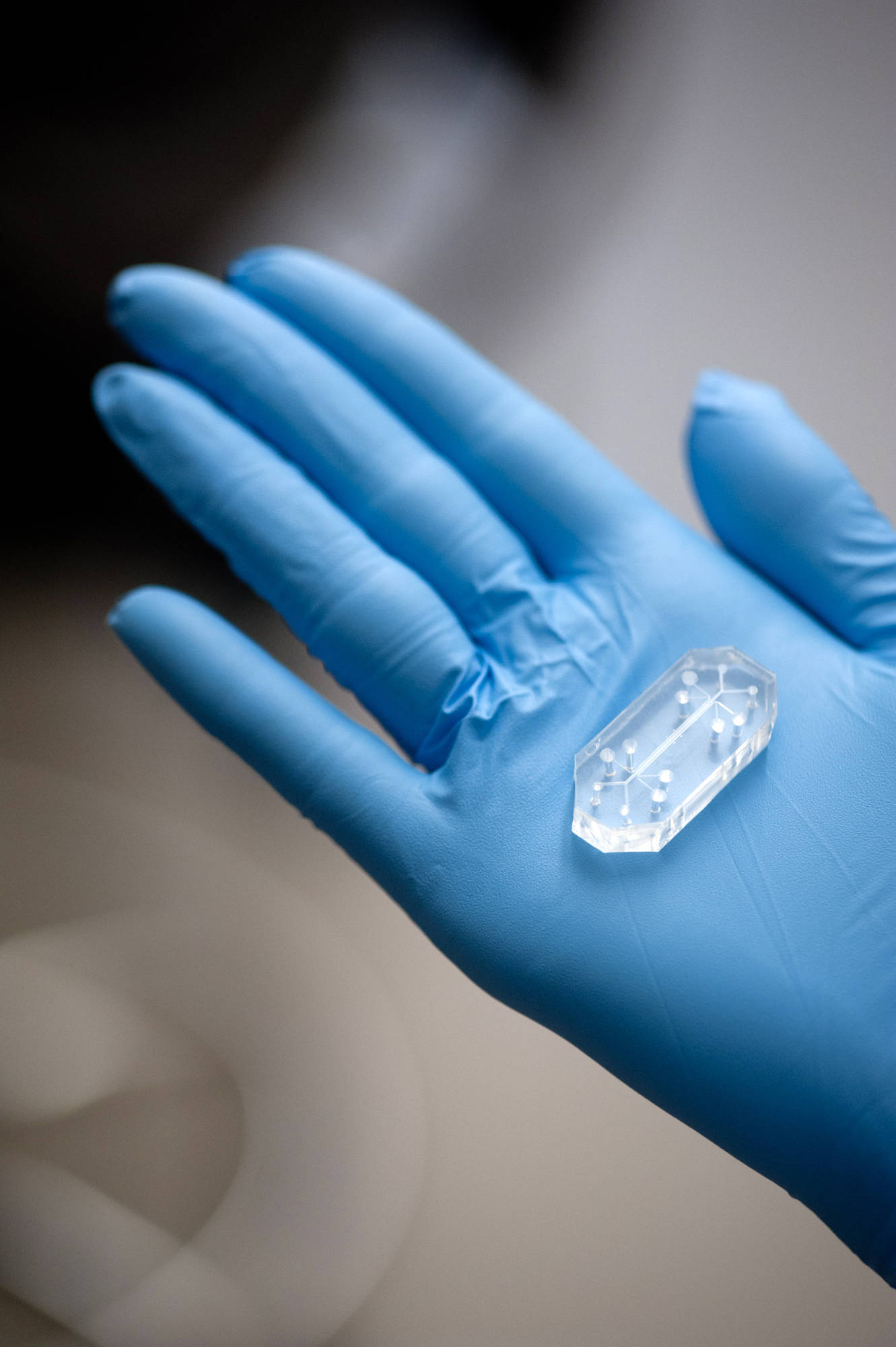
It may not look like it, but it's a lung, just in chip form
They don’t look like much sitting in your hand. A few pieces of clear plastic, each smaller than an Altoids tin, with channels visible inside and holes for plugging tubing into them.

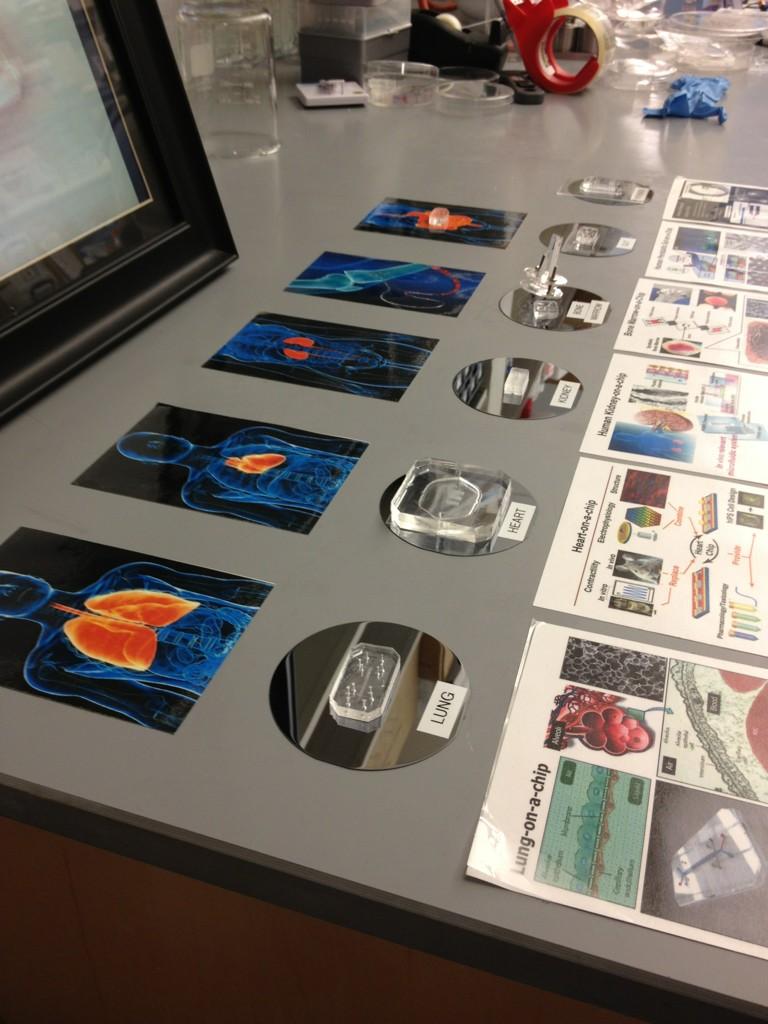
But fill them with cells and treat those cells the right way, and they turn into something amazing: tiny hearts, lungs, guts, kidneys.

They’re “organs on chips,” and they represent what’s probably the most comprehensive effort to date to physically model the functions of whole organs for drug development and disease research.

Developed by a team of biologists and engineers led by Donald Ingber, MD, PhD, a member of Boston Children’s Hospital’s Vascular Biology Program and director of the Wyss Institute for Biologically Inspired Engineering at Harvard, they’re the building blocks for an ambitious project to create an artificial multi-organ system—essentially, a whole body on a chip.

Each of the chips—Ingber’s team is currently developing 10 different organs—is built using microfabrication techniques like those common in the semiconductor industry.This allows us to create features and structures that we can control at the size scale in which cells live, and also apply physiological fluid flows and mechanical forces,” Ingber explains. “We have precise control over where cells live in the device and what they experience.

Going through the motions
The two features Ingber mentioned, flow and force, are instrumental in faithfully mimicking organ function. His lung on a chip, for instance, has a central microfluidic channel that is split into two parallel channels by porous flexible membrane. One side of the membrane is coated with human lung “air sac” cells (over which air can pass), the other with human lung capillary blood vessel cells. A combination of pumps subject the cells to the sensations of continuous blood flow and rhythmic breathing by moving culture medium through the blood vessel channel and applying suction that deforms the cell-coated membrane.

This video from the Wyss Institute explains in more detail:


Those forces incite dramatic responses from the cells in the chips. “You can put endothelial [blood vessel] and epithelial [air sac] cell cultures together, but they won’t reflect the range of functions you see in a real lung,” Ingber says. “This is because respiratory physiology relies on the mechanics of breathing and blood flow.

For instance, once we added breathing motions to the chip,” he adds, “the epithelial cells started producing surfactant, just like what happens in the lining of a normal lung when a baby takes its first breath.
“[O]nce we added breathing motions to the [lung] chip, the epithelial cells started producing surfactant, just like what happens…when a baby takes its first breath.”
Similarly, Ingber’s lab recently revealed that breathing motions were essential for using the lung chip to mimic the pulmonary edema (fluid leakage from blood vessels into the lungs) that occurs in some cancer patients treated with the drug interleukin-2—the first demonstration that chips could model a complex human disease, as well as a drug toxicity.

Ingber’s team has also developed a chip that models the complex environment of the human gut—including its microbial inhabitants. “Once we added a trickling flow of medium and peristaltic motions, the cells in the chip started forming structures similar to intestinal villi,” he says. “Now we’ve added bacteria, and can start to study the relationship between the microbiome and human intestinal disease processes.

Ingber's expanding repertoire of organs-on-chips could soon be linked together to create a whole body on a chip.
With a host of chips now in hand, Ingber and his team are now working with the federal Defense Advanced Research Project Agency to create a system for linking chips representing different organs together. The system will allow broader study of organ physiology and also how drugs affect multiple organs—the first step toward simulating a complete living body.

We want to be able to administer a drug via the ‘gut’ or ‘lungs,’ see how it is metabolized by the ‘liver,’ excreted by the ‘kidney,’ and whether it causes toxicity in the ‘heart,’” says Ingber. “We also want to model a broad range of disease states, like asthma, Crohn’s, radiation exposure and so on.

He’s also talking to the Food and Drug Administration about potentially accepting organ-on-chip data as part of the drug approval process in addition to or, in the future, in lieu of animal data.We’ve only just started the discussion, but we hope they’ll one day accept human organ chip data instead of certain animal studies, just as they’ve begun to accept biomarker data.


domingo, 9 de septiembre de 2012

Modelo artificial para medir la efectividad de los cosméticos.

ORIGINAL: Universia
06/09/2012

El grupo de Farmacogenética del Departamento de Farmacia de la Universidad Nacional en Bogotá desarrolló un modelo que permite medir algunas de las bondades que ofrecen estos productos.

Imagen suministrada
Es tan certero el prototipo que la Federación Farmacéutica Sudamericana acaba de otorgarle el primer premio en innovación cosmética, en el marco de su congreso número XV. Una distinción que obedece a su gran sustento científico, que permite demostrar si tienen o no funcionalidad como antiedad y calcular la seguridad de cada insumo.

Según el profesor Fabio Aristizábal, director de la investigación, este ejercicio estuvo motivado por la preocupación que surge de que “en el mercado cosmético, aparentemente todo es válido”. Y tiene que ver con un desarrollo molecular que, básicamente, utiliza un método de seguimiento de expresión génica, mediante una reacción que se le conoce como retrotranscripción y amplificación molecular.

Esto permite comparar, en cultivos celulares, cómo un conjunto de materiales que han sido sometidos a tratamiento y otros que no expresan moléculas que fortalecen la piel. Asimismo, hace posible identificar de qué manera varia la expresión de los genes; y así, dependiendo de su tipo y de su función, se puede decir cuáles son sus acciones”, asegura.

A través de un sistema in vitro, se examinaron dos extractos de piper (una planta de la familia de las piperáceas). Uno resultó ser muy efectivo estimulando genes asociados con colágenos, pero, a su vez, inhibiendo los que desarman la matriz extracelular: las metaloproteazas. En cambio, el otro extracto no. Para la prueba fueron seleccionados doce genes que parecían ser los más significativos.

Se evidenció de manera contundente, por medio de estos análisis, cuál tiene moléculas funcionales (antiarrugas y antiedad en general) y si realmente es efectivo o simplemente es carreta”, asegura.

Cabe anotar que, en el mundo, lo que se impone en materia de análisis de estos tipos de productos es el uso de modelos que no empleen animales. Esto resulta ser de provecho desde el punto de vista ético. Pues estos sistemas utilizan células que no afectan individuos y que se pueden estar renovando de manera continua.

El investigador señala que este tipo de modelos —en los que no se usan animales de laboratorio, sino células derivadas de humanos—permiten establecer de manera concluyente que la función existe. “Es un modelo rápido para determinar efectividad”, dice.

Igualmente, indica que se puede analizar si la población celular es afectada por los tratamientos o muere, pues también se pueden contar las células y dar una alarma en caso de que alguna de estas materias primas tenga cierto efecto tóxico.

Así, sin duda se trata de modelos muy útiles para probar la seguridad, pues, aunque no pareciera, también en esta industria existen riesgos. “Hay que recordar que en la piel uno no se debe aplicar cualquier cosa”, asevera.

En la actualidad, se pueden utilizar, por ejemplo, fibroblastos (las células que están encima de la piel) o queratinocitos (células predominantes en la epidermis). Asimismo, se puede trabajar sobre una piel artificial que fabrican con una matriz tridimensional y tiene células de diferente origen (fibroblastos y queratinocitos), sobre las cuales se pueden medir este tipo de genes.

Con respecto al futuro, el profesor Aristizábal cuenta que han ofrecido el modelo a la industria. En efecto, confirma que existe un proyecto aprobado dentro de un consorcio en cosmética y apoyado por Colciencias, en el cual se van a implementar algunos de estos métodos, a fin de desarrollar productos antienvejecimiento, alisadores de piel, entre otros.

El proyecto, financiado por el grupo y la División de Investigación de la sede, estuvo a cargo de Catalina Amaya y Catalina Acevedo (químicas farmacéuticas) y de Lina María Escobar (magíster en Biotecnología).

domingo, 15 de julio de 2012

Prohibirían uso de animales en investigación y enseñanza

ORIGINAL: El Tiempo
Foto: Ilustración: Julio César Penagos

Proyecto de ley coincide con decisión de no permitir que Patarroyo utilice monos en experimentos.

Un fallo judicial, que obliga al inmunólogo Manuel Elkin Patarroyo a abandonar sus investigaciones con monos nocturnos, y otro que indica que los animales tienen dignidad y no deben sufrir tratos crueles abrieron de nuevo la discusión sobre su uso con fines científicos y académicos. (Lea también: Revocan permiso a Patarroyo para usar monos en lucha contra la malaria).

Esta controversia pasará ahora al Congreso por cuenta de un proyecto de ley que impulsa el Partido Verde, para prohibir todo tipo de investigación con animales vivos en cualquier nivel de formación, así sea para fines educativos o didácticos.

La propuesta del senador Jorge Londoño, titulada 'Estatuto para la protección animal', está pendiente de surtir primer debate en la Comisión Quinta del Senado después del 20 de julio próximo.

El artículo 14 del texto es el que, por sus alcances, prendió las alarmas entre los docentes e investigadores del país:

"Queda prohibido a profesores y estudiantes de todas las instituciones educativas en los niveles preescolar, básica, secundaria, media y superior utilizar animales en sus actividades de enseñanza. En las instituciones de educación superior queda prohibida, igualmente, la utilización de animales con fines didácticos, educativos o de aprendizaje, cuando por esa causa se pueda derivar sufrimiento, lesión o muerte".

Se pretende "limitar el maltrato animal", explica Londoño, a través de la "reducción de la investigación científica con animales" y, para ello, aseguró, hay métodos alternativos.

En el parágrafo del polémico artículo 14 se indica que será responsabilidad del Ministerio de Educación promover entre estudiantes y docentes el "uso de modelos alternativos en docencia como simuladores, modelos virtuales, zoológicos virtuales, entre otros centros de investigación y docencia".

También se busca que "los laboratorios privados limiten sus investigaciones con animales", según la propuesta de Londoño. Solo se permitiría el uso de bioterios, que son lugares en los que se imitan ambientes naturales para criar animales con fines de investigación y enseñanza. (Siga este enlace para leer: 'Si cierran laboratorio, no habrá vacuna contra la malaria': Patarroyo).

Entre científicos y docentes el proyecto despierta expectativa porque, de manera taxativa, prohíbe el uso de animales en investigaciones y procesos educativos, lo que, a juicio de varios expertos, limita su ejercicio profesional.

Un proyecto de esta naturaleza debe tener "excepciones" para que no limite el desarrollo de la investigación, fue el comentario que le mereció al doctor Raúl Cuero, Ph. D en Microbiología. Cuero es docente en instituciones estadounidenses y considerado actualmente el científico colombiano más importante.

El investigador le dijo a EL TIEMPO que "en países como Colombia, donde la brecha científica es mucho más grande frente a naciones industrializadas, se requiere tener flexibilidad y algunas excepciones", en la medida en que "las leyes no pueden ser extremas porque afectan el desarrollo científico y cognitivo". Según él, se debe implementar un "control de la permisividad", pues los métodos virtuales pueden limitar la capacidad de invención.