Mostrando entradas con la etiqueta Ciencia. Mostrar todas las entradas

domingo, 31 de mayo de 2015

La punta del iceberg y la casita en el aire

Moisés Wasserman
Se ha vuelto popular la posición de que si la ciencia no genera un producto que se venda bien, resulta un ejercicio inútil y desperdiciador. Queremos resultados sin esfuerzo.

Los icebergs son símbolo de lo mucho que se oculta detrás de lo poco que se ve. Su densidad es un poco menor que la del agua salada, por eso flotan –pero el 90 por ciento de su masa está sumergida–. Quienes quieren tener un pico sin su base deben saber que no es posible.

Recuerdo los icebergs cuando pienso en nuestras políticas de ciencia y tecnología. Se ha vuelto popular la posición de que la ciencia sirve meramente como instrumento para mejorar la competitividad y de que si no genera un producto que se venda bien, resulta un ejercicio inútil y desperdiciador. Queremos resultados sin esfuerzo.

Me han tratado de convencer de que eso es posible con el ejemplo de Steve Jobs, quien, sin grandes estudios, construyó un imperio tecnológico. Es cierto, él fue una persona muy ingeniosa, pero no se puede olvidar lo que hay debajo de la punta del iceberg.
  • ¿Cuánta física del estado sólido y cuánta química de materiales hay detrás de una pantalla táctil? 
  • ¿De dónde salió la tecnología de transmisión inalámbrica de la información? 
  • ¿Serían posibles los mapas de Google y los GPS sin la teoría de la relatividad? 
  • ¿Cuánta matemática y cuánto diseño hay detrás de cualquier app de moda? 
Es difícil profetizar, pero sí se puede decir con seguridad que las innovaciones tecnológicas revolucionarias surgirán en aquellos países que tienen una sólida capacidad científica.

La ciencia no solo sirve para la competitividad. Nos ayuda a entender el mundo y la vida, a generar bienestar y salud, a cuidar el medioambiente y a educar gente con pensamiento riguroso y capacidad para responder a problemas insospechados. Así mismo, la competitividad no es solo innovación. Esta última es apenas un factor entre otros, como el tipo de cambio, las tasas de interés, la productividad y el costo del trabajo, las leyes de protección, los recursos naturales, la cercanía y posibilidad de acceso a los mercados y más.

Pero nosotros insistimos en quedarnos con la punta del iceberg. El Plan Nacional de Desarrollo aprobó la fusión del sistema de Ciencia, Tecnología e Innovación con el de Competitividad. Definió la política de ciencia en apenas 12 renglones, en una ley de 68 páginas. Colciencias ni siquiera se menciona en ese único artículo (el 186) y aparece apenas tres veces nombrada en toda la ley, siempre dependiendo del Departamento Nacional de Planeación. Pienso que cuando Carlos Lleras fundó Colciencias y la denominó cabeza del sistema, no se refería a su posición en la jerarquía administrativa, sino a que contenía el cerebro.

Un amigo, miembro de un consejo de programa de C. y T., me relató una anécdota que viene al caso. A una reunión para evaluar la situación de la investigación vino un viceministro como delegado del Gobierno. Llegó tarde, habló y se fue. No averiguó quiénes eran los asistentes y se dirigió al consejo, compuesto por líderes académicos, investigadores y empresarios, como si se tratara de un comité interno de Colciencias. Les explicó que no hay que perder el tiempo en investigaciones sofisticadas, sino generar productos. Les recordó que esa institución debe estar al servicio de su cliente, que es... el Presidente (sí, lector, yo tampoco lo creí, y pedí que me lo repitieran). Terminó asegurando que Colombia tiene ya demasiados doctores y que no se justifica seguir fomentándolos con programas y becas.

Puede ser que creamos que podemos tener la punta de un iceberg sin su base porque ya tenemos una casita en el aire (la he oído por la radio, pero no la he visto en las ofertas inmobiliarias). Tal vez los edificios Space, en Medellín, fueron un primer experimento de esa política que dice que no vale la pena invertir en cimientos y columnas si lo que se vende son los acabados
Moisés Wasserman
@mwassermannl
ORIGINAL: El Tiempo
Moisés Wasserman
28 de mayo de 2015

lunes, 15 de diciembre de 2014

Crean red para jóvenes científicos latinoamericanos


Crédito de la imagen: Martín de Ambrosio


[BUENOS AIRES] “Las asociaciones de jóvenes científicos de Chile y México tiene los mismos objetivos y hasta el mismo nombre (+Ciencia), pero ni siquiera sabían de la existencia de la otra, ahí actuamos nosotros”, dirá luego Marga Gual Soler, cuando todo haya terminado.

Antes, durante más de tres horas, jóvenes investigadores —esa categoría tan elusiva— de la región mostraron sus esfuerzos personales y organizativos para llevar adelante proyectos. 

Fue en la doble sesión “Foro de ciencia joven en América Latina y el Caribe”, de la Asociación Mundial de Jóvenes Científicos (WAYS-Unesco), que reunió a una docena de participantes de Argentina, Chile, Puerto Rico, México y España, entre otros, en la jornada final del Congreso Iberoamericano de Ciencia, Tecnología, Innovación y Educación (12-14 de noviembre), en el Aula Magna de la Facultad de Derecho de la UBA

Gual Soler, que trabaja en la Asociación Estadounidense para el Progreso de las Ciencias (AAAS, en su sigla en inglés), se guardó para el mismísimo final el anuncio del lanzamiento de WAYS-LAC, la versión latinoamericana de un emprendimiento para dar soporte institucional a jóvenes investigadores que en ocasiones no lo tienen en países en vías de desarrollo y que ya funciona en otras regiones desde hace una década. 

Incluso hay una página web en versión beta disponible (www.wayslac.org). ¿El objetivo? Articular, dar visibilidad y proporcionar una voz colectiva a las organizaciones que la componen. 

Según cuenta Gual Soler, la financiación es incipiente y se cuentan apenas con recursos para algunos congresos y foros como el de Buenos Aires, siempre con el paraguas de la UNESCO. Pero es solo el comienzo: “Queremos articular, por ejemplo, con universidades de Estados Unidos y la Red Pop y armar un tejido que nos permita escribir nuestros propias becas de financiamiento”, dijo Gual Soler. 

El paraguas mencionado serviría para la química argentina Victoria Flexer, que dejará su trabajo en Bélgica para radicarse en el norte de su país, en Jujuy, en un mega laboratorio para investigar sobre litio, con los problemas que suelen tener becarios y post-becarios. 

O para sumar el inteligente entusiasmo de Fernando Valiente Echeverría quien impulsa Más Ciencia para Chile, organización que nació en 2007 por una protesta por salarios pero que trascendió ese pedido: “Queremos más institucionalidad en nuestro país, que haya un Ministerio de Ciencia independiente de Economía, y asumir un compromiso con la comunicación científica a la comunidad”, mencionó. 

O como José Antonio Alonso Pavón, parte de Más Ciencia México, que busca cuestionar la ciencia del modo que se la hace en su país, “sin apoyos del gobierno federal, con indiferencias que llevan a que a la gente no le parezca relevante la ciencia y crean que los científicos somos peligrosos, siempre a punto de hacer detonar algo en un laboratorio”. 

O Mónica Feliú-Mójer, que desde el archipiélago boricua busca que los científicos comuniquen a la sociedad sus conocimientos, y así armó la asociación sin fines de lucro Ciencia Puerto Rico

Hasta hubo espacio para la historia de Javier Santaolalla, del colectivo científico-humorístico The Big Van Theory, que contó sus hazañas y desventuras como joven investigador en el CERN de Suiza y luego en Brasil. Porque la ciencia con humor entra, y si está organizada mucho mejor.

ORIGINAL: SciDevNet

17/11/14


sábado, 1 de noviembre de 2014

Academic Science Isn’t Sexist

CreditOlimpia Zagnoli
Gray Matter


ACADEMIC science has a gender problem: specifically, the almost daily reports about hostile workplaces, low pay, delayed promotion and even physical aggression against women. Particularly in math-intensive fields like the physical sciences, computer science and engineering, women make up only 25 to 30 percent of junior faculty, and 7 to 15 percent of senior faculty, leading many to claim that the inhospitable work environment is to blame.

Our country desperately needs more talented people in these fields; recruiting more women could address this issue. But the unwelcoming image of the sexist academy isn’t helping. Fortunately, as we have found in a thorough analysis of recent data on women in the academic workplace, it isn’t accurate, either.

There’s no argument that, until recently, universities deserved their reputations as bastions of male privilege and outright sexism. But times have changed. Many of the common, negative depictions of the plight of academic women are based on experiences of older women and data from before the 2000s, and often before the 1990s. That’s not to say that mistreatment doesn’t still occur — but when it does, it is largely anecdotal, or else overgeneralized from small studies. As we found, when the evidence of mistreatment goes beyond the anecdotal, it is limited to a small number of comparisons of men and women involving a single academic rank in a given field on a specific outcome.

In contrast, our work, which is forthcoming in the journal Psychological Science in the Public Interest and was written with the economists Donna K. Ginther, of the University of Kansas, and Shulamit Kahn, of Boston University, reports the results of several hundred analyses of data on hiring, salary, promotion, productivity and job satisfaction for eight broad fields of science at American universities and colleges.

Our analysis reveals that the experiences of young and midcareer women in math-intensive fields are, for the most part, similar to those of their male counterparts:

  • They are more likely to receive hiring offers, 
  • are paid roughly the same (in 14 of 16 comparisons across the eight fields), 
  • are generally tenured and promoted at the same rate (except in economics), 
  • remain in their fields at roughly the same rate, 
  • have their grants funded and articles accepted as often and are about as satisfied with their jobs.
  • Articles published by women are cited as often as those by men. 
In sum, with a few exceptions, the world of academic science in math-based fields today reflects gender fairness, rather than gender bias.

Moreover, in contrast to frequent claims that outright bias pushes more women out of math-intensive fields, we actually found a greater exodus of women from non-math-intensive fields in which they are already well represented as professors (like psychology and biology, where 45 to 65 percent of new professors are women) than from fields in which they are underrepresented (like engineering, computer science and physics, where only 25 to 30 percent of new professors are women). Our analyses show that women can and do prosper in math-based fields of science, if they choose to enter these fields in the first place.

So if alleged hiring and promotion biases don’t explain the underrepresentation of women in math-intensive fields, what does? According to our research, the biggest culprits are rooted in women’s earlier educational choices, and in women’s occupational and lifestyle preferences.

As children, girls tend to show more interest in living things (such as people and animals), while boys tend to prefer playing with machines and building things. As adolescents, girls express less interest in careers like engineering and computer science. Despite earning higher grades throughout schooling in all subjects — including math and science — girls are less likely to take math-intensive advanced-placement courses like calculus and physics.

Women are also less likely to declare college majors in math-intensive science fields. However, if they do take introductory science courses early in their college education, they are actually more likely than men to switch into majors in math-intensive fields of science — especially if their instructors are women. This shows that women’s interest in math-based fields can be cultivated, but that majoring in these fields requires exposure to enough math and science early on.

In contrast to math-based fields, women prefer veterinary medicine, where they now constitute 80 percent of graduates, and life sciences, in which they earn over half of all doctoral degrees; women are also half of all newly minted M.D.s and 70 percent of psychology Ph.D.s. However, those college women who do choose math-intensive majors like engineering persist in them through graduate school and into the academy at the same rate as their male counterparts — again showing that women can and do succeed in math-based fields if they develop interest in them and commit to them.

Today’s story about women in math-based academic fields is clear. While no career is without setbacks and challenges, life in fields like engineering, physics, mathematics and computer science — when viewed by the numbers across the population of academics today rather than through the lens of testimonials and overgeneralized findings — is life with reasonable pay, flexibility to meet family demands, and the chance to make meaningful impacts on the state of knowledge and the next generation of talented young people. Academic science is a rewarding career for many, men and women alike. We are not your father’s academy anymore.

ORIGINAL: NYTimes
By WENDY M. WILLIAMS andSTEPHEN J. CECI
OCT. 31, 2014

miércoles, 23 de julio de 2014

Ángela Restrepo Moreno: "La mamá de los científicos"

INVESTIGADORES EMÉRITOS 2014

Ángela Restrepo, ganadora en la categoría ciencias Bio - de la Vida y el Medio Ambiente.


De niña, Ángela Restrepo Moreno se quedaba por horas mirando la vitrina de la farmacia de su abuelo, detrás de la cual había un aparato de color amarillo con negro que la atraía como si fuera un imán. Era un microscopio muy parecido al que usaba Louis Pasteur en el siglo XIX para sus estudios.

Esto llevó a esta valiente mujer a ser científica en una época en la que las mujeres solo tenían dos caminos posibles: ser monjas o amas de casa. Cuando Ángela se graduó de bachiller, en 1951, no había dónde estudiar microbiología en Medellín. Su panorama se esclareció cuando abrieron un curso de Bacteriología. Luego hizo un máster en la Universidad de Tulane, en Estados Unidos. Años después hizo el doctorado y a su regreso comenzó a hacer diagnósticos de enfermedades causadas por hongos y microbios en un cuartico que el Hospital Pablo Tobón Uribe le prestó a ella y a otros investigadores. Gracias al trabajo de estos científicos y a do-naciones hoy es un edificio de cuatro plantas que todos conocen como la Corporación para Investigaciones Biológicas. Ángela Restrepo es hoy por hoy una autoridad mundial en el estudio del hongo Paracoccidioides brasiliensis.

Por su trabajo Ángela Restrepo ha sido reconocida con una larga lista de condecoraciones. Hace 20 años integró la Misión de Sabios que, junto con el educador Carlos E. Vasco, el escritor Gabriel García Márquez y el científico Rodolfo Llinás, le propuso al país una ruta de educación para catapultarlo hacia el desarrollo.

La doctora Restrepo es reconocida por haber sembrado la semilla de la investigación en una veintena de médicos y microbiólogos que hoy tienen estudios de doctorado y que la consideran como su mamá, tanto en la ciencia como en la vida. “Nunca me angustié de ser una mujer soltera por la multiplicación de los científicos que he visto crecer a mi lado”, dice ella.

ORIGINAL: Semana
05 julio 2014
 

lunes, 14 de julio de 2014

Todos Los Niños Nacen Genios, Pero Son Aplastados Por La Sociedad Y La Educación

ORIGINAL: UPSOCL
Por Francisco Lira

En esta entrevista el físico teórico Michio Kaku, cuenta una historia sobre una desgarradora pregunta que su hija le hizo. Según Michio, todos los niños nacen genios hasta que la sociedad aplasta el espíritu científico y presenta una simple hipótesis de por qué a los niños no les gusta la ciencia.¡Todos sabemos que la magia se perdió en algún momento de nuestra niñez!

lunes, 7 de julio de 2014

Los siete sabios de la ciencia en Colombia 2014

Reconocimiento a su vida y obra otorgado por Colciencias

Moisés Wasserman, Manuel Elkin Patarroyo y Ángela Restrepo, entre los galardonados. Ejecutivo sigue sin explicar por qué le recortará $125 mil millones al sector en 2015.


Colciencias pasará de tener $414.000 millones que le fueron girados para 2013 a contar con $289.000 millones. / Luis Ángel

El viernes pasado, con un auditorio lleno de caras largas y tristes todavía por la derrota de Colombia ante Brasil, la directora de Colciencias, Paula M. Arias, anunció en Cartagena los siete científicos galardonados con el Premio Vida y Obra de ese instituto. Concluía así la Convención Científica Colombiana, una iniciativa de Colciencias y la revista Semana.

En ciencias básicas fueron premiados Manuel Elkin Patarroyo y Moisés Wasserman, exrector de la U. Nacional. En ciencias sociales el reconocimiento recayó en Gonzalo Sánchez, director del Centro Nacional de Memoria Histórica.

Luis Fernando García Moreno, hasta el año pasado director del Centro de Investigaciones de la U. de Antioquia, recibió el premio en ciencias médicas y de la salud, mientras Álex Enrique Bustillo Pardey fue destacado en ciencias agrícolas. Ángela Restrepo Moreno, una de las científicas antioqueñas más reconocidas, fue resaltada por sus aportes en ciencias de la vida y del medio ambiente, y Silvio Delvasto Arjona, en el área de ingeniería y tecnología.

Muy honrado ayer por estar entre siete investigadores eméritos. Primera condición ser mayor de 65. Esa sí la cumplí”, bromeó Wasserman a través de Twitter.

Sin embargo, la buena noticia sobre el reconocimiento a estos siete científicos colombianos resulta paradójica cuando 24 horas antes de la premiación la misma directora de Colciencias anunció que el Gobierno había recortado $125.000 millones al presupuesto de la entidad para el próximo año, medida que aún no ha sido explicada por el Ministerio de Hacienda.

Este dinero es una suma nada despreciable, pues equivale casi a la tercera parte del presupuesto directo de la entidad (No teng) y aunque se rumora que la disminución de recursos tiene que ver con que ahora el instituto está recibiendo dineros de la industria de la extracción minera y petrolera, Colciencias ha aclarado que los fondos provenientes de regalías (10% del total de estas) se administran de otra manera y bajo otras condiciones.

También llamó la atención que una de las premiadas, la doctora Ángela Restrepo, sin duda la mayor experta en hongos del país y quien hizo parte de la Misión de Sabios, en la reciente evaluación de investigadores y grupos llevada a cabo por Colciencias, fue calificada como “investigadora júnior”. A sus 83 años, la doctora Restrepo tiene un currículum que envidiaría cualquier científico. Para algunos, el premio fue una forma de limar asperezas con un sector de la comunidad científica colombiana que andaba profundamente molesto por las flaquezas de esta evaluación de Colciencias.

Algo similar ocurrió con Manuel Ramírez, uno de los decanos de la economía en el país, vinculado a la U. del Rosario y nominado a los mismos premios. Ramírez, de acuerdo con la clasificación de Colciencias, tiene el mismo tamaño intelectual de los jóvenes científicos que comienzan a abrirse paso en el mundo de la ciencia.

Quedó claro durante los cuatro días de conferencias y debates en Cartagena, que la comunidad científica tiene por delante un gran reto y es lograr ajustar las tuercas de un sistema de ciencia y tecnología que podría dar un gran impulso al desarrollo del país.

ORIGINAL: El Espectador
Por: Pablo Correa pcorrea@elespectador.com @pcorrea78
6 JUL 2014 

viernes, 4 de julio de 2014

Gobierno Colombiano recorta presupuesto de Colciencias

Para 2015 la inversión será de $289.000 millones, es decir $125.000 millones menos de lo asignado para 2014.

La directora de Colciencias, Marcela Arias Pulgarín, hizo este jueves un anuncio que dejó perplejos a los más de 700 investigadores y académicos que se congregan por estos días en Cartagena en la Convención Científica Colombiana: el Gobierno disminuyó considerablemente el presupuesto que anualmente se le asigna a este ente responsable de la investigación en ciencia y tecnología en el país.


Durante su intervención en la Convención, Arias manifestó que recibió un correo de la Departamento Nacional de Planeación en el que le informan del recorte al presupuesto.

Será de 289.000 millones de pesos, 125.000 millones de pesos menos que la inversión asignada el año anterior para el 2014”, informó.

Indicó que “aunque Colciencias administrativamente debe tener la importancia de un ministerio está lejos de tener un presupuesto directo que respalde esa importancia".

Arias no descartó que la comunidad científica se movilice para exigir la inversión que merece la institución responsable de la investigación en ciencia, tecnología e innovación en Colombia.

ORIGINAL: El Espectador
Por: Redacción Educación
3 Jul 2014

viernes, 27 de junio de 2014

Powerful Ad Shows What A Little Girl Hears When You Tell Her She's Pretty

A new Verizon commercial cites a sad statistic by the National Science Foundation: 66 percent of 4th grade girls say they like science and math, but only 18 percent of all college engineering majors are female.

People have offered many potential explanations for this discrepancy, but this ad highlights the importance of the social cues that push girls away from math and science in their earliest childhood years.

The video depicts one girl's development from toddler to teenager. She wanders curiously through nature, examines the plants and animals around her, creates an astronomy project, and builds a rocket with her older brother. But all along the way, she hears many all-too-common refrains from her parents: "Who's my pretty girl?" "Don't get your dress dirty," "You don't want to mess with that," and "Be careful with that. Why don't you hand that to your brother?" These statements are subtle, but the ad suggests that they can ultimately discourage girls from pursuing traditionally male-dominated STEM subjects in school.

According to AdWeek, the powerful commercial is the result of a partnership between Verizon and Makers and is narrated by Girls Who Code founder, Reshma Saujani.

The video ends with a thought-provoking question: Isn't it time we told her she's pretty brilliant, too?

It sure is.


ORIGINAL: Huffington Post
By Caroline Bologna
06/24/2014

lunes, 28 de abril de 2014

The First Poem Published in a Scientific Journal

An ode to the ocean’s bioluminescent marvels.

Image courtesy of the J. Woodland Hastings Lab, Harvard University
We’ve already seen science as a muse of painting, music, sculpture, and design. In 2001, the poetic muse struck Smith College life sciences professor and clock researcher Mary E. Harrington who, smitten by the circadian rhythms of the bioluminescent algae Gonyaulax polyedra, penned a poem about these whimsical organisms. It appeared on the pages of the June 2001 issue of the Journal of Biological Rhythms and is considered the first poem to be published in a strictly scientific journal. (I discovered it through a passing mention in the excellent Internal Time: Chronotypes, Social Jet Lag, and Why You’re So Tired.)


If the lazy dinoflagellate
should lay abed
refuse to photosynthesize,
realize:
the clock will not slow

but it will grow fait
weaker
weaker

barely whispering at the end
”rise”
”rise”

to little effect.
The recalcitrant Gonyaulax
arms crossed
snorts
“No longer will
they call my life
(my life!)
‘just hands’.
I am sticking to the sea bed!”

ORIGINAL: Brain Pickings

viernes, 18 de abril de 2014

Neurology and microfluidic science kits take over for kids in the 21st century

Today kids are not happy enough to play around with the old chemistry kits from yesteryear, they want more, they want real science. Recently the people behind the ISEF science fair, The Society for Science & the Public, launched a competition for children with the aim of letting children make their own modern version of a science kit for kids in the 21st century. Of course in today’s world, children do have access to a great deal more modern technology than what was around in the 60s and 70s.

[Image Courtesy of George Korir]

The results of the competition are in and it was a handmade microfluidic kit that took first prize in the competition. This was made by a graduate student along with the help of his biochemistry professor. For those who don’t know, microfluidic tech is the stuff that is found in lab-on-a-chip devices which are used to analyse small amounts of liquid. These move around and mix chemicals through channels, which are of course very small, on platforms that are very small, such as the size of a computer chip. Scientists have been busy working on devising microfluidic devices that can mimic human organs. First they had to decide what chemical reactions to make in the kit for children.

Holes were then punched out of paper card and these holes corresponded to sequences and were then loaded with the correct chemicals. In order to make the reactions between the chemicals, kids had to then use the cards with a reader that worked with a hand crank. This then released the chemicals slowly, just one single drop for every hole that was punched in the card. Manu Prakash from the Stanford University, who was the professor who helped to make the system, made a statement saying that he could see kids in the future trading the reaction cards and could even become as popular as trading baseball cards were in the past.


In second place came a design of electrodes that when placed onto the body can sense electricity after it sent messages to the brain produced by the body whilst flexing muscles. To do this, electrodes were hooked up to amplifiers and then an electrical device such as a motor or light bulb. This allowed those using it to turn on something, for instance a propeller, simply by squeezing their hand or even just thinking about it.


[Image Courtesy of George Korir]


Chemistry sets were always on the Christmas list of some boys and girls during the 60s and 70s but today they are more than just attaching wires to a battery and small light bulb. The competition could have sparked off a whole new trend when it comes to science kits and they could become the in-thing for budding inventors and scientists for Christmas 2014 and beyond.

For a full list of all winners and their bios head over to the Gordon and Betty Moore Foundation.


April 15th, 2014 

jueves, 10 de abril de 2014

La genial respuesta que Wil Wheaton dio a una niña que le preguntó si en el colegio le decían "nerd"


El actor y escritor estadounidense (Wil Wheaton) no solo le dio una valiosa lección a la pequeña, sino que entregó un mensaje que todos deberíamos escuchar. Muchos niños han sufrido o sufren de bullying en el colegio, lo que los hace sufrir tanto a ellos como a sus familias. Pero hay palabras que tienen más poder que el apodo "nerd".

Durante una conferencia de prensa, una niña le preguntó al actor y escritor Wil Wheaton, conocido por su rol en Star Trek y The Big Bang Theory, si en el colegio le decían nerd y, de ser así, cómo lidiaba con eso.

La respuesta del actor fue una lección de vida para todos los niños y también para los adultos.

ORIGINAL: SoyChile

domingo, 6 de abril de 2014

The First Poem Published in a Scientific Journal

An ode to the ocean’s bioluminescent marvels.

Image courtesy of the J. Woodland Hastings Lab, Harvard University
We’ve already seen science as a muse of painting, music, sculpture, and design. In 2001, the poetic muse struck Smith College life sciences professor and clock researcher Mary E. Harrington who, smitten by the circadian rhythms of the bioluminescent algae Gonyaulax polyedra, penned a poem about these whimsical organisms. It appeared on the pages of the June 2001 issue of the Journal of Biological Rhythms and is considered the first poem to be published in a strictly scientific journal. (I discovered it through a passing mention in the excellent Internal Time: Chronotypes, Social Jet Lag, and Why You’re So Tired.)


If the lazy dinoflagellate
should lay abed
refuse to photosynthesize,
realize:
the clock will not slow

but it will grow fait
weaker
weaker

barely whispering at the end
”rise”
”rise”

to little effect.
The recalcitrant Gonyaulax
arms crossed
snorts
“No longer will
they call my life
(my life!)
‘just hands’.
I am sticking to the sea bed!”

ORIGINAL: Brain Pickings

viernes, 28 de marzo de 2014

Llega Suma+mente, una revista para entender la ciencia

Original: SEMANA
Publicaciones Semana le apuesta a la información de este sector fundamental para el desarrollo del país

Desde este domingo (Próximamente) circulará Suma+mente, la primera revista de periodismo científico que busca tomarle el pulso a la Ciencia, la Tecnología y la Innovación (CT+I).

Cada mes los lectores serán testigos de todos los avances, descubrimientos, investigaciones y esfuerzos que están sucediendo Colombia, sin dejar a un lado los acontecimientos mundiales sobre estos temas. Todo esto presentado con un lenguaje periodístico claro, directo y ameno.

Suma+mente trae en su primera edición un profundo análisis del programa de repatriación de cerebros fugados que acaba de lanzar Colciencias y el Gobierno Nacional.

También los lectores podrán enterarse sobre
  • el uso que se les están dando a las regalías para la CT+I; 
  • las razones técnicas y científicas que llevaron a los paperos de Colombia a la quiebra; 
  • la batalla que van a librar Juan Valdez y Starbucks por los consumidores de café en Colombia, 
  • la polémica alrededor de la experimentación en animales o 
  • los avances que se tuvieron que hacer para producir la película Gravity, entre otros. 
La publicación trae, así mismo, tres columnas de opinión que analizan de manera crítica la actualidad científica y tecnológica del país.

Suma+mente busca convertirse en la revista más importante de periodismo y divulgación científica de Colombia. Para ello, cuenta con un experimentado equipo de periodistas, científicos, investigadores y expertos nacionales e internacionales.

En los próximos días Suma+mente estrenará un portal, dedica a los temas de Ciencia tecnología e innovación. Allí los internautas encontrar información actualizada del acontecer científico del país y del mundo

Con este nuevo proyecto, Publicaciones Semana le hace una apuesta para destacar uno de los sectores que hoy es fundamental para el desarrollo del país.

Tomado de: Semana

ORIGINAL: Colciencias
20/03/2014

The Forgotten Woman Who Made Microbiology Possible

Angelina Fanny Hesse: An Unsung Heroine of Microbiology
Collage by Fruzsina Eördögh; Petri dish image © M J Richardson (CC BY-SA 2.0)

Lab work can be a lot like cooking. You have to follow directions to measure, mix, and heat different chemicals to the right temperature to get the desired result. For some experiments, the desired result is actually something that can be eaten by a range of different organisms. In microbiology labs, feeding bacteria is a major preoccupation, and preparing the proper growth medium in a lab's "kitchen" is often the first step of any experiment. Petri dishes are filled with a sort of savory Jell-O, a nutrient-filled semi-solid matrix that creates a cozy home for bacteria to grow. Without the solid-yet-moist surface of the gel where the bacteria can cling to and reproduce, there's little hope of separating a bacterial cell from its environment in order to study it.

In the earliest days of microbiology, scientists were stumped about how to isolate bacteria. That is, until the family cook—a woman named Angelina—changed everything by bringing her culinary insight into the lab. Before Angelina, the work of classifying different bacteria seemed hopelessly complex. Unable to differentiate them, Linnaeus classified all bacteria in the order Chaos in 1763. (Today, Chaos is a genus of giant amoebae.) In the 1800s, scientists studying the spots of fungus growing on moldy bread and meat began to realize that each spot was an individual species of microorganism, which could be transferred to a fresh piece of food and grown in isolation. Inspired by these early food-based studies, Robert Koch used thin slices of potatoes as naturally occurring "Petri dishes" when he began his studies of bacterial pathogens.

New techniques to isolate, grow, and study the behavior of individual species of microorganisms were developed in Koch's lab in the last decades of the 19th century. In a 1939 article, Arthur Hitchens and Morris Leikind described the history of these crucial microbiological techniques and the development of the solid medium still used in labs today. They begin by writing that Robert Koch's "genius lay in his ability to bring order out of chaos. Starting as it were with a box of miscellaneous beads, varying in size and shape, each bead a scientific fact, he found a thread on which the beads could be strung to form a perfect necklace." But they continue to highlight not only the genius "bead stringers" but also the numerous and talented "bead collectors" who help to build the tools and collect the data that the bead stringers use. For Koch's legendary discoveries of the bacteria that cause diseases like tuberculosis and cholera to be possible, he needed new techniques to effectively isolate bacteria beyond carefully sliced potatoes. He needed the tools that were developed by his less-celebrated laboratory assistants, like Julius Richard Petri's dishes and Walther Hesse's solid growth medium.

But behind the talented laboratory technicians that supported Robert Koch's genius was an even more unsung heroine of microbiology. It was Walther Hesse's wife (who was often an assistant and scientific illustrator for the lab) Angelina Fanny Hesse who made the isolation of bacteria possible. In the early 1880's, Walther was struggling to find the right sort of gel for Petri's dishes. He was experimenting with using gelatin to congeal the nutrient broth that the bacteria ate, but bacteria also liked to eat the proteins that congealed the gelatin, chewing through the gel and ruining the experiments. Gelatin also had another major drawback: it would soften and begin to melt at the incubation temperatures required for growing the bacteria.

Angelina, who cooked both the family's meals and the beef stock that the bacteria ate in her kitchen, suggested that Walther use agar-agar, which is more heat-stable than gelatin and used to make soups, desserts, and jellies, particularly in Asia. (She had learned about it from Dutch friends who had lived in Indonesia, which was a colony of the Netherlands at the time.) Agar is a sugar polymer derived from algae that most bacteria can't digest. Once it's boiled and cooled, it forms a tough matrix that stays solid at much higher temperatures than gelatin.

With agar, many of the technical problems hindering Hesse's—and therefore Koch's—experimental progress were solved. Koch briefly mentioned the development (though he fails to mention either Walther or Angelina) in his 1882 paper announcing the identification of the bacteria that causes tuberculosis: "The tubercule bacilli can also be cultivated on other media...they grow, for example, on a gelatinous mass which was prepared with agar-agar, which remains solid at blood temperature, and which has received a supplement of meat broth and peptone."

Angelina Hesse's creative insight was thus written out of history with the ever-present passive voice of the scientific literature. Even today, the Wikipedia article about Robert Koch masks Angelina's contribution to microbiological history, simply stating that Koch "began to utilize agar to grow and isolate pure cultures." In the late 19th century, the use of agar to isolate bacteria was initially referred to as "Koch's plate technique," but since the early 1900s only Petri's name remains in common use. In their article, Hitchens and Leikind suggested (seventy five years ago) that "plain agar" be referred to as "Frau Hesse's medium" to acknowledge her forgotten "service to science and to humanity." Perhaps it's finally time that we remember Frau Hesse and celebrate all the ignored "bead collectors"

ORIGINAL:
Popular Science
By Christina Agapakis
Posted 07.14.2014

viernes, 21 de marzo de 2014

Los 3 paradigmas para tener más mujeres en tecnología y emprendimiento


Para dinamizar el emprendimiento tech en las mujeres se necesita atacar desde varios ángulos: 
  • una cultura orientada a potenciar herramientas de programación, 
  • una mentalidad problema-solución y 
  • una visión en grande y en comunidad.
Cultura orientada a la programación
No sé en qué momento de mi primer ciclo universitario, luego de haber triunfado sobre cálculo y geometría, huí de las matemáticas. Quizá porque, por encima de mi triunfo, tenía terror a que todo fuera debido a la suerte y que esa suerte se pudiera acabar. El hecho es que cinco años después -y arrepentida- me encuentro frente a una computadora luchando contra el lenguaje de programación STATA, buscando evaluar programas y políticas sociales.


Pero desafortunadamente yo estoy en la mayoría. En Estados Unidos, de cada 100 mujeres al año que comienzan carreras en ciencias y matemáticas, solo 13 se gradúan en ciencias de la computación.

¿Por qué nos asustan tanto los números? Cuando en alguna conversación oigo decir -y esto pasa más de lo debido en Perú- que es algo genético o biológico, dejo de ponerle atención a lo que sigue.

Resulta que nosotras las mujeres debemos luchar contra el fenómeno nada más y nada menos que de una mala campaña de marketing. Un experimento realizado en la Universidad Harvey Mudd evaluó la teoría de que si solo le cambiabas el nombre a los cursos de computación, se podría lograr un aumento en el número de mujeres que se inscribían. Al cabo de siete años, se comprobó que no solo aumentaba el número de mujeres que se inscribían sino también el número de mujeres que completaban el curso. Hoy en día el 40% de mujeres completan el tercer curso de nivel de Ciencias de la computación en comparación con el 10% cuando iniciaron los cambios.
Para haber seguido los cursos de matemáticas en la universidad, yo tendría que haberme dado cuenta que la programación no era solo un curso. Es una herramienta a través de la cual tú puedes alcanzar tus sueños. No importa qué quieras hacer.

Mentalidad ‘problema-solución’
Una vez que asimiles la noción de que la programación no es un fin sino un medio, no va a ser suficiente. Porque lo próximo que encontrarás es que adoptar un estilo de vida que integra modos prácticos, lógicos y cuantitativos de ver la vida y tomar decisiones requiere inmediatamente un cambio abrupto en tus costumbres. Hay que aprender a resolver problemas en vez de quejarse. Yo le llamo una mentalidad de problema-solución.


Todo buen programador sabe que de vez en cuando se encontrará con trabas que parecen imposibles de resolver, esas que requieren que toda la noche te quedes acosando a tus colegas, consultando foros, stack overflow/exchange, etc. Pero cuando finalmente encuentras el arreglo, siempre te das cuenta que fue tu actitud persistente, más que la suerte o la inteligencia, lo que fue la clave. Eso y… bueno, también el hecho que ya a estas alturas eres un experto en encontrar parches a la velocidad de un rayo para que el código funcione.

Pero no tenemos esta costumbre, incluso cuando la evidencia dicta todo lo contrario: hay estudios que calculan la relación entre el éxito profesional y la “inteligencia emocional” y encuentran que la capacidad de mantener la persistencia ante los retos es más responsable por el éxito profesional que 15 puntos adicionales en CI (coeficiente intelectual).
En general, nos encanta llorar por la leche derramada. Es tan fácil decir “no lo encontré, no pude, fue imposible…”. Pero este modus operandi no es compatible con la chica 2.0 apuntando a crear impacto a través de la tecnología.

Visión en grande 
Una vez hayas alcanzado eso, el último paso es tener una visión en grande. Probablemente has escuchado la frase ‘pensar globalmente, actuar localmente’. Siento que últimamente estoy viendo mucho del “actuar localmente” y muy poco del “pensar globalmente”.


Gracias a la tecnología, cada vez estamos más y más conectados con personas a miles de kilómetros de distancia. Pero aún así nos limitamos cuando decidimos emprender una empresa o proyecto.

No digo que no vale la pena comenzar algo a menos que lances en 20 ciudades a la vez. Me refiero a que, cuando lances, tu horizonte no sea tu comunidad o tu ciudad, sino el mundo.

Varias de las empresas sociales más exitosas han sido las que crean soluciones innovadoras para atacar los problemas más agudos en nuestra sociedad, que prevalecen en el mundo. Por ejemplo, Dispensers for Safe Water, Deworm the World, Un Techo Para mi País, Kiva y Charity Water. Y si hablamos de empresas privadas con fines de lucro, estas también se hicieron exitosas atacando a nivel global: Kickstarter, Dropbox, Uber, Netflix. Las dos listas son largas.

El mensaje es que hagamos más uso del conocimiento que hoy en día se acumula por montones en la Internet y es tan fácil de conseguir. Aprovechemos el hecho que puedo adivinar el correo de personajes en altos cargos siguiendo el patrón del dominio de la empresa y quizá me responda. Busquemos una conquista a gran escala para resolver los problemas más urgentes y transversales.
Y entonces ¿qué hacemos?

Habiendo esbozado un panorama bastante lúgubre, los quiero dejar con un mensaje algo más positivo.

El ser humano es una criatura de hábitos. Y aunque esto parezca nuestro talón de Aquiles, también puede ser nuestra fortaleza. Porque así como aprendimos podemos desaprender. Mientras más joven se comiencen a cultivar estos tres aspectos, con mayor facilidad se podrá contribuir al cambio social que queremos ver.

En términos de tecnología y programación, la curiosidad debe ser alimentada desde la infancia y a lo largo del crecimiento. En Coderise, por ejemplo, estamos enfocados en llegar a jóvenes que aún están en el colegio, pero ya en edad de identificar qué es lo que les apasiona. Y potenciamos sus intereses para cultivar sus ganas de aprender y ver su futuro profesional y personal a través de la tecnología y la programación. También enfocamos la experiencia Coderise no solo en cubrir un alto volumen de conceptos de programación en un tiempo limitado, sino en inculcar una actitud ‘problema-solución’ empujándolos a aprender a aprender; a ponerse cómodos con la idea de que cuando quieran programar algo y no sepan cómo, naveguen la Web hasta encontrar la respuesta y no quedarse atorados. Finalmente, los Coderisers terminan por formar parte de la comunidad local y global de emprendimiento tecnológico a través de las mentorías que reciben cada semana, contribuyendo a crecer una visión global de interactuar y contribuir.

[Fuente imagen destacad - Shutterstock]

ORIGINAL: Pulso Social
marzo 21, 2014 

About Andrea Cornejo Columna invitada. Emprendedora social peruana y especialista en desarrollo económico y la evolución de impacto. Fundadora de varias iniciativas, entre ellas EmprendeSocial y Proyecto Viña Vieja. Directora de Coderise. Twitter @andreamcornejo.

Reflexionemos sobre el caso de Raúl Cuero. Falta de un periodismo científico solido en Colombia

Reflexionemos sobre el caso de Raúl CueroA propósito de la publicación de una investigación en el diario El Espectador, donde se cuestionan logros científicos del inventor colombiano Raúl Cuero, invitamos a la periodista científica colombiana Ángela Posada Swafford a compartir sus reflexiones en la Red Ética Segura de la FNPI.

Por: Ángela Posada-Swafford (columnista invitada) @swaforini
Este incidente lo que ha hecho es poner de relieve (eso espero) las consecuencias de la falta de un periodismo científico solido en Colombia. El periodismo científico está entre los más difíciles. No cualquiera puede cubrir un desfile de modas, o los avatares de la política, o las emociones deportivas un día y al siguiente tratar de entender aspectos de la bioquímica, o la astrofísica, o la genética, o el cambio climático que le permitan no solo hacer las preguntas adecuadas a un experto, sino buscar la historia detrás de la historia.

Para cubrir el trabajo del Dr. Cuero hay que comenzar por entender qué es, cómo funciona, qué adelantos ha habido y qué dificultades existen en el sensacional campo de la biología sintética. Hay que tener nociones de evolución, genética, química, biología molecular, desarrollo. Hay que saber cuál es la historia de la biogénesis. Hay que saber en qué publicaciones indexadas buscar información relevante al tema. Hay que saber dónde buscar fuentes alternas que hayan trabajado en los mismos temas. Y tener una lista de esas fuentes. Y usarla.

Por otro lado, el caso ha puesto sobre el tapete la importancia de tener un “escuadrón” de periodistas bien entrenados, dedicados a la ciencia, que los medios de comunicación masivos en el país, escritos, radiales y televisivos harían bien en cultivar y promover. Y que harían bien nuestros medios de comunicación en dedicarles espacios fijos y más amplios a las notas de ciencia, que además, bien tratadas, son apasionantes. Es el caso del huevo y la gallina: yo puedo entrenar a muchos periodistas en el cubrimiento de la ciencia, y sé que los hay muy interesados, pero si no tengo el apoyo de los medios dispuestos a darles un escenario más visible, más fijo y más amplio, no voy a lograr nada.

Entonces aquí también el problema está en los editores, los “perros guardianes” de la información noticiosa radial escrita y televisada, que deben estar entre los primeros en reconocer la importancia de estos temas, y darles a sus reporteros la oportunidad de proponerlos. Es cosa de trabajar en equipo y no señalarse con el dedo: el editor necesita buen contenido. Y el redactor o reportero necesita el apoyo. Ese es el sistema de “feedback” que yo he empleado desde hace años con mis editoras y editores en los múltiples medios en los que colaboro en Colombia y el exterior y puedo atestiguar que funciona. No puedo hallar una relación profesional más satisfactoria y productiva de que he logrado con todos ellos. Pero es un respeto que se gana a punta de profesionalismo. Entonces volvemos al cuento del huevo y la gallina.

Finalmente, y aprovechando esta coyuntura, hago un llamado a nuestros medios de comunicación y a nuestras instituciones universitarias y centros de investigaciones para que consideren poner en práctica una serie de talleres de periodismo científico a fondo. Cátedras de varios días, semanas, o meses, incluso, donde se puedan formar los futuros periodistas científicos del país. Mejor aún: ¿por qué no una serie de diplomados en periodismo científico? ¿O cursos fijos en nuestras varias y excelentísimas universidades? ¿No es esa, además, la mejor manera de sacar a relucir las investigaciones de nuestros profesores? Y a los editores de los medios: ¿No es esta la forma de lograr contenido interesante y relevante y local, que sirva al lector y a la vez balancee el contenido editorial/radial/televisivo, y quién sabe, quizás hasta compita con la columna de chismes o la ultima novela?

En suma, la divulgación de la ciencia tiene varias patas:
  • periodistas, 
  • editores, 
  • medios de comunicación, 
  • científicos, 
  • universidades. 
Y todas ellas deben desplegarse a la vez, como la vela solar de un satélite, para que la mesa no se desplome.
Copyright © 2014 Ética Segura. All Rights Reserved.


ORIGINAL:
Ética Segura
Por: Ángela Posada-Swafford (columnista invitada)

lunes, 10 de marzo de 2014

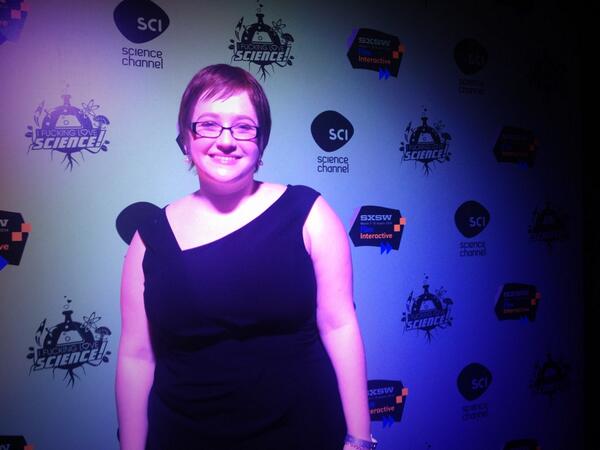
The ‘I F—ing Love Science’ Facebook Page Is Becoming a TV Show


Michael Tullberg—Getty Images
Late Late Show host Craig Ferguson will act as executive producer of Science Channel show


The wildly popular “I F—ing Love ScienceFacebook page—which has amassed more than 10 million fanswill soon become a television show.

The new Science Channel series will be executive-produced by Late Late Show host Craig Ferguson, who made the announcement with a videotaped message at the South by Southwest festival in Austin Saturday, Deadline reports.

British biology student Elise Andrew created the page in March 2012, posting any science-related photos, articles, diagrams or comics that she found interesting. Two years later, the page is still gaining new followers every day. Andrew is on board as a consulting producer for the show.

The one-hour program, debuting later this year, will feature a mix of live-action, animation, and recreations, with appearances by celebrities and scientists. And why is Ferguson exec-producing? He explained in his statement:

If you know anything about me, you know I love science. Science has a naughty secret – it’s that all things are connected. And this show is going to explore the randomness of science. Think of it as a late night Google search that goes a hundred pages deep until things get weird – and then you just keep going. And there is no better partner for this kind of smart entertainment like Science Channel and Elise.

ORIGINAL: Time
By Samantha Grossman @sam_grossman
March 9, 2014

viernes, 7 de marzo de 2014

CERN voices, for International Women's Day

Tomorrow, 8 March, is International Women's Day, an occasion that has been observed since the early 1900s to inspire change for the equal rights and treatment of women in society.

A statement on the International Women's Day website puts it thus:

Women's equality has made positive gains but the world is still unequal. International Women's Day celebrates the social, political and economic achievements of women while focusing world attention on areas requiring further action.

One aim of the day is to draw attention to the struggle for equal rights and representation for women in the workforce. A part of this year's theme – Inspiring change – is to "inspire change for more women in science, engineering and technology". So to mark International Women's Day, we asked voices from the CERN community to express their opinions on gender, diversity and collaboration at CERN.


Director-General Rolf Heuer reflects on how far we've has come over recent years in promoting gender equality at CERN, and President of CERN Council Agnieska Zalewska enthuses about collaboration at the laboratory.

CERN's Life Sciences advisor Manjit Dosanjh gives a personal view of how mothers can guide their daughters to a positive view of science and technology, and Giulia Fornaro, a postdoctoral student at CERN, gives her account of an inspirational female role model in physics.

In addition, the Diversity Programme have organized a networking event to celebrate this year’s International Women’s Day, including round-table discussions on "Women in Science, Technology and Engineering”.

For more about diversity at CERN, check out the Diversity programme website, or take a look at the video below from CERN's Human Resources Department.


CERN voices speak about diversity at the laboratory (Video: CERN Human Resources Deparment)


ORIGINAL: CERN
By Cian O'Luanaigh 
7 Mar 2014

lunes, 3 de marzo de 2014

Neil deGrasse Tyson Hosts “Cosmos: A Spacetime Odyssey” (at SXSW)

How did we discover the laws of nature? 
How did we find our coordinates in both space and time? 

“Cosmos: A Spacetime Odyssey” uses rich, epic storytelling to ignite our curiosity and inspire us to take a deeper interest in science and the world around us.

The series is hosted by astrophysicist Neil deGrasse Tyson, who will be delivering a SXSW Interactive keynote speech on Saturday, March 8th.

Three decades after the debut of “Cosmos: A Personal Voyage,Carl Sagan’s scientific exploration of the universe, Executive Producer Seth MacFarlane is working with Sagan’s original creative collaborators to produce the series.

The television premiere will take place Sunday, March 9th, debuting simultaneously across 10 U.S. networks, including Fox and National Geographic Channel. National Geographic Channel will be airing Cosmos every Monday night at 10pm, which will include additional bonus footage and behind-the-scenes content.

Be the first to see it at the SXSW Film Festival on Friday, March 7th at the Paramount Theatre at 10pm, followed by a Q&A with Neil deGrasse Tyson.


ORIGINAL: SXSW
February 26, 2014

sábado, 1 de marzo de 2014

Why The New York Times hired a Biology Researcher as its Chief Data Scientist


TO HELP MAKE SENSE OF THE MASSIVE TROVES OF DATA PRODUCED BY PEOPLE CLICKING AROUND ITS WEBSITE, THE TIMES MADE A (VERY) NONTRADITIONAL HIRE--CHRIS WIGGINS, A BIOLOGY RESEARCHER WITH A PHD IN THEORETICAL PHYSICS. IF YOU CAN MAP THE HUMAN GENOME, MAYBE YOU CAN EVEN FIX JOURNALISM.

It doesn't come as a huge surprise that the New York Times has hired a chief data scientist. Even 162-year-old media companies know that technology will play a huge role in the future of journalism. And, despite its age, the Times hasn't shied away from digital innovation. What's surprising, however, is that the new hire, Chris Wiggins, has spent the last 10 years steeped in biology research.

Chris WigginsWiggins's role at the paper started less officially last fall, when he used a sabbatical to apply his skills to the newsroom. "The best thing you can do with a sabbatical is to find something completely unrelated to your research to do," he explained to Fast Company. "I've been hearing for years from my students that this is where the future is and I was happy that I found a way that I could participate in building that future while building the data science skills that I've been developing in a different domain within the academy," he added.


As of last week, the Times made him a permanent fixture. Wiggins, who is also an associate professor in the Department of Applied Physics and Applied Mathematics at Columbia University, will spend one day a week at the paper, leading its yet-to-be built "machine learning" team.

Fast Company spoke with Wiggins about what that role will entail and how having a background in biology makes him at all qualified to lead the Times into the future.

FAST COMPANY: Before we get to this biology quandary, tell us about your background. Maybe that will clear things up.
CHRIS WIGGINS: My PhD was in theoretical physics. I got my PhD at Princeton at a time which is now called the second string revolution. Basically, everyone was interested in string theory, except for me. I was interested in the opposite of string theory. I was interested in how we model complex real-world problems in terms of the data that we have about them. At the time I was working in biology and that's where I've been working for the last several years doing what we would now call data science.

Okay, got it. So that makes a little more sense of things. But still: what does biology have to do with media?
The pain that many fields are experiencing by becoming data driven is a pain that was experienced in biology 15 years ago when whole genomes started being sequenced. I think there is a lot in common about applying data science in the natural sciences and applying data science in the real world. Real people have questions from a different domain, they have abundant data, and it's a fun and creative task to try to reframe those domain questions as machine learning tasks.

You lost me at machine learning tasks, what does that mean?
Machine learning sits at the intersection of data engineering and mathematical modeling. The thing that makes it different from statistics traditionally, is far more focus on building algorithms.

Another difference, although this is more of a spiritual difference, is that statistics traditionally has had a stronger emphasis in explaining a data set and machine learning has far more interest in building predictive models. For example, when Netflix tells you what movie to watch or when Amazon predicts what book to buy--that’s machine learning. In a way, machine learning has crept up all around you.

Like Netflix--now you're speaking our language. But how does this relate to theTimes? How do you plan to apply "machine learning" to the Grey Lady and its newsroom?

There's a lot of potential both on the business side and the editorial side. On the business side The New York Times is interested in establishing long-term relationships with their readers. So the Times is trying to
  • understand what are the behaviors that seem to be correlated with loyalty
  • what are the behaviors that seem to be correlated with dissatisfaction, particularly among subscribers--the way a long-term relationship manifests itself at the Times is via subscribers. 
If we're trying to understand how people engage with the site in general and in the abstract, machine learning is both useful for gaining insights about what kind of content engages users, and also good business. There is a way to listen to your customers at scale that you can do at a website that is just qualitatively different than having a focus group or giving out a survey.

And what about editorially?
ANYTIME ANYONE DOES ANYTHING ON A WEBSITE, THAT IS AN EVENT AND THAT PERSON LEAVES A TRAIL OF DATA. PUTTING ALL OF THAT DATA TOGETHER IS DEFINITELY A NON-TRIVIAL TASK.

I've worked with people on the data visualization group to think about how better to cluster the results that they look at that make the data visualization more interpretable. I've worked with business analysts to think about how to present data in user engagement in a way that is more meaningful and more statistically robust. I've worked with people from the personalization team to think about how best to test and optimize their recommendation models. There's a lot of opportunities for a machine learning group that makes all the groups stronger and draws a common narrative with people thinking about data in a high-powered way throughout the company, particularly on the technology side. It's a very technologically strong company.

It sounds like they have a pretty strong tech department.
People at the New York Times I found to be totally optimistic. They're not putting their heads in the sand. If you look at just the changes, even on the front-facing New York Times, they've really built out a presence in interactive news and much more video. I would say people are aware of the challenges and are really working hard to build a sustainable future for journalism.

I understand that part of your role is to further extend the tech department and build a team?
I'll be focusing on people who do and speak machine learning. There's already excellent data engineers; there's already excellent business analysts; there's already a great data visualization group. So it's a fantastic place now to build a machine learning group to try to make sense of those data, reframe business analytics questions as prediction problems, and to work with people who will visualize and help make interpretable the insights you gain from those types of predictive models.

How do you think this team led by you will change things at the Times?
News has gone from a device that shows up on your door step to a website, which just opens up a whole new universe of ways of understanding your readers and listening to your readers better. Anytime anyone does anything on a website, that is an event and that person leaves a trail of data. Putting all of that data together is definitely a non-trivial task. It gives so much immediate insight into the way people use your product, how your products can be improved, what new products you should be thinking about. I think that's a real transformation for anybody in any business.

[Photos courtesy of Chris Wiggins]

ORIGINAL: Fast Company
February 12, 2014