Mostrando entradas con la etiqueta Alemania. Mostrar todas las entradas

miércoles, 12 de marzo de 2014

Colombia and Germany consolidate international research partnerships

(c) Linde Storm
Colombia, formerly a dangerous Latin American country plagued by crisis, is now becoming an attractive location for international research partnerships. Cooperation between Colombia and Germany in a wide variety of disciplines is opening up promising prospects for researchers from both countries.

Kidnapping, drug wars and violations of human rights used to be the dominant news topics in the international media about Colombia. The South American country’s image as politically unstable and dangerous overshadowed the work of a vibrant research community and the success stories of existing international research partnerships. Rapid change has recently begun in Colombia, however.

Thus the Colombian research support organisation COLCIENCIAS was given ministry status at the beginning of 2009 and among other things manages the country’s national fund to finance science, technology and innovation, set up in the same year. The budget is primarily used to invest in support and priority subject programmes, for example in the environmental technology and biodiversity sector. In addition, since 2012, ten per cent of mining revenue has been channelled back annually into promoting research and innovation and is managed by COLCIENCIAS.

Research initiatives become international research partnerships
Some of the research partnerships between Colombia and Germany were set up several decades ago, but were often based on the initiative of individual researchers or departments. Much greater importance is now being placed on these research partnerships. Back at the end of the 1960s, for example, marine researchers from the University of Gießen teamed up with their Colombian colleagues to set up a research institute in Santa Marta in northern Colombia; CEMarin is now one of the world’s four centres of excellence funded by the German Federal Foreign Office as part of its Research and Academic Relations Initiative.

In the electrical engineering sector, a Memorandum of Understanding (MOU) was signed in 2012 between COLCIENCIAS and the German Research Foundation (DFG); the MOU focuses on joint research in the field of high-frequency technology. In addition to DFG, organisations such as the German Academic Exchange Service (DAAD), the Alexander von Humboldt Foundation and the German Federal Ministry of Education and Research (BMBF) have identified Colombia as a priority country in Latin America.

From Hegelian philosophy to high-frequency technology
Colombian and German researchers in particular are keen to forge closer links between universities and research institutes. ‘I am very interested in creating closer links between universities in Germany and my own university in Colombia,’ remarked María del Rosario Acosta from Bogotá, for example. ‘With the help of the Humboldt Foundation, I want to organise an international conference on philosophy (probably the philosophy of Georg W. F. Hegel) in the near future.’ After completing her university degree, María del Rosario Acosta obtained a doctorate in philosophy from the Universidad Nacional de Colombia in 2007 and now works as an extraordinary professor in the Department of Philosophy at Bogotá’s Universidad de los Andes. She has been working at the Cluster of Excellence on the Formation of Normative Orders at Frankfurt University since 2013 with a grant from the Alexander von Humboldt Foundation.

More exchange programmes for pioneering research partnerships 
María del Rosario Acosta is not only familiar with Colombia’s academic community, but has now also gained an in-depth knowledge of science and research in Germany too. She welcomes the positive changes that are taking place in Colombia and the growing international research partnerships. ‘Colombia’s university system is undergoing very important changes, particularly regarding graduate programmes (...) and also in relation to an increasing interest and quality in research. International cooperation is very important in both cases.’ Her own personal aim is to set up an exchange programme between the philosophy departments of the Universidad de los Andes and Frankfurt University, both for the faculties and for the students and postgraduates.

Colombia already has a new image among alumni
As far as exchange programmes are concerned, considerable achievements have already been made: Through the scholarship loan programme DAAD-COLFUTURO, for example, DAAD and the Colombian foundation COLFUTURO together provide full financial support for 50 Colombians studying for a Master’s degree in Germany. In addition, further candidates receive full funding through COLFUTURO.

German researchers who have already had the opportunity to participate in academic exchanges with Colombia have long since realised that the country’s negative image is a thing of the past. One student from Darmstadt summarised his experience as follows: ‘The first thing a lot of people think of in connection with the country is violence and civil war. Even though these times have now largely been overcome, hardly anyone talks about the positive aspects. That’s what I found so interesting about the country, and I have indeed seen a very different side to Colombia.’ (Source: Gate Germany – country profile on Colombia)

Regular meetings for alumni, debates with university representatives and the promotion of joint projects between Colombia and Germany are just some of the activities organised by Colombia’s two large alumni organisations Asprea and Aspa. As a future alumna of the Alexander von Humboldt Foundation, the option of cooperation within her field offers María del Rosario Acosta huge potential: ‘There is a vitality and a strong potential in the Colombian academic system. There is still a lot to be done, and this is also combined with the impetus and the will to do it.


Interview about international research partnerships with Colombia in the Community

More information about international research partnerships is available in the Community Group on Study and Research, where you can read the complete interview with María del Rosario Acosta.


ORIGINAL: Alumni Portal  Deutschland
By Sabine Müller

martes, 25 de febrero de 2014

Fellowships in Biochemistry, Cell Biology, Developmental Biology, Epigenetics, Immunobiology and Molecular Biology. Max Planck Institute


PhD overview

Our programme provides outstanding students with excellent research-oriented interdisciplinary training in Biochemistry, Cell Biology, Developmental Biology, Epigenetics, Immunobiology and Molecular Biology. We train students to become self-reliant and to acquire and utilize the knowledge necessary for their research project. Students have the chance to interact with experts in various fields both to extend their scientific knowledge and to learn critical thinking as well as acquire problem-solving skills.

The IMPRS-MCB fellows have 3 to 4 years to obtain their degree. Most of this time they work on their individually supervised research project. In addition to the experimental part all fellows have a possibility and are obliged to participate in curricular activities of the programme. These are:
  • scientific and soft skills courses offered by the programme (see Curriculum)
  • institute seminars
  • PhD retreat
  • supervision of junior students (master students or summer trainees)
  • conference attendance
  • career evenings

Our students are funded during the whole time of their PhD (3-4 years). The payment is sufficient for monthly living costs in Freiburg to be covered. There are no tuition fees to be paid.

Graphical overview of the curricular activities during your PhD
Figure Legend: Orange - activities related to research and the PhD project; Blue - courses; Green - scientific conference/retreats

ORIGINAL: Max Planck Institute

jueves, 13 de febrero de 2014

Why Germany's Nuclear Phase Out is Leading to More Coal Burning


In September 2012 Germany's Environment Minister opened a new lignite power plant, arguing the following: “If one builds a new state-of-the-art lignite power plant to replace several older and much less efficient plants, then I feel this should also be acknowledged as a contribution to our climate protection efforts.

Peter Altmaier is not alone, recently the climate benefits of Germany's new and apparently ultra-efficient coal power plants have been extolled not only by manufacturers such as Siemens and power companies including RWE, but even some of the German nuclear phase out's most vocal proponents.

We are also now seeing increasing numbers of people suddenly noticing an uptick in coal power, and deciding it has little to do with Germany's decision to move away from nuclear energy. These arguments however require both an alternative arithmetic, and an alternative history. Here is why.

In the aftermath of Fukushima, Germany prematurely shut 8 nuclear power plants. Respect for arithmetic and the intelligence of my readers dictates that I do not explain why this should lead to an increase in carbon dioxide emissions. However, the relationship between Germany's nuclear phase out and the construction of new coal power plants deserves an explanation.

Between 2011 and 2015 Germany will open 10.7 GW of new coal fired power stations. This is more new coal coal capacity than was constructed in the entire two decades after the fall of the Berlin Wall. The expected annual electricity production of these power stations will far exceed that of existing solar panels and will be approximately the same as that of Germany's existing solar panels and wind turbines combined.

  • Solar panels and wind turbines however have expected life spans of no more than 25 years. 
  • Coal power plants typically last 50 years or longer
At best you could call the recent developments in Germany's electricity sector contradictory.

(Coal production: author's calculation based on 80% load factor projected by Pöyry. Wind and solar production from Fraunhofer ISE. )

These new power plants are sometimes blamed by nuclear proponents on the post-Fukushima decision to shut all nuclear power plants by 2022. This is a myth. Any large piece of infrastructure takes a long time to build, and Germany simply could not respond to Fukushima by building new coal power plants at this scale and speed. Investment decisions for these power plants were made in 2005-2008 (see table 2 here). In response supporters of the nuclear phase out claim this shows that construction of new coal power plants have nothing to do with Germany's decision to phase out nuclear energy. This however is historical revisionism.

A terse history lesson. In the year 2000 the government of Gerhard Schröder announced that all of Germany's nuclear power plants must close by 2022, and this was passed into law in 2002.. This policy was revised by Angela Merkel in September 2010 to extend the lives of nuclear power plants so that the phase out would occur by 2032. Then after Fukushima, Merkel wisely or opportunistically - take your pick - decided to revert largely to the earlier phase out plan, closing eight nuclear power plants immediately and ruling that all would close by 2022.

The policy to phase out nuclear power was vital to the decisions to build new coal power plants. Closing down a quarter of your electricity generation leaves a gap that must be filled by something, and Germany realised it would largely have to be filled by one thing: coal. This is more or less beyond doubt, because Germany's then Environment Minister Sigmar Gabriel said so. Gabriel, now Germany's Minister for Energy and Economics told climate scientist James Hansen that Germany had to build new coal power plants because of its nuclear phase out, and stated elsewhere that Germany would have to build 8 to 12 coal power plants to replace its nuclear fleet.

And this is exactly what he got. In the first half of this decade Germany will open 9 new coal power plants.

By Robert Wilson
Posted January 20, 2014

domingo, 19 de enero de 2014

These 7 Countries Are Responsible for Over 60 Percent of Global Warming

And guess how the U.S. rates?
Throughout a century of climate-damaging activity, seven countries have emerged as the worst offenders. According to a new study published in Environmental Research Letters, the U.S., China, Russia, Brazil, India, Germany and the UK top the list.

The research, as digested by New Scientist:

Damon Matthews of Concordia University in Montreal, Canada, and his colleagues calculated national contributions to warming by weighting each type of emission according to the atmospheric lifetime of the temperature change it causes. Using historical data, they included carbon dioxide from burning fossil fuels and changes in land use – such as deforestation. They also accounted for methane, nitrous oxide and sulphate aerosols. These together account for 0.7 °C of the world’s 0.74 °C warming between 1906 and 2005.

The US is the clear leader, responsible for 0.15 °C, or 22 percent of the 0.7 °C warming. China accounts for 9 percent, Russia for 8 percent, Brazil and India 7 per centeach, and Germany and the UK for 5 percent each.
(Credit: IOP Science)

The above map shows the U.S., Western Europe, Japan and India bloated by their disproportionate contribution to global temperature rise as compared to their size — in this visualization, the blame shouldered by Russia, China and Brazil appears less extreme, while places like Canada, Australia and most of Africa all but disappear.

It is these very questions of equity and responsibility that currently represent major barriers to progress in international negotiations attempting to set national emissions targets, ” the researchers write, “and yet are critical to resolve as we move forward with climate mitigation efforts.” Of course, as the Onion brilliantly pointed out, 7 billion key individuals are responsible for the global warming crisis — and we’re all equally responsible for working to reduce our contribution to climate change.

ORIGINAL: AlterNet / (Salon.com)
By Lindsay Abrams
January 17, 2014

Lindsay Abrams is an assistant editor at Salon and a former writer and producer for The Atlantic's Health Channel.

domingo, 1 de diciembre de 2013

Green sea slugs aren’t solar powered after all

Elyisa timida is one of several sea slug species that sequester chloroplasts from the algae they eat. Scientists have been trying to determine whether the slugs can use the chloroplasts to derive food from the sun.Sven Gould and Jan de Vries

There are several species of sacoglossan sea slugs that feed on large, unicellular algae and hold onto the algae’s chloroplasts, the organelles that turn plant cells green and convert light to energy.

The sea slugs save those bits for at least a couple of weeks until digesting them. Four sea slug species keep the chloroplasts in their digestive glands for months, which makes the slugs green and inspired one of their earlier nicknames, “leaves that crawl.” Another nickname is “solar-powered slugs” because scientists thought that the slugs could use the chloroplasts to make energy to get them through lean times.

But in a disappointment for sea slug fans everywhere, Sven Gould of Heinrich Heine-University Düsseldorf in Germany and colleagues have found that at least two of the four species are not powered by the sun. Their study was published November 20 in the Proceedings of the Royal Society B.

A chloroplast is only one part of the cellular machinery that’s necessary to turn sunlight into energy. The chloroplast has a tiny bit of genetic material that provides pieces for the process, but most of the genes responsible for producing the necessary proteins live in the algal cell’s nucleus. For the sea slugs to be using their acquired chloroplasts for energy, they would need those nuclear genes. Only one species of sea slug, Elysia chlorotica, have been found to make some of the pieces of this energy-production puzzle, but even then it’s probably not enough to put the whole puzzle together. And researchers have been unable to find any relevant genes in two other species, E. timida and Plakobranchus ocellatus.

There’s been tantalizing evidence, however, that the chloroplasts are indeed working. Studies that trace carbon show that the sea slugs are taking up some of the element from the atmosphere. And the slugs can survive for months in the absence of food. Maybe they really are getting help from the sun, scientists reasoned.

Gould and his colleagues decided to pick apart the evidence, step by step, for two species, E. timida and P. ocellatus. They looked for genes that would keep the chloroplasts working. They didn’t find any. They then repeated the carbon experiments and found that, yes, in the presence of light, the chloroplasts continued to take in carbon dioxide, which would indicate they were still working. But when the team put the sea slugs through a starvation experiment, the results showed that the slugs weren’t taking advantage of any of that chloroplast energy.

The researchers split the slugs up into three groups, all of which were starved.

  • One group lived in the light
  • A second group lived in the dark, a natural way to cut off photosynthesis. And  
  • a third group had their photosynthesis cut off chemically
The best sign of a starved slug is a decline in weight. If the sea slugs were getting extra help from photosynthesis, then the first group should have lost the least amount of weight. But after 49 days, all the P. ocellatus slugs showed about the same amount of weight loss. Weight measurements were more unreliable for E. timida because they proved tricky to handle, but their survival didn’t appear to depend on light either. “As far as basic nutrition goes,” the researchers write, “the slugs are apparently not ‘solar powered’ at all.”
The chloroplasts appear to be nothing more than a colorful method of storing food, the researchers say. And though they have yet to repeat their experiments on the other two “solar-powered” slug species, the researchers aren’t optimistic that either of those two will turn out to be powered by the sun either.
ORIGINAL: Science News
by Sarah Zielinski
November 20, 2013 

viernes, 12 de julio de 2013

‘Parabolic Soap’ is a fusion of artificial / mechanical and natural behaviour


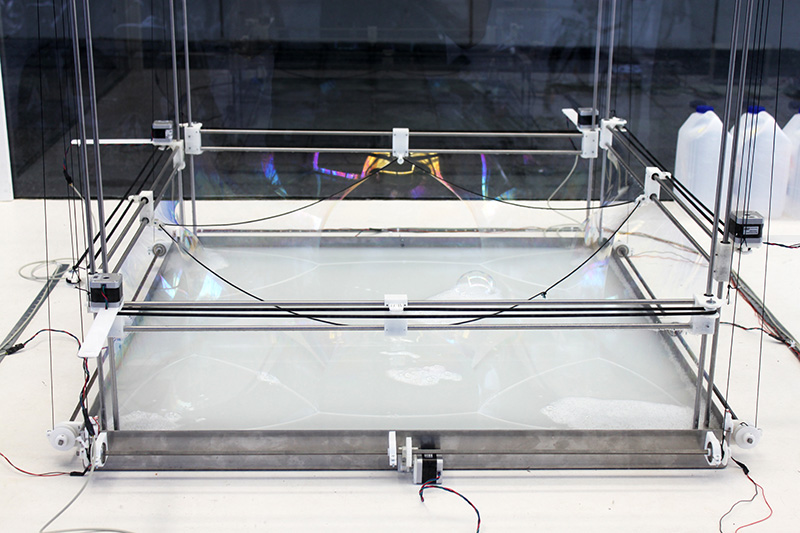
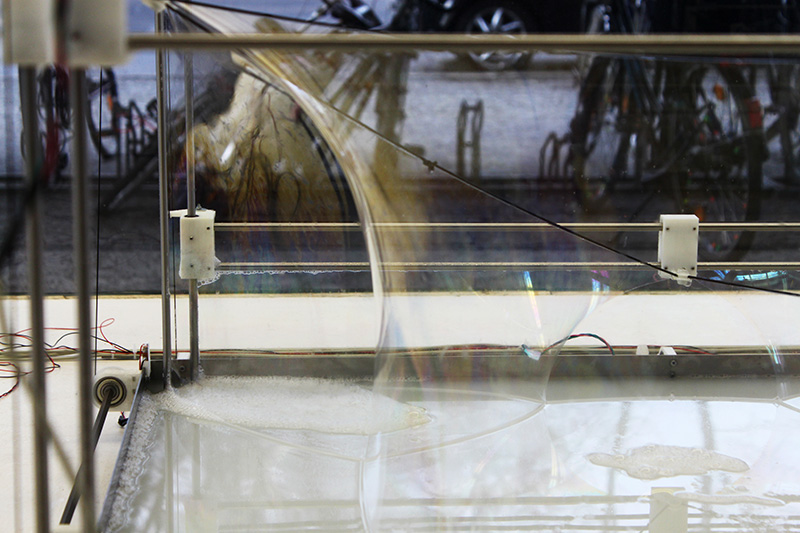
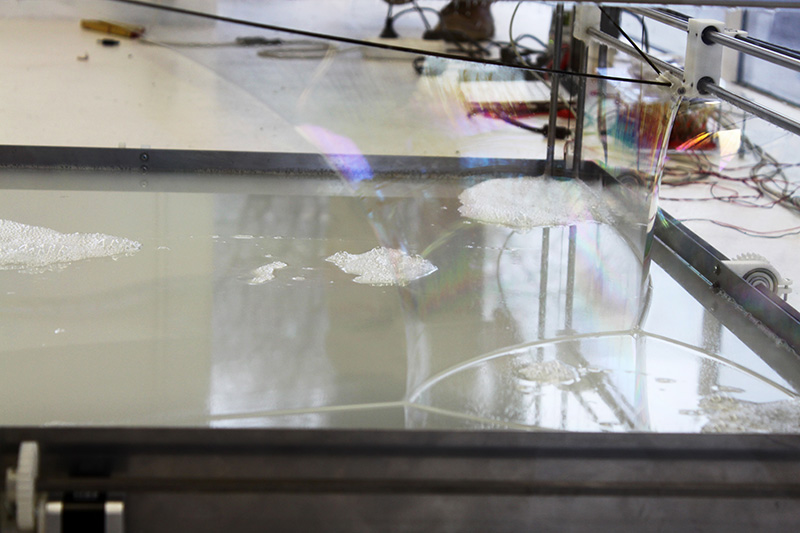
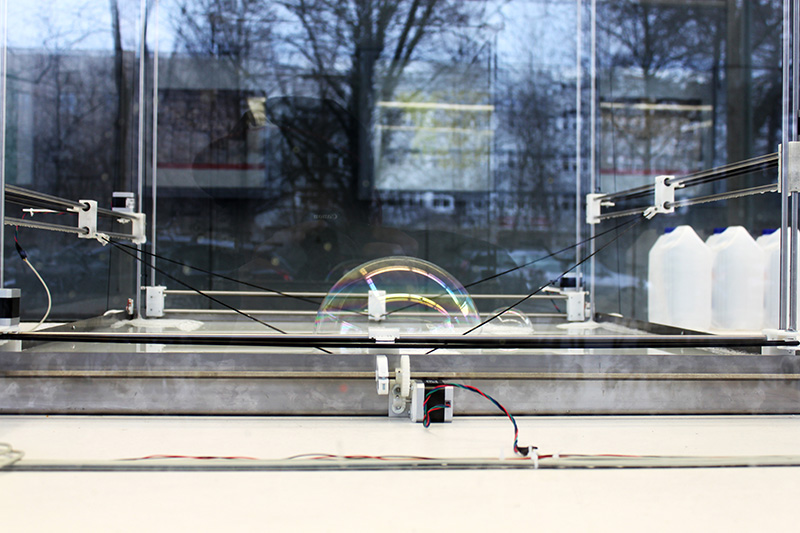
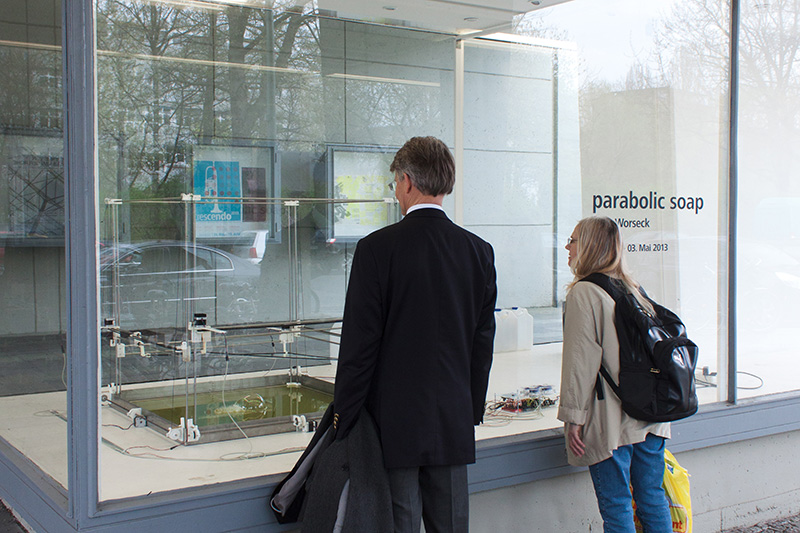
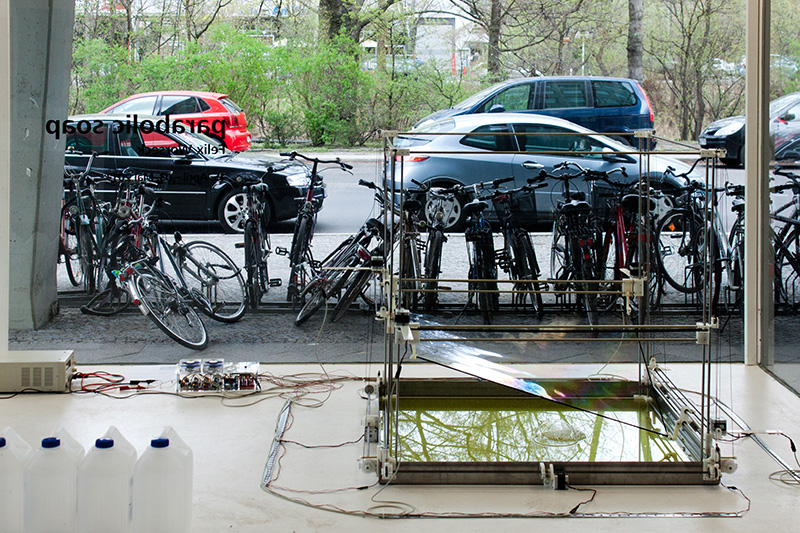
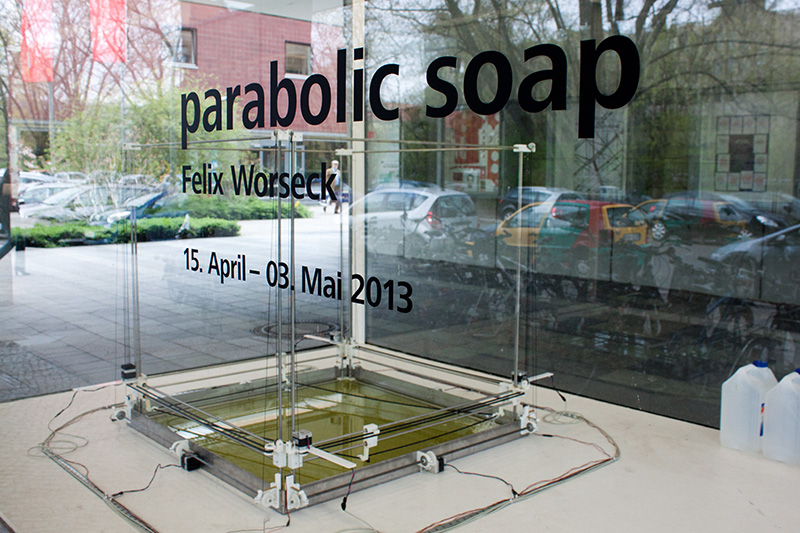
Created by Felix Worseck at the Berlin University of the Arts (Digitale Klasse), installation “parabolic soap” is a fusion of artificial / mechanical and natural behaviour. The aim of the install is to produce a paraboloid surface that can be moved for approximately 60 seconds. This minimal surface is created only after the connection of the membrane and the soap pool is broken.

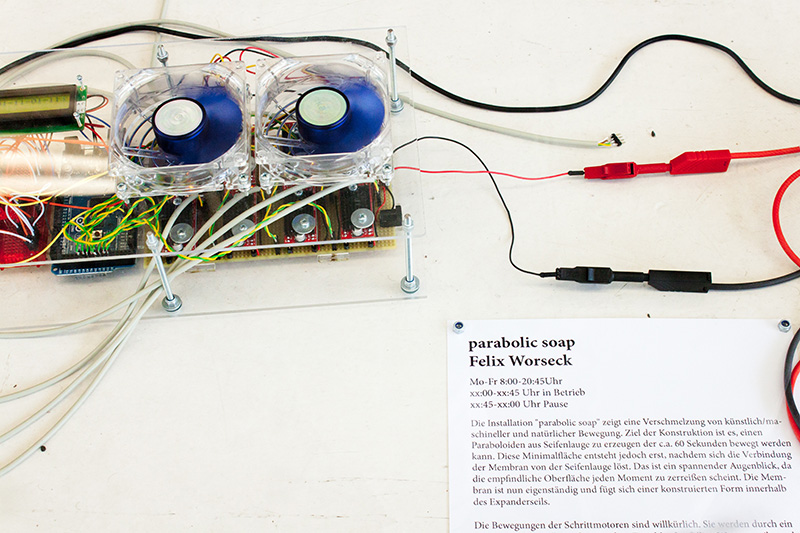
The movements of the stepper motors are arbitrary. They are controlled by an Arduino program that assigns random values ??in each pass to the height of the four control axes. After the soap membrane is separated from the base, the machine moves back to the initial state and the sequence begins again.

Components: Arduino, Easy Driver, Stepper Motors, 3D printed joints.

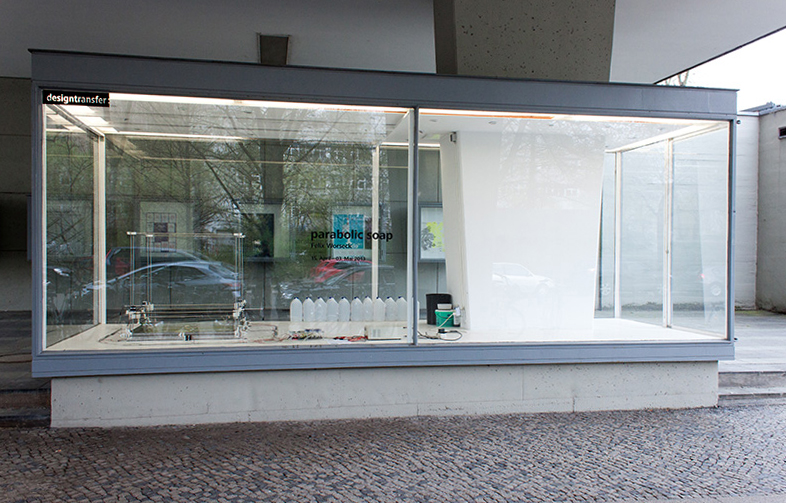
The 1 cubic metre installation was shown in glass casing on Einsteinufer 43-53 street in Berlin from 15th April until 3rd May 2013.

Project Page | Felix Worseck
parabolic-soap_02parabolic-soap_10parabolic-soap_09parabolic-soap_08parabolic-soap_04parabolic-soap_07parabolic-soap_06parabolic-soap_03parabolic-soap_01


jueves, 11 de julio de 2013

BREAKING: Germany Sets Solar Power Record (Again) — 23.9 GW

ORIGINAL: Clean Technica
Zachary Shahan
July 7, 2013

It has been a very sunny day here in western Poland, so I knew it was basically the same in Germany (it always is) and that there was a good chance Germany would break its previous solar power output record. So, I’ve been keeping an eye on SMA Solar Technology’s live solar power output tool for the country.
Screenshot of SMA Solar Technology live solar power output webpage.

Sure enough, a few hours ago, solar output climbed above the 22.68 GW solar power output record Germany set in April. Not long after, it climbed above the 23.4 GW solar power output record set in June. At its peak at about 1:45pm local time (one hour ago), the output got up to 23.9 GW. (Actually, I thought I saw it reach 24 GW at that time, but the replay isn’t showing it go above 23.9 GW.)

I’m sure an official number still needs to be confirmed, but a full 0.5 GW increase according to SMA’s site makes for a very safe conclusion that we have a new record. It is an estimate based on the output of thousands of SMA solar power systems spread across the country.

Germany’s peak electricity demand at midday is about 60 GW, so at 1:45pm or so, solar power was providing about 40% of the country’s electricity demand. Impressive. Approximately 1.3–1.4 million solar power systems were involved in creating that massive electricity output, our German solar expert Thomas tells me. And about 8.5 million people live in buildings where solar power systems are used to produce electricity or heat.

As we’ve reported many times before, Germany is the clear solar power world leader at the moment. (Though, Bulgaria and the Czech Republic actually beat it on solar power per GDP). Despite what Fox News or Fox & Friends might want to tell you, it’s not because of Germany’s “excellent” solar resources — its solar resources are comparable to Alaska’s. Rather, it’s because the country has had a simple, strong policy in place (solar feed-in tariffs) to stimulate solar power installations on homes and businesses.

–> For more on Germany’s solar power leadership, check out: 10 Solar Lessons From Germany.

domingo, 23 de junio de 2013

World’s first microalgae façade goes ‘live’

ORIGINAL: IBA-Hamburg 

25 Apr 2013

BIQ
Natural, efficient and unique: the BIQ is setting new standards as the first building in the world to have a bioreactor façade. Microalgae are cultivated in the glass elements that make up its “bio skin”. These are used to produce energy, and can also control light and provide shade. Inside, an innovative living concept is aimed at ensuring maximum design versatility for everyday life, and gives us a glimpse into urban life in the future. With its innovative living concept, futuristic exterior, and “intelligent” algae façade, the BIQ is a highlight of ”The Building Exhibition within the Building Exhibition”.


A Building with a Second Green Skin 
The sides of the building that face the sun have a second outer shell that is set into the façade itself. Microalgae – tiny plants, most no larger than bacteria – are produced within this shell. They enable the house to supply its own energy. The only thing that the algae have to do is simply to grow. They are continuously supplied with liquid nutrients and carbon dioxide via a separate water circuit running through the façade. With the aid of sunlight, the algae can photosynthesise and grow. This façade is the first of its kind in the world and makes use of the very latest energy and environmental technology.
 

Microalgae – a Smart Energy Solution 
The algae flourish and multiply in a regular cycle until they can be harvested. They are then separated from the rest of the algae and transferred as a thick pulp to the technical room of the BIQ. The little plants are then fermented in an external biogas plant, so that they can be used again to generate biogas. Algae are particularly well suited for this, as they produce up to five times as much biomass per hectare as terrestrial plants and contain many oils that can be used for energy.


An Energy Concept that Calls upon Natural Forces 
The BIQ has a holistic energy concept: it draws all of the energy needed to generate electricity and heat from renewable sources – fossil fuels remain untouched. It is able to generate energy using the algae biomass harvested from its own façade. Moreover, the façade collects energy by absorbing the light that is not used by the algae and generating heat, like in a solar thermal unit, which is then either used directly for hot water and heating, or can be cached in the ground using borehole heat exchangers 80 metre-deep holes filled with brine. This remarkably sustainable energy concept is therefore capable of creating a cycle of solar thermal energy, geothermal energy, a condensing boiler, local heat, and the capture of biomass using the bio-reactor façade.


More than just a Shell: the BIQ Demonstrates what Tomorrow’s Façades can do
The BIQ building shows that in the future façades will be able to serve a number of different functions, and be much more than an aesthetic cladding to protect against rain and cold. While the northeast- and northwest-facing sides of the building have an elaborately decorated shell to draw the eye, the algae within the southwest and southeast façades produce biomass for renewable energy. In addition, the façade also serves the conventional purposes of insulating the building from sound, heat, and cold, and provides shade in bright sunlight. Spacious balconies give the residents sweeping views over the park, as well as the chance to see the natural power plant contained in the algae façade up close. However, visitors can also observe this film of matter as it grows. The greenness of the façade shows that the algae are breaking down the carbon dioxide and processing it through photosynthesis. This renewable form of energy production is thus visible from outside the building, and is an intentional part of the architectural concept.

Living on Demand
Inside, the BIQ reveals how we might live in the future. The ever greater interconnectedness between living and working and the increased demand for adaptable housing spaces means that there will be a call for versatile residential ground plans in the future. Two of the total of fifteen apartments to be housed in the BIQ do not have separate rooms, but rather enable the inhabitants to configure their living arrangements “on demand”. Depending on their needs, individual functions of the apartment – bathroom, kitchen, sleeping area – can be swapped about or combined to form a “neutral zone”. In this way, the necessities of everyday life determine the appearance of the apartment, and the versatile layout can be adapted to suit the residents and their daily lives at any given time.

viernes, 21 de junio de 2013

The Human Brain in Exquisite Detail

ORIGINAL: The Scientist
By
June 20, 2013

Scientists create BigBrain—an ultrahigh resolution 3–D model of the human think-box.

Microtome slicing a human brain. AMUNTS, ZILLES, EVANS, ET AL.

Researchers have painstakingly stained, imaged, aligned, and digitally reconstructed thousands of ultra-thin slices of a human brain to give the most high-resolution 3–D model of the organ ever created, according to a paper published online today (June 20) in Science.

It’s a tour-de-force and a monumental amount of work,” said Arthur Toga, director of the Laboratory of Neuro Imaging, at the University of California, Los Angeles, who was not involved in the work. “It allows observation down into the cytoarchitectural level in a comprehensive way, which really hasn’t been done before,” he said. “That’s enormously valuable.

A previous 3–D brain atlas devised by Korbian Brodmann at the beginning of the 20th century, and that is still used today, provides only gross identification of distinct architectural areas of the brain’s cortex, while more recent models based on magnetic resonance imaging (MRI) are limited by poor resolution. “The spatial resolution [of MRI] is just 1 mm in each direction . . . [which] does not allow for imaging of the microstructure of the brain,” said Katrin Amunts, professor of structural-functional brain mapping at the Jülich Aachen Research Alliance in Germany, who led the new study. “Our BigBrain model exceeds that resolution by a factor of 50 in each direction.

Amunts and colleagues’ new 3–D model, which will be made freely available to the public, was based on the brain of a 65-year-old woman with no medical history of neurological or psychological illness. The brain was embedded in paraffin, then solidified into a block and cut into 7,404 slices, each 20 µm thick, using a machine known as a microtome.

Most of the slices were wrinkled by the microtome’s blade and many were even damaged. Knowing this was likely, the team had taken the precaution of performing an initial MRI scan of the brain prior to paraffin-embedding to create an undistorted low resolution 3–D spatial reference. After carefully straightening out, mounting, and staining each slice to reveal the component cells, the slices were scanned at high resolution and each image was aligned to the 3–D MRI reference model.

Once each of the alignments was completed, the entire stack of images was reconstructed into a 3–D image containing 1 terabyte of data. The entire project would not have been feasible without the recent advances in image analysis and computing power, said Amunts. Even so, it took almost a year to scan and digitize all the slices, and another 4 years to align each of the images, correcting for artifacts and distortions, to make the 3–D reconstruction. “There was an almost artistic attention to detail in the preparation of the tissue and how it was aligned,” said Toga.

The resulting 3–D atlas has a resolution of 20 µm x 20 µm x 20 µm, making cell bodies and local cellular architecture clearly visible. “It’s unprecedented,” said Nora Volkow, director of the National Institute of Drug Abuse in Bethesda, Maryland. “We have not had a model at this resolution ever before.

Amunts plans to use the model to study changes in cell density and morphology across the entire cortex and to determine cytological borders between different cortical areas, thereby refining the areas described in Brodmann’s model. “In and of itself, for researchers in anatomy, this [model] is a goldmine,” said Volkow.

BigBrain will also act as a detailed reference map for other areas of neuroscience, she added. “One of the things I’m interested in is, if I see a pattern [of neuronal activity] in a particular cortical area, what are the underlying cells in that area like? Are they homogeneous, heterogeneous? I could now go to this histological map to find out. There’s no other way to look at that right now.

The same could be done for other types of information, said Amunts. “We assume this reference brain will be used to integrate data, for example, from cellular neuroscience, from analysis of receptor distribution patterns, as well as data on physiological activity of the brain. . . . All these data can be, for the first time, integrated into one common reference space.

K. Amunts et al., "BigBrain: an ultrahigh-resolution 3D human brain model," Science, 340: 1472-1475, 2013.

Nature Publishing Index 2012 Global

ORIGINAL: Nature

We are delighted to present the first global overview of high quality research output from the world’s many countries and institutions based on the Nature Publishing Index (NPI), which tracks the number and affiliations of primary research articles published in 18 Nature-branded journals. 
Download PDF [10.6mb]
Created in 2009 to focus on the Asia-Pacific region, the NPI now covers the entire world. Using the Index, we are able to track output by institution and country. The NPI is a unique resource that spans all types of research institutions — not only universities but government research institutes and private sector companies.

What are the most noteworthy messages from this supplement? Unsurprisingly, the United States dominates the rankings, being home to five of the top ten research institutions in the NPI. What is more striking is the rapid rise of China, which has nine institutions in The Top 200 — up from just three a year earlier. China is now clipping the heels of France in the country rankings. The Chinese Academy of Sciences has, as of January 2013, surpassed the University of Tokyo as the top institution in the Asia-Pacific. Despite its dire economic circumstances, Ireland is emerging as a rising star — jumping from 30th to 20th in the NPI between 2008 and 2012. Similarly, Brazil has moved up seven places to 27th. Saudi Arabia and Kenya also stand out as newly emerging players in the Index.

Our interpretations and presentations of the NPI data are not definitive. Users are free to access the NPI online, read the abstracts of the papers on which it is based, and derive their own interpretations of the data (provided they acknowledge the NPI as the source). To that end, we strive to make the Index and the methodology behind it as transparent as possible: the underlying data for the past year can be viewed on the NPI website at nature.asia/publishing-index-global. We hope the analysis presented here will stimulate further use of the NPI by institutions and individuals, and we welcome your feedback.

David Swinbanks
Managing Director, Regional Markets and Science & Medical Communications,
Nature Publishing Group
Managing Director, Australia and New Zealand,
Macmillan Science and Education

Contents
1 Opening. By David Swinbanks
2 The world of science. An overview of a growing world of scientific achievement
4 United States. A player without peer, the undisputed leader continues to dominate
8 United Kingdom- As budget cuts hit blue-sky research, scientists must do more with less
10 Germany. Integration strategies aim to bring more institutions to an elite level
14 Japan. Newly elected president sets science as a top priority
20 France. Education and employment law reforms create divisions in science
24 Five countries to watch. A look at fast risers in the NPI: China, Ireland, Brazil, Kenya and Saudi Arabia
30 A guide to the NPI. How to navigate the index to get the best out of it
32 Global top 200. The great and the good of the world’s research institutions
38 Top 10 countries by journal. Countries show their strength in different disciplines
40 Top 5 institutions by journal. The breakdown reinforces the existence of an elite set of organizations
42 Top 100 countries. The world’s most scientifically productive nations

Interactive graphic
How countries compare
The Nature Publishing Index (NPI) Global ranks countries and institutions according to their output of primary research articles in the 18 Nature research journals. This graphic allows comparison of countries by corrected count or article count in each of the four main subject areas, and in each of the past 5 years. The graphic only includes the top 30 countries overall. The NPI Global supplement lists the Global Top 100.

Article count 2012 All fields

USUKDEJPFRCNCHCANLAUITESSEBEKRDKATILSGFINOIERUBRTWGRISINNZHUArticle count 2012 All fields02004006008001,0001,2001,4001,6001,8002,0002,200
* Mouse over a bar to reveal exact count


sábado, 11 de mayo de 2013

Reinhard Wins Humboldt Research Award

May 3, 2013

Award recognizes lifetime achievement and unites international researchers with colleagues in Germany. 


Martin Reinhard
Martin Reinhard, professor emeritus of civil and environmental engineering, has been selected for a Humboldt Research Award, conferred annually in recognition of lifetime achievements in research. The award is presented by the Alexander von Humboldt Foundation, of Bonn, Germany, to promote academic collaboration between top international scientists and scholars and colleagues in Germany. 

Reinhard studies the fate of organic substances in the subsurface environment. His lab develops technologies for the remediation of contaminated groundwater through chemical and biological transformation reactions in soils, natural waters, and treatment systems. 

Humboldt awardees are invited to carry out research projects of personal interest in cooperation with German conterparts. 

-ADM 

miércoles, 3 de abril de 2013

Las cinco ciudades más ecológicas del mundo

ORIGINAL: KienYKe
Por: KIENYKE
marzo 31, 2013

La página web TreeHugger.com eligió las cinco ciudades más ecológicas del mundo con medios de transporte alternativos, voluntad política de sus gobernantes en recolección de basuras y cambio climático, barrios que funcionan con energía solar y planeación urbana con zonas verdes para sus ciudadanos.

Una ciudad ecológica proporciona la menor huella ecológica posible para sus residentes. Esto quiere decir que es respetuosa con el medio ambiente, en términos de uso de la tierra y reducción de las causas que contribuyen al calentamiento global. Estas son las ciudades más ecológicas del mundo:

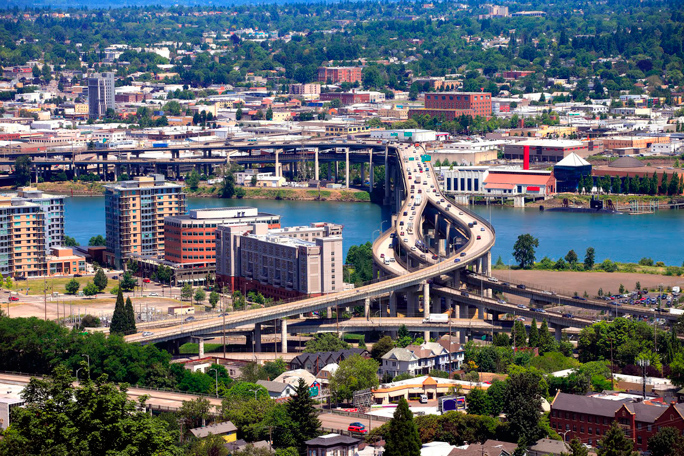
Portland, Estados Unidos
Es la ciudad más verde de Estados Unidos, el país que más contamina en el mundo. Portland, en el estado de Oregon, al noroeste del país, con más de medio millón de habitantes es un ejemplo de una política medioambiental responsable. Esta ciudad se destaca por el trasporte sostenible con una línea de tranvías y autobuses que se alimentan con biodiesel, además de varios ciclorrutas y áreas verdes por toda la ciudad que en su mayoría se alimentan de energías renovables.

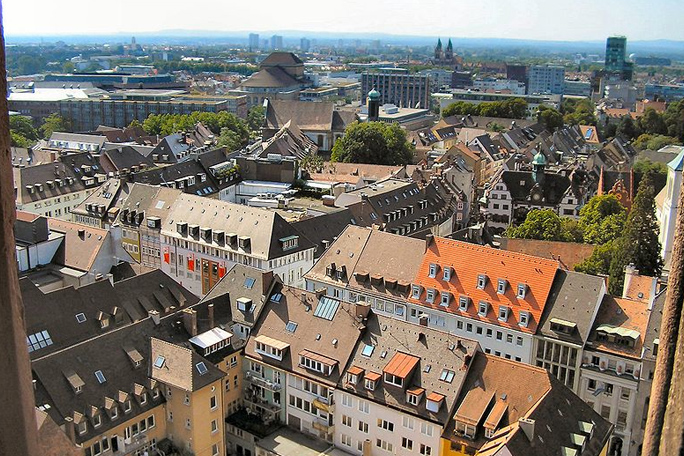
Friburgo, Alemania
Esta ciudad fue reconstruida después de la segunda guerra mundial, desde que se comenzó el diseño fue pensado con los principios del desarrollo sostenible, hay muchas zonas de la ciudad donde no se permiten los coches y es una de las más limpias del mundo. Los ciudadanos y el gobierno local tienen como objetivo reducir sus emisiones de CO2 aplicando una serie de políticas para obtener energía minimizando el impacto sobre el medio ambiente. El diseño urbanístico con 160 Kms de ciclovías, programas de energía solar, eficiencia energética y de transporte aplicado en Friburgo figuran entre los mejores de Europa. Cuenta, además, con un barrio solar con el concepto “energie-plus”, que quiere decir que produce más energía que la que consume, manteniendo un intercambio con la red eléctrica convencional.

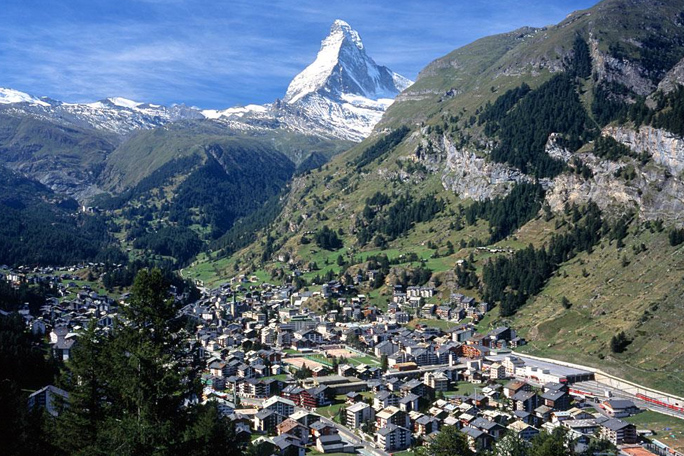
Zermatt, Suiza
A 4 mil metros de altura y rodeado de montañas, la única forma de llegar a la ciudad es en tren, esta ciudad suiza tiene el privilegio de un centro urbano libre de coches. Los únicos vehículos que circulan son eléctricos. Es uno de los lugares turísticos para aficionados de la naturaleza, ideal para la práctica de deportes como el esquí, el senderismo y el montañismo.

Montreal, Canadá
El gobierno de Montreal es uno de los más comprometidos en la lucha contra el cambio climático, lo demuestran sus programas y estilo de vida de sus ciudadanos. El gobierno de Montreal ha creado la Campaña Internacional de Acción Climática (CAQ) para conseguir algunos de los propósitos ecologistas.

Austin, Estados Unidos
Esta ciudad cuenta con más de 200 parques y reservas, y su modelo de reciclaje es admirado en todo el mundo, todos dirigidos por Ecology Action, una organización que trabaja sin fines lucrativos. Festivales verdes y la Fiesta de los alimentos ecológicos se celebran en esta ciudad. Austin es el hogar de Whole Foods, que se ha convertido en un líder en la lucha contra el uso de los combustibles fósiles.

domingo, 25 de noviembre de 2012

While Germany Is Headed for 80% Renewable Energy, We (US)'re Getting Left in the Dust

ORIGINAL: AlterNet
November 21, 2012 |

Osha Gray Davidson discusses his new book "Clean Break," about the keys to Germany's success with renewables and why the U.S. is getting its butt kicked.
Photo Credit: © manfredxy/ Shutterstock.com
This article was published in partnership with GlobalPossibilities.org.

When you think of places with great potential for solar energy, what comes to mind? Maybe the American Southwest, perhaps the Middle East. What probably doesn’t come to mind is Germany — and yet Germany is leading a global revolution in renewable energy, with solar playing a key part.

In the U.S., we now get 6 percent of our energy from renewables, which is exactly where Germany was in 2000. And then it passed the Renewable Energy Act and jumpstarted a movement known as Energiewende. Twelve years later, Germany gets over 25 percent of its energy from renewables and it is surpassing all of its benchmarks to be 80 percent renewable-powered by 2050.

In his new book, Clean Break: The Story of Germany’s Energy Transformation and What Americans Can Learn From It, Osha Gray Davidson explains how Germany made such a significant leap. Here are some shocking numbers he breaks down in the book:
  • 25 percent of Germany’s electricity now comes from solar, wind and biomass
  • A third of the world’s installed solar capacity is found in Germany, a nation that gets roughly the same amount of sunlight as Alaska. 
  • A whopping 65 percent of the country’s total renewable power capacity is now owned by individuals, cooperatives and communities, leaving Germany’s once all-powerful utilities with just a sliver (6.5 percent) of this burgeoning sector.
AlterNet interviewed Davidson about his new book, and got his take on whether or not the U.S. can catch up to the green energy revolution.

Tara Lohan: You went to Germany interested in its clean energy revolution. Despite the research you’d done, were you surprised by what you found there?

Osha Gray Davidson: No matter how much I read about it beforehand, it couldn’t prepare me for what I saw. I write in the book about traveling by train from Hamburg in the north down to Freiburg in the very south. It was something like a five-hour train ride but there wasn’t more than 15 minutes that went by without seeing either wind turbines on the hills or farm fields or solar panels on roofs of houses, barns, anything that had a south-facing roof. Even knowing how much energy they get — now it is 26 percent — from renewables, it doesn’t prepare you for what’s it’s like to live or visit a society that is moving in a big way to renewable energy.

TL: Does hitting their goal of 80 percent renewable power by 2050 seem realistic?

OGD: The reason it does seem realistic to me is they started out in the year 2000 with 6 percent renewable power and they’ve had a series of targets and so far they’ve been surpassing the targets. In the year 2020 their target was 30 percent, they are so far along now that they’ve moved that target to 35 percent. Everyone I’ve talked to there across the political spectrum says that 35 percent renewable energy by 2030 is completely doable.

When you look at how much money they’re putting into this and how it’s designed, and it’s not universal support, but there is overwhelming support for this transformation throughout Germany. Knowing all that, yes, I can see them getting to 80 percent by 2050.

TL: What has been the key to their success so far?

OGD: A couple of things. One, they made a decision to do this and I think when a government and a population make a decision to do something and it’s widespread that changes a whole lot because it’s always a matter of political will, not technological will, that makes the difference. The support is key and the way that they got that support is they designed policies that would give everybody — all residents of Germany — a way to have skin in the game. Sixty-five percent of all renewable energy in Germany is owned by individuals and cooperatives and groups of small investors.

Germany gets unfairly tarred as doing this as a command-and-control program — the energy transformation — according to its critics, mostly in the United States, say it’s a socialist program, and nothing could be further from the truth. It is incredibly market-based, far more than our energy policies, to the extent that we actually have any.

Everybody in Germany has a chance to participate; they can become a utility essentially. If you want to put solar panels on your roof, or if you’re a renter and want to get together with a group of friends and invest in solar panels or a windmill or a windfarm or chuches ... I saw many churches in Germany covered in solar panels and found out they’ve lowered their electricity bills by a huge extent by taking part in this. Giving everyone the financial incentive in making this work is really key.

TL: It seems like such a big transformation in 12 years to go from big power corporations to so much smaller, more distributed, community-run energy sources.

OGD: Yeah and that is key, that it’s distributed rather than centralized. It’s disappointing in the United States that we don’t really have that conversation at all. It’s just assumed here that energy, whether it’s fossil fuel, nuclear or renewable, is going to be produced by a large utility.

In Germany, the large utilities — the Big Four, they’re called — they have about 6 percent renewable energy capacity. But that is by design. When the Renewable Energy Act was written and then passed in 2000, one of the keys was understanding that you have to give everybody an incentive. Even though Germans, to a greater extent than Americans, know that global warming is a huge problem and that it needs to be solved, that isn’t enough to make an energy transformation.

A lot of people here who understand it and know that climate change is a problem can’t really do much about it because even if they put solar panels up — what is that going to do — it’s one tiny piece of something. In Germany they know that they’re plugging into a much larger movement that is going to have an effect and beside from that, you do get a financial benefit; you earn money by putting solar panels on the roof.

To install a similar sized array on a rooftop in Germany costs half as much as it does in the States even though the hardware costs are all the same. It’s the process of putting it up that’s much cheaper — the soft costs. And then you earn money. As opposed to here, where the best you can do with net metering is lower your utility bill to zero. But there, beyond that, you can actually make some coin off of it. Anybody can.

TL: It must help if you’re making investments of tens of thousands of dollars that the overall political will is there and it’s not going to shift every time there is an election.

OGD: Exactly. And that’s another part of the policy design from the Renewable Energy Act that you’re guaranteed a certain price for the power you produce for 20 years. So businesses, including individuals, know exactly how long it will take them to recoup the costs and start earning money on it — and how much they’ll make for the next 20 years. A lot of small businesses are doing this because there is policy certainty. In the U.S. we’ve just seen here with the Wind Production Tax Credit, the fact that it’s going to expire here on December 31st unless Congress extends it, wind manufacturers have already laid off several hundred people in the United States because of that policy uncertainty.

TL: Do you think it’s possible in the United States, considering the strength of our energy lobby, to move toward more sources of distributed power?

OGD: I do, and it’s because when you talk to people in Germany and read about the history of this you realize the problems were not the same but were equivalent — people said "you’re crazy, you’re not going to achieve any of these goals." But this was really a bottom-up movement that forced politicians to get behind it, politicians from across the spectrum. So the center-right governing party now, Angel Merkel’s party, they are for the Energiewende. They are not doing it very effectively, they’re mismanaging it. But it’s fascinating, I just got used to in the United States if you see someone who has solar or wind you generally know politically where they’re going to be on the spectrum in the United States. In Germany you have absolutely no idea from someone’s involvement in renewable energy, where they are on the political spectrum.

TL: And they are making all these leaps with renewable energy while at the same time shutting down their nuclear facilities.

OGD: The whole anti-nuclear aspect is a big one in Germany because like Japan, they lived through a nuclear crisis with Chernobyl in 1986. In Germany there are still parts where you can’t harvest mushrooms because of the radioactive contamination from Chernobyl.

It was a big deal in Germany. The kids had to stay inside for days at a time and they didn’t know what was going to happen. As it turned out, the radioactivity was less in Germany than it was in some of the Scandinavian countries because of the wind patterns. And German farmers remember having to destroy a lot of crops because of contamination. So for them, moving to renewables made sense just as farmers wanting to protect their land and their crops and their way of life.

TL: What was the pushback in Germany when decisions were made to shut down the nuclear plants?

OGD: A little after 2000 there was an amendment to the Renewable Energy Act that was worked out in agreement with the nuclear power plant owners to phase out nuclear. It was going to be done in an orderly way that they could count on as these plants aged they would have to shut them down anyway. They were part of that — they weren’t just forced out until the Merkel government came in. This is what I mean by the mismanagement of it.

Her government extended the licenses of nuclear plants and there were huge demonstrations throughout Germany against that and then six months or so later was when Fukushima happened and lo and behold Angela Merkel turned anti-nuclear. So she went from extending the licenses and abrogating that plan they had with nuclear power companies to then all of a sudden essentially closing them down.

That’s caused a lot of problems in Germany and I think the critics of closing them down immediately have a really good point that she took offline low-carbon energy producers that were going to be phased out anyway.

TL: I’m wondering about the kinds of infrastructure that needs to be built or upgraded when you’re talking about generating energy from renewables. You wrote in the book about how they need $25 billion more for new power lines — where does that money come from? Who’s footing the bill?

OGD: Well, that’s the question. They’re still debating that and there is no easy answer. I certainly don’t want to give the impression that this transition is an easy one and a cost-free one — it’s just that not doing anything is far costlier. As several people there have pointed out, everyone is going to move to a renewable energy economy eventually, because they’re dependent on non-renewable fuels. Germany has a headstart by doing it early, but there are costs related to doing it early. Germans were paying more to install solar panels at the very beginning before the price got cut by mass production.

But Germany is way ahead in other ways including their export economy, and not just the solar panels which have been a problem in trying to keep up with China on that now. China’s manufacturing plants that make solar panels — those were bought from Germany — the plants themselves, all of that technology came from Germany. So they’re still reaping rewards.

And the extra cost that they’re paying, you have to look at where it is going and mostly it is to citizens of Germany — it’s creating jobs, over 300,000 jobs in renewable energy there. So the costs were higher but the money stayed within Germany and stayed within small towns. It’s being spent wisely and it’s helping the German economy. It’s not just a cost, it’s also a benefit.

TL: What did you think of their use of biomass? I know that can be a mixed bag when it comes to environmental impacts.

OGD: Yes, and there is debate on it in Germany. It is like most other forms of energy in that you can do it wrong or you can do it right. One big objection is using corn — growing corn, a food crop, and then burning it, using it for energy production. It drives up food costs and it’s probably not a good use of land. So that’s one example of using biomass in an unsustainable fashion.

But I saw some biomass projects that were using sustainably harvested wood from woodlots and just trimmings. I watched them trimming trees on the side of the road and the wood chips would be taken by this farmer to a community heating unit in this tiny town in the Black Forest, St. Peter, where they have this community heating project using sustainably harvested wood chips to heat over 200 houses and businesses and they’re cutting back on C02 emissions because it’s replacing oil burning furnaces. And it’s a cooperative, so all of the people who live there — the 200 homes — not only is the heat cheaper but they get any financial returns.

So biomass can be done in a sustainable way or it can not be.

TL: Was it frustrating at all for you to see all this progress in Germany and to think about where the conversation is at right now in the U.S. — where we barely speak about climate change and if we do we still have people insisting that we debate its existence?

OGD: I went back and forth on this when I was in Germany. I’d see all of this stuff — in Hamburg, the public transportation system, the whole built environment, which is a big part of the energy change. Ninety-nine percent of residents in Hamburg live within 300 meters of public transport. Germans own cars to a far lesser extent because they have such a great transportation system. The built environment is created for mass transportation and bikes and walking.

And yes, I was alternately frustrated that we didn’t have that and hopeful because I saw what was possible. In the States a lot of the discussion is about theory — what can we get — but it doesn’t have to be a theoretical conversation and that was what I took away from Germany. They are actually doing it and I do think that if they can do that then yes, we can do that here.

The main driver in Germany was citizens' groups who wanted out of nuclear power, that was one of the very first issues. Ursula Sladek was a school teacher and her husband was a village doctor when Chernobyl blew and all the radioactive fallout fell on their area, they were in one of the most heavily contaminated areas. Ursula didn’t want to be part of a nuclear society anymore and went to the utility which was a monopoly back then and said "we don’t want you to use nuclear anymore" — she had gotten a group of friends and neighbors together. And the utility said, "ha, we don’t care what you want."

From that, Ursula and this group in town now run the largest green cooperative in Germany and they have 180,000 households and business members of their little company in this tiny town in the Black Forest.

I always ask "What lessons can Americans learn?" And the overwhelming theme was, "just start going it, that’s what we did." And Ursula is such a great example of that. It took them 10 years in this David and Goliath battle with their utility. As she’s pointed out, “we didn’t shut down a single nuke plant, and that was all we were trying to do. But we’ve helped start a renewable energy revolution."

When I asked her about what we Americans could learn, she didn’t answer at first and she looked around at this office she was in, the headquarters with solar panels on the roof and she said, "This is something that is very American isn’t it? You Americans are people who say we can do it — we can do it ourselves."

She in fact was inspired by Jimmy Carter, a lot of the people who started the Energiewende in Germany, including Hans-Josef Fell who was the main author of the Renewable Energy Act, he was inspired by Jimmy Carter and the renewable energy revolution that he tried to start here in the U.S. by putting solar panels on the roof of the White House and funding solar projects throughout the country and wind projects. Fell said he looked around and saw pictures of all of that and wondered why they couldn’t have that in Germany. And now the situation is simply reversed.

We did start down that road, and when Reagan came in a decision was made to scuttle that and to go back to dependence on fossil fuels.

I think that if Americans now take a look at Germany and see what they’ve done and start doing that now here, yes, I think we can get to where Germany is and in fact the National Renewable Energy Laboratories in Colorado, the main government technology center for renewable energies, came out with a report this past year that said by the year 2050 the U.S. could be getting 80 percent of our power from renewables; by coincidence, that’s exactly what Germany’s goal is.

We obviously have the resources to do it. So I think it’s a matter of political will and also empowerment. A lot of Americans feel there is nothing they can do because of all these big companies — well, I don’t have much patience for that. The Germans could have said the same thing, but they rolled up their sleeves and started taking action at a local level and eventually that forced political leaders to respond.

So, we shouldn’t whine about it — we should get busy and do it.

Osha Gray Davidson's new book Clean Break: The Story of Germany’s Energy Transformation and What Americans Can Learn From It (InsideClimate News, 2012), is available as an e-book here.
Tara Lohan is a senior editor at AlterNet and editor of the new book Water Matters: Why We Need to Act Now to Save Our Most Critical Resource. You can follow her on Twitter @TaraLohan.