Mostrando entradas con la etiqueta Nanotecnología. Mostrar todas las entradas

lunes, 20 de octubre de 2014

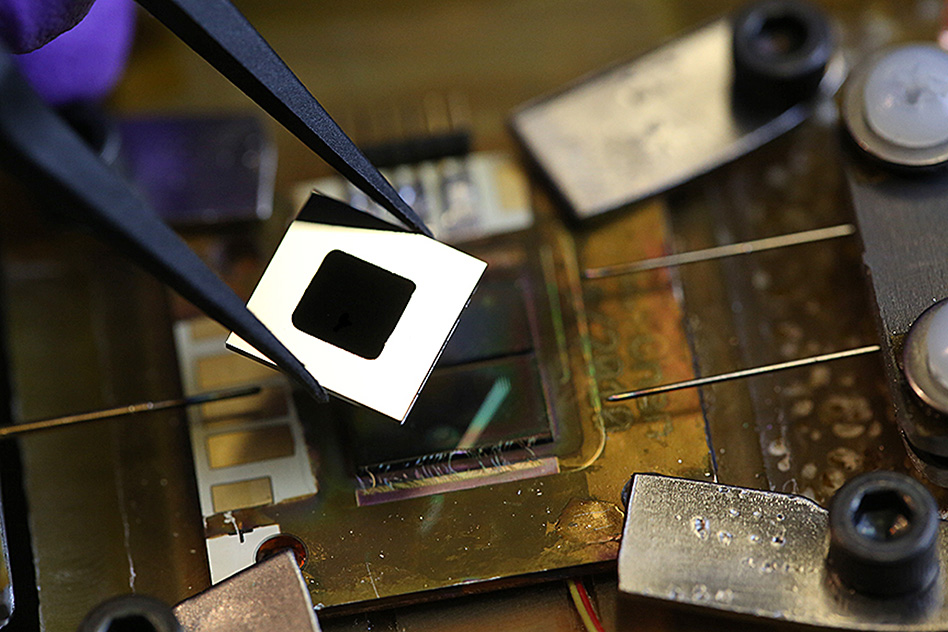
'Green' solar cell is made from plants

To make super cheap solar cells, MIT researchers look to commandeer the process of photosynthesis in plants.


In a mashup of biology and electronics, researchers said they've made progress in making low-cost solar cell from plants.

A paper published in Scientific Reports today describes an improved method for making electricity-producing "biophotovoltaics" without the sophisticated laboratory equipment previously needed. Researchers said custom-designed chemicals could be mixed with green plants, even grass clippings, to create a photovoltaic material by harnessing photosynthesis.

"Take that bag (of chemicals), mix it with anything green and paint it on the roof," said MIT researcher Andreas Mershin, who is one of the paper's co-authors, in a statement. He imagines that this sort of cheap solar cell could be used by people in developing countries who don't have the power grid to charge lamps or cell phones.

The advance represents a 10,000 percent efficiency improvement on previous plant-based solar cells, but these cells are far from being practical. Experimental solar cells made using this process only convert 0.1 percent of sunlight to electricity, which would need to improve tenfold to be practical, Mershin said.

Scientists for years have sought to make solar cells from the set of molecules within plant cells that do the work of photosynthesis, called photosystem-I. However, this material required specialized thin-film deposition and optical equipment. And the current produced was too low.

Related stories

Mershin was able to create a workable solar cell made using a combination of new materials that isolate the PS-I molecules and form an array of tiny zinc oxide nanowires, which carry the flow of current and provide a large surface area. These nanowires, which also provide structure for a multi-layered solar cell, can be grown at room temperature on a variety of flexible and inexpensive substrates, according to the paper.

"After many ears of research, we've managed to make the process of extracting this protein and stabilizing it and putting on a surface that is made in a way to allow for the photovoltaic effect to happen to be very easy," he said in a video provided by MIT.


In their paper, the researchers note a number of challenges to these "green" solar cells, including the durability and efficiency. But the initial performance tests for this new technique offers a promising route for further research, they said. "Commandeering this intricately organized photosynthetic nanocircuitry and re-wiring it to produce electricity carries the promise of inexpensive and environmentally friendly solar power," according to the paper.

ORIGINAL: CNet
February 2, 2012 7:52 AM PST

lunes, 4 de agosto de 2014

Elon Musk: Artificial Intelligence Is 'Potentially More Dangerous Than Nukes'

hal 2001 a space odyssey
Google Images

Back in June, Tesla CEO Elon Musk told CNBC that he'd invested in a company called Vicarious that is developing products and services based on artificial intelligence. But that wasn't why Musk got interested. His impetus for backing the firm was instead "to keep an eye on" unforeseen terrifying scenarios where the products began to threaten humanity.

He doesn't appear to have been exaggerating.

In a Tweet last night, Musk said this:

Bostrom is Nick Bostrom, the founder of Oxford’s Future of Humanity Institute. That group recently partnered with a new group at Cambridge, the Centre for the Study of Existential Risk, to study how things like nanotechnology, robotics, artificial intelligence and other innovations could someday wipe us all out, according to PCPro:

At [a] conference, Bostrom was asked if we should be scared by new technology. "Yes," he said, "but scared about the right things. There are huge existential threats, these are threats to the very survival of life on Earth, from machine intelligence – not the way it is today, but if we achieve this sort of super-intelligence in the future," Bostrom said.
"Superintelligence" is set to be published in English next month. In a blurb, Bostrom's colleague Martin Rees of Cambridge says of the work, "Those disposed to dismiss an 'AI takeover' as science fiction may think again after reading this original and well-argued book."
In our recent profile of Vicarious, the firm backed by Musk, we talked to Bruno Olshausen, a Berkeley professor and one of the firm's advisors. He said we are still way too far behind in our understanding of how the brain works to be able to create something that could turn heel.
"Absent a major paradigm shift - something unforeseeable at present - I would not say we are at the point where we should truly be worried about AI going out of control," he told us.
So at a minimum, it sounds like the robot takeover is not imminent.
But it seems like it's something all of us should "keep an eye on."

ORIGINAL: Business Insider
Rob Wile
Aug. 3, 2014

viernes, 16 de mayo de 2014

Un inventor 100% colombiano

César Sierra, investigador de la U. Nacional, creó una tela que mata bacterias y una bolsa para enviar frutas a Europa, entre otros inventos.

César Sierra, químico e investigador de la Universidad Nacional. / Pablo Correa

El colombiano Juan Pablo Hinestroza, profesor en la Universidad de Cornell y experto en textiles inteligentes, cuenta que llevaba dos años y US$1,2 millones invertidos buscando el método para que pequeñas partículas conocidas como MOF (diminutas estructuras porosas) se adhirieran de forma estable a fibras de ropa, pero todos sus esfuerzos habían fracasado. Entonces alguien le habló de César Sierra, químico de la Universidad Nacional, y la suerte del proyecto cambió.

Sierra viajó a Estados Unidos y en tan sólo un mes de trabajo encontró la solución al problema que tenía desesperado a su colega. Patentaron en Estados Unidos la técnica para que las MOF queden adheridas a las fibras textiles. Hoy, varias multinacionales de ropa han mostrado su interés en la técnica, pues es un nuevo paradigma para crear telas con propiedades muy especiales. Por ejemplo fabricar jeans que no huelan cuando estén sucios o ropa interior que pueda durar hasta 45 días sin lavar.

César es el químico más recursivo que he conocido. Es brillante. Ahora creo en milagros después de ver cómo trabajan los científicos en Colombia”, dice Hinestroza. Esta semana los dos científicos colombianos, junto a los investigadores Carlos Soto, Haendel Rodríguez y Cristian Ochoa, firman un artículo publicado por la revista Journal of Applied Polymer en el que dan cuenta de otro invento prometedor: telas que matan bacterias.

Desde hace siglos se sabe que metales como la plata matan bacterias al entrar en contacto con ellas. No está muy clara la cadena de eventos celulares que conduce a la muerte de las bacterias, pero el efecto antibacterial de los metales es incuestionable. Bajo ese principio, Sierra y el grupo de colaboradores de ambas universidades lograron fijar nanopartículas de cobre a una tela y demostraron que el 100% de las bacterias Escherichia coli y Staphylococcus aureus, responsables de buen número de infecciones intrahospitalarias, mueren al entrar en contacto con la tela.

Con telas como estas se podrían fabricar sábanas de hospitales, uniformes de médicos y enfermeras, pijamas para los pacientes, y así reducir el riesgo de infecciones”, explica Sierra. Ahora el reto es lograr extender el efecto bactericida a otras bacterias que pululan en los hospitales. Sierra ya tiene una solución en mente. Cree que si logran que todas las partículas metálicas sean del mismo tamaño, la eficiencia bactericida aumentará y cubrirá un espectro mayor de microorganismos.

Cuando se graduó del colegio que dirigía su abuelo en Barrancabermeja, Sierra tenía dos cosas claras: quería ser militar y por ninguna razón se iba a quedar trabajando en la finca de su familia. Sus planes de ir al ejército se frustraron porque su mamá no lo autorizó. Entonces pensó en estudiar una carrera universitaria y la novia de su hermano, que estudiaba química en la Universidad Industrial de Santander (UIS), se ofreció a ayudarlo. Fue ella la responsable de que se convirtiera en químico, pues compró el formulario de inscripción y sin preguntarle lo anotó en la lista de candidatos a la carrera de química.

Fue amor a primera vista”, confiesa Sierra. En el colegio ya sentía interés por las matemáticas y la física, así que cuando comenzaron las clases sobre los elementos fundamentales de la materia y sus interacciones se sintió en el lugar correcto.

Cuando estaba entrando al último año de la carrera consiguió un trabajo con la multinacional Dow, que lo obligaba a viajar visitando clientes que tuvieran algún problema. Así se fue desarrollando su talento para solucionar situaciones difíciles. Cuando la empresa decidió irse del país, un colega volvió a señalarle el camino, como ya lo había hecho la novia de su hermano: “Usted debería estudiar un doctorado, usted es bueno para eso”.

Consiguió una beca y viajó a Estados Unidos, donde estudió una maestría y un doctorado en la Universidad de Massachusetts. En 2005 regresó a Colombia y, luego de un breve paso por la UIS, ganó un concurso docente en la Universidad Nacional y comenzó a trabajar en el Departamento de Química. Entre sus primeras creaciones está un material que al entrar en contacto con gases como el metano se ilumina; un desarrollo con potencial en la industria minera, pues podría hacer parte de los sistemas de seguridad para mineros.

Pero uno de los inventos que más lo enorgullecen es el desarrollo de un empaque para gulupa, una fruta de la cual Colombia exporta a Asia, Europa y América 3.000 toneladas cada año. Los exportadores colombianos se quejaban porque el largo viaje de casi 35 días que debe hacer la carga por barco hasta sus destinos terminaba arruinando el 25% de las frutas. Para evitar este desastre, los comerciantes se veían obligados a comprar unas bolsas fabricadas en Israel que conservan mejor la fruta, pero cuyo precio por unidad ronda los $400 pesos.

César y sus colaboradores desarrollaron un empaque a mucho menor precio ($10 pesos por unidad), que prolonga la vida de la fruta por más días y que evita su deshidratación. El problema, dos años después, es que no ha sido posible resolver todos los líos jurídicos en Colombia para patentar el invento.

Sierra no deja que esas cosas hagan mella en su optimismo y parece que no va a claudicar en su intento de acercar la investigación académica a los problemas de la industria en el país.

pcorrea@elespectador.com
@pcorrea78

ORIGINAL: El Espectador
Por: Pablo Correa
14 Mayo 2014

domingo, 27 de abril de 2014

Coming Soon: New Smart Biosensor That Directs Cells To Kill Cancer. Surgery Glasses

These biosensors can further be customised to recognise factors of relevance to various patients' needs. 

Monday, April 21, 2014: Biologists at the Northwestern University's McCormick school of engineering and applied science have developed a ground breaking technology that could modify human cells to create therapeutics used in turn to selectively target and destroy tumour cells in the human body without disrupting healthy cells. The unique protein biosensor engineers cells to kill cancer by helping them effectively distinguish between healthy and cancerous cells.

Add caption
While sitting on the surface of a cell, the biosensor can be programmed to sense its immediate environment for specific factors following which it sends a signal to the engineered cell's nucleus. This triggers a gene expression programme within the cell. "Till date, there was no way to engineer cells in a manner that allowed them to sense key pieces of information about their environment, which could indicate whether the engineered cell is in healthy tissue or sitting next to a tumour," Joshua Leonard, an assistant professor at Northwestern University's McCormick school of engineering and applied science was quoted as saying. 

Moreover, the programme is activated only in the vicinity of tumour cells, thereby minimising any side effects. These biosensors can further be customised to recognise factors of relevance to various patients' needs. "In that way, you could programme a cell-based therapy to specify which cells it should kill," Leonard added.

Meanmwhile, a team of scientists at Washington University School of Medicine in St. Louis (WUSTL) and the University of Arizona (UA) have developed a new pair of hi-tech glasses that can help surgeons to detect cancer cells. These glasses will help surgeons to visualise cancer cells which will glow blue when viewed through these glasses during surgeries. Cancer cells are invisible in normal optics even if you are viewing through a high-powered magnifying device. This innovative technology incorporates a custom video, a head mounted display and then inject a blue dye into a patient. This will specifically bind to cancer cells and makes them glow. Doctors can then easily differentiate cancer cells from healthy cells and can make sure that no tumour cells are left over during surgery. It can detect and remove tumours as small as 1mm

Saurabh Singh, EFYTIMES News Network 

ORIGINAL: EFY Times

viernes, 11 de abril de 2014

Juicy ‘bio-organic nanotech’ can turbo-charge smartphone batteries in 60 seconds or less

Most smartphone’s batteries don’t even make it through a single day, especially if the person using the phone is frequently sending emails, posting on social media, listening to music, watching videos, and calling and texting, among other things. We consider ourselves lucky if it lasts after lunchtime.

But the biggest problem isn’t so much the battery dying, but charging the bloody things – with most devices it takes a good couple of hours at least to fully charge it. This depends on whether you’re still using your device while it juices up, and if you’re using an original charging cable. It takes longer when you use fake ones, and you’re putting your device and yourself at risk.

Wouldn’t it be great if someone came up with a way to rapid-charge our mobile phones in say, a matter of minutes – or even seconds?
Say ‘hi’ to bio-organic nanotech, your new best friend

It sure would, and so it’s good to know that Israeli startup StoreDot is working on a new type of battery for mobile devices that it claims can be fully charged in less than a minute.

Watch this video to see what it’s capable of:


If true that’s pretty damn impressive company, but how on earth can it do it that? Well, it’s pretty complicated, but the company, which launched in 2011, specializes in developing ‘peptide-based quantum dots’ that were originally discovered during Alzheimer’s research at Tel Aviv University.

Quantum dots, for all you non-nerdy types, are nanocrystals of semiconductor material where the physical dimensions allow quantum mechanics to effect electronic properties. Still with us?

Previously, quantum dots were made from toxic materials such as arsenic or heavy metals such as cadmium, meaning they were unsuitable for commercial use. Now though, StoreDot has found a way to use bio-organic materials, making the technology safer.

We were able to take the same peptides that participate in biological processes in our body and to create nano-crystals — these are stable, robust spheres,” explained Dr Doron Myersdorf, CEO and Founder or StoreDot, in an interview with TechCrunch.

The Nanodots are chemically synthesized organic peptide molecules that measure about 2nm in diameter. These are easily synthesized and show diverse electrochemical properties including red, green and blue luminescence. StoreDot’s previous focus was on creating faster memory chips, before it expanded to image sensors, and finally, better mobile batteries that charge faster.

StoreDot is showing off the fast-charging tech at the Think Next symposium in Tel Aviv. Though this is something consumers would obviously love to see on the next iPhone or Galaxy device, StoreDot says that the technology is still several years from mass production and market availability. The prototype is currently way too bulky, and according to Myersdorf, it will take one year for the company to replicate the technology at a smaller scale, and after that it’s still got to build a battery that actually fits inside one of today’s typical slim and sexy smartphones. And even after this, Myersdorf says we can expect to wait another two years to reach the required energy density so that our super-fast charging batteries can last for the entire day.

All of this means that we probably won’t see these fast-charging batteries in devices until at least 2016 at the earliest, and even then that’ll only be the case if OEMs are open to using this kind of technology.

The only disadvantage is that the industry is not ready for it. The ecosystem is not ready,” Myersdorf says.

This is a new type of material, with new physics, new chemistry, that is actually coming from nature… Everything we do we try to imitate and to follow and to let nature take its course. To create these nano-crystals we don’t need a huge fabrication facility. We mix some basic elements — like hydrogen, nitrogen, helium.”

StoreDot received $6.25 million in venture funding last year, and it’s hoping to make another $20 million in order for them to push forward with its bio-organic components. Samsung is said to be one of its early investors, which may mean its Galaxy devices will be among the first to utilize StoreDot’s technologies.

Myersdorf also pointed out that his vision for the company is for the industry as a whole to accept Nanodots as a “legitimate, viable, stable, cost-effective material” for use in semi-conductors, energy, storage, and displays, as it delivers advantages for both manufacturers and end-users.

ORIGINAL: Silicon Angle
April 8TH

jueves, 27 de marzo de 2014

2014 Koch Institute Image Award Winners

Last fall, we featured The Koch Institute Image Award galleries in several Cell Picture Shows. This Show furthers the collaboration, as we showcase this year’s winning submissions. Both the Koch Institute Public Galleries and the Cell Picture Show share a similar ethos: recognition and dissemination of the extraordinary imagery produced through life science research. On March 4, 2014, these winning images were unveiled at MIT’s Koch Institute for Integrative Cancer Research in Cambridge, MA. 

We congratulate the 2014 Image Award Winners and are excited to continue to the collaboration between MIT and Cell Press. This collection of stunning images offers a window into the fascinating worlds opened to us by microscopy and other biomedical imaging techniques.

Biopolymer in Bloom
Julio D’Arcy, Erik Dreaden, and Paula Hammond
Hammond Laboratory
MIT Koch Institute
A New Environment for Studying Cell Growth. Measuring cancer cells’ real-time response to external influences can be challenging. Here, engineers have created biocompatible plastic structures onto which cells can adhere and develop as they would inside the body. The electrically conductive nature of the scaffolds allows researchers to measure the properties of the growing cells. By changing the environment or introducing new substances into the system, researchers can figure out which factors promote or discourage cell growth.
Image: This image, taken with a scanning electron microscope, shows the micro- and nano-scale structures of this device

The More the Messier
Kristin Knouse
Amon Laboratory
MIT Koch Institute

Understanding Complicated Cell Division. The mitotic spindle is an array of tracks that partitions chromosomes during cell division. Most normal cells form bipolar spindles, which segregate chromosomes equally into two daughter cells. However, many cancer cells form multipolar spindles, which cause chromosome mis-segregation and genomic instability.
Image: Like many cancer cells, liver cells also form multipolar spindles during cell division. Shown here is a liver cell with a multipolar spindle (green) pulling the chromosomes (blue) in many directions. Further research into cell division in the liver could indicate how this process is exploited or disrupted in cancer, revealing novel avenues for cancer therapy.

Target Practice
Omar F. Khan and Edmond W. Zaia
Langer and Anderson Laboratories
MIT Koch Institute

Improving Gene Therapy with Nanotechnology. How can we turn off the genes that promote the development of cancer? Using specially designed nanoparticles as genetic patches, engineers can deliver customized payloads to a cell’s gel-like cytoplasm, where most cellular activity occurs, and mitigate the effects of cancer-causing genes in the cell’s nucleus.
Image: This image shows nanoparticles (red) in the cytoplasm of cervical tumor cells (green). As researchers learn more about how cells respond to these therapies, they will continue to tweak the patches to determine the appropriate distribution of synthetic and genetic material to best target different types of cancer.

Blood, Heat, and Tumors
Alex Bagley, Jeff Wyckoff, and Sangeeta Bhatia
Bhatia Laboratory
MIT Koch Institute

Improving Drug Delivery with Gold Nanorods. Blood vessels are highways through the body. They can transport drugs to cancer cells, but finding the appropriate ramp to exit the vessel can be tricky.
Image: This image shows a network of blood vessels (green) and collagen (purple) infused with gold nanorods (yellow) inside of a living tumor. When researchers heat the particles with near-infrared light, the blood vessels become leaky, making it easier to deliver a therapeutic cargo to its final destination. Because blood vessels provide a universal transport system, such combination therapy has widespread implications for treatment, regardless of cancer type or specific drug needed

The Bad Seed
Mandar Deepak Muzumdar 
Jacks Laboratory
MIT Koch Institute

Modeling the Growth of a Tumor. Small changes have big effects. Although scientists know that certain gene mutations trigger tumor formation, the subsequent cellular events that drive cancer progression are not well understood. Cell-specific fluorescent marking allows researchers to track mutated cells over the entire course of cancer development.
Image: This image shows mutated (green) and nonmutated (red and yellow) cells in a pancreas. Over time, the green cells will multiply dramatically and form a solid tumor, while the others will not. Comparing properties and behaviors of the different cell types will set the stage for earlier diagnosis, better treatment, and even chemoprevention of deadly cancers.

Rainbow Connections
Zeynep Saygin
Kanwisher Laboratory
MIT Department of Brain & Cognitive Sciences

Mapping Neural Pathways in the Brain. The human brain is massively complex. Neuroimaging techniques such as MRI provide a noninvasive tool for studying its inner workings.
Image: This image shows pathways of nerve fibers through the brain in three dimensions: up/down (blue), front/back (green), and left/right (red). By comparing these maps of connectivity with maps of neural function, researchers can begin to predict how individual brains will respond to different stimuli. That will eventually help them to understand healthy brain development and will enable earlier diagnosis and interventions for conditions such as autism and dyslexia.

Silencing Echoes
Soheil Feizi, Steven Lee (Artist), Daniel Marbach, Muriel Medard, and Manolis Kellis Computational Biology Group
MIT Computer Science and Artificial Intelligence Laboratory

Cleaning Up Networks. Are all connections meaningful? This image visualizes a new algorithm (known as "network deconvolution") for determining important relationships in complex networks. Like a filter on a camera lens, it reveals which links (lines) between interconnected elements (points) are most essential. As the lens passes over each network area, indirect links disappear and direct links become visible. Already tested on large networks mapping gene regulation, protein folding, and academic co-authorship, network deconvolution can be used to identify key drivers of biological, social, and technological systems.

Ganglion Style
Alex Norton for EyeWire
Seung Laboratory
MIT Department of Brain and Cognitive Sciences and MIT Media Lab

Crowdsourcing Science through Online Games. It's all fun and games until somebody maps a neuron! Then it’s time to move on to the next one. The online game EyeWire challenges players, most of whom have no background in neuroscience, to create virtual 3D models of actual neurons using real laboratory data.
Image: The reconstruction seen here shows ganglion cells in the retina. By comparing this gamer-generated map to previously collected data about the neurons’ firing activity, neuroscientists can create a functional model of how vision works. With more than 100,000 players, EyeWire has already helped researchers to uncover how the eye helps us perceive moving stimuli.

Something Fishy
Annie Cavanagh and David McCarthy
School of Pharmacy
University College London

The Secret Lives of Zebrafish. Humans and fish have more in common than you might expect. Since the 1970s, a tropical freshwater minnow known as the zebrafish has been used to study the genetic and physiological development of living organisms. By mapping the zebrafish genome and studying irregularities in their development, researchers have been able to create robust models of how vertebrates develop and identify genetic conditions that lead to diseases such as cancer.
Image: This image shows a false-color scanning electron micrograph of a zebrafish embryo. It appears in the Koch Institute Public Galleries as part of a partnership between the Koch Institute and Wellcome Images.

Collateral Damage
Aprotim Mazumder, Jennifer A. Calvo, and Leona D. Samson
Samson Laboratory
MIT Koch Institute, Department of Biological Engineering, Department of Biology, and Center for Environmental Health Sciences

Investigating the Side Effects of Chemotherapeutics. How much is too much? When treating cancer, it is important to balance a drug’s effectiveness at killing tumor cells with its toxicity to healthy cells elsewhere in the body.
Image: This image of brain tissue shows cerebellar granule neurons (pink), which sustain significant damage when exposed to certain DNA-damaging therapeutics, and surrounding Purkinjee cells (orange), which do not. Researchers are studying these responses to determine the cell properties and repair mechanisms that make different cell types more or less vulnerable to chemotherapy.

ORIGINAL: Cell

martes, 18 de febrero de 2014

A needle-free vaccine patch that's cheaper than a needle

One hundred sixty years after the invention of the needle and syringe, we're still using them to deliver vaccines; it's time to evolve. Biomedical engineer Mark Kendall demos the Nanopatch, a one-centimeter-by-one-centimeter square vaccine that can be applied painlessly to the skin. He shows how this tiny piece of silicon can overcome four major shortcomings of the modern needle and syringe, at a fraction of the cost.
Tue, 02/18/2014 - 21:44

martes, 28 de enero de 2014

How to Tap the Sun’s Energy Through Heat as Well as Light

New approach developed at MIT could generate power from sunlight efficiently and on demand.

A new approach to harvesting solar energy, developed by MIT researchers, could improve efficiency by using sunlight to heat a high-temperature material whose infrared radiation would then be collected by a conventional photovoltaic cell. This technique could also make it easier to store the energy for later use, the researchers say.
Photo courtesy John Freidah. A nanophotonic solar thermophotovoltaic device composed of
  • an array of multi‑walled carbon nanotubes as the absorber
  • a one‑dimensional silicon/silicon dioxide photonic crystal as the emitter, and 
  • a 0.55 eV photovoltaic cell
In this case, adding the extra step improves performance, because it makes it possible to take advantage of wavelengths of light that ordinarily go to waste. The process is described in a paper published this week in the journal Nature Nanotechnology, written by graduate student Andrej Lenert, associate professor of mechanical engineering Evelyn Wang, physics professor Marin Soljačić, principal research scientist Ivan Celanović, and three others.

A conventional silicon-based solar cell “doesn’t take advantage of all the photons,” Wang explains. That’s because converting the energy of a photon into electricity requires that the photon’s energy level match that of a characteristic of the photovoltaic (PV) material called a bandgap. Silicon’s bandgap responds to many wavelengths of light, but misses many others.

To address that limitation, the team inserted a two-layer absorber-emitter device — made of novel materials including carbon nanotubes and photonic crystals — between the sunlight and the PV cell. This intermediate material collects energy from a broad spectrum of sunlight, heating up in the process. When it heats up, as with a piece of iron that glows red hot, it emits light of a particular wavelength, which in this case is tuned to match the bandgap of the PV cell mounted nearby.


This basic concept has been explored for several years, since in theory such solar thermophotovoltaic (STPV) systems could provide a way to circumvent a theoretical limit on the energy-conversion efficiency of semiconductor-based photovoltaic devices. That limit, called the Shockley-Queisser limit, imposes a cap of 33.7 percent on such efficiency, but Wang says that with TPV systems, “the efficiency would be significantly higher — it could ideally be over 80 percent.

There have been many practical obstacles to realizing that potential; previous experiments have been unable to produce a STPV device with efficiency of greater than 1 percent. But Lenert, Wang, and their team have already produced an initial test device with a measured efficiency of 3.2 percent, and they say with further work they expect to be able to reach 20 percent efficiencyenough, they say, for a commercially viable product.

The design of the two-layer absorber-emitter material is key to this improvement. Its outer layer, facing the sunlight, is an array of multiwalled carbon nanotubes, which very efficiently absorbs the light’s energy and turns it to heat. This layer is bonded tightly to a layer of a photonic crystal, which is precisely engineered so that when it is heated by the attached layer of nanotubes, it “glows” with light whose peak intensity is mostly above the bandgap of the adjacent PV, ensuring that most of the energy collected by the absorber is then turned into electricity.

In their experiments, the researchers used simulated sunlight, and found that its peak efficiency came when its intensity was equivalent to a focusing system that concentrates sunlight by a factor of 750. This light heated the absorber-emitter to a temperature of 962 degrees Celsius.

This level of concentration is already much lower than in previous attempts at STPV systems, which concentrated sunlight by a factor of several thousand. But the MIT researchers say that after further optimization, it should be possible to get the same kind of enhancement at even lower sunlight concentrations, making the systems easier to operate.

Such a system, the team says, combines the advantages of solar photovoltaic systems, which turn sunlight directly into electricity, and solar thermal systems, which can have an advantage for delayed use because heat can be more easily stored than electricity. The new solar thermophotovoltaic systems, they say, could provide

  • efficiency because of their broadband absorption of sunlight
  • scalability and compactness, because they are based on existing chip-manufacturing technology; and 
  • ease of energy storage, because of their reliance on heat.
Some of the ways to further improve the system are quite straightforward. Since the intermediate stage of the system, the absorber-emitter, relies on high temperatures, its size is crucial: The larger an object, the less surface area it has in relation to its volume, so heat losses decline rapidly with increasing size. The initial tests were done on a 1-centimeter chip, but follow-up tests will be done with a 10-centimeter chip, they say.

Zhuomin Zhang, a professor of mechanical engineering at the Georgia Institute of Technology who was not involved in this research, says, “This work is a breakthrough in solar thermophotovoltaics, which in principle may achieve higher efficiency than conventional solar cells because STPV can take advantage of the whole solar spectrum. … This achievement paves the way for rapidly boosting the STPV efficiency.

The research team also included MIT graduate students David Bierman and Walker Chan, former postdoc Youngsuk Nam, and research scientist Ivan Celanović. The work was funded by the U.S. Department of Energy through MIT’s Solid-State Solar Thermal Energy Conversion (S3TEC) Center, as well as the Martin Family Society, the MIT Energy Initiative, and the National Science Foundation.


ORIGINAL: Tech Review
By David L. Chandler
January 23, 2014

miércoles, 22 de enero de 2014

New Device May Put DNA Testing in Doctors' Hands

A U.K.-based company, QuantuMDX, has built a working prototype of a device, shown here, that they hope will allow doctors to perform genetic tests within 15 minutes. The "x-ray" section of this image shows the nanowire biosensor chip and electronics.
Credit: QuantuMDx Group Ltd


It can take days for doctors to determine if a patient infected with malaria carries a drug-resistant version of the disease. The same is true of tuberculosis.

But a new testing device could reduce that time lag to 15 minutes, potentially helping to ensure that patients are correctly treated right away, says the company developing this device.

United Kingdom company QuantuMDX now has a working prototype for a device intended to quickly test a sample of blood, sputum (saliva mixed with mucus) or even tumor cells for genetic markers that provide information to guide a doctor's decisions on how to treat a patient. [7 Diseases You Can Learn About from a Genetic Test]


"We want to put a full diagnostic test into the palms of health professionals' hands," said Elaine Warburton, chief executive officer of QuantuMDX and the company’s cofounder.

The prototype is about the size of an iPad 5, or 6.6 by 9.4 inches (17 by 24 centimeters), but thicker. In about six months, Warburton said she anticipates the device will be reduced to about the size of an iPad mini, 5.3 by 7.9 in. (13 by 200 cm).

To use it, a doctor would put a sample from a patient into a credit-card sized, disposable cartridge and pop the cartridge into the device for analysis, she said. So far, the prototype has shown success in producing DNA test results from blood. ..

The sensor in the device is intended to detect, for example, if a person is infected by the malaria parasite, which species of parasite is responsible for the infection and whether the parasite is resistant to antimalarial medications.

Detection happens when fragments of parasite DNA from the sample bind to complementary strands, or probes, in the cartridge. These probes are associated with nanowires, thin pieces of silicon etched into a computer chip. The binding produces an electrical change in the wires, which the device interprets as a positive result.

This basic technique can be applied in many ways. QuantuMDX is developing applications that could one day provide information about tumor cells, or determine if someone has genetic variations that will affect his or her response to the blood-thinning drug warfarin. And the company has received proposals from people interested in using it in everything from veterinary work to forensics, Warburton said.

The device, currently known as Q-POC (pronounced Q-pock), is still a long way from being used in the clinic. The company still has work to do on the cartridges for use with the handheld prototype, and it needs to run clinical trials testing the device, followed by regulatory approval from bodies such as FDA, Warburton told LiveScience in an email.

Earlier this month at the Consumer Electronics Show in Las Vegas, Jonathan O'Halloran, inventor of the technology and the company's cofounder, announced plans to launch a crowdfunding campaign. The campaign is expected to begin on Feb. 12 on the site Indigogo.com, to support further development of the Q-POC. The company is also interested in suggestions for a new name and design for the device, Warburton said.

If all goes well, QuantuMDX anticipates commercially launching the device and malaria test cartridge in Africa in 2015, she said.

Follow LiveScience @livescience, Facebook & Google+. Original article on LiveScience. -

ORIGINAL: Live Science
By Wynne Parry, LiveScience Contributor
January 16, 2014

lunes, 20 de enero de 2014

Thermophotovoltaic Device Has Potential to Reach Huge Solar Efficiencies

Photo: Andrej Lenert, Evelyn Wang, Marin Soljacic, Ivan Celanovic, David Bierman, Walker Chan, and Youngsuk Nam

Traditional photovoltaic solar cells have an inherent limit on the efficiency at which they can convert sunlight into energy. This limit—based on the bandgap of the material used and known as the Shockley-Queisser limit—is about 33.7 percent for standard solar cells. It is essentially due to any material's inability to respond to all wavelengths of sunlight; so what if there was a way to change the wavelengths that actually reach the cell to those it converts best? MIT researchers have unveiled the best-yet version of that idea, known as solar thermophotovoltaics.

These modified solar cells place an absorber/emitter device above the cell itself. Sunlight is absorbed by this layer, it heats up—a lot—and emits light tuned directly to the bandgap of the PV cell beneath it. That means that much more of the energy in the sunlight can turn into electricity. According research in Nature Nanotechnology by graduate student Andrej Lenert and colleagues, this idea offers the benefits associated with both solar thermal power and traditional photovoltaics, and the ability to harness much of sunlight's spectrum and thus achieve extremely high efficiencies.

In theory, these devices could climb all the way toward 80 percent efficiency and beyond, though for now we'll have to settle for a mere 3.2 percent. Still, that is more than triple the efficiency of previous efforts, which have peaked at around 1 percent.

Among the reasons for the huge gap between potential and reality is heat. The new device's absorber-emitter reached a temperature of 962°C; at those temperatures, the devices are difficult to optimize and operate. The 3.2 percent achieved is a result, the investigators say, of the specific materials and design of the absorber-emitter: the outer layer uses an array of multiwalled carbon nanotubes, and the emitter portion is a photonic crystal layer made of silicon and silicon dioxide .

"Our device is planar and compact and could become a viable option for high-performance solar thermophotovoltaic energy conversion," they wrote in the Nature Nanotechnology. And it also has the potential to aid in energy storage, since heat is an easier stored form of energy than electricity. The prototype has reached 3.2 percent, but the group thinks 20 percent, which would put it in range with standard PV modules, is well within reach. In an e-mail, Lenert told me that "efficiencies beyond this level will require improvements in low-bandgap cells, as well as even better control of the thermally-driven spectral conversion process using wavelength and angular selective surfaces." The research center at MIT is pursuing those and other angles to bring this idea into popular use.

ORIGINAL: IEEE Spectrum
By Dave Levitan
20 Jan 2014

Nanoribbons let beating hearts power their own pacemakers

Researchers show that materials called piezoelectrics, packaged onto flexible strips attached to animal hearts, can supply power for medical devices where batteries pose problems.

A thin strip with piezoelectric power generators can convert this cow heart's movements into electrical power to run pacemakers or other medical devices. 
(Credit: University of Illinois and University of Arizona)

Pacemakers supply electrical pulses so hearts can keep a steady beat -- and maybe now it's time for hearts to return the favor.

As electronics spread to smaller and smaller devices, a new technology called energy harvesting can in some cases solve the problem of supplying electrical power. Researchers at the University of Illinois-Champaign have shown they can harvest energy from the movement of internal organs to power pacemakers and other medical devices that today depend on hard-to-change batteries.

The researchers attached small flexible strips they call piezoelectric nanoribbons to organs like the hearts of cows, sheep, and pigs.

The research offers a new option for power pacemakers -- surgically embedded devices that issue electric pulses to keep hearts ticking rhythmically -- as well as heart rate monitors and other medical devices embedded in the human bodies.

They're not the first to try the idea , but their approach -- using flexible strips and a piezoelectric made from lead zirconate titanate -- generates three to five times more current, the researchers said in a Tuesday paper in the Proceedings of the National Academies of Science. In addition, an encapsulation technique protects it from the body's immune system, and it's been tested to maintain its flexibility throughout 20 million flexes. The flexible strips are better suited to real-world bodies than typically rigid electronic devices, they argue in the paper.

"Heart rate monitors, pacemakers, cardioverter-defibrillators, and neural stimulators ... rely on battery power for operation. Means for harvesting power directly from natural processes of the body represent attractive alternatives for these and future types of biomedical devices," the researchers said in the paper. "Here we demonstrate a complete, flexible, and integrated system that is capable of harvesting and storing energy from the natural contractile and relaxation motions of the heart, lung, and diaphragm at levels that meet requirements for practical applications."

Piezoelectric materials already are widely used in everything from sensors to tiny loudspeakers because of a handy property: they produce voltage when compressed, or alternatively compress when a voltage is applied to them. That means piezo electrics can be used as physical sensors since they can convert pressure into an electrical signal that can be measured.

The technique could work on the outside of the body, too. That could be helpful for the hotly active wearable computer field, though the mechanical energy of human movement is more likely to power sensors than something as power-hungry as a mobile phone processor.

Energy harvesting, also called scavenging, is an area of active research relevant to people designing sensors and other small electronic devices. Other energy sources include heat, shock waves, vibrations, and chemical reactions.

One example of energy harvesing: the Holst Centre R&D lab in the Netherlands is developing an energy harvesting system that powers a car tire pressure sensor , including a wireless network to transmit data to the car 's control computer.

ORIGINAL: CNet
January 20, 2014

martes, 31 de diciembre de 2013

Dragonfly-Like Lenses Grown With Liquid Crystals

Image: A magnification showing the liquid crystal “flower” with a silica bead at the center that generated the pattern. Credit: University of Pennsylvania

Move over cultured pearls: Scientists have successfully grown liquid crystal flowers with grains of sand. These structures resemble insect eyes and could be used as complex lenses.

The researchers working on new nanotech dream of a day when all the complex, tiny parts can just manufacture themselves. Getting that to actually happen is called directed assembly, and a team from the University of Pennsylvania recently made a sweet step forward.

In the past they’d tried creating nanoscale structures using microposts that acted like a trellis to direct growth, according to a university press release. This time, they used silica beads, which are basically polished grains of sand, planted in a pool of transparent liquid crystal. This time they generated patterns of petal-shaped bumps that look like flowers. Each transparent petal can function as a lens.

Physics and astronomy professor Randall Kamien, who worked on the flowers, told Gizmag’s Lakshmi Sandhana that the process was similar to making rock candy, where a stick or string acts like a seed for sugar to make crystals naturally. ”We have just done this on a smaller scale,” Kamien said, “making smaller bits of ordered material cued by smaller elements, like our silica beads.

The research was led by a team that included Kamien, chemical and biomolecular engineering professor Kathleen Stebe, professor of materials science, engineering, chemical and biomolecular engineering Shu Yang, as well as lead author, grad student Daniel Beller. They published their work in the journal Physical Review X (abstract).

You might be wondering what the big deal is about growing a bunch of tiny lenses. It might not be as wearable as cultured pearls or as edible as rock candy, but Gizmag’s Sandhana pointed out that the technique could make producing complex dragonfly-like eyes containing millions of spherical lenses easier, faster and cheaper to achieve.

Picture being able to grow compound lenses that could cover a whole surface, lenses that can heal themselves, or even biosensors that could use the lenses to collect information. All that is a long way off but the scientists did tell Gizmag they think their lenses will go into liquid crystal displays within the next decade.

Nanoflowers Grow in Tiny Garden

Professor Shu Yang also suggested that their lens construction could be incorporated into futuristic metamaterials such as an acoustically invisible cloak. Given how far we are from a real invisibility cloak, I think we’re more likely to see a prosthetic eye with nearly X-ray capabilities first, similar to Mad-Eye Moody’s in the Harry Potter series. Heck, we’ve already got Google Glass.


ORIGINAL: Discovery
by Alyssa Danigelis
Dec 27, 2013

viernes, 20 de diciembre de 2013

DNA Motor Transports Cargo Along Carbon Nanotube

Illustration: Tae-Gon Cha/Purdue University

DNA nanotechnology has become one of the great hopes of molecular manufacturing in which large-scale objects could potentially be assembled from the most basic building blocks, atom-by-atom. Research is slowly revealing that many of the assumptions about DNA manufacturing are accurate, such as the ability of meeting design specifications down to atomically precise accuracy.

In the latest development for DNA manufacturing, researchers at Purdue University have developed a DNA motor that can transport nanoparticles up and down a carbon nanotube. While protein-based motors are doing this all the time in biological systems, the DNA the researchers have developed marks the first time that a synthetic molecule has been used to accomplish the same feat.

The DNA-based motor does not travel as fast as a protein-based motor does, but it does have the benefit of being controlled, of operating outside its natural environment and can be switched on or off.

The research, which was published in the journal Nature Nanotechnology (“A synthetic DNA motor that transports nanoparticles along carbon nanotubes”), demonstrated that DNA enzymes could transport cadmium sulfide nanocrystals along the length of a single-walled nanotube, deriving energy to carry its cargo by eating up RNA left along its path.

"Our motors extract chemical energy from RNA molecules decorated on the nanotubes and use that energy to fuel autonomous walking along the carbon nanotube track," said Jong Hyun Choi, a Purdue University assistant professor of mechanical engineering, in a press release.

The DNA enzyme has a core and two arms that come out from the top and bottom of the core. Movement of the DNA occurs as that core of the DNA enzyme cleaves a strand off the RNA. After one strand of RNA has been sliced off, the upper arm of the DNA enzyme grabs onto another strand of RNA and pulls the entire body along.

When the researchers concede that the DNA is slower at moving then their protein-based counterparts, they aren’t kidding. It took 20 hours for the DNA motor to move down the length of the carbon nanotube, which was several microns long.

While the researchers believe that increasing the temperature and acidity of the environment could speed up the process, it’s not clear how much they could speed it up.

It’s also not clear how RNA will always be around to help DNA motors to travel around in different environments. While molecular manufacturing adherents will no doubt be encouraged by this research, we may not need to worry about “grey goo” overrunning our planet as nanobots go about eating everything up to feed themselves.


ORIGINAL: IEEE Spectrum
By Dexter Johnson
Posted 19 Dec 2013 | 21:14 GMT