Mostrando entradas con la etiqueta Nanomaterial. Mostrar todas las entradas

miércoles, 16 de mayo de 2018

Plug-and-play diagnostic devices

Jose Gomez-Marquez, co-director of MIT’s Little Devices Lab, holds a sheet of paper diagnostic blocks, which can be easily printed and then combined in various ways to create customized diagnostic devices. Image: Melanie Gonick/MIT

Modular blocks could enable labs around the world to cheaply and easily build their own diagnostics.

Researchers at MIT’s Little Devices Lab have developed a set of modular blocks that can be put together in different ways to produce diagnostic devices. These “plug-and-play” devices, which require little expertise to assemble, can test blood glucose levels in diabetic patients or detect viral infection, among other functions.

Ampli blocks. Image by Melanie Gonick, MIT. 
Our long-term motivation is to enable small, low-resources laboratories to generate their own libraries of plug-and-play diagnostics to treat their local patient populations independently,” says Anna Young, co-director of MIT’s Little Devices Lab, lecturer at the Institute for Medical Engineering and Science, and one of the lead authors of the paper.

Using this system, called Ampli blocks, the MIT team is working on devices to detect cancer, as well as Zika virus and other infectious diseases. The blocks are inexpensive, costing about 6 cents for four blocks, and they do not require refrigeration or special handling, making them appealing for use in the developing world.

We see these construction kits as a way of lowering the barriers to making medical technology,” says Jose Gomez-Marquez, co-director of the Little Devices Lab and the senior author of the paper.

Elizabeth Phillips ’13, a graduate student at Purdue University, is also a lead author of the paper, which appears in the journal Advanced Healthcare Materials on May 16. Other authors include Kimberly Hamad-Schifferli, an associate professor of engineering at the University of Massachusetts at Boston and a visiting scientist in MIT’s Department of Mechanical Engineering; Nikolas Albarran, a senior engineer in the Little Devices Lab; Jonah Butler, an MIT junior; and Kaira Lujan, a former visiting student in the Little Devices Lab.

Advanced Healthcare Materials Paper (click to enlarge)
Customized diagnostics

Over the past decade, many researchers have been working on small, portable diagnostic devices based on chemical reactions that occur on paper strips. Many of these tests make use of lateral flow technology, which is the same approach used in home pregnancy tests.

Despite these efforts, such tests have not been widely deployed. One obstacle, says Gomez-Marquez, is that many of these devices are not designed with large-scale manufacturability in mind. Another is that companies may not be interested in mass-producing a diagnostic for a disease that doesn’t affect a large number of people.

The Little Devices Lab researchers realized that they could get these diagnostics into the hands of many more people if they created a kit of modular components that can be put together to generate exactly what the user needs. To that end, they have created about 40 different building blocks that lab workers around the world could easily assemble on their own, just as people began assembling their own radios and other electronic devices from commercially available electronic “breadboards” in the 1970s.

When the electronic breadboard came out, that meant people didn’t have to worry about building their own resistors or capacitors. They could worry about what they actually wanted to use electronics for, which is to make the entire circuit,” Gomez-Marquez says.


In this case, the components consist of a sheet of paper or glass fiber sandwiched between a plastic or metal block and a glass cover. The blocks, which are about half an inch on each edge, can snap together along any edge.
  • Some of the blocks contain channels for samples to flow straight through, 
  • some have turns, and 
  • some can receive a sample from a pipette or 
  • mix multiple reagents together.
The blocks can also perform different biochemical functions. Many contain antibodies that can detect a specific molecule in a blood or urine sample. Those antibodies are attached to nanoparticles that change color when the target molecule is present, indicating a positive result.

These blocks can be aligned in different ways, allowing the user to create diagnostics based on one reaction or a series of reactions. In one example, the researchers combined blocks that detect three different molecules to create a test for isonicotinic acid, which can reveal whether tuberculosis patients are taking their medication.

The blocks are color-coded by function, making it easier to assemble predesigned devices using instructions that the researchers plan to put online. They also hope that users will develop and contribute their own specifications to the online guide.

Better performance
The researchers also showed that in some ways, these blocks can outperform previous versions of paper diagnostic devices. For example, they found that they could run a sample back and forth over a test strip multiple times, enhancing the signal. This could make it easier to get reliable results from urine and saliva samples, which are usually more dilute than blood samples, but are easier to obtain from patients.

These are things that cannot be done with standard lateral flow tests, because those are not modular — you only get to run those once,” says Hamad-Schifferli.

The team is now working on tests for human papilloma virus, malaria, and Lyme disease, among others. They are also working on blocks that can synthesize useful compounds, including drugs, as well as blocks that incorporate electrical components such as LEDs.

The ultimate goal is to get the technology into the hands of small labs in both industrialized and developing countries, so they can create their own diagnostics. The MIT team has already sent them to labs in Chile and Nicaragua, where they have been used to develop devices to monitor patient adherence to TB treatment and to test for a genetic variant that makes malaria more difficult to treat.

Catherine Klapperich, associate dean for research and an associate professor of biomedical engineering at Boston University, says the MIT team’s work will help to make the diagnostic design process more inclusive.

By reducing the barriers to designing new point-of-care paperfluidics, the work invites nonexperts in and will certainly result in new ideas and collaborations in settings all around the world,” says Klapperich, who was not involved in the research. “The practical demonstrations of the system presented here are poised to be immediately useful, while the possibilities for others to build on the tool are large.

The researchers are now investigating large-scale manufacturing techniques, and they hope to launch a company to manufacture and distribute the kits around the world.

We are excited to open the platform to other researchers so they can use the blocks and generate their own reactions,” Young says.

The research was funded by a gift from Autodesk and the U.S. Public Health Service.


ORIGINAL: MIT News
By Anne Trafton | MIT News Office 
May 16, 2018

jueves, 27 de octubre de 2016

The Future of Printing is Bigger, Smaller and Living!


The pace of change in the printing industry has never been swifter. The future is arriving in record time, and it is both diverse and very exciting.

Every sector of the printing industry including macro printing is experiencing incremental, micro trends. This overview instead looks at macro trends...in micro printing and other sectors.

Large Format 3D Printing
A new wave of big format 3D printers is being introduced for use in:
  • Branding with mascots and three-dimensional logos
  • Integration of 2D and 3D designs for advertising and signage
  • Prototyping when a full-size model is essential
  • Sculpture and other art forms
  • Furniture fabrication
  • Parts fabrication
  • Promotional applications where being large and being unique are the two keys
The Massivit 1800 is one example of a large-format printer. Layer after additive layer is laid down to create 3D products as large as 180cm high, 150cm wide and 120cm deep.

Nano Printing – Smaller, Thinner and Less Costly
Perhaps no other sector in the industry is generating as much excitement as the integration of Nano technology with three-dimensional printing. To be fair, this printing isn't quite yet dealing in Nano size, as one nanometre is one billionth of a metre. Nanography – the intersection of printing and Nano technology – is using materials measured in micrometres (microns) which are one-millionth of a metre. That's still impressively small.

Nano printing in a three-dimensional format is becoming the fabrication method of choice for a diverse and growing range of products in use now or coming soon including:
  • Lithium-ion microbatteries for implants and tiny robots
  • Tunable acoustic arrays
  • Efficient energy scavengers
  • Diagnostic devices
  • Compact sensors
  • Nanowalls for various applications
Nano technology is allowing for small printing, but there is a similar application worth considering: thin printing.

The key is ink that becomes dry polymeric film just 500nm (nanometres) thick. It bonds instantly and permanently to the substrate without colour penetration. Its advantages are many:
  • Colors are amazingly vivid
  • Nearly any substrate is suitable including low-cost papers
  • Waste is minimized
  • There are no emissions
  • Energy use is very low
  • Water-based inks are less costly than solvent and UV-based inks
It turns out that the Nano world is a cheaper world. Tiny three-dimensional printing and thin/nanographic printing are both money savers. Thin ink means less ink and less cost. Three-dimensional printing uses less material than when molds are built first.

Printing that Lives
This is where 3D printing sounds more science fiction than reality, but as noted, the future is arriving faster than most would have estimated. The process is called bioprinting, and it is a natural extension of the advances made in 3D print technology.

According to the Australian Academy of Science's Nova site, "Biofabrication can be defined as the production of complex living and non-living biological products from raw materials such as living cells, molecules, extracellular matrices, and biomaterials."

While still in the early stages of development, biofabrication might well be used to produce living tissue such as skin, bone, blood vessels and entire organs for use in replacement rather than transplant.

While advances here are slow due to the immense complexity of cellular organisms, current technology offers hope of customised solutions not only for each medical problem but for each patient.

Similarly, three-dimensional printing will increasingly be used to produce personalized implants such as titanium bone replacements and orthodontic devices with a "perfect" fit for each recipient.

Better New World
Doomsayers abound who say we're headed for a "Brave New World" of technology run amok. These advances in printing remind us that, instead, a better new world is coming into view right now. Gutenberg's printing press revolutionized the world starting in the mid-15th Century. An evolution in printing methods soon started that has continued unabated, and the world is reaping its benefits.

ORIGINAL: Engadget
2016/10/27

sábado, 20 de agosto de 2016

This tiny device makes dirty water drinkable in just 20 minutes

Jin Xie/Stanford University
Genius.

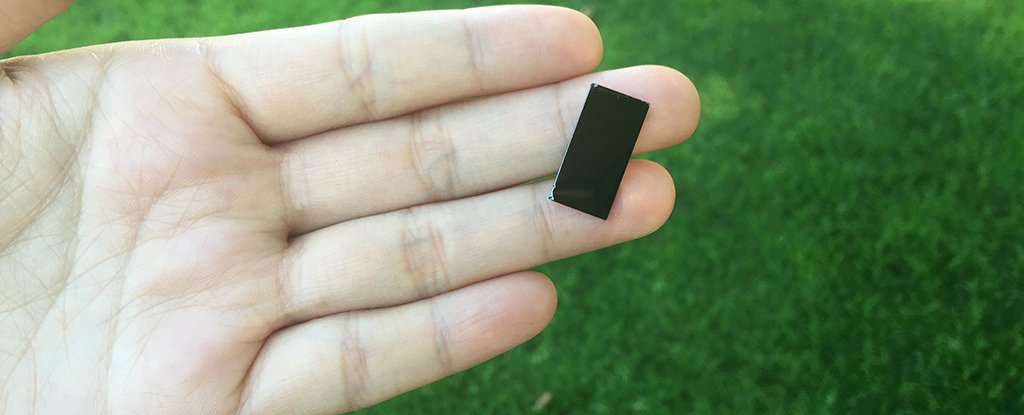
Scientists have developed a tiny device the size of a postage stamp that can kill 99.99 percent of bacteria in water in just 20 minutes.

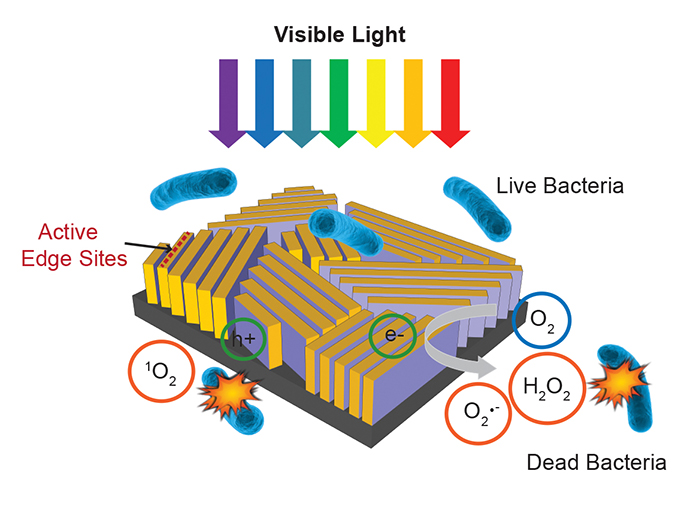
Exposing contaminated water to sunlight can naturally clean it up – because UV rays blitz germs – but this distillation process usually takes up to 48 hours to complete. Instead, this new gadget harnesses a broader spectrum of the Sun's rays to speed everything up.


"Our device looks like a little rectangle of black glass," explains lead researcher Chong Liu from Stanford University. "We just dropped it into the water and put everything under the Sun, and the Sun did all the work."

It's the visible part of the solar spectrum, rather than UV rays, that contains most of the Sun's energy – around 50 percent for visible sunlight, compared with 4 percent for UV rays.

This visible sunlight attracts electrons in the device's coating of molybdenum disulfide (often used as an industrial lubricant), which sparks chemical reactions in the water.

Hydrogen peroxide and other disinfectants are generated from these reactions, which set about clearing the germs from the water.

Viewed under a microscope, the material is made up of many miniature walls of molybdenum disulfide, closely stacked together like a labyrinth on top of a rectangle of glass. From further out, it resembles a fingerprint.

A close-up look showing the molybdenum disulfide in purple and the copper in yellow. Credit: C. Liu et al., Nature Nanotechnology
"It's very exciting to see that by just designing a material you can achieve a good performance," says Liu. "It really works. Our intention is to solve environmental pollution problems so people can live better."

One important factor that could make the technology viable for the market is that molybdenum disulfide is cheap to produce. On top of that, money is also saved on fuel used in other purification methods, because the new device doesn't require the water to be boiled first.

The technique joins a number of other research efforts that are looking to purify water affordably for those in need. Earlier this year, we saw the cleaning properties of thin graphene sheets laid on water, and a biomaterial that pulls condensation from the air.

There's more work for the Stanford team to do before the device is ready for public use - only three strains of bacteria have been tested so far, and the coating isn't currently effective against chemical pollutants.

But while fresh and clean drinking water is something many of us take for granted, that's not the case for some 650 million people across the world –and that's something that has to change.

The research has been published in Nature Nanotechnology.

ORIGINAL: Science Alert
DAVID NIELD
19 AUG 2016

martes, 7 de junio de 2016

From Living Computers to Nano-Robots: How We’re Taking DNA Beyond Genetics


DNA is one of the most amazing molecules in nature, providing a way to carry the instructions needed to create almost any life form on Earth in a microscopic package. Now scientists are finding ways to push DNA even further, using it not just to store information but to create physical components in a range of biological machines.

Deoxyribonucleic acid or “DNA” carries the genetic information that we, and all living organisms, use to function. It typically comes in the form of the famous double-helix shape, made up of two single-stranded DNA molecules folded into a spiral. Each of these is made up of a series of four different types of molecular component: adenine (A), guanine (G), thymine (T), and cytosine (C).

Genes are made up from different sequences of these building block components, and the order in which they appear in a strand of DNA is what encodes genetic information. But by precisely designing different A, G, T and C sequences, scientists have recently been able to develop new ways of folding DNA into different origami shapes, beyond the conventional double helix.

This approach has opened up new possibilities of using DNA beyond its genetic and biological purpose, turning it into a Lego-like material for building objects that are just a few billionths of a meter in diameter (nanoscale). DNA-based materials are now being used for a variety of applications, ranging from templates for electronic nano-devices, to ways of precisely carrying drugs to diseased cells.

DNA-based nanothermometers
Designing electronic devices that are just nanometers in size opens up all sorts of possible applications but makes it harder to spot defects. As a way of dealing with this, researchers at the University of Montreal have used DNA to create ultrasensitive nanoscale thermometers that could help find minuscule hotspots in nanodevices (which would indicate a defect). They could also be used to monitor the temperature inside living cells.

The nanothermometers are made using loops of DNA that act as switches, folding or unfolding in response to temperature changes. This movement can be detected by attaching optical probes to the DNA. The researchers now want to build these nanothermometers into larger DNA devices that can work inside the human body.

Biological nanorobots
Researchers at Harvard Medical School have used DNA to design and build a nanosized robot that acts as a drug delivery vehicle to target specific cells. The nanorobot comes in the form of an open barrel made of DNA, whose two halves are connected by a hinge held shut by special DNA handles. These handles can recognize combinations of specific proteins present on the surface of cells, including ones associated with diseases.

When the robot comes into contact with the right cells, it opens the container and delivers its cargo. When applied to a mixture of healthy and cancerous human blood cells, these robots showed the ability to target and kill half of the cancer cells, while the healthy cells were left unharmed.
DNA barrel. Image credit: Campbell Strong, Shawn Douglas, and Gaël McGill.
Bio-computers in living animals
Because DNA structures can act as switches, moving from one position to another and back again, they can be used to perform the logical operations that make computer calculations possible. Researchers at Harvard and Bar-Ilan University in Israel have used this principle to build different nanoscale robots that can interact with each other, using their DNA switches to react to and produce different signals.

What’s more, the scientists implanted the robots into a living animal, in this instance a cockroach. This allowed them to develop a novel type of biological computer that can control the delivery of therapeutic molecules inside the cockroach by switching elements of their structure “on” or “off”. A trial of these DNA nanorobots is now scheduled to take place in humans.

Light-harvesting antennas
As well as creating minuscule machines, DNA can provide a way for us to copy natural processes at the nanoscale. For example, nature can capture energy from the sun using photosynthesis to convert light into chemical energy, which acts as fuel for plants and other organisms (and the animals that eat them). Researchers at Arizona State University and the University of British Columbia have now built a three-arm DNA structure that can capture and transfer light that mimics this process.

Photosynthesis occurs in living organisms thanks to tiny antennas made up of a large number of pigment molecules at specific orientations and distances from each other, which are able to absorb visible light. The artificial DNA-based structures act as similar antennas, controlling the position of specific dye molecules that absorb the light energy and channel it to a reaction centre where it is converted into chemical energy. This work could pave the way for devices capable of more efficiently using the most abundant source of energy we have at our disposal: sunlight.

So what’s next for DNA nanotechnology? It is hard to know but, with DNA, nature has given us a very versatile tool. It is now up to us to make the best use of it.

ORIGINAL: Singularity Hub

sábado, 28 de mayo de 2016

UCI chemists create battery technology with off-the-charts charging capacity

UCI doctoral candidate Mya Le Thai has developed a nanowire-based technology that allows lithium-ion batteries to be recharged hundreds of thousands of times. Steve Zylius / UCI 
All powered up

Irvine, Calif., April 20, 2016 — University of California, Irvine researchers have invented nanowire-based battery material that can be recharged hundreds of thousands of times, moving us closer to a battery that would never require replacement. The breakthrough work could lead to commercial batteries with greatly lengthened lifespans for computers, smartphones, appliances, cars and spacecraft.

Scientists have long sought to use nanowires in batteries. Thousands of times thinner than a human hair, they’re highly conductive and feature a large surface area for the storage and transfer of electrons. However, these filaments are extremely fragile and don’t hold up well to repeated discharging and recharging, or cycling. In a typical lithium-ion battery, they expand and grow brittle, which leads to cracking.

UCI researchers have solved this problem by coating a gold nanowire in a manganese dioxide shell and encasing the assembly in an electrolyte made of a Plexiglas-like gel. The combination is reliable and resistant to failure.

The study leader, UCI doctoral candidate Mya Le Thai, cycled the testing electrode up to 200,000 times over three months without detecting any loss of capacity or power and without fracturing any nanowires. The findings were published today in the American Chemical Society’s Energy Letters.

Hard work combined with serendipity paid off in this case, according to senior author Reginald Penner.

Mya was playing around, and she coated this whole thing with a very thin gel layer and started to cycle it,” said Penner, chair of UCI’s chemistry department. “She discovered that just by using this gel, she could cycle it hundreds of thousands of times without losing any capacity.

That was crazy,” he added, “because these things typically die in dramatic fashion after 5,000 or 6,000 or 7,000 cycles at most.”


The researchers think the goo plasticizes the metal oxide in the battery and gives it flexibility, preventing cracking.

The coated electrode holds its shape much better, making it a more reliable option,” Thai said. “This research proves that a nanowire-based battery electrode can have a long lifetime and that we can make these kinds of batteries a reality.

The study was conducted in coordination with the Nanostructures for Electrical Energy Storage Energy Frontier Research Center at the University of Maryland, with funding from the Basic Energy Sciences division of the U.S. Department of Energy.

About the University of California, Irvine: Currently celebrating its 50th anniversary, UCI is the youngest member of the prestigious Association of American Universities. The campus has produced three Nobel laureates and is known for its academic achievement, premier research, innovation and anteater mascot. Led by Chancellor Howard Gillman, UCI has more than 30,000 students and offers 192 degree programs. It’s located in one of the world’s safest and most economically vibrant communities and is Orange County’s second-largest employer, contributing $4.8 billion annually to the local economy. For more on UCI, visit www.uci.edu.

Media access: Radio programs/stations may, for a fee, use an on-campus ISDN line to interview UC Irvine faculty and experts, subject to availability and university approval. For more UC Irvine news, visit news.uci.edu. Additional resources for journalists may be found at communications.uci.edu/for-journalists.

ORIGINAL: UCI.edu
ON APRIL 20, 2016

lunes, 11 de abril de 2016

Scientists have figured out how to make their own molecules from scratch

ETH Zurich/Lucio Isa
And the possibilities are huge.
A new technique for making artificial molecules in the lab has been developed by researchers in Switzerland, and it opens up the possibility of new micro-robots and other microscopic structures being produced for a specific task - such as delivering medicine into targeted areas in the body - in a way that closely mimics the body's natural processes.

"So far, no scientist has succeeded in fully controlling the sequence of individual components when producing artificial molecules on the micro-scale," said lead researcher, Lucio Isa from ETH Zurich.

The process to create these artificial molecules starts with microspheres made of polymer or silica - 1 micrometre in diameter - which are placed side-by-side in tiny indentations and engraved in polymer templates. The indentations set the form of the finished object and heat is then used to bond the spheres together.

The team says this new procedure is more effective than other micro-3D printing technologies because it enables scientists to build single micro-structures from multiple materials. This means they can arrange artificial molecules in the sequence and with the geometry of their choosing.


It also enables them to precisely define magnetic, non-magnetic, and differently charged areas. Small rods, tiny triangles, and basic 3D objects can be created, though the research team wants to expand the capabilities of the process further.

The researchers say the practical benefits of the process could range from
  • self-propelled micro-carriers that move in an external electric field and micro-mixers for lab-on-a-chip applications, to (eventually) 
  • micro-robots for biomedical applications which are able to grab, transport, and release other specific micro-objects.
They also think their new technique could be used to assemble larger 'superstructures' for use in areas such as photonics (light-based signal processing).

Thanks to the level of control the team has managed to develop, the process is extremely versatile. "In principle, our method can be adapted to any material, even metals," said Isa.

"The full programmability of our approach opens up new directions not only for assembling and studying complex materials with single-particle-level control but also for fabricating new microscale devices for sensing, patterning, and delivery applications," concludes the study, which has been published in the journal Science Advances.

ORIGINAL: Science Alert
DAVID NIELD
8 APR 2016

martes, 5 de abril de 2016

Scientists have just discovered a new state of matter

Genevieve Martin/Oak Ridge National Laboratory
This is big.

Researchers have just discovered evidence of a mysterious new state of matter in a real material. The state is known as 'quantum spin liquid' and it causes electrons - one of the fundamental, indivisible building blocks of matter - to break down into smaller quasiparticles.

Scientists had first predicted the existence of this state of matter in certain magnetic materials 40 years ago, but despite multiple hints of its existence, they've never been able to detect evidence of it in nature. So it's pretty exciting that they've now caught a glimpse of quantum spin liquid, and the bizarre fermions that accompany it, in a two-dimensional, graphene-like material.

"This is a new quantum state of matter, which has been predicted but hasn't been seen before," said one of the researchers, Johannes Knolle, from the University of Cambridge in the UK.

They were able to spot evidence of quantum spin liquid in the material by observing one of its most intriguing properties - electron fractionalisation - and the resulting Majorana fermions, which occur when electrons in a quantum spin state split apart. These Majorana fermions are exciting because they could be used as building blocks of quantum computers.

To be clear, the electrons aren't actually splitting down into smaller physical particles - which of course would be an even bigger deal (that would mean brand new particles!). What's happening instead is the new state of matter is breaking electrons down into quasiparticles. These aren't actually real particles, but are concepts used by physicists to explain and calculate the strange behaviour of particles.

And the quantum spin liquid state is definitely making electrons act weirdly - in a typical magnetic material, electrons behave like tiny bar magnets. So when the material is cooled to a low enough temperature, these magnet-like electrons order themselves over long ranges, so that all the north magnetic poles point in the same direction.

But in a material containing a quantum spin liquid state, even if a magnetic material is cooled to absolute zero, the electrons don't align, but instead form an entangled soup caused by quantum fluctuations.

"Until recently, we didn't even know what the experimental fingerprints of a quantum spin liquid would look like," said one of the researchers, Dmitry Kovrizhin. "One thing we've done in previous work is to ask, if I were performing experiments on a possible quantum spin liquid, what would I observe?"

To figure out what was going on, the researchers worked alongside a team from Oak Ridge National Laboratory in Tennessee and used neutron scattering techniques to look for evidence of electron fractionalisation in alpha-ruthenium chloride - a material that's structurally similar to graphene.

This also allowed them to measure the signatures of Majorana fermions for the first time by illuminating the material with neutrons, and then observing the pattern of ripples that the neutrons produced when scattered from the sample. 

These patterns were exactly what they'd expect to see based on the main theoretical model of quantum spin liquid, confirming for the first time that they'd seen evidence of it happening in a material.

"This is a new addition to a short list of known quantum states of matter," said Knolle.

"It's an important step for our understanding of quantum matter," added Kovrizhin. "It's fun to have another new quantum state that we've never seen before - it presents us with new possibilities to try new things."

Some of those new things involve quantum computers - which would be exponentially faster than regular computers - so even though all of this sounds pretty theoretical, they could actually have some really exciting potential applications.

The results have been published in Nature Materials.

ORIGINAL: New Scientist
FIONA MACDONALD 
5 APR 2016

lunes, 7 de marzo de 2016

This new material pulls clean drinking water straight out of the air

Daniel Taeger/Shutterstock.com
This could solve a lot of problems.
One of the ways of sourcing drinking water in areas afflicted by drought is by harvesting it from the air, and now a new material developed by scientists in the US could make this tricky feat easier than ever.

Researchers at Harvard University have taken inspiration from a variety of water-collecting traits in different natural species to develop what could be an unrivalled composite system for harvesting and transporting atmospheric H20.

"Everybody is excited about bio-inspired materials research," said chemical biologist Joanna Aizenberg from Harvard's Wyss Institute for Biologically Inspired Engineering. "However, so far, we tend to mimic one inspirational natural system at a time."

Instead, the team's system combines elements from three distinct plant and animal species to create a material that they claim outperforms other synthetic surfaces designed to trap condensation.

According to the researchers, the major challenges in harvesting water from the air lie in controlling the size, speed, and direction of water droplets as they form and flow on a surface. At the core of their solution to this problem, the researchers copy the external bumps of Namib desert beetles, which help the insect to collect water droplets on its shell.

Aizenberg Lab/Harvard SEAS
Scientists already knew that the bumps' hydrophilic (water-attracting) tops and hydrophobic (water-repelling) surroundings helped them collect water, but Aizenberg's team realised that the convex shape of the protrusions themselves might also be able to harvest water too.

Using modelling, the team found that this natural water-trapping mechanism could be enhanced by mimicking the geometry and slopes of cactus spines, which help drive collected droplets down the slopes.

By combining this further with a nano-coating designed to emulate the slippery surfaces of pitcher plants, the material facilitates greater droplet formation as the water beads downwards.

"We experimentally found that the geometry of bumps alone could facilitate condensation," said one of the researchers, Kyoo-Chul Park. "By 
  • optimising that bump shape through detailed theoretical modelling and 
  • combining it with the asymmetry of cactus spines and 
  • the nearly friction-free coatings of pitcher plants, 
we were able to design a material that can collect and transport a greater volume of water in a short time compared to other surfaces."

The tandem effect of the system – together with a technology developed by the researchers called Slippery Liquid-Infused Porous Surfaces – helps the material collect water in ways that could otherwise prove impossible.

"Bumps that are rationally designed to integrate these mechanisms are able to grow and transport large droplets even against gravity and overcome the effect of an unfavourable temperature gradient," the authors write in their paper, published in Nature.

Not only could this technique help to harvest water from the air in areas affected by water shortages, but it could also be of use to enhance condensation in industrial machinery.

"Thermal power plants, for example, rely on condensers to quickly convert steam to liquid water," said one of the team, Philseok Kim. "This design could help speed up that process and even allow for operation at a higher temperature, significantly improving the overall energy efficiency."

With about 1.2 billion people around the world living with water scarcity and two-thirds of the global population experiencing water shortages on a monthly basis, the potential of technology like this could make a huge difference to so many lives.

ORIGINAL: Science Alert
PETER DOCKRILL
7 MAR 2016

http://www.seas.harvard.edu/news/2016/02/pulling-water-from-thin-air

Pulling water from thin air

INSPIRED BY A DESERT BEETLE, CACTUS AND PITCHER PLANT, RESEARCHERS DESIGN A NEW MATERIAL TO COLLECT WATER DROPLETS


February 24, 2016


An array of slippery asymmetric bumps shows a significantly greater volume of water collected at the bottom of the surface compared to the flat slippery surfaces. (Courtesy of the Aizenberg Lab/Harvard SEAS)
Organisms such as cacti and desert beetles can survive in arid environments because they’ve evolved mechanisms to collect water from thin air. The Namib desert beetle, for example, collects water droplets on the bumps of its shell while V-shaped cactus spines guide droplets to the plant’s body.  
As the planet grows drier, researchers are looking to nature for more effective ways to pull water from air. Now, a team of researchers from the Harvard John A. Paulson School of Engineering and Applied Sciences (SEAS) and the Wyss Institute for Biologically Inspired Engineering at Harvard University have drawn inspiration from these organisms to develop a better way to promote and transport condensed water droplets.
Everybody is excited about bioinspired materials research,” said Joanna Aizenberg, the Amy Smith Berylson Professor of Materials Science at SEAS and core faculty member of the Wyss Institute. “However, so far, we tend to mimic one inspirational natural system at a time. Our research shows that a complex bio-inspired approach, in which we marry multiple biological species to come up with non-trivial designs for highly efficient materials with unprecedented properties, is a new, promising direction in biomimetics.
The new system, described in Natureis inspired by 
  • the bumpy shell of desert beetles, 
  • the asymmetric structure of cactus spines and 
  • slippery surfaces of pitcher plants. 


The material harnesses the power of these natural systems, plus Slippery Liquid-Infused Porous Surfaces technology (SLIPS) developed in Aizenberg’s lab, to collect and direct the flow of condensed water droplets.
This approach is promising not only for harvesting water but also for industrial heat exchangers.
Thermal power plants, for example, rely on condensers to quickly convert steam to liquid water,” said Philseok Kim, co-author of the paper and co-founder and vice president of technology at SEAS spin-off SLIPS Technologies, Inc. “This design could help speed up that process and even allow for operation at a higher temperature, significantly improving the overall energy efficiency.”   
The major challenges in harvesting atmospheric water are controlling the size of the droplets, speed in which they form and the direction in which they flow.  
For years, researchers focused on the hybrid chemistry of the beetle’s bumps — a hydrophilic top with hydrophobic surroundings — to explain how the beetle attracted water.  However, Aizenberg and her team took inspiration from a different possibility – that convex bumps themselves also might be able to harvest water.
Time lapse of droplets growing faster on the apex of the bumps compared to a flat region with the same height. (Courtesy of the Aizenberg Lab/Harvard SEAS)
We experimentally found that the geometry of bumps alone could facilitate condensation,” said Kyoo-Chul Park, a postdoctoral researcher and the first author of the paper.  “By optimizing that bump shape through detailed theoretical modeling and combining it with the asymmetry of cactus spines and the nearly friction-free coatings of pitcher plants, we were able to design a material that can collect and transport a greater volume of water in a short time compared to other surfaces.
 
Inspired by a cactus spine, asymmetric topography guides the droplet off the bump. (Courtesy of the Aizenberg Lab/Harvard SEAS)
Without one of those parameters, the whole system would not work synergistically to promote both the growth and accelerated directional transport of even small, fast condensing droplets,” said Park.
This research is an exciting first step towards developing a passive system that can efficiently collect water and guide it to a reservoir,” said Kim.
This research was supported by the Department of Energy.