Mostrando entradas con la etiqueta China. Mostrar todas las entradas

lunes, 20 de agosto de 2018

You Should Know These 20 Technology Leaders Driving China's A.I. Revolution


China’s leading technology companies are on fire, heavily investing in artificial intelligence and building true global presences. McKinsey recently reported that academic and research institutions in the country publish more cited research papers than the US, UK, or any other global leader in AI, producing nearly 10,000 papers in 2015 alone.

Backed by strong government mandates and billions of dollars of both private and public investments, China is challenging the US for position of global AI leader. Fearful of competition, the US government is considering placing restrictions on Chinese investments in AI and technology in the United States. In many sectors, such as healthcare, China may already be ahead of America in applying AI to critical public issues.

You might recognize names like Andrew Ng, Sebastian Thrun, Geoffrey Hinton, or Yann LeCun as important figures in AI, but few Westerners can name the key leaders driving AI innovation in China and at Chinese companies globally. These executives, entrepreneurs, professors, and researchers helm the most important Chinese tech companies and research labs and are respected widely for their technical expertise and accomplishments.

We’ve researched and curated 20 of the most important figures in the Chinese AI landscape that you should know: 

1. KAI-FU LEE
Co-Founder of Sinovation Ventures, Former President of Google China

Kai-Fu Lee is a globally recognized technology leader with executive experience at Apple, Microsoft, and Google. He got his BS in Computer Science from Columbia University and his PhD from Carnegie Mellon. Lee established Google China prior to co-founding Sinovation Ventures, a venture capital firm actively funding technology and AI startups in the US and China.

With celebrity status in China and over 50 million followers on Chinese social networks, Lee has become an oracle in predicting trends in Chinese tech. Lee told CNBC recently that artificial intelligence is the “singular thing that will be larger than all of human tech revolutions added together, including electricity, the industrial revolution, internet, and mobile internet.”

2. QI LU
Group President & COO, Baidu


Qi Lu was hired by Baidu to lead the company’s strategic efforts in AI and push forward integration and collaboration within the company. Every Baidu business unit, including AI teams working on autonomous driving, reports to Lu. A spokesperson from Baidu stated: “With Dr. Lu on board, we are confident that our strategy will be executed smoothly and Baidu will become a world-class technology company and global leader in AI.”

Prior to joining Baidu, Lu was personally recruited by Steve Ballmer to join Microsoft where he eventually became EVP of the Applications & Services Group. Lu started his professional career in IBM’s research labs, before joining Yahoo and rising to EVP of the Search & Advertising Group. He completed a BS in Computer Science at Fudan University and was invited by Carnegie Mellon professor Edmund M. Clarke to pursue his PhD at CMU.


3. HAIFENG WANG
Head of AI Group, Baidu

After Andrew Ng’s departure from Baidu, Haifeng Wang took over as leader of the expanded AI Group (AIG), consisting of
  • Baidu’s Institute of Deep Learning, 
  • Big Data Lab, 
  • Silicon Valley AI Lab, 
  • Augmented Reality Lab, 
  • Natural Language Unit, 
  • AI Platform Unit, and 
  • a few other departments.
Wang’s technical specialty is natural language processing (NLP) and machine translation and he has authored over 100 academic papers in AI. He applies his expertise to Baidu’s efforts in
  • NLP, 
  • computer vision, 
  • speech recognition, 
  • knowledge graphs, 
  • personalized recommendations, and 
  • deep learning. 
Wang is also an adjunct professor at Harbin Institute of Technology where he received his BS, MS, and PhD degrees in Computer Science.

4. TONG ZHANG
Executive Director of AI Lab, Tencent


The battle for top AI talent is incredibly fierce. Tong Zhang was poached from Baidu by Tencent last year to lead Tencent’s newly established AI lab. Formerly he was head of Baidu’s Big Data Lab, worked at IBM and Yahoo, and was a professor at Rutgers University.

With a team of over 200 engineers, Zhang is focused on developing Tencent’s capabilities in machine learning, computer vision, speech recognition, and natural language processing and applying new AI technologies to the company’s vast array of popular consumer products like WeChat.

5. JINGREN ZHOU
Chief Scientist and Vice President of Alibaba Cloud, Alibaba


Alibaba Cloud launched in 2009 and is now Alibaba’s fastest growing business unit. Similar to Amazon Web Services (AWS), Alibaba Cloud, also called Aliyun, emerged out of the company’s need for enormous computing power to handle millions of online shopping transactions.

Jingren Zhou leads big data and AI research at Alibaba Cloud’s Institute of Data Science Technology (iDST). In this role, he drives Alibaba’s AI technologies in speech, natural language, image and video processing, and large-scale machine learning.

Prior to joining Alibaba, Zhou was an engineering manager at Microsoft in charge of developing the big data computation platform supporting Windows, Office, and Bing. He received his BS from the University of Science and Technology of China and his PhD in Computer Science from Columbia University.

6. XIAOFE HE
President, DiDi Research


DiDi Chuxing is the “Uber of China”, with over 50TB of real-time data and over 9 billion routes driven per day. DiDi Research, the “brains of Didi Chuxing”, is a machine learning research institute set up by the company to predict demand, reduce surge impact, and also develop self-driving car technology.

President Xiaofe He got his BS in Computer Science from Zhejiang University and PhD from University of Chicago. Prior to helming DiDi Research, he worked as a research scientist and President of Yahoo Research Labs and joined Zhejiang University as a professor focused on applying mathematics and data analysis to solve important problems in pattern recognition, multimedia, and computer vision.

7. YUANQING LIN
Head of Baidu Research, Baidu


As Head of Baidu Research, Yuanqin Lin manages Baidu’s research labs, which include the

Along with Wei Xu, he will be leading Baidu’s contributions to China’s government-funded National Engineering Laboratory of Deep Learning Technology that is co-helmed by Tsinghua & Beihang University.

Prior to Baidu, Lin was the head of Media Analytics at NEC Labs America where he led teams focusing on computer vision research for mobile search and driverless cars. Lin received his MS degree in Optical Engineering from Tsinghua University and his PhD in Electrical Engineering from University of Pennsylvania.

8. PINPIN ZHU
President & CTO, Xiaoi


Xiaoi is China’s leading platform for conversational AI, powering the majority of the country’s bot and virtual assistant experiences. Established in Shanghai in 2001, the company’s technologies are used by hundreds of medium to large enterprises, government entities, and over 500 million users collectively.

Pinpin Zhu’s numerous patents in the space – including ones for “Chatting Robot System” and “SMS Robot System” – drove Xiaoi’s technical dominance in conversational interfaces. In addition to running Xiaoi, Zhu is also a Doctor of Science at the Chinese Academy of Sciences, has been appointed to China National Information Technology Standardization Committee, and has received numerous awards and accolades for his contributions to the field.

9. WEI XU
Distinguished Scientist, Baidu


In a company full of highly credentialed scientists, researchers, and engineers, Wei Xu is the only one with the title “Distinguished Scientist”. He is highly respected for his technical chops within the company due to his work on PaddlePaddle, a deep learning toolkit which was open sourced in late 2016. In development for over three years, PaddlePaddle is used to power search rankings, targeted advertising, image classification, translation, and self-driving cars.

Xu received his Bachelor’s degree at Tsinghua University, his MS from Carnegie Mellon, and was previously a researcher at NEC Labs and Facebook before joining Baidu.

10. WANLI MIN
Principal Data Scientist, Alibaba


Wanli Min led the research and development of Alibaba Cloud’s (Aliyun) artificial intelligence system, named Little Ai. Ai has been deployed by Alibaba internally to support customer service and traffic pattern predictions for the company’s flagship e-commerce business. Min also used machine learning to predict the winner of a top-rated Chinese reality TV show called “I Am Singer” and helped city planners in Guangdong province optimize traffic lights in real-time to reduce congestion.

Min entered college at the age of 14 and received his Bachelors from the University of Science & Technology of China and a PhD in Statistics from the University of Chicago.

11. KUN JING
General Manager of Duer, Baidu


Duer is Baidu’s answer to Apple’s Siri, Amazon’s Alexa, Microsoft’s Cortana, and Google’s Assistant. The conversational AI platform powers virtual assistant capabilities in a number of devices, ranging from XiaoYu, China’s version of the Amazon Echo, to voice-activated smart televisions.

Kun Jing leads the Duer business unit. Prior to joining Baidu, Jing was Microsoft’s R&D Director and created Xiaoice, a popular chatbot that went viral on Tencent’s WeChat and Sina’s Weibo. Xiaoice has over 20 million registered users who interact with the bot an average of 60 times a month, earning it the rank of Weibo’s top influencer.

12. DONG YU
Deputy Director of AI Lab, Tencent


Hired as deputy head of Tencent’s AI Lab, Dong Yu co-runs the new lab with Tong Zhang and spearheads research in speech recognition and natural language understanding. Prior to joining Tencent, Yu was the principal researcher at Microsoft Research Institute’s Speech and Dialog Group, an adjunct professor at Zhejiang University, a visiting professor at University of Science and Technology of China, and a visiting researcher at Shanghai Jiao Tong University. He received a Bachelor’s in Electrical Engineering from Zhejiang University and a PhD in Computer Science from Idaho University.

“I’m excited to join AI Lab,” Yu shares. “Over the past decade, Tencent has accumulated abundant experience in application scenarios, developed a massive data bank, established powerful computing capabilities, and built an outstanding team of technology experts; all which have helped form the foundation of in-depth research and AI application at Tencent today.”

13. ADAM COATES
Director of Silicon Valley AI Lab, Baidu


Coates received his BS, MS, and PhD degrees in Computer Science from Stanford University and has worked on everything from computer vision for autonomous cars, deep learning for speech recognition, and machine learning for helicopter acrobatics. At Baidu, he worked on DeepSpeech, a speech recognition and transcription engine that performs as well as native Mandarin speakers, and DeepVoice, a text-to-speech synthesis engine that generates believable human-like audio.

Coates is particularly excited about putting AI in the hands of real-world consumers. When he was selected by MIT Technology Review as one of 35 Innovators Under 35 in 2015, he explained that “in rapidly developing economies like in China, there are many people who will be connecting to the Internet for the first time through a mobile phone. Having a way to interact with a device or get the answer to a question as easily as talking to a person is even more powerful to them. I think of Baidu’s customers as having a greater need for artificial intelligence than myself.”

14. KAI YU
Founder & CEO, Horizon Robotics


Formerly head of Baidu’s Institute of Deep Learning, Kai Yu left Baidu to start Beijing-based startup Horizon Robotics. Funded by leading investors like Yuri Milner and Sequoia Capital, Yu’s mission is to become the “Android of Robotics,” a pervasive AI system that powers all of our smart devices. Unlike other Chinese tech giants which dominate in the cloud, Horizon aims to adapt AI to every piece of hardware in the physical world.
Horizon has launched two platforms to date: 
  • Anderson for smart homes and 
  • Hugo for smart driving. 
Anderson imbues home appliances with capabilities such as facial recognition and automatic ordering, while Hugo is an advanced driver assistance system that performs real-time pedestrian and object detection even in adverse weather conditions.

Yu received his BS and MS degrees in Electrical Engineering from Nanjing University and his PhD in Computer Science from Ludwig-Maximilians Universitat Munchen in Germany.

15. JING WANG
Former Senior Vice President of Engineering, Baidu


While at Baidu, Jing Wang managed over 5,000 engineers in numerous business units, including the ones he founded:
  • Mobile, 
  • Cloud Computing, 
  • Big Data, 
  • Cybersecurity, 
  • Baidu Research, and 
  • Autonomous Driving. 
He left the company shortly after Andrew Ng’s resignation to start his own self-driving car company, and is widely credited with driving forward Baidu’s progress in the space.

Prior to joining Baidu, Wang was Deputy Head of Google’s Shanghai engineering office as well as eBay China’s CTO and R&D general manager. He received his Bachelor’s from the University of Science & Technology of China and his Master’s in Computer Science from the Chinese Academy of Sciences.

16. BO ZHANG
Professor of Computer Science and Technology, Tsinghua University


As a professor at Tsinghua University, Bo Zhang’s research interests include AI, machine learning, pattern recognition, knowledge engineering, and robotics. His notable academic achievements include advances in robotic task and motion planning, probabilistic logic neural networks (PLN), and machine learning algorithms for image retrieval and classification and webpage structure mining.

Along with Baidu and Wei Li of Beihang University, Tsinghua was selected to co-lead the government-funded National Engineering Laboratory of Deep Learning. He is a member of the Chinese Academy of Sciences and received his Bachelor’s in Automatic Control from Tsinghua University.

17. HUA WU
Technical Chief of NLP Group, Baidu


Hua Wu contributed a number of technical breakthroughs in 
  • natural language processing (NLP), 
  • dialogue systems, and 
  • neural machine translation (NMT) 21
in her seven year tenure at Baidu. The New York Times hailed her research work in multi-task learning as “pathbreaking” and she was able to successfully deploy her invention at scale to hundreds of millions of users of Baidu’s translation products. Wu is also responsible for the technology behind Baidu’s conversational AI, Duer.

Wu received her PhD from the Chinese Academy of Sciences and co-chairs leading academic AI conferences such as ACL and IJCAI.

18. WEI LI
President and Professor of Computer Science, Beihang University


Along with Bo Zhang of Tsinghua University and senior executives from Baidu, Wei Li was selected to co-lead China’s National Engineering Laboratory of Deep Learning. He is a member of the Chinese Academy of Sciences and also president of Beihang University. Li has won numerous accolades and prizes for his technical contributions in artificial intelligence and network computing.

Li graduated from the Department of Mathematics and Mechanics of Beijing University and received his PhD in Computer Science from the University of Edinburgh.

19. HONGBIN ZHA
Professor of Machine Learning, Peking University 


“China hopes to leap-frog the US and other Western countries by vast and fast investment in the AI industry,” says Hongbin Zha, AI researcher and professor at Beijing’s Peking University. Zha directs the Key Lab of Machine Perception at Peking University and collaborates with Microsoft Research Asia alongside other AI leaders across the continent. His research interests include computer vision theory, virtual reality, and robotics.

He received his Bachelor’s degree in Electrical Engineering from Hefei University of Technology in China and his MS and PhD degrees in Electrical Engineering from Kyushu University in Japan.

20. YUNJI CHEN


In 2015, Yunji Chen was selected by MIT Technology Review as one of their top 35 Innovators Under 35. Described as “iconoclastic and cosmopolitan”, he was chosen for his work in designing specialized deep-learning processors which dramatically reduce the computational costs of large-scale machine learning. His dream is to enable even common cell phones to be “as powerful as Google Brain”.

Chen entered college at age 14 and completed his PhD with lightning speed by the age of 24. He’s now chief architect of the Godson-3C, a microprocessing chip that reduces energy requirements for computers to recognize objects and translate languages and is developing the Cambricon, a brain-inspired processor chip that models human nerve cells and synapses to facilitate deep learning. The research team is led by Chen and his younger brother, Tianshi Chen, two of the youngest professors at the Chinese Academy of Sciences.


ABOUT THE AUTHOR
Adelyn is the Head of Marketing at TOPBOTS. She's got a decade of experience growing billion-dollar companies like Eventbrite, NextDoor, and Amazon. Follow her on Twitter at @adelynzhou to learn how to accelerate your growth with AI.

ORIGINAL: TopBots
Jun 18, 2017

lunes, 28 de marzo de 2016

New dawn: Chinese scientists move step closer to creating ‘artificial sun’ in quest for limitless energy via nuclear fusion

Chinese scientists were able to heat plasma to three times the temperature of the core of our sun for a record-breaking 102 seconds as they progressed the search to derive energy from nuclear fusion. Photo: Wikipedia
In a doughnut-shaped chamber in eastern China, scientists have been able to produce hydrogen gas more than three times hotter than the core of the Sun using nuclear fusion - and maintain this temperature for 102 seconds.

The breakthrough puts China one step ahead in the global race to harness a new, artificial kind of solar energy for clean and unlimited energy, the researchers claim. This has become a pressing concern as more of the earth’s natural reserves are rapidly depleting.

The experiment was conducted last week on a magnetic fusion reactor at the Institute of Physical Science in Hefei, capital of Jiangsu province, according to a statement on the institute’s website on Wednesday.

The reactor, officially known as the Experimental Advanced Superconducting Tokamak (EAST), was able to heat a hydrogen gas - a hot ionised gas called a plasma - to about 50 million Kelvins (49.999 million degrees Celsius). The interior of our sun is calculated to be around 15 million Kelvins.

Chinese scientists came a step closer to creating an artificial sun by heating hydrogen gas to 50 million Kelvins for a record time. Photo: Hefei Institute of Physical Science, Chinese Academy of Sciences
According to this thermodynamic scale, absolute zero occurs at zero degrees (equivalent to minus 273.15 degrees Celsius), a point at which all molecular movement stops.

The temperature reached in Hefei was at the other end of the scale, and roughly the same as a mid-sized thermonuclear explosion. The goal of the experiment was to approximate the nuclear fusion conditions that occur deep inside the sun.

Although at least one other experiment in the last decade claims to have produced a hotter temperatures than this, it has never been duplicated and was unable to match the endurance - over one and a half minutes - of the Chinese test.

Meanwhile, physicists in Japan and Europe have been able to reach the same temperature as the Chinese team, but not for longer than a minute due to concerns of provoking a reactor meltdown.

The EAST was invented by Soviet scientists to control nuclear fusion for power generation.

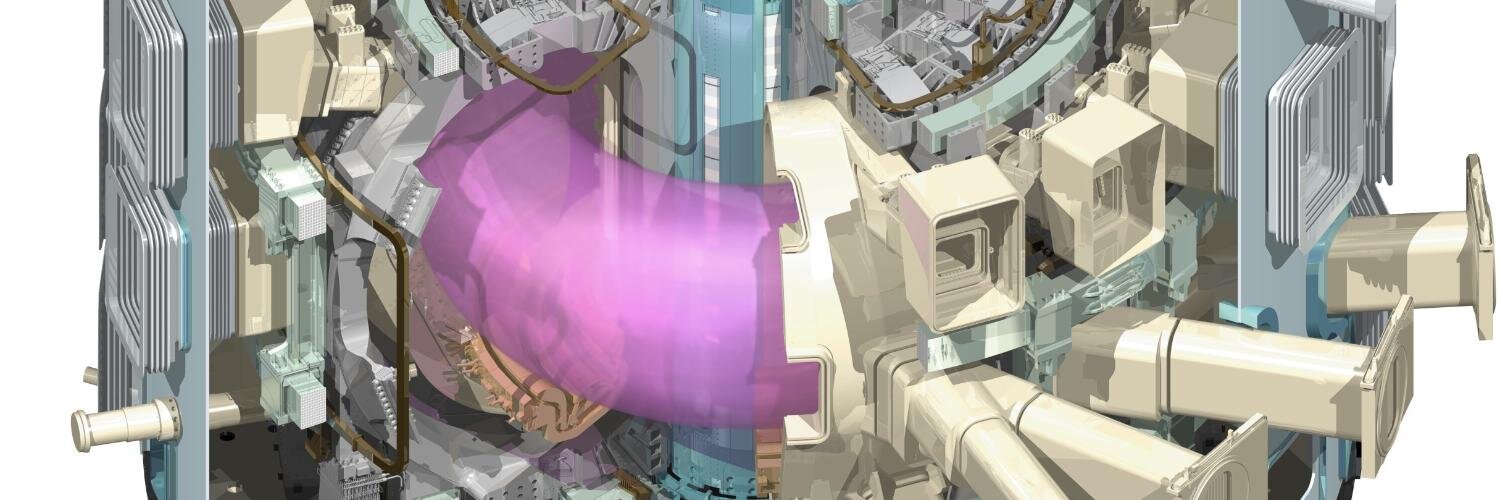
The EAST tokomak device in Hefei. In order to ‘fuse’ two hydrogen atoms to produce energy, it needs to heat the hydrogen plasma for 100 million Kelvins. Photo: Chinese Academy of Sciences
As a tokamak device, it uses a powerful magnetic field to confine plasma in the shape of a torus - imagine a large spinning doughnut -for safety reasons due to the phenomenally high temperatures being generated. The atoms are effectively held floating in place by superconducting magnets.

But controlling hydrogen gas in such a hot and volatile state is a formidable challenge, and one that most of the tokomak devices built over the last 60 years have not been able to sustain for more than 20 seconds.

The scientists in Hefei worked “day and night” to achieve the record level of endurance, according to the institute, which serves as a subsidiary of the Chinese Academy of Sciences.

The team claimed to have solved a number of scientific and engineering problems, such as precisely controlling the alignment of the magnet, and managing to capture the high-energy particles and heat escaping from the “doughnut”.

Inside the ‘doughnut’ (EAST). The metallic walls cannot come into direct contact with the plasma or it will melt or evaporate immediately. The scientists used a powerful magnetic field to keep the hot hydrogen gas suspended in place. Photo: Chinese Academy of Sciences
But they still missed their mark, which was to reach 100 million Kelvins for over 1,000 seconds (nearly 17 minutes), they said, adding that it would still take years to build a commercially viable plant that could operate in a stable manner for several decades.

Unlike the process of nuclear fission that fuels thermal power stations around the world today by splitting the atoms of fissile materials such as uranium, fusion reactions work by “fusing” two light atomic nuclei - for example, two hydrogen atoms - together to release a huge amount of heat.

This can produce levels of energy three to four times greater than the results of nuclear fission. It also generate almost no radioactive waste.

The problem is the amount of heat created. Whereas nuclear fission only generates a few hundred degrees Celsius, fusion requires at least 100 million degrees Celsius (212 million degrees Fahrenheit).

A researcher involved with the EAST project said data from their experiment may be of use to the International Thermonuclear Experimental Reactor (ITER) that is now under construction in France.
Source: @ITERORG

Meanwhile, another 1-billion-euro (US$1.12 billion) project in Germany dubbed the “stellarator” claimed last December to have achieved another milestone in the nuclear fusion quest by heating plasma to around 1 million degrees Celsius for one-tenth of a second.

A colourised computer image shows the moment the first superhot plasma was created in a separate experiment at the Wendelstein 7-X nuclear fusion research centre at the Max-Planck-Institut for Plasma Physics (IPP) in Greifswald, Germany in December. Photo: EPA


China ranks as a member country of the ITER project, which aims to produce 500 megawatts of fusion power for 400 seconds. But Beijing has expressed frustration with the slow pace of development, according to the same researcher, who asked not be identified.

The multibillion US dollar project was initially scheduled to become operational this year. But due to a series of setbacks, many now suspect it will need at least another decade.

“Political infighting among different nations about the project’s budget, personnel appointments and other issues are hampering the pace of the project,” said the researcher.

“If this chaotic situation continues, other projects in countries like the United States and China may overtake this collective, international effort.”

Stephen Chen. chen.binglin@scmp.com
05 February, 2016, 1:45pm


viernes, 11 de marzo de 2016

China is building the largest waste-to-energy plant in the world

SHL Architects
It will turn a third of Shenzhen's trash into energy every single day.

The Chinese city of Shenzhen plans to tackle its serious waste problem by burning 5,000 tonnes of it a day in what will become the largest waste-to-energy plant in the world. 

The process, which is expected to turn at least a third of the trash into useable electricity, isn’t exactly the best thing for the environment on account of all the CO2 it’ll release, but it'll at least put a nice, big dent in the landfills and illegal dumps that have been building up in Shenzhen. One of these landfills actually killed dozens of people last year when it unexpectedly collapsed.

Expected to be up and running by 2020, the plant is less about generating electricity and more about finding a solution to the existing trash problem - the energy is just a handy bonus. 

According to Adele Peters at Fast Company, the new incinerator is one of 300 waste-to-energy plants that the Chinese government plans on building over the next three years. And while there’s been much debate over just how environmentally friendly (or not, as the case may be) burning all that trash is, many countries around the world have been using the process to essentially 'right the wrongs' of the past.

"Waste-to-energy plants are not an energy solution," Chris Hardie from Schmidt Hammer Lassen Architects, the Denmark-based firm that won a competition to design the plant, told Peters, adding that the amount of greenhouse gases emitted from decomposing landfills is around double the CO2 released by incineration. 

"They are a way of dealing with waste and using this process to generate electricity as a byproduct of the process. Cities have to move towards more recycling and reducing their waste for sure - and of course developing more sources of renewable energy. That is sort of the point we are making by proposing this be the first waste-to-energy plant that has a renewable component to it," he said.

What Hardie is referring to there is the fact that the roof of the massive plant - which will stretch about 1.6 km long (1 mile) - will be topped with around 44,000 square metres of solar panels. 

The idea is that the plant won’t just be about getting rid of trash, it will be providing clean and sustainable electricity to the surrounding city, and inviting members of the public to visit the facility and see it in action.

"The waste challenge is all about education - and experiencing the scale of the challenge is part of that education process," says Hardie. "Think of it like smoking in the 1950s and 1960s - everyone smoked. It was only until a civilisation became educated on how much it was polluting our own bodies did we dramatically stop. Waste is similar. If you don’t realise the damage it is doing, why stop creating waste?"

Ultimately, while burning trash is pretty much a necessary evil at this point, because there’s no point pretending it doesn’t exist, what China should also be focussing on is how to prevent similar build-ups in the future. 

Fast Company points out that by 2020 - the year the plant is expected to be operational - San Francisco plans on being a zero-waste city through some serious composting and recycling efforts. If burning waste is our reality today, let’s hope no waste at all will be our future.


ORIGINAL: Science Alert
BEC CREW
26 FEB 2016

viernes, 19 de junio de 2015

A deep learning machine just beat humans in an IQ test

A deep learning machine just beat humans in an IQ test AI, Computing, Reasoning, IQ Test, China, Big Data, U of Science and Technology of China, MS Research, Deep Learning,
Image: dhammza/Flickr
I, for one, welcome our new computer overlords.

For the first time ever, a computer has outperformed humans in the verbal reasoning portion of an IQ test.

The machine was programmed by researchers in China using a technique known as deep learning, which involves converting data into a set of algorithms that a computer can make sense of.

Until now, computers have been pretty successful at beating humans in two out of the three parts of a standard intelligence quotient test, or IQ test - the mathematical questions and the logic question - but they'd struggled to master the verbal reasoning portion, which looks at things like analogies and classifications. You know, those questions that ask you to find the word that doesn't fit in with the others, or "Which of these words is the opposite of ubiquitous?"

This is where the deep learning comes in. In the past, the furthest programmers had gotten was to build machines that were capable of analysing millions of millions of texts to figure out which words are often associated with each other, essentially turning words into vectors that could be compared, added and subtracted.

"But this approach has a well-known shortcoming: it assumes that each word has a single meaning represented by a single vector. Not only is that often not the case, verbal tests tend to focus on words with more than one meaning as a way of making questions harder," writes MIT Technology Review about the research.

The researchers, from the University of Science and Technology of China and Microsoft Research in Beijing, tried a different tack - they looked at words and the words that often appeared nearby in big bodies of text. Using an algorithm, they worked out how the words are clustered, and they then looked up the different definitions of each word in a dictionary. This allowed them to match each cluster to a meaning.


"This can be done automatically because the dictionary definition includes sample sentences in which the word is used in each different way. So by calculating the vector representation of these sentences and comparing them to the vector representation in each cluster, it is possible to match them."

This means that the machine is able to recognise the different meanings of words for the first time.

The team helped the computers out further by feeding them multiple examples of questions so that they were able to recognise the question type and match it to the appropriate answering strategy.

They then tested the computer against 200 human participants of various ages and educational backgrounds.

"To our surprise, the average performance of human beings is a little lower than that of our proposed method," the team writes in arXiv.org, where the results were published. "Our model can reach the competitive performance between [participants] with the bachelor degrees and those with the master degrees."

This is a big step forward for artificial intelligence, and shows just how powerful deep learning can be. The strategy has also been used to teach computers how to beat us at 49 old-school Atari games, recognise food calories from a photo and even cook by watching YouTube videos.

"With appropriate uses of the deep learning technologies, we could be a further step closer to the true human intelligence," the authors write.


ORIGINAL: Science Alert
FIONA MACDONALD
19 JUN 2015

lunes, 27 de abril de 2015

Chinese researchers have genetically modified a human embryo—and many scientists think they’ve gone too far


A CRISPR sequence locks on to its target DNA. Don't worry, we'll explain below.(McGovern Institute for Brain Research at MIT)

A team of scientists in China dropped a bombshell earlier this month, and almost nobody noticed.

Researchers led by Junjiu Huang of Yat-sen University in Guangzhou published the world’s first scientific paper on altering the DNA of human embryos.

The pioneering research is controversial, though it was conducted on damaged embryos that could not have developed into a human. Many scientists contend that newly developed genetic-engineering methods need to be studied further in animals before running the risk of unpredictable human mutations and scarier developments in human evolution:


How could such a monumental paper go unnoticed? 
It was published on April 11 in the little-known online journal Protein and Cell, after being rejected by the more prestigious journals Science and Nature—partly on the grounds that the research was unethical, according to a report by Nature’s news division, which operates independent of the scientific journal. And that rejection highlights a major divide in the world of advanced genetic research: Scientists have discovered a powerful new tool, but they are also very concerned about where it may lead.

CRISPR: A fresh technique
The idea behind genetic medicine is fairly simple, even if the details are complex. Copies of a unique genetic code—in the form of DNA—are present in almost every human cell. People suffering from genetic disorders possess mutated genes—that is, misplaced letters in their DNA. The idea, then, is to heal genetic disorders by fixing the gene itself.

In the last few years, researchers have developed a powerful new method of snipping out defective DNA strands and replacing them with healthy one. The breakthrough tool—touted by MIT Technology Review as perhaps the biggest biotech discovery of the century—that enabled Huang’s team to conduct its research is called CRISPR (that stands for Clustered Regularly Interspaced Short Palindromic Repeats, if you were wondering). 

CRISPR was developed by observing the age-old battle between bacteria and viruses. In 2005, researchers discovered that bacteria use CRISPR genetic sequences as a biological weapon to remember, detect and dismember enemy viruses, honing in on specific sections of viral DNA and cutting them out.

Soon after this discovery, scientists were able to modify CRISPR to target genetic sequences in other living cells. This gave them the precision scissors that they had been looking for to target specific genes. It opened the door to fixing the mutated genes that cause hereditary disorders in both a very targeted way—honing in on specific DNA sequences—but also on a very broad scale, applied to every cell within an organism. CRISPR, combined with a few specialized proteins, essentially promises to be a find-and-replace tool for fixing damaged genetic material.

Here’s a video from MIT that goes into a little more detail:


Incidentally, some of the early CRISPR research was done by Rodolphe Barrangou, a scientist working for the yogurt company Danisco, who told the science writer Carl Zimmer that many dairy companies use CRISPR sequences in their bacterial cultures. “If you’ve eaten yogurt or cheese, chances are you’ve eaten CRISPR-ized cells,” he told Zimmer.

Mixed results
Huang’s team didn’t experiment with viable human embryos. Instead they used some of the abnormal, non-viable embryos that are inevitably created as part of in-vitro fertilization therapy, such as when two sperms insert their DNA into a single egg.

The team injected 86 embryos with engineered CRISPR sequences that targeted genes responsible for the blood disorder β-thalassaemia. About 71 of the embryos survived the 48-hour period needed for CRISPR to work. Fifty-four of the embryos could be genetically tested. Only 28 had the defective sequence removed, and an even tinier fraction of those ended up with the “pasted-in” healthy genetic sequence.

More worryingly, in some cases the CRISPR technique unintentionally caused mutations in other parts of the genome.

“If you want to do it in normal embryos, you need to be close to 100%,”Huang told Nature. “That’s why we stopped. We still think it’s too immature.” (Huang was not immediately available for comment when Quartz tried to reach him via email.)

Don’t edit human DNA
A group of prominent geneticists published a paper in Science last month—including Jennifer Doudna, a University of California Berkeley professor who last year collected a $3 million Breakthrough Prize, bankrolled by Facebook founder Mark Zuckerberg and other tech billionaires, for her pioneering work on CRISPR—that urged scientists to refrain from testing the technique on human embryos.

The paper concluded that “the potential safety and efficacy issues arising from the use of this technology must be thoroughly investigated and understood before any attempts at human engineering are sanctioned, if ever, for clinical testing.”

Fifteen western European countries currently prohibit genetically modifying the germ line (which includes sperms, eggs, and embryos), and a major US health research committee has said (pdf, p.101) it “will not entertain proposals for germ-line alterations.”

The Science authors recommended that steps be taken to “[s]trongly discourage, even in those countries with lax jurisdictions where it might be permitted, any attempts at germ-line genome modification for clinical application in humans.”

A slippery slope?
Proponents of genetic engineering tend to talk about the potential benefits, such as eradicating hereditary diseases like hemophilia or sickle-cell anemia not just in a single patient, but in all of his or her descendants as well. Opponents talk about the dangers of genetic fixes gone wrong, or at the extreme end of the spectrum, the dystopian prospect of wealthy parents ordering up genetically perfect “designer babies.”

“Even unambiguously therapeutic interventions could start us down a path towards non-therapeutic genetic enhancement,” a group of scientists wrote in Nature in March. They told their colleagues around the world: “Don’t edit the human germ line.”

But it may be too late. According to an anonymous researcher cited by Nature, at least four groups in China are working on genetically modifying human embryos. The MIT Technology Review reported last month that research groups at Harvard Medical School and at least one other center in Boston are looking into so-called human germ-line engineering, along with other scientists in China and the UK.


ORIGINAL: QZ

domingo, 8 de marzo de 2015

In China, documentary film on air pollution quickly goes viral

A Greenpeace photo dated Oct. 14 shows steel plants in northern China's Hebei province. (Lu Guang / Greenpeace)


'Under the Dome,' new film on China's air pollution woes, 
is quickly viewed by over 150 million online

Documentary about air pollution in China goes viral days before two key legislative sessions


The hottest movie in China this weekend wasn’t “Fifty Shades of Grey” or Jackie Chan’s latest, “Dragon Blade.” Instead, a pointed and emotional environmental online documentary has swept the country by storm, putting its air pollution crisis front and center days before the country's annual legislative sessions.

“Under the Dome,” made by a popular former reporter from China Central Television, was released online Saturday. By Monday, it had been viewed more than 150 million times on video portals, dominating social media such as WeChat and Weibo in the way the blue-black dress phenomenon recently swamped the Internet in the U.S.
The Chinese public is really eager for knowledge, actions and solutions. ... People really want a platform and a vehicle to join in the debate and dig deeper into the problem.- Li Yan, head of climate and energy, Greenpeace East Asia


The fact that the film was not censored and was posted on the website of the People’s Daily, the Communist Party mouthpiece, indicated a substantial degree of official support.

A cross between Al Gore’s “An Inconvenient Truth,” a TED talk and a Lifetime tear-jerker, Chai Jing’s film personalizes the smog problem while holding officials’ feet to the fire in ways rarely seen in Chinese media. It suggests how ordinary citizens can take action to demand stricter government controls.

The state-run energy sector comes in for particular criticism, while the impotence of environmental officials is also revealed. More than 20 government officials are interviewed in the film. Chai even traveled to London and Los Angeles to look for answers about how those cities solved their air pollution problems.

The documentary landed just days before this week’s opening of both the National People’s Congress and the Chinese People’s Political Consultative Conference. Though the two bodies are largely seen as rubber-stamp gatherings, they are closely watched for signals about shifts in the government’s priorities and agenda, and the environment is expected to be a key topic this year.

“Under the Dome” also debuted just a day after China named a new environment minister, Chen Jining, who was plucked from his post as president of the prestigious Tsinghua University. The move was a rare example of China appointing a minister who didn’t come up through the bureaucracy, and Chen reportedly sent Chai a text message congratulating her on the film.

In “Under the Dome,” Chai admits that for years she was not worried about pollution and never wore a face mask. But she became concerned about China’s dirty skies after discovering during her pregnancy that her unborn child had a benign tumor. She reportedly financed the $160,000 project herself.


Though she refrains from making a direct causal link between smog and the tumor in the film, she says, “When you carry a life inside you, what she breathes, eats and drinks are your responsibility, and you feel fear.”

Though most of the facts presented in “Under the Dome” have been widely presented in foreign and Chinese media, Chai’s celebrity and her approachable style (she uses a cartoon to illustrate what PM 2.5 means, for example) resonate.

“The Chinese public is really eager for knowledge, actions and solutions, and she did a good job of putting all the information together in an easy-to-understand way,” said Li Yan, head of climate and energy at Greenpeace East Asia. “People really want a platform and a vehicle to join in the debate and dig deeper into the problem.”

In Chinese premier Li Keqiang's annual Government Work Report to China's lawmakers at the opening of their 2015 plenary session, he called pollution a "blight on people's quality of life and a trouble that weighs on their hearts". He has also promised to build a more...

Li predicted that the film’s “unusual” popularity would help empower the Environment Ministry. “The timing of this is really unique, coming ahead of the ‘two meetings’ and with a new environment minister coming on the job,” she added.

But interest in Chai’s film chafed a bit for some longtime players in environmental circles.

“Lots of the statistics she presented had already been released many years ago and many of these issues had already been exposed,” said Wu Di, an environmental photographer. “Now we have to pay attention just because Chai Jing is doing a documentary?”

Still, he said, it was a “great thing” that the film was raising awareness – though he questioned how long the “fever” might last.

Among those interviewed in “Under the Dome” are Xie Zhenhua, deputy director of the powerful National Development and Reform Commission; Han Jun, deputy director of the Communist Party’s central finance affairs office; and Xiong Yuehui, director of the science standards office at the Ministry of Environmental Protection.

“About over 60% of the steel factories opened without any approval process. But can you really shut them down or replace them?” Xiong says in the film. “A 10-million-ton steel factory can support 100,000 workers. The steel industry in Hebei [province] has become uncontrollable.”

Ding Yan, director of the vehicle pollution department at the Ministry of Environmental Protection, says in the film that he is “embarrassed” about his work because his agency is so toothless.

In the film, Chai flies over L.A. in a helicopter and points out that the city has managed to decrease pollution even while adding cars to the roads. She hangs out with inspectors doing spot checks of pollution emitted by big rigs, and films a trucker who is being fined $1,000 because his vehicle was caught spewing smoke. (The L.A. segment begins about 1 hour and 17 minutes into the film.)

But in China, Ding tells her his agency doesn’t have the authority to replace or confiscate trucks that fail emission standards.

“So when you go out enforcing the law, you don't even dare to show your teeth?” Chai asks Ding. He replies: “I can't even open my mouth. How can I worry about others seeing my teeth?”

Viewers commenting on the film on the Sina web portal expressed both approval of Chai’s efforts and frustration at the government.

“After watching this documentary, I'm very angry. I finally understand what those ‘public servants’ are doing every day. They're all jerks and only know how to get money from the ordinary people,” wrote one. “Our party, please wake up. Otherwise, no one will trust you anymore.”

At the end of the film, Chai encourages the public to report polluters to a government hotline. Between 8 p.m. Saturday and 6 p.m. Sunday, the Beijing hotline saw the number of calls increase 240% over normal and the city’s environmental protection bureau had to add more operators to the hotline, the Beijing Youth Daily reported.

But in a poll conducted by Phoenix TV after the film’s release, 33.5% of the 27,240 respondents said they have no faith in the government and do not expect the smog to be cleaned in the near future.

Tommy Yang and Nicole Liu in The Times’ Beijing bureau contributed to this report.

Follow @JulieMakLAT on Twitter for news out of Asia


ORIGINAL: LA Times