Mostrando entradas con la etiqueta Financiación. Mostrar todas las entradas

domingo, 8 de diciembre de 2013

The BIOLATAM 2013 program:


PROGRAM
BIOLATAM 2013 will feature a program of conferences addressing the following topics:

Conferences, December 9th

“VENTURE CAPITAL SEMINAR”

Monday, December 9th – 9h00-15h00
Room 1
  • Success stories in public-private funding
  • Opportunities for cross participation between Europe, USA and LATAM
  • How to attract private wealth & business angels to the biotech industry

Chairwoman:

  • Cristina Garmendia, Former Spanish Minister of Science and Innovation (Spain)
Part 1 (9h00-10h30): Public policies to support biotech Venture Capital


Moderator:

  • MatTeo Grazzi, Specialist in the Competitiveness and Innovation Division, Inter-American Development Bank, (USA-DC)
Confirmed Speakers:

  • Catalina Ortiz, General Manager, INNPULSA COLOMBIA (Colombia)
  • Elisa Robles, General Director, CDTI (Spanish Center for the Development of Industrial Technology)- Innvierte Program (Spain). "Venture Capital Initiatives for Technology Companies"
  • Consuelo Valverde, Founder, SV LATAM FUND (USA-CA)
  • Felipe Camposano, General Partner, AUSTRAL CAPITAL & President, ASEMBIO - Chilean Association of Biotechnology Companies (Chile) "What we need to build a Biotech Industry in Latin America"
Part 2 (10h30-12h00): Biotech Venture Capital: the experience of international investors


Moderator:

  • Joël Jean-Mairet, Managing Partners, YSIOS CAPITAL PARTNERS (Spain)
Confirmed Speakers:
  • Gilles Nobercourt , Partner, EDMOND DE ROTHSCHILD (France)
  • Sander Slootweg, Managing Partner, FORBION CAPITAL PARTNERS (Netherlands)
  • Arun R. Jayadev, Principal, WELLINGTON PARTNERS (United Kingdom)
Part 3 (13h30-15h00): What investors seek in the latinamerican biotechnology

Moderator:

  • Ángel Santos, Director of Business Development, CRB INVERBÍO SGECR (Spain)
Confirmed Speakers:
  • João Paulo Poiares Baptista, Managing Director, BURRILL BRASIL GESTÃO DE RECURSOS S.A. (Brazil)
  • Santiago de Torres, President, INVEREADY BIOTECH II SCR (Spain). "Venture capital as a lever of growth for biotech companies. Risks and strengths"
  • Susanna Mesa, Senior Associate, THE TROUT GROUP LLC (USA-NY). "What makes biotechnology companies attractive to US investors"
 “BIOSIMILARS”

Monday, December 9th – 10h30-12h00
Room 2
  • Regulatory environment
  • Experiences in manufacturing
  • Situation and outlook in Latin America
Moderator

  • Katherine Garzón, Manager, BIOTECHNOVA SAS (Colombia)
Confirmed Speakers:

  • Oriol Argemi, Responsible of Business Development, GRIFOLS ENGINEERING S.A. (Spain). "Design of Protein Manufacturing Plant"
  • Erick Sabido Ruiz, Biotechnology Division Manager, SARTORIUS DE MÉXICO S.A. (Mexico). "Efficient and Flexible Facilities for the production of Vaccines and mAb's"
  • Sundar Ramanan, R&D Policy AMGEN INC (USA-CA). "Realizing the Full Potential of Biosimilars"
  • Edita Mistiniene, Scientific Director, 3P BIOPHARMACEUTICALS S.L. (Spain)
“PERSONALIZED MEDICINE BASED ON BIOMARKERS AGAINST CANCER”

Monday, December 9th – 13h30-15h00
Room 2
  • Assessment of the results of the study "Cancer Control Planning in Latin America and the Caribbean" published by Lancet Oncology
  • Population screening strategies
  • Early & Cost effective diagnostic & pronostic systems
Moderator:
  • Juan Carlos Alvarez, Social Policies Department Adviser, Spanish Government Presidency Cabinet (Spain)
Confirmed Speakers:

  • Gabriela Cezar, Senior Director and Head, External R&D Innovation, Brazil, Latin America & South Africa, PFIZER (Brazil). "A key role for Latin America in global Precision Medicine R&D"
  • Patricio Manque, Dean of the Faculty of Sciences& Director of the Center for Genomics and Bioinformatics, Universidad Mayor (Chile). "miRNAs as biomarkers for disease"
  • María del Carmen Álvarez-Buylla Roces, Liaison and Institutional Development Manager, INMEGEN-Instituto Nacional de Medicina Genómica (Mexico)
  • Augusto G. Silva, R & D Director, ALTHIA HEALTH (Spain). "New Predictor Models Under Personalized Medicine Scope"
“TOWARDS A SUSTAINABLE BIOECONOMY FOR LATIN AMERICA”

Monday, December 9th – 15h00-16h30
Room 2
  • Bioeconomy Strategy of the European Union: Opportunities for Latin America in the framework of Horizon 2020. What is there for Latin America?
  • Market trends in Biofuels
  • Bioplastics: Opportunities in a growing market 
Moderator:
  •  Carlos Eduardo Calmanovici, President, ANPEI - Associação Nacional de Pesquisa e Desenvolvimento das Empresas Innovadoras (Brazil)
Confirmed Speakers:
  • Javier Velasco, CEO, NEOL BIOSOLUTIONS S.A. (Spain)
  • Roberto Horcajada, Project Dept. Sub-Director & International Projects Manager, INKEMIA IUCT GROUP S.A. (Spain). "Renewable feedstocks, one of the bases of industrial biotechnology for biorefineries, biofuels and high added value products"
  • Aleck Santamaría de la Cruz, General Manager, BIOENERGY S.A. (Colombia). "Biofuels: an alternative in the transport sector"
  • Antonio José Vallespir, Executive Vice President - Institutional Affairs Europe, ABENGOA BIOENERGY (Spain)
“ADVANCED THERAPIES”
Monday, December 9th – 15h00-16h30
Room 2
  • The role of organ donation and transplantation systems in the light of the challenge presented by regenerative medicine
  • Map of scientific excellence in Latin America
  • Opportunities in the field of private health providers
 Moderator:
  • Bernardo Camacho, Scientific Director, Distrital Health Secretariat of Bogotá (Colombia)
Confirmed Speakers:
  • Gabriel Márquez, Technologies Manager, GENETRIX S.L. (Spain). "Regenerative Strategies for Myocardial Regeneration"
  • José Terencio, COO, GRI-CEL (Spain). "Recent Advances in Gene Therapy"
  • Matías Vial Valdés, General Manager, CELLS FOR CELLS S.A. (Chile)
“AGROBIOTECHNOLOGY”

Monday, December 9th – 16h30-18h00
Room 1
  • Situation in Europe & in the U.S.A
  • Is there room for Biotech SMEs?
  • Crops of interest in Latin America
 Moderator
  • Albert Sasson, President, BIOEUROLATINA (France)
 Confirmed Speakers:
  • Marianela García-Siverio, Business Development Executive, CIGB - Cuban Center for Genetic Engineering and Biotechnology (Cuba). "Agribiotechnology in Cuba. Practical experience at CIGB."
  • Alexander Grobman, President, ETHANO PERU LLC (Peru)
  • Adriana Gutiérrez, Secretary for Science, Technology & Innovation, Secretariat for Science, Technology and Innovation of the Cundinamarca Governance (Colombia)
  • Carlos Simancas, District Secretary for Economic Development, Bogota Economic Development Secretariat (Colombia) 
"BIOBASED MEDICAL DEVICES"

Monday, December 9th – 16h30–18h30
Room 2
  • Biomedical innovation and entrepreneurship
  • Future of medical devices based on biotechnology
  • In vitro diagnostics for infectious diseases
Moderator
  • Hugo Fernando Villegas, President for Latam Area, COVIDIEN (USA -MA)
Confirmed Speakers

Diagnostics:
  • Juan Carlos Briceño, Director, Biomedical Engineering Department of Los Andes University (Colombia). "Innovation and Entrepreneurship in Biomedical Engineering at Uniandes"
  • Walter García, Deputy Chief Medical Officer, Biotechnology Research, LABORATORIOS SILANES SA de CV (Mexico). "Molecular Diagnosis and Pharmacogenomics in Mexico"
  • Maria Tuominen, Key Account Manager, International Sales, BIOHIT HEALTHCARE (Finland). "GastroPanel test for the primary diagnostics of stomach health"
  • Eduardo Giacomazzi, Deputy Coordinator, COMITÊ DA CADEIA PRODUTIVA DE BIOTECNOLOGIA - COMBIO at FIESP (Brazil). "Brazilian LIfe Science and Medical Devices Map. Convergency and Challenges for the future." 
Medical Technologies:

  • Xavier Abad Lloret, Product Manager, BTI BIOTECHNOLOGY INSTITUTE (Spain). "Regenerative and personalized medicine: therapeutic solutions"
  • Mauricio Orozco-Levi, Head of Pneumology Service, FUNDACIÓN CARDIOVASCULAR DE COLOMBIA (Colombia). "Two New Medical Devices for Respiratory Therapy of Adults and Pediatric Patients: Oxygen Fraction Control (Controlizer) and Airflow Vibration (BURTER)"
  • Mauricio Alberto Lizarazo, General Manager, OSTEOPHOENIX (Spain). "Design and production of customized osteosynthesis devices and reconstructive medicine. Future or history?"
Conferences, December 10th   

“BIOTECHNOLOGY FOR COSMETICS”

Tuesday, December 10th – 8h00-9h30
Room 1
  • Strategies for finding new natural extracts
  • In vitro assay technologies
  • Nanotech Solutions 
Moderator:

  • Jaime Mauricio Concha, Managing Director, ANDI, National Business Association of Colombia (Colombia)
Confirmed Speakers:

  • Carlos Moro, Presidente, ABROBIOTEC S.L. (Matarromera Group) (Spain)
  • Alba Lucía Valenzuela, Head of Efficacy & Safety in Vitro Laboratory, BELCORP (Colombia)
  • Oscar Expósito, CSO, PHYTURE BIOTECH S.L. (Spain). "Plant Stem Cell Technology: an eco -sustainable tool for obtaining a new generation of plant extracts with high added value for its application in dermocosmetics"
 "NEGLECTED DISEASES"

Tuesday, December 10th – 8h00-9h30
Room 2
  • Treatment of neglected diseases: an opportunity for biotech companies
  • Excellence research in the field of neglected diseases
  • Main challenges and advances in research and innovation in this area
Moderator:

  • Elkin Osorio, Promotion & Prevention Manager, COLOMBIAN MINISTRY OF HEALTH AND SOCIAL PROTECTION (Colombia)
Confirmed Speakers:

  • Isabel Amat, RUTI Vaccine Co-Inventor, ARCHIVEL FARMA S.L. (Spain)
  • Walter García, Medical Director, INSTITUTO BIOCLON (Mexico). "Anascorp, the successful development of an antivenom for the treatment of an orphan disease"
  • Silvio Wandalsen, Technical Director, BIOCLIN (Brazil)
  • Sofía Duque Beltrá, Parasitology Group Coordinator, Branch of Scientific and Technological Research, Direction of Public Health Research, COLOMBIAN MINISTRY OF HEALTH AND SOCIAL PROTECTION (Colombia). "Onchocerciasis Elimination in Colombia"
  • Águeda Cabello, General Manager of Health Surveillance, Paraguay's Ministry of Public Health and Social Wellbeing (Paraguay)

"LATIN DIASPORA: SUCCESSFUL LATINAMERICAN BIOENTREPRENEURS AROUND THE WORLD"

Tuesday, December 10th – 9h30-11h00
Room 1

Moderator:

  • Joseph Fernández, CEO, ACTIVE MOTIF (USA -CA)
Confirmed Speakers:

  • Willy A. Valdivia-Granda, Founder & CEO, ORION INTEGRATED BIOSCIENCES INC (USA -NJ). "Developing an Innovation Environment to Integrate Diagnostics, Prophylactics and Therapeutics"
  • Carlos Encinas, CFO & VP for Business Development, AMERSTEM INC (USA-CA)
  • Julio Castro, CEO, PALO BIOFARMA S.L. (Spain). "Coffee and Caffeine: Opportunities for the development of new medicines"
  • Esteban Pombo Villar, COO, OXFORD BIOTHERAPEUTICS LTD (United Kingdom)

“FOOD BIOTECHNOLOGY, THE BIG BET”

Tuesday, December 10th – 9h30-11h00
Room 2
  • Tools for quality control and traceability
  • Latest developments in fermentation & probiotics
  • Functional ingredients and nutrigenomics
Moderator:
  • Sandra Rodríguez, Technology Intelligence Manager, CLARKE, MODET & Co (Spain)
Confirmed Speakers:

  • Daniel Ramón, Consejero Delegado, BIOPOLIS S.L. (Spain)
  • Gianfranco Grompone , Director Científico, DANONE RESEARCH (France). "New models for probiotic screening: a synergic study case between Europe and Latin America"
  • Pablo Ortiz, Market Strategy Manager, OWL METABOLOMICS (Spain)
  • Bernadette Klotz, General Manager,  ALPINA CORPORATIVO (Colombia)
  • Surendra Surejdeo-Maharaj, Plant Pathologist, COCOA RESEARCH CENTRE (Trinidad and Tobago). "Understanding the Potential of Cocoa Through Innovation and Commercialization"
“BIOPROSPECTING AND BIODIVERSITY”

Tuesday, December 10th – 13h30-15h00
Room 1
  • Regulatory Status
  • Opportunities in marine and terrestrial prospection
  • Success stories in the sustainable management of biodiversity
 Moderator:
  • Óscar Manuel Cobar Pinto, Dean of the Faculty of Chemical & Pharmaceutical Sciences, Universidad de San Carlos de Guatemala (Guatemala)
 Confirmed Speakers:
  • María Mercedes Zambrano, Scientific Director, Corporación CORPOGEN (Colombia)
  • Laura Charry, Business Development for South America, MAGELLAN BIOSCIENCE GROUP INC (USA-FL). "Development of sustainable technologies through marine microorganisms"
  • Olga Genilloud, Scientific Director, FUNDACIÓN MEDINA (Spain). "Prospection and valorization of microbial biodiversity at Fundacion MEDINA"
  • Jorge Huete-Pérez, President, NICARAGUAN ACADEMY OF SCIENCES (Nicaragua)
“THE IMPACT OF BIOTECHNOLOGY IN ANIMAL HEALTH AND AQUACULTURE”

Tuesday, December 10th – 13h30-15h00
Room 2
  • New vaccines
  • Diagnostic Systems
  • Genomic technology applied to the sector
  • New sources of supply
 Moderator:
  • Belén Barreiro, Marketing Manager, IMMUNOLOGY AND APPLIED GENETICS S.A. - INGENASA (Spain)
 Confirmed Speakers:
  • Pedro Bustamante–Gallardo, IBPG LTDA (Biotechnology & Genomic Platform) (Chile)
  • Alfredo Sánchez, Sales Manager, VECOL S.A. (Colombia)
  • Mirko Zimic Head Bioinformatics Group, FARVET S.A.C. (Peru).). "New technologies for the development of safer and more efficient avian vaccines"
  • Geraldine Mlynarz, Gerente, ACTIVAQ S.A. (Chile)
  “GOOD MARKET ACCESS PRACTICES IN LATAM”
Tuesday, December 10th – 13h30-15h00
Room 1
  • The regulatory diversity in LATAM
  • The critical role of distributors
  • Success stories
Moderator:

  • Christian López-Silva, Head of Pharmaceuticals & Life Sciences, Baker & McKenzie (Mexico)
 Confirmed Speakers:
  • Antonio Vila-Coro, Head of Business Development, VIVOTECNIA RESEARCH S.L. (Spain). "GLP Drug Development as a requirement to access EU and USA markets"
  • Mario Alanis Garza, International Affairs Manager, COFEPRIS- Federal Commission for the Protection against Sanitary Risk (Mexico)
  • Claudia Patricia Vaca, Adviser, Colombian Ministry of Health and Social Protection (Colombia)
  • Henrique Kruger Frizzo, Attorney at Law, TRENCH, ROSSI E WATANABE ADVOGADOS (Brazil). "Brazilian Market and the Government as a Relevant Stakeholder".
"BIOENTREPRENEURIAL COLOMBIA"

Tuesday, December 10th – 14h00-16h00
Room 2

The Main Character in Biolatam, Know 8 from the hottest Biotech Companies in Colombia


Moderator:

  • Carlos Estévez, Biohacker, LABORATORIO DE INVESTIGACIÓN EN SISTEMAS INTELIGENTES BIOLISI (Colombia)
 Speakers:
  • Jorge Soto, CEO, KERADERM (Colombia)
  • Jorge Mario Giraldo, CEO, INBIOTECH (Colombia) o Germán Castaño, CEO, SOLAR CIENCIA AGRÍCOLA (Colombia)
  • Camila Lecaros, GP- Investor, NAZCA VENTURES (Colombia)
  • Patricia del Portillo, Executive Director, Corporación CORPOGEN (Colombia)
  • Gloria Niño, CEO, SATECH (Colombia)
  • Susana Fiorentino, CEO, PHAIRILAB (Colombia)
  • Xavier Fargetton, CEO, ARCANATURA (Colombia)

“BIOTECH CLUSTER POLICIES IN LATIN AMERICA”
Tuesday, December 10th – 15h30-17h30
Room 1
  • The role of industry associations
  • Bioparks & Bioincubators
  • International networks
Chairwoman:
  • Elisa Robles, General Manager, CDTI-Spanish Center for the Development of Industrial Technology (Spain)
Moderator:
  • Cristina Rechy, Section of Competitiveness, Innovation and Technology, OAS-Organization of American States (USA-DC)
Confirmed Speakers:
  • Gabriela Couto, Founder & Director, MARKETPLAZA COSTA RICA (Costa Rica). "LatinAmerican Biotech: our potential in the world´s biotech industry"
  • Vanessa Silva da Silva, Executive Coordinator, AMBIOTEC, Associação Mineira de Empresas de Biotecnologia e Ciéncias da Vida (Brazil)
  • Nuno Arantes-Oliveira, President, P-BIO (Associaçao Portuguesa de Bioindústria) (Portugal). "Clustering in Portugal: finding critical mass in a small country"
  • Victor Fuentes Tassara, Regional Manager, CORFO - Chilean Economic Development Agency (Chile)
  • Óscar Manuel Cobar Pinto, Dean of the Faculty of Chemical & Pharmaceutical Sciences, Universidad de San Carlos de Guatemala (Guatemala)
  • Cecilia Pérez, Sectorial Coordinator, URUGUAY XXI (Uruguay). "Biotechnology Sectorial Council- Uruguayan Experience"
  • Lisa Melton, News editor, Nature Biotechnology (United Kingdom)
  • Jorge Andrés Muñoz Guerrero, Adviser, Sustainable Rural Developmente Directorate, National Planning Department (DNP) (Colombia)
The BIOLATAM 2013 program:

MONDAY, 9 DECEMBER 2013
TIME
CONFERENCES
PARTNERING 
Room 1
Room 2
7:00 AM 7:30 AM
DOOR OPENING & REGISTRATION
7:30 AM 8:00 AM
8:00 AM 8:30 AM
BIOLATAM 2013 OPENING CEREMONY
8:30 AM 9:00 AM
9:00 AM 9:30 AM
VENTURE CAPITAL SEMINAR
Part 1: Public policies to support biotech Venture Capital


ONE-TO-ONE MEETINGS 
9:30 AM 10:00 AM
10:00 AM 10:30 AM
10:30 AM 11:00 AM
VENTURE CAPITAL SEMINAR
Part 2: Biotech Venture Capital, the experience of international investors

BIOSIMILARS
11:00 AM 11:30 AM
11:30 AM 12:00 PM
12:00 PM 12:30 PM
LUNCH
(will not be provided by the event)
12:30 PM 1:00 PM
1:00 PM 1:30 PM
1:30 PM 2:00 PM
VENTURE CAPITAL SEMINAR
Part 3: What investors seek in the latinamerican biotechnology
PERSONALIZED MEDICINE BASED ON BIOMARKERS AGAINST CANCER
2:00 PM 2:30 PM
2:30 PM 3:00 PM
3:00 PM 3:30 PM
TOWARDS A SUSTAINABLE BIOECONOMY FOR LATIN AMERICA
ADVANCED THERAPIES
3:30 PM 4:00 PM
4:00 PM 4:30 PM
4:30 PM 5:00 PM
AGROBIOTECHNOLOGY
BIOBASED MEDICAL DEVICES
5:00 PM 5:30 PM
5:30 PM 6:00 PM
6:00 PM 6:30 PM

TUESDAY, 10 DECEMBER 2013
TIME
CONFERENCES
PARTNERING 
Room 1
Room 2
7:30 AM 8:00 AM
DOOR OPENING & REGISTRATION
8:00 AM 8:30 AM
BIOTECHNOLOGY FOR COSMETICS
NEGLECTED DISEASES
ONE-TO-ONE MEETINGS 
8:30 AM 9:00 AM
9:00 AM 9:30 AM
9:30 AM 10:00 AM
LATIN DIASPORA: SUCCESSFUL LATINAMERICAN BIOENTREPRENEURS AROUND THE WORLD
FOOD BIOTECHNOLOGY, THE BIG BET
10:00 AM 10:30 AM
10:30 AM 11:00 AM
11:00 AM 11:30 AM
BIOPROSPECTING AND BIODIVERSITY
THE IMPACT OF BIOTECHNOLOGY IN ANIMAL HEALTH AND AQUACULTURE
11:30 AM 12:00 PM
12:00 PM 12:30 PM
12:30 PM 1:00 PM
LUNCH
(will not be provided by the event)
1:00 PM 1:30 PM
1:30 PM 2:00 PM
2:00 PM 2:30 PM
GOOD MARKET ACCESS PRACTICES IN LATAM
BIOENTREPENEURIAL
IN COLOMBIA
2:30 PM 3:00 PM
3:00 PM 3:30 PM
3:30 PM 4:00 PM
BIOTECH CLUSTER POLICIES IN LATIN AMERICA
4:00 PM 4:30 PM
4:30 PM 5:00 PM
5:00 PM 5:30 PM
5:30 PM 6:00 PM


An Asebio / Biospain event
Hosted by: Invest in Bogotá
Follow us on:  Twitter       Facebook      LinkedIn
Institutional sponsors:


Innpulsa Colombia
Cámara de Comercio de Bogotá
Secretaría de Desarrollo de Bogotá
Ministerio de Comercio de Colombia Bancoldex Prosperidad para todos
Cundinarmarca
ICEXEspaña, Technology for Life
CDTI

ORIGINAL: BioLatAm 2013

domingo, 18 de agosto de 2013

Comentario al articulo titulado "Doctores abandonados" del profesor Santiago Ortega Arango

Por César Augusto Ramírez Segura
2013/08/15

Respecto al articulo titulado Doctores abandonados del profesor Santiago Ortega Arango que fue publicado en el espectador, quiero comentar que:

No solo los que están haciendo doctorado en el exterior se encuentran abandonados, también hay muchos candidatos a Doctor en Universidades Colombianas, ad portas de su grado o recién graduados que no tienen una alternativa económica relacionada con su investigación que les permita subsistir.

Al contrario de la promoción del conocimiento y la innovación, en Colombia lo que los hechos parecen indicar es que si quieres hacer investigación debes prepararte para no ser retribuido económicamente, es casi como querer aprovecharse del gusto que tienes por lo que haces y pensar que debes seguir haciéndolo como si fuera un hobby.

Ahora bien, en mi caso particular, fui becado por COLCIENCIAS en la convocatoria para el apoyo a Doctorados nacionales del 2008, el apoyo económico de mi beca concluyo el año pasado y aunque mi trabajo en regulación de la expresión génica en Leishmania dio origen a otros proyectos que fueron financiados por mi Universidad, una de las políticas de la U (que es privada), no permite el pago del investigador. Junto con mi tutor presentamos un proyecto a COLCIENCIAS del cual soy coinvestigador, finalmente fue aprobado para financiación mediante la modalidad de deducciones tributarias, cuando sometimos el proyecto la verdad no teníamos claro como seria el mecanismo de financiación, sin embargo teníamos que aprovechar lo que había. Ahora sabemos que el truco detrás de la convocatoria es que el mismo investigador debe buscar las entidades donantes, mas aun la mayoría de esas entidades si no son todas, solo quieren donar reactivos o algún servicio (tal vez para aumentar el margen de utilidad), el caso es que nuevamente esta fuera de consideración que la investigación la hacen los investigadores y que estos también merecen comer.

Para finalizar, luego de trabajar 8 meses sin recibir un peso, en una ciudad extraña y con 2 hijos que mantener, debo renunciar a la investigación para buscar una realidad que me permita sobrevivir. Aunque este es un caso particular, se que otros recién graduados de Ph.D en Colombia han pasado por circunstancias similares.

Es posible que, alguna persona piense que esto solo le puede pasar a malos elementos con bajo desempeño académico y que este podría ser mi caso, quiero aclarar que durante mis estudios de Doctorado hice tres pasantías en el Centro de Biología Molecular Severo Ochoa de Madrid España, escribí 5 articulos de los cuales 3 han sido publicados en revistas indexadas en el exterior, uno aún se encuentra bajo revisión y otro fue publicado en una revista nacional, mi universidad financió 3 proyectos propuestos durante mi Doctorado y finalmente mi defensa de tesis fue laureada y obtuve mención summa cum-laude.

Espero que esta experiencia sea útil para mejorar las condiciones de otros Ph.D


Saludos Cordiales.

Att: Cesar Augusto Ramirez Segura
cramirezbiologo@gmail.com
Candidato a Ph.D en Ciencias Biológicas

domingo, 21 de julio de 2013

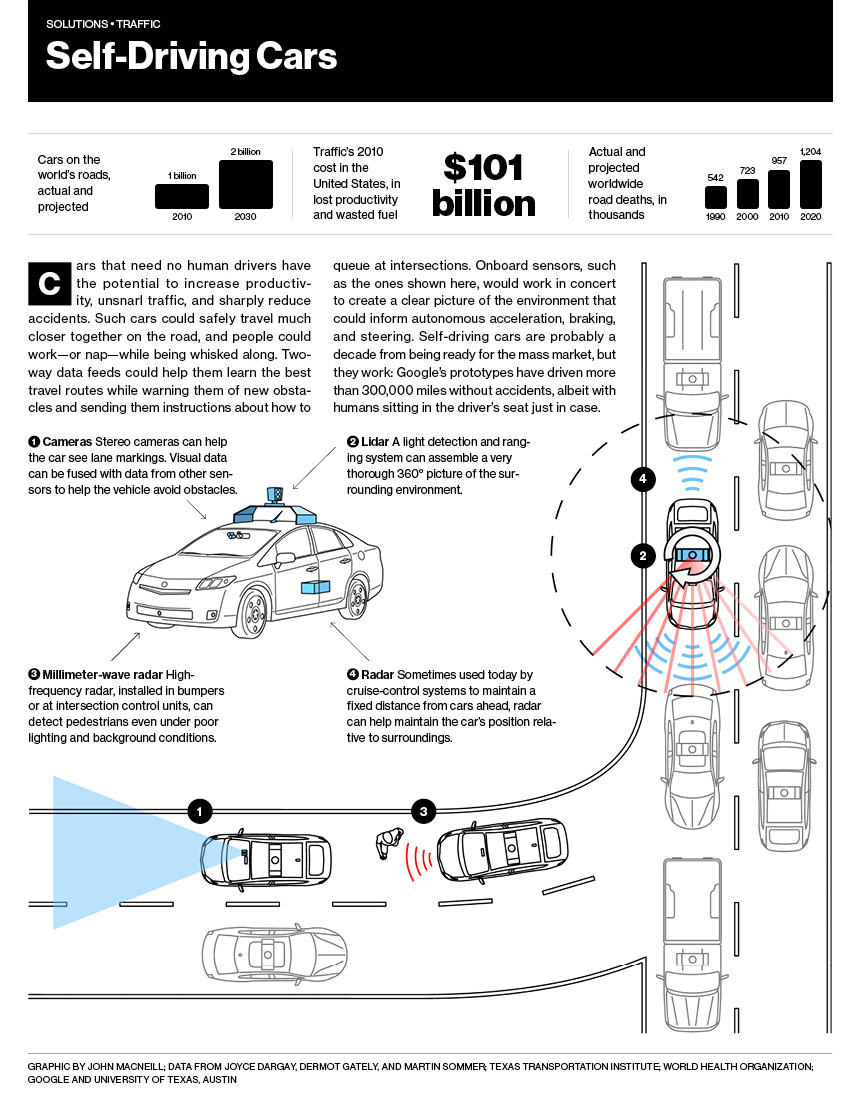
Why We Can´t Solve Big Problems?

October 24, 2012


On July 21, 1969, Buzz Aldrin climbed gingerly out of Eagle, Apollo 11’s lunar module, and joined Neil Armstrong on the Sea of Tranquility. Looking up, he said, “Beautiful, beautiful, magnificent desolation.” They were alone; but their presence on the moon’s silent, gray surface was the culmination of a convulsive collective effort.

Eight years before, President John F. Kennedy had asked the United States Congress to “commit itself to achieving the goal, before this decade is out, of landing a man on the moon and returning him safely to the Earth.” His challenge disturbed the National Aeronautics and Space Administration’s original plan for a stepped, multi-generational strategy: Wernher von Braun, NASA’s chief of rocketry, had thought the agency would first send men into Earth’s orbit, then build a space station, then fly to the moon, then build a lunar colony. A century hence, perhaps, humans would travel to Mars. Kennedy’s goal was also absurdly ambitious. A few weeks before his speech, NASA had strapped an astronaut into a tiny capsule atop a converted military rocket and shot him into space on a ballistic trajectory, as if he were a circus clown; but no American had orbited the planet. The agency didn’t really know if what the president asked could be done in the time he allowed, but it accepted the call.

This required the greatest peacetime mobilization in the nation’s history. Although NASA was and remains a civilian agency, the Apollo program was possible only because it was a lavishly funded, semi-militarized project: all the astronauts (with one exception) had been Air Force pilots and naval aviators; many of the agency’s middle-aged administrators had served in the Second World War in some capacity; and the director of the program itself, Samuel Philips, was an Air Force general officer, drafted into service because of his effective management of the Minuteman missile program. In all, NASA spent $24 billion, or about $180 billion in today’s dollars, on Apollo; at its peak in the mid-1960s, the agency enjoyed more than 4 percent of the federal budget. The program employed around 400,000 people and demanded the collaboration of about 20,000 companies, universities, and government agencies.

If Apollo commanded a significant portion of the treasure of the world’s richest nation and the cooperation of all its estates, that was because Kennedy’s challenge required NASA to solve a bewildering number of smaller problems decades ahead of technology’s evolutionary schedule. The agency’s solutions were often inelegant. To escape from orbit, NASA constructed 13 giant, single–use multistage rockets, capable of lifting 50 tons of payload and generating 7.6 million pounds of thrust. Only an ungainly modular spacecraft could be flown by the deadline; but docking the command and lunar modules midflight, sending the lunar module to the moon’s surface, and then reuniting the modules in lunar orbit demanded a kind of spastic space dance and forced the agency’s engineers to develop and test a long series of astronautical innovations. Men died, including the crew of Apollo 1, who burned in the cabin of their command module. But before the program ended in 1972, 24 men flew to the moon. Twelve walked on its surface, of whom Aldrin, following the death of Armstrong last August, is now the most senior.

Why did they go? They brought back little—841 pounds of old rocks, Aldrin’s smuggled aesthetic bliss, and something most of the 24 emphasized: a new sense of the smallness and fragility of our home. (Jim Lovell, not untypically, remembered, “Everything that I ever knew—my life, my loved ones, the Navy—everything, the whole world, was behind my thumb.”) The cynical, mostly correct answer is that Kennedy wanted to demonstrate the superiority of American rocketry over Soviet engineering: the president’s challenge was made in May of 1961, little more than a month after Yuri Gagarin became the first human in space. But it does not adequately explain why the United States made the great effort it did, nor does it convey how the lunar landings were understood at the time.

Kennedy’s words, spoken at Rice University in 1962, provide a better clue:

“But why, some say, the moon? Why choose this as our goal? .?.?. Why climb the highest mountain? Why, 35 years ago, fly the Atlantic? .?.?. We choose to go to the moon in this decade and do the other things, not because they are easy, but because they are hard; because that goal will serve to organize and measure the best of our energies and skills .?.?.”

Apollo was not seen only as a victory for one of two antagonistic ideologies. Rather, the strongest emotion at the time of the moon landings was of wonder at the transcendent power of technology. From his perch in Lausanne, Switzerland, the writer Vladimir Nabokov cabled the New York Times, “Treading the soil of the moon, palpating its pebbles, tasting the panic and splendor of the event, feeling in the pit of one’s stomach the separation from terra—these form the most romantic sensation an explorer has ever known.”

To contemporaries, the Apollo program occurred in the context of a long series of technological triumphs. The first half of the century produced the assembly line and the airplane, penicillin and a vaccine for tuberculosis; in the middle years of the century, polio was on its way to being eradicated; and by 1979 smallpox would be eliminated. More, the progress seemed to possess what Alvin Toffler dubbed an “accelerative thrust” in Future Shock, published in 1970. The adjectival swagger is pardonable: for decades, technology had been increasing the maximum speed of human travel. During most of history, we could go no faster than a horse or a boat with a sail; by the First World War, automobiles and trains could propel us at more than 100 miles an hour. Every decade thereafter, cars and planes sped humans faster. By 1961, a rocket-powered X-15 had been piloted to more than 4,000 miles per hour; in 1969, the crew of Apollo 10 flew at 25,000. Wasn’t it the very time to explore the galaxy—”to blow this great blue, white, green planet or to be blown from it,” as Saul Bellow wrote in Mr. Sammler’s Planet (also 1970)?
Perhaps the most influential photograph from the Apollo lunar landings: Buzz Aldrin’s footprint in the moon’s gray, powdery surface.

Since Apollo 17’s flight in 1972, no humans have been back to the moon, or gone anywhere beyond low Earth orbit. No one has traveled faster than the crew of Apollo 10. (Since the last flight of the supersonic Concorde in 2003, civilian travel has become slower.) Blithe optimism about technology’s powers has evaporated, too, as big problems that people had imagined technology would solve, such as hunger, poverty, malaria, climate change, cancer, and the diseases of old age, have come to seem intractably hard.

I remember sitting in my family’s living room in Berkeley, California, watching the liftoff of Apollo 17. I was five; my mother admonished me not to stare at the fiery exhaust of the Saturn 5 rocket. I vaguely knew that this was the last of the moon missions—but I was absolutely certain that there would be Mars colonies in my lifetime. What happened?

Parochial Explanations

That something happened to humanity’s capacity to solve big problems is a commonplace. Recently, however, the complaint has developed a new stridency among Silicon Valley’s investors and entrepreneurs, although it is usually expressed a little differently: people say there is a paucity of real innovations. Instead, they worry, technologists have diverted us and enriched themselves with trivial toys.

The motto of Founders Fund, a venture capital firm started by Peter Thiel, a cofounder of PayPal, is “We wanted flying cars—instead we got 140 characters.” Founders Fund matters, because it is the investment arm of what is known locally as the “PayPal Mafia,” currently the dominant faction in Silicon Valley, which remains the most important area on the planet for technological innovation. (Other members include Elon Musk, the founder of SpaceX and Tesla Motors; Reid Hoffman, executive chairman of LinkedIn; and Keith Rabois, chief operating officer of the mobile payments company Square.) Thiel is caustic: last year he told the New Yorker that he didn’t consider the iPhone a technological breakthrough. “Compare [it] with the Apollo program,” he said.The Internet is “a net plus—but not a big one.” Twitter gives 500 people “job security for the next decade,” but “what value does it create for the entire economy?” And so on. Max Levchin, another cofounder of PayPal, says, “I feel like we should be aiming higher. The founders of a number of startups I encounter have no real intent of getting anywhere huge … There’s an awful lot of effort being expended that is just never going to result in meaningful, disruptive innovation.”


But Silicon Valley’s explanation of why there are no disruptive innovations is parochial and reductive: the markets—in particular, the incentives that venture capital provides entrepreneurs—are to blame. According to Founders Fund’s manifesto, “What Happened to the Future?,” written by Bruce Gibney, a partner at the firm: “In the late 1990s, venture portfolios began to reflect a different sort of future … Venture investing shifted away from funding transformational companies and toward companies that solved incremental problems or even fake problems … VC has ceased to be the funder of the future, and instead become a funder of features, widgets, irrelevances.” Computers and communications technologies advanced because they were well and properly funded, Gibney argues. But what seemed futuristic at the time of Apollo 11 “remains futuristic, in part because these technologies never received the sustained funding lavished on the electronics industries.”

The argument, of course, is wildly hypocritical. PayPal’s capos made their fortunes in public stock offerings and acquisitions of companies that did more or less trivial things. Levchin’s last startup, Slide, was a Founders Fund investment: it was acquired by Google in 2010 for about $200 million and shuttered earlier this year. It developed Facebook widgets such as SuperPoke and FunWall.

But the real difficulty with Silicon Valley’s explanation is that it is insufficient to the case. The argument that venture capitalists lost their appetite for risky but potentially important technologies clarifies what’s wrong with venture capital and tells us why half of all funds have provided flat or negative returns for the last decade. It also usefully explains how a collapse in nerve reduced the scope of the companies that got funded: with the exception of Google (which wants to “organize the world’s information and make it universally accessible and useful”), the ambitions of startups founded in the last 15 years do seem derisory compared with those of companies like Intel, Apple, and Microsoft, founded from the 1960s to the late 1970s. (Bill Gates, Microsoft’s founder, promised to “put a computer in every home and on every desktop,” and Apple’s Steve Jobs said he wanted to make the “best computers in the world.”) But the Valley’s explanation conflates all of technology with the technologies that venture capitalists like: traditionally, as Gibney concedes, digital technologies. Even during the years when VCs were most risk-happy, they preferred investments that required little capital and offered an exit within eight to 10 years. The venture capital business has always struggled to invest profitably in technologies, such as biotechnology and energy, whose capital requirements are large and whose development is uncertain and lengthy; and VCs have never funded the development of technologies that are meant to solve big problems and possess no obvious, immediate economic value. The account is a partial explanation that forces us to ask: putting aside the personal-computer revolution, if we once did big things but do so no longer, then what changed?

Silicon Valley’s explanation has this fault, too: it doesn’t tell us what should be done to encourage technologists to solve big problems, beyond asking venture capitalists to make better investments. (Founders Fund promises to “run the experiment” and “invest in smart people solving difficult problems, often difficult scientific or engineering problems.”) Levchin, Thiel, and Garry Kasparov, the former world chess champion, had planned a book, to be titled The Blueprint, that would “explain where the world’s innovation has gone.” Originally intended to be released in March of this year, it has been indefinitely postponed, according to Levchin, because the authors could not agree on a set of prescriptions.

Let’s stipulate that venture-backed entrepreneurialism is essential to the development and commercialization of technological innovations. But it is not sufficient by itself to solve big problems, nor could its relative sickliness by itself undo our capacity for collective action through technology.

Irreducible Complexities

The answer is that these things are complex, and that there is no one simple explanation.

Sometimes we choose not to solve big technological problems. We could travel to Mars if we wished. NASA has the outline of a plan—or, in its bureaucratic jargon, a “design reference architecture.” To a surprising degree, the agency knows how it might send humans to Mars and bring them home. “We know what the challenges are,” says Bret Drake, the deputy chief architect for NASA’s human spaceflight architecture team. “We know what technologies, what systems we need” (see “The Deferred Dreams of Mars”). As Drake explains, the mission would last about two years; the astronauts would spend 12 months in transit and 500 days on the surface, studying the geology of the planet and trying to understand whether it ever harbored life. Needless to say, there’s much that NASA doesn’t know: whether it could adequately protect the crew from cosmic rays, or how to land them safely, feed them, and house them. But if the agency received more money or reallocated its current spending and began working to solve those problems now, humans could walk on the Red Planet sometime in the 2030s.

We won’t, because there are, everyone feels, more useful things to do on Earth. Going to Mars, like going to the moon, would follow upon a political decision that inspired or was inspired by public support. But almost no one feels Buzz Aldrin’s “imperative to explore” (see the astronaut’s sidebar).

Sometimes we fail to solve big problems because our institutions have failed. In 2010, less than 2 percent of the world’s energy consumption was derived from advanced renewable sources such as wind, solar, and biofuels. (The most common renewable sources of energy are still hydroelectric power and the burning of biomass, which means wood and cow dung.) The reason is economic: coal and natural gas are cheaper than solar and wind, and petroleum is cheaper than biofuels. Because climate change is a real and urgent problem, and because the main cause of global warming is carbon dioxide released as a by-product of burning fossil fuels, we need renewable energy technologies that can compete on price with coal, natural gas, and petroleum. At the moment, they don’t exist.

Happily, economists, technologists, and business leaders agree on what national policies and international treaties would spur the development and broad use of such alternatives. There should be a significant increase in public investment for energy research and development, which has fallen in the United States from a height of 10 percent in 1979 to 2 percent of total R&D spending, or just $5 billion a year. (Two years ago, Bill Gates, Xerox chief executive Ursula Burns, GE chief executive Jeff Immelt, and John Doerr, the Silicon Valley venture capitalist, called for a threefold increase in public investments in energy research.) There should be some kind of price on carbon, now a negative externality, whether it is a transparent tax or some more opaque market mechanism. There should be a regulatory framework that treats carbon dioxide emissions as pollution, setting upper limits on how much pollution companies and nations can release. Finally, and least concretely, energy experts agree that even if there were more investment in research, a price on carbon, and some kind of regulatory framework, we would still lack one vital thing: sufficient facilities to demonstrate and test new energy technologies. Such facilities are typically too expensive for private companies to build. But without a practical way to collectively test and optimize innovative energy technologies, and without some means to share the risks of development, alternative energy sources will continue to have little impact on energy use, given that any new technology will be more expensive at first than fossil fuels.

Less happily, there is no hope of any U.S. energy policy or international treaties that reflect this intellectual consensus, because one political party in the United States is reflexively opposed to industrial regulations and affects to doubt that human beings are causing climate change, and because the emerging markets of China and India will not reduce their emissions without offset benefits that the industrialized nations cannot provide. Without international treaties or U.S. policy, there will probably be no competitive alternative sources of energy in the near future, barring what is sometimes called an “energy miracle.“

Sometimes big problems that had seemed technological turn out not to be so, or could more plausibly be solved through other means. Until recently, famines were understood to be caused by failures in food supply (and therefore seemed addressable by increasing the size and reliability of the supply, potentially through new agricultural or industrial technologies). But Amartya Sen, a Nobel laureate economist, has shown that famines are political crises that catastrophically affect food distribution. (Sen was influenced by his own experiences. As a child he witnessed the Bengali famine of 1943: three million displaced farmers and poor urban dwellers died unnecessarily when wartime hoarding, price gouging, and the colonial government’s price–controlled acquisitions for the British army made food too expensive. Sen demonstrated that food production was actually higher in the famine years.) Technology can improve crop yields or systems for storing and transporting food; better responses by nations and nongovernmental organizations to emerging famines have reduced their number and severity. But famines will still occur because there will always be bad governments.

Yet the hope that an entrenched problem with social costs should have a technological solution is very seductive—so much so that disappointment with technology is inevitable. Malaria, which the World Health Organization estimates affected 216 million people in 2010, mostly in the poor world, has resisted technological solutions: infectious mosquitoes are everywhere in the tropics, treatments are expensive, and the poor are a terrible market for drugs. The most efficient solutions to the problem of malaria turn out to be simple: eliminating standing water, draining swamps, providing mosquito nets, and, most of all, increasing prosperity. Combined, they have reduced malarial infections. But that hasn’t stopped technologists such as Bill Gates and Nathan Myhrvold, the former chief technology officer of Microsoft (who writes about the role of private investors in spurring innovation), from funding research into recombinant vaccines, genetically modified mosquitoes, and even mosquito-zapping lasers. Such ideas can be ingenious, but they all suffer from the vanity of trying to impose a technological solution on what is a problem of poverty.

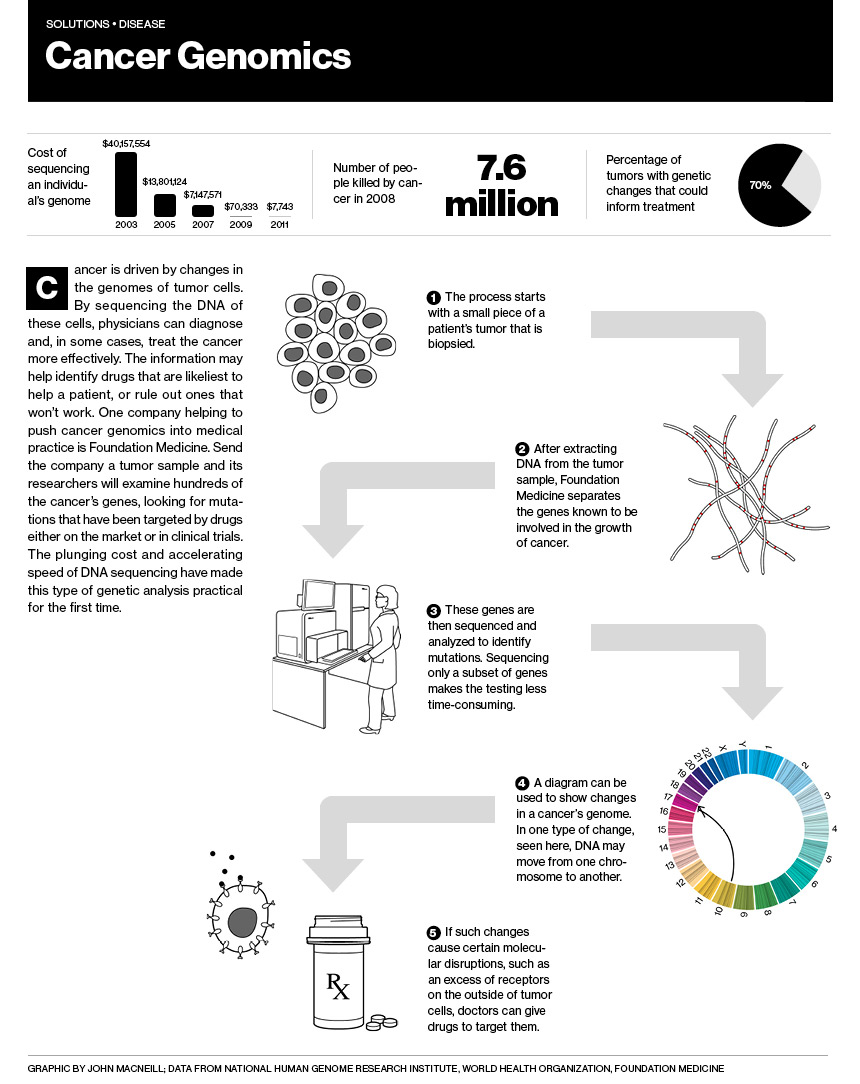
Finally, sometimes big problems elude any solution because we don’t really understand the problem. The first successes of biotechnology in the late 1970s were straightforward: breakthroughs in manufacturing, in which recombinant E. coli bacteria were coaxed into producing synthetic versions of insulin or human growth hormone, proteins whose functions we thoroughly understood. Further breakthroughs in biomedicine have been more difficult to achieve, however, because we have struggled to understand the fundamental biology of many diseases. President Richard Nixon declared war on cancer in 1971; but we soon discovered there were many kinds of cancer, most of them fiendishly resistant to treatment, and it is only in the last decade, as we have begun to sequence the genomes of different cancers and to understand how their mutations express themselves in different patients, that effective, targeted therapies have come to seem viable. (To learn more, see “Cancer Genomics.”) Or consider the “dementia plague,” as Stephen S. Hall has. As the populations of the industrialized nations age, it is emerging as the world’s most pressing health problem: by 2050, palliative care in the United States alone will cost $1 trillion a year. Yet we understand almost nothing about dementia and have no effective treatments. Hard problems are hard.

What to Do

It’s not true that we can’t solve big problems through technology; we can. We must. But all these elements must be present: political leaders and the public must care to solve a problem, our institutions must support its solution, it must really be a technological problem, and we must understand it.

The Apollo program, which has become a metaphor for technology’s capacity to solve big problems, met these criteria, but it is an irreproducible model for the future. This is not 1961: there is no galvanizing historical context akin to the Cold War, no likely politician who can heroize the difficult and dangerous, no body of engineers who yearn for the productive regimentation they had enjoyed in the military, and no popular faith in a science-fictional mythology such as exploring the solar system. Most of all, going to the moon was easy. It was only three days away. Arguably, it wasn’t even solving much of a problem. We are left alone with our day, and the solutions of the future will be harder won.

We don’t lack for challenges.  
  • A billion people want electricity,  
  • millions are without clean water, 
  • the climate is changing, 
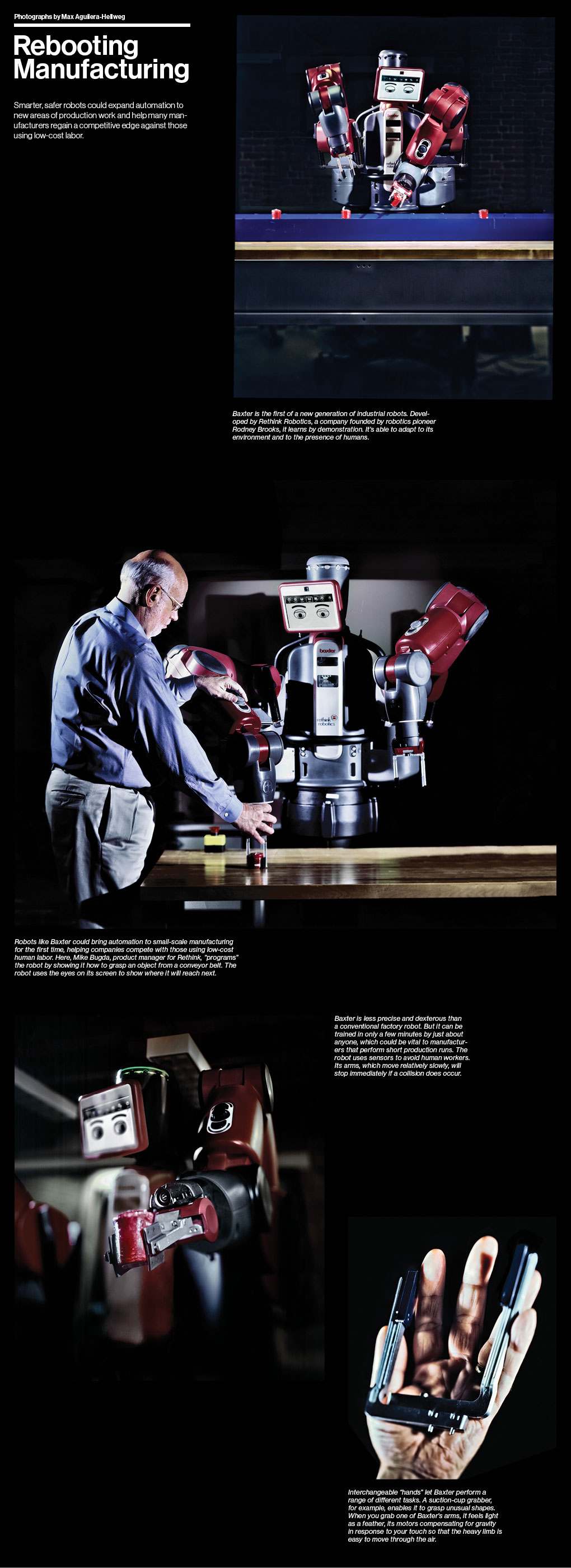
  • manufacturing is inefficient, 
  • traffic snarls cities, 
  • education is a luxury, and 
  • dementia or cancer will strike almost all of us if we live long enough. 
In this special package of stories, we examine these problems and introduce you to the indefatigable technologists who refuse to give up trying to solve them.


miércoles, 17 de julio de 2013

Colombianas, con sangre de emprendedoras

ORIGINAL: El Tiempo
Por: REDACCIÓN EL TIEMPO |
16 de Julio del 2013
Un gran desafío para las mujeres emprendoras es el balance entre lo familiar y lo laboral. Foto: Archivo particular
Las mueve más la oportunidad que la necesidad. Son líderes transformacionales.
“Las mujeres colombianas tienen en su ADN el emprendimiento y son un ejemplo para otras mujeres en otros países, como en España ahora que estamos en crisis”. Lo dice la española Yanire Braña, fundadora y presidenta de MET Community, una plataforma colaborativa para apoyar el emprendimiento femenino y la innovación social.

Según Braña, quien trabaja en el área de gestión del cambio en el Banco Mundial, el 74 por ciento de las emprendedoras nacionales lo es por oportunidad, no por necesidad, “una cifra por encima de otros países, lo que demuestra su actitud innovadora. Se les ocurren cosas”.

Así lo expuso en el Foro de Empredimiento Femenino e Innovación Social en Colombia, que se llevó a cabo recientemente en Bogotá, liderado por MET.

Ante decenas de mujeres explicó que ese ADN está compuesto de varias ‘E’: energía (entendida como fuerza y constancia), espiritualidad (pensando en el equilibrio y el bienestar de la gente), esperanza y experiencia, entre otras.

Sin embargo, pese al empuje, ellas se encuentran con dos barreras fundamentales: 
  • el acceso a recursos de financiación y 
  • la falta de redes de apoyo, de estar conectadas entre ellas para tener retroalimentación.
Respecto al acceso al crédito, Luz Marina Ferro, profesora de la Universidad de Los Andes quien también participó en el foro, explica que en el sector financiero todavía hay mucha desconfianza en la capacidad de gestión de las mujeres en el tema de recursos. “Hay más apoyo en microcrédito, porque son buenas pagas, pero para emprendimientos más grandes dudan porque creen que no se van a dedicar al negocio por completo porque tienen familia”.

Según Ferro, los motivos que más impulsan a las colombianas al empredenmiento son:
  • Independencia: muchas se han probado en un sector como ejecutivas y deciden lanzarse con su propio negocio porque conocen la actividad y tienen nuevas ideas.
  • Autonomía: quieren trabajar para ellas mismas, manejar su tiempo (no es fácil lograrlo).
  • Capacidad para hacer conexiones: por experiencia, conocimiento e intuición, las mujeres logran conectar las necesidades de las personas para generar negocios o empresas.
  • No tienen miedo de validar sus ideas con otros.
  • Van directamente a la acción, movilizan equipos y ejercen un liderazgo transformador.
  • Líderes que suelen pensar en la gente
Es evidente que las mujeres han logrado participar más activamente en el mundo empresarial, gracias en parte, a que hoy cuentan con una mayor educación, muchas veces más completa que la de los hombres. Esto les ha permitido acceder a niveles ejecutivos donde ellas suelen ejercer un tipo de liderazgo distinto a los de los hombres, pues es más transformacional, el cual se caracteriza por:
  • Ser inspirador: no da órdenes (que es el estilo transaccional, más masculino), sino que muestra con el ejemplo, y cuando hay dificultad, tiende a compartir las labores.
  • Coparte la información y el poder.
  • Piensa en formar a sus subalternos para que ellos también crezcan.
  • Trabaja en equipo.
  • Se interesa en las personas: conoce sus fortalezas y las promueve y ayuda a superar las debilidades. Reconoce lo que alguien hace bien y lo impulsa.
Esto ha hecho que en las organizaciones haya nuevas dinámicas gracias a sus aportes. Según María Consuelo Saénz, sicóloga y profesora de la Universidad de los Andes, quien también participó en el foro, las mujeres ejecutivas tienen hoy un desafío que es lograr el balance entre la vida familiar y laboral; una barrera, que es vencer el estereotipo de género; y una ventaja, que es su estilo de liderazgo.

REDACCIÓN EL TIEMPO

sábado, 13 de julio de 2013

Community centers for start-ups create buzz

ORIGINAL: USA Today
Laura Baverman,
July 9, 2013

(Photo: Michelle Pemberton, Indianapolis Star)
There's one important address for an entrepreneur in Indianapolis to have.

It's 5255 N. Winthrop Street. Home of The Speak Easy. It's a brightly painted one-story warehouse steps from a street full of quirky, locally owned restaurants and shops, and 15 minutes from downtown Indianapolis.

It's where freelance developers and designers code on couches, where start-up founders and investors camp out in conference rooms, craft beers flow during evening hackathons and meet-ups, lawyers and marketers give business-building workshops and where corporate CEOs come to scout out the next technologies to best serve their business.

Call it a community center for start-ups, a central gathering place for entrepreneurial activity. Even better, it's a key economic development driver for Indiana's biggest metropolis, creating new jobs and wealth around emerging technologies and industries.

"There's a commonality when you walk in our space," says executive director Denver Hutt. "Everyone here wants to do something. Everyone here is working on something cool."

But the Speak Easy isn't the only place where start-ups are congregating these days. In at least a dozen cities across the United States, physical spaces are being created to unite communities of entrepreneurs and to give those who support them — governments, design agencies, corporations, universities and financiers — one place to go to get involved.

There's General Assembly in New York, Capital Factory in Austin, Galvanize in Denver, Geekdom in San Antonio, 1871 in Chicago and the recently opened 1776, just steps from the White House in Washington, D.C.

They're becoming a critical and powerful piece in the development of ecosystems around entrepreneurship, says Brad Feld, a venture capitalist and author of Startup Communities.

"They create entrepreneurial density and have lots of different ways for people in the community to engage," he says.

Take Myles Grote. The co-founder of bookacoach joined Speak Easy last October.

Within weeks, he'd pitched his platform for matching student athletes with private coaches to a room full of investors. He'd met the developer of a planned 360-acre sports complex under construction near Indianapolis and a likely partner for his business. He now compares notes with the founders of Mytm8, Speak Easy members building a team management app for youth coaches.
A Speak Easy sign.(Photo: Michelle Pemberton, Indianapolis Star)
"There are so many synergies to our businesses," Grote says. "I wouldn't have met them if I hadn't joined Speak Easy."

In each city, it all started with a set of motivated and inspired entrepreneurs who could mobilize a community in a cool and affordable space in a convenient part of town where creative people wanted to be. Most begin with an initial investment from wealthy founders or sometimes with help from a combination of private sponsors and public funds.

In Indianapolis, four founders came from backgrounds in branding, Web design, e-mail marketing and law, and wanted a place for all disciplines to collaborate and work beside each other. In early 2012, they redeveloped the old carpet factory in an up-and-coming area of town called Broad Ripple, outfitting the space with design materials repurposed from other things.

"That's the same way a lot of these start-ups are, taking old industries and repurposing them for new life," Speak Easy's Hutt says. The center has more than 200 members today.

In Chicago, a partnership of the city's most important venture capitalists, philanthropists and government leaders, created 1871 in a historic downtown office building. Its name signified the rebuilding of the city after the Great Chicago Fire that year.

The location is convenient for drop-ins by the CEOs of McDonald's, Motorola Mobility, Microsoft (when he's in town) or the mayor himself. Executives now contribute about 220 hours of mentorship to 1871 members each month. In the year since opening, more than 225 companies have occupied space, and they've raised $30 million from investors.

"I had no idea how much involvement from the community we'd have," says Jim O'Connor Jr., interim CEO and an 1871 co-founder. "Leaders who have already IPO'd and been successful are coming back to share that experience through mentorship. That's pretty incredible."

The location of 1776 near the White House is a symbol of its deep connection to public policymakers and the complex government-regulated industries for which the city is known. Start-ups there are building businesses that transform education, energy, transportation or politics. More than 125 have already occupied the space since its grand opening in April. An expansion is already planned.

"Our whole philosophy is to take these four walls and bring the entire community into our space rather than have start-ups navigate the geography," says co-founder Donna Harris, who previously traveled the nation as a leader of the Startup America Partnership.

That mission has been powerful in building up new businesses, even in three months time.

At a recent round table with U.S. government leaders and corporate CEOs at the facility, Troop ID founder Blake Hall learned that Congress would sign a bill that day relevant to his business helping veterans use their credentials to get military discounts online.

Hours later, he showed up on Capitol Hill to be part of the signing and be interviewed by members of the media.

"If we're not curating those conversations, those connections aren't happening," Harris says. "When you have a space like this, there are happy collisions everywhere."

Laura Baverman is a Raleigh, N.C.-based business journalist covering start-ups and entrepreneurship for regional and national publications. She previously covered entrepreneurship for the Cincinnati Enquirer, a Gannett newspaper. Baverman can be reached via e-mail at lbaverman@gmail.comor Twitter @laurabaverman.