Mostrando entradas con la etiqueta Bacterias. Mostrar todas las entradas

lunes, 17 de noviembre de 2014

These Incredible Tiny Islands Suck Pollution Out of Water

ORIGINAL: Take Apart
July 12, 2014 

A Scottish company is building floating ecosystems to clean up rivers and lakes.

(Photo: Biomatrix/Facebook)

Cleaning up dirty water has been on the agenda of many scientists lately. That’s no surprise—water pollution poses a health risk pretty much everywhere, especially in developing countries, where kids play among sewage, workers toil in muck daily, and millions die from drinking contaminated water every year. Scotland-based Biomatrix Water offers one more innovative way to clean up the mess: installing islands that suck up pollution from the water they're floating in.

The islands look and work like wetlands. Man-made structures hold together their vegetation; the pollutant-sucking process works naturally. Roots suspended beneath the islands promote the growth of aquatic biofilm (the green slime you find on rocks) that “cleanse[s] the water through the breakdown, sorption, and metabolic transformation of nutrients and impurities,” explains the Biomatrix website. Treatment plants have used biofilm filters for decades, reports Fast Company. But the company’s engineering additions, such as columns of synthetic fiber, maximize the growth of the beneficial bacteria that absorbs pollutants.


The islands come in different shapes and sizes and can be modified to grow local greenery. Besides increasing biofilm in the water, they also serve as fish refuges and feeding zones, creating low-maintenance ecosystems that could improve the area’s biodiversity while thriving for more than 20 years. The buoyant structures are also nice to look at: They can hold trees, driftwood, and even sculpture.

From

To

From

To

Partnering with conservationists and local governments, the company has already installed the pseudo-wetlands in the Philippines, India, China, and other countries.

jueves, 28 de agosto de 2014

ECOVOLT: The World’s First Bioelectrically Enhanced Wastewater Treatment System


EcoVolt

EcoVolt is a breakthrough wastewater treatment system that leverages electrically active microbes to create clean water and high quality renewable methane gas from wastewater. 

EcoVolt helps industrial beverage producers, particularly breweries, wineries, as well as food processing plants, generate energy from their wastewater streams, decreasing their carbon footprint & turning environmental liabilities into sources of revenue.

EcoVolt is ideal for wineries, breweries and other food and beverage producers that are:
  • Developing greenfield sites
  •  Expanding production
  •  Seeking greater energy and water efficiency
Developed and scaled over the past five years with funding from the National Science Foundation, EcoVolt is an anaerobic treatment process enhanced by newly discovered electrically active microbes. To learn more about EcoVolt technology, click here.

Cambrian Technology
EcoVolt Technology
Cambrian’s flagship product, EcoVolt Bioelectric Wastewater Treatment, leverages a particular kind of bioelectricity in a process called “electromethanogenesis”. During this process, electrically active organisms convert carbon dioxide and electricity into methane fuel. Biologically coated electrodes in the reactor rapidly convert organic pollutants into electricity and subsequently convert electricity into methane fuel.


The methane produced by EcoVolt is both high quality (near pipeline quality) and renewable, and can be used in a combined heat and power system to provide sustainable energy to the facility.

The process of electromethanogenesis was discovered in 2008 and subsequently commercialized by Cambrian Innovation Inc. It has a wide range of applications, including wastewater treatment and nutrient management.

Bioelectrochemical Technology
Bioelectrochemical systems (BES), also known as microbial electrochemical technologies or microbial fuel cells, are a new technology based on the ability of certain microbes (termed exoelectrogens) to generate electricity via direct contact with electrodes. Traditional fuel cells and electrochemical systems use chemical catalysts that oxidize fuel (such as hydrogen) at anodes, and reduce oxygen at cathodes. A circuit between the anode and the cathode captures electrical energy released in the process.

BES technology can be thought of as fuel cells with a regenerative, living microbial catalyst. These microbes are capable of oxidizing and reducing a broad range of organic fuels including negative cost fuel such as wastewater. The technology works because the exoelectrogenic bacteria can respire through direct contact with the electrodes in our systems. BES have a range of advantages over current technologies depending on the exact domain of application.


The EcoVolt treatment system includes a “headworks” unit for wastewater conditioning and expandable EcoVolt modules for wastewater treatment and gas generation. A combined heat and power system can be included in the package to convert biogas into clean heat and electricity. The modular system is pre-fabricated for low-cost installation. Download an EcoVolt Brochure now.
Why Select EcoVolt?

Traditional treatment systems, like aerated ponds in the wine industry, consume energy and land, costing hundreds of thousands of dollars per year depending on the site. EcoVolt reverses this balance, tapping the natural energy already present in the wastewater, converting a power draw into a source of energy.

Clean Energy Generation

EcoVolt generates clean electricity and clean heat directly from industrial wastewater streams. High quality, renewable biogas created within the reactor is captured and used as a fuel in a combined heat and power system. A typical installation can create 30 – 200 kW of power.

Robust Wastewater Treatment

EcoVolt’s proprietary bioelectric process is robust and adaptable to a range of wastewater streams, and therefore particularly suited to varying BOD loads that are typically found in the food and beverage industry.

Prefabricated, Turn-key Installation

EcoVolt installations feature a prefabricated and modular design, reducing non-recurring engineering costs and greatly reducing install time and cost. The headworks can be designed to accommodate a high number of modular EcoVolt tanks, creating a low capex option to expand production at any point in the future.

Automated, Remote Operation

Leveraging, for the first time, a bioelectrochemical treatment process, EcoVolt systems automatically monitor the health of constituent microbial populations, enabling automated and/or remote control of the treatment process, and radically decreasing operator intensiveness.

Sustainable Water Management

Water is an increasingly precious resource and industries globally are moving towards the reuse of process water. The Cambrian EcoVolt system can form the basis for varying degrees of water reuse, whether for irrigation, tank washing or production. Contact the EcoVolt team for more information.


ORIGINAL: Cambrian Innovation

domingo, 16 de febrero de 2014

Arctic melting may help parasites infect new hosts

Grey seals are encountering a killer microbe as they move north


NEW NEIGHBORS As the Arctic emerges from a deep freeze, parasites including Sarcocystis pinnipedi (shown, purple) are able to infect animals that they had never encountered before. M. Grigg

CHICAGO— Along with melting Arctic ice comes an erosion of natural barriers that once separated parasites from hosts.

That erosion has allowed at least two pathogens to infect marine mammals they were previously unknown in, said Michael Grigg, a molecular parasitologist at the National Institutes of Health in Bethesda, Md. He reported the findings February 13 at the annual meeting of the American Association for the Advancement of Science.

A newly identified parasite was once frozen safely away from grey seals (Halichoerus grypus). It has now infected some with disastrous consequences. In 2012, about 20 percent of healthy-looking grey seal pups born on Hay Island in Hudson Bay mysteriously died. The cause turned out to be a parasite that destroyed the livers of 404 pups and two adults, Grigg said.

ORIGINAL:
Science News
by Tina Hesman Saey
February 14, 2014 

lunes, 13 de enero de 2014

Could a Mix of Sand and Pee Be a Super-Green Replacement for Concrete?

Peter Trimble's Dupe is a mini manufacturing unit that creates a sandstone-like material. Peter Trimble

Our built world is full of dirty secrets. So many of the things we imagine to have little impact on our environment turn out to be remarkably unsustainable. Concrete, bricks, asphalt—we encounter these materials daily without ever really giving much thought to the fact that they’re actually pumping huge amounts of CO2 into our air due to their energy-intensive creation processes.

But alternatives to concrete and brick construction aren’t super common. Mainly because concrete and bricks have engineered over centuries to be very good at their jobs. Increasingly, though, designers and scientists are experimenting with new materials that are structurally similar to concrete while being a helluva lot greener.

Peter Trimble is one of them. For his thesis project, Dupe, the graduate of the University of Edinburgh, investigated if it was possible to grow our building material instead of using intensive heat. “I thought, Is there an equivalent material that’s more environmentally friendly but structurally comparable out there?” he recalls. Turns out there is. All you need is some sand, bacteria (Sporosarcina pasteurii a.k.a. bacillus pasteurii), (A) calcium chloride, (B) nutrient broth, (C) acid,  and a decent amount of (D) urea and alkali (E) to make it happen.


Trimble’s idea isn’t an entirely new. A team of synthetic biologists from Stanford and Brown are looking into if this material could be used to build structures on Mars, and a couple years ago designer Ginger Krieg Dosier started BioMason, a company that creates bricks made from the very material Trimble used in his project in order to uproot the construction industry.

Admittedly, Trimble’s end goal was a little more modest. For his final project, he created a squat stool that is capable of holding all of his 200 pounds, but even this simple outcome is a testament to the material’s potential uses. Of course, it’s important to keep in mind Trimble is not a scientist. “I’m trained as a product designer,” he says. “So there was a massive massive learning curve.

He began reading scientific papers, consulting with geo-engineers and working out the kinks of his recipe in the lab, using beakers and science equipment, “That was all well and good but for a product design product I need to make it look like it could actually be realized.

A team of synthetic biologists from Stanford and Brown are looking into if this material could be used to build structures on Mars.

Trimble ended up designing a mini manufacturing unit, which looks uncannily like an at-home beer brewery kit. There’s a stainless steel container, a mixer from a food blender and a pump from a coffee machine. Using this setup, the sand is poured into the stool’s mold before the bacteria is added. This bacteria and sand mixture sits overnight to ensure the liquid gets deep in-between sand particles. The next day, Trimble adds the urea and calcium chloride solution. When it comes into contact with the bacteria, a bond is formed, creating a cement-like material.

The sandstone has some drawbacks. Without reinforcement, its around two-thirds as strong as cement. And Trimble says it would need to be developed to better protect against erosion and water damage.

But on to the really important thing: We know you’re wondering, and no, Trimble didn’t actually use urine to build his stool— though he totally could have. “I didn’t particularly fancy setting a bin in my bathroom and getting my flatmates to fill it up with urine, so we skipped that one,” he laughs. “Technically it’s possible, but you would need like 100 liters or something, and that’s a lot of wee.

ORIGINAL: Wired
By Liz Stinson
01.13.14

Liz is a Brooklyn-based reporter for Wired Design. She likes talking to people about technology, innovation and pretty things.

Read more by Liz Stinson
Follow @lizstins on Twitter.

domingo, 22 de diciembre de 2013

The Gut’s Microbiome Changes Rapidly with Diet

A new study finds that populations of bacteria in the gut are highly sensitive to the food we digest

You are what you eat, and so are the bacteria that live in your gut.

Microbiologists have known for some time that different diets create different gut flora, but previous research has focused on mice instead of humans, leaving the actual relationship between our food and our stomach bacteria unclear. A new study, published Wednesday (Dic 11) in Nature, indicates that these changes can happen incredibly fast in the human gut—within three or four days of a big shift in what you eat.We found that the bacteria that lives in peoples’ guts is surprisingly responsive to change in diet, Lawrence David, assistant professor at the Duke Institute for Genome Sciences and Policy and one of the study’s authors, says. “Within days we saw not just a variation in the abundance of different kinds of bacteria, but in the kinds of genes they were expressing.” (Scientific American is part of Nature Publishing Group.)

Eugene Chang, a professor of medicine at the University of Chicago who specializes in gastroenterology agrees that the speed is surprising. “One of the major points of this study was that in contrast to what we thought might take days, weeks or years began to happen within hours,” says Chang, who was not part of the study. They also observed changes in the amount of bile acid secreted into the stomach, and found that bacteria native to our food—microorganisms used to produce cheeses and cure meats—are surprisingly resilient, and colonize the gut along with species already in our microbiome.

But why do we care about which critters are helping us digest our food? “The incredible quickness of this shifting is interesting,” David says, “for at least two reasons:
The first is evolutionary. These rapid changes, he says, could have been very useful for ancient humans. For hunters and gatherers, diet could be altered quickly and with little transition—weeks of nuts and seeds might be broken up by a sudden influx of meat from a successful hunt—and the ability to rapidly change the microbiome would ensure maximum nutrient absorption from even the most unfamiliar foods.

For modern humans, the rapid shift could be less adaptive. The 10 participants in the study switched to either a plant- or animal-based diet, with the former avoiding animal products and the latter eating milk, cheese and meat. In the subjects eating animal products the researchers saw a significant uptick in Bilophila wadsworthia, a bacteria known to contribute to colitis, a variety of inflammatory bowel disease, in mice. But the link hasn’t been studied in humans, so David does not think that cheese-lovers are necessarily eating themselves sick. “We’re anticipating that people will try to draw conclusions about which diet is better from this,” David says, “and we want to address that it’s very difficult to come to any health-related judgment based on this study.Without measurements of host health during the study, like inflammation in the gut or immune system responses, David says, such a connection is impossible to make.

Chang, who has worked on the connection between B. wadsworthia and colitis in mice, agrees that the new study does nothing to prove the same for humans. But he thinks there may be something there. “This study shows how sensitive the body is to dietary change,” he says. “For the lay public, it underscores the importance of diet in health and disease. People should pay more attention to what they eat. But it rests on scientists to recognize that dietary discipline has these varied effects, and to understand what each component does so we can design healthier diets.” Dramatic changes in our diet, he says, could very well be the cause of “Western disorders” such as inflammatory bowel disease and obesity. Still, David says, his study was not meant to change the way we eat.

Follow-up research could monitor host health to support a connection between certain bacteria and disease. Whereas the initial study was small, David says the research team is unlikely to repeat it with a larger group. The results were consistent from one individual to another, so although more participants would add statistical support, he doubts they would see a change in the bacterial activity. “I should also point out,” David says, “that it’s fairly difficult to get even 10 people that will radically change their diet and then track themselves so regularly.” Instead, he anticipates that future studies will explore how things like food preparation change which flora flourish in the gut.

December 14, 2013

miércoles, 24 de julio de 2013

Scientists discover what’s killing the bees and it’s worse than you thought

ORIGINAL: Quartz
By Todd Woody @greenwombat 
2013/07/24
Outlawing a type of insecticides is not a panacea. AP Photo/Ben Margot
As we’ve written before, the mysterious mass die-off of honey bees that pollinate $30 billion worth of crops in the US has so decimated America’s apis mellifera population that one bad winter could leave fields fallow. Now, a new study has pinpointed some of the probable causes of bee deaths and the rather scary results show that averting beemageddon will be much more difficult than previously thought.

Scientists had struggled to find the trigger for so-called Colony Collapse Disorder (CCD) that has wiped out an estimated 10 million beehives, worth $2 billion, over the past six years. Suspects have included pesticides, disease-bearing parasites and poor nutrition. But in a first-of-its-kind study published today in the journal PLOS ONE, scientists at the University of Maryland and the US Department of Agriculture have identified a witch’s brew of pesticides and fungicides contaminating pollen that bees collect to feed their hives. The findings break new ground on why large numbers of bees are dying though they do not identify the specific cause of CCD, where an entire beehive dies at once.

When researchers collected pollen from hives on the east coast pollinating cranberry, watermelon and other crops and fed it to healthy bees, those bees showed a significant decline in their ability to resist infection by a parasite called Nosema ceranae. The parasite has been implicated in Colony Collapse Disorder though scientists took pains to point out that their findings do not directly link the pesticides to CCD. The pollen was contaminated on average with nine different pesticides and fungicides though scientists discovered 21 agricultural chemicals in one sample. Scientists identified eight ag chemicals associated with increased risk of infection by the parasite.

Most disturbing, bees that ate pollen contaminated with fungicides were three times as likely to be infected by the parasite. Widely used, fungicides had been thought to be harmless for bees as they’re designed to kill fungus, not insects, on crops like apples.

There’s growing evidence that fungicides may be affecting the bees on their own and I think what it highlights is a need to reassess how we label these agricultural chemicals,Dennis vanEngelsdorp, the study’s lead author, told Quartz.

Labels on pesticides warn farmers not to spray when pollinating bees are in the vicinity but such precautions have not applied to fungicides.

Bee populations are so low in the US that it now takes 60% of the country’s surviving colonies just to pollinate one California crop, almonds. And that’s not just a west coast problem—California supplies 80% of the world’s almonds, a market worth $4 billion.

In recent years, a class of chemicals called neonicotinoids has been linked to bee deaths and in April regulators banned the use of the pesticide for two years in Europe where bee populations have also plummeted. But vanEngelsdorp, an assistant research scientist at the University of Maryland, says the new study shows that the interaction of multiple pesticides is affecting bee health.

The pesticide issue in itself is much more complex than we have led to be believe,” he says. “It’s a lot more complicated than just one product, which means of course the solution does not lie in just banning one class of product.

The study found another complication in efforts to save the bees: US honey bees, which are descendants of European bees, do not bring home pollen from native North American crops but collect bee chow from nearby weeds and wildflowers. That pollen, however, was also contaminated with pesticides even though those plants were not the target of spraying.

It’s not clear whether the pesticides are drifting over to those plants but we need take a new look at agricultural spraying practices,” says vanEngelsdorp.

Marine Microbe Produces Unknown Antibiotic

ORIGINAL: Scientific American

Slide culture of a Streptomyces species. Wikipedia
A bacterial species at the California coast was found to produce anthracimycin, which showed activity against anthrax and MRSA in initial, non-human testing. Christopher Intagliata reports.

Download MP3

Next time you hit the beach, dig your feet into the sand. And consider that your toes might be mingling with the wonder drug of the future: an antibiotic strong enough to combat MRSA, even anthrax. That's what researchers may have found when they dug a few feet into beach sand at Gaviota State Park, near Santa Barbara: a previously undescribed species of Streptomyces bacteria, which pumps out an antibiotic called anthracimycin.

As you might have guessed, the old-school antibiotic streptomycin also comes from a strain of Streptomyces bacteria. But researchers say this newly discovered compound is structurally and chemically unique from that other mycin and from all other antibiotics—meaning it could launch a whole new class of drugs.

Early tests suggest anthracimycin is 25 to 40 times more potent than today's antibiotics at killing anthrax and other germs, in petri dishes at least. And it wiped out MRSA in 90 percent of infected mice. The results appear in the journal Angewandte Chemie. [Kyoung Hwa Jang et al, Anthracimycin, a Potent Anthrax Antibiotic from a Marine-Derived Actinomycete]

There's still no evidence the drug works in humans, and this study’s researchers say they won't be involved in human trials. But they're hoping pharmaceutical investigators won't be resistant to the idea.

Christopher Intagliata [The above text is a transcript of this podcast]

martes, 2 de abril de 2013

Hagfish slime: The clothing of the future?

ORIGINAL: BBC
By Anna Rothschild
2 April 2013

PRI's The World, Ontario, Canada

The jawless, spineless hagfish is a primitive creature that lives at the bottom of the ocean and dates back as far as 500 million years - but it exudes a very special slime, which could provide the clothing of the future.

Hagfish are not the most glamorous of creatures.

They slope around on the deep, dark ocean floor, scavenging for food. Dead whale is a favourite.

But they do have a trick up their sleeve, or rather tucked within their snake-like body - abundant, highly-condensed slime.

A hagfish has no jaws, and its slime serves as a valuable form of self-defence.

Researchers recently filmed what happens when a shark bites a hagfish - its mouth and gills are quickly covered in slime. The shark has to back off, or face a slimy suffocation.


Footage courtesy of Museum of New Zealand Te Papa Tongarewa
Footage courtesy of Museum of New Zealand Te Papa Tongarewa
"They're maybe not the prettiest of creatures to work on, but I have a lot of respect for them," says Tim Winegard, a researcher at the University of Guelph in Canada, studying the fibres found in hagfish slime.

"These guys have been around through just about everything," he says. "They're a winner in terms of outlasting dinosaurs and many, many mass extinctions."

Find out more
The World is a co-production of BBC World Service, Public Radio International and WGBH in Boston 
Airs weekdays on more than 300 radio stations across the US and Canada 

Dinosaurs became extinct about 60 million years ago but a hagfish fossil - complete with evidence of slime-producing glands - has been found dating back 330 million years.

A hagfish has about 100 of these glands, or invaginations, that run along the side of its body from which they exude a milky, white substance, comprised of mucus and thread.

When this gets mixed with seawater, it expands, creating huge amounts of clear slime, composed of very thin - but super-strong and stretchy - fibres.

When you stretch the fibres in water and then dry them out, they become silky.

The largest species of hagfish can reach about 4ft (1.2m), though most are around 1ft (30cm) long.

But despite their small size, a single hagfish has hundreds of kilometres of slime thread inside it.

Scientists believe hagfish slime or similar proteins could be turned into tights or breathable athletic wear, or even bullet-proof vests.


For years, scientists have been looking for alternatives to synthetic fibres like nylon and lycra, or spandex, which are made from oil - a non-renewable resource.

Hagfish slime has the potential to provide a natural and renewable alternative.

But first, the experts need to work out how to increase the slime production. It's unlikely that we will ever see massive hagfish farms. Hagfish don't seem to respond well in these conditions.

What we know about hagfish…


  • There are more than 80 species of hagfish - but despite the name, they're not really fish 
  • They are considered craniates, and have a hard structure that surrounds the brain 
  • Hagfish have rudimentary eyes - some can sense light, but nothing more 
  • They are scaleless, which gives their skin a smooth, leathery quality - hagfish skins are sometimes sold as "eel-skin leather" 
They tie themselves in knots to clean off slime, and as a way of leveraging food off carcasses 
Hagfish share a common ancestor with all the vertebrate lineage, including humans 

"We know very little about hagfish reproduction, and no-one has ever gotten hagfish to breed in captivity - amazing as that sounds," says Douglas Fudge, who heads the Guelph research project.

"Right now, we literally couldn't have hagfish farms the way we have cows or chickens, or any other domesticated animals in captivity."

Instead, scientists hope to make proteins like the ones found in hagfish slime artificially in the lab.

It's a model that scientists have tried with spider silk before, but because the proteins in spider silk are so large, it takes some pretty wacky-sounding techniques to replicate them (like getting it from the milk of transgenic goats).

Hagfish slime has many similar qualities to spider silk, but has one big advantage, says Fudge - the proteins that make it up are far smaller, and so easier - in theory - to replicate.

No-one has made a spool of hagfish thread yet, but scientists are working on it.

"I'm just taking my tweezers, and then kind of drawing it up," explains post-doc Atsuko Negishi, as she pulls on what looks like the skin on a cup of hot cocoa.
Slime research scientists Atsuko Negishi, Tim Winegard and Douglas Fudge
It's actually a thin film of hagfish proteins. This skin collapses, forming a short fibre. She twirls it between her fingers.

"It's kind of like a little piece of hair," she says.

Other members of the team are trying to make threads using genetically engineered bacteria, bypassing the hagfish entirely.

… And some hagfish mysteries


Scientists have been studying hagfish for centuries - Darwin even took notes on them. But there are many basic facts they still don't know. We are still in the dark on how they reproduce and how to tell how old a hagfish is. Bony fish usually have otoliths, which act like tree rings, and are used as a way of telling how old they are - but hagfish don't have these.

If they succeed in perfecting their thread, scientists hope to work closely with the textile industry to bring some products to market.

There might need to be a little re-branding first though.

"Hagfish - it would probably scare people off a little bit!" laughs Tim Winegard.

"I think the name might be a bit of a deterrent," he says. Not to mention the word "slime".

But one day this ancient slime from the depths of the ocean could be woven into the very shirt on your back.

Anna Rothschild was reporting for The World and the PBS programme NOVA. She fronts the Gross Science series - which includes a look at the tongue-eating parasite.
You can follow the Magazine on Twitter and on Facebook

martes, 19 de marzo de 2013

Microbes Thrive in Deepest Spot on Earth

ORIGINAL: Live Science
17 March 2013

The central part of the autonomous instrument that was deployed to measure the oxygen dynamics of the sea-bed in the Mariana Trench at a depth of 11 km. Data documented intensified microbial life in the bottom of the trench as compared to conditions at the surrounding abyssal plains at 6 km water depth.  CREDIT: Anni Glud 

The deepest oceanic trench on Earth is home to a surprisingly active community of bacteria, suggesting other trenches may be hotspots of microbial life, researchers say. 

Life in the deep ocean often relies on organic matter snowing down from above. As these particles waft down, their nutrients get degraded by microbes attached to them, so only 1 to 2 percent of the organic matter produced in surface waters is expected to make it to the average ocean depth of about 12,150 feet (3,700 meters). Just how much makes it to the very deepest parts is unknown. 

To learn more about life in the dirt at the ocean's depths, scientists used a submersible lander to analyze mud from the surface of Challenger Deep, the deepest spot of the Mariana Trench at the bottom of the central west Pacific Ocean. This 36,000-foot-deep (11,000 m) trench is the deepest known point on Earth's surface. 

Natural trap 
The researchers analyzed the levels of oxygen consumption within the sediments, which revealed how active the deep-sea microbes were. They discovered unexpectedly high rates of oxygen consumption from the Mariana seafloor, indicating a microbial community twice as active as that of a nearby 19,700-foot (6,000 m) site about 35 miles (60 kilometers) to the south. [Strangest Places Where Life Is Found on Earth

"In the most remote, inhospitable places, you can actually have higher activity than their surroundings," researcher Ronnie Glud, a biogeochemist at the Southern Danish University in Odense, Denmark, told OurAmazingPlanet. 

Sediments from Challenger Deep also had significantly higher levels of microbes and organic compounds than the nearby, more elevated site. The investigators suggest the Mariana Trench acts as a natural trap for sediments from up high. Similar effects are seen in other submarine canyons. 

"It acts as a trap just because it's a big hole. If you have a hole in a garden, it just fills up because things blowing over it tend to fall in, and the same is true with the seafloor," Glud said. The trench is also located in a subduction zone where one of the tectonic plates making up the surface of the Earth is diving under another, "and these areas are very unstable, and frequently see earthquakes that can trigger mudslides that transport material into the trench," he added. 

Microbes, microbes everywhere 
Another team of scientists recently discovered communities of microbes thriving in the oceanic crust. That research looked at rocks up to about 1,150 to 1,900 feet (350 to 580 m) below the seafloor under about 8,500 feet (2,600 m) of water off the coast of the northwestern United States. These microbes apparently live off energy from chemical reactions between water and rock instead of nutrients snowing from above. 

"You can find microbes everywhere — they're extremely adaptable to conditions, and survive wherever they are," Glud said. 

The researchers are now analyzing other trenches to see what bacterial activity is also relatively high there. They also want to learn more about the genetics of bacteria in the Mariana Trench and other trenches "to see how special these bacteria are compared to other bacteria," Glud said. 

The scientists detailed their findings online March 17 in the journal Nature Geoscience

Follow OurAmazingPlanet @OAPlanet, Facebook and Google+.

jueves, 21 de febrero de 2013

Bacterial Evolution – The Movie

ORIGINAL: PLOS
Posted: February 21, 2013

Recent advances in sequencing technology have brought us the complexity of microbial metagenomes from oceans, soils and guts. These massive datasets of the combined genome sequences of hundreds or thousands of cohabiting bugs are presumably capturing a mere snapshot from an incredibly dynamic interplay between mutating, competing and adapting populations. How can we hope to tease apart these tangled banks?

A research article by Matthew Herron and Michael Doebeli just published in PLOS Biology steps back and gives us, instead of a snapshot, a set of three sixteen-frame high-definition movies of one of the simplest ecosystems conceivable. And the daunting complexity it reveals raises questions about our ability to comprehend, from metagenome data alone, what on earth is going on in wild bug populations.
As time pans from left to right, green glucose lovers and blue acetate addicts emerge from the gold ancestral population (Herron & Doebeli, PLOS Biology 2013)
The study uses frozen samples (the “fossil record”) from an old experiment in which Doebeli and colleagues allowed ten E. coli populations to evolve for 1200 generations in a mixture of two tasty nutrients – glucose and acetate (think sweet and sour sauce). Under these conditions it had been found that each initially uniform population reproducibly evolved into two separate communities, each adapted to its own niche – one that efficiently burns glucose, and another that’s less efficient but can switch to running on acetate. Here they take three of those ten experimental populations and throw next-generation sequencing technology at them, generating detailed metagenome sequences for each population over sixteen timepoints.

Many fascinating things emerge from this analysis, and in fact the best way into Herron and Doebeli’s study is probably to read the superb (and very accessible) accompanying Primer by Christopher Marx. But for me, the striking thing is that these three evolutionary movies are so similar (see the above images) – the actors are given only their starting positions, but in each case the action unfolds in a spookily stereotypic way. The same genes mutate in the same order, and often with the same mutations.

Genotypes vie with each other, but no bug ever wins out, and a handful of crucial mutations can make a single species behave like two unrelated ones, each in its own niche. You’re left with the impression that despite the potential complexity, what emerges is a surprising degree of predictability or reproducibility in the evolutionary path – a triumph of determinism over happenstance?


So although it’s rather sobering to look at the complexity that can arise spontaneously from this simple experimental premise, and then to gaze helplessly on the slew of data from a single snapshot of a wild microbial ecosystem, the reproducibility does remind us that, like Hollywood, evolution has its motifs and tropes that may be replayed time and again. 

Herron, M., & Doebeli, M. (2013). Parallel Evolutionary Dynamics of Adaptive Diversification in Escherichia coli. PLOS Biology, 11 (2) DOI:10.1371/journal.pbio.1001490

Marx, C. (2013) Can You Sequence Ecology? Metagenomics of Adaptive Diversification. PLOS Biology, 11 (2) DOI: 10.1371/journal.pbio.1001487

jueves, 24 de enero de 2013

Breaking the bacteria barrier

ORIGINAL: IBM

The Research Team (from left to right): Dr James L. Hedrick, IBM Research, Dr Yi-Yan Yang, IBN Group Leader, Dr Shaoqiong Liu, IBN Research Scientist, Dr Jeremy Tan, IBN Research Scientist and Li Yan, IBN PhD Candidate.
Bacterial biofilms appearing on the skin and on medical devices and household surfaces are difficult to treat and demonstrate high resistance to antibiotics. Antimicrobial hydrogels developed by IBM Research and the Institute for Bioengineering and Nanotechnology demonstrate 100% efficiency in destruction of these biofilms, with application potential for catheter and medical device coatings, implants, skin and everyday surfaces.

New hydrogel born from semiconductor research may help save lives

We are obsessed with cleanliness. From anti-bacterial cart wipes at the supermarket to individual sized packages of wipes and gels that we can carry in a pocket or a purse - you'd think we were winning in the war against germs.

But in hospitals, clinics and other medical facilities, the potential for infection still exists. Despite advanced sterilization and aseptic techniques, infections associated with medical devices and surfaces have not been eradicated, thanks to the increase in drug-resistant bacteria.

According to the CDC, antibiotic drug resistance in the U.S. costs an estimated $20 billion a year in healthcare costs as well as 8 million additional days spent in the hospital[1]. And hospital-acquired infections are among the top five leading causes of death in the United States and account for up to $11 billion in healthcare spending each year[2].

And while personal anti-bacterial products exist on the market today in the form of the aforementioned hand gels and wipes, these products target very common germs and most contain ethanol as a key ingredient. Ethanol evaporates after a very short time after application and does not provide long-lasting protection.

Cleaning products that effectively destroy bacteria on surfaces, including alcohol and bleach, also break down and/or evaporate after a short period of time and are not transferrable for human application based on their toxicity.

Now imagine a long-lasting substance that is biocompatible and non-toxic, but also biodegradable. A substance that destroys specific types of bacteria but leaves healthy skin and cells alone – one that could be applied to medical facility surfaces, surgical and diagnostic instruments, and even – one day - medical implants.

IBM Research, in association with the Institute of Bioengineering and Nanotechnology in Singapore have taken a first step towards that future with the development of an antimicrobial hydrogel that can break through diseased biofilms and eradicate drug-resistant bacteria upon contact.

We were driven to develop a more effective therapy against superbugs due to the lethal threat of infection by these rapidly mutating microbes and the lack of novel antimicrobial drugs to fight them. Using the inexpensive and versatile polymer materials that we have developed jointly with IBM, we can now launch a nimble, multi-pronged attack on drug-resistant biofilms which would help to improve medical and health outcomes.”. Dr Yi-Yan Yang, Group Leader, Institute of Bioengineering and Nanotechnology, Singapore


It began with computer chips
The IBM nanomedicine polymer program began in IBM Research labs only four years ago with the mission to improve human health.

The program itself stems from decades of materials development traditionally used for semiconductor technologies. In earlier chip development research, IBM researchers identified specific materials that, when chained together, produced an electrostatic charge that allows microscopic etching on a wafer to be done at a much smaller scale.

This newfound knowledge that characterization of materials could be manipulated at the atomic level to control their movement inspired the team to see what else they could do with these new kinds of polymer structures. They started with methicillin-resistant Staphylococcus aureus (MRSA).

The outcome of that experiment was the creation of what are now playfully known as "ninja polymers" – sticky nanostructures that move quickly to target infected cells in the body, destroy the harmful content inside, and can then disappear by biodegrading without causing damaging side effects or accumulating in the organs. As a bonus, all of this occurs without damaging healthy cells in the area.

The next step was to figure out how to apply this new capability to other applications to help fight harmful bacteria.
Zipping molecules and zapping bacteria
Through the precise tailoring of polymers, researchers were able to create macromolecules - molecular structures containing a large number of atoms - which combine water solubility, a positive charge, and biodegradability. When mixed with water and heated to normal body temperature, the polymers self-assemble, swelling into a synthetic gel that is easy to manipulate.

This is a fundamentally different approach to fighting drug-resistant biofilms. When compared to capabilities of modern-day antibiotics and hydrogels, this new technology carries immense potential. This new technology is appearing at a crucial time as traditional chemical and biological techniques for dealing with drug-resistant bacteria and infectious diseases are increasingly problematic.”. James Hedrick, Advanced Organic Materials Scientist, IBM Research

This capability stems from internal reactions that create a molecular "zipper" effect. Similar to how zipper teeth link together, the short segments on the new polymers interlock, thickening the water-based solution into moldable and highly malleable hydrogels.

When applied to contaminated surfaces, the hydrogel's positive charge attracts negatively charged microbial membranes, like stars and planets being pulled into a black hole. However, unlike other antimicrobials that target the internal machinery of bacteria to try to prevent it from replicating, this hydrogel destroys the bacteria by rupturing the bacteria’s membrane, rendering it completely unable to regenerate or spread.

The hydrogel developed by the team is comprised of more than 90 percent water, making it easy to handle and apply to surfaces. It also makes it potentially viable for eventual inclusion in applications like creams or injectable therapeutics for wound healing, implant and catheter coatings, skin infections or even orifice barriers. It is the first-ever to be biodegradable, biocompatible and non-toxic, potentially making it an ideal tool to combat serious health hazards facing hospital workers, visitors and patients.

By preventing infections before they happen, doctors, hospitals, patients and healthcare providers may one day all benefit from improved medical outcomes and lower healthcare costs. This jointly developed hydrogel may be a key that helps open that door to the future.

Explore this topic
Meet the researchers

Polymer Chemist, 
IBM Research - Almaden

Post Doctoral Researcher, 
IBM Research - Almaden

Advanced Organic Materials, 
IBM Research - Almaden


viernes, 18 de enero de 2013

Descrita una nueva ruta de señalización clave en la transferencia de genes virulentos entre bacterias

ORIGINAL: DCYT

El trabajo, publicado en la revista Molecular Cell, asigna a una enzima una nueva función señalizadora
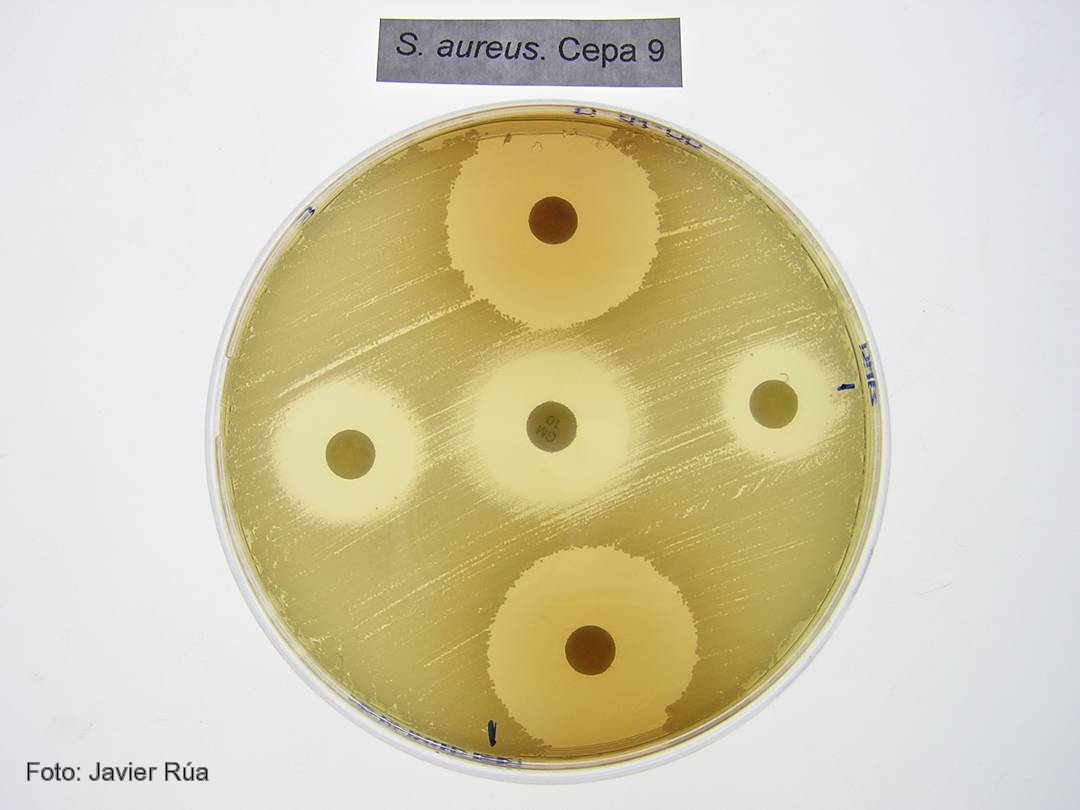
Cultivo de 'Staphylococcus aureus' tratado con los fenoles BHA (derecha) e hidroquinona (arriba).

CSIC/DICYT Un trabajo con participación del Consejo Superior de Investigaciones Científicas (CSIC) ha asignado a una enzima presente en todos los organismos vivos una nueva función en la transferencia de genes virulentos entre bacterias, un proceso que acaba provocando una infección. Los resultados, que aparecen publicados en el último número de Molecular Cell, y que han empleado como modelo la bacteria Staphylococcus aureus, la más frecuente en las infecciones adquiridas en hospitales, establecen el mecanismo de actuación de estas moléculas.

Las bacterias son capaces de transferir material genético entre sí mediante mecanismos de transferencia horizontal de genes. Cuando estos genes son virulentos, las bacterias que los reciben adquieren la capacidad de provocar enfermedades. “Algunos de los genes que codifican para toxinas y otros factores de virulencia están presentes en unas regiones denominadas islas de patogenicidad. Estas islas se transfieren de unas bacterias a otras utilizando virus que infectan bacterias, los llamados bacteriófagos”, explica el investigador del CSIC José Rafael Penadés, que trabaja en el Instituto de Biomedicina de Valencia.

El equipo de investigadores, formado también por científicos del Centro de Investigación y Tecnología Animal y la Universidad CEU Cardenal Herrera, en Valencia, han descubierto que las enzimas dUTPasas son capaces de despertar a las islas de patogenicidad para que detecten que la bacteria está siendo atacada por un virus. Antes de que la bacteria muera infectada, las islas inician su replicación y se transfieren a otras bacterias inocuas, a las que convierten en virulentas.

El proceso evolutivo ha hecho que las islas detecten que un virus está infectando a las bacterias, lo que producirá su muerte, y utilicen la presencia del bacteriófago para activarse e iniciar su ciclo. Esto ocurre porque algunas proteínas del fago se unen a un represor que bloquea la isla”, explica el investigador del CSIC.

Proteínas G protooncogénicas
Los resultados confirman que las dUTPasas son moléculas señalizadoras que emplean un mecanismo similar al descrito para una familia de proteínas presentes en células eucariotas: las proteínas G protooncogénicas. “Las dUTPasas son activas como señalizadoras cuando se unen a un nucleótido dUTP. Es entonces cuando cambian su conformación y, una vez cumplida su función, degradan el nucleótido y pasan a estar apagadas. Este mecanismo de encendido y apagado es el mismo que el empleado por los protooncogenes”, destaca Penadés.

Según el investigador del CSIC Alberto Marina, el estudio sugiere por primera vez que las dUTPasas cumplen una función señalizadora no sólo en la mayoría de los virus, sino además en organismos vivos complejos como los eucariotas superiores. “Nuestros resultados aportan una visión completamente nueva del mecanismo de actuación de estas enzimas, que depende de una serie de características presentes en las enzimas de los bacteriófagos de Staphylococcus aureus y que están también presentes en otras muchas dUTPasas de un gran número de organismos vivos. Todo ello sugiere que el mecanismo descrito es universal”, concluye el investigador del CSIC.

Referencia bibliográfica 
María Ángeles Tormo-Más, Jorge Donderis, María García-Caballer, Aaron Alt, Ignacio Mir-Sanchís, Alberto Marina y José R. Penadés. Phage dUTPases Control Transfer of Virulence Genes by a Proto-Oncogenic G Protein-like Mechanism. Molecular Cell. DOI: 10.1016.