Mostrando entradas con la etiqueta Recursos Naturales. Mostrar todas las entradas

domingo, 23 de marzo de 2014

Study: industrial civilisation headed for 'irreversible collapse'? (Updated)

NOTE: NASA Clarifies Its Role in Civilization-Collapse Study
NASA is distancing itself from a new study that investigates how unsustainable resource exploitation and rising income inequality could potentially lead to the collapse of human civilization as we know it.
NASA officials released this statement on the study today (March 20): "A soon-to-be published research paper, 'Human and Nature Dynamics (HANDY): Modeling Inequality and Use of Resources in the Collapse or Sustainability of Societies' by University of Maryland researchers Safa Motesharrei and Eugenia Kalnay, and University of Minnesota's Jorge Rivas, was not solicited, directed or reviewed by NASA. It is an independent study by the university researchers utilizing research tools developed for a separate NASA activity. As is the case with all independent research, the views and conclusions in the paper are those of the authors alone. NASA does not endorse the paper or its conclusions."

Natural and social scientists develop new model of how 'perfect storm' of crises could unravel global system
This Nasa Earth Observatory image shows a storm system circling around an area of extreme low pressure in 2010, which many scientists attribute to climate change. Photograph: AFP/Getty Images

A new study sponsored by Nasa's Goddard Space Flight Center has highlighted the prospect that global industrial civilisation could collapse in coming decades due to unsustainable resource exploitation and increasingly unequal wealth distribution.

Noting that warnings of 'collapse' are often seen to be fringe or controversial, the study attempts to make sense of compelling historical data showing that "the process of rise-and-collapse is actually a recurrent cycle found throughout history." Cases of severe civilisational disruption due to "precipitous collapse - often lasting centuries - have been quite common."

The research project is based on a new cross-disciplinary 'Human And Nature DYnamical' (HANDY) model, led by applied mathematician Safa Motesharrei of the US National Science Foundation-supported National Socio-Environmental Synthesis Center, in association with a team of natural and social scientists. The study based on the HANDY model has been accepted for publication in the peer-reviewed Elsevier journal, Ecological Economics.

It finds that according to the historical record even advanced, complex civilisations are susceptible to collapse, raising questions about the sustainability of modern civilisation:

"The fall of the Roman Empire, and the equally (if not more) advanced Han, Mauryan, and Gupta Empires, as well as so many advanced Mesopotamian Empires, are all testimony to the fact that advanced, sophisticated, complex, and creative civilizations can be both fragile and impermanent."

By investigating the human-nature dynamics of these past cases of collapse, the project identifies the most salient interrelated factors which explain civilisational decline, and which may help determine the risk of collapse today: namely,  
  • Population, 
  • Climate, 
  • Water, 
  • Agriculture, and  
  • Energy.

These factors can lead to collapse when they converge to generate two crucial social features:
  • "the stretching of resources due to the strain placed on the ecological carrying capacity"; and 
  • "the economic stratification of society into Elites [rich] and Masses (or "Commoners") [poor]
These social phenomena have played "a central role in the character or in the process of the collapse," in all such cases over "the last five thousand years."

Currently, high levels of economic stratification are linked directly to overconsumption of resources, with "Elites" based largely in industrialised countries responsible for both:

"... accumulated surplus is not evenly distributed throughout society, but rather has been controlled by an elite. The mass of the population, while producing the wealth, is only allocated a small portion of it by elites, usually at or just above subsistence levels."

The study challenges those who argue that technology will resolve these challenges by increasing efficiency:

"Technological change can raise the efficiency of resource use, but it also tends to raise both per capita resource consumption and the scale of resource extraction, so that, absent policy effects, the increases in consumption often compensate for the increased efficiency of resource use."

Productivity increases in agriculture and industry over the last two centuries has come from "increased (rather than decreased) resource throughput," despite dramatic efficiency gains over the same period.

Modelling a range of different scenarios, Motesharri and his colleagues conclude that under conditions "closely reflecting the reality of the world today... we find that collapse is difficult to avoid." In the first of these scenarios, civilisation:


".... appears to be on a sustainable path for quite a long time, but even using an optimal depletion rate and starting with a very small number of Elites, the Elites eventually consume too much, resulting in a famine among Commoners that eventually causes the collapse of society. It is important to note that this Type-L collapse is due to an inequality-induced famine that causes a loss of workers, rather than a collapse of Nature."

Another scenario focuses on the role of continued resource exploitation, finding that "with a larger depletion rate, the decline of the Commoners occurs faster, while the Elites are still thriving, but eventually the Commoners collapse completely, followed by the Elites."

In both scenarios, Elite wealth monopolies mean that they are buffered from the most "detrimental effects of the environmental collapse until much later than the Commoners", allowing them to "continue 'business as usual' despite the impending catastrophe." The same mechanism, they argue, could explain how "historical collapses were allowed to occur by elites who appear to be oblivious to the catastrophic trajectory (most clearly apparent in the Roman and Mayan cases)."

Applying this lesson to our contemporary predicament, the study warns that:

"While some members of society might raise the alarm that the system is moving towards an impending collapse and therefore advocate structural changes to society in order to avoid it, Elites and their supporters, who opposed making these changes, could point to the long sustainable trajectory 'so far' in support of doing nothing."

However, the scientists point out that the worst-case scenarios are by no means inevitable, and suggest that appropriate policy and structural changes could avoid collapse, if not pave the way toward a more stable civilisation.

The two key solutions are to
  • reduce economic inequality so as to ensure fairer distribution of resources, and 
  • to dramatically reduce resource consumption by relying on less intensive renewable resources and reducing population growth:
"Collapse can be avoided and population can reach equilibrium if the per capita rate of depletion of nature is reduced to a sustainable level, and if resources are distributed in a reasonably equitable fashion."

The NASA-funded HANDY model offers a highly credible wake-up call to governments, corporations and business - and consumers - to recognise that 'business as usual' cannot be sustained, and that policy and structural changes are required immediately.

Although the study is largely theoretical, a number of other more empirically-focused studies - by KPMG and the UK Government Office of Science for instance - have warned that the convergence of food, water and energy crises could create a 'perfect storm' within about fifteen years. But these 'business as usual' forecasts could be very conservative.

Dr Nafeez Ahmed is executive director of the Institute for Policy Research & Development and author of A User's Guide to the Crisis of Civilisation: And How to Save It among other books. Follow him on Twitter @nafeezahmed

ORIGINAL: The Guardian

miércoles, 12 de marzo de 2014

Colombia and Germany consolidate international research partnerships

(c) Linde Storm
Colombia, formerly a dangerous Latin American country plagued by crisis, is now becoming an attractive location for international research partnerships. Cooperation between Colombia and Germany in a wide variety of disciplines is opening up promising prospects for researchers from both countries.

Kidnapping, drug wars and violations of human rights used to be the dominant news topics in the international media about Colombia. The South American country’s image as politically unstable and dangerous overshadowed the work of a vibrant research community and the success stories of existing international research partnerships. Rapid change has recently begun in Colombia, however.

Thus the Colombian research support organisation COLCIENCIAS was given ministry status at the beginning of 2009 and among other things manages the country’s national fund to finance science, technology and innovation, set up in the same year. The budget is primarily used to invest in support and priority subject programmes, for example in the environmental technology and biodiversity sector. In addition, since 2012, ten per cent of mining revenue has been channelled back annually into promoting research and innovation and is managed by COLCIENCIAS.

Research initiatives become international research partnerships
Some of the research partnerships between Colombia and Germany were set up several decades ago, but were often based on the initiative of individual researchers or departments. Much greater importance is now being placed on these research partnerships. Back at the end of the 1960s, for example, marine researchers from the University of Gießen teamed up with their Colombian colleagues to set up a research institute in Santa Marta in northern Colombia; CEMarin is now one of the world’s four centres of excellence funded by the German Federal Foreign Office as part of its Research and Academic Relations Initiative.

In the electrical engineering sector, a Memorandum of Understanding (MOU) was signed in 2012 between COLCIENCIAS and the German Research Foundation (DFG); the MOU focuses on joint research in the field of high-frequency technology. In addition to DFG, organisations such as the German Academic Exchange Service (DAAD), the Alexander von Humboldt Foundation and the German Federal Ministry of Education and Research (BMBF) have identified Colombia as a priority country in Latin America.

From Hegelian philosophy to high-frequency technology
Colombian and German researchers in particular are keen to forge closer links between universities and research institutes. ‘I am very interested in creating closer links between universities in Germany and my own university in Colombia,’ remarked María del Rosario Acosta from Bogotá, for example. ‘With the help of the Humboldt Foundation, I want to organise an international conference on philosophy (probably the philosophy of Georg W. F. Hegel) in the near future.’ After completing her university degree, María del Rosario Acosta obtained a doctorate in philosophy from the Universidad Nacional de Colombia in 2007 and now works as an extraordinary professor in the Department of Philosophy at Bogotá’s Universidad de los Andes. She has been working at the Cluster of Excellence on the Formation of Normative Orders at Frankfurt University since 2013 with a grant from the Alexander von Humboldt Foundation.

More exchange programmes for pioneering research partnerships 
María del Rosario Acosta is not only familiar with Colombia’s academic community, but has now also gained an in-depth knowledge of science and research in Germany too. She welcomes the positive changes that are taking place in Colombia and the growing international research partnerships. ‘Colombia’s university system is undergoing very important changes, particularly regarding graduate programmes (...) and also in relation to an increasing interest and quality in research. International cooperation is very important in both cases.’ Her own personal aim is to set up an exchange programme between the philosophy departments of the Universidad de los Andes and Frankfurt University, both for the faculties and for the students and postgraduates.

Colombia already has a new image among alumni
As far as exchange programmes are concerned, considerable achievements have already been made: Through the scholarship loan programme DAAD-COLFUTURO, for example, DAAD and the Colombian foundation COLFUTURO together provide full financial support for 50 Colombians studying for a Master’s degree in Germany. In addition, further candidates receive full funding through COLFUTURO.

German researchers who have already had the opportunity to participate in academic exchanges with Colombia have long since realised that the country’s negative image is a thing of the past. One student from Darmstadt summarised his experience as follows: ‘The first thing a lot of people think of in connection with the country is violence and civil war. Even though these times have now largely been overcome, hardly anyone talks about the positive aspects. That’s what I found so interesting about the country, and I have indeed seen a very different side to Colombia.’ (Source: Gate Germany – country profile on Colombia)

Regular meetings for alumni, debates with university representatives and the promotion of joint projects between Colombia and Germany are just some of the activities organised by Colombia’s two large alumni organisations Asprea and Aspa. As a future alumna of the Alexander von Humboldt Foundation, the option of cooperation within her field offers María del Rosario Acosta huge potential: ‘There is a vitality and a strong potential in the Colombian academic system. There is still a lot to be done, and this is also combined with the impetus and the will to do it.


Interview about international research partnerships with Colombia in the Community

More information about international research partnerships is available in the Community Group on Study and Research, where you can read the complete interview with María del Rosario Acosta.


ORIGINAL: Alumni Portal  Deutschland
By Sabine Müller

sábado, 20 de julio de 2013

La respuesta es Colombia

ORIGINAL: Colombia

Mostremosle al mundo entero el orgullo de ser colombianos. Comparte este video con todos tus amigo para que el mundo entero sepa que #LaRespuestaEsCOlombia

Hoy los colombianos tenemos muchas más razones para celebrar desde cualquier lugar del mundo. Hoy celebramos nuestra independencia con una nueva voz, más fuerte y orgullosa.

miércoles, 3 de julio de 2013

Placing a price on nature: Payment for Ecosystem Services

ORIGINAL: OxBridge Biotech
2nd July 2013

In 2011 the world population reached an unprecedented 7 billion; a number that is still rising. Humans depend on the environment to provide them with food, fuel, fresh water, temperate climate and a host of other benefits, i.e. the things we think of as being free. These natural processes are referred to as ‘Ecosytem Services,’ but as the demand on the environment rises due to the ever increasing population size, so does the severity of ecosystem degradation and biodiversity loss.

In 2001, the Millennium Ecosystem Assessment brought together over 1360 scientific and sociology experts from around the world, in order to assess the state of the world’s ecosystems with human well-being in mind. One of the main findings, according to the United Nations Environmental Program (UNEP), was that more than 60% of the assessed ecosystems worldwide are degraded, and that degradation has happened more rapidly over the past 50 years than in any other period of human existence. Although these results make for a bleak forecast, this study produced the first ever large scale audit of earth’s ecosystems, which highlights the services provided by ecosystems and the costs thereof to the environment [1].

In a financially driven world, measurement of these services as benefits allows for economic quantification of the value of ecosystems. According to the World Bank, the existing benefits of land use can have significant costs for downstream land users. A hypothetical scenario is where the use of fast-growing introduced species to curb land erosion caused by farming, have a negative impact on native fauna and flora or result in increased water usage that can harm downstream land users. In order to mitigate these downstream costs, and ensure sustainability of natural resources, several approaches, mostly remedial, must be adopted. One of the more promising approaches developed over the past decade is the Payment for Ecosystem Services (PES) framework, which offers monetary incentives for land-users to restore, maintain, and manage ecosystem services as well as use natural resources in a sustainable manner [2]. In general these frameworks account for market failures under two distinct categories: “Steward-Earns” schemes or “Polluter-Pays” schemes. These agendas, whether voluntary or mandated by law (e. g. carbon tax), have resulted in investments toward preserving natural resources by industries, governments, NGOs, and private land users, and are currently widely implemented worldwide.

The PES approach has become prominent in restoration of ecosystems and conservation of biodiversity, and is therefore increasingly important in environmental policy [3]. Biodiversity acts as a regulator of ecosystems (i.e. microorganisms for decomposition), as a service (pollination of crops) and as a good (conservation of wild life or maintenance of national parks)[4]. Most PES schemes focus on water quality, reforestation especially with regards to carbon sequestration, and biodiversity restoration. One of the first global PES schemes forms an important part of the international Reducing Emissions from Deforestation and Forest Degradation (REDD) agreement. The best documented example of a reforestation PES scheme was implemented in 1997 in Costa Rica. Farmers and landowners are paid to protect forests, reduce land usage and establish plantations. In return, carbon offsets can be traded as a commodity, and have indeed been sold to countries such as Norway. Although this is viewed as one of the PES success stories, several studies have shown small-scale decreases in deforestation and very limited ecological restoration [5]. Reforestation increases canopy cover which is good, but often occurs through the establishment of plantations which commonly involves fast-growing exotic species and does not necessarily translate into conservation of any aspect of native biodiversity.

Similarly, other reforestation projects, such as the Grain to Green Project (GTGP) in China, has resulted in the conversion of more than 8 million hectares of cropland into forest land that significantly decreased soil erosion, but also often made use of non-native tree species that increased water usage. The GTGP project also incurred several socio-economic disadvantages, such as an increased the gap between rich and poor (more land equals bigger income), and financial loss due to lowered grain production. Almost 20% of the reforested land has been reconverted for farming purposes [6].

In many cases, biodiversity conservation is not the main target, and in an aim to equally distribute funding for poverty alleviation, low-risk areas are often included. In many third world countries, property rights are also a major issue that confuses the eligibility of payment for ecosystem services. Furthermore, very few PES studies have been designed to truly evaluate their effectiveness compared to other conservation initiatives [7]. Together with both a socio-economic and a scientific issues that still needs to be overcome, the biggest challenge that PES projects face is a lack of universal measurement parameters with which to determine the successful outcome and sustainability of such projects. Though the PES concept works in theory and brings the natural world into an economic context, better management and understanding of such frameworks will be necessary if they are to succeed in the future.

References:
http://www.unep.org/pdf/PaymentsForEcosystemServices_en.pdf
http://web.worldbank.org/WBSITE/EXTERNAL/TOPICS/ENVIRONMENT/EXTEEI/0,,contentMDK:21010580~menuPK:1187844~pagePK:210058~piPK:210062~theSitePK:408050~isCURL:Y,00.html
Bullock JM, Aronson J, Newton Ac, Pywell RF, Rey-Benayas JM. (2011) Restoration of ecosystem services and biodiversity: conflicts and opportunities. Trends in Ecology and Evolution, 26, 541-549
Mace GM, Norris K, Fitter AH. (2012) Biodiversity and ecosystem services: a multilayered relationship. Trends in Ecology and Evolution, 27, 19-26
Daniels AE, Bagstad K, Esposito V, Moulaert A, Rodriguez CM. (2010) Understanding the impact of Costa Rica’s PES: Are we asking the right questions? Ecological Economics, 69, 2116-2126
Chen X, Lupi F, He G, Ouyang Z, Lui J. (2009) Factors affecting land reconversion plans following a payment for ecosystem service program. Biological Conservation, 142, 1740-1747
Pattanayak SK, Wunder S, Ferraro PJ. (2010) Show me the money: Do payments supply environmental services in developing countries? Review of Environmental Economics and Policy, 4, 254-274


domingo, 7 de abril de 2013

Fukushima Seeks Revival in Farming With No Soil

ORIGINAL: Bloomberg

March 11 (Bloomberg) -- Kawauchi village in Fukushima, Japan, wondered how it would carry on farming following the nation's worst atomic disaster in 25 years and the radiation that followed. Now, it has figured out that farming can be done without soil. Bloomberg’s Yuriy Humber reports. (Source: Bloomberg)
"... 1% of the water, 25% of the fertilizer, 50 times more yield..."

miércoles, 30 de enero de 2013

Bofetada educadísima de Brasil al mundo


DECLARACIONES DE CHICO BUARQUE - MINISTRO DE EDUCACIÓN DE BRASIL.

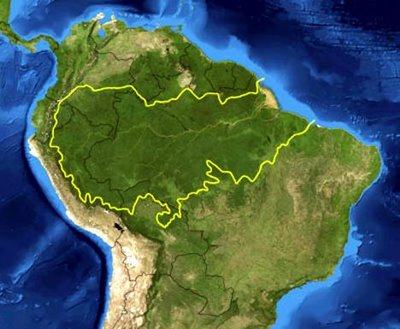
Durante un debate en una universidad de Estados Unidos, le preguntaron al ex gobernador del Distrito Federal y actual Ministro de Educación de Brasil, CRISTOVÃO CHICO BUARQUE, qué pensaba sobre la internacionalización de la Amazonia. Un estadounidense en las Naciones Unidas introdujo su pregunta, diciendo que esperaba la respuesta de un humanista y no de un brasileño.

Ésta fue la respuesta del Sr. Cristóvão Buarque:

Realmente, como brasileño, sólo hablaría en contra de la internacionalización de la Amazonia. Por más que nuestros gobiernos no cuiden debidamente ese patrimonio, él es nuestro.

Como humanista, sintiendo el riesgo de la degradación ambiental que sufre la Amazonia, puedo imaginar su internacionalización, como también de todo lo demás, que es de suma importancia para la humanidad.

Si la Amazonia, desde una ética humanista, debe ser internacionalizada, internacionalicemos también las reservas de petróleo del mundo entero.

El petróleo es tan importante para el bienestar de la humanidad como la Amazonia para nuestro futuro. A pesar de eso, los dueños de las reservas creen tener el derecho de aumentar o disminuir la extracción de petróleo y subir o no su precio.

De la misma forma, el capital financiero de los países ricos debería ser internacionalizado. Si la Amazonia es una reserva para todos los seres humanos, no se debería quemar solamente por la voluntad de un dueño o de un país. Quemar la Amazonia es tan grave como el desempleo provocado por las decisiones arbitrarias de los especuladores globales.

No podemos permitir que las reservas financieras sirvan para quemar países enteros en la voluptuosidad de la especulación.

También, antes que la Amazonia, me gustaría ver la internacionalización de los grandes museos del mundo. El Louvre no debe pertenecer solo a Francia. Cada museo del mundo es el guardián de las piezas más bellas producidas por el genio humano. No se puede dejar que ese patrimonio cultural, como es el patrimonio natural amazónico, sea manipulado y destruido por el sólo placer de un propietario o de un país.

No hace mucho tiempo, un millonario japonés decidió enterrar, junto con él, un cuadro de un gran maestro. Ese cuadro tendría que haber sido internacionalizado.

Durante este encuentro, las Naciones Unidas están realizando el Foro Del Milenio, pero algunos presidentes de países tuvieron dificultades para participar, debido a situaciones desagradables surgidas en la frontera de los EE.UU. Por eso, creo que Nueva York, como sede de las Naciones Unidas, debe ser internacionalizada. Por lo menos Manhatan debería pertenecer a toda la humanidad.
De la misma forma que París, Venecia, Roma, Londres, Río de Janeiro, Brasilia… cada ciudad, con su belleza específica, su historia del mundo, debería pertenecer al mundo entero.

Si EEUU quiere internacionalizar la Amazonia, para no correr el riesgo de dejarla en manos de los brasileños, internacionalicemos todos los arsenales nucleares. Basta pensar que ellos ya demostraron que son capaces de usar esas armas, provocando una destrucción miles de veces mayor que las lamentables quemas realizadas en los bosques de Brasil.

En sus discursos, los actuales candidatos a la presidencia de los Estados Unidos han defendido la idea de internacionalizar las reservas forestales del mundo a cambio de la deuda. 

Comencemos usando esa deuda para garantizar que cada niño del mundo tenga la posibilidad de comer y de ir a la escuela. Internacionalicemos a los niños, tratándolos a todos ellos sin importar el país donde nacieron, como patrimonio que merecen los cuidados del mundo entero. Mucho más de lo que se merece la Amazonia. Cuando los dirigentes traten a los niños pobres del mundo como Patrimonio de la Humanidad, no permitirán que trabajen cuando deberían estudiar; que mueran cuando deberían vivir.

Como humanista, acepto defender la internacionalización del mundo; pero, mientras el mundo me trate como brasileño, lucharé para que la Amazonia, sea nuestra. ¡Solamente nuestra!

NOTA: Este artículo fue publicado en el NEW YORK TIMES, WASHINGTON POST, USA TODAY y en los diarios de mayor tirada de EUROPA y JAPÓN.

Pero en BRASIL y el resto de Latinoamérica, este artículo no fue publicado. Ayúdenos a divulgarlo.
Gracias!

domingo, 27 de enero de 2013

Arte y Conservacióin - "Pintando Aves" Taller de Dibujo de Aves

ORIGINAL: Arte y Conservación (Inscripción)


"La naturaleza nos ha mostrado cosas maravillosas y fuerzas invisibles que tratamos de dilucidar y expresar a través del arte

Arte y Conservación es una organización fundada por los ilustradores Paula Andrea Romero Ardila y Fernando Emmanuel Laverde B. “Fue formada con la intención de darle un sentido más trascendental a nuestro trabajo, conectándolo con los valores y los deseos más cercanos a nuestro corazón. La pasión y el compromiso por la naturaleza son el combustible que nos mantiene activos.

Arte y Conservación fue fundado sobre bases solidas, representadas en años de experiencia trabajando con algunas de las instituciones más importantes a nivel socioambiental en Colombia. 

Nuestra esencia:
Somos felices con nuestro trabajo, ya que no hay ninguna diferencia entre lo que nos gusta hacer y lo que hacemos para vivir.
 tres pilares fundamentales que nos impulsan:

La Creatividad 
Somos creativos las 24 horas del día

La Biodiversidad
Por nuestro patrimonio natural, somos megadiversos

La Comunidad
"Estamos interconectados y nuestro futuro y el de las nuevas generaciones depende de nuestras acciones

Nuestros objetivos:
"Dependemos de la naturaleza que nos rodea."

Tenemos dos objetivos principales:
  1. Ofrecer un servicio integral a clientes con un gran sentido de responsabilidad social y ambiental. Las mejores soluciones creativas y para la comunicación.
  2. Desarrollar proyectos propios que involucran el arte y están encaminados a la promoción, conservación y sensibilización sobre cuidado y el respeto hacia nuestro patrimonio natural.


viernes, 18 de enero de 2013

Protecting global water sources

ORIGINAL: TicoTimes
By Alberto Font
Friday, January 18, 2013 - 

A study by research group Ecosystem Marketplace noted that 80 percent of the world’s countries are facing issues related to threatened water security.
Dave Sherwood
A new study finds that the number of global environmental services programs doubled from 2008-2011.

A report released this week finds that more countries are turning to environmental services programs to protect sensitive water sources.

Facing increasing water scarcity, many countries are turning to environmental service payments to help mitigate the effects of climate change and pollution. 

A study released this week by research group Ecosystem Marketplace, titled “State of Water Resource Protection 2012,” noted that 80 percent of the world’s countries are facing issues related to threatened water security. 

We are witnessing the first stages of a global response that could transform the ways in which we value and manage the world’s hydrologic resources,” said Michael Jenkins, CEO of Forest Trends, a conservation group that manages Ecosystem Marketplace.  (Charting New Waters State of Watershed Payments 2012)

According to Marta Echavarría, a member of Ecosystem Marketplace’s advisory committee, Costa Rica, is a pioneer of environmental service payment programs, established in the 1990s with the creation of the National Forestry Financing Fund, which provides landowners with financial incentives to protect forested areas

Other countries in the region, including Mexico, Ecuador, Brazil and Bolivia, have created similar programs, sometimes offering non-financial incentives. In Bolivia, for example, more than 500 families receive bee farms, fruit trees or other productive input in exchange for efforts to protect water sources. Ecuador pays farmers and indigenous communities to protect their hydrologic resources

From 2008 to 2011, initiatives to protect and restore forests, wetlands and other important ecosystems have doubled in number. The report covers 205 programs around the world, 21 of them in Latin America. Globally, the number of programs has increased by 100 in three years, totaling $8.2 billion in investment, a significantly greater amount than in 2008. 

Ecosystem Marketplace analysts noted that investing in programs to protect water at the source, rather than spending on treatment, could result in considerable savings for governments. It also helps to guarantee water security and provide environmental and social benefits to communities. 

[These programs] definitely curb costs. If we don’t look for natural alternatives, eventually we’re going to have to invest heavily in building large water treatment plants or in transporting potable water long distances,” Echavarría told The Tico Times.

Another problem Latin Americans face is a general lack of water treatment infrastructure. Coupled with the effects of pollution and climate change, the lack of treatment facilities is converting a region rich in hydrologic resources into one that is highly vulnerable to problems with accessing potable water. 

The study notes that China is a global leader in investing in programs to protect hydrologic resources at the source. The Asian giant accounts for 91 percent of global investments in environmental services programs protecting water. Chinese officials, for example, offer new health service benefits for residents in mountainous communities in exchange for better groundwater management, which they say will help improve potable water access.

The lack of secure water sources likely represents the greatest threat for continued economic growth [in China],” the report noted. 

In the United States, officials in New York chose not to invest heavily in new water treatment facilities, opting instead to implement compensation programs for farmers in the Catskills who agreed to work to reduce pollution in regional lakes, rivers and streams that provide New York City with potable water. Thanks to these efforts, New York had enough drinking water to make it through the recent Hurricane Sandy.

The study also notes that 68 other environmental services programs operate in all of North America

The benefits of these hydrologic programs extend well beyond water; they support biodiversity, reduce emissions and provide income to rural families,” said Genevieve Bennett, the report’s lead author.

But private-sector participation in these types of programs remains limited, despite the fact that many companies have reported problems related to water availability. Most of these types of programs are operated by nongovernmental organizations or by governments. 

It could very well be that many companies are taking a wait-and-see approach to see if these programs can be improved upon,” Bennett said. 

But Bennett believes that the market for hydrologic services investment is on the verge of considerable growth, particularly if the global economy begins to improve

The best part of this report is that it tells us that these types of investments are real, they’re growing, and they don’t follow ideological lines. Countries with a neoliberal philosophy are implementing them along with capitalist countries and communist countries like China. We all have to protect our water sources,” Echavarría said.

miércoles, 9 de enero de 2013

Declaración de Santurbán como parque cierra puerta a la minería

ORIGINAL: El Colombiano
POR COLPRENSA 
9 de enero de 2013

Con la decisión se busca proteger el páramo. FOTO COLPRENSA
El páramo de Santurbán, considerado la fábrica de agua de Bucaramanga y su área metropolitana, fue declarado parque natural. El ministro del Medio Ambiente, Juan Gabriel Uribe, señaló que se pasó de una propuesta inicial que tenía la Corporación Autónoma Regional para la Defensa de la Meseta de Bucaramanga (Cdmb) de 10.980 hectáreas a 11.700 hectáreas de área protegida y se adicionaron 600 hectáreas de Distrito de Manejo Integrado. 

La decisión implica que en las 11.700 hectáreas de parque se debe prohibir la explotación minera que se venía programando para la región pero también contempla que se debe garantizar los derechos de las comunidades de California, Vetas y Suratá que dependen de esta actividad. En el DMI, indicó Uribe, se tienen "unas actividades intervenidas".

Además de la protección de las fuentes de agua se contempla la protección de un ecosistema de roble, único en el país.

jueves, 3 de enero de 2013

MAN

ORIGINAL: Post Carbon Institute

What would happen if TIM BURTON (Dark Shadows was great, fwiw) directed our '300 Years of Fossil Fuels' video? We think it would look a lot like the mad, dark animated genius of Steve Cutts...

Animation created in Flash and After Effects looking at mans relationship with the natural world.


martes, 11 de diciembre de 2012

La canallada de Santurbán

ORIGINAL: Reclame

Andrés Hurtado García
"La declaratoria del páramo de Santurbán como Parque Regional, que en un primer momento a muchos ilusionó, es una estafa, un vil engaño."

Acostumbrado como estoy a llamar las cosas por su nombre en un país que ama los circunloquios, afirmo que la declaratoria del páramo de Santurbán, en Santander, como Parque Regional, que en un primer momento a muchos ilusionó, es una estafa, un vil engaño, una canallada contra el medio ambiente. Sí, una canallada, con todas las letras y su sonoridad. Allí hay muchas cosas oscuras. El Instituto Humboldt, encargado de la biodiversidad y cuyos conceptos son vinculantes, estudió el páramo y conceptuó el número de hectáreas que debían declararse reservadas. La declaratoria corresponde a la Corporación Autónoma para la Defensa de la Meseta de Bucaramanga (CDMB), que, por lo que se ve, parecería que, más que defender a la meseta, se dedica a perjudicarla. Sabemos que las corporaciones autónomas regionales son muy cuestionadas, por ser fortines politiqueros.

En primer lugar, la CDMB ha ido aplicando sucesivos recortes a la extensión del parque, sin ningún estudio técnico. Me han llegado muchísimos mensajes de personas cultas y responsables de Bucaramanga que dicen que el asunto parecería tener gato encerrado. No entienden, por ejemplo, cómo se sustrajeron 177 hectáreas al parque precisamente en el sector de Angostura, donde la empresa canadiense Eco Oro ( antes Greystar) tiene su enorme yacimiento de oro. Eso suena raro.

También suena rarísimo que la CDMB haya subido la cota de preservación del páramo hasta los 3.400 metros, cuando el Instituto Humboldt la había colocado a 3.000 metros sobre el nivel del mar. Hablo de lo que conozco. Yo he explorado el inmenso páramo en varias ocasiones. En un principio se habló de 12.267 hectáreas para preservar de la voracidad de las compañías mineras. El primero de octubre, la flamante CMDB las dejó en solo 10.890. Si la vida me llevara a pertenecer a esta corporación (donde seguramente hay personas maravillosas), sentiría vergüenza por la total falta de seriedad y de patriotismo de la entidad y saldría a la calle disfrazado para que las gentes de bien no me reconocieran. Pero la responsabilidad no recae solo en la flamante (otra vez) CMDB, sino también en el Ministerio de Minas, que siempre ha favorecido a las grandes empresas mineras sin interesarse seriamente por el medio ambiente.

Según la ecologista Álix Mancilla, con las pírricas 10.890 hectáreas preservadas en el nuevo parque de Santurbán no se asegura para el futuro el abastecimiento de agua para Bucaramanga y amplias zonas de los dos Santanderes. De todos modos, de las 63.000 hectáreas del páramo de Santurbán, por lo menos la tercera parte, unas 20.000, deberían estar incluidas en el parque. Y, sin salirnos del tema, constato (¿esta palabra es un galicismo?) con tremenda sorpresa cómo un hombre tan serio como Carlos Caballero Argáez está ahora escribiendo columnas de humor. Le leímos hace poco que le gustaría que un canadiense fuera el ministro de Minas y Energía de Colombia. ¡Excelente humor, doctor Caballero! Un canadiense en Minminas para que favoreciera a la canadiense Eco Oro, la gran empresa minera que socava y acaba el páramo de Santurbán. ¡Viva el humor!

* * * *

Nada que ver con lo anterior. Una de las cosas que admiro del gobierno de EE. UU. es que se preocupa por sus ciudadanos donde se encuentren, en el rincón del mundo donde estén. Presidente Santos, usted, que es amigo declarado de Chávez, interceda por los colombianos víctimas de las arbitrariedades del coronel. Ahí está, por ejemplo, el caso del señor Hamilton Martínez, al que el gobierno del coronel le expropió abusivamente su hotel y se lo devolvieron destartalado. Presidente, a usted lo elegimos para que proteja a los colombianos. Gracias.

--

Tomado de El Tiempo

viernes, 30 de noviembre de 2012

La quinta edición de las Perspectivas del Medio Ambiente Mundial (GEO-5)

ORIGINAL: UNEP


El mundo sigue precipitándose por una pendiente no sostenible a pesar de los más de quinientos objetivos acordados a nivel internacional para respaldar la gestión sostenible del medio ambiente y mejorar el bienestar humano, según la nueva evaluación de gran alcance coordinada por el Programa de las Naciones para el Medio Ambiente (PNUMA).


La zona del gran delta del río Perla, al sureste de China, constituye la «megarregión» más grande del mundo con una población de aproximadamente 120 millones de personas (ONU, 2010). En los últimos veinte años, las poblaciones de las ciudades del delta Guangzhou y Shenzhen han alcanzado, cada una, los casi 10 millones de personas, mientras que Hong Kong, Foshan y Dongguan han crecido hasta alrededor de 5 millones cada una (ONU, 2009). Empiezan a desdibujarse las fronteras entre las ciudades para conformar una sola gran mancha urbana. En la zona central del delta que aparece en la imagen había poco más de 20 millones de personas a principios de la década de 1990, pero desde entonces la población se ha triplicado hasta alcanzar prácticamente 60 millones (SEDAC, 2010). Esta intensa urbanización ha causado la pérdida de tierras productivas y áreas naturales, además de otros problemas ambientales (Yan et al., 2009).


domingo, 25 de noviembre de 2012

La Alianza Latinoamericana de Fondos de Agua (ALFA) nace con el fin de proteger los recursos hídricos más amenazados


Alianza por el Agua
Líderes empresariales globales, financieros, del desarrollo y la conservación anunciaron una nueva asociación para proteger recursos hídricos amenazados a lo largo de América Latina y el Caribe.

En una ceremonia de lanzamiento donde el anfitrión de honor fue el Embajador de México en Estados Unidos, Arturo Sarukhan, The Nature Conservancy (TNC), la Fundación FEMSA, el Banco Interamericano de Desarrollo (BID) y el Fondo para el Medio ambiente Mundial (FMAM), anunciaron la Alianza Latinoamericana de Fondos de Agua (ALFA), a través de la cual se busca proteger casi 3 millones de hectáreas de cuencas de agua en Ecuador, Colombia, Perú, Brasil, México y otros países.

Los páramos, bosques nublados, selvas tropicales e incluso los desiertos y los bosques secos, nos proveen del agua necesaria para nuestras vidas. Estos ecosistemas capturan, retienen, filtran y suministran vastas cantidades de agua dulce. Además de brindar agua limpia a las personas, estos sitios son el hábitat de una rica diversidad biológica en todo el planeta.

Sin embargo las cuencas del mundo enfrentan serias amenazas ocasionadas por la contaminación, el desarrollo y el cambio climático. Cuando estos recursos naturales se degradan o desaparecen, millones de personas quedan expuestas al riesgo de la enfermedad y el hambre por falta de agua limpia. Las economías también se ven amenazadas cuando sectores, como por ejemplo el de la caña de azúcar o el manufacturero, no pueden producir sus bienes por no contar con una oferta suficiente de agua limpia.

Según la Organización de las Naciones Unidas, más de 77 millones de personas en América Latina no tienen acceso a agua limpia.

Los Fondos de Agua ofrecen un triple beneficio a las empresas, las comunidades y la naturaleza”, dijo Mark Tercek, presidente y Director General de TNC. “Al invertir en infraestructura verde, como en los bosques o los ríos, las compañías y empresas administradoras del agua ahorran dinero en la construcción de infraestructura gris, como serían los sistemas de filtración. Las comunidades se benefician a través de la generación de ingresos sostenibles y la oferta de agua limpia, además de que los sistemas naturales se protegen y mantienen como hábitat para la vida silvestre al mismo tiempo que nos proporcionan agua limpia”, señaló.

Un componente clave de la Alianza que estamos lanzando hoy es el compromiso de fortalecer el concepto de los Fondos de Agua por medio de investigación científica rigurosa”, dijo Luis Alberto Moreno, presidente del BID. “Vamos a elegir un número pequeño de cuencas en las cuales evaluaremos y perfeccionaremos las técnicas de conservación relacionadas con la cantidad y calidad del agua. Y sólo después implementaremos una estrategia que permita replicar esas técnicas en un número mucho mayor de ciudades y países”, agregó Moreno.

Un fondo de agua es una forma innovadora de pagar por los servicios que aporta la naturaleza y reinvertir ese dinero en la conservación. Debido a que una cuenca sana minimiza los costos de tratar el agua, los fondos atraen contribuciones voluntarias de los grandes usuarios del agua cuenca abajo, como los acueductos, las hidroeléctricas o las industrias. Las utilidades de estas inversiones se asignan a preservar las tierras esenciales cuenca arriba que filtran y regulan la oferta de agua, a través de actividades como la reforestación, el ecoturismo y el monitoreo de los flujos de agua. Los Fondos de Agua también ayudan a crear incentivos para que se generen oportunidades económicas verdes que impactan positivamente sobre las comunidades locales, como por ejemplo la ganadería sustentable.

TNC comenzó a trabajar con Fondos de Agua en 2000, cuando se unió a otros socios de los sectores público y privado para crear el primer Fondo de Agua en Quito, Ecuador. El proyecto comenzó con una inversión de apenas $21,000 dólares y creció hasta $10 millones en solamente una década. El interés generado por el fondo—alrededor de $900,000 dólares anuales—se invierte exitosamente en acciones de conservación local para proteger la biodiversidad. Hoy existen 5 fondos en Ecuador que han ayudado a proteger más de medio millón de hectáreas y han beneficiado a más de 2 millones de usuarios de agua cuenca abajo. En Colombia y Brasil también se han creado Fondos con resultados similares.

Fundación FEMSA, el BID y el FMAM se han unido ahora TNC para crear la primera iniciativa sobre Fondos de Agua a nivel mundial que compromete a los sectores público y privado con la sociedad civil, compartiendo una visión común: preservar las cuencas sanas.

The Nature Conservancy (TNC), Fundación FEMSA, el Banco Interamericano de Desarrollo (BID) y el Fondo para el Medio Ambiente Mundial (FMAM), se unen para crear ALFA, compartiendo una visión común para el futuro: preservar las cuencas sanas y ayudar a proteger importantes fuentes de agua en América Latina, con la conservación ambiental y el crecimiento sostenible como valores eje.

ALFA incorpora inversiones por más de $27 millones de dólares para crear, implementar y capitalizar al menos 32 Fondos de Agua en América Latina y el Caribe, contribuyendo a la conservación de casi 3 millones de hectáreas de cuencas, que a cambio podrían beneficiar hasta a 50 millones de personas.

Es la escala del modelo de la Alianza lo que la hace tan interesante”, dijo José Antonio Fernández, Director General de FEMSA y Presidente del Consejo de la Fundación FEMSA. “Podremos beneficiar a millones de personas en Brasil, México, Colombia y otros países latinoamericanos en solamente 5 años. También es una forma sólida de crear valor económico y social al mismo tiempo, y dejar un legado para las generaciones futuras, que son el núcleo de nuestra filosofía”, concluyó.

Las empresas privadas y administradoras del agua están invirtiendo en los Fondos porque después de hacer cálculos se han percatado de que los mecanismos son efectivos en cuanto a costos para asegurar una mayor calidad y cantidad de agua para los productos y servicios que ofrecen a sus usuarios.

Los socios de la Alianza esperan que en la medida en que más actores reconozcan los beneficios de los Fondos, también se comprometan a trabajar a favor del agua y de las cuencas de América Latina, a favor de la naturaleza y de la gente. La expectativa es que este modelo de conservación de cuencas se pueda adaptar y replicar a otras regiones del mundo como una herramienta para enfrentar retos globales que se traduzcan en una mayor escasez de agua, como es el cambio climático. Estos esfuerzos ya están encaminados en Estados Unidos, las islas del Caribe y de África.

La Alianza mira la próxima Cumbre Mundial de Río +20—a realizarse en tan sólo un año—como una oportunidad de incrementar la escala de este mecanismo innovador.


lunes, 19 de noviembre de 2012

Water Industry Outlook: 'The Time Is Ripe' for Water Privatization

ORIGINAL: Common Dreams

Survey from water industry insiders shows hedge funds, private equity positioning to benefit from increasingly scarce resource
- Common Dreams staff

The privatization of the nation's water industry is set to explode in the next five years, according to the findings of a recent survey.

photo: Grant Neufeld via flickr
WeiserMazars LLP, a New York-based tax and advisory services firm, detailed the findings in its first annual U.S. Water Industry Outlook (pdf), in which professionals from the industry, representing privately owned businesses and public utilities, shed light on the near future for the water industry.

And what the next three to five years hold, according to the results, is a surge in privatization and public-private partnerships in a quest to capitalize on the resource.

As Jerome Devillers, Head of Water Infrastructure/Project Financing at WeiserMazars stated bluntly in a release, "Our study shows the time is ripe" for water privatization.

With water scarcity growing WeiserMazars sees water rights and access to water fees increasing as well -- and therefore attracting the interest of private equity and hedge funds, who can capitalize in the takeover of the public good.

Though "negative public perception" has blocked some water privatization efforts, tax increases needed to increase revenue for aging water infrastructure has been unpopular, and semi-privatizations are being enacted.

In next three to five years, most survey respondents -- 71% -- thought there would be a "significant amount of acquisitions of small sized utilities by larger investor owned utilities"

jueves, 25 de octubre de 2012

Colombia trade deal goes forward as Indigenous peoples at risk

ORIGINAL: EmbassyMag.ca

Published: Thursday, 10/25/2012 12:27 am EDT
Last Updated: Thursday, 10/25/2012 12:57 am EDT

While a report has been promised for May 2013, there is no guarantee it will look seriously at the impact on Indigenous peoples.


Amnesty International Toronto Organization Photo
"People of Canada, the Zenú People need your support." Photo of a Zenú man, part of Amnesty International Toronto Organization's exhibit "This is what we want to tell you: Messages from Indigenous Peoples at risk of annihilation in Colombia."


"We are facing a monster."

This is how an Indigenous leader, his face etched in anxiety, described the deep fears of so many Indigenous peoples in Colombia, faced with voracious exploration and exploitation on their lands by a rapidly increasing number of resource extraction companies.

He didn’t identify the nationality of the monster. But the truth is that Canadian companies have already been involved in gold, petroleum, and other resource extraction projects that affect Indigenous lands in Colombia. And there is every reason to believe there will be many more projects now that a free trade deal is in place between the two countries.

Last week, we attended the eighth Congress of the National Indigenous Organization of Colombia, an event held every four years which brings together thousands of Indigenous peoples from across the country.

They gathered at a time of unparalleled peril. Decades of unending grave human rights violations have taken such a toll that the country’s own Constitutional Court has ruled that 35 Indigenous nations are at risk of “cultural or physical extermination”.

It is a stunning human rights crisis. Yet equally stunning is how little international concern has been generated or action galvanized.

The congress covered many pressing issues, including armed incursions into Indigenous territories, ongoing threats from supposedly demobilized paramilitaries, widespread conflict-related sexual violence against Indigenous women and girls, disappearances and assassinations, forced displacement, lack of justice, and more. In all of these discussions, the impact of resource extraction on Indigenous communities was flagged time and time again.

We heard many accounts of communities not being properly consulted, as national and international law requires, before resource extraction projects have gone ahead. Others told of displacement, killings, rape and other human rights violations, carried out with the seeming intent to clear lands for mines and other economic projects. We heard wrenching descriptions of the health problems that come with contamination of air, lands and water.

The Canada-Colombia Free Trade Agreement, in force since August 2011, is going forward against this backdrop. The trade deal opens the door for ever greater numbers of Canadian companies to join the influx into Indigenous lands. That in turn gives rise to the troubling possibility of Canadian companies being implicated in human rights violations or benefiting from abuses that have already taken place.

During the three years that the trade deal was being negotiated and debated, Amnesty International and numerous other organizations, acutely aware of the crisis faced by Indigenous peoples and numerous other human rights concerns in Colombia, called for an independent study to responsibly assess the human rights impacts. The intention was to be sure the treaty would do no harm.

The government passed on that opportunity to show leadership. It refused to commission an assessment before the deal came into force. To win Liberal Party support for implementing legislation, the government did agree to yearly human rights reports after the deal was launched, but the reports lack credibility since they are prepared by the two governments themselves and have no teeth to act on recommendations.

By law, the first report was due four months ago, in mid-May. Shockingly, it contained no information at all about human rights impacts. The government said it was too early and that there was not yet enough information to assess.

While a report has been promised for May 2013, there is no guarantee it will look seriously at the impact on Indigenous peoples. There is also no indication to date of a credible process being put in place to grapple with the human rights impacts of this trade deal. No one knows how it will be done, who will carry it out, and who will be consulted.

Indigenous peoples in Colombia deserve more than that. They need to see a solid process in place, now. They need confidence that they will be meaningfully consulted as the report is prepared and that their concerns will be taken into account. But the bottom line is that they cannot and should not have to wait another eight months to see strong action from Canada.

The crisis faced by Colombia’s Indigenous peoples and the implications for the commercial relationship between Canada and Colombia must become a regular topic during exchanges at the highest levels between the two governments: Prime Minister to President, Minister to Minister.

It is also time for Canadian resource extraction companies to demonstrate they truly understand the gravity of the crisis and are committed to taking the concrete measures needed to ensure their operations respect and do not violate the rights of Indigenous peoples. Companies should do so publicly and with determination.

We would not want Canada to be known as a monster. Action is needed urgently to ensure we are part of the solution to the grave dangers that beset Indigenous peoples in Colombia, not part of the problem.

Alex Neve is secretary general and Kathy Price is Colombia campaigner of Amnesty International Canada. They travelled to Colombia from Oct. 8 to Oct. 13 to attend the Congress of the National Indigenous Organization of Colombia.

editor@embassymag.ca