Mostrando entradas con la etiqueta Pesticidas. Mostrar todas las entradas

miércoles, 24 de julio de 2013

Scientists discover what’s killing the bees and it’s worse than you thought

ORIGINAL: Quartz
By Todd Woody @greenwombat 
2013/07/24
Outlawing a type of insecticides is not a panacea. AP Photo/Ben Margot
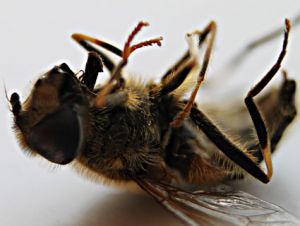
As we’ve written before, the mysterious mass die-off of honey bees that pollinate $30 billion worth of crops in the US has so decimated America’s apis mellifera population that one bad winter could leave fields fallow. Now, a new study has pinpointed some of the probable causes of bee deaths and the rather scary results show that averting beemageddon will be much more difficult than previously thought.

Scientists had struggled to find the trigger for so-called Colony Collapse Disorder (CCD) that has wiped out an estimated 10 million beehives, worth $2 billion, over the past six years. Suspects have included pesticides, disease-bearing parasites and poor nutrition. But in a first-of-its-kind study published today in the journal PLOS ONE, scientists at the University of Maryland and the US Department of Agriculture have identified a witch’s brew of pesticides and fungicides contaminating pollen that bees collect to feed their hives. The findings break new ground on why large numbers of bees are dying though they do not identify the specific cause of CCD, where an entire beehive dies at once.

When researchers collected pollen from hives on the east coast pollinating cranberry, watermelon and other crops and fed it to healthy bees, those bees showed a significant decline in their ability to resist infection by a parasite called Nosema ceranae. The parasite has been implicated in Colony Collapse Disorder though scientists took pains to point out that their findings do not directly link the pesticides to CCD. The pollen was contaminated on average with nine different pesticides and fungicides though scientists discovered 21 agricultural chemicals in one sample. Scientists identified eight ag chemicals associated with increased risk of infection by the parasite.

Most disturbing, bees that ate pollen contaminated with fungicides were three times as likely to be infected by the parasite. Widely used, fungicides had been thought to be harmless for bees as they’re designed to kill fungus, not insects, on crops like apples.

There’s growing evidence that fungicides may be affecting the bees on their own and I think what it highlights is a need to reassess how we label these agricultural chemicals,Dennis vanEngelsdorp, the study’s lead author, told Quartz.

Labels on pesticides warn farmers not to spray when pollinating bees are in the vicinity but such precautions have not applied to fungicides.

Bee populations are so low in the US that it now takes 60% of the country’s surviving colonies just to pollinate one California crop, almonds. And that’s not just a west coast problem—California supplies 80% of the world’s almonds, a market worth $4 billion.

In recent years, a class of chemicals called neonicotinoids has been linked to bee deaths and in April regulators banned the use of the pesticide for two years in Europe where bee populations have also plummeted. But vanEngelsdorp, an assistant research scientist at the University of Maryland, says the new study shows that the interaction of multiple pesticides is affecting bee health.

The pesticide issue in itself is much more complex than we have led to be believe,” he says. “It’s a lot more complicated than just one product, which means of course the solution does not lie in just banning one class of product.

The study found another complication in efforts to save the bees: US honey bees, which are descendants of European bees, do not bring home pollen from native North American crops but collect bee chow from nearby weeds and wildflowers. That pollen, however, was also contaminated with pesticides even though those plants were not the target of spraying.

It’s not clear whether the pesticides are drifting over to those plants but we need take a new look at agricultural spraying practices,” says vanEngelsdorp.

martes, 16 de julio de 2013

Potable Water for All – More Than a Pipe Dream

ORIGINAL: OBR Review
by: Megan Barrett
15th July 2013

Many of us take for granted the availability of a clean glass of water. Yet even at the turn of the second millennium, approximately one billion people still did not have access to a sustainable source of potable water.[1] With water contamination and shortages most prevalent in the remote regions of developing countries (where money and technology can be limited), scientists are faced with a daunting challenge: to develop new ways of treating water to make it safe, using simple, locally sourced and inexpensive processes. Interestingly, the local environment may hold the key. Recent discoveries suggest that naturally occurring products, such as plant seeds and even tomato peel, may be used to help purify water.

Water is essential to our survival and health, with the human body being approximately 70% water. We use water in industry, to grow crops and cook; in sanitation; and for transportation purposes; yet, untreated water sources can contain many hidden threats including toxic heavy metals and dangerous pesticides. According to the World Health Organisation (WHO), approximately 80% of illness in developing countries is known to be associated with contaminated drinking water.[2]

A number of methods for treating water currently exist, mostly involving the addition of chemical substances, such as chlorine or aluminium sulphate (alum), to contaminated bodies of water. The availability, cost and knowledge to ensure the correct dosage of such substances, however, is often lacking in remote communities.[2] Consequently, some scientists are looking for more natural solutions– ones potentially more accessible to people living away from areas of development.

Figure 1: Moringa oleifera pods
The Moringa oleifera (figure 1), a variety of plant found abundantly across rural India, Africa and Cambodia has drawn considerable attention in recent history. Parul Sharma and a team from the Faculty of Science at Dayalbagh Educational Institute, Dayalbagh investigated the ability of M. oleifera seed powder to remove cadmium, a dangerous heavy metal responsible for itai-itai disease, from water sources on a laboratory scale. Cadmium was labelled with a radioactive tracer so its levels could be tracked and the M. oleifera plant seeds were crushed to form a powder. Quite surprisingly, Sharma’s group found that cadmium levels were effectively reduced by the seed powder, suggesting this species of plant may be useful in remote and developing regions of the world to help reduce contamination of the local water supplies.[3]

A second ecologically friendly method of treating water has been developed by a group of scientists from Tshwane University of Technology, South Africa. Recently, Oranso Mahlangu and colleagues tested the ‘Silver Impregnated Porous Pot (SIPP) filter’, a clay-based filtering pot, as a tool to produce safe drinking water at a household level.[4] The SIPP filter is made using certain clay types that naturally remove contaminants (e.g. toxic heavy metals) by a process known as adsorption. This is when particles in a gas, liquid or dissolved solid bind to a surface, and is not to be confused with absorption: when a gas or fluid is taken into a solid (e.g. a sponge soaking up a puddle of water).
Figure 2: Diagram illustrating the set up of Mahlangu and colleagues ‘Silver Impregnated Porous Pot (SIPP) filter’

Mahlangu’s team filtered different river sources through the SIPP filter six times, for 3 hours at a time (figure 2). They then used a method known as atomic adsorption spectrophotometry (AAS) to analyse the level of metal contaminants (such as magnesium, iron and arsenic) in the water samples before and after filtration. What they found was remarkable: the SIPP filter reduced the amounts of magnesium and iron in the water samples by more than 50% to a level below the WHO’s acceptable maximum for these heavy metals (70–100micrograms per litre and 0.2–2micrograms per litre, respectively). Arsenic levels were also reduced, though unfortunately not to within the WHO’s stated guidelines, and the effectiveness of the SIPP filter did lessen with use.[4]
Figure 3: Peeling a tomato
Nevertheless, the search for an affordable and accessible way of acquiring potable water in remote parts of the world has continued. A few months ago, Ramakrishna Mallampati and Suresh Valiyaveettil from the University of Singapore investigated a somewhat unexpected tool for water purification— the tomato peel (figure 3).[5] Remarkably, this fruit‘s “biomembrane” (or cell-covering barrier) also acts as an adsorbent to the toxic heavy metals in polluted water and removes dangerous dyes and pesticides that may have contaminated a natural water source.

Mallampati and Valiyaveettil treated their local shop-bought tomato peels by boiling them, washing them with propanol (an alcohol that removes pigment, i.e. the red colour of the tomato) and drying them. These peels were then added to different solutions containing known water contaminants and were found to effectively lower the levels of chemicals such as arsenic, alcian blue and neutral red (two dyes) and phenol which is used in pesticides. Moreover, the effectiveness of the tomato peels to help remove the water pollutants did not seem to deteriorate over time, suggesting that the easily accessible and inexpensive tomato peel may be a useful material for treating drinking water.[5]

The availability of sustainable water sources for the more isolated communities around the world; (especially in developing countries) is a serious problem facing scientists and society today. Many of the current chemical processes for treating drinking water are not obtainable or affordable for remote populations, such as those in rural India or Sub-Saharan Africa. Yet scientists have made some bio-friendly breakthroughs. The recent findings that certain heavy metals and other contaminants toxic to human health can be reduced by natural materials, such as plant seeds, clay and tomato peel, is a significant achievement in the fight to provide safe potable water for all— a battle I will definitely be thinking about the next time I turn on my tap.

References
  1. Rush EC. 2013. Water: neglected, unappreciated and under researched. Eur J Clin Nutr. 1-4. http://www.ncbi.nlm.nih.gov/pubmed/23361160
  2. Yongabi K, Lewis D, Harris P. 2012. Natural materials for sustainable water pollution management. In Prof Nuray Balkis (Ed). Water Pollution. InTech. http://www.intechopen.com/books/water-pollution
  3. Sgarma R, Kumari P, Srivastava M, et al. 2006. Removal of cadmium from aqueous system by shelled Moringa oleifera Lam. seed powder. Bioresour Technol. 97:299-305. http://www.ncbi.nlm.nih.gov/pubmed/15949938
  4. Mahlangu O, Mamba B, Momba M. 2012. Efficiency of Silver Impregnated Porous Pot (SIPP) filters for the production of clean potable water. Int J Environ Res Public Health. 9:3014-3029. http://www.ncbi.nlm.nih.gov/pubmed/23202668
  5. Mallampati R, Valiyaweettil S. 2012. Application of tomato peel as an efficient adsorbent for water purification— alternative biotechnology? RSC Advances. 2:9914-9920. http://pubs.rsc.org/en/content/articlelanding/2012/ra/c2ra21108d


martes, 30 de octubre de 2012

Food may cause almost a third of greenhouse emissions -study

ORIGINAL: Reuters
By Environment Correspondent Alister Doyle
Oct 30, 2012
  • Food output makes up 19-29 pct of man-made greenhouse gas
  • Cuts needed, from fertilisers to transport -CGIAR study
  • Climate change may force shifts to alternative crops
OSLO, Oct 31 (Reuters) - Food production accounts for up to 29 percent of man-made greenhouse gases, twice the amount the United Nations has estimated comes from farming, a study published on Wednesday said.
Existing policies do not sufficiently encourage sustainable approaches to agriculture, or prepare the global agriculture sector for climate change. Photo: N. Palmer (CIAT)

Looking at emissions across the food system - including
  • forest clearance, 
  • fertiliser production and 
  • transport 
- rather than just farming itself - agriculture research organisation CGIAR said much more work was needed to cut climate change emissions from food.

Its report, "Climate Change and Food Systems", estimated food production was responsible for between 19 and 29 percent of mankind's total greenhouse emissions, far above U.N. estimates of 14 percent based on a narrower definition of farming.

"From a food point of view (the U.N. approach) doesn't make sense," said Bruce Campbell, who heads the CGIAR research programme on climate change, agriculture and food security.

Many countries could make big cost savings by cutting emissions, he said. "There are good economic reasons to improve efficiency in agriculture, not just to cut greenhouse gas emissions."

China, for instance, could sharply reduce emissions with more efficient manufacture of fertilisers. Britain could cut emissions by consuming lamb transported from more efficient farms in New Zealand rather than raising its own sheep.

Global changes in diet, shifting towards vegetarianism from meat, would also help. Growing crops to feed to cows, pigs or sheep takes up far more land and emits more greenhouse gases than producing crops for human consumption.

MAIZE, WHEAT, RICE
A separate report by the CGIAR climate programme indicated that climate change is likely to reduce yields of the three biggest crops judged by calorie production - maize, wheat and rice - in developing nations in coming decades.

That could force some farmers to make radical shifts to growing more heat-, flood- or drought-tolerant crops, according to the report, "Recalibrating Food Production in the Developing World".

More resilient crops including yam, barley, cowpea, millet, lentils, cassava and bananas could fill in the gaps caused by declining harvests of more sensitive crops, it said.

"The world's agricultural systems face an uphill struggle in feeding a projected nine to ten billion people by 2050. Climate change introduces a significant hurdle in this struggle," it said. The world population is now just above seven billion.

The study also said that global warming, blamed by a U.N. panel of climate experts mainly on the burning of fossil fuels, meant risks to food production far beyond fields.

"Every step of the food chain - from the seed to the farm to the cooking pot - is at risk," it said. Higher temperatures or floods could make it harder to store and transport food, for instance, meaning more outbreaks of food-borne illnesses. (Reporting By Alister Doyle, Environment Correspondent; Editing by Robin Pomeroy)

domingo, 14 de octubre de 2012

WWF scandal (part 1): Bears feeding on toxic corporate waste

ORIGINAL: Redd Monitor
By Chris Lang, 27th July 2011


WWF, the world’s biggest environmental organisation, is under fire. On 23 June 2011, the German TV station ARD broadcast a documentary highlighting WWF’s cozy relationship with distinctly unsustainable companies like the genetically modified giant Monsanto and the rainforest destroying palm oil company Wilmar. This week Global Witness published a report criticising WWF’s Global Forest and Trade Network.

The only surprising thing is that it has taken so long for the WWF scandal to become public. The title of this post, “Bears feeding on toxic corporate waste,” is borrowed from an email that was circulated anonymously back in April 2003 (posted in full, for a little light relief, below). Sooner or later, the WWF scandal had to go public.

Today’s post is part 1 of the WWF scandal. It looks at the ARD documentary. Part 2 (coming soon) will look at the Global Witness report investigating WWF’s abysmal failure to rein in the logging industry.

The ARD documentary, “Der Pakt mit dem Panda”, was produced by Wilfried Huismann, a prize winning investigative journalist. It is posted below and can be viewed on ARD’s website(in German).

The film produced shock waves in Germany. But rather than facing up to the fact that these are serious criticisms, WWF Germany responded defensively, producing a “fact check” page on its website and a series of interviews with staff of WWF Germany who, surprise, surprise, tell us that they are doing everything they can to save the planet.

The film focusses in on WWF’s cozy relationships with corporate eco-nasties. Here are two particularly egregious examples, from the palm oil sector in Indonesia and the soy industry in Argentina.

In Indonesia, WWF has a partnership with Wilmar, a company that has converted vast areas of rainforest to monoculture oil palm plantations. WWF is quick to point out that its Memorandum of Understanding with Wilmar is to protect high conservation value forest and that it receives no money from Wilmar under this MoU. But as Nordin, who works with WALHI (Friends of the Earth Indonesia), points out in the film, WWF is in effect helping to greenwash an environmental disgrace:

WWF says that you can produce palm oil in a sustainable way. Look around. How can that be sustainable? Nothing regrows here. The partnership with Wilmar improves the image of the firm, not their practices. I have no evidence that WWF is corrupt but it helps the industry to expand further.

Predictably, Wilmar mentions the MoU in its 2007 Corporate Social Responsibility report as an example of how it implements its policies:

Wilmar upholds a policy of enhancing and maintaining flora and fauna species, and uses a flexible menu of conservation practices to protect natural habitats that are found to be rich in biodiversity.

There are two toe-curlingly embarrassing interviews in the documentary with WWF staff. In the first, a WWF Indonesia employee explains that she doesn’t really know what’s happening on the ground in the Wilmar plantation where Huismann filmed. In the second, Dörte Bieler, WWF Germany’s manager for “sustainable biomass”, is interviewed at an industry conference. No other NGOs took part in the conference. She tells Huismann that

“Our work is science-based. We always conduct a study before we have an opinion… And with this science-based evidence we have been able to achieve some things.”

But she is unable to point to a single thing that WWF has achieved through its cooperation with corporations. What’s important for WWF, according to Bieler, is that the NGO is “not just ridiculed, but accepted as a competent discussion partner.

In Argentina, Huismann looks at WWF’s relationship with soy companies. The film includes an interview with Dr Hector Laurence,[*] the personification of the WWF scandal. In a World Business Council for Sustainable Development brochure he is quoted as saying,

“I am surprised to find that some people consider that if NGOs work with business they risk loosing [sic] objectivity. Efficient and transparent collaboration between these sectors is precisely the way to overcome this prejudice.”

We shouldn’t be surprised by this, since Laurence’s career included being head of a conservation organisation called Fundación Vida Silvestre Argentina (WWF’s associate in Argentina), President of the Argentinean Asociation of Agrobusiness; and Vice-president of Pioneer Overseas Corporation, part of Dupont.

Laurence’s position on pesticides and GM soy is identical to that of the agribusinesses who have planted millions of hectares of GM soy in Argentina, Paraguay and Brazil.

WWF’s response to the interview with Hector Laurence is particularly odious:

Hector Laurence was never with WWF, instead he worked with the associated partner organisation Fundación Vida Silvestre Argentina (FVSA) until 2008.

In fact, the panda is very cuddly with FVSA. WWF’s website, under the headline “WWF-Argentina: Our solutions”, states that

Together, [WWF and FVSA] held joint campaigns, arrange global actions and receive financial backup for executing programs and projects.

The layout of FVSA’s website design is very similar to a previous WWF layout (WWF’s website has since been re-designed). FVSA’s url even includes the magic letters wwf and panda.org:

WWF-Argentina: wwfar.panda.org 

WWF-International: wwf.panda.org
WWF was one of the founders of the Round Table on Responsible Soy. But the issue of genetically modified soy is not part of RTRS discussions. Members of the RTRS can use as much GM soy as they wish. WWF denies that it promotes GM crops, arguing that it remains in the Round Table on Responsible Soy in order to reduce the amount of GM soy planted. But the reality, whether WWF likes it or not, is that its presence in the RTRS is lending legitimacy to RTRS and thus to GM soy, monocultures and agribusiness. WWF knows this – it’s beenpointed out to them many times.

Jason Clay of WWF-US [*] declined Huisman’s request for an interview. Instead the documentary included a 2010 presentation that Clay gave to the Global Harvest Initiative, an agribusiness lobbying initiative set up by Archer Daniels Midland, DuPont, John Deere and Monsanto. Among GHI’s consultative partners are Conservation International, The Nature Conservancy and WWF.We need to freeze the footprint of agriculture,” Clay says in his presentation. He explains that WWF is suggesting seven or eight things we need to work on to achieve this. “One is genetics, we have got to produce more with less,” he says, sounding just like an GM agribusiness lobbyist.

It takes 15 years, at least and maybe longer as we go along, to bring a genetically engineered product to market. If we don’t start today, we’re already at 2025. The clock is ticking. We need to get moving. There is a sense of urgency.

WWF’s response? “WWF Germany disagrees.” But the programme is not about WWF Germany. It is about WWF. And WWF admitted to the Süddeutsche newspaper that it has accepted money from Monsanto. Meanwhile, Jason Clay is not a paper pusher in some neglected outpost of the WWF empire. He is Senior Vice President for Market Transformation at WWF-US.

Not everything in Huismann documentary hits the target. A handful of WWF’s rebuttals appear plausible. But that does not make WWF’s response either acceptable or adequate. The documentary raises important issues about WWF’s cozy relationship with massive, destructive corporations. That WWF is not even interested in an intelligent and open discussion of these issues, let alone changing the way it works with destructive corporations, is a disgrace.
UPDATE and APOLOGY – 30 July 2011: I have deleted the descriptions of Hector Laurence and Jason Clay. Thanks to everyone who pointed out that the way these people look has nothing to do with the argument. I apologise for causing any offense to anyone and promise not to do that again.

Here, for the record, is Jason Clay’s presentation in full to the Global Harvest Initiative:

Return to text: Laurence ^^; Clay ^^.


Date: Thu, 3 Apr 2003 06:04:32 -0800 (PST)
From: Panda Person
Subject: Bears feeding on toxic corporate waste

Leading ecologists call for an ‘Urgent Global Coalition to save the Panda’

Grass roots environmental groups around the world must unite to save the Giant Panda (Wufwuf martinensis) from imminent extinction, say some of the world’s top ecological experts. The Giant Panda’s habitat (most of which is found near Gland, Switzerland) is being invaded by rapacious multinational companies intent on gaining control of this crucial environmental area. Recent reports indicate that the Giant Panda’s territory is now completely surrounded and heavily infiltrated by mining, logging, chemical and drug corporations.

Some scientists believe that, because of the ecological impacts caused by these companies, only a few Giant Pandas are likely to remain within a few years. As their native habitat has been destroyed, the bears have increasingly become dependent on scraps of food found at the corporations’ waste dumps. This change of diet causes Pandas to become bloated and listless, and also impairs their sight and hearing.

The Giant Panda’s population has actually been increasing in recent years, and the beasts have been seen roaming in areas where they have never previously been encountered. This has caused problems in itself. One leading bear expert has said that “The Pandas seem disorientated, lost. They’ve been stumbling around and trampling all over the habitat of other species. They’re constantly hungry and have eaten all the food needed by other, smaller, bears. Giant Pandas are lovable creatures in the right place but, to be honest, they’ve become a real pest. Ideally, they should be rounded up and put back into National Parks, where they will be less of a danger to themselves and others. Some people now feel that, if the rogue bears can’t be got rid of in any other way, then we may have to start shooting them.”

Increasingly, the Pandas are finding themselves in mortal battles with other species of bear. One renowned ecologist has reported that “The Giant Panda’s favourite tactic is to use its horribly distended size simply to crush other smaller bears to death. In some cases, the Pandas rip out the brains of the other bears and eat them. Very few smaller bears have been able to defend themselves so far, and mostly they just have to run away and hide. However, these kinds of ‘bear against bear’ clashes are likely to become more frequent and more bloody.”

Many scientists now believe that the Giant Panda’s recent population explosion will inevitably be followed by an equally dramatic, and possibly terminal, population crash. One expert (who wished to remain anonymous for fear of reprisals) has said that “The Pandas appear to have lost the ability to feed themselves with fresh food in their own natural habitat. If the corporations decide to stop leaving their waste around for the bears to eat, as they eventually will, then the Panda population will plummet. This is the kind of phenomenon observed in some small-brained creatures such as lemmings, but never before with species that are supposedly as intelligent as Giant Pandas.”

Other sub-species of the Panda around the world are equally threatened. The population of the South African Panda, for example, is being held in captivity by the country’s two largest plantation companies, one of which is a world leader in the development of genetically modified ‘Frankenstein trees’. Some observers believe that it is only a matter of time before the companies slay the South African Pandas for their precious skins, which corporate executives value highly for use as camouflage when hunting down local environmentalists. Others believe that sinister experiments are underway in which the captive bears are also being genetically modified such that, in future, they would become dependent on leaves from the company’s bio-engineered eucalyptus trees.

In Canada and Sweden, some of the most controversial logging companies have been seen feeding the local Pandas. There is widespread speculation that the food is either laced with poison or possibly with a strong tranquillising drug which will render the Pandas helpless and immobile. Canadian corporate executives regularly force captive Pandas to perform humiliating and degrading dances at international events, just for the sake of public entertainment.

In Australia, the huge Vino Tinto mining company has bought the entire local population of Pandas. It has been reported that Tinto has also been feeding the Australian Pandas with huge quantities of food spiked with a highly addictive drug, and has set the doped animals to work in guarding the company’s mines.

In the US, corporate executives have successfully disguised themselves as Pandas in order to infiltrate the local population of bears. Some local observers see this as part of a cunning long-term plan to ensure that future generations of Pandas never learn from their parents how to use either their teeth or claws.

Ecologists believe that these problems are part of a worldwide pattern. However, the fate of other Panda sub-species is not entirely known. A spokeswoman for the newly formed ‘Save the Panda Coalition’ said “We suspect that Pandas from Japan to Brazil, and Germany to Indonesia may have already been captured by multinational corporations, and are being forced-fed with contaminated food. We urgently need more research on this by local experts.”

Summing up the tragic situation, a bear expert has said that “Some Pandas seem to have escaped the clutches of the big industrialists but, really, there’s nowhere else for them to go. They will probably just die of starvation. We need a global effort to get the corporations out of the Giant Panda’s habitat, and to free all the sub-species now being held in captivity. This has to be a top priority for the world environment and conservation movement. Any genetically modified and mutant Pandas will probably have to be destroyed, along with those that have become totally dependent on corporate waste, but this is a price worth paying if it helps to protect the species as a whole.”

jueves, 23 de agosto de 2012

Argentina: Consecuencias del juicio histórico a los agroquímicos

agosto 22nd, 2012
by: masverde 


Un un fallo considerado histórico una corte en Argentina condenó a dos hombres por fumigar de forma indebida con insecticidas y pesticidas en un campo cercano a un poblado.

Se trata del primer juicio realizado en América Latina por el uso de agroquímicos, sustancias ampliamente utilizadas en países agroexportadores como Argentina, uno de los principales productores de soya del mundo.


Para las organizaciones ecologistas, que consideran que los agroquímicos dañan la salud, este fallo podría ser un primer paso para que comience a limitarse el uso de sustancias como el glifosato, el herbicida más utilizado en la región.

Sin embargo, algunos expertos legales advierten que esta causa no reducirá el uso de estos químicos, ya que los hombres juzgados no fueron condenados por usar agroquímicos (sustancias permitidas por ley) sino por violar los límites establecidos para su uso.

Francisco Parra, un productor agrario, y Edgardo Pancello, un piloto de avioneta, fueron sentenciados a tres años de prisión condicional por no haber respetado la franja de resguardo al fumigar sobre un campo contiguo al poblado de Ituzaingó Anexo, un barrio en la céntrica provincia de Córdoba.


Durante una visita al poblado Ituzaingó Anexo, de 5.000 habitantes los vecinos dijeron a la agencia BBC Mundo que desde que comenzaron las fumigaciones hace doce años 82 personas murieron de cáncer y otras 143 padecen la enfermedad. También muchas mujeres han sufrido abortos y análisis de sangre realizados a 140 niños mostraron que el 80% de ellos tenía rastros de agrotóxicos.

Según Carlos Matheu, el fiscal que impulsa la causa, si bien esta resolución no prueba que los agroquímicos causan daños a la salud, sí sienta un precedente que cambiará la forma en que se usan estas sustancias en Argentina.

Esta es la primera vez en el continente americano que un tribunal considera que arrojar agroquímicos violando las franjas de resguardo es un delito. Antes a esta violación se la consideraba simplemente una falta administrativa. Ahora se puede ir a la cárcel por este motivo”, explicó.


Para el abogado, esta nueva tipificación hará que los productores agrarios tengan que restringir fuertemente el uso actual que hacen de sustancias como el glifosato.

Ahora los productores fumigan sin demasiado cuidado y no toman en consideración factores como el viento, que puede diseminar los químicos por poblados cercanos. A partir de este fallo tendrán que tener recaudos mucho mayores”, advirtió.

Según Matheu, en Argentina unas 12 millones de personas viven en zonas donde se fumiga con agroquímicos. Y sólo en 2011 se arrojaron 300 millones de litros de estos productos.

Fuente: BBC Mundo, Agencias

martes, 29 de mayo de 2012

A Last (Chemical) Gasp for Bees?

ORIGINAL: Yes Magazine
by Shannan Stoll
May 27, 2012 
Colony collapse disorder threatens food crops valued at $15 billion a year. New research says farm chemicals put our food system at risk.
(Photo by Brian Wolfe)
Newly published scientific evidence is bolstering calls for greater regulation of some of the world’s most widely used pesticides and genetically modified crops.

Earlier this year, three independent studies linked agricultural insecticides to colony collapse disorder, a phenomenon that leads honeybees to abandon their hives.

Beekeepers have reported alarming losses in their hives over the last six years. The USDA reports the loss in the United States was about 30 percent in the winter of 2010-2011.

Bees are crucial pollinators in the ecosystem. Their loss also impacts the estimated $15 billion worth of fruit and vegetable crops that are pollinated by bees in the United States.

The studies, conducted in the United States, France, and the United Kingdom, all pointed to neonicotinoids, a class of chemicals used widely in U.S. corn production, as likely contributors to colony collapse disorder. The findings challenged the EPA’s position—based on studies by Bayer CropScience, a major producer of the neonicotinoid clothianidin—that bees are only exposed to small, benign amounts of these insecticides.

The new studies found that bees are exposed to potentially lethal amounts of neonicotinoids in pollen and in dust churned up by farm equipment. They also found that exposure to neonicotinoids can reduce the number of queen bees and disorient worker bees.

An alliance of beekeepers and environmental groups filed a petition on March 21 asking the EPA to block the use of clothianidin in agricultural fields until the EPA conducts a sound scientific review of the chemicals.

Meanwhile, farm chemicals and the biotech industry have come under fire for the problem of pest resistance. Some weeds and bugs have become less susceptible or immune to the chemicals or biotechnology used to control them.

In March, national experts on corn pests published a letter to the EPA describing how rapidly rootworms are becoming resistant to the larvae-killing gene in Monsanto’s genetically engineered “Bt” corn. The letter warns that the EPA should move to regulate Bt corn—by requiring, for example, non-GM buffer zones—with “some sense of urgency.”

In a similarly alarming trend, Monsanto’s “Roundup Readysoy and corn, which are genetically modified to tolerate the active ingredient in Roundup, are associated with the creation of “super weeds.” The widespread use of these crops has led farmers to vastly increased use of the herbicide, leading to the development of resistant weeds.

The agriculture industry has responded to Roundup’s failure by developing new crop varieties resistant to another pesticide/herbicide, 2,4-D. An ingredient of Agent Orange, 2,4-D is linked to birth defects, hormone disruption, and cancer. Last December, Dow AgroSciences LLC asked the U.S. Department of Agriculture to approve the new varieties for cultivation.

Shannan Stoll wrote this article for Making it Home, the Summer 2012 issue of YES! Magazine. 
Shannan Stoll is an intern at YES! Magazine

lunes, 28 de mayo de 2012

Un estudio revela niveles elevados de plaguicidas en niños que viven en comunidades indígenas Se trata de menores que habitan cerca a plantaciones de banano y plátano

ORIGINAL: DICyT

El estudio sobre la exposición de niños a plaguicidas finalizó en el 2008 y se practicó en 140 niños y niñas entre 6 y 9 años, en su gran mayoría indígenas de la zona de Talamanca (FOTO: UNA).
UNA/DICYT Desde el 2006, el Instituto Regional de Estudios en Sustancias Tóxicas (IRET) de la Universidad Nacional de Heredia (UNA) realiza investigaciones para determinar la afectación a la salud humana de los plaguicidas utilizados en distintas plantaciones como las de plátano, banano, piña y arroz. Durante este periodo y hasta el 2008, se realizó un estudio sobre la exposición a plaguicidas en 140 niños y niñas, en su gran mayoría indígenas entre 6 y 9 años de la zona de Talamanca. La investigación tenía un enfoque ecosistémico en salud humana. Se estudió el problema desde una perspectiva integral y participativa, con un análisis de género, y conocimientos de diferentes disciplinas, incluyendo los saberes de las comunidades.

Como parte del estudio se evaluó el contacto que tenían los menores con el insecticida clorpirifos, usado en bolsas plásticas celestes para proteger la fruta, en dos poblados cercanos a fincas de banano (Daytonia) y plátano (Shiroles), y un poblado con producción de plátano y banano orgánico principalmente (Amubrë). Se obtuvieron muestras de orina de los niños para analizar en ellas el químico 3,5,6-tricloro-2-piridinol (TCPy), un producto del clorpirifos que se encuentra en la orina después de haber estado en contacto con este plaguicida. También se lavaron las manos y pies de seis niños y se tomaron muestras de aire, suelo y agua.

El estudio determinó que los niños y niñas de Daytonia y Shiroles tenían, en promedio, concentraciones de TCPy dos veces más altas que los de Amubrë. En los pueblos de banano y plátano, se encontró el insecticida clorpirifos en 30 por ciento de las muestras ambientales y en cinco de las seis muestras de lavados de manos y pies. Con base en las concentraciones encontradas en las muestras de orina, los investigadores estimaron la cantidad de clorpirifos que había entrado al cuerpo de los niños y compararon esta cantidad con valores de referencia determinados por organismos internacionales”, explicó Berna van Wendel, investigadora del IRET-UNA.

Para más de la mitad de los niños la cantidad encontrada fue mayor a este valor de referencia. Los resultados sugieren que los niños que viven cerca de plantaciones de banano y plátano que usan bolsas de clorpirifos tienen contacto con este plaguicida y que los niveles pueden afectar su salud. Sin embargo, según van Wendell, la salud de los pequeños podría mejorar si se toman algunas medidas para reducir esta exposición.

Este estudio fue aceptado recientemente para su publicación en la revista internacional Environmental Research, de ahí que no se haya divulgado los resultados con anterioridad.

Avances
Como parte del estudio se plantearon algunas recomendaciones con pequeños productores de plátano. Con ellos, se han establecido parcelas demostrativas para evaluar la relación costo-beneficio del uso de alternativas agro-ecológicas versus plaguicidas. “Algunas de las medidas se basan en la utilización de bolsas sin clorpirifos y la aplicación de mezclas de microorganismos benéficos para las plantaciones en lugar de plaguicidas. Los productores nos han dicho que el plátano sale igual de limpio y de igual tamaño, cuando usan la bolsa que no tiene clorpirifos’’ comentó van Wendel.

Este ensayo lo que busca es probar otros métodos culturales y biológicos para combatir las plagas y mejorar la producción sin usar químicos. “Es interesante porque antes teníamos producción bajo sombra. Esto nos ayudaba a controlar ciertas plagas. Con la introducción de nuevas técnicas eso se eliminó. La idea es retomarlo para disminuir la aplicación de químicos”, indicó la investigadora.

Para Rosario Quesada, también del IRET-UNA, este tipo de investigaciones han permitido crear alianzas entre asociaciones, centros de salud, escuelas y otras instancias universitarias, con el objetivo de crear talleres y mantener una retroalimentación constante con los pobladores. A través de los Asistentes de Atención Primaria en Salud (ATAPS) de la Caja Costarricense del Seguro Social, se ha logrado informar más a la población sobre los peligros del uso de plaguicidas, los resultados del estudio y la existencia de alternativas agro-ecológicas.

En proceso
Este estudio se ha convertido en el programa Infantes y Salud Ambiental con un enfoque eco-sistémico (www.isa.una.ac.cr ). Entre las investigaciones destaca una realizada desde el 2010 con 452 mujeres que en ese momento estaban embarazadas y hoy sus hijos tienen alrededor de un año. “Estamos investigando los posibles efectos de los plaguicidas en estos niños desde la concepción hasta el desarrollo del niño, indicó van Wendell. El programa incluye, además de estudios en la salud, el área social, donde se analiza la percepción de riesgo a los plaguicidas de diferentes actores sociales y estudios agronómicos para buscar alternativas al uso de plaguicidas. Además, se extendió el área de trabajo hacia los cantones de Matina y Siquirres, algunos de estos resultados fueron publicados en la revista internacional Environmental Research.

martes, 22 de mayo de 2012

El 90 por ciento de semillas de maíz están cubiertas con plaguicidas de Bayer que están exterminando las abejas

ORIGINAL: MotherJones
Por Tom Philpott
May. 16, 2012

calxfornia/Flickr
Estoy haciendo algo muy extraño esta semana: hablando en la conferencia anual de CropLife America, el grupo comercial principal de la industria agroquímica EE.UU.. Los miembros de Croplife incluyen Monsanto, Dow, Bayer y Syngenta, todas las empresas grandes multinacionales sobre las que escribo con regularidad y mordacidad. Estoy asombrado de que Croplife quiera escuchar lo que tengo que decir-lo que pienso de las empresas miembros del grupo y sus productos es un asunto de registro público, y tengo curiosidad por escuchar lo que tienen que decir a mí.

Mientras me preparaba para la conferencia, algunos artículos interesantes noticias sobre la industria pasaron por mi escritorio.
  • Como he escrito antes, los pesticidas neonicotinoides de Bayer, que ahora llegan a recubrir el 90 por ciento de las semillas de maíz de Estados Unidos y las semillas de porciones cada vez mayores de otros cultivos importantes como la soya, han surgido como un factor desencadenante para el trastorno del colapso de colonias de abejas. Vea este informe de NBC News de la semana pasada vinculado con la muerte de abejas en Minnesota y el producto altamente rentable de Bayer. Mientras tanto, el Columbus Dispatch informa semejante mortandad de abejas en las granjas de Ohio del país de la granja, con los apicultores allí, también, señalar con el dedo a Bayer.
  • Uno de mis mayores quejas acerca de la industria agroquímica es su dominio del mercado. Como he dicho anteriormente, más del 90 por ciento de las semillas de maíz plantado hoy en día son tratados con pesticidas de Bayer. ¿Qué pasa si un agricultor quiere optar, para plantar las semillas libres de los neonicotinoides? Buena suerte. Según un comunicado de prensa de la Red de Acción en Plaguicidas que he recibido hoy, los agricultores del medio Oeste se quejan de que es prácticamente imposible comprar las semillas no tratadas. En otras palabras, los agricultores allí tienes dos opciones: o bien pagar hasta por el veneno de Bayer, o salir del negocio de cultivo del maíz.
  • Hablando de la dominación del mercado, fundamentalmente Monsanto posee el mercado de semillas modificadas genéticamente, una posición altamente lucrativa, dada la manera en la cual los organismos modificados genéticamente se han apoderado de los cultivos masivos como el maíz, la soja y el algodón. Y como cualquier empresa bien gestionada para maximizar las ganancias para sus accionistas, Monsanto invierte parte de sus beneficios en la protección de su mercado de los reguladores molestos que pudieran colocar el interés público sobre Monsanto. Del Center for Responsive Politics, que rastrea el dinero en la política: "De acuerdo a los datos de OpenSecrets.org, en los tres primeros meses de este año, Monsanto gastó $ 1,4 millones de cabildeo en Washington, y ha gastado unos $ 6,3 millones en total el año pasado, más que cualquier empresa agrícola, excepto de la compañía tabacalera Altria."
La inversión del año pasado parecía que pagaría a la empresa. A pesar de que la tecnología Roundup Ready de Monsanto falló en un bombardeo de supermalezas resistentes, el USDA aprobó sin condiciones la alfalfa Roundup Ready, después de  insinuar que impondría limitaciones en el cultivo. El USDA también aprobó la remolacha de azúcar Roundup Ready, desafiando una orden judicial que retrasar la aprobación pendiente de una revisión ambiental.

Cuando una empresa domina los mercados y puede comprar poder de cabildeo en Washington, sus productos en realidad no tienen que servir, supongo.

viernes, 4 de mayo de 2012

Bacterias e insectos se unen contra insecticidas

ORIGINAL: ElColombiano-CienciaAlDía

Imagen de R. pedestris
Por algo son animales tan exitosos. Sí. En un sorprendente hallazgo se detectó que insectos comenzaron a unirse con bacterias para protegerse contra químicos.

Lo que se convierte en una dieta desintoxicante es el primer ejemplo conocido de una relación simbiótica que provee resistencia a los insecticidas, reportaron científicos en Proceedings of the National Academy of Sciences.

Se ha creído que mecanismos de resistencia a insecticidas están codificados en los genomas de los insectos”, explicó Yoshitomo Kikuchi, microbiólogo del National Institute of Advanced Industrial Science and Technology en Hokkaido, Japón. “Nuestros hallazgos controvierten el sentido común”.

Kikuchi y colegas trataron puntos del suelo con fenitrothion, un insecticida barato empleado en todo el mundo. La bacteria Burkholderia, que puede desarmar el pesticida y romperlo por el carbono, florece en el mugre.

Los microbios comen insecticidas también progresan dentro de los insectos de leguminosas, los Riptortus pedestris, expuestos en semilleros en esos sitios en los que se alimentaban de las bacterias puestas por los investigadores.

Se cree que cada insecto tiene unos 100 millones de células de Bukholderia en su intestino. En respuesta por proveerles un sitio cómodo para vivir, los insectos infectados adquirían una nueva tolerancia al pesticida en laboratorio. La mayoría sobrevivió a dosis de fenitrothion, que mataba en solo 5 días al 80% o más de los insectos sin bacterias.

Algunos investigadores creen que esta ruta de resistencia se podría diseminar con rapidez en los campos agrícolas. La resistencia a insecticidas evoluciona por lo general con lentitud a medida que cambios genéticos surgen en las sucesivas generaciones de insectos. Al tomar la bacteria del suelo, donde se reproduce y entonces evoluciona más rápido, parece ser un camino más corto. Y los insectos que vuelan de sitio en sitio podrían también diseminar sus aliados microbianos.

Esto podría explicar porqué los insecticidas son más efectivos unas veces que otras”, dijo Nacy Moran, bióloga evolutiva de Yale University.

En un trabajo de campo en la isla Minani-Daito, el grupo de Kikuchi encontró que 8 por ciento de ciertos insectos poseían la bacteria Burkholderia, que podía desactivar el insecticida.

Para científicos como Bruce Tabashnik, entomólogo de la Universidad de Arizona en Tucson, no es una cifra significativa para hacer la diferencia.

Pero por algo se empieza.


jueves, 3 de mayo de 2012

Sobre transgénicos y sus productores...

ORIGINAL: América Latina Unida


"El mundo según Monsanto, (en francés "Le monde selon Monsanto"), de la dioxina a los OMG, una empresa que le desea lo mejor", es un documental francés realizado en 2008 de Marie Monique Robin sobre la multinacional Monsanto, su política, su ideología y su historia puramente capitalista, en la que el único objetivo ha sido y es el beneficio económico, dando como resultado productos comerciales claramente perjudiciales para la naturaleza y el ser humano como son el PCB, los OMG, (Organismos Modificados Genéticamente), el Agente Naranja, la Hormona bovina o Somatotropina bovina y su popular Roundup, (Glifosato). 


Producido por Arte France, Image et Campagnie, Producctions Thalie, Office national du Canadá y WDR, explica como han llegado incluso a patentar la base de la vida, el ADN. Modificando genes de plantas se han conseguido adjudicar no solo la patente de las semillas modificadas, sino también de la descendencia de estas plantas, pudiendo así obtener grandes beneficios económicos y un gran control sobre el mercado, mientras se expanden sus semillas modificadas, (transgénicas), por todo el planeta.


El documental y el libro, (que fueron traducidos a 15 idiomas y se difundieron en una veintena de países), experimentaron un importante éxito de público y una muy buena crítica por parte de la prensa nacional, (francesa), e internacional. En Francia su éxito (1,6 millones de espectadores y 100000 libros vendidos), también se debe a la implicación de numerosas asociaciones locales que organizaron proyecciones de la película y reuniones en torno a los OMG y Monsanto. En Internet se debatió en foros y blogs sobre estos temas después de la publicación del libro y la película. Marie Monique Rovin afirmo sobre ciertos ataques a foros de Internet «tan sistemáticos que parecen ser orquestados».


El mundo según Monsanto también parece tener una influencia en la escena política. El semanario francés L'Express afirmó que en su debut en abril, en pleno debate sobre los OMG, el senador Jean-François Le Grand, el "Sr. OMG" de la mesa redonda del medio ambiente, escribió al presidente de su grupo Henri de Raincourt, para denunciar las practicas lobbísticas que operan en los parlamentarios, y anunciar su negativa de "la fatalidad de un mundo según Monsanto"."He visto el documental y estoy muy impresionado", testimonió, señalando que algunos de sus colegas, también, estaban "agitados", "pero no puedo dar nombres". 


Más recientemente en Alemania, Marie Monique Robin, directora de el documental, recibió de la mano de Renate Künast, el viejo ministro de medioambiente del gobernador Schröder, el "Umwelt-Medienpreis", (premio de medios de comunicación alemanes). En el comunicado de prensa el jurado del premio afirmó que el documental ha permitido a los ciudadanos hacer preguntas críticas a sus diputados, y netamente contribuyó a la prohibición del maíz transgénico en Alemania.

Todas las semillas transgénicas en el mundo son controladas por seis empresas: 
Son todas transnacionales químicas que se apropiaron de las compañías de granos para controlar el mercado agrícola, vendiendo semillas "casadas" con los agrotóxicos que ellas producen (herbicidas, insecticidas, etcétera).

Todas –además de Monsanto que se han hecho famosas como villanos globales– tienen un historial criminal que incluye, entre otros crímenes, graves desastres ambientales y contra la vida humana. Todas, una vez al descubierto, intentaron evadir sus culpas, tratando de deformar la realidad con mentiras y/o corrupción. El hecho de que todos los transgénicos estén patentados y que la contaminación sea un delito para las víctimas, significa que cualquier país que autoriza los transgénicos entrega su soberanía, de manos atadas, a los designios de unas cuantas trasnacionales que deciden según su afán de lucro. Además, tratándose de estas empresas, autorizar la siembra de transgénicos es entregar las semillas, los campesinos y la soberanía alimentaria a un puñado de criminales en gran escala. Crimen organizado, legal. 

Recientemente un tribunal de la India se pronunció, luego de casi 20 años de demandas de los afectados, sobre un caso que atañe a una de ellas: Dow. Se trata de unos de los peores accidentes industriales de la historia: una enorme fuga accidental de gas tóxico de la fábrica de agroquímicos Union Carbide, en Bhopal, India, en 1984. Organizaciones de sobrevivientes (www.bhopal.net) estiman que han muerto más de 22 mil personas y 500 mil tienen secuelas permanentes. 50 mil están tan enfermas que no pueden trabajar para mantenerse a sí mismas. Estudios recientes confirman que los hijos de los afectados por el gas también sufren daños. El porcentaje de defectos de nacimiento en Bhopal es 10 veces superior al resto del país, la frecuencia de cáncer es mucho más alta que el promedio. El agua de más de 30 mil habitantes de Bhopal sigue contaminada por la fuga. Las víctimas y familiares han luchado duramente, por décadas, para que se atienda y paguen los gastos médicos de los afectados, se limpie el lugar y se juzgue a los responsables. 

Parte 2 | Parte 3  | Parte 4  |  Parte 5 | 


Dow compró la transnacional Union Carbide en el año 2001. Fue una jugosa expansión de su lucrativo negocio de vender tóxicos, y una forma de seguir las operaciones, zafándose de la mala reputación del accidente. Según el contrato de compra, Dow se haría cargo de todas las responsabilidades de Union Carbide. Dow reservó 2 mil 200 millones de dólares para potenciales demandas relacionadas a asbestos (amianto) en Estados Unidos, pero nada para atender las indemnizaciones pendientes en la India, mostrando que para ellos la vida de la gente en los países de Sur no vale nada. Nunca se presentó a tribunales en la India. Por el contrario, asumió una actitud agresiva contra las víctimas, demandando legalmente por miles de dólares a los que se manifestaron frente a la empresa sobre el desastre de Bhopal. El 8 de junio 2010, un tribunal falló contra ocho ejecutivos de Union Carbide. La sentencia por haber provocado la muerte de 22 mil personas es de un cinismo feroz: dos años de cárcel y cerca de 2 mil dólares de multa para cada uno, pese a que ninguno de los seis sistemas de seguridad de la fábrica funcionaba en 1984, solamente para ahorrar costos a la empresa. Warren Anderson, presidente de Union Carbide en el momento de la explosión y principal responsable, huyó a Estados Unidos, donde sigue viviendo en el lujo, defendido de los pedidos de extradición por los abogados de Dow. 

Lejos de ser un caso aislado, de otra empresa, Dow tenía ya historia con genocidios. Fabricó el napalm que se usó en Vietnam y comparte con Monsanto haber producido el Agente Naranja, tóxico que también se usó en Vietnam y que hasta el día de hoy sigue produciendo deformaciones en los nietos de las víctimas.


También en ese caso, Dow y Monsanto trataron de evadir cualquier compensación, pagando finalmente minucias. Más cercano, Dow está en juicio por la venta y promoción –a sabiendas de sus graves consecuencias– del agrotóxico nemagón (DBCP) en varios países latinoamericanos, que ha provocado esterilidad en trabajadores de las plantaciones bananeras y deformaciones congénitas en sus hijos (ver la página electrónica www.elparquedelashamacas.org).

Afectados por el Nemagón en Nicaragua

Estos horrores no son una excepción, sino moneda corriente de las empresas de transgénicos, que en forma sistemática desprecian la vida humana, la naturaleza y el ambiente, para aumentar sus lucros. Recordemos, por ejemplo, que Syngenta plantó ilegalmente cultivos de maíz transgénico en áreas naturales protegidas en Brasil, y luego, frente a la ocupación de protesta que realizó el Movimiento de los Sin Tierra, contrató una milicia armada que disparó a mansalva, asesinando a Keno, del MST. Monsanto intenta ahora mismo aprovechar la tragedia que provocó el terremoto en Haití para imponer allí la contaminación y dependencia a sus semillas modificadas. DuPont continuó vendiendo agrotóxicos restringidos en Estados Unidos –como el Lannate (methomyl)– en Ecuador, Costa Rica, Guatemala, donde provocó el envenenamiento de miles de campesinos. Basf y Bayer están acusadas de casos similares. 

Asesinato al atardecer

"¿Se podrá creer a estas empresas que los transgénicos no tienen impactos al ambiente y la salud y que si hubiera contaminación transgénica del maíz en su centro de origen, ellos lo vigilarán y controlarán?" (Silvia Ribeiro)