Mostrando entradas con la etiqueta Bioinformática. Mostrar todas las entradas

miércoles, 18 de junio de 2014

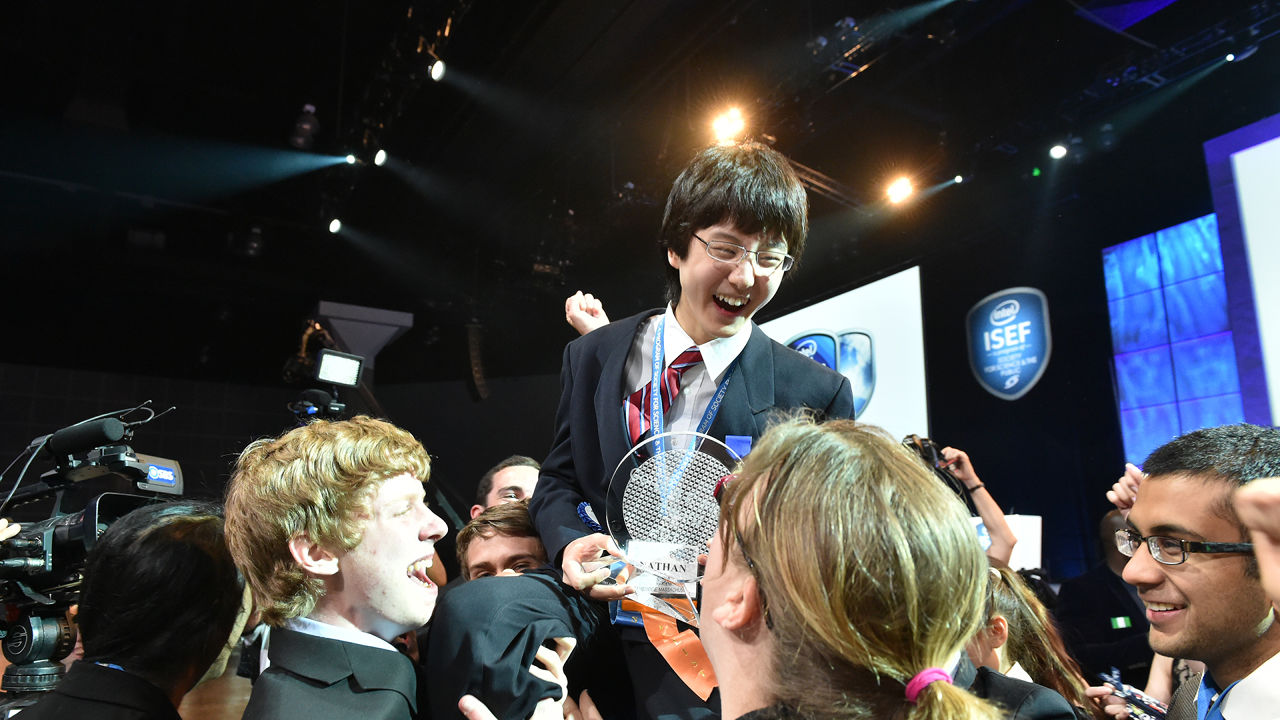
This 15-Year-Old Came Up With Software To Hunt Down Cancer-Causing Gene Mutations

In winning the Intel science fair, Nathan Han is already having an impact.

The Intel International Science and Engineering Fair doles out awards each year to high schoolers who could run intellectual circles around many adults. Jack Andraka, the creator of a cheap, accurate pancreatic cancer sensor, is a past winner. This time around, first place went to another cancer-related project: a computer program that can predict how harmful gene mutations related to cancer might be.

Nathan Han, a 15-year-old from Boston, says that he's been fascinated with bioinformatics for awhile. When a close friend's mother was diagnosed with ovarian cancer, he started thinking about possible projects. It's one of the most studied genes in the human genome.

In January, Han settled on his entry, which evaluates mutations in the BRCA1 gene--a gene commonly associated with ovarian and breast cancer--to see how harmful they are. Han taught his software program to suss out the difference between disease-related mutations and harmless mutations using data from public databases.

"I chose to focus on BRCA1 in particular for practicality. It's one of the most studied genes in the human genome," he says.

According to Han, his program has an 81% accuracy rate in identifying cancer-causing mutations, while existing algorithms have an accuracy rate of about 40%. His software could one day be customized to evaluate other genes and diseases, paving the way for better cancer diagnostic tools. "Down the road, as accuracy improves, I can imagine using this sort of process for personalized genomic analysis," Han says.

The 15-year-old hopes to publish his research, but at the moment, he's looking for a summer job in a research lab. His $75,000 science fair winnings will go towards college funds.

ORIGINAL: FastCo
By Ariel Schwartz
June 5, 2014

Ariel Schwartz is a Senior Editor at Co.Exist. She has contributed to SF Weekly, Popular Science, Inhabitat, Greenbiz, NBC Bay Area, GOOD Magazine and more. For story ideas: ariel[at]fastcompany.com

sábado, 22 de marzo de 2014

Advancing brain cancer treatment through genomics

IBM and the New York Genome Center testing Watson prototype on glioblastoma

We have put Watson to work in any number of different ways and in any number of different industries. Healthcare, though, was its first real job. It’s gone to medical school, and even studied health insurance. And now Watson is working with the New York Genome Center to launch a pilot that tackles a new medical challenge – glioblastoma.

Dr. Robert Darnell, MD, PhD, President, CEO and Scientific Director of the New York Genome Center (left) and Dr. Ajay Royyuru, PhD, Director of the Computational Biology Center, IBM Research (right)

The most common kind of brain cancer, glioblastoma annually kills 13,000 people in the US alone. As a cancer of the brain, it’s difficult to take tissue samples, for one, so it can’t be examined like most other kinds of cancers. And it moves quickly. Diagnosis to death is on average only 12 months.

All cancers are a disease of the genome. It’s the genome itself that’s progressively changing from normal to abnormal when someone has cancer. When we can determine which genes start to “go bad,” we can better-determine what specific treatment would work to stop it. Therein lies the challenge: How can we better understand what is happening at a genetic level?

The key to glioblastoma’s genetic code is in the human genome. So while we know our cells’ biochemical pathways, it’s also an overwhelming amount of data – billions of DNA base sequences, plus millions of studies, medical documents and clinical records.

Different kinds of brain cancers manifest in different ways and progression rates, so finding these details about glioblastoma is a molecule-sized needle in the genome haystack.

That’s why my team – with decades of research experience in biology as a data science – and NYGC, with the expertise and resources of a dozen top hospitals and medical schools, are collaborating on a project with Watson in genomics. Our goals with this prototype and ensuing studies are to assist physicians with discovering personalized treatment for patients with glioblastoma.

Watson can read millions of pages of medical literature in seconds. By applying its natural language processing and analytics to the genome, it could find connections between what’s buried in journals about the interaction of certain genes, and where those genes are in the genome. And so, in the same way Watson evaluates and hypothesizes on other medical diagnosis based on electronic health records and a doctor’s evaluation (see a demo), it could evaluate and hypothesize about mutations in a cancer cell’s genome that caused the disease, not based on a wide demographic swath of those with similar characteristics, but for an individual based on their personal genome.

Connecting medical literature to the genome 


Today, we know and have detailed medical literature on the biochemical pathways our genes take. But we don’t know where in the genome these cancerous perturbations happen in that molecular network of interactions. So, we’re loading Watson with genome data from NYGC, along with medical literature to map out where these deviations happen. Watson will be able to see that, in the context of given cancer mutations in the genome, which pathways matter. And in the context of those interactions, suggest evidence of potential treatments.

IBM Watson and New York Genome Center. Video: IBM SocialMedia

This journey takes clinicians from trials, to validating what genomic knowledge improves treatment, to routine analysis that helps patients. Ultimately, we want to see our partners at NYGC and physicians upload genomic data into the Watson Genome on the cloud, where the system could quickly synthesize a personalized report of available evidence of treatment options.

ORIGINAL: IBM Research
By Dr. Ajay Royyuru, Director of IBM Research’s Computational Biology Center

viernes, 7 de marzo de 2014

The dawning of the age of genomic medicine, finally

Craig Venter (R) speaks with Eric Topol, Scripps Health chief academic officer and director of the Scripps Translational Science Institute, during a symposium on ''The Future of Genomic Medicine'' at Scripps Seaside Forum in La Jolla, California March 6, 2014. Credit: Reuters/Sam Hodgson


Director of the Cardiovascular Research Institute Dr. Elizabeth McNally (L) looks on as Megan Puckelwartz prepares DNA from human patients at the University of Chicago in Chicago, March 4, 2014. Picture taken March 4, 2014.


(Reuters) - When President Bill Clinton announced in 2000 that Craig Venter and Dr. Francis Collins of the National Human Genome Research Institute had succeeded in mapping the human genome, he solemnly declared that the discovery would "revolutionize" the treatment of virtually all human disease.

The expectation was that this single reference map of the 3 billion base pairs of DNA -- the human genetic code -- would quickly unlock the secrets of Alzheimer's, diabetes, cancer and other scourges of human health.

As it turns out, Clinton's forecast was not unlike President George Bush's "mission accomplished" speech in the early days of the Iraq war, said Dr. Eric Topol of Scripps Translational Science Institute, which is running a meeting On the Future of Genomic Medicine here March 6-7.

Thirteen years after Clinton's forecast, even Venter acknowledges that mapping the human genome has had little clinical impact. "Yes, there's been progress, but we all would have hoped it would have been more rapid," he said in an interview in his offices this week.

But that is finally changing.

"We are at an inflection point," said Collins, who now directs the National Institutes of Health. In a telephone interview, he said he never expected an "overnight, dramatic impact" from sequencing the human genome, in part because of cost.

Recently, a combination of lower-cost sequencing technology and a growing list of wins in narrow corners of medicine are starting to show that genomic medicine is on the verge of delivering on at least some of those early claims.

Recent advances in sequencing have been "pretty stunning" and genomics is "just on the threshold" of delivering results, Venter told Reuters.

Although much is left to be learned about the genome, scientists believe knowing a person's genetic code will lead to highly personalized treatments for cancer, better predictions for diseases in babies and help unlock the puzzle of mysterious genetic diseases that currently go undiagnosed and untreated.

Venter is staking his latest entrepreneurial venture on that expectation. Earlier this week, he announced formation of a new company, Human Longevity Inc., to undertake a massive project: sequencing 40,000 human genomes a year in a search for new therapies to preserve health and fight off diseases, including cancer, heart disease and Alzheimer's.

To do that, Human Longevity will use two HiSeq X Ten machines and has an option to buy three more. The sequencers, made by Illumina Inc., can map a single genome for as little as $1,000.

Collins' government-funded Human Genome Project spent $3 billion and took 13 years to sequence the human genome.

Breaching the $1,000 genome could prove to be a watershed. At that cost, said Illumina Chief Executive Jay Flatley, ambitious projects like Venter's are economically feasible and clinical results more achievable.

"We've still only scratched the surface of what the genome holds," he said. "What we need to do now is get hundreds of thousands to millions of genomes in databases with clinical information," he added.

MAKING A DIFFERENCE
Advances in sequencing equipment and the advent of next-generation sequencing has transformed the work Dr. Elizabeth McNally does as director of the Cardiovascular Genetics Clinic at the University of Chicago.

In seven short years, she said, her group has gone from testing just one gene at a time to testing 60 to 70 genes and she is moving quickly into whole genome sequencing.

McNally points to the case of Jeanne Sambrookes - a patient who is alive today because of these advances.

As a child, Sambrookes often noticed the distinct, hunched posture of her mother, her aunt and her grandmother as they struggled to climb a flight of stairs.

Sambrookes had been very athletic as a young teen, but as she matured, she noticed a heaviness in her legs. By age 20, running left her tired. At 40, she needed a pacemaker, just like her mother did at that age.

"I started thinking there is something to this," said Sambrookes, now 56, who lives in Michigan City, Indiana.

After some dead ends, she found McNally, who cast a wide net, testing for more than two dozen genes that could account for Sambrookes' heart and muscle problems.

The culprit turned out to be a mutation in a gene called Lamin that causes Limb-girdle muscular dystrophy. The disease can cause weakness and wasting of the muscles between the shoulders and knees. The mutation can also cause electrical disturbances of the heart.

McNally recommended Sambrookes replace her pacemaker with an implantable cardiac defibrillator that could protect against sudden cardiac death.

That proved to be the right call. Last August, Sambrookes' heart stopped three times. Each time, the defibrillator shocked her back to life.

"She literally tried to die three times," McNally recalls of her patient. "It still takes my breath away."

Although McNally uses panels of 70 to 80 genes in her clinic, she has started experimenting with whole genomes. With the reduced cost of gene mapping, whole gene sequencing is a potentially cheaper, more powerful tool.

The reduced cost of mapping is cutting the cost of research, too -- another factor that could speed clinical outcomes. McNally's team recently published a paper in the journal Bioinformatics in which she used Beagle, a supercomputer housed at Argonne National Laboratory, to analyze 240 full genomes in about two days. Such an endeavor normally takes months.

"That dramatically decreases the cost associated with analysis because we sped up the time," said McNally.

CORNERS OF MEDICINE
Dr. Jay Shendure, associate professor of Genome Sciences at the University of Washington in Seattle, said the impact of gene sequencing is beginning to emerge in specific areas -- after a startup period that was longer and narrower than expected.

"I do think there are these corners of medicine, which are important ones, that may happen relatively quickly," he said.

A key example is the use of a pregnant woman's blood to see if her fetus may have trisomies -- chromosomal abnormalities associated with Down syndrome and other disorders.

"Almost overnight, sequencing is in the process of taking over as the primary means of screening for trisomies in at-risk populations, and maybe eventually to everyone," Shendure said.

The clinical results are promising. A trial of Illumina's test published last week in the New England Journal of Medicine found about 3.6 percent of standard tests for trisomies had false positive results, compared with 0.3 percent with Illumina's Verify test.

That means fewer women would need to go through invasive follow-up diagnostic tests using amniocentesis or chorionic villus sampling, both of which can cause miscarriages.

If the tests become routine practice, Goldman Sachs analyst Issac Ro estimates the market could reach $6 billion a year.

Venter's new company, Human Longevity, has picked cancer as its first sequencing target. Working with the University of -California, San Diego, the company plans to sequence the genomes, as well as the tumors, of every cancer patient treated at UCSD's Moores Cancer Center.

Collins calls cancer a "disease of the genome" and notes that genomics has revealed cancer to be a collection of different mutations, all of which contribute to its growth.

Drug companies have responded with treatments that block aberrant pathways, an approach called precision medicine.

"That's happened pretty quickly because of this window that DNA sequencing has provided," said Collins.

(Reporting by Julie Steenhuysen; Editing by David Greising and Dan Grebler)

ORIGINAL:
Reuters
Mar 6, 201

martes, 4 de marzo de 2014

Venter's New Goal: World's Largest Sequencing Operation


Dr. Venter is founder, chairman, and CEO of the J. Craig Venter Institute. [Industrial Biotechnology]


J. Craig Venter, Ph.D. and two co-founders today launched a genomics and cell therapy-based diagnostic and therapeutic company that he vowed will assemble the world’s largest human gene sequencing operation, using $70 million in Series A financing.

Human Longevity Inc. (HLI) says it will compile the most comprehensive and complete human genotype, microbiome, and phenotype database – with plans to sequence up to 40,000 human genomes per year, then quickly scape up to 100,000 human genomes per year. HLI will sequence a variety of people, both healthy and ill, from children to centenarians.

Both the sequencing operations and the new company’s efforts to help develop cell-based therapeutics are aimed at addressing aging-related diseases.

HLI will initially focus its clinical sequencing efforts on cancer, and will look to identify therapeutic solutions for cancer as well as other aging-related diseases, such as diabetes and obesity, heart and liver diseases, and dementia.

“HLI is going to change the way medicine is practiced by helping to shift to a more preventive, genomic-based medicine model which we believe will lower healthcare costs,” D. Venter said in a statement. “Our goal is not necessarily lengthening life, but extending a healthier, high performing, more productive life span.”

HLI will operate from labs in San Diego, and has already purchased two Illumina HiSeq X Ten Sequencing Systems, with the option to acquire three additional systems.
http://res.illumina.com/images/systems/hiseq/hiseq-x-ten.jpg
The HiSeq X Ten is a set of ten ultra-high-throughput sequencers, purpose-built for large-scale human whole-genome sequencing.

Dr. Venter is the founder and CEO of Synthetic Genomics, as well as founder, chairman, and CEO of the J. Craig Venter Institute (JCVI). HLI said it is establishing a collaboration and research services agreement with JCVI covering proteomics, infectious disease diagnostics, and the human microbiome, with the new company agreeing to license intellectual property from the institute.

JCVI is one of three partners with which HLI has established strategic collaborations; the others are Metabolon and University of California, San Diego.

HLI and UCSD have agreed to develop protocols and procedures to enable whole genome, microbiome and tumor sequencing and analysis of consenting UC San Diego research patients. Collaboration has begun by the company with the UC San Diego Moores Cancer Center. HLI said it will seek to extend this type of agreement and program with UC San Diego to other clinical centers worldwide.

Joining the biotech research pioneer and entrepreneur as co-founders of HLI are Robert Hariri, M.D., Ph.D., and Peter H. Diamandis, M.D.

About Human Longevity, Inc.


Human Longevity Inc. (HLI) is a genomics and cell therapy-based diagnostic and therapeutic company. Using advances in genomic sequencing, the human microbiome, proteomics, informatics, computing, and cell therapy technologies, HLI is building the world’s most comprehensive database on human genotypes and phenotypes to tackle the diseases associated with aging-related human biological decline. HLI I also leading the development of cell-based therapeutics to address age-related decline in endogenous stem cell function. HLI is concentrating on cancer, diabetes and obesity, heart and liver diseases, and dementia.

The market for healthy human longevity is enormous. Globally, total healthcare expenses run over $7 trillion, with nearly half of these funds being spent in the senior (65+) years of a person’s life to help keep them alive longer. Using the combined power of HLI’s core areas of expertise – genomics, informatics, and stem cell therapies, HLI is going to change the way medicine is practiced by furthering the shift to a preventive, genomic-based medicine model.

HLI revenue streams will be derived from database licensing to pharmaceutical, biotechnology and academic organizations, sequencing, and development of advanced diagnostics and therapeutics.

Funding

HLI has secured $70 million in its initial round of funding. Our investors are a diverse group of individuals and companies who share our common goal and passion of changing healthcare, tackling the diseases of aging, and extending the healthy human lifespan.


ORIGINAL:
Genetic Engineering News
Mar 4, 2014

domingo, 16 de febrero de 2014

Oxford Nanopore unveils data from portable genome sequencer

MinION results are promising, but fall short of high expectations.


Oxford Nanopore

Oxford Nanopore's MinION sequencer can read DNA fragments up to 10 kilobases long.

A good first shot, but not a game-changer — yet. That seems to be the consensus among scientists after the first public release today of data produced by the MinION, an advanced and much-anticipated DNA sequencing device developed by Oxford Nanopore in the UK.

The MinION aims to be the first commercially available sequencer that uses nanopore technology, which has been in development for nearly two decades. The approach identifies bases of DNA by measuring the changes in electrical conductivity they generated as they pass through a biological pore. Oxford claims that its nanopore machines will be faster and cheaper than existing sequencing technologies, and will allow scientists to analyse regions of the genome that cannot be amplied.

The MinION is not yet for sale. But David Jaffe, a computational biologist at the Broad Institute in Cambridge, Massachusetts, used data produced by the device and provided by Oxford to aid in the assembly of two bacterial genomes — those of Escherichia coli and a bacterium from the genus Scardovia that is found in the human mouth. He presented his results today at the Advances in Genome Biology and Technology meeting in Marco Island, Florida.

“It’s kind of a cute device,” Jaffe says of the MinION, which is roughly the size and shape of a pack of gum. “It has pretty lights and a fan that hums pleasantly, and plugs into a USB drive.” But his technical review is mixed.

The average length of the sequences generated on the MinION was 5.4 kilobases, with some as long as 10 kilobases. That is longer than the average read delivered by the current dominant technology, sold by San Diego, California-based Illumina, which delivers fragments of DNA that are hundreds of base pairs long. But the median length of the MinION’s reads is shorter than the target that Oxford announced in 2012.

Mixed picture
Jaffe also found that the MinION appeared to have difficulty sequencing particular parts of the bacterial genomes that he studied. That is worrisome to bioinformaticians, because it is more challenging to correct for systematic sequencing errors than random ones. In Jaffe's case, the recurring errors prevented him from assembling the complete genome sequences of the two bacteria from scratch using only MinION data; instead, he used MinION sequences to supplement data generated by Illumina machines.

Yet he sounded an optimistic note about the MinION's future. Oxford has said that higher-quality DNA or different preparation methods should increase the average read length. Jaffe says that the company can work to eliminate errors, perhaps by using a mix of pores with different properties. But even now, he says, the vast majority of long MinION reads had lengthy stretches without any mistakes. The systematic errors are “a temporary feature that we hope they'll figure out how to solve.”

Other researchers will soon have a chance to form their own opinions about the new device, as Oxford today launched its early-access programme. Researchers who pay a US$1000 deposit, plus $250 for shipping costs, can receive MinIONs on which they can run their own experiments.

Isaac Ro, an analyst at the investment bank Goldman Sachs — which advised Illumina in 2012 when it fought off a takeover bid by the drug giant Roche — called Jaffe's presentation “underwhelming”. “Oxford Nanopore still appears to be in development mode and, in our view, is unlikely to threaten [Illumina’s] competitive position at this time,” he said in a research note.

But some scientists still think that the MinION has potential to shake up the sequencing industry. Geneticist Yaniv Erlich of the Whitehead Institute for Biomedical Research in Cambridge, Massachusetts, says that the small, cheap and portable MinION is unlike the bulky, pricey sequencing machines that scientists are used to. If Oxford continues to improve the technology, he says, it will enable a range of applications that are not possible today, such as using sequencers in the field.

“This reminds me of the early days of Illumina, when all we could get were 36-base-pair reads, and we were all very excited about that,” Erlich says. “I think we should give [Oxford] more time.”
Nature doi:10.1038/nature.2014.14724

Related stories
Is the $1,000 genome for real?
Nanopore genome sequencer makes its debut
Personal genomes: Standard and pores

More related stories


ORIGINAL: Nature 
By Erika Check Hayden
14 February 2014 

jueves, 27 de junio de 2013

TGAC Fellowship Programme in Computational Biology

ORIGINAL: TGAC

The Genome Analysis Centre (TGAC) is pleased to announce the launch of a new, five-year, fellowship programme in Computational Biology. The programme is aimed at outstanding early-career computational biologists and bioinformaticians who wish to establish themselves as scientific leaders within a dynamic research environment. The fellowships will be awarded with a competitive salary and a significant research support grant.

We are seeking candidates with an excellent track record whose interests cover areas of strategic and scientific interest to TGAC, our partners on the Norwich Research Park (NRP) and the BBSRC (please refer to www.bbsrc.ac.uk/strategy).

The Norwich Research Park is a research campus partnership comprised of  
  • TGAC, 
  • the John Innes Centre, 
  • the Institute of Food Research, 
  • The Sainsbury Laboratory, 
  • the University of East Anglia and 
  • Norfolk and Norwich University Hospital. 
The NRP aims to deliver solutions to the global challenges of healthy ageing, food and energy security, sustainability and environmental change. It is an international centre of excellence in life and environmental sciences research with world-class expertise in the research and development pipeline from genomics and data analytics, global geochemical cycles and crop biology, through to food, health and human nutrition. This provides an excellent environment for the development of synergistic research. The successful candidates will be required to develop a research project in collaboration with other researchers within the park. In particular, we encourage proposals that address biological challenges relevant to the NRP that may necessitate:
  • New approaches to the analysis and interpretation of research data at scale such as: data visualisation, digital simulations, data integration and the handling of complex datasets arising from high throughput technologies.
  • Methods and strategies to address challenges arising in applying next generation sequencing to genomics, transcriptomics, metagenomics and epigenomics.
  • Development of novel algorithms for the fast analysis of streaming data, in particular in the context of applications to rapid diagnostics and surveillance.

martes, 25 de junio de 2013

Mintic inauguró el centro de Biología Computacional y Bioinformática BIOS en Manizales con una inversión de $5.000 millones

por Frontera Informativa
20 junio, 2013

Add caption
La posibilidad de que Caldas siga su camino como una región que trabaja la competitividad desde la gestión de las Tecnologías de la Información y las Comunicaciones, TIC, en un centro de investigación e innovación en temas de computación y biotecnología es cada vez más real y cercana gracias a la puesta en marcha del Centro de Bioinformática y Biología Computacional BIOS.

La inauguración del centro, realizada esta tarde, contó con la presencia del ministro de Tecnologías de la Información y las Comunicaciones, Diego Molano Vega; el director de Colciencias, Carlos Fonseca Zárate; el gobernador de Caldas, Guido Echeverri Piedrahita; el alcalde de Manizales, Jorge Eduardo Rojas Giraldo; el presidente de Mercados Emergentes de Microsoft, Orlando Ayala; y el director de Bios, Mauricio Rodríguez.

BIOS funciona en el Ecoparque Los Yarumos en Manizales y es el resultado de la suma de voluntades de entidades gubernamentales y la empresa privada en un modelo de Alianza Público Privada, APP, que pretende fortalecer la innovación y la investigación para fortalecer los modelos de competitividad en Caldas y Colombia.

“Este es un centro que nos permitirá tener enormes avances en temas de bio computación y biotecnología que aplicados hacen una enorme diferencia en lo que se refiere a la generación de valor en tema de innovación agrícola, en temas de sostenibilidad y de conocimiento de la fauna y la flora, de la biodiversidad que tenemos como país”, afirmó Molano Vega.

Para el Gobernador este centro es una oportunidad para potenciar los diferentes sectores económicos del departamento y de encontrar más rutas que impulsen el Plan Estratégico Departamental de Ciencia, Tecnología e Innovación.

“Este Centro es uno de los centros de investigación más importante de América Latina, aquí vendrán grandes científicos buscando el tipo de información científica de primera mano, de punta que acá se produce. En este centro vemos como nos convertimos en un escenario para la consolidación de la economía del conocimiento y como nos insertamos de mejor modo en los modelos de negocio que propone la economía mundial en este momento”, expresó el mandatario seccional.

En BIOS se han invertido unos 19 mil millones de pesos, de los cuales 5 mil millones se destinaron a la adecuación del Centro de Bioinformática y Biología Computacional BIOS y los otros 14 mil millones de pesos provienen del Fondo para Ciencia, Tecnología e innovación, a través del Sistema General de Regalías, gracias a un proyecto presentado por la Gobernación de Caldas al Órgano de Colegiado de Administración y Decisión (OCAD) para este tema en el 2012.


Foto | Freddy Arango | LA PATRIA A la izquierda, Mauricio Rodríguez, director de Bios; Orlando Ayala, vicepresidente de Mercados Emergentes de Microsoft; Paula Arias, subdirectora de Colciencias, y Diego Molando, Mintic, activaron el primer supercomputador de Colombia, que funciona oficialmente desde ayer en Manizales.

miércoles, 24 de abril de 2013

Through Dirt-Cheap Genetic Testing, Counsyl Is Pioneering A New Bioinformatics Wave

ORIGINAL: TechCrunch
KIM-MAI CUTLER

Jen Baumgartel opted for in-vitro fertilization after learning from a Counsyl test that she and her husband were carriers for the severest form of Smith-Lemli-Opitz syndrome.

For cynics who say that Silicon Valley has become too mired in photo-sharing apps and addictive games, take a 15-minute drive to South San Francisco.

In a non-descript lab is a company that may be paving the way for the Valley’s next wave of disruptive startups, which marry software with data from the human genome.

Counsyl is doing genetic tests that look for more than 400 mutations and at least 100 genetic disorders for parents who are planning children. At $599 total, or $99 with insurance, their tests cost a fraction of standard ones, which often only look for a single condition like cystic fibrosis, and run anywhere from $100 to $500. A full panel of tests for Ashkenazi Jews, a minority famously at risk for various genetic conditions, can run about $4,000 to $5,000 from companies like Quest Diagnostics.

Founded six years ago, Counsyl has grown to handle carrier screening for 2.5 percent of all births in the U.S.

To ramp up, Counsyl has quietly taken in roughly $65 million in funding from firms like Founders Fund, Felicis Ventures, India’s Manipal Group, Google’s senior vice president of corporate development David Drummond, WTI, Rosemont Seneca, and Google research scientist Jeff Dean.

“We want to make the genome practically useful,” said CEO Ramji Srinivasan. “People don’t necessarily care about genomics. At some point, the novelty of this data will wear off. The diagnostic utility has to be extremely obvious: can it change someone’s behavior? Can it make them make a different decision?”

The company is coming of age at a time when the costs of full-genome sequencing are falling faster than even Moore’s Law would have predicted. Full genome sequencing — not the kind of testing where you’re handling only select snippets of DNA — runs at around $8,000 now, down from $100 million in 2001. Capitalizing on this, Counsyl has products for both SNP tests and a more comprehensive sequencing test that is about $999 for 10,000 genetic mutations.


It’s helped women like Jen Baumgartel, a nurse in a Nashville, Tennessee in vitro fertilization clinic, choose IVF over conceiving naturally. Through a Counsyl test, she found out both her and her husband were carriers for Smith-Lemli-Opitz syndrome, which put their potential children at risk of heart problems, developmental delays and cleft palate.

They had a one-in-four chance of passing the condition on, and both Baumgartel and her husband carried the genes for the severest form of the disease.

“I was hoping I would get an easy pregnancy,” Baumgartel said. “You never really think about how to avoid passing something onto your child, but suddenly we had this really harsh reality that this is what we would have to do.”

They ended up spending around $12,000 on in-vitro fertilization and now have a healthy nine-month-old baby girl named Kinley Jo (pictured at the top).

COSTS FALLING FASTER THAN MOORE’S LAW
Unlike the consumer software world where costs of starting a company have fallen precipitously over the last five to ten years, bioinformatics may only be at the beginning of seeing a similar drop.

“The Counsyl team are brilliant technologists,” said David Lee of SV Angel, who is investing in the company and has deep interest in health informatics as a cancer survivor. “They understood the trend of biology and software converging earlier and deeper than anyone we had met.”

While other founders tapped into the big social networking and mobile app trends of the last five years, Srinivasan instead went for higher-hanging fruit.

Before the market peaked in 2007, he was working on equity research for Morgan Stanley alongside famed analyst and now Kleiner Perkins partner Mary Meeker. Like many entrepreneurs who come to the Valley from the banking and consulting worlds, he was looking for tangible work with more meaning. From across the country, he saw how old classmates from Stanford were building companies.

“These guys were changing the world and I was moving around pieces of paper,” he said. “My brother told me that the genome was the next Internet. I decided to leave my earthly belongings and go live on a futon.”

Srinivasan’s brother Balaji, who is one of the company’s other co-founders, is press shy and declined to comment for this article. When Counsyl was founded, he had just finished a Ph.D. at Stanford in electrical engineering and was teaching and doing research around computational biology. The pair had never worked on a company together before.

“MY BROTHER TOLD ME THAT THE GENOME WAS THE NEXT INTERNET. I DECIDED TO LEAVE MY EARTHLY BELONGINGS AND GO LIVE ON A FUTON.”

Srinivasan said the way founders approach problems in the Valley is almost like an inverted Maslow’s pyramid. Products that are about self-expression like social networking apps get the most attention from young founders, while businesses that are about more basic needs like health or financial security are under-addressed. Founders get intimidated by the regulatory risks and by the deep subject matter knowledge that you might need to attack the health, financial or legal industries.

“Bright people in Silicon Valley aren’t necessary focusing on health because the speed of iteration seems slower,” he said.

Yet Counsyl has managed to deal with the steeper capital costs of doing biotech startup and captured a meaningful share of the carrier screening market. While they don’t say the number of tests they do per month, they do admit that they’re handling 2.5 percent of all births in the U.S. The CDC reports 4 million U.S. births per year, so one could infer that they’re doing at least 100,000 tests annually.

The tests themselves are easy to administer. Couples get the testing kits from their doctors, send in either a blood or saliva sample, mail it to Counsyl’s lab and then get results back in two or three weeks. Results come in a couple color-coded pages that show a couple’s numerical risks for having children with any of more than 100 recessive genetic diseases.

A refashioned car-painting robot that’s being used at Counsyl to handles trays of samples.
IMPROVING EACH STEP OF THE TESTING PROCESS
Counsyl’s price advantages over competitors are not really about any single transformative change to genetic testing. It’s more about correcting inefficiencies at every step of the way.

“He’s like the Jeff Bezos of bioinformatics,” said Felicis Ventures’ Aydin Senkut, who said the firm put its largest single check ever into the company last year. “He’s good at wringing inefficiencies out, which is very much like the Amazon model.”

Counsyl built image processing software that cut down on common testing errors by a thousand-fold.

They creating billing infrastructure when it was too complicated to deal with the 700 insurers that pay for Counsyl tests.

They created an iPad app for doctors so it would be easier to order tests and fit Counsyl in with their daily workflow.

They refashioned a robot arm that’s normally used to spray paint Toyota Prius cars to handle trays of samples without requiring human intervention.

They created their own wetware and had to re-engineer some chemicals from scratch when they realized they couldn’t rely on third-party labs to handle their samples properly.

“If you hold the vial at the wrong angle, it will melt the reagent,” Srinivasan said. “We got to this moment where we realized we had to do it ourselves. We attempted for years not to build a lab, but once we decided to do it, it took a few months.”

They found a space, started ripping out its carpets. Srinivasan bought a Home Depot book on plumbing. It was costly and tedious, but it yielded unexpected benefits.

“It turned out to be the best thing for us,” Srinivasan said. “Now we control the full stack just like Steve Jobs tried to do with Apple. He said the ideal computer starts out at the beach with the sand and ends with a running machine that you can touch. If we never had to re-engineer everything, we would have never been able to do what we’re able to do.”

Once they went forward with the lab and could see a path toward scaling easily, other investors stepped in. Founders Fund, which has backed companies like Tesla, SpaceX and Facebook, came in during 2011.

They are “a classic Founders Fund company,” said partner Brian Singerman. “Pragmatic, but a bit crazy — good crazy — at the same time. The team is top tier and out of the box in both science and business execution.”

Now that the hardware and wetware sides of the business are more manageable, Counsyl can focus on its true opportunity: interpretation and curation of genomic data.

“The interpretation is the expensive part of the problem,” Srinivasan said. “It looks like a software problem, talks like a software problem and acts like a software problem.”

As the wealth of data grows, Counsyl is building a scalable and repeatable system for interpreting DNA readings. If one were to take all of the published research papers associated with all of the mutations that Counsyl tests for, it would take five work years to read them all.

So Counsyl is creating rule sets for how to understand what different mutations mean. Deletions or insertions into a person’s DNA can be quite serious, but there are also minor mutations that might not affect amino acids produced from the DNA.

Already, Counsyl is processing a half-a-terabyte of data per day. If the company did full genome sequencing for all the customers they currently handle, they would be doing 5 terabytes per day. (For a somewhat random apple-and-oranges comparison, Facebook said last fall it was handling 500 terabytes per day for its billion users. Basically, even just a few thousand genome sequencing tests can produce a lot of data.)

WHY CARRIER SCREENING
On the consumer-facing side of the business, Counsyl’s near-term progress will be about expanding deeply into the carrier screening market. Eventually, they want to build a mainstream brand with lots of applications.

“Philosophically, we want to build a consumer brand. We want people to associate us with understanding the genome the way people think about Kleenex with tissues,” Srinivasan said.

From that point of view, carrier screening is an ideal starting point. Parents are strongly motivated to do their best for their future children. Not only that, timing really matters for pregnancies and childbearing. If customers end up having a good experience with Counsyl products early on, they’ll develop a trust or affinity for the brand, which will help later down the line with future services.

This is unlike other genetic testing services, which focus on predicting diseases a person can contract in old age. The issue with that market is that people have a tendency to push off or procrastinate on testing for potential bad news.

“The conversation with the doctor needs to be very targeted and focused. There can’t really be a question of — are you testing me? Are you testing my prospective kids?” Srinivasan said. “We don’t want to muddy the message from the doctor. The interaction has to be simple and we want the test to be squarely about prospective children.”

The other issue with testing for conditions in old age is that there is an inverse relationship between how predictable and how actionable these diseases are. With the most predictable genetic conditions, there might not be much that a person can do to change their fate. But conditions that are more behaviorally or lifestyle-influenced like heart disease are not all that accurately forecast by genetic tests.

Counsyl also tries to be conscientious about the murky ethical issues that sometimes arise with genetic testing. There are some fascinating questions here for prospective parents. For example, would a couple make a different reproductive decision if they found out that they were carriers for a lifelong condition like cystic fibrosis versus a BRCA mutation that could lead to breast cancer in mid-life?

“We’re big believers in reproductive autonomy,” Srinivasan said. “We didn’t invent the idea of carrier screening. We’re just making it cheaper to find this information out. It goes back to the question: is it better to know or withhold information?”

martes, 19 de marzo de 2013

Teenage Girl Explores Algae-Powered Biofuel, Wins Intel Science Talent Search

ORIGINAL: Intel
IntelPR en Intel Newsroom
12-mar-2013

Sara Volz of Colorado Springs, Colo. wins $100,000 Award from the Intel Foundation

WASHINGTON, D.C., March 12, 2013 – First-place winner Sara Volz, 17, of Colorado Springs, Colo. (center), second-place winner Jonah Kallenbach, 17, of Ambler, Pa. (left), and third-place winner Adam Bowman, 17, of Brentwood, Tenn. (right) celebrate their awards at the Intel Science Talent Search, the nation's oldest and most prestigious high school science research competition. A program of Society for Science & the Public, the competition encourages high school seniors to seek solutions to some of the world’s largest problems, from medical treatments to environmental solutions.The Intel Science Talent Search, the nation's oldest and most prestigious high school science and math competition, recognizes 40 high school seniors who are leaders in innovation and seeking to solve some of the world's greatest challenges.


NEWS HIGHLIGHTS
Sara Volz, who investigated increasing the oil content of algae to create an economically viable source of biofuel, received the top award of $100,000 at the Intel Science Talent Search 2013, a program of Society for Science & the Public.


Other finalists from across the United States took home additional awards totaling $530,000.
 style="line-height: 1.5em;

Sara Volz. PopSci
WASHINGTON, D.C., March 12, 2013 – Innovation, from improving robot navigation to advancing treatment for breast cancer, is thriving today in the nation's capital. Honoring high school seniors with exceptional promise in math and science, Intel Corporation and Society for Science & the Public (SSP) recognized the winners of what is considered the nation's most elite and demanding high school research competition, the Intel Science Talent Search.

Sara Volz, 17, of Colorado Springs, Colo., won the top award of $100,000 from the Intel Foundation for her research of algae biofuels. Algae produces oil that can be converted into a sustainable, renewable fuel; however, the fuel can be costly. Sara used artificial selection to establish populations of algae cells with high oil content, which are essential for an economically feasible biofuel. Sara, who built a home lab under her loft bed, sleeps on the same light cycle as her algae.

Second-place honors and $75,000 went to Jonah Kallenbach, 17, of Ambler, Pa., whose bioinformatics study breaks new ground in predicting protein binding for drug therapy. Jonah solved an open problem first posed several years ago, and his work suggests a new path to drug design by targeting a protein's disordered regions. His research may open doors to treatment for diseases, such as breast cancer, ovarian cancer and tuberculosis.

Third-place honors and $50,000 went to Adam Bowman, 17, of Brentwood, Tenn., who successfully designed and built a compact and inexpensive, low-energy, pulsed plasma device. Typical plasma sources are large, complicated and expensive. Using his inexpensive technology, Adam believes plasma research can now be conducted in small-scale operations and even high school labs.

"The Intel Science Talent Search is an opportunity to reshape the dialogue around our nation's youth," said Wendy Hawkins, executive director of the Intel Foundation. "We believe it's crucial to Sara Volz of Colorado Springs, Colo. wins $100,000 Award from the Intel Foundation U.S. innovation to bring greater attention to math and science achievement, encourage more youth to embrace these fields, and demonstrate the impact these subjects have on our country's future success."

viernes, 15 de marzo de 2013

Emory Integrated Genomics Core expands accessibility, service

ORIGINAL: Emory News
Woodruff Health Sciences Center
March 14, 2013

The staff of the Emory Integrated Genomics Core wants to make ambitious genomics research easier for the non-expert.
Do you want to read all 22,000 genes in someone's DNA? Do you want to know the identities of the bacteria in their intestines, or the DNA-bound proteins in their white blood cells? The staff of the Emory Integrated Genomics Core wants to make ambitious genomics research easier for you. 

Emory's two genomics core facilities have united under one roof. The Emory Integrated Genomics Core (EIGC) is a consolidation of the Cancer Genomics Shared Resource of the Winship Cancer Institute and the GRA Genomics Core of the School of Medicine. The goal of this effort is to create a top-tier genomics resource that is widely available to the Emory research community, integrating cutting-edge genomics technologies with downstream bioinformatics analysis. 

The EIGC's new scientific director is Michael Zwick, associate professor of human genetics. Zwick will oversee the operations, strategic planning, and expansion of the core"s services. The facility will also serve as the genomics platform for Winship's National Cancer Institute-designated Cancer Center Support Grant.

'Make genomics easier to use for the non-expert' 

"Talking about genomics is easy, but effectively using genomic technologies is more challenging," Zwick says. "We want to make these resources widely available to the Emory research community. Our mission is to make genomics easier to use for the non-expert." 

Zwick came to Emory in 2005 after postdoctoral work at Johns Hopkins and Case Western and service with the U.S Navy's Biological Defense Research Directorate. His research team in Human Genetics uses next-generation sequencing technology to identify genes linked with pediatric disorders, which include autism spectrum disorders, congenital heart defects, and early-onset inflammatory bowel disease. He says that nucleic acid sequencing has become a basic commodity of biomedical research, "like water or electricity." 

He says some of the most popular uses of large-scale nucleic acid sequencing in Emory research currently are: 

  • RNA sequencing (RNA-Seq) of tumors — a scan of which genes are the most or least active within a tumor. 
  • Whole exome sequencing — reading the DNA sequence of all the protein-coding genes in a person's genome. Here is a recent example where a boy's metabolic disorder was diagnosed in 2012. 
  • Chromatin immunoprecipitation sequencing (ChIP-Seq) — a survey of where regulatory proteins are bound within the cell"s nucleus in a sample of tissue or cultured cells. 
Members of the Emory Integrated Genomics Core 
The integrated core is located on the 7th floor of the Woodruff Memorial Research Building. The new facility will combine basic genomic services and advanced next-generation sequencing technology with downstream bioinformatics analysis. It will include three divisions: 

  • a CLIA division enabling processing of patient samples for clinical trials, managed by Malania Wilson; 
  • a research division managed by R. Ben Isett; and 
  • a computational division providing analytical services, managed by Viren Patel. 
Key CLIA (Clinical Laboratory Improvement Amendments, federal regulations governing lab tests on humans) services include nucleic acid extractions and biobanking, genotyping services, along with access to next-generation sequencing. 

In-house research services include MiSeq, Taqman, Illumina and Affymetrix genotyping. Some large-scale sequencing research tasks will be outsourced to specialized sites such as HudsonAlpha Institute for Biotechnology, Zwick says. 

"In some cases, we can take advantage of economies of scale and use outsourcing to reduce costs," he says. "This means increased capacity, lower costs, a faster turn around time and less waiting for customers." 

The computational division will provide data storage and computing services, and will be compatible with other computational biology applications such as proteomics and biostatistics. The core will use Emory High Performance Computer Cluster, a 768 CPU-core cluster to perform computational analysis. Several servers will be devoted to the Galaxy Project, an open, web-based platform for data intensive biomedical research. 

The core is jointly supported by the School of Medicine and the Winship Cancer Institute. Members of the Executive Committee overseeing the EIGC are Walter Curran, Paul Doetsch, Ray Dingledine, Carolyn Meltzer and Steve Warren.

sábado, 2 de febrero de 2013

Life, the Universe, and Everything: An Interview with David Haussler

ORIGINAL: PLOS GENETICS
Jane Gitschier
January 31, 2013

David Haussler. Photograph by Ron Jones, courtesy of the Center for Biomolecular Science and Engineering, University of California Santa Cruz.doi:10.1371/journal.pgen.1003282.g001
Citation: Gitschier J (2013) Life, the Universe, and Everything: An Interview with David Haussler. PLoS Genet 9(1): e1003282. doi:10.1371/journal.pgen.1003282

Copyright: © 2013 Jane Gitschier. This is an open-access article distributed under the terms of the Creative Commons Attribution License, which permits unrestricted use, distribution, and reproduction in any medium, provided the original author and source are credited.


Among the pantheon of computer scientists who have framed our capacity to interpret DNA sequences stands David Haussler of the University of California, Santa Cruz (UCSC). Applying his prowess in computer learning theory to the problems of protein modeling and gene structure prediction, Haussler emerged in the mid-1990s as a trail-blazer in the field of computational biology. He came to wider prominence in 2000 during the frenetic race to produce a draft sequence of the human genome by nucleating an impassioned team of coders and engineers who assembled the sequence data and launched the UCSC Genome Browser. Fittingly, his team's contribution made manifest the vision of Robert Sinsheimer, who as Chancellor of UCSC in 1985 convened a pivotal workshop to explore sequencing the human genome.

Haussler (Image 1) now plays, by my count, at least half-a-dozen leadership roles, including co-director of the Genome 10 K project, coordinating committee member of The Cancer Genome Atlas project, and director of the Center for Biomolecular Science and Engineering at UCSC. He is easily spotted by his predilection for Hawaiian shirts, whose informality, he suggests, fosters inter-disciplinary collaboration. Indeed, Haussler's ken for machine learning and his quest for the meaning of life are so expansive that I was tempted to title this piece “Deep Thought”, a nod to the fictional computer in Douglas Adams' The Hitchhiker's Guide to the Galaxy, but chose a more subdued allusion instead.

I located Haussler on the upper reaches of the stunning UCSC campus in the engineering building, a sleek structure of glass and aluminum, tucked into a redwood grove that was still dripping and fragrant from the morning's rain. The anteroom to his modest office was decorated with handsome prints from UCSC's scientific illustration program as well as books on the genome project, and a box labeled “for the intron lounge” was piled high with journals. Haussler swept in via bicycle, swiftly signed a few documents, and downed a cold drink as we began with a discussion of his growing up in the town of North Hills in the San Fernando Valley.

Haussler: My dad went to Caltech and because of the economic pressures of having a young family, decided not to pursue pure science, but to pursue a professional position in structural engineering. He worked on mathematical problems as a hobbyist and had a love of pure science. Both my brother and I ended up living out his dream to be a scientist. My brother is a highly accomplished biochemist.

Gitschier: I saw that your first paper in the early '70s was with a Haussler and had assumed it was your father, but then, looking at his picture, I realized he must be your sibling.

Haussler: My only sibling is my brother. He was professor of biochemistry in University of Arizona and taught me how to do science. And he is really one of the leading scientists in the world on vitamin D, which was the subject of that first paper.

Gitschier: How much older is he?

Haussler: Twelve years.

Gitschier: So he was established when you were just a kid.

Haussler: Right. The summer after my freshman year [in college], I spent time in his lab. Every third week, I would sacrifice a chick that was raised without vitamin D. I would take out its intestines for receptors for the hormonal form of vitamin D, and we used those receptors in a radio-receptor competitive binding assay to first measure the level of the hormonal form of vitamin D in the human bloodstream, in both normal and diseased humans. By the end of the summer, we had a paper in Science! You know, big breakthrough.

Then I went back the next summer, and nothing worked. I remember my brother saying to me, “Now, this is how science really is.” But I was undaunted.

Gitschier: Let's talk about your transition to science, because I know your first college experience was in art.

Haussler: I did visual art mostly. Acrylic painting and metal sculpture were probably my favorites, although I did stone lithography and all kinds of fabulous things in the San Francisco Academy of Art. Then, I switched schools and into psychology.

Gitschier: And that was where?

Haussler: That was actually at a crazy little experimental college. You have to understand that this was the early '70s…

Gitschier: I do understand! [Haussler and I were born the same year.]

Haussler: My mother was hoping I'd go to UCLA, but I was a rebel and said “No, I want to go to a crazy place,” Immaculate Heart College [IHC] in Hollywood.

Gitschier: Immaculate Heart doesn't sound so “crazy” on the surface.

Haussler: It doesn't, not at all, but the thought leader there was Sister Corita Kent, and you remember from the '60s, those love posters? A lot of the art movement and the philosophy that was expressed in art and posters in that era actually came out of Sister Corita Kent and a number of other rebels. The sisters at IHC were essentially kicked out of the Catholic Church for being radicals, and they had an extremely experimental college. So I, being the contrarian I was, applied there. It was strong in art and music and psychology. We studied Fritz Perls and Carl Rogers and all of these self-realization psychology thinkers at the time. And I was extremely into that. We had intensive encounter groups and dug very deeply into personal interactions.

Gitschier: But you didn't stick with Immaculate Heart.

Haussler: I got interested in science by working with my brother. I then transferred to Connecticut College back east. Again, I liked very intimate, individual learning. This was part of my whole psychology background. I view essential human progress being made, including learning, within a very intensive, one-on-one or small group interaction.

Gitschier: When you went there, you knew you wanted to do math?

Haussler: Yes. During those two summers with my brother, the one thing that mattered most was not the wet lab experiments that I had done, but when it came to analyzing the data. Someone in the lab was showing concentration in relation to a radioactive response curve and trying to fit that data with a linear function. And I said, “Well you can't use linear regression on this until you transform the variables.” And they looked at me and said, “Can you do that?”

And then I realized, hey wait a minute, I can contribute on the math side and it's a lot more fun than grinding up chicken guts! I like the quote that “mathematics is the queen of sciences” [attributed to Gauss]. Mathematics is the beautiful unity in the universe, and that's what totally captivated me.

Gitschier: Then, you find yourself at the University of Colorado doing PhD work in computer science. That seems like a logical transition to me.

Haussler: Logical is the correct word. After studying pure mathematics as an undergrad, I decided that the foundation for everything was logic. And I read extensively before I went to graduate school, but even after getting my undergraduate degree in mathematics and a minor in physics, I still hadn't decided to pursue a life of science.

Gitschier: What were you thinking of—art, philosophy, psychology?

Haussler: I wanted to get at the heart of the meaning of life.

Gitschier: Wow. [I had to swallow the answer, “42”.]

Haussler: Still this rebel spirit, I guess. I wasn't convinced that I would find that at traditional institutions. I spent about nine months wandering around Europe and then settled in San Luis Obispo on the family farm, kind of between generations. My grandfather was aging and my father was active as an engineer, so there was no one to take care of it.

While I was there, I wanted to keep touch with my intellectual side, so my friends and I—it was almost like a commune—believed in working hard on the ranch during the day and then reading and discussing philosophy, history, literature, and psychology at night.

Gitschier: Who were these people that you recruited to the farm?

Haussler: Well, important people that I met in my life and in my travels. We read books and had wonderful discussions. I remember my favorite title was The Origin of Consciousness in the Breakdown of the Bicameral Mind. We were trying to build a non-traditional intellectual environment.

But size is a factor there. What was missing at that time was the Internet. There was no way to get in touch with other people who had very specific interests except through the library and through post. So it became a 19th century gentleman-scholar kind of activity, which has very limited impact.

Gitschier: What happened to the farm after you left?

Haussler: My father did retire there. He and my mother had a spectacular retirement, raising organic fruit and selling it at the farmers market. So I played an important role in the family; I was the bridge to that retirement and it allowed me close friendship and think time.

Gitschier: And what firm had your father worked for?

Haussler: Oh, in my family, we never worked for anybody else! Robert Haussler Structural Engineering!

Gitschier: I see. It was a tradition!

Haussler: My great grandfather, my grandfather, my father always ran their own businesses. Never had a boss. It was a crazy, fierce, independent kind of tradition.

Gitschier: So this was instilled in you very early. I'm now seeing the fuller context!

Haussler: Right. I wasn't going to play along with any institutional programs! Those were the days when you could be anti every institution and get away with it.

Well, I look back at my writings from that time and there was some very creative stuff but isolated from the bulk of the intellectual mainstream, it's very hard to make progress. So I was thrilled to get re-engaged, just by taking advanced math classes at Cal Poly [San Luis Obispo].

Applied mathematics was my major, but I took computer science classes as well. I seized on the question of what is computable. What can be formalized by mathematics? And the answer, according to Alan Turing, was that this is the same as what can be computed on a very simple kind of machine. I was tremendously taken by that and by the fact that Turing and Kurt Gödel had established that there were things that were fundamentally uncomputable; true but unprovable. It appealed to my mystical side. I was always interested in the unity of the universe and the mystery of it.

Gitschier: Are you still?

Haussler: I still am in many ways. The mystery of “why life” and “is there a mathematical inevitability that there will be life” are questions that I spend quite a bit of time thinking about. I don't write much about them because I'm engaged in areas that are more immediately applied and have urgent impact, but I think a lot about them.

And there's a theme in my thinking and in my life that has been constant since those days as a young adult searching for answers. I turned away from thinking about that as a humanistic quest—to understand my psychology and our interactions—into an absolute quest for knowledge about the universe. In a sense that is the one thread that unites my entire adult life because I've been in so many different scientific areas.

But life itself has always been something that fascinated me, life in the broadest sense, that spans everything from the actual biological life that we observe on this planet, to the abstract notion of life. Like in Conway's Game of Life where you have a disarmingly simple mathematical system that nevertheless is sufficiently complex that it is naturally an incubator of self-reproducing patterns; you start with a random pattern, and you will have emergent forms that will be self-replicating entities that interact, as in living systems.