Mostrando entradas con la etiqueta Emisiones de Carbono. Mostrar todas las entradas

lunes, 7 de abril de 2014

A Low-Water Energy Future Isn’t Necessarily Low-Carbon


Planning for a low-carbon energy future is not the same as planning for a low-water energy future, according to new research from Massachusetts Institute of Technology (MIT).

There is a lack of Academic research that compares carbon emissions, water use, and cost, according to lead author Mort Webster, an associate professor of engineering systems at MIT. “When we started this work,” he said in a statement, “we assumed that the basic work had been done, and we were going to do something more sophisticated. But then we realized nobody had done the simple, dumb thing.”

Although there may be a dearth of academic research looking at the exact question Webster was asking, there has been plenty of other research and action that shows governments, utilities and environmental groups are increasingly examining the issue and developing policies that address water, energy and climate change simultaneously.

Three years ago, IEEE Spectrum reported extensively on the water-and-energy crisis. The coverage included models that engineers were developing to look at not just the nexus of water, energy, and carbon, but also air, soil and pollutants. The special issue also looked at how regions as diverse as, say, Australia, Singapore, and California are addressing climate, water, and energy issues.

Last year, the Union of Concerned Scientists (UCS) [PDF] included the issue of water use related to energy production as its own section within UCS’s annual report for the first time. Another report from the International Energy Agency found that about 15 percent of the world’s total water withdrawal goes to energy production, and that figure could increase by about 20 percent between 2010 and 2035.

Webster’s research, which appeared in Nature Climate Change, found what others in the industry already know: limiting carbon dioxide emissions and water usage at the same time requires a different balance of technologies than does just doing one or the other.

  • Nuclear power, for example, is low on the carbon spectrum compared to coal, but uses a lot of water. 
  • Even some more energy-efficient fossil fuel power plants can significantly cut CO2 emissions, but use more water as a result. 
  • Hydropower is low-carbon, but requires a steady supply of water. 
  • Wind and solar photovoltaic are both relatively low-carbon and low-water energy technologies, but concentrating solar power plants use more water than new coal-fired power plants. 
The UCS report found that the increase in water withdrawal by the power industry would be driven by higher-efficiency power plants and expanding biofuels production.

Water concerns are not necessarily taking a backseat to meeting renewable energy portfolio standards and carbon reduction goals. Black & Veatch has found that power utilities identify water supply issues as a bigger concern than nuclear disposal or carbon regulation.

In the Western United States, some power producers are already planning for a low-water future while trying to keep hydropower as a part of the energy mix. For the first time, India, which has growing power needs and water constraints, has identified water as a scarce natural resource in its most recent five-year plan.

But there is a way forward that can take both carbon and water into account. Energy efficiency throughout the entire power sector, from production, to delivery, to end-use, is one way to curb both water and carbon emissions.

As wind and solar PV come down in price, the renewables are also becoming more cost competitive and could displace some of the older, most water- and energy-intensive fossil fuel plants.

Photo: iStockphoto

ORIGINAL: IEEE Spectrum
By Katherine Tweed
Posted 18 Nov 2013 | 21:13 GMT

jueves, 13 de febrero de 2014

Why Germany's Nuclear Phase Out is Leading to More Coal Burning


In September 2012 Germany's Environment Minister opened a new lignite power plant, arguing the following: “If one builds a new state-of-the-art lignite power plant to replace several older and much less efficient plants, then I feel this should also be acknowledged as a contribution to our climate protection efforts.”

Peter Altmaier is not alone, recently the climate benefits of Germany's new and apparently ultra-efficient coal power plants have been extolled not only by manufacturers such as Siemens and power companies including RWE, but even some of the German nuclear phase out's most vocal proponents.

We are also now seeing increasing numbers of people suddenly noticing an uptick in coal power, and deciding it has little to do with Germany's decision to move away from nuclear energy. These arguments however require both an alternative arithmetic, and an alternative history. Here is why.

In the aftermath of Fukushima, Germany prematurely shut 8 nuclear power plants. Respect for arithmetic and the intelligence of my readers dictates that I do not explain why this should lead to an increase in carbon dioxide emissions. However, the relationship between Germany's nuclear phase out and the construction of new coal power plants deserves an explanation.

Between 2011 and 2015 Germany will open 10.7 GW of new coal fired power stations. This is more new coal coal capacity than was constructed in the entire two decades after the fall of the Berlin Wall. The expected annual electricity production of these power stations will far exceed that of existing solar panels and will be approximately the same as that of Germany's existing solar panels and wind turbines combined.

  • Solar panels and wind turbines however have expected life spans of no more than 25 years. 
  • Coal power plants typically last 50 years or longer. 
At best you could call the recent developments in Germany's electricity sector contradictory.

(Coal production: author's calculation based on 80% load factor projected by Pöyry. Wind and solar production from Fraunhofer ISE. )

These new power plants are sometimes blamed by nuclear proponents on the post-Fukushima decision to shut all nuclear power plants by 2022. This is a myth. Any large piece of infrastructure takes a long time to build, and Germany simply could not respond to Fukushima by building new coal power plants at this scale and speed. Investment decisions for these power plants were made in 2005-2008 (see table 2 here). In response supporters of the nuclear phase out claim this shows that construction of new coal power plants have nothing to do with Germany's decision to phase out nuclear energy. This however is historical revisionism.

A terse history lesson. In the year 2000 the government of Gerhard Schröder announced that all of Germany's nuclear power plants must close by 2022, and this was passed into law in 2002.. This policy was revised by Angela Merkel in September 2010 to extend the lives of nuclear power plants so that the phase out would occur by 2032. Then after Fukushima, Merkel wisely or opportunistically - take your pick - decided to revert largely to the earlier phase out plan, closing eight nuclear power plants immediately and ruling that all would close by 2022.

The policy to phase out nuclear power was vital to the decisions to build new coal power plants. Closing down a quarter of your electricity generation leaves a gap that must be filled by something, and Germany realised it would largely have to be filled by one thing: coal. This is more or less beyond doubt, because Germany's then Environment Minister Sigmar Gabriel said so. Gabriel, now Germany's Minister for Energy and Economics told climate scientist James Hansen that Germany had to build new coal power plants because of its nuclear phase out, and stated elsewhere that Germany would have to build 8 to 12 coal power plants to replace its nuclear fleet.

And this is exactly what he got. In the first half of this decade Germany will open 9 new coal power plants.

By Robert Wilson
Posted January 20, 2014

miércoles, 4 de septiembre de 2013

Bogotá Launches the Largest All-electric Taxi Fleet in South America

ORIGINAL: BYD
2013-9-3

BOGOTÁ, Colombia --Today BYD Co., Ltd., Codensa, Praco, Helm Bank, and ETC held a ceremony at Tercer Milenio Charging Station announcing and displaying all-electric e6 taxis to be put into service in the capital City of Colombia – Bogota. Dr. Gustavo Petro Urrero, Mayor of Bogota, Dr. Adriana Soto Carreño, Deputy Minister of the Department of the Environment and Sustainability, Dr. Néstor García Buitrago, District Secretary of Environment and other important guests were in attendance. The 45, e6 fleet vehicles were all part of that country’s new “BIOTAXIS Project” (page 38 in the linked report – authorized by Decree 677 of 2011). “The purpose of this pilot is to replace conventional taxis with the electric taxis and show a visible benefit to investors due to the reduced operational cost of electric vehicles. Anybody who owns a combustion taxi in operation has the ability to replace it with an electric taxi now”, commented by Dr. Gustavo Petro Urrero, Mayor of Bogota.


Bogota’s “Decree 677 of 2011” clearly states the need for the city to develop instruments and tools to support and promote the development of electric transportation policy and has been promoted in conjunction with the Departments of the Environment and Sustainability, Commerce Ministry and the Finance Ministry. “The import duty of hybrid bus, truck and CNG vehicles will be reduced down to 5% from 15%, while the import duty of pure electric bus, truck, taxi and private cars will be entirely eliminated,” explained the Minister of the Department of the Environment and Sustainability. “It’s anticipated that 2,250 pure electric vehicles will benefit from this act in just 3 years.” According to a report from the World Bank in 2012, the economic loss caused by air pollution in Colombia is 570 million pesos (local currency) every year, and pollution from dirty petroleum transportation may have played a role in as many as 5,000 deaths in the country. Deputy Minister of the Department of the Environment and Sustainability, Dr. Adriana Soto Carreño mentioned, "We hope other cities would also introduce pure electric and hybrid electric vehicles into public transportation, to reduce particulate matter and pollution and improve public health."


The BYD e6 is a 5-passenger, long-range, pure electric utility vehicle powered by BYD’s core technology Iron-Phosphate battery. It is a crossover between a sedan and a SUV with superior interior space and additional 450L cargo space. The nominal range of e6 from a single charge is 300 km. Using BYD’s internally-developed bi-directional charging and discharging technology, the e6 can be fully charged in 2 hours (0-100%). With over 800 e6 vehicles running as public eTaxis today, the e6 fleets have an accumulated range of over 100 million km (as of Aug, 1st, 2013). They are operated two shifts for nearly 24 hours with mid-day supplemental charging required. Through electrifying the city’s public taxi fleet, BYD e6 is achieving reduced Green House Gas emissions and reducing public health care costs.

About BYD 
BYD Co., Ltd is a leading-edge provider of green energy technologies that specializes in the IT, automotive, and new energy industries. Being the world’s biggest rechargeable battery manufacturer, BYD also has the largest global market share for cell-phone chargers and keypads. BYD branched out into the auto business in 2003, and has kept a robust yearly growth rate successively. In 2008, Warren Buffett invested $232 million to take a 9.89% stake in BYD. Today, BYD is the fastest-growing Chinese auto company and a global pioneer in the field of new energy vehicles including Dual Mode Electric Models and Pure Electric Models.

Based on its core Fe Battery technology, BYD has worked out a Green City Solution, which aims to electrify urban public transportation systems by transitioning from gasoline and diesel buses and taxis to pure electric ones. In March 2012, BYD and Daimler AG officially announced the entirely new EV brand Denza in China.

In addition, BYD has also focused on the Research & Development and manufacturing of a wide range of new energy products, including energy storage system, solar energy products and LED lighting . For more information, please visit www.byd.com, www.bydeurope.com, www.facebook.com/bydcompany, or pr@byd.com.

domingo, 4 de agosto de 2013

World's first lab-grown burger to be cooked and eaten (today)

ORIGINAL: BBC
By Pallab Ghosh Science correspondent, BBC News
5 August 2013


Professor Mark Post of Maastricht University explains how he and his colleagues made the world's first lab-grown burger


The world's first lab-grown burger is to be unveiled and eaten at a news conference in London on Monday.

Scientists took cells from a cow and, at an institute in the Netherlands, turned them into strips of muscle which they combined to make a patty.

Researchers say the technology could be a sustainable way of meeting what they say is a growing demand for meat.

Critics say that eating less meat would be an easier way to tackle predicted food shortages.

BBC News
has been granted exclusive access to the laboratory where the meat was grown in a project costing £215,000.

Prof Mark Post of Maastricht University, the scientist behind the burger, said: "Later today we are going to present the world's first hamburger made in a lab from cells. We are doing that because livestock production is not good for the environment, it is not going to meet demand for the world and it is not good for animals".

But Prof Tara Garnett, head of the Food Policy Research Network at Oxford University, said decision-makers needed to look beyond technological solutions.

"We have a situation where 1.4 billion people in the world are overweight and obese, and at the same time one billion people worldwide go to bed hungry," she said.

"That's just weird and unacceptable. The solutions don't just lie with producing more food but changing the systems of supply and access and affordability so not just more food but better food gets to the people who need it."


An independent study found that lab grown beef uses 45% less energy than the average global representative figure for farming cattle. It also produces 96% fewer greenhouse gas emissions and requires 99% less land.

“We are doing this because livestock production is not good for the environment, it is not going to meet demand for the world and it is not good for animals"” Prof Mark Post Maastricht University

Stem cells are the body's "master cells", the templates from which specialised tissue, such as nerve or skin cells develop.

Most institutes working in this area are trying to grow human tissue for transplantation, to replace worn out or diseased muscle, nerve cells or cartilage.

Prof Post wants to use similar techniques to grow muscle and fat for food.

This might sound a little creepy to some - but Prof Post is no Dr Frankenstein. He's normal and likeable; when he talks about his project there is a gleam in his eye.

He starts with stem cells extracted from cow muscle tissue. In the laboratory, these are cultured with nutrients and growth promoting chemicals to help them develop and multiply. Three weeks later, there are more than a million stem cells which are put into smaller dishes where they coalesce into small strips of muscle about a centimetre long and a few millimetres thick.

These strips are collected into small pellets which are frozen. When there are enough, they are defrosted and compacted into a patty just before being cooked.

The scientists have tried to make the meat - which is initially white in colour - as authentic as possible. Helen Breewood, who is working with Prof Post, makes the lab-grown muscle look red by adding the naturally occurring compound myoglobin.


How would lab grown meat go down? The BBC's Pallab Ghosh asked the clientele of Duggie's Dogs hot dog restaurant in downtown Vancouver
 
“A lot of people consider lab-grown meat repulsive. But if they consider what goes into producing normal meat in a slaughter house I think they would also find that repulsive” Helen Breewood Project scientist and vegetarian

"If it doesn't look like normal meat, if it doesn't taste like normal meat, it's not... going to be a viable replacement," she told me.

Currently, this is a work in progress. The burger to be revealed on Monday will be coloured red with beetroot juice. The researchers have also added breadcrumbs, caramel and saffron, which will add add to the taste.

At the moment, scientists can only make small pieces of meat; larger ones would require artificial circulatory systems to distribute nutrients and oxygen.

Prof Post said initial sampling suggests the burger will not taste great, but he expected it to be "good enough".

Animal suffering

Ms Breewood is a vegetarian because she believes meat production to be waste of resources, but says she would eat lab-grown meat.

Add caption
 The aim is to make the lab-grown burger look and taste like the real thing. But it isn't there yet.

"A lot of people consider lab-grown meat repulsive at first. But if they consider what goes into producing normal meat in a slaughter house I think they would also find that repulsive," she said.

In a statement, animal welfare campaigners People for the Ethical Treatment of Animals (Peta) said: "[Lab-grown meat] will spell the end of lorries full of cows and chickens, abattoirs and factory farming. It will reduce carbon emissions, conserve water and make the food supply safer."

But food writer Sybil Kapoor said she felt "uneasy": "The further you go from a normal, natural diet the more potential risks people can run in terms of health and other issues," she said.

The latest United Nations Food and Agriculture Organization report on the future of agriculture indicates that most of the predicted growth in demand for meat from China and Brazil has already happened and many Indians are wedded to their largely vegetarian diets for cultural and culinary reasons.

So lab grown meat might turn out to be a technological solution in search of a problem.

Follow Pallab on Twitter @bbcpallab


jueves, 1 de agosto de 2013

Michael Green: Why we should build wooden skyscrapers


ORIGINAL: TED


Michael Green wants to solve architecture’s biggest challenge -- meeting worldwide housing demand without increasing carbon emissions -- by building with carbon-sequestering wood instead of concrete and steel.

Michael Green: Architect
Why you should listen to him: Michael Green is calling for rapid systemic change in the way we build. To end the global housing and climate crises, we need to get past innovation-stifling regulations and well-meaning but misguided ideas popularized by mainstream media. His proposal: Forget steel, straw, concrete, shipping containers, and rammed earth. Use wood to erect urban skyscrapers. “When the Eiffel Tower was built, nobody thought it could be done. Now it’s a symbol of Paris,” Green told the Vancouver Sun. “Projects like it really triggered an innovation on how cities were built. Man moves by innovation and [by] aiming for the moon.”

Green, whose projects range from retail boutiques and housing in North America to a sustainable community in Asia, explores the plausibility of tall wood buildings -- the costs, benefits, and engineering challenges -- in an extensive 2012 white paper. The TED Talent Search winner also teaches and mentors at the University of British Columbia’s School of Architecture and Landscape Architecture (SALA).

domingo, 28 de julio de 2013

A basis for biofuels: making a difference today

ORIGINAL: ScienceOmega
by Lars Peter Lindfors
15 July 2013


The number one priority is to develop a regulatory framework that offers the industry long-term continuity beyond 2020 in areas such as biomandated content.
Lars Peter Lindfors

A more level playing field is required if the true potential of biofuels is to be realised, argues Lars Peter Lindfors, Senior Vice President of Technology at Neste Oil Corporation…

Biofuels have already helped the world achieve a tangible reduction in emissions. As global CO2 emissions are forecast to rise by as much as 50 per cent over the next 25 years, however, the current state of play in the biofuel industry will need to see some major changes. Given the scale of the investments required, the industry needs a clear and unambiguous legislative framework, together with a consistent level of political commitment to that framework.

Achieving international consensus has always been a challenge, and it is perhaps, therefore, surprising that relatively few today question the importance of sustainability (particularly over the long term), or the need to combat critical phenomena such as global warming. It is only when one looks at what is being done in the short term and how policy is being implemented at national, regional, and international level that the cracks in this consensus become apparent. Good intentions are too often being muddied by conflicting decisions and even by that long-term bane of international trade, protectionism.

Nevertheless, the world has come a long way, especially since the original Kyoto Protocol. Numerous countries have adopted mandated bio-content requirements for traffic fuels, for example. Considerable technological progress has also been made, in terms of new refining processes, new types of feedstock, and completely new energy sources. While some of these developments will be important for society two or three decades from now, the ones that call for the most attention are those that can help us start making a difference today.


Making more of a difference today The European experience of biofuels, and advanced biofuels in particular, such as hydrotreated vegetable oil (HVO) – in other words pure hydrocarbons produced from renewable feedstock – are a good case in point. Biofuels offer the most direct route available today for reducing traffic-related emissions of CO2 and are already widely available. A recent report from the European Commission has estimated that the EU has cut this category of emissions by 25.5 million tons so far through using these fuels. They also have the potential to reduce many countries’ dependence on imported oil.

Compared to longer-term options such as LPG, electricity or hydrogen, biofuels do not call for the roll-out of a completely new level of expensive infrastructure and also sidestep the ‘chicken or egg’ dilemma that always goes with this type of investment in terms of which needs to come first: new infrastructure or new vehicles to use the energy that it will make available.

In fact, HVO takes this advantage much further – not only because it can be used in existing automotive and aircraft engines and fuel distribution systems, such as tanks and pipelines, without the need for any modifications, but because it can be used as a simple, drop-in component for the diesel pool with no blending limits, without compromising fuel quality. The technology also already exists to produce this type of fuel from a growing range of different inputs, including waste, residues, and other non-food materials, but the number of producers using it is still small.

Unfortunately, these types of advanced biofuels continue to face a number of challenges, not only in the EU but also in North America. Despite the introduction of the EU’s Renewable Energy Directive and Fuel Quality Directive, for example, a true internal market for biofuels has yet to emerge and a number of member states actively discriminate against advanced biofuels in favour of fuel produced by less advanced and significantly more limited FAME technology, for example. The US, for its part, has instituted separate requirements for domestic and imported biofuels that also put advanced biofuels at something of a competitive disadvantage.

In the case of Europe, some countries are yet to approve HVO as a biofuel or have imposed production quotas or restrictions on the feedstock that can be used to produce it. As a result of these and other trade barriers, it has been estimated that less than half of the total EU market for biofuels can as yet benefit from what HVO-based renewable diesel has to offer, severely undermining true competition in the process.

Biofuels offer the most direct route available today for reducing traffic-related emissions of CO2 and are already widely available.

What’s needed? The future success of the biofuels industry will depend on a number of factors and learning experiences. No easy challenge, it must be admitted, but a necessary one all the same.

The number one priority is to develop a regulatory framework that offers the industry long-term continuity beyond 2020 in areas such as biomandated content. The latter is a virtual necessity, given the fact that the raw materials required to produce biofuels are likely to remain more expensive than crude oil for the foreseeable future. Without this, industry will be unable – and ultimately unwilling – to make the type of investments needed, not only in capacity based on the best existing technology but also in new conversion technologies that can make use of a broad range of globally available feedstock.

Legislation also needs to become technology-neutral and focus on how best to achieve the objective benefits that biofuels can deliver, in terms of fuel quality and reduced emissions of CO2 and other exhaust pollutants. The marketplace will then be in a much better position to evaluate and choose the most competitive alternatives capable of delivering the results everybody is looking to achieve.

This shift to a more level playing field should also be accompanied by the elimination of protectionist measures and efforts to bring the global market for biofuels more in line with the oil market, and its market-driven efficiencies and liquidity. This is the way to make biofuels more competitive and less inherently expensive than they are at the moment. It will require harmonised definitions in areas such as waste and residues and the end of priority access to raw materials for some industries, together with effective policing to ensure that these changes are implemented fairly and equitably in practice.

With these types of developments, the biofuels industry will be much better placed to develop the technology needed to further promote society’s transition to new generations of biofuels, particularly those based on waste, residues and algae.


Lars Peter Lindfors

Senior Vice President, Technology
Neste Oil Corporation
www.nesteoil.com
Read more: http://www.scienceomega.com/article/1196/a-basis-for-biofuels#ixzz2aMZ2GfbE

miércoles, 24 de julio de 2013

Why Does EV-Phobia Plague Most British Drivers?

by Paul Whytock in London Calling
Jul. 17, 2013

A majority of British drivers feel that there is insufficient infrastructure when it comes to re-charging electric vehicles

The immediate answer to that question could be they are just plain crazy and simply have no regard for the ecological advantages afforded by electric vehicles (EVs). But that’s not it. The reality is that 62% of Britain's drivers believe national infrastructure falls short in supporting EVs. The sense is that recharging, particularly on long journeys, could be haphazard. In fact, over 70% of drivers surveyed said they had never seen a public EV charger.
Well, they’re right. Let's face it, why would you buy a car that’s much more expensive than a petrol/diesel equivalent, yet becomes an inconvenience when it came to finding vacant charging points?

These reactions came from a survey conducted by Censuswide and Rexel, a distributor of electrical products and services for energy applications. Vehicle range anxiety was a common response throughout in the survey. In some regard, this reflects back to concerns about inadequate numbers of recharging facilities.

But what about the environmental issue? If the UK is to meet its agreed-upon carbon reduction target of at least 80% by 2050, the Government wants 1.7 million EVs to be operating on Britain’s roads by 2020 and 6.3 million by 2030.

However, the apparently EV-phobic attitude of drivers isn’t entirely their fault. The UK Government must shoulder some responsibility for not adequately publicizing certain facts about EV ownership.

For instance, the purchase-cost reluctance highlights a lack of awareness of the incentives available from the Government to encourage EV adoption, such as the plug-in car grant. The grant offers UK-based consumers and businesses 25% off the cost of a qualifying ultra-low emission car, up to a maximum of £5,000.

This is, of course, a positive move. Still, driver doubts remain when it comes to a national recharging infrastructure. There may be 3000 public charging points in the UK, but that’s nowhere near enough to meet demand, especially if the Government plans to reach its target of 1.7 million EV owners by 2020. That works out to one charging point for every 567 EVs…not a viable panacea when it comes to curing EV-phobia.

Clean, Green High Performance Biofuels from Carbon Dioxide

ORIGINAL: LBL
Lynn Yarris (510) 486-5375 lcyarris@lbl.gov
July 24, 2013
Jana Mueller was the lead author on a paper reporting that the bacterium Ralstonia eutropha has been engineered to produce diesel fuel from carbon dioxide. (Photo by Roy Kaltschmidt)
Could there come a time in which the carbon dioxide emitted from natural gas or coal-burning power plants that warms the atmosphere and exacerbates global climate change is harvested and used to produce clean, green and renewable liquid transportation fuels? A pathway to that possibility has been opened by a team of researchers with the U.S. Department of Energy (DOE)’s Joint BioEnergy Institute (JBEI) who have engineered a microbe now being used to produce biodegradable plastic into a strain that can produce a high-performance advanced biofuel.

“We’ve shown that the bacterium Ralstonia eutropha growing with carbon dioxide and hydrogen gas is able to generate significant quantities of diesel-range methyl ketones,” says Harry Beller, a JBEI microbiologist who led this research, which was funded through DOE’s Advanced Research Projects Agency-Energy (ARPA-E) program. “This holds the promise of making carbon-neutral biofuels using non-photosynthetic, carbon-dioxide fixing bacteria as a less resource-intensive alternative to making these biofuels from cellulosic biomass.”

Beller, who directs the Biofuels Pathways department for JBEI’s Fuels Synthesis Division, and also is a Senior Scientist with Berkeley Lab’s Earth Sciences Division, led a previous study in which genetic engineering was used to develop a strain of the bacterium Escherichia coli (E. coli) that made methyl ketone compounds from the glucose in cellulosic biomass. Methyl ketones are naturally occurring aliphatic compounds now used in fragrances and flavorings. Beller and his JBEI colleagues have demonstrated that methyl ketones also have high diesel fuel ratings (cetane numbers), making them strong candidates as advanced biofuels.

“We’ve shown that, with the same set of genetic modifications, R. eutropha and E. coli can make comparable amounts of methyl ketones, but R. eutropha is making the ketones from carbon dioxide while E. coli is making them from glucose,” Beller says. “This shows that the methyl ketone pathway that we’ve designed is versatile and able to function well in bacterial hosts with substantially different metabolic lifestyles.”
Micrograph shows Ralstonia eutropha bacteria in culture. (Image courtesy of Christopher Brigham, MIT)
Current strategies for producing advanced biofuels that could replace gasoline, diesel or jet fuels in today’s engines and infrastructures are based on extracting fermentable sugars stored in the cellulosic biomass of green plants. Those sugars represent chemical energy that was converted from solar energy via photosynthesis and provide the carbon atoms needed to make fuels. R. eutropha is a common soil bacterium that can naturally use hydrogen rather than sunlight as an energy source for converting carbon dioxide into various organic compounds. However, native strains of R. eutropha do not produce detectable levels of methyl ketones and generate very low levels of the fatty acids that are precursors to methyl ketones.

“Since our engineered strains of R. eutropha can use fixed carbon dioxide to make methyl ketones, its biofuels don’t require many of the steps needed to convert cellulosic biomass into fuels, such as growing and harvesting the biofuel crop, digesting the lignocellulosic biomass, and enzymatically saccharifying the digested biomass to produce fermentable sugars,” Beller says. “The resources needed for these steps could therefore be eliminated if R. eutropha were used to make biofuels directly from carbon dioxide.”

Beller is the corresponding author of a paper in the journal AEM that describes this research titled “Engineering of Ralstonia eutropha H16 for Autotrophic and Heterotrophic Production of Methyl Ketones.” Co-authors are Jana Müller, Daniel MacEachran, Helcio Burd, Noppadon Sathitsuksanoh, Changhao Bi, Yi-Chun Yeh, Taek Soon Lee, Nathan Hillson, Swapnil Chhabra and Steven Singer.

For more about the Joint BioEnergy Institute (JBEI) go here

miércoles, 3 de julio de 2013

People Get Ready: 'Unprecedented' Weather Glimpses Century Ahead

ORIGINAL: Common Dreams
by Common Dreams
July 3, 2013


Latest report from WMO says first decade of century was hottest, wettest on record with more to come
- Jon Queally, staff writer


It was a decade of 'unprecedented' extreme weather, caused by warmer oceans, hotter temperatures, and an atmosphere saturated with moisture. And there's more where that came from.The rate of rising oceans has doubled, the heat temperatures for both land and water are on the rise, the melting of the Arctic ice is speeding up, and both the weather extremes the world is experiencing and the overall global warming trends are simply 'unprecedented.'

That's the assessment contained in the World Meteorological Organization's latest report, The Global Climate 2001-2010, A Decade of Climate Extremes, which examined the first decade of the 21st century. The report, released Wednesday, arrived with this warning: we better get ready for more.


"Carbon-dioxide concentration [...] reached an average global value of 389 parts per million by the end of the decade, the highest value recorded for at least the past 10,000 years."

"Rising concentrations of heat-trapping greenhouse gases are changing our climate, with far reaching implications for our environment and our oceans, which are absorbing both carbon dioxide and heat,” said WMO Secretary-General Michel Jarraud.

The decade between 2001 and 2010, according to the report, was both the hottest and the wettest since modern records were started in 1850.

According to the report, "Carbon-dioxide concentration [...] reached an average global value of 389 parts per million by the end of the decade, the highest value recorded for at least the past 10,000 years."

The group, which takes a global look at weather events and their relationship to macro trends in atmospheric and ocean patterns, says looking at a complete decade of data is the best way to make accurate analysis of a climate system as complex as the Earth's.

“A decade is the minimum possible timeframe for meaningful assessments of climate change,” said Jarraud. “WMO’s report shows that global warming was significant from 1971 to 2010 and that the decadal rate of increase between 1991-2000 and 2001-2010 was unprecedented."

On an annual basis, he continued, regional and global trends may go up and down, but on a "long-term basis the underlying trend is clearly in an upward direction."

The WHO also released this video summary of their report:

___________________________
This work is licensed under a Creative Commons Attribution-Share Alike 3.0 License

miércoles, 12 de junio de 2013

Four energy policies can keep the 2 °C climate goal alive

ORIGINAL: IEA
10 June 2013

Image: IEA
IEA report shows how to stop growth in energy-related emissions by 2020 at no net economic cost
Warning that the world is not on track to limit the global temperature increase to 2 degrees Celsius, the International Energy Agency (IEA) today urged governments to swiftly enact four energy policies that would keep climate goals alive without harming economic growth.

“Climate change has quite frankly slipped to the back burner of policy priorities. But the problem is not going away – quite the opposite,” IEA Executive Director Maria van der Hoeven said in London at the launch of a World Energy Outlook Special Report, Redrawing the Energy-Climate Map, which highlights the need for intensive action before 2020.

Noting that the energy sector accounts for around two-thirds of global greenhouse-gas emissions, she added: “This report shows that the path we are currently on is more likely to result in a temperature increase of between 3.6 °C and 5.3 °C but also finds that much more can be done to tackle energy-sector emissions without jeopardising economic growth, an important concern for many governments.”

New estimates for global energy-related carbon dioxide (CO2) emissions in 2012 reveal a 1.4% increase, reaching a record high of 31.6 gigatonnes (Gt), but also mask significant regional differences. In the United States, a switch from coal to gas in power generation helped reduce emissions by 200 million tonnes (Mt), bringing them back to the level of the mid‑1990s. China experienced the largest growth in CO2 emissions (300 Mt), but the increase was one of the lowest it has seen in a decade, driven by the deployment of renewables and improvements in energy intensity. Despite increased coal use in some countries, emissions in Europe declined by 50 Mt. Emissions in Japan increased by 70 Mt.

The new IEA report presents the results of a 4-for-2 °C Scenario, in which four energy policies are selected that can deliver significant emissions reductions by 2020, rely only on existing technologies and have already been adopted successfully in several countries.

“We identify a set of proven measures that could stop the growth in global energy-related emissions by the end of this decade at no net economic cost,” said IEA Chief Economist Fatih Birol, the report’s lead author. “Rapid and widespread adoption could act as a bridge to further action, buying precious time while international climate negotiations continue.”

In the 4-for-2°C Scenario, global energy-related greenhouse-gas emissions are 8% (3.1 Gt CO2‑equivalent) lower in 2020 than the level otherwise expected.
Targeted energy efficiency measures in buildings, industry and transport account for nearly half the emissions reduction in 2020, with the additional investment required being more than offset by reduced spending on fuel bills.
Limiting the construction and use of the least-efficient coal-fired power plants delivers more than 20% of the emissions reduction and helps curb local air pollution. The share of power generation from renewables increases (from around 20% today to 27% in 2020), as does that from natural gas.
Actions to halve expected methane (a potent greenhouse gas) releases into the atmosphere from the upstream oil and gas industry in 2020 provide 18% of the savings.
Implementing a partial phase-out of fossil fuel consumption subsidies accounts for 12% of the reduction in emissions and supports efficiency efforts.

The report also finds that the energy sector is not immune from the physical impacts of climate change and must adapt. In mapping energy-system vulnerabilities, it identifies several sudden and destructive impacts, caused by extreme weather events, and other more gradual impacts, caused by changes to average temperature, sea level rise and shifting weather patterns. To improve the climate resilience of the energy system, it highlights governments’ role in encouraging prudent adaptation (alongside mitigation) and the need for industry to assess the risks and impacts as part of its investment decisions.

The financial implications of climate policies that would put the world on a 2 °C trajectory are not uniform across the energy sector. Net revenues for existing renewables-based and nuclear power plants increase by $1.8 trillion (in year-2011 dollars) collectively through to 2035, offsetting a similar decline from coal plants. No oil or gas field currently in production would need to shut down prematurely. Some fields yet to start production are not developed before 2035, meaning that around 5% to 6% of proven oil and gas reserves do not start to recover their exploration costs. Delaying the move to a 2 °C trajectory until 2020 would result in substantial additional costs to the energy sector and increase the risk of assets needing to be retired early, idled or retrofitted. Carbon capture and storage (CCS) can act as an asset protection strategy, reducing the risk of stranded assets and enabling more fossil fuel to be commercialised.

To download the WEO special report Redrawing the Energy-Climate Map, click here.

To read Executive Director Maria van der Hoeven's comments at the report's launch, please click here.

To see the presentation that accompanied the report's launch, please click here.


Accredited journalists who would like more information should contact ieapressoffice@iea.org.

About the IEA
The International Energy Agency is an autonomous organisation which works to ensure reliable, affordable and clean energy for its 28 member countries and beyond. Founded in response to the 1973/4 oil crisis, the IEA’s initial role was to help countries co-ordinate a collective response to major disruptions in oil supply through the release of emergency oil stocks to the markets. While this continues to be a key aspect of its work, the IEA has evolved and expanded. It is at the heart of global dialogue on energy, providing reliable and unbiased research, statistics, analysis and recommendations.

Homepage photo: © Shutterstock.com


miércoles, 3 de abril de 2013

Las cinco ciudades más ecológicas del mundo

ORIGINAL: KienYKe
Por: KIENYKE
marzo 31, 2013

La página web TreeHugger.com eligió las cinco ciudades más ecológicas del mundo con medios de transporte alternativos, voluntad política de sus gobernantes en recolección de basuras y cambio climático, barrios que funcionan con energía solar y planeación urbana con zonas verdes para sus ciudadanos.

Una ciudad ecológica proporciona la menor huella ecológica posible para sus residentes. Esto quiere decir que es respetuosa con el medio ambiente, en términos de uso de la tierra y reducción de las causas que contribuyen al calentamiento global. Estas son las ciudades más ecológicas del mundo:

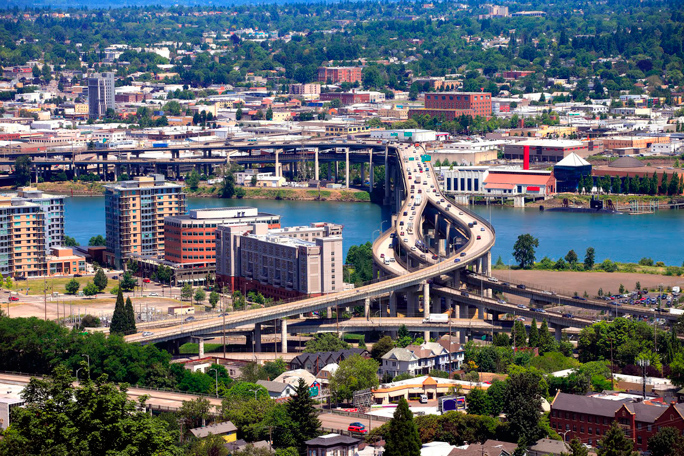
Portland, Estados Unidos
Es la ciudad más verde de Estados Unidos, el país que más contamina en el mundo. Portland, en el estado de Oregon, al noroeste del país, con más de medio millón de habitantes es un ejemplo de una política medioambiental responsable. Esta ciudad se destaca por el trasporte sostenible con una línea de tranvías y autobuses que se alimentan con biodiesel, además de varios ciclorrutas y áreas verdes por toda la ciudad que en su mayoría se alimentan de energías renovables.

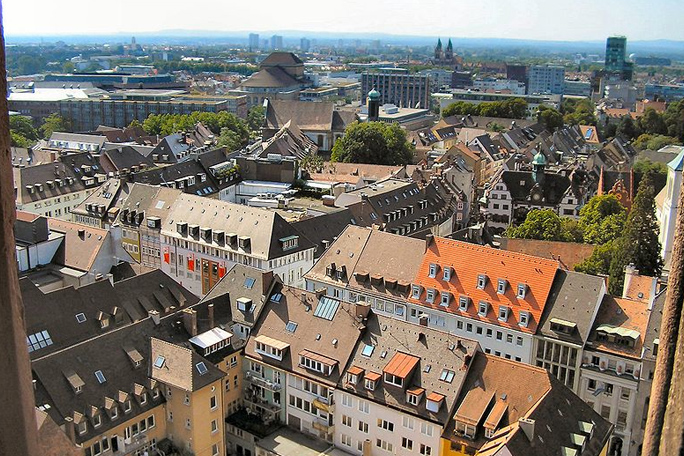
Friburgo, Alemania
Esta ciudad fue reconstruida después de la segunda guerra mundial, desde que se comenzó el diseño fue pensado con los principios del desarrollo sostenible, hay muchas zonas de la ciudad donde no se permiten los coches y es una de las más limpias del mundo. Los ciudadanos y el gobierno local tienen como objetivo reducir sus emisiones de CO2 aplicando una serie de políticas para obtener energía minimizando el impacto sobre el medio ambiente. El diseño urbanístico con 160 Kms de ciclovías, programas de energía solar, eficiencia energética y de transporte aplicado en Friburgo figuran entre los mejores de Europa. Cuenta, además, con un barrio solar con el concepto “energie-plus”, que quiere decir que produce más energía que la que consume, manteniendo un intercambio con la red eléctrica convencional.

Zermatt, Suiza
A 4 mil metros de altura y rodeado de montañas, la única forma de llegar a la ciudad es en tren, esta ciudad suiza tiene el privilegio de un centro urbano libre de coches. Los únicos vehículos que circulan son eléctricos. Es uno de los lugares turísticos para aficionados de la naturaleza, ideal para la práctica de deportes como el esquí, el senderismo y el montañismo.

Montreal, Canadá
El gobierno de Montreal es uno de los más comprometidos en la lucha contra el cambio climático, lo demuestran sus programas y estilo de vida de sus ciudadanos. El gobierno de Montreal ha creado la Campaña Internacional de Acción Climática (CAQ) para conseguir algunos de los propósitos ecologistas.

Austin, Estados Unidos
Esta ciudad cuenta con más de 200 parques y reservas, y su modelo de reciclaje es admirado en todo el mundo, todos dirigidos por Ecology Action, una organización que trabaja sin fines lucrativos. Festivales verdes y la Fiesta de los alimentos ecológicos se celebran en esta ciudad. Austin es el hogar de Whole Foods, que se ha convertido en un líder en la lucha contra el uso de los combustibles fósiles.

viernes, 1 de febrero de 2013

Lights out – France to force shops and offices to go dark overnight

ORIGINAL: The Guardian
Katie Davies guardian.co.uk
30 January 2013

French light pollution law is expected to save 250,000 tonnes of C02 a year
France's light pollution law comes into effect on 1 July. Photograph: Guardian
Shops and offices throughout France will be forced to turn off their lights overnight in a bid to fight light pollution, the country's environment ministry has announced.

Under the new law, which comes into effect on 1 July, lights in shop window displays will be turned off at 1am. Interior lights in offices and other non-residential buildings will have to be switched off an hour after the last employee leaves. Local councils will be able to make exceptions for Christmas and other special occasions, and in certain tourist or cultural areas.

The move, announced on Wednesday, is expected to save 250,000 tonnes of CO2 – enough energy to power 750,000 French households for a year.

The French ecology minister, Delphine Batho, said she hoped the law would change attitudes in France and help the country become a pioneer in reducing light pollution.

jueves, 31 de enero de 2013

Cómo crear un mundo más sostenible apoyado en la tecnología

*Por Carla Belitardo, directora de Sustentabilidad y Responsabilidad Corporativa de Ericsson para Latinoamérica.

Mucho se ha dicho acerca de que la tecnología ayudaría al mundo a ser más sostenible, pero muy pocos se han puesto en la tarea de contar qué se está haciendo para que esto sea una realidad.

Como parte del sector de las TIC, como pionero de la transformación, la estrategia de Ericsson habla del futuro como una sociedad conectada, desarrollar estrategias de comunicación entre todos los actores, y ofrecer soluciones tecnológicas que transformen y hagan progresar la sociedad. Ericsson considera que la dispersión de la banda ancha, incluyendo a la comunidad, promueve la inclusión social. La Sociedad Conectada en 2020 tendrá muchos equipos conectados entre sí: teléfonos, computadores, neveras, carros, móviles, tabletas… en otras palabras: todo lo que se beneficia de alguna forma de conexión, se conectará y formará parte de esta Sociedad Conectada.

Para llevarlo a la práctica, el desarrollo sustentable tiene un papel integral en cinco principales estrategias:

  • comunicación para todos, 
  • reducción del impacto medioambiental, 
  • facilitar una economía con bajo carbono, 
  • ejercer negocio de manera responsable y 
  • liderar con valores
Como ya hemos visto en muchos proyectos hechos realidad en el mundo, mediante el uso de la banda ancha se hace frente a la pobreza, se colabora para que los derechos humanos se respeten, se entregan insumos reales para reducir el cambio climático y en general las emisiones de carbono; mejor dicho se ha ido superando otros desafíos tecnológicos, de los que sabemos son una fuerza de cambio positivo y duradero.

¿Pero que hacemos?
Como hemos mencionado anteriormente poner en práctica todo esto es más complicado de los que muchos de ustedes piensan. Por un lado estamos activamente en contacto con actores de desarrollo sostenible como agencias nacionales e internacionales, bancos de desarrollo y ONG, por mencionar solo unos pocos. Por otro lado, trabajamos con otras empresas líderes de diferentes sectores buscando oportunidades de cooperación.

Tenemos varios proyectos que se están desarrollando e implementado en América Latina y en el mundo en general. En la región, por ejemplo, tenemos proyectos de educación en marcha y acabamos de implementar un proyecto exitoso de transporte público.

Con estos proyectos, que muchos son vistos como “piloto”, la idea es demostrar que cuando se implementan las TIC en diferentes áreas de sociedad se pueden ver los resultados prometidos. Con esto queremos catalizar el cambio en nuestra sociedad que permite que las TIC asuman un papel natural y que formen parte de distintos sectores de la economía. Esperamos que estos proyectos pilotos “pavimenten el camino” hacia la implementación de las TIC en mayor escala para ver más adelante resultados impactantes.

Impacto real y baja del carbono
Cuando hablamos del impacto de las TIC en la sociedad lo que logramos es dirigir la transición hacia una economía baja en carbono, a través de una mayor eficiencia de los recursos. Este sector de las telecomunicaciones y la tecnología contribuye con alrededor del 2 por ciento de las emisiones globales de dióxido de carbono, pero potencialmente puede compensar una parte significativa del 98 por ciento restante de otras industrias.

El reporte Smart2020 calcula que en el año 2020 las TIC podrían ser responsables de la reducción del 15 por ciento en las emisiones de dióxido de carbono. Esto representa un reto y oportunidad enorme para nuestro sector.

Las TIC han transformado la forma en que nos comunicamos, cómo trabajamos y cómo vivimos nuestras vidas ligados a una sociedad conectada, la cual va a impactar a otros sectores de la economía que hoy no hacen el uso apropiado de las Tecnologías de la información y las Telecomunicaciones.

El papel principal de estas empresas en la sociedad del futuro es mejorar la calidad, eficiencia y productividad. Eso, en práctica, se calcula en ahorros de recursos consumidos, en el uso de la energía, en la reducción en la utilización de la materia prima, que día a día eleva sus costos, pero que con una buena estrategia e implementación de tecnología si se justifica la inversión.

Como ejemplos de estos sectores que van a ser impactados podemos enumerar algunos: transporte público, la red de energía eléctrica, el sector de construcción e infraestructura, logística, educación, salud y agricultura, entre otros. Y de eso se trata la Sociedad Conectada: cómo nuestras vidas pueden cambiar y mejorar el entorno sustentable implementando las TIC, que de seguro tendrán un papel clave en todas las áreas de las empresas.

En los últimos años el gobierno colombiano ha enfocado sus esfuerzos en el sector TIC y particularmente en un programa llamado Computadores para Educar. Pero lo más importante es que están aunando esfuerzos en proyectos de conectividad rural con fibra óptica, haciendo grandes inversiones en dinero. Para Ericsson esta clase de iniciativas son fundamentales porque permiten una mayor conectividad rural, gracias a que las regiones elegidas están localizadas en sectores apartados del país. Estamos siguiendo el desarrollo de estas actividades en Colombia con mucha atención y vemos grandes oportunidades allí para ofrecer nuestros servicios.

lunes, 10 de diciembre de 2012

To Stop Climate Change, Students Aim at College Portfolios

ORIGINAL: NYTimes
Published: December 4, 2012

Stephen Maturen for The New York Times. Students in Minneapolis, seeking steps to cut atmospheric carbon levels to 350 parts per million, known as the safe level.
SWARTHMORE, Pa. — A group of Swarthmore College students is asking the school administration to take a seemingly simple step to combat pollution and climate change: sell off the endowment’s holdings in large fossil fuel companies. For months, they have been getting a simple answer: no.

Stephen Maturen for The New York Times. Bill McKibben, a writer turned advocate for carbon reduction, is on a national tour to build support for the divestment campaign.

As they consider how to ratchet up their campaign, the students suddenly find themselves at the vanguard of a national movement.

In recent weeks, college students on dozens of campuses have demanded that university endowment funds rid themselves of coal, oil and gas stocks. The students see it as a tactic that could force climate change, barely discussed in the presidential campaign, back onto the national political agenda.

“We’ve reached this point of intense urgency that we need to act on climate change now, but the situation is bleaker than it’s ever been from a political perspective,” said William Lawrence, a Swarthmore senior from East Lansing, Mich.

Students who have signed on see it as a conscious imitation of the successful effort in the 1980s to pressure colleges and other institutions to divest themselves of the stocks of companies doing business in South Africa under apartheid.

Associated Press. Demonstrators in 1978, protesting Harvard’s refusal to divest itself of stocks owned in companies operating in South Africa.
A small institution in Maine, Unity College, has already voted to get out of fossil fuels. Another, Hampshire College in Massachusetts, has adopted a broad investment policy that is ridding its portfolio of fossil fuel stocks.

“In the near future, the political tide will turn and the public will demand action on climate change,” Stephen Mulkey, the Unity College president, wrote in a letter to other college administrators. “Our students are already demanding action, and we must not ignore them.”

But at colleges with large endowments, many administrators are viewing the demand skeptically, saying it would undermine their goal of maximum returns in support of education. Fossil fuel companies represent a significant portion of the stock market, comprising nearly 10 percent of the value of the Russell 3000, a broad index of 3,000 American companies.

No school with an endowment exceeding $1 billion has agreed to divest itself of fossil fuel stocks. At Harvard, which holds the largest endowment in the country at $31 billion, the student body recently voted to ask the school to do so. With roughly half the undergraduates voting, 72 percent of them supported the demand.

“We always appreciate hearing from students about their viewpoints, but Harvard is not considering divesting from companies related to fossil fuels,” Kevin Galvin, a university spokesman, said by e-mail.

Several organizations have been working on some version of a divestment campaign, initially focusing on coal, for more than a year. But the recent escalation has largely been the handiwork of a grass-roots organization, 350.org, that focuses on climate change, and its leader, Bill McKibben, a writer turned advocate. The group’s name is a reference to what some scientists see as a maximum safe level of carbon dioxide in the atmosphere, 350 parts per million. The level is now about 390, an increase of 41 percent since before the Industrial Revolution.

Mr. McKibben is touring the country by bus, speaking at sold-out halls and urging students to begin local divestment initiatives focusing on 200 energy companies. Many of the students attending said they were inspired to do so by an article he wrote over the summer in Rolling Stone magazine, “Global Warming’s Terrifying New Math.”

Speaking recently to an audience at the University of Vermont, Mr. McKibben painted the fossil fuel industry as an enemy that must be defeated, arguing that it had used money and political influence to block climate action in Washington. “This is no different than the tobacco industry — for years, they lied about the dangers of their industry,” Mr. McKibben said.

Eric Wohlschlegel, a spokesman for the American Petroleum Institute, said that continued use of fossil fuels was essential for the country’s economy, but that energy companies were investing heavily in ways to emit less carbon dioxide.

In an interview, Mr. McKibben said he recognized that a rapid transition away from fossil fuels would be exceedingly difficult. But he said strong government policies to limit emissions were long overdue, and were being blocked in part by the political power of the incumbent industry.

Mr. McKibben’s goal is to make owning the stocks of these companies disreputable, in the way that owning tobacco stocks has become disreputable in many quarters. Many colleges will not buy them, for instance.

Mr. McKibben has laid out a series of demands that would get the fuel companies off 350.org’s blacklist. He wants them to stop exploring for new fossil fuels, given that they have already booked reserves about five times as large as scientists say society can afford to burn. He wants them to stop lobbying against emission policies in Washington. And he wants them to help devise a transition plan that will leave most of their reserves in the ground while encouraging lower-carbon energy sources.

“They need more incentive to make the transition that they must know they need to make, from fossil fuel companies to energy companies,” Mr. McKibben said.

Most college administrations, at the urging of their students, have been taking global warming seriously for years, spending money on steps like cutting energy consumption and installing solar panels.

The divestment demand is so new that most administrators are just beginning to grapple with it. Several of them, in interviews, said that even though they tended to agree with students on the seriousness of the problem, they feared divisive boardroom debates on divestment.

That was certainly the case in the 1980s, when the South African divestment campaign caused bitter arguments across the nation.

The issue then was whether divestment, potentially costly, would have much real effect on companies doing business in South Africa. Even today, historians differ on whether it did. But the campaign required prominent people to grapple with the morality of apartheid, altering the politics of the issue. Economic pressure from many countries ultimately helped to force the whites-only South African government to the bargaining table.

Mr. Lawrence, the Swarthmore senior, said that many of today’s students found that campaign inspirational because it “transformed what was seemingly an intractable problem.”

Swarthmore, a liberal arts college southwest of Philadelphia, is a small school with a substantial endowment, about $1.5 billion. The trustees acceded to divestment demands during that campaign, in 1986, but only after a series of confrontational tactics by students, including brief occupations of the president’s office.

The board later adopted a policy stating that it would be unlikely to take such a step again.

“The college’s policy is that the endowment is not to be invested for social purposes” beyond the obvious one of educating students, said Suzanne P. Welsh, vice president for finance at the school. “To use the endowment in support of other missions is not appropriate. It’s not what our donors have given money for.”

About a dozen Swarthmore students came up with the divestment tactic two years ago after working against the strip mining of coal atop mountains in Appalachia, asking the school to divest itself of investments in a short list of energy companies nicknamed the Sordid 16.

So far, the students have avoided confrontation. The campaign has featured a petition signed by nearly half the student body, small demonstrations and quirky art installations. The college president, a theologian named Rebecca Chopp, has expressed support for their goals but not their means.

Matters could escalate in coming months, with Swarthmore scheduled to host a February meeting — the students call it a “convergence” — of 150 students from other colleges who are working on divestment.

Students said they were well aware that the South Africa campaign succeeded only after on-campus actions like hunger strikes, sit-ins and the seizure of buildings. Some of them are already having talks with their parents about how far to go.

“When it comes down to it, the members of the board are not the ones who are inheriting the climate problem,” said Sachie Hopkins-Hayakawa, a Swarthmore senior from Portland, Ore. “We are.”
Brent Summers contributed reporting from Burlington, Vt.