Mostrando entradas con la etiqueta Antropología. Mostrar todas las entradas

lunes, 24 de marzo de 2014

Scientists can now create accurate mugshots using only DNA


Even though DNA analysis is still stuck in the past when applied by law enforcement today, scientists are still pushing the envelope with work that can turn DNA into a more effective investigative tool. In a new study published this week, researchers at Penn State and the Catholic University of Leuven (KUL) created a statistical model for mapping accurate facial structures using racial, gender, and genetic markers. It's hoped that the model not only be used for forensic analysis, but also for creating a clearer picture of humanity's ancestors.

PUSHING FORENSICS FORWARD
The team, led by geneticist Mark Shriver and imaging specialist Peter Claes, enlisted 600 volunteers with mixed European and West African ancestry to account for variations in facial structure. After capturing a 3D image of each volunteer's face, the researchers created a mesh of 7000 points that were used to precisely measure how genes attached to ancestry and gender affect the face's structural makeup.

They then tested each volunteer for 76 genetic variants that could cause facial abnormalities when mutated, and were able to isolate 20 that could be reliably traced back to facial shape. This method has already proven to be more accurate than previous models, and, according to New Scientist, Shriver is already using the research to aid in two serial rape cases in Pennsylvania. Perhaps even more promising, Shriver hopes that the tool can be used to improve images for ancient hominins, whose accepted appearance today is mostly the result of educated guesswork based on fossilized remains.

There's more work to be done, however. The research team now needs to conduct similar studies in different populations and successfully replicate their findings. Meanwhile, the results of this kind of facial analysis are not admissible in court, but can be used as a guide for identifying potential suspects. However, if the legal system can be cajoled into making better use of computer-based DNA analysis, it's easy to imagine this research serving a useful function in the future.

VIA GIZMODO


ORIGINAL:  The Verge
March 21, 2014

martes, 11 de marzo de 2014

Meet X-woman: a possible new species of human

Home sweet home. DNA analysis shows a finger bone discovered in the Denisova cave, southern Siberia, may be from a previously unrecognised, extinct human species 
(Image: Johannes Krause, Max Planck Institute for Evolutionary Anthropology) 

Room with a view. X-woman's stomping ground. 
(Image: Johannes Krause, Max Planck Institute for Evolutionary Anthropology) 


The human family tree may be in for a dramatic rewrite. DNA collected from a fossilised finger bone from Siberia shows it belonged to a mysterious ancient hominid – perhaps a new species.

"X-woman", as the creature has been named, last shared an ancestor with humans and Neanderthals about 1 million years ago but is probably different from both species. She lived 30,000 to 50,000 years ago.

"This is the tip of the iceberg," says Chris Stringer, a palaeoanthropologist at the Natural History Museum in London who was not involved in the find. More hominids that are neither Neanderthal nor human are likely to be discovered in coming years, particularly in central and eastern Asia, he says.

Roaming Asia
Previously, anthropologists thought that Neanderthals and humans were the only hominids roaming Europe and Asia during the late Pleistocene. The discovery of 17,000-year-old Homo floresiensis – the "hobbit" – dispelled that notion, but many anthropologists look on H. floresiensis as an anomaly, isolated from the human–Neanderthal hegemony on the mainland.

The newly discovered creature, which probably lived in close proximity to humans and Neanderthals, suggests that things were not that simple. "The picture that's going to emerge in the next years is a much more complex one," says Svante Pääbo, a palaeogeneticist at the Max Planck Institute for Evolutionary Anthropology in Leipzig, Germany.

Pääbo and colleague Johannes Krause discovered the specimen in the Denisova cave in southern Siberia, and sequenced DNA from its mitochondria. It is impossible to say what the creature would have looked like based on a single pinkie bone, so Pääbo and Krause are hesitant to call it a new species.

Though the creature's sex is not known, they are for now referring to her as X-woman because mitochondria are inherited maternally. "No one really knows what she would look like," Pääbo says.

X-woman's mitochondria differ from a human's at nearly 400 DNA letters; Neanderthals show only half as many differences. 

African ancestry

This suggests that X-woman shared an African ancestor with the two other species somewhere between 780,000 and 1.3 million years ago, before striking north and east. This expansion is distinct from the one that occurred around 500,000 years ago that gave rise to Neanderthals, and from our own species' peregrinations from about 50,000 years ago.

The split seems too recent for X-woman to be related to Homo erectus, which began moving out of Africa around 2 million years ago.

However, Clive Finlayson, a palaeoanthropologist at the Gibraltar Museum, says the idea that there were just a handful of hominid migrations out of Africa is a vast oversimplification that ignores how other species expand their range over time. "To talk about one or two expansions from a particular region doesn't make any biological sense," he says. "There were probably hundreds, thousands of migrations out of Africa."

Though there is no complete skeleton for X-woman, her lineage could mean she is related to any number of more complete specimens recovered in Asia that don't neatly fit human or Neanderthal body patterns, says Stringer. "This new DNA work provides an entirely new way of looking at the still poorly understood evolution of humans in central and eastern Asia."

Nuclear DNA

Pääbo and his team are hesitant to speculate too much about X-woman's nature until they obtain DNA sequences from the nuclear genome's 3.1 billion letters. That project is already under way, and the first results should come within months. Pääbo's team will likely want X-woman's genome to answer the same questions they are asking of the Neanderthal genome, which is due for publication soon.

For instance, humans and Neanderthals share unique mutations in a gene linked to speech and language called FOXP2. If X-woman's sequence is complete enough, they will be able to determine if it possesses the same change – and potentially the capability for language.

There is no sign in X-woman's mitochondrial genome that her kind interbred with humans or Neanderthals, but the nuclear genome will offer a far better chance of finding out.

Neanderthal neighbours

Given the close proximity of Neanderthal remains dated to the same time and artefacts that appear to be human, interbreeding is not unlikely, Pääbo says. "Having in about the same time window three different forms [of hominids], increases the potential of all types of interactions, including genetic."

X-woman's mitochondrial DNA begins to paint a picture of what she was like, if only a blurry one. The protein-coding genes do not contain any surprising mutations that would cause disease.

Finlayson would love to link X-woman to other bones, and even stone technologies, though the chances of doing this may be slim. "Ideally we would like to have all that information, but we don't. The fact that we've got this genetic result is important, it's very important."

Pääbo hopes that such a connection will come through sequencing DNA from other Asian hominid fossils. But he, too, is prepared for the possibility that such bones may never turn up.

He sees in X-woman the beginning of a new way of understanding human history. "It gives another picture of our past, a molecular picture of the evolution of our genome" which he says is in some aspects even more conclusive than fossils.

Journal reference: Nature, DOI: 10.1038/nature08976

ORIGINAL: New Scientist
by Ewen Callaway
18:00 24 March 2010 

viernes, 7 de febrero de 2014

Ciencia movida: Mis 10 noticias científicas de la semana (18-23)

1. El intestino tiene clave frente al cáncer
Una población de microorganismos que obtienen su comida y otros beneficios de otros organismos que viven en el intestino se requiere para una buena respuesta a la terapia contra el cáncer, según un estudio hecho con ratones por científicos del Instituto Nacional del Cáncer en Estados Unidos. Se encontró que ratones libres de gérmenes o tratados con antibióticos para eliminar las bacterias intestinales se afectaban en su capacidad de responder a la inmunoterapia que disminuye el crecimiento del cáncer y prolonga la supervivencia. Además, se reducía la capacidad de responder a drogas de quimioterapia como oxaliplatino y cisplatino. Los hallazgos fueron presentados en Science y comienzan a preguntarse si será igual en humanos.
2. La explosión más potente jamás registrada
Si hubiera sucedido cerca, la Tierra se hubiera achicharrado y ya seríamos materia muerta. Sí. En abril se detectó una poderosa explosión de rayos gamma, las más fuertes del universo. Análisis presentados esta semana indican que nunca se había visto una así. Ocurrió a 3.700 millones de años luz, o sea se produjo en ese momento pero su luz solo llegó ahora. Fue producida por una estrella que colapsó, 20 a 30 veces más masiva que el Sol metida en un tamaño solo dos veces más grande que nuestra estrella. Aunque se han detectado centenares de explosiones gamma, nunca ‘tan cerca’, por lo que se pudo registrar toda su intensidad. Además ha sido la de mayor duración. Los análisis indican que habrá que reescribir las teorías sobre esta clase de eventos cósmicos.
3. Al fin se les vio la cara
Cada segundo miles de millones de neutrinos atraviesan cada centímetro cuadrado de la Tierra, pero son tan esquivos que rara vez interactúan con la materia. Pues bien, el detector de neutrinos conocido como IceCube, una estructura enterrada en la Antártida, detectó 28 neutrinos de origen astrofísico en aceleradores cósmicos. Esas partículas pueden tener información sobre los fenómenos más energéticos y lejanos del universo como supernovas, agujeros negros, púlsares, núcleos galácticos activos y otros. La mayoría se origina en el Sol o en la atmósfera terrestre, por lo que el IceCube fue concebido para detectar los que provienen de otras regiones del espacio. Los observados tenían una energía de más de un millón de veces aquellos detectados tras la supernova de 1987 en la Gran Nube de Magallanes.
4. Este virus se especializó en crear cáncer
Tras años de estudio, Maura Gillison tuvo resultados concluyentes: No queda duda que personas portadoras del virus del papiloma humano en sus bocas o garganta son 15 veces más proclives a desarrollar cánceres de cabeza o cuello y sobre eso volvió un artículo aparecido en Nature. No solo los provocan sino que esa incidencia viene al alza de manera silenciosa. El hallazgo pone de manifiesto de paso el riesgo que podría tener el sexo oral. Ahora investigan si también causa otros tipos de cáncer.
5. El viaje fue hace 24.000 años
El estudio del ADN de un esqueleto de un joven que se cree vivió hace 24.000 años sugiere que 30% de los americanos modernos provino de este banco genético de personas que habitaban Siberia de acuerdo con un estudio publicado en Nature. Los primeros habitantes del continente habrían estado en aquella época en Beringia e ingresaron a Alaska, lo que además sitúa 10.000 años antes el poblamiento de América, que usualmente se ha situado alrededor de hace 14.000 años.
6. Nos dejaron los virus
Se fueron pero nos los dejaron: virus antiquísimos de los Neandertales han sido hallados en el ADN de los humanos modernos reveló un estudio publicado en Current Biology. Los investigadores compararon información genética de fósiles de Neandertales y otro grupo arcaico, los denisovanos y hallaron evidencias de que virus que estos portaban se encuentran en el genoma humano, habiéndose originado hace más de 500.000 años. El vínculo podría conducir a estudiar posibles relaciones entre los virus del pasado y enfermedades como el cáncer y VIH.
7. Le quitaron el manto de la invisibilidad
De los dos grandes tipos de VIH, solo el 1 causa sida en personas infectadas que no reciben tratamiento. Un estudio publicado en el journal Inmunity reveló cómo el VIH-1 escapa a la detección al hacerse invisible al sistema inmunitario de las personas, mientras el VIH-2 genera una respuesta inmunitaria. El entendimiento de cómo funciona ese manto de la invisibilidad del VIH-1 podría derivar en el desarrollo de vacunas efectivas. El virus usa una de sus proteínas para activar su ‘invisibilidad’. Los investigadores mostraron además cómo modificar el virus para que sea reconocido y genera una respuesta efectiva del sistema inmunitario.
8. Con frío funciona mejor
Un estudio publicado en Proceedings of the National Academy of Sciences reveló que los ratones en ambientes fríos combaten mejor el cáncer que en ambientes más cálidos. En un laboratorio con condiciones entre 30-31 grados no fueron tan efectivos para combatir el cáncer, pero en temperaturas entre 20 y 26 grados mostraron menor formación del tumor y menos metástasis. ¿Qué quiere decir eso? Todavía poco, pero podría ser un nuevo filón para investigaciones en humanos.
9. Dos genes bien fértiles 
Solo dos genes en el cromosoma Y permiten que los machos sean fértiles. En un estudio con ratones publicado en Science se encontró que ratones sin el cromosoma Y pero portando los genes Sry y Eif2s3y de ese cromosoma podían producir espermátidos (célula haploide masculina que resulta de la división de los espermatocidos secundarios) introducidos en los óvulos de la hembra mediante inyección, producían embriones que podían ser trasplantados en los oviductos de las hembras para producir descendientes vivos.
10. Los minirriñones 
Los minirriñones anunciados esta semana se unieron al grupo de órganos funcionales progenitores cuando científicos españoles y norteamericanos describieron la diferenciación de células madre humanas en células tipo progenitoras renales. El artículo apareció en Nature Cell Biology. Antes otros grupos habían descrito organoides cerebrales y estructuras hepáticas utilizando células madre. De a poco se arma el cuerpo.

ORIGINAL: Ciencia Al Día
noviembre 23, 2013

jueves, 6 de febrero de 2014

IBM Brings Watson to Africa for Project Lucy

Using cognitive systems to tackle a continent’s grand challenges

Lucy is the name given to the earliest known human descendant, whose remains were discovered in Africa 40 years ago. Today, IBM Watson, the first cognitive computing system, is coming to Africa as part of a 10-year, $100 million initiative to address the fast-growing continent's greatest business and societal challenges. With "Project Lucy", IBM researchers in Africa, together with their business and academic partners, will use Watson and related cognitive technologies to learn and discover insights from Big Data and develop commercially viable solutions to Africa’s grand challenges in healthcare, education, water and sanitation, human mobility and agriculture.

"In the last decade, Africa has been a tremendous growth story, yet the continent's challenges, stemming from population growth, water scarcity, disease, low agricultural yield and other factors are impediments to inclusive economic growth," said Kamal Bhattacharya, director, IBM Research - Africa.

"With the ability to learn from emerging patterns and discover new correlations, Watson's cognitive capabilities hold enormous potential in Africa - helping it to achieve in the next two decades what today's developed markets have achieved over two centuries."

To get the big picture of these challenges and opportunities, IBM asked people from every African country to send in photos of their environments. The response was overwhelming: more than 1,200 photos from 930 participants tell a diverse technology and innovation story. The slideshow below is a selection that-illustrates this diversity and the mission of IBM Research – Africa. Contest winners will be named on February 28, 2014.

Nairobi is a city hard at work 24 hours every day. It is obvious when you look at the city at night from any of the vantage points. I shot this from the KICC helipad one night. Seven out of the world's 10 fastest growing economies will be African nations over the next ten years; Nairobi is rapidly emerging as one of Africa's business and technology hubs. Photo Mutua Matheka, Kenya City Lights.

ORIGINAL: IBM Research

viernes, 31 de enero de 2014

The genetic contribution Neanderthal man made to modern humanity is clearer

Kissing cousins

HOW Neanderthal are you? That question sounds vaguely insulting. But unless you are African, or of recent African ancestry, the answer is likely to be 1-3%.

Though Homo sapiens is the only type of human around at the moment, that was not true until recently. Sixty thousand years ago, when modern humans first left Africa, they encountered other species of humanity, such as Neanderthals (imagined above, in an artist’s interpretation), in Europe and Asia. In some cases, they interbred with them. The genetic traces of those encounters remain in modern human genomes. And two studies, one just published in Nature, and one in Science, have now looked in detail at this miscegenation, and tried to understand its consequences.


The Nature study, conducted by Sriram Sankararaman of Harvard Medical School and his colleagues, looked at the genomes of 1,004 living people of European and Asian descent and compared them with Neanderthal DNA from a 50,000-year-old toe bone found in a Siberian cave, and also with the genomes of 176 west Africans. This latter group, Dr Sankararaman assumed, could have little Neanderthal DNA in them because Neanderthals, as far as can be determined from the fossil record, lived only in Europe and western Asia.

Dr Sankararaman and his colleagues certainly did find plenty of DNA which seems to have come from Neanderthals in their Eurasians. Tellingly, it was not sprinkled evenly throughout the modern human genome. That let them make educated guesses about the effects it is having on those who carry it. For instance, genes affecting the production of keratin—an important component of hair and skin—showed more Neanderthal influence than most. Neanderthals, whose homeland was much colder then than it is now because of the ice age, were hairier (and thus better insulated) than Homo sapiens. Retaining Neanderthal traits of this sort, in an African species that was trying to make good in sub-Arctic conditions, would thus be encouraged by natural selection.

More surprisingly, Dr Sankararaman also found Neanderthal DNA in genes associated with diabetes, Crohn’s disease, lupus and even the propensity to smoke. This does not necessarily mean such DNA was bad for those who inherited it. A gene which increases the risk of diabetes in modern circumstances of abundant food might, for example, have had benefits in a more austere environment.

Indeed, truly deleterious DNA would be expected to be noticeable by its absence, because natural selection would have worked to eliminate it in the 30,000 years since Neanderthals died out. And Dr Sankararaman found evidence for exactly that, as well.

There is, for example, little Neanderthal DNA on the X chromosome (which, along with the Y chromosome, determines an individual’s sex). Nor is there much in genes that are expressed in the testicles. Studies from other hybrid animals, which are frequently sterile, suggest genes which reduce male fertility are often found on the X chromosome. Since few things are a bigger evolutionary no-no than being unable to produce children, tremendous selective pressure would have existed to remove the offending DNA from the hybrid descendants of Neanderthals and Homo sapiens.

The study published in Science, by Benjamin Vernot and Joshua Akey of the University of Washington, in Seattle, reaches similar conclusions to Dr Sankararaman’s. Dr Vernot and Dr Akey hunted down Neanderthal DNA in the genomes of 665 Europeans and East Asians. They, too, found evidence of its having inserted itself into genes associated with the skin, and that not all of the newly arrived genetic material is helpful to its current bearers.

They made other discoveries, too. With the help of computer models, they concluded that there were probably several pulses of interbreeding over the millennia, rather than a steady stream of it. Both they and Dr Sankararaman also found that, on average, East Asians have more Neanderthal DNA than Europeans do—which is odd, because Neanderthals are not known to have lived in East Asia.

The ghost in the machine
Dr Vernot and Dr Akey also used their data to try to improve understanding of the Neanderthal genome itself, by combining the bits and bobs scattered among modern humans. Though both their study and Dr Sankararaman’s depended on being able to identify what was Neanderthal by comparing modern human genomes with fossil DNA, the fossil material available is imperfect. Looking at the exact sequence of DNA “letters” (the chemical bases which carry the genetic message) in areas identified as Neanderthal in modern genomes can therefore improve understanding of the Neanderthal original.

Crucially, though the amount of Neanderthal DNA in any individual is small, the exact bits vary a lot from person to person. Look at enough people, then, and it becomes possible to rebuild quite large swathes of the Neanderthal genome. Dr Vernot and Dr Akey reckon that from their sample of 665 they have recovered around 20% of it.

This is an impressive figure for an extinct species. It shows just how much the concept of a “species” is a construct of human thinking rather than a truly natural category. Technically, Neanderthals may be gone. But their DNA ghosts linger on.

From the print edition: Science and technology


ORIGINAL: The Economist
Feb 1st 2014

domingo, 19 de enero de 2014

Real King Kong may have been brought down by fruit


The extinction of Gigantopithecus has been blamed on switching to a fruit-filled diet (Image: Natural History Museum, London/Science Photo Library)

It was fruit killed the beast. Gigantopithecus, the largest known ape, may have been wiped out by a diet of fruit containing little nourishment.

Nearly 80 years ago, Dutch anthropologist Gustav Heinrich Ralph von Koenigswald discovered a giant human-like tooth in a drug store in Hong Kong, and named the animal it came from Gigantopithecus.

Since then, thousands more large teeth – and three jawbones – have come to light in southern Asia. They show that Gigantopithecus stood up to 3 metres tall, making it the largest known ape, and was probably related to orang-utans. But why it went extinct remains unclear.

Now Yingqi Zhang of the Chinese Academy of Sciences's Key Laboratory of Evolutionary Systematics of Vertebrates in Beijing has analysed 17 newly discovered Gigantopithecus teeth. At less than 400,000 years old, they are among the youngest remains of the ape ever found, meaning they belonged to some of the last of the giant apes to walk the Earth.

Poor dental hygiene

Many of the teeth were eroded. This poor dental hygiene hints at a problem with their diet, says Zhang. "There was something wrong before Gigantopithecus's extinction, and I think it comes from the food."

The ape may have had to switch diet as the climate cooled and its preferred food – probably plants like bamboo – became rare. The teeth suggest it turned to less-nutritious fruit rich in enamel-eroding acids, says Zhang.

But fruit is good for most apes, says Kornelius Kupczik of the Max Planck Institute for Evolutionary Anthropology in Leipzig, Germany. "Chimpanzees eat a lot of fruits that are extremely bitter or acidic to the human palate," he says, yet their teeth don't rot much.

Journal reference: Quaternary International, DOI: 10.1016/j.quaint.2013.12.008


ORIGINAL: New Scientist
14 January 2014

domingo, 31 de marzo de 2013

First Love Child of Human, Neanderthal Found

ORIGINAL: Discovery
MAR 27, 2013


The skeletal remains of an individual living in northern Italy 40,000-30,000 years ago are believed to be that of a human/Neanderthal hybrid, according to a paper in PLoS ONE.

If further analysis proves the theory correct, the remains belonged to the first known such hybrid, providing direct evidence that humans and Neanderthals interbred. Prior genetic research determined the DNA of people with European and Asian ancestry is 1 to 4 percent Neanderthal.

The present study focuses on the individual’s jaw, which was unearthed at a rock-shelter called Riparo di Mezzena in the Monti Lessini region of Italy. Both Neanderthals and modern humans inhabited Europe at the time.

“From the morphology of the lower jaw, the face of the Mezzena individual would have looked somehow intermediate between classic Neanderthals, who had a rather receding lower jaw (no chin), and the modern humans, who present a projecting lower jaw with a strongly developed chin,” co-author Silvana Condemi, an anthropologist, told Discovery News.

Condemi is the CNRS research director at the University of Ai-Marseille. She and her colleagues studied the remains via DNA analysis and 3D imaging. They then compared those results with the same features from Homo sapiens.

The genetic analysis shows that the individual’s mitochondrial DNA is Neanderthal. Since this DNA is transmitted from a mother to her child, the researchers conclude that it was a “female Neanderthal who mated with male Homo sapiens.”

By the time modern humans arrived in the area, the Neanderthals had already established their own culture, Mousterian, which lasted some 200,000 years. Numerous flint tools, such as axes and spear points, have been associated with the Mousterian. The artifacts are typically found in rock shelters, such as the Riparo di Mezzena, and caves throughout Europe.

The researchers found that, although the hybridization between the two hominid species likely took place, the Neanderthals continued to uphold their own cultural traditions.

That's an intriguing clue, because it suggests that the two populations did not simply meet, mate and merge into a single group.


As Condemi and her colleagues wrote, the mandible supports the theory of "a slow process of replacement of Neanderthals by the invading modern human populations, as well as additional evidence of the upholding of the Neanderthals' cultural identity.”

Prior fossil finds indicate that modern humans were living in a southern Italy cave as early as 45,000 years ago. Modern humans and Neanderthals therefore lived in roughly the same regions for thousands of years, but the new human arrivals, from the Neanderthal perspective, might not have been welcome, and for good reason. The research team hints that the modern humans may have raped female Neanderthals, bringing to mind modern cases of "ethnic cleansing."

Ian Tattersall is one of the world’s leading experts on Neanderthals and the human fossil record. He is a paleoanthropologist and a curator emeritus at the American Museum of Natural History.

Tattersall told Discovery News that the hypothesis, presented in the new paper, “is very intriguing and one that invites more research.”

Neanderthal culture and purebred Neanderthals all died out 35,000-30,000 years ago.

Faces of Our Ancestors
Back In The Begining
Back in the Beginning. To put a human face on our ancestors, scientists from the Senckenberg Research Institute used sophisticated methods to form 27 model heads based on tiny bone fragments, teeth and skulls collected from across the globe. The heads are on display for the first time together at the Senckenberg Natural History Museum in Frankfurt, Germany. This model is Sahelanthropus tchadensis, also nicknamed "Toumai," who lived 6.8 million years ago. Parts of its jaw bone and teeth were found nine years ago in the Djurab desert in Chad. It's one of the oldest hominid specimens ever found. WASHINGTON STATE UNIVERSITY; SVEN TRAENKNER

Australopithecus Afarensis
Australopithecus afarensis. With each new discovery, paleoanthropologists have to rewrite the origins of man's ancestors, adding on new branches and tracking when species split. This model was fashioned from pieces of a skull and jaw found among the remains of 17 pre-humans (nine adults, three adolescents and five children) which were discovered in the Afar Region of Ethiopia in 1975. The ape-man species, Australopithecus afarensis, is believed to have lived 3.2 million years ago. Several more bones from this species have been found in Ethiopia, including the famed "Lucy," a nearly complete A. afarensis skeleton found in Hadar. MINNESOTA STATE UNIVERSITY; SVEN TRAENKNER

Australopithecus Africanus
Australopithecus africanus. Meet "Mrs. Ples," the popular nickname for the most complete skull of an Australopithecus africanus, unearthed in Sterkfontein, South Africa in 1947. It is believed she lived 2.5 million years ago (although the sex of the fossil is not entirely certain). Crystals found on her skull suggest that she died after falling into a chalk pit, which was later filled with sediment. A. africanus has long puzzled scientists because of its massive jaws and teeth, but they now believe the species' skull design was optimal for cracking nuts and seeds. PROCEEDINGS OF THE NATIONAL ACADEMY OF SCIENCE

Paranthropus Aethiopicus
Paranthropus aethiopicus. The skull of this male adult was found on the western shore of Lake Turkana in Kenya in 1985. The shape of the mouth indicates that he had a strong bite and could chew plants. He is believed to have lived in 2.5 million years ago and is classified as Paranthropus aethiopicus. Much is still unknown about this species because so few reamins of P. aethiopicus have been found. SMITHSONIAN MUSEUM; SVEN TRAENKNER (C), "SAFA

Paranthropus Boisei
Paranthropus boisei. Researchers shaped this skull of "Zinj," found in 1959. The adult male lived 1.8 million years ago in the Olduvai Gorge of Tanzania. His scientific name is Paranthropus boisei, though he was originally called Zinjanthropus boisei -- hence the nickname. First discovered by anthropologist Mary Leakey, the well-preserved cranium has a small brain cavity. He would have eaten seeds, plants and roots which he probably dug with sticks or bones. SVEN TRAENKNER (C), "SAFARI ZUM URMENSCHEN"

Homo Rudolfensis
Homo rudolfensis. This model of a sub-human species -- Homo rudolfensis -- was made from bone fragments found in Koobi Fora, Kenya, in 1972. The adult male is believed to have lived about 1.8 million years ago. He used stone tools and ate meat and plants. H. Rudolfensis' distinctive features include a flatter, broader face and broader postcanine teeth, with more complex crowns and roots. He is also recognized as having a larger cranium than his contemporaries. MINNESOTA STATE UNIVERSITY; SVEN TRAENKNER

Homo Ergaster
Homo ergaster. The almost perfectly preserved skeleton of the "Turkana Boy" is one of the most spectacular discoveries in paleoanthropology. Judging from his anatomy, scientists believe this Homo ergaster was a tall youth about 13 to 15 years old. According to research, the boy died beside a shallow river delta, where he was covered by alluvial sediments. Comparing the shape of the skull and teeth, H. ergaster had a similiar head structure to the Asian Homo erectus. SVEN TRAENKNER (C), "SAFARI ZUM URMENSCHEN"

Homo Heidelbergensis
Homo heidelbergensis. This adult male, Homo heidelbergensis, was discovered in in Sima de los Huesos, Spain in 1993. Judging by the skull and cranium, scientists believe he probably died from a massive infection that caused a facial deformation. The model, shown here, does not include the deformity. This species is believed to be an ancestor of Neanderthals, as seen in the shape of his face. "Miquelon," the nickname of "Atapuerca 5", lived about 500,000 to 350,000 years ago and fossils of this species have been found in Italy, France and Greece. SVEN TRAENKNER (C), "SAFARI ZUM URMENSCHEN"

Homo Neanderthalensis
Homo neanderthalensis. The "Old Man of La Chapelle" was recreated from the skull and jaw of a Homo neanderthalensis male found near La Chapelle-aux-Saints, in France in 1908. He lived 56,000 years ago. His relatively old age, thought to be between 40 to 50 years old, indicates he was well looked after by a clan. The old man's skeleton indicates he suffered from a number of afflictions, including arthritis, and had numerous broken bones. Scientists at first did not realize the age and afflicted state of this specimen when he was first discovered. This led them to incorrectly theorize that male Neanderthals were hunched over when they walked. SVEN TRAENKNER (C), "SAFARI ZUM URMENSCHEN" 

Homo Floresiensis
Homo Floresiensis. The skull and jaw of this female "hobbit" was found in Liang Bua, Flores, Indonesia, in 2003. She was about 1 meter tall (about 3'3") and lived about 18,000 years ago. The discovery of her species, Homo floresiensis, brought into question the belief that Homo sapiens was the only form of mankind for the past 30,000 years. Scientists are still debating whether Homo floresiensis was its own species, or merely a group of diseased modern humans. Evidence is mounting that these small beings were, in fact, a distinct human species. SVEN TRAENKNER (C), "SAFARI ZUM URMENSCHEN"

Homo sapiens
Homo sapiens. Bones can only tell us so much. Experts often assume or make educated guesses to fill in the gaps in mankind's family tree, and to develop a sense what our ancestors may have looked like. Judging from skull and mandible fragments found in a cave in Israel in 1969, this young female Homo sapien lived between 100,000 and 90,000 years ago. Her bones indicate she was about 20 years old. Her shattered skull was found among the remains of 20 others in a shallow grave. SVEN TRAENKNER (C), "SAFARI ZUM URMENSCHEN" 


This Week in Science 23-31 March

ORIGINAL: IFLS


Cancer genes: http://bit.ly/XkbFug
Magnetic charges of matter & antimatter:http://bit.ly/XBZbtN
Seven sex mating system: http://bit.ly/15ZOuVp
Down's Syndrome: http://bit.ly/105Cznm
Gene therapy: http://bit.ly/160HEz6
Neanderthal hybrid: http://bit.ly/YJxbVl

jueves, 24 de enero de 2013

Could a Surrogate Mother Deliver a Neanderthal Baby?

ORIGINAL: LiveScience
Marc Lallanilla, Life's Little Mysteries Assistant Editor
Date: 21 January 2013 Time: 10:49 AM ET

One scientist speculates that cloning a live Neanderthal might someday be feasible.
CREDIT: Mauro Cutrona 
In a controversial interview that has ignited commentary across the world, a respected Harvard professor of genetics has suggested an "extremely adventurous female human" might someday serve as surrogate mother for a cloned Neanderthal baby.

Besides saying that the cloning of a live Neanderthal baby would be possible in our lifetime, George Church told Der Spiegel magazine that using stem cells to create a Neanderthal could have significant benefits to society. "The first thing you have to do is to sequence the Neanderthal genome, and that has actually been done," Church said.

"The next step would be to chop this genome up into, say, 10,000 chunks and then ... assemble all the chunks in a human stem cell, which would enable you to finally create a Neanderthal clone," Church told Der Spiegel.

Scientists completed the first sequence of the Neanderthal genome in 2010, finding genetic evidence suggesting ancestors of modern humans successfully interbred with Neanderthals, at least occasionally. More recent research has suggested Neanderthal DNA makes up 1 percent to 4 percent of the genomes of modern Eurasians. [The 10 Biggest Mysteries of the First Humans]

The benefits, according to Church, include an increase in genetic diversity. "The one thing that is bad for society is low diversity," Church said. "If you become a monoculture, you are at great risk of perishing. Therefore the recreation of Neanderthals would be mainly a question of societal risk avoidance."

In his book "Regenesis: How Synthetic Biology Will Reinvent Nature and Ourselves" (Basic Books, 2012), Church writes, "If society becomes comfortable with cloning and sees value in true human diversity, then the whole Neanderthal creature itself could be cloned by a surrogate mother chimp — or by an extremely adventurous female human."

Church said in another interview that he isn't advocating for births of Neanderthal babies from human surrogate moms anytime soon, but that people should start discussing the idea today so we're prepared for the future. Even so, other scientists say the idea is not only tangled with ethical issues, but is scientifically impossible for the foreseeable future.

The ethics of human cloning

Not everyone, however, shares Church's interest in cloned Neanderthals, in light of the ethical issues involved.

"I don't think it's fair to put people ... into a circumstance where they are going to be mocked and possibly feared," bioethicist Bernard E. Rollin of Colorado State University in Fort Collins told the British newspaper The Independent.

It's also possible a Neanderthal baby would lack immunity to contemporary infectious diseases, and therefore might not survive, the Independent reports. Neanderthals, our closest known genetic relatives, died off some 30,000 years ago. Recent research, however, has suggested Neanderthals and other extinct humans such as the Denisovans might have endowed some humans with robust immune systems.

"Setting aside the ethical issues behind creating the lone survivor of an extinct human species, doomed to be a freak under the microscope of celebrity … I have to question Dr. Church's contention that it would really be that easy to clone a Neanderthal," Alex Knapp said in Forbes. [The 9 Freakiest Medical Conditions]

"Other mammals have been cloned. But at a cost — clones often experience a host of health problems," Knapp said. "For example, the first cloned sheep, Dolly, was one of 29 cloned embryos. He was the only one to survive."

Any surrogate mothers chosen to give birth to a Neanderthal clone might also suffer, Knapp said. "The reality is that success would require dozens of women — many of whom would almost certainly go through the trauma of miscarriage and stillbirths that appear to be inevitable when it comes to cloning.

"The ethical implications of just this simple aspect of the process are pretty damning," Knapp told Forbes.

Were Church's comments misinterpreted?
Church's statements in the Der Spiegel interview have been wildly distorted, according to some observers. "There's always a danger in taking one little comment and blowing it out of proportion," John Hawks, associate professor of biological anthropology at the University of Wisconsin–Madison, told LiveScience.

"He's really talking about science fiction," Hawks said of Church's comments, adding that with current technology, the cloning of any long-extinct species is "completely impossible."

"We are a long way from taking DNA information and making a living cell from it," Hawks said. And while the cloning and rebirth of extinct animals and humans sounds fascinating, it's really not a scientific priority. "It seems to capture people's imagination, but it's not on anyone's agenda," Hawks said.

"We can do a lot better science with this than cloning and bringing extinct species back to life," Hawks said. "If we could clone Neanderthals, we could address every genetic disorder humans have," Hawks said, referring to the technology and advancements needed to achieve both of these feats.

Church himself has distanced himself from the media frenzy surrounding his Neanderthal commentary. "The real story here is how these stories have percolated and changed in different ways," Church told the Boston Herald. "I'm sure we'll get it sorted out eventually."

"I'm certainly not advocating it," Church said. "I'm saying, if it is technically possible someday, we need to start talking about it today."

domingo, 16 de diciembre de 2012

Scientists 'Surprised' to Discover Very Early Ancestors Survived On Tropical Plants, New Study Suggests

ORIGINAL: Science Daily

New research suggests that between three million and 3.5 million years ago, the diet of our very early ancestors in central Africa is likely to have consisted mainly of tropical grasses and sedges. (Credit: © timur1970 / Fotolia)
Dec. 14, 2012 — Researchers involved in a new study led by Oxford University have found that between three million and 3.5 million years ago, the diet of our very early ancestors in central Africa is likely to have consisted mainly of tropical grasses and sedges. The findings are published in the early online edition of Proceedings of the National Academy of Sciences.

An international research team extracted information from the fossilised teeth of three Australopithecus bahrelghazali individuals -- the first early hominins excavated at two sites in Chad. Professor Julia Lee-Thorp from Oxford University with researchers from Chad, France and the US analysed the carbon isotope ratios in the teeth and found the signature of a diet rich in foods derived from C4 plants.

Professor Lee-Thorp, a specialist in isotopic analyses of fossil tooth enamel, from the Research Laboratory for Archaeology and the History of Art, said: "We found evidence suggesting that early hominins, in central Africa at least, ate a diet mainly composed of tropical grasses and sedges. No African great apes, including chimpanzees, eat this type of food despite the fact it grows in abundance in tropical and subtropical regions. The only notable exception is the savannah baboon which still forages for these types of plants today. We were surprised to discover that early hominins appear to have consumed more than even the baboons."

The research paper suggests this discovery demonstrates how early hominins experienced a shift in their diet relatively early, at least in Central Africa. The finding is significant in signalling how early humans were able to survive in open landscapes with few trees, rather than sticking only to types of terrain containing many trees. This allowed them to move out of the earliest ancestral forests or denser woodlands, and occupy and exploit new environments much farther afield, says the study.

The fossils of the three individuals, ranging between three million and 3.5 million years old, originate from two sites in the Djurab desert. Today this is a dry, hyper-arid environment near the ancient Bahr el Ghazal channel which links the southern and northern Lake Chad sub-basins. However, in their paper the authors observe that at the time when Australopithecus bahrelghazali roamed, the area would have had reeds and sedges growing around a network of shallow lakes, with floodplains and wooded grasslands beyond.

Previously, it was widely believed that early human ancestors acquired tougher tooth enamel, large grinding teeth and powerful muscles so they could eat foods like hard nuts and seeds. This research finding suggests that the diet of early hominins diverged from that of the standard great ape at a much earlier stage. The authors argue that it is unlikely that the hominins would have eaten the leaves of the tropical grasses as they would have been too abrasive and tough to break down and digest. Instead, they suggest that these early hominins may have relied on the roots, corms and bulbs at the base of the plant.

Professor Lee-Thorp said: "Based on our carbon isotope data we can't exclude the possibility that the hominins' diets may have included animals that in turn ate the tropical grasses. But as neither humans nor other primates have diets rich in animal food, and of course the hominins are not equipped as carnivores are with sharp teeth, we can assume that they ate the tropical grasses and the sedges directly."

The above story is reprinted from materials provided by University of Oxford. 

Note: Materials may be edited for content and length. For further information, please contact the source cited above.

Journal Reference: 
J. Lee-Thorp, A. Likius, H. T. Mackaye, P. Vignaud, M. Sponheimer, M. Brunet. From the Cover: Isotopic evidence for an early shift to C4 resources by Pliocene hominins in Chad. Proceedings of the National Academy of Sciences, 2012; 109 (50): 20369 DOI: 10.1073/pnas.1204209109

domingo, 2 de septiembre de 2012

Ancient genome reveals its secrets

August 30, 2012

Max Planck researchers describe Denisovan genome, illuminating the relationships between Denisovans and present-day humans

The analyses of an international team of researchers led by Svante Pääbo of the Max Planck Institute for Evolutionary Anthropology in Leipzig, Germany, show that the genetic variation of Denisovans was extremely low, suggesting that although they were present in large parts of Asia, their population was never large for long periods of time. In addition, a comprehensive list documents the genetic changes that set apart modern humans from their archaic relatives. Some of these changes concern genes that are associated with brain function or nervous system development.

Matthias Meyer at work in the clean lab. © MPI for Evolutionary Anthropology
In 2010 Svante Pääbo and his colleagues sequenced DNA that they isolated from a finger bone fragment discovered in the Denisova Cave in southern Siberia. They found that it belonged to a young girl of a previously unknown group of archaic humans that they called “Denisovans”.

Thanks to a novel technique which splits the DNA double helix so that each of its two strands can be used for sequencing, the team was able to sequence every position in the Denisovan genome about 30 times over. The thus generated genome sequence shows a quality similar to genomes that have been determined from present-day humans.

In a new study, which is published in this week’s issue of the journal Science, Svante Pääbo and his colleagues compare the Denisovan genome with those of the Neandertals and eleven modern humans from around the world. Their findings confirm a previous study according to which modern populations from the islands of southeastern Asia share genes with the Denisovans. In addition, the genomes of people from East Asia, and South America include slightly more genes from Neandertals than those of people in Europe: “The excess archaic material in East Asia is more closely related to Neandertals than to Denisovans, so we estimate that the proportion of Neandertal ancestry in Europe is lower than in eastern Asia”, the Leipzig researchers report.

Replica of the finger bone fragment of a Denisovan hominin on a human hand. © MPI for Evolutionary Anthropology
“This is an extinct genome sequence of unprecedented accuracy”, says Matthias Meyer, the lead author of the study. “For most of the genome we can even determine the differences between the two sets of chromosomes that the Denisovan girl inherited from her mother and father”. From this the researchers can tell that genetic variation of the Denisovans was lower than in present-day humans. This is likely due to that an initially small Denisovan population that grew quickly while spreading over a wide geographic range. “If future research of the Neandertal genome shows that their population size changed over time in similar ways, it may well be that a single population expanding out of Africa gave rise to both the Denisovans and the Neandertals”, says Svante Pääbo, who led the study. 

The researchers furthermore generated a list of about 100,000 recent changes in the human genome that occurred after the split from the Denisovans. Some of these changes affect genes that are associated with brain function and nervous system development. Others possibly affect the skin, the eye and dental morphology. “This research will help determining how it was that modern human populations came to expand dramatically in size as well as cultural complexity while archaic humans eventually dwindled in numbers and became physically extinct”, says Svante Pääbo. Earlier this year, the Leipzig researchers had already made the entire Denisovan genome sequence available to the broader public by publishing it online.

#

This project has been funded by the Max Planck Society. The finger bone was discovered by Anatoly Derevianko and Michail Shunkov of the Russian Academy of Sciences in 2008 during their excavations at Denisova Cave, a unique archaeological site which contains cultural layers indicating that human occupation at the site started already 280,000 years ago. The finger bone was found in a layer which has been dated to between 50,000 and 30,000 years ago.

viernes, 10 de agosto de 2012

Bonobo Genome Completed: The Final Great Ape to Be Sequenced

June 13, 2012

Max Planck scientists have completed the genome of the bonobo - the final great ape to be sequenced

In a project led by the Max Planck Institute for Evolutionary Anthropology in Leipzig, an international team of scientists has completed the sequencing and analysis of the genome of the last great ape, the bonobo. 

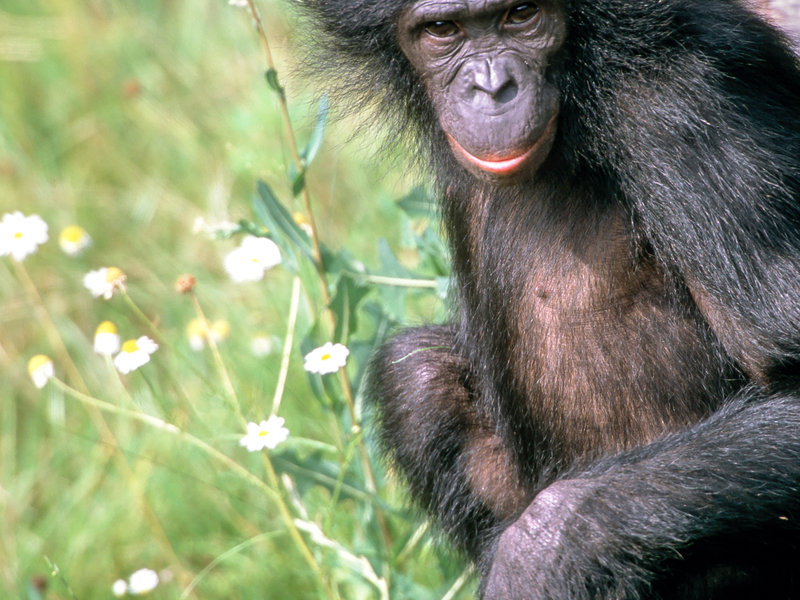
Bonobos, which together with chimpanzees are the closest living relatives of humans, are known for their peaceful, playful and sexual behaviour that contrasts with the more aggressive behaviour of chimpanzees. 

The genome sequence provides insights into the evolutionary relationships between the great apes and may help us to understand the genetic basis of these traits.

The female Bonobo Ulindi in the Zoo Leipzig. © Michael Seres 
The genome was sequenced from Ulindi, a female bonobo who lives in the Zoo Leipzig. Genome sequences have also been generated from all other great apes – chimpanzee, orang-utan and gorilla - making this the final genome of a great ape to be sequenced and providing insights into their relationships with one another and with humans.

The comparison of the genome sequences of bonobo, chimpanzee, and human show that humans differ by approximately 1.3% from both bonobo and chimpanzee. Chimpanzees and bonobos are more closely related, differing by only 0.4%.

Bonobo and chimpanzee territories in central Africa are close to one another and separated only by the Congo River. It has been hypothesized that the formation of the Congo River separated the ancestors of chimpanzees and bonobos, leading to these distinct apes. Examination of the relationship between bonobos and chimpanzees showed that there appears to have been a clean split and no subsequent interbreeding, which supports this hypothesis.

Despite the fact that on average the genomes of bonobos and chimpanzees are equally distant from human, analysis of the genome sequence of the bonobo revealed that for some particular parts of the genome, humans are closer to bonobos than to chimpanzees, while in other regions the human genome is closer to chimpanzees. Further research will determine whether these regions contribute in any way to the behavioural differences and similarities between humans, chimpanzees, and bonobos.

jueves, 9 de agosto de 2012

New human species identified from Kenya fossils

ORIGINAL: BBC

By Pallab GhoshScience correspondent, BBC News

A new species of human: One of several co-existing in Africa two million years ago 
Researchers studying fossils from northern Kenya have identified a new species of human that lived two million years ago.

The discoveries suggests that at least three distinct species of humans co-existed in Africa.

The research adds to a growing body of evidence that runs counter to the popular perception that there was a linear evolution from early primates to modern humans.

The research has been published in the journal Nature.

Anthropologists have discovered three human fossils that are between 1.78 and 1.95 million years old. The specimens are of a face and two jawbones with teeth.

“Nature was developing different human prototypes only one of which, our species, was ultimately successful” Professor Chris StringerNatural History Museum, London

The finds back the view that a skull found in 1972 is of a separate species of human, known as Homo rudolfensis. The skull was markedly different to any others from that time. It had a relatively large brain and long flat face.

But for 40 years the skull was the only example of the creature and so it was impossible to say for sure whether the individual was an unusual specimen or a member of a new species.

With the discovery of the three new fossils researchers can say with more certainty that H.rudolfensis really was a separate type of human that existed around two million years ago alongside other species of humans.

For a long time the oldest known human ancestor was thought to be a primitive species, dating back 1.8 million years ago called Homo erectus. They had small heads, prominent brows and stood upright.

But 50 years ago, researchers discovered an even older and more primitive species of human called Homo habilis that may have coexisted with H. erectus. Now it seems H. rudolfensis was around too and raises the distinct possibility that many other species of human also existed at the time.

This find is the latest in a growing body of evidence that challenges the view that our species evolved in a smooth linear progression from our primate ancestors.

The human lineage

Instead, according to Dr Meave Leakey of the Turkana Basin Institute in Nairobi, who led the research the find shows that there was a diversity early on in the evolution of our species.

"Our past was a diverse past," she told BBC News, "our species was evolving in the same way that other species of animals evolved. There was nothing unique about us until we began to make sophisticated stone tools."

In other groups of animals many different species evolve, each with new traits, such as plumage, or webbed feet. If the new trait is better suited to the environment then the new species thrives, if not it becomes extinct.
The March of Progress had many dead ends

According to Professor Chris Stringer of the Natural History Museum in London, fossil evidence is increasingly suggesting that human evolution followed the same pattern.

"Humans seem to have been evolving in different ways in different regions. It was almost as if nature was developing different human prototypes with different attributes, only one of which, an ancestor of our species, was ultimately successful in evolutionary terms," he said.

According to Dr Leakey, the growing body of evidence to suggest that humans evolved in the same way as other animals shows that "evolution really does work".

"It leads to amazing adaptions and amazing species and we are one of them," she said.

Follow Pallab on Twitter