Mostrando entradas con la etiqueta Mejoramiento Genético de Alimentos. Mostrar todas las entradas

miércoles, 17 de octubre de 2012

Kraft Factory Chemical Accident Leads to Deadly ‘Poison Cloud’

ORIGINAL: Natural Society
Lisa Garber. NaturalSociety
October 17, 2012


When workers at a German Kraft Foods facility accidentally poured nitric acid into a tank of sodium hydroxide, 250 factory employees fled and 700 firefighters arrived at the scene to combat the resultant blaze. About 1,800 people have been evacuated from the area and authorities have closed all nearby schools and kindergartens as well as a passing highway.

It’s not just the fire authorities are worried about, however. The nitrous gases from the reaction are highly toxic to the human body.

Poison Cloud Released

When the firefighters attempted to pump the nitric acid from the contaminated tank, they inadvertently released a plume of poisonous nitrous gas from the chemical reaction. The toxic cloud was dispersed on Tuesday morning, and the problematic acid mixture was, at the time of writing this article, being pumped out by rescue teams.

Witnesses compared the scene to something out of a disaster movie. Regional firefighters struggled with the fire but called upon specialists from Hamburg when the situation worsened on Tuesday morning.

Regional fire brigade spokesperson Stephen Meier says, “We have to swap in the specialists every 20 minutes, and then we also need new protective suits, and they are running short.”

Kraft Foods Under Fire

According to Kraft Foods spokesperson Heike Hauerken, the facility uses nitric acid and sodium hydroxide as cleaning agents. The facility produces cream cheese, ketchup, and mayonnaise—things most of us would probably prefer to steer clear of poison fumes.

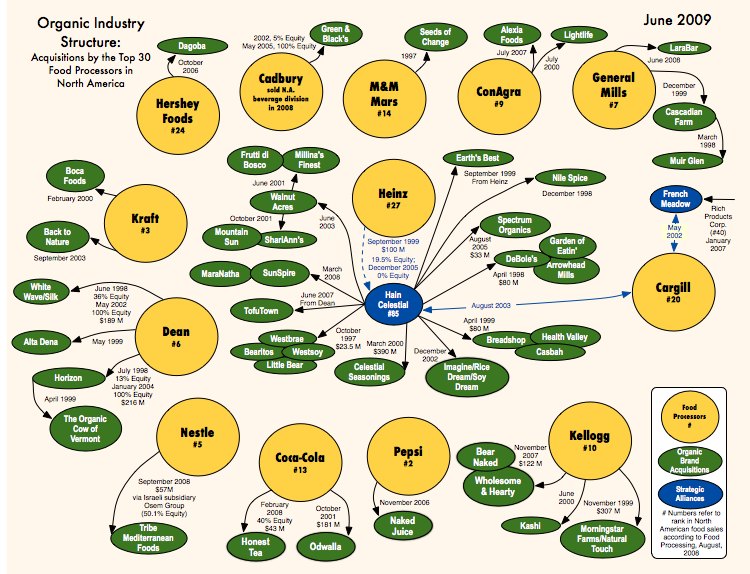
If you’d like to steer clear of GMOs, too, it might help to avoid Kraft foods as much as possible. Even some of your favorite organic companies—like Back to Nature—are under Kraft’s thumb. Kraft Foods has even put forth over $500,000 against Proposition 37, which would require labeling of GMO foods.

Additional Sources:


viernes, 6 de mayo de 2011

Jason Clay: cómo pueden las multinacionales ayudar a salvar la biodiversidad

ORIGINAL: TED

Si convencemos tan sólo a 100 empresas claves para que apoyen la sostenibilidad, Jason Clay, del WWF, asegura que los mercados globales se transformarían para proteger el planeta que estamos sobrexplotando.

Escuchemos cómo a través de increíbles mesas redondas está logrando que grandes empresas rivales se pongan de acuerdo en prácticas ambientales sostenibles, aún antes de que sus productos lleguen a las tiendas.

EN ESPAÑOL AQUÍ

"TENEMOS QUE ADMINISTRAR ESTE PLANETA COMO SI NUESTRA VIDA DEPENDIERA DE ELLO, PORQUE ASÍ ES..."

" LA SOSTENIBILIDAD DEBE SER UN TEMA PRECOMPETITIVO ENTRE MULTINACIONALES Y SE NECESITA ACUERDO PARA AFRONTARLO"


Se han identificado 35 lugares globalmente con la mayor riqueza en Biodiversidad y más estratégicos. que tienen que ser salvados para preservar la Biodiversidad. Además, éstos son los 15 productos que se deben observar cuidadosamente por su impacto ambiental:
  • Aceite de Palma
  • Algodón
  • Biocombustibles
  • Caña de Azúcar
  • Pulpa & Papel
  • Madera Aserrada
  • Lácteos
  • Cárnicos
  • Soya
  • Aceite y Carne de Pescado
  • Granjas de Salmón
  • Cultivo de Camarón
  • Pescado
  • Atún
  • Camarón Tropical
En esta situación intervienen:
  • 6,900 Millones de consumidores
  • 1,5 Millons de productores
  • 300-500 comercializadores que anejan el 70% de c/u de los productos estratégicos identificados
La gran sorpresa al hacer el análisis fué que las 100 compañías comercializadoras más grandes controlaban el 25% del comercio de los productos estratégicos para preservar la Biodiversidad