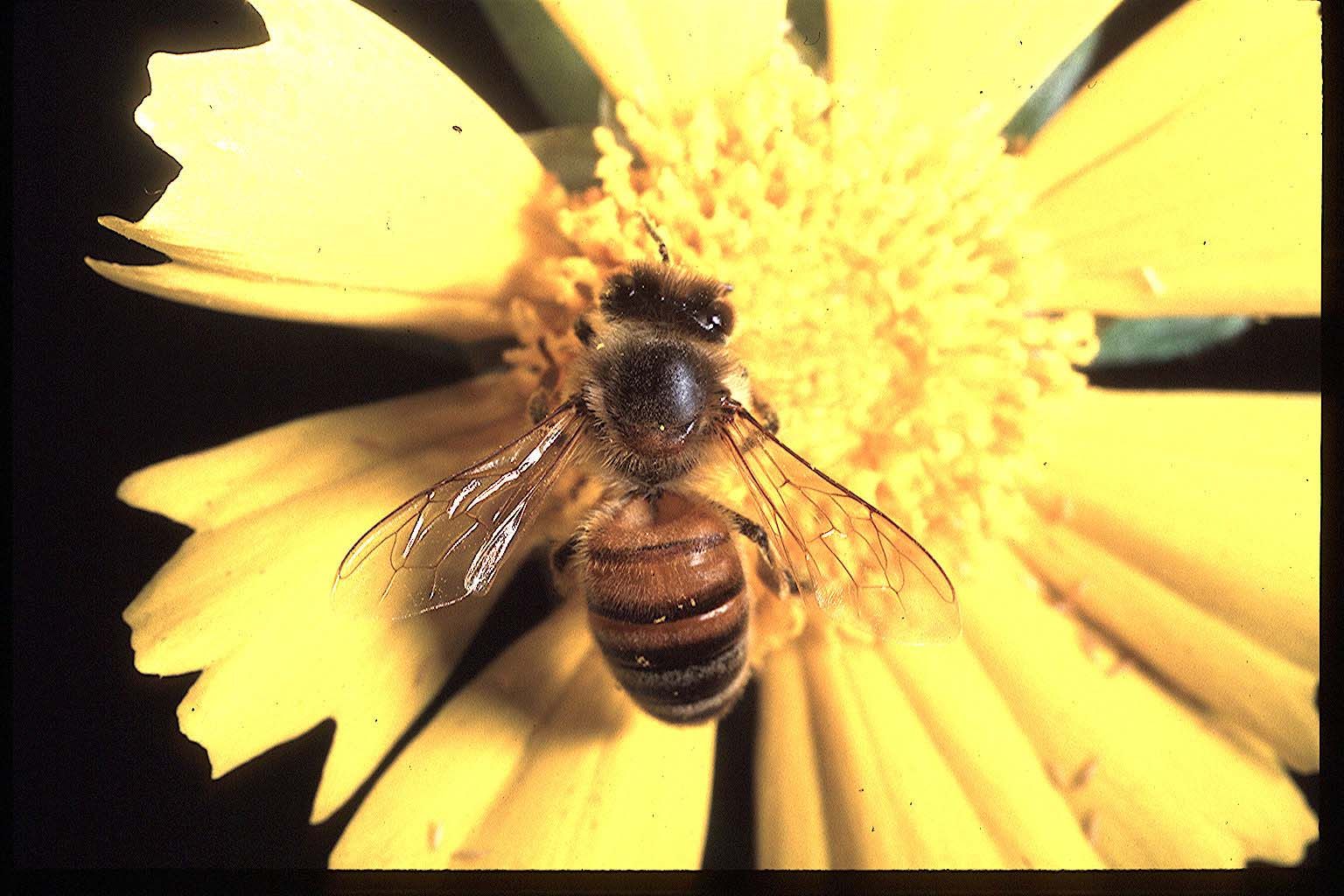
Mostrando entradas con la etiqueta Insecto. Mostrar todas las entradas

miércoles, 30 de abril de 2014

The Deadliest Animal in the World


What would you say is the most dangerous animal on Earth? Sharks? Snakes? Humans?

Of course the answer depends on how you define dangerous. Personally I’ve had a thing about sharks since the first time I saw Jaws. But if you’re judging by how many people are killed by an animal every year, then the answer isn’t any of the above. It’s mosquitoes.

When it comes to killing humans, no other animal even comes close. Take a look:


What makes mosquitoes so dangerous?
Despite their innocuous-sounding name—Spanish for “little fly”—they carry devastating diseases. The worst is malaria, which kills more than 600,000 people every year; another 200 million cases incapacitate people for days at a time. It threatens half of the world’s population and causes billions of dollars in lost productivity annually. Other mosquito-borne diseases include dengue fever, yellow fever, and encephalitis.

There are more than 2,500 species of mosquito, and mosquitoes are found in every region of the world except Antarctica. During the peak breeding seasons, they outnumber every other animal on Earth, except termites and ants. They were responsible for tens of thousands of deaths during the construction of the Panama Canal. And they affect population patterns on a grand scale: In many malarial zones, the disease drives people inland and away from the coast, where the climate is more welcoming to mosquitoes.

Considering their impact, you might expect mosquitoes to get more attention than they do. Sharks kill fewer than a dozen people every year and in the U.S. they get a week dedicated to them on TV every year. Mosquitoes kill 50,000 times as many people, but if there’s a TV channel that features Mosquito Week, I haven’t heard about it.

That’s why we’re having Mosquito Week on the Gates Notes.
Everything I’m posting this week is dedicated to this deadly creature. You can learn about my recent trip to Indonesia to see an ingenious way to combat dengue fever by inoculating not people, but mosquitoes. (Somehow this story involved me offering up my bare arm to a cage full of hungry mosquitoes so they could feed on my blood.) You can read a harrowing account of what it’s like to have malaria and hear from an inspiring Tanzanian scientist who’s fighting it. And I’ve shared a few thoughts from Melinda’s and my recent trip to Cambodia, where I saw some fascinating work that could point the way to eradicating malaria, which would be one of the greatest accomplishments in health ever.

I hope you’ll have a look around. I can’t promise that Anopheles gambiae will be quite as exciting as hammerheads and Great Whites. But maybe you’ll come away with a new appreciation for these flying masters of mayhem.


ORIGINAL: GatesNotes
April 25, 2014

domingo, 16 de febrero de 2014

Robots with insect brains

(Credit: Freie Universität Berlin)

German researchers have developed a robot that mimics the simple nervous system used for olfactory learning in the honeybee, using color instead of odors.

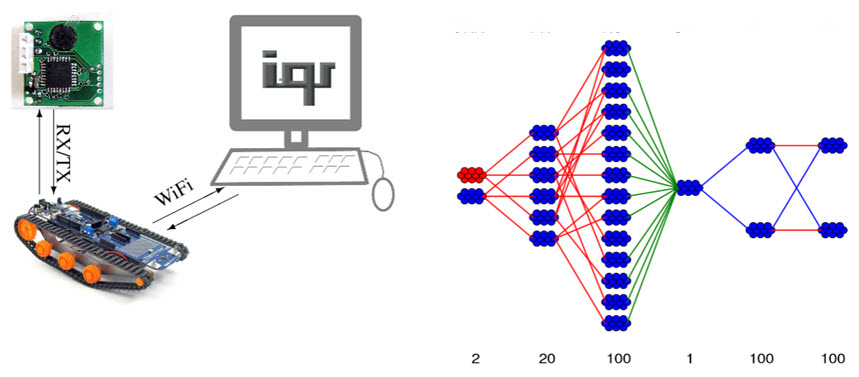
The researchers have installed a camera on a small robotic vehicle connected to a computer. The computer program replicates, in a simplified way, the sensorimotor neural network of the insect brain and operates the motors of the robot wheels to control its motion and direction based on the colors.

“The network-controlled robot is able to link certain external stimuli with behavioral rules,” said Professor Martin Paul Nawrot, head of the research team and professor of neuroscience at Freie Universität Berlin. “Much like honeybees learn to associate certain flower colors with tasty nectar, the robot learns to approach certain colored objects and to avoid others.”

The learning experiment

The scientists located the network-controlled robot in the center of a small arena with red and blue objects on the walls. Once the robot’s camera focused on an object with the desired color, the scientists triggered a light flash. This signal activated a “reward sensor nerve cell” in the spiking neural network. The simultaneous processing of red and the reward caused the robot to move toward the object; blue made it move backwards.

Left: robot hardware. The camera output is processed on the Arduino board and is sent to the open-source iqr spiking neural network simulator software as a 1 or 0, depending on whether or not a colored region was found, and is translated into spike trains.
Right: neural network architecture from sensory input to motor output. Red or blue connections indicate excitatory or inhibitory synapses. Green connections indicate modulatory synapses that are adjusted during reinforcement. Numbers under each group indicate the number of artificial neurons (credit: L. I. Helgadóttir et al.).

“Within seconds, the robot accomplishes the task to find an object in the desired color and to approach it,” explained Nawrot. “Only a single learning trial is needed, similar to experimental observations in honeybees.”

The scientists are planning to expand their neural network by adding more learning principles.

Future real-world applications
“Our work and the paper focus on basic science,” Tim Landgraf, head of the Biorobotics Lab at Freie Universität Berlin, explained to KurzweilAI in an email interview. “We first want to understand how fundamental processes like learning and memory enable the animal (many of our studies use the honeybee as a model) to accomplish complex tasks.

“Ultimately, this will improve our understanding of the function of our own human brain. And once we understood how we can employ realistic, brain-like processing structures to solve real-world problems, this will have an impact on how robots or artificial systems in general are being programmed.

“Rather than writing millions of lines of code for solving problems, we will lean back and watch adaptive, neural systems learn the structure of their environments. First as virtual brains in a simulation of the world and then, once they have sufficiently matured, in the real world.

“As far as we know, we were the first to show that robots can be conditioned in a one-shot learning experiment with spiking neural networks.” However, he admits that the biggest unknown is the neuromorphic (spiking) hardware. “Currently, researchers are using simulations on big computing machines, nothing that would fit on a robot. Neuromorphic chips emulate neuronal activity in small analog circuits. They might be available commercially within the next ten years or so. I can’t say whether they will be powerful enough (number of neurons, synaptic plasticity, etc.) to be applicable in complex real-world scenarios by then.”

Funding for the research is provided by the National Bernstein Network Computational Neuroscience in Germany and the German Federal Ministry of Education and Research.


Abstract of 6th International IEEE/EMBS Conference on Neural Engineering (NER) paper
Insects show a rich repertoire of goal-directed and adaptive behaviors that are still beyond the capabilities of today’s artificial systems. Fast progress in our comprehension of the underlying neural computations make the insect a favorable model system for neurally inspired computing paradigms in autonomous robots. Here, we present a robotic platform designed for implementing and testing spiking neural network control architectures. We demonstrate a neuromorphic realtime approach to sensory processing, reward-based associative plasticity and behavioral control. This is inspired by the biological mechanisms underlying rapid associative learning and the formation of distributed memories in the insect.

References:
L. I. Helgadóttir, J. Haenicke, T. Landgraf, R. Rojas, M. P. Nawrot, Conditioned behavior in a robot controlled by a spiking neural network, 6th International IEEE/EMBS Conference on Neural Engineering (NER), 2013, DOI: 10.1109/NER.2013.6696078

Related:
Robots with Insect Brains

ORIGINAL: KurzweilAI

February 14, 2014

sábado, 25 de enero de 2014

StrandBeests: 3D Print Crazy Live Animals… Well Almost

While browsing Shapeways this afternoon I stumbled upon something that caught my eye. No, it’s not another life saving device that has been 3D printed, or even something that you can get any real use out of, but I still could not look away. What are these 3D Printed objects you may ask? They’re Strandbeests, and they have been created by an extremely talented fellow by the name of Theo Jansen.

Theo is a 65 year old Dutch artist with quite the imagination, who gained fame for his work with PVC piping in the 1990′s to create what were also known back then as StrandBeests. They were basically large structures that could move on their own, many resembling animals or insects. Because of the fact that they have several leg-like extremities, they also usually have the ability to move on sand better than wheels can. Unlike a wheel, only small portions of the “Animals” need to touch the ground. Many Strandbeests can move on their own with the help of a wind driven propeller. The work was quite an engineering as well as artistic feat.

Theo has recently decided to take those same skills and apply them to 3D modelling and printing, bringing his creations to Shapeways so that anyone around the world can buy his famous StrandBeests. He has produced the following video, somewhat humorous, showing off his new 3D printed Beests, comparing them to wild animals:


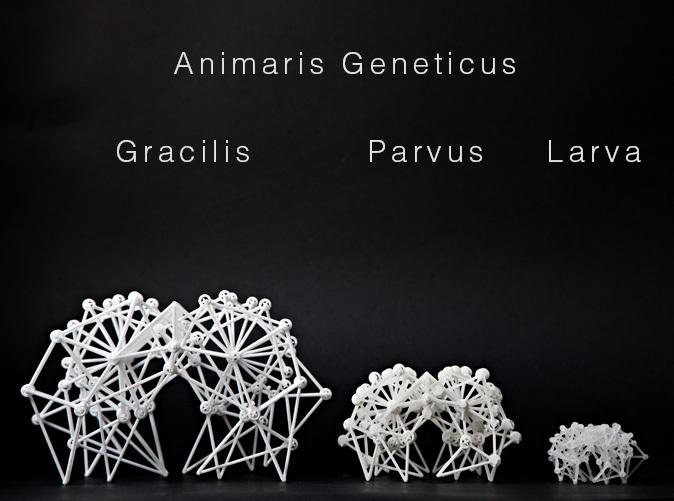
Currently he is offering four different Strandbeests on Shpaeways, they include the following:
  • Animaris Geneticus Gracilis
  • Animaris Geneticus Larva
  • Animaris Geneticus Ondularis
  • Animaris Geneticus Parvus
Prices for his little works of art range anywhere from $39 to $110, and make amazing coffee table toys. You can discuss these little creatures in the 3DPrintBoard Forum here: http://3dprintboard.com/showthread.php?1518-Introducing-Theo-Jansen-s-StrandBeests


ORIGINAL: 3DPrint
by Randall Desmond
January 24, 2014

lunes, 22 de abril de 2013

Roboticists discover the secret of insect flight, and it's not wings

ORIGINAL: IO9

Top image via Jon Dhyr.
When it comes to insect flight, we usually only think about how the insect's wings contribute to aerial stability. But scientists have now discovered that the abdominal movements of some insects also play a large role in flight control, particularly when hovering — a finding that could lead to improved aerial drones. 


Scientists often take cues from nature when building robots. And given that an insect's wings provide the lift and thrust forces necessary for flight, they've been the focus of a lot of research. But biologists have long wondered if insects also use their abdomens to help with flight control. After all, numerous studies have documented tethered insects making exaggerated abdominal movements in response to changes in their visual environment. 

Some scientists have speculated that the insects employ their abdomens, which make up a good portion of their bodies, as steering rudders. That is, by moving their abdomens in one direction or another, insects can increase the drag forces on parts of their bodies, helping them to turn. Alternatively, an insect may move its abdomen during flight to shift its center of mass relative to its center of lift, creating a moment of inertia that essentially counteracts the rotation the insect may be experiencing from, say, a gust of wind. 

But nobody has ever tested whether either of these theories is true, or if the observed abdominal movements are merely a result of being tethered. So a group of biologists and engineers set out to do just that.


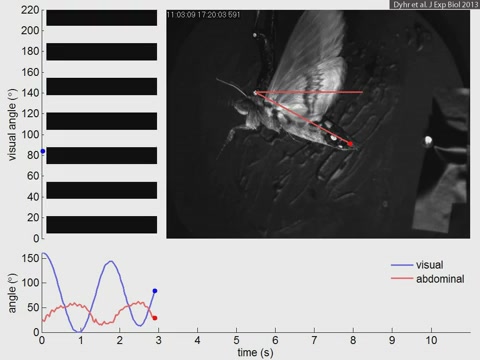
They began by tethering a hawkmoth (Manduca sexta) into a circular flight arena and surrounding it with an LED display system. They created a grating pattern of green and black bars on the screen (seen in the image above), and rotated the pattern up and down. 

"If you were to see something like this in a movie theatre, you would get that funny feeling that you were rotating in the opposite direction as the lights," says study researcher Noah Cowan, an engineer at Johns Hopkins University. "We basically built a little IMAX theatre for the moth to give it the sensation that it's moving around." 

They presented the moth with two different types of pattern oscillations, or modes. In one mode, the pattern oscillated with increasing frequency, giving the moth the impression that it was tumbling at an accelerated rate. The other mode was "pseudo-random," where the pattern oscillated at different speeds and degrees. 

They found that the moth moved its abdomen in direct response to its shifting visual environment. "If the pattern is rotating up (clockwise), the moth would raise its abdomen up (counterclockwise)," says study co-author Jonathan Dyhr, a University of Washington biologist. "The moth was raising or lowering its abdomen to counteract the movement."


The moth moves its abdomen in response to the rotation of the grating pattern (which makes it feel as if its falling forward or backward). Credit: Jon Dhyr 
Importantly, the moth tuned its abdominal movements to the different specific oscillations, with larger pattern movements resulting in larger abdominal movements (as you can see in the videos). "It has a very stereotyped dynamical response," Cowan told io9, adding that these responses allowed the team to mathematically model the moth's behavior and accurately predict how it would respond to different oscillations. 

With their observations and their model, the researchers determined that the moths use their abdomens for flight control via two mechanisms. First, the abdominal movements shift the moth's center of mass relative to the center of lift, counteracting the rotation, as previously theorized. Additionally, when the moth rotates its abdomen, its thorax rotates in the opposite direction to conserve angular momentum — this causes the aerodynamic forces produced by the wings, which are attached the thorax, to redirect, helping to correct the loss of stability. 

Dyhr notes that the team didn't disprove the rudder theory. They really only looked at the case of hovering, so the moths may still use their abdomens as rudders when flying forward. The researchers also suggest that other insects probably use this technique as well (though smaller insects will find it less effective). 

A quadrotor the team built. Note its dangling battery, which functions in a similar way to the moth's abdomen. Credit: Alican Demir. 
A real-life swarm of flying robots, right out of a 1980s arcade game

Cowan says that their discovery could improve the stability of aerial robots — in fact, the team has already demonstrated its use in a robotic quadrotor. These flying drones have four propellers controlled by four independent motors, all of which are powered by an attached battery. The scientists unmounted the battery, hung it below the quadrotor and implemented a sensor and control system that automatically adjusted the position of the battery in response to the robot's pitch. Similar to the moth, when the robot moved its battery, the aerodynamic forces from the propellers redirected, resulting in increased stability (see the video below). 

The researchers essentially gave the robot's battery a second function. "In engineering, people tend to focus on 'one part, one function,' but in bio

The moth moves its abdomen in response to the rotation of the grating pattern (which makes it feel as if its falling forward or backward). Credit: Jon Dhyr 
logy you see these incredibly complex, integrated systems." Cowan says. "The lesson to learn here is the incredible success that nature has in adapting designs to take advantage of and exploit multifunctionality." 

The new design allows the quadrotor to stabilize itself after being knocked around. Credit Alican Demir. 

The researchers detailed their work in a recent study in the Journal of Experimental Biology. 


lunes, 14 de enero de 2013

The Brazilian Treehopper may be the strangest creature we’ve ever laid eyes on

ORIGINAL: io9
 Robert T. Gonzalez
JAN 14, 2013

Top image of a sculpture by Alfred Keller;
Because holy crap, just look at that headgear. Everyone, meet Bocydium globulare. Better known as the Brazilian treehopper, B. globulare excels at living a solitary life, hanging out on the leaves of glory bushes, and head-sphering its way into your nightmares.

The Brazilian treehopper is 100% real, but the image up top is of a beautifully crafted model, created by legendary science sculptor Alfred Keller (1902—1955). Over on Why Evolution is True, Jerry Coyne reflects on a 2010 Nature profile on Keller (warning: paywall), his sculptures, and the utter weirdness of B. globulare.

"The first thing a biologist does on seeing a model like this is think, 'This can't be real,' and resorts to some Googling," writes Coyne. "Sure enough, it's a real insect."

He continues:

The second thing one asks is, "What the bloody hell is all that ornamentation on the thorax?" (Note that the "balls" on the antenna-like structure aren't eyes, but simply spheres of chitin.) A first guess is that it's a sexually-selected trait, but those are often limited to males, and these creatures (and the ones below) show the ornaments in both sexes. [Art Historian Martin Kemp, an expert on visualization in art and science] hypothesizes-and this seems quite reasonable-that "the hollow globes, like the remarkable excrescences exhibited by other treehoppers, probably deter predators." It would be hard to grab, much less chow down on, a beast with all those spines and excrescences.

Note, though, that the ornament sports many bristles. If these are sensory bristles, and not just deterrents to predation or irritating spines, then the ornament may have an unknown tactile function.

photo of live treehopper by Patrick Landmann

See more photos of living treehoppers like the one pictured above — along with several other photos of membracids, the headgeared group of insects to which Bocydium globulare belongs — over on Why Evolution Is True.

See also: this gallery of weird treehopper insects, courtesy of New Scientist, and this series of amazing membracid photographs by photographer Patrick Landmann.

Tip of the peduncular hat to Maria!  

martes, 4 de septiembre de 2012

Ball Girl vs Bug at the Australian Open (Video)

BY DAVE ON 2012/01/21 3:29 AM 


A ball girl had to remove a huge bug (cockroach) from the tennis court during the 1st round match between Lleyton Hewitt and Cedrik-Marcel Stebe at the Australian Open. This is her funny reaction:


lunes, 13 de agosto de 2012

Meet the Venezuelan poodle moth

ORIGINAL: Science Dump
Submitted by Michiel
08/13/2012

This is a poodle moth from the forests of Venezuela, what an astonishing creature!

domingo, 29 de julio de 2012

First robot that mimics the water striders' jumping abilities

ORIGINAL: Science Daily

ScienceDaily (July 26, 2012) — The first bio-inspired microrobot capable of not just walking on water like the water strider -- but continuously jumping up and down like a real water strider -- now is a reality. Scientists reported development of the agile microrobot, which could use its jumping ability to avoid obstacles on reconnaissance or other missions, in ACS Applied Materials & Interfaces. 

The first bio-inspired microrobot capable of not just walking on water like the water strider – but continuously jumping up and down like a real water strider – now is a reality. (Credit: Image courtesy of American Chemical Society)
Qinmin Pan and colleagues explain that scientists have reported a number of advances toward tiny robots that can walk on water. Such robots could skim across lakes and other bodies of water to monitor water quality or act as tiny spies. However, even the most advanced designs -- including one from Pan's team last year -- can only walk on water. Pan notes that real water striders actually leap. Making a jumping robot is difficult because the downward force needed to propel it into the air usually pushes the legs through the water's surface. Pan's group looked for novel mechanisms and materials to build a true water-striding robot.

Using porous, super water-repellant nickel foam to fabricate the three supporting and two jumping legs, the group made a robot that could leap more than 5.5 inches, despite weighing as much as 1,100 water striders. In experiments, the robot could jump nearly 14 inches forward -- more than twice its own length -- leaving the water at about 3.6 miles per hour. The authors report that the ability to leap will make the bio-inspired microrobot more agile and better able to avoid obstacles it encounters on the water's surface.

The authors acknowledge funding from the State Key Laboratory of Robotics and System of Harbin Institute of Technology and the National Natural Science Foundation of China.

domingo, 1 de julio de 2012

The Male Praying Mantis — Dying to Mate?

ORIGINAL:  Biozine

A female mantis chews off the head of a male.
Females of the praying mantis and Chinese mantis species are infamous for their habit of devouring male mantises before, during, or after mating with them. For years scientists have been arguing over how and why this gruesome relationship could have evolved. The female certainly benefits from having a large meal that essentially delivers itself to her spiny embrace. What can account for this suicidal form of insect chivalry on the part of the male?

In the evolutionary scheme of things, any organism that reproduces and passes on its genes is considered successful, even if it involves personal sacrifice. Have male mantises not evolved a way to avoid being eaten by females because their main objective — passing on genes — is achieved? Have females evolved in a way that leads to selecting males who cooperate in their own death? Do males who fight for their lives never get a chance to mate and pass on their genes? If you're a female mantis, especially a hungry one, why choose a mate who's going to put up a fuss when you try to bite his head off?

Some point out that the nutrition offered to females in the form of a male probably improves the odds that the sperm deposited in a female will end up resulting in a new generation of offspring. If a male simply mated with a female and walked away, as is the case in many animal species, then the female would have to fend for herself and the few hundred eggs she carries. A well-fed female should fare much better than a hungry female.

Despite these compelling, logical arguments, some scientists insist that a male who could mate with a female but also live to mate another day would be more successful in reproductive and evolutionary terms. So why hasn't evolution lead to male mantises adapted to the female's aggression? Is there no way to mate without losing your life?

William Brown of the State University of New York, Fredonia, decided to study Chinese mantises to see if males demonstrated any ability to avoid death at the hands of their mates. Brown and one of his undergraduate students, Jonathan Lelito, experimented with introducing male and female mantises to each other under different conditions.

"We predicted that if the male is complicit, he's just going to march into her jaws," Brown said. "But if the male does not want to become her meal, then he should avoid the risk of being eaten." They placed some males in containers with females who had not eaten recently, and placed others with females who had already feasted on crickets. They also experimented with how the males approached the females. Did males fare better if they approached from behind?

The results of Brown's experiments showed that males are quicker to approach females that are full. When presented with hungry females, males will jump onto them from a greater distance, possibly to avoid being grabbed and killed before getting a chance to mate. Males also tend to stay on hungry females for longer, perhaps to wait for the female's hunger to pass. Males who approach females from behind are also less likely to be eaten.

"It's clearly a case of sexual conflict," Dr. Brown said. "Males are not willing partners." While the work of Brown and Lelito shows that male mantises are not gung-ho about being cannibalized during sex, the fact that as much as 63% of a female mantis's diet is composed of male mantises suggests that the urge to mate is stronger than the urge to live.

lunes, 28 de mayo de 2012

Mims: Lack of bugs may be drought-related

ORIGINAL: My San Antonio
By Forrest M. Mims III, Express-News columnist
May 20, 2012

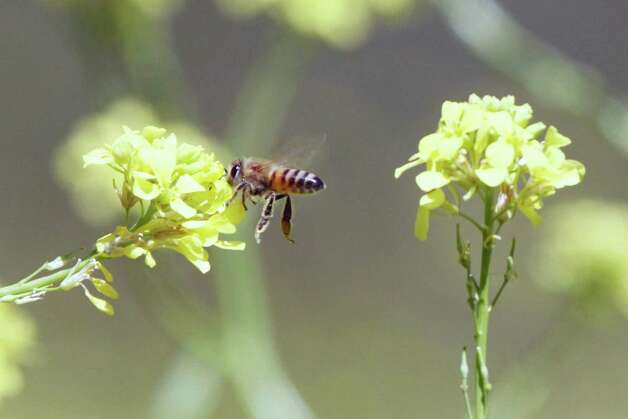
Whether due to colony collapse disorder, the drought or both, bees, such as this April visitor, are rare on the Mims place this spring. Photo: Forrest M. Mims III, For The Express-News / ALL RIGHTS RESERVED. 
By now myriad bees and exotic flies should be sipping nectar from wildflowers. Wasps, dragonflies and spiders should be prowling the landscape looking for dinner.

Where are these creatures and the critters that eat them?

There might be a normal population of insects and spiders in some areas, especially in cities and towns where lawns and gardens were watered during last summer's record drought. But there's a very obvious shortage of insects, spiders and lizards on our rural place.

Only two or three honeybees can be seen in 6-foot-square sections of Indian blanket wildflowers here. In a normal year, the count would be much higher. Bluebonnets require insects to pollinate their flowers, so I examined four patches of bluebonnets on our place. Only 53 per cent of their flower spikes produced seed pods.

So far this spring, only two carpenter bees have appeared where a dozen or more usually patrol the sky. Only one red wasp, two grasshoppers, several dragonflies and a few beetles, crickets and pill bugs have been observed during daily walks. Only one toad, several geckos and no other lizards have been seen around our house.

Some species have returned, apparently assisted by abundant winter rain. While no fireflies appeared during 2011, each evening a dozen or so can be seen flashing away at the edge the woods behind our house.

Last month, countless crane flies invaded portions of South Central Texas.

Butterflies are now in abundance.

Paul Schattenberg wrote about the effect of the 2011 drought on Texas insects in the June 14 issue of Agrilife Today, a Texas A&M publication.

Fire ant mounds are smaller, presumably because their builders are less active.

Another drought spin-off is that some creatures are moving into homes to find moisture and food. This includes scorpions, and that's certainly the case at our place.

A search of the Web for insect activity during droughts revealed that populations of some insects that attack crops and trees can increase during droughts.

There are also insect reports virtually identical to what I am observing. For example, a report by Edward Mawley about the 1898 drought in England summarized surveys by rural observers who found sharply reduced insect populations with very few wasps.

Spiders are beginning to return to our place, and this may signal an increase in the insect population.

It will be interesting to see what happens next, especially if the drought returns.

While it might seem good to have fewer bugs around, they form a vital link in nature's food chain. Many pollinate wildflowers, fruit trees and various vegetables.

Forrest Mims, an expert reviewer for the Intergovernmental Panel on Climate Change (IPCC), was named one of the 50 Best Brains in Science by Discover Magazine. His science is featured at www.forrestmims.org. Email him at forrest.mims@ieee.org.

domingo, 27 de mayo de 2012

AgriLife Extension program in Austin will focus on beneficial insects

ORIGINAL: Agrilife Today

AUSTIN — The Texas AgriLife Extension Service in Travis County will present a no-cost program on beneficial insects from 9-10 a.m. on June 13 at its offices at 1600-B Smith Road in Austin.

A program on beneficial insects for the garden and landscape will be presented at the Texas AgriLife Extension Service office for Travis County, located at 1600-B Smith Road in southeast Austin. (Texas Cooperative Extension Service photo by Dr. Bart Drees)

“This program will focus on the identification of beneficial insects in the garden and landscape,” said Wizzie Brown, AgriLife Extension specialist in integrated pest management for Travis County. “Beneficials help by providing biological control of other insects or by providing a service, such as pollination, that is helpful to plant growth or propagation.”

Brown said in horticulture and gardening, some desirable results of beneficial insects include pest control, improved habitat balance and the enhancement of the natural vitality of a garden or landscape.

She said some examples of beneficial insects are lady bugs, assassin bugs and lacewings.

“Managing non-beneficial or pest insects by employing the use of their natural enemies is one of the oldest means of pest control,” Brown said. “While most beneficial insects are harmless to people and plants, they are still natural predators or parasites that can kill or disable various pest insects.”

Brown said beneficial bugs offer biological control of many common insect pests, including aphids, spider mites, caterpillars, thrips, flies, mosquitoes and fire ants.

“Along with a presentation, we will go to the garden in front of our offices to find and identify beneficial insects and see what distinguishes them from non-beneficials,” Brown said. “Many insects look alike, so this exercise will show people how to better look for and take note of the physical and behavioral characteristics of insect species.”

Brown said the program will also demonstrate how people can make their landscape more hospitable for beneficial insects.

“Encouraging beneficial insects by providing them with optimal living and propagating conditions is a useful pest control strategy,” she said. “The program will also address how to make your landscape more bug-friendly for beneficial insects.”

For more information, contact Brown at 512-854-9600 or e-brown@ag.tamu.edu


domingo, 22 de abril de 2012

Eclosión de insectos palo de la Isla Lord Howe

ORIGINAL: ZooVictoria

insectos palo de la Isla Lord Howe. Foto(C) Jane Satchell
Por primera vez en el mundo, el cuidador de zoológico Rohan Cleave ha capturado el proceso asombroso de incubación la especie insectos palo de la Isla Lord Howe en peligro crítico de extinción en el Zoo de Melbourne. Los huevos se incubaron durante más de 6 meses y hasta ahora el proceso de incubación no se había presenciado. ¡Si no se ve no puede creerse que tal insecto quepa en ese huevo!


Los insectos palo de la Isla Lord Howe, Dryococelus australis, fueron llevados al borde de la extinción por las ratas negras en el siglo XX. Sin embargo, en 2001 fueron redescubiertos en la Balls Piramid, una formación volcánica sin ratas a 23 kilometros de la costa de Isla de Lord Howe.

El mar alrededor de  Balls Piramid es demasiado escarpado para llegar en un barco. Sin embargo, un equipo de rescate saltó a tierra en 2003 y trajo dos parejas reproductoras de insectos palo de la Isla Lord Howe de vuelta a Australia continental.

En el momento de su descubrimiento, se sabía muy poco acerca de los insectos palo de la Isla Lord Howe. El Zoológico de Melbourne juega un papel importante en la cría en cautividad de esta especie en peligro crítico.

Los insectos adultos no tienen alas y son nocturnos, sólo se alimentan de una especie de arbusto. La población restante sólo tiene 20-30 individuos.

El  de personal del Zoo de Melbourne siguen llevando a cabo una intensa investigación en la dieta de los insectos palo, su comportamiento y biología, así como mantienen el mayor programa de cría en cautividad de esta especie.

Nuestros objetivos fundamentales para la recuperación de esta especie son los siguientes:
  • Mantener una población en cautiverio de seguro
  • Aumentar la sensibilización de la comunidad de la difícil situación de los  insectos palo de la Isla Lord Howe y aumentar el apoyo comunitario para su conservación
  • Suplemento la población silvestre a través de la cría en cautividad para su reintroducción. El objetivo final es reintroducir libremente, en Insectos Palo de la Isla Lord Howe en la isla Lord Howe, pero las ratas, primero tendrán que ser erradicado de la isla (son una especie foránea introducida accidentalmente)
Contexto de conservación
Sin descubrir durante 80 años, una población muy pequeña de Lord Howe Island Los insectos palo persiste en la naturaleza. Programa de cría en cautividad del Zoo de Melbourne es de importancia crítica para la recuperación a largo plazo de esta especie.

lunes, 12 de marzo de 2012

Gene bacterial ayuda al insecto "Broca del café" a obtener su sustento

La broca es una de las plagas que mayores amenazas presenta para la producción cafetera. Recientemente varios investigadores del Centro Nacional de Investigaciones de Café (Cenicafé) de Colombia y de la Universidad de Cornell identificaron que la broca contiene un gen que pudo haberse transferido horizonatalmente de una bacteria que hace que la plaga se alimente exclusivamente de granos de café. Este hallazgo significa que una vez encontrada la razón por la cual la broca ataca, se puede trabajar en investigaciones para poder erradicar esta plaga. Portales de reconocidas universidades y organismos difusores de ciencia registraron el hallazgo, entre ellas la prestigiosa revista Nature realizó un reportaje a uno de los autores de la investigación.

ORIGINAL: Nature

Bacterial gene helps coffee beetle get its fix
Coffee berry borer beetles contain a gene that may have jumped from bacteria, enabling the beetle to digest sugars in the bean. 

Coffee berry borer beetles contain a gene that may have jumped
from bacteria, enabling the beetle to digest sugars in the bean. 

PEGGY GREB / USDA
A bacterial gene discovered in the genome of the coffee berry borer beetle, a major pest, seems to allow the beetle to occupy a unique ecological niche and feed exclusively on coffee beans.

The finding, published online this week in Proceedings of the National Academy of Sciences[1], is a rare example of a bacteria-to-animal gene transfer with an obvious benefit to the animal.

"We were excited to see a very clear story emerging for the function of this gene," says Jocelyn Rose, a plant biologist at Cornell University in Ithaca, New York.

Rose and his colleagues think that the transferred gene, which lets the beetle break down complex sugars in the coffee bean, came from the beetle's gut bacteria.

Nonsexual horizontal gene transfer (HGT) has been widely documented in prokaryotes (bacteria and archaea), the simplest forms of life[2]. However, relatively few examples have been uncovered in the more complex eukaryotes (which have a defined nucleus), especially higher animals[3]. And even in those rare cases, the evolutionary or functional significance of the transferred gene has not usually been clear.

First of its kind
Rose and his colleagues analysed the genome of the coffee berry borer beetle, Hypothenemus hampei, a small insect native to Africa that spread worldwide during the twentieth century. They identified a beetle gene, HhMAN1, that codes for a protein called mannanase, which breaks down the polysaccharide galactomannan — found in the coffee beans that the beetle feeds on. The gene closely resembles the sequence of a bacterial mannanase, and is the first gene of this type to be discovered in an insect.

"What's interesting here is that they've found a function for the transferred gene and it's important for the beetle's survival," says Julie Dunning Hotopp of the Institute for Genome Science at the University of Maryland in Baltimore.

By looking at the DNA sequence on either side of HhMAN1, the team discovered that the gene lies between two transposable elements — stretches of DNA that can jump from one location to another in a genome. The authors propose that these elements, known as transposons, may have enabled the mannanase gene to jump from bacteria into the beetle genome, although "how exactly it gets across from the bacteria into the beetle germline is still completely unknown", Rose says.

But it is possible that the adjacent transposons are coincidental, says Dunning Hotopp. "When you have a genome full of transposons, it could just show up there by chance," she says.

"Cases of ecologically significant HGT in eukaryotes are starting to pile up," says Patrick Keeling, who studies the evolution of single-celled eukaryotes at the University of British Columbia in Vancouver.

For example, in 2010, researchers from the University of Arizona in Tucson reported that carotenoid genes that determine aphid body colour originated in fungi[4]. Furthermore, French scientists have revealed several HGT events from different bacteria that underlie the ability of some nematodes to degrade plant cell walls[5].

"HGT may not be as prevalent as in prokaryotes," Keeling says, but "it is clearly quite important in eukaryotes too."

Rose thinks that more examples of HGT could come from DNA sequencing projects. Bioinformatics software is usually programmed to remove sequences from eukaryotic genomes it deems as "contaminating" DNA, he notes, including sequences that seem to be bacterial. So it is possible that some genetic sequences in higher organisms that originated in bacteria are being thrown out by current sequencing efforts, he says.Nature doi:10.1038/nature.2012.10116


Fig. 1. The mannanase gene HhMAN1 from the coffee berry borer (Hypothenemus hampei). (A) An adult H. hampei burrows into and lays its eggs in coffee berries (B). (C) Best maximum likelihood (ML) phylogenetic analysis of HhMAN1 gene (red) with homologs from fungi (blue), bacteria (black), animals (purple), and plants (green). GenBank accession numbers are shown adjacent to each gene and bootstrap values are indicated on key branches. Where relevant, bootstrap values are notated with maximum likelihood followed by maximum parsimony (MP). Nodes with only one bootstrap value are from ML analyses only and were not supported in the MP bootstrap analysis.


  1. Acuña, R. et al. Proc. Natl Acad. Sci. USA http://dx.doi.org/10.1073/pnas.1121190109 (2012). Show context
  2. Beiko, R.G., Harlow, T. J., & Ragan, M. A. Proc. Natl Acad. Sci. USA 102, 14332–14337 (2005). Article, PubMed, ChemPortShow context
  3. Dunning Hotopp, J. C. Trends Genet. 27, 157–163 (2011). Article, PubMed, ISI, ChemPortShow context
  4. Moran, N. A. & Jarvik, T. Science 328, 624–627 (2010). Article, PubMed, ISI, ChemPortShow context
  5. Danchin, E. G. J. et al. Proc. Natl Acad. Sci. USA 107, 17651–17656 (2010). Article, PubMed, ChemPortShow context

sábado, 3 de marzo de 2012

Six-Legged Giant Finds Secret Hideaway, Hides For 80 Years

ORIGINAL: NPR

No, this isn't a make-believe place. It's real.

They call it "Ball's Pyramid." It's what's left of an old volcano that emerged from the sea about 7 million years ago. A British naval officer named Ball was the first European to see it in 1788. It sits off Australia, in the South Pacific. It is extremely narrow, 1,844 feet high, and it sits alone.

What's more, for years this place had a secret. At 225 feet above sea level, hanging on the rock surface, there is a small, spindly little bush, and under that bush, a few years ago, two climbers, working in the dark, found something totally improbable hiding in the soil below. How it got there, we still don't know.
A satellite view of Ball's Pyramid in the Tasman Sea off the eastern coast of Australia.


Google Maps
A satellite view of Ball's Pyramid in the Tasman Sea off the eastern coast of Australia.
Here's the story: About 13 miles from this spindle of rock, there's a bigger island, called Lord Howe Island.

On Lord Howe, there used to be an insect, famous for being big. It's a stick insect, a critter that masquerades as a piece of wood, and the Lord Howe Island version was so large — as big as a human hand — that the Europeans labeled it a "tree lobster" because of its size and hard, lobsterlike exoskeleton. It was 12 centimeters long and the heaviest flightless stick insect in the world. Local fishermen used to put them on fishing hooks and use them as bait.
Patrick Honan holds two of the rare Lord Howe Island stick insects.
Rod Morris/www.rodmorris.co.nz


Then one day in 1918, a supply ship, the S.S. Makambo from Britain, ran aground at Lord Howe Island and had to be evacuated. One passenger drowned. The rest were put ashore. It took nine days to repair the Makambo, and during that time, some black rats managed to get from the ship to the island, where they instantly discovered a delicious new rat food: giant stick insects. Two years later, the rats were everywhere and the tree lobsters were gone.
Totally gone. After 1920, there wasn't a single sighting. By 1960, the Lord Howe stick insect, Dryococelus australis, was presumed extinct.

There was a rumor, though.

Map of Lord Howe Island
Some climbers scaling Ball's Pyramid in the 1960s said they'd seen a few stick insect corpses lying on the rocks that looked "recently dead." But the species is nocturnal, and nobody wanted to scale the spire hunting for bugs in the dark.

Climbing The Pyramid
Fast forward to 2001, when two Australian scientists, David Priddel and Nicholas Carlile, with two assistants, decided to take a closer look. From the water, they'd seen a few patches of vegetation that just might support walking sticks. So, they boated over. ("Swimming would have been much easier," Carlile said, "but there are too many sharks.") They crawled up the vertical rock face to about 500 feet, where they found a few crickets, nothing special. But on their way down, on a precarious, unstable rock surface, they saw a single melaleuca bush peeping out of a crack and, underneath, what looked like fresh droppings of some large insect.
Where, they wondered, did that poop come from?

The only thing to do was to go back up after dark, with flashlights and cameras, to see if the pooper would be out taking a nighttime walk. Nick Carlile and a local ranger, Dean Hiscox, agreed to make the climb. And with flashlights, they scaled the wall till they reached the plant, and there, spread out on the bushy surface, were two enormous, shiny, black-looking bodies. And below those two, slithering into the muck, were more, and more ... 24 in all. All gathered near this one plant.

The Lord Howe Island stick insect, Dryococelus australis, once believed to be extinct, was found living under a small shrub high up Ball's Pyramid in 2001.
Patrick Honan
They were alive and, to Nick Carlile's eye, enormous. Looking at them, he said, "It felt like stepping back into the Jurassic age, when insects ruled the world."

They were Dryococelus australis. A search the next morning, and two years later, concluded these are the only ones on Ball's Pyramid, the last ones. They live there, and, as best we know, nowhere else.
How they got there is a mystery. Maybe they hitchhiked on birds, or traveled with fishermen, and how they survived for so long on just a single patch of plants, nobody knows either. The important thing, the scientists thought, was to get a few of these insects protected and into a breeding program.
Nick Carlile, seen here with the Lord Howe Island stick insect, discovered the thought-to-be extinct phasmid in 2001 on Ball's Pyramid.
Patrick Honan/Nick Carlile
That wasn't so easy. The Australian government didn't know if the animals on Ball's Pyramid could or should be moved. There were meetings, studies, two years passed, and finally officials agreed to allow four animals to be retrieved. Just four.
When the team went back to collect them, it turned out there had been a rock slide on the mountain, and at first they feared that the whole population had been wiped out. But when they got back up to the site, on Valentine's Day 2003, the animals were still there, sitting on and around their bush.

The plan was to take one pair and give it a man who was very familiar with mainland walking stick insects, a private breeder living in Sydney. He got his pair, but within two weeks, they died.

Adam And Eve And Patrick
That left the other two. They were named "Adam" and "Eve," taken to the Melbourne Zoo and placed with Patrick Honan, of the zoo's invertebrate conservation breeding group. At first, everything went well. Eve began laying little pea-shaped eggs, exactly as hoped. But then she got sick. According to biologist Jane Goodall, writing for Discover Magazine:
"Eve became very, very sick. Patrick ... worked every night for a month desperately trying to cure her. ... Eventually, based on gut instinct, Patrick concocted a mixture that included calcium and nectar and fed it to his patient, drop by drop, as she lay curled up in his hand."
Her recovery was almost instant. Patrick told the Australian Broadcasting Company, "She went from being on her back curled up in my hand, almost as good as dead, to being up and walking around within a couple of hours."
Eve's eggs were harvested, incubated (though it turns out only the first 30 were fertile) and became the foundation of the zoo's new population of walking sticks.
Male Lord Howe Island Stick Insect K.
Matthew Bulbert/The Australian Museum
When Jane Goodall visited in 2008, Patrick showed her rows and rows of incubating eggs: 11,376 at that time, with about 700 adults in the captive population. Lord Howe Island walking sticks seem to pair off — an unusual insect behavior — and Goodall says Patrick "showed me photos of how they sleep at night, in pairs, the male with three of his legs protectively over the female beside him."

Now comes the question that bedevils all such conservation rescue stories. Once a rare animal is safe at the zoo, when can we release it back to the wild?

On Lord Howe Island, their former habitat, the great-great-great-grandkids of those original black rats are still out and about, presumably hungry and still a problem. Step one, therefore, would be to mount an intensive (and expensive) rat annihilation program. Residents would, no doubt, be happy to go rat-free, but not every Lord Howe islander wants to make the neighborhood safe for gigantic, hard-shell crawling insects. So the Melbourne Museum is mulling over a public relations campaign to make these insects more ... well, adorable, or noble, or whatever it takes.

They recently made a video, with strumming guitars, featuring a brand new baby emerging from its egg. The newborn is emerald green, squirmy and so long, it just keeps coming and coming from an impossibly small container. Will this soften the hearts of Lord Howe islanders? I dunno. It's so ... so ... big.

But, hey, why don't you look for yourself?


What happens next? The story is simple: A bunch of black rats almost wiped out a bunch of gigantic bugs on a little island far, far away from most of us. A few dedicated scientists, passionate about biological diversity, risked their lives to keep the bugs going. For the bugs to get their homes and their future back doesn't depend on scientists anymore. They've done their job. Now it's up to the folks on Lord Howe Island.

Will ordinary Janes and Joes, going about their days, agree to spend a little extra effort and money to preserve an animal that isn't what most of us would call beautiful? Its main attraction is that it has lived on the planet for a long time, and we have the power to keep it around. I don't know if it will work, but in the end, that's the walking stick's best argument:

I'm still here. Don't let me go.