ORIGINAL: My San Antonio
By Forrest M. Mims III, Express-News columnist
May 20, 2012
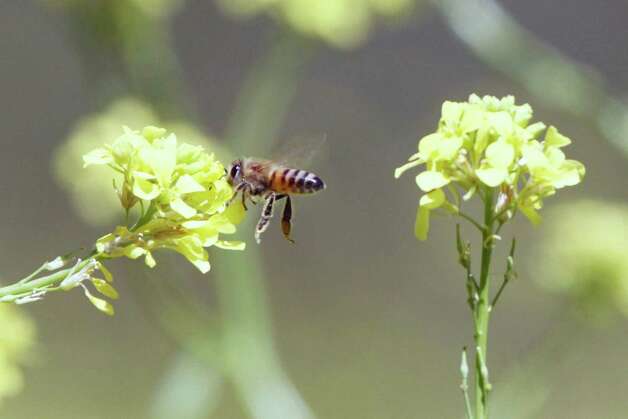 |
| Whether due to colony collapse disorder, the drought or both, bees, such as this April visitor, are rare on the Mims place this spring. Photo: Forrest M. Mims III, For The Express-News / ALL RIGHTS RESERVED. |
By now myriad bees and exotic flies should be sipping nectar from wildflowers. Wasps, dragonflies and spiders should be prowling the landscape looking for dinner.
Where are these creatures and the critters that eat them?
There might be a normal population of insects and spiders in some areas, especially in cities and towns where lawns and gardens were watered during last summer's record drought. But there's a very obvious shortage of insects, spiders and lizards on our rural place.
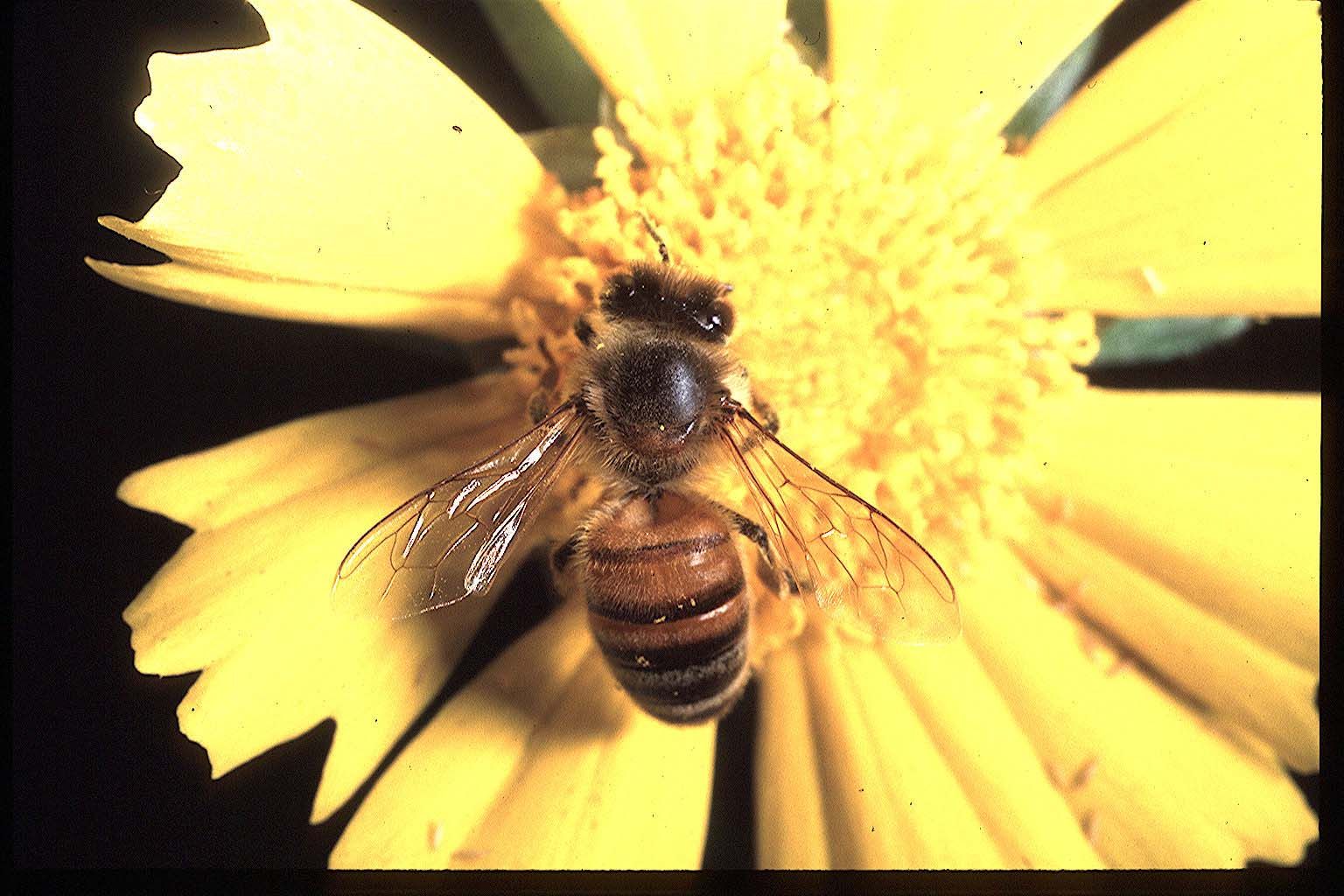
Only two or three honeybees can be seen in 6-foot-square sections of Indian blanket wildflowers here. In a normal year, the count would be much higher. Bluebonnets require insects to pollinate their flowers, so I examined four patches of bluebonnets on our place. Only 53 per cent of their flower spikes produced seed pods.
So far this spring, only two carpenter bees have appeared where a dozen or more usually patrol the sky. Only one red wasp, two grasshoppers, several dragonflies and a few beetles, crickets and pill bugs have been observed during daily walks. Only one toad, several geckos and no other lizards have been seen around our house.
Some species have returned, apparently assisted by abundant winter rain. While no fireflies appeared during 2011, each evening a dozen or so can be seen flashing away at the edge the woods behind our house.
Last month, countless crane flies invaded portions of South Central Texas.
Butterflies are now in abundance.
Paul Schattenberg wrote about the effect of the 2011 drought on Texas insects in the June 14 issue of Agrilife Today, a Texas A&M publication.
Fire ant mounds are smaller, presumably because their builders are less active.
Another drought spin-off is that some creatures are moving into homes to find moisture and food. This includes scorpions, and that's certainly the case at our place.
A search of the Web for insect activity during droughts revealed that populations of some insects that attack crops and trees can increase during droughts.
There are also insect reports virtually identical to what I am observing. For example, a report by Edward Mawley about the 1898 drought in England summarized surveys by rural observers who found sharply reduced insect populations with very few wasps.
Spiders are beginning to return to our place, and this may signal an increase in the insect population.
It will be interesting to see what happens next, especially if the drought returns.
While it might seem good to have fewer bugs around, they form a vital link in nature's food chain. Many pollinate wildflowers, fruit trees and various vegetables.
Forrest Mims, an expert reviewer for the Intergovernmental Panel on Climate Change (IPCC), was named one of the 50 Best Brains in Science by Discover Magazine. His science is featured at www.forrestmims.org. Email him at forrest.mims@ieee.org.