Mostrando entradas con la etiqueta Ingeniería. Mostrar todas las entradas

miércoles, 23 de julio de 2014

Bamboo Engineering

MIT scientists, along with architects and wood processors from England and Canada, are looking for ways to turn bamboo into a construction material more akin to wood composites, like plywood.
(Learn more: http://bit.ly/WCNN7e)

Such bamboo products are currently being developed by several companies; the MIT project intends to gain a better understanding of these materials, so that bamboo can be more effectively used.

Video: Melanie Gonick, MIT News

Additional footage courtesy of MyBoringChannel and Frank Ross 
(http://myboringchannel.com/)

Music sampled from: Radio Silence 


sábado, 22 de febrero de 2014

This New Girl-Powered Engineering Toy Asks Kids To Design And Wire Their Own Dollhouse


Designed by two Stanford engineers, Roominate is a toy that won't limit girls' imaginations. 


It's one of the few tools, gendered or not, that comes with electric circuits and few rules


Research increasingly shows that early childhood play shapes our skills, values, and modes of thinking as we grow older. 


Creators Bettina Chen and Alice Brooks met at Stanford because there were few other women.


That was actually one of the first conversations we had. Why didn’t any of our other female friends do engineering?” Chen says. “And then we considered that it was the things that we played with while we were younger that really inspired us.


More than a year after receiving nearly $86,000 through Kickstarter to build the initial product, Chen and Brooks are displaying Roominate at Manhattan’s annual Toy Fair this week.


The set, manufactured in China, comes with various shapes for walls, floors, and modular furniture.


It also comes with coated, AAA battery-powered circuits designed for six-year-old fingers to put together.


But little girls aren’t just building triple bunk beds and decorating doll house rooms with the Roominate set.


When I visit Roominate’s creators at their Toy Fair booth, Chen and Brooks are standing behind a model of San Francisco’s Bay Bridge.


It’s one modeled off of an 11-year-old’s design that originally featured pipe cleaners as suspension cables, and took half an hour for Chen and Brooks to recreate, they say.


They’ve also seen test groups manufacture everything from amusement park rides with the spinning circuit motors to the Great Wall of China.


With Roominate's pastel-colored Lincoln Logs for the 21st century, little girls are inspired build what's in their imaginations and learn electrical circuitry, too.

In many ways, little girls growing up in the United States today will have more freedom to determine their futures than ever. So why are they still aggressively marketed the same plastic pooping babies, Pepto-pink ponies, and anatomically outrageous dolls from 50 years ago?

Research increasingly shows that early childhood play shapes our skills, values, and modes of thinking as we grow older. But while products like GoldieBlox have started to deconstruct the age-old assumption that little girls simply don’t like building things, choices are still limited.

Now Roominate, a new toy designed by female Stanford University engineering grads, offers another alternative: the first wired dollhouse that kids build on their own. It's one of the few tools, gendered or not, that comes with electric circuits and few rules.

Bettina Chen and Alice Brooks, engineering graduates from the California Institute of Technology and the Massachusetts Institute of Technology respectively, met within their first few days of master's programs at Stanford University, they say, because there weren’t many other girls. “That was actually one of the first conversations we had. Why didn’t any of our other female friends do engineering?” Chen says. “And then we considered that it was the things that we played with while we were younger that really inspired us.

For Brooks, the building bug set in when she first asked her father if Santa Claus might bring her some Barbies for Christmas. He was appalled at the idea, and gave his then-eight-year-old daughter a miniature saw instead. “He sent me off into the basement, and I was making dolls, and dinosaurs, and doll houses,” she remembers. “The act of figuring it out, realizing when I made a mistake and how I could go around it, that’s what really got me into engineering.

More than a year after receiving nearly $86,000 through Kickstarter to build the initial product, Chen and Brooks are displaying Roominate at Manhattan’s annual Toy Fair this week. The set, manufactured in China, comes with various shapes for walls, floors, modular furniture, as well as coated, AAA battery-powered circuits designed for six-year-old fingers to put together.
 

But little girls aren’t just building triple bunk beds and decorating doll house rooms with the Roominate set. When I visit Roominate’s creators at their Toy Fair booth, Chen and Brooks are standing behind a model of San Francisco’s Bay Bridge. It’s one modeled off of an 11-year-old’s design that originally featured pipe cleaners as suspension cables, and took half an hour for Chen and Brooks to recreate, they say. They’ve also seen test groups manufacture everything from amusement park rides with the spinning circuit motors to the Great Wall of China.

Still, while Chen and Brooks claim that their toy might be less “pinkified” than, say, GoldieBlox, the toy does have some trappings of stereotypical little girl-ness--pastels, two dolls, and two big-eyed pets. Parents, however, are reporting that little boys are using Roominate, too. That’s part of the reason why Chen and Brooks are also looking to expand into gender-who-cares-territory.

We started this for girls, because it’s a problem we lived, that we continue to live. We want to get more females in the [science, technology, engineering, and math] field,” Brooks says. “That’s why we started it, because we want to make this hands-on, creative, open-ended play. But as we’ve been developing it, we’ve been realizing that that kind of play is really missing for boys, too.

ORIGINAL: FasCo Exist

sábado, 25 de enero de 2014

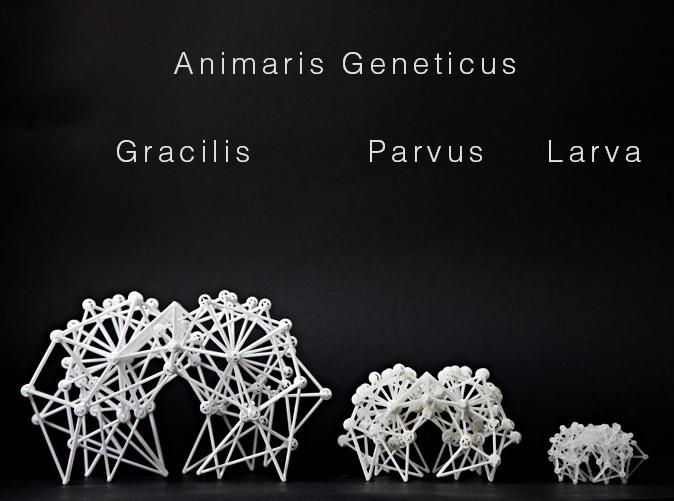
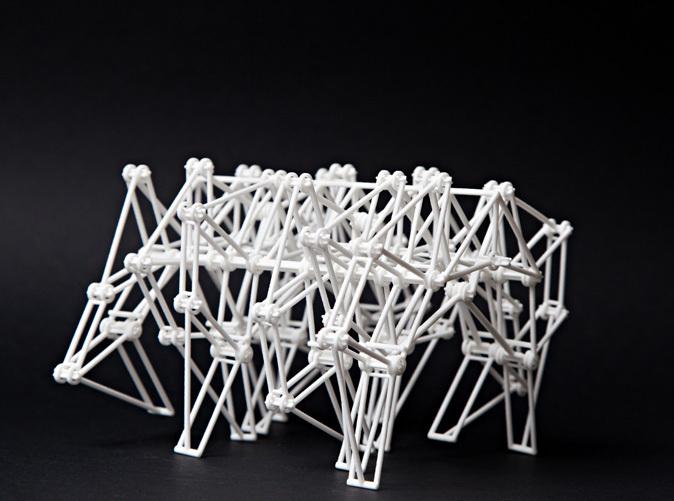
StrandBeests: 3D Print Crazy Live Animals… Well Almost

While browsing Shapeways this afternoon I stumbled upon something that caught my eye. No, it’s not another life saving device that has been 3D printed, or even something that you can get any real use out of, but I still could not look away. What are these 3D Printed objects you may ask? They’re Strandbeests, and they have been created by an extremely talented fellow by the name of Theo Jansen.

Theo is a 65 year old Dutch artist with quite the imagination, who gained fame for his work with PVC piping in the 1990′s to create what were also known back then as StrandBeests. They were basically large structures that could move on their own, many resembling animals or insects. Because of the fact that they have several leg-like extremities, they also usually have the ability to move on sand better than wheels can. Unlike a wheel, only small portions of the “Animals” need to touch the ground. Many Strandbeests can move on their own with the help of a wind driven propeller. The work was quite an engineering as well as artistic feat.

Theo has recently decided to take those same skills and apply them to 3D modelling and printing, bringing his creations to Shapeways so that anyone around the world can buy his famous StrandBeests. He has produced the following video, somewhat humorous, showing off his new 3D printed Beests, comparing them to wild animals:


Currently he is offering four different Strandbeests on Shpaeways, they include the following:
  • Animaris Geneticus Gracilis
  • Animaris Geneticus Larva
  • Animaris Geneticus Ondularis
  • Animaris Geneticus Parvus
Prices for his little works of art range anywhere from $39 to $110, and make amazing coffee table toys. You can discuss these little creatures in the 3DPrintBoard Forum here: http://3dprintboard.com/showthread.php?1518-Introducing-Theo-Jansen-s-StrandBeests


ORIGINAL: 3DPrint
by Randall Desmond
January 24, 2014

viernes, 24 de enero de 2014

Imagining a world with wind turbines in every neighborhood

When Professor Richard McMahon, a senior lecturer in the University of Cambridge Department of Engineering, closes his eyes, he sees a future powered by the wind. He envisions a day when wind turbines are as common as trees in the courtyards on his campus. He sees small generators built to be aesthetically pleasing as well as energy efficient. While thousands of massive wind turbines now dot the countryside of England, producing renewable energy with impressive results, small wind turbines in more urban settings are costly, noisy, complex systems that aren’t very reliable.

So, Richard, doctoral students from the University of Cambridge and experts from Texas Instruments have teamed up to make small scale wind turbines a viable energy option.

Before they could get started with their research, they had to solve one big problem – creating a system to simulate the wind. Without a wind emulator, the team could not conduct any sort of testing and would be forced to rely on the ups and downs of Mother Nature. So, the team decided to build their own wind emulator to mimic wind speeds and direction.

In order to test systems, we need reproducible conditions. It is very hard to go outside and get reproducible wind conditions. You might be waiting a very long time,” said Richard.

With the wind emulator in place, the team looked at opportunities to optimize how the energy is transferred from the turbine to the generator and then onto the electrical grid. While engineers can control a lot of these factors, the challenge for the team came in the lack of control over wind speed or direction.

How do you get the maximum power from the wind and put it on the grid when the wind can quickly change in different ways?” said Dave Freeman, TI (Texas Instruments) Fellow and chief technologist for TI’s Power Management business.

 
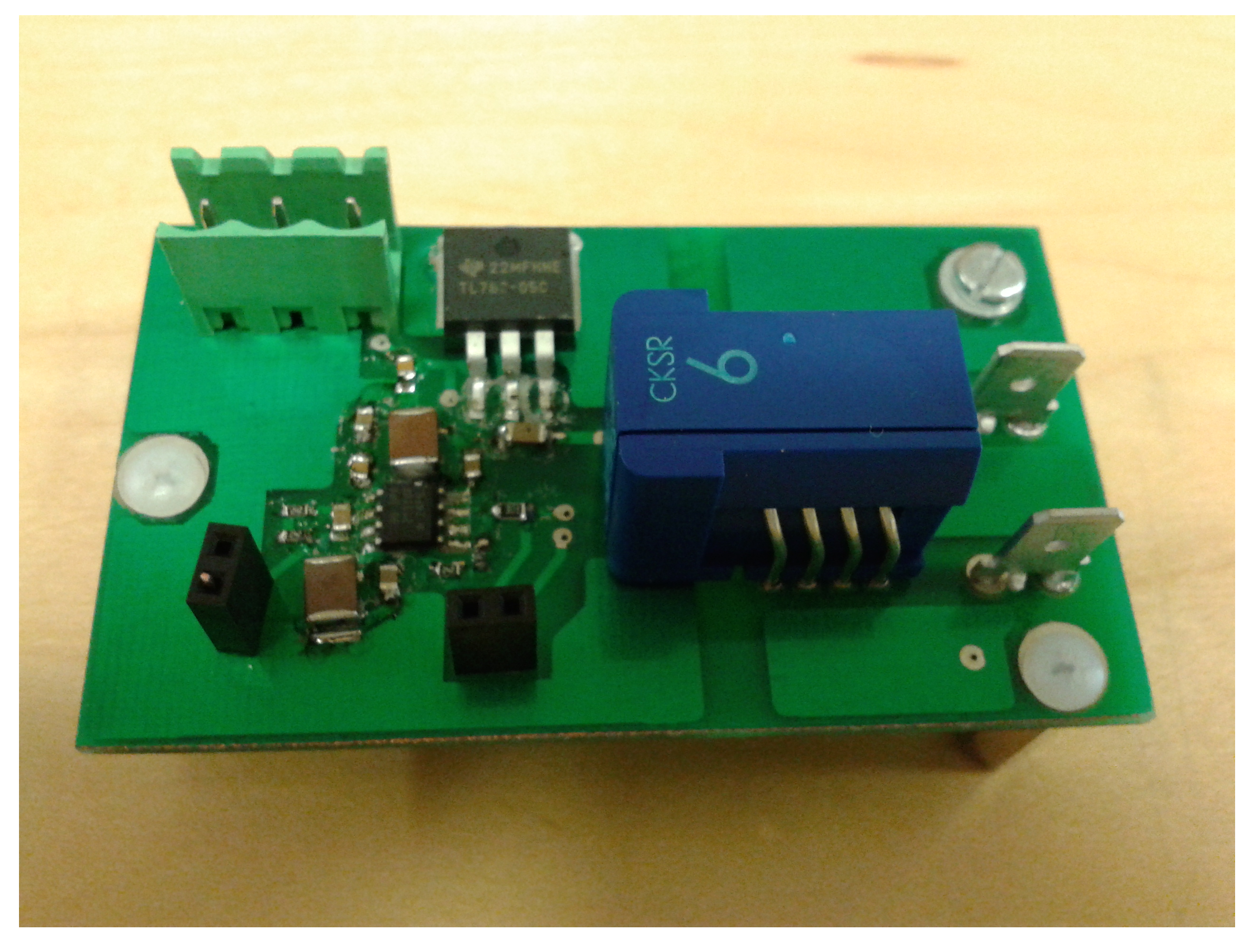
The team narrowed their focus on sensors in the wind turbine, finding many sensors involving turbine and generator speed add unnecessary cost and unreliable mechanics. To resolve this issue, the team has been experimenting with a third-party real time operating system controlling the generator, with the end-goal of putting the system onto a TI microcontroller or digital signal processor.

After more extensive testing with their newly built wind emulator, the team hopes to take their innovation into the real world and possibly make small scale wind turbines a commercially attractive option.

Let’s test it out with the wind emulator, and then, with TI, we can put forward an offering to companies making small wind turbines,” said Richard.

Dave said the collaboration with the University of Cambridge has been a big win for everyone involved. TI provided funding and know-how with the chips and control systems while the University of Cambridge offered wind energy expertise and access to students with bright engineering minds.He said the research could be done in Kilby Labs, but it was a much better use of resources to work with a university that already had experience and expertise in the wind energy field.

Because of the research done by TI and the University of Cambridge, small scale wind turbines may no longer be labeled costly, noisy, complex systems that aren’t very reliable. Soon, Richard might not have to close his eyes to see wind turbines in his neighborhood.

ORIGINAL: TI
Around TI
Jan 23 2014

martes, 10 de septiembre de 2013

Aumentan patentes obtenidas por las universidades en Antioquia

ORIGINAL: Diario ADN
Por: DAVID CALLE ATEHORTÚA
10 de septiembre de 2013

Foto: ETCE/ Archivo. Iplate, uno de los inventos patentados por universitarios en Antioquia, indica a sus usuarios qué plantillas para zapatos deben usar, de acuerdo con el nivel de presión.


Innovan en ingeniería, biotecnología y medicina. Buscan llevar creaciones a empresas y sociedad
Un total de 59 patentes tienen hasta el momento las universidades de la ciudad. Una cifra que va en aumento y que demuestra el ingenio de los estudiantes y profesores.

La Universidad de Antioquia lidera con 24 patentes, 15 a nivel nacional, 9 internacionales, además, tiene 11 solicitadas. (Mira aquí: Universitarios crearon vivienda contra terremotos en Medellín)

Una de las más recientes es el Iplate, una plataforma -que se asemeja a una pesa médica-, sobre la cual las personas pueden pararse. Este dispositivo indica qué plantillas para zapatos se deben usar, de acuerdo con el nivel de presión que se genera en sus pies.

Los investigadores son cada vez más proclives a proteger los resultados de sus investigaciones para lo cual participan cada vez más en programas y eventos de capacitación en licenciamiento y protección intelectual”, destaca la Vicerrectoría de Extensión de la U. de A.

Según la abogada Lina Jaramillo, de la Universidad Pontificia Bolivariana (UPB), el proceso de obtención de una patente es sencillo. (Lee también: Sistema 'Deshidratación de Solventes' desarrollado por estudiantes de ingeniería, se comercializará)

Sin embargo, es necesario contar primero con una cultura de protección de las creaciones a nivel país, puesto que hoy en día lo que existe es una cultura de divulgación del conocimiento por parte de los investigadores”, aclara la funcionaria.

Esta universidad cuenta con cuatro patentes de invención concedidas nacionalmente y una más de modelo de utilidad nacional sobre una ‘Planta generadora de gases calientes de usos en procesos industriales’.

La Universidad Nacional sede Medellín es la segunda en patentar. Tiene 12, en las áreas de ingeniería física, óptica y biotecnología. También esta institución adelanta varias iniciativas para innovar. (LEE: Equipo portátil determina calidad en las gafas de sol)

CES y Eafit comparten
La universidad CES se ha especializado en patentar en áreas de medicina y salud, la mayoría en alianza con Eafit. Se destacan, entre otras, un aparato para la medición de la elasticidad del labio leporino y una prótesis modular de codo.

Cesar Del Valle, coordinador de transferencia tecnológica, destaca que “tenemos otras innovaciones que posiblemente solicitaremos protección para iniciar el trámite”. (Clic aquí para leer: Desarrollan cama para prevenir úlceras en la piel)

Una de las patentes compartidas con Eafit es un dispositivo cuya función es recobrar tejido óseo en el área de la mandíbula, después de accidentes o de enfermedades que dejen esta zona desprovista del mismo.

Aunque en menor proporción, la Escuela de Ingeniería de Antioquia, (EIA) tiene una patente en diseño de trazado de circuito, en el área electrónica.

Por su parte, la Universidad Eafit tiene 10 patentes: “en 2013 obtuvimos la décima patente y tenemos 11 más en proceso, eso quiere decir que estamos logrando la transición de universidad que transmite conocimiento a la universidad que genera conocimiento”, dice Juan Luis Mejía Arango, rector de Eafit.


DAVID CALLE ATEHORTÚA ESCRÍBENOS A: contenido@diarioadn.co

miércoles, 17 de julio de 2013

Physicists, biologists unite to expose how cancer spreads

ORIGINAL: Princeton
by Catherine Zandonella
April 26, 2013; 01:00 p.m.

Cancer cells that can break out of a tumor and invade other organs are more aggressive and nimble than nonmalignant cells, according to a new multi-institutional nationwide study. These cells exert greater force on their environment and can more easily maneuver small spaces.

The researchers report in the journal Scientific Reports that a systematic comparison of metastatic breast-cancer cells to healthy breast cells revealed dramatic differences between the two cell lines in their mechanics, migration, oxygen response, protein production and ability to stick to surfaces. The researchers discovered new insights into how cells make the transition from nonmalignant to metastatic, a process that is not well understood.

The resulting catalogue of differences could someday help researchers detect cancerous cells earlier and someday prevent or treat metastatic cancer, which is responsible for 90 percent of all cancer deaths, according to the study. It was conducted by a network of 12 federally funded Physical Sciences-Oncology Centers (PS-OC) sponsored by the National Cancer Institute. PS-OC is a collaboration of researchers in the physical and biological sciences seeking a better understanding of the physical and chemical forces that shape the emergence and behavior of cancer.
(Image by Guillaume Lambert)


A multi-institutional study including researchers from Princeton University's Physical Sciences-Oncology Center found that metastatic cancer cells are more aggressive and nimble than nonmalignant cells. The Princeton group used silicon-etched microchannels (above) to study the behavior and physical properties of cancer cells. In this device, metastatic cancer cells enter the narrow channels at one end and accelerate as they rapidly move down the channel. Such high motility is a hallmark of metastasis and also indicative of high glucose metabolism, another hallmark of cancer.

"By bringing together different types of experimental expertise to systematically compare metastatic and nonmetastatic cells, we have advanced our knowledge of how metastasis occurs," said Robert Austin, professor of physics and leader of the Princeton PS-OC, along with senior co-investigator Thea Tlsty of the University of California-San Francisco.

Researchers with the Princeton PS-OC, for instance, determined that metastatic cells, in spite of moving more slowly than nonmalignant cells, move farther and in a straighter line, Austin said. The investigators studied the cells' behavior in tiny cell-sized chambers and channels etched out of silicon and designed to mimic the natural environment of the body's interior.

"The mobility of these metastatic cells is an essential feature of their ability to break through the tough membrane [the extracellular matrix] that the body uses to wall off the tumor from the rest of the body," Austin said. "These cells are essentially jail-breakers."

The tiny silicon chambers were built using Princeton's expertise in microfabrication technology — typically used to create small technologies such as integrated circuits and solar cells — and are an example of the type of expertise that physicists and engineers can bring to cancer research, Austin said. For the current study, the Princeton team included physics graduate students David Liao and Guillaume Lambert, and postdoctoral researchers Liyu Liu and Saurabh Vyawahare. They worked closely with a research group led by James Sturm, Princeton's William and Edna Macaleer Professor of Engineering and Applied Science and director of the Princeton Institute for the Science and Technology of Materials (PRISM) where the microfabrication was done.

The Princeton PS-OC also includes collaborators at the Johns Hopkins University School of Medicine, the Salk Institute for Biological Studies and the University of California-Santa Cruz.

The nationwide PS-OC program aims to crack the difficulty of understanding and treating cancer by bringing in researchers from physics, engineering, computer science and chemistry, said Nastaran Zahir Kuhn, program manager for the PS-OC at the National Cancer Institute.

Other notable findings from the paper include that metastatic cells recover more rapidly from the stress of a low-oxygen environment than nonmetastatic cells, which is consistent with previous studies. Although the low-oxygen environment did kill many of the metastatic cells, the survivors rebounded vigorously, underscoring the likely role of individual cells in the spread of cancer. The study also looked at total protein production and detected proteins in the metastatic cells that are consistent with the physical properties such as mobility that malignant cells need to invade the extracellular matrix.

"The PS-OC program aims to bring physical sciences tools and perspectives into cancer research," Kuhn said. "The results of this study demonstrate the utility of such an approach, particularly when studies are conducted in a standardized manner from the beginning."

For the nationwide project, nearly 100 investigators from 20 institutions and laboratories conducted their experiments using the same two cell lines, reagents and protocols to assure that results could be compared. The experimental methods ranged from physical measurements of how the cells push on surrounding cells to measurements of gene and protein expression.

"Roughly 20 techniques were used to study the cell lines, enabling identification of a number of unique relationships between observations," Kuhn said.

For example, a technique known as atomic force microscopy indicated that metastatic cells are softer than nonmalignant cells whereas a different technique, traction force microscopy, suggested that metastatic cells exert more force on their surroundings, Kuhn said. Together these two findings may indicate that metastatic cells can exert force to stick to, migrate on and remodel the tough extracellular matrix that surrounds the tumor, while remaining flexible enough to squeeze through small spaces in that membrane.

domingo, 14 de julio de 2013

Artists and Scientists: More Alike Than Different

By John Maeda
July 11, 2013

Art and science. To those who practice neither, they seem like polar opposites, one data-driven, the other driven by emotion. One dominated by technical introverts, the other by expressive eccentrics. For those of us involved in either field today (and many of us have a hand in both), we know that the similarities between how artists and scientists work far outweigh their stereotypical differences. Both are dedicated to asking the big questions placed before us: “What is true? Why does it matter? How can we move society forward?” Both search deeply, and often wanderingly, for these answers. We know that the scientist’s laboratory and the artist’s studio are two of the last places reserved for open-ended inquiry, for failure to be a welcome part of the process, for learning to occur by a continuous feedback loop between thinking and doing.

I have always bridged art and design, science and technology, navigating both poles and the space that lies between them, with degrees in EECS from MIT and a PhD in classical design from Tsukuba University in Japan. In elementary school, my parents were told at a parent-teacher conference that I was “good at math and art” (but went on to tell their friends I was good at math). My work combining computer codes and traditional artistic technique was one attempt to carve out a space in the middle, and I find I’m always trying to find others in my tribe, hybrids who seek to marry disparate fields as a way of life.

In DaVinci’s time when expertise in art and science had not yet matured to the polarized state in which they exist today, they coexisted naturally. Of course, science’s level of sophistication back then was quite different. But from where I sit as the president of the Rhode Island School of Design, it is clear to me that even current practices in scientific research have much to gain by involving artists in the process early and often. Artists serve as great partners in the communication of scientific research; moreover, they can serve as great partners in the navigation of the scientific unknown.
Add caption

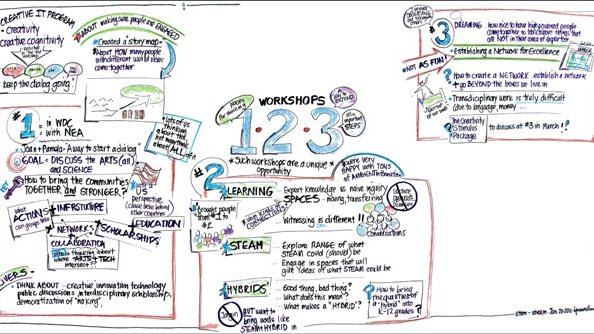
That is why at RISD we have been leading a movement to integrate Art and Design into the recent focus on STEM and turn it into “STEAM.” Our investigation began with an NSF-funded workshop hosted at RISD in January 2011. “Bridging STEM to STEAM: Developing New Frameworks for Art-Science-Design Pedagogybrought together thinkers from the fields of Art + Design, Science, Creative IT, Engineering, and Mathematics to examine the ways educators and policy makers can bridge the gap between art and science.

STEAM and arts integration are crucial in K-12 education, engaging students in the STEM subjects and ensuring that creativity doesn’t fall by the wayside as we chase innovation (how could it?). But it’s also an important idea for research. Artists and designers reformulate the questions that can guide a project, rethinking or redesigning systems at their base. In this vein, RISD is collaborating with the University of Rhode Island and Brown University on new ways to visualize oceanic data to see the impact of climate change on marine life. The work began with a joint course entitled “The Hypothesis Studio,” focusing on the very questions at hand.

Historically, many researchers and organizations have approached our school expecting students and faculty to “design the poster” for their initiatives. It’s true, an artist’s or designer’s expert hand can often make the story of scientific discovery more compelling, results more broadly understandable, and complex choices actionable. DaVinci himself said, “Art is the queen of all sciences communicating knowledge to all the generations of the world. At RISD, we just collaborated with Brown University on a studio course dedicated to the concept of Communicating Medical Risk, so that patients could make truly informed decisions.

Artists and scientists tend to approach problems with a similar open-mindedness and inquisitiveness — they both do not fear the unknown, preferring leaps to incremental steps.
They make natural partners. With such complementary thinking, there is great potential when they collaborate from the offset, resulting in unexpected outcomes that can be exponentially more valuable than when they work apart. You can see the power of collaboration between artists and scientists in the decades of advancement in computer graphics at SIGGRAPH; in the latest exhibitions at the Science Gallery in Dublin, or in the midst of groundbreaking scientific results with the Large Hadron Collider and more.

With all that we have to address in the world – warming continents, fluctuating economies, monstrous cities – pursuing scientific questions in tandem with artists and designers may not seem like conventional wisdom. But given the unconventional nature and scale of the problems we face today, there is real value to be gained from collaborations that bridge the best talents we have in both the quantitative and qualitative domains. Artists and designers are the ones who help bring humanity front and center, make us care, and create answers that resonate with our values. About the 
Author: John Maeda is president of Rhode Island School of Design and the author of The Laws of Simplicity and Redesigning Leadership, which expands on his Twitter feed at @johnmaeda.
Add caption

viernes, 24 de mayo de 2013

How Girls Should Serve Raspberry Pi: Tom Dubick at TEDxCharlotteED

ORIGINAL: TEDxCharlotteED
Mar 16, 2013

Imagine a classroom as a sandbox in which middle school girls can play with ideas and be creative. Does that sound like an engineering course? It is at Charlotte Latin School, where students are using the affordable Raspberry Pi open-source computer to explore programming, design, and technology concepts without fear of damaging expensive equipment.

martes, 22 de mayo de 2012

Janine Benyus: Biomimicry Is Innovation Inspired By Nature

ORIGINAL: FastCompany

Janine Benyus helped bring the word "biomimicry" into 21st century vocabularies.
What is biomimicry? Let Benyus explain in the video.
Janine Benyus: Biomimicry Is Innovation Inspired By Nature
Flickr user davide-diploD
Janine Benyus helped bring the word biomimicry into 21st century vocabularies in her 1997 book on the subject. Her company, The Biomimicry Group, encourages biologists at the design table to ask: how would nature design this? She says our human society will create a more sustainable world in part by emulating the natural organisms all around us, which have already gone through billions of years of trial and error to find elegant and amazing solutions to process and design problems. 
What is Biomimicry

Benyus spoke with EarthSky’s Jorge Salazar:

What is biomimicry?
Biomimicry is innovation inspired by nature. It’s the process of looking at a leaf and trying to figure out how to make a better solar cell.

Biomimicry has been going on for a long time. Think about the Wright brothers looking at turkey vultures to learn about drag and lift in flight.

Now biomimicry is becoming one of the ways that engineers, product designers, and architects do their work. It’s mainly because people are looking for more sustainable ways to do things--to sip energy instead of guzzle it, to save materials, to do things in less toxic ways.

Organisms know how to do these things. After 3.8 billion years, life has learned what works and what’s appropriate on the planet. And that’s what the people trying to redesign our world are looking for--so we can live here in a way that enhances this place.

What are some of the best examples of biomimicry?
 Flickr user BotheredByBees
I like looking at what organisms do that’s completely different from the way we do the same thing. For instance, take a peacock feather. If we were to make it, we would use chemicals and pigments. But actually, the only pigment is brown. It’s done with structural color and transparent layers. When light reflects back to us through the layers, it creates the color blue or green or gold to your eye.

There’s now an e-reader display screen that uses the same principle. It’s made by Qualcomm. It needs no backlighting, because it uses layers and the ambient light to create the different color pixels to your eye. So it’s an incredible low-energy way to do it.

Here’s another example. Life doesn’t use detergent to clean itself. If you think of things like leaves, that need to stay clean. How do they keep the dust off of them?
Wikipedia user William Thielicke
The famous example is the lotus leaf. That’s a leaf that grows in a muddy area, and yet it’s very clean and pristine. The way it keeps itself clean is it has bumps on its surface. When rainwater comes, it balls up. Dirt particles teeter on those bumps. The rainwater balls them away, pearls them away. And that’s been mimicked in building facade paint called Lotusan. The dry paint has that bumpy structure. And rainwater cleans the building, instead of sandblasting or detergents. It’s coming out in all kinds of products--like fabric. It’s called the lotus effect.

martes, 3 de abril de 2012

Medicamentos biotecnológicos: la batalla de los US$ 1.000 millones

ORIGINAL: El Espectador
Por: Pablo Correa

Beatriz Londoño, ministra de Salud.
Beatriz Londoño, ministra de salud, pide que se revelen los conflictos de interés en el debate por la reglamentación de estos medicamentos.

No es cualquier decreto el que la ministra de Salud, Beatriz Londoño, tiene en sus manos y que debe estar listo el próximo 9 de febrero. En esas pocas páginas en las que se dictarán las normas para reglamentar la entrada al mercado colombiano de los llamados medicamentos biotecnológicos, en realidad el país se está jugando algo muchísimo más importante: la sostenibilidad del sistema de salud.

Los biotecnológicos son medicamentos que para su elaboración exigen utilizar como fábrica organismos vivos, principalmente células, manipuladas mediante técnicas de ingeniería genética y molecular. Siete de los diez medicamentos más recobrados en los últimos años al Fosyga hacen parte de este grupo. El Ministerio de Salud calcula que el país gasta unos US$1.000 millones cada año en su compra.

Si el decreto se inclina a favor de las recomendaciones que ha hecho la Asociación de Laboratorios Farmacéuticos de Investigación (Afidro), que representa a las empresas multinacionales, sería muy difícil que entren al mercado nuevos competidores.

Esto significaría que las empresas dueñas de las patentes, que por cierto muchas ya vencieron o están a punto de vencer, seguirían con el monopolio por varios años más. Estas ventajas hasta ahora han resultado muy rentables para ellas, pero no para los colombianos y el Estado en general. Un informe que está por divulgar Fedesarrollo y al que El Espectador tuvo acceso, demuestra graves abusos cometidos en los últimos años.

Tres ejemplos son suficientes. 

  • El adalimumab, utilizado en tratamiento de artritis reumatoidea, es cobrado en Colombia a un precio 173% más alto que el que la misma empresa cobra en el Reino Unido
  • El caso del interferón beta 1-B es más escandaloso. Aquí se comercializa a un precio 3.204% mayor que en países europeos. 
  • Una mención especial merece el rituximab, ya que el precio en Colombia es superior a los US$3.500, mientras que el cobrado en el Reino Unido es tan sólo US$278.

¿Por qué el mismo medicamento es cobrado a precios exorbitantes en un país con índices de pobreza como los de Colombia? Es una explicación que las grandes casas farmacéuticas aún le deben al país.

En un comunicado, Afidro asegura que “hoy estaría en riesgo una población de 2´500.000 de personas si el decreto entrara en vigencia tal como está”.

Al otro lado del debate están la industria farmacética nacional y los defensores de los genéricos. Si el decreto se inclina hacia las recomendaciones que han dado, las exigencias impuestas para la entrada de nuevos medicamentos biotecnológicos se reducirían abriendo la puerta a la competencia.

En su informe, Fedesarrollo recomienda al Gobierno permitir la entrada de nuevos competidores como la mejor manera de regular los precios. En la rueda de prensa que ofreció ayer la ministra Beatriz Londoño, era evidente el cuidado que ponía en cada palabra. Sabe que hay demasiados intereses en juego. Londoño invitó a los críticos del decreto a que destapen sus cartas y conflictos de intereses.

La verdad es que la salud de cientos de colombianos sí depende de los medicamentos biotecnológicos, pero también de los precios a los que se lleguen a comercializar depende la salud de todo el sistema de protección social.

Pablo Correa | Elespectador.com


Roche cuestiona a Fedesarrollo
ORIGINAL: El Espectador
Por: Pablo Correa

La casa farmacéutica pone en duda una investigación sobre precios de medicamentos biotecnológicos en Colombia.

El decreto sobre medicamentos biotecnológicos que tendrá que firmar en las próximas semanas la ministra de Salud, Beatriz Londoño, ha dado para todo: 
  • conflictos de interés entre las asociaciones de pacientes, 
  • asesores médicos cuestionados, 
  • divisiones en las asociaciones médicas y 
  • agrias disputas entre casas farmacéuticas locales y extranjeras. 
  • Y ahora, un debate más: la farmacéutica Roche pone en duda la metodología y algunas de las conclusiones de un estudio realizado por Fedesarrollo sobre los precios de medicamentos en Colombia.
El motivo de la discordia se llama rituximab (vendido por Roche bajo el nombre comercial de Mabthera). Se trata de un fármaco producido mediante ingeniería genética, utilizando como fábrica células de ovario de hámsters chinos, y que se usa en tratamientos de pacientes con artritis reumatoide y lupus eritematoso sistémico.

Según el estudio Pertinencia de incentivar la competencia en el mercado de medicamentos biotecnológicos en Colombia y su impacto sobre las finanzas del sector de la salud, realizado por Juan Gonzalo Zapata y Roberto Steiner, el rituximab (tan sólo uno de los 15 principios activos estudiados) se comercializa en Colombia a un precio muy superior al de otros países como España o el Reino Unido. Mientras en este último país se vende a US$275, en Colombia ese mismo fármaco ronda los US$3.500.

Rolf Hoenger, gerente de Roche, espera que
Fedesarrollo aclare los datos. /Dinero.
Hemos visto con preocupación una serie de imprecisiones metodológicas y de interpretación que conllevan a resultados que no corresponden a lo evidenciado en el mercado farmacéutico colombiano”, dice la carta enviada a los investigadores de Fedesarrollo, con copia a la ministra Londoño, y firmada por el gerente de Roche, Rolf Hoenger.

En la carta, la casa farmacéutica, única autorizada a vender este medicamento en el país, se queja porque las cifras presentadas por Fedesarrollo a partir de las bases de datos de Fosyga y Sismed son imprecisas. Hoenger asegura que el precio de 100 miligramos del fármaco es de US$515 y de US$2.575 para la presentación de 500 miligramos. Estos valores corresponden a los reportados para diciembre de 2011. La explicación para la discrepancia con lo reportado en el estudio según Roche radicaría en que Fedesarrollo no tuvo en cuenta las presentaciones de los medicamentos (100 mg y 500 mg). “Este tipo de errores metodológicos le quitan toda validez al análisis, dado que no existe homogeneidad entre los comparadores utilizados”, argumenta Roche.

Revisando datos
Juan Gonzalo Zapata, el investigador principal del estudio de Fedesarrollo, comenta que en efecto recibieron la queja de Roche y esperan dar una respuesta oficial y técnica la próxima semana, luego de verificar los datos del estudio. Aclaró sin embargo que la fuente de toda la información son las bases de datos oficiales a las que tuvieron acceso bajo un acuerdo de confidencialidad con el mismo Gobierno.

Mientras los investigadores vuelven sobre sus pasos y aclaran el debate, la razón por la que los medicamentos biotecnológicos han generado tanta confrontación es que detrás de ellos está uno de los mercados más jugosos de la salud. Los gastos del sistema durante los últimos tres años se incrementaron exponencialmente, en gran medida por los recobros de estos medicamentos.

En 2010, el gasto por recobros ascendió a $2,4 billones, y cerca del 87% de esto correspondió a medicamentos. En su informe, Fedesarrollo señaló que el rituximab, junto a infliximab y tratuzumab, representaron el 46% del gasto total para los 15 biotecnológicos analizados.

Otra posible explicación para las diferencias en las cifras es que Fedesarrollo utilizó datos de 2010 hacia atrás, mientras que Roche se basa en la información de 2011, luego de una serie de decretos expedidos por el gobierno que han intentado corregir los altos precios que durante años pagó el país.

Pablo Correa | Elespectador.com