Developments and advances in artificial intelligence (AI) have been due in large part to technologies that mimic how the human brain works. In the world of information technology, such AI systems are called neural networks.
These contain algorithms that can be trained, among other things, to imitate how the brain recognises speech and images. However, running an Artificial Neural Network consumes a lot of time and energy.
It paves the way for intelligent systems that required less time and energy to learn, and it can learn autonomously.
In the human brain, synapses work as connections between neurons. The connections are reinforced and learning is improved the more these synapses are stimulated.
The memristor works in a similar fashion. It's made up of a thin ferroelectric layer (which can be spontaneously polarised) that is enclosed between two electrodes.
Using voltage pulses, their resistance can be adjusted, like biological neurons. The synaptic connection will be strong when resistance is low, and vice-versa.
(a) Sketch of pre- and post-neurons connected by a synapse. The synaptic transmission is modulated by the causality (Δt) of neuron spikes. (b) Sketch of the ferroelectric memristor where a ferroelectric tunnel barrier of BiFeO3 (BFO) is sandwiched between a bottom electrode of (Ca,Ce)MnO3 (CCMO) and a top submicron pillar of Pt/Co. YAO stands for YAlO3. (c) Single-pulse hysteresis loop of the ferroelectric memristor displaying clear voltage thresholds ( and ). (d) Measurements of STDP in the ferroelectric memristor. Modulation of the device conductance (ΔG) as a function of the delay (Δt) between pre- and post-synaptic spikes. Seven data sets were collected on the same device showing the reproducibility of the effect. The total length of each pre- and post-synaptic spike is 600 ns. Source: Nature Communications
The memristor's capacity for learning is based on this adjustable resistance.
AI systems have developed considerably in the past couple of years. Neural networks built with learning algorithms are now capable of performing tasks which synthetic systems previously could not do.
With the memristor, this learning process can be greatly improved. Work continues on the memristor, particularly on exploring ways to optimise its function.
For starters, the researchers have successfully built a physical model to help predict how it functions.
Neuromorphic chips are being designed to specifically mimic the human brain – and they could soon replace CPUs
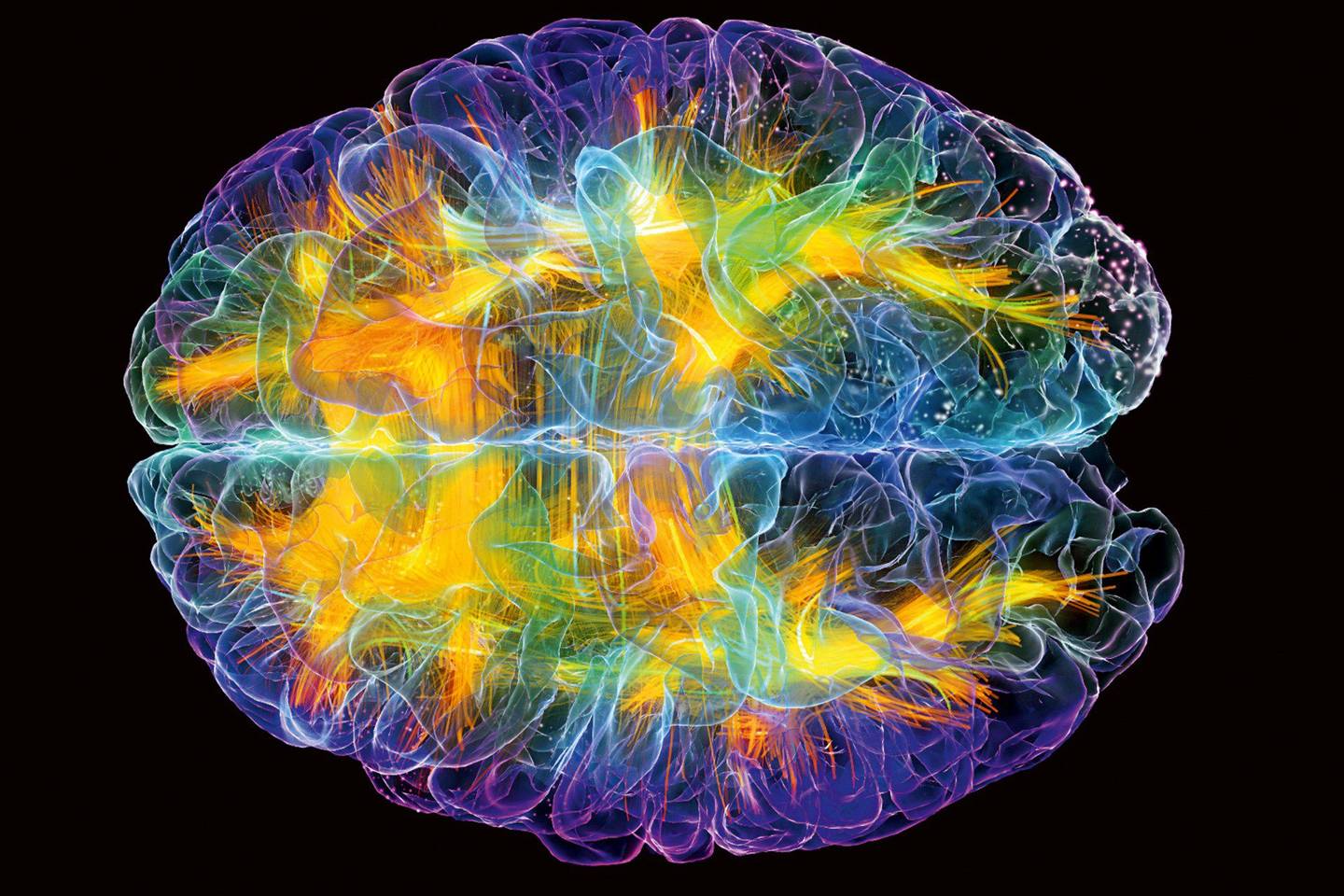
BRAIN ACTIVITY MAP
Neuroscape Lab
AI services like Apple’s Siri and others operate by sending your queries to faraway data centers, which send back responses. The reason they rely on cloud-based computing is that today’s electronics don’t come with enough computing power to run the processing-heavy algorithms needed for machine learning. The typical CPUs most smartphones use could never handle a system like Siri on the device. But Dr. Chris Eliasmith, a theoretical neuroscientist and co-CEO of Canadian AI startup Applied Brain Research, is confident that a new type of chip is about to change that.
“Many have suggested Moore's law is ending and that means we won't get 'more compute' cheaper using the same methods,” Eliasmith says. He’s betting on the proliferation of ‘neuromorphics’ — a type of computer chip that is not yet widely known but already being developed by several major chip makers.
Traditional CPUs process instructions based on “clocked time” – information is transmitted at regular intervals, as if managed by a metronome. By packing in digital equivalents of neurons, neuromorphics communicate in parallel (and without the rigidity of clocked time) using “spikes” – bursts of electric current that can be sent whenever needed. Just like our own brains, the chip’s neurons communicate by processing incoming flows of electricity - each neuron able to determine from the incoming spike whether to send current out to the next neuron.
What makes this a big deal is that these chips require far less power to process AI algorithms. For example, one neuromorphic chip made by IBM contains five times as many transistors as a standard Intel processor, yet consumes only 70 milliwatts of power. An Intel processor would use anywhere from 35 to 140 watts, or up to 2000 times more power.
Eliasmith points out that neuromorphics aren’t new and that their designs have been around since the 80s. Back then, however, the designs required specific algorithms be baked directly into the chip. That meant you’d need one chip for detecting motion, and a different one for detecting sound. None of the chips acted as a general processor in the way that our own cortex does.
This was partly because there hasn’t been any way for programmers to design algorithms that can do much with a general purpose chip. So even as these brain-like chips were being developed, building algorithms for them has remained a challenge.
Eliasmith and his team are keenly focused on building tools that would allow a community of programmers to deploy AI algorithms on these new cortical chips.
Central to these efforts is Nengo, a compiler that developers can use to build their own algorithms for AI applications that will operate on general purpose neuromorphic hardware. Compilers are a software tool that programmers use to write code, and that translate that code into the complex instructions that get hardware to actually do something. What makes Nengo useful is its use of the familiar Python programming language – known for it’s intuitive syntax – and its ability to put the algorithms on many different hardware platforms, including neuromorphic chips. Pretty soon, anyone with an understanding of Python could be building sophisticated neural nets made for neuromorphic hardware.
“Things like vision systems, speech systems, motion control, and adaptive robotic controllers have already been built with Nengo,” Peter Suma, a trained computer scientist and the other CEO of Applied Brain Research, tells me.
Perhaps the most impressive system built using the compiler is Spaun, a project that in 2012 earned international praise for being the most complex brain model ever simulated on a computer. Spaun demonstrated that computers could be made to interact fluidly with the environment, and perform human-like cognitive tasks like recognizing images and controlling a robot arm that writes down what it’s sees. The machine wasn’t perfect, but it was a stunning demonstration that computers could one day blur the line between human and machine cognition. Recently, by using neuromorphics, most of Spaun has been run 9000x faster, using less energy than it would on conventional CPUs – and by the end of 2017, all of Spaun will be running on Neuromorphic hardware.
Eliasmith won NSERC’s John C. Polyani award for that project — Canada’s highest recognition for a breakthrough scientific achievement – and once Suma came across the research, the pair joined forces to commercialize these tools.
“While Spaun shows us a way towards one day building fluidly intelligent reasoning systems, in the nearer term neuromorphics will enable many types of context aware AIs,” says Suma. Suma points out that while today’s AIs like Siri remain offline until explicitly called into action, we’ll soon have artificial agents that are ‘always on’ and ever-present in our lives.
“Imagine a SIRI that listens and sees all of your conversations and interactions. You’ll be able to ask it for things like - "Who did I have that conversation about doing the launch for our new product in Tokyo?" or "What was that idea for my wife's birthday gift that Melissa suggested?,” he says.
When I raised concerns that some company might then have an uninterrupted window into even the most intimate parts of my life, I’m reminded that because the AI would be processed locally on the device, there’s no need for that information to touch a server owned by a big company. And for Eliasmith, this ‘always on’ component is a necessary step towards true machine cognition. “The most fundamental difference between most available AI systems of today and the biological intelligent systems we are used to, is the fact that the latter always operate in real-time. Bodies and brains are built to work with the physics of the world,” he says.
Already, major efforts across the IT industry are heating up to get their AI services into the hands of users. Companies like Apple, Facebook, Amazon, and even Samsung, are developing conversational assistants they hope will one day become digital helpers.
Guessing the location of a randomly chosen Street View image is hard, even for well-traveled humans. But Google’s latest artificial-intelligence machine manages it with relative ease. Here’s a tricky task. Pick a photograph from the Web at random. Now try to work out where it was taken using only the image itself. If the image shows a famous building or landmark, such as the Eiffel Tower or Niagara Falls, the task is straightforward. But the job becomes significantly harder when the image lacks specific location cues or is taken indoors or shows a pet or food or some other detail.
Nevertheless, humans are surprisingly good at this task. To help, they bring to bear all kinds of knowledge about the world such as the type and language of signs on display, the types of vegetation, architectural styles, the direction of traffic, and so on. Humans spend a lifetime picking up these kinds of geolocation cues.
So it’s easy to think that machines would struggle with this task. And indeed, they have.
Today, that changes thanks to the work of Tobias Weyand, a computer vision specialist at Google, and a couple of pals. These guys have trained a deep-learning machine to work out the location of almost any photo using only the pixels it contains.
Their new machine significantly outperforms humans and can even use a clever trick to determine the location of indoor images and pictures of specific things such as pets, food, and so on that have no location cues.
Their approach is straightforward, at least in the world of machine learning.
Weyand and co begin by dividing the world into a grid consisting of over 26,000 squares of varying size that depend on the number of images taken in that location. So big cities, which are the subjects of many images, have a more fine-grained grid structure than more remote regions where photographs are less common. Indeed, the Google team ignored areas like oceans and the polar regions, where few photographs have been taken.
Next, the team created a database of geolocated images from the Web and used the location data to determine the grid square in which each image was taken. This data set is huge, consisting of 126 million images along with their accompanying Exif location data.
Weyand and co used 91 million of these images to teach a powerful neural network to work out the grid location using only the image itself. Their idea is to input an image into this neural net and get as the output a particular grid location or a set of likely candidates.
They then validated the neural network using the remaining 34 million images in the data set.
Finally they tested the network—which they call PlaNet—in a number of different ways to see how well it works.
The results make for interesting reading. To measure the accuracy of their machine, they fed it 2.3 million geotagged images from Flickr to see whether it could correctly determine their location. “PlaNet is able to localize 3.6 percent of the images at street-level accuracy and 10.1 percent at city-level accuracy,” say Weyand and co. What’s more, the machine determines the country of origin in a further 28.4 percent of the photos and the continent in 48.0 percent of them.
That’s pretty good. But to show just how good, Weyand and co put PlaNet through its paces in a test against 10 well-traveled humans. For the test, they used an online game that presents a player with a random view taken from Google Street View and asks him or her to pinpoint its location on a map of the world.
Anyone can play at www.geoguessr.com. Give it a try—it’s a lot of fun and more tricky than it sounds.
GeoGuesser Screen Capture Example
Needless to say, PlaNet trounced the humans. “In total, PlaNet won 28 of the 50 rounds with a median localization error of 1131.7 km, while the median human localization error was 2320.75 km,” say Weyand and co. “[This] small-scale experiment shows that PlaNet reaches superhuman performance at the task of geolocating Street View scenes.”
An interesting question is how PlaNet performs so well without being able to use the cues that humans rely on, such as vegetation, architectural style, and so on. But Weyand and co say they know why: "We think PlaNet has an advantage over humans because it has seen many more places than any human can ever visit and has learned subtle cues of different scenes that are even hard for a well-traveled human to distinguish.”
They go further and use the machine to locate images that do not have location cues, such as those taken indoors or of specific items. This is possible when images are part of albums that have all been taken at the same place. The machine simply looks through other images in the album to work out where they were taken and assumes the more specific image was taken in the same place.
That’s impressive work that shows deep neural nets flexing their muscles once again. Perhaps more impressive still is that the model uses a relatively small amount of memory unlike other approaches that use gigabytes of the stuff. “Our model uses only 377 MB, which even fits into the memory of a smartphone,” say Weyand and co.
That’s a tantalizing idea—the power of a superhuman neural network on a smartphone. It surely won’t be long now!
In a new automotive application, we have used convolutional neural networks (CNNs) to map the raw pixels from a front-facing camera to the steering commands for a self-driving car. This powerful end-to-end approach means that with minimum training data from humans, the system learns to steer, with or without lane markings, on both local roads and highways. The system can also operate in areas with unclear visual guidance such as parking lots or unpaved roads.
Figure 1: NVIDIA’s self-driving car in action.
We designed the end-to-end learning system using an NVIDIA DevBox running Torch 7 for training. An NVIDIA DRIVETM PXself-driving car computer, also with Torch 7, was used to determine where to drive—while operating at 30 frames per second (FPS). The system is trained to automatically learn the internal representations of necessary processing steps, such as detecting useful road features, with only the human steering angle as the training signal. We never explicitly trained it to detect, for example, the outline of roads. In contrast to methods using explicit decomposition of the problem, such as lane marking detection, path planning, and control, our end-to-end system optimizes all processing steps simultaneously.
We believe that end-to-end learning leads to better performance and smaller systems. Better performance results because the internal components self-optimize to maximize overall system performance, instead of optimizing human-selected intermediate criteria, e. g., lane detection. Such criteria understandably are selected for ease of human interpretation which doesn’t automatically guarantee maximum system performance. Smaller networks are possible because the system learns to solve the problem with the minimal number of processing steps.
Convolutional Neural Networks to Process Visual Data
CNNs[1] have revolutionized the computational pattern recognition process[2]. Prior to the widespread adoption of CNNs, most pattern recognition tasks were performed using an initial stage of hand-crafted feature extraction followed by a classifier. The important breakthrough of CNNs is that features are now learned automatically from training examples. The CNN approach is especially powerful when applied to image recognition tasks because the convolution operation captures the 2D nature of images. By using the convolution kernels to scan an entire image, relatively few parameters need to be learned compared to the total number of operations.
While CNNs with learned features have been used commercially for over twenty years [3], their adoption has exploded in recent years because of two important developments.
First, large, labeled data sets such as the ImageNet Large Scale Visual Recognition Challenge (ILSVRC)[4] are now widely available for training and validation.
Second, CNN learning algorithms are now implemented on massively parallel graphics processing units (GPUs), tremendously accelerating learning and inference ability.
The CNNs that we describe here go beyond basic pattern recognition. We developed a system that learns the entire processing pipeline needed to steer an automobile. The groundwork for this project was actually done over 10 years ago in a Defense Advanced Research Projects Agency (DARPA) seedling project known as DARPA Autonomous Vehicle (DAVE)[5], in which a sub-scale radio control (RC) car drove through a junk-filled alley way. DAVE was trained on hours of human driving in similar, but not identical, environments. The training data included video from two cameras and the steering commands sent by a human operator.
In many ways, DAVE was inspired by the pioneering work of Pomerleau[6], who in 1989 built the Autonomous Land Vehicle in a Neural Network (ALVINN)system. ALVINN is a precursor to DAVE, and it provided the initial proof of concept that an end-to-end trained neural network might one day be capable of steering a car on public roads. DAVE demonstrated the potential of end-to-end learning, and indeed was used to justify starting the DARPA Learning Applied to Ground Robots (LAGR) program[7], but DAVE’s performance was not sufficiently reliable to provide a full alternative to the more modular approaches to off-road driving. (DAVE’s mean distance between crashes was about 20 meters in complex environments.)
About a year ago we started a new effort to improve on the original DAVE, and create a robust system for driving on public roads. The primary motivation for this work is to avoid the need to recognize specific human-designated features, such as lane markings, guard rails, or other cars, and to avoid having to create a collection of “if, then, else” rules, based on observation of these features. We are excited to share the preliminary results of this new effort, which is aptly named: DAVE–2.
The DAVE-2 System
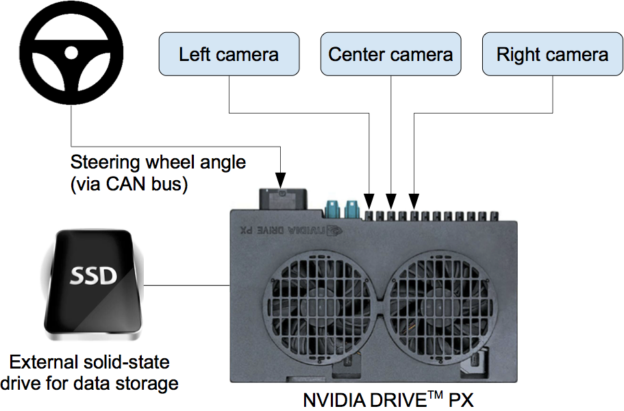
Figure 2: High-level view of the data collection system.
Figure 2 shows a simplified block diagram of the collection system for training data of DAVE-2. Three cameras are mounted behind the windshield of the data-acquisition car, and timestamped video from the cameras is captured simultaneously with the steering angle applied by the human driver. The steering command is obtained by tapping into the vehicle’s Controller Area Network (CAN) bus. In order to make our system independent of the car geometry, we represent the steering command as 1/r, where r is the turning radius in meters. We use 1/r instead of r to prevent a singularity when driving straight (the turning radius for driving straight is infinity). 1/r smoothly transitions through zero from left turns (negative values) to right turns (positive values).
Training data contains single images sampled from the video, paired with the corresponding steering command (1/r). Training with data from only the human driver is not sufficient; the network must also learn how to recover from any mistakes, or the car will slowly drift off the road. The training data is therefore augmented with additional images that show the car in different shifts from the center of the lane and rotations from the direction of the road.
The images for two specific off-center shifts can be obtained from the left and the right cameras. Additional shifts between the cameras and all rotations are simulated through viewpoint transformation of the image from the nearest camera. Precise viewpoint transformation requires 3D scene knowledge which we don’t have, so we approximate the transformation by assuming all points below the horizon are on flat ground, and all points above the horizon are infinitely far away. This works fine for flat terrain, but for a more complete rendering it introduces distortions for objects that stick above the ground, such as cars, poles, trees, and buildings. Fortunately these distortions don’t pose a significant problem for network training. The steering label for the transformed images is quickly adjusted to one that correctly steers the vehicle back to the desired location and orientation in two seconds.
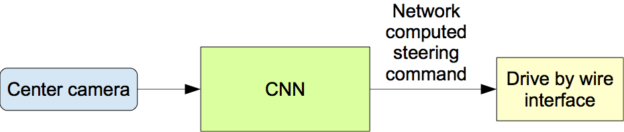
Figure 3: Training the neural network.
Figure 3 shows a block diagram of our training system. Images are fed into a CNN that then computes a proposed steering command. The proposed command is compared to the desired command for that image, and the weights of the CNN are adjusted to bring the CNN output closer to the desired output. The weight adjustment is accomplished using back propagation as implemented in the Torch 7 machine learning package.
Once trained, the network is able to generate steering commands from the video images of a single center camera. Figure 4 shows this configuration.
Figure 4: The trained network is used to generate steering commands from a single front-facing center camera.
Data Collection
Training data was collected by driving on a wide variety of roads and in a diverse set of lighting and weather conditions. We gathered surface street data in central New Jersey and highway data from Illinois, Michigan, Pennsylvania, and New York. Other road types include two-lane roads (with and without lane markings), residential roads with parked cars, tunnels, and unpaved roads. Data was collected in clear, cloudy, foggy, snowy, and rainy weather, both day and night. In some instances, the sun was low in the sky, resulting in glare reflecting from the road surface and scattering from the windshield.
The data was acquired using either our drive-by-wire test vehicle, which is a 2016 Lincoln MKZ, or using a 2013 Ford Focus with cameras placed in similar positions to those in the Lincoln. Our system has no dependencies on any particular vehicle make or model. Drivers were encouraged to maintain full attentiveness, but otherwise drive as they usually do. As of March 28, 2016, about 72 hours of driving data was collected.
Network Architecture
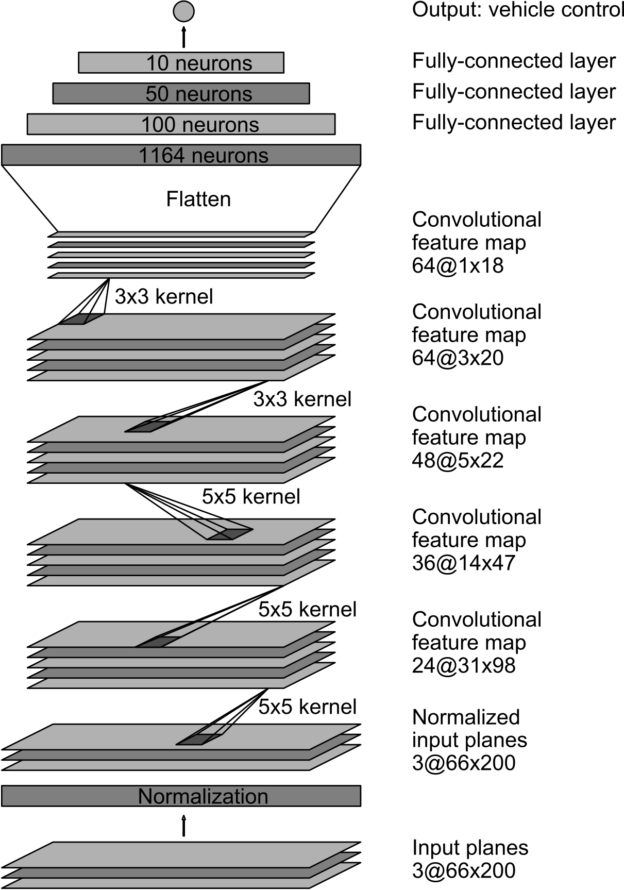
Figure 5: CNN architecture. The network has about 27 million connections and 250 thousand parameters.
We train the weights of our network to minimize the mean-squared error between the steering command output by the network, and either the command of the human driver or the adjusted steering command for off-center and rotated images (see “Augmentation”, later). Figure 5 shows the network architecture, which consists of 9 layers, including a normalization layer, 5 convolutional layers, and 3 fully connected layers. The input image is split into YUV planes and passed to the network.
The first layer of the network performs image normalization. The normalizer is hard-coded and is not adjusted in the learning process. Performing normalization in the network allows the normalization scheme to be altered with the network architecture, and to be accelerated via GPU processing.
The convolutional layers are designed to perform feature extraction, and are chosen empirically through a series of experiments that vary layer configurations. We then use strided convolutions in the first three convolutional layers with a 2×2 stride and a 5×5 kernel, and a non-strided convolution with a 3×3 kernel size in the final two convolutional layers.
We follow the five convolutional layers with three fully connected layers, leading to a final output control value which is the inverse-turning-radius. The fully connected layers are designed to function as a controller for steering, but we noted that by training the system end-to-end, it is not possible to make a clean break between which parts of the network function primarily as feature extractor, and which serve as controller.
Training Details
DATA SELECTION
The first step to training a neural network is selecting the frames to use. Our collected data is labeled with road type, weather condition, and the driver’s activity (staying in a lane, switching lanes, turning, and so forth). To train a CNN to do lane following, we simply select data where the driver is staying in a lane, and discard the rest. We then sample that video at 10 FPS because a higher sampling rate would include images that are highly similar, and thus not provide much additional useful information. To remove a bias towards driving straight the training data includes a higher proportion of frames that represent road curves.
AUGMENTATION
After selecting the final set of frames, we augment the data by adding artificial shifts and rotations to teach the network how to recover from a poor position or orientation. The magnitude of these perturbations is chosen randomly from a normal distribution. The distribution has zero mean, and the standard deviation is twice the standard deviation that we measured with human drivers. Artificially augmenting the data does add undesirable artifacts as the magnitude increases (as mentioned previously).
Simulation
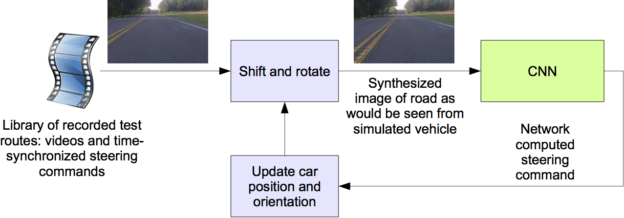
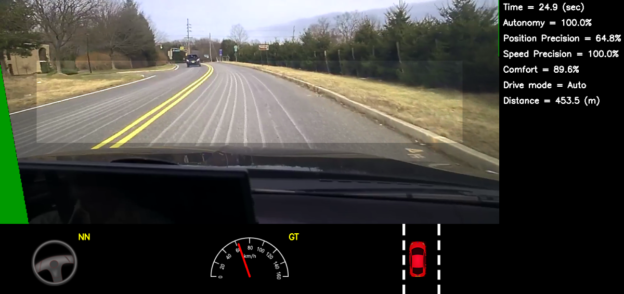
Before road-testing a trained CNN, we first evaluate the network’s performance in simulation. Figure 6 shows a simplified block diagram of the simulation system, and Figure 7 shows a screenshot of the simulator in interactive mode.
Figure 6: Block-diagram of the drive simulator.
The simulator takes prerecorded videos from a forward-facing on-board camera connected to a human-driven data-collection vehicle, and generates images that approximate what would appear if the CNN were instead steering the vehicle. These test videos are time-synchronized with the recorded steering commands generated by the human driver.
Since human drivers don’t drive in the center of the lane all the time, we must manually calibrate the lane’s center as it is associated with each frame in the video used by the simulator. We call this position the “ground truth”.
The simulator transforms the original images to account for departures from the ground truth. Note that this transformation also includes any discrepancy between the human driven path and the ground truth. The transformation is accomplished by the same methods as described previously.
The simulator accesses the recorded test video along with the synchronized steering commands that occurred when the video was captured. The simulator sends the first frame of the chosen test video, adjusted for any departures from the ground truth, to the input of the trained CNN, which then returns a steering command for that frame. The CNN steering commands as well as the recorded human-driver commands are fed into the dynamic model [7] of the vehicle to update the position and orientation of the simulated vehicle.
Figure 7: Screenshot of the simulator in interactive mode. See text for explanation of the performance metrics. The green area on the left is unknown because of the viewpoint transformation. The highlighted wide rectangle below the horizon is the area which is sent to the CNN.
The simulator then modifies the next frame in the test video so that the image appears as if the vehicle were at the position that resulted by following steering commands from the CNN. This new image is then fed to the CNN and the process repeats.
The simulator records the off-center distance (distance from the car to the lane center), the yaw, and the distance traveled by the virtual car. When the off-center distance exceeds one meter, a virtual human intervention is triggered, and the virtual vehicle position and orientation is reset to match the ground truth of the corresponding frame of the original test video.
Evaluation
We evaluate our networks in two steps: first in simulation, and then in on-road tests.
In simulation we have the networks provide steering commands in our simulator to an ensemble of prerecorded test routes that correspond to about a total of three hours and 100 miles of driving in Monmouth County, NJ. The test data was taken in diverse lighting and weather conditions and includes highways, local roads, and residential streets.
We estimate what percentage of the time the network could drive the car (autonomy) by counting the simulated human interventions that occur when the simulated vehicle departs from the center line by more than one meter. We assume that in real life an actual intervention would require a total of six seconds: this is the time required for a human to retake control of the vehicle, re-center it, and then restart the self-steering mode. We calculate the percentage autonomy by counting the number of interventions, multiplying by 6 seconds, dividing by the elapsed time of the simulated test, and then subtracting the result from 1:
Thus, if we had 10 interventions in 600 seconds, we would have an autonomy value of
ON-ROAD TESTS
After a trained network has demonstrated good performance in the simulator, the network is loaded on the DRIVE PX in our test car and taken out for a road test. For these tests we measure performance as the fraction of time during which the car performs autonomous steering. This time excludes lane changes and turns from one road to another. For a typical drive in Monmouth County NJ from our office in Holmdel to Atlantic Highlands, we are autonomous approximately 98% of the time. We also drove 10 miles on the Garden State Parkway (a multi-lane divided highway with on and off ramps) with zero intercepts.
Here is a video of our test car driving in diverse conditions.
Visualization of Internal CNN State
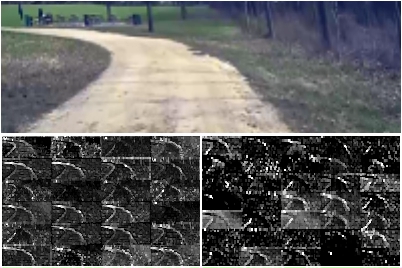
Figure 8: How the CNN “sees” an unpaved road. Top: subset of the camera image sent to the CNN. Bottom left: Activation of the first layer feature maps. Bottom right: Activation of the second layer feature maps. This demonstrates that the CNN learned to detect useful road features on its own, i. e., with only the human steering angle as training signal. We never explicitly trained it to detect the outlines of roads.
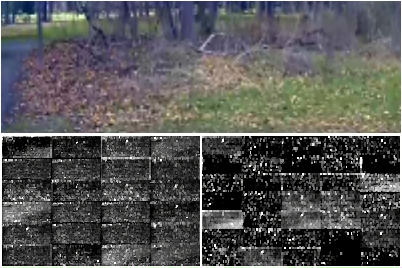
Figures 8 and 9 show the activations of the first two feature map layers for two different example inputs, an unpaved road and a forest. In case of the unpaved road, the feature map activations clearly show the outline of the road while in case of the forest the feature maps contain mostly noise, i. e., the CNN finds no useful information in this image.
This demonstrates that the CNN learned to detect useful road features on its own, i. e., with only the human steering angle as training signal. We never explicitly trained it to detect the outlines of roads, for example.
Figure 9: Example image with no road. The activations of the first two feature maps appear to contain mostly noise, i. e., the CNN doesn’t recognize any useful features in this image.
Conclusions
We have empirically demonstrated that CNNs are able to learn the entire task of lane and road following without manual decomposition into road o
Y. LeCun, B. Boser, J. S. Denker, D. Henderson, R. E. Howard, W. Hubbard, and L. D. Jackel. Backpropagation applied to handwritten zip code recognition. Neural Computation, 1(4):541–551, Winter 1989. URL: http://yann.lecun.org/exdb/publis/pdf/lecun-89e.pdf.
Alex Krizhevsky, Ilya Sutskever, and Geoffrey E. Hinton. Imagenet classification with deep convolutional neural networks.
L. D. Jackel, D. Sharman, Stenard C. E., Strom B. I., , and D Zuckert. Optical character recognition for self-service banking. AT&T Technical Journal, 74(1):16–24, 1995.
Danwei Wang and Feng Qi. Trajectory planning for a four-wheel-steering vehicle. In Proceedings of the 2001 IEEE International Conference on Robotics & Automation, May 21–26 2001. URL: http://www.ntu.edu.sg/home/edwwang/confpapers/wdwicar01.pdf. rlane marking detection, semantic abstraction, path planning, and control. A small amount of training data from less than a hundred hours of driving was sufficient to train the car to operate in diverse conditions, on highways, local and residential roads in sunny, cloudy, and rainy conditions.
The CNN is able to learn meaningful road features from a very sparse training signal (steering alone).
The system learns for example to detect the outline of a road without the need of explicit labels during training.
More work is needed to improve the robustness of the network, to find methods to verify the robustness, and to improve visualization of the network-internal processing steps.
Y. LeCun, B. Boser, J. S. Denker, D. Henderson, R. E. Howard, W. Hubbard, and L. D. Jackel. Backprop- agation applied to handwritten zip code recognition. Neural Computation, 1(4):541–551, Winter 1989. URL: http://yann.lecun.org/exdb/publis/pdf/lecun-89e.pdf.
Alex Krizhevsky, Ilya Sutskever, and Geoffrey E. Hinton. Imagenet classification with deep convolutional neural networks. In F. Pereira, C. J. C. Burges, L. Bottou, and K. Q. Weinberger, editors, Advances in Neural Information Processing Systems 25, pages 1097–1105. Curran Associates, Inc., 2012. URL: http://papers.nips.cc/paper/ 4824-imagenet-classification-with-deep-convolutional-neural-networks. pdf.
L. D. Jackel, D. Sharman, Stenard C. E., Strom B. I., , and D Zuckert. Optical character recognition for self-service banking. AT&T Technical Journal, 74(1):16–24, 1995.
Large scale visual recognition challenge (ILSVRC). URL: http://www.image-net.org/ challenges/LSVRC/.
Net-Scale Technologies, Inc. Autonomous off-road vehicle control using end-to-end learning, July 2004. Final technical report. URL: http://net-scale.com/doc/net-scale-dave-report.pdf.
Dean A. Pomerleau. ALVINN, an autonomous land vehicle in a neural network. Technical report, Carnegie Mellon University, 1989. URL: http://repository.cmu.edu/cgi/viewcontent. cgi?article=2874&context=compsci.
Danwei Wang and Feng Qi. Trajectory planning for a four-wheel-steering vehicle. In Proceedings of the 2001 IEEE International Conference on Robotics & Automation, May 21–26 2001. URL: http: //www.ntu.edu.sg/home/edwwang/confpapers/wdwicar01.pdf.
Gamalon has developed a technique that lets machines learn to recognize concepts in images or text much more efficiently.
An app developed by Gamalon recognizes objects after seeing a few examples. A learning program recognizes simpler concepts such as lines and rectangles.
Machine learning is becoming extremely powerful, but it requires extreme amounts of data.
You can, for instance, train a deep-learning algorithm to recognize a cat with a cat-fancier’s level of expertise, but you’ll need to feed it tens or even hundreds of thousands of images of felines, capturing a huge amount of variation in size, shape, texture, lighting, and orientation. It would be lot more efficient if, a bit like a person, an algorithm could develop an idea about what makes a cat a cat from fewer examples.
A Boston-based startup called Gamalon has developed technology that lets computers do this in some situations, and it is releasing two products Tuesday based on the approach.
If the underlying technique can be applied to many other tasks, then it could have a big impact. The ability to learn from less data could let robots explore and understand new environments very quickly, or allow computers to learn about your preferences without sharing your data.
Gamalon uses a technique that it calls Bayesian program synthesis to build algorithms capable of learning from fewer examples. Bayesian probability, named after the 18th century mathematician Thomas Bayes, provides a mathematical framework for refining predictions about the world based on experience. Gamalon’s system uses probabilistic programming—or code that deals in probabilities rather than specific variables—to build a predictive model that explains a particular data set. From just a few examples, a probabilistic program can determine, for instance, that it’s highly probable that cats have ears, whiskers, and tails. As further examples are provided, the code behind the model is rewritten, and the probabilities tweaked. This provides an efficient way to learn the salient knowledge from the data.
Probabilistic programming techniques have been around for a while. In 2015, for example, a team from MIT and NYU used probabilistic methods to have computers learn to recognize written characters and objects after seeing just one example (see “This AI Algorithm Learns Simple Tasks as Fast as We Do”). But the approach has mostly been an academic curiosity.
There are difficult computational challenges to overcome, because the program has to consider many different possible explanations, says Brenden Lake, a research fellow at NYU who led the 2015 work.
Still, in theory, Lake says, the approach has significant potential because it can automate aspects of developing a machine-learning model. “Probabilistic programming will make machine learning much easier for researchers and practitioners,” Lake says. “It has the potential to take care of the difficult [programming] parts automatically.”
There are certainly significant incentives to develop easier-to-use and less data-hungry machine-learning approaches. Machine learning currently involves acquiring a large raw data set, and often then labeling it manually. The learning is then done inside large data centers, using many computer processors churning away in parallel for hours or days. “There are only a few really large companies that can really afford to do this,” says Ben Vigoda, cofounder and CEO of Gamalon.
When Machines Have Ideas | Ben Vigoda | TEDxBoston
Our CEO, Ben Vigoda, gave a talk at TEDx Boston 2016 called “When Machines Have Ideas” that describes why building “stories” (i.e. Bayesian generative models) into machine intelligence systems can be very powerful.
In theory, Gamalon’s approach could make it a lot easier for someone to build and refine a machine-learning model, too. Perfecting a deep-learning algorithm requires a great deal of mathematical and machine-learning expertise. “There’s a black art to setting these systems up,” Vigoda says. With Gamalon’s approach, a programmer could train a model by feeding in significant examples.
Vigoda showed MIT Technology Review a demo with a drawing app that uses the technique. It is similar to the one released last year by Google, which uses deep learning to recognize the object a person is trying to sketch (see “Want to Understand AI? Try Sketching a Duck for a Neural Network”). But whereas Google’s app needs to see a sketch that matches the ones it has seen previously, Gamalon’s version uses a probabilistic program to recognize the key features of an object. For instance, one program understands that a triangle sitting atop a square is most likely a house. This means even if your sketch is very different from what it has seen before, providing it has those features, it will guess correctly.
The technique could have significant near-term commercial applications, too. The company’s first products use Bayesian program synthesis to recognize concepts in text.
One product, called Gamalon Structure, can extract concepts from raw text more efficiently than is normally possible. For example, it can take a manufacturer’s description of a television and determine what product is being described, the brand, the product name, the resolution, the size, and other features. Another product, Gamalon Match, is used to categorize the products and price in a store’s inventory. In each case, even when different acronyms or abbreviations are used for a product or feature, the system can quickly be trained to recognize them.
Vigoda believes the ability to learn will have other practical benefits.
A computer could learn about a user’s interests without requiring an impractical amount of data or hours of training.
Personal data might not need to be shared with large companies, either, if machine learning can be done efficiently on a user’s smartphone or laptop.
And a robot or a self-driving car could learn about a new obstacle without needing to see hundreds of thousands of examples.
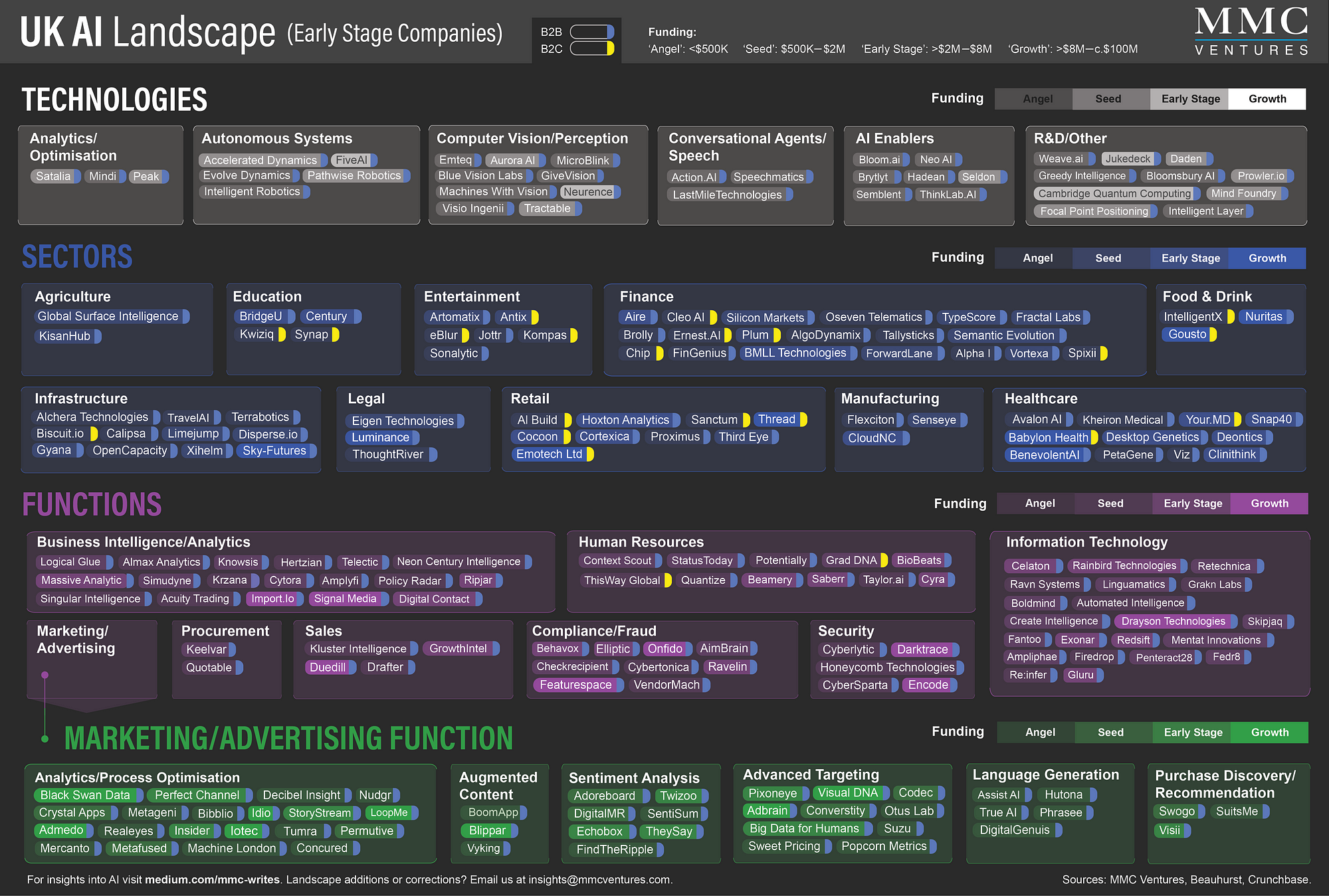
Figure 1 (above): The landscape of early stage UK AI companies.
With every paradigm shift in technology, waves of innovation follow as companies improve and then reimagine processes. Today we are in the early stages of the global artificial intelligence (AI) revolution. Machine learning algorithms, whose results improve with experience, enable us to find patterns in large data sets and make predictions more effectively — about people, equipment, systems and processes. (For an accessible introduction to AI, read our Primer.) But what are the dynamics of AI entrepreneurship in the UK?
We’ve mapped 226 independent, early stage AI software companies based in the UK and met with over 40 of these companies in recent weeks. Below, we share six powerful dynamics we see that are shaping the UK AI market— from changing activity levels and areas of focus, to trends in monetisation and the size and staging of investment.
Interested in more venture capital insights? Sign up for our blog posts.
Over time, we expect the distinction between ‘AI’ companies and other software providers to blur and then disappear, as machine learning is employed to tackle a wide variety of business processes and sectors. Today, however, it is possible to point to a sub-set of early stage software companies defined by their focus on AI.
We’ve researched 226 early stage AI companies in the UK and met with 40 of them. We’ve developed a map (Figure 1, above) to place the 226 according to their:
Purpose: Is the company focused on improving a business function (for example, marketing or human resources) or a sector (healthcare, education, agriculture)? Or does the company develop an AI technology with cross-domain application?
Customer Type: Does the company predominantly sell to other businesses (‘B2B’) or to consumers (‘B2C’)?
Funding: How much funding has the company received to date? We bracket this from ‘angel’ investment (under $500,000) through to ‘growth’ capital ($8m to ~$100m).
We’ll update our map regularly. We apologise if we’ve omitted or mis-classified your company; we’re aware that many early stage companies may be using, but not presenting, extensive AI. Please get in touch with additions or corrections.
After analysing the market and meeting with 40 companies in recent weeks, we highlight the following six dynamics in the market:
1. A focus on AI for business functions
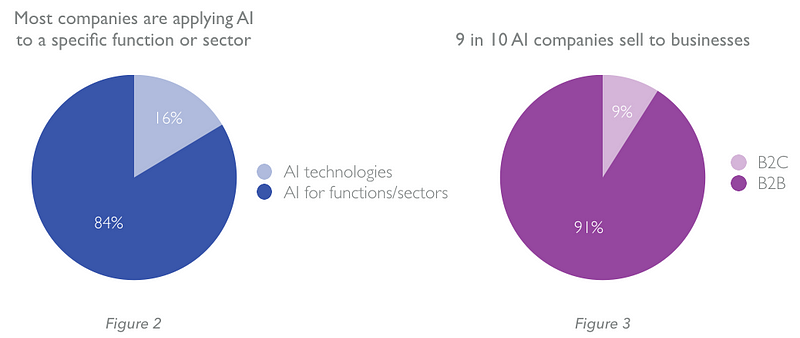
Most early stage UK AI companies — five in every six — are applying machine learning to challenges in specific business functions or sectors (Figure 2, below). Reflecting the nascent stage of the field, however, one in six is developing an AI technology — a capability, platform or set of algorithms — applicable across multiple domains. These companies’ activities range from the development of computer vision solutions to the creation of algorithms for autonomous decision-making.
To whom are AI companies selling? Nine out of 10 AI companies are predominantly ‘B2B’, developing and selling solutions to other businesses (Figure 3, below). Just one in 10 sells directly to consumers (‘B2C’).
Add caption
A ‘cold start’ challenge around data is inhibiting the number of new B2C AI companies. Training machine learning algorithms usually requires large volumes of data. While B2B companies can analyse the varied and extensive data sets of the businesses they serve, in the absence of public or permissioned (e.g. Facebook profile) data, customer-facing companies usually begin without large volumes of consumer data to analyse. Typically, therefore, they deploy machine learning over time as their user bases and data sets grow. Gousto, for example, is an MMC portfolio company that delivers recipes and associated ingredients to consumers for them to cook at home. Today, Gousto’s team of machine learning PhDs, data analysts and engineers leverage AI for warehouse automation and menu design. Since its inception Gousto has had a vision for the use of AI, but the Company has achieved its vision over time.
Given the ‘cold start’ challenge, the reality is that most consumers will first experience machine learning via the world’s most popular consumer applications — Facebook, Google, Amazon, Netflix, Pinterest and others — that leverage vast data sets and machine learning teams to deliver facial recognition, search and entertainment recommendations, translation capabilities and more.
2. AI entrepreneurship is unevenly spread
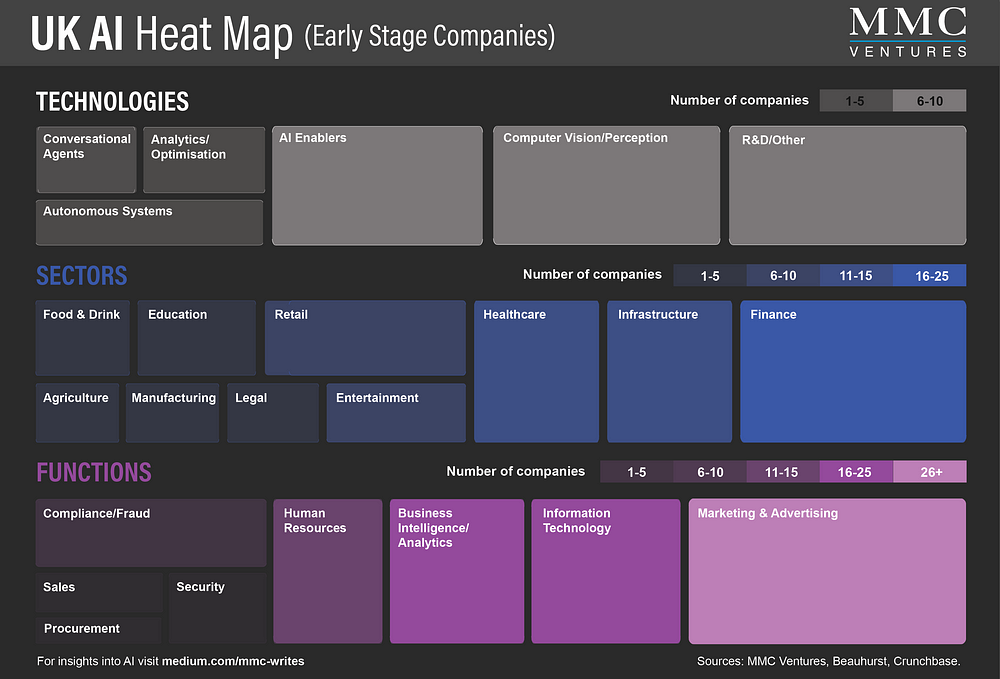
A heat map highlights areas of early stage activity, as measured by the number of companies in each segment (Figure 4, below).
Figure 4: A heat map of early stage AI companies in the UK
Activity is greatest within:
The Marketing & Advertising,
Information Technology, and
Business Intelligence & Analytics functions; and
The Finance sector.
Activity is extensive within:
The Human Resources function; and
The Infrastructure,
Healthcare and
Retail sectors.
The sectors above are well suited to the application of AI, explaining the concentration of AI activity within them. The opportunity for value creation within each segment is demonstrable as well as significant. In marketing and in finance, for example, improvements in campaign conversion and financial performance against a benchmark are readily quantifiable. All offer numerous prediction and optimisation challenges well suited to the application of machine learning. All offer large data sets for training and deployment. A path to better-than-human performance is technically achievable. The alternatives are impractical or expensive. And all are specialised verticals, distant from the competitive threat posed by the consumer- and horizontal focus of the AI platform providers Google, Amazon, Microsoft and IBM — with the exception of healthcare where Google and IBM both enable and challenge.
As attractive market fundamentals catalyse activity, the strongest AI companies can develop a competitive moat by:
bringing deep domain expertise to bear in a complex domain;
developing proprietary algorithms;
creating a network effect around data by leveraging non-public data sets; and
by securing adequate capital to build a high quality machine learning team and go-to-market resources.
Activity in Marketing & Advertising dominates; one in five early stage UK AI companies target this function. The fundamentals of modern marketing and advertising represent a sweet-spot for AI. Consumers have billions of touch points with websites and apps, providing a rich seam of available, but complex, data. Further, almost every stage of the marketing and advertising value chain is ripe for optimisation and automation — including
content processing,
consumer segmentation,
consumer targeting,
programmatic advertising optimisation,
purchase discovery for consumers and
analysis of consumer sentiment.
Areas of lower activity
In a number of areas, activity appears modest relative to market opportunities. In the Manufacturing sector, for example, there are few startups to address a substantial need.
Machine learning has the potential to unlock 20% more production capacity through predictive, optimised maintenance of machines.
Raw material costs and re-working can be reduced through improved analysis of product quality data.
Further, ‘buffering’ — storing raw materials and part-developed products to compensate for unforeseen inefficiencies during production — can be reduced by up to 30% given more predictable production capacity.
The proliferation of sensors in the manufacturing industry, including sensor data from the production line, machine tool parameters and environmental data, has also increased significantly the data available for machine learning.
Within the Compliance & Fraud function, there appear few startups capitalising on banks’ ballooning expenditure on compliance.
30,000 people in Citi — 12% of the Bank’s workforce — now work in compliance. In its 1Q15 conference call, Citi highlighted that over 50% of the $3.4B it saved through efficiency initiatives was being consumed by additional investments in regulation and compliance. The dynamics are similar among Citi’s peers.
JP Morgan increased compliance spend 50% between 2011 and 2015, to $9B, while
Goldman Sachs highlighted that its 11% increase in headcount in the last four years has largely been to meet regulatory compliance needs.
Our discussions with banks highlight particular focus on ‘Know Your Customer’ (KYC) and Anti- Money Laundering (AML) initiatives. Beyond presenting an extensive need, the sector offers large data sets for training, expensive human alternatives and, in some areas at least, an evident ability for machine learning to deliver better-than-human performance given the pragmatic impossibility of humans monitoring the data deluge. There may be few UK compliance companies given in-house efforts by the banks, concern regarding potential client concentration, or competition from US startups — but opportunities appear considerable.
3. AI entrepreneurship has doubled
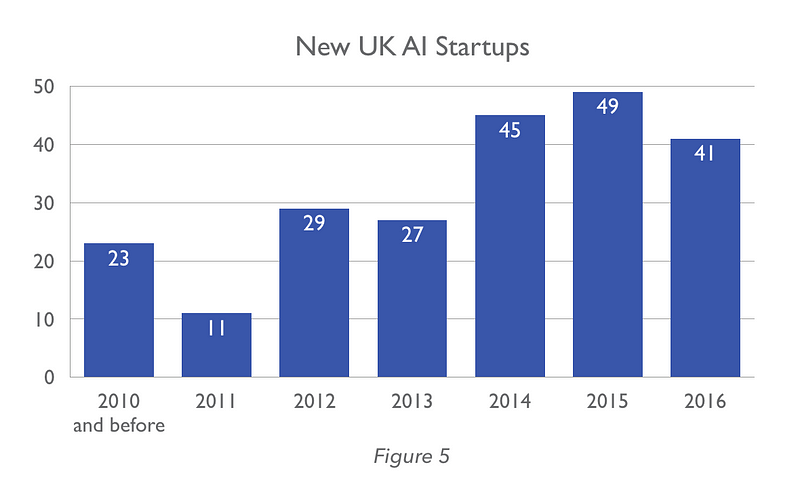
The number of AI companies founded annually in the UK (Figure 5, below) has doubled in recent years (2014–2016) compared with the prior period (2011–2013). Over 60% of all UK AI companies were founded in the last 36 months. During this period, a new AI company has been founded in the UK on almost a weekly basis.
Entrepreneurship in AI is being fuelled by the broader coming of age of AI as well as factors specific to early stage entrepreneurship.
Regarding AI activity generally,
seeds planted during the last 20 years of AI research are bearing fruit today.
New algorithms, particularly convolutional and recurrent neural networks, are delivering more effective results.
A logarithmic increase in the availability of training data has made it possible to tune machine learning algorithms to deliver accurate predictions.
Development of graphical processing units (GPUs) has decreased the time required to train a neural network by 5x-10x. And
a six-fold increase in public awareness of AI during the last five years has increased buyers’ interest in the technology.
Additional factors are fuelling an increase in new AI startups.
Venture capital funding of AI companies has increased seven-fold in five years as investors see promise in the sector.
The provision of AI infrastructure and services from industry cloud providers (Google, Amazon, Microsoft and IBM) is reducing the difficulty and cost of deploying machine learning solutions. And
the growth of open source AI software — particularly TensorFlow, a library of components for machine learning — has reduced barriers to involvement.
Subject to continued venture capital funding, we expect high levels of AI entrepreneurship in the UK to continue.
Where are new AI companies focusing?
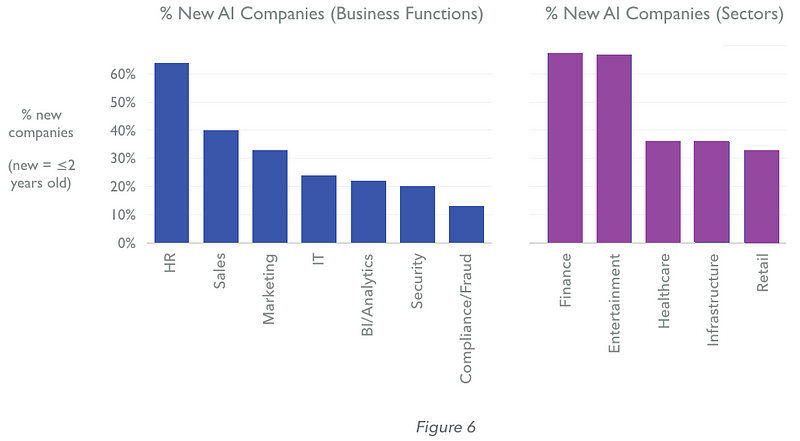
The HR business function and Finance sector have the highest proportion of new AI companies (Figure 6, below). Two thirds of AI HR and Finance companies are less than two years old.
Recent activity in HR stems from a paradigm shift taking place within the function. HR is evolving from an administrative system of record to a predictive driver of growth and efficiency. Business owners are seeking to leverage previously under-utilised data sets to drive utility — ranging from competency-based recruitment to predictive modelling of employee churn.
It is unsurprising that in the business intelligence, security and compliance functions, and in the retail and infrastructure sectors, the proportion of new AI companies is lower. With large data sets ripe for machine learning, these sectors were the first to attract AI entrepreneurs.
4. A nascent sector relative to global peers
The UK AI sector is at a nascent stage in its development relative to global peers, presenting both opportunities and challenges.
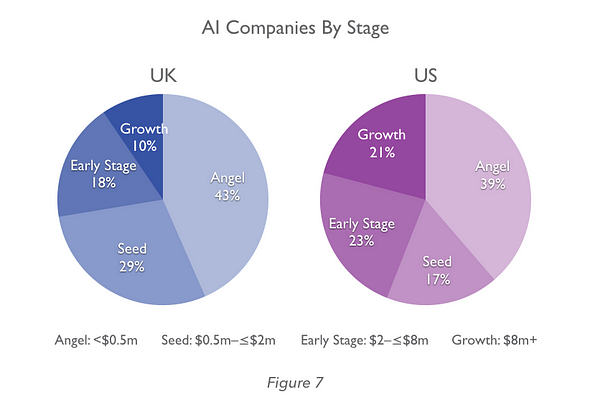
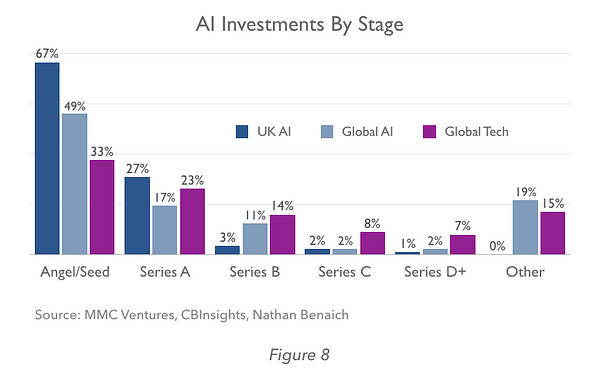
Today, three quarters of UK AI companies are at the earliest stages of their journey, with ‘seed’ or ‘angel’ funding, compared with half of US peers (Figure 7, below). At the other end of the spectrum, just one in 10 UK AI companies is in the late, ‘growth capital’ stage compared with one in five in the US. In 2015, the last full year for which data are available, almost all capital infusions into UK AI companies were at the angel, seed or Series A stage — while among global AI peers a third received later-stage funding (Figure 8, below).
This dynamic presents both opportunities and risks. A vibrant startup scene presents unrivalled opportunities for entrepreneurs, employees and investors in early stage companies. At the same time, more developed and richly funded overseas competitors may increase competitive pressures on UK companies. This effect may be exacerbated by the high proportion of AI companies that sell to enterprises, many of which source providers globally. The UK maintains valuable assets for AI research, including a quarter of the world’s top 25 universities and a growing ecosystem of AI executives and investors following the acquisitions of
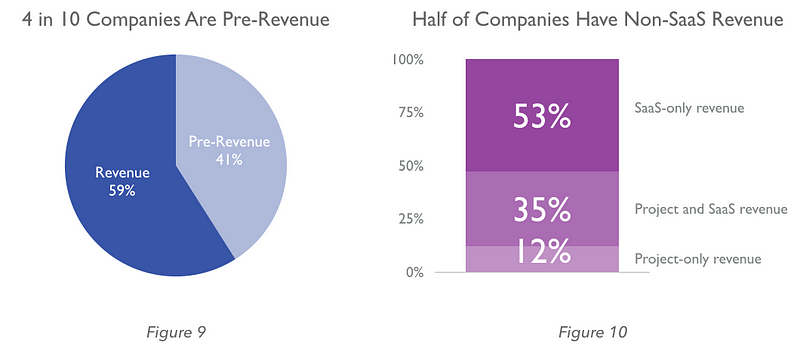
Over 40% of the AI companies we meet are yet to generate revenue (Figure 9, below). This is not an artefact of us meeting ‘early stage’ companies; the median profile of a company we meet is one
founded 2–3 years ago that has
raised £1.3m, has
a team of nine and is
spending £76,000 per month.
The idea that most AI companies — applied AI companies, at least — plan to be acquired pre-revenue instead of selling software and services is a myth. All the companies we met were implementing or developing monetisation plans. Why, then, are some AI companies taking longer to monetise or scale than is usual for early stage companies? We see four reasons:
The bar to a minimum viable product (MVP) in this technically challenging field can be higher, requiring longer development periods. 90% of AI companies are B2B. The long sales cycles typical in B2B sales are exacerbated by many AI companies’ focus on sectors, such as finance, with sprawling and sensitive data sets.
Deployment periods can be lengthy given * extensive per-client data integration, * data cleansing and * customisation requirements. Half the AI companies we meet have a pure software-as-a-service model; as many monetise significant client integration and customisation work in the form of project revenue (Figure 10, above).
The limited number of personnel available for implementation in early stage companies is inhibiting many AI companies’ growth. In a sentiment echoed by several companies, one told us “we couldn’t implement more sales even if we had them.” One third of many teams are engaged in deployment support.
Exacerbated by cash burn rates increased by the high cost of machine learning talent, a longer path to monetisation can pose a challenge to AI companies.
We recommend that AI companies raise sufficient capital to last them through this period of risk, to go-to-market and beyond.
6. Investments are larger and staging is atypical
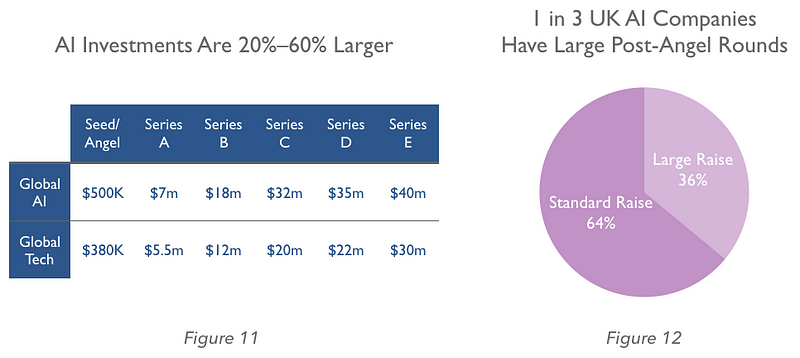
Globally at least, investments into AI firms are typically 20% to 60% larger than average capital infusions (Figure 11, below, shows 2015 data). This reflects company fundamentals and dynamics in the supply and demand of capital. AI companies’ capital requirements can be higher given
longer development periods prior to product viability,
the high cost of machine learning talent and
the larger teams required for complex deployments.
Beyond these fundamentals, however, capital infusions are being inflated by
extensive supply (many venture capitalists seek opportunities to invest in artificial intelligence companies) and
limited demand (there are relatively few AI companies in which to invest).
Venture capital investment in early stage AI companies has increased seven-fold in five years, while the number of investable prospects remains limited.
Further, in the UK a sizeable minority of companies jump from a seed rounds to a much larger raise than is typical for a subsequent round (Figure 12, below). 1 in 3 UK AI companies that raised more than $8m in a funding round raised less than $1m previously. As above, this dynamic is driven in part by AI companies’ capital requirements, but as much by the limited number of attractive investment opportunities in AI. Companies’ valuation expectations, meanwhile, are being supported by ‘acquihire’ offers for nascent teams.
Conclusion: An inflection point in UK AI
The last 36 months have marked an inflection point in early stage UK AI. Entrepreneurship has doubled, as AI technology comes of age and investment has increased. Yet, companies are early in their development relative to global peers, offering entrepreneurs and employees unprecedented opportunity and challenge. Three quarters of UK AI companies are at the earliest stages of their journey and activity remains uneven. Startups have concentrated on readily addressable business functions, where data sets are plentiful and optimisation challenges are pronounced. Today, business processes are being optimised. In the future, they will be re-imagined. Within the last 24 months, additional functions and sectors are starting to be tackled by AI entrepreneurs. The path to monetisation for today’s AI companies can be longer, but effective entrepreneurs are taking advantage of attractive capital dynamics to raise sufficient sums of money earlier in their journey.
As the AI revolution continues, the distinction between ‘AI companies’ and other software providers will further blur. Today, however, we are pleased to highlight the dynamics of a group of companies delivering remarkable benefits. Together, they are shaping the ‘fourth industrial revolution’.


 and
and  ). (d) Measurements of STDP in the ferroelectric memristor. Modulation of the device conductance (ΔG) as a function of the delay (Δt) between pre- and post-synaptic spikes. Seven data sets were collected on the same device showing the reproducibility of the effect. The total length of each pre- and post-synaptic spike is 600 ns.