Mostrando entradas con la etiqueta alteración. Mostrar todas las entradas

martes, 8 de abril de 2014

Stress alters children's genomes

Poverty and unstable family environments shorten chromosome-protecting telomeres in nine-year-olds.

Pasieka/Science Photo Library Telomeres (shown in red) protect the ends of chromosomes from fraying over time.

Growing up in a stressful social environment leaves lasting marks on young chromosomes, a study of African American boys has revealed. Telomeres, repetitive DNA sequences that protect the ends of chromosomes from fraying over time, are shorter in children from poor and unstable homes than in children from more nurturing families.

When researchers examined the DNA of 40 boys from major US cities at age 9, they found that the telomeres of children from harsh home environments were 19% shorter than those of children from advantaged backgrounds. The length of telomeres is often considered to be a biomarker of chronic stress.

The study, published today in the Proceedings of the National Academy of Sciences1, brings researchers closer to understanding how social conditions in childhood can influence long-term health, says Elissa Epel, a health psychologist at the University of California, San Francisco, who was not involved in the research.

Participants’ DNA samples and socio-economic data were collected as part of the Fragile Families and Child Wellbeing Study, an effort funded by the US National Institutes of Health to track nearly 5,000 children, the majority of whom were born to unmarried parents in large US cities in 1998–2000. Children's environments were rated on the basis of their mother's level of education; the ratio of a family’s income to needs; harsh parenting; and whether family structure was stable, says lead author Daniel Notterman, a molecular biologist at Pennsylvania State University in Hershey.

The telomeres of boys whose mothers had a high-school diploma were 32% longer compared with those of boys whose mothers had not finished high school. Children who came from stable families had telomeres that were 40% longer than those of children who had experienced many changes in family structure, such as a parent with multiple partners.

Genetic links
The link between stressful home environments and telomere length is moderated by genetic variants in pathways that process two chemical transmitters in the brain, serotonin and dopamine, the study found. Previous studies have correlated variants in some of the genes studied, such as TPH2, with depression, bipolar disorder and other mental-health issues. Variants of another gene, 5-HTT, reduce the amount of the protein that recycles serotonin in nerve synapses. Some alleles of these genes are thought to increase the sensitivity of carriers to external risks.

Related stories


In the latest study, the researchers found that the 'sensitizing' variants of these genes protected telomeres in children from nurturing environments, and caused greater telomere damage in children from disadvantaged homes. Those who lacked these alleles had little difference in their telomeres, regardless of living conditions.

But boys with more than two sensitizing alleles were strongly influenced by their home environments. They had the shortest telomeres in stressful homes, and the longest telomeres in advantaged environments. Although these variants were known to influence chemical responses to stress in the brain, they were not previously linked to telomere length, says Notterman.

The team plans to expand its analysis to approximately 2,500 children and their mothers to see if these preliminary findings hold. However, because the effects of stress are tangible by the age of 9, Notterman suggests that early intervention practices may help to moderate the effects of adversity on children’s health.

“This was a small study testing a big theory,” says Epel. “It is a first but important step in understanding how social disparities get under the skin to affect lifelong health.”Nature doi:10.1038/nature.2014.14997

References
Mitchell, C. et al. Proc. Natl. Acad. Sci. USA http://dx.doi.org/10.1073/pnas.1404293111 (2014).
Show context

Related stories and links
From nature.com

From elsewhere

ORIGINAL: Nature
07 April 2014


lunes, 28 de enero de 2013

Silt Lake City: Floating 'Hydropolis' Could Ride the Tide of the Nile River in Egypt

ORIGINAL: Inhabitat´
by Bridgette Meinhold, 01/21/13

Add caption
In ancient times the Nile valley was subject to periods of flooding that provided people with the irrigation and fertile soil needed to grow crops. Modern dams have radically altered that natural system, but a new proposal by architecture students in Nantes sees a different way of providing flood control while sustaining the environment. Silt Lake City is a "hydropolis" - a series of modular floating structures that take advantage of the rise and fall of the waters. Agriculture, residences, businesses and energy generators all float on the water and rise and fall with the tides.


Silt Lake City is a student architecture project by Margaux Leycuras, Marion Ottmann and Anne-Hina Mallette that won a prize in a competition organized by the Foundation Jacques Rougerie. Before the construction of the Aswan dam, the Nile valley was subject to a natural cycle of flooding, which provided water for irrigation and nutrients in the form of silt. However the floods could be devastating and the dam was built to help regulate the Nile. Unfortunately, the dam radically changed the ecosystem with silt accumulating behind the dam and salt water from the sea causing erosion.

To solve this problem, the team proposed a solution that combines some flood control with a series of modular cities along the river. The project would divide Lake Nasser into city-modules set within a 200-meter-deep reservoir lake. These floating cities would be protected by an enveloping sea wall that acts as a barrier while providing connections to the shore. During the wet months, the dam is opened and the river floods the land as it used to, providing water and nutrients. Then the dam is closed to maintain water level during non flood times. The result is a more natural system that protects the region from devastating flooding, but still allows the river to provide life.


miércoles, 19 de diciembre de 2012

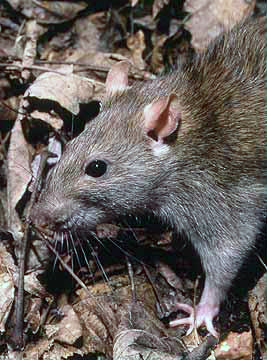
The greatest extermination of rats the World has ever known

ORIGINAL: SÜDDEUTSCHE ZEITUNG (Germany) by Worldcrunch

Located some 1,800 kilometers off the coast of South America, South Georgia Island has no permanent human residents – but millions of rats. The rodents first made their way to this south Atlantic island on whaling boats in the 18th century and, feeding on sea birds, proliferated quickly.

No one can say exactly how many million rats currently live on South Georgia, which is 167.4 km (104 miles) long and 37 km (23 miles) at its widest point. Whatever the figure, it’s too high in the view of the South Georgia Heritage Trust (SGHT) because of the danger the rats represent to the millions of birds who make this island their home. The rats feed on young birds and eggs.

So the SGHT has embarked on a course to free the island of the rodents in what is the greatest extermination of rats the world has ever known.

In early 2013, helicopters are due to inundate parts of the island with grain bait containing two to six-and-a-half kilograms of brodifacoum per hectare. No one doubts the collateral damage of this action – including the deaths of some of the very birds the extermination aims to protect -- but the SGHT sees no alternatives as the rats will soon cover the entire island including areas that until now have been safe for birds.

Stefan Ziegler, a WWF biologist, told Süddeutsche Zeitung that from a natural conservation point of view he supports the planned action, but "the question is whether or not it will be successful. All you need is a couple of rats surviving and in a couple of years’ time you’re back where you started.”

Project leader Tony Martin of the University of Dundee says he and his team will consider the extermination a success if in two years’ time there is no sign of rats on the island. A trial conducted on a section of the island in the past year has so far proven successful.

jueves, 18 de octubre de 2012

Peligroso experimento de geoingeniería en Canadá puede tener efectos catastróficos


En el marco de la Convención de las Partes del Convenio, se ha revelado en la prensa (the Guardian) un experimento a gran escala de alteración climática, llevado a cabo en la costa oeste canadiense el pasado mes de julio.

La actuación fue llevada a cabo por un empresario estadounidense, que previamente había intentado desarrollarlo en las costas de Ecuador y de las Islas Canarias en España pero donde había sido rechazada su propuesta. En ambos países se había llegado a prohibir la entrada a sus barcos, de acuerdo con The Guardian.

Esta acción es de extrema gravedad, dado que supone una violación flagrante de dos acuerdos internacionales: uno dentro del CDB y otro dentro de la Convención de Londres contra la contaminación del mar.

Todo por el dinero, graves complicidades

Russ George, el empresario californiano, llegó a una comunidad indígena canadiense en las islas Haida Gwaii (uno de los ecosistemas mundiales de reconocida riqueza), en Brisith Columbia, y les convenció para desarrollar una actuación para beneficiar el océano y mejorar la población de salmón.

Según las informaciones, George habría entonces trasladado a esas islas material y personal científico y tecnológico, y habría vertido 100 toneladas de sulfato de hierro a las aguas marinas 200 millas al oeste de las islas. Ello habría provocado un crecimiento explosivo del fitoplancton, circunstancia que estaría siendo registrada por instituciones públicas de Estados Unidos como la NASA y la NOAA (Agencias del Espacio y de los Océanos y la Atmóstera), cosa que demostraría la implicación de la administración estadounidense.

El objetivo del proyecto no es otro que iniciar una nueva vía de negocio: el crecimiento del fitoplancton podría capturar carbono atmosférico (CO2) y posteriormente, al morir las algas, depositarse en el fondo del océano. Esto generaría créditos de carbono puesto que el sistema sería un nuevo sumidero que podría compensar las emisiones de gases de efecto invernadero, de acuerdo con sus promotores. Los créditos de carbono cotizan en el mercado mundial establecido por el Protocolo de Kyoto, y podrían representar un negocio muy lucrativo para las empresas que lo desarrollasen.

La situación es de extrema gravedad no únicamente por las consecuencias sobre el medio ambiente local y global, sino por el menosprecio que representa la actitud de George, que consideró los convenios internacionales como “mitología”, y del gobierno de Estados Unidos que facilitó material científico para el experimento (Estados Unidos es el único país del mundo, junto al Vaticano, que no ha firmado el Convenio de Diversidad Biológica),

Las ONG reclaman a la Convención de Biodiversidad que tome medidas contundentes

La Conferencia de las Partes del Convenio de la Diversidad Biológica acordó en su 10a Conferencia de las Partes una moratoria a este tipo de experimentos. En concreto, se acordó que cualquier experimento de esta naturaleza debía restringirse a espacios confinados, limitados en el espacio, y nunca directamente en la naturaleza, estableciéndose una moratoria a estos experimentos.

La vulneración en Canadá representa un golpe gravísimo a la legislación internacional. Es por ello que las ONG presentes en Hyderabad, Ecologistas en Acción entre ellas, han reclamado a los países presentes que se tomen medidas para evitar que se repitan este tipo de vulneraciones. Si los procesos multilaterales no son capaces de hacer cumplir con sus propios acuerdos, entonces se convierten en papel mojado, en simple palabrería.

Los gobiernos tienen la obligación de luchas contra el cambio climático a través de la mitigación de las emisiones de gases con efecto invernadero, reduciendo la quema de combustibles fósiles y evitando la deforestación. No hay excusas ni atajos tecnológicos para esta necesidad reconocida por todos los procesos oficiales y convenios internacionales.

La modificación climática con técnicas de geoingeniería es un peligro inasumible, por sus consecuencias imprevisibles sobre el clima y sobre el medio ambiente.

Las ONG reclaman una prohibición total a este tipo de prácticas, y que se persiga a los responsables.

domingo, 24 de junio de 2012

La vida silvestre urbana preferiría el transporte no motorizado

ORIGINAL: La Ciudad Verde

Con ciudades creándose, transformándose y extendiéndose, el papel de los centros urbanos y de sus habitantes en la conservación y la salud de la biodiversidad es cada vez más determinante. Las actividades humanas y las infraestructuras urbanas causan pérdida de diversidad, siendo la forma cotidiana de transporte una de las de mayor impacto, no sólo por los efectos de la apertura y construcción de las vías, sino por el tránsito continuo de los automotores.

La polución y el ruido de los carros y motocicletas perjudican de forma grave a los animales, pero también su uso y abuso (en velocidad, cantidad y frecuencia) en las vías urbanas y periurbanas, pues estos causan heridas y muertes de animales, lo que puede llevar eventualmente a la desaparición local de especies y poblaciones por atropellamientos.

Durante un año en Australia, famosa por su particular fauna, he conocido muchas especies hermosas. Pero desafortunadamente, sólo he podido conocer muchos de sus animales simbólicos y carismáticos a través de sus cadáveres: el único Canguro en estado silvestre que he visto fue un animal muerto en una carretera; puedo decir que conozco a los Wombats por cuatro animales atropellados en sólo 100 km de recorrido; y que fueron necesarias dos horas para poder ver a un Wallaby vivo después de ver decenas de sus cuerpos inertes al borde de la vía.

¿Estamos condenados a conocer nuestra fauna a través de sus cadáveres? Preocupado por la construcción de ciudades biodiversas, incluyentes para otras formas de vida además de la humana, y en mi interés por disminuir, y en lo posible evitar el efecto de las infraestructuras y las actividades antrópicas urbanas sobre la vida silvestre, estas experiencias me llenan de profunda tristeza, pues creo que en Colombia, y particularmente en el Valle de Aburrá, podría presentarse esa escalofriante posibilidad.

En un estudio realizado en 2007 encontramos varios mamíferos muertos en la vía del Escobero, entre ellos especies amenazadas mundialmente, como el Tigrillo lanudo. Después de caminar por años los cerros del Valle de Aburrá y luego de monitorear sus laderas con cámaras automáticas sensibles al movimiento con aburranatural.org (un espacio de documentación, monitoreo, educación y divulgación de la biodiversidad urbana y periurbana), nunca ha sido posible obtener un registro visual de un tigrillo vivo. Desafortunadamente, las únicas evidencias recientes de este hermoso animal siguen siendo los individuos atropellados. Es triste que aún no exista otra forma de compartir la presencia de este felino con los ciudadanos, diferente a las fotos de aquellos animales muertos.

Tigrillo lanudo (Leopardus tigrinus) atropellado por un carro en la Via Las Palmas, cerca de la glorieta hacia Santa Elena. Febrero 2008.
Perro de monte (Potos flavus) atropellado en la Vía Las Palmas. Octubre 2009.  
El peligro de los vehículos motorizados para los animales no humanos se suma a la serie de efectos nocivos en peatones y ciclistas. La decisión de usar menos el carro particular y de una manera más responsable, fortalecer el transporte público, proteger al peatón y popularizar el uso de la bicicleta traería beneficos no sólo para la movilidad de la ciudad y el medio ambiente.

“La naturaleza prefiere el transporte público”. Valla publicitaria en una de estas estaciones de tren en Melbourne, Australia. Diciembre 2011.
Creo que si las políticas y las campañas no estuvieran a favor de la promoción del transporte particular motorizado; si nuestras calles, avenidas y carreteras fueran menos transitadas por carros y motocicletas; si las velocidades de ellas fueran reducidas y los conductores se hicieran conscientes de lo nefasto que es el abuso del transporte motorizado, no sólo experimentaríamos una explosión de vida de muchos peatones y ciclistas dentro y entre nuestras ciudades. Esto daría también espacio para que los animales fueran menos vulnerables y pudieran cruzar nuestras calles, las cuales se irían convirtiendo (a raíz de la disminución del parque automotor y a favor de una movilidad más humana, sostenible, incluyente y ética), en lo que deberían haber sido, corredores más angostos, menos contaminados, mejor arborizados, lentos, más silenciosos, y menos, mucho menos riesgosos, para cualquier organismo vivo que se atreva a cruzar, sea que éste decida o sea obligado a vivir en sus inmediaciones, o simplemente pase por allí un día cualquiera.


Los marsupiales son posiblemente uno de los grupos más afectados en la vía El Escobero. Abril 2011.  

viernes, 30 de marzo de 2012

Amigos de Verdad

ORIGINAL: Let Your Spirit Shine


Después de perder a sus padres, este orangután de 3 años estaba tan deprimido que no quería comer y no respondía a los tratamientos médicos. Los veteranarians pensó que moriría de la tristeza. El zoológico guardianes encontró un perro enfermo de edad en los terrenos del parque en el parque zoológico, donde vivía el orangután y se llevó al perro al centro de tratamiento de los animales. El perro llegó al mismo tiempo el orangután estaba siendo tratado allí. Las 2 las almas perdidas se reunieron y han sido inseparables desde entonces.

El orangután encontró una nueva razón para vivir y cada uno siempre trata de su mejor esfuerzo para ser un buen compañero a su nuevo amigo. Ellos están juntos las 24 horas del día en todas sus actividades.

Viven en el norte de California, donde la natación es su pasatiempo favorito, a pesar de Roscoe (el orangután) es un poco de miedoso del agua y necesita la ayuda de su amigo para nadar.

Juntos han descubierto la alegría y la risa en la vida y el valor de la amistad. Han encontrado más que un hombro amigo en quien apoyarse. - Con Teresa Leigh Lowery y Vanroye Hilde.


Otro caso de una orangután pequeña que fue rescatada estando atada en malas condiciones en una plantación.


Orangutanes Sumatran  - en riesgo crítico
Sólo 6.600 orangutanes de Sumatra en peligro de extinción permanecen en estado silvestre. 6.000 de ellos dependen para su supervivencia en la selva del hábitat proporcionado por el Parque Nacional de Gunung LESSEUR en el norte de Sumatra. La eliminación de las plantaciones ilegales de palma aceitera, reforestación y protección del territorio hogar del Orangután junto con la educación y campañas de información pública se llevan a cabo por el Centro de orangután de Sumatra y la Sociedad del orangután con el apoyo de Rainforest Rescue.


viernes, 23 de marzo de 2012

En Pakistán las arañas también había encerrado árboles enteros en las redes

ORIGINAL: Wired
Por Duncan Geere
Los reportes recientes sobre el comportamientos de las arañas en Australia ante las inundaciones, coinciden con este caso de Pakistán. Las Inundaciones, producto de lateraciones severas en el clima, tienen efectos visibles  a simple vista como éstos. Con certeza debe haber muchos casos más no tan visibles)
Fenómeno misterioso puede ser una bendición disfrazada, ya que las arañas hambrientas han reducido significativamente la población de mosquitos.

"Capullos": Los árboles envueltos en las telas de araña después de las inundaciones en Sindh, Pakistán. (Foto: Russell Watkins / Reino Unido, Departamento para el Desarrollo Internacional / Flickr)
Las inundaciones sin precedentes en Pakistán en el segundo semestre de 2010 afectaron la vida de 20 millones de personas, pero también la población afectada fueron los arácnidos del país.

Con más de una quinta parte del país sumergidas, millones de arañas se subió a los árboles para escapar de las zonas anegadas. El agua se llevó tanto tiempo a retroceder,  los árboles se cubrieron con capullos de telaraña. El resultado es un panorama inquietante, extraño, con toda la vegetación cubierta por una espesa masa de las correas. (Puedes ver imágenes de la región en la galería vinculada a continuación.)

Sin embargo, el inusual fenómeno puede ser una bendición disfrazada. El Departamento Británico para el desarrollo internacional informó que las áreas donde las arañas han escalado los árboles se han visto muchos menos mosquitos que propagan la malaria de los que habría esperar, dada la prevalencia de agua estancada, que permanecía.

La agencia está prestando ayuda a las comunidades afectadas por el desastre, incluyendo agua potable, atención médica, alimentos y refugio. Para reducir en la población la dependencia a largo plazo de la ayuda, el organismo gubernamental está ofreciendo semillas de trigo y herramientas a los agricultores, y empleo y la capacitación de las zonas rurales. Sin embargo, la reconstrucción de las zonas más afectadas se espera que dure muchos años.


lunes, 19 de marzo de 2012

Miles de arañas invaden pueblo en Australia obligando a sus habitantes a evacuar (FOTOS)

ORIGINAL: Pijamasurf

Como si se tratara de un cuento de terror, cientos de miles de arañas invaden el pueblo Wagga Wagga, en Australia; el lugar queda literalmente envuelto con una fantasmagórica y gigante telaraña.
Foto: Reuters 
Entre el horror y la fantasmagoria poética, como si se tratase de un mar de melancolía cristalizada, el pueblo de Wagga Wagga, ubicado en Nuevo Gales del Sur, Australia, fue invadido por una migración de cientos de miles de arañas que, literalmente, envolvieron al pueblo en blanca tela. Buena parte de los habitantes de este pequeño poblado tuvieron que ser evacuados a causa de este peculiar fenómeno.

Aparentemente la migración masiva de arañas fue producida por las inundaciones que dejó el desbordamiento de diversos ríos, lo cual obligó a los arácnidos a buscar su supervivencia en tierras más altas, siendo Wagga Wagga la primera que hallaron en su camino y que cumple con la altura necesaria para poder eludir el agua. Acontinuación presentamos una serie de impactantes fotografías que documentaron este inesperado asalto.

Fotos: Daniel Munoz/Reuters/ BBC/AAP Image-Lukas Coch. 

sábado, 3 de marzo de 2012

Six-Legged Giant Finds Secret Hideaway, Hides For 80 Years

ORIGINAL: NPR

No, this isn't a make-believe place. It's real.

They call it "Ball's Pyramid." It's what's left of an old volcano that emerged from the sea about 7 million years ago. A British naval officer named Ball was the first European to see it in 1788. It sits off Australia, in the South Pacific. It is extremely narrow, 1,844 feet high, and it sits alone.

What's more, for years this place had a secret. At 225 feet above sea level, hanging on the rock surface, there is a small, spindly little bush, and under that bush, a few years ago, two climbers, working in the dark, found something totally improbable hiding in the soil below. How it got there, we still don't know.
A satellite view of Ball's Pyramid in the Tasman Sea off the eastern coast of Australia.


Google Maps
A satellite view of Ball's Pyramid in the Tasman Sea off the eastern coast of Australia.
Here's the story: About 13 miles from this spindle of rock, there's a bigger island, called Lord Howe Island.

On Lord Howe, there used to be an insect, famous for being big. It's a stick insect, a critter that masquerades as a piece of wood, and the Lord Howe Island version was so large — as big as a human hand — that the Europeans labeled it a "tree lobster" because of its size and hard, lobsterlike exoskeleton. It was 12 centimeters long and the heaviest flightless stick insect in the world. Local fishermen used to put them on fishing hooks and use them as bait.
Patrick Honan holds two of the rare Lord Howe Island stick insects.
Rod Morris/www.rodmorris.co.nz


Then one day in 1918, a supply ship, the S.S. Makambo from Britain, ran aground at Lord Howe Island and had to be evacuated. One passenger drowned. The rest were put ashore. It took nine days to repair the Makambo, and during that time, some black rats managed to get from the ship to the island, where they instantly discovered a delicious new rat food: giant stick insects. Two years later, the rats were everywhere and the tree lobsters were gone.
Totally gone. After 1920, there wasn't a single sighting. By 1960, the Lord Howe stick insect, Dryococelus australis, was presumed extinct.

There was a rumor, though.

Map of Lord Howe Island
Some climbers scaling Ball's Pyramid in the 1960s said they'd seen a few stick insect corpses lying on the rocks that looked "recently dead." But the species is nocturnal, and nobody wanted to scale the spire hunting for bugs in the dark.

Climbing The Pyramid
Fast forward to 2001, when two Australian scientists, David Priddel and Nicholas Carlile, with two assistants, decided to take a closer look. From the water, they'd seen a few patches of vegetation that just might support walking sticks. So, they boated over. ("Swimming would have been much easier," Carlile said, "but there are too many sharks.") They crawled up the vertical rock face to about 500 feet, where they found a few crickets, nothing special. But on their way down, on a precarious, unstable rock surface, they saw a single melaleuca bush peeping out of a crack and, underneath, what looked like fresh droppings of some large insect.
Where, they wondered, did that poop come from?

The only thing to do was to go back up after dark, with flashlights and cameras, to see if the pooper would be out taking a nighttime walk. Nick Carlile and a local ranger, Dean Hiscox, agreed to make the climb. And with flashlights, they scaled the wall till they reached the plant, and there, spread out on the bushy surface, were two enormous, shiny, black-looking bodies. And below those two, slithering into the muck, were more, and more ... 24 in all. All gathered near this one plant.

The Lord Howe Island stick insect, Dryococelus australis, once believed to be extinct, was found living under a small shrub high up Ball's Pyramid in 2001.
Patrick Honan
They were alive and, to Nick Carlile's eye, enormous. Looking at them, he said, "It felt like stepping back into the Jurassic age, when insects ruled the world."

They were Dryococelus australis. A search the next morning, and two years later, concluded these are the only ones on Ball's Pyramid, the last ones. They live there, and, as best we know, nowhere else.
How they got there is a mystery. Maybe they hitchhiked on birds, or traveled with fishermen, and how they survived for so long on just a single patch of plants, nobody knows either. The important thing, the scientists thought, was to get a few of these insects protected and into a breeding program.
Nick Carlile, seen here with the Lord Howe Island stick insect, discovered the thought-to-be extinct phasmid in 2001 on Ball's Pyramid.
Patrick Honan/Nick Carlile
That wasn't so easy. The Australian government didn't know if the animals on Ball's Pyramid could or should be moved. There were meetings, studies, two years passed, and finally officials agreed to allow four animals to be retrieved. Just four.
When the team went back to collect them, it turned out there had been a rock slide on the mountain, and at first they feared that the whole population had been wiped out. But when they got back up to the site, on Valentine's Day 2003, the animals were still there, sitting on and around their bush.

The plan was to take one pair and give it a man who was very familiar with mainland walking stick insects, a private breeder living in Sydney. He got his pair, but within two weeks, they died.

Adam And Eve And Patrick
That left the other two. They were named "Adam" and "Eve," taken to the Melbourne Zoo and placed with Patrick Honan, of the zoo's invertebrate conservation breeding group. At first, everything went well. Eve began laying little pea-shaped eggs, exactly as hoped. But then she got sick. According to biologist Jane Goodall, writing for Discover Magazine:
"Eve became very, very sick. Patrick ... worked every night for a month desperately trying to cure her. ... Eventually, based on gut instinct, Patrick concocted a mixture that included calcium and nectar and fed it to his patient, drop by drop, as she lay curled up in his hand."
Her recovery was almost instant. Patrick told the Australian Broadcasting Company, "She went from being on her back curled up in my hand, almost as good as dead, to being up and walking around within a couple of hours."
Eve's eggs were harvested, incubated (though it turns out only the first 30 were fertile) and became the foundation of the zoo's new population of walking sticks.
Male Lord Howe Island Stick Insect K.
Matthew Bulbert/The Australian Museum
When Jane Goodall visited in 2008, Patrick showed her rows and rows of incubating eggs: 11,376 at that time, with about 700 adults in the captive population. Lord Howe Island walking sticks seem to pair off — an unusual insect behavior — and Goodall says Patrick "showed me photos of how they sleep at night, in pairs, the male with three of his legs protectively over the female beside him."

Now comes the question that bedevils all such conservation rescue stories. Once a rare animal is safe at the zoo, when can we release it back to the wild?

On Lord Howe Island, their former habitat, the great-great-great-grandkids of those original black rats are still out and about, presumably hungry and still a problem. Step one, therefore, would be to mount an intensive (and expensive) rat annihilation program. Residents would, no doubt, be happy to go rat-free, but not every Lord Howe islander wants to make the neighborhood safe for gigantic, hard-shell crawling insects. So the Melbourne Museum is mulling over a public relations campaign to make these insects more ... well, adorable, or noble, or whatever it takes.

They recently made a video, with strumming guitars, featuring a brand new baby emerging from its egg. The newborn is emerald green, squirmy and so long, it just keeps coming and coming from an impossibly small container. Will this soften the hearts of Lord Howe islanders? I dunno. It's so ... so ... big.

But, hey, why don't you look for yourself?


What happens next? The story is simple: A bunch of black rats almost wiped out a bunch of gigantic bugs on a little island far, far away from most of us. A few dedicated scientists, passionate about biological diversity, risked their lives to keep the bugs going. For the bugs to get their homes and their future back doesn't depend on scientists anymore. They've done their job. Now it's up to the folks on Lord Howe Island.

Will ordinary Janes and Joes, going about their days, agree to spend a little extra effort and money to preserve an animal that isn't what most of us would call beautiful? Its main attraction is that it has lived on the planet for a long time, and we have the power to keep it around. I don't know if it will work, but in the end, that's the walking stick's best argument:

I'm still here. Don't let me go.