Mostrando entradas con la etiqueta Sensor. Mostrar todas las entradas

sábado, 2 de noviembre de 2019

The scientists who are creating a bio-internet of things

The internet of things connects devices across the globe. Now researchers are considering how bacteria can join the network.
by Emerging Technology from the arXiv
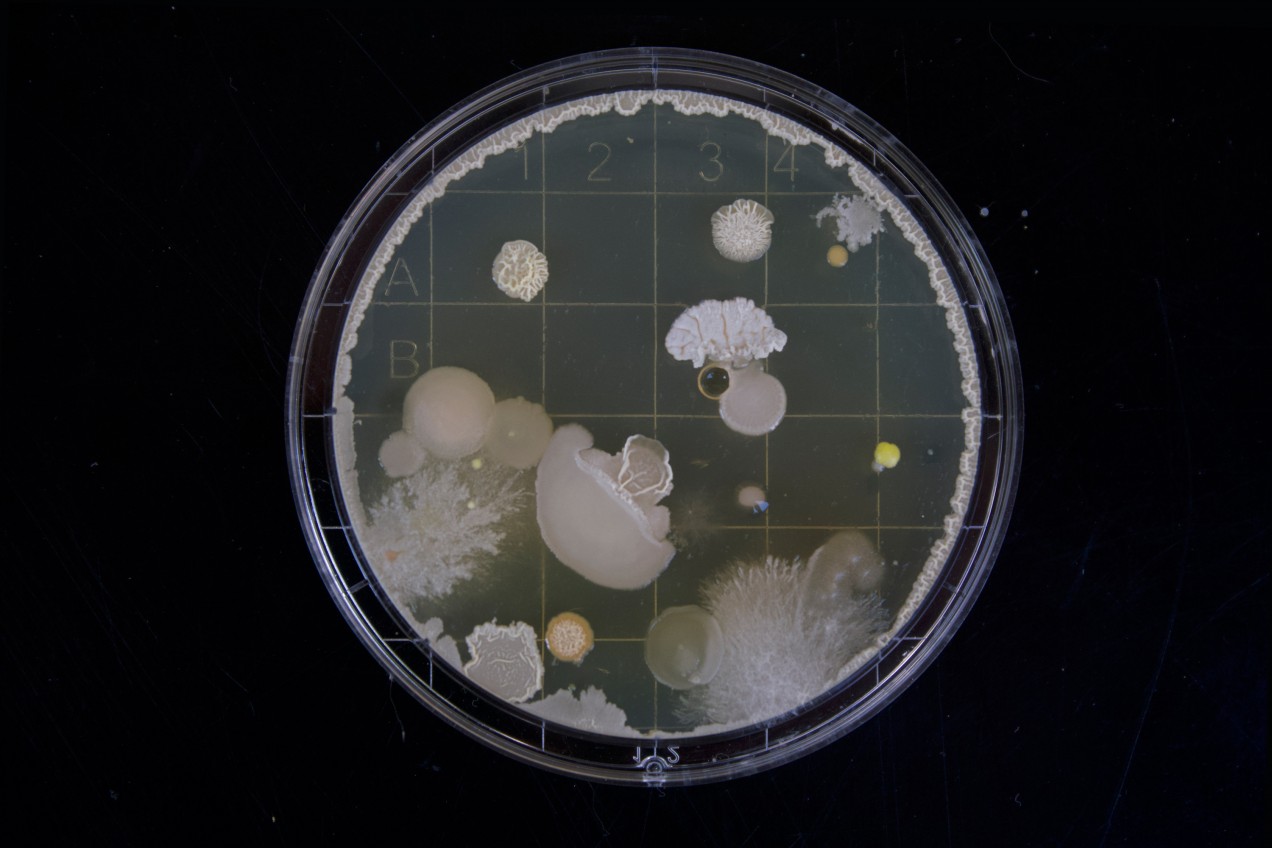

conceptual image of bacterial in a petri dish 
Imagine designing the perfect device for the internet of things. What functions must it have? For a start,  
  • it must be able to communicate, both with other devices and with its human overlords. 
  • It must be able to store and process information. 
  • And it must monitor its environment with a range of sensors. 
  • Finally, it will need some kind of built-in motor.
There is no shortage of devices that have many of these features. Most are based on widely available, low-cost devices such as Raspberry Pis, Arduino boards, and the like.

But another set of machines with similar functions is much more plentiful, say Raphael Kim and Stefan Poslad at Queen Mary University of London in the UK. They point out that bacteria communicate effectively and have built-in engines and sensors, as well as powerful information storage and processing architecture.

And that raises an interesting possibility, they say. Why not use bacteria to create a biological version of the internet of things? Today, in a call to action, they lay out some of the thinking and the technologies that could make this possible.

The way bacteria store and process information is an emerging area of research, much of it focused on the bacterial workhorse Escherichia coli. These (and other) bacteria store information in ring-shaped DNA structures called plasmids, which they transmit from one organism to the next in a process called conjugation.
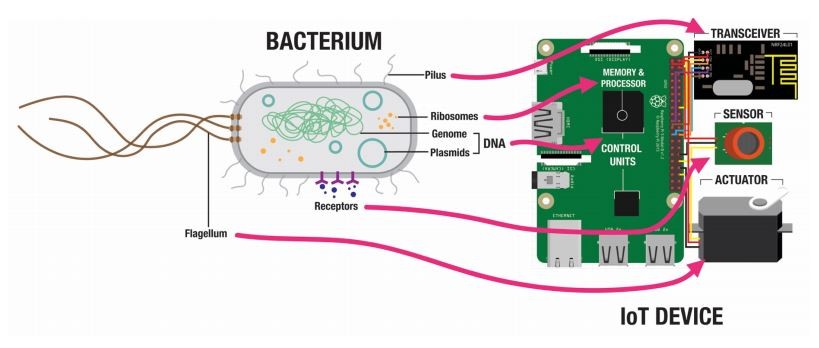
 Bacterial IoT


Last year, Federico Tavella at the University of Padua in Italy and colleagues built a circuit in which one strain of immotile E. coli transmitted a simple “Hello world” message to a motile strain, which carried the information to another location.

This kind of information transmission occurs all the time in the bacterial world, creating a fantastically complex network. But Tavella and co’s proof-of-principle experiment shows how it can be exploited to create a kind of bio-internet, say Kim and Poslad.

E. coli make a perfect medium for this network. They are motile—they have a built-in engine in the form of waving, thread-like appendages called flagella, which generate thrust. They have receptors in their cell walls that sense aspects of their environment—temperature, light, chemicals, etc. They store information in DNA and process it using ribosomes. And they are tiny, allowing them to exist in environments that human-made technologies have trouble accessing.

E. coli are relatively easy to manipulate and engineer as well. The grassroots movement of DIY biology is making biotechnology tools cheaper and more easily available. The Amino Lab, for example, is a genetic engineering kit for schoolchildren, allowing them to reprogram E. coli to glow in the dark, among other things.

This kind of biohacking is becoming relatively common and shows the remarkable potential of a bio-internet of things. Kim and Poslad talk about a wide range of possibilities. “Bacteria could be programmed and deployed in different surroundings, such as the sea and ‘smart cities’, to sense for toxins and pollutants, gather data, and undertake bioremediation processes,” they say.

Bacteria could even be reprogrammed to treat diseases. “Harbouring DNA that encode useful hormones, for instance, the bacteria can swim to a chosen destination within the human body, [and] produce and release the hormones when triggered by the microbe’s internal sensor,” they suggest.

Of course, there are various downsides. While genetic engineering makes possible all kinds of amusing experiments, darker possibilities give biosecurity experts sleepless nights. It’s not hard to imagine bacteria acting as vectors for various nasty diseases, for example.

It’s also easy to lose bacteria. One thing they do not have is the equivalent of GPS. So tracking them is hard. Indeed, it can be almost impossible to track the information they transmit once it is released into the wild.

And therein lies one of the problems with a biological internet of things. The conventional internet is a way of starting with a message at one point in space and re-creating it at another point chosen by the sender. It allows humans, and increasingly devices, to communicate with each other across the planet.

Kim and Poslad’s bio-internet, on the other hand, offers a way of creating and releasing a message but little in the way of controlling where it ends up. The bionetwork created by bacterial conjugation is so mind-bogglingly vast that information can spread more or less anywhere. Biologists have observed the process of conjugation transferring genetic material from bacteria to yeast, to plants, and even to mammalian cells.

Evolution plays a role too.
All living things are subject to its forces. No matter how benign a bacterium might seem, the process of evolution can wreak havoc via mutation and selection, with outcomes that are impossible to predict.

Then there is the problem of bad actors influencing this network. The conventional internet has attracted more than its fair share of individuals who release malware for nefarious purposes. The interest they might have in a biological internet of things is the stuff of nightmares.

Kim and Poslad acknowledge some of these issues, saying that creating a bacteria-based network presents fresh ethical issues. “Such challenges offer a rich area for discussion on the wider implication of bacteria driven Internet of Things systems,” they conclude with some understatement.

That’s a discussion worth having sooner rather than later.
Ref: arxiv.org/abs/1910.01974 : The Thing with E. coli: Highlighting Opportunities and Challenges of Integrating Bacteria in IoT and HCI.
By Michael Schiffer / unsplash
Nov 1, 2019

domingo, 26 de agosto de 2018

Millimeter-Scale Computers: Now With Deep Learning Neural Networks on Board

Photo: University of Michigan and TSMCOne of several varieties of University of Michigan micro motes. This one incorporates 1 megabyte of flash memory.
Computer scientist David Blaauw pulls a small plastic box from his bag. He carefully uses his fingernail to pick up the tiny black speck inside and place it on the hotel café table. At one cubic millimeter, this is one of a line of the world’s smallest computers. I had to be careful not to cough or sneeze lest it blow away and be swept into the trash.

Blaauw and his colleague Dennis Sylvester, both IEEE Fellows and computer scientists at the University of Michigan, were in San Francisco this week to present ten papers related to these “micro mote” computers at the IEEE International Solid-State Circuits Conference (ISSCC). They’ve been presenting different variations on the tiny devices for a few years.

Their broader goal is to make smarter, smaller sensors for medical devices and the internet of things—sensors that can do more with less energy. Many of the microphones, cameras, and other sensors that make up eyes and ears of smart devices are always on alert, and frequently beam personal data into the cloud because they can’t analyze it themselves. Some have predicted that by 2035, there will be 1 trillion such devices. “If you’ve got a trillion devices producing readings constantly, we’re going to drown in data,” says Blaauw. By developing tiny, energy efficient computing sensors that can do analysis on board, Blaauw and Sylvester hope to make these devices more secure, while also saving energy.


Photo: University of Michigan/TSMCMade of multiple layers of computing.

At the conference, they described micro mote designs that use only a few nanowatts of power to perform tasks such as distinguish the sound of a passing car and measuring temperature and light levels. They showed off a compact radio that can send data from the small computers to receivers 20 meters away—a considerable boost compared to the 50 centimeter range they reported last year at ISSCC. They also described their work with TSMC on embedding flash memory into the devices, and a project to bring on board dedicated, low-power hardware for running artificial intelligence algorithms called deep neural networks.

Blaauw and Sylvester say they take a holistic approach to adding new features without ramping up power consumption. “There’s no one answer” to how the group does it, says Sylvester. If anything, it’s “smart circuit design,” Blaauw adds. (They pass ideas back and forth rapidly, not finishing each other’s sentences but something close to it.)

The memory research is a good example of how the right tradeoffs can improve performance, says Sylvester. Previous versions of the micro motes used 8 kilobytes of SRAM, which makes for a pretty low-performance computer. To record video and sound, the tiny computers need more memory. So the group worked with TSMC to bring flash memory on board. Now they can make tiny computers with 1 megabyte of storage.


Flash can store more data in a smaller footprint than SRAM, but it takes a big burst of power to write to the memory. With TSMC, the group designed a new memory array that uses a more efficient charge pump for the writing process. The memory arrays are a bit less dense than TSMC’s commercial products, for example, but still much better than SRAM. “We were able to get huge gains with small trade-offs,” says Sylvester.

Another micro mote they presented at the ISSCC incorporates a deep-learning processor that can operate a neural network while using just 288 microwatts. Neural networks are artificial intelligence algorithms that perform well at tasks such as face and voice recognition. They typically demand both large memory banks and intense processing power, and so they’re usually run on banks of servers often powered by advanced GPUs. Some researchers have been trying to lessen the size and power demands of deep-learning AI with dedicated hardware that’s specially designed to run these algorithms. But even those processors still use over 50 milliwatts of power—far too much for a micro mote. The Michigan group brought down the power requirements by redesigning the chip architecture, for example by situating four processing elements within the memory (in this case, SRAM) to minimize data movement.

The idea is to bring neural networks to the internet of things. “A lot of motion detection cameras take pictures of branches moving in the wind—that’s not very helpful,” says Blaauw. Security cameras and other connected devices are not smart enough to tell the difference between a burglar and a tree, so they waste energy sending uninteresting footage to the cloud for analysis. On-board deep-learning processors could make better decisions, but only if they don’t use too much power. The Michigan group imagine deep-learning processors could be integrated into many other internet-connected things besides security systems. For example, an HVAC systems could decide to turn the air conditioning down if they see multiple people putting on their coats.

After demonstrating many variations on these micro motes in an academic setting, the Michigan group hopes they will be ready for market in a few years. Blaauw and Sylvester say their start-up company CubeWorks is currently prototyping devices and researching markets. The company was quietly incorporated in late 2013. Last October, Intel Capital announced they had invested an undisclosed amount in the tiny computer company. 


Posted 10 Feb 2017


jueves, 22 de septiembre de 2016

Fusing of Organic Molecules With Graphene Opens Up New Applications

 Photo: TUM A Model Molecule: Prof. Wilhelm Auwärter with a porphin-model.
 The hemoglobin-like molecule called porphyrin, which is responsible for making photosynthesis possible in plants and transporting oxygen in our blood, has been combined with graphene by researchers at the Technical University of Munich (TUM) in a new method that may make possible everything from molecular electronics to improved gas sensors.

While graphene’s properties—ranging from its electrical conductivity to its tensile strength—have made it desirable in a number of electronic applications, it still needs to be combined with so-called functional molecules to make it useful in applications such as photovoltaics and gas sensors. To date, the addition of these other functional molecules has been carried out through “wet chemistry,” which limits the amount of control possible over the properties of the resulting material.

However,  in a method described in the journal Nature Chemistry, the TUM researchers developed a highly controllable “dry” method based on exploiting the catalytic properties of a silver surface on which the graphene layer rested inside an ultra-high vacuum.

The benefit of this technique is that it preserves all the attractive properties of the porphyrins even after being combined with the graphene, most notably their intrinsic ability to have their electronic and magnetic properties tuned by the addition of different metal atoms. In terms of real-world devices, this means that these different metal atoms can bind with gas molecules to create effective gas sensors.

More generally, the method the TUM researchers have developed could be a breakthrough for how graphene is functionalized for a range of electronic applications.

The key to the importance of this research in terms of electronics is the complementary electronic structure in the graphene and the porphyrins,” said Wilhelm Auwärter, a professor at TUM who led the research, in an e-mail interview with IEEE Spectrum. “The porphyrins feature large electronic gaps, in contrast to graphene. The electronic, optical and magnetic properties of the porphyrins can be tuned by the choice of the metal center of the molecule.Electronic band gaps are critical to controlling how conductive a material is, and in turn, whether or not the material can be used in an electronic switch such as a transistor.

Auwärter further explains the electronic and magnetic properties of the porphyrins can also be modified by the attachment of gaseous ligands (like oxygen or nitric monoxide), This would allow, for example turning on and off the material’s mechanical response to a magnetic field. “Such functionalities are not inherent to the pristine graphene,” he added.

Auwärter also said that it should be possible to directly incorporate porphyrins into graphene nanoribbons. “In this way, one could achieve sequences of graphene ‘wires’ and porphyrin units. This should allow the engineering of an electronic gap in the hybrid structures,” he said.

While Auwärter believes that this manufacturing approach provides an avenue that could lead to new device designs for a range of electronic applications, he does concede that this is preliminary research that primarily serves as a starting off point.

We need to apply our protocol to well-defined graphene nanostructures, such as nanoribbons or nanographenes,” said Auwärter. “We need to place the hybrid structures on specific supports or to include them in layered materials and devices.”

In the future, to exploit this method for electronic applications, Auwärter points out that the hybrid material will need to be grown on insulating supports like hexagonal boron nitride.

While the electronic applications may still be somewhat far off, the novel protocol does offer an intriguing way forward for graphene-based electronics.
Learn More Technical University of Munichband gapgas sensorsgraphenegraphene nanoribbonsmolecular electronicsporphyrins

ORIGINAL: IEEE Spectrum
By Dexter Johnson
22 Sep 2016

lunes, 11 de julio de 2016

Meet the First Artificial Animal

Scientists genetically engineered and 3-D-printed a biohybrid being, opening the door further for lifelike robots and artificial intelligence.

CREDIT: Getty Images
If you met this lab-created critter over your beach vacation, you'd swear you saw a baby ray. In fact, the tiny, flexible swimmer is the product of a team of diverse scientists. They have built the most successful artificial animal yet. This disruptive technology opens the door much wider for lifelike robots and artificial intelligence.

Like most disruption, it started with a simple idea. Kit Kevin Parker, PhD, a Harvard professor researching how to build a human heart, saw his daughter entranced by watching stingrays at the New England Aquarium in Boston. He wondered if he could engineer a muscle that could move in the same sinuous, undulating fashion. The quest for a material led to creating an artificial ray with a 3-D-printed rubber body at the School of Engineering and Applied Sciences at Harvard. Scientists from the University of Illinois at Urbana-Champaign, the University of Michigan, and Stanford University's Medical Center joined the team.

They reinforced the soft rubber body with a 3-D-printed gold skeleton so thin it functions like cartilage. Geneticists adapted rat heart cells so they could respond to light by contracting. Then, they were grown in a carefully arranged pattern on the rubber and around the gold skeleton.

The muscular circuitry is one of the most interesting parts of the research, and there's more about it in this video:


The birth of biohybrid beings
The new engineered animal responds to light so well scientists were able to guide it through an obstacle course 15 times its length using strong and weak light pulses.

The study authors write, "Our ray outperformed existing locomotive biohybrid systems in terms of speed, distance traveled, and durability (six days), demonstrating the potential of self-propelled, phototactically activated tissue-engineered robots."

What biohybrid mean for robots and artificial intelligence
Science of this type is fundamental for engineering special-purpose creations such as artificial worms that sniff out and eat cancer. Or bionic body parts for those who have suffered accidents or disease. Imagine having little swimmers in your system that rush to the site of a medical emergency such as a stroke. The promise of sensor-rich soft tissue frees robots to move more easily and yet not be cut off from needed input. Sensitized robot soft tissue could perform without the energy-sucking heaviness of metal or the artificial barrier of hard-plastic exoskeletons.

Thanks to disruptive, cross-disciplinary applied science like this, entrepreneurs in the next few years will be able to play on the border of what life is, what alive means, and what life can be. Expect to see companies use biohybrid beings to commercialize applications that solve some of the largest, and most lucrative, challenges we face today.

ORIGINAL: INC
BY LISA CALHOUN General partner, Valor Ventures@Lisa_Calhoun

viernes, 17 de junio de 2016

IBM, Local Motors debut Olli, the first Watson-powered self-driving vehicle

Olli hits the road in the Washington, D.C. area and later this year in Miami-Dade County and Las Vegas.

Local Motors CEO and co-founder John B. Rogers, Jr. with "Olli" & IBM, June 15, 2016.Rich Riggins/Feature Photo Service for IBM
IBM, along with the Arizona-based manufacturer Local Motors, debuted the first-ever driverless vehicle to use the Watson cognitive computing platform. Dubbed "Olli," the electric vehicle was unveiled at Local Motors' new facility in National Harbor, Maryland, just outside of Washington, D.C.

Olli, which can carry up to 12 passengers, taps into four Watson APIs (

  • Speech to Text, 
  • Natural Language Classifier, 
  • Entity Extraction and 
  • Text to Speech
) to interact with its riders. It can answer questions like "Can I bring my children on board?" and respond to basic operational commands like, "Take me to the closest Mexican restaurant." Olli can also give vehicle diagnostics, answering questions like, "Why are you stopping?"

Olli learns from data produced by more than 30 sensors embedded throughout the vehicle, which will added and adjusted to meet passenger needs and local preferences.

While Olli is the first self-driving vehicle to use IBM Watson Internet of Things (IoT), this isn't Watson's first foray into the automotive industry. IBM launched its IoT for Automotive unit in September of last year, and in March, IBM and Honda announced a deal for Watson technology and analytics to be used in the automaker's Formula One (F1) cars and pits.

IBM demonstrated its commitment to IoT in March of last year, when it announced it was spending $3B over four years to establish a separate IoT business unit, whch later became the Watson IoT business unit.

IBM says that starting Thursday, Olli will be used on public roads locally in Washington, D.C. and will be used in Miami-Dade County and Las Vegas later this year. Miami-Dade County is exploring a pilot program that would deploy several autonomous vehicles to shuttle people around Miami.

ORIGINAL: ZDnet
By Stephanie Condon for Between the Lines
June 16, 2016

martes, 5 de enero de 2016

NVIDIA DRIVE PX 2. NVIDIA Accelerates Race to Autonomous Driving at CES 2016

NVIDIA today shifted its autonomous-driving leadership into high gear.

At a press event kicking off CES 2016, we unveiled artificial-intelligence technology that will let cars sense the world around them and pilot a safe route forward.

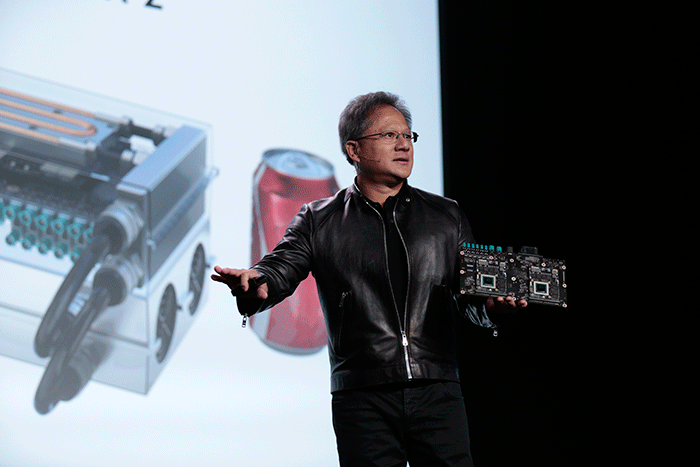
Dressed in his trademark black leather jacket, speaking to a crowd of some 400 automakers, media and analysts, NVIDIA CEO Jen-Hsun Huang revealed DRIVE PX 2, an automotive supercomputing platform that processes 24 trillion deep learning operations a second. That’s 10 times the performance of the first-generation DRIVE PX, now being used by more than 50 companies in the automotive world.

The new DRIVE PX 2 delivers 8 teraflops of processing power. It has the processing power of 150 MacBook Pros. And it’s the size of a lunchbox in contrast to earlier autonomous-driving technology being used today, which takes up the entire trunk of a mid-sized sedan. 

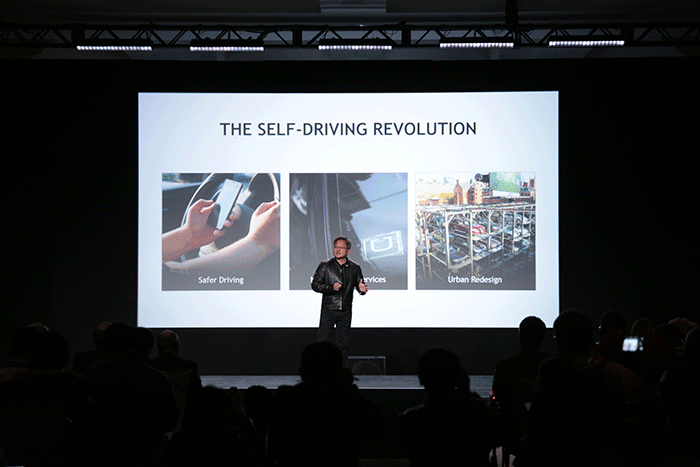
Self-driving cars will revolutionize society,” Huang said at the beginning of his talk. “And NVIDIA’s vision is to enable them.

Volvo to Deploy DRIVE PX in Self-Driving SUVs
As part of its quest to eliminate traffic fatalities, Volvo will be the first automaker to deploy DRIVE PX 2.
Huang announced that Volvo – known worldwide for safety and reliability – will be the first automaker to deploy DRIVE PX 2.

In the world’s first public trial of autonomous driving, the Swedish automaker next year will lease 100 XC90 luxury SUVs outfitted with DRIVE PX 2 technology. The technology will help the vehicles drive autonomously around Volvo’s hometown of Gothenburg, and semi-autonomously elsewhere.

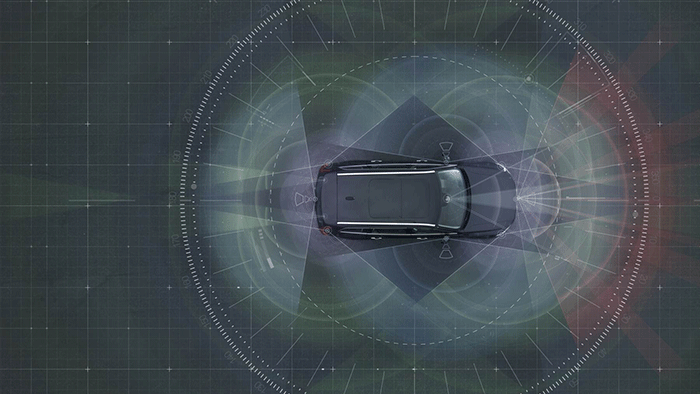
DRIVE PX 2 has the power to harness a host of sensors to get a 360 degree view of the environment around the car.

The rear-view mirror is history,” Jen-Hsun said.

Drive Safely, by Not Driving at All
Not so long ago, pundits had questioned the safety of technology in cars. Now, with Volvo incorporating autonomous vehicles into its plan to end traffic fatalities, that script has been flipped. Autonomous cars may be vastly safer than human-piloted vehicles.

Car crashes – an estimated 93 percent of them caused by human error kill 1.3 million drivers each year. More American teenagers die from texting while driving than any other cause, including drunk driving.

There’s also a productivity issue. Americans waste some 5.5 billion hours of time each year in traffic, costing the U.S. about $121 billion, according to an Urban Mobility Report from Texas A&M. And inefficient use of roads by cars wastes even vaster sums spent on infrastructure.

Deep Learning Hits the Road
Self-driving solutions based on computer vision can provide some answers. But tackling the infinite permutations that a driver needs to react to – stray pets, swerving cars, slashing rain, steady road construction crews – is far too complex a programming challenge.

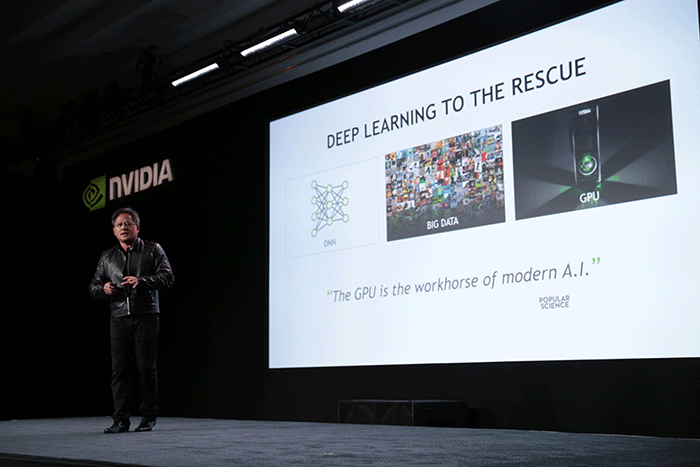
Deep learning enabled by NVIDIA technology can address these challenges. A highly trained deep neural network – residing on supercomputers in the cloud – captures the experience of many tens of thousands of hours of road time.

Huang noted that a number of automotive companies are already using NVIDIA’s deep learning technology to power their efforts, getting speedup of 30-40X in training their networks compared with other technology. BMW, Daimler and Ford are among them, along with innovative Japanese startups like Preferred Networks and ZMP. And Audi said it was able in four hours to do training that took it two years with a competing solution.
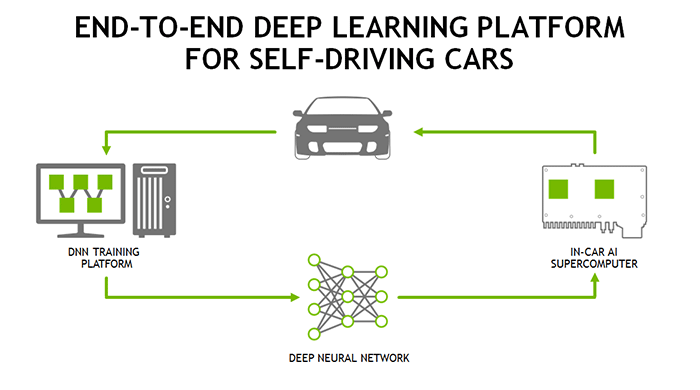
  NVIDIA DRIVE PX 2 is part of an end-to-end platform that brings deep learning to the road.

NVIDIA’s end-to-end solution for deep learning starts with NVIDIA DIGITS, a supercomputer that can be used to train digital neural networks by exposing them to data collected during that time on the road. On the other end is DRIVE PX 2, which draws on this training to make inferences to enable the car to progress safely down the road. In the middle is NVIDIA DriveWorks, a suite of software tools, libraries and modules that accelerates development and testing of autonomous vehicles.

DriveWorks enables sensor calibration, acquisition of surround data, synchronization, recording and then processing streams of sensor data through a complex pipeline of algorithms running on all of the DRIVE PX 2’s specialized and general-purpose processors.

During the event, Huang reminded the audience that machines are already beating humans at tasks once considered impossible for computers, such as image recognition. Systems trained with deep learning can now correctly classify images more than 96 percent of the time, exceeding what humans can do on similar tasks.

He used the event to show what deep learning can do for autonomous vehicles.

A series of demos drove this home, showing in three steps how DRIVE PX 2 harnesses a host of sensors – lidar, radar and cameras and ultrasonic – to understand the world around it, in real time, and plan a safe and efficient path forward.

The World’s Biggest Infotainment System


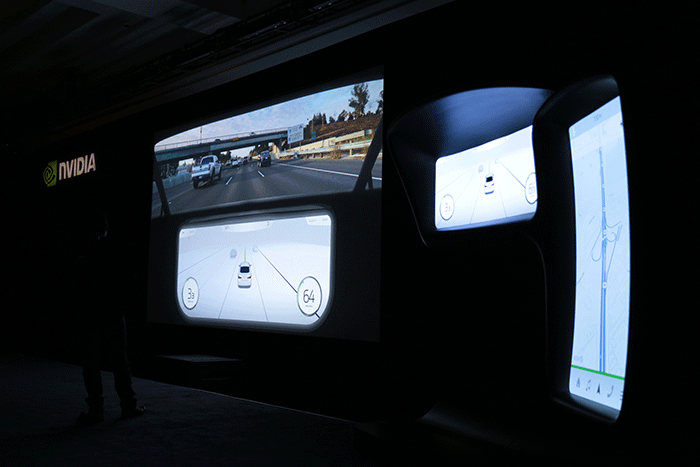
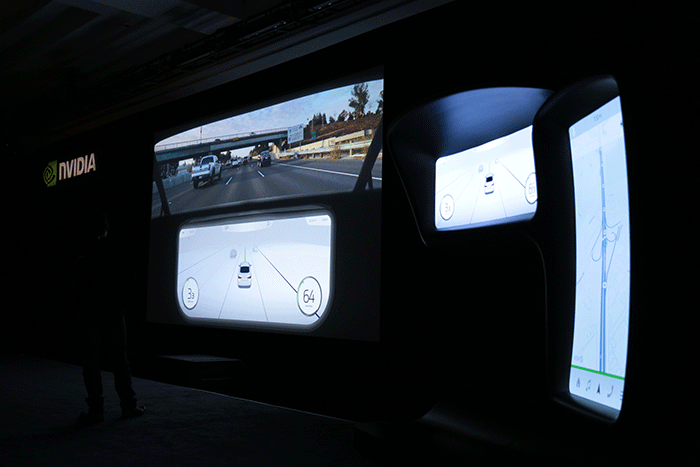
The highlight of the demos was what Huang called the world’s largest car infotainment system — an elegant block the size of a medium-sized bedroom wall mounted with a long horizontal screen and a long vertical one.

While a third larger screen showed the scene that a driver would take in, the wide demo screen showed how the car — using deep learning and sensor fusion — “viewed” the very same scene in real-time, stitched together from its array of sensors. On its right, the huge portrait-oriented screen shows a highly precise map that marked the car’s progress.

It’s a demo that will leave an impression on an audience that’s going to be hear a lot about the future of driving in the week ahead.

Photos from Our CES 2016 Press Event

NVIDIA Drive PX-2

ORIGINAL: Nvidia
By Bob Sherbin on January 3, 2016

jueves, 22 de octubre de 2015

The Way Electric Eels Kill is Even Cooler Than We Realized


Electric eels are among the most badass predators on planet Earth. How many other creatures can deliver a shock powerful enough to paralyze a horse? But their superpowers are even more impressive than we realized. These eels don’t just use electricity to attack, they use it to see.

That’s the conclusion of a fascinating study published today in Nature Communications. In a series of laboratory experiments, neurobiologist Ken Catania and colleagues show how electric eels “electrolocate” their prey after paralyzing it, using energy fields to locate and swallow hapless victims almost instantly.

The eel can use its electric attack simultaneously as a weapon and a sensory system,” Catania told National Geographic. “It’s sort of a science-fiction-like ability.

Electric eels, which are actually a type of catfish, slink quietly about in the murky depths of the Amazon River, looking for ill-fated creatures on which to discharge their 600-volt weapon. We’ve known of the eel’s formidable hunting ability for decades, but the exact mechanics have proven difficult to study (you try capturing an 8 foot-long living taser and bringing it back to the lab—it ain’t easy).

Catania is more persistent than most. In a study published last year inScience, he showed that electric eels’ high voltage attacks can stimulate their prey’s motor neurons, causing involuntary muscle twitching. Using two or three small electric volleys, the eels will force prey to give away their location before charging up and delivering the paralyzing blow.

Electric eel honing in on an electrically conductive stimulus (red arrow), before initiating its suction-feeding strike. Image Credit: Catania et al. 2015
But how does the eel find its lunch once that prey is disabled? As Catania points out, electric eels will strike and engulf their victims lightning fast — usually within milliseconds.

Electricity figures in here, too, according to a series of laboratory experiments performed by Catania and his colleagues. National Geographic explains:

To understand what was happening, Catania brought electric eels into the lab and presented them with anesthetized fish that were insulated from the eel’s electroreceptors by plastic bags. With an electrode, Catania made the fish flinch, and the eel discharged its high-voltage attack. But then it didn’t seem to know what to do next—the eel lunged in the direction of movement in the water but didn’t attempt to suck the fish into its mouth.

Catania then put an electrically conductive carbon rod into the tank along with the fish. He made the fish flinch, and the eel attacked with a shock. Sometimes the eel started to move in the direction of the fish, but then it changed course to lunge at the rod wherever it had been placed in the tank. To the eel, the fish seemed to be in two places at once.

What these experiments are showing is that electric eels don’t just use voltage to immobilize prey: They follow electric fields, in order to track it. This places the eel in league with sharks, rays, and certain African fish as a predator that can electrolocate—an adaptation that’s similar to echolocation in bats and dolphins.

Me, I’m just grateful this particular hunting ability seems restricted to the water.

[Read the full scientific paper at Nature Communications h/t National Geographic]

martes, 30 de junio de 2015

Scientists have built artificial neurons that fully mimic human brain cells


They could supplement our brain function.

Researchers have built the world’s first artificial neuron that’s capable of mimicking the function of an organic brain cell - including the ability to translate chemical signals into electrical impulses, and communicate with other human cells.

These artificial neurons are the size of a fingertip and contain no ‘living’ parts, but the team is working on shrinking them down so they can be implanted into humans. This could allow us to effectively replace damaged nerve cells and develop new treatments for neurological disorders, such as spinal cord injuries and Parkinson’s disease.

Professor Agneta Richter Dahlfors. 
Foto: Stefan Zimmerman
"Our artificial neuron is made of conductive polymers and it functions like a human neuron," lead researcher Agneta Richter-Dahlfors from the Karolinska Institutet in Sweden said in a press release.

Until now, scientists have only been able to stimulate brain cells using electrical impulses, which is how they transmit information within the cells. But in our bodies they're stimulated by chemical signals, and this is how they communicate with other neurons.

By connecting enzyme-based biosensors to organic electronic ion pumps, Richter-Dahlfors and her team have now managed to create an artificial neuron that can mimic this function, and they've shown that it can communicate chemically with organic brain cells even over large distances.

"The sensing component of the artificial neuron senses a change in chemical signals in one dish, and translates this into an electrical signal," said Richter-Dahlfors. "This electrical signal is next translated into the release of the neurotransmitter acetylcholine in a second dish, whose effect on living human cells can be monitored."

This means that artificial neurons could theoretically be integrated into complex biological systems, such as our bodies, and could allow scientists to replace or bypass damaged nerve cells. So imagine being able to use the device to restore function to paralysed patients, or heal brain damage.

"Next, we would like to miniaturise this device to enable implantation into the human body," said Richer-Dahlfors.“We foresee that in the future, by adding the concept of wireless communication, the biosensor could be placed in one part of the body, and trigger release of neurotransmitters at distant locations."

"Using such auto-regulated sensing and delivery, or possibly a remote control, new and exciting opportunities for future research and treatment of neurological disorders can be envisaged," she added.

The results of lab trials have been published in the journal Biosensors and Bioelectronics.

We're really looking forward to seeing where this research goes. While the potential for treating neurological disorders are incredibly exciting, the artificial neurons could one day also help us to supplement our mental abilities and add extra memory storage or offer faster processing, and that opens up some pretty awesome possibilities.


ORIGINAL: Science Alert
By FIONA MACDONALD
29 JUN 2015

sábado, 14 de septiembre de 2013

TI keeps its “eye” on university research with the USC Artificial Retina Project

ORIGINAL: Texas Instruments
By Around TI
Sep 13 2013

In elementary school we were all taught the scientific method. The part many of us disliked the most came after testing and analyzing the results of an experiment only to find out our hypothesis was wrong and we had to do the testing all over again. But when the scientific method is used in real world research, finding out what works and what doesn’t can result in unbelievable outcomes.

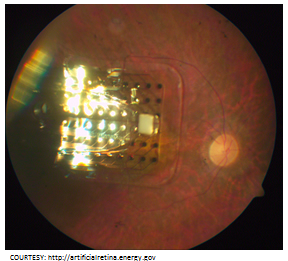
After more than 20 years of testing, research and development by the University of Southern California, Doheny Eye Institute and Second Sight Medical Products Inc., the FDA recently approved an artificial retina that can restore some sight for a specific type of blindness. There are TI parts in the final commercial product, named Argus II, and TI helped the USC team, now part of the new USC Eye Institute, by constantly evaluating their hypotheses and ultimately determining what technology worked for their project. TI principle fellow Gene Frantz, who recently retired from TI and is now a professor in the practice of signal processing at Rice University, was deeply engaged with the USC project over the past decade. 


The assistance TI provided us was invaluable. It was used to explore some ideas related to packaging high-density and high-power components in implants. TI also helped us with some extremely compact, ultra-miniature cameras and imaging systems which will be useful in the next generation of retinal prosthesis,” said James Weiland, professor of ophthalmology and biomedical engineering at the USC Eye Institute. “Finally, TI assisted in some wireless research including wireless power.”

More than 50 people around the world have received the implanted device. All of the recipients suffer from retinitis pigmentosa, a condition where part of the retina that is sensitive to light has degenerated or is diseased.

"The surgical procedure is done on an outpatient basis and is now being performed not only in the U.S. but also in Europe after CE (Conformité Européenne) marking approval," said Mark Humayun, professor of ophthalmology and biomedical engineering at the USC Eye Institute.

The implantable microelectronic system electrically stimulates the part of the retina that is spared from disease to create the perception of light as if the photo sensitive part of the retina was still healthy and seeing light,” said Weiland. “When you step back and think about it, after two decades of work and how far we’ve come, it is pretty remarkable and rewarding.

It has also been a rewarding experience for TI, which places a focus on creating new technologies that make our world safer and healthier.

TI strives to innovate and be a part of cutting-edge research projects and ideas. Those ideas could one day be the driving force behind future TI products,” said Xiaochen Xu, a TI HealthTech Systems Engineer. “It is a really exciting project for TI. TI’s goal is not only to support university research with short term research projects, but take part in long term projects like this one.

At the heart of most TI employees is a young scientist or engineer working through the scientific method. So it is no surprise that TI loves to be a part of a ground-breaking project when the end result is creating revolutionary technology like giving sight to the blind.

sábado, 16 de marzo de 2013

Detecting the invisible: Software that can see invisible motion

ORIGINAL: H+ Magazine
By: Lochlan Bloom
Published: March 16, 2013


New software from MIT can now reveal details in videos previously hidden to the human eye. The technique known as Eulerian Video Magnification was developed by graduate student Michael Rubinstein, recent alumni Hao-Yu Wu ’12, MNG ’12 and Eugene Shih SM ’01, PhD ’10, and professors William Freeman, Fredo Durand and John Guttag was presented this past summer at SIGGRAPH 2012.

The ground-breaking computer code analyses each frame of a video to determine invisible variations and offers some truly exciting possibilities for machine interaction. It also raises an interesting question – if machines can look back over our recorded lives and pull out previously hidden behaviour will that change the way we relate to our past?

The software in question has been developed by researchers at MIT and works with any existing video footage. By amplifying minute changes in pixel shading the software is able to determine fluctuations over time. As a result it is already able to predict fairly complex factors about humans or animals appearing in a video.


The researchers demonstrated the power of the program by analysing a video of a new born baby and extracting its heart rate. In this case, invisible changes in blood flow to the baby’s face created a hidden measure of its heartbeat. By comparing with data from a heart monitor recorded at the same time as the video they were able to confirm that their readings were correct.

While the researchers are currently touting the medical benefits of such a system – to remotely monitor at risk patients – there are undoubtedly huge implications for Artificial Intelligence and computer interfaces in general. The retrospective aspect of this is ably demonstrated in the below video where the researchers are able to pull Christian Bale’s heartbeat from the recent Batman film.

The idea that a computer can see things which are invisible to a human is not new. With the wide array of sensors and interfaces already on the market today, a machine is able to detect phenomena far and beyond the five meagre human senses. However the ability to go back and reassess existing footage with newly developed software and new technologies is something that has so far been little explored.

Consider recent history. Could a machine detect anything invisible to the human eye by analyzing a video of an assassination? Or a politician’s speech? There is a correlation between blood flow and lying, so a machine can be used as a aid to help humans determine whether to believe a rival in a business or diplomatic negotiation. Or could this type of machine become a standard device for job interviews?

The open-source software released by MIT is already a clear step towards a future where machines are indispensable in uncovering the hidden truths around us and it is only one of many such new techniques. When a computer can predict what someone is feeling more accurately than a human then at what stage do we stop trusting our instincts and rely instead on machines to guide our social interactions?

###

Lochlan Bloom is a writer of fiction and non-fiction. His novella Trade, focused on the collision of technology and the sex industry is out now.


@lochlanbloom

Endnote: The Eulerian Video Magnification (EVM) software can be downloaded and run or run it via a web-based interface . There are also plans for a smartphone app although no timeline has been announced.

Get the code: Matlab (2 MB, v1.1 2013-03-02) – reproduces all the results in the paper (see README.txt for details).

This code is provided for non-commercial research purposes only. By downloading and using the code, you are consenting to be bound by all terms of this software release agreement. Contact the authors if you wish to use the code commercially. This work is patent pending.

lunes, 28 de enero de 2013

Bioinspired Fibers Change Color when Stretched

ORIGINAL: Wyss Institute
January 28, 2013

The so-called "bastard hogberry," shown here floating in water (which changes its apparent color), has inspired a new type of photonic fiber. (Image courtesy of Peter Vukusic.)
Color-tunable photonic fibers mimic the fruit of the "bastard hogberry" plant

A team of materials scientists at Harvard University and the University of Exeter, UK, have invented a new fiber that changes color when stretched. Inspired by nature, the researchers identified and replicated the unique structural elements that create the bright iridescent blue color of a tropical plant's fruit.

The multilayered fiber, described today in the journal Advanced Materials, could lend itself to the creation of smart fabrics that visibly react to heat or pressure.

"Our new fiber is based on a structure we found in nature, and through clever engineering we've taken its capabilities a step further," says lead author Mathias Kolle, a postdoctoral fellow at the Harvard School of Engineering and Applied Sciences (SEAS). "The plant, of course, cannot change color. By combining its structure with an elastic material, however, we've created an artificial version that passes through a full rainbow of colors as it's stretched."
The photonic fibers are made by wrapping multiple layers of polymer around a glass core, which is later etched away. The thickness of the layers determines the apparent color of the fiber, which can range across the entire visible spectrum of light. (Image courtesy of Mathias Kolle.)
Since the evolution of the first eye on Earth more than 500 million years ago, the success of many organisms has relied upon the way they interact with light and color, making them useful models for the creation of new materials. For seeds and fruit in particular, bright color is thought to have evolved to attract the agents of seed dispersal, especially birds.

The fruit of the South American tropical plant, Margaritaria nobilis, commonly called "bastard hogberry," is an intriguing example of this adaptation. The ultra-bright blue fruit, which is low in nutritious content, mimics a more fleshy and nutritious competitor. Deceived birds eat the fruit and ultimately release its seeds over a wide geographic area.
Zooming in on the structure of the hogberry fruit, multiple scales of repeating architecture become clear. (Image courtesy of Mathias Kolle.)
"The fruit of this bastard hogberry plant was scientifically delightful to pick," says principal investigator Peter Vukusic, Associate Professor in Natural Photonics at the University of Exeter. "The light-manipulating architecture its surface layer presents, which has evolved to serve a specific biological function, has inspired an extremely useful and interesting technological design."

Vukusic and his collaborators at Harvard studied the structural origin of the seed's vibrant color. They discovered that the upper cells in the seed's skin contain a curved, repeating pattern, which creates color through the interference of light waves. (A similar mechanism is responsible for the bright colors of soap bubbles.) The team's analysis revealed that multiple layers of cells in the seed coat are each made up of a cylindrically layered architecture with high regularity on the nano- scale.
The researchers at Harvard developed a unique method of producing the photonic fibers; they believe it can be scaled up for industrial fabrication. (Image courtesy of Mathias Kolle.)
The team replicated the key structural elements of the fruit to create flexible, stretchable and color-changing photonic fibers using an innovative roll-up mechanism perfected in the Harvard laboratories.

"For our artificial structure, we cut down the complexity of the fruit to just its key elements," explains Kolle. "We use very thin fibers and wrap a polymer bilayer around them. That gives us the refractive index contrast, the right number of layers, and the curved, cylindrical cross-section that we need to produce these vivid colors."

The researchers say that the process could be scaled up and developed to suit industrial production.

"Our fiber-rolling technique allows the use of a wide range of materials, especially elastic ones, with the color-tuning range exceeding by an order of magnitude anything that has been reported for thermally drawn fibers," says coauthor Joanna Aizenberg, Amy Smith Berylson Professor of Materials Science at Harvard SEAS, and Kolle's adviser. Aizenberg is also Director of the Kavli Institute for Bionano Science and Technology at Harvard and a Core Faculty Member at the Wyss Institute for Biologically Inspired Engineering at Harvard.

The fibers' superior mechanical properties, combined with their demonstrated color brilliance and tunability, make them very versatile. For instance, the fibers can be wound to coat complex shapes. Because the fibers change color under strain, the technology could lend itself to smart sports textiles that change color in areas of muscle tension, or that sense when an object is placed under strain as a result of heat.

Additional coauthors included Alfred Lethbridge at the University of Exeter, Moritz Kreysing at Ludwig Maximilians University (Germany), and Jeremy B. Baumberg, Professor of Nanophotonics at the University of Cambridge (UK).

This research was supported by the U.S. Air Force Office of Scientific Research Multidisciplinary University Research Initiative, by the UK Engineering and Physical Sciences Research Council, and through a postdoctoral research fellowship from the Alexander von Humboldt Foundation. The researchers also benefited from facilities at the Harvard Center for Nanoscale Systems, which is part of the National Nanotechnology Infrastructure Network supported by the U.S. National Science Foundation. The Wyss Institute for Biologically Inspired Engineering at Harvard also contributed to this research.

CONTACT: Caroline Perry, (617) 496-1351

jueves, 22 de noviembre de 2012

Stanford's touch-sensitive plastic skin heals itself

ORIGINAL: Stanford News
BY KELLY SERVICK

A team of Stanford chemists and engineers has created the first synthetic material that is both sensitive to touch and capable of healing itself quickly and repeatedly at room temperature. The advance could lead to smarter prosthetics or resilient personal electronics that repair themselves.

A small piece of the self-healing material is sliced with a scalpel. The researchers say the material repairs itself in about 30 minutes. Photo: L.A. Cicero
Nobody knows the remarkable properties of human skin like the researchers struggling to emulate it. Not only is our skin sensitive – sending the brain precise information about pressure and temperature – but it also heals efficiently to preserve a protective barrier against the world. Combining these two features in a single synthetic material presented an exciting challenge for Stanford chemical engineering Professor Zhenan Bao and her team.

Now, they have succeeded in making the first material that can both sense subtle pressure and heal itself when torn or cut. Their findings will be published Nov. 11 in the journal Nature Nanotechnology.

In the last decade, there have been major advances in synthetic skin, said Bao, the study's principal investigator, but even the most effective self-healing materials had major drawbacks. Some had to be exposed to high temperatures, making them impractical for day-to-day use. Others could heal at room temperature, but repairing a cut changed their mechanical or chemical structure, so they could heal themselves only once. Most important, no self-healing material was a good bulk conductor of electricity, a crucial property.

"To interface this kind of material with the digital world, ideally you want it to be conductive," said Benjamin Chee-Keong Tee, a researcher on the project.

A new recipe
The researchers succeeded by combining two ingredients to get what Bao calls "the best of both worlds" – the self-healing ability of a plastic polymer and the conductivity of a metal.

They started with a plastic consisting of long chains of molecules joined by hydrogen bonds – the relatively weak attractions between the positively charged region of one atom and the negatively charged region of the next.

"These dynamic bonds allow the material to self-heal," said Chao Wang, another member of the research team. The molecules easily break apart, but then when they reconnect, the bonds reorganize themselves and restore the structure of the material after it gets damaged, he said. The result is a bendable material, which even at room temperature feels a bit like saltwater taffy left in the fridge.

To this resilient polymer, the researchers added tiny particles of nickel, which increased its mechanical strength. The nanoscale surfaces of the nickel particles are rough, which proved important in making the material conductive. Tee compared these surface features to "mini-machetes," with each jutting edge concentrating an electrical field and making it easier for current to flow from one particle to the next.

The result was a polymer with uncommon characteristics. "Most plastics are good insulators, but this is an excellent conductor," Bao said.

Bouncing back
The next step was to see how well the material could restore both its mechanical strength and its electrical conductivity after damage.

 Post doctoral scholar Chao Wang cuts through a sample of the self-healing plastic material developed in the Bao lab. Photo: L.A. Cicero
The researchers took a thin strip of the material and cut it in half with a scalpel. After gently pressing the pieces together for a few seconds, the researchers found the material gained back 75 percent of its original strength and electrical conductivity. The material was restored close to 100 percent in about 30 minutes. "Even human skin takes days to heal. So I think this is quite cool," Tee said.

What's more, the same sample could be cut repeatedly in the same place. After 50 cuts and repairs, a sample withstood bending and stretching just like the original.

The composite nature of the material created a new engineering challenge for the team. Bao and her co-authors found that although nickel was key to making the material strong and conductive, it also got in the way of the healing process by preventing the hydrogen bonds from reconnecting as well as they should.

For future generations of the material, Bao said, the team might adjust the size and shape of the nanoparticles, or even the chemical properties of the polymer, to get around this trade-off.

Nonetheless, Wang said the extent of these self-healing properties was truly surprising: "Before our work, it was very hard to imagine that this kind of flexible, conductive material could also be self-healing."

Sensitive to the touch
The team also explored how to use the material as a sensor. For the electrons that make up an electrical current, trying to pass through this material is like trying to cross a stream by hopping from stone to stone. The stones in this analogy are the nickel particles, and the distance separating them determines how much energy an electron will need to free itself from one stone and move to another.

Twisting or putting pressure on the synthetic skin changes the distance between the nickel particles and, therefore, the ease with which electrons can move. These subtle changes in electrical resistance can be translated into information about pressure and tension on the skin.

Tee said that the material is sensitive enough to detect the pressure of a handshake. It might, therefore, be ideal for use in prosthetics, Bao added. The material is sensitive not only to downward pressure but also to flexing, so a prosthetic limb might someday be able to register the degree of bend in a joint.

Tee pointed out other commercial possibilities. Electrical devices and wires coated in this material could repair themselves and get electricity flowing again without costly and difficult maintenance, particularly in hard-to-reach places, such as inside building walls or vehicles.

Next up, Bao said, is the team's goal to make the material stretchy and transparent, so that it might be suitable for wrapping and overlaying electronic devices or display screens.

Ranulfo Allen, a graduate student in chemical engineering, also contributed to this research. The research was supported by the Air Force Office of Scientific Research.

Kelly Servick is a science-writing intern working for the Stanford University School of Engineering.

Media Contact
Zhenan Bao, Chemical Engineering: (650) 723-2419, zbao@stanford.edu

Andrew Myers, School of Engineering: (650) 736-2245, admyers@stanford.edu

Dan Stober, Stanford News Service: (650) 721-6965, dstober@stanford.edu