Mostrando entradas con la etiqueta Northwestern U. Mostrar todas las entradas

miércoles, 5 de octubre de 2016

Molecular Machine-Makers Grab 2016 Nobel Prize in Chemistry

A trio who built motors and devices a fraction the size of a human hair has set the stage for a new type of industry
ILustración (C) Johan Jarnestad/ The Royal Swedish Academy of Sciences
Bernard Feringa said he was shocked “when we started a molecular machine for the first time and saw motion.” The chemist said he was equally shocked this morning when he got a call from Stockholm, Sweden, telling him that his work netted him this year’s Nobel Prize in Chemistry.

Feringa shares the prize with chemists Jean-Pierre Sauvage and Sir. J. Fraser Stoddart, as well as about $923,000 in prize money, for building machines on the tiniest of scales—the nanometer scale, a thousand times smaller than the width of a hair, or a billionth of a meter. Molecular motors and elevators and muscles, and even miniature four-wheel drive cars, were cited by the Nobel committee as some of the inventions of the three scientists, who mastered construction techniques and the ability to create energy to make things move.

Scientists on the Nobel committee, and Feringa himself in an interview, emphasized the practical applications had not yet been worked out, but perhaps they were being overly modest. Nanoscale machines based on these design principles have already begun to shape the future of medicine: Scientific American recently reported on nanorobots that can be sent through blood vessels, and nanomaterials that can monitor vital organ health. And some of Stoddart’s work was highlighted in an article in the magazine in 2007.

Sauvage was born in 1944 and works at the University of Strasbourg, France. Stoddart was born 1942 and is now at Northwestern University in Evanston, IL, U.S.A. Feringa was born 1951 and is at the University of Groningen, the Netherlands.

Sauvage was the first to take a big step towards a tiny machine in 1983, when he linked two ring-shaped molecules to form a chain, one component free to move around the other, rather than fixed in place. For a machine to be able to perform a task its parts must be able to move relative to each other. The two interlocked rings fulfilled this requirement, said Olof Ramstrom, a chemist at the Royal Institute of Technology in Stockholm and a member of the Nobel chemistry prize committee.

Then, in 1991, Stoddart showed molecular parts could be controlled. He and his team threaded a molecular ring onto a thin molecular axle and moved it to different parts and then back. The ring remained around this axle because the two components had complementary electron groups that kept them together yet loose enough to move. When Stoddart added heat—exciting the electrons on various segments of the axle-- the ring slid up and down. This type of control set the stage for devices including a molecular elevator, going up and down, and a molecular muscle that can expand and contract.

Feringa used the idea of added energy to create spinning motions, essential for a true motor. In 1999 he got a molecular rotor blade to spin in one direction, overcoming the basic random movements of molecules. By 2014 he had this motor spinning at 12,000 revolutions per second. He also has used motors to spin a glass cylinder that is 10,000 times bigger than the motor itself. And his team has linked several motors and axles to create a four-wheel drive nanocar.

What does this all mean for changing the world we live in? Many observers liken the situation to the late 19th century, when scientists had just started to create much larger motors powered by electricity. Today we have power drills and washing machines and cars. Feringa drew a comparison to the Wright Brothers. Once they built a flying machine, he said, people reacted happily but also wondered what it could be used for. “And today we have Boeing 747s,” the chemist says. The possible applications for molecular machines range from robots that hunt cancer in the body to tiny energy storage devices to power computers, he thinks.

Donna Nelson, a chemist and president of the American Chemical Society, says “I think this topic is going to be fabulous for science. When the Nobel Prize is given it inspires a lot of interest in the topic by other researchers. It will also increase funding.” Nelson also notes this particular area, tiny machines, “will be fascinating for kids. They can visualize it, and imagine a nanocar. This comes at a great time, when we need to inspire the next generation of scientists.”

And inspiration creates results. Today’s prize-winners were inspired, as were many of their profession, by a 1959 lecture by another Nobelist, physicist Richard Feynmann, who talked about the potential for construction at the smallest scales. His talk was titled “There’s plenty of room at the bottom.” Today that lower room proved to be a route to the top of the scientific world.


ABOUT THE AUTHOR(S)


Josh Fischman


Josh Fischman is a senior editor at Scientific American, covering biology, chemistry, and earth science. He has written and edited about science and health for Discover, Science, Earth, and U.S. News.

ORIGINAL: Scientific American
By Josh Fischman
October 5, 2016


Video by WOCHIT

domingo, 15 de mayo de 2016

Should we synthesise a human genome?

As specialists gather in private to discuss a grand plan for constructing a human genome, Drew Endy and Laurie Zoloth argue that such an enormous moral gesture should not be discussed behind closed doors.
CREDIT: MARIO TAMA/GETTY IMAGES
At Harvard today, an invitation-only group of about 150 scientists, lawyers, and entrepreneurs, met to discuss if and how to construct from scratch an entire human genome – the heritable genetic material that in nature is transferred from parents to children.

The meeting was originally organised to focus on “deliverables and industry involvement” with the primary goal of the project being “to synthesise a complete human genome in a cell line within a period of 10 years”.

Such a synthetic genome could then be tested in a laboratory by replacing the existing genome within a human cell. All this would still be far removed from making a synthetic human.

However, the possibility of making a human cell, whose genome is realised from only digital information and raw materials, should trigger broader considerations. 

For context, total synthesis of a human genome is becoming plausible at an accelerating rate. Thanks to new production techniques developed since 2003 the cost of assembling the genetic material encoding genes, the “building blocks” of life, has decreased from $4.00 to just three cents per individual letter, or “base pair” of deoxyribonucleic acid (DNA). 

As a result, the estimated initial cost of printing the DNA fragments encoding a three billion base pair human genome has dropped from $12 billion to $90 million. 

If cost reductions continue in the way they have been, then this price would approach $100,000 within 20 years. However, such dramatic additional cost reductions might never be realised without an overwhelming demand.

Advocates of synthetising a human genome, therefore argue that some open, collaborative “grand challenge” is needed to drive development of such technologies. 

While we strongly agree that sustained improvements in DNA construction tools are essential for advancing basic biological science and improving public health we are sceptical that synthesising a human genome is an appropriate demand driver.

We recall how controversies associated with many of the earliest genome synthesis projects delivered unintended consequences. 

For example, a project that made polio virus from scratch in 2002 generated such fear that public funding for improving DNA synthesis tools was cancelled, unwittingly harming research across diverse and unrelated fields while policy makers struggled to imagine how such tools could ever be controlled.

We argue that the synthesis of less controversial and more immediately useful genomes along with greatly improved sub-genomic synthesis capacities (for example, the real-time printing of plasmids the casettes that transfer genes between cells) should be pursued instead.
"In a world where human reproduction has already become a competitive marketplace...
it is easy to make up far stranger uses of human genome synthesis."
These are alternatives that would deliver broad and diverse public benefits.

Other topics on today’s agenda included changing the human genome itself. For example, could scientists synthetise a modified human genome that is resistant to all natural viruses? 

They likely could, for purely beneficial purposes, but what if others then sought to synthesise modified viruses that overcame such resistance? Might doing so start a genome-engineering arms race? 

And, what of even greater changes that can be imagined?

In a world where human reproduction has already become a competitive marketplace, with eggs, sperm and embryos carrying a price, it is easy to make up far stranger uses of human genome synthesis capacities. 

Would it be OK, for example, to sequence and then synthesise Einstein’s genome? If so how many Einstein genomes should be made and installed in cells, and who would get to make them? 

Taking a step back, just because something becomes possible, how should we approach determining if it is ethical to pursue?

Given that human genome synthesis is a technology that can completely redefine the core of what now joins all of humanity together as a species, we argue that discussions of making such capacities real, like today’s Harvard conference, should not take place without open and advance consideration of whether it is morally right to proceed.

When the first people at the table mostly have significant and direct material interests in proceeding, everyone, not just those in the room, risk out-of-control competition between public and private interests, ethical conflicts of interest, and temptations to manipulate human subject consent.

Pluralistic, public, and deliberative discussions are instead the best appropriate way to frame paths forward.

We note that the narrative of creation of the human is the central narrative for many religious communities.

To create a human genome from scratch would be an enormous moral gesture whose consequences should not be framed initially on the advice of lawyers and regulators alone.

The perspectives of others including self-identified theologians, philosophers, and ethicists from a variety of traditions should be sought out from the very beginning.

Critical voices representing civil society, who have long been sceptical of synthetic biology’s claims, should also be included. 

The creation of new human life is one of the last human-associated processes that has not yet been industrialised or fully commodified. It remains an act of faith, joy, and hope. 

Discussions to synthetise, for the first time, a human genome should not occur in closed rooms. 

Drew Endy is Associate Professor of Bioengineering at Stanford University.
Laurie Zoloth is a professor of medical ethics and humanities at Northwestern University, Chicago.

ORIGINAL: Cosmos Magazine

jueves, 14 de enero de 2016

ORNL cell-free protein synthesis is potential lifesaver

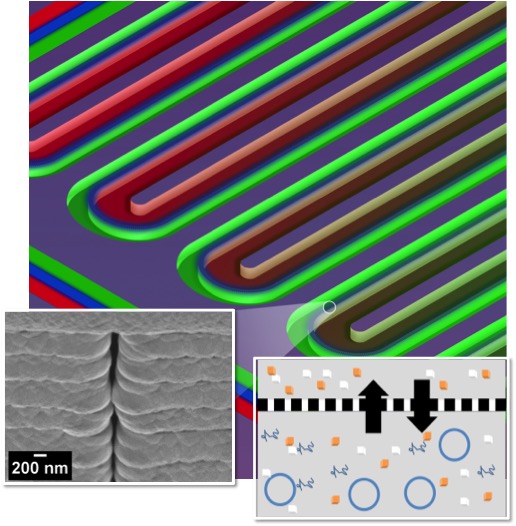
This section of a serpentine channel reactor shows the parallel reactor and feeder channels separated by a nanoporous membrane. At left is a single nanopore viewed from the side; at right is a diagram of metabolite exchange across the membrane.
OAK RIDGE, Tenn., Dec. 29, 2015 – Lives of soldiers and others injured in remote locations could be saved with a cell-free protein synthesis system developed at the Department of Energy’s Oak Ridge National Laboratory.

The device, a creation of a team led by Andrea Timm and Scott Retterer of the lab’s Biosciences Division, uses microfabricated bioreactors to facilitate the on-demand production of therapeutic proteins for medicines and biopharmaceuticals. Making these miniature factories cell-free, which eliminates the maintenance of a living system, simplifies the process and lowers cost.

“With this approach, we can produce more protein faster, making our technology ideal for point-of-care use,” Retterer said. “The fact it’s cell-free reduces the infrastructure needed to produce the protein and opens the possibility of creating proteins when and where you need them, bypassing the challenge of keeping the proteins cold during shipment and storage.”

ORNL’s bioreactor features elegance through a permeable nanoporous membrane and serpentine design fabricated using a combination of electron beam and photolithography and advanced material deposition processes. This design enables prolonged cell-free reactions for efficient production of proteins, making it easily adaptable for use in isolated locations and at disaster sites.

From a functional perspective, the design uses long serpentine channels integrated in a way to allow the exchange of materials between parallel reactor and feeder channels. With this approach, the team can control the exchange of metabolites, energy and species that inhibit production of the desired protein. Through other design features, researchers extend reaction times and improve yields.

“We show that the microscale bioreactor design produces higher protein yields than conventional tube-based batch formats and that product yields can be dramatically improved by facilitating small molecule exchange with the dual-channel bioreactor,” the authors wrote in their paper, published in the journal Small.

The researchers also note that on-demand biologic synthesis would aid the production of drugs that are costly to mass-produce, including orphan drugs and personalized medicines.

Other authors of the paper, titled “Towards Microfluidic Reactors for Cell-Free Protein Synthesis at the Point-of-Care,” are ORNL’s Peter Shankles, Carmen Foster and Mitchel Doktycz.

Funding for this project was provided by the Defense Advanced Research Projects Agency through a collaboration with researchers from Leidos (https://www.leidos.com) and Northwestern University. This accomplishment represents the culmination of research led by Doktycz and Retterer funded by multiple grants from the National Institutes of Health and DOE over the last decade. A portion of the work was performed at the Center for Nanophase Materials Sciences, a DOE Office of Science User Facility.

UT-Battelle manages ORNL for the DOE's Office of Science. The Office of Science is the single largest supporter of basic research in the physical sciences in the United States, and is working to address some of the most pressing challenges of our time. For more information, please visit http://science.energy.gov/.

ORIGINAL: ORNL
Ron Walli, Communications. wallira@ornl.gov, 865.576.0226
December 29, 2015

domingo, 27 de abril de 2014

Coming Soon: New Smart Biosensor That Directs Cells To Kill Cancer. Surgery Glasses

These biosensors can further be customised to recognise factors of relevance to various patients' needs. 

Monday, April 21, 2014: Biologists at the Northwestern University's McCormick school of engineering and applied science have developed a ground breaking technology that could modify human cells to create therapeutics used in turn to selectively target and destroy tumour cells in the human body without disrupting healthy cells. The unique protein biosensor engineers cells to kill cancer by helping them effectively distinguish between healthy and cancerous cells.

Add caption
While sitting on the surface of a cell, the biosensor can be programmed to sense its immediate environment for specific factors following which it sends a signal to the engineered cell's nucleus. This triggers a gene expression programme within the cell. "Till date, there was no way to engineer cells in a manner that allowed them to sense key pieces of information about their environment, which could indicate whether the engineered cell is in healthy tissue or sitting next to a tumour," Joshua Leonard, an assistant professor at Northwestern University's McCormick school of engineering and applied science was quoted as saying. 

Moreover, the programme is activated only in the vicinity of tumour cells, thereby minimising any side effects. These biosensors can further be customised to recognise factors of relevance to various patients' needs. "In that way, you could programme a cell-based therapy to specify which cells it should kill," Leonard added.

Meanmwhile, a team of scientists at Washington University School of Medicine in St. Louis (WUSTL) and the University of Arizona (UA) have developed a new pair of hi-tech glasses that can help surgeons to detect cancer cells. These glasses will help surgeons to visualise cancer cells which will glow blue when viewed through these glasses during surgeries. Cancer cells are invisible in normal optics even if you are viewing through a high-powered magnifying device. This innovative technology incorporates a custom video, a head mounted display and then inject a blue dye into a patient. This will specifically bind to cancer cells and makes them glow. Doctors can then easily differentiate cancer cells from healthy cells and can make sure that no tumour cells are left over during surgery. It can detect and remove tumours as small as 1mm. 

Saurabh Singh, EFYTIMES News Network 

ORIGINAL: EFY Times

sábado, 20 de julio de 2013

Desktop printing at the nano level

by Erin White
19 July 2013

Photo credit Wikimedia
Northwestern researchers create state-of-the-art desktop nanofabrication tool

EVANSTON, Ill. --- A new low-cost, high-resolution tool is primed to revolutionize how nanotechnology is produced from the desktop, according to a new study by Northwestern University researchers.

Currently, most nanofabrication is done in multibillion-dollar centralized facilities called foundries. This is similar to printing documents in centralized printing shops. Consider, however, how the desktop printer revolutionized the transfer of information by allowing individuals to inexpensively print documents as needed. This paradigm shift is why there has been community-wide ambition in the field of nanoscience to create a desktop nanofabrication tool.

“With this breakthrough, we can construct very high-quality materials and devices, such as processing semiconductors over large areas, and we can do it with an instrument slightly larger than a printer,” said Chad A. Mirkin, senior author of the study and a world-renowned pioneer in the field of nanoscience.

Mirkin is the George B. Rathmann Professor of Chemistry in the Weinberg College of Arts and Sciences and a professor of medicine, chemical and biological engineering, biomedical engineering and materials science and engineering. He also is the director of Northwestern’s International Institute for Nanotechnology.

The study will be published July 19 in the journal Nature Communications.

The tool Mirkin’s team has created produces working devices and structures at the nanoscale level in a matter of hours, right at the point of use. It is the nanofabrication equivalent of a desktop printer.

Without requiring millions of dollars in instrumentation costs, the tool is poised to prototype a diverse range of functional structures, from gene chips to protein arrays to building patterns that control how stem cells differentiate to making electronic circuits.

“Instead of needing to have access to millions of dollars, in some cases billions of dollars of instrumentation, you can begin to build devices that normally require that type of instrumentation right at the point of use,” Mirkin said.

The paper details the advances Mirkin’s team has made in desktop nanofabrication based upon easily fabricated beam-pen lithography (BPL) pen arrays, structures that consist of an array of polymeric pyramids, each coated with an opaque layer with a 100 nanometer aperture at the tip. Using a digital micromirror device, the functional component of a projector, a single beam of light is broken up into thousands of individual beams, each channeled down the back of different pyramidal pens within the array and through the apertures at the tip of each pen.

The nanofabrication tool allows one to rapidly process substrates coated with photosensitive materials called resists and generate structures that span the macro-, micro- and nanoscales, all in one experiment.

Key advances made by Mirkin’s team include developing the hardware, writing the software to coordinate the direction of light onto the pen array and constructing a system to make all of the pieces of this instrument work together in synchrony. This approach allows each pen to write a unique pattern and for these patterns to be stitched together into functional devices.

“There is no need to create a mask or master plate every time you want to create a new structure,” Mirkin said. “You just assign the beams of light to go in different places and tell the pens what pattern you want generated.”

Because the materials used to make the desktop nanofabrication tool are easily accessible, commercialization may be as little as two years away, Mirkin said. In the meantime, his team is working on building more devices and prototypes.

In the paper, Mirkin explains how his lab produced a map of the world, with nanoscale resolution that is large enough to see with the naked eye, a feat never before achieved with a scanning probe instrument. Not only that, but closer inspection with a microscope reveals that this image is actually a mosaic of individual chemical formulae made up of nanoscale points. Making this pattern showcases the instrument’s capability of simultaneously writing centimeter-scale patterns with nanoscale resolution.

The Nature Communications paper is titled “Desktop nanofabrication with massively multiplexed beam-pen lithography.” In addition to Mirkin, other authors are Xing Liao, Keith A. Brown, Abrin L. Schmucker, Guoliang Liu and Shu He, all of Northwestern University.

This study was supported by DARPA/MTO Award N66001-08-1-2044, AOARD Award FA2386-10-1-4065, AFOSR Awards FA9550-12-1-0280 and FA9550-12-1-0141, NSF Awards DBI-1152139 and DMB-1124131, DoD/NPS/NSSEF Fellowship Awards N00244-09-1-0012 and N00244-09-1-0071, the Chicago Biomedical Consortium with support from Searle Funds at The Chicago Community Trust and a CCNE initiative of NIH Award U54 CA151880. - See more at: http://www.northwestern.edu/newscenter/stories/2013/07/desktop-printing-at-the-nano-level.html#sthash.SqJb7VI3.dpuf
a, Schematic of the steps involved in fabricating a BPL tip array. b, SEM images of a BPL pen array in which the aperture (diameter, 50 ± 5 nm, inset) is fabricated by FIB. c, BPL pen array, where the aperture size is controlled by the amount of force made with an adhesive PMMA surface, as shown in a. Pen arrays as large as several square centimetres can be fabricated by this approach, where the size of the aperture can be controlled between 500 nm and 5 µm, simply by controlling the extent to which the beam pen array contacts the PMMA.
ORIGINAL: Nature Figure 1: Fabrication of a beam pen array.


miércoles, 24 de abril de 2013

9 Materials That Will Change the Future of Manufacturing [Slide Show]

April 22, 2013

Researchers are developing cutting-edge foams, coatings, metals and other substances to make our homes, vehicles and gadgets more energy efficient and environmentally friendly


Future of Manufacturing
When we are unable to find what we need in nature, we make it. This in-depth report examines new technologies, materials and methods shaping the future of fabrication »


CHITIN + SILK: Materials have a tremendous influence on the properties of manufactured goods, including weight, strength and energy consumption. The "Shrilk" pictured here was inspired insect exoskeleton material and could someday be used to make biomedical products.Image: Courtesy of Wyss Institute, Harvard University

The future of manufacturing depends on a number of technological breakthroughs in robotics, sensors and high-performance computing, to name a few. But nothing will impact how things are made, and what they are capable of, more than the materials manufacturers use to make those things. New materials change both the manufacturing process and the end result.

Scientific American’s May special report “How to Make the Next Big Thing” presents several new materials under development to help inventors and engineers deliver next-generation technologies. These ingredients include superinsulating aerogels for spacesuits, flexible concrete cloth for construction projects and complex natural polymers that could replace toxic plastics.

Yet this lineup of advanced materials merely scratches the surface. Carmakers, for example, are developing porous polymers and new steel alloys that are stronger and lighter than steel, ostensibly making vehicles both safer and more fuel efficient. And environmentally savvy entrepreneurs are growing fungi-based packing materials to provide a biodegradable alternative to Styrofoam.

The following slide show presents these and several other substances that manufacturers could someday us to make many of the things we use.

FUNGAL FOAM: (Courtesy of mycobond, via Flickr)
Initially conceived as a cost-effective, environmentally friendly and high-performance alternative to Styrofoam, Ecovative Design makes its Mushroom Packaging from agricultural crop waste—plant stalks and rice and wheat husks—bonded together with mushroom roots (called mycelium). The company is now adapting its mushroom material to produce biodegradable alternative to petroleum-based plastic foams used in automotive bumpers, doors, roofs, engine bays, trunk liners, dashboards and seats. Other potential uses include tabletops, surfboards and clothing.

ELECTRIC INK: Courtesy of University of Illinois / S. Brett Walker
Quantum-electronic magic can make strange but useful semiconductors that are insulators on the inside and conductors on the surface. The bulk of the material acts as an insulator that blocks electron flow whereas the surface is a very good, metal-like conductor that allows electrons to travel freely at almost light-speed, unaffected by impurities that normally hinder electron motion through materials. Metal-free conductive inks will play a role in making printed electronic materials used in display screens, sensors and batteries. University of Illinois researchers, for example, have created a silver-based electric ink that leaves a trail of conductive material when it evaporates. The new formulation is easier to make than conventional electronic inks, adheres to many materials and can be printed at a lower temperature using a simple desktop device. 

WASTE-TO-ENERGY THERMOELECTRICS: Courtesy of General Motors
Northwestern University and Michigan State University scientists have demonstrated a thermoelectric material that is highly efficient at converting waste heat to electricity. That’s good news if you consider that nearly two thirds of all energy input is lost as waste heat. The inefficiency of existing thermoelectric materials has limited their commercial use. The record-setting, environmentally stable formulation is expected to convert 15 to 20 percent of waste heat to useful electricity, enabling greater industrial adoption of thermoelectrics. Waste-heat recovery systems could be attached, for example, to vehicle tailpipes or could process the exhaust streams from glass- and brick-making factories, refineries, fossil-fuel power plants as well as large transport ships and tankers. 


ROCK-SOLID COATING: Courtesy of Oak Ridge National Laboratory
Engineers from the Oak Ridge and Lawrence Livermore National laboratories, the Colorado School of Mines and elsewhere have designed extreme-duty, iron-based, glassy alloy coatings for industrial drill bits, bores and cutters to make this equipment more resistant to breaking even under heavy loads. NanoSHIELD Coatings—short for Nano Super Hard Inexpensive Laser Deposited Coatings—require a laser to fuse alloy powder to the surface of cutters and other tunnel-boring tools. The coatings cost far less than conventional materials such as tungsten carbide cobalt, and their longer operating life improves the efficiency of the tunnel-boring process.

DESIGNER NANOCRYSTALS: Courtesy of the University of Chicago/Chris Strong
Three University of Chicago chemists have created a new way to assemble what they call “designer atoms” into novel materials with a broad array of potentially useful properties and functions. These designer atoms are nano crystals—tiny crystalline arrays small enough that new quantum phenomena begin to emerge but large enough to provide building blocks for new functional materials and substances that could be useful in harvesting solar energy and delivering quantum computing. Greg Engel, associate professor in chemistry, is pictured here tuning a femtosecond laser system used to dissect couplings between nano crystals.

MEGA MAGNETS: Courtesy of Images-of-Elements.com, via WikiMedia Commons
Rare earth materials are vital to the manufacture of wind turbines, electric and hybrid cars, and consumer electronics due to their powerful magnetic properties. Yet they are also expensive and come almost entirely from one source—China. Whereas electric motors use magnets to transform electrical energy into mechanical energy, sintered rare earth magnets produce incredibly strong magnetic fields at small sizes, allowing manufacturers to build smaller, lighter motors, according to Electron Energy Corp. The firm has teamed up with University of Delaware researchers to develop a manufacturing process that increases sintered rare earth magnets’ electrical resistivity by at least 30 percent. Their goal is to make magnets with increased electrical resistivity that can reduce motor efficiency losses even when motors operate at high speeds. Shown here are blocks of nickel-plated neodymium magnet, one of the most widely used types of rare-earth magnet. 

CHEAPER, LIGHTER CARBON FIBER: Courtesy of Oak Ridge National Laboratory
Autos of the future will require strong, lightweight carbon-fiber composite structures to enhance efficiency and driving range, but low-cost fibers will be needed for market success. A consortium of national labs, industry and academia working at Oak Ridge National Laboratory’s Carbon Fiber Technology Facility are working to overcome the challenges of making cheaper carbon fiber. The U.S. Department of Energy gave Oak Ridge a $35-million award to build and operate the lab, which will include a pilot plant capable of producing up to 25 tons a year of new carbon-fiber materials. Pictured here is a polymer resin used to make carbon fiber.

ULTRATHIN PLATINUM: Courtesy of Gokcen/the National Institute of Standards and Technology
Hydrogen fuel cell vehicles could provide clean transportation in the future, but they remain expensive in part because they use the precious metal platinum to facilitate the chemical reactions that produce electricity within the cell. A new method for quickly and cheaply depositing ultrathin layers of platinum might make it practical to reduce the amount of the metal used in fuel-cell catalysts, thereby lowering their cost significantly. Current methods for applying atom-thick layers of platinum—mainly, atomic layer deposition—are slow and complicated. The new approach is cheap and easy to implement, according to the National Institute of Standards and Technology. Essentially, platinum dissolved in a solution is deposited in single-atom-thick layers by alternately applying positive and negative voltages. Repetition can quickly and easily build layers of any desired atomic thickness. Shown here is a scanning tunneling microscope image of an ultrathin film layer of platinum deposited on gold after five seconds. Darker areas are exposed gold substrate not yet covered by the platinum. 

BIO-INSPIRED PLASTIC: Courtesy of Wyss Institute, Harvard University
Light enough to permit flight and thin enough to accommodate flexibility and strong enough to protect its host, natural insect cuticle—found in the rigid exoskeletons of houseflies and grasshoppers—provides its host protection without adding weight or bulk. Researchers at Harvard University’s Wyss Institute for Biologically Inspired Engineering have developed a new material called Shrilk to replicate insect cuticle’s strength, durability and versatility. Shrilk—so called because it is composed of chitin commonly extracted from discarded shrimp shells and fibroin protein from silk—could be used to make trash bags, packaging and diapers that degrade quickly. As an exceptionally strong, biocompatible material, it might also be used to suture wounds that bear high loads, such as in hernia repair or as a scaffold for tissue regeneration.


More In This Article

Future of Substance: New Materials Promise Better Batteries, Stronger Steel

Getting 3-D Printing and Next-Generation Manufacturing to the Factory Floor [Video]

Information Is Driving a New Revolution in Manufacturing

The Short History of the Future of Manufacturing

Atomic Toolbox: Manufacturing at the Nanoscale

jueves, 4 de octubre de 2012

Education Technology: Hamilton Project Report Calls For EDU STAR To Evaluate Tech In Schools

ORIGINAL: Huffington Post
09/27/2012


Foto: Getty Images
In a new paper for The Hamilton Project, Duke University’s Aaron Chatterji and Northwestern’s Benjamin Jones propose establishing a third-party ratings organization dubbed “EDU STAR” that would evaluate education technologies.

The proposal aims to encourage innovation in the education sector — which has seen relatively little new technologies compared to other industries — and provide new methods to help students learn.

While instructional software can offer personalized learning for students and potentially complement a teacher’s skillset, little is known about the effectiveness of learning technologies. According to the report, schools often have no way of knowing if a product works, and collecting such information or running their own tests requires investing both time and money.

In their paper, Chatterji and Jones write that their proposed nonprofit organization would 
  • bridge the information gap between market suppliers and schools, 
  • test software-based learning tools, and 
  • disseminate ratings and other measures of effectiveness online — similar to the publication Consumer Reports.
EDU STAR would begin by focusing on instructional content, which it would evaluate based on one or more of the Common Core State Standards. The organization would also collaborate with entrepreneurs, screening their products before they go into schools.

According to the report, EDU STAR plans to partner with a group of schools or school districts to test new technologies. The idea is that every school would set aside time for students to engage in digital learning, during which they would log into the EDU STAR system and work with the products that are being evaluated.

Chatterji and Jones estimate that one large school district would be enough to provide comprehensive results. In the event that there is not sufficient interest from schools, EDU STAR may offer incentives like discounts on software or compensation.

When it comes to disseminating results, the organization would be responsible for creating easily accessible reports detailing the effectiveness of various products and publishing these reports online. EDU STAR would rate each technology on a scale of one to five stars, and would also include supplemental information like how many students have used the software, how it was tested, user ratings from both students and teachers, and how effective the product is for different types of students.

The paper states that the organization would seek $5 million in start-up funding from a combination of U.S. Department of Education grants, such as the Investing in Innovation fund and foundation grants. EDU STAR would gradually transition to being financed by user fees paid by the technology companies, and would hypothetically be launched by a consortium including the Department of Education, private foundations and private sector partners.

“Technological innovation could be a potent weapon in the fight against stagnating achievement in the U.S. education system,” the report’s conclusion states. “However, before it can be used, both school systems and entrepreneurs must overcome a proof of effectiveness challenge.”

A poll by the Leading Education by Advancing Digital Commission released earlier this month found that over 90 percent of K-12 teachers and parents support greater use of technology in education, and believe that school systems should do more to improve access. More than half of both audiences also believe that technology will play a much bigger role in educating students during the next decade.

When it comes to investing in resources for students, 89 percent of teachers and 76 percent of parents would rather spend $200 per pupil on an Internet-connected device, than $200 for new science textbooks for each student.


ALSO ON HUFFPOST:


miércoles, 22 de agosto de 2012

'Google on steroids': Scientists create chemical brain

ORIGINAL: Physorg.com

A diagram showing, left, Chematica’s networking of 0.1% of organic chemistry’s reactions and, right, when reactions were discovered. Photograph: Chematica. Image by The Guardian
Northwestern University scientists have connected 250 years of organic chemical knowledge into one giant computer network -- a chemical Google on steroids. This "immortal chemist" will never retire and take away its knowledge but instead will continue to learn, grow and share. 

A decade in the making, the software optimizes syntheses of drug molecules and other important compounds, combines long (and expensive) syntheses of compounds into shorter and more economical routes and identifies suspicious chemical recipes that could lead to chemical weapons.

"I realized that if we could link all the known chemical compounds and reactions between them into one giant network, we could create not only a new repository of chemical methods but an entirely new knowledge platform where each chemical reaction ever performed and each compound ever made would give rise to a collective 'chemical brain,'" said Bartosz A. Grzybowski, who led the work. "The brain then could be searched and analyzed with algorithms akin to those used in Google or telecom networks."

Called Chematica, the network comprises some seven million chemicals connected by a similar number of reactions. A family of algorithms that searches and analyzes the network allows the chemist at his or her computer to easily tap into this vast compendium of chemical knowledge. And the system learns from experience, as more data and algorithms are added to its knowledge base.

Details and demonstrations of the system are published in three back-to-back papers in the Aug. 6 issue of the journal Angewandte Chemie.

Grzybowski is the senior author of all three papers. He is the Kenneth Burgess Professor of Physical Chemistry and Chemical Systems Engineering in the Weinberg College of Arts and Sciences and the McCormick School of Engineering and Applied Science.

In the Angewandte paper titled "Parallel Optimization of Synthetic Pathways Within the Network of Organic Chemistry," the researchers have demonstrated algorithms that find optimal syntheses leading to drug molecules and other industrially important chemicals. 

"The way we coded our algorithms allows us to search within a fraction of a second billions of chemical syntheses leading to a desired molecule," Grzybowski said. "This is very important since within even a few synthetic steps from a desired target the number of possible syntheses is astronomical and clearly beyond the search capabilities of any human chemist."

Chematica can test and evaluate every possible synthesis that exists, not only the few a particular chemist might have an interest in. In this way, the algorithms find truly optimal ways of making desired chemicals.

The software already has been used in industrial settings, Grzybowski said, to design more economical syntheses of companies' products. Synthesis can be optimized with various constraints, such as avoiding reactions involving environmentally dangerous compounds. Using the Chematica software, such green chemistry optimizations are just one click away.

Another important area of application is the shortening of synthetic pathways into the so-called "one-pot" reactions. One of the holy grails of organic chemistry has been to design methods in which all the starting materials could be combined at the very beginning and then the process would proceed in one pot -- much like cooking a stew -- all the way to the final product.

The Northwestern researchers detail how this can be done in the Angewandte paper titled "Rewiring Chemistry: Algorithmic Discovery and Experimental Validation of One-Pot Reactions in the Network of Organic Chemistry."

The chemists have taught their network some 86,000 chemical rules that check -- again, in a fraction of a second -- whether a sequence of individual reactions can be combined into a one-pot procedure. Thirty predictions of one-pot syntheses were tested and fully validated. Each synthesis proceeded as predicted and had excellent yields.

In one striking example, Grzybowski and his team synthesized an anti-asthma drug using the one-pot method. The drug typically would take four consecutive synthesis and purification steps.

"Our algorithms told us this sequence could be combined into just one step, and we were naturally curious to check it out in a flask," Grzybowski said. "We performed the one-pot reaction and obtained the drug in excellent yield and at a fraction of the cost the individual steps otherwise would have accrued."

The third area of application is the use of the Chematica network approach for predicting and monitoring syntheses leading to chemical weapons. This is reported in the Angewandte paper titled "Chemical Network Algorithms for the Risk Assessment and Management of Chemical Threats."

"Since we now have this unique ability to scrutinize all possible synthetic strategies, we also can identify the ones that a potential terrorist might use to make a nerve gas, an explosive or another toxic agent," Grzybowski said.

Algorithms known from game theory first are applied to identify the strategies that are hardest to detect by the federal government -- the use of substances, for example, such as kitchen salt, clarifiers, grain alcohol and a fertilizer, all freely available from a local convenience store. Characteristic combinations of seemingly innocuous chemicals, such as this example, are red flags.

This strategy is very different from the government's current approach of monitoring and regulating individual substances, Grzybowski said. Chematica can be used to monitor patterns of chemicals that together become suspicious, instead of monitoring individual compounds. Grzybowski is working with the federal government to implement the software.

Chematica now is being commercialized. "We chose this name," Grzybowski said, "because networks will do to chemistry what Mathematica did to scientific computing. Our approach will accelerate synthetic design and discovery and will optimize synthetic practice at large."

Journal reference: Angewandte Chemie