Mostrando entradas con la etiqueta Aprendizaje. Mostrar todas las entradas

viernes, 22 de agosto de 2014

Prepare to Be Shocked. Four predictions about how brain stimulation will make us smarter

Alvaro Dominguez

Several years ago, the Defense Advanced Research Projects Agency got wind of a technique called transcranial direct-current stimulation, or tDCS, which promised something extraordinary: a way to increase people’s performance in various capacities, from motor skills (in the case of recovering stroke patients) to language learning, all by stimulating their brains with electrical current. The simplest tDCS rigs are little more than nine-volt batteries hooked up to sponges embedded with metal and taped to a person’s scalp.

It’s only a short logical jump from the preceding applications to other potential uses of tDCS. What if, say, soldiers could be trained faster by hooking their heads up to a battery?

This is the kind of question DARPA was created to ask. So the agency awarded a grant to researchers at the University of New Mexico to test the hypothesis. They took a virtual-reality combat-training environment called Darwars Ambush—basically, a video game the military uses to train soldiers to respond to various situations—and captured still images. Then they Photoshopped in pictures of suspicious characters and partially concealed bombs. Subjects were shown the resulting tableaus, and were asked to decide very quickly whether each scene included signs of danger. The first round of participants did all this inside an fMRI machine, which identified roughly the parts of their brains that were working hardest as they looked for threats. Then the researchers repeated the exercise with 100 new subjects, this time sticking electrodes over the areas of the brain that had been identified in the fMRI experiment, and ran two milliamps of current (nothing dangerous) to half of the subjects as they examined the images. The remaining subjects—the control group—got only a minuscule amount of current. Under certain conditions, subjects receiving the full dose of current outperformed the others by a factor of two. And they performed especially well on tests administered an hour after training, indicating that what they’d learned was sticking. Simply put, running positive electrical current to the scalp was making people learn faster.

Dozens of other studies have turned up additional evidence that brain stimulation can improve performance on specific tasks. In some cases, the gains are small—maybe 10 or 20 percent—and in others they are large, as in the DARPA study. Vince Clark, a University of New Mexico psychology professor who was involved with the DARPA work, told me that he’d tried every data-crunching tactic he could think of to explain away the effect of tDCS. “But it’s all there. It’s all real,” Clark said. “I keep trying to get rid of it, and it doesn’t go away.”

Now the intelligence-agency version of DARPA, known as IARPA, has created a program that will look at whether brain stimulation might be combined with exercise, nutrition, and games to even more dramatically enhance human performance. As Raja Parasuraman, a George Mason University psychology professor who is advising an IARPA team, puts it, “The end goal is to improve fluid intelligence—that is, to make people smarter.”

Whether or not IARPA finds a way to make spies smarter, the field of brain stimulation stands to shift our understanding of the neural structures and processes that underpin intelligence. Here, based on conversations with several neuroscientists on the cutting edge of the field, are four guesses about where all this might be headed. 

1. Brain stimulation will expand our understanding of the brain-mind connection.

The neural mechanisms of brain stimulation are just beginning to be understood, through work by Michael A. Nitsche and Walter Paulus at the University of Göttingen and by Marom Bikson at the City College of New York. Their findings suggest that adding current to the brain increases the plasticity of neurons, making it easier for them to form new connections. We don’t imagine our brains being so mechanistic. To fix a heart with simple plumbing techniques or to reset a bone is one thing. But you’re not supposed to literally flip an electrical switch and get better at spotting Waldo or learning Swahili, are you? And if flipping a switch does work, how will that affect our ideas about intelligence and selfhood?

Even if juicing the brain doesn’t magically increase IQ scores, it may temporarily and substantially improve performance on certain constituent tasks of intelligence, like memory retrieval and cognitive control. This in itself will pose significant ethical challenges, some of which echo dilemmas already being raised by “neuroenhancement” drugs like Provigil. Workers doing cognitively demanding tasks—air-traffic controllers, physicists, live-radio hosts—could find themselves in the same position as cyclists, weight lifters, and baseball players. They’ll either be surpassed by those willing to augment their natural abilities, or they’ll have to augment themselves.

2. DIY brain stimulation will be popular—and risky.

As word of research findings has spread, do-it-yourselfers on Reddit and elsewhere have traded tips on building simple rigs and where to place electrodes for particular effects. Researchers like the Wright State neuroscientist Michael Weisend have in turn gone on DIY podcasts to warn them off. There’s so much we don’t know. Is neurostimulation safe over long periods of time? Will we become addicted to it? Some scientists, like Stanford’s Teresa Iuculano and Oxford’s Roi Cohen Kadosh, warn that cognitive enhancement through electrical stimulation may “occur at the expense of other cognitive functions.” For example, when Iuculano and Kadosh applied electrical stimulation to subjects who were learning a code that paired various numbers with symbols, the test group memorized the symbols faster than the control group did. But they were slower when it came time to actually use the symbols to do arithmetic. Maybe thinking will prove to be a zero-sum game: we cannot add to our mental powers without also subtracting from them.

3. Electrical stimulation is just the beginning.

Scientists across the country are becoming interested in how other types of electromagnetic radiation might affect the brain. Some are looking at using alternating current at different frequencies, magnetic energy, ultrasound, even different types of sonic noise. There appear to be many ways of exciting the brain’s circuitry with various energetic technologies, but basic research is only in its infancy. “It’s so early,” Clark told me. “It’s very empirical now—see an effect and play with it.”

As we learn more about our neurons’ wiring, through efforts like President Obama’s BRAIN Initiative—a huge, multiagency attempt to map the brain—we may become better able to deliver energy to exactly the right spots, as opposed to bathing big portions of the brain in current or ultrasound. Early research suggests that such targeting could mean the difference between modest improvements and the startling DARPA results. It’s not hard to imagine a plethora of treatments tailored to specific types of learning, cognition, or mood—a bit of current here to boost working memory, some there to help with linguistic fluency, a dash of ultrasound to improve one’s sense of well-being.

4. The most important application may be clinical treatment.

City College’s Bikson worries that an emphasis on cognitive enhancement could overshadow therapies for the sick, which he sees as the more promising application of this technology. In his view, do-it-yourself tDCS is a sideshow—clinical tDCS could be used to treat people suffering from epilepsy, migraines, stroke damage, and depression. “The science and early medical trials suggest tDCS can have as large an impact as drugs and specifically treat those who have failed to respond to drugs,” he told me. “tDCS researchers go to work every day knowing the long-term goal is to reduce human suffering on a transformative scale.” To that end, many of them would like to see clinical trials test tDCS against leading drug therapies. “Hopefully the National Institutes of Health will do that,” Parasuraman, the George Mason professor, said. “I’d like to see straightforward, side-by-side competition between tDCS and antidepressants. May the best thing win.”

A Brief Chronicle of Cognitive Enhancement
  • 500 b.c.: Ancient Greek scholars wear rosemary in their hair, believing it to boost memory.
  • 1886: John Pemberton formulates the original Coca-Cola, with cocaine and caffeine. It’s advertised as a “brain tonic.”
  • 1955: The FDA licenses methylphenidate—a?k?a Ritalin—for treating “hyperactivity.”
  • 1997: Julie Aigner-Clark launches Baby Einstein, a line of products claiming to “facilitate the development of the brain in infants.”
  • 1998: Provigil hits the U.S. market.
  • 2005: Lumosity, a San Francisco company devoted to online “brain training,” is founded.
  • 2020: A tDCS company starts an SAT-prep service for high-school students.
ORIGINAL: The Atlantic
Aug 13 2014

jueves, 21 de agosto de 2014

Preparing Your Students for the Challenges of Tomorrow


Right now, you have students. Eventually, those students will become the citizens -- employers, employees, professionals, educators, and caretakers of our planet in 21st century. Beyond mastery of standards, what can you do to help prepare them? What can you promote to be sure they are equipped with the skill sets they will need to take on challenges and opportunities that we can't yet even imagine?

Following are six tips to guide you in preparing your students for what they're likely to face in the years and decades to come.
1. Teach Collaboration as a Value and Skill Set Students of today need new skills for the coming century that will make them ready to collaborate with others on a global level. Whatever they do, we can expect their work to include finding creative solutions to emerging challenges.
2. Evaluate Information Accuracy 
New information is being discovered and disseminated at a phenomenal rate. It is predicted that 50 percent of the facts students are memorizing today will no longer be accurate or complete in the near future. Students need to know 
  • how to find accurate information, and 
  • how to use critical analysis for 
  • assessing the veracity or bias and 
  • the current or potential uses of new information. 
These are the executive functions that they need to develop and practice in the home and at school today, because without them, students will be unprepared to find, analyze, and use the information of tomorrow.
3. Teach Tolerance 
In order for collaboration to happen within a global community, job applicants of the future will be evaluated by their ability for communication with, openness to, and tolerance for unfamiliar cultures and ideas. To foster these critical skills, today's students will need open discussions and experiences that can help them learn about and feel comfortable communicating with people of other cultures.
4. Help Students Learn Through Their Strengths 
Children are born with brains that want to learn. They're also born with different strengths -- and they grow best through those strengths. One size does not fit all in assessment and instruction. The current testing system and the curriculum that it has spawned leave behind the majority of students who might not be doing their best with the linear, sequential instruction required for this kind of testing. Look ahead on the curriculum map and help promote each student's interest in the topic beforehand. Use clever "front-loading" techniques that will pique their curiosity.

5. Use Learning Beyond the Classroom
New "learning" does not become permanent memory unless there is repeated stimulation of the new memory circuits in the brain pathways
. This is the "practice makes permanent" aspect of neuroplasticity where neural networks that are the most stimulated develop more dendrites, synapses, and thicker myelin for more efficient information transmission. These stronger networks are less susceptible to pruning, and they become long-term memory holders. Students need to use what they learn repeatedly and in different, personally meaningful ways for short-term memory to become permanent knowledge that can be retrieved and used in the future. Help your students make memories permanent by providing opportunities for them to "transfer" school learning to real-life situations.
6. Teach Students to Use Their Brain Owner's Manual
The most important manual that you can share with your students is the owner's manual to their own brains. When they understand how their brains take in and store information (PDF, 139KB), they hold the keys to successfully operating the most powerful tool they'll ever own. When your students understand that, through neuroplasticity, they can change their own brains and intelligence, together you can build their resilience and willingness to persevere through the challenges that they will undoubtedly face in the future.

How are you preparing your students to thrive in the world they'll inhabit as adults?


ORIGINAL: Edutopia 
Judy Willis MD's Profile

August 20, 2014

martes, 29 de abril de 2014

Redefining Blended Learning


In over a year of writing about blended learning—largely defined as using an online delivery of content to augment face-to-face instruction—I’ve heard the same, tired criticism from too many well-meaning critics. They associate the approach with 
  • all parties needing to master overly intricate programming and Web 2.0 skills, 
  • cheapening the traditional classroom environment and t
  • he sacred student-teacher relationship.
Certainly, an advanced familiarity with all things technical comes in handy with blended learning. But set aside the 
  • most engaging screencasts, 
  • inspiring flipped classroom models, and 
  • nifty online teaching and assessment tools. 
At its core, blended learning enhances and promotes entrepreneurship and risk-taking, while giving students the skills they need to succeed in an increasingly flat, competitive, and digital 21st century. That’s it. It doesn’t really matter how “tech savvy” you are, as long as you feel inspired to rethink how you approach teaching.

With the Internet at my students’ fingertips—with smartphones, quite literally—I’m not the only or even the best source of knowledge. What I do possess, though, and what no computer could ever replicate, is a deep passion for my subjects. I’m excited and energetic about history and journalism, and I do whatever I can to infect my students with a similar love of learning and discovery. To the best of my ability, I allow and encourage self-directed learning (which is a large component of blended learning), and I don’t penalize failure harshly, so long as I see a clear passion for improvement.

How else do I define blended learning, and how do I employ it in my classroom? Here are five approaches that every teacher should consider.
  1. A large component of blended learning is self-directed learning. Whenever I assign a project or an essay, I allow students to propose their own topics. Too often, students are dependent on adults for guidance and direction. More often, we need to allow and encourage students to make their own decisions, even if that sometimes means seeing the consequences of their actions. After all, we learn equally from success and failure. At home and during class, my students explore online resources to inform their understanding. As challenging as it sometimes is, I refrain from offering immediate answers and solutions. If students can use the Internet to figure something out for themselves, they do. I might look like the bad guy, but I know it’s for their development.
  2. Along these lines, I also coach and encourage students to think about what constitutes “credible information,” and where to find it online. This is a crucial skill for students to master, no matter what profession they ultimately pursue. At home, students use the Internet to learn about their own subjects, whether from videos, articles, or other media. This is blended learning, but it’s also self-directed learning. As online learning tools advance, teachers will become increasingly responsible for guiding students to appropriate sources, rather than teaching material directly themselves.
  3. As I see it, a crucial part of the blended classroom environment includes teachers and students working and learning together. In my experience, this often involves using online tools. Three years ago, I worked with a former student to launch The Falconer, an online student news site. I can’t recount how many hours he and I spent watching “how-to” YouTube videos, learning not only about coding and maintaining a website, but also about recording podcasts, editing video, and streaming live events.
  4. Blended learning also calls for rethinking how we assess, with or without online tools. In the near future, competency-based learning, where students progress at their own pace to master a predetermined set of skills, will lead the way. Grades will become less and less significant, eventually vanishing completely. Higher education is already making this a reality. At College for America at Southern New Hampshire University (SNHU), students demonstrate mastery of 120 “competencies” rather than earn class credit. “Students show their mastery by completing tasks,” SNHU President Paul J. LeBlanc told me last May. “These are real-world hypotheticals. They’re not exams, they’re not the kind of isolated assignments you might get in a college class. They’re meant to be hypothetical, which mimic more closely how that competency is used in the real world.” I give grades because I have to, but in most cases, I allow students an infinite number of retakes.
  5. Similarly, blended learning also calls for rethinking how we teach, with or without online tools. Students want to see the relevance in what they learn, and that’s hard to accomplish by studying subjects in isolation. On that front, I admit that my own teaching needs improvement. I should do more to reach out to teachers in other fields who are interested in having students work on a shared project. After all, students might be told that learning about the Civil War or the quadratic formula is important, but unless they can put such knowledge to practical use, they will eventually forget it. But if students can see that a concept has multiple applications, especially to real-world scenarios, they will be much much likely to remember.

What are your thoughts on blended learning, and how it’s defined? I would love to hear your thoughts in the comments section below.

ORIGINAL: Spin Edu

sábado, 15 de marzo de 2014

What Thomas L. Friedman Didn’t Report About Getting Hired by Google

Graphic: Max Griboedov / shutterstock / LinkedIn Pulse 

Last month, New York Times op-ed columnist, Thomas L. Friedman, wrote a column entitled, “How to Get a Job at Google.” He did not report that this is how to get a job anywhere.
His op-ed focused on an interview with Laszlo Bock, the senior vice president of people operations for Google. It pointed out that a high grade-point average is not a predictor of success.

Bock was quoted as saying, “…For every job, though, the No. 1 thing we look for is general cognitive ability, and it’s not I.Q.

  • It’s learning ability. 
  • It’s the ability to process on the fly. 
  • It’s the ability to pull together disparate bits of information. 
We assess that using structured behavioral interviews that we validate to make sure they’re predictive.”

While Google has dubbed this learning ability – we have codified it through cognitive assessments of hundreds of executives, plus guiding the hiring of thousands more as Learning Agility. In fact, I focused a post on Learning Agility in November entitled, “How to Get Hired By Twitter – Or WalMart.”

I noted then that we have found that learning agility is the leading predictor of success – No. 1 above intelligence and education.

While Friedman reported on one company, I am writing to tell you that learning agility will get you a job anywhere – from Walmart to Twitter, to Google, to Facebook, to GM, to Tata, to L’Oreal and more.

And, in today’s workplace, jobs and job responsibilities change quickly. So, the key to retaining a job and growing in your career is learning agility.

The Peter Principle, which asserts that employees will continue to get promoted until they reach their highest level of incompetence, has evolved. Today employees don’t need to get promoted to become incompetent. They will become incompetent in their current jobs if they don’t grow, adapt, and evolve.

If you stop growing and learning, your job will outgrow you. If you grow and learn faster than your job, employers will always want you.

The other thing that Friedman did not tell you is that the “learning agile” 

  • uncover new challenges, 
  • solicit direct feedback, 
  • self-reflect, and 
  • find ways to get jobs done resourcefully. 
  • They see unique patterns and 
  • make fresh connections that others overlook.

A Korn Ferry study of sales managers bears this out: The higher an individual’s learning agility, the more promotions he or she received during a 10-year period. Similarly, longitudinal studies observed that managers who modified their behaviors, exhibited flexibility, and accepted mistakes as part of learning new competencies, were more successful than their counterparts as they climbed the corporate ladder.

There are five factors to Learning Agility:

  • mental agility, 
  • self-awareness, 
  • people agility, 
  • change agility, and 
  • results agility.

The net-net is that most successful executives are able to 

  • move out of their comfort zone, 
  • take risks, 
  • learn from mistakes, and 
  • begin anew as they encounter new assignments. 
  • The successful leaders continually learn, bend, and flex as their work world changed. 
In other words, they were learning agile.

While Friedman explained how to get hired at Google, it was the tip-of-the-iceberg of how to get hired anywhere, anyplace, anytime.

Now please go back to work, make a mistake, learn from it – and then apply the learning to the next situation.

##

ORIGINAL: LinkedIn
By Gary BurnisonInfluencer Chief Executive Officer at Korn/Ferry International
March 13, 2014

lunes, 3 de febrero de 2014

Passion-Based Learning


There is lots of talk about the science, technology, engineering and math (STEM) pipeline and all of its leaks. My personal mission is to fill the STEM pipeline with so many children that it bursts. To do this, STEM must be taught in an inspiring way. To keep children engaged, we need to bring passion for learning back into the classroom.

Passion is hot. It is a force that sells movies and margarine and everything in between. It is a force the can move mountains, inspire art and make the weak strong. We need to bring passion back into learning, in teaching and all around.

Passion motivates. It makes a way out of no way. It allows students to overcome hardships to achieve a goal that is meaningful to them.

When writing my recent book for TED, Save Our Science, I learned about the alphabet soup of instructional strategies out there, with the common theme of enticing and engaging learning. Let's name a few of these pedagogies: there is
  • inquiry-based, 
  • project-based, 
  • design-based and 
  • problem-based learning, 
for example. Each of these methods has a central theme buried under all that jargon. If we were to compare the learning process to fishing, we want to draw students in (with the worm) and keep them engaged (with the hook). These pedagogies provide the motivation and the momentum using different approaches.

You can hook a student's attention if
  • they get their hands dirty (inquiry-based learning); 
  • have learning interactions with other students (project- and problem-based learning); or 
  • need to perform a specific task (problem- and design-based learning). 
All these methods are ways -- with their direct discovery, problem-solving, hands-on learning and collaborative methods -- used to keep the embers of passion for learning alive. A love of learning is a key skill for the 21st century. (See Figure 1)

The Power of Passion There are two ways to get a child passionate about something:
  • Find out what each child is innately passionate about.
  • Be an instructor that exudes passion for the topic, and infect your students with that excitement.
Only a few of us have benefited from the first option, but all of us can benefit from the second one. That is the power of passion.
Figure 1. Passion for learning is the key pedagogy to prepare for 21st century challenges. Credit: Ainissa Ramirez
I've witnessed this in my own journey. I met a graduate student working in a very esoteric (read: boring) scientific field that uses magnetism to determine the properties of atoms. It was a foreign technique that was equivalent to watching paint dry, but she gave an enthusiastic presentation. I later asked her how she got involved with this topic. She replied that she had a professor who loved this field, and his passion was contagious. His legacy was a group of students who loved this topic, too. That is the power of passion; it can make what was once dull now desirable.

Now, we must be careful when we talk about passion and making topics interesting. Lots of instructors and teachers feel that they are passionate about what they teach. They will launch into a lesson from the deep end of the pool. Too often professors, teachers and instructors who have been teaching a subject for some time cannot engage a beginner, because they have forgotten how life was before knowing what they know. In teaching, you must have a beginner's mind. And you must ask, "How does this look to someone if they are seeing this for the first time?" Help your students into the shallow end of the pool and bring them to the deeper end. Teach with passion and with patience.

Vulnerability and the Inner Geek

Show students why you love the topic. Be vulnerable and show them the human side of knowing this new thing. To teach well, teachers must go back to the stage of vulnerability and put themselves in the shoes of a student who is learning the material for the first time. Students respond to vulnerability. It shows that you are "with them."

Now, I must be clear: vulnerability does not mean a loss of power. We must decouple that in our minds -- being vulnerable can be a source of power. (I would suggest you read the work of Brené Brown for proof). We are all from an age where knowing is related to our self-worth. No one can know everything! So we've got to have a new posture with knowledge, especially in this age where the rate of information creation is exponential. In this age of Google, the human element still has a market on engagement; there isn't an algorithm for passion (yet).

Be a passion-based teacher. Take on a new learning posture with your students by presenting a story behind the topic you are teaching, or by showing its beauty, or by delighting in the topic. Get in touch with your inner geek. When you do that, you give students permission to do the same. Remember that the word pedagogy comes from the Greek root, which means "to lead the child."

Everyone is a geek for something; everyone has passion for something. Make that something learning. Infect your students with passion, and they'll never be able to contain it again. Release your passion!


ORIGINAL: Edutopia
April 2, 2013

miércoles, 15 de enero de 2014

How to Harness Your Brain's Dopamine Supply and Increase Motivation

ORIGINAL: Life Hacker

How to Harness Your Brain's Dopamine Supply and Increase Motivation


I spent an hour on this opening paragraph. The hour wasn't time well spent, mind you. Sure, I was working—writing, deleting, fiddling with words here and there—but my paragraph-per-hour pace was more the byproduct of a stubborn lack of motivation than of indecisiveness.


To trace the source of motivation, let's begin in the brain where neurotransmitters spark chemical messages to keep us alert and on task. One specific neurotransmitter that plays a role in motivation is dopamine.

Dopamine's chemical signal gets passed from one neuron to the next, interacting with various receptors inside the synapse between the two neurons. This simple arrangement becomes much more complicated when you multiply the effect through the entire brain. Consider: there are different types of receptors, neurons, and pathways that neurotransmitters can take. Things get complicated fast.


For motivation specifically, it matters which pathway dopamine takes. The mesolimbic pathway, which originates in the middle of the brain and branches to various places like the cerebral cortex, is the most important reward pathway in the brain.

One of the mesolimbic's stops is the nucleus accumbens. Increased dopamine in the nucleus accumbens signals feedback for predicting rewards. Your brain recognizes that something important—good or bad—is about to happen, thus triggering motivation to do something.

But Wait, I Thought Dopamine Was All About Pleasure

Common knowledge is with you on this one. The dopamine-pleasure connection has been curated by scores of different studies and media reports. The pleasure reputation is well-earned because it's true. Dopamine is the brain's pleasure chemical.

But stopping there would be missing the complete story. Pleasure is just the tip of the dopamine iceberg. Dopamine's impact on the body is felt in many different areas, including
  • motivation, 
  • memory, 
  • behavior and cognition, 
  • attention, 
  • sleep, 
  • mood, 
  • learning, and oh yeah, 
  • pleasurable reward. 
You hear about dopamine and pleasure because of its sticky associations with sex, drugs, and rock 'n roll. The media refers to dopamine in scare stories about addiction (some for good reason, some not). Pleasure and all its dangerous slippery slopes is a sexier topic than attention, cognition, and motivation.

Studies of dopamine began with pleasure until researchers began noticing peculiar phenomena. They saw spikes in dopamine during moments of high stress. Dopamine rose in the case of soldiers with PTSD who heard gunfire. Stress and gunfire are not pleasurable phenomena, yet there dopamine was. What gives? It was clear that dopamine went beyond mere pleasure, and it turns out dopamine's true effect may be motivation. Dopamine performs its task before we obtain rewards, meaning that its real job is to encourage us to act and motivate us to achieve or avoid something bad.

Related

When it comes to motivation—especially for health and fitness goals—being an "inny" or an "outy" can make all the difference. The … Read…

Studies confirm the motivation-dopamine link in a number of interesting ways. Behaviorial neuroscientist John Salamone confirmed the link in an animal study on rats who were given the choice of one pile of food or another pile of food twice the size but behind a small fence. The rats with lowered levels of dopamine almost always took the easy way out, choosing the small pile instead of jumping the fence for greater reward.

In another study, a team of Vanderbilt scientists mapped the brains of "go-getters" and "slackers" and found that those willing to work hard for rewards had higher dopamine levels in the striatum and prefrontal cortex—two areas known to impact motivation and reward. Among slackers, dopamine was present in the anterior insula, an area of the brain that is involved in emotion and risk perception.

As Salamone explains, "Low levels of dopamine make people and other animals less likely to work for things, so it has more to do with motivation and cost/benefit analyses than pleasure itself."
Can Motivation Be Hacked?
All this information's well and good, but what happens when I'm sitting at my computer for an hour, writing an impossible opening paragraph and fighting the unbearable urge to do anything but? Am I a slacker who's genetically disposed to low dopamine and lack of motivation?

Not necessarily. The brain can be trained to feed off of bursts of dopamine sparked by rewarding experiences. You create the dopamine environment, and the brain does the rest. One way to achieve this is by setting incremental goals, according to neurologist Judy Willis. In essence, what you are doing is rewiring the brain to attach a dopamine response to the task you want as a reward. Allow yourself to experience frequent positive feedback as you progress through a series of goals. Dopamine will flow as a result of your brain's positive reinforcement every time you complete a step and meet a challenge.

Another way to look at the dopamine-motivation angle is to revisit the study mentioned above about go-getters and slackers. You'll notice that dopamine was present in both types of participants, and you'll remember that dopamine engages a vast set of reactions in the body. Dopamine is involved in both ends of the motivation spectrum, both in lighting a fire to persevere and in waving the white flag. Through this lens, motivation becomes less about increasing dopamine, and more about digging deep and being diligent. It should be a marriage of both.

Dopamine has a biological connection to our motivation to achieve. If there's anything we can do to increase the flow of dopamine like reinforcing positive feedback through incremental progress, embrace it. Along with this, we must include effort. Sometimes, the cure for low motivation may simply be old-school determination and perseverance, sticking with doing things even when we don't want to.
Where to Go from Here
It took me an hour to write my opening paragraph, and it took me five minutes to write this one. The difference is more dopamine, released to my brain as I met incremental goals along the way and received positive feedback from a blank document filling with words. Understanding where motivation comes from makes it easier to recognize what you need to do when it's missing.1

The next time you lack for motivation, try this: Break your indomitable task into smaller goals, and trust that dopamine will build up as you achieve your way through to the end. Should trouble or distraction interfere, push through with focused determination and deliberation.2

The Science of Motivation: Your Brain on Dopamine | iDoneThis

Related
Dear Lifehacker, Lately I've been completely unmotivated to do anything. Getting things done at work is a challenge, and it's even worse at … Read…


I spent five minutes in email, ten minutes on Twitter, and fifteen minutes doing who-knows-what on Tumblr. Just kidding, I know exactly what I was doing: looking at dog pictures. Sound familiar? Motivation is a tricky thing to corral. Tricky, but not impossible.

The Origins of Motivation: It's in Your HeadRelated
Forcing yourself to be productive is tough, but it's not just willpower and self-control that help you to get things done. You can also pull… Read…


Related
It takes time to do anything worthwhile, but thankfully, we don't need it all in one chunk. So this year, forget about the year as a whole.… Read…

domingo, 1 de diciembre de 2013

Why We're More Creative When We’re Tired, And 9 Other Surprising Things About How Brains Work

You may be hardwired as an introvert or an extrovert. But don't worry, there are ways to change how our brains work.

One of the things that surprises me time and time again is how we think our brains work and how they actually do.

On many occasions, I find myself convinced that there is a certain way to do things, only to find out that actually that’s the completely wrong way to think about it. For example, I always found it fairly understandable that we can multitask. Well, according to the latest research studies, it’s literally impossible for our brains to handle two tasks at the same time.

Recently, I came across more of these fascinating experiments and ideas that helped a ton to adjust my workflow towards how our brain actually work (instead of how I thought it does).

So here are 10 of the most surprising things our brain does and what we can learn from this information.
 

1. Your brain does creative work better when you’re tired.
When I explored the science of our body clocks and how they affect our daily routines, I was interested to find that a lot of the way I’d planned my days wasn’t really the best way to go about it. The way we work, in particular, actually has a lot to do with the cycles of our body clocks.

Here’s how it breaks down:

If you’re a morning lark, say, you’ll want to favor those morning hours when you’re feeling more fresh to get your most demanding, analytical work done. Using your brain to solve problems, answer questions and make decisions is best done when you’re at your peak.

For night owls, this is obviously a much later period in the day.

On the other hand, if you’re trying to do creative work, you’ll actually have more luck when you’re more tired and your brain isn’t functioning as efficiently. This sounds crazy, but it actually makes sense when you look at the reasoning behind it. It’s one of the reasons why great ideas often happen in the shower after a long day of work.

If you’re tired, your brain is not as good at filtering out distractions and focusing on a particular task. It’s also a lot less efficient at remembering connections between ideas or concepts. These are both good things when it comes to creative work, since this kind of work requires us to make new connections, be open to new ideas, and think in new ways. So a tired, fuzzy brain is of much more use to us when working on creative projects.

This Scientific American article explains how distractions can actually be a good thing for creative thinking:

Insight problems involve thinking outside the box. This is where susceptibility to “distraction” can be of benefit. At off-peak times we are less focused, and may consider a broader range of information. This wider scope gives us access to more alternatives and diverse interpretations, thus fostering innovation and insight.


2. Stress can change the size of your brain (and make it smaller).

I bet you didn’t know stress is actually the most common cause of changes in brain function. I was surprised to learn this when I looked into how stress affects our brains.

I also found some research that showed signs of brain size decreasing due to stress.

One study used baby monkeys to test the effects of stress on development and long-term mental health. Half the monkeys were cared for by their peers for six months, while the other half remained with their mothers. Afterwards, the monkeys were returned to typical social groups for several months before the researchers scanned their brains.

For the monkeys who had been removed from their mothers and cared for by their peers, areas of their brains related to stress were still enlarged, even after being in normal social conditions for several months.

Although more studies are needed to explore this fully, it’s pretty scary to think that prolonged stress could affect our brains long term.

Another study found that in rats who were exposed to chronic stress, the hippocampuses in their brains actually shrank. The hippocampus is integral to forming memories. It has been debated before whether Post-traumatic Stress Disorder (PTSD) can actually shrink the hippocampus, or people with naturally smaller hippocampuses are just more prone to PTSD. This study could point to the stress being a factor in actually changing the brain. 

3. It is literally impossible for our brains to multitask.
Multitasking is something we’ve long been encouraged to practice, but it turns out multitasking is actually impossible. When we think we’re multitasking, we’re actually context-switching. That is, we’re quickly switching back and forth between different tasks, rather than doing them at the same time.

The book Brain Rules explains how detrimental “multitasking” can be:

Research shows your error rate goes up 50%, and it takes you twice as long to do things.

The problem with multitasking is that we’re splitting our brain’s resources. We’re giving less attention to each task and probably performing worse on all of them:

When the brain tries to do two things at once, it divides and conquers, dedicating one-half of our gray matter to each task.

Here is how this looks in reality. While we try to do both Action A and Action B at the same time, our brain is never handling both simultaneously. Instead, it has to painfully switch back and forth and use important brainpower just to switch: 

When our brains handle a single task, the prefrontal cortex plays a big part. Here’s how it helps us achieve a goal or complete a task:

The anterior part of this brain region forms the goal or intention--for example, “I want that cookie”--and the posterior prefrontal cortex talks to the rest of the brain so that your hand reaches toward the cookie jar, and your mind knows whether you have the cookie.

A study in Paris found that when a second task was required, the brains of the study volunteers split up, with each hemisphere working alone on a task. The brain was overloaded by the second task and couldn’t perform at its full capacity, because it needed to split its resources.

When a third task was added, the volunteers’ results plummeted:

The triple-task jugglers consistently forgot one of their tasks. They also made three times as many errors as they did while dual-tasking.

4. Naps improve your brain’s day-to-day performance.
We’re pretty clear on how important sleep is for our brains, but what about naps? It turns out, these short bursts of sleep are actually really useful.

Here are a couple of ways napping can benefit the brain.

Improved memory
In one study, participants memorized illustrated cards to test their memory strength. After memorizing a set of cards, they had a 40-minute break wherein one group napped and the other stayed awake. After the break, both groups were tested on their memory of the cards, and the group that had napped performed better:

Much to the surprise of the researchers, the sleep group performed significantly better, retaining on average 85% of the patterns, compared to 60% for those who had remained awake.

Apparently, napping actually helps our brain to solidify memories:

Research indicates that when a memory is first recorded in the brain--in the hippocampus, to be specific--it’s still “fragile” and easily forgotten, especially if the brain is asked to memorize more things. Napping, it seems, pushes memories to the neocortex, the brain’s “more permanent storage,” preventing them from being “overwritten.”

Let’s look at that in a graph--the people who took a nap, were able to wildly outperform those who didn’t. It’s as though they had a fresh start:

Better learning
Taking a nap also helps to clear information out of your brain’s temporary storage areas, getting it ready for new information to be absorbed. A study from the University of California asked participants to complete a challenging task around midday, which required them to take in a lot of new information. At around 2 p.m., half of the volunteers took a nap while the rest stayed awake.

The really interesting part of this study is not only that at 6 p.m. that night the napping group performed better than those who didn’t take a nap. In fact, the napping group actually performed better than they had earlier in the morning.

What happens in the brain during a nap Some recent research has found that the right side of the brain is far more active during a nap than the left side, which stays fairly quiet while we’re asleep. Despite the fact that 95% of the population is right-handed, with the left side of their brains being the most dominant, the right side is consistently the more active hemisphere during sleep.

The study’s author, Andrei Medvedev, speculated that the right side of the brain handles ‘housekeeping’ duties while we’re asleep.

So while the left side of your brain takes some time off to relax, the right side is clearing out your temporary storage areas, pushing information into long-term storage and solidifying your memories from the day.

5. Your vision trumps all other senses.
Despite being one of our five main senses, vision seems to take precedence over the others:

Hear a piece of information, and three days later you’ll remember 10% of it. Add a picture and you’ll remember 65%.

Pictures beat text as well, in part because reading is so inefficient for us. Our brain sees words as lots of tiny pictures, and we have to identify certain features in the letters to be able to read them. That takes time.

In fact, vision is so powerful that the best wine tasters in the world have been known to describe a dyed white wine as a red.

Not only is it surprising that we rely on our vision so much, but it actually isn’t even that good. Take this fact, for instance:

Our brain is doing all this guessing because it doesn’t know where things are. In a three-dimensional world, the light actually falls on our retina in a two-dimensional fashion. So our brain approximates viewable image.

Let’s look at this image. It shows you how much of your brain is dedicated just to vision and how it affects other parts of the brain. It’s a truly staggering amount, compared to any other areas:


6. Introversion and extroversion come from different wiring in the brain.I just recently realized that introversion and extroversion are not actually related to how outgoing or shy we are, but rather how our brains recharge.

Here’s how the brains of introverts and extroverts differ:

Research has actually found that there is a difference in the brains of extroverted and introverted people in terms of how we process rewards and how our genetic makeup differs. For extroverts, their brains respond more strongly when a gamble pays off. Part of this is simply genetic, but it’s partly the difference of their dopamine systems as well.

An experiment that had people take gambles while in a brain scanner found the following:

When the gambles they took paid off, the more extroverted group showed a stronger response in two crucial brain regions: the amygdala and the nucleus accumbens.

The nucleus accumbens is part of the dopamine system, which affects how we learn and is generally known for motivating us to search for rewards. The difference in the dopamine system in the extrovert’s brain tends to push them towards seeking out novelty, taking risks and enjoying unfamiliar or surprising situations more than others. The amygdala is responsible for processing emotional stimuli, which gives extroverts that rush of excitement when they try something highly stimulating, which might overwhelm an introvert.

More research has actually shown that the difference comes from how introverts and extroverts process stimuli. That is, the stimulation coming into our brains is processed differently, depending on your personality. For extroverts, the pathway is much shorter. It runs through an area where taste, touch, visual, and auditory sensory processing takes place. For introverts, stimuli runs through a long, complicated pathway in areas of the brain associated with remembering, planning, and solving problems.

7. We tend to like people who make mistakes more.
Apparently, making mistakes actually makes us more likable, due to something called the Pratfall Effect.

Kevan Lee recently explained how this works on the Buffer blog:

Those who never make mistakes are perceived as less likable than those who commit the occasional faux pas. Messing up draws people closer to you, makes you more human. Perfection creates distance and an unattractive air of invincibility. Those of us with flaws win every time.

This theory was tested by psychologist Elliot Aronson. In his test, he asked participants to listen to recordings of people answering a quiz. Select recordings included the sound of the person knocking over a cup of coffee. When participants were asked to rate the quizzers on likability, the coffee-spill group came out on top.

So this is why we tend to dislike people who seem perfect. And now we know that making minor mistakes isn’t the worst thing in the world--in fact, it can work in our favor.

8. Meditation can rewire your brain for the better.
Here’s another one that really surprised me. I thought meditation was only good for improving focus and helping me stay calm throughout the day, but it actually has a whole bunch of great benefits.

Here are a few examples.

Less anxiety
This point is pretty technical, but it’s really interesting. The more we meditate, the less anxiety we have, and it turns out this is because we’re actually loosening the connections of particular neural pathways. This sounds bad, but it’s not.

What happens without meditation is that there’s a section of our brains that’s sometimes called the Me Center (it’s technically the medial prefrontal cortex). This is the part that processes information relating to ourselves and our experiences. Normally the neural pathways from the bodily sensation and fear centers of the brain to the Me Center are really strong. When you experience a scary or upsetting sensation, it triggers a strong reaction in your Me Center, making you feel scared and under attack.

Here is how anxiety and agitation decreases with just a 20-minute meditation session:

When we meditate, especially when we are just getting started with meditation, we weaken this neural connection. This means that we don’t react as strongly to sensations that might have once lit up our Me Centers. As we weaken this connection, we simultaneously strengthen the connection between what’s known as our Assessment Center (the part of our brains known for reasoning) and our bodily sensation and fear centers. So when we experience scary or upsetting sensations, we can more easily look at them rationally. Here’s a good example:

For example, when you experience pain, rather than becoming anxious and assuming it means something is wrong with you, you can watch the pain rise and fall without becoming ensnared in a story about what it might mean.

More creativity
Researchers at Leiden University in the Netherlands studied both focused-attention and open-monitoring meditation to see if there was any improvement in creativity afterwards. They found that people who practiced focused-attention meditation did not show any obvious signs of improvement in the creativity task following their meditation. For those who did open-monitoring meditation, however, they performed better on a task that asked them to come up with new ideas.

Better memory
One of the things meditation has been linked to is improving rapid memory recall. Catherine Kerr, a researcher at the Martinos Center for Biomedical Imaging and the Osher Research Center found that people who practiced mindful meditation were able to adjust the brain wave that screens out distractions and increase their productivity more quickly that those who did not meditate. She said that this ability to ignore distractions could explain “their superior ability to rapidly remember and incorporate new facts.” This seems to be very similar to the power of being exposed to new situations that will also dramatically improve our memory of things.

Meditation has also been linked to increasing compassion, decreasing stress, improving memory skills, and even increasing the amount of gray matter in the brain.

9. Exercise can reorganize the brain and boost your willpower.
Sure, exercise is good for your body, but what about your brain? Well apparently there’s a link between exercise and mental alertness, in a similar way that happiness and exercise are related.

A lifetime of exercise can result in a sometimes astonishing elevation in cognitive performance, compared with those who are sedentary. Exercisers outperform couch potatoes in tests that measure long-term memory, reasoning, attention, problem-solving, even so-called fluid-intelligence tasks.

Of course, exercise can also make us happier, as we’ve explored before:

If you start exercising, your brain recognizes this as a moment of stress. As your heart pressure increases, the brain thinks you are either fighting the enemy or fleeing from it. To protect yourself and your brain from stress, you release a protein called BDNF (Brain-Derived Neurotrophic Factor). BDNF has a protective and also reparative element to your memory neurons and acts as a reset switch. That’s why, after exercising, we often feel so at ease, things are clear, and eventually we're happy.

At the same time, endorphins, which also fight stress, are released in your brain. The main purpose of endorphins is this, writes researcher McGovern:

These endorphins tend to minimize the discomfort of exercise, block the feeling of pain, and are even associated with a feeling of euphoria.

10. You can make your brain think time is going slowly by doing new things.
Ever wished you didn’t find yourself saying “Where does the time go!” every June when you realize the year is half over? This is a neat trick that relates to how our brains perceive time. Once you know how it works, you can trick your brain into thinking time is moving more slowly.

Essentially, our brains take a whole bunch of information from our senses and organize it in a way that makes sense to us, before we ever perceive it. So what we think is our sense of time is actually just a whole bunch of information presented to us in a particular way, as determined by our brains:

When our brains receive new information, it doesn’t necessarily come in the proper order. This information needs to be reorganized and presented to us in a form we understand. When familiar information is processed, this doesn’t take much time at all. New information, however, is a bit slower and makes time feel elongated.

Even stranger, it isn’t just a single area of the brain that controls our time perception--it’s done by a whole bunch of brain areas, unlike our common five senses, which can each be pinpointed to a single, specific area. 

When we receive lots of new information, it takes our brains a while to process it all. The longer this processing takes, the longer that period of time feels:

When we’re in life-threatening situations, for instance, “we remember the time as longer because we record more of the experience. Life-threatening experiences make us really pay attention, but we don’t gain superhuman powers of perception.”

The same thing happens when we hear enjoyable music, because “greater attention leads to perception of a longer period of time.”

Conversely, if your brain doesn’t have to process lots of new information, time seems to move faster, so the same amount of time will actually feel shorter than it would otherwise. This happens when you take in lots of information that’s familiar, because you’ve processed it before. Your brain doesn’t have to work very hard, so it processes time faster.

Do you have another surprising fact about the brain you’d like to share? I’d love to hear it! If you enjoyed this post, I think you might also like our post about "10 Simple Things You Can Do Today That Will Make You Happier, Backed By Science."

--Belle Beth Cooper is a content crafter at Buffer, a smarter way to share on Twitter and Facebook. Follow her on Twitter at @BelleBethCooper


Reprinted with permission from Buffer.

[Image: Flickr user Joseph O'Connell]

Beth Belle Cooper is a content crafter at Buffer, a smarter way to share on Twitter and Facebook. Follow her on Twitter at @BelleBethCooper

ORIGINAL: FastCo Exist

lunes, 25 de noviembre de 2013

Neural Networks and Deep Learning Book Project


A book that will teach you the core concepts of neural networks and deep learning

About the book
This book will teach you the core concepts of neural networks and deep learning. These are powerful machine learning techniques which have achieved outstanding results for problems in image recognition, speech recognition, and natural language processing. Neural networks and deep learning are now being adopted by many companies, including Google, Microsoft, and Facebook.

I'm writing this book to bridge the gap between popular accounts and the many technical papers on neural networks and deep learning. The book will make it easy and fun for people with programming and basic mathematical skills to come up to speed.

I love explaining complex technical subjects. I've written two previous books. The first book, "Quantum Computation and Quantum Information" (joint with Ike Chuang), is the standard text on quantum computing, and one of the ten most cited books in the history of physics. The second book, "Reinventing Discovery: The New Era of Networked Science", is a book for a general audience about networked science. It was named one of the best books of 2011 by The Financial Times and the Boston Globe.

In addition to my books I've written many technical articles, including "Lisp as the Maxwell's equations of software", "How to crawl a quarter billion webpages in 40 hours", and "Why Bloom filters work the way they do", all of which made the top five posts on Hacker News.

You can see a draft of chapter 1 of the book at neuralnetworksanddeeplearning.com.

The book will be made freely available online, under a Creative Commons Attribution-Non-Commercial license.

As an independent writer and scientist, the reason I'm undertaking this Indiegogo campaign is to give me some partial support while I complete the book.

Draft table of contents
  • Using neural nets to recognize handwritten digits: We get off to a flying start, creating a neural network that can solve a hard problem - recognizing handwritten digits.
  • Using backpropagation to speed up learning: We'll master the ins-and-outs of the backpropagation algorithm, which is the fundamental algorithm used to learn in neural nets, and the basis for deep learning.
  • Neural nets: the big picture: How do artificial neural nets compare to biological brains? Is there a simple universal algorithm for thinking? How can we use neural nets to solve problems in speech recognition and natural language processing? Can we use neural nets to compute an arbitrary function?
  • Deep learning: What makes deep neural networks hard to train with conventional approaches? How can we overcome those challenges? We'll see how deep neural nets can be pre-trained, and how they can learn high-level representations of knowledge from complex data.
  • Recent progress in image recognition: We'll dive into exciting recent work using deep learning to solve difficult problems in image recognition, including recognizing the images in ImageNet, and the Stanford-Google "cat neuron" paper.
  • The future of neural nets: Will neural nets help lead to artificial intelligence? Can they be used to simulate a human brain?
ORIGINAL: Indiegogo

martes, 21 de mayo de 2013

Complex brain function depends on flexibility

ORIGINAL: MIT News
Anne Trafton, MIT News Office
May 19, 2013

Neurons that can multitask greatly enhance the brain’s computational power, study finds.
An artist's impression depicting a network of neurons of the nervous system. Image: Maurizio De Angelis/Wellcome Images
Over the past few decades, neuroscientists have made much progress in mapping the brain by deciphering the functions of individual neurons that perform very specific tasks, such as recognizing the location or color of an object.

However, there are many neurons, especially in brain regions that perform sophisticated functions such as thinking and planning, that don’t fit into this pattern. Instead of responding exclusively to one stimulus or task, these neurons react in different ways to a wide variety of things. MIT neuroscientist Earl Miller first noticed these unusual activity patterns about 20 years ago, while recording the electrical activity of neurons in animals that were trained to perform complex tasks.

“We started noticing early on that there are a whole bunch of neurons in the prefrontal cortex that can’t be classified in the traditional way of one message per neuron,” recalls Miller, the Picower Professor of Neuroscience at MIT and a member of MIT’s Picower Institute for Learning and Memory.

In a paper appearing in Nature on May 19, Miller and colleagues at Columbia University report that these neurons are essential for complex cognitive tasks, such as learning new behavior. The Columbia team, led by the study’s senior author, Stefano Fusi, developed a computer model showing that without these neurons, the brain can learn only a handful of behavioral tasks.

“You need a significant proportion of these neurons,” says Fusi, an associate professor of neuroscience at Columbia. “That gives the brain a huge computational advantage.”

Lead author of the paper is Mattia Rigotti, a former grad student in Fusi’s lab.

Multitasking neurons

Miller and other neuroscientists who first identified this neuronal activity observed that while the patterns were difficult to predict, they were not random. “In the same context, the neurons always behave the same way. It’s just that they may convey one message in one task, and a totally different message in another task,” Miller says.

For example, a neuron might distinguish between colors during one task, but issue a motor command under different conditions.

Miller and colleagues proposed that this type of neuronal flexibility is key to cognitive flexibility, including the brain’s ability to learn so many new things on the fly. “You have a bunch of neurons that can be recruited for a whole bunch of different things, and what they do just changes depending on the task demands,” he says.

At first, that theory encountered resistance “because it runs against the traditional idea that you can figure out the clockwork of the brain by figuring out the one thing each neuron does,” Miller says.

For the new Nature study, Fusi and colleagues at Columbia created a computer model to determine more precisely what role these flexible neurons play in cognition, using experimental data gathered by Miller and his former grad student, Melissa Warden. That data came from one of the most complex tasks that Miller has ever trained a monkey to perform: The animals looked at a sequence of two pictures and had to remember the pictures and the order in which they appeared.

During this task, the flexible neurons, known as “mixed selectivity neurons,” exhibited a great deal of nonlinear activity — meaning that their responses to a combination of factors cannot be predicted based on their response to each individual factor (such as one image).

Expanding capacity

Fusi’s computer model revealed that these mixed selectivity neurons are critical to building a brain that can perform many complex tasks. When the computer model includes only neurons that perform one function, the brain can only learn very simple tasks. However, when the flexible neurons are added to the model, “everything becomes so much easier and you can create a neural system that can perform very complex tasks,” Fusi says.

The flexible neurons also greatly expand the brain’s capacity to perform tasks. In the computer model, neural networks without mixed selectivity neurons could learn about 100 tasks before running out of capacity. That capacity greatly expanded to tens of millions of tasks as mixed selectivity neurons were added to the model. When mixed selectivity neurons reached about 30 percent of the total, the network’s capacity became “virtually unlimited,” Miller says — just like a human brain.

Mixed selectivity neurons are especially dominant in the prefrontal cortex, where most thought, learning and planning takes place. This study demonstrates how these mixed selectivity neurons greatly increase the number of tasks that this kind of neural network can perform, says John Duncan, a professor of neuroscience at Cambridge University.

“Especially for higher-order regions, the data that have often been taken as a complicating nuisance may be critical in allowing the system actually to work,” says Duncan, who was not part of the research team.

Miller is now trying to figure out how the brain sorts through all of this activity to create coherent messages. There is some evidence suggesting that these neurons communicate with the correct targets by synchronizing their activity with oscillations of a particular brainwave frequency.

“The idea is that neurons can send different messages to different targets by virtue of which other neurons they are synchronized with,” Miller says. “It provides a way of essentially opening up these special channels of communications so the preferred message gets to the preferred neurons and doesn’t go to neurons that don’t need to hear it.”

The research was funded by the Gatsby Foundation, the Swartz Foundation and the Kavli Foundation.

viernes, 8 de marzo de 2013

What if learning was possible without degrees? Rahul Hasija at TEDxMasala

ORIGINAL: TEDxMasala

What would happen if we went about pursuing education outside the walls of an institution; what can we learn from just travelling, writing, dancing, meeting new people? Shouldn't we be following our dreams instead of following societal norms? Rahul Hasija, in this engaging talk says "Let's step outside our circles of comfort. Learning can happen simply through living." 

Rahul comes from Indore and is interested in writing, self-expression, travelling and dancing & is currently working with Swaraj University coordinating with mentors and also designing his project on stories.

lunes, 14 de enero de 2013

Does passing a small current through your brain really make you smarter?

ORIGINAL: Singularity Hub


Want to be smarter, solve difficult puzzles, learn the piano in half the time? All you need is a little shock. A growing number of scientists are claiming that passing a small current through the brain increases our aptitude. One need only to strap on the headgear, press the button, and sit back while mediocrity is zapped from your brain.

The ‘miracle’ boost is supposedly delivered through what’s called transcranial direct current stimulation (tDCS). The stimulation is a steady current of 2 mA delivered through electrodes worn on the head and arm. The mild electric current is enough to depolarize neurons in the cerebral cortex and supposedly make it more receptive to new input. That is, the brain is primed to learn more easily.

At first blush this might sound more like psuedoscience than science. But several studies have shown that people learn faster with the battery strapped to their heads, giving new meaning to getting “the juices flowing.”

Last year scientists at the Mind Research Network in Albuquerque, New Mexico tested the ability of tDCS to improve people’s performance on a threat identification task. Participants were trained on the virtual reality simulation DARWARS AMBUSH! that the US military uses to train soldiers how to recognize and react to enemy ambushes and improvised explosive devices (IEDs). A baseline performance level was assessed, followed by a 1-hour training session, then a post-training test session in which participants were asked whether or not a threat was present. One group of participants received 2 mA tDCS for the first half and hour of the training session while another group received a meager 0.1 mA dose as a negative control.
tDCS enhanced participants’ ability to identify threats in the simulation game DARWARS AMBUSH!
Turns out that tDCS enhances training. The high dose group performed better at threat identification than the the group with the low dose. The enhanced performance is also accompanied by an altered state of awareness. “The number one thing I hear people say after tDCS is that time passed unduly fast,” lead scientist of the study, Michael Weisend, told New Scientist. They feel more focused and calm, he says, and their performance certainly makes it seem as though they were.

Previous studies show similar results. A 2005 study showed tDCS improved working memory, and a 2008 study showed tDCS improved language learning. A third study published earlier this year showed that tDCS delivered to the parietal cortex, a part of the brain through which visual information flows, enhanced visual short-term memory compared to placebo.

So if the effects are real, what are the 2 mA of current doing to the brain? Weisend and colleagues have tried to answer that question with brain imaging.

The brain’s magnetic field changes in response to sensory stimulation such as with sound, touch and light. With magnetoencelography (MEG) Weisend’s group showed that response magnetic fields of individuals who had received tDCS had amplitudes six times greater than baseline amplitudes. By contrast, individuals who had received a mock tDCS that gave the same sensation (it tingles) showed no boost over baseline. Furthermore, the tDCS group still showed a 2.5-fold boost in their magnetic fields 50 minutes after stimulation.

Trying to uncover anatomical changes, the group then conducted a study using diffusion tensor imaging (DTI) scans that can visualize the white matter fiber tracts connecting different parts of the brain. DTI showed clear changes in brain structure only five days following stimulation. White matter nerve fiber tracts were “more robust and more highly organized” in the hemisphere which had received tDCS. In contrast, the side of the brain that did not receive stimulation showed no structural changes in the white matter.

Anyone who pays attention to the neuroscience of cognitive performance research might be reminded of the studies that tried to unlock they mystery of “the zone,” that Zen-like mental state that athletes seem to achieve for a time to elevate their performance head and shoulders above their peers. Except it wasn’t called the zone back in the seventies when the research began. It was called the similarly enigmatic “flow.”

The Hungarian psychologist and pioneer into “flow” research, Mihaly Csikszentmihalyi, performed EEG brain recordings on world class chess players engaged in a game. The recordings showed decreased activity in the prefrontal cortex, the part of the brain nicknamed the “CEO of the brain” for its role in higher cognitive processes such as analysis and abstract thought. Csikszentmihalyi surmised that the decreased prefrontal activity during high level chess play suppressed self doubt and allowed a more unguarded, automatic type of performance.

More recently, in 2010, Chris Berka, co-founder of Advanced Brain Monitoring performed EEG scans on professional golfers and Olympic archers. The scans showed that, in the moments before hitting a golf ball or firing off an arrow, the athletes’ brains produced more alpha waves. The alpha waves are produced by the aggregate activity of all the brain’s neurons. Alpha waves have also been shown to be associated with decreased activity in the cortex so that, as Csikszentmihalyi thought, distracting thoughts could be tamped down to make way for physical command made intuitive through extensive practice. “We think this represents focused attention on the target, while other sensory inputs are suppressed,” Berka told the New Scientist. The alpha spike was more pronounced in experts compared to novices as if the long term nurturing of the high-performance alpha waves yield more reward when uncovered. One might think it the brain scan imagery for Timothy Gallwey’s“The Inner Game of Tennis.”

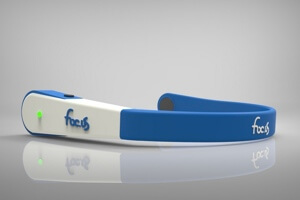
The Focus v1 awaits FDA approval in the US.
No matter what it’s called, it should come as no surprise that companies are already straining their own intellect to find ways to market devices that unleash our mental potential between a pair of electrical leads. The Focus v1 is a transcranial direct current stimulator that looks like a headband. Worn above the temples, the v1 delivers 2 mA of tDCS current for “enhanced concentration.” tDCS – or the Focus v1 – is not recognized by the FDA as a treatment and thus is not available in the US. But the v1 appears to be available outside the US.

So, with tDCS, will psychologist Anders Ericsson’s 10,000 hour rule, that asserts as many hours of practice is required before expertise is achieved, need to be revised? New version: 10,000 hours, or 5,000 with a steady flow of 2 mA current flowing through your skull.

While not yet approved by the FDA, the US Air Force is certainly giving tDCS its stamp of approval. At this year’s Society for Neuroscience meeting, Air Force Research Laboratory scientists reported that they’ve been using tDCS to cut down on the time needed to train drone pilots how to identify targets in radar images. Apparently training pilots to pick out targets within the complex images is a major rate-limiting step in being able to deploy the attack drones. As with the DARWARS AMBUSH! simulation training, performance improved with just 30 minutes of 2 mA stimulation. And not only did the tDCS help pilots learn faster, they retained their new skills longer too. Target identification accuracy typically drops at 20 minutes after training. Pilots who had trained with tDCS retained high accuracy up to 40 minutes after training.

The number of studies that explore the cognitive effects of tDCS is still admittedly low. And it is certainly possible that the 2 mA current flowing through the cortex doesn’t rewire the brain to think better or make our neurons more receptive to input. It could just be, Ramon y Cajal forbid, that zapping your brain just makes you more alert because, well, it kinda hurts. Coffee enhances our cognitive prowess by making us more alert (and as long as we’re careful, without the hurt). Could the secret of tDCS be that simple? Where there’s a possible breakthrough – and a possible market – brain researchers and companies are sure to go. My guess is that if the explanation has more to do with attentiveness than acumen, the researchers will be disappointed. The companies, not so much.