Mostrando entradas con la etiqueta electrónica. Mostrar todas las entradas

viernes, 15 de agosto de 2014

Building Mind-Controlled Gadgets Just Got Easier

A new brain-computer interface lets DIYers access their brain waves
Photo: Chip AudetteEngineer Chip Audette used the OpenBCI system to control a robot spider with his mind.

The guys who decided to make a mind-reading tool for the masses are not neuroscientists. In fact, they’re artists who met at Parsons the New School for Design, in New York City. In this day and age, you don’t have to be a neuroscientist to muck around with brain signals.

With Friday’s launch of an online store selling their brain-computer interface (BCI) gear, Joel Murphy and Conor Russomanno hope to unleash a wave of neurotech creativity. Their system enables DIYers to use brain waves to control anything they can hack—a video game, a robot, you name it. “It feels like there’s going to be a surge,” says Russomanno. “The floodgates are about to open.” And since their technology is open source, the creators hope hackers will also help improve the BCI itself.
Photo: OpenBCI The OpenBCI board takes in data from up to eight electrodes.

Their OpenBCI system makes sense of an electroencephalograph (EEG), signal, a general measure of electrical activity in the brain captured via electrodes on the scalp. The fundamental hardware component is a relatively new chip from Texas Instruments, which takes in analog data from up to eight electrodes and converts it to a digital signal. Russomanno and Murphy used the chip and an Arduino board to create OpenBCI, which essentially amplifies the brain signal and sends it via Bluetooth to a computer for processing. “The big issue is getting the data off the chip and making it accessible,” Murphy says. Once it’s accessible, Murphy expects makers to build things he hasn’t even imagined yet.

The project got its start in 2011, when Russomanno was a student in Murphy’s physical computing class at Parsons and told his professor he wanted to hack an EEG toy made by Mattel. The toy’s EEG-enabled headset supposedly registered the user’s concentrated attention (which in the game activated a fan that made a ball float upward). But the technology didn’t seem very reliable, and since it wasn’t open source, Russomanno couldn’t study the game’s method of collecting and analyzing the EEG data. He decided that an open-source alternative was necessary if he wanted to have any real fun.

Happily, Russomanno and his professor soon connected with engineer Chip Audette, of the New Hampshire R&D firm Creare, who already had a grant from the U.S. Defense Advanced Research Projects Agency (DARPA) to develop a low-cost, high-quality EEG system for “nontraditional users.” Once the team had cobbled together a prototype of their OpenBCI system, they decided to offer their gear to the world with a Kickstarter campaign, which ended in January and raised more than twice the goal of US $100,000.

Murphy and Russomanno soon found that production would be more difficult and take longer than expected (as is the case with so many Kickstarter projects), so they had to push back their shipping date by several months. Now, though, they’re in business—and Russomanno says that shipping a product is only the beginning. “We don’t just want to sell something; we want to teach people how to use it and also develop a community,” he says. OpenBCI wants to be an online portal where experimenters can swap tips and post research projects.


So once a person’s brain-wave data is streaming into a computer, what is to be done with it? OpenBCI will make some simple software available, but mostly Russomanno and Murphy plan to watch as inventors come up with new applications for BCIs.

Audette, the engineer from Creare, is already hacking robotic “battle spiders” that are typically steered by remote control. Audette used an OpenBCI prototype to identify three distinct brain-wave patterns that he can reproduce at will, and he sent those signals to a battle spider to command it to turn left or right or to walk straight ahead. “The first time you get something to move with your brain, the satisfaction is pretty amazing,” Audette says. “It’s like, ‘I am king of the world because I got this robot to move.’

In Los Angeles, a group is using another prototype to give a paralyzed graffiti artist the ability to practice his craft again. The artist, Tempt One, was diagnosed with Lou Gehrig’s disease in 2003 and gradually progressed to the nightmarish “locked in” state. By 2010 he couldn’t move or speak and lay inert in a hospital bed—but with unimpaired consciousness, intellect, and creativity trapped inside his skull. Now his supporters are developing a system called the BrainWriter: They’re using OpenBCI to record the artist’s brain waves and are devising ways to use those brain waves to control the computer cursor so Tempt can sketch his designs on the screen.

Another early collaborator thinks that OpenBCI will be useful in mainstream medicine. David Putrino, director of telemedicine and virtual rehabilitation at the Burke Rehabilitation Center, in White Plains, N.Y., says he’s comparing the open-source system to the $60,000 clinic-grade EEG devices he typically works with. He calls the OpenBCI system robust and solid, saying, “There’s no reason why it shouldn’t be producing good signal.

Putrino hopes to use OpenBCI to build a low-cost EEG system that patients can take home from the hospital, and he imagines a host of applications. Stroke patients, for example, could use it to determine when their brains are most receptive to physical therapy, and Parkinson’s patients could use it to find the optimal time to take their medications. “I’ve been playing around with these ideas for a decade,” Putrino says, “but they kept failing because the technology wasn’t quite there.” Now, he says, it’s time to start building.


ORIGINAL: IEEE Spectrum
By Eliza Strickland
11 Aug 2014

viernes, 27 de junio de 2014

Welcome to the Claytronics Project


Collaborative Research in Programmable Matter Directed by Carnegie Mellon and Intel

This project combines modular robotics, systems nanotechnology and computer science to create the dynamic, 3-Dimensional display of electronic information known as claytronics.

Our goal is to give tangible, interactive forms to information so that a user's senses will experience digital environments as though they are indistinguishable from reality.

Claytronics is taking place across a rapidly advancing frontier. This technology will help to drive breathtaking advances in the design and engineering of computing and hardware systems

Our research team focuses on two main projects:
  • Creating the basic modular building block of claytronics known as the claytronic atom or catom, and
  • Designing and writing robust and reliable software programs that will manage the shaping of ensembles of millions of catoms into dynamic, 3-Dimensional forms.
Realizing the vision of claytronics through the self-assembly of millions of catoms into synthetic reality will have a profound effect on the experience of users of electronic information. This promise of claytronic technology has become possible because of the ever increasing speeds of computer processing predicted in Moore's Law

This website will introduce you to the ideas that are driving claytronics, the research team that is working to make it happen, and the hardware and software projects that enable the building of claytronic ensembles.

Development of this powerful form of information display represents a partnership between the School of Computer Sciences of Carnegie Mellon University, Intel Corporation at its Pittsburgh Laboratory and FEMTO-ST Institute. As an integral part of our philosophy, the Claytronics Project seeks the contributions of scholars and researchers worldwide who are dedicating their efforts to the diverse scientific and engineering studies related to this rich field of nanotechnology and computer science. 

To understand the future of claytronics, watch the concept video [.mov] created by Carnegie Mellon's Entertainment Technology Center.

Use the links to the left to see a list of publications, some videos and photos documenting our progress, a partial list of talks we have given, and people working on the project.


ORIGINAL: CMU


viernes, 13 de junio de 2014

Neuroscientists Join the Open-Source Hardware Movement

Two MIT grad students offer up DIY brain-recording gear
Photo: Open Ephys

Graduate students Josh Siegle and Jakob Voigts were planning an ambitious series of experiments at their MIT neuroscience labs in 2011 when they ran into a problem. They needed to record complex brain signals from mice, but they couldn’t afford the right equipment: The recording systems cost upward of US $60,000 each, and they wanted at least four. So they decided to solve their dilemma by building their own gear on the cheap. And knowing that they wouldn’t be the last neuroscientists to encounter such a problem, they decided to give away their designs. Now their project, Open Ephys, is the hub of a nascent open-source hardware community for neural technology.

Siegle and Voigts weren’t knowledgeable about either circuit design or coding, but they learned as they went along. By July 2013, they were ready to manufacture 50 of their recording systems, which they gave to collaborators for beta testing. This spring they manufactured 100 improved units, which are now arriving in neuroscience labs around the world. They estimate that each system costs about $3,000 to produce.

Neuroscience has a history of hackers, Siegle says, with researchers cobbling together their own gear or customizing commercial systems to meet their particular needs. But those new tools rarely leave the labs they are built in. So scientists spend a lot of time reinventing the wheel. The goal of Open Ephys (which is short for open-source electrophysiology) is not just to distribute the tools that Siegle and Voigts have come up with so far but to encourage researchers to put resources into developing open-source tools for the benefit of the whole community. “In addition to changing the tools, we also want to change the culture,” Siegle says.
Photo: Open Ephys Open Ephys just distributed 100 of its acquisition boards to neuroscience labs around the world.

The flagship tool that Siegle and Voigts developed is an acquisition board, which makes sense of the electric signals from electrodes implanted in an animal’s brain. The board interfaces with up to eight headstages that amplify, filter, multiplex, and digitize signals from the brain, and then sends those signals to a computer for further processing. Commercial systems typically have individual ICs perform each of those four functions, but Siegle and Voigts’s system uses a single microchip for the four steps. The chip was recently developed by Intan Technologies, based in Los Angeles. “Once we realized these chips were available, it seemed kind of silly to keep buying the big systems,” Siegle says.

The president and cofounder of Intan, Reid Harrison, says that shrinking and consolidating the gear wasn’t that complicated—it mostly required initiative. “It’s such a niche market that no one else had tried to miniaturize the technology,” he says. “It’s not exactly on the scale of CPUs and cellphones, which drive most IC technology.” However, Harrison says he recognized a need for his small, multipurpose chips. Neuroscientists are always trying to fit more electrodes into an animal’s brain to record more neural activity, he says, which requires ever tinier devices with the electronics close to the electrodes. “You could put 1,000 electrodes in the brain, but you don’t want 1,000 wires on an animal that’s supposed to be mobile,” he says. The Intan chips take information from up to 64 electrodes and turn it into one digital signal, eliminating the confusion of wiring.

The major neural technology companies have designed products that incorporate Intan’s chips, but they also swear by their larger, multichip systems. Keith Stengel, the founder of Neuralynx, in Bozeman, Mont., says that in his big systems, each component is optimized for peak performance. “A lot of our customers have said that you buy a Neuralynx system for the serious work that you’re going to publish, and then you get an Open Ephys system as a second system, for grad students to start their research on,” he says.
 
Illustration: Open Ephys Open Ephys offers building instructions for this head-mounted neural implant system for mice.

Andy Gotshalk, CEO of Blackrock Microsystems, in Salt Lake City, also argues that the commercial products will continue to be the gold standard. “You’re not going to be moving into FDA clinical trials using an Open Ephys system,” he says. The commercial products come with guarantees of quality and reliability, he says, as well as intensive customer support. Gotshalk says his customers are willing to pay a premium for that backing.

Both Stengel and Gotshalk say they welcome Open Ephys to the market and think that its systems can fill a niche. They’re also willing to work with the upstart to make sure their commercial software works with the Open Ephys hardware. Harrison agrees that the community is happy to have another option to work with, and he draws a parallel to the computing industry. “The existing tools are like the PCs and the Macs of the neuroscience world, but now we also have this Linux,” Harrison says. “It’s a lot less expensive, and you can hack it yourself, but it’s not for everyone.

ORIGINAL: IEEE Spectrum
By Eliza Strickland
Posted 11 Jun 2014

martes, 18 de febrero de 2014

Master monkey's brain controls sedated 'avatar'


The brain of one monkey has been used to control the movements of another, "avatar", monkey, US scientists report.

Brain scans read the master monkey's mind and were used to electrically stimulate the avatar's spinal cord, resulting in controlled movement.

The team hope the method can be refined to allow paralysed people to regain control of their own body.

The findings, published in Nature Communications, have been described as "a key step forward".


Schematic illustration of the dual-primate set-up.

Figure 1: Schematic illustration of the dual-primate set-up.
The master is displayed on top and the avatar is displayed on the bottom. Note that on decoding-based sessions, the master had a joystick during training that was then disconnected during the real-time neural prosthetic trials.

Damage to the spinal cord can stop the flow of information from the brain to the body, leaving people unable to walk or feed themselves.

The researchers are aiming to bridge the damage with machinery. Match electrical activity

The scientists at Harvard Medical School said they could not justify paralysing a monkey. Instead, two were used - a master monkey and a sedated avatar.

The master had a brain chip implanted that could monitor the activity of up to 100 neurons.

During training, the physical actions of the monkey were matched up with the patterns of electrical activity in the neurons.

The avatar had 36 electrodes implanted in the spinal cord and tests were performed to see how stimulating different combinations of electrodes affected movement.

The two monkeys were then hooked up so that the brain scans in one controlled movements in real time in the other.

The sedated avatar held a joystick, while the master had to think about moving a cursor up or down.

In 98% of tests, the master could correctly control the avatar's arm.

One of the researchers, Dr Ziv Williams, told the BBC: "The goal is to take people with brain stem or spinal cord paralysis and bypass the injury.

"The hope is ultimately to get completely natural movement, I think it's theoretically possible, but it will require an exponential additional effort to get to that point."

He said that giving paralysed people even a small amount of movement could dramatically alter their quality of life. Reality or science fiction?

The idea of one brain controlling an avatar body is the stuff of blockbuster Hollywood movies.

However, Prof Christopher James, of the University of Warwick, dismissed a future of controlling other people's bodies by thought.

He said: "Some people may be concerned this might mean someone taking over control of someone else's body, but the risk of this is a no-brainer.

"Whilst the control of limbs is sophisticated, it is still rather crude overall, plus of course in an able-bodied person their own control over their limbs remains anyway, so no-one is going to control anyone else's body against their wishes any time soon."

Instead, he said this was "very important research" with "profound" implications "especially for controlling limbs in spinal cord injury, or controlling prosthetic limbs with limb amputees".

Realising that goal will face additional challenges. Moving a cursor up and down is a long way from the dextrous movement needed to drink from a cup.

There are also differences in the muscles of people after paralysis; they tend to become more rigid. And fluctuating blood pressure may make restoring control more challenging.

Prof Bernard Conway, head of biomedical engineering at the University of Strathclyde, said: "The work is a key step forward that demonstrates the potential of brain machine interfaces to be used in restoring purposeful movement to people affected by paralysis. 

"However, significant work still remains to be done before this technology will be able to be offered to the people who need it."


ORIGINAL: BBC Mundo
By James Gallagher Health and science reporter, BBC News 
18 February 2014

miércoles, 29 de enero de 2014

Natural 3D Counterpart to Graphene Discovered in Arcane Form of Quantum Matter

The discovery of what is essentially a 3D version of graphene -- the 2D sheets of carbon through which electrons race at many times the speed at which they move through silicon -- promises exciting new things to come for the high-tech industry, including much faster transistors and far more compact hard drives. A collaboration of researchers at DOE's Berkeley Lab has discovered that sodium bismuthate can exist as a form of quantum matter called a three-dimensional topological Dirac semi-metal (3DTDS). This is the first experimental confirmation of 3D Dirac fermions in the interior or bulk of a material, a novel state that was only recently proposed by theorists.

Related Articles

Robust 3D Graphene Structures Curiously Created With Ancient Technique, Enabling Super-Capacitors

"A 3DTDS is a natural three-dimensional counterpart to graphene with similar or even better electron mobility and velocity," says Yulin Chen, a physicist with Berkeley Lab's Advanced Light Source (ALS) when he initiated the study that led to this discovery, and now with the University of Oxford.

"Because of its 3D Dirac fermions in the bulk, a 3DTDS also features intriguing non-saturating linear magnetoresistance that can be orders of magnitude higher than the materials now used in hard drives, and it opens the door to more efficient optical sensors." Chen is the corresponding author of a paper in Science reporting the discovery.

Two of the most exciting new materials in the world of high technology today are graphene and topological insulators, crystalline materials that are electrically insulating in the bulk but conducting on the surface. Both feature 2D Dirac fermions (fermions that aren't their own antiparticle), which give rise to extraordinary and highly coveted physical properties. Topological insulators also possess a unique electronic structure, in which bulk electrons behave like those in an insulator while surface electrons behave like those in graphene. 

(Photo : Roy Kaltschmidt)Beamline 10.0.1 at Berkeley Lab’s Advanced Light Source is optimized for the study of for electron structures and correlated electron systems.

"The swift development of graphene and topological insulators has raised questions as to whether there are 3D counterparts and other materials with unusual topology in their electronic structure," says Chen. "Our discovery answers both questions. In the sodium bismuthate we studied, the bulk conduction and valence bands touch only at discrete points and disperse linearly along all three momentum directions to form bulk 3D Dirac fermions. Furthermore, the topology of a 3DTSD electronic structure is also as unique as those of topological insulators."

The discovery was made at the Advanced Light Source (ALS), a DOE (U.S. Department of Energy) national user facility housed at Lawrence Berkeley National Laboratory, using beamline 10.0.1, which is optimized for electron structure studies. The collaborating research team first developed a special procedure to properly synthesize and transport the sodium bismuthate, a semi-metal compound identified as a strong 3DTDS candidate by co-authors Fang and Dai, theorists with the Chinese Academy of Sciences.

At ALS beamline 10.0.1, the collaborators determined the electronic structure of their material using Angle-Resolved Photoemission Spectroscopy (ARPES), in which x-rays striking a material surface or interface cause the photoemission of electrons at angles and kinetic energies that can be measured to obtain a detailed electronic spectrum.

Sodium bismuthate is too unstable to be used in devices without proper packaging, but it triggers the exploration for the development of other 3DTDS materials more suitable for everyday devices, a search that is already underway. Sodium bismuthate can also be used to demonstrate potential applications of 3DTDS systems, which offer some distinct advantages over graphene.

"A 3DTDS system could provide a significant improvement in efficiency in many applications over graphene because of its 3D volume," Chen says. "Also, preparing large-size atomically thin single domain graphene films is still a challenge. It could be easier to fabricate graphene-type devices for a wider range of applications from 3DTDS systems."

In addition, Chen says, a 3DTDS system also opens the door to other novel physical properties, such as giant diamagnetism that diverges when energy approaches the 3D Dirac point, quantum magnetoresistance in the bulk, unique Landau level structures under strong magnetic fields, and oscillating quantum spin Hall effects. All of these novel properties can be a boon for future electronic technologies. Future 3DTDS systems can also serve as an ideal platform for applications in spintronics. -- Source: Lawrence Berkeley Laboratory


Reference:
Z. K. Liu, B. Zhou, Y. Zhang, Z. J. Wang, H. M. Weng, D. Prabhakaran, S.-K. Mo, Z. X. Shen, Z. Fang, X. Dai, Z. Hussain, Y. L. Chen. Discovery of a Three-Dimensional Topological Dirac Semimetal, Na3Bi. Science, 2014 DOI: 10.1126/science.124508

ORIGINAL:Science World Report
Jan 19, 2014

domingo, 19 de enero de 2014

A new step towards graphene-based electronics


The University of Manchester in the UK has been at the forefront of graphene research ever since Andre Geim and Konstantin Novoselov fabricated the single atom-thick sheets of carbon back in 2004 and were awarded the Nobel Prize for Physics in 2010 for it.


University of Manchester scientists have helped demonstrate that long, structurally well-defined ribbons of graphene can be made.

Scientists used a molecule toolbox to create the ribbons (credit: Prof Muellen)

Writing in Nature Chemistry, researchers used different characterisation techniques, including Raman spectroscopy – led by Dr Cinzia Casiraghi and her group – to confirm that these ribbons, called GNRs, are structurally well-defined and have excellent charge-carrier mobility.

The newly developed approach was developed by Prof Muellen and Dr Feng from the Max Planck Institute for Polymer Research allows unprecedented longitudinal extension of GNRs while preserving their high structural definition.

Current approaches do not allow production of highly structurally-defined and narrow GNRs suitable for electronics. Therefore, it is hoped that this development will allow graphene to be used in transistors.

Dr Casiraghi said: “The GNRs produced with this method can allow development of graphene-based transistors, but they can also be used as active material in solar cells, chemical sensors and as novel energy storage material. Because of the potential uses of this material, Raman spectroscopy is expected to play a crucial role in determining the optical and electronic properties of the ribbons

ORIGINAL: U of Manchester
13 Dec 2013

domingo, 5 de enero de 2014

Brainlike Computers, Learning From Experience


Erin Lubin/The New York Time. Kwabena Boahen holding a biologically inspired processor attached to a robotic arm in a laboratory at Stanford University.

PALO ALTO, Calif. — Computers have entered the age when they are able to learn from their own
mistakes, a development that is about to turn the digital world on its head

The first commercial version of the new kind of computer chip is scheduled to be released in 2014. Not only can it automate tasks that now require painstaking programming — for example, moving a robot’s arm smoothly and efficiently — but it can also sidestep and even tolerate errors, potentially making the term “computer crash” obsolete.

The new computing approach, already in use by some large technology companies, is based on the biological nervous system, specifically on how neurons react to stimuli and connect with other neurons to interpret information. It allows computers to absorb new information while carrying out a task, and adjust what they do based on the changing signals.

In coming years, the approach will make possible a new generation of artificial intelligence systems that will perform some functions that humans do with ease:
  • see, 
  • speak, 
  • listen, 
  • navigate, 
  • manipulate and 
  • control. 
That can hold enormous consequences for tasks like 
  • facial and speech recognition, 
  • navigation and 
  • planning, 
which are still in elementary stages and rely heavily on human programming.
Designers say the computing style can clear the way for robots that can safely walk and drive in the physical world, though a thinking or conscious computer, a staple of science fiction, is still far off on the digital horizon.

We’re moving from engineering computing systems to something that has many of the characteristics of biological computing,” said Larry Smarr, an astrophysicist who directs the California Institute for Telecommunications and Information Technology, one of many research centers devoted to developing these new kinds of computer circuits.

Conventional computers are limited by what they have been programmed to do. Computer vision systems, for example, only “recognize” objects that can be identified by the statistics-oriented algorithms programmed into them. An algorithm is like a recipe, a set of step-by-step instructions to perform a calculation.

But last year, Google researchers were able to get a machine-learning algorithm, known as a neural network, to perform an identification task without supervision. The network scanned a database of 10 million images, and in doing so trained itself to recognize cats.

In June, the company said it had used those neural network techniques to develop a new search service to help customers find specific photos more accurately.

The new approach, used in both hardware and software, is being driven by the explosion of scientific knowledge about the brain. Kwabena Boahen, a computer scientist who leads Stanford’s Brains in Silicon research program, said that is also its limitation, as scientists are far from fully understanding how brains function.

We have no clue,” he said. “I’m an engineer, and I build things. There are these highfalutin theories, but give me one that will let me build something.”

Until now, the design of computers was dictated by ideas originated by the mathematician John von Neumann about 65 years ago. Microprocessors perform operations at lightning speed, following instructions programmed using long strings of 1s and 0s. They generally store that information separately in what is known, colloquially, as memory, either in the processor itself, in adjacent storage chips or in higher capacity magnetic disk drives.

The data — for instance, temperatures for a climate model or letters for word processing — are shuttled in and out of the processor’s short-term memory while the computer carries out the programmed action. The result is then moved to its main memory.

The new processors consist of electronic components that can be connected by wires that mimic biological synapses. Because they are based on large groups of neuron-like elements, they are known as neuromorphic processors, a term credited to the California Institute of Technology physicist Carver Mead, who pioneered the concept in the late 1980s.

They are not “programmed.” Rather the connections between the circuits are “weighted” according to correlations in data that the processor has already “learned.” Those weights are then altered as data flows in to the chip, causing them to change their values and to “spike.” That generates a signal that travels to other components and, in reaction, changes the neural network, in essence programming the next actions much the same way that information alters human thoughts and actions.

Instead of bringing data to computation as we do today, we can now bring computation to data,” said Dharmendra Modha, an I.B.M. computer scientist who leads the company’s cognitive computing research effort. “Sensors become the computer, and it opens up a new way to use computer chips that can be everywhere.

The new computers, which are still based on silicon chips, will not replace today’s computers, but will augment them, at least for now. Many computer designers see them as coprocessors, meaning they can work in tandem with other circuits that can be embedded in smartphones and in the giant centralized computers that make up the cloud. Modern computers already consist of a variety of coprocessors that perform specialized tasks, like producing graphics on your cellphone and converting visual, audio and other data for your laptop.

One great advantage of the new approach is its ability to tolerate glitches. Traditional computers are precise, but they cannot work around the failure of even a single transistor. With the biological designs, the algorithms are ever changing, allowing the system to continuously adapt and work around failures to complete tasks.

Traditional computers are also remarkably energy inefficient, especially when compared to actual brains, which the new neurons are built to mimic.

I.B.M. announced last year that it had built a supercomputer simulation of the brain that encompassed roughly 10 billion neurons — more than 10 percent of a human brain. It ran about 1,500 times more slowly than an actual brain. Further, it required several megawatts of power, compared with just 20 watts of power used by the biological brain.

Running the program, known as Compass, which attempts to simulate a brain, at the speed of a human brain would require a flow of electricity in a conventional computer that is equivalent to what is needed to power both San Francisco and New York, Dr. Modha said.

I.B.M. and Qualcomm, as well as the Stanford research team, have already designed neuromorphic processors, and Qualcomm has said that it is coming out in 2014 with a commercial version, which is expected to be used largely for further development. Moreover, many universities are now focused on this new style of computing. This fall the National Science Foundation financed the Center for Brains, Minds and Machines, a new research center based at the Massachusetts Institute of Technology, with Harvard and Cornell.

The largest class on campus this fall at Stanford was a graduate level machine-learning course covering both statistical and biological approaches, taught by the computer scientist Andrew Ng. More than 760 students enrolled. “That reflects the zeitgeist,” said Terry Sejnowski, a computational neuroscientist at the Salk Institute, who pioneered early biologically inspired algorithms. “Everyone knows there is something big happening, and they’re trying find out what it is.


ORIGINAL: NYTimes
By JOHN MARKOFF
Published: December 28, 2013

martes, 10 de diciembre de 2013

Opinion: Science Counterculture. On taking DIYbio to the next level

FLICKR, ADONOFRIO
Open-source software paved the way for a new, community-driven development model by providing a product that was free to use and modify. This in turn fostered a business culture that was driven by support-services. That open-source principles could also herald a new era in biology was demonstrated by the successful completion of the publicly funded Human Genome Project more than a decade ago. Today, that same open, community-driven mindset continues to drive much research in the life sciences.

Soon after the human genome sequence was published, biohackers and do-it-yourself biology (DIYbio) groups came onto the scene. Among the first to demonstrate the feasibility of garage biology was Meredith Patterson, who created glow-in-the-dark yogurt by transfecting green fluorescent protein DNA into Lactobacillus. Rob Carlson, who in 2005 was among the first to spot this new development and start his own garage lab, opined in The Scientist in 2011 that garage innovation would be as important for technological advancements in biology as it was in IT. Since then, some biohackers have organized themselves into low-cost, community-based labs providing both lab space and training. However, unleashing their true technological potential will call for greater networking between these groups and borrowing concepts from business incubator models and the open-source hardware movement.

DIYbio groups—such as BioCurious, CounterCulture Labs, Genspace, Bioartlab, and Biogarage—have sprung up in many cities across North America, Europe, Asia, and Oceania. While many have demonstrated that simple experiments like isolating DNA or creating recombinant microbes are easily replicated outside the traditional lab, more promising, low-cost, open-source tools are also being developed. These include Biocurious’s bioprinter, OpenFuge, and the Kickstarter-backed OpenPCR. Of these, the latter two are already available, and at a fraction of the cost of the cheapest commercial models.

To grow, the DIYbio community must have access to inexpensive lab equipment and consumables. A number of companies, which include Open Biotechnology, IORodeo, and Chai Biotechnologies, are offering open-source products ranging from mammalian cell lines, electrophoresis kits, and power packs to thermal cyclers for PCR. While this list is by no means exhaustive, partnering with these and other similar startups could satisfy DIYbio’s thirst for machines and reagents, and help create innovative technologies.

And then there are the open-source hardware companies, such as SparkFun, Adafruit Industries, and MakerBot, as well as initiatives like RepRap, which are well positioned to serve the DIYbio community. SparkFun and Adafruit manufacture hardware components for DIY projects, such as Arduino microcontroller boards, printed circuit boards, and other accessories. MakerBot produces the Replicator 2 series of 3-D printers and RepRap is a community-based initiative for building self-replicating 3-D printers. Writing in Science, Michigan Technological University’s Joshua Pearce noted that Arduino-controlled research equipment fabricated on 3-D printers could soon become a reality. Members of Joseph DeRisi’s lab at the University of California, San Francisco, have already taken the first steps by 3-D printing lab consumables and equipment such gel electrophoresis combs, gel trays, and rotors for bench-top centrifuges.

While the ability of DIYbio to drive technological innovation is fairly obvious, its ability to spur basic research innovation is less clear. For this to happen, equipment and operating costs must be brought down. Technological innovation may well fuel research advances in the long run, but for now, DIYbio groups could focus on community outreach programs and targeting high school and university participation. Community labs that are up and running could invite students to volunteer. They could expand community outreach online by posting videos or providing links to educational sites. Networking among DIYbio groups to develop shared goals and invest in shared equipment could be one way out of the resource crunch. Another would be to borrow from the business incubator model by asking for a small percentage of equity in exchange for assistance in developing a successful product and bringing it to market.

Countercultural movements are evidence of a society’s diversity and vitality. Many of the biggest advances in science have come from people outside or on the fringes of the science establishment. The emerging DIYbio community could become the incubator that nurtures the next generation’s technologies and public scientists. For this to happen, DIY biologists will need to band together to gain the critical mass necessary to support the open-source development of biological techniques, equipment, and experimental methods.

ORIGINAL: The Scientist
By Usha Nair
December 9, 2013 

Usha Nair is a research associate in the department of biology at the University of Saskatchewan, where her research focuses on the structure determination of proteins associated with bacterial virulence.

martes, 1 de octubre de 2013

Stanford scientists build a microscope to spot the seeds of cancer

Cancerous tumors can shed cells that travel through the blood stream and create new cancerous growths. These seed cells can be very difficult to detect, but Stanford scientists are developing a noninvasive method using a mini-microscope that could find these cells
A pen-size microscope focuses a low-power laser light on a blood vessel just below the patient's skin to register dyed cancer cells. (Photo: Linda A. Cicero / Stanford News Service) 

One of the cruelest truths about cancer is that even after you beat the disease, it can still come back to kill you. A tumor growing in the prostate gland, breast, or any other organ can shed cancerous cells into the blood. These cancerous seeds travel the body and can take root nearly anywhere, growing into a new cancer threat even after the initial cancer is treated.

The rule of thumb with cancer is that the earlier you can detect the disease, the more effective the treatment, and hence better potential outcomes.

Currently, doctors draw a patient's blood and analyze it using special antibodies to detect the presence of the seeds, called circulating tumor cells (CTCs). This works well if CTCs are present in large numbers, but may fail to detect smaller numbers released by earlier tumors.

Now, a team of engineers, scientists and doctors from Stanford is developing a mini-microscope that might be able to noninvasively detect the CTCs earlier than ever, allowing for earlier interventions.

"There has been a huge push to increase sensitivity," said Bonnie King, an instructor at Stanford School of Medicine. "We suspect that CTCs often circulate in numbers below our current threshold of detectability."

A major advantage with the microscopic technique, King said, is the ability to screen much larger volumes of blood, rather than just a small vial collected from a patient. This will be done using a method called in vivo flow cytometry – a laser-based technology for counting cells in a live subject.

Christopher Contag, a professor of pediatrics at the School of Medicine, envisions that a doctor would inject a patient with a dye that will cause the CTCs to fluoresce. The doctor would then use the pen-size microscope to focus a low-power laser light on a blood vessel just a few hair-widths below the patient's skin.

As the dyed cancer cells pass through the laser, the light excites them and causes them to stand out from normal cells. The microscope registers each of these cells and a computer logs each observation. The improved sensitivity of the technology and the ability to noninvasively scan blood for long periods will help create a fuller picture of the number of CTCs in a person's body.

"At present we will not screen all of a person's blood [with the microscope], but we are aiming to increase the amount of blood screened compared to a 7-milliliter blood draw," Contag said.

The work is a collaborative effort of Olav Solgaard, a professor of electrical engineering; Geoffrey Gurtner, a professor of surgery; and Michael Clarke, a professor of oncology. It began last fall, when the proposed project was awarded a seed grant by Stanford's Bio-X Interdisciplinary Initiatives Program.

Every two years, Bio-X provides funding to interdisciplinary projects that could lead to innovative improvements in human health. Since 2000, Bio-X seed grants have funded 141 research collaborations connecting hundreds of faculty. The proof-of-concept projects have produced hundreds of scientific publications, dozens of patents and more than a tenfold return on research funds to Stanford.

To date, the blood-scan group has focused on developing the method in mice, taking advantage of the thin transparent tissue of the ear to image fluorescent cells traversing the small blood vessels below the skin.

Soon the researchers will move the microscope to a clinical setting to conduct a proof-of-principle test of the technique in humans. Gurtner is currently conducting a clinical trial to evaluate the FDA-approved green dye for defining skin vasculature during post-mastectomy breast reconstruction surgeries. The researchers are piggybacking on this trial to test the miniature microscope's ability to detect blood vessels and circulating cells.

For more Stanford experts on electrical engineering and other topics, visit Stanford Experts.

ORIGINAL: Stanford
By Bjorn Carey
September 30, 2013

viernes, 27 de septiembre de 2013

An Early Look at the Carbon Nanotube Computer Your Kids Will Use

ORIGINAL: Mashable

WHAT'S THIS?
Image: Stanford University

The world of computing was treated to a rare breakthrough in nanotechnology on Wednesday. Researchers from Stanford University announced the creation of the first-ever working carbon nanotube computer.

The findings were published in this week’s edition of the scientific journal Nature. Led by professors Subhasish Mitra and H.S. Philip Wong, researchers behind the project call it "CEDRIC," a loosely derived acronym that stands for carbon nanotube digital integrated circuit.


For the uninitiated, this new development signals a shift from silicon transistor computing, a technology that will soon reach its limit since transistors can only get so small before quantum effects stop them from shrinking any further. Carbon nanotube transistors, however, are now a more realistic solution for future generations of computers because they conduct electricity better than silicon, and can scale smaller.

That means carbon nanotube-based computers will be able to deliver faster speeds and more energy efficiency, a challenge today’s semiconductor manufacturers are struggling to address with each new generation of processor.

Carbon-nanotube technology is still new, however, and poses many problems. The Stanford team's solution addresses some of the key issues with error correction: Their system can switch off defective carbon nanotubes, and they developed an algorithm to address misalignments of the carbon nanotubes that could result in short-circuiting of the system.

"People have been talking about a new era of carbon nanotube electronics moving beyond silicon," Mitra said in a statement. "But there have been few demonstrations of complete digital systems using this exciting technology. Here is the proof."

At this point, CEDRIC is not capable of carrying out immediate, complex computations like your desktop computer can. Yet as the technology progresses, it will one day be able to. Stanford's prototype represents the first step toward more robust examples of carbon-nanotube computing in the future.

A Stanford representative told Mashable that he hopes to see "commercially viable products in 10 to 12 years."

sábado, 14 de septiembre de 2013

TI keeps its “eye” on university research with the USC Artificial Retina Project

ORIGINAL: Texas Instruments
By Around TI
Sep 13 2013

In elementary school we were all taught the scientific method. The part many of us disliked the most came after testing and analyzing the results of an experiment only to find out our hypothesis was wrong and we had to do the testing all over again. But when the scientific method is used in real world research, finding out what works and what doesn’t can result in unbelievable outcomes.

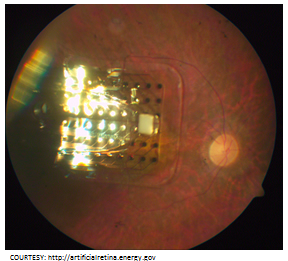
After more than 20 years of testing, research and development by the University of Southern California, Doheny Eye Institute and Second Sight Medical Products Inc., the FDA recently approved an artificial retina that can restore some sight for a specific type of blindness. There are TI parts in the final commercial product, named Argus II, and TI helped the USC team, now part of the new USC Eye Institute, by constantly evaluating their hypotheses and ultimately determining what technology worked for their project. TI principle fellow Gene Frantz, who recently retired from TI and is now a professor in the practice of signal processing at Rice University, was deeply engaged with the USC project over the past decade. 


The assistance TI provided us was invaluable. It was used to explore some ideas related to packaging high-density and high-power components in implants. TI also helped us with some extremely compact, ultra-miniature cameras and imaging systems which will be useful in the next generation of retinal prosthesis,” said James Weiland, professor of ophthalmology and biomedical engineering at the USC Eye Institute. “Finally, TI assisted in some wireless research including wireless power.”

More than 50 people around the world have received the implanted device. All of the recipients suffer from retinitis pigmentosa, a condition where part of the retina that is sensitive to light has degenerated or is diseased.

"The surgical procedure is done on an outpatient basis and is now being performed not only in the U.S. but also in Europe after CE (Conformité Européenne) marking approval," said Mark Humayun, professor of ophthalmology and biomedical engineering at the USC Eye Institute.

The implantable microelectronic system electrically stimulates the part of the retina that is spared from disease to create the perception of light as if the photo sensitive part of the retina was still healthy and seeing light,” said Weiland. “When you step back and think about it, after two decades of work and how far we’ve come, it is pretty remarkable and rewarding.

It has also been a rewarding experience for TI, which places a focus on creating new technologies that make our world safer and healthier.

TI strives to innovate and be a part of cutting-edge research projects and ideas. Those ideas could one day be the driving force behind future TI products,” said Xiaochen Xu, a TI HealthTech Systems Engineer. “It is a really exciting project for TI. TI’s goal is not only to support university research with short term research projects, but take part in long term projects like this one.

At the heart of most TI employees is a young scientist or engineer working through the scientific method. So it is no surprise that TI loves to be a part of a ground-breaking project when the end result is creating revolutionary technology like giving sight to the blind.

martes, 10 de septiembre de 2013

Artificial-intelligence research revives its old ambitions

ORIGINAL: MIT
Larry Hardesty, MIT News Office
September 9, 2013

A new interdisciplinary research center at MIT, funded by the National Science Foundation, aims at nothing less than unraveling the mystery of intelligence.

Illustration: Christine Daniloff/MIT
The birth of artificial-intelligence research as an autonomous discipline is generally thought to have been the monthlong Dartmouth Summer Research Project on Artificial Intelligence in 1956, which convened 10 leading electrical engineers — including MIT’s Marvin Minsky and Claude Shannon — to discuss “how to make machines use language” and “form abstractions and concepts.” A decade later, impressed by rapid advances in the design of digital computers, Minsky was emboldened to declare that “within a generation ... the problem of creating ‘artificial intelligence’ will substantially be solved.

The problem, of course, turned out to be much more difficult than AI’s pioneers had imagined. In recent years, by exploiting machine learning — in which computers learn to perform tasks from sets of training examples — artificial-intelligence researchers have built special-purpose systems that can do things like interpret spoken language or play Jeopardy with great success. But according to Tomaso Poggio, the Eugene McDermott Professor of Brain Sciences and Human Behavior at MIT, “These recent achievements have, ironically, underscored the limitations of computer science and artificial intelligence. We do not yet understand how the brain gives rise to intelligence, nor do we know how to build machines that are as broadly intelligent as we are.

Poggio thinks that AI research needs to revive its early ambitions. “It’s time to try again,” he says. “We know much more than we did before about biological brains and how they produce intelligent behavior. We’re now at the point where we can start applying that understanding from neuroscience, cognitive science and computer science to the design of intelligent machines.

The National Science Foundation (NSF) appears to agree: Today, it announced that one of three new research centers funded through its Science and Technology Centers Integrative Partnerships program will be the Center for Brains, Minds and Machines (CBMM), based at MIT and headed by Poggio. Like all the centers funded through the program, CBMM will initially receive $25 million over five years.

Homegrown initiative
CBMM grew out of the MIT Intelligence Initiative, an interdisciplinary program aimed at understanding how intelligence arises in the human brain and how it could be replicated in machines.

[MIT President] Rafael Reif, when he was provost, came to speak to the faculty and challenged us to come up with new visions, new ideas,” Poggio says. He and MIT’s Joshua Tenenbaum, also a professor in the Department of Brain and Cognitive Sciences (BCS) and a principal investigator in the Computer Science and Artificial Intelligence Laboratory, responded by proposing a program that would integrate research at BCS and the Department of Electrical Engineering and Computer Science. “With a system as complicated as the brain, there is a point where you need to get people to work together across different disciplines and techniques,” Poggio says. Funded by MIT’s School of Science, the initiative was formally launched, in 2011, at a symposium during MIT’s 150th anniversary.

Headquartered at MIT, CBMM will be, like all the NSF centers, a multi-institution collaboration. Of the 20 faculty members currently affiliated with the center,
  • 10 are from MIT, 
  • five are from Harvard University, and the rest are from  
  • Cornell University,  
  • Rockefeller University
  • the University of California at Los Angeles
  • Stanford University and the  
  • Allen Institute for Brain Science
The center’s international partners are the  
  • Italian Institute of Technology
  • the Max Planck Institute in Germany; 
  • City University of Hong Kong
  • the National Centre for Biological Sciences in India; and 
  • Israel’s Weizmann Institute and Hebrew University
Its industrial partners are  
  • Google,  
  • Microsoft,  
  • IBM,  
  • Mobileye
  • Orcam,  
  • Boston Dynamics
  • Willow Garage,  
  • Deep Minds and  
  • Rethink Robotics
Also affiliated with center are  
  • Howard University
  • Hunter College
  • Universidad Central del Caribe, Puerto Rico; 
  • the University of Puerto Rico, Río Piedras; and  
  • Wellesley College.
CBMM aims to foster collaboration not just between institutions but also across disciplinary boundaries. Graduate students and postdocs funded through the center will have joint advisors, preferably drawn from different research areas.

Research themes
The center’s four main research themes are also intrinsically interdisciplinary. They are 
  • the integration of intelligence, including vision, language and motor skills; 
  • circuits for intelligence, which will span research in neurobiology and electrical engineering; 
  • the development of intelligence in children; and 
  • social intelligence
Poggio will also lead the development of a theoretical platform intended to undergird the work in all four areas.
Those four thrusts really do fit together, in the sense that they cover what we think are the biggest challenges facing us when we try to develop a computational understanding of what intelligence is all about,” says Patrick Winston, the Ford Foundation Professor of Engineering at MIT and research coordinator for CBMM.

For instance, he explains, in human cognition, vision, language and motor skills are inextricably linked, even though they’ve been treated as separate problems in most recent AI research. One of Winston’s favorite examples is that of image labeling: A human subject will identify an image of a man holding a glass to his lips as that of a man drinking. If the man is holding the glass a few inches further forward, it’s an instance of a different activity — toasting. But a human will also identify an image of a cat turning its head up to catch a few drops of water from a faucet as an instance of drinking. “You have to be thinking about what you see there as a story,” Winston says. “They get the same label because it’s the same story, not because it looks the same.

Similarly, Winston explains, development is its own research thrust because intelligence is fundamentally shaped through interaction with the environment. There’s evidence, Winston says, that mammals that receive inadequate visual stimulation in the first few weeks of life never develop functional eyesight, even though their eyes are otherwise unimpaired. “You need to stimulate the neural mechanisms in order for them to assemble themselves into a functioning system,” Winston says. “We think that that’s true generally, of our entire spectrum of capabilities. You need to have language, you need to see things, you need to have language and vision work together from the beginning to ensure that the parts develop properly to form a working whole.

martes, 20 de agosto de 2013

Being Printed, Living Tissue

ORIGINAL: NYTimes
By HENRY FOUNTAIN
August 18, 2013

Being Printed, Living Tissue: At labs around the world, researchers have been experimenting with bioprinting, but there are many formidable obstacles to overcome.


SAN DIEGO — Someday, perhaps, printers will revolutionize the world of medicine, churning out hearts, livers and other organs to ease transplantation shortages. For now, though, Darryl D’Lima would settle for a little bit of knee cartilage.

Printing Out a Biological Machine (August 20, 2013)


Darryl D'Lima, an orthopedic specialist, worked with a bioprinter in his research on cartilage at Scripps Clinic in San Diego. . Sandy Huffaker for The New York Times

Dr. D’Lima, who heads an orthopedic research lab at the Scripps Clinic here, has already made bioartificial cartilage in cow tissue, modifying an old inkjet printer to put down layer after layer of a gel containing living cells. He has also printed cartilage in tissue removed from patients who have undergone knee replacement surgery.

There is much work to do to perfect the process, get regulatory approvals and conduct clinical trials, but his eventual goal sounds like something from science fiction: to have a printer in the operating room that could custom-print new cartilage directly in the body to repair or replace tissue that is missing because of injury or arthritis.

Just as 3-D printers have gained in popularity among hobbyists and companies who use them to create everyday objects, prototypes and spare parts (and even a crude gun), there has been a rise in interest in using similar technology in medicine. Instead of the plastics or powders used in conventional 3-D printers to build an object layer by layer, so-called bioprinters print cells, usually in a liquid or gel. The goal isn’t to create a widget or a toy, but to assemble living tissue.

At labs around the world, researchers have been experimenting with bioprinting, first just to see whether it was possible to push cells through a printhead without killing them (in most cases it is), and then trying to make cartilage, bone, skin, blood vessels, small bits of liver and other tissues. There are other ways to try to “engineer” tissue — one involves creating a scaffold out of plastics or other materials and adding cells to it. In theory, at least, a bioprinter has advantages in that it can control the placement of cells and other components to mimic natural structures.

But just as the claims made for 3-D printing technology sometimes exceed the reality, the field of bioprinting has seen its share of hype. News releases, TED talks and news reports often imply that the age of print-on-demand organs is just around the corner. (Accompanying illustrations can be fanciful as well — one shows a complete heart, seemingly filled with blood, as the end product in a printer).

The reality is that, although bioprinting researchers have made great strides, there are many formidable obstacles to overcome.

“Nobody who has any credibility claims they can print organs, or believes in their heart of hearts that that will happen in the next 20 years,” said Brian Derby, a researcher at the University of Manchester in Britain who reviewed the field last year in an article in the journal Science.

For now, researchers have set their sights lower. Organovo, for instance, a San Diego company that has developed a bioprinter, is making strips of liver tissue, about 20 cells thick, that it says could be used to test drugs under development.

A lab at the Hannover Medical School in Germany is one of several experimenting with 3-D printing of skin cells; another German lab has printed sheets of heart cells that might some day be used as patches to help repair damage from heart attacks. A researcher at the University of Texas at El Paso, Thomas Boland, has developed a method to print fat tissue that may someday be used to create small implants for women who have had breast lumpectomies. Dr. Boland has also done much of the basic research on bioprinting technologies. “I think it is the future for regenerative medicine,” he said.

Dr. D’Lima acknowledges that his dream of a cartilage printer — perhaps a printhead attached to a robotic arm for precise positioning — is years away. But he thinks the project has more chance of becoming reality than some others.

Printing a whole heart or a whole bladder is glamorous and exciting,” he said. “But cartilage might be the low-hanging fruit to get 3-D printing into the clinic.

One reason, he said, is that cartilage is in some ways simpler than other tissues. Cells called chondrocytes sit in a matrix of fibrous collagens and other compounds secreted by the cells. As cells go, chondrocytes are relatively low maintenance — they do not need much nourishment, which simplifies the printing process.

Keeping printed tissue nourished, and thus alive, is one of the most difficult challenges facing researchers. Most cells need to be within a short distance — usually a couple of cell widths — of a source of nutrients. Nature accomplishes this through a network of microscopic blood vessels, or capillaries.

But trying to emulate capillaries in bioprinted tissue is difficult. With his fat tissue, Dr. Boland’s approach is to build channels into the degradable gel containing the fat cells, and line the channels with the kind of cells found in blood vessels. When the printed fat is implanted, the tubes “start to behave as micro blood vessels,” he said.

The body naturally produces chemical signals that would cause it to start growing small blood vessels into the implant, Dr. Boland said, but the process is slow. With his approach, he said, “we expect this will be sped up, and hopefully keep the cells alive.”

With cartilage, Dr. D’Lima does not need to worry about blood vessels — the chondrocytes get the little nourishment they need through diffusion of nutrients from the joint lining and bone, which is aided by compression of the cartilage as the joints move. Nor does he need to be concerned with nerves, as cartilage lacks them.

But there is still plenty to worry about. Although it is less than a quarter of an inch thick, cartilage of the type found in the knee or hip has a complex structure, with several layers in which collagen and other fibrous materials are oriented differently.

The printing demands change with every layer,” Dr. D’Lima said. “Most 3-D printers just change the shape. We are changing the shape, the composition, the type of cells, even the orientation of the cells.

Dr. D’Lima has been involved in orthopedic research for years; one of his earlier projects, a sensor-laden knee-replacement prosthesis called the electronic knee, has provided invaluable data about the forces that act on the joint. So he was aware of other efforts to make and repair cartilage. “But we didn’t want to grow tissue in the lab and then figure how to transplant it into the body,” he said. “We wanted to print it directly in the body itself.

He and his colleagues began thinking about using a thermal inkjet printer, in which tiny channels containing the ink are heated, producing a vapor bubble that forces out a drop. The technology is very reliable and is used in most consumer printers, but the researchers were wary because of the heat produced. “We thought it would kill the cells,” Dr. D’Lima said.

But Dr. Boland, then at Clemson University, and others had already done the basic research that showed that the heat pulse was so rapid that most cells survived the process.

Dr. D’Lima’s group soon discovered another problem: the newest thermal inkjets were too sophisticated for their work. “They print at such high resolution that the print nozzles are too fine for cells to squeeze through,” he said.

They found a 1990s-era Hewlett-Packard printer, a Deskjet 500, with bigger nozzles. But that printer was so old that it was difficult finding ink cartridges; the researchers finally located a supplier in China who had some.

Their idea was to replace the ink in the cartridges with their cartilage-making mixture, which consisted of a liquid called PEG-DMA and the chondrocytes. But even that created a problem — the cells would settle out of the liquid and clog the printhead. So the researchers had to devise a way to keep the mixture stirred up.

The mixture also has to be liquid to be printed, but once printed it must become a gel — otherwise the end product would just be a watery mess. PEG-DMA becomes a gel under ultraviolet light, so the solution was to keep the print area constantly exposed to UV light to harden each drop as it was printed. “So now you’re printing tissue,” Dr. D’Lima said.

But Dr. D’Lima and his group are investigating other materials for their gel. While PEG-DMA is biocompatible (and approved for use by the Food and Drug Administration), it would remain in the body and might eventually cause inflammation. So they are looking for substances that could degrade over time, to be replaced by the matrix produced by the chondrocytes. The printed material could be formulated to degrade at the same rate as the natural matrix is produced.

There are plenty of other challenges as well, Dr. D’Lima said, including a basic one — how to get the right kinds of cells, and enough of them, for the printer. It would not make much sense to use a patient’s own limited number of cartilage cells from elsewhere in the body. So his lab is investigating the use of stem cells, precursor cells that can become chondrocytes. “The advantage of stem cells is that it would mean a virtually unlimited supply,” Dr. D’Lima said.

Dr. D’Lima’s team is investigating other technologies that might be used in combination with bioprinting, including electrospinning, a method of creating the fibers in the matrix, and nanomagnetism, a way to orient the fibers. His lab takes a multidisciplinary approach — he even attends Siggraph, the large annual computer graphics convention, to get ideas. “They’re like 10 years ahead of medical technology,” he said.

Meanwhile, the lab has upgraded its printing technology. The Deskjet is still around, but it has not been used in more than a year. It has been supplanted by a much more sophisticated device from Hewlett-Packard — essentially a programmable printhead that allows the researchers to adjust drop size and other characteristics to optimize the printing process.

Dr. D’Lima said the biggest remaining hurdles were probably regulatory ones — including proving to the F.D.A. that printed cartilage can be safe — and that most of the scientific challenges had been met. “I think in terms of getting it to work, we are cautiously optimistic,” he said.