Mostrando entradas con la etiqueta DNA. Mostrar todas las entradas

domingo, 26 de agosto de 2018

Test Tube Artificial Neural Network Recognizes "Molecular Handwriting"

Conceptual illustration of a droplet containing an artificial neural network made of DNA that has been designed to recognize complex and noisy molecular information, represented as 'molecular handwriting.' Credit: Olivier Wyart


Test tube chemistry using synthetic DNA molecules can be utilized in complex computing tasks to exhibit artificial intelligence

Researchers at Caltech have developed an artificial neural network made out of DNA that can solve a classic machine learning problem: correctly identifying handwritten numbers. The work is a significant step in demonstrating the capacity to program artificial intelligence into synthetic biomolecular circuits.

The work was done in the laboratory of Lulu Qian, assistant professor of bioengineering. A paper describing the research (paywall) appears online on July 4 and in the July 19 print issue of the journal Nature.

"Though scientists have only just begun to explore creating artificial intelligence in molecular machines, its potential is already undeniable," says Qian. "Similar to how electronic computers and smart phones have made humans more capable than a hundred years ago, artificial molecular machines could make all things made of molecules, perhaps including even paint and bandages, more capable and more responsive to the environment in the hundred years to come."

Artificial neural networks are mathematical models inspired by the human brain. Despite being much simplified compared to their biological counterparts, artificial neural networks function like networks of neurons and are capable of processing complex information. The Qian laboratory's ultimate goal for this work is to program intelligent behaviors (the ability to compute, make choices, and more) with artificial neural networks made out of DNA.

"Humans each have over 80 billion neurons in the brain, with which they make highly sophisticated decisions. Smaller animals such as roundworms can make simpler decisions using just a few hundred neurons. In this work, we have designed and created biochemical circuits that function like a small network of neurons to classify molecular information substantially more complex than previously possible," says Qian.

To illustrate the capability of DNA-based neural networks, Qian laboratory graduate student Kevin Cherry chose a task that is a classic challenge for electronic artificial neural networks: recognizing handwriting.

Human handwriting can vary widely, and so when a person scrutinizes a scribbled sequence of numbers, the brain performs complex computational tasks in order to identify them. Because it can be difficult even for humans to recognize others' sloppy handwriting, identifying handwritten numbers is a common test for programming intelligence into artificial neural networks. These networks must be "taught" how to recognize numbers, account for variations in handwriting, then compare an unknown number to their so-called memories and decide the number's identity.

WHY DNA?
Key to creating biomolecular circuits out of DNA are the strict binding rules between molecules of DNA. A single-stranded DNA molecule is composed of smaller molecules called nucleotides—abbreviated A, T, C, and G—arranged in a string, or sequence. The nucleotides in a single-stranded DNA molecule can bond with those of another single strand to form double-stranded DNA, but the nucleotides bind only in very specific ways: An A nucleotide with a T or a C nucleotide with a G.

Taking advantage of these predictable binding rules, Qian and her colleagues can design short strands of DNA to undergo predictable chemical reactions in a test tube and thereby compute tasks, such as molecular pattern recognition. In 2011, Qian and her colleagues created the first artificial neural network made of DNA molecules that could recognize four simple patterns.

In the work described in the Nature paper, Cherry, who is the first author on the paper, demonstrated that a neural network made out of carefully designed DNA sequences could carry out prescribed chemical reactions to accurately identify "molecular handwriting." Unlike visual handwriting that varies in geometrical shape, each example of molecular handwriting does not actually take the shape of a number. Instead, each molecular number is made up of 20 unique DNA strands chosen from 100 molecules, each assigned to represent an individual pixel in any 10 by 10 pattern. These DNA strands are mixed together in a test tube.

"The lack of geometry is not uncommon in natural molecular signatures yet still requires sophisticated biological neural networks to identify them: for example, a mixture of unique odor molecules comprises a smell," says Qian.

Given a particular example of molecular handwriting, the DNA neural network can classify it into up to nine categories, each representing one of the nine possible handwritten digits from 1 to 9.

First, Cherry built a DNA neural network to distinguish between handwritten 6s and 7s. He tested 36 handwritten numbers and the test tube neural network correctly identified all of them. His system theoretically has the capability of classifying over 12,000 handwritten 6s and 7s—90 percent of those numbers taken from a database of handwritten numbers used widely for machine learning—into the two possibilities.

Crucial to this process was encoding a "winner take all" competitive strategy using DNA molecules, developed by Qian and Cherry. In this strategy, a particular type of DNA molecule dubbed the annihilator was used to select a winner when determining the identity of an unknown number.

"The annihilator forms a complex with one molecule from one competitor and one molecule from a different competitor and reacts to form inert, unreactive species," says Cherry. "The annihilator quickly eats up all of the competitor molecules until only a single competitor species remains. The winning competitor is then restored to a high concentration and produces a fluorescent signal indicating the networks' decision." 

Next, Cherry built upon the principles of his first DNA neural network to develop one even more complex, one that could classify single digit numbers 1 through 9. When given an unknown number, this "smart soup" would undergo a series of reactions and output two fluorescent signals, for example, green and yellow to represent a 5, or green and red to represent a 9.

Qian and Cherry plan to develop artificial neural networks that can learn, forming "memories" from examples added to the test tube. This way, Qian says, the same smart soup can be trained to perform different tasks.

"Common medical diagnostics detect the presence of a few biomolecules, for example cholesterol or blood glucose." says Cherry. "Using more sophisticated biomolecular circuits like ours, diagnostic testing could one day include hundreds of biomolecules, with the analysis and response conducted directly in the molecular environment."

The paper is titled "Scaling up molecular pattern recognition with DNA-based winner-take-all neural networks." Funding was provided by the National Science Foundation, the Burroughs Wellcome Fund, and the Shurl and Kay Curci Foundation.

Related:

ORIGINAL: Caltech
by Lori Dajose
07/05/2018

With Synthetic Biology Software, Geneticists Design Living Organisms From Scratch

Image: Chris Bickel
The first time geneticist Jef Boeke designed a synthetic chromosome, he sometimes wrote and edited its DNA sequence in a Microsoft Word document.

His goal was to create a slightly altered version of yeast chromosome 9, the shortest of the 16 chromosomes that make up the organism’s genome and contain all the operating instructions for life. He started with the short chromosome’s right arm, but even this task was daunting. Its DNA code consisted of 90,000 “letters,” the molecules referred to as A, C, G, and T that are arranged in particular sequence to encode biological function.

Painstakingly, Boeke went through the code, making changes that he thought would be scientifically interesting or that would make the chromosome more stable. This misery drove him to seek help from student Sarah Richardson in his neighbor Joel Bader’s lab, who wrote scripts to automate some of the most tedious steps. This was the embryonic beginning of what was to become the genome design software called BioStudio.


Once Boeke finished his design, the synthetic chromosome was constructed by taking short snippets of manufactured DNA and stringing them together. Then Boeke’s team checked the design by taking a normal yeast cell, swapping out its natural chromosome 9, and looking to see if it would keep functioning with a manmade chromosome inside. Nobody knew if it would work.

It did. The results were published in Nature in 2011, and the quest to build synthetic critters from scratch took a big step forward. Boeke’s team prepared to design the other 15 chromosomes to make a completely synthetic yeast—and the world’s first completely synthetic complex organism.

But the manual approach wasn’t scalable. The chromosome 9 project had involved 90,000 letters, a length denoted as 90 kb. The overall yeast genome was 12 million letters long, or 12Mb. “It was obvious right away that we needed something much more heavyweight,” Boeke says.

The results of their solution are now on display in the journal Science, which yesterday published seven papers from the synthetic Yeast 2.0 project. One of those papers describes their breakthrough enabling technology, the custom-built software program BioStudio.

Boeke, who leads the yeast project and serves as director of NYU’s Institute for Systems Genetics, oversaw the genome design. The papers published today describe that design process using BioStudio and also report on the completion of five new chromosomes by collaborators from around the world.


BioStudio allowed Boeke’s team to take the normal yeast genome and make the deletions, insertions, and changes they wanted, making genetic tinkering as easy as cut and paste. The program also includes a version control feature akin to Word’s track changes, recording each edit of the genome so it can easily be reversed if it’s later found to be detrimental to the yeast’s survival.

Nothing like BioStudio existed when Boeke asked Richardson to help him out. Then a PhD candidate at Johns Hopkins University (and now chief scientific officer at the synthetic biology startup MicroByre), Richardson says existing software focused on displaying long genome sequences and allowing researchers to annotate them as they laboriously figured out the purpose of various strings of DNA. When she asked around about adding an editing function to let researchers change those intricate sequences, she got shocked responses. “You would have thought I’d suggested abandoning a toddler at the mall,” she says.

Richardson worked with Boeke to create a genome editing software that was wrapped in a user-friendly web interface called Gbrowse. For a while, Boeke was the software’s only user, and he provided Richardson with plenty of frank feedback. “I’d say, it’s way too slow, it’s killing me!” he remembers. They achieved one big speed-up when they realized that every edit—even the insertion of just a few letters—was causing a cascade of updates throughout the entire genome. By localizing the update, Boeke says, the editing process got about 15 times faster. The BioDesign software makes genetic tinkering as easy as cut and paste.

Once BioStudio was fully up and running, Boeke’s team designed the full genome of what they call Sc2.0, referencing the scientific name for brewer’s yeast, Saccharomyces cerevisiae. Overall, their Sc2.0 genome design is 8 percent shorter than the original yeast genome, and it includes 1.1 Mb (or roughly a million) changes.

After finalizing this initial design, they asked collaborators around the world to take on the project of building specific chromosomes. They knew the design would continue to morph, as some of their initial changes would prove infeasible. But they also knew that all edits made by their collaborators would be captured in track changes.

The original edits came from a long list, Boeke says. “We spent something like eight months debating what changes to put on the list,” he says. “It’s fundamentally an arbitrary list of genetic changes we thought would be interesting.” But the team had to be careful not to push it too far: “We knew that with every change we made, we’d increase the risk that we’d kill the yeast,” he says.

BioStudio enabled the designers to make some major edits easily, explains Leslie Mitchell, a postdoc researcher in Boeke’s lab who took the lead on much of the genome design. With single keystrokes, she could make changes that would affect all the DNA in a chromosome. Some of these system-wide changes removed repetitive segments of DNA or took out pieces called transposons that make genomes more prone to mutation. Another added “watermarks” that would show up when the synthetic DNA was added to a normal yeast cell, making it obvious which parts of the cell were human-made.

After such broad-scale edits were done, Mitchell says, the designers could go in and look at each chromosome’s sequence in detail, making expert decisions about where they wanted to make further changes. Overall, she estimates, it took about an hour to edit 100 kb of DNA, so the 500-kb chromosome 5 took about 5 hours to design.

Richardson, the coder, remembers that the researchers had one more big ask for BioStudio, which had to do with DNA assembly. While synthetic biology companies now make it easy to order custom strings of manufactured DNA, those strings are typically fairly short. For the synthetic yeast project, the researchers would order strings of DNA that were only about 70 letters, or base-pairs, long. When those strings arrived in the lab, the researchers first assembled them into “building blocks” of about 750 bp, then put those building blocks together into into 2-4 kb “minichunks,” then constructed 10 kb “chunks,” and finally built 30-60 kb “megachunks.” Synthetic biology lends itself to engineering’s classic “design-build-test” cycle.

But there are genetic constraints on how strings of DNA can be assembled. The researchers wanted BioStudio to take any long DNA sequence and make it “modular,” chopping it up into pieces that could be ordered from the DNA-makers and then patched together in that series of assembly steps. “They wanted to be able to push a button when they were done with their edits, and have the genome slot itself into an assembly pattern,” Richardson remembers. “That was the craziest thing they asked for.”

Synthetic biology lends itself to engineering’s classic “design-build-test” cycle. For Sc2.0, megachunks of the designer chromosomes were built and inserted into normal yeast cells to test whether they interfered with its life functions. If the yeast cell died or displayed abnormal behavior, the researchers embarked on a debugging process.

In one type of debugging, they would make many yeast colonies with many different combinations of synthetic megachunks and watch to see which colonies failed, then look for the common denominator in those failures. Mitchell, who led the work on designing and debugging chromosome 6, explains that there were different sorts of bugs. The most interesting were those that arose from genome changes they’d made that they expected to be harmless—because those bugs taught the researchers something about yeast biology.

Boeke says that so far, the team has found a bug in their genome design roughly every 300 kb. “But there may be more, we may not have found them all yet!” he says. With most of the synthetic yeast chromsomes still under construction, he’s still expecting surprises. “It’s like when you release code and wait for the user feedback,” he says. Geneticists need software to help them explore this new design frontier: the design of life itself.

The synthetic yeast project is on track to complete all 16 chromosomes by the end of 2017. Then the team will turn to the task of putting all the chromosomes into a single cell, and seeing if it still functions as a yeast cell should. That process may yield still more bugs, Mitchell says. “It might be that individual changes on two chromosomes are well tolerated, but they don’t work when you put them together,” she says. “We may potentially have to track bugs across chromosomes.”

While BioStudio has been invaluable for the synthetic yeast project, the researchers aren’t sure whether it will be useful for other synthetic biology projects. “If you want to make the kinds of changes we made for yeast, it’s very straightforward,” says Mitchell, “but for other types of changes you’d have to write the code.” The software is open source, she notes, so interested parties could build on it.

Whether it’s BioStudio or another program, the fast-growing field of synthetic biology will need software to help geneticists explore this new design frontier: the design of life itself.

Some synthetic biology startups are trying to adapt simple organisms like yeast to make them produce useful products, such as biofuels, vaccines, or even perfume. Other researchers are more interested in constructing whole critters from scratch, in hopes of gaining new insights into the mechanics of life in the process.

The first completely synthetic genome was bacterial, constructed at the J. Craig Venter Institute in 2010; its single-chromosome measured 1 Mb in length. From that start, the 12-Mb yeast genome marks a big step up. And Boeke is part of a group that has proposed to scale up considerably from the single-celled yeast. Last June they called for the creation of a synthetic human genome as part of a massive project to develop DNA assembly technology; they published an article in the journal Science that suggested a $100 million investment to get the project off the ground.

The human genome clocks in at 3 billion letters, or 3 Gb. To tackle that project, genome designers and coders may have to get together for a Synthetic Bio Hackathon.
Learn More BioDesigngenomesoftwaresynthetic biologyyeast

ORIGINAL: IEEE Spectrum
By Eliza Strickland
Posted 10 Mar 2017 | 20:30 GMT

miércoles, 29 de noviembre de 2017

Semi-Synthetic Life Form Now Fully Armed and Operational

WILLIAM B. KIOSSES, PHD, THE SCRIPPS RESEARCH INSTITUTE

Could life have evolved differently? A germ with “unnatural” DNA letters suggests the answer is yes.

E. coli bacteria with an expanded genetic code could help manufacture new drugs.

Every living thing on Earth stores the instructions for life as DNA, using the four genetic bases A, G, C, and T.

All except one, that is.

In the San Diego laboratory of Floyd Romesberg—and at a startup he founded—grow bacteria with an expanded genetic code. They have two more letters, an “unnatural” pair he calls X and Y.

Romesberg, head of a laboratory at the Scripps Research Institute, first amended the genes of the bacterium E. Coli to harbor the new DNA components in 2014. Now, for the first time, the germs are using their expanded code to manufacture proteins with equally unusual components.

“We wanted to prove the concept that every step of information storage and retrieval could be mediated by an unnatural base pair,” he says. “It’s not a curiosity anymore.”

The bacterium is termed a “semi-synthetic” organism, since while it harbors an expanded alphabet, the rest of the cell hasn’t been changed. Even so, Peter Carr, a biological engineer at MIT’s Lincoln Laboratory, says it suggests that scientists are only beginning to learn how far life can be redesigned, a concept known as synthetic biology.

“We don’t know what the ultimate limits are on our ability to engineer living systems, and this paper helps show we’re not limited to four bases,” he says. “I think it’s pretty impressive.”

Humankind has been disappointed in the quest to find life on Mars or Jupiter. Yet the alien germs growing in San Diego already hint that our Earth biology isn’t the only one possible. “It suggests that if life did evolve elsewhere, it might have done so using very different molecules or different forces,” says Romesberg. “Life as we know it is may not be the only solution, and may not be the best one.”

Romesberg’s efforts to lay a genetic cuckoo’s egg inside bacteria started 15 years ago. After creating a candidate pair of new genetic letters, the first step was to add them to a bacterium’s genome and show it could use them to store information. That is, could the organism abide by the unnatural DNA and also copy it faithfully as it divided?

The answer, his lab showed in 2014, was yes. But early versions of the bacteria were none too healthy. They died or got rid of the extra letters in their DNA, which are stored in a mini-chromosome called a plasmid. In Romesberg’s words, his creations “lacked the fortitude of real life.”

By this year, the team had devised a more stable bacterium. But it wasn’t enough to endow the germ with a partly alien code—it needed to use that code to make a partly alien protein. That’s what Romesberg’s team, reporting today in the journal Nature, says it has done.

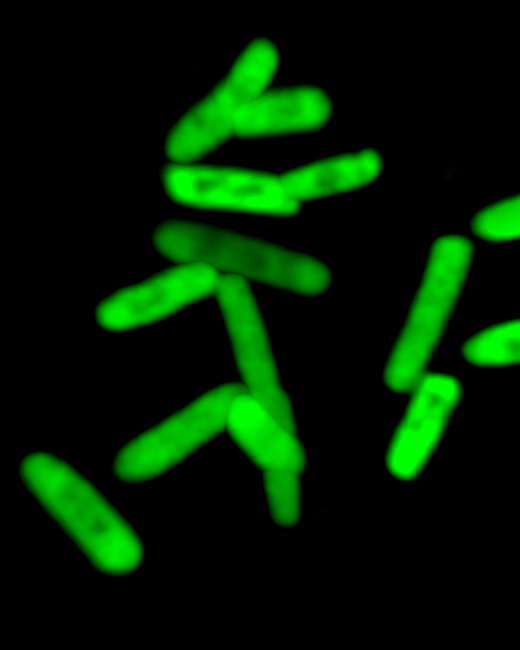
Using the extra letters, they instructed bacteria to manufacture a glowing green protein that has in it a single unnatural amino acid. “We stored information, and now we retrieved it. The next thing is to use it. We are going to do things no one else can,” says Romesberg.

The practical payoff of an organism with a bigger genetic alphabet is that it has a bigger vocabulary—it can assemble proteins with components not normally found in nature. That could solve some tricky problems in medicinal chemistry, which is the art of shaping molecules so they do exactly what’s wanted in the body, and nothing that isn’t.

Pursuing such aims is a startup Romesberg founded, named Synthorx. It has raised $16 million so far and hopes to turn the science into new drugs. One project aims to make a new version of interleukin-2, an anticancer drug with some nasty side effects. Maybe the semi-synthetic germs could fix that by swapping in some unusual components at key points. “This company needs to get out of the lab and into the clinic,” says its newly installed CEO, Laura Shawver.

Carr says an expanded genetic code could have implications beyond providing a shortcut for programming new properties into proteins. He also thinks the new letters might be used to hide information in ways other biologists couldn’t easily see. That could be useful in concealing intellectual property or, perhaps, to disguise a bioweapon.

Synthorx Inc 2015


Credit: William B. Kiosses, PhD, The Scripps Research Institute


November 29, 2017
William B. Kiosses, PhD, The Scripps Research Institute

sábado, 21 de octubre de 2017

Miniature water droplets could solve an origin-of-life riddle, Stanford researchers find

Before life could begin, something had to kickstart the production of critical molecules. That something may have been as simple as a mist made up of tiny drops of water.

It is one of the great ironies of biochemistry:  life on Earth could not have begun without water; yet water stymies some chemical reactions necessary for life itself.
Chemistry Professor Richard Zare(Image credit: L.A. Cicero)
Now, researchers report today in Proceedings of the National Academy of Sciences, they have found a novel, even poetic solution to the so-called “water problem” in the form of miniature droplets of water, formed perhaps in the mist of a crashing ocean wave or the clouds in the sky.

The water problem relates primarily to the element phosphorous, which is attached to a variety of life’s molecules through a process called phosphorylation. “You and I are alive because of phosphorus and phosphorylation,” said Richard Zare, a professor of chemistry and one of the paper’s senior authors. “You can’t have life without phosphorous.”

The water problem
Phosphorous is a necessary ingredient in many molecules critical for life, 
  • including our DNA, 
  • it’s relative RNA and 
  • in the molecule that makes up our body’s energy storage system, called ATP. 
But ordinarily water gets in the way of producing those chemicals. Modern life has evolved ways of sidestepping that problem in the form of enzymes that help phosphorylation along. But how primitive components of these molecules formed before the workarounds evolved remains a controversial and at times slightly oddball subject. Among the proposed solutions are highly reactive forms of extraterrestrial phosphorous and heating powered by naturally occurring nuclear reactions.

Microdroplets solve the phosphorylation problem in a relatively elegant way, in large part because they have geometry on their side. It turns out that water is mostly a problem when the phosphate is floating around inside a pool of water or a primitive ocean, rather than on its surface.

Microdroplets are mostly surface. They perfectly optimize the need for life to form in and around water, but with enough surface area for phosphorylation and other reactions to occur.

In fact, the large amount of surface area provided by microdroplets is already known to be a great place for chemistry. Previous experiments suggest microdroplets can increase reaction rates for other processes by a thousand or even a million times, depending on the details of the reaction being studied.

Spontaneous molecules
Microdroplets seemed like a possible solution to the water problem. But to show that they really work, Zare and his colleagues sprayed tiny droplets of water, laced with phosphorous and other chemicals, into a chamber where the resulting compounds could be analyzed. They found several phosphate-containing molecules occurred spontaneously on these lab-made microdroplets without any catalyst to get them started. Those molecules included sugar phosphates, which are a step in how our cells create energy, and one of the molecules that make up RNA, a DNA relative that primitive organisms use to carry their genetic code. Both reactions are rare at best in larger volumes of water.

That observation, joined with the fact that microdroplets are ubiquitous – from clouds in the sky to the mist created by a crashing ocean wave – suggests that they could have played a role in fostering life on Earth. In the future, Zare hopes to look for phosphates that make up proteins and other molecules.

Even if he can produce those compounds, however, Zare does not believe he and his colleagues will have found the one true solution to the origin of life. “I don’t think we’re going to understand exactly how life began on Earth,” said Zare, who is also the Marguerite Blake Wilbur Professor in Natural Science. Essentially, he said, that is because no one can go back in time to watch what happened as life emerged and there is no good fossil record for the formation of biomolecules. “But we could understand some of the possibilities,” he added.

Zare is also a member of the Stanford Cardiovascular Institute, the Stanford Cancer Institute, the Stanford Neurosciences Institute and the Stanford Woods Institute for the Environment. Additional Stanford authors are postdoctoral fellows Inho Nam and Jae Kyoo Lee. Hong Gil Nam of DGIST in South Korea is co-senior author with Zare. The work was supported by the Institute for Basic Science (South Korea) and the U. S. Air Force Office of Scientific Research through a Basic Research Initiative grant.


ORIGINAL: Stanford News
BY NATHAN COLLINS
OCTOBER 20, 2017

jueves, 15 de junio de 2017

Scientists Hack a Human Cell and Reprogram It Like a Computer

GETTY IMAGES
CELLS ARE BASICALLY tiny computers: They send and receive inputs and output accordingly. If you chug a Frappuccino, your blood sugar spikes, and your pancreatic cells get the message. Output: more insulin.

But cellular computing is more than just a convenient metaphor. In the last couple of decades, biologists have been working to hack the cells’ algorithm in an effort to control their processes. They’ve upended nature’s role as life’s software engineer, incrementally editing a cell’s algorithm—its DNA—over generations. In a paper published today in Nature Biotechnology, researchers programmed human cells to obey 109 different sets of logical instructions. With further development, this could lead to cells capable of responding to specific directions or environmental cues in order to fight disease or manufacture important chemicals.
Large-scale design of robust genetic circuits with multiple inputs and outputs for mammalian cells
Benjamin H Weinberg, N T Hang Pham, Leidy D Caraballo, Thomas Lozanoski, Adrien Engel, Swapnil Bhatia & Wilson W Wong
Affiliations Contributions Corresponding author

Nature Biotechnology 35, 453–462 (2017) 
doi:10.1038/nbt.3805
Received 20 June 2016
Accepted 27 January 2017
Published online 27 March 2017

Engineered genetic circuits for mammalian cells often require extensive fine-tuning to perform as intended. We present a robust, general, scalable system, called 'Boolean logic and arithmetic through DNA excision' (BLADE), to engineer genetic circuits with multiple inputs and outputs in mammalian cells with minimal optimization. The reliability of BLADE arises from its reliance on recombinases under the control of a single promoter, which integrates circuit signals on a single transcriptional layer. We used BLADE to build 113 circuits in human embryonic kidney and Jurkat T cells and devised a quantitative, vector-proximity metric to evaluate their performance. Of 113 circuits analyzed, 109 functioned (96.5%) as intended without optimization. The circuits, which are available through Addgene, include a 3-input, two-output full adder; a 6-input, one-output Boolean logic look-up table; circuits with small-molecule-inducible control; and circuits that incorporate CRISPR–Cas9 to regulate endogenous genes. BLADE enables execution of sophisticated cellular computation in mammalian cells, with applications in cell and tissue engineering.
Their cells execute these instructions by using proteins called DNA recombinases, which cut, reshuffle, or fuse segments of DNA. These proteins recognize and target specific positions on a DNA strand—and the researchers figured out how to trigger their activity. Depending on whether the recombinase gets triggered, the cell may or may not produce the protein encoded in the DNA segment.

A cell could be programmed, for example, with a so-called NOT logic gate. This is one of the simplest logic instructions: Do NOT do something whenever you receive the trigger. This study’s authors used this function to create cells that light up on command. Biologist Wilson Wong of Boston University, who led the research, refers to these engineered cells as “genetic circuits.”

Here’s how it worked: Whenever the cell did contain a specific DNA recombinase protein, it would NOT produce a blue fluorescent protein that made it light up. But when the cell did not contain the enzyme, its instruction was DO light up. The cell could also follow much more complicated instructions, like lighting up under longer sets of conditions.

Wong says that you could use these lit up cells to diagnose diseases, by triggering them with proteins associated with a particular disease. If the cells light up after you mix them with a patient’s blood sample, that means the patient has the disease. This would be much cheaper than current methods that require expensive machinery to analyze the blood sample.

Now, don’t get distracted by the shiny lights quite yet. The real point here is that the cells understand and execute directions correctly. “It’s like prototyping electronics,” says biologist Kate Adamala of the University of Minnesota, who wasn’t involved in the research. As every Maker knows, the first step to building complex Arduino circuits is teaching an LED to blink on command.

Pharmaceutical companies are teaching immune cells to be better cancer scouts using similar technology. Cancer cells have biological fingerprints, such as a specific type of protein. Juno Therapeutics, a Seattle-based company, engineers immune cells that can detect these proteins and target cancer cells specifically. If you put logic gates in those immune cells, you could program the immune cells to destroy the cancer cells in a more sophisticated and controlled way.

Programmable cells have other potential applications. Many companies use genetically modified yeast cells to produce useful chemicals. Ginkgo Bioworks, a Boston-based company, uses these yeast cells to produce fragrances, which they have sold to perfume companies. This yeast eats sugar just like brewer’s yeast, but instead of producing alcohol, it burps aromatic molecules. The yeast isn’t perfect yet: Cells tend to mutate as they divide, and after many divisions, they stop working well. Narendra Maheshri, a scientist at Ginkgo, says that you could program the yeast to self-destruct when it stops functioning properly, before they spoil a batch of high-grade cologne.

Wong’s group wasn’t the first to make biological logic gates, but they’re the first to build so many with consistent success. Of the 113 circuits they built, 109 worked. “In my personal experience building genetic circuits, you’d be lucky if they worked 25 percent of the time,” Wong says. Now that they’ve gotten these basic genetic circuits to work, the next step is to make the logic gates work in different types of cells.

But it won’t be easy. Cells are incredibly complicated—and DNA doesn’t have straightforward “on” and “off” switches like an electronic circuit. In Wong’s engineered cells, you “turn off” the production of a certain protein by altering the segment of DNA that encodes its instructions. It doesn’t always work, because nature might have encoded some instructions in duplicate. In other words: It’s hard to debug 3 billion years of evolution.

ORIGINAL: Wired
By SOPHIA CHEN.
03.27.17

viernes, 24 de marzo de 2017

Scientists unveil a giant leap for anti-aging

Researchers have discovered a protein complex in humans that helps protect cells from DNA damage.
The finding could be helpful for astronauts in space, who are at greater risk of DNA damage from cosmic radiation. Credit: David Sinclair, Harvard Medical School

UNSW researchers have made a discovery that could lead to a revolutionary drug that actually reverses ageing, improves DNA repair and could even help NASA get its astronauts to Mars.

In a paper published in Science today, the team identifies a critical step in the molecular process that allows cells to repair damaged DNA.

Their experiments in mice suggest a treatment is possible for DNA damage from ageing and radiation. It is so promising it has attracted the attention of NASA, which believes the treatment can help its Mars mission.

While our cells have an innate capability to repair DNA damage—which happens every time we go out into the sun, for example - their ability to do this declines as we age.

The scientists identified that the metabolite NAD+, which is naturally present in every cell of our body, has a key role as a regulator in protein-to-protein interactions that control DNA repair.

Treating mice with a NAD+ precursor, or "booster," called NMN improved their cells' ability to repair DNA damage caused by radiation exposure or old age.

"The cells of the old mice were indistinguishable from the young mice, after just one week of treatment," said lead author Professor David Sinclair of UNSW School of Medical Sciences and Harvard Medical School Boston.

Human trials of NMN therapy will begin within six months.

"This is the closest we are to a safe and effective anti-ageing drug that's perhaps only three to five years away from being on the market if the trials go well," says Sinclair, who maintains a lab at UNSW in Sydney.

What it means for astronauts, childhood cancer survivors, and the rest of us:

The work has excited NASA, which is considering the challenge of keeping its astronauts healthy during a four-year mission to Mars.

Even on short missions, astronauts experience accelerated ageing from cosmic radiation, suffering from 
  • muscle weakness, 
  • memory loss and 
  • other symptoms 
when they return. On a trip to Mars, the situation would be far worse: five per cent of the astronauts' cells would die and their chances of cancer would approach 100 per cent.

Professor Sinclair and his UNSW colleague Dr Lindsay Wu were winners in NASA's iTech competition in December last year.

"We came in with a solution for a biological problem and it won the competition out of 300 entries," Dr Wu says.
Professor David Sinclair and his UNSW team. Credit: Britta Campion

Cosmic radiation is not only an issue for astronauts. We're all exposed to it aboard aircraft, with a London-Singapore-Melbourne flight roughly equivalent in radiation to a chest x-ray.

In theory, the same treatment could mitigate any effects of DNA damage for frequent flyers.The other group that could benefit from this work is survivors of childhood cancers.

Dr Wu says 96 per cent of childhood cancer survivors suffer a chronic illness by age 45, including cardiovascular disease, Type 2 diabetes, Alzheimer's disease, and cancers unrelated to the original cancer.

"All of this adds up to the fact they have accelerated ageing, which is devastating," he says.

"It would be great to do something about that, and we believe we can with this molecule."

An anti-ageing pill could be on the horizon:

For the past four years, Professor Sinclair and Dr Wu have been working on making NMN into a drug substance with their companies MetroBiotech NSW and MetroBiotech International.

The human trials will begin this year at Brigham and Women's Hospital, in Boston.

The findings on NAD+ and NMN add momentum to the exciting work the UNSW Laboratory for Ageing Research has done over the past four years.

They've been looking at the interplay of a number of proteins and molecules and their roles in the ageing process.

They had already established that NAD+ could be useful for treating various diseases of ageing, female infertility and also treating side effects of chemotherapy.

In 2003, Professor Sinclair made a link between the anti-ageing enzyme SIRT1 and resveratrol, a naturally occurring molecule found in tiny quantities in red wine.

"While resveratrol activates SIRT1 alone, NAD+ boosters activate all seven sirtuins, SIRT1-7, and should have an even greater impact on health and longevity," he says.


More information: "A conserved NAD+ binding pocket that regulates protein-protein interactions during aging," Science, science.sciencemag.org/cgi/doi/10.1126/science.aad8242


Journal reference: Science


ORIGINAL: MedicalXpress
March 23, 2017

miércoles, 8 de marzo de 2017

Amoeba-Like Robot Programmed With DNA

Credit: Science Robotics AAAS

Living things: They’re most inspiring, but also difficult things to try to replicate in robotics. With that aim, researchers in Japan have managed to design a tiny robotic system that moves like a living cell. The scientists described the robot last week in the journal Science Robotics. 

The system, called a molecular robot, is about the size and consistency of an amoeba. It is a fluid-filled sac containing only biological and chemical components—about 27 of them, says Shin-ichiro Nomura , a bioengineer at Tohoku University in Sendai, Japan and one of the robot’s inventors. The molecular components work in concert to stretch and change the shape of the sac, propelling it with cell-like motion through a fluid environment. The motion can be turned on and off with DNA signals that respond to light.

Other than puttering around, the amoeba-like robot can’t do much. But that’s the beauty of the invention, says Nomura. The bot serves as a vehicle to house whatever researchers can dream up: tiny computers, sensors, and even drugs. Outfitted with those tools, the system could then be used to explore the biomolecular environment. It could seek out toxins or check the surface of other cells or the content of a Petri dish. 

Nomura and his colleagues have figured out a way to package and ship the tool as a kit so that other scientists can “play with the robots” and incorporate their own components, he says. He hopes the platform will be used to build increasingly complex molecular robots with controllable motility.

Ultimately, Nomura would like to see the robot function inside a cell. “That’s kind of a frontier,” says Nomura. A robot that can dive into a cell and its nucleus can act as a diagnostic, seeking out problems with cellular machinery. “It’s a little dreamy,” Nomura says, but notes that his robot can be reduced in size to less than one micrometer—small enough to fit inside a cell. 

Researchers have developed many proof-of-concept micro- and nanoscale robots that can move and communicate within the body . Many of these tiny robots are made with biodegradable materials and are driven by magnetic, chemical, or ultrasonic forces. 

Nomura’s molecular robot differs in that it is composed entirely of biological and chemical components, moves like a cell, and is controlled by DNA. Other molecular robots have been developed, but none with this kind of controllable motility, Nomura says. 

It took about a year and half and 27 different chemical components to make the molecular bot, Nomura says. A lipid membrane serves as a the maleable robot body. Inside, special proteins bump into the membrane, causing it to change shape—kind of like bag being punched from the inside. 

The punching only happens when key proteins called kinesins and microtubules connect to the membrane via anchor units. That connection is provided by light-sensitive DNA. When UV light shines on the robot, the light-sensitive DNA inside cleaves into a single strand. It can then latch onto the anchor units and the kinesin-microtubule structure, forming a bridge between them. 

The microtubules, which are rigid, long structures, slide along the kinesin proteins with the help of adenosine triphosphate, or ATP—the molecule of intracellular energy transport. As they slide, they punch the bot’s outer membrane, causing it to change shape. 

Molecular robot brings us one step closer to mimicking cellular behavior
Amoeba-Like Robot Programmed With DNA

With this combination of molecules, Nomura and his colleagues succeeded in mimicking the movement of a cell. But if the thing is assembled solely with biological components and chemically powered by ATP, can we really call it a robot? “The definition of ‘robot’ is wide,” says Nomura. If something has a body and can sense and process information to carry out a function, it’s a robot, he says.

Robot or cell-bot, we look forward to seeing what engineers stick inside it.

ORIGINAL: Spectrum IEEE
By Emily Waltz
Posted 7 Mar 2017

jueves, 24 de noviembre de 2016

Bringing Silicon to Life

Scientists persuade nature to make silicon-carbon bonds

A new study is the first to show that living organisms can be persuaded to make silicon-carbon bonds—something only chemists had done before. Scientists at Caltech "bred" a bacterial protein to have the ability to make the man-made bonds, a finding that has applications in several industries.

Molecules with silicon-carbon, or organosilicon, compounds are found in pharmaceuticals as well as in many other products, including agricultural chemicals, paints, semiconductors, and computer and TV screens. Currently, these products are made synthetically, since the silicon-carbon bonds are not found in nature.

The new research, which recently won Caltech's Dow Sustainability Innovation Student Challenge Award (SISCA) grand prize, demonstrates that biology can instead be used to manufacture these bonds in ways that are more environmentally friendly and potentially much less expensive.

"We decided to get nature to do what only chemists could do—only better," says Frances Arnold, Caltech's Dick and Barbara Dickinson Professor of Chemical Engineering, Bioengineering and Biochemistry, and principal investigator of the new research, published in the Nov. 24 issue of the journal Science.

The study is also the first to show that nature can adapt to incorporate silicon into carbon-based molecules, the building blocks of life. Scientists have long wondered if life on Earth could have evolved to be based on silicon instead of carbon. Science-fiction authors likewise have imagined alien worlds with silicon-based life, like the lumpy Horta creatures portrayed in an episode of the 1960s TV series Star Trek. Carbon and silicon are chemically very similar. They both can form bonds to four atoms simultaneously, making them well suited to form the long chains of molecules found in life, such as proteins and DNA.

"No living organism is known to put silicon-carbon bonds together, even though silicon is so abundant, all around us, in rocks and all over the beach," says Jennifer Kan, a postdoctoral scholar in Arnold's lab and lead author of the new study. Silicon is the second most abundant element in Earth's crust.

The researchers used a method called directed evolution, pioneered by Arnold in the early 1990s, in which new and better enzymes are created in labs by artificial selection, similar to the way that breeders modify corn, cows, or cats. Enzymes are a class of proteins that catalyze, or facilitate, chemical reactions. The directed evolution process begins with an enzyme that scientists want to enhance. The DNA coding for the enzyme is mutated in more-or-less random ways, and the resulting enzymes are tested for a desired trait. The top-performing enzyme is then mutated again, and the process is repeated until an enzyme that performs much better than the original is created.

Directed evolution has been used for years to make enzymes for household products, like detergents; and for "green" sustainable routes to making pharmaceuticals, agricultural chemicals, and fuels.

In the new study, the goal was not just to improve an enzyme's biological function but to actually persuade it to do something that it had not done before. The researchers' first step was to find a suitable candidate, an enzyme showing potential for making the silicon-carbon bonds.


Bringing Silicon to Life: Scientists Persuade Nature to Make Silicon-Carbon Bonds


Researchers in Frances Arnold’s lab at Caltech have persuaded living organisms to make chemical bonds not found in nature. The finding may change how medicines and other chemicals are made in the future.
Credit: Caltech

"It's like breeding a racehorse," says Arnold, who is also the director of the Donna and Benjamin M. Rosen Bioengineering Center at Caltech. "A good breeder recognizes the inherent ability of a horse to become a racer and has to bring that out in successive generations. We just do it with proteins."

The ideal candidate turned out to be a protein from a bacterium that grows in hot springs in Iceland. That protein, called cytochrome c, normally shuttles electrons to other proteins, but the researchers found that it also happens to act like an enzyme to create silicon-carbon bonds at low levels. The scientists then mutated the DNA coding for that protein within a region that specifies an iron-containing portion of the protein thought to be responsible for its silicon-carbon bond-forming activity. Next, they tested these mutant enzymes for their ability to make organosilicon compounds better than the original.

After only three rounds, they had created an enzyme that can selectively make silicon-carbon bonds 15 times more efficiently than the best catalyst invented by chemists. Furthermore, the enzyme is highly selective, which means that it makes fewer unwanted byproducts that have to be chemically separated out.

"This iron-based, genetically encoded catalyst is nontoxic, cheaper, and easier to modify compared to other catalysts used in chemical synthesis," says Kan. "The new reaction can also be done at room temperature and in water."

The synthetic process for making silicon-carbon bonds often uses precious metals and toxic solvents, and requires extra processing to remove unwanted byproducts, all of which add to the cost of making these compounds.

As to the question of whether life can evolve to use silicon on its own, Arnold says that is up to nature. "This study shows how quickly nature can adapt to new challenges," she says. "The DNA-encoded catalytic machinery of the cell can rapidly learn to promote new chemical reactions when we provide new reagents and the appropriate incentive in the form of artificial selection. Nature could have done this herself if she cared to."

The Science paper, titled "Directed Evolution of Cytochrome c for Carbon-Silicon Bond Formation: Bringing Silicon to Life," is also authored by Russell Lewis and Kai Chen of Caltech. The research is funded by the National Science Foundation, the Caltech Innovation Initiative program, and the Jacobs Institute for Molecular Engineering for Medicine at Caltech.


ORIGINAL: CALTECH
Written by Whitney Clavin
11/24/2016

Contact: Whitney Clavin
(626) 395-1856

CALIFORNIA INSTITUTE OF TECHNOLOGY
1200 EAST CALIFORNIA BOULEVARD, PASADENA, CALIFORNIA 91125
Site content Copyright © 2016 California Institute of Technology

jueves, 3 de noviembre de 2016

Kate Rubins’ Space Station Science Scrapbook

As a child, Kate Rubins dreamed of being an astronaut and a scientist. During the past four months aboard the International Space Station, that dream came full circle. She became the first person to sequence DNA in space, among other research during her recent mission, adding to her already impressive experience. She holds a doctorate in molecular biology, and previously led a lab of 14 researchers studying viruses, including Ebola.
Here’s a look back at Rubins in her element, conducting research aboard your orbiting laboratory.

Kate inside Destiny, the U.S. Laboratory Module

Destiny houses the Microgravity Science Glovebox (MSG), in which Kate worked on the Heart Cells experiment.
The U.S. national laboratory, called Destiny, is the primary research laboratory for U.S. payloads, supporting a wide range of experiments and studies contributing to health, safety, and quality of life for people all over the world. 

Swabbing for Surface Samples
Microbes that can cause illness could present problems for current and future long duration space missions. 
Understanding what microbe communities thrive in space habitats could help researchers design antimicrobial technology. Here, Kate is sampling various surfaces of the Kibo module for the Microbe-IV investigation.

Culturing Beating Heart Cells in Space
The Heart Cells investigation uses human skin cells that are induced to become stem cells, which can then differentiate into any type of cell.
Researchers forced the stem cells to grow into human heart cells, which Rubins cultured aboard the space station for one month.

Rubins described seeing the heart cells beat for the first time as “pretty amazing. First of all, there’s a few things that have made me gasp out loud up on board the [space] station. Seeing the planet was one of them, but I gotta say, getting these cells in focus and watching heart cells actually beat has been another pretty big one.”

Innovative Applied Research Experiment from Eli Lilly
The Hard to Wet Surfaces investigation from Eli Lilly, and sponsored by the Center for the Advancement of Science in Space (CASIS), looks at liquid-solid interactions and how certain pharmaceuticals dissolve, which may lead to more potent and effective medicines in space and on Earth. 
Rubins set up vials into which she injected buffer solutions and then set up photography to track how tablets dissolved in the solution in microgravity.

Capturing Dragon
Rubins assisted in the capture of the SpaceX Dragon cargo spacecraft in July. The ninth SpaceX resupply mission delivered more than two thousand pounds of science to the space station. 
Biological samples and additional research were returned on the Dragon spacecraft more than a month later. 

Sliding Science Outside the Station
Science doesn’t just happen inside the space station. External Earth and space science hardware platforms are located at various places along the outside of the orbiting laboratory. 

The Japanese Experiment Module airlock can be used to access the JEM Exposed Facility. Rubins installed the JEM ORU Transfer Interface (JOTI) on the JEM airlock sliding table used to install investigations on the exterior of the orbiting laboratory.

Installing Optical Diagnostic Instrument in the MSG
Rubins installed an optical diagnostic instrument in the Microgravity Science Glovebox (MSG) as part of the Selective Optical Diagnostics Instrument (SODI-DCMIX) investigation. Molecules in fluids and gases constantly move and collide. 

When temperature differences cause that movement, called the Soret effect, scientists can track it by measuring changes in the temperature and movement of mass in the absence of gravity. Because the Soret effect occurs in underground oil reservoirs, the results of this investigation could help us better understand such reservoirs.

The Sequencing of DNA in Space
When Rubins’ expedition began, DNA had never been sequenced in space. Within just a few weeks, she and the Biomolecule Sequencer team had sequenced their one billionth “base” – the unit of DNA - aboard the orbiting laboratory. 


The Biomolecule Sequencer investigation seeks to demonstrate that DNA sequencing in microgravity is possible, and adds to the suite of genomics capabilities aboard the space station.

The MinION™ DNA sequencer from Oxford Nanopore Technologies fits in the palm of a hand.
Credits: Oxford Nanopore Technologies

Studying Fluidic Dynamics with SPHERES
The SPHERES-Slosh investigation examines the way liquids move inside containers in a microgravity environment. The phenomena and mechanics associated with such liquid movement are still not well understood and are very different than our common experiences with a cup of coffee on Earth.


Rockets deliver satellites to space using liquid fuels as a power source, and this investigation plans to improve our understanding of how propellants within rockets behave in order to increase the safety and efficiency of future vehicle designs. Rubins conducted a series of SPHERES-Slosh runs during her mission.

Retrieving Science Samples for Their Return to Earth
Precious science samples like blood, urine and saliva are collected from crew members throughout their missions aboard the orbiting laboratory. 


They are stored in the Minus Eighty-Degree Laboratory Freezer for ISS (MELFI) until they are ready to return to Earth aboard a Soyuz or SpaceX Dragon vehicle.

Measuring Gene Expression of Biological Specimens in Space

Rubins ran several WetLab-2 RNA SmartCycler sessions during her mission.
Our WetLab-2 hardware system is bringing to the space station the technology to measure gene expression of biological specimens in space, and to transmit the results to researchers on Earth at the speed of light. 

Studying the First Expandable Habitat Module on the Space Station
The Bigelow Expandable Activity Module (BEAM) is the first expandable habitat to be installed on the space station. It was expanded on May 28, 2016. 


Expandable habitats are designed to take up less room on a spacecraft, but provide greater volume for living and working in space once expanded. Rubins conducted several evaluations inside BEAM, including air and surface sampling.

Better Breathing in Space and Back on Earth
Airway Monitoring, an investigation from ESA (the European Space Agency), uses the U.S. airlock as a hypobaric facility for performing science. Utilizing the U.S. airlock allows unique opportunities for the study of gravity, ambient pressure interactions, and their effect on the human body. 


This investigation studies the occurrence and indicators of airway inflammation in crew members, using ultra-sensitive gas analyzers to evaluate exhaled air. This could not only help in spaceflight diagnostics, but that also hold applications on earth within diagnostics of similar conditions, for example monitoring of asthma.

Hot Science with Cool Flames
Fire behaves differently in space, where buoyant forces are removed. Studying combustion in microgravity can increase scientists’ fundamental understanding of the process, which could lead to improvement of fire detection and suppression systems in space and on Earth. 

Many combustion experiments are performed in the Combustion Integration Rack (CIR) aboard the space station. Rubins replaced two Multi-user Droplet Combustion Apparatus (MDCA) Igniter Tips as part of the CIR igniter replacement operations.

Though Rubins is back on Earth, science aboard the space station continues, and innovative investigations that seek to benefit humans on Earth and further our exploration of the solar system are ongoing. Follow @ISS_Research to keep up with the science happening aboard your orbiting laboratory. 

Make sure to follow us on Tumblr for your regular dose of space: http://nasa.tumblr.com