Mostrando entradas con la etiqueta Animales. Mostrar todas las entradas

lunes, 23 de diciembre de 2013

A young woman was restrained, force-fed and injected with cosmetics in a high street shop window as part of a hard-hitting protest against animal testing.


http://www.cienciaencanoa.com/2013/01/the-cosmetics-directive.html


A young woman was restrained, force-fed and injected with cosmetics in a high street shop window as part of a hard-hitting protest against animal testing.

Jacqueline Traide was tortured in front of hundreds of horrified shoppers in a bid to raise awareness and end the practise.

The 24-year-old endured 10 hours of experiments, which included having her hair shaved and irritants squirted in her eyes, as part of a worldwide campaign by Lush Cosmetics and The Humane Society.

The disturbing stunt took place in Lush’s Regent Street store, one of the UK’s busiest shopping streets.

Jacqueline appeared genuinely terrified as she was pinned down on a bench and had her mouth stretched open with two metal hooks while a man in a white coat force-fed her until she choked and gagged.

The artist was also injected with numerous needles, had her skin braised and lotions and creams smeared across her face.

Passers-by were gobsmacked to see Jacqueline, a social sculpture student at Oxford Brookes University, forced to have a section of her head shaved.

The gruesome spectacle aimed to highlight the cruelty inflicted on animals during cosmetic laboratory tests and raise awareness that animal testing is still a common practise.

The Humane Society International and Lush Cosmetics have joined forces to launch the largest-ever global campaign to end animal testing for cosmetics.

The campaign, launched to coincide with World Week for Animals in Laboratories, is being rolled out simultaneously in over 700 Lush Ltd shops across forty-seven countries including the United States, Canada, India, Australia, New Zealand, South Korea and Russia.

Lush campaign manager Tamsin Omond said: “The ironic thing is that if it was a beagle in the window and we were doing all these things to it, we’d have the police and RSPCA here in minutes.

“But somewhere in the world, this kind of thing is happening to an animal every few seconds on average.

“The difference is, it’s normally hidden. We need to remind people it is still going on.”

For more information about the campaign, visit www.fightinganimaltesting.com

I HOPE EVERYONE READS THIS AND REBLOGS IT!

ORIGINAL: Creestal Breeze

lunes, 16 de diciembre de 2013

More Than Human: Tim Flach’s Striking Portraits of Animals

Sentient beings like you’ve never seen them before.

Tim Fach. More Than Human
Erasing the awe-inspiring variety of sentient life impoverishes all our lives,” historian Joanna Bourke wrote in her poignant meditation on what it means to be human. And yet our relationship with animals and our understanding of their inner lives remain inadequate at best.

In 2010, photographer Tim Flach gave us his extraordinary dog portraits. This year, he’s back with More Than Human (UK;public library) — a collection of striking, expressive portraits of our non-human fellow beings, captured with equal parts tenderness and aesthetic elegance.


Despite the sciency sterility of his words, perhaps Darwin was ultimately right in a broader philosophical sense when he reflected in The Descent of Man:

The difference in mind between man and the higher animals, great as it is, is certainly one of degree and not of kind. We have seen that the senses and intuitions, the various emotions and faculties, such as love, memory, attention, curiosity, imitation, reason, etc., of which man boasts, may be found in an incipient, or even sometimes in a well-developed condition, in the lower animals.

See more of Flach’s breathtaking work on his site and treat yourself to the full glory of More Than Human, for the screen hardly does it justice.

martes, 21 de mayo de 2013

Russian spacecraft returns to Earth with most of its furry crew dead

ORIGINAL: ArsTechnica

by Lee Hutchinson -
May 20 2013


"Unfortunately, because of equipment failure, we lost all the gerbils."

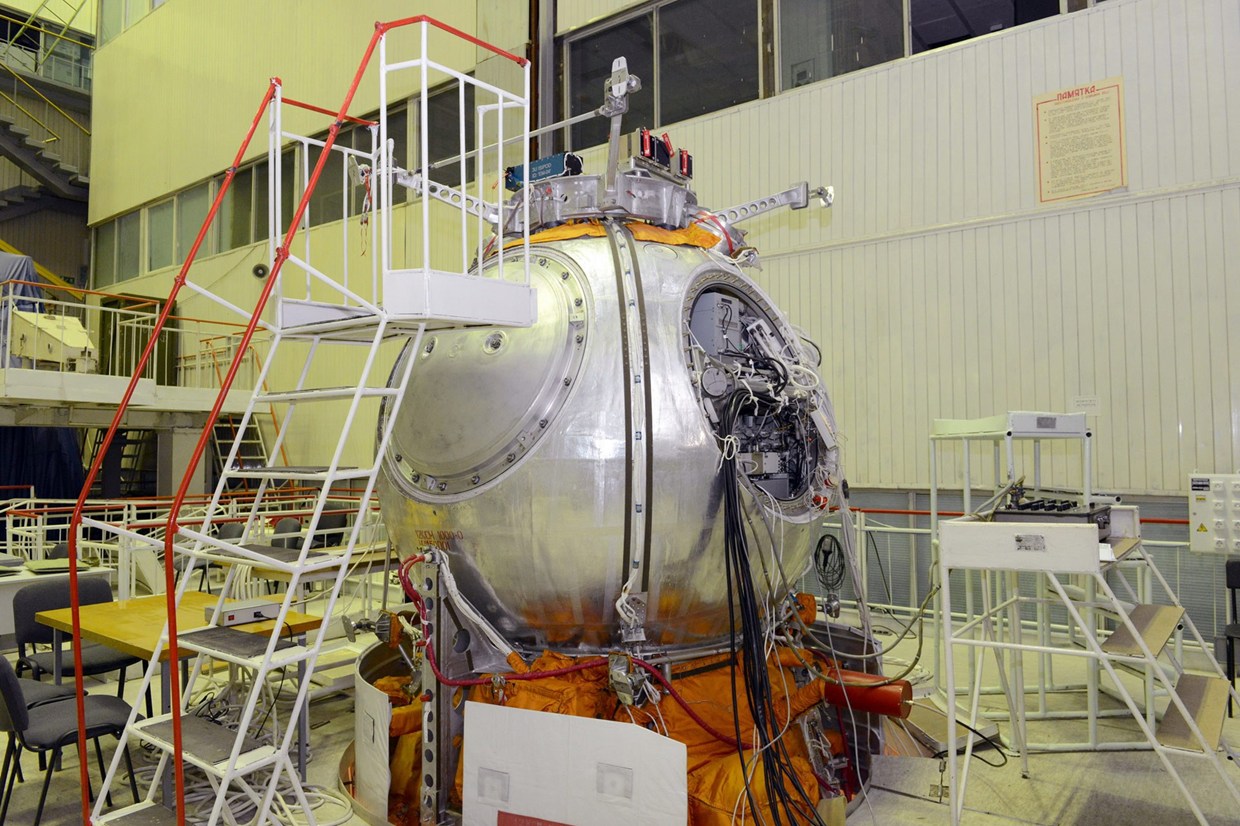
A Russian spacecraft containing 45 mice, 8 gerbils, and 15 newts returned to Earth on Sunday. The spacecraft, a modified Bion-M life sciences satellite, was launched in April 2013 and was intended to study the biological effects of long-term weightlessness. However, due to a combination of equipment failure and what scientists referred to as "the stresses of space," fewer than half the mice (and none of the gerbils) remained alive after their month in space. The newts were fine, though. 

Enlarge / The mission's Bion-M life sciences satellite being prepped for launch.Russian Federal Space Agency

The low survival rate among rodents "was to be expected," according to Vladimir Sychov, deputy director of the Institute of Medical and Biological Problems, the agency conducting the experiment. The Bion-M satellite was equipped with internal cameras so that scientists could visually monitor the animals during flight, which orbited at an altitude of about 357 miles (575 km). This is far higher than the International Space Station's orbit of 250 miles (410 km).

That most organisms, including humans, undergo physical changes in prolonged microgravity is already well-understood; the United States and the Soviet Union (and later Russia) have been conducting long-duration manned space flights as far back as the early 1960s, and there is a plethora of data on the subject. However, conducting detailed experiments on the biological deficits incurred through long exposure to microgravity—including skeletal and muscular deterioration—is ethically difficult because at least some amount of the damage could be irreversible. Astronauts and cosmonauts undergoing multi-month missions on the International Space Station follow a rigorous exercise schedule intended to stave off microgravity-induced health problems.

Experimentation on rodents and newts, though, is a different story. Because the ISS wasn't equipped to house this particular mix of animals without possible health risk to its crew, the month-long Russian mission took place in an isolated spacecraft. In addition to cameras, the flying pet store of death was also equipped with sensors to track the heart rates and blood pressure of its tiny crew, who were launched in separate containers but were apparently allowed to mingle during the flight.

"This is the first time that animals have flown in space for so long on their own," noted Sychov after the mission. The surviving animals (which also included "snails, some plants, and microflora") have been moved from the landing area in Orenburg to Moscow for further testing.

martes, 12 de febrero de 2013

Why do venomous animals live in warm climates?

ORIGINAL: ScienceDump
02/10/2013 - 14:13

Why it is that Australia has so many venomous animals that can kill you while Canada has virtually none. But it's not just Australia - it seems like all beautiful, warm places are cursed with venomous native species.

viernes, 1 de febrero de 2013

Those Photographers Were Right In Time

ORIGINAL: Animals Look
November, 28 2012

All that I can say about this gallery is that those photographers who took those pictures were right in time, otherwise the pictures speak for themselves. The 1st, 8th and 11th are my favorites, but I think the rest of the pictures are great too, what about you, which one do you like most?


lunes, 7 de enero de 2013

Building a body, one organ chip at a time

ORIGINAL: Vector
by TOM ULRICH
JANUARY 4, 2013

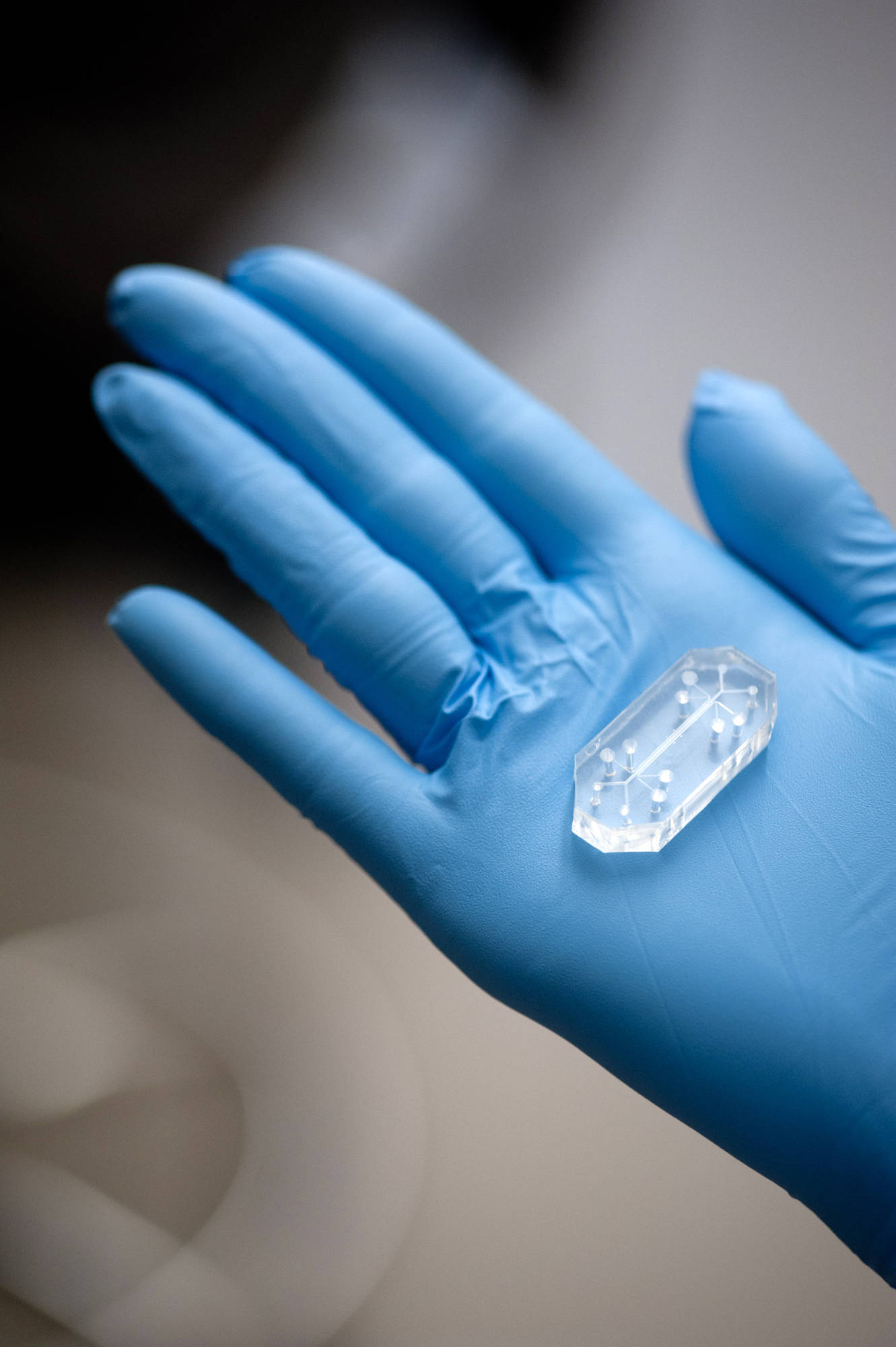
It may not look like it, but it's a lung, just in chip form
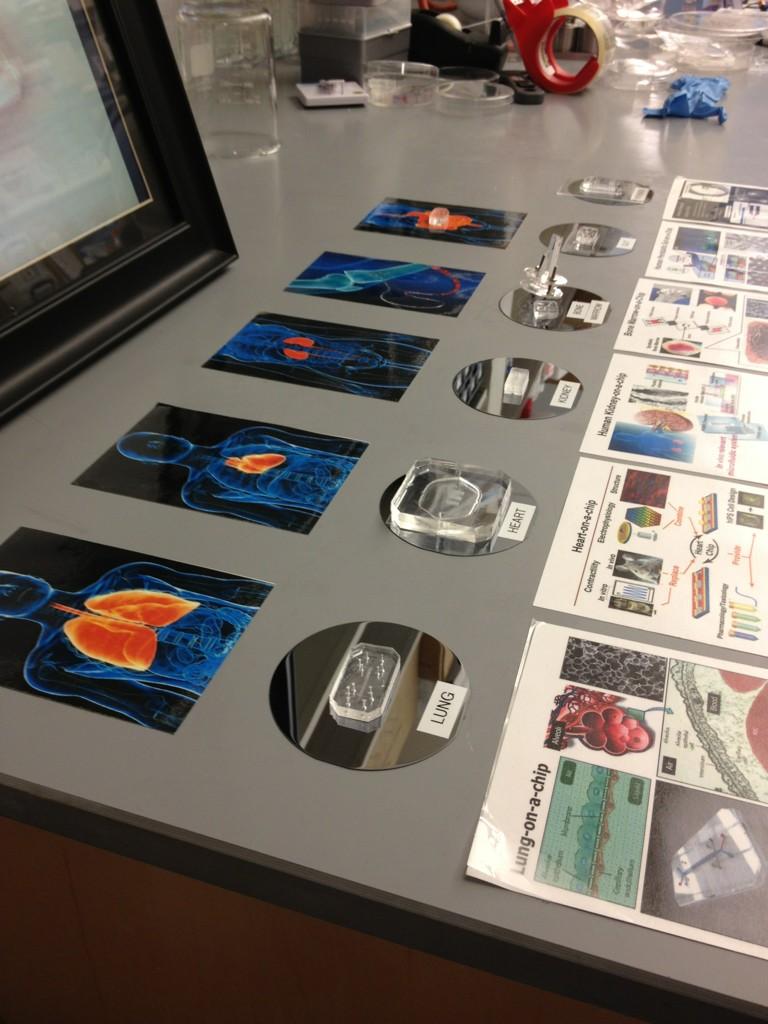
They don’t look like much sitting in your hand. A few pieces of clear plastic, each smaller than an Altoids tin, with channels visible inside and holes for plugging tubing into them.

But fill them with cells and treat those cells the right way, and they turn into something amazing: tiny hearts, lungs, guts, kidneys.

They’re “organs on chips,” and they represent what’s probably the most comprehensive effort to date to physically model the functions of whole organs for drug development and disease research.

Developed by a team of biologists and engineers led by Donald Ingber, MD, PhD, a member of Boston Children’s Hospital’s Vascular Biology Program and director of the Wyss Institute for Biologically Inspired Engineering at Harvard, they’re the building blocks for an ambitious project to create an artificial multi-organ system—essentially, a whole body on a chip.

Each of the chips—Ingber’s team is currently developing 10 different organs—is built using microfabrication techniques like those common in the semiconductor industry.This allows us to create features and structures that we can control at the size scale in which cells live, and also apply physiological fluid flows and mechanical forces,” Ingber explains. “We have precise control over where cells live in the device and what they experience.

Going through the motions
The two features Ingber mentioned, flow and force, are instrumental in faithfully mimicking organ function. His lung on a chip, for instance, has a central microfluidic channel that is split into two parallel channels by porous flexible membrane. One side of the membrane is coated with human lung “air sac” cells (over which air can pass), the other with human lung capillary blood vessel cells. A combination of pumps subject the cells to the sensations of continuous blood flow and rhythmic breathing by moving culture medium through the blood vessel channel and applying suction that deforms the cell-coated membrane.

This video from the Wyss Institute explains in more detail:


Those forces incite dramatic responses from the cells in the chips. “You can put endothelial [blood vessel] and epithelial [air sac] cell cultures together, but they won’t reflect the range of functions you see in a real lung,” Ingber says. “This is because respiratory physiology relies on the mechanics of breathing and blood flow.

For instance, once we added breathing motions to the chip,” he adds, “the epithelial cells started producing surfactant, just like what happens in the lining of a normal lung when a baby takes its first breath.
“[O]nce we added breathing motions to the [lung] chip, the epithelial cells started producing surfactant, just like what happens…when a baby takes its first breath.”
Similarly, Ingber’s lab recently revealed that breathing motions were essential for using the lung chip to mimic the pulmonary edema (fluid leakage from blood vessels into the lungs) that occurs in some cancer patients treated with the drug interleukin-2—the first demonstration that chips could model a complex human disease, as well as a drug toxicity.

Ingber’s team has also developed a chip that models the complex environment of the human gut—including its microbial inhabitants. “Once we added a trickling flow of medium and peristaltic motions, the cells in the chip started forming structures similar to intestinal villi,” he says. “Now we’ve added bacteria, and can start to study the relationship between the microbiome and human intestinal disease processes.

Ingber's expanding repertoire of organs-on-chips could soon be linked together to create a whole body on a chip.
With a host of chips now in hand, Ingber and his team are now working with the federal Defense Advanced Research Project Agency to create a system for linking chips representing different organs together. The system will allow broader study of organ physiology and also how drugs affect multiple organs—the first step toward simulating a complete living body.

We want to be able to administer a drug via the ‘gut’ or ‘lungs,’ see how it is metabolized by the ‘liver,’ excreted by the ‘kidney,’ and whether it causes toxicity in the ‘heart,’” says Ingber. “We also want to model a broad range of disease states, like asthma, Crohn’s, radiation exposure and so on.

He’s also talking to the Food and Drug Administration about potentially accepting organ-on-chip data as part of the drug approval process in addition to or, in the future, in lieu of animal data.We’ve only just started the discussion, but we hope they’ll one day accept human organ chip data instead of certain animal studies, just as they’ve begun to accept biomarker data.


jueves, 15 de noviembre de 2012

What Do Animals Want?

ORIGINAL: EDGE
A Conversation with Marian Stamp Dawkins [10.31.12] 


Whatever anybody says, I feel that the hard problem of consciousness is still very hard, and to try and rest your ethical case on proving something that has baffled people for years seems to me to be not good for animals. Much, much better to say let's go for something tangible, something we can measure. Are the animals healthy, do they have what they want? Then if you can show that, then that's a much, much better basis for making your decisions.

MARIAN STAMP DAWKINS is professor of animal behaviour at the University of Oxford, where she heads the Animal Behaviour Research Group. She is the author of Why Animals Matter.


WHAT DO ANIMALS WANT? (Transcipt)

The questions I'm asking myself are really about how much we really know about animal consciousness. A lot of people think we do, or think that we don't need scientific evidence. It really began to worry me that people were basing their arguments on something that we really can't know about at all. One of the questions I asked myself was: how much do we really know? And is what we know the best basis for arguing for animal welfare? I've been thinking hard about that, and I came to the conclusion that the hard problem of consciousness is actually very hard. It's still there, and we kid ourselves if we think we've solved it.


lunes, 12 de noviembre de 2012

Sheril Kirshenbaum: La ciencia de besar. (La Ciudad de Las Ideas)

Sheril Kirshenbaum, autora de “La ciencia de besar”, estudió cualidades químicas, sociales e históricas del beso, el cual es más que una simple demostración de cariño.

“The Kiss by the Hôtel de Ville,” taken in Paris in 1950. (Photo: Robert Doisneau)
Kirshenbaum, científica de la Universidad de Texas, en una entrevista con BBC Mundo, definió al beso como "presionar los labios contra otra persona, otras partes del cuerpo o hasta objetos" y explicita que existen razones variadas por las que la gente besa, pero “nuestros labios están repletos de terminaciones nerviosas, así que el contacto más suave enviará una gran gama de señales al cerebro que usualmente hacen que se sienta bien”.

El beso tiene el poder de generar fenómenos químicos en los cuerpos, que son responsables del enamoramiento. Mientras que la hormona oxitocinanos da una fuerte sensación de apego a otra persona, es responsable de atar y mantener nuestras relaciones por un periodo largo de tiempo”, la dopamina se eleva cuando besamos, y es “responsable de esos sentimientos de deseo ardiente y el no poder esperar para estar con esa persona”, expresó Kirshenbaum.

La científica también identificó la actuación de un neurotransmisor, la serotonina, “que es responsable de los pensamientos incesantes hacia alguien, especialmente cuando besamos a alguien nuevo”.

Según la autora, un beso es capaz de brindarnos pistas sobre cuán compatibles somos con la persona con la cual nos besamos; “comenzamos a usar nuestro sentido del olfato, gusto y tacto, y todo ello nos provee de una serie de pistas sobre” la compatibilidad.

Kirshenbaum identificó que las mujeres se sienten más atraídas a hombres con diferentes genes a los suyos, por lo cual les atrae inicialmente el aroma de esos hombres, desconociendo de manera consciente por qué se sienten de esa manera. Según manifestó ante la BBC, experimentos científicos han revelado que las mujeres parecen descifrar inmediatamente si alguien es un buen complemento genético dado que sería bueno para sus hijos. 

No sólo se limitó a analizar el beso romántico, sino también el beso social, aquel que se da en la mejilla como saludo y que tiene un “significado evolutivo, porque refuerza lazos, acicala o refleja una jerarquía social”. No obstante, en algunos países de América Latina o de Europa, Francia, Italia, es más probable ver a gente besándose en espacios abiertos que en China, Japón o Medio Oriente, donde no se ven manifestaciones de afecto públicas.

Kirshenbaum también estudió la cualidad histórica del beso, preguntándose qué conductas desplegaban los individuos antes de descubrir el beso. “Se lamerían, soplarían, chuparían, pellizcarían, hasta existió en una cultura donde de hecho se mordían las pestañas cuando tenían encuentros íntimos”, expresa la científica.

Asimismo, reivindicó las capacidades positivas del beso, el cual puede minimizar el stress, disminuir la presión arterial o fortalecer los lazos sociales.

(Foto: flickr.com/richardmasoner)


jueves, 4 de octubre de 2012

4 de Octubre: Día Mundial de los animales

ORIGINAL: Acugranic


El 4 de Octubre, fue instituido para la celebración del Día Mundial de la Protección Animal, en conmemoración del Santo Francisco de Asís, considerado como el primer humano que se concibió a sí mismo en relación con todas las cosas creadas, y que consideraba, sin importar la diferencia, que todos somos criaturas de Dios incluyendo en esto toda la realidad animada e inanimada.

En el año 1929, el 4 de Octubre fue declarado Día Mundial de los Animales, por iniciativa de la Organización Mundial de Protección Animal en congreso celebrado en Viena, y es en 1980 que el Papa Juan Pablo II, lo declaró Patrono de los Animales y de los Ecologistas, momento a partir del cual esta celebración toma más auge a nivel mundial, celebrándose en muchos países con la Bendición de las Mascotas. 

Declaración Universal de los Derechos de los Animales 
Considerando que todo animal posee derechos y que el desconocimiento y desprecio de dichos derechos han conducido y siguen conduciendo al hombre a cometer crímenes contra la naturaleza y los animales, se proclama lo siguiente: 

Artículo No. 1: Todos los animales nacen iguales ante la vida y tienen los mismos derechos a la existencia. 
Artículo No. 2: 
a) Todo animal tiene derecho al respeto. 
b) El hombre, como especie animal, no puede atribuirse el derecho de exterminar a los otros animales o de explotarlos, violando ese derecho. Tiene la obligación de poner sus conocimientos al servicio de los animales. 
c) Todos los animales tienen derecho a la atención, a los cuidados y a la protección del hombre. 
Artículo No. 3 
a) Ningún animal será sometido a malos tratos ni a actos crueles. 
b) Si es necesaria la muerte de un animal, ésta debe ser instantánea, indolora y no generadora de angustia. 
Artículo No. 4 
a) Todo animal perteneciente a una especie salvaje tiene derecho a vivir libre en su propio ambiente natural, terrestre, aéreo o acuático y a reproducirse. 
b) Toda privación de libertad, incluso aquella que tenga fines educativos, es contraria a este derecho. 
Artículo No. 5 
a) Todo animal perteneciente a una especie que viva tradicionalmente en el entorno del hombre tiene derecho a vivir y crecer al ritmo y en las condiciones de vida y de libertad que sean propias de su especie. 
b) Toda modificación de dicho ritmo o dichas condiciones que fuera impuesta por el hombre con fines mercantiles es contraria a dicho derecho. 
Artículo No. 6 
a) Todo animal que el hombre haya escogido como compañero tiene derecho a que la duración de su vida sea conforme a su longevidad natural. 
b) El abandono de un animal es un acto cruel y degradante. 
Artículo No. 7 
Todo animal de trabajo tiene derecho a una limitación razonable del tiempo e intensidad del trabajo, a una alimentación reparadora y al reposo. 
Artículo No. 8 
a) La experimentación animal que implique un sufrimiento físico o psicológico es incompatible con los derechos del animal, tanto si se trata de experimentos médicos, científicos, comerciales, como de otra forma de experimentación. 
b) Las técnicas alternativas deben ser utilizadas y desarrolladas. 
Artículo No. 9 
Cuando un animal es criado para la alimentación debe ser nutrido, instalado y transportado, así como sacrificado, sin que ello resulte para él motivo de ansiedad o dolor. 
Artículo No. 10 
a) Ningún animal debe ser explotado para esparcimiento del hombre. 
b) Las exhibiciones de animales y los espectáculos que se sirvan de animales son incompatibles con la dignidad del animal. 
Artículo No. 11 
Todo acto que implique la muerte de un animal sin necesidad es un biocidio, es decir, un crimen contra la vida. 
Artículo No. 12 
a) Todo acto que implique la muerte de un gran número de animales salvajes es un genocidio, es decir, un crimen contra la especie. 
b) La contaminación y la destrucción del ambiente natural conducen al genocidio. 
Artículo No. 13 
a) Un animal muerto debe ser tratado con respeto. 
b) Las escenas de violencia, en las cuales los animales son víctimas, deben ser prohibidas en el cine y en la televisión, salvo si ellas tienen como fin dar muestra de los atentados contra los derechos del animal. 
Artículo No. 14 
a) Los organismos de protección y salvaguarda de los animales deben ser representados a nivel gubernamental. 
b) Los derechos del animal deben ser defendidos por la ley, como lo son los derechos del hombre. 
Esta declaración fue adoptada por La Liga Internacional de los Derechos del Animal en 1977, que la proclamó al año siguiente. Posteriormente, fue aprobada por la Organización de Naciones Unidas (ONU) y por la Organización de las Naciones Unidas para la Educación, la Ciencia y la Cultura (UNESCO). 

martes, 25 de septiembre de 2012

Using Precisely-Targeted Lasers, Researchers Manipulate Neurons in Worms' Brains and Take Control of Their Behavior

ORIGINAL: Science Daily

Caenorhabditis elegans, adult hermaphrodite. (Credit: By Bob Goldstein, UNC Chapel Hill http://bio.unc.edu/people/faculty/goldstein/ (Own work) [CC-BY-SA-3.0], via Wikimedia Commons)

ScienceDaily (Sep. 23, 2012) — In the quest to understand how the brain turns sensory input into behavior, Harvard scientists have crossed a major threshold. Using precisely-targeted lasers, researchers have been able to take over an animal's brain, instruct it to turn in any direction they choose, and even to implant false sensory information, fooling the animal into thinking food was nearby.

As described in a September 23 paper published in Nature, a team made up of Sharad Ramanathan, an Assistant Professor of Molecular and Cellular Biology, and of Applied Physics, Askin Kocabas, a Post-Doctoral Fellow in Molecular and Cellular Biology, Ching-Han Shen, a Research Assistant in Molecular and Cellular Biology, and Zengcai V. Guo, from the Howard Hughes Medical Institute were able to take control of Caenorhabditis elegans -- tiny, transparent worms -- by manipulating neurons in the worms' "brain."

The work, Ramanathan said, is important because, by taking control of complex behaviors in a relatively simple animal -- C. elegans have just 302 neurons -we can understand how its nervous system functions..

"If we can understand simple nervous systems to the point of completely controlling them, then it may be a possibility that we can gain a comprehensive understanding of more complex systems," Ramanathan said. "This gives us a framework to think about neural circuits, how to manipulate them, which circuit to manipulate and what activity patterns to produce in them ."

"Extremely important work in the literature has focused on ablating neurons, or studying mutants that affect neuronal function and mapping out the connectivity of the entire nervous system. " he added. "Most of these approaches have discovered neurons necessary for specific behavior by destroying them. The question we were trying to answer was: Instead of breaking the system to understand it, can we essentially hijack the key neurons that are sufficient to control behavior and use these neurons to force the animal to do what we want?"

Before Ramanathan and his team could begin to answer that question, however, they needed to overcome a number of technical challenges.

Using genetic tools, researchers engineered worms whose neurons gave off fluorescent light, allowing them to be tracked during experiments. Researchers also altered genes in the worms which made neurons sensitive to light, meaning they could be activated with pulses of laser light.

The largest challenges, though, came in developing the hardware necessary to track the worms and target the correct neuron in a fraction of a second.

"The goal is to activate only one neuron," he explained. "That's challenging because the animal is moving, and the neurons are densely packed near its head, so the challenge is to acquire an image of the animal, process that image, identify the neuron, track the animal, position your laser and shoot the particularly neuron -- and do it all in 20 milliseconds, or about 50 times a second. The engineering challenges involved seemed insurmountable when we started. But Askin Kocabas found ways to overcome these challenges"

The system researchers eventually developed uses a movable table to keep the crawling worm centered beneath a camera and laser. They also custom-built computer hardware and software, Ramanathan said, to ensure the system works at the split-second speeds they need.

The end result, he said, was a system capable of not only controlling the worms' behavior, but their senses as well. In one test described in the paper, researchers were able to use the system to trick a worm's brain into believing food was nearby, causing it to make a beeline toward the imaginary meal.

Going forward, Ramanathan and his team plan to explore what other behaviors the system can control in C. elegans. Other efforts include designing new cameras and computer hardware with the goal of speeding up the system from 20 milliseconds to one. The increased speed would allow them to test the system in more complex animals, like zebrafish.

"By manipulating the neural system of this animal, we can make it turn left, we can make it turn right, we can make it go in a loop, we can make it think there is food nearby," Ramanathan said. "We want to understand the brain of this animal, which has only a few hundred neurons, completely and essentially turn it into a video game, where we can control all of its behaviors."

Funding for the research was provided by the Human Frontier Science Program, the NIH Pioneer Award and the National Science Foundation.

lunes, 24 de septiembre de 2012

Naoto y los animales de Fukushima

ORIGINAL: Aguas de Cauris
NAOTO MATSUMURA EL HÉROE QUE CUIDA DE LOS ANIMALES DE FUKUSHIMA

Luego del tsunami pensó en abandonar la zona. Primero evacuó a su mujer y a sus dos hijos, y se quedó para poner a salvo sus propiedades, pero al observar como sus vecinos se iban abandonando a su suerte a sus mascotas, pensó que no podía abandonarles, y ahora dedica su día a ir de casa en casa, cuidando perros, gatos, patos, cerdos, ...hasta un avestruz que vive en el patio de una escuela de primaria. Ahora Naoto Matsumura se niega a abandonar a pesar de las órdenes del gobierno. Dice que ha pensado en la posibilidad de contraer cáncer (en 3 o 4 años), pero prefiere quedarse con un perro flaco llamado Aki su compañero constante.

Él está preocupado de que los cientos de animales que ha estado alimentando a unos 400 – vacas, cerdos, aves de corral 60 30 10, perros, gatos de más de 100, y un avestruz, no sobrevivirán para ver una nueva primavera.
Ellos necesitan la ayuda de los seres humanos”, dijo en una entrevista en un campo de arroz cerca de 25 millas al oeste de la crisis en curso en la planta de energía nuclear.

Matsumura es una anomalía en un país donde el desafío del gobierno es el conteo de consenso y social por encima de todo. Sin embargo, la desobediencia civil tranquila de Matsumura habla en voz alta del dilema que enfrentan los más de 100.000 los refugiados en silencio “nucleares” que fueron desplazados por los desastres del 11 de marzo.

Tokio se apresuró a establecer zonas de evacuación alrededor de la planta, pero ha sido lento para resolver los refugiados. Una orden del gobierno les prohíbe regresar a sus hogares en medio de una docena de ciudades alrededor de Fukushima Dai-ichi que fueron declarados fuera de los límites después de la central nuclear afectada por el tsunami comenzó a arrojar radiactividad.

Ya estamos quedando en el olvido”, dijo Matsumura, un hombre curtido, pero limpio de corte con la construcción robusta de un granjero. ”El resto del país ha cambiado. No quiere pensar en nosotros.

La ciudad de Tomioka está sellada detrás de las barreras de la policía, que ocultan el corazón de la central nuclear de zona de exclusión, un área que es oficialmente demasiado peligroso para la vida humana.
Él es un héroe en un desierto tóxico, perseguido por un enemigo invisible llamado “radiactividad” y otro “gobierno” devorando seres vivos ahora y en el futuro.

domingo, 9 de septiembre de 2012

Modelo artificial para medir la efectividad de los cosméticos.

ORIGINAL: Universia
06/09/2012

El grupo de Farmacogenética del Departamento de Farmacia de la Universidad Nacional en Bogotá desarrolló un modelo que permite medir algunas de las bondades que ofrecen estos productos.

Imagen suministrada
Es tan certero el prototipo que la Federación Farmacéutica Sudamericana acaba de otorgarle el primer premio en innovación cosmética, en el marco de su congreso número XV. Una distinción que obedece a su gran sustento científico, que permite demostrar si tienen o no funcionalidad como antiedad y calcular la seguridad de cada insumo.

Según el profesor Fabio Aristizábal, director de la investigación, este ejercicio estuvo motivado por la preocupación que surge de que “en el mercado cosmético, aparentemente todo es válido”. Y tiene que ver con un desarrollo molecular que, básicamente, utiliza un método de seguimiento de expresión génica, mediante una reacción que se le conoce como retrotranscripción y amplificación molecular.

Esto permite comparar, en cultivos celulares, cómo un conjunto de materiales que han sido sometidos a tratamiento y otros que no expresan moléculas que fortalecen la piel. Asimismo, hace posible identificar de qué manera varia la expresión de los genes; y así, dependiendo de su tipo y de su función, se puede decir cuáles son sus acciones”, asegura.

A través de un sistema in vitro, se examinaron dos extractos de piper (una planta de la familia de las piperáceas). Uno resultó ser muy efectivo estimulando genes asociados con colágenos, pero, a su vez, inhibiendo los que desarman la matriz extracelular: las metaloproteazas. En cambio, el otro extracto no. Para la prueba fueron seleccionados doce genes que parecían ser los más significativos.

Se evidenció de manera contundente, por medio de estos análisis, cuál tiene moléculas funcionales (antiarrugas y antiedad en general) y si realmente es efectivo o simplemente es carreta”, asegura.

Cabe anotar que, en el mundo, lo que se impone en materia de análisis de estos tipos de productos es el uso de modelos que no empleen animales. Esto resulta ser de provecho desde el punto de vista ético. Pues estos sistemas utilizan células que no afectan individuos y que se pueden estar renovando de manera continua.

El investigador señala que este tipo de modelos —en los que no se usan animales de laboratorio, sino células derivadas de humanos—permiten establecer de manera concluyente que la función existe. “Es un modelo rápido para determinar efectividad”, dice.

Igualmente, indica que se puede analizar si la población celular es afectada por los tratamientos o muere, pues también se pueden contar las células y dar una alarma en caso de que alguna de estas materias primas tenga cierto efecto tóxico.

Así, sin duda se trata de modelos muy útiles para probar la seguridad, pues, aunque no pareciera, también en esta industria existen riesgos. “Hay que recordar que en la piel uno no se debe aplicar cualquier cosa”, asevera.

En la actualidad, se pueden utilizar, por ejemplo, fibroblastos (las células que están encima de la piel) o queratinocitos (células predominantes en la epidermis). Asimismo, se puede trabajar sobre una piel artificial que fabrican con una matriz tridimensional y tiene células de diferente origen (fibroblastos y queratinocitos), sobre las cuales se pueden medir este tipo de genes.

Con respecto al futuro, el profesor Aristizábal cuenta que han ofrecido el modelo a la industria. En efecto, confirma que existe un proyecto aprobado dentro de un consorcio en cosmética y apoyado por Colciencias, en el cual se van a implementar algunos de estos métodos, a fin de desarrollar productos antienvejecimiento, alisadores de piel, entre otros.

El proyecto, financiado por el grupo y la División de Investigación de la sede, estuvo a cargo de Catalina Amaya y Catalina Acevedo (químicas farmacéuticas) y de Lina María Escobar (magíster en Biotecnología).

domingo, 2 de septiembre de 2012

News and actions from Humane Society International.

ORIGINAL: Humane Society
August 2, 2012

Elephant immunocontraception, spay/neuter in Haiti, Bhutan goes cage-free.

News and actions from Humane Society International. 

Innovating for elephants
Since 1996, HSI has been supporting research on immunocontraception, a pioneering technique to combat elephant overpopulation. We spread the word about it at the Fourth International Wildlife Management Congress. A safe, effective solution»

Preventing suffering
When a woman working for a development organization in Milot, Haiti kept seeing distressed and dying homeless animals, she knew she had to act. HSI responded to her plea, offering a clinic to help hundreds of dogs and cats. Cooperation saves lives»


Cage-free, countrywide
Bhutan, already demonstrating its enlightenment by working with HSI to sterilize all of its street dogs, has now prohibited confinement of egg-laying hens to cages and is working to "promote welfare in the poultry sector." A noble decree»


Investigación encubierta en granja de cría intensiva de Smithfield Foods (Video Gráfico)
Un investigador de Humane Society of the U.S. documentó el sufrimiento de cerdas reproductoras confinadas en jaulas de gestación en una instalación de cría intensiva de una subsidiaria de Smithfield Foods, el mayor porcicultor del mundo.