Mostrando entradas con la etiqueta Bioética. Mostrar todas las entradas

lunes, 11 de agosto de 2014

How the Web Became Our ‘External Brain,’ and What It Means for Our Kids

Getty

Recently, my two-year-old nephew Benjamin came across a copy of Vanity Fair abandoned on the floor. His eyes scanned the glossy cover, which shone less fiercely than the iPad he is used to but had a faint luster of its own. I watched his pudgy thumb and index finger pinch together and spread apart on Bradley Cooper’s smiling mug. At last, Benjamin looked over at me, flummoxed and frustrated, as though to say, “This thing’s broken.

Search YouTube for “baby” and “iPad” and you’ll find clips featuring one-year-olds attempting to manipulate magazine pages and television screens as though they were touch-sensitive displays. These children are one step away from assuming that such technology is a natural, spontaneous part of the material world. They’ll grow up thinking about the internet with the same nonchalance that I hold toward my toaster and teakettle. I can resist all I like, but for Benjamin’s generation resistance is moot. The revolution is already complete.

Technology Is Evolving Just Like Our DNA Does
With its theory of evolution, Charles Darwin’s The Origin of Species may have outlined, back in 1859, an idea that explains our children’s relationship with iPhones and Facebook. We are now witness to a new kind of evolution, one played out by our technologies.

Excerpted from The End of Absence: Reclaiming What We’ve Lost in a World of Constant Connection The “meme,” a term coined by evolutionary biologist Richard Dawkins in 1976, is an extension of Darwin’s Big Idea past the boundaries of genetics. A meme, put simply, is a cultural product that is copied. We humans are enamored of imitation and so become the ultimate “meme machines.” Memes—pieces of culture—copy themselves through history and enjoy a kind of evolution of their own, and they do so riding on the backs of successful genes: ours.

According to the memeticist Susan Blackmore, just as Darwinism submits that genes good at replicating will naturally become the most prevalent, technologies with a knack for replication rise to dominance. These “temes,” as she’s called these new replicators, could be copied, varied, and selected as digital information—thus establishing a new evolutionary process (and one far speedier than our genetic model). Blackmore’s work offers a fascinating explanation for why each generation seems less capable of managing solitude, and less likely to opt for technological disengagement.

YOUNG PEOPLE NOW COUNT ON THE INTERNET AS ‘THEIR EXTERNAL BRAIN’ AND HAVE BECOME SKILLFUL DECISION MAKERS—EVEN WHILE THEY ALSO ‘THIRST FOR INSTANT GRATIFICATION AND OFTEN MAKE QUICK, SHALLOW CHOICES.’

She suggests that temes are a different kind of replicator from the basic memes of everyday material culture. “Most memes . . . we forget how often we get them wrong,” Blackmore says. (Oral traditions of storytelling, for example, were characterized by constant twists in the tale.) “But with digital machines the fidelity is almost 100 percent. As it is, indeed, with our genes.” This is a startling thought: By delivering to the world technologies capable of replicating information with the same accuracy as DNA, we are playing a grand game indeed.

Old Ways of Thinking Are on the Verge of Extinction
The brains our children are born with are not substantively different from the brains our ancestors had 40,000 years ago. For all the wild variety of our cultures, personalities, and thought patterns, we’re all still operating with roughly the same three-pound lump of gray matter. But almost from day one, the allotment of neurons in those brains (and therefore the way they function) is different today from the way it was even one generation ago. Every second of your lived experience represents new connections among the roughly 86 billion neurons packed inside your brain. Children, then, can become literally incapable of thinking and feeling the way their grandparents did. A slower, less harried way of thinking may be on the verge of extinction.

In your brain, your billions of neurons are tied to each other by trillions of synapses, a portion of which are firing right now, forging (by still mysterious means) 

  • your memory of this sentence, 
  • your critique of this very notion, and 
  • your emotions as you reflect on this information. 
Our brains are so plastic that they will reengineer themselves to function optimally in whatever environment we give them. Repetition of stimuli produces a strengthening of responding neural circuits. Neglect of other stimuli will cause corresponding neural circuits to weaken. (Grannies who maintain their crossword puzzle regime knew that already.)

UCLA’s Gary Small is a pioneer of neuroplasticity research, and in 2008 he produced the first solid evidence showing that our brains are reorganized by our use of the internet. He placed a set of “internet naïve” people in MRI machines and made recordings of their brain activity while they took a stab at going online. Small then had each of them practice browsing the internet for an hour a day for a week. On returning to the MRI machine, those subjects now toted brains that lit up significantly in the frontal lobe, where there had been minimal neural activity beforehand. Neural pathways quickly develop when we give our brains new tasks, and Small had shown that this held true—over the course of just a few hours, in fact— following internet use.

WE CAN TELL THAT SOMETHING HAS CHANGED IN OUR MINDS, BUT WE STILL FEEL HELPLESS AGAINST IT, AND WE EVEN FEEL ADDICTED TO THE TECHNOLOGIES THAT ARE THAT CHANGE’S AGENTS.

We know that technology is changing our lives. It’s also changing our brains,” he announced. On the one hand, neuroplasticity gives him great hope for the elderly. “It’s not just some linear trajectory with older brains getting weaker,” he told me. The flip side of all this, though, is that young brains may be more equipped to deal with digital reality than with the decidedly less flashy reality that makes up our dirty, sometimes boring, material world.

In The Shallows, Nicholas Carr describes how the internet fundamentally works on our plastic minds to make them more capable of shallow thinking and less capable of deep thinking. After enough time in front of our screens, we learn to absorb more information less effectively, skip the bottom half of paragraphs, shift focus constantly; “the brighter the software, the dimmer the user,” he suggests at one point.

Kids These Days Can Think Quickly—But Not Deeply
The most startling example of our brain’s malleability, though, comes from new research by neural engineers at Boston University who now suggest that our children will be able to “incept” a person “to acquire new learning, skills, or memory, or possibly restore skills or knowledge that has been damaged through accident, disease, or aging, without a person’s awareness of what is learned or memorized. The team was able to use decoded functional magnetic resonance imaging (fMRI) to modify in highly specific ways the brain activity in the visual cortex of their human subjects.

The possibilities of such injections of “unearned” learning are as marvelous as they are quagmires for bioethical debate. Your grandchild’s brain could be trained in a certain direction while watching ads through digital contact lenses without his or her awareness (or, for that matter, acquiescence). For now, it’s easier to tell that something has changed in our minds, but we still feel helpless against it, and we even feel addicted to the technologies that are that change’s agents. But will our children feel the static?

SOME ARGUE THAT THE YOUNG ARE DEVELOPING NEW SKILLS BETTER SUITED TO THEIR OWN REALITY THAN TO AN OUTMODED PAST.

In 2012, Elon University worked with the Pew Internet and American Life Project to release a report that compiled the opinions of 1,021 critics, experts, and stakeholders, asking for their thoughts on digital natives. Their boiled-down message was that young people now count on the internet as “their external brain and have become skillful decision makers—even while they also “thirst for instant gratification and often make quick, shallow choices.

Some of those experts were optimistic about the future brains of the young. Susan Price, CEO and chief Web strategist at San Antonio’s Firecat Studio, suggested that “those who bemoan the perceived decline in deep thinking . . . fail to appreciate the need to evolve our processes and behaviors to suit the new realities and opportunities.” Price promises that the young are developing new skills and standards better suited to their own reality than to the outmoded reality of, say, 1992. Meanwhile, the report’s coauthor, Janna Anderson, noted that while many respondents were enthusiastic about the future of such minds, there was a clear dissenting voice: “Some said they are already witnessing deficiencies in young people’s abilities to focus their attention, be patient and think deeply. Some experts expressed concerns that trends are leading to a future in which most people become shallow consumers of information, endangering society.

We may be on our way to becoming servants to the evolution of our own technologies. The power shifts very quickly from the spark of human intention to the absorption of human will by a technology that seems to have intentions of its own.

But we’ll likely find there was no robotic villain behind the curtain. Our own capitalist drive pushes these technologies to evolve. We push the technology down an evolutionary path that results in the most addictive possible outcome. Yet even as we do this, it doesn’t feel as though we have any control. It feels, instead, like a destined outcome—a fate.

Excerpted from The End of Absence: Reclaiming What We’ve Lost in a World of Constant Connection by Michael Harris, in agreement with Current, an imprint of Penguin Random House. Copyright (c) Michael Harris, 2014.

Editor: Samantha Oltman (@samoltman)

ORIGINAL: Wired
BY MICHAEL HARRIS 
08.06.14
Michael Harris
Michael Harris is a contributing editor at Western Living andVancouver magazine. His award-winning writing appears regularly in publications such as The Huffington Post and The Walrus. He is the author of The End of Absence and lives in Toronto, Canada.

martes, 25 de febrero de 2014

Science of the Times: Widener experiments with ‘green chemistry'

In keeping with the running theme of environmentally aware columns recently, I spoke with Widener University’s chair of the Chemistry Department, Dr. Loyd Bastin, last week about that institution’s recent move to sign the Green Chemistry Commitment.

Widener now numbers among the 17 colleges and universities nationwide (as well as the first in Pennsylvania) to have signed the pledge, which basically recognizes the work that has already been taking place on the campus to bring the chemistry department in line with a sustainable and environmentally friendly curriculum.

For those who haven’t heard of it, “green” chemistry is more of a philosophy than anything else. Obviously, it is bound by the laws of physics that dictate how certain chemical compounds interact with one another, so it’s more a matter of choice in which of those compounds are used.

It does so with an eye to conservation, sustainability and safety by holding to a set of 12 principles laid out by Dr. John Warner, founder of Beyond Benign, the flagship nonprofit promoting these ideals.

The idea of “green chemistry” is not at all new. Bastin has been immersed in the stuff for 14 years and has been instrumental in developing its concepts at the college for half of that time.

What is somewhat new is that this philosophy is no longer on the fringes. Where Bastin used to go to conferences that first explained what green chemistry is before focusing on how to teach it, they now assume attendees know what they’re there for and simply go ahead with the latter part.

This environmentally conscious chemistry requires the use of less noxious substances, renewable stocks and even extends to reducing waste at the atomic level. The goal is to find ways of filling the needs of the various fields associated with chemistry in such a way that there are no remainders in the equation, so to speak.

I want sustainability really to be in everyone’s consciousness,” said Bastin. “I want everyone to think about the effect we’re having on the environment.

To that end, Bastin and colleagues like Dr. Krishna Bhat, assistant professor of chemistry, have been working to expand the scope of green chemistry at Widener. The seed he planted there in 2007 has since grown and spread not just within the chemistry and biology departments, but even into the business school, which now emphasizes environmentally sustainable business practices.

Even the president of the United States has gotten in on the action with the Environmental Protection Agency’s annual Presidential Green Chemistry Challenge.


The EPA has received nearly 1,500 nominations for 755 unique technologies between 1996 and 2012, according to its website, some of which have revolutionized the way chemistry impacts our daily lives.

Bastin pointed to one such innovation that found a more environmentally friendly way of producing ibuprofen, which has since become the industry standard.

And there are some surprising participants in these awards. Scattered among the various institutions of higher learning and think tanks one might expect are names like DOW Corning, Lockheed Martin and DuPont.

These might not typically be thought of as shining pillars of responsible chemical management, but that appears to be changing. The reason some of these companies are coming around to greener methods could be attributed to a conscious desire to have a less harmful impact on the planet, although the fact that less waste equals less chance to get sued probably plays a part, as well.

See, the problem with noxious byproducts is that you have to dispose of them properly or face the EPA firing squad. Neither option is necessarily cheap.

If, on the other hand, you can make essentially the same product with little or no waste, then you have a lot less to worry about in that regard. You can probably even charge a premium by slapping an “environmentally friendly!” sticker on it.

No one is going to fault you for wanting to make more money, not in this country. They will fault you, however, if you ruin the water table doing it.

And there is evidently a lot of money to be made. According to a 2011 report from Pike Research, green chemistry is expected to become a $100 billion industry within the next six years, more than half of which will be centered in the United States.

While there are currently no grant programs open solely to those who have signed onto the Green Chemistry Commitment, Bastin said Beyond Benign does envision a time when some professional development or research grants would only be available to signers.

For his part, Bastin will continue instilling these principles in the chemical engineers and business leaders of tomorrow. About one-quarter of incoming freshman will now have to take green chemistry classes as part of their respective majors next year, and even non major classes are getting in on the action.

The faster we can get these kids out into the real world with this idea of responsible, sustainable chemistry tucked squarely away inside their noggins, the sooner this will become the norm.

We might even one day achieve Warner’s dream that it will no longer be referred to as “green chemistry,” but simply “chemistry.

Alex Rose covers the Delaware County Courthouse for the Daily Times. Follow him on Twitter at @arosedelco. Check out his blog at delcoscience.blogspot.com. Email him at delcoscience@gmail.com. His column appears every Tuesday.

ORIGINAL: DelcoTimes
By Alex Rose, Delaware County Daily Times
02/24/14

lunes, 17 de febrero de 2014

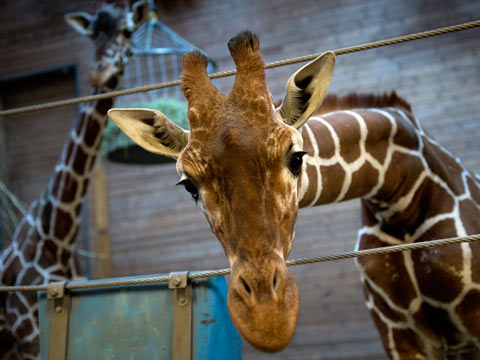
Why killing Marius the giraffe was justified - even though it's a PR disaster (The Guardian)

Euthanasia is intrinsic to the good work that many zoos do, and I understand the Copenhagen team's decision. Still, this is terrible PR for zoos, and will have repercussions

Ben Fogle: Euthanising Marius the giraffe shows a shocking lack of compassion

WARNING: video contains images some viewers may find distressing


My partner runs a zoo, and I am, in general, supportive of them – primarily because of their ability to engage and educate people, and also because of the work many of them do in conserving endangered species. It is important to understand, too, that euthanasia is part and parcel of animal husbandry, whether it be in a zoo, on a farm or with pets in the home. Euthanasia can be beneficial for an institution and for other animals: it can allow other individuals to get better care and attention – even survive.

So I would understand, in principle, Copenhagen zoo's decision to shoot a healthy young giraffe to avoid the problem of inbreeding. I could equally support its decision to feed the meat to the lions, and to let people see that. We are so detached from the cycle of life these days – many children have no idea where their food comes from – and giraffe are a part of lions' natural prey. I understand some people may find it gruesome or extreme, but I have no objection to this video being put online. People do not have to watch it, and I would defend its educational value. The same scene is happening now on the plains of Africa.

So sometimes euthanasia is necessary. The ethical considerations are the same whether it's a tiger, a rat, a terrapin. You can't, in general, breed animals in captivity to go back into the wild. So animals in captivity should be and are kept on contraceptives – although some zoos do argue that, for the benefit of the adults, some should go through the breeding process and raise offspring. We have to ask why was this animal born in the first place, if it was destined to be "unwanted".

The principal role of zoo animals, I feel, is as ambassadors for nature's wild masterpieces, as tools for education and public engagement, to teach people about the need for conservation and to motivate them to be concerned about the plight of animals in the wild. This animal surely could have played that role elsewhere.

This incident is probably the biggest PR disaster for zoos in recent memory. The belligerent arrogance of this particular zoo in the face of a worldwide campaign to save the animal will have global repercussions. People are polarised about zoos: they are either for or against. And the vast majority will not bother to find out why this happened; they will make a judgment. My partner will have to go to her zoo this morning and face a barrage of emails and a public outcry.

People will never even try to understand why this giraffe had to die when the Yorkshire Wildlife Park – even other zoos in Copenhagen – were offering to take it. This zoo will have its ethics committee; all zoos do. It took its decision and it has stuck by its guns. But by ploughing on regardless, it showed scant regard for the difficulties all zoos face in explaining their role and responsibilities to a sometimes sceptical public.

This zoo was, at least, transparent. When Longleat euthanased several lions recently, we only got to know about it because of a whistleblower. But zoos have enough PR problems as it is, and in this case a far better solution would have been to allow the giraffe to go to another zoo.


ORIGINAL: The Guardian

domingo, 22 de diciembre de 2013

Exclusive: 'Jaw-dropping' breakthrough hailed as landmark in fight against hereditary diseases as Crispr technique heralds genetic revolution

Exclusive: 'Jaw-dropping' breakthrough hailed as landmark in fight against hereditary diseases as Crispr technique heralds genetic revolution


A breakthrough in genetics – described as “jaw-dropping” by one Nobel scientist – has created intense excitement among DNA experts around the world who believe the discovery will transform their ability to edit the genomes of all living organisms, including humans.

The development has been hailed as a milestone in medical science because it promises to revolutionise the study and treatment of a range of diseases, from cancer and incurable viruses to inherited genetic disorders such as sickle-cell anaemia and Down syndrome.

For the first time, scientists are able to engineer any part of the human genome with extreme precision using a revolutionary new technique called Crispr, which has been likened to editing the individual letters on any chosen page of an encyclopedia without creating spelling mistakes. The landmark development means it is now possible to make the most accurate and detailed alterations to any specific position on the DNA of the 23 pairs of human chromosomes without introducing unintended mutations or flaws, scientists said.

The technique is so accurate that scientists believe it will soon be used in gene-therapy trials on humans to treat incurable viruses such as HIV or currently untreatable genetic disorders such as Huntington’s disease. It might also be used controversially to correct gene defects in human IVF embryos, scientists said.

Until now, gene therapy has had largely to rely on highly inaccurate methods of editing the genome, often involving modified viruses that insert DNA at random into the genome – considered too risky for many patients.

The new method, however, transforms genetic engineering because it is simple and easy to edit any desired part of the DNA molecule, right down to the individual chemical building-blocks or nucleotides that make up the genetic alphabet, researchers said.

Crispr is absolutely huge. It’s incredibly powerful and it has many applications, from agriculture to potential gene therapy in humans,” said Craig Mello of the University of Massachusetts Medical School, who shared the 2006 Nobel Prize for medicine for a previous genetic discovery called RNA interference.

This is really a triumph of basic science and in many ways it’s better than RNA interference. It’s a tremendous breakthrough with huge implications for molecular genetics. It’s a real game-changer,” Professor Mello told The Independent.

It’s one of those things that you have to see to believe. I read the scientific papers like everyone else but when I saw it working in my own lab, my jaw dropped. A total novice in my lab got it to work,” Professor Mello said.

In addition to engineering the genes of plants and animals, which could accelerate the development of GM crops and livestock, the Crispr technique dramatically “lowers the threshold” for carrying out “germline” gene therapy on human IVF embryos, Professor Mello added.

 
The new method of gene therapy makes it simple and easy to edit any desired part of the DNA molecule (Getty Creative)

Germline gene therapy on sperm, eggs or embryos to eliminate inherited diseases alters the DNA of all subsequent generations, but fears over its safety, and the prospect of so-called “designer babies”, has led to it being made illegal in Britain and many other countries.

The new gene-editing technique could address many of the safety concerns because it is so accurate. Some scientists now believe it is only a matter of time before IVF doctors suggest that it could be used to eliminate genetic diseases from affected families by changing an embryo’s DNA before implanting it into the womb.

If this new technique succeeds in allowing perfectly targeted correction of abnormal genes, eliminating safety concerns, then the exciting prospect is that treatments could be developed and applied to the germline, ridding families and all their descendants of devastating inherited disorders,” said Dagan Wells, an IVF scientist at Oxford University.

It would be difficult to argue against using it if it can be shown to be as safe, reliable and effective as it appears to be. Who would condemn a child to terrible suffering and perhaps an early death when a therapy exists, capable of repairing the problem?” Dr Wells said.


lunes, 2 de diciembre de 2013

Andrew Hessel on Singularity 1 on 1: Don’t Fear Synthetic Biology


Today I am very happy to have Andrew Hessel as my guest on Singularity 1 on 1. (As always, you can listen to or download the audio interview above, or scroll down and watch the video recording in full.)

During the interview Andrew shares his truly infectious passion about synthetic biology and the unique opportunities that lie ahead of the budding first generation of DIY bio-hackers.

We also discuss a variety of other interesting issues such as the singularity, religion, the promise of personalized medicine as cancer treatment, the risks and benefits of open-source synthetic-biology and the fact that biology is a dual-use technology.

I have to admit that I was so infected by Andrew’s passion and his unique, open-source approach that I couldn’t help it but buy a 20 dollar share in the Pink Army Cooperative.

Who is Andrew Hessel?
Andrew Hessel co-chairs the Bioinformatics and Biotechnology track at the Singularity University, an institution founded by futurist Ray Kurzweil and X Prize Foundation CEO Peter Diamandis, with sponsorship from world-leading organizations that include Google, Autodesk, and NASA. He is also the founder of the Pink Army Cooperative, a venture exploring open source personalized cancer therapies. His work has been featured in The New York Times, Futurist Magazine, H+, and Wired News.


RELATED ARTICLES

lunes, 2 de septiembre de 2013

The ABC’s of Your DNA. ‘Genome: Unlocking Life’s Code,’ at the Smithsonian

ORIGINAL: NYTimes
By EDWARD ROTHSTEIN
Published: August 29, 2013


T.J. Kirkpatrick for The New York Times

Genome Elements of human genome projected onto a model at the Smithsonian’s Natural History Museum.


WASHINGTON — It has been a decade since the human genome was first sequenced and the 3.2 billion rungs of our DNA ladder laid out for analysis.

That achievement — mapping the fundamental biological code that defines our species and characterizes us as individuals — may have implications as important as the splitting of the atom or the discovery of the wheel. We can already envision custom-designed medicines as well as custom-designed fetuses. There are ethical questions to be asked and scientific questions to be answered. And nothing about the subject is simple.

But credit “Genome: Unlocking Life’s Code,” an exhibition at the Smithsonian National Museum of Natural History here that opened in June, with being a bit of a pioneer in its own realm. It is smart, playful, and, while leaning toward the pop-science end of things, enlightening. It gives a sense of what the Human Genome Project was all about, provides glimpses of its promises and hints of its limitations, raises questions about things unknown and suggests questions whose answers we may choose not to know.

The show was created in an unusual collaboration between the Smithsonian and the National Human Genome Research Institute at the National Institutes of Health, and vetted by a board of genetic scientists. The main frustration is that given the immensity of its subject, the exhibition is too modest in size — about 4,400 square feet. It feels overly compressed, particularly in the space allowed for a crash video course in genetics — partly, perhaps, because it is designed to travel to other museums after it closes here. It may even be too successful; crowds on a recent weekday caused bottlenecks at displays and interactive screens.

The exhibition also casts a wide age net, and generally succeeds, mostly by using interactive technology and providing small bits of information at a time, as if it were carefully replicating a strand of its DNA for the visitor. Interactive screens can become laborious as you formulaically click through them, but lessons are clearly communicated.

Life, in all its complexity, we are reminded at the beginning, is based upon almost elementary information: four symbols — the A, C, G and T that stand for DNA’s nucleic acids — and the order in which they appear in the genome. That might seem trivial, but the amount of data is immense. If you typed 360 letters a minute, eight hours a day, we are told, it would take nearly a hundred years to type out the letters mapping the human genome. A video screen here is scrolling fast through that roster; it will take a year to complete. Yet all that information is compressed into each human cell.

Once it became possible to examine that code and specify its sequence, variations could be identified, comparisons made, changes traced. And a similar procedure could be used throughout the natural world. We are just beginning to glimpse the consequences.

In a section about genetic research in animals, for example, viewers manipulate cursors on a large display examining a “tree” of related creatures. Horseshoe crabs have not changed their shape in 200 million years; are they, then, we are asked, living fossils, ancient creatures living in the present? No. Though the genes determining their shape have remained relatively unchanged, other genes have been transformed through long evolutionary processes.

Examine “naked mole rats” — something you probably wouldn’t consider outside of the display — and you find that they live 30 years, feel no pain and don’t get cancer. Why? Their cells remove damaged proteins more efficiently than ours. Genomic research may suggest how to apply similar processes in human medicine.

Another interactive display, “Explore your genes!” presents a human figure on screen with bodily “hot spots”: when clicked on, associated traits or diseases appear — hair color, mental illness, taste sensitivities, sickle cell anemia — along with information about the genes controlling them. Genes have been linked to trivial traits. (“Did you know some people have wet earwax and some people have dry?”) And some 4,000 diseases are caused by single flaws in human genes.

Genomic research doesn’t just identify the source of a disease or trait, though; it also has helped discover remedies. Short videos present miniature case histories. Perhaps the most powerful example shows twins who, as children, were thought to have cerebral palsy. Once it was shown that they were actually afflicted with genetically caused Segawa’s dystonia, proper medication almost miraculously eliminated the symptoms.

Obtaining this level of genetic information is no longer a highly rarefied procedure. The Human Genome Project required eight years, more than $2.7 billion and international cooperation. The cost of sequencing a genome is swiftly dropping, we learn, and “soon it will cost $1,000 or less.” You can now get a partial analysis of your genome in a few weeks for less than a hundred dollars.

So questions are asked that would have been abstract a decade ago: What do you want to know and why? One interactive display introduces us to fictional characters of varied ages who decide whether to get genetic testing and then decide how to act on the information. In one example, Maya wants to become a concert pianist, but genetic tests show a 30 percent risk of rheumatoid arthritis, which would cripple her career. Should that affect her choices?

Another display poses ethical or policy questions.  
Should health insurers be permitted to set rates based on genomic information?
Should genomic discrimination ever be permitted?  
Are there questions genomic scientists should not be allowed to study?
Each question offers you a choice of yes, no or maybe, and a rationale; you then see how visitors voted before you. (Should there be limits on genomic research? At the time of my visit, 46 percent said no.)

The possibilities and problems are astonishing. Yet we stand now only at the beginning of a transformation in human self-knowledge. Vast regions of the genome are not fully understood. And what is the nature of genetic complexity anyway, when, we are told here, amoeba have 670 billion bits of information (“base pairs”) in their genome compared with humans’ 3.2 billion. Even barley surpasses us, with more than 5 billion.

What actually matters in these long strings of data: 99.9 percent of each person’s genome is exactly the same as everybody else’s; our individuality hangs on only .1 percent.

So much is happening in this field, it would have been helpful if a final section had been devoted to examining where research is going. And beyond a streaming news ticker above one display, it would also help to see frequently updated surveys of recent genomic news in some detail. In June, for example, a Supreme Court decision barred patents on human genes; this month we read of a decision by the National Institutes of Health that gave descendants of Henrietta Lacks — from whom medically important HeLa cells derived — some involvement with the continuing exploration of her genome.

But the cumulative effect is to inspire amazement about how much has happened in the last decade, how matter of factly we now seem to take it, and how much more is yet to come. And there is some reassurance that while we are each perishable, as one introductory film tells us, “your DNA can last for 100,000 years, if you don’t get cremated.


Follow Edward Rothstein on Twitter; twitter.com/EdRothstein.

The exhibition continues through Sept. 1, 2014, at the Smithsonian National Museum of Natural History, 10th Street and Constitution Avenue, NW, Washington; mnh.si.edu.

viernes, 30 de agosto de 2013

Not Science Fiction: A Brain In A Box To Let People Live On After Death

ORIGINAL: FastCoExist

Scientists believe it may be possible in the future for human brains to survive death in robotic bodies. but would we want to?


I recently had the unusual experience of seeing three renowned scientists discuss whether it's possible to remove a human brain from a body, put it in a tank, and give it a robotic body. This wasn't some bizarre late-night bar discussion: The conversation was a serious talk conducted on stage at a conference at New York's Lincoln Center. The University of Southern California's Theodore Berger, Duke University's Mikhail Lebedev, and Alexander Kaplan of Moscow University, all believe it's possible for the brain to survive body-death inside a cybernetic shell.

In their panel at the Global Future 2045 conference, the trio discussed a future that sounds like a combination of Eternal Sunshine of the Spotless Mind, the recent mouse inception, and Krang, the brain-in-a-box villain of Teenage Mutant Ninja Turtles. The talk, which took place in a mixture of Russian and English, focused on making it possible in our lifetime to conduct brain transplants, harvesting human parts from the body for cybernetic integration, and making self-aware brains comfortable in their new robot homes. It was just another Saturday afternoon, in other words.

Notably absent from the conversation was what the quality of life would be for human brains harvested into robotic bodies. Although all three researchers come from impeccable neurology backgrounds, the talk centered on mostly whether it would be possible to make the technology work. Whether it would be wise, or what the experience would be like for both patients and loved ones, wasn't discussed as much.

The three researchers believe brain transplants are possible because the human brain is the last organ in the body to cease function after death. Because the death process includes a short window where the brain functions without support from other organs, Berger, Kaplan, and Lebedev all believe there is precedent to have the human brain functioning indefinitely in a non-human carrier--as long as the appropriate support system is there for the brain. They also stress the fact that nerve cells age slowly compared to other organs.

This brain-in-a-robot would be supported by biological blood substitutes (with “the necessary hormonal-biochemical and energetic substrate), multi-channel brain-computer interfaces with two-way information exchange, neural prostheses, artificially regrown human organs, and other biotech tools that we can't even imagine. Because there is no precedent for the human brain surviving and functioning outside of a human body, degrees of consciousness, intelligence, comprehension, and a million other existential quandaries that would or wouldn't exist in a robo-brain simply aren't evaluated. The data points aren't there for us to understand, even if it's possible to transplant a human brain into a robot, what it's like to be a human brain transplanted into a robot.

There are even interim holding facilities where living human brains could hypothetically be stored before transplantation.

While their roundtable discussion admittedly sounded like a master's exercise in strange science, the kicker is that all three are engaged in preliminary efforts to make this happen. Last year, at the resolutely mainstream MIT Media Lab, I saw Dr. Berger speak about hacking the memories of rats. Berger's lab at USC is actively working on prosthetic brain implants that both falsify memories and stimulate brain function in damaged neurons. The lab's work recently received media attention when it successfully generated new memories in a rat that had its hippocampus chemically disabled. In literature, Berger emphasizes his technology's potential for treating Alzheimer's and dementia through the possibility of “building spare parts for the brain;” on-stage in New York, he said it could also lead in the future to full-on brain transplants.

This would work in tandem with Kaplan's and Lebedev's specialties. The two Russian scientists research brain-computer interfaces (BCIs)--plug-in interfaces which meld the human brain and nervous system to computer operating systems. While BCIs are most commonly found in toys that read brainwaves to detect stress or concentration, they have revolutionary potential to change the lives of stroke victims and the disabled.

When combined, brain prosthetics and brain-computer interfaces could lead to brain transplants decades from now. Would you want to spend decades or even a century living inside a robotic body at the mercy of a software interface to navigate the world? We're just beginning to grasp the ethical, philosophical, and scientific implications. But with the right amount of funding, research, and cooperation, it's entirely possible.

viernes, 2 de agosto de 2013

Woolly mammoth DNA may lead to a resurrection of the ancient beast

31 July 2013

Technical and ethical challenges abound after first hurdle of taking cells from millennia-old bodies is cleared


Even a well-preserved carcass like this baby woolly mammoth is unlikely to provide viable cells for cloning, as used to create Dolly. Photograph: Aaron Tam/Getty

The pioneering scientist who created Dolly the sheep has outlined how cells plucked from frozen woolly mammoth carcasses might one day help resurrect the ancient beasts.

The notional procedure – bringing with it echoes of the Jurassic Park films – was spelled out by Sir Ian Wilmut, the Edinburgh-based stem-cell scientist, whose team unveiled Dolly as the world's first cloned mammal in 1996.

Though it is unlikely that a mammoth could be cloned in the same way as Dolly, more modern techniques that convert tissue cells into stem cells could potentially achieve the feat, Wilmut says in an article today for the academic journalism website, The Conversation.

"I've always been very sceptical about the whole idea, but it dawned on me that if you could clear the first hurdle of getting viable cells from mammoths, you might be able to do something useful and interesting," Wilmut told the Guardian.

"I think it should be done as long as we can provide great care for the animal. If there are reasonable prospects of them being healthy, we should do it. We can learn a lot about them," he added.

Woolly mammoths roamed the Earth tens of thousands of years ago in a period called the late Pleistocene. Their numbers began to fall in North America and on mainland Eurasia about 10,000 years ago. Some lived on for a further 6,000 years. Their demise was likely the result of hunting and environmental change.

The prospect of raising woolly mammoths from the dead has gathered pace in recent years as the number of frozen bodies recovered from the Siberian permafrost has soared. The rise comes because the ice is melting, but also because of awareness in the region that there is money in the ancient remains.

Earlier this month, the most complete woolly mammoth carcass ever recovered from Russia was unveiled at an exhibition in Yokohama, Japan. The baby female, nicknamed Yuka, lived about 39,000 years ago, and is remarkable for the preservation of her fur and soft tissues, such as muscle.

Samples from Yuka have been sent to the laboratory of Hwang Woo-suk, the disgraced South Korean stem cell scientist, who, with Russian researchers, hopes to clone the mammoth.

Though Wilmut does not doubt the sincerity of the scientists hoping to clone woolly mammoths with the Dolly technique, he said the idea was "wildly optimistic" because the technical challenges were so tough.

In his article for The Conversation, Wilmut explains the formidable hurdles that stand in the way of scientists who want to clone the beasts. The technique requires scores of healthy mammoth cells and hundreds or thousands of eggs from a closely related species, such as the Asian elephant.

The most immediate problem is that mammoth cells must survive with their DNA intact. In practice, they degenerate quickly at the temperature of melting snow and ice, when most remains are found.

"By the time you've got a bone sticking up in the sunshine, it's effectively too late. You need to get it straight out of the deep freeze, as it were," Wilmut said.

Another problem is that cloning needs a female of a closely related species to provide eggs and to carry the pregnancy achieved with any cloned embryo. The closest living relatives to mammoths are elephants, but these are not plentiful enough to collect eggs from.

"Because there is a danger of elephants becoming extinct, it is clearly not appropriate to try to obtain 500 eggs from elephants," Wilmut writes.

There is an alternative, though. If good-quality cells can be extracted from mammoth remains – and that is a big if – they could be reprogrammed into stem cells using modern procedures. These could then be turned into other kinds of cell, including sperm and eggs. Mice have already been born from sperm and eggs made from stem cells.

"If the cells were from a female, this might provide an alternative source of eggs for use in research, and perhaps in breeding, including the cloning of mammoths.

"From a male they would be sperm, and they might be able to fertilise eggs to produce a new mammoth embryo," Wilmut writes.

But the scientist, who in many peers' eyes should have shared the Nobel prize in physiology or medicine with Sir John Gurdon and Shinya Yamanaka last year, said it could be 50 years before the techniques for resurrecting the woolly mammoth were perfected. There will be no Pleistocene Park soon.

That gives time for scientists to work out some of other problems that would arise if a mammoth were ever born again.

One concern is that the mammoth would be adapted to frigid conditions while its mother would be used to a hot, dry climate.

Another problem is that one will not be enough. "Ideally, and before too long, you need to provide them with friends and neighbours to interact with," Wilmut said. "The whole issue is what are the effects on the animal's welfare."

None of it will happen unless scientists can pluck good-quality cells from carcasses that have lain in the ice for thousands of years. Will it ever happen? "I would say it's fairly unlikely, but the world is full of surprises," Wilmut said.

martes, 21 de mayo de 2013

Russian spacecraft returns to Earth with most of its furry crew dead

ORIGINAL: ArsTechnica

by Lee Hutchinson -
May 20 2013


"Unfortunately, because of equipment failure, we lost all the gerbils."

A Russian spacecraft containing 45 mice, 8 gerbils, and 15 newts returned to Earth on Sunday. The spacecraft, a modified Bion-M life sciences satellite, was launched in April 2013 and was intended to study the biological effects of long-term weightlessness. However, due to a combination of equipment failure and what scientists referred to as "the stresses of space," fewer than half the mice (and none of the gerbils) remained alive after their month in space. The newts were fine, though. 

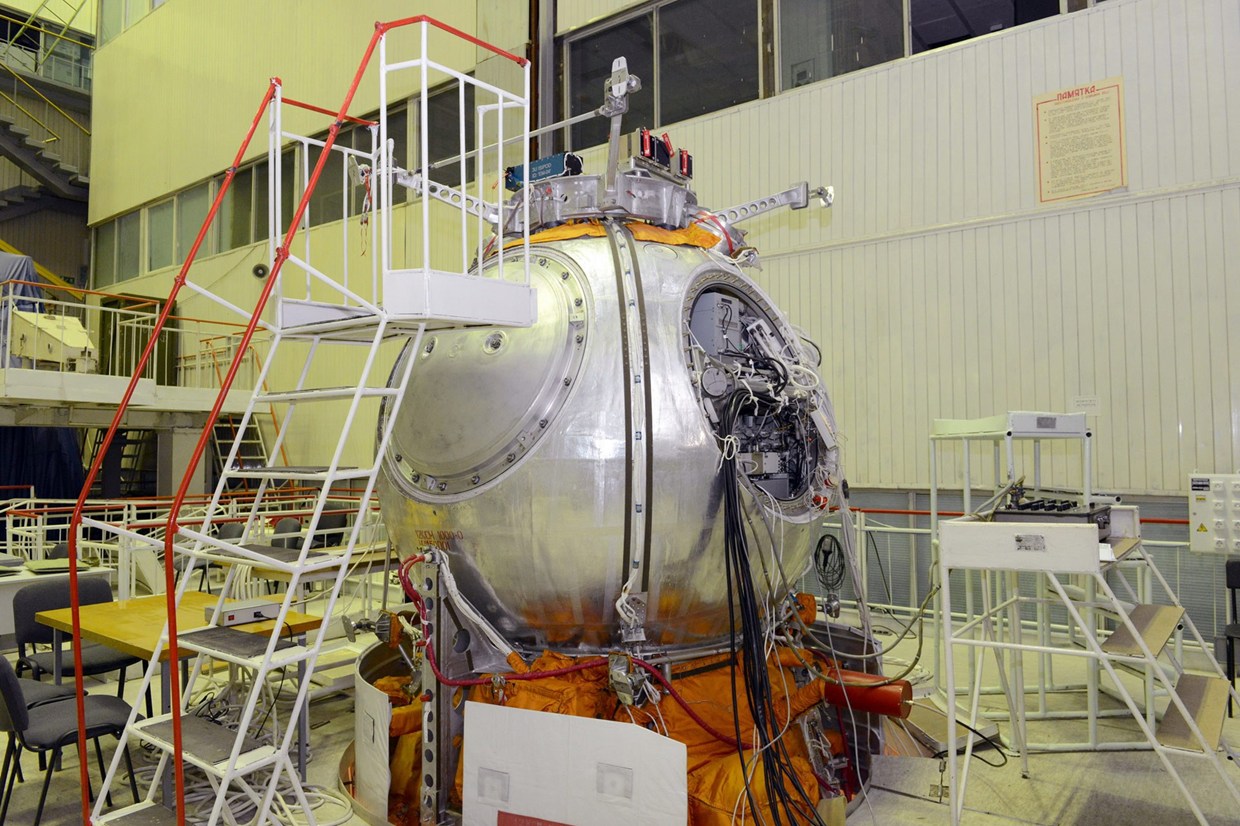
Enlarge / The mission's Bion-M life sciences satellite being prepped for launch.Russian Federal Space Agency

The low survival rate among rodents "was to be expected," according to Vladimir Sychov, deputy director of the Institute of Medical and Biological Problems, the agency conducting the experiment. The Bion-M satellite was equipped with internal cameras so that scientists could visually monitor the animals during flight, which orbited at an altitude of about 357 miles (575 km). This is far higher than the International Space Station's orbit of 250 miles (410 km).

That most organisms, including humans, undergo physical changes in prolonged microgravity is already well-understood; the United States and the Soviet Union (and later Russia) have been conducting long-duration manned space flights as far back as the early 1960s, and there is a plethora of data on the subject. However, conducting detailed experiments on the biological deficits incurred through long exposure to microgravity—including skeletal and muscular deterioration—is ethically difficult because at least some amount of the damage could be irreversible. Astronauts and cosmonauts undergoing multi-month missions on the International Space Station follow a rigorous exercise schedule intended to stave off microgravity-induced health problems.

Experimentation on rodents and newts, though, is a different story. Because the ISS wasn't equipped to house this particular mix of animals without possible health risk to its crew, the month-long Russian mission took place in an isolated spacecraft. In addition to cameras, the flying pet store of death was also equipped with sensors to track the heart rates and blood pressure of its tiny crew, who were launched in separate containers but were apparently allowed to mingle during the flight.

"This is the first time that animals have flown in space for so long on their own," noted Sychov after the mission. The surviving animals (which also included "snails, some plants, and microflora") have been moved from the landing area in Orenburg to Moscow for further testing.

martes, 14 de mayo de 2013

Organ, tissue replacement could end aging by mid-2020s

May 14, 2013

As we trek through the next decade, older citizens might look in the mirror and wonder, “Who is that gorgeous creature?” Their reflection would reveal a body filled with enthusiasm, sporting a dazzling smile, wrinkle-free skin, perfect vision, natural hair color, real teeth, and an amazing sharp mind and memory.


Welcome to the incredible world of innovative anti-aging healthcare, which growing numbers of future followers believe will become widely available and affordable as we move into the years ahead.

With new clinical trials popping up almost daily, experts predict that by early-to-mid 2020s, doctors will use stem cells loaded with non-degrading telomeres, and low-cost 3D bioprinters to replace aging skin and strengthen frail bones and muscles. These replacements promise to cure or make manageable most of today's age-related illnesses, including heart disease, cancer, diabetes, and most brain disorders.

We begin our journey with the research company Centagen's progress in using telomeres-active stem cells to renew aging muscles, bones, and skin. This entrepreneurial group, led by Bryant Villeponteau, Ph.D. (aka the "Father of Telomerase Biology") along with their Board of Directors, won financing from Maximum Life Foundation, where hope lies that 100 year-olds will soon become the new 50 year-olds.

Some say that Centagen's work might one day be considered the 'holy grail' of stem cell research. Dr. Villeponteau believes he could start studies within two years and know in months whether it was working or not. Watch this short video of a heart patient benefiting from this treatment at a Costa Rica clinic.


Next, we look at 3-D bioprinting. This procedure holds promise to save even more lives than telomeres-strengthened stem cells. With an estimated printer price of $250, 3-D bioprinting will become inexpensive enough for everyday enthusiasts to get involved. See fascinating photos of the technology in action.

Modern Meadow, another innovative 3-D bioprinting startup is developing a system that will grow meat and leather from extinct animals, such as the wooly mammoth. This TED video describes what's involved in a new technology called 'de-extinction', reconstructing the genomes of extinct animals.

We currently fight heart disease with drugs that reduce cholesterol buildup; but with new technologies predicted for the 2020s, we will simply grow new veins or hearts where necessary. In fact, nearly all of our organs, bones, muscles, hair, and skin can be replaced as these new procedures become available.

Ray Kurzweil, in his best-selling book Fantastic Voyage: Live Long Enough to Live Forever, confirmed that we are in early stages of a medical revolution. "By 2026," Kurzweil says, "biotech upgrades will add more than one year of life expectancy to our lives each year."

Add caption
However, the concept of replacing organs and tissues to stop aging causes some to ponder. On the one hand, a natural instinct to improve ourselves is embedded in our nature. On the other hand, though, it is through natural human form that we perceive ourselves. Conservatives believe that eliminating the 'older look' in senior citizens could risk undermining our identity and dignity as human beings.

Nevertheless, advocates counter that no one wants to suffer the pain and agony of growing old with failing health; and Kurzweil reminds us that we are the species that always seeks to extend its abilities.

Throughout history, improvements in healthcare, diet and environment have resulted in increasing our lifespan. Today, healthy people can expect to live into their 80s and beyond, but advances predicted for the 2020s could extend both health and life indefinitely. As we gain more and more benefits from 2020s medical advances, we see an era of huge excitement for science and great hope for humanity unfolding.


The smart, sexy, strong years, once thought long lost, might soon be recaptured as we move closer to this future time. We will have at our disposal, an awesome array of innovative medical technologies that promise to improve health and provide a lifespan that could one day approach immortality.

As of this writing, more than 100,000 people die every day from age-related diseases. Can this carnage be stopped? If technology continues to advance exponentially, we have a chance. Comments welcome. Dick Pelletier is a weekly columnist who writes about future science and technologies for numerous publications. He's also appeared on various TV shows, and he blogs at Positive Futurist.

miércoles, 24 de abril de 2013

Through Dirt-Cheap Genetic Testing, Counsyl Is Pioneering A New Bioinformatics Wave

ORIGINAL: TechCrunch
KIM-MAI CUTLER

Jen Baumgartel opted for in-vitro fertilization after learning from a Counsyl test that she and her husband were carriers for the severest form of Smith-Lemli-Opitz syndrome.

For cynics who say that Silicon Valley has become too mired in photo-sharing apps and addictive games, take a 15-minute drive to South San Francisco.

In a non-descript lab is a company that may be paving the way for the Valley’s next wave of disruptive startups, which marry software with data from the human genome.

Counsyl is doing genetic tests that look for more than 400 mutations and at least 100 genetic disorders for parents who are planning children. At $599 total, or $99 with insurance, their tests cost a fraction of standard ones, which often only look for a single condition like cystic fibrosis, and run anywhere from $100 to $500. A full panel of tests for Ashkenazi Jews, a minority famously at risk for various genetic conditions, can run about $4,000 to $5,000 from companies like Quest Diagnostics.

Founded six years ago, Counsyl has grown to handle carrier screening for 2.5 percent of all births in the U.S.

To ramp up, Counsyl has quietly taken in roughly $65 million in funding from firms like Founders Fund, Felicis Ventures, India’s Manipal Group, Google’s senior vice president of corporate development David Drummond, WTI, Rosemont Seneca, and Google research scientist Jeff Dean.

We want to make the genome practically useful,” said CEO Ramji Srinivasan. “People don’t necessarily care about genomics. At some point, the novelty of this data will wear off. The diagnostic utility has to be extremely obvious: can it change someone’s behavior? Can it make them make a different decision?

The company is coming of age at a time when the costs of full-genome sequencing are falling faster than even Moore’s Law would have predicted. Full genome sequencing — not the kind of testing where you’re handling only select snippets of DNA — runs at around $8,000 now, down from $100 million in 2001. Capitalizing on this, Counsyl has products for both SNP tests and a more comprehensive sequencing test that is about $999 for 10,000 genetic mutations.


It’s helped women like Jen Baumgartel, a nurse in a Nashville, Tennessee in vitro fertilization clinic, choose IVF over conceiving naturally. Through a Counsyl test, she found out both her and her husband were carriers for Smith-Lemli-Opitz syndrome, which put their potential children at risk of heart problems, developmental delays and cleft palate.

They had a one-in-four chance of passing the condition on, and both Baumgartel and her husband carried the genes for the severest form of the disease.

I was hoping I would get an easy pregnancy,” Baumgartel said. “You never really think about how to avoid passing something onto your child, but suddenly we had this really harsh reality that this is what we would have to do.

They ended up spending around $12,000 on in-vitro fertilization and now have a healthy nine-month-old baby girl named Kinley Jo (pictured at the top).

COSTS FALLING FASTER THAN MOORE’S LAW
Unlike the consumer software world where costs of starting a company have fallen precipitously over the last five to ten years, bioinformatics may only be at the beginning of seeing a similar drop.

The Counsyl team are brilliant technologists,” said David Lee of SV Angel, who is investing in the company and has deep interest in health informatics as a cancer survivor. “They understood the trend of biology and software converging earlier and deeper than anyone we had met.

While other founders tapped into the big social networking and mobile app trends of the last five years, Srinivasan instead went for higher-hanging fruit.

Before the market peaked in 2007, he was working on equity research for Morgan Stanley alongside famed analyst and now Kleiner Perkins partner Mary Meeker. Like many entrepreneurs who come to the Valley from the banking and consulting worlds, he was looking for tangible work with more meaning. From across the country, he saw how old classmates from Stanford were building companies.

These guys were changing the world and I was moving around pieces of paper,he said. My brother told me that the genome was the next Internet. I decided to leave my earthly belongings and go live on a futon.

Srinivasan’s brother Balaji, who is one of the company’s other co-founders, is press shy and declined to comment for this article. When Counsyl was founded, he had just finished a Ph.D. at Stanford in electrical engineering and was teaching and doing research around computational biology. The pair had never worked on a company together before.

“MY BROTHER TOLD ME THAT THE GENOME WAS THE NEXT INTERNET. I DECIDED TO LEAVE MY EARTHLY BELONGINGS AND GO LIVE ON A FUTON.”

Srinivasan said the way founders approach problems in the Valley is almost like an inverted Maslow’s pyramid. Products that are about self-expression like social networking apps get the most attention from young founders, while businesses that are about more basic needs like health or financial security are under-addressed. Founders get intimidated by the regulatory risks and by the deep subject matter knowledge that you might need to attack the health, financial or legal industries.

Bright people in Silicon Valley aren’t necessary focusing on health because the speed of iteration seems slower,” he said.

Yet Counsyl has managed to deal with the steeper capital costs of doing biotech startup and captured a meaningful share of the carrier screening market. While they don’t say the number of tests they do per month, they do admit that they’re handling 2.5 percent of all births in the U.S. The CDC reports 4 million U.S. births per year, so one could infer that they’re doing at least 100,000 tests annually.

The tests themselves are easy to administer. Couples get the testing kits from their doctors, send in either a blood or saliva sample, mail it to Counsyl’s lab and then get results back in two or three weeks. Results come in a couple color-coded pages that show a couple’s numerical risks for having children with any of more than 100 recessive genetic diseases.

A refashioned car-painting robot that’s being used at Counsyl to handles trays of samples.
IMPROVING EACH STEP OF THE TESTING PROCESS
Counsyl’s price advantages over competitors are not really about any single transformative change to genetic testing. It’s more about correcting inefficiencies at every step of the way.

He’s like the Jeff Bezos of bioinformatics,” said Felicis VenturesAydin Senkut, who said the firm put its largest single check ever into the company last year. “He’s good at wringing inefficiencies out, which is very much like the Amazon model.”

Counsyl built image processing software that cut down on common testing errors by a thousand-fold.

They creating billing infrastructure when it was too complicated to deal with the 700 insurers that pay for Counsyl tests.

They created an iPad app for doctors so it would be easier to order tests and fit Counsyl in with their daily workflow.

They refashioned a robot arm that’s normally used to spray paint Toyota Prius cars to handle trays of samples without requiring human intervention.

They created their own wetware and had to re-engineer some chemicals from scratch when they realized they couldn’t rely on third-party labs to handle their samples properly.

If you hold the vial at the wrong angle, it will melt the reagent,” Srinivasan said. “We got to this moment where we realized we had to do it ourselves. We attempted for years not to build a lab, but once we decided to do it, it took a few months.

They found a space, started ripping out its carpets. Srinivasan bought a Home Depot book on plumbing. It was costly and tedious, but it yielded unexpected benefits.

It turned out to be the best thing for us,” Srinivasan said. “Now we control the full stack just like Steve Jobs tried to do with Apple. He said the ideal computer starts out at the beach with the sand and ends with a running machine that you can touch. If we never had to re-engineer everything, we would have never been able to do what we’re able to do.

Once they went forward with the lab and could see a path toward scaling easily, other investors stepped in. Founders Fund, which has backed companies like Tesla, SpaceX and Facebook, came in during 2011.

They are “a classic Founders Fund company,” said partner Brian Singerman. “Pragmatic, but a bit crazy — good crazy — at the same time. The team is top tier and out of the box in both science and business execution.

Now that the hardware and wetware sides of the business are more manageable, Counsyl can focus on its true opportunity: interpretation and curation of genomic data.

The interpretation is the expensive part of the problem,” Srinivasan said. “It looks like a software problem, talks like a software problem and acts like a software problem.

As the wealth of data grows, Counsyl is building a scalable and repeatable system for interpreting DNA readings. If one were to take all of the published research papers associated with all of the mutations that Counsyl tests for, it would take five work years to read them all.

So Counsyl is creating rule sets for how to understand what different mutations mean. Deletions or insertions into a person’s DNA can be quite serious, but there are also minor mutations that might not affect amino acids produced from the DNA.

Already, Counsyl is processing a half-a-terabyte of data per day. If the company did full genome sequencing for all the customers they currently handle, they would be doing 5 terabytes per day. (For a somewhat random apple-and-oranges comparison, Facebook said last fall it was handling 500 terabytes per day for its billion users. Basically, even just a few thousand genome sequencing tests can produce a lot of data.)

WHY CARRIER SCREENING
On the consumer-facing side of the business, Counsyl’s near-term progress will be about expanding deeply into the carrier screening market. Eventually, they want to build a mainstream brand with lots of applications.

Philosophically, we want to build a consumer brand. We want people to associate us with understanding the genome the way people think about Kleenex with tissues,” Srinivasan said.

From that point of view, carrier screening is an ideal starting point. Parents are strongly motivated to do their best for their future children. Not only that, timing really matters for pregnancies and childbearing. If customers end up having a good experience with Counsyl products early on, they’ll develop a trust or affinity for the brand, which will help later down the line with future services.

This is unlike other genetic testing services, which focus on predicting diseases a person can contract in old age. The issue with that market is that people have a tendency to push off or procrastinate on testing for potential bad news.

The conversation with the doctor needs to be very targeted and focused. There can’t really be a question of — are you testing me? Are you testing my prospective kids?” Srinivasan said. “We don’t want to muddy the message from the doctor. The interaction has to be simple and we want the test to be squarely about prospective children.

The other issue with testing for conditions in old age is that there is an inverse relationship between how predictable and how actionable these diseases are. With the most predictable genetic conditions, there might not be much that a person can do to change their fate. But conditions that are more behaviorally or lifestyle-influenced like heart disease are not all that accurately forecast by genetic tests.

Counsyl also tries to be conscientious about the murky ethical issues that sometimes arise with genetic testing. There are some fascinating questions here for prospective parents. For example, would a couple make a different reproductive decision if they found out that they were carriers for a lifelong condition like cystic fibrosis versus a BRCA mutation that could lead to breast cancer in mid-life?

We’re big believers in reproductive autonomy,” Srinivasan said. “We didn’t invent the idea of carrier screening. We’re just making it cheaper to find this information out. It goes back to the question: is it better to know or withhold information?