Mostrando entradas con la etiqueta Elefantes. Mostrar todas las entradas

miércoles, 4 de diciembre de 2013

UN reports that 22,000 elephants were poached last year in Africa


Elephants are one of Africa’s critical “keystone” species, and estimates place the total population of elephants around 450,000. The loss of 22,000 mostly adult elephants, or roughly 5%, is critical as elephant young require the care of the parent.

The demand for ivory that fuels the poaching conducted on the continent comes primarily from Asia, and more specifically from wealthy Chinese who pay over $1000 per pound for what is seen as a status symbol.

The poaching trade has advanced beyond automatic weapons and chainsaws in its process to harvest the animals' tusks. In September of this year, cyanide was used to poison the water supply of an area, killing over 300 elephants. This technique is extremely detrimental as it not only poisons the elephants, but any species, including humans, that drink the contaminated water. The poison creates a second and sometimes third layer of victims when scavengers eat the carcasses of animals that were poisoned.

Orphaned elephants don’t typically survive long after the loss of the parent. Organizations such as David Sheldrick Wildlife Trust act as orphanages for young orphaned elephants, who grieve the loss of the family, as shown in the video. The trust is currently assisting more than three dozen orphans in its nursery, at the cost of over $10,000 per year, per orphan.

Even with backing from A-list Hollywood celebrities, such a Kristin Davis, these organizations are still forced to raise funds through charity drives to cover the cost of trying to slow the effect the poachers are having on the environment.

Being a keystone species, the loss of the species would be devastating to Africa as a whole. Elephants have large ranges and spread seeds and germinate trees during their treks. Their size and weight tramples dead trees that are blocking the sunlight from the plant life below. Many of the densely wooded areas in central Africa evolved around the elephant, and without the species to perform its function, would die.

ORIGINAL: Digital Journal
Dec 3, 2013

domingo, 5 de mayo de 2013

Expert: Rhinos extinct in Mozambique

ORIGINAL: Yahoo
By MICHELLE FAUL
Thu, May 2, 2013

The vanishing rhino
View Gallery


JOHANNESBURG (AP) — Mozambique's rhinoceros population was wiped out more than a century ago by big game hunters. Reconstituted several years ago, it has again been driven to extinction, or to the brink of extinction, by poachers seeking their horns for sale in Asia.

A leading rhino expert told The Associated Press that the last rhino in the southern African nation has been killed. The warden in charge of the Great Limpopo Transfrontier Park — the only place where the horned behemoths lived in Mozambique — also says poachers have wiped out the last of the rhinos. Mozambique's conservation director believes a few may remain.

Elephants also could become extinct in Mozambique soon, the warden of the Great Limpopo Transfrontier Park, Antonio Abacar, told AP. He said game rangers have been aiding poachers, and 30 of the park's 100 rangers will appear in court soon.

"We caught some of them red-handed while directing poachers to a rhino area," Abacar said.

A game ranger arrested for helping poachers in Mozambique's northern Niassa Game Reserve said on Mozambican Television TVM last week that he was paid 2,500 meticais (about $80) to direct poachers to areas with elephants and rhinos. Game rangers are paid between 2,000 and 3,000 meticais ($64 to $96) a month.

While guilty rangers will lose their jobs, the courts serve as little deterrent to the poachers: killing wildlife and trading in illegal rhino horn and elephant tusks are only misdemeanors in Mozambique.

"Their legal system is far from adequate and an individual found guilty is given a slap on the wrist and then they say 'OK. Give me my horn back,'" said Michael H. Knight, chairman of the African Rhino Specialist Group of the International Union for the Conservation of Nature's Species Survival Commission.

A meeting of the group in February reported there might, possibly, be one white rhino left in Mozambique and no black rhinos at all, Knight said.

According to Abacar: "We have already announced the extinction of the rhino population in Limpopo National Park."

But Bartolomeu Soto, director of Mozambique's transfrontier conservation unit, told the AP "We believe we still have rhinos, though we don't know how many."

Mozambican news reports have said the last 15 rhinos in the park were slaughtered in the past month, but park officials said those reports were wrong. Soto said the misunderstanding had arisen over Abacar's statement to journalists that he had not seen a rhino in the three months since he was put in charge of the large park.

The only official figure available for rhino deaths is that 17 rhino carcasses were found in the park in 2010, Soto said. He said officials believe poaching must be taking place because rhino horn and elephant tusks carried by Asian smugglers are regularly seized at Mozambique's ports, although at least some of the contraband could be from animals killed by Mozambican poachers in neighboring South Africa. This week a person was arrested at the airport of the capital, Maputo, in possession of nine rhino horns, Soto said.

The price of rhino horn has overtaken the price of gold as demand has burgeoned in Asian countries, mainly China and Vietnam, where consumers wrongly believe that the horn — made of the same substance as fingernails — has powerful healing properties. Chinese traditional medicine prescribes it for everything from typhoid, infant convulsions and fever to an antidote for poison and to relieve arthritis and cure possessions by the devil. Syndicates from Vietnam, China, South Korea and Thailand have been identified as being involved in the trafficking.

Knight said rhinos first became extinct in Mozambique around the turn of the last century, in the age of the big white hunters, when the animals also nearly disappeared in South Africa, which is now home to 90 percent of Africa's estimated 20,000 white rhinos and 4,880 black rhinos.

In 2002, leaders of Mozambique, South Africa and Zimbabwe agreed to establish a transfrontier park straddling their borders and covering some 35,000 square kilometers (13,514 square miles) of the best established wildlife areas in southern Africa with South Africa's famed Kruger National Park and Zimbabwe's Gonarezhou National Park. It is funded by several international wildlife organizations and the European Union.

Soto said some 5,000 animals of various species were translocated from South Africa to Mozambique, including the first 12 rhinos to roam in Mozambique in a century.

In 2006, South Africa removed some 50 kilometers (30 miles) of fence between Kruger and Limpopo National Park. Soto said the entire 200 kilometers (125 miles) of fence was not removed because Mozambique still is working to resettle some 6,000 people living in the park.

A second phase was to include two other Mozambican parks, allowing the transfrontier park to extend over 100,000 square kilometers (39,000 sq. miles) that would make it "the world's largest animal kingdom," according to the South African Peace Parks Foundation.

Those plans now are in danger, as is the Great Limpopo Transfrontier Park. Knight said South African officials are even discussing rebuilding their fence with Mozambique.

South African officials say their country has lost 273 rhinos to poachers so far this year. They say most have been killed by Mozambicans who cross into Kruger Park. Poachers killed 668 rhinos in South Africa last year.

The slaughter continues with the number of deaths increasing even though South Africa has declared war on rhino poachers and for two years has deployed soldiers and police in Kruger, a vast park which is the size of Israel.

Soto said Mozambique's government has been working since 2009 on a comprehensive reform of environmental laws involving consultations with all stakeholders. He said he expects the draft legislation to be presented to parliament soon. It includes criminalizing the shooting of wildlife and would impose mandatory prison sentences on offenders.

But it will come too late to save the last of the rhinos in Mozambique.

___

Associated Press writer Emmanuel Camillo contributed to this report from Maputo, Mozambique

jueves, 25 de abril de 2013

Elephant Crisis in the Central African Republic

ORIGINAL: WCS
April 25, 2013 

© Cristián Samper/WCS 
With field reports indicating a new wave of elephant slaughter near the Dzanga-Sangha protected areas in the Central African Republic, WCS and WWF call for immediate action. 

WWF and WCS have received alarming reports from their field operations that elephants are being slaughtered in the violence-ridden Central African Republic (CAR), where new powers in place struggle to gain control over the situation. The conservation organizations are issuing today a joint call for immediate action. 

Due to the violence and chaos in the area, the exact number of elephants slaughtered is not known, however initial reports indicate it may be extensive. WWF has confirmed information that forest elephants are being poached near the Dzanga-Sangha protected areas, a World Heritage Site. Elephant meat is reportedly being openly sold in local markets and available in nearby villages. The security situation is preventing park staff from searching the dense forest for elephant carcasses. 

The two organizations, WWF and WCS that have worked in CAR since the 1980s, are calling on the Central African Republic and its neighbors to immediately increase security in the region to protect the area's people and elephants. Governments are meeting next week at an extraordinary meeting to discuss ways to stop the poaching that has plagued the region. Up to 30,000 elephants are killed in Africa each year for their ivory tusks, which are in demand in Asia

The following statements have been issued by WWF and WCS: 

Jim Leape, WWF Director General said: 
The elephant poaching crisis – driven by insatiable ivory demand – is so severe that no area is safe, not even the World Heritage Site Dzanga-Sangha where both WWF and WCS have now worked for the conservation of elephants for decades. Heroic rangers are standing firm in the face of immense danger, but they alone cannot safeguard the special species and places the world treasures. When meeting next week, Central African governments must urgently join forces against this criminal activity that is also threatening the stability and economic development of their countries. I encourage them in the strongest terms to take a stand against wildlife crime and together declare that poaching and illicit trafficking will not be tolerated.” 

Cristián Samper, WCS President and CEO said: 
Together, WCS and WWF, are calling on the Central African Republic government to immediately increase security in the region to protect these elephants from poachers and are asking other regional governments to provide assistance to stop the killing. Our staffs have been forced to evacuate in the chaos. I recently visited CAR and saw first-hand that without a full-time conservation presence in the region, these elephants are in jeopardy from poachers. WCS and our partners will continue to work tirelessly to protect elephants across their range.” 

WWF has worked in Dzanga-Sangha for 30 years and supports protected area management, gorilla research, law enforcement and tourism development. WCS has been in the area for more than 20 years, in charge of monitoring and research of the elephants of Dzanga Bai, a forest clearing containing a mineral-rich watering hole. In addition, WCS works immediately across the border in the Republic of Congo to protect the same population of elephants where the government is working to ensure their additional security on that side of the border. 

domingo, 2 de septiembre de 2012

News and actions from Humane Society International.

ORIGINAL: Humane Society
August 2, 2012

Elephant immunocontraception, spay/neuter in Haiti, Bhutan goes cage-free.

News and actions from Humane Society International. 

Innovating for elephants
Since 1996, HSI has been supporting research on immunocontraception, a pioneering technique to combat elephant overpopulation. We spread the word about it at the Fourth International Wildlife Management Congress. A safe, effective solution»

Preventing suffering
When a woman working for a development organization in Milot, Haiti kept seeing distressed and dying homeless animals, she knew she had to act. HSI responded to her plea, offering a clinic to help hundreds of dogs and cats. Cooperation saves lives»


Cage-free, countrywide
Bhutan, already demonstrating its enlightenment by working with HSI to sterilize all of its street dogs, has now prohibited confinement of egg-laying hens to cages and is working to "promote welfare in the poultry sector." A noble decree»


Investigación encubierta en granja de cría intensiva de Smithfield Foods (Video Gráfico)
Un investigador de Humane Society of the U.S. documentó el sufrimiento de cerdas reproductoras confinadas en jaulas de gestación en una instalación de cría intensiva de una subsidiaria de Smithfield Foods, el mayor porcicultor del mundo.

lunes, 28 de mayo de 2012

Wonky and Wellie (and family) at Mfuwe Lodge (Zambia)

ORIGINAL: Mfuwe Lodge


Towards the end of the year an elephant family led by iconic matriarch "Wonky Tusk" walks through the reception of Mfuwe Lodge in Zambia's South Luangwa National Park to feed on the fruits of a massive Wild Mango tree that grows in the lodge grounds. Normally spending up to an hour feeding on the fruits that have fallen to the ground, they may come back several times during day to catch the next harvest.

On this particular day last December they spent 4.5 hours around the tree first hoovering up all the green fruits and pips left over by the baboons and then, maybe worn out from all the activity, simply lay down to sleep with Wonky and another female watching over them.


From October to December each year, in the grounds of Zambia's Mfuwe Lodge, the lawn around the fruiting 'Wild Mango' tree becomes the dining room for Wonky Tusk, Wellington and their whole elephant family. They even invite a few approved guests along ... having first taught them the short cut through the lodge lobby of course!

Wellie recently had his second birthday, but you can catch up on his adventures with this look back at some of his earliest visits to the lodge...and meet the rest of the "Tusk" family!

Illegal Wildlife Trade: A Survey of Greed, Tragedy, and Ignorance

ORIGINAL: DipNote
MAY 23, 2012


Robert D. Hormats serves as Under Secretary of State for Economic Growth, Energy, and the Environment.

Since the beginning of 2012, over 250 elephants have been killed in Cameroon. Adults are being slaughtered for ivory to be used for jewelry, ornaments, and traditional medicine; young juveniles and infants are being killed indiscriminately or left orphaned to die without the protection of their mothers. Having lived in Kenya and Tanzania earlier in my life, I experienced firsthand the wonder of African elephants in their native habitats. That's why I feel a personal sense of outrage at the senseless and immoral killing of wildlife. We should all feel outrage -- even those who have not had the privilege to see elephants close up -- because the conservation of our planet's wildlife is an moral obligation we all share. The U.S. government has consistently been among the leaders in the efforts to protect elephants and other wildlife, but to be effective it's vital that all governments and citizens take ownership and pride in the biodiversity of their communities.

Despite the elephant massacre in Cameroon, we've made some progress. A decision of the Convention on International Trade in Endangered Species (CITES) in 1989 made ivory trade effectively illegal. Before the CITES ban, poaching for ivory led to a dramatic decline in the African elephant population (from an estimated 1.2 million African elephants in the late 1970s to less than 500,000 in 1989). The ban was -- at least until recently--relatively successful, helping to sustain, and aid the recovery of, elephant populations in several countries. Unfortunately, the trend seems to be reversing because of growing demand for ivory from Asia, in particular in China, Thailand, and Vietnam.

Cameroonian elephants have fallen victim to armed poachers invading from Chad and Sudan. A third to a half of the savanna elephant population in the Bouba Ndjida National Park, in northern Cameroon, have been killed. Park rangers and local authorities are no match for highly organized poachers, who are armed with automatic weaponry and employ ruthless tactics. The Cameroonian government authorized military intervention to protect elephant populations in March, with some success. Although the poachers have been driven out of the park and some weapons and ivory tusks confiscated, the threat continues because demand for ivory is high and there is money to be made. A pound of raw ivory sells for about $400 on the black market and, in China, ivory bracelets and earrings can fetch upwards of $300.

INTERPOL estimates illegal wildlife trade to be worth between $10-20 billion annually. Conservation efforts are thwarted, local communities are robbed of economic resources, and biodiversity is reduced when species are taken from the wild. The loss in ecosystem resilience affects fresh water supply and food production. Rule of law and national security issues are also a concern. Organized crime is attracted to wildlife trafficking for its profitability, small risk of prosecution, as well as light fines and jail sentences. Criminals who deliberately cross international borders, violate national laws with relative impunity, and attempt to corrupt government officials are a serious threat to the stability, economy, and natural resources of a country. In Cameroon, for example, proceeds from poached ivory will likely finance the purchase of weapons and ammunition, further exacerbating conflict in the region.

To catch poachers, we need to help other countries reinforce customs and border controls, enact tougher wildlife crime laws, educate prosecutors and the judges about the seriousness of such crimes, and provide resources and training to law enforcement authorities. And, it's vital that we curb demand for ivory as well as other wild animals and derived parts (e.g., rhino horns, tortoise shells, bear paws, and exotic birds). Consumers need to be made aware that wearing wildlife is not attractive nor will consuming wildlife products likely cure their ailments. They cannot claim ignorance when it comes to the cruel tactics poachers employ and the lives -- both human and animal -- that are lost in the name of fads and fashions.

The United States has been at the forefront of international efforts to dismantle and bring a halt to the illegal wildlife trade. In 2005, the Department of State launched the Coalition Against Wildlife Trafficking. And, in July 2011, the White House released the President's National Strategy to Combat Transnational Organized Crime and Converging Threats to National Security; this highlighted environmental crimes as being among the top five most lucrative criminal activities. The Department of State has helped to form regional wildlife enforcement networks in Southeast Asia, South Asia, and Central America. And, in April, the U.S. embassies in Gabon and the Central African Republic -- in partnership with the Government of Gabon -- brought together law enforcement, government officials, and conservations to share best practices to curb illicit wildlife trafficking.

Neither governments nor individual citizens can afford to stand idle while poachers and wildlife traffickers hunt elephants, or any threatened species. Collective outrage at these horrendous crimes is needed to spur action. The United States will continue to support citizens and governments to protect our planet's wildlife.

Editor's Note: This entry also appears on The Huffington Post.

Elephant Underpass Reuniting Kenya Herds

ORIGINAL: NatGeo

Photograph courtesy Lewa Wildlife Conservancy

Road to Recovery?

An African elephant approaches an underpass beneath the busy Nanyuki-Meru road in northern Kenya in a recent picture.

The first of its kind for elephants, the underpass will ideally provide a safe corridor for the large mammals to move throughout the Mount Kenya region (map), where highways, fences, and farmlands have split elephant populations, according to Geoffrey Chege, chief conservation officer of the Lewa Wildlife Conservancy, a Kenya-based nonprofit.

Without the underpass, animals that try to move between isolated areas often destroy fences and crops—leading to conflicts with people. (Related pictures: "'Ghost Chili' Scares Off Elephants.")

Since its completion in late 2010, the underpass has been a "tremendous success"—hundreds of elephants have been spotted walking through the corridor, according to the conservancy.

First seeing pictures of the elephants using the underpass "was an awesome moment," Chege said by email.

—Christine Dell'Amore

The Mount Kenya-Lewa Wildlife Conservancy Corridor Project is a joint effort of the Lewa Wildlife Conservancy, the Kenya Wildlife Service, Kisima Farm, Marania Farm, the Bill Woodley Mount Kenya Trust, and Ngare Ndare Forest Trust.

domingo, 13 de mayo de 2012

Elephants push back against India's growing villages

ORIGINAL: TheNational
Gethin Chamberlain
Apr 20, 2012 

A watchtower built to keep lookout for elephants.
The moment the elephant's trunk wrapped itself around Fulmani Urao's waist, she must have known it was all over. She did not even try to struggle. There was no point.

Asman Urao survived an attack in which his mother was killed.
It was about 1.30am when the huge, bad-tempered bull elephant smashed its way into Fulmani's house. Her five-year-old son Asman, asleep in her lap, managed to wriggle free, but there would be no escape for his mother. This was an elephant with murder in mind.

The animal dragged her out of the house, onto the road, and beat her head against the ground until she was dead. Afterwards, just to make sure, he trampled her body. Then he trumpeted and faded back into the night.

An Indian elephant in Chilapata forest in northern Bengal. Photos by Gethin Chamberlain
It is a myth that the ground shakes as elephants approach. The truth is that for Fulmani and hundreds of thousands of others who find themselves in the path of the wild herds, death comes on five-tonne tiptoes.

At least 400 people a year are killed by elephants in India and the conflict between humans and elephants is growing as India's human population expands inexorably, increasing the demand for land and eating into the elephants' territory.

Forests are cut down and converted into agricultural land; corridors along which the animals traditionally move have been farmed, built upon and traversed by railway tracks. At the same time the success of anti-poaching campaigns has seen elephant numbers rise. In north Bengal, where Fulmani lived, the last elephant census in 2010 counted more than 500 animals.

Indian elephants are slightly smaller than their African counterparts, with the largest males standing about 3.5 metres high. They usually weigh between three and five tonnes. There is a perception that the Asian elephant is less aggressive than the African, but that is little consolation for those who do battle with these creatures every night.


In the darkness on the edge of the Chilapata forest a group of men are lighting bundles of jute sticks to use as torches. The harvest is over, but the elephants are still around, hungry for the stored crop. Every night they come and every night the villagers form up in these halla (noise) parties to chase them off.

Ramkishor Kindo and fellow villagers use torches to drive off animals.
The dogs are barking; the herd is on the move. Orange flames leap from the torches, clouds of sparks rising into the night air. A few of the men are carrying sticks; one has a large spear.

A mile away, Jayanta Roy stands in the middle of a paddy field, turning slowly, searching for signs of the herd, the beam of his powerful torch cutting through the dark. He turns again and suddenly there they are, two large males, no more than 40 metres away, staring straight at him. There is a split second to register the shock and then he is running for his life. It is like this every night, the villagers say.

It is two weeks since Nikil Rava heard the elephant tearing up the paddy field. His father Bilu Rava, 60, sits on the step of the house in the village of Mendabari, a long spear cradled in his lap.

Bilu is looking at an X-ray of Nikil's arm, which shows an ugly break, the bone snapped clean through and projecting through the skin. The young man is still in hospital.

X-ray of the broken arm of Nikil Rava, 26, who was trampled by an elephant as he tried to drive it away from fields next to his village in Mendabari, north Bengal. His right arm was snapped in two. The area is the frontline of a growing conflict between elephants and humans which claims the lives of about 400 people a year in India.

"Nikil was trying to scare the elephant away but he stumbled and fell on the ground," he says. "I remember that before trampling him, the elephant sounded a trumpeting noise. My son was screaming, he was saying 'father, I've lost my hand'."

When the rice is being harvested, he and the other landowners from the village build watchtowers in the fields and sit up every night waiting to chase the elephants away. The spear is to prod the animals, not to kill them, he says. Like many Hindus, he regards the animals as sacred.

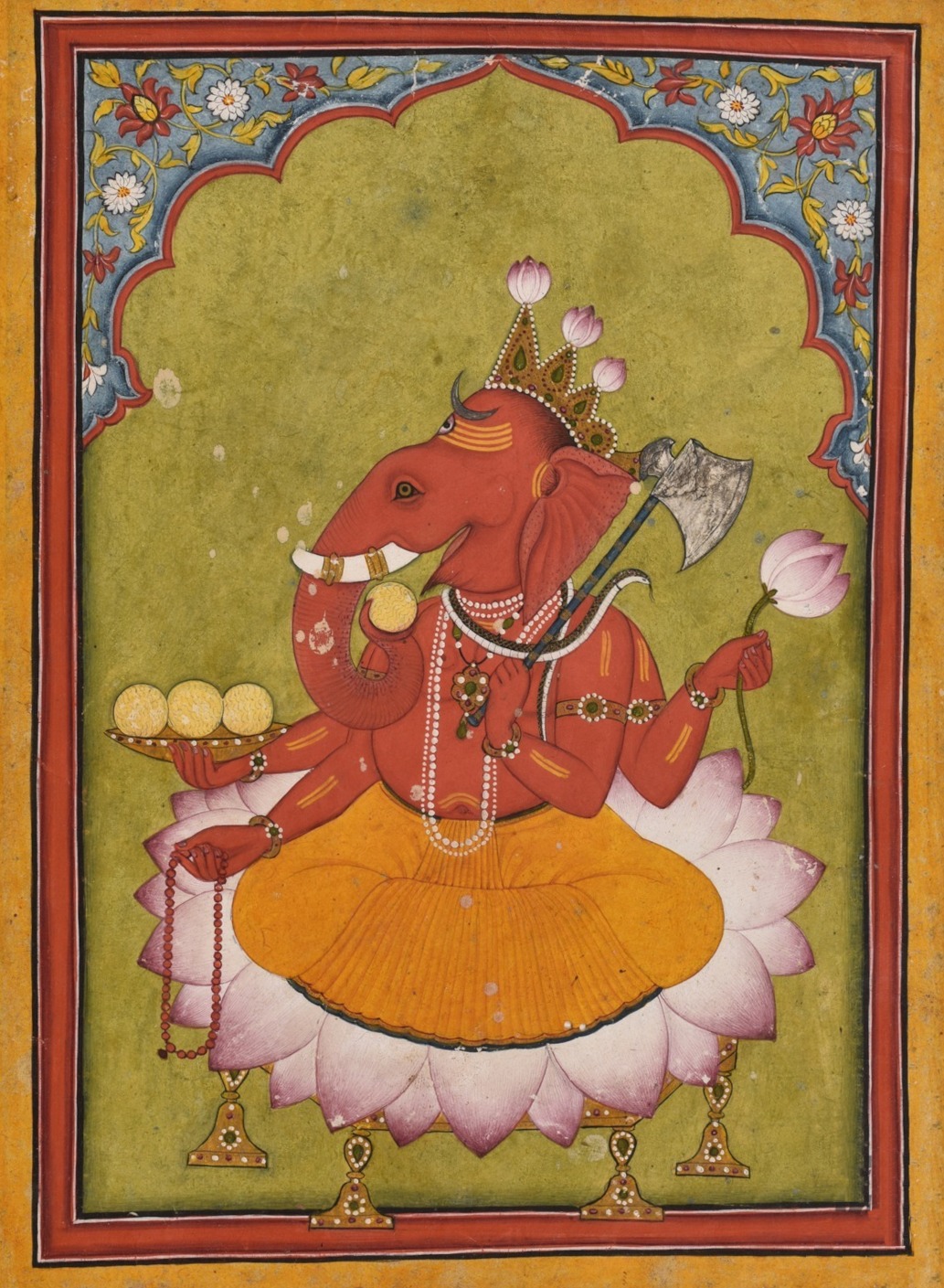
In the village of Singhijhora, Ganga Adhikari perches on the step of the family home, watching her mother Debi praying in front of their shrine to Ganesha, the elephant-headed Hindu deity. A wire clothesline runs behind the shrine; it saved her life, says Ganga.

"We were trying to drive the elephant back into the forest. I shouted but then the searchlight stopped working and he started to chase me. He was chasing so fast that I knew I would not reach our house, so I tried to run to a neighbour's."

She darted under the washing line and in doing so saved her life. The elephant halted. "It is something in their heads," says Ganga. "Mentally they have to know what it is in front of them, that it won't hurt them. It didn't know, so it stopped and I had time to get inside. But I was crying for a long time afterwards."

The worst months are October, when the rice is harvested, and March and April, the corn reaping season, when the elephants know they will find the grain stored inside people's homes.

Each night the men take to the watchtowers that dot the landscape. Yet so silent are the animals, that for many watchers the first inkling of the presence of an elephant is when the tower starts to fall.

Ratan Ray, 24, was supposed to be protecting the potato crop, but it had been a quiet night and by 1.30am he and his brother Tapan, 22, had dozed off. "I woke up and found myself on the ground," he says. The elephant had torn one of the tower legs out of the earth.

He looked up to see the elephant pushing against the remains of the tower with its head, while his brother clung on desperately. "There was a bamboo stick next to me and all I could think was to grab it and hit the elephant on the legs," he says. It worked. The elephant lumbered off into the darkness.

But this is not an entirely one-sided conflict. Local records show that in 2010 there were 52 people killed by elephants in the Dooars region (an area of about 9,000 square kilometres in the foothills of the Himalayas), while in the previous five years, 49 elephants were killed by trains, illegal electric fences or by pesticides used in tea plantations.

As the problem intensifies, so too does the search for a solution. In a clearing on the edge of the jungle, the forestry department's great hope is eating a banana.

Shankari is three years old. The little female elephant stands in the shade of a tall tree, a thick chain fastening one of her hind legs to the tree trunk to stop her escaping.

Shankari, a three-year-old wild elephant calf, is used to chase herds away from both villages and crops.
Shankari was born wild in the jungle. Somehow she became separated from the herd and was found by the mahouts, who brought her here to train as a kunki - a captive elephant used to drive off the wild herds.

When a wild herd enters a village area, the mahouts arm themselves with firecrackers and guns, climb up onto their kunkis and head out.

"It is a very difficult situation," says Sunil Kheria, the chief mahout. "I would never go alone into a wild herd. You have to think of yourself and make sure you are properly armed."

But it is working, he says: the wild herds are not coming as often as they once did here. Other states are trying different methods including electric fences, deep trenches and chilli-coated ropes.

In Singhijhora, Nidhi Singh is banking on string. She has persuaded a group of farmers to encircle their fields with the stuff, which is attached to a musical alarm that plays a Hindu religious song. It works, up to a point, but if the elephants are determined enough, they will get through. Something more is needed, she says; people have to be prepared to share the land with the elephants, instead of blocking their traditional routes.

"Our thought process in India is traditionally to coexist," she says. "We can live together but greed has increased with commercialisation. Greed is everywhere, in the minds of farmers, forest officials, tea plantation owners, so that is creating conflict. There has to be a will to change."

Gethin Chamberlain is a photojournalist based in South India.

domingo, 6 de mayo de 2012

Shanthi la elefanta de zoológico que toca armónica y cornetas

ORIGINAL: NPR
por The Associated Press
WASHINGTON 02 de mayo 2012


El clip es breve (3:38). Si usted está corto de tiempo, no se pierda la canción creada Shanthi que comienza a la derecha alrededor de 1:50. Su estructura y su crescendo final, están bastante bien.

WASHINGTON (AP) - Una elefanta llamada Shanti en el Nacional del Smithsonian Zoo toca la armónica con la trompa y parece le encanta hacerlo.

Un video publicado el miércoles por el zoológico de Washington demuestra el elefante asiático de 36 años de edad, tiene una armónica unida a su puesto y reproduce canciones, incluso cuando los seres humanos no están a la vista.

La guardia de elefantes Debbie Flinkman dijo Shanti está "inclinada por la música", interpretando sus propias canciones que siempre tienen un crescendo grande al final. Shanthi también le gusta tocar las cosas, agitar sus orejas contra los objetos para hacer ruido y frotar su pierna hacia arriba y abajo arbustos para repetir sonidos.

"Se trata de enriquecimiento muy bueno, especialmente para esta elefanta en particular" porque ella es muy interesada, Flinkman dijo. Otros elefantes pueden notar la armónica, pero están menos interesados.

Shanthi juega durante varios minutos cada vez, jugando a exhalar un patrón, a continuación, la inhalación de un sonido diferente y pasar a otro extremo de la armónica para una nota diferente. Cada vez, ella termina con una exhalación grande para un sonido fuerte. Después del Día de Año Nuevo, que también jugó un corno de partes de plástico por horas que Flinkman le trajo con ella, soplando tan fuerte como pudo. "Sonó como si estuviera estrangulando a un ganso", dijo Flinkman.

Armónicas de mano se han utilizado con los elefantes durante años, pero éste es el único zoológico recientemente añadió a un muro la actividad en el que de forma permanente, podría montar dos armónicas para que Shanthi use a su gusto. Flinkman dijo que no recompensa a Shanti cuando juega por su cuenta. Es algo que le gusta.

A veces Shanthi baja su oreja para estar más cerca del sonido.

"Trato en lo posible de mantenermee al margen de su línea de visión, porque no quiero que ella se inhiba por mí", dijo Flinkman sobre la música de Shanti. "Esto realmente nos divierte. Y me encanta que le divierta."

Shanthi fue un regalo de Sri Lanka en 1976 y es la madre de Kandula del zoológico de ternera de 10 años de edad.

ORIGINAL: NPR
Shanti es una elefanta asiática de 36 años de edad que reside en el Parque Nacional Zoológico del Smithsonian (NZP). Hace unos días, NZP ha publicado este video de Shanthi tocando la armónica y cornetas, que le fueron suministrados a ella cuando los cuidadores observaron la tendencia de los elefantes a utilizar su cuerpo de manera rítmica musical.

El clip es breve (3:38). Si usted está corto de tiempo, no se pierda la canción creada Shanthi que comienza a la derecha alrededor de 1:50. Su estructura y su crescendo final, están bastante bien.

NZP recalca que Shanthi no fue inducido o coaccionado en su juego: era "para su propio placer y  diversión."

Me gustaría que todos los elefantes podría vivir sin peligro en el medio silvestre o en los santuarios. Cuando no lo hacen, este tipo de enriquecimiento creativo es fabuloso para ellos.

Puede mantenerse al día con más de lo que Barbara está pensando en Twitter.

Cuando los cuidadores de elefantes en el Nacional Smithsoniano de Zoológico escuchan el sonido de una armónica, que no es la radio que han dejado encendida. En cambio, es Shanti, la elefanta del parque zoológico de 36 años de edad,  quien, sin solicitársele, tiene una propensión a dar con sus cancioncillas propias utilizando todos los instrumentos que los guardianes han proporcionado. Estos incluyen armónicas, trompetas y matracas otros. El parque zoológico ha capturado a algunos de caprichos más recientes Shanthi en este video.

Los cuidadores siempre dejan instrumentos después de que se diera cuenta de que Shanti, más que otros dos elefantes del zoológico, le gusta hacer ruido con los objetos. De acuerdo a los poseedores, hacía uso de su trompa para cubrir cualquier cosa con un agujero en ella y soplar hasta que haciera un sonido-y con frecuencia lograr que los objetos consiguiesen diferentes tipos de sonidos ella misma. Ella golpea objetos con su trompa y agita sus orejas contra los objetos que hacen ruido. Ahora le dan al meliodoso paquidermo objetos que le permitan hacer sonidos como una forma de enriquecimiento.

Shanti es la madre de  Kandula de 10 años de edad, en el zoológico,. Los elefantes asiáticos están en peligro de extinción en su hábitat natural, donde entre 30.000 y 50.000 elefantes asiáticos todavía viven en los bosques de Asia meridional y sudoriental. Los visitantes del Zoo puede ver una demostración del elefante, que a veces incluye las habilidades musicales de Shanthi a las 11 am en la mayoría de los días en la zona de elefantes del Zoo.

martes, 1 de mayo de 2012

The EPA’s most important decision this year could be over... vegetable oil?

ORIGINAL: Washington Post
04/27/2012

Okay, quick quiz: Which country is the world’s third-largest emitter of greenhouse gases, after the United States and China?

There are around 6,600 orangutans on Indonesia’s Sumatra island, but more than two-thirds of the area has been divided up into palm oil concessions. (Reuters)
The answer, at least in some recent years, has been Indonesia. That’s surprising. It’s not the world’s third-largest economy. It’s not an industrial powerhouse. But Indonesia has been clearing its vast rain forests and burning through its peatlands of late, releasing huge stores of carbon into the air. One of the big culprits here has been the country’s fast-growing production of palm oil, an edible vegetable oil that’s increasingly being harvested to make biodiesel fuel for cars and trucks in Europe and elsewhere.

This isn’t just a bit of environmental trivia. Currently, there’s a fierce battle in the United States over whether the Environmental Protection Agency should allow more diesel made from palm oil to be used by U.S. refineries. Agribusiness groups are lobbying for its use. Environmentalists are trying to block it — with some saying this could be the EPA’s most important climate-change decision of the year.

Here’s the backstory: In 2007, Congress expanded a requirement for U.S. refineries to blend a certain amount of “renewable fuel” in with their gasoline. Ethanol or biofuels could count. They just had to be 20 percent cleaner than traditional fossil fuels. And, in January, the EPA released a preliminary analysis suggesting that biodiesel and renewable diesel made from palm oil didn’t quite make the cut, thanks in part to the deforestation effect. (Over the course of their lifecycle, the EPA found, palm-oil fuels emitted between 11 percent to 17 percent fewer greenhouse gases than regular gasoline.)

But the EPA hasn’t fully made up its mind yet. The agency is gathering comments on its analysis until Friday, April 27. And industry groups from Indonesia, Malaysia, and the United States have sharply criticized the agency’s analysis, with the American Palm Oil Council claiming that the EPA’s conclusion was “based on faulty data and erroneous assumptions.

What do they mean? Robert Shapiro, a former Clinton administration economist who now does analysis for business groups, argued in his comment that it’s “highly speculative” to calculate how, exactly, the production of biofuels will drive deforestation. Efforts to figure out how biofuels indirectly affect land use — by, say, displacing cooking-oil production elsewhere — are still a relatively new area of science. If you remove this from the analysis, Shapiro argued, then palm-oil fuels look considerably cleaner and easily qualify as a renewable fuel. What’s more, he noted, palm-oil producers will likely increase their yields on existing lands in the future, which means they’ll cut down fewer forests.

Palm-oil skeptics aren’t buying it. In a conference call with reporters on Thursday, Jeremy Martin, a biofuels expert at the Union of Concerned Scientists, argued that the EPA’s analysis actually understimates the destructive impact of palm-oil production in Indonesia and Malaysia. His group’s comments to the EPA can be found here.

For one thing, Martin explained, much of the forest area that’s being cleared for palm oil is peatland, whose soils store considerable amounts of methane, a potent greenhouse gas. The EPA assumed that only around 9 to 13 percent of future palm-oil production would occur on peatland, whereas a new study in the Proceedings of the National Academy of Sciences found the number was already above 50 percent. And, Martin said, the EPA was too optimistic about the ability of countries like Indonesia to enforce their forestry laws.

When all of these factors are taken into account, said Martin, “the emissions of palm oil based biofuels substantially exceed the emissions from conventional petroleum diesel.

There’s a lot at stake in getting this right. Palm oil is a potentially lucrative industry for developing countries like Indonesia and Malaysia. But Indonesia’s peatlands also contain an enormous amount of carbon-dioxide. (To get a sense for the scale here, one particularly large peatland fire in Kalimantan in 1997 released more total greenhouse-gas emissions than the entire United States over that period.) And, according to the PNAS study, peatland emissions from palm-oil production are expected to surge in the years ahead. Palm-oil producers are also razing habitats for elephants, tigers, rhinos, and orangutans on various islands in Southeast Asia.

Some green activists have placed their hopes in sustainable palm-oil production to navigate these concerns — after all, poorer communities in Southeast Asia aren’t just going to agree to an outright ban. But, increasingly, attention has shifted toward wealthy countries that are artificially inflating palm-oil production with government mandates on biofuels.

The EPA decision will help determine whether the United States becomes a major buyer. But, for now, the biggest market for palm-oil based fuels is still the European Union, which has a law requiring 10 percent of all transportation fuel to come from renewable sources by 2020. The problem with this rule, said Chris Malins of the International Council on Clean Transportation, is that the European Union never considered the indirect deforestation effects from biofuels. The science on this only really emerged in 2008 or so, after the E.U. law was largely crafted.

What Europe did was basically consistent with the best life-cycle emissions analyses of the past,” said Malins. “But,” he added, “Europe recognizes that there’s an issue here, and there’s an ongoing process to change that.

Which means that the EPA’s decision here in the United States could very well influence how governments around the world think about palm oil. In a quiet year for climate policy, that could stand out as a major move.

jueves, 19 de abril de 2012

El Rey pide perdón por su viaje de caza en Botsuana: 'Lo siento mucho, me he equivocado y no volverá a ocurrir'

Ni la caza ni el sacrificio son métodos de conservación. La conservación está siendo permeada por intereses subrepticios. Los animales, en este caso elefantes, que enfrentan peligro de extinción deben ser reubicados o la agricultura que se expande en los terrenos de alimentación de los elefantes debe ser la reubicada. Faltan políticas públicas al respecto.

La caza de trofeos no es una forma de evitar la caza furtiva, es una forma de potenciarla. Este es un caso de doble moral y de justificación de los actos criminales contra la vida salvaje.  

¿El incentivo para que las comunidades resguarden a los animales salvajes es que se les pague comisiones por la caza de estos como trofeos? ¿Porqué no se les dan incentivos alimentarios, sociales y culturales?


ORIGINAL: DeutscheWelle EuropaPress

An elephant and her calf cross a river, Wednesday, January 29, 2003 in Samburu national park in Kenya.

La WWF preferiría Rey de España Juan Carlos renunciara como presidente de su capítulo español después de que surgió fue la caza de elefantes en Botswana. Sin embargo, el grupo defiende la caza tales bajo ciertas condiciones.

Si el Rey Juan Carlos no se hubiera roto la cadera, su costoso viaje de caza a Botswana nunca podría llegado a los titulares.

Dio la casualidad de que no sólo se lesionó él, pero también la posición del Fondo Mundial para la Naturaleza (WWF). Se supo que el rey, quien también es presidente del capítulo de España de la WWF, recibiera sus lesiones, mientras que cazaba elefantes.

El rey se disculpa: "Lo siento mucho, me he equivocado y no volverá a ocurrir".
Video EuropaPress

"La opinión pública es clara. La gente no quiere un presidente honorario de la WWF de caza de elefantes", dijo Roland Gramling, portavoz de la organización en Alemania.

El WWF se basa principalmente en el amor de los donantes de la vida silvestre para atraer financiación y apoyo, y las revelaciones que han enviado al control del daño a la biodiversidad.

Esta semana, miles han firmado peticiones pidiendo al rey a renunciar a su papel de WWF en España. La presión parece estar tomando forma dentro de la organización también.

"Incluso si el trofeo de caza del Rey es legal, no es apropiado para un puesto de honor en la WWF", dijo Gramling.

Una elección difícil

Más allá de las fortunas de WWF, el incidente ha generado un debate sobre si la caza de elefantes se puede justificar en aras de los intereses de la conservación.

La caza de trofeos presenta un problema ético difícil para el WWF, que dice que puede ser una manera de reducir la caza furtiva por el marfil, el asesino número uno de los elefantes de África.

"Esto (la caza furtiva) mata a 12.000 elefantes de un año", dijo Gramling. "También hemos aprendido - y esto puede ser un reto para los conservacionistas -. Que en algunas circunstancias, la caza regulada tiene que ser tolerada, ya que reduce la pobreza que estimula la caza furtiva de combustibles"

Si los elefantes africanos están oficialmente autorizados a ser objeto de caza depende de la situación de la población, con grandes variaciones entre los 38 países en los que deambulan.

"Particularmente en el sur de África, las poblaciones están bien administradas", dijo Melanie Virtue, quien administra los acuerdos de conservación, incluyendo uno para la protección de los elefantes africanos en peligro de extinción del oeste, por la Convención de las Naciones Unidas sobre Especies Migratorias.

"Las poblaciones están aumentando en algunos lugares y no ha habido en el pasado la caza furtiva tanto ilegal de elefantes. En África Oriental, África Central, África Occidental, la situación es muy diferente. Las poblaciones que se encuentran bajo amenaza mucho más. Están a menudo más dispersas, hay mucha más muerte ilegal de elefantes ", dijo.

Muchos están solicitando a Carlos a retirarse de su puesto de WWF en España
En las zonas áridas, los animales también se enfrentan en competencia con los humanos por los escasos recursos, especialmente agua.

Una manada de elefantes pueden devastar los ingresos de una familia de agricultores en cuestión de minutos. Con los medios de vida estando en juego, los conflictos entre el hombre y el elefante tienden a dejar a los elefantes por fuera en segundo mejor.

En el sur de África, el crecimiento de la población de elefantes significa que son sacrificadas en algunos parques nacionales y perseguidos por deporte en otros lugares.

¿Hacer que el ambiente pague?

Virtue dice que la clave para su conservación es asegurar que se les vea como un valioso recurso para sus comunidades locales, incluso si eso produce decisiones difíciles.

"Si la gente del lugar no ven los beneficios de tener elefantes en su tierra, va a matarlos de todos modos, sea legal o no", dijo  Virtue.

"Hay una razón por la cual no hay lobos y osos que quedan en el norte de Europa - ya que las comunidades locales no los quería allí, así que tiene que ofrecer un incentivo si desea guardarlos.".

Gramling dice la WWF sólo tolera la caza del elefante oficialmente en circunstancias estrictas, y no se benefician de las ganancias.

"Los requisitos previos son que ninguna de las especies en peligro de extinción sean cazados, que la caza está sujeta a estrictos controles legales y que la población de las especies cazadas no disminuye. Además, los ingresos procedentes de la caza debe ir hacia el apoyo a la población local y el medio ambiente ", dijo

Sin embargo, es difícil eludir la impresión de que la expedición del rey español sigue siendo, sobre todo, un tiro en el pie de la organización que se supone que representa.

Autor: Irene Quaile
Editor: Nathan Witkop
Aunque la WWF defiende la caza de elefantes por conservación...
Agua, Biodiversidad, Botsuana, Calentamiento Global, Caza, Elefantes, España, Especie en riesgo de extinción, Sequía, WWF, ética,