Mostrando entradas con la etiqueta Drogas. Mostrar todas las entradas

miércoles, 20 de marzo de 2013

Harvard's Wyss Institute and Sony DADC Announce Collaboration on Organs-on-Chips

ORIGINAL: Wyss Institute
Date: Mar 18, 2013

Boston, MA -- Today the Wyss Institute for Biologically Inspired Engineering at Harvard University and Sony DADC announced a collaboration that will harness Sony DADC's global manufacturing expertise to further advance the Institute's Organs-on-Chips technologies. 
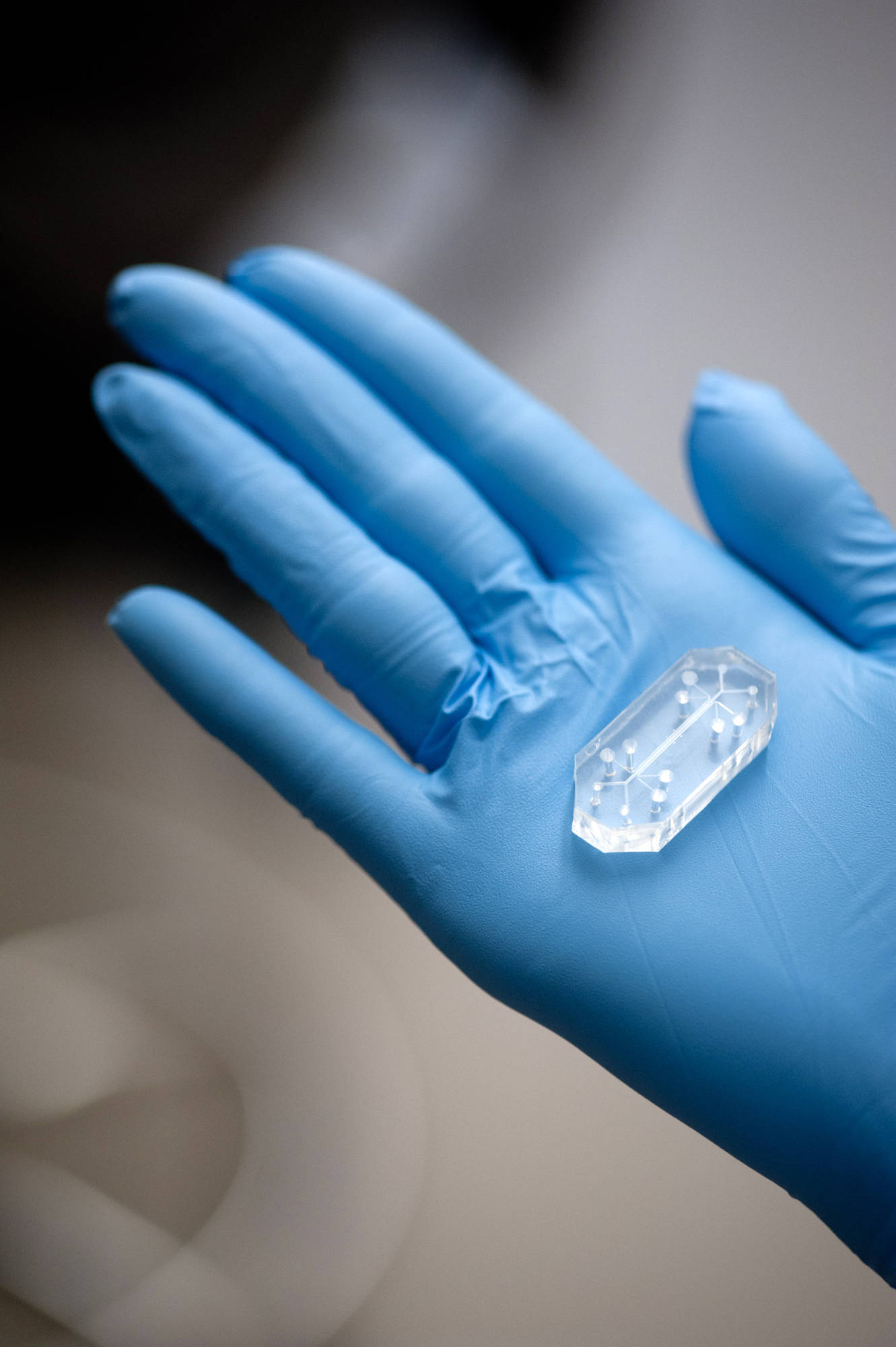
Human Organs-on-Chips are composed of a clear, flexible polymer about the size of a computer memory stick, and contain hollow microfluidic channels lined by living human cells -- allowing researchers to recapitulate the physiological and mechanical functions of the organs, and to observe what happens in real time. The goal is to provide more predictive and useful measures of the efficacy and safety of new drugs in humans -- and at a fraction of the time and costs associated with traditional animal testing.

"We are excited to apply Sony DADC's deep manufacturing expertise to confront one of the major challenges in the life sciences by helping to accelerate the translation of the Wyss Institute's Organ-on-Chips from the benchtop to the marketplace," said Christoph Mauracher, Senior Vice President of the BioSciences division of Sony DADC. "The Organs-on-Chips have the potential to revolutionize testing of drugs, chemicals, toxins and cosmetics."


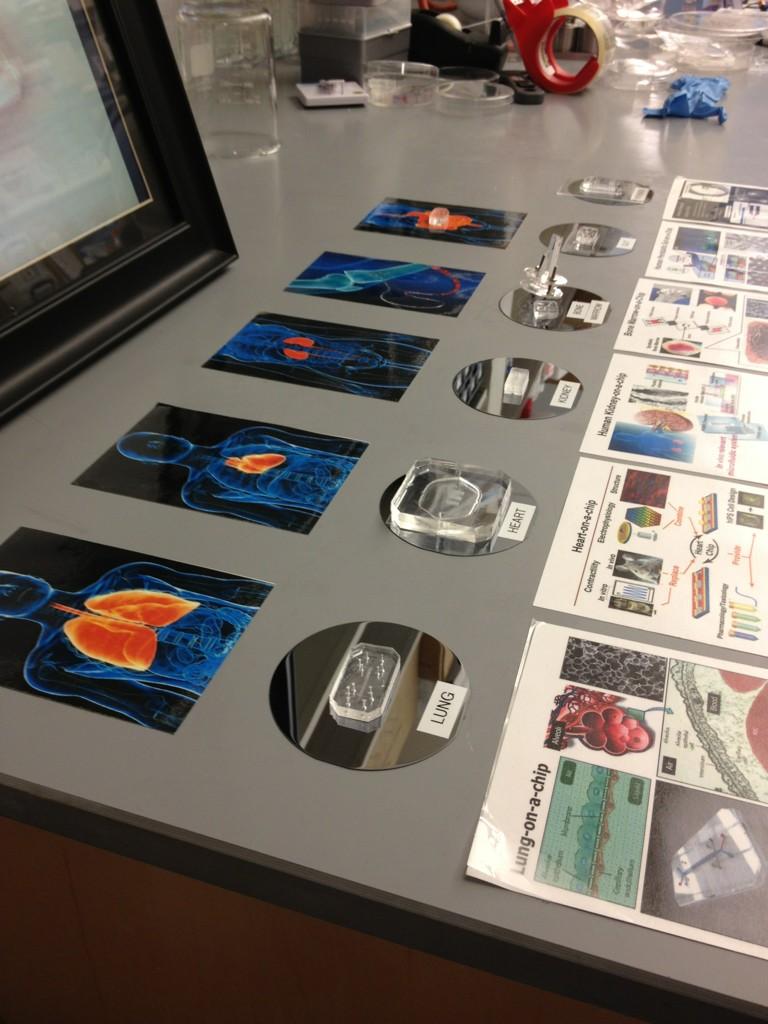
This collaboration builds on the momentum the Wyss Institute team has gained recently on its Organs-on-Chips research program. With support from Defense Advanced Research Projects Agency (DARPA)*, National Institutes of Health (NIH), Food and Drug Administration (FDA), and pharmaceutical partners, more than ten Organs-on-Chips are currently under development at the Wyss Institute, including a lung, heart, liver, kidney, bone marrow, and gut-on-a-chip; there is also a major effort to integrate these organ chips into "human body on-chips" that mimic whole body physiology.

In February, Wyss Founding Director Don Ingber, M.D., Ph.D., who leads the Organs-on-Chips research program, received the prestigious 3Rs Prize from the UK's National Centre for the Replacement, Refinement and Reduction of Animals in Research for the lung-on-a-chip. This month, the Society of Toxicology awarded him the Leading Edge in Basic Science Award for his "seminal scientific contributions and advances to understanding fundamental mechanisms of toxicity."

"Our work with Sony is a wonderful example of the Wyss Institute model in action," said Ingber. "We collaborate with industry to help de-risk the technologies we develop, both technically and commercially, and therefore expedite their translation into real world applications."

###

*Part of this research was sponsored by the U.S. Army Research Office (ARO) and DARPA; the views and conclusions contained in this document are those of the authors and should not be interpreted as representing the official policies, either expressed or implied, of ARO, DARPA or the U.S. Government.

Contacts
Wyss Institute for Biologically Inspired Engineering 
Kristen M. Kusek
+1 617-432-8266
Kristen.kusek@wyss.harvard.edu 

Sony DADC
Manfred Koranda
+43 6246 880 8143
manfred.koranda@sonydadc.com

miércoles, 27 de febrero de 2013

Ireland Invests in Industry-Backed Research Centers

ORIGINAL: ScienceMag
by Anthony King
26 February 2013


Sean Sherlock. Credit: The Labour Party
The Irish government announced yesterday an investment of €300 million in seven new research centers. The centers will support key sectors of the Irish economy and be funded over 6 years with €200 million from the government and €100 million from industry partners.

Despite the country's dire economic situation, the program marks Ireland's largest ever government-industry co-funding arrangement. The Irish minister for research and innovation, Sean Sherlock, says that research will deliver jobs and major economic and societal benefits: "Today we are sending out a major positive signal that, despite our status as an E.U./IMF program country, we are still investing smartly and significantly in research talent."

Not everyone is happy about the emphasis on industry-relevant research, however. "The negative side to my mind is how all the money is now allocated in such a tightly focused way by interests outside science. Basic research as I understand the concept is now excluded," says theoretical physicist Mike Peardon of Trinity College Dublin.

The seven centers are in the areas of 
  • big data, 
  • marine renewable energy, 
  • nanotechnology, 
  • functional foods, 
  • photonics, 
  • drug processes, and 
  • perinatal translational research. 
They were selected from 35 proposals following an international review process. Mark Ferguson, director general of the funding agency Science Foundation Ireland (SFI), says the projects were first reviewed for scientific excellence by a panel of leading international researchers. The winners were then ranked for potential impact in Ireland by an international panel of leaders from the investment community, R&D experts in industry, and technology transfer people from universities. "This was highly competitive," Ferguson says.

The biggest center will focus on big data. It consolidates five existing SFI research centers but brings onboard more than 40 different industry partners, including Abbott pharmaceuticals, the consulting firm Accenture, sportswear company Adidas, large multinational companies such as Intel and Microsoft, and media companies such as The Irish Times and Storyful. "There is no one big anchor tenant. It's a constellation of different partners," explained Alan Smeaton, a computing professor at Dublin City University who led the big data project submission.

The announcement today follows on from the recommendations of the Report of the Research Prioritisation Steering Group 2012. It recommended that government investment focus on 14 priority areas, such as data analytics, medical devices, food and marine resources, with an emphasis on growing the economy and jobs.

Some are concerned about this focus. "Scientific discovery without potential economic return or job creation potential is therefore not being considered by SFI or the Irish government at the moment," notes physicist Peter Gallagher of Trinity College Dublin, who adds that Ireland remains one of the few European countries not in CERN, the European laboratory for particle physics. "The government sees research exclusively as a fix to improve our economic well-being in the short-term. This might pay off attracting investment in the near future but longer term, Ireland's reputation will suffer," Peardon says.

SFI says the seven centers are not the last word and that this is just the beginning. "Some important areas are not represented, so another call for applications will open toward the end of this year," Ferguson says. "As a small country, we cannot do everything well. We are not a scaled down version of the U.S. or the U.K. We have to be subjective and support a few areas of excellence, while maintaining broader support at much lower levels for other areas because they need to support teaching and so on," Ferguson tells Science.

Follow ScienceInsider on Facebook and Twitter

domingo, 20 de enero de 2013

RNAi drug company promises delivery – of both results and RNA

ORIGINAL: OBR Review
January 9, 2013

RNA interference may be a widely used technique in molecular biology, but adapting this biological process to the development of RNAi-based drugs has posed a vexing problem for scientists since its discovery in 1998, which earned Craig Mello and Andrew Fire the Nobel Prize in 2006. A recent advancement by UCSD professor Steven Dowdy shows promise in allowing the short nucleic acids composing RNA and microRNA molecules to cross cell membranes, and in this way blocking the activity of genes involved in cancer and other diseases.

UCSD School of Medicine. biomedsci.ucsd.edu. 
The technology, which is protected intellectual property of the University of California San Diego and revolves around “masking” the negative charge of double-stranded RNA molecules with specific side groups which are then later clipped off by a naturally occurring enzyme, has been licensed in an exclusive deal to the three-month old, half-dozen-employees spin-out company Solstice Biologics LLC. The company was founded by Prof. Dowdy along with Chief Scientific Officer Curt Bradshaw, former vice president of chemistry at CovX Pharmaceutical, a company which was acquired by Pfizer in 2007. Prof. Dowdy was also the scientific founder of Traversa Therapeutics, which filed for bankruptcy in April last year.

Previous companies that have invested copiously in attempting to solve this problem with no robust results include pharmaceutical giants such as Merck, Alnylam, and Roche. Professor Steven Dowdy and colleagues may however be nearing a solution with their cell-permeable RNAi pro-drug, which they called RiboNucleic Neutrals (RNNs). Other companies, such as Merck, have favoured an approach using antisense nucleic acid analogues such as morpholinos, which mimic single stranded nucleic acids and are able to cross the cell membrane in a neutral or slightly positively charged state. Unlike small interfering RNA, morpholinos do not degrade their target RNA molecules, but instead bind to complementary sequences and prevent binding of other interacting partners via steric blocking.

The company has announced in a January 4th press release a partnership with San Francisco-based VenBio and Aeris Capital AG in the form of a $18 million USD series A commitment to the San Diego start-up to achieve a set of pre-established “milestones and goals” over the next 18 months, said VenBio’s Dr. Corey Goodman, who also sits on Solstice’s board as executive chairman. While it is unclear at this early stage whether the technology will actually work in humans and animals, the potential therapeutic benefits are great, and can be applied to a wide range of diseases.

Dr. Goodman, previously a tenured professor at Stanford University and at University of California Berkeley and head of Pfizer’s Biotherapeutics and Bioinnovation Center, further explained that this early stage financing will allow further development of the technology platform and testing to ensure that the process “works and is safe for humans”. He anticipates the company to license the RNN technology to drug developers, once at least one working therapeutic has been taken into early clinical trials. In case the RNAi drug will fail to provide the expected results, he envisaged that the underlying technology could be sold to a reagent company for developing research lab chemicals. The global market for RNAi drug delivery was worth $7 billion USD in 2010, and is expected to grow to nearly $24.1 billion by 2015 according to a January 2011 report by BCC Research.

lunes, 7 de enero de 2013

Building a body, one organ chip at a time

ORIGINAL: Vector
by TOM ULRICH
JANUARY 4, 2013

It may not look like it, but it's a lung, just in chip form
They don’t look like much sitting in your hand. A few pieces of clear plastic, each smaller than an Altoids tin, with channels visible inside and holes for plugging tubing into them.

But fill them with cells and treat those cells the right way, and they turn into something amazing: tiny hearts, lungs, guts, kidneys.

They’re “organs on chips,” and they represent what’s probably the most comprehensive effort to date to physically model the functions of whole organs for drug development and disease research.

Developed by a team of biologists and engineers led by Donald Ingber, MD, PhD, a member of Boston Children’s Hospital’s Vascular Biology Program and director of the Wyss Institute for Biologically Inspired Engineering at Harvard, they’re the building blocks for an ambitious project to create an artificial multi-organ system—essentially, a whole body on a chip.

Each of the chips—Ingber’s team is currently developing 10 different organs—is built using microfabrication techniques like those common in the semiconductor industry.This allows us to create features and structures that we can control at the size scale in which cells live, and also apply physiological fluid flows and mechanical forces,” Ingber explains. “We have precise control over where cells live in the device and what they experience.

Going through the motions
The two features Ingber mentioned, flow and force, are instrumental in faithfully mimicking organ function. His lung on a chip, for instance, has a central microfluidic channel that is split into two parallel channels by porous flexible membrane. One side of the membrane is coated with human lung “air sac” cells (over which air can pass), the other with human lung capillary blood vessel cells. A combination of pumps subject the cells to the sensations of continuous blood flow and rhythmic breathing by moving culture medium through the blood vessel channel and applying suction that deforms the cell-coated membrane.

This video from the Wyss Institute explains in more detail:


Those forces incite dramatic responses from the cells in the chips. “You can put endothelial [blood vessel] and epithelial [air sac] cell cultures together, but they won’t reflect the range of functions you see in a real lung,” Ingber says. “This is because respiratory physiology relies on the mechanics of breathing and blood flow.

For instance, once we added breathing motions to the chip,” he adds, “the epithelial cells started producing surfactant, just like what happens in the lining of a normal lung when a baby takes its first breath.
“[O]nce we added breathing motions to the [lung] chip, the epithelial cells started producing surfactant, just like what happens…when a baby takes its first breath.”
Similarly, Ingber’s lab recently revealed that breathing motions were essential for using the lung chip to mimic the pulmonary edema (fluid leakage from blood vessels into the lungs) that occurs in some cancer patients treated with the drug interleukin-2—the first demonstration that chips could model a complex human disease, as well as a drug toxicity.

Ingber’s team has also developed a chip that models the complex environment of the human gut—including its microbial inhabitants. “Once we added a trickling flow of medium and peristaltic motions, the cells in the chip started forming structures similar to intestinal villi,” he says. “Now we’ve added bacteria, and can start to study the relationship between the microbiome and human intestinal disease processes.

Ingber's expanding repertoire of organs-on-chips could soon be linked together to create a whole body on a chip.
With a host of chips now in hand, Ingber and his team are now working with the federal Defense Advanced Research Project Agency to create a system for linking chips representing different organs together. The system will allow broader study of organ physiology and also how drugs affect multiple organs—the first step toward simulating a complete living body.

We want to be able to administer a drug via the ‘gut’ or ‘lungs,’ see how it is metabolized by the ‘liver,’ excreted by the ‘kidney,’ and whether it causes toxicity in the ‘heart,’” says Ingber. “We also want to model a broad range of disease states, like asthma, Crohn’s, radiation exposure and so on.

He’s also talking to the Food and Drug Administration about potentially accepting organ-on-chip data as part of the drug approval process in addition to or, in the future, in lieu of animal data.We’ve only just started the discussion, but we hope they’ll one day accept human organ chip data instead of certain animal studies, just as they’ve begun to accept biomarker data.