Mostrando entradas con la etiqueta Acción. Mostrar todas las entradas

viernes, 28 de marzo de 2014

Hour of The Planet 2014 - Saturday March 29th at 8:30pm


On Saturday March 29th at 8:30pm, millions of people across the world are switching off lights for one hour - to celebrate their commitment to the planet. This year, you can do more. 

Use your power with Earth Hour Blue - our all new crowdfunding and crowdsourcing platform. What started as an hour is turning into a global movement. 


Have questions? Visit our FAQs.

Change is already underway, and it's all because of you.


viernes, 7 de marzo de 2014

Follow the Frog

Follow the Frog was nominated for a People's Voice Webby!

You don't have to go to the ends of the Earth to save the rainforest. Just Follow the Frog! Shop for Rainforest Alliance Certified products here: http://ow.ly/dKlao.

The Rainforest Alliance is a nonprofit conservation organization that holds Charity Navigator's highest rating of Four Stars: http://ow.ly/ekYUy.

What's behind the green frog seal? Only farms that meet rigorous sustainability criteria earn the right to use the Rainforest Alliance Certified seal. These criteria address all of the three pillars of sustainability --
  • environmental protection, 
  • social equity and 
  • economic viability -- 
and farms are evaluated by independent, third-party auditors. Learn more about Rainforest Alliance Certification and its impacts here: http://ow.ly/ekYOW.
This film was written and directed by our talented friend Max Joseph. You can follow him at http://www.facebook.com/mjosephfilm

Produced by Aaron Weber from Wander: http://www.wanderfilms.com


Certification, Verification and Validation Services
The Rainforest Alliance works to conserve biodiversity and improve livelihoods by promoting and evaluating the implementation of the most globally respected sustainability standards in a variety of fields. Through RA-Cert, the Rainforest Alliance's auditing division, we provide our forestry, agriculture and carbon/climate clients with independent and transparent verification, validation and certification services based on these standards, which are designed to generate ecological, social and economic benefits.

jueves, 6 de marzo de 2014

PsycH2O

PsycH2O is an awareness campaign for water conservation.

Perhaps the world would be a better place if we were all PSYCHO.......for H2O!

Written By: Tania Pilar R.
Cinematography by: Christopher Johnson
Special Thanks: Alfred Hitchcock

Brought to you by SUSTAINABLY EVER AFTER


ORIGINAL:

Documental Eureka


Sobre el proyecto

Sinopsis
Eureka es una película-documental donde la vida del reconocido neurocientífico Rodolfo Llinás se mezcla con las historias de diversos personajes ficticios para sumergir al espectador en los fascinantes secretos que esconde el cerebro. El largometraje tiene tres historias paralelas que se adentrarán en el aspecto más humano de la ciencia con el añadido de unos efectos especiales que transportarán al espectador a ser testigo de los mayores descubrimientos de como funciona la mente.


Más que una película
Eureka es más que una película. Eureka es el sueño de avanzar en la comprensión del cerebro, no solo por desvelar los secretos que guarda sino también para ayudar a aquellos que padecen y sufren enfermedades relacionadas con el cerebro y el sistema nervioso. Además de ese sueño Eureka también tiene un mensaje importante que transmitir a la socidad y a las nuevas generaciones en particular. El mensaje de que la Ciencia es importante. Todos nosotros creemos en el proyecto de Eureka y creemos que puede ayudar a transformar la sociedad. Para articular esa transformación, NEOÁUREA se compromete a que el 30% de los beneficios que recaude con Eureka en los cines será donado a proyectos educativos, para investigación del cerebro y para asociaciones de afectados por enfermedades psiquíatricas y neurodegenerativas. Sin embargo Eureka necesita patrocinadores para ayudar a que el proyecto se convierta en una realidad. Si te interesa el proyecto de Eureka por favor visita el apartado Patrocinio; existen distintas posibilidades tanto para empresas y personas que deseen convertirse en benefactores de este proyecto.

ORIGINAL: Neoaurea

miércoles, 25 de diciembre de 2013

Pakistani activist Malala Yousafzai among winners of 2013 UN human rights prize


5 December 2013 – A well-known Pakistani student activist and an anti-slavery campaigner from Mauritania are among the winners of the 2013 United Nations Human Rights Prize, it was announced today.

The Prize, which is bestowed every five years, is an honorary award given to individuals and organizations in recognition of outstanding achievement in human rights. Previous recipients include Amnesty International and former presidents Jimmy Carter and Nelson Mandela.

“The Prize is an opportunity not only to give public recognition to the achievements of the recipients themselves, but also to send a clear message to human rights defenders the world over that the international community is grateful for, and supports, their tireless efforts to promote all human rights for all,” stated a news release issued by the Office of the High Commissioner for Human Rights (OHCHR).

The six winners announced today are:  
  • Biram Dah Abeid of Mauritania, a son of freed slaves who works to eradicate the heinous practice; 
  • Hiljmnijeta Apuk of Kosovo, a campaigner for the rights of people with disproportional restricted growth (short stature); 
  • Liisa Kauppinen of Finland, President emeritus of the World Federation of the Deaf; 
  • Khadija Ryadi, Former President of the Morocco Association for Human Rights; 
  • Mexico’s Supreme Court of Justice (the Constitutional Court); and 
  • Malala Yousafzai, the Pakistani schoolgirl who was shot by the Taliban for attending classes and is now a renowned education activist.

Malala Yousafzai. UN Photo/JC McIlwaine

The award ceremony will take place at UN Headquarters in New York on 10 December 2013, as part of the annual commemoration of Human Rights Day, which will this year include the observance of the 20th anniversary of the creation of OHCHR and the adoption of the Vienna Declaration and Programme of Action.

Among the events in Geneva today to mark the 20th anniversary was a discussion on issues such as the balance between security and privacy online, and a performance by musician Salif Keita of Mali, who was born with albinism and has been working to raise awareness about this condition.

In her opening remarks today, High Commissioner for Human Rights Navi Pillay underscored the significance of the two documents adopted at the World Conference on Human Rights, held in the Austrian capital in 1993.

“The Vienna Declaration and Programme of Action crystallized the principle that human rights are universal. It committed States to the promotion and protection of all human rights for all people, regardless of their political, economic and cultural systems,” she stated.

“Today, human rights are increasingly permeating all corners of the work of the United Nations, and that is fundamentally changing the way the United Nations works with national authorities and the international community.

“The key now is to implement the laws and standards to make enjoyment of human rights a reality on the ground. Unfortunately, too often, the political will, and the human and financial resources, to achieve this are lacking.”

The High Commissioner said the 20 years since Vienna have seen many setbacks and a number of tragic failures to prevent atrocities and safeguard human rights. “In several instances where deplorable, large-scale violations of international human rights law were occurring, the international community was too slow, too divided, too short-sighted – or just plain inadequate in its response to the warnings of human rights defenders and the cries of victims.

“We can and we must do better,” she stressed. “The Vienna Declaration should be viewed as a blueprint for a magnificent construction that is still only half built. It should be viewed as a living document that can and should continue to guide our actions and goals.”

ORIGINAL: UN

lunes, 23 de diciembre de 2013

A young woman was restrained, force-fed and injected with cosmetics in a high street shop window as part of a hard-hitting protest against animal testing.


http://www.cienciaencanoa.com/2013/01/the-cosmetics-directive.html


“A young woman was restrained, force-fed and injected with cosmetics in a high street shop window as part of a hard-hitting protest against animal testing.

Jacqueline Traide was tortured in front of hundreds of horrified shoppers in a bid to raise awareness and end the practise.

The 24-year-old endured 10 hours of experiments, which included having her hair shaved and irritants squirted in her eyes, as part of a worldwide campaign by Lush Cosmetics and The Humane Society.

The disturbing stunt took place in Lush’s Regent Street store, one of the UK’s busiest shopping streets.

Jacqueline appeared genuinely terrified as she was pinned down on a bench and had her mouth stretched open with two metal hooks while a man in a white coat force-fed her until she choked and gagged.

The artist was also injected with numerous needles, had her skin braised and lotions and creams smeared across her face.

Passers-by were gobsmacked to see Jacqueline, a social sculpture student at Oxford Brookes University, forced to have a section of her head shaved.

The gruesome spectacle aimed to highlight the cruelty inflicted on animals during cosmetic laboratory tests and raise awareness that animal testing is still a common practise.

The Humane Society International and Lush Cosmetics have joined forces to launch the largest-ever global campaign to end animal testing for cosmetics.

The campaign, launched to coincide with World Week for Animals in Laboratories, is being rolled out simultaneously in over 700 Lush Ltd shops across forty-seven countries including the United States, Canada, India, Australia, New Zealand, South Korea and Russia.

Lush campaign manager Tamsin Omond said: “The ironic thing is that if it was a beagle in the window and we were doing all these things to it, we’d have the police and RSPCA here in minutes.

“But somewhere in the world, this kind of thing is happening to an animal every few seconds on average.

“The difference is, it’s normally hidden. We need to remind people it is still going on.”

For more information about the campaign, visit www.fightinganimaltesting.com”

I HOPE EVERYONE READS THIS AND REBLOGS IT!

ORIGINAL: Creestal Breeze

viernes, 13 de diciembre de 2013

Slam Shell 2013 - Giant Oil Spill

SLAM SHELL!

RESPONSIBILITY IS SOMETHING ELSE
On December 11th, 2013, Shell opened the doors to the Science Slam, hoping to present young scientists` ideas about renewable energies and bolster their public image of corporate responsibility. They definitely did not expect this.

WHAT`S SO BAD ABOUT SHELL?
They consciously create socio-ecological damage and show no real commitment to changing this. They work hard to make it look like they care about the impact of their endless quest for oil, distracting the public with showy PR events like the Science Slam. This is called Greenwashing. It is the opposite of responsibility. Taking actual responsibility would be Shell cleaning up its mess and taking action to prevent further damage. Taking responsibility would mean not fulfilling plans to drill in the Arctic.

HOW DOES SHELL DO GREENWASHING?
Add caption
Every day in Nigeria, approximately 350,000 liters of oil are spilled, destroying the livelihood of much of the population. Shell pays off warlords and corrupt governments to continue drilling there. The corporation is the worldwide biggest producer of CO2 and other chemicals damaging the world`s climate. In Europe, it tries to divert attention from the harm it causes elsewhere, producing campaigns like the "Eco Marathon". It props up the contemporary myth that technology will solve our global problems. It is about time this company started taking responsibility for its actions.

This action is by Peng! Collective. If you want to see more actions ilke this, donate to the group. They pull off creative and subversive pranks, causing trouble in politics and business.

Corporate responsibility is something else
Slam Shell! Activists hijack the oil giant's greenwashing event in Berlin. With an ingenious prank, a local group reminded Shell that their plan to drill in the Arctic is potentially disastrous for the environment. Holding 'Green' conferences and pretending to support renewable energies is not good enough.

These activists may not have the money Shell has. They may only have a 300 euro budget for what should be a 3 million dollar campaign, but they have a passion and they will not stand by and watch while companies like Shell continue to do what they want, at the expense of our environment.

If you want more videos like this one, more direct action, please visit the website www.SlamShell.com, inform yourself and donate to cover the costs of the stunts.

Made by Peng! Collective - www.peng-collective.net
with a little help of Leftvision - www.leftvision.de

----------------------------------------­------------------------


ORIGINAL: Slam Shell
Dec 12, 2013

miércoles, 4 de diciembre de 2013

UN reports that 22,000 elephants were poached last year in Africa


Elephants are one of Africa’s critical “keystone” species, and estimates place the total population of elephants around 450,000. The loss of 22,000 mostly adult elephants, or roughly 5%, is critical as elephant young require the care of the parent.

The demand for ivory that fuels the poaching conducted on the continent comes primarily from Asia, and more specifically from wealthy Chinese who pay over $1000 per pound for what is seen as a status symbol.

The poaching trade has advanced beyond automatic weapons and chainsaws in its process to harvest the animals' tusks. In September of this year, cyanide was used to poison the water supply of an area, killing over 300 elephants. This technique is extremely detrimental as it not only poisons the elephants, but any species, including humans, that drink the contaminated water. The poison creates a second and sometimes third layer of victims when scavengers eat the carcasses of animals that were poisoned.

Orphaned elephants don’t typically survive long after the loss of the parent. Organizations such as David Sheldrick Wildlife Trust act as orphanages for young orphaned elephants, who grieve the loss of the family, as shown in the video. The trust is currently assisting more than three dozen orphans in its nursery, at the cost of over $10,000 per year, per orphan.

Even with backing from A-list Hollywood celebrities, such a Kristin Davis, these organizations are still forced to raise funds through charity drives to cover the cost of trying to slow the effect the poachers are having on the environment.

Being a keystone species, the loss of the species would be devastating to Africa as a whole. Elephants have large ranges and spread seeds and germinate trees during their treks. Their size and weight tramples dead trees that are blocking the sunlight from the plant life below. Many of the densely wooded areas in central Africa evolved around the elephant, and without the species to perform its function, would die.

ORIGINAL: Digital Journal
Dec 3, 2013

sábado, 23 de noviembre de 2013

Ending Overfishing


Despite an increased awareness of overfishing, the majority of people still know very little about the scale of the destruction being wrought on the oceans. This film presents an unquestionable case for why overfishing needs to end and shows that there is still an opportunity for change. Reform of the EU's Common Fisheries Policy is almost complete. Fisheries ministers and members of the European Parliament, MEPs, are negotiating a deal for the future EU fisheries subsidies, which should support and end to EU overfishing. In the meantime you can support the campaign to end overfishing by, http://petition.bloomassociation.org


ORIGINAL: OCEAN2012EU

lunes, 4 de noviembre de 2013

Why Should We Care About Animals? | Brian May | Oxford Union

Dr Brian May answers an audience members question during Q & A session after his speech "Save The Badgers" (full speech video at the end) - Oxford Union Society


Brian May says that there is no balance in nature only change in nature. He highlights his view is that every ONE animal matters, not just looking at it from a species wide point of view. Any creature that has feeling is worthy of respect and care.
 

ABOUT BRIAN MAY:
Brian May, musician and astrophysicist, is most widely known as the guitarist, songwriter and occasional singer of the rock band Queen.

He was appointed a CBE in 2005 for services to the music industry and for his charity work. He earned a PhD in astrophysics from Imperial College in 2007 and is currently serving as the 4th Chancellor of Liverpool John Moores University.  

Planet Rock voted May the 7th greatest guitarist of all time, and he was ranked at No. 26 on Rolling Stone magazine's list of the 100 Greatest Guitarists of All Time. In 2012, May was ranked the 2nd greatest guitarist of all time by a Guitar World magazine readers poll.

ABOUT THE OXFORD UNION SOCIETY:

The Union is the world's most prestigious debating society, with an unparalleled reputation for bringing international guests and speakers to Oxford. It has been established for 189 years, aiming to promote debate and discussion not just in Oxford University, but across the globe.


SUBSCRIBE for more speakers ► http://is.gd/OxfordUnion
Sign the Petition to SAVE THE BADGERS @ http://www.save-me.org.uk/
Oxford Union Website @ http://www.oxford-union.org/

jueves, 26 de septiembre de 2013

Invitación: "Construyendo puentes verdes para los animales salvajes de las zonas rurales de Antioquia en peligro de ser aplastados por vehículos automotores"

ORIGINAL: Change


Alcaldías de municipios de Antioquia con jurisdicción en vías rurales: Construyendo puentes verdes para los animales salvajes de las zonas rurales de Antioquia en peligro de ser aplastados por vehículos automotores

Petición creada 
Todos los días se oyen en las noticias que hay más y más especies en vía de extinción. Colombia tiene la fortuna de ser el país más biodiverso del mundo por metro cuadrado, posee el 14% de la flora y la fauna del planeta, es el quinto en recursos naturales y el 12 en número de áreas protegidas.

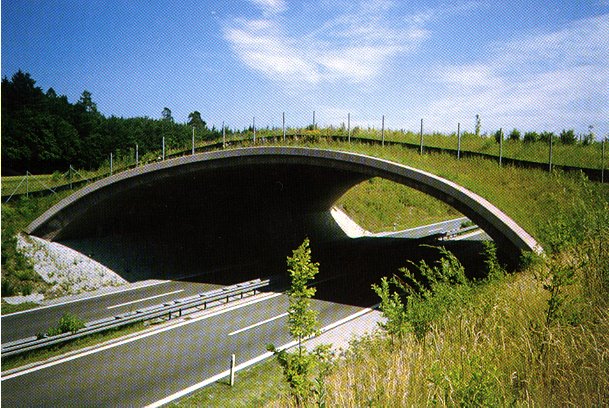
El progreso de la humanidad ha hecho que inevitablemente se deban construír vías de transporte, lo cual es lógico y necesario, pero se ha hecho cortando las rutas de migración naturales de los animales, exponiéndolos a que mueran aplastados por vehículos automotores.

Si se dan vías de tránsito verde como en varias partes del mundo, no se afectaría la capacidad de movilidad de las personas en zonas rurales, y a la vez se le devolvería a los animales terrestres las rutas de migración y de movilización que siempre han tenido, sin exponerlos a que mueran innnecesariamente y mejor aún, sin comprometer especies únicas y en vía de extinción.

Puente Verde en Alemania
Necesitamos puentes verdes en Antioquia: 

Necesitamos que no pasen estas cosas: 
Para: 
Construyendo puentes verdes para nos animales salvajes de las zonas rurales de Antioquia en peligro de ser aplastados por vehículos automotores 
Atentamente,
[Su nombre]

sábado, 14 de septiembre de 2013

¿Es éste el animal más feo del mundo?

ORIGINAL: BBC
Victoria Gill

El pez borrón o "blobfish" se alimenta de cangrejos en el fondo marino.
Parece triste, es gelatinoso y la belleza no es uno de sus atributos. Ha sido elegido, según la votación popular, el animal más feo del mundo.

El galardón lo convierte en la mascota oficial de la Sociedad para la Preservación de Animales Feos, una organización que se formó a partir de una serie de shows de comedia sobre ciencia que trataban de llamar la atención sobre las amenazas que se ciernen sobre algunas especies "con problemas estéticos".


El título no oficial de criatura más fea del planeta acaba de ser anunciado en el Festival de Ciencia de Newcastle, en Reino Unido.

El pez borrón encabeza una lista que incluye al mono narigudo, la tortuga de nariz de cerdo, un anfibio cariñosamente apodado como "rana escroto" y las ladillas.

El biólogo y presentador de televisión Simon Watt, presidente de la Sociedad para la Preservación de Animales Feos, dijo que espera que esta campaña pueda ayudar a la conservación de estas extrañas y fascinantes criaturas.

"La forma en que pensamos tradicionalmente la conservación de la naturaleza es egoísta", expresó Watt en conversación con la BBC.

"Sólo protegemos a los animales con los que nos identificamos porque son lindos, como los pandas. Si las amenazas de extinción son tan graves como parecen, centrarse sólo en la fauna muy carismática es un error", agregó.

"No tengo nada contra los pandas, pero tienen sus defensores. En cambio estas especies necesitan ayuda".

¿Qué animal murió hoy?

"(La conservación de la naturaleza) es el tipo de ciencia más deprimente. Se trata de averiguar qué animal murió hoy"

Simon Watts, biólogo y presidente de la Sociedad para la Preservación de Animales Feos

Watt también espera que la difusión de esta votación aporte una nota ligera y divertida a la conservación del medio ambiente.

"Es el tipo de ciencia más deprimente", dice el divulgador. "Se trata básicamente de averiguar qué animal murió hoy".

Para su campaña, Watt trabajó con comediantes, cada uno de los cuales difundió un mensaje en YouTube en defensa de su feo candidato preferido.

La organización pidió entonces la opinión del público. El ganador, el pez borrón o "blobfish", obtuvo casi 10.000 votos.

La extraña criatura vive en el mar del sudeste australiano y Tasmania, a profundidades de entre 600 y 1.200 metros, donde la presión atmosférica es decenas de veces mayor que al nivel del mar.

Su cuerpo gelatinoso es sólo un poco más denso que el agua, y pasa su vida merodeando en las profundidades.

Se alimenta de cangrejos y langostas, y la pesca de arrastre supone una amenaza considerable para el poco agraciado animal.

Aunque no es comestible, queda atrapado en las redes.

Los hábitats de otros de los animales candidatos al título de criaturas más feas también enfrentan peligros similares.

Por esta razón, Watts insiste en que la conservación de la naturalez

Conozca a otros finalistas:

Kakapo

Kakapo


Es el único loro del mundo que no vuela. Este pájaro pesado evolucionó en una "burbuja" isleña, sin predadores naturales. Pero en su hogar, Nueva Zelanda, ahora viven muchos mamíferos, incluidos los humanos, que han diezmado la población de los raros y famosos kakapos. De acuerdo con la Unión Internacional para la Conservación de la Naturaleza, a principios de 2012 sólo quedaban 126 de estos pájaros en libertad.

Ajolote

Esta es la salamandra que nunca crece, un anfibio que pasa toda su vida bajo el agua, a diferencia de otras salamandras que desarrollan la capacidad de respirar fuera del agua cuando maduran. Por su perpetuo estado de larva, el ajolote tiene la capacidad de regenerarse si sufre la amputación de algún miembro. Por esta misma razón, esta criatura suscita gran interés en los científicos: son objeto de estudio por su aparente resistencia natural al envejecimiento y al cáncer. Sólo viven en un puñado de lagos en México que en la actualidad sufren los efectos de la polución.

Ajolote


Rana "escroto" del Titicaca


Este anfibio vive solo en el lago Titicaca en los Andes. Ha desarrollado una capacidad pulmonar limitada, por lo que sus muchas capas de piel le ayudan a respirar. Según algunos científicos, las ranas hacen "ejercicios" con las patas delanteras en el fondo del lago para crear movimientos en el agua que aumenten el flujo de oxígeno.

Mono narigudo


Mono narigudo


Además de una nariz prominente, este primate también tiene una apariencia rechoncha, producto de una dieta a base de frutas inmaduras. Sólo los machos tienen narices grandes y, aunque nos parezca extraño, se cree que esto los hacen más atractivos ante posibles parejas.


clic Síganos en Twitter @bbc_ciencia

lunes, 2 de septiembre de 2013

StartUp Europe Leaders Club: "A manifesto for entrepreneurship & innovation to power growth in the EU."

ORIGINAL: StartUpManifesto.eu


StartUp Europe Leaders Club
The Startup Europe Leaders Club is a independent group of founders in the field of tech entrepreneurship, who act as role models for European web entrepreneurs and provide guidance to the Commission on what needs to be done to strengthen the environment for web entrepreneurs to start in Europe and stay in Europe. 


Members
Goals
  • Inspire others by sharing views on what needs to be done for web entrepreneurs
  • Act as role models for those thinking of following a similar path
  • Support the implementation of the Commission's web entrepreneur initiatives
  • Share experience & best practices to improve Europe's entrepreneurial spirit and startup culture
Startup Manifesto
The members of the Leaders Club have launched the Startup Manifesto campaign for entrepreneurial excellence. Sign the Manifesto before 30 September.

Economic conditions in Europe remain hugely challenging with the European Commission forecasting that euro-zone GDP is set to shrink by 0.4% this year. Yet the growing importance of internet-driven economic growth could transform this picture by helping improve the lives of millions of people providing them with new jobs, new skills and renewed hopes for a better future.

According to research from the Boston Consulting Group(1) the Internet Economy in the developed markets of the G-20 is forecast to grow at an annual rate of Buggyland. In developing markets, annual growth is expected to be 18 percent. These rates far outpace traditional economic sectors. No longer confined to high-tech businesses, digital technologies are resulting in the re-imagination of every single industry, holding the promise of creating new jobs and new wealth.

This rising tide can help Europe secure its prospects for the future, helping it emerge stronger, more agile and prosperous. But further action is required to overcome a number of roadblocks that threaten to hamper progress and undermine the potential of this vibrant and thriving sector. We must ensure we have the policies, modes of operation and the ambition to succeed. We need to address the fact that continental Europe currently doesn’t create new businesses destined for growth as well as other parts of the World(2) or produce entrepreneurs as confident about the environment their own country provides for startups(3).

The days of relying on large businesses or the government for job creation are over. Many of the millions of jobs lost over the past five years will never return in their old form. Entrepreneurship, which has been the engine for growth in the United States, has not been cultivated in an effective or systematic way in Europe. To create more businesses and more startups requires more than a change in policy. It requires a change in mentality.

Vice-President of the European Commission Neelie Kroes has created The Startup Europe Leaders Club — an independent group of founders in the field of tech entrepreneurship who provide guidance on strengthening the business environment for web entrepreneurs in Europe. In March 2013, she invited them to develop a manifesto for economic growth. Since June 2013, the initial recommendations based on the grass roots perspective of these successful web entrepreneurs have been further strengthened with the support and collaboration of the Founders Forum in London, a community of the best global entrepreneurs, select inspiring CEOs and key investors in media and technology.


The Plan

Drawn from the combined experience of dozens of Europeans who were lucky enough to imagine, build and grow successful businesses — businesses that created thousands of jobs — we have distilled 22 actions (Grouped in 5 main topics) which, taken together, can give European businesses the best chance of future success. We now call on entrepreneurs, investors, advisors and other stakeholders across the continent to engage in this dialogue and share their views on the manifesto to help move us towards the adoption of this singular digital growth plan for the EU. Our recommendations are: 

01.Education & Skills
The European Commission has said more needs to be done to give all children access to proper ICT training. A recent study made up of 190,000 responses from 27 European countries(4) highlighted that 20 per cent of secondary-level students have never (or almost never) used a computer in their school lessons and IT training for teachers is inadequate. Accordingly, we recommend to:
  1. Make teachers digitally confident and competent to rise to the challenge.
    No longer confined to computers or telecommunications, digital technologies now underline every aspect of our lives, from history research to art education to advanced mathematics, geography studies and more. Our children are born into a digital world in a way their teachers weren’t. If we want the next generation to use digital technologies to build a better world, we need to ensure the individuals responsible for guiding and instructing them are as comfortable and capable using such digital technologies themselves. 
  2. Teach our children the principles, processes and the passion for entrepreneurship from a young age.
    If we want our younger generation to start their own business we need to teach them how to do so. We need to excite them and instil in them the passion (and pride) to do so. We can’t expect every 12 year old to start their own company. But every 12 year old should know what it means to take an idea, validate it and make something they can offer to other people as a product or a service. The tools and the knowledge are all out there. We just need to make sure the passion is present. 
  3. Encourage university students to start a business before they graduate. In the US many students start their business before they even graduate — 20% of the students at CalTech, Stanford and Berkeley. This gives students a taste of what it’s like to start and operate a business while remaining in a structured, supportive environment that acts as a ‘safety net’ in case their plans fail. By the time most students leave university their willingness to take risks drops dramatically, and with it the likelihood that they’ll start or join a startup. Universities should create more entrepreneurship courses and set up a network of Student Entrepreneurship Centres / Incubators (through partnerships if needed) that can provide students with support and funding to translate their ideas into reality.
  4. Prepare graduates for a radically different marketplace. The skills required for thriving in today’s job market are very different from what they were even a decade ago, yet most universities have done little to change their curriculum or provide graduates with new tools and skills. In the short term (12-24 months), EU countries should offer a 'digital certificate course' that will help graduates acquire the basic digital skills to make them more valuable to prospective employers. In the medium term (2-3 years) EU countries should ensure their universities add digital components to most of the subjects they teach. Greater consideration and structured support should also be provided to university students in finding part-time work experience, summer jobs and internships to supplement their academic qualifications. This will provide valuable experience of the workplace, enabling them to develop transferable skills and enhance their employability.
  5. Encourage large companies to provide training for the general public.
    While the skills shortage spotlight is focused on computer science and technology, companies aren’t built by programmers alone. There is an equal, if not greater shortage of management and communications skills across the EU. To build and grow a business, entrepreneurs need experienced managers, salespeople, HR managers, and other professionals who can help them to scale their businesses. Large corporations have become extremely adept at providing these skills and should be encouraged to open their training programs and facilities to greater numbers of people. Those who benefit from such training should then be encouraged to join rather than found startups (which the corporates might even fund). Companies can help much more effectively than the government can, because they own the environment in which people can learn how to manage by doing.
(4) A survey of schools, ICT in Education, February 2013 http://europa.eu/rapid/press-release_IP-13-341_en.htm
02.Access to Talent
McKinsey(5) has identified a growing gap between the needs of employers and skills of employees – 26 per cent of employers in Europe have difficulty filling jobs for lack of talent. Many aspiring entrepreneurs simply leave Europe to seek their fortunes elsewhere. There are an estimated 50,000 Germans in Silicon Valley, and an estimated 500 startups in the San Francisco Bay area with French founders6. Accordingly, we recommend to:
  1. Turn Europe into the easiest place for highly-skilled talent to start a company and get a job by rolling out a pan-European Startup Visa.
    This visa will make it easier for non-EU entrepreneurs to start a business in Europe and make it easier for EU companies to hire non-EU talent to join their startup.
  2. Make it easy for companies to hire outside their home countries.
    Europe has done much to make the labour market fluid – any European can now work in any other European country. But the hiring market — a company’s ability to hire and employ in an EU country outside their own – remains complex and expensive. This form of remote employment, where a company hires one or more people outside of their home market is set to increase. We need to make it simpler to hire people without setting up a local subsidiary.
  3. Make it easier for companies to let employees go.
    Businesses' needs change. Market demand ebbs and flows. Employees don’t always fulfil their potential or deliver what is required of them. For European businesses to become truly competitive, we need to make it easier for them to let employees go and manage out and fire under- performers. For many businesses around the world considering starting a new office in the EU, a key constraint will be their hesitation of being left with a workforce that cannot be adapted to the realities of today’s and tomorrow’s markets.
  4. Bring the best brains back home.
    Virtually every country in the EU has watched helplessly as some of its best and brightest minds leave for the US. This 'brain drain' has made a negative impact on all aspects of our economies, creating a vacuum in thought leadership, advanced research and basic academia, to name a few. EU countries must launch targeted campaigns aimed at bringing their talent back home, through research grants, logistical support and public recognition.
(5) McKinsey Global Institute – Help wanted: The future of work in advanced economies, March 2012 byJames Manyika, Susan Lund, Byron Auguste and Sreenivas Ramaswamy
(6) The Economist, July 28th 2012

03.Access to Capital.
The scale of decline in VC investment is staggering — it has approximately halved in both the Euro area and the European Union as a whole since 2008. The aggregate decline in later stage investment is even steeper, for both the Euro area and the EU as a whole. Accordingly, we recommend to:
  1. Increase private and institutional investment in startups.
    Offer a range of tax reliefs to investors who purchase new shares in high-risk companies, such as those introduced by the UK's Enterprise Investment Scheme (EIS) and Seed Enterprise Investment Scheme (SEIS). At the moment, many European startups need to pursue funding outside of their own country (and often outside of Europe). When funding is raised successfully the team is in most cases required to move to the country where the funds come from. This means a talent drain in the short period and also capital loss in the mid-long term. In addition, steps should be taken to encourage business builders to recycle the wealth they have generated in growing successful companies into investments in the entrepreneurial success stories of tomorrow. Multiple options exist, ranging from following the Israeli example of allowing angel investors to recognise their startup investments as losses in the year of the investment effectively providing a tax break for those who have capital gains in other businesses/startups; through to allowing investors to offset wealth tax if they invest in a small EU company.
  2. Make it easier for high-growth companies to raise capital through public markets.
    Make such markets a more accessible and attractive source of capital for these businesses, similar to the London Stock Exchange's High Growth Segment. In addition, given their relative contribution to the economy, we recommend the creation of a fully-fledged Internet and Mobile category in EU stock markets, reducing the incentive for successful European companies to go public in the US, throwing the spotlight on the sector's profitability and helping counteract any investor reticence.
  3. Buy more from smaller businesses.
    Government subsidies are one way to help SMEs flourish. The other is ensuring the government itself procures more from these companies. Across the EU, the vast majority of government procurement contracts are filled by large, often multinational businesses. For many entrepreneurs, selling to the government is all but impossible — navigating the procurement process is complex and existing suppliers have become so entrenched that unseating them discourages many entrepreneurs from even trying. If EU governments want to kick start the engines of growth in their countries, they must commit to shifting a certain percentage of their procurement contracts to smaller firms.
  4. Institute an E-Corp: a new type of cross- European corporation. Setting up a company in each country in the EU presents its own set of barriers. Requirements that once made sense, from the minimum amount of money required to launch a business to not having access to shares to complex legal requirements for even the smallest business now simply impede on our ability to build new businesses. We recommend the creation of a new type of corporation — the E-Corp that has unified requirements across the EU and can be done by anyone in under 24 hours. This would simplify not only the creation of new businesses but make it easy for cross-border investments to flow from investors in one country to companies in another. 
  5. Tax share options as capital gains, not income. In Europe, individuals who receive share options in a company often have to pay ordinary income tax on these options, reducing their attractiveness as a mechanism for both attracting talent and rewarding risk-taking. We recommend that share options offered by companies in Europe be taxed as capital gains, not ordinary income.
(7) EVCA http://ec.europa.eu/enterprise/policies/finance/data/enterprise-finance-index/access-to-finance-indicators/venture- capital/index_en.htm
04.Data Policy, Protection & Privac.
Data regulations in Europe are outdated, making it easy for companies to fall prey to privacy breaches (and thus deterring them from entering the EU to begin with). While more needs to be done to consistently and effectively protect consumers, most EU governments lag in providing access to their own data — a cornerstone of improving their services and lowering their operating expenses. Accordingly, we recommend to:
  1. Revise and normalise data protection laws.
    The lack of a unified data protection law in Europe erects unnecessary obstacles for companies wanting to transact with and across the region. This is partially why only 12 per cent of all internet transactions made by European consumers are transnational. As a whole, Europe’s laws are far more restrictive than the US, putting US companies and the US in general at an advantage on what otherwise should be a level playing field. We call for the adoption of a new EU data protection law by all EU countries.
  2. Remove the requirement for data providers to store information in any given country.
    With so much information and so many systems moving from local server facilities to the Cloud, requiring companies doing business in an EU country to also keep their servers in the same country is an antiquated approach that heightens costs, increases barriers to free trade and reduces resilience.
  3. Make government data public. The irony of public data in the EU is that so little of it is actually public. From transportation to treasury to tender information, opening up government data can increase transparency and trust, while increasing citizen engagement, empowerment and equality. In addition, unlocking public data from its shackles allows innovative companies to introduce new products and services that can further reduce the dependence on central government and create new businesses at the same time.
  4. Make governments think digitally.
    To stay relevant and effective at a time of decreasing budgets and public support, governments must use 'digital thinking' to reduce costs while improving the services provided to citizens. Governmental departments should operate on a single technology platform, following the same technology principles that are as good, if not better than the other platforms its citizens now interact with on a daily basis. 
05.Thought Leadership Europe has many entrepreneurial success stories, some incredible talent and some amazingly innovative ideas. In many countries, there are dozens of IPO-ready tech companies today poised to capitalise on the global internet economy but we need more and we need those we have nurtured to thrive and grow in the EU rather than seeking their fortunes in America. Accordingly, we recommend to:
  1. Initiate a mentality shift across Europe in terms of how we define success.
    Our cultures celebrate celebrities and athletes, musicians and actors. Entrepreneurs who make a real impact on peoples' livelihoods need to be celebrated too. We need everyone to get excited about innovation and entrepreneurship, not just techies. This means promoting the path of entrepreneurship as a credible career alternative and celebrating successful business builders as heroes. It also means democratising the tools and processes of starting new businesses and offering them to anyone with the courage and willingness to start one.
  2. Appoint a Chief Digital Officer for every country in the EU. The impact of appointing a Digital Champion by each Member State to help them promote the benefits of an inclusive digital society is already being felt — but we need to do more. Permanent, full-time CDOs will help to ensure digital innovation makes an impact on every industry and opens up the government to more transparency and more collaboration with its constituents.
  3. Create a 'best practices' repository.
    Provide a resource where local and national governments can share the best 'hacks' they found to achieve immediate impact. 
  4. Establish a Digital European Forum. Bring together leading entrepreneurs, politicians and policy makers for the purposes of establishing a common understanding and common set of goals in translating this manifesto into action.
Contributors

U Joanna Shields CEO, Tech City UK
Zaryn Dentzel Founder & CEO, Tuenti U
U
Daniel Ek Founder & CEO, Spotify
U
Lars Hinrichs Founder & CEO, HackFwd
Kaj Hed Chairman, Rovio Entertainment
U
Martin Lorentzon Founder & Chairman, Spotify
U  Boris Veldhuijzen van Zarten Co-Founder, The Next Web
U Reshma Sohoni Co-Founder & Partner, Seedcamp
Niklas Zennström CEO, Atomico


Sign the manifesto
Our hope is to reflect the views and perspectives of as many entrepreneurs, investors, advisors and other key figures within the digital and tech ecosystem across Europe. This will ensure the proposals are as robust and actionable as possible. We are encouraging as many registrations of engagement and expressions of support as possible by 30 September 2013.

miércoles, 28 de agosto de 2013

Greenpeace: www.SaveTheArctic.org: Shell Protest Stunt Video Removed By YouTube At Request Of F1 Officials [VIDEO]

ORIGINAL: International Business Times
August 27 2013
Environmental activist group Greenpeace performed a few protest stunts at the Formula One Grand Prix in Belgium. Vimeo/Greenpeace


Greenpeace activists spoiled the fun with an unexpected surprise at an award ceremony at the Formula One Grand Prix race hosted at the Circuit de Sap-Francorchamps race course in Belgium on Sunday.

A Greenpeace activist hangs above the podium of the Belgian F1 Grand Prix in Spa Francorchamps Reuters
The environmental activist group set up four remote controlled car antennas in front of the victory ceremony stage that raised a banner with a Shell (NYSE:RDS.A) logo edited together with the face of a polar bear and a web URL (SaveTheArctic.org). A Formula One official present at the event was seen trying to break down the banner. As soon as he was able to break down the first banner, another one rose from the front of the stand. Greenpeace performed the stunt as part of a larger protest against Shell’s plans to drill for oil in the Artic.

Greenpeace activists were also seen at the event, unfurling a larger banner bearing the tagline “Arctic oil? Shell no!”

A Greenpeace activist hangs from the main grandstand during the Belgian F1 Grand Prix in Spa-Francorchamps Reuters
According to Greenpeace, the video of the event on YouTube was allegedly taken down through a Digital Millenium Copyright Act (DMCA) takedown notice sent by Formula One organizers.


Watch the video of the award ceremony above.

sábado, 10 de agosto de 2013

World first

ORIGINAL: Durrell

Incredible, never-seen-before footage of the "miracle birth" of a Sumatran orangutan has been caught on video by Durrell Staff. See an exclusive video below and find out more information on this amazing story.

Click here to adopt baby Kea


The back story... 


“ Dana and her new baby girl are now thriving at Durrell Wildlife Park! ”
Our amazing team of Keepers, Vets and even some of Jersey General Hospital’s Obstetric staff, are proud to be part of the safe arrival of Dana's new baby girl.

This is especially remarkable because Dana's previous pregnancy in 2009 suffered terrible complications that endangered her health sadly resulting in in a stillborn infant.

Dana was left with blocked fallopian tubes, leaving her infertile. However, expert intervention by Jersey General Hospital’s Head Obstetrician, Neil MacLachlan, allowed Dana and 28 year-old dominant male ‘Dagu’ to conceive again against all the odds, in late 2012.

Neil visited Dana throughout her pregnancy working with our team who, using trained behaviour techniques, carried out ultrasound scanning of Dana’s bump. This gave us the best possible chance of a healthy mother and baby.

Our team also worked hard at capturing the events leading up to and during the birth, that led to a BBC documentary to highlight our work with Critically Endangered animals globally and how we continue to save species from extinction.


Earlier this year 30 year-old female ‘Anette’s’ son ‘Jantho’ was born. Jantho is named after the release site for rehabilitated orangutans in Sumatra, where individuals rescued from deforested areas or from the pet trade are reintroduced to relative safety.


The Sumatran orangutan population, classified as Critically Endangered (IUCN Red list of threatened species), is thought to number a mere 6,600 individuals, and reportedly loses 10 to 15% of forest habitat to logging and palm oil plantations every year. Durrell maintain close ties, and share funds collected at the orangutan exhibit with the highly active Sumatran Orangutan Conservation Project (SOCP) which is headed by former Durrell keeper Dr. Ian Singleton.

For media enquires click here

Watch the BBC documentary 'Refugees of the Lost Rainforest' on iPlayer


The orangutan population in Sumatra is spiraling towards the unthinkable - the loss of this species forever.

With your kind help, we can make sure that Dana’s baby and her cousins in the wild have a future... please consider donating any amount you can spare, and in turn we will spare no effort in keeping our friends from the forest from disappearing forever.

Donate

jueves, 8 de agosto de 2013

What's the problem with balloons and sky lanterns (formerly known as Chinese lanterns)?

ORIGINAL: MCSUK

When balloons and sky lanterns are released, they don’t just disappear.
They float back down to earth where they are the same as any other litter. But balloons and sky lanterns are particularly dangerous pieces of litter. Balloons are mistaken for food by many species of wildlife, especially turtles.

Once balloons have been eaten they can block digestive systems and cause animals to starve. The string on balloons can also entangle and trap animals.

What is MCS doing?

We want to get outdoor balloon and sky lantern releases stopped. Read our Pollution Policy and Position Statement.

We do not want to stop people having fun – we just want to protect our vulnerable marine species and reduce litter.

In Wales, we are working with Keep Wales Tidy, the Welsh eco-schools and Cardiff Council. As a result of a petition in 2012, urging the Welsh Government to ban all intentional outdoor balloon and lantern releases, the Welsh Environment Minister asked officials to collect further evidence on this issue. In May this year this evidence was published.

The evidence highlights a significant fire hazard posed by sky lanterns; particularly to crops and aviation. It also acknowledges the ongoing risk to coastal rescue services who are falsely alerted to call-outs (when lanterns are mistaken for flares). The Minister for Natural Resources and Food will be writing to all welsh local authorities encouraging them to bring in a voluntary ban on council owned land.

We continue to encourage all schools, organisations and businesses in Wales to sign a pledge to not release balloons or lanterns, to find out more click here.

We encourage all organisations that are planning balloon or lantern releases to choose an event that will not threaten wildlife. We are trying to get every council to ban releases on their land – many have done so already.

To learn more about what happens to balloons and lanterns when they are released and to see some alternative ideas click on the link to download our booklet.
How you can help
Use our Don't Let Go Action Pack to try and get balloon or sky lantern releases stopped in your area, please let us know how you get on. Report your success here or write on our facebook page or tweet us.

Unfortunately we do not have the resources to contact every balloon or lantern release event organiser ourselves, however if you are not confident in doing this yourself, you can report an upcoming release in your area and we will do our best to get in touch and ask them to change their plans. If you are planning a balloon or lantern release, please try one of our wildlife friendly alternatives instead - Thank you.