Mostrando entradas con la etiqueta Ensayos. Mostrar todas las entradas

sábado, 28 de diciembre de 2013

Organovo Announces Plans to Create World's First 3D-Printed Human Liver tissue in 2014

man-made organs, Organovo, organic 3D printer, 3D-Printed Synthetic Tissue, 3D printing, artificial organs, autodesk, bioprinting, organovo, print living tissue, printed livers, printed organs, synthetic tissue, bioengineering, Organovo 3D printed liver, Organovo liver, 3D printed liver lasts 40 days

2014 could be a landmark year for medical technology, as researchers just announced that they are close to creating the world’s first 3D printed organ tissue. San Diego-based biotech firm Organovo plans to use its bioprinting technology to successfully 3D print a liver by the end of 2014. In an interview with ComputerWorld, the bioprinting company said it has overcome a big obstacle to creating the vascular system needed to provide man-made organs with life-sustaining oxygen and nutrients.


Just like your everyday MakerBot, Organovo’s organic 3D printer lays down layers of material to form a solid entity. The major issue with fabricating human tissue thus far has been cells would literally die before the tissue made it off the printer table.

Organovo’s researchers were able to overcome this obstacle by bringing together fibroblasts and endothelial cells, which create a tiny vascular network of blood vessels. This microscopic addition allowed Organovo to build up an organ thicker than 500 microns (0.019 inches). It might seem insignificantly small, but the man-made tissue was fully functional for at least 40 days while it sat in a petri dish.

Although the liver won’t be suitable for transplants in human beings, it could be extremely effective for scientific research and drug testing. The drug testing field still uses controversialanimal testing, and fabricating 3D printed organs could be a much more humane alternative. Organovo also hopes its 3D printing technology will help reduce the exorbitant costs of drug testing.

+ Organnovo
Via ComputerWorld
Images © Organnovo

ORIGINAL: Inhabitat
by Kevin Lee,
12/27/13

lunes, 18 de febrero de 2013

¡Gran victoria! La UE prohíbe definitivamente la experimentación en animales con fines cosméticos

ORIGINAL: Anima Naturalis
30 de enero del 2013.

Esta revolucionaria victoria significa que del 11 de marzo en adelante, cualquier persona que desee vender nuevos productos e ingredientes cosméticos en la UE no debe probarlos en animales en ninguna parte del mundo. La prohibición afecta a todos los cosméticos, incluyendo artículos de aseo y productos de belleza desde jabón a pasta de dientes.

¡Gran victoria! La UE prohíbe definitivamente la experimentación en animales con fines cosméticos
Europa Press | AnimaNaturalis
The Body Shop es una de las pocas marcas de belleza que no se verá afectada por la prohibición, ya que siempre ha estado en contra de la experimentación en animales con fines cosméticos.

La prohibición propuesta supone un fuerte mensaje para todo el mundo en apoyo de la belleza sin crueldad y en particular para países como China, que aún exigen pruebas animales para los cosméticos, con el fin de que se prohíban también. 

La consejera delegada de Cruelty Free International, Michelle Thew, dijo: "Este es un acontecimiento verdaderamente histórico y la culminación de más de 20 años decampaña. Ahora aplicaremos nuestra determinación y visión a una escala global para asegurar que el resto del mundo sigue este camino".

Paul McGreevy, Director de Valores International en The Body Shop rindió tributo a los clientes que han apoyado la campaña de la compañía en contra de la experimentación en animales con fines cosméticos durante muchos años, y dijo: "Este gran logro en Europa es solo el cierre de un capítulo. El futuro de la belleza debe estar libre de crueldad".

En 1991, BUAV (fundador de Cruelty Free International) estableció una coalición europea de organizaciones de protección animal líderes en Europa (ECEAE) con el objetivo de terminar con el uso de las pruebas animales para cosméticos. Esto fue el inicio de una campaña pública y política de alto perfil en Europa que abarca más de 20 años.

En 1993, The Body Shop, la primera compañía de belleza en tomar medidas en contra de la experimentación en animales con fines cosméticos, secundó la campaña reclutando el apoyo de sus clientes en Europa. Tres años más tarde, en 1996, la Dama Anita Roddick, fundadora de The Body Shop, se unió a miembros de la ECEAE y MPE para presentar una petición con 4 millones de firmas a la Comisión Europea.

En 2012, la BUAV fundó Cruelty Free International, la primera organización global dedicada a terminar con la experimentación en animales con fines cosméticos en todo el mundo. The Body Shop junto con Cruelty Free International lanzó una nueva campaña internacional a la que se unió AnimaNaturalis, que hasta ahora ha conseguido que clientes de 55 países firmen una petición global que respalda el fin definitivo de la experimentación en animales con fines cosméticos.


lunes, 28 de enero de 2013

The Cosmetics Directive


In 1993 after years of campaigning ‘The Cosmetics Directive’ was passed. This was meant to bring to an end the sale of animal tested cosmetics in Europe. 

However 20 years later animal tested cosmetics are still on sale in the EU. 2013 is the year the excuses must end and animal testing in cosmetics must stop forever.

Please watch this video and share with your friends


Lush Prize

lunes, 7 de enero de 2013

Building a body, one organ chip at a time

ORIGINAL: Vector
by TOM ULRICH
JANUARY 4, 2013

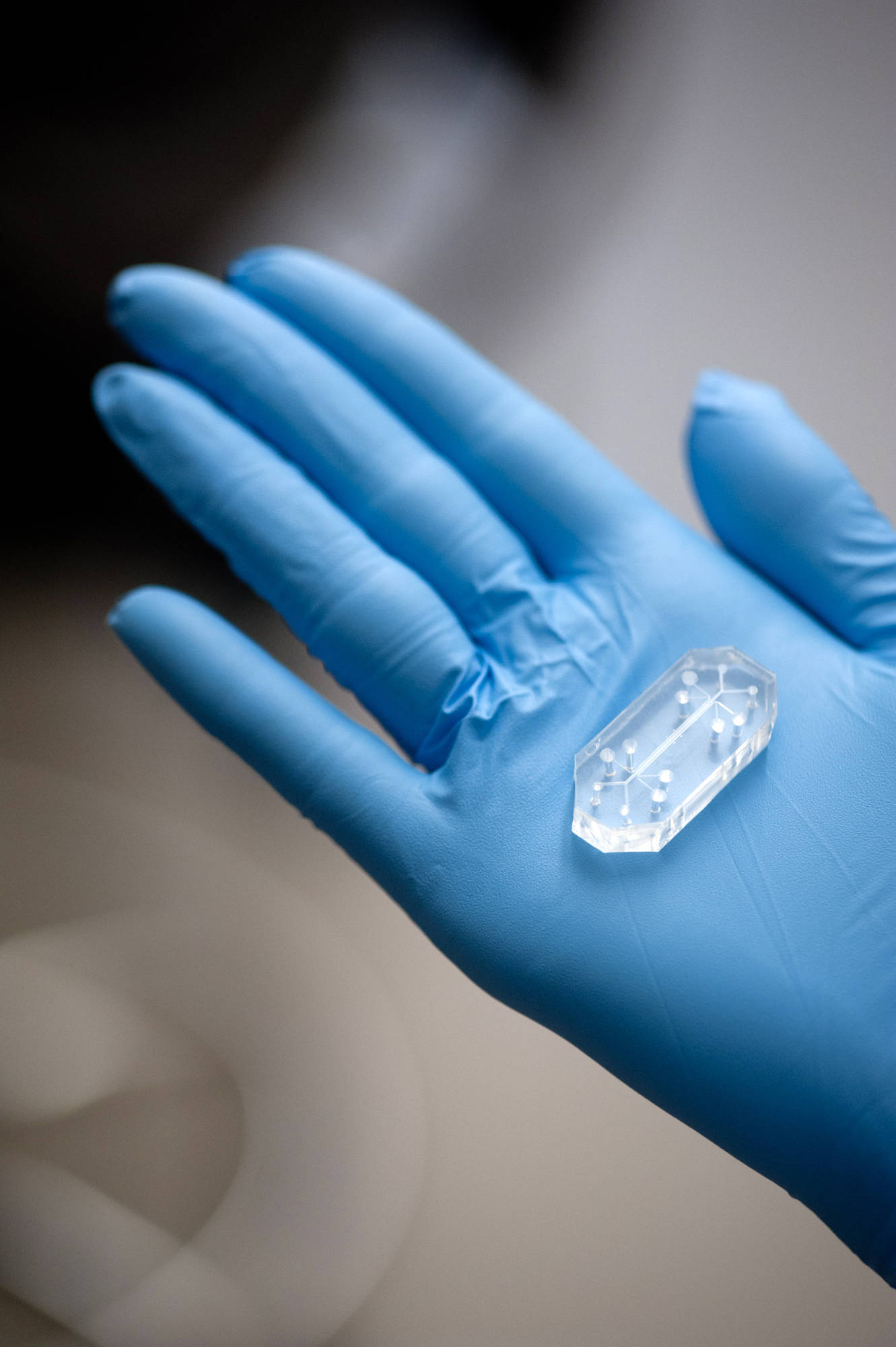
It may not look like it, but it's a lung, just in chip form
They don’t look like much sitting in your hand. A few pieces of clear plastic, each smaller than an Altoids tin, with channels visible inside and holes for plugging tubing into them.

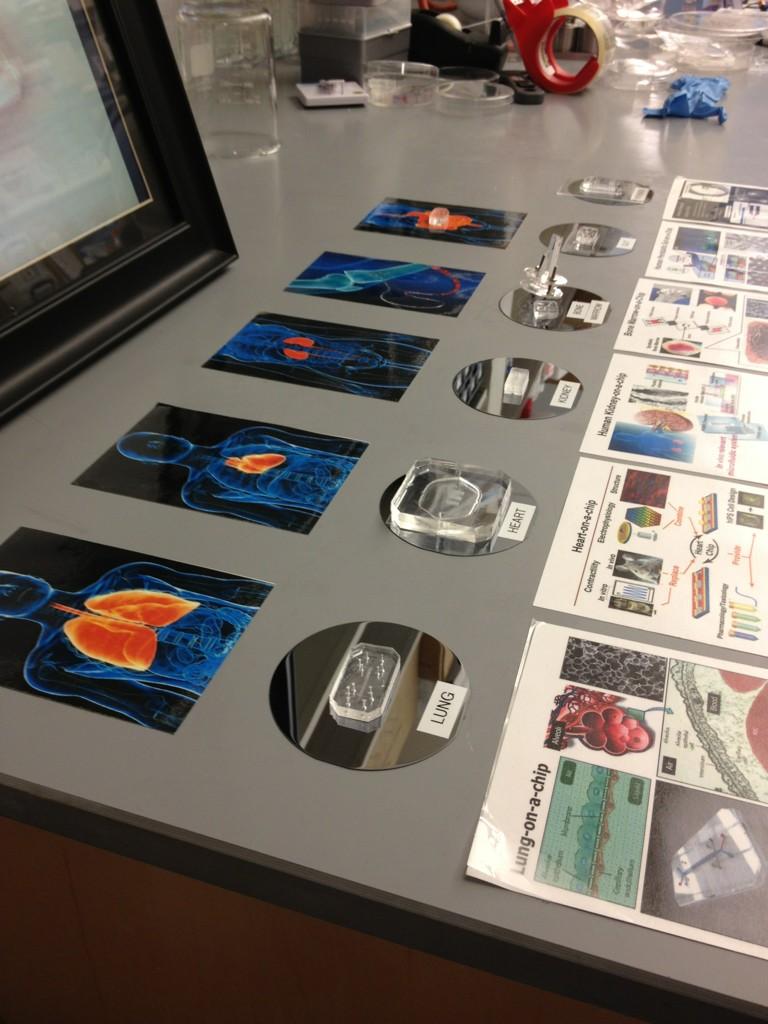
But fill them with cells and treat those cells the right way, and they turn into something amazing: tiny hearts, lungs, guts, kidneys.

They’re “organs on chips,” and they represent what’s probably the most comprehensive effort to date to physically model the functions of whole organs for drug development and disease research.

Developed by a team of biologists and engineers led by Donald Ingber, MD, PhD, a member of Boston Children’s Hospital’s Vascular Biology Program and director of the Wyss Institute for Biologically Inspired Engineering at Harvard, they’re the building blocks for an ambitious project to create an artificial multi-organ system—essentially, a whole body on a chip.

Each of the chips—Ingber’s team is currently developing 10 different organs—is built using microfabrication techniques like those common in the semiconductor industry.This allows us to create features and structures that we can control at the size scale in which cells live, and also apply physiological fluid flows and mechanical forces,” Ingber explains. “We have precise control over where cells live in the device and what they experience.

Going through the motions
The two features Ingber mentioned, flow and force, are instrumental in faithfully mimicking organ function. His lung on a chip, for instance, has a central microfluidic channel that is split into two parallel channels by porous flexible membrane. One side of the membrane is coated with human lung “air sac” cells (over which air can pass), the other with human lung capillary blood vessel cells. A combination of pumps subject the cells to the sensations of continuous blood flow and rhythmic breathing by moving culture medium through the blood vessel channel and applying suction that deforms the cell-coated membrane.

This video from the Wyss Institute explains in more detail:


Those forces incite dramatic responses from the cells in the chips. “You can put endothelial [blood vessel] and epithelial [air sac] cell cultures together, but they won’t reflect the range of functions you see in a real lung,” Ingber says. “This is because respiratory physiology relies on the mechanics of breathing and blood flow.

For instance, once we added breathing motions to the chip,” he adds, “the epithelial cells started producing surfactant, just like what happens in the lining of a normal lung when a baby takes its first breath.
“[O]nce we added breathing motions to the [lung] chip, the epithelial cells started producing surfactant, just like what happens…when a baby takes its first breath.”
Similarly, Ingber’s lab recently revealed that breathing motions were essential for using the lung chip to mimic the pulmonary edema (fluid leakage from blood vessels into the lungs) that occurs in some cancer patients treated with the drug interleukin-2—the first demonstration that chips could model a complex human disease, as well as a drug toxicity.

Ingber’s team has also developed a chip that models the complex environment of the human gut—including its microbial inhabitants. “Once we added a trickling flow of medium and peristaltic motions, the cells in the chip started forming structures similar to intestinal villi,” he says. “Now we’ve added bacteria, and can start to study the relationship between the microbiome and human intestinal disease processes.

Ingber's expanding repertoire of organs-on-chips could soon be linked together to create a whole body on a chip.
With a host of chips now in hand, Ingber and his team are now working with the federal Defense Advanced Research Project Agency to create a system for linking chips representing different organs together. The system will allow broader study of organ physiology and also how drugs affect multiple organs—the first step toward simulating a complete living body.

We want to be able to administer a drug via the ‘gut’ or ‘lungs,’ see how it is metabolized by the ‘liver,’ excreted by the ‘kidney,’ and whether it causes toxicity in the ‘heart,’” says Ingber. “We also want to model a broad range of disease states, like asthma, Crohn’s, radiation exposure and so on.

He’s also talking to the Food and Drug Administration about potentially accepting organ-on-chip data as part of the drug approval process in addition to or, in the future, in lieu of animal data.We’ve only just started the discussion, but we hope they’ll one day accept human organ chip data instead of certain animal studies, just as they’ve begun to accept biomarker data.