Mostrando entradas con la etiqueta water. Mostrar todas las entradas

sábado, 18 de agosto de 2018

Our plastic problem is out of control. Here’s how we can fight it


The worldwide total volume of plastic has reached 8.3 billion metric tons, the equivalent of more than 800,000 Eiffel Towers. Image: REUTERS/Damir Sagolj
On a street in Phnom Penh, Cambodia, a seafood café is setting up for the evening rush. Styrofoam boxes are ripped open. The broken tops are dumped in the street. Plastic bags full of prawns are emptied into trays, then thrown out. In a few minutes, a small mountain of trash piles up on the sidewalk. As a rickshaw trundles by, its riders chuck an empty plastic drink container onto the heap. This is one of the hundreds of mounds of plastic that dot this rapidly urbanizing city.

In April, The Guardian featured a shocking photo essay on the accumulation of plastic in the Cambodian city of Sihanoukville. It showed mountains of trash dumped on streets and beaches. But this plastic dystopia is not unique to Cambodia. If we don’t act now and cut it out of our daily lives, we, as well as the environment, will suffer irreparable harm.

We live in a world of plastic. It is an amazingly convenient material - cheap, light, flexible, and durable. Used for bags, bottles, and containers, it is in our homes, schools, and workplaces. But that rampant use has come at a heavy price.

The worldwide total volume of plastic has reached 8.3 billion metric tons, the equivalent of more than 800,000 Eiffel Towers, according to a 2017 article in Science Advances. Of this enormous amount, 6.3 billion metric tons have been disposed as waste.

Around 10 million plastic bags are used in Phnom Penh every day, according to the ACRA Foundation. Urban Cambodians use more than 2,000 plastic bags every year.

Around 90% of the world’s plastic waste ends up in the ocean. Most of it arrives by way of just 10 major rivers, one of which is the Mekong. Every year, 8 million tons of plastic reach the ocean, which is the equivalent of a full garbage truck every minute.

The biggest problem is that plastic does not biodegrade easily. It stays around for thousands of years. Slowly, it leaks chemical substances that are harmful to the environment, for animals and for people.

In marine areas, many mammals, fish, and birds suffer from ingesting plastic or becoming entangled in plastic materials. More than 90% of all birds and fish are reported to have plastic particles in their stomach. In this way, toxic chemicals accumulate and pass through the food chain. Since fish comprises more than 60% of the protein intake for rural Cambodians, this is a significant problem.
A landfill site in Siem Reap, Cambodia
Image: UNDP
For all these reasons, taking action to mitigate the harmful impacts of plastic is an urgent task. So what can be done?
It is heartening that many countries have implemented policy measures to tackle their plastic problem. Last year, Kenya completely banned the production, sale, and use of plastic bags. Violations may result in imprisonment of up to four years or fines of up to $40,000. Many other countries, including Bangladesh, Rwanda, and China, are following Kenya’s lead, putting in place either total or partial bans on plastic bags, or new forms of plastic taxation.

In Cambodia, too, new initiatives are emerging to fight plastic pollution. In April, the Ministry of Environment introduced new regulation for the use of plastic bags. Major supermarkets such as Aeon and Lucky now charge 10 cents per bag. The Ministry of Environment is also considering plans for jute bags as an alternative. The school curriculum is being updated to educate future generations on the harm caused by plastics.

Have you read?

One promising idea to fight plastic pollution is known as the circular economy, which focuses on Waste Reduction, Reuse, and Recycling (3R). In a circular economy, waste is treated as a valuable material that should be reused or recycled, not only in order to reduce the volume of trash but also to generate new economic opportunities.

Image: SmartSign.com
First of all, this requires policies that actively encourage a 3R approach to plastic waste. For example, the EU adopted a Circular Economy Action Plan in 2016, which includes targets for recycling 75% of packaging waste by 2030 and making all plastic packaging recyclable by the same date. The EU is also proposing a ban on the most commonly used single-use plastic products.

But making a circular economy take off also requires the active involvement of citizens and the private sector. Even small individual acts, such as bringing one’s own shopping bag to the market, contribute to lowering the amount of plastic waste. Businesses can ban plastic bags and encourage the use of biodegradable bags. The United Nations Development Programme in Cambodia has done so, at its office. Hotels and factories have the opportunity to create networks of recycling and reusing materials, simultaneously saving money and decreasing waste.

In order to introduce lasting change, it is critical to raising awareness. This can happen through environmental education and information campaigns, directed at young people especially, as well as at the private sector.

Finally, new approaches to good solid waste management are essential. Given the mountains of plastic we generate, this won’t be easy. But if we all commit to beating plastic pollution, we can make a monumental difference.

Nick Beresford United Nations Development Programme Country Director, Cambodia
Moeko Saito Jensen Senior Policy Advisor, United Nations Development Programme in Cambodia
George Edgar  Ambassador, Head of European Union Delegation to Cambodia
Maria Sargren Ambassador of Sweden to Cambodia

lunes, 8 de enero de 2018

Hybrid solid-state system harvests more hydrogen from water

(From left) Junyoung Kim, Professor Guntae Kim, and Ohhun Gwona are part of the team who developed the Hybrid-SOEC, a more efficient new system for producing hydrogen(Credit:UNIST)
Clean and plentiful, hydrogen is a promising fuel source, but there are a few problems standing in the way of it becoming mainstream. South Korean scientists have now developed a new system for producing hydrogen from water, which that they say overcomes some of these issues and produces the gas more efficiently than other water electrolysis systems.

The new device was developed by a research team consisting of scientists from the 
and is based on an existing design called a solid oxide electrolyzer cell (SOEC).

These work like other electrolyzers in that an electrical current splits water into its constituent molecules – hydrogen and oxygen – which can then be harvested. The difference is that in this setup, both electrodes are solid-state, as is the electrolyte that carries the ions between them.

This has a few advantages over systems that use liquid electrolytes – namely, 
  • the liquids need to be topped up occasionally, and over time they tend to corrode other components. 
  • And since solid-state electrolyzers operate at higher temperatures, they don't need as much electrical energy to function because they can draw energy from that heat.
But SOECs still have room for improvement. There are two main designs that use different electrolytes: 
  • One allows only oxygen ions to pass through, and 
  • the other only hydrogen ions. 
In either case, that one-way street limits the amount of hydrogen that can be produced.


So the researchers developed a new Hybrid-SOEC, which uses a mixed-ion conductor to transport both negatively-charged oxygen ions and positively-charged hydrogen ions (protons) at the same time. The end result had all the benefits of a solid-state electrolyzer, with improved efficiency.

"By controlling the driving environment of the hydrogen ion conductive electrolyte, a 'mixed ion conductive electrolyte' in which two ions pass can be realized," says Junyoung Kim, first author of the study. "In Hybrid-SOEC where this electrolyte was first introduced, water electrolysis occurred at both electrodes, which results in significant increase in total hydrogen production."

Using the mixed-ion conductor and electrodes made of layered perovskite, the Hybrid-SOEC produced 1.9 liters (0.5 gal) of hydrogen per hour, running at a cell voltage of 1.5 V and a temperature of 700° C (1,292° F). The researchers say that's four times more efficient than existing water electrolysis systems, and after running the device continuously for 60 hours, there were no signs of that performance degrading.

The research was published in the journal Nano Energy.


Source: UNIST

ORIGINAL: New Atlas
December 28th, 2017

sábado, 21 de octubre de 2017

Miniature water droplets could solve an origin-of-life riddle, Stanford researchers find

Before life could begin, something had to kickstart the production of critical molecules. That something may have been as simple as a mist made up of tiny drops of water.

It is one of the great ironies of biochemistry:  life on Earth could not have begun without water; yet water stymies some chemical reactions necessary for life itself.
Chemistry Professor Richard Zare(Image credit: L.A. Cicero)
Now, researchers report today in Proceedings of the National Academy of Sciences, they have found a novel, even poetic solution to the so-called “water problem” in the form of miniature droplets of water, formed perhaps in the mist of a crashing ocean wave or the clouds in the sky.

The water problem relates primarily to the element phosphorous, which is attached to a variety of life’s molecules through a process called phosphorylation. “You and I are alive because of phosphorus and phosphorylation,” said Richard Zare, a professor of chemistry and one of the paper’s senior authors. “You can’t have life without phosphorous.”

The water problem
Phosphorous is a necessary ingredient in many molecules critical for life, 
  • including our DNA, 
  • it’s relative RNA and 
  • in the molecule that makes up our body’s energy storage system, called ATP. 
But ordinarily water gets in the way of producing those chemicals. Modern life has evolved ways of sidestepping that problem in the form of enzymes that help phosphorylation along. But how primitive components of these molecules formed before the workarounds evolved remains a controversial and at times slightly oddball subject. Among the proposed solutions are highly reactive forms of extraterrestrial phosphorous and heating powered by naturally occurring nuclear reactions.

Microdroplets solve the phosphorylation problem in a relatively elegant way, in large part because they have geometry on their side. It turns out that water is mostly a problem when the phosphate is floating around inside a pool of water or a primitive ocean, rather than on its surface.

Microdroplets are mostly surface. They perfectly optimize the need for life to form in and around water, but with enough surface area for phosphorylation and other reactions to occur.

In fact, the large amount of surface area provided by microdroplets is already known to be a great place for chemistry. Previous experiments suggest microdroplets can increase reaction rates for other processes by a thousand or even a million times, depending on the details of the reaction being studied.

Spontaneous molecules
Microdroplets seemed like a possible solution to the water problem. But to show that they really work, Zare and his colleagues sprayed tiny droplets of water, laced with phosphorous and other chemicals, into a chamber where the resulting compounds could be analyzed. They found several phosphate-containing molecules occurred spontaneously on these lab-made microdroplets without any catalyst to get them started. Those molecules included sugar phosphates, which are a step in how our cells create energy, and one of the molecules that make up RNA, a DNA relative that primitive organisms use to carry their genetic code. Both reactions are rare at best in larger volumes of water.

That observation, joined with the fact that microdroplets are ubiquitous – from clouds in the sky to the mist created by a crashing ocean wave – suggests that they could have played a role in fostering life on Earth. In the future, Zare hopes to look for phosphates that make up proteins and other molecules.

Even if he can produce those compounds, however, Zare does not believe he and his colleagues will have found the one true solution to the origin of life. “I don’t think we’re going to understand exactly how life began on Earth,” said Zare, who is also the Marguerite Blake Wilbur Professor in Natural Science. Essentially, he said, that is because no one can go back in time to watch what happened as life emerged and there is no good fossil record for the formation of biomolecules. “But we could understand some of the possibilities,” he added.

Zare is also a member of the Stanford Cardiovascular Institute, the Stanford Cancer Institute, the Stanford Neurosciences Institute and the Stanford Woods Institute for the Environment. Additional Stanford authors are postdoctoral fellows Inho Nam and Jae Kyoo Lee. Hong Gil Nam of DGIST in South Korea is co-senior author with Zare. The work was supported by the Institute for Basic Science (South Korea) and the U. S. Air Force Office of Scientific Research through a Basic Research Initiative grant.


ORIGINAL: Stanford News
BY NATHAN COLLINS
OCTOBER 20, 2017

viernes, 24 de marzo de 2017

Chance find has big implications for water treatment's costs and carbon footprint

Pipeline power. iStockphoto
A type of bacteria accidentally discovered during research supported by the Engineering and Physical Sciences Research Council (EPSRC) could fundamentally re-shape efforts to cut the huge amount of electricity consumed during wastewater clean-up.

The discovery has upended a century of conventional thinking. The microorganisms - 'comammox' (complete ammonia oxidising) bacteria - can completely turn ammonia into nitrates. Traditionally, this vital step in removing nitrogen from wastewater has involved using two different microorganisms in a two-step approach: 

  1. ammonia is oxidised into nitrites that are then oxidised into nitrates, 
  2. which are turned into nitrogen gas and flared off harmlessly.
The outcome could be a big rethink regarding the energy-saving innovations developed over the last two to three decades in the field of nitrogen removal. Wastewater treatment is a huge consumer of electricity, accounting for 2-3 per cent of all power usage in western countries, and no less than 30 per cent of its energy bill results from the need to remove nitrogen. Most of the sector's efforts to reduce its energy use have focused on the two-microorganism approach.

The discovery was made by scientists working on the EPSRC-funded Healthy Drinking Water project, which is being led by the University of Glasgow and is due to publish its core findings later this year.

Dr Ameet Pinto has led the team, which has worked in collaboration with the University of Michigan in the US. He says: This discovery took us completely by surprise. It's a superb example of how EPSRC support provides a secure platform for a can-do environment enabling researchers to achieve important spin-off breakthroughs in addition to the primary goals of their research.

Comammox was found in a drinking water system in the US. Other research groups have also detected it in wastewater treatment plants, in groundwater and even in aquaculture systems.

Dr Pinto says: The discovery of a single microorganism capable of full nitrification will have a significant impact on our understanding of the nitrogen cycle and on efforts to manage nitrogen pollution. The potential is there for the wastewater treatment sector to exploit this breakthrough, which other teams in Europe have made in parallel with us.

That would be an important step towards informing the development of robust approaches in terms of cutting costs and reducing carbon emissions associated with generating the huge amounts of electricity that the sector uses. It's a great story to highlight on World Water Day.

Notes for Editors:
The two-year Healthy Drinking Water project, which began in March 2015, is receiving a total of around £250,000 in EPSRC funding.
Engineering and Physical Sciences Research Council (EPSRC)

As the main funding agency for engineering and physical sciences research, our vision is for the UK to be the best place in the world to Research, Discover and Innovate. By investing £800 million a year in research and postgraduate training, we are building the knowledge and skills base needed to address the scientific and technological challenges facing the nation. Our portfolio covers a vast range of fields from healthcare technologies to structural engineering, manufacturing to mathematics, advanced materials to chemistry. The research we fund has impact across all sectors. It provides a platform for future economic development in the UK and improvements for everyone's health, lifestyle and culture. We work collectively with our partners and other Research Councils on issues of common concern via Research Councils UK.

The University of Glasgow
The University of Glasgow is the fourth oldest university in the English-speaking world and today is in the top 1% of the world's universities. With more than 25,000 undergraduate and postgraduate students, it is ranked 63rd in the world and was the first UK university to be rated as 5 Stars Plus overall. (QS World University Rankings 2016).

Reference: PN 20-17

Contact Details
In the following table, contact information relevant to the page. The first column is for visual reference only. Data is in the right column.
Organisation: Northeastern University, USA
Telephone: (+1) 617 373 5241

ORIGINAL: EPSRC
22 March 2017

jueves, 2 de marzo de 2017

Future of Farming and Technology Grow Together

In the Salad Bowl, Silicon Prairie and other top producing farmlands of the world, attention is turning to technology and education to bring agriculture into the Digital Age.

California’s first tech pioneers didn’t innovate in a garage. They worked out of a barn. These early risk-takers aggressively developed effective farming tools in the 1800s, turning California into an agricultural powerhouse in a few short decades.

One of the central places of this history, Salinas, CA, is still a hotbed for agriculture technology innovation. It has become a world leader in leveraging
  • cloud computing, 
  • robotics and 
  • the Internet of Things 
into farming practices.
In the 1800s, Salinas residents pushed modernization forward. They mechanized aspects of farming and radically increased yields. During the 1920s, almost overnight they shifted from commodities like wheat to high value vegetables and fruits. This entrepreneurial spirit earned Salinas Valley the nickname, “Salad Bowl of the World.”

Along the way, innovative land owners and hard-working migrants together turned Salinas into one of the world’s top agricultural areas of the world. John Steinbeck immortalized the struggles and triumphs in novels like East of Eden.

Salinas Valley is special for many reasons. The climate is mild and allows crops to grow year-round. Water is especially abundant in the aquifers under the valley. In the 1800s, farmers could ship their goods from a Pacific Ocean port just 12 miles away or send it up and down El Camino Real (now, Highway 101), then the most important road on the west coast. A century and a half later, just 90 miles away from Salinas, sprawling orchards transformed into Silicon Valley, the world’s technology capitol.


The Ag and Tech Worlds Collide
Many farmers are quick to point out they’ve been using laptops and phones just like everyone else, and many of their processes are tracked or managed digitally. Despite the close proximity between Salinas and Silicon Valley, local farmers wonder if agriculture-technology will ever bare big fruit.

A combination of newer technologies, however, just might change all of that, according to Hank Giclas, who oversees technology planning for Western Growers, a trade group representing farmers in California, Arizona and Colorado.

One of the most fundamental shifts has been wireless access to the Internet and the cloud,” he said. “It gives farmers much greater insight into their operations, and they’re able to find efficiencies and optimize like never before.

When Western Growers opened its Center for Innovation and Technology in downtown Salinas in 2015, the organization felt it was the right time to address the needs of its members to help spark ag tech innovation. The center provides support for
  • startups, 
  • investors and 
  • growers 
to develop solutions in areas ranging from 
  • computer vision, 
  • cloud, 
  • robotics, 
  • drones, 
  • automation, 
  • food safety and 
  • plant breeding.
I’m really interested in the rapid shifts in sensing technology,” Glicas added. “There’s a whole new wave of precision farming that’s coming to the fresh produce sector through sensor technology, and we need to sort that out.

Sensors that measure precipitation, soil moisture, temperature, sunshine and wind can, in various ways, can make fertilizing, watering and harvesting more efficient. Farmers and technologists are working together to understand how to use sensors and cloud technologies that leverage real-time and historical data, all to help make decisions at critical times.


Venture capital has been flowing into precision agriculture in areas like drone technology, automation and robotics. Dan Hodgson, a North Dakota venture capitalist who runs the firm Farm Quality Assurance, offered a similar viewpoint about the high-tech initiatives coming down the pike.

One thing we’re interested is machine communication,” he said. “We are working with spectral soil analysis so that we can bring infrared and X-ray images of fields quickly, at a lower cost, to farmers.”

Hodgson explained that information technology has had a limited role in farming, not because innovation wasn’t feasible, but agriculture is a different kind of market.

The cost of market adoption is tremendous in agriculture,” he said. “The distribution system is narrow, and new products have to work well right from the start. There’s not a lot of room for creating products just to see if they sell.

Hodgson pointed out that by using wireless, cloud computing and other technologies, farmers and markets are accessing better information, and this is advancing agriculture.


Hodgson’s company is one of many in Fargo, North Dakota, a city that has emerged as a Silicon Prarie hotspot and hosts Microsoft’s third largest campus. Many in Fargo’s ag tech scene are following in the footsteps of pioneers who established the Great Plains,  including some descendants who are turning to information technology to sustain and even reinvent their family farm.

Ag Solutions for the 21st Century
Ag tech clusters like the ones in Salinas and Fargo have sprung up around the world to figure out how to solve some of farming’s biggest challenges. With a global population expected to reach 8.5 billion by 2030, according to United Nations’ estimates, a vision for Ag 2.0 is required to help feed the world’s people.

In Israel, the Agriculturale Research Organization (ARO), founded in 1921, has been studying how to make the desert bloom.

ARO is significant because its mission is not only scientific and environmental, but also geo-political as food self-sufficiency is an important part of the country’s national security. Today, ARO is focused on 
  • water conservation technology, 
  • climate change, 
  • sustainability and 
  • food safety.
Agriculture technician at Philips HTC City Farm Eindhoven, Netherlands.
Holland, second only to the U.S. in terms of exporting agriculture technology, is a long time ag tech innovator. The Dutch revolutionized the moldboard plow in the 1600s with a feature that turns the soil over. It remains an important design element in modern plows.

Today the country is home to more than 4,000 so-called agrifood companies including major players like Cargill, Monsanto, and ConAgra. Holland recently hosted its 2nd annual platform for innovation, Dutch AgriFood Week. The event includes an Agri Accelerator Seminar for startups as well as TEDx talks on the future of farming and food.

Each ag tech hub has a different disposition, but they share a similar desire for innovation.

Farms in South America, especially here in Argentina, are large operations and aggressively want technology advances” noted Ciro Echesortu, Program Coordinator for the Buenos Aires-based NXTP Labs, an early-stage fund for ag tech companies in Latin America. The company launched its first fund in July of 2016 and plans a 2nd one this summer. The goal is not only to spur development but to keep South American farm technology companies close to home.

What does it take to have an ag tech hub?” asked Dennis Donohue, the former mayor of Salinas.

First, you have to have a culture of innovation already in place,” he explained. “And, you have to have a place to innovate, a place where you can deploy and evaluate new technologies.

Donohue currently heads up initiatives for the Western Growers Center for Innovation and Technology. He said Salinas, with its proximity to Silicon Valley, is attracting entrepreneurs eager to bring transformative technologies to agriculture. 
robotic vegetable picker
Soft robotic vegetable picker.
I may be biased, but I think Salinas is the best ag tech platform on the planet.

The massive farmland, stretching from central California to the interior of Mexico, with its connection to Silicon Valley entrepreneurs positions Salinas well as an agriculture technology leader. While farming-meets-information-technologies is the current zeitgeist, it still needs to be fully developed.

About 25 years ago, I was taking a marketing class in the Silicon Valley area,” said Jeff Lusheg, a produce consultant. On the first day of class, as the students introduced themselves around the room, most identified themselves as engineers or marketing people in high tech.

When I described what I did in the produce industry, everybody just cracked up laughing as if it were the most bizarre thing they’d ever heard.

That’s obviously changed he said.

The culture that you find in Salinas is you never know if the farmer you see wearing jeans and driving a pickup truck is an MBA from Harvard or Stanford,” Lusheg added, “There are some very tech-savvy people here.

Supporting Future Ag Tech Innovators
Excitement about the future of farming isn’t limited to entrepreneurs bringing new technologies to the fields. It’s about educating the next generation of farmers and workers. Maggie Malone, director of the K-12 STEM program at Hartnell College, oversees a project that provides free classes to children, many of which come from farm worker families. These classes include subjects like coding, math and aerospace.


Most of the parents aren’t well-educated and they don’t have the resources to pay for something like what the STEM program offers, but they see the results,” she said. “It’s amazing.

Hartnell’s STEM program started just 5 years ago with a grant from NASA. Malone was the only teacher — a part timer — but since then she has gone full-time and added a staff of 10.

We were mandated to serve 625 students per year with the money that they gave us. But very quickly we doubled and tripled those numbers, so we went out and got extra funding from private sources.

Soon enough, the college started a partnership with Salinas to create a CoderDojo program.

Every time we get a new grant and a new request for the program it makes me shiver,” Malone said, adding that she watches her students take the excitement of technology with them as they go higher in their grade levels.

They are the future of Salinas.


ORIGINAL: IQ Intel
Jason Lopez Writer 
January 24, 2017

martes, 28 de febrero de 2017

Nature’s water purifiers help clean up lakes

(Copyright: Floating Islands International)
More and more of our waterways are being starved of life through pollution. One simple, yet improbable, solution? Cover rafts in plants.

In the shallow waters of Gijon harbour, in northern Spain, swims scientists' latest weapon in the war against pollution.

Just five years ago, Fish Fry Lake was dying. The groundwater flowing into the lake situated 30 miles northeast of Billings, Montana, contained high levels of nitrogen and phosphorous, common ingredients in agricultural fertilisers and animal waste. The nitrogen and phosphorus had fostered an overgrowth of algae, which covered the lake and blocked sunlight from penetrating the surface. The deep water was a dead zone, devoid of oxygen and home to very little aquatic life.

The solution was as simple as it was improbable: cover rafts with plants, and set them afloat in the lake. Within a year-and-a-half, the algal blooms were gone. Water clarity improved. Oxygen levels rose. Today, the lake is home to a thriving community of fish, including black crappie, yellow perch and Yellowstone cutthroat trout.

The story of Fish Fry Lake demonstrates the power of mimicking wetlands to clean up dirty waterways. Wetlands are sometimes called nature’s own water purifiers: as dirty water moves through a sprawling marsh, the bacteria that cling to wetland plants, timber, rocks, and other debris consume and process some common water pollutants. Other contaminants get trapped in the mud and muck. As result of these and other processes, the water that eventually flows out of a wetland is much cleaner than the stream that came trickling in.

By creating floating treatment wetlands out of small, human-engineered rafts of vegetation, researchers and entrepreneurs hope to provide these same ecological services to small, polluted bodies of water that may be far from a natural marsh. “BioHaven floating islands are concentrated wetland systems that are essentially biomimicking nature’s wetland effect,” says Bruce Kania, the founder and research director of Floating Island International, the company behind the Fish Fry Lake rafts.
ORIGINAL: Floating Island International
Cleansing power
To construct a BioHaven island, the company starts with layers of mesh made from recycled plastic. They assemble this mesh into a floating raft – which can be as small as a home aquarium or nearly as large as a football field – and top it with soil and plants. They launch the island into a lake, pond, stream, or lagoon, anchoring it in place. Over time, the plants’ roots grow into and through the raft’s porous matrix, descending into the water below. At the same time, bacteria colonise the island, assembling into sticky, slimy sheets called biofilm that coat the floating matrix and the suspended plant roots.

This bacterial biofilm is the secret to a floating island’s cleansing power. Overgrowth of algae from nitrogen and phosphorus pollution can cause several problems, preventing sunlight from reaching subaquatic plants and starving a body of water of the oxygen needed to sustain fish populations and other animal life. A dead zone, like the one is Fish Fry Lake, is often the ultimate result. The biofilm bacteria consume nitrogen and phosphorous, however, and as polluted water flows through and around a floating island, the bacteria converts these contaminants into less harmful substances. Though the bacteria do the brunt of the work, the plant roots suspended from the floating island also play their part, absorbing some of the nitrogen and phosphorous through their roots.

In Fish Fry Lake, for instance, Floating Island International deployed several islands, which together covered almost 2% of the lake’s 6.5-acre (2.6-hectare) surface area. Over the course of four years, the islands helped reduce nitrogen concentrations by 95% and phosphorus concentrations by nearly 40%. Today, levels of dissolved oxygen are sixty times what they once were.

Clearer, cleaner, healthier
The system also mechanically filters out other pollutants, like metals and particulates. “The sticky biofilm essentially keeps the water clear because all the suspended solids tend to bond to it,” says Kania. Floating Island International, which has deployed more than 4,400 of their artificial wetland systems worldwide, has documented this effect in multiple case studies. For example, the concentrations of suspended solids, copper, lead, zinc, and oil and grease fell dramatically after a floating island was installed in a stormwater pond in Montana. Controlled laboratory studies and research by scientists not affiliated with the company have alsofound that floating treatment wetlands can reduce the levels of many common water pollutants.

Some scientists are now exploring how to optimise the design of floating islands – probing, for instance, which plants do the best job of removing pollutants. Gary Burtle, an aquaculture specialist at the University of Georgia, thinks we can get even more out of these artificial wetlands by seeding the rafts with plants that are of commercial value, such as lettuces and herbs. Burtle is screening a number of potential plant candidates – if he finds one that grows well on a floating island, we may soon see constructed wetland systems that “give us a little bit more return”, he says, producing saleable crops while purifying the water.

Meanwhile, the removal of contaminants not only improves the water itself, but also helps to foster a healthier ecosystem. Clearer water allows light to penetrate deeper, encouraging the growth of various aquatic plants, which produce oxygen and become part of the food chain, supporting larger populations of fish and other animals. “You end up with a waterway that can be abundant,” Kania says, “that can be verdant even at depth.” The organic debris that attaches itself to the underside of a floating island also becomes a source of food for fish and other aquatic organisms, and the island itself provides new habitat for birds.

The concept of how to get back to a healthy waterway,” Kania says, “is very simple: nature’s wetland effect.” All we have to do is simulate it.

ORIGINAL: BBC
Emily Anthes

miércoles, 22 de febrero de 2017

NASA Telescope Reveals Largest Batch of Earth-Size, Habitable-Zone Planets Around Single Star

This illustration shows the possible surface of TRAPPIST-1f, one of the newly discovered planets in the TRAPPIST-1 system. Scientists using the Spitzer Space Telescope and ground-based telescopes have discovered that there are seven Earth-size planets in the system.
Credits: NASA/JPL-Caltech

NASA's Spitzer Space Telescope has revealed the first known system of seven Earth-size planets around a single star. Three of these planets are firmly located in the habitable zone, the area around the parent star where a rocky planet is most likely to have liquid water.

The discovery sets a new record for greatest number of habitable-zone planets found around a single star outside our solar system. All of these seven planets could have liquid water – key to life as we know it – under the right atmospheric conditions, but the chances are highest with the three in the habitable zone.

This discovery could be a significant piece in the puzzle of finding habitable environments, places that are conducive to life,” said Thomas Zurbuchen, associate administrator of the agency’s Science Mission Directorate in Washington. “Answering the question ‘are we alone ?’ is a top science priority and finding so many planets like these for the first time in the habitable zone is a remarkable step forward toward that goal.

Seven Earth-sized planets have been observed by NASA's Spitzer Space Telescope around a tiny, nearby, ultra-cool dwarf star called TRAPPIST-1. Three of these planets are firmly in the habitable zone.
Credits: NASA

The TRAPPIST-1 star, an ultra-cool dwarf, has seven Earth-size planets orbiting it. This artist's concept appeared on the cover of the journal Nature on Feb. 23, 2017.
Credits: NASA/JPL-Caltech

At about 40 light-years (235 trillion miles) from Earth, the system of planets is relatively close to us, in the constellation Aquarius. Because they are located outside of our solar system, these planets are scientifically known as exoplanets.

This exoplanet system is called TRAPPIST-1, named for The Transiting Planets and Planetesimals Small Telescope (TRAPPIST) in Chile. In May 2016, researchers using TRAPPIST announced they had discovered three planets in the system. Assisted by several ground-based telescopes, including the European Southern Observatory's Very Large Telescope, Spitzer confirmed the existence of two of these planets and discovered five additional ones, increasing the number of known planets in the system to seven.

The new results were published Wednesday in the journal Nature, and announced at a news briefing at NASA Headquarters in Washington.

Using Spitzer data, the team precisely measured the sizes of the seven planets and developed first estimates of the masses of six of them, allowing their density to be estimated.

Based on their densities, all of the TRAPPIST-1 planets are likely to be rocky. Further observations will not only help determine whether they are rich in water, but also possibly reveal whether any could have liquid water on their surfaces. The mass of the seventh and farthest exoplanet has not yet been estimated – scientists believe it could be an icy, "snowball-like" world, but further observations are needed.

"The seven wonders of TRAPPIST-1 are the first Earth-size planets that have been found orbiting this kind of star," said Michael Gillon, lead author of the paper and the principal investigator of the TRAPPIST exoplanet survey at the University of Liege, Belgium. "It is also the best target yet for studying the atmospheres of potentially habitable, Earth-size worlds."

This artist's concept shows what each of the TRAPPIST-1 planets may look like, based on available data about their sizes, masses and orbital distances.
Credits: NASA/JPL-Caltech
In contrast to our sun, the TRAPPIST-1 star – classified as an ultra-cool dwarf – is so cool that liquid water could survive on planets orbiting very close to it, closer than is possible on planets in our solar system. All seven of the TRAPPIST-1 planetary orbits are closer to their host star than Mercury is to our sun. The planets also are very close to each other. If a person was standing on one of the planet’s surface, they could gaze up and potentially see geological features or clouds of neighboring worlds, which would sometimes appear larger than the moon in Earth's sky.

The planets may also be tidally locked to their star, which means the same side of the planet is always facing the star, therefore each side is either perpetual day or night. This could mean they have weather patterns totally unlike those on Earth, such as strong winds blowing from the day side to the night side, and extreme temperature changes.

Spitzer, an infrared telescope that trails Earth as it orbits the sun, was well-suited for studying TRAPPIST-1 because the star glows brightest in infrared light, whose wavelengths are longer than the eye can see. In the fall of 2016, Spitzer observed TRAPPIST-1 nearly continuously for 500 hours. Spitzer is uniquely positioned in its orbit to observe enough crossing – transits – of the planets in front of the host star to reveal the complex architecture of the system. Engineers optimized Spitzer’s ability to observe transiting planets during Spitzer’s “warm mission,” which began after the spacecraft’s coolant ran out as planned after the first five years of operations. 

"This is the most exciting result I have seen in the 14 years of Spitzer operations," said Sean Carey, manager of NASA's Spitzer Science Center at Caltech/IPAC in Pasadena, California. "Spitzer will follow up in the fall to further refine our understanding of these planets so that the James Webb Space Telescope can follow up. More observations of the system are sure to reveal more secrets.

Following up on the Spitzer discovery, NASA's Hubble Space Telescope has initiated the screening of four of the planets, including the three inside the habitable zone. These observations aim at assessing the presence of puffy, hydrogen-dominated atmospheres, typical for gaseous worlds like Neptune, around these planets.

This 360-degree panorama depicts the surface of a newly detected planet, TRAPPIST 1-d, part of a seven planet system some 40 light years away. Explore this artist’s rendering of an alien world by moving the view using your mouse or your mobile device.
Credits: NASA

In May 2016, the Hubble team observed the two innermost planets, and found no evidence for such puffy atmospheres. This strengthened the case that the planets closest to the star are rocky in nature.

"The TRAPPIST-1 system provides one of the best opportunities in the next decade to study the atmospheres around Earth-size planets," said Nikole Lewis, co-leader of the Hubble study and astronomer at the Space Telescope Science Institute in Baltimore, Maryland. NASA's planet-hunting Kepler space telescope also is studying the TRAPPIST-1 system, making measurements of the star's minuscule changes in brightness due to transiting planets. Operating as the K2 mission, the spacecraft's observations will allow astronomers to refine the properties of the known planets, as well as search for additional planets in the system. The K2 observations conclude in early March and will be made available on the public archive.

This poster imagines what a trip to TRAPPIST-1e might be like.
Credits: NASA/JPL-Caltech
Spitzer, Hubble, and Kepler will help astronomers plan for follow-up studies using NASA's upcoming James Webb Space Telescope, launching in 2018. With much greater sensitivity, Webb will be able to detect the chemical fingerprints of water, methane, oxygen, ozone, and other components of a planet's atmosphere. Webb also will analyze planets' temperatures and surface pressures – key factors in assessing their habitability.

NASA’s Jet Propulsion Laboratory (JPL) in Pasadena, California, manages the Spitzer Space Telescope mission for NASA's Science Mission Directorate. Science operations are conducted at the Spitzer Science Center, at Caltech, in Pasadena, California. Spacecraft operations are based at Lockheed Martin Space Systems Company, Littleton, Colorado. Data are archived at the Infrared Science Archive housed at Caltech/IPAC. Caltech manages JPL for NASA.

For more information about Spitzer, visit:

For more information on the TRAPPIST-1 system, visit:

For more information on exoplanets, visit:

-end-

Felicia Chou / Sean Potter
Headquarters, Washington
202-358-1726 / 202-358-1536

Elizabeth Landau
Jet Propulsion Laboratory, Pasadena, Calif.
818-354-6425
Last Updated: Feb. 22, 2017
Editor: Karen Northon

ORIGINAL: NASA
Feb. 22, 2017
RELEASE 17-015

sábado, 20 de agosto de 2016

This tiny device makes dirty water drinkable in just 20 minutes

Jin Xie/Stanford University
Genius.

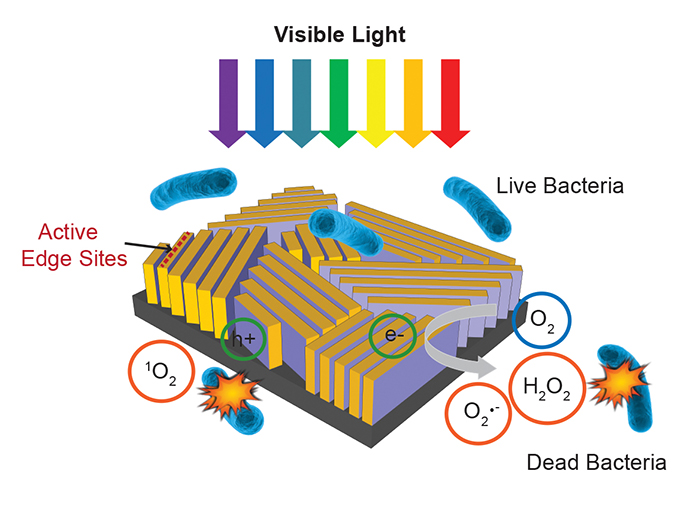
Scientists have developed a tiny device the size of a postage stamp that can kill 99.99 percent of bacteria in water in just 20 minutes.

Exposing contaminated water to sunlight can naturally clean it up – because UV rays blitz germs – but this distillation process usually takes up to 48 hours to complete. Instead, this new gadget harnesses a broader spectrum of the Sun's rays to speed everything up.


"Our device looks like a little rectangle of black glass," explains lead researcher Chong Liu from Stanford University. "We just dropped it into the water and put everything under the Sun, and the Sun did all the work."

It's the visible part of the solar spectrum, rather than UV rays, that contains most of the Sun's energy – around 50 percent for visible sunlight, compared with 4 percent for UV rays.

This visible sunlight attracts electrons in the device's coating of molybdenum disulfide (often used as an industrial lubricant), which sparks chemical reactions in the water.

Hydrogen peroxide and other disinfectants are generated from these reactions, which set about clearing the germs from the water.

Viewed under a microscope, the material is made up of many miniature walls of molybdenum disulfide, closely stacked together like a labyrinth on top of a rectangle of glass. From further out, it resembles a fingerprint.

A close-up look showing the molybdenum disulfide in purple and the copper in yellow. Credit: C. Liu et al., Nature Nanotechnology
"It's very exciting to see that by just designing a material you can achieve a good performance," says Liu. "It really works. Our intention is to solve environmental pollution problems so people can live better."

One important factor that could make the technology viable for the market is that molybdenum disulfide is cheap to produce. On top of that, money is also saved on fuel used in other purification methods, because the new device doesn't require the water to be boiled first.

The technique joins a number of other research efforts that are looking to purify water affordably for those in need. Earlier this year, we saw the cleaning properties of thin graphene sheets laid on water, and a biomaterial that pulls condensation from the air.

There's more work for the Stanford team to do before the device is ready for public use - only three strains of bacteria have been tested so far, and the coating isn't currently effective against chemical pollutants.

But while fresh and clean drinking water is something many of us take for granted, that's not the case for some 650 million people across the world –and that's something that has to change.

The research has been published in Nature Nanotechnology.

ORIGINAL: Science Alert
DAVID NIELD
19 AUG 2016

sábado, 30 de julio de 2016

Smart bricks will transform how buildings work

ORIGINAL: UWE Bristol

Smart bricks capable of recycling wastewater and generating electricity from sunlight are being developed by a team of scientists from the University of the West of England (UWE Bristol). The bricks will be able to fit together and create 'bioreactor walls' which could then be incorporated in housing, public building and office spaces


The UWE Bristol team is working on the smart technologies that will be integrated into the bricks in this pan European 'Living Architecture' (LIAR) project led by Newcastle University. The LIAR project brings together living architecture, computing and engineering to find a new way to tackle global sustainability issues.

The smart living bricks will be made from bio-reactors filled with microbial cells and algae. Designed to self-adapt to changing environmental conditions the smart bricks will monitor and modify air in the building and recognise occupants.

Each brick will contain Microbial Fuel Cells (MFCs) containing a variety of micro-organisms specifically chosen to 

  • clean water, 
  • reclaim phosphate, 
  • generate electricity and 
  • facilitate the production of new detergents, 
as part of the same process.

The MFCs that will make up the living engine of the wall of smart bricks will be able to sense their surroundings and respond to them through a series of digitally coordinated mechanisms.

Professor Andrew Adamatzky, LIAR Project Director for UWE Bristol, is leading the UWE Bristol team, he said, “The technologies we are developing aim to transform the places where we live and work enabling us co-live with the building.

“A building made from bio-reactors will become a large-scale living organism that addresses all environmental and energy needs of the occupants. Walls in buildings comprised of smart bricks containing bioreactors will integrate massive-parallel computing processors where millions of living creatures sense the occupants in the building and the internal and external environmental conditions.

“Each smart brick is an electrical analogous computer. A building made of such bricks will be a massive-parallel computing processor.”

A photo-bioreactor is a device that can be programmed to utilize a variety of inputs such as 

  • grey water, 
  • microbial consortia (algae and bacteria), 
  • carbon dioxide from the atmosphere, and 
  • different types of nutrient to generate outputs.
These outputs include

  • 'polished' water, 
  • fertiliser, 
  • extractable products (recoverable phosphate), 
  • oxygen, 
  • next generation biodegradable detergents, 
  • electricity, 
  • recoverable biomass, 
  • bio-fluorescence and to a certain extent, 
  • heat.

Professor Ioannis Ieropoulos, Director of the Bristol Bioenergy Centre (BBiC), at the Bristol Robotics Laboratory at UWE Bristol, said, “Microbial Fuel Cells are energy transducers that exploit the metabolic activity of the constituent microbes to break down organic waste and generate electricity. This is a novel application for MFC modules to be made into actuating building blocks as part of wall structures. This will allow us to explore the possibility of treating household waste, generating useful levels of electricity, and have 'active programmable' walls within our living environments.

Rachel Armstrong, Professor of Experimental Architecture at Newcastle University, UK, who is co-ordinating the project, said, “The LIAR project is incredibly exciting – it is bringing together living architecture, computing and engineering to find a new way to tackle global issues, like sustainability.

The €3.2m LIAR (Living Architecture) project is co-ordinated by Newcastle University working with experts from the universities of


The LIAR project has received funding from the European Union's Horizon 2020 research and innovation programme under grant agreement No. 686585