Mostrando entradas con la etiqueta Soya. Mostrar todas las entradas

miércoles, 24 de abril de 2013

Recipe for Low-Cost, Biomass-Derived Catalyst for Hydrogen Production

ORIGINAL: ScienceDaily

Apr. 24, 2013 — In a paper to be published in an upcoming issue of Energy & Environmental Science, researchers at the U.S. Department of Energy's Brookhaven National Laboratory describe details of a low-cost, stable, effective catalyst that could replace costly platinum in the production of hydrogen. The catalyst, made from renewable soybeans and abundant molybdenum metal, produces hydrogen in an environmentally friendly, cost-effective manner, potentially increasing the use of this clean energy source.

The research has already garnered widespread recognition for Shilpa and Shweta Iyer, twin-sister high school students who contributed to the research as part of an internship under the guidance of Brookhaven chemist Wei-Fu Chen, supported by projects led by James Muckerman, Etsuko Fujita, and Kotaro Sasaki.

"This paper reports the 'hard science' from what started as the Iyer twins' research project and has resulted in the best-performing, non-noble-metal-containing hydrogen evolution catalyst yet known -- even better than bulk platinum metal," Muckerman said.

The project branches off from the Brookhaven group's research into using sunlight to develop alternative fuels. Their ultimate goal is to find ways to use solar energy -- either directly or via electricity generated by solar cells -- to convert the end products of hydrocarbon combustion, water and carbon dioxide, back into a carbon-based fuel. Dubbed "artificial photosynthesis," this process mimics how plants convert those same ingredients to energy in the form of sugars. One key step is splitting water, or water electrolysis.

Splitting hydrogen from water: This illustration depicts the synthesis of a new hydrogen-production catalyst from soybean proteins and ammonium molybdate. Mixing and heating the ingredients leads to a solid-state reaction and the formation of nanostructured molybdenum carbide and molybdenum nitride crystals. The hybrid material effectively catalyzes the conversion of liquid water to hydrogen gas while remaining stable in an acidic environment. (Credit: Image courtesy of DOE/Brookhaven National Laboratory)
"By splitting liquid water (H2O) into hydrogen and oxygen, the hydrogen can be regenerated as a gas (H2) and used directly as fuel," Sasaki explained. "We sought to fabricate a commercially viable catalyst from earth-abundant materials for application in water electrolysis, and the outcome is indeed superb."

." ..the best-performing, non-noble-metal-containing hydrogen evolution catalyst yet known..."

This form of hydrogen production could help the scientists achieve their ultimate goal.

"A very promising route to making a carbon-containing fuel is to hydrogenate carbon dioxide (or carbon monoxide) using solar-produced hydrogen," said Fujita, who leads the artificial photosynthesis group in the Brookhaven Chemistry Department.

But with platinum as the main ingredient in the most effective water-splitting catalysts, the process is currently too costly to be economically viable.

Comsewogue High School students Shweta and Shilpa Iyer entered the lab as the search for a cost-effective replacement was on.

The Brookhaven team had already identified some promising leads with experiments demonstrating the potential effectiveness of low-cost molybdenum paired with carbon, as well as the use of nitrogen to confer some resistance to the corrosive, acidic environment required in proton exchange membrane water electrolysis cells. But these two approaches had not yet been tried together.

The students set out to identify plentiful and inexpensive sources of carbon and nitrogen, and test ways to combine them with a molybdenum salt.

"The students became excited about using familiar materials from their everyday lives to meet a real-world energy challenge," Chen recounted. The team tested a wide variety of sources of biomass -- leaves, stems, flowers, seeds, and legumes -- with particular interest in those with high protein content because the amino acids that make up proteins are a rich source of nitrogen. High-protein soybeans turned out to be the best.

To make the catalyst the team ground the soybeans into a powder, mixed the powder with ammonium molybdate in water, then dried and heated the samples in the presence of inert argon gas. "A subsequent high temperature treatment (carburization) induced a reaction between molybdenum and the carbon and nitrogen components of the soybeans to produce molybdenum carbides and molybdenum nitrides," Chen explained. "The process is simple, economical, and environmentally friendly."

Electrochemical tests of the separate ingredients showed that molybdenum carbide is effective for converting H2O to H2, but not stable in acidic solution, while molybdenum nitride is corrosion-resistant but not efficient for hydrogen production. A nanostructured hybrid of these two materials, however, remained active and stable even after 500 hours of testing in a highly acidic environment.

"We attribute the high activity of the molybdenum-soy catalyst (MoSoy) to the synergistic effect between the molybdenum-carbide phase and the molybdenum-nitride phase in the composite material," Chen said.

Structural and chemical studies of the new catalyst conducted at Brookhaven's National Synchrotron Light Source (NSLS) and the Center for Functional Nanomaterials (CFN) are also reported in the paper, and provide further details underlying the high performance of this new catalyst.

"The presence of nitrogen and carbon atoms in the vicinity of the catalytic molybdenum center facilitates the production of hydrogen from water," Muckerman said.

The scientists also tested the MoSoy catalyst anchored on sheets of graphene -- an approach that has proven effective for enhancing catalyst performance in electrochemical devices such as batteries, supercapacitors, fuel cells, and water electrolyzers. Using a high-resolution transmission microscope in Brookhven's Condensed Matter Physics and Materials Science Department, the scientists were able to observe the anchored MoSoy nanocrystals on 2D graphene sheets.

The graphene-anchored MoSoy catalyst surpassed the performance of pure platinum metal. Though not quite as active as commercially available platinum catalysts, the high performance of graphene-anchored MoSoy was extremely encouraging to the scientific team.

"The direct growth of anchored MoSoy nanocrystals on graphene sheets may enhance the formation of strongly coupled hybrid materials with intimate, seamless electron transfer pathways, thus accelerating the electron transfer rate for the chemical desorption of hydrogen from the catalyst, further reducing the energy required for the reaction to take place," Sasaki said.

The scientists are conducting additional studies to gain a deeper understanding of the nature of the interaction at the catalyst-graphene interface, and exploring ways to further improve its performance.

In the paper, the authors -- including the two high-school students -- conclude: "This study unambiguously provides evidence that a cheap and earth-abundant transition metal such as molybdenum can be turned into an active catalyst by the controlled solid-state reaction with soybeans…The preparation of the MoSoy catalyst is simple and can be easily scaled up. Its long-term durability and ultra-low capital cost satisfy the prerequisites for its application in the construction of large-scale devices. These findings thus open up new prospects for combining inexpensive biomass and transition metals…to produce catalysts for electro-catalytic reactions."

Additional collaborators in this research were Chiu-Hui Wang and Yimei Zhu of Brookhaven Lab.

jueves, 1 de noviembre de 2012

How Genetically Engineered Soy Threatens Ecological Stability

ORIGINAL: Mercola
By Dr. Mercola
November 01 2012


Soybeans are touted by the food industry as the answer to world hunger. But very few pieces of propaganda could be more misleading. Not only does soy consumption lead to a number of health problems, but its production is leaving a trail of ecological devastation beyond belief.

While most people know the Amazon is under threat, few know that one of the principal perpetrators is soy.

One of the regions hardest hit by soy monoculture is Brazil, home of the largest expanse of precious Amazon rainforest. For several years, Greenpeace has been involved in an intense investigation of Amazon soy production using satellite images, aerial surveillance, previously unreleased government documents and on-the-ground monitoring, to expose the links in the soy chain.

Many of their findings are presented in the documentary "Soy: In the Name of Progress," which you can watch in its entirety in the link above. For more information, you can also read their final report, Eating up the Amazon1.

Agricultural multinational bullies are rushing into Brazil to flatten forests into massive soy farms, expelling native peoples from their land by any means possible, legal or otherwise.

Peaceful community protests are met with violent beatings from large soy producers and their hired thugs, and individuals speaking out the loudest have been assassinated. The Brazilian government is sadly absent, uninvolved, and ineffective on this issue.

Not only is the soy takeover harming the Brazilian people and their native culture, but it's having a devastating ecological impact that could potentially affect the rest of the world.

Soy Monoculture Could Alter Global Climate Patterns
The Amazon is the largest expanse of tropical rainforest on the planet, but deforestation is occurring at an alarming rate. An area the size of France has been destroyed thus far. Not only does the Amazon contain some of the richest biodiversity in the world, but it's being destroyed before it can even be studied — so we don't even know what treasures have been lost.

The rainforest is tied into climatic patterns worldwide and provides a major source of the water vapor that ends up falling on your garden as rain. Some estimate that, if trends continue, the entire Amazon rainforest could be gone in 30 to 40 years. Consequences would be far reaching to the world's climate, including the U.S. and Europe — a climate that is already undergoing significant stress.

Soy's Cycle of Destruction in the Amazon
Between 2007 and 2008, almost three million acres of Brazilian rainforest were lost to illegal logging, soy plantations, and cattle ranching2. Soy traders encourage farmers to cut down forest vegetation and plant massive soy monocultures. The traders then take the soy and ship it to Europe where it's fed to animals like chickens and pigs. The animals are then turned into fast food products.

Before soy can be planted, soy farmers have to remove the most valuable timber from areas they illegally occupy. According to Greenpeace2 :

"As one of the first steps in the cycle of destruction, land grabbers build logging roads into pristine rainforest. Once accessible, these roads open the door to further devastation of the forest ecosystem through clearing for agricultural operations, fuel wood gathering, and mining."

The illegal timber trade supports the cheap sale of once-valuable tree timber. Then deforested lands are set on fire to clear any remaining debris. So not only is the rainforest destroyed, but tons of greenhouse gases are released into the atmosphere by these burnings. Profits from this illegal logging are then used to seed soy plantations and line the pockets of a few select multinationals.

Three major companies account for 60 percent of the total financing of soy production in Brazil: ADM, Bunge and Cargill3. These enormous corporations build soy silos and terminals at the rainforest edge and buy soy from illegally cleared and operated farms, including those implementing slave labor.

As if this cycle of destruction is not bad enough, most of the soy crops are genetically engineered, which introduces an entire new set of dangers to you and the food chain. Genetically engineered crops come with serious risks, including resistant super weeds and super pests, uncontrollable cross contamination and serious health hazards, including allergies, infertility, birth defects, bizarre mutations and cancer, just to name a few.

Brazil Sees Fastest Climb in GE Soybean Share
The United States is the world's top soybean producer (33 percent), with Brazil running a close second (27 percent), followed by Argentina (21 percent)4. As of 2007, more than half of the world's soybean crops (58.6 percent) were genetically engineered (GE).

GE soybeans contain a gene that confers herbicide resistance, engineered by Monsanto. "Roundup ready soy" is being cultivated on a massive scale across the globe, having devastating effects in many countries, such as Argentina, where people are being sickened daily by massive herbicide spraying. According to GMO Compass5, at one time, GE soybeans were not permitted in Brazil, but that isn't the case today. GE seed was smuggled in from neighboring countries and planted illegally.

Unfortunately, the GE soybean share has risen faster in Brazil over the past decade than in any other major soy-producing country, as you can see in the following graphic illustrating GE soybean share trends over time.

GE Soybean Share: From GMO-Compass. Strategies for Avoiding GE Foods
There are some measures you can take to make sure the foods you select are not genetically engineered. Soy is one of only nine common GE food crops, but their derivatives are in over 70 percent of supermarket foods, particularly processed foods. So, the more fresh, organic and local foods you eat, the less likely you'll be consuming GE ingredients. Also, look for the USDA Certified 100% Organic seal: This green or black seal assures the product is certified organic by the USDA, which means it contains at least 95 percent organic ingredients that are free of genetically engineered ingredients. 

sábado, 20 de octubre de 2012

How the Food You Eat Makes You More (or Less) Productive

ORIGINAL: Life Hacker


Leo Widrich

There are tons of cliché wisdoms about nutrition: Eat at least five servings of fruit every day. Drink plenty of water. Eat three separate meals. Do this, do that, that's "healthy." What's true? Buffer co-founder Leo Widrich explores the science behind what we eat and how it affects the brain's performance.

Every seven years, the body will change completely. This means that each and every one of your cells will have been renewed and exchanged for another one that your body has produced. I am always amazed by this. Science suggests that this gives us a unique chance to change and erase any mistakes we've made in the past. How? Through a focus on the food we eat. Fortunately we don't have to wait seven years. Day-to-day changes in our diet can have a massive impact on our productivity. Something like this:

"Adequate nutrition can raise your productivity levels by 20 percent on average." -WHO

How food interacts with your brain
One of the most fascinating things about eating is how various ingredients enter the brain through your blood stream. The elements that make it through to power your brain will help you to either focus or lose focus.

Most of what we eat will be broken down to one thing: Glucose. Glucose is our fuel, keeping our brains awake and alert. So at all times, we have a certain glucose level in our blood (kind of like gasoline in a car).

The most important part here is that we are in full control of how we release glucose to our blood and our brains. Certain foods release glucose quickly, while others do so more slowly, yet sustainably. Researcher Leigh Gibson found this to be optimal:


"The brain works best with about 25 grams of glucose circulating in the blood stream—about the amount found in a banana."

The way you can get those 25 grams of glucose into your blood stream is pretty easy. You can eat a donut. You can eat a small bowl of oats. There is virtually no difference in the very short term for your brain activity.

Over the stretch of a normal 8-hour day however, the differences are spectacular. After eating the donut, we will release glucose into our blood very quickly. We will have about 20 minutes of alertness. Then our glucose level will drop rapidly, leaving us unfocused and easy to distract. It's like putting the foot down on the gas pedal until you've used all your fuel.

The oats, on the other hand, release their sugar as glucose much slower. This means we will have a steady glucose level, better focus, and higher attention levels. Another important factor are your Leptin levels. Leptin will signal to your brain how full you are. If you are now guessing that a donut won't signal your brain to be full for a long time, while oats will, well, you are right.


What we are also measuring here as the difference between a donut and a bowl of oats is called your "glycemic index," coined by the Franklin Institute:

"Foods with a low glycemic index number gradually release glucose into your bloodstream. This gradual release helps minimize blood sugar swings and optimizes brainpower and mental focus."

In fact, the lowest glycemic index of all comes from soy, at only 18, and the highest comes with white rice, at 88. [Check out more from Lifehacker on how eating affects your brain.]

What really matters with eating: when, where, and who you're with

That's funny. We're going through all this stuff about blood streams and brain fueling only to find out it doesn't actually matter?

Rest assured, it still matters, yet the context of when, where, and with whom we eat has an equally powerful impact on our eating activities, and hence, our creativity.

Let's start with the "when." The most important part here is that you make sure you are never hungry. To put this better: Hungry judges give harsher sentences.

For our case, being hungry or skipping breakfast can ruin several hours of your productivity until you get your first bite. Let's take a look at this study:


All the children in a class were told to skip breakfast one morning, and then, by random assignment, half of the children were given a good breakfast at school. The others got nothing. During the first part of the morning, the children who got breakfast learned more and misbehaved less (as judged by monitors who didn't know which children had eaten). Then, after all the students were given a healthy snack in the middle of the morning, the differences disappeared as if by magic.

Eric Barker, one of the best productivity bloggers out there, put it like this: "Across the board, yeah, food puts you in a better mood. To be more exact, research has shown that two cheeseburgers = one orgasm."

Using context to control your eating is one of the most important aspects. If you are like me, you always end up eating portions that are too big, which makes me overly full at lunch and very tired a few hours afterwards.

One of the best proven techniques here is to eat from a smaller plate. Why? Because Delboeuf told us so a long time ago with his illusion experiment of thinking the right circle looks bigger:


The portion on the smaller plate will always fill you up more. This can make the difference of an hour of productivity gained each day, simply by reducing the size of your plate and being less full. Joining the small plate movement is definitely something worth trying.

Another aspect comes in regarding the people you are with as Barker points out: "Eating with overweight friends? You'll eat more. Is your waitress overweight? You'll eat more. Are you a woman eating with a man? You'll eat less. Wide variety of food? You'll eat more."

Three most important aspects to get the most out of eating food
It's time to get our hands dirty. I think we've got a basic understanding of how food determines our daily output. But what are the best ways to act on this information?

Reorganize the positioning of food stored in your cupboard: One of the most interesting aspects about eating is that we are extremely likely to eat what is in close sight. In fact, famous researcher Brian Wansink mentions that, "You are three times more likely to eat the first thing you see in your cupboard than the fifth thing you see." Make sure you organize your food in way that brain powering foods get more exposure. It's an incredible trick to start eating better food that will give you more daily alertness.

Learn to graze: From the first section in this post, we've learned that the brain needs very specific portions of food. Too much will give you a spike that rapidly declines. Too little won't bring your brain up to speed. A great way to go about it, I've found, is to make your three daily meals a bit smaller (potentially by making the plates smaller), and then add two very specific, healthy snacks in between meals to keep your brain plugging away at full speed. This way you don't have to change your core habits too much, yet can still fuel up your brain efficiently.

These foods will give your brain the most power: Here is a great list of brain powering foods that you can eat, especially for snacking. The WHO particularly emphasizes the following: dark chocolate, nuts, seeds, and fish.

Some further brain powering foods are the following: blueberries, raw carrots, whole grains, and avocado.

Quick last fact: What you eat will also decide your grandchildren's productivity

As a last quick tip, here is something that blew my mind. Yes, what you eat will affect your productivity today. But even more so, it will determine the productivity of your children and grandchildren's productivity. "Evidence indicates that what you eat can affect your grandchildren's brain molecules and synapses," Gómez-Pinilla said. What you eat can, according to Gomez-Pinilla, rewire your genes, and the more you strengthen the synaptic connections, the better your kids and their kids will perform.

Note: We wrote yesterday about the food organization tricks Leo mentions above. Check out that post here.


Leo Widrich is the co-founder of Buffer, a smarter way to share on Twitter and Facebook. Leo writes more posts on efficiency and customer happiness over on the Buffer blog. Hit him up on Twitter @LeoWid anytime; he is a super nice guy.
Image by Yuganov Konstantin (Shutterstock).

domingo, 14 de octubre de 2012

WWF scandal (part 1): Bears feeding on toxic corporate waste

ORIGINAL: Redd Monitor
By Chris Lang, 27th July 2011


WWF, the world’s biggest environmental organisation, is under fire. On 23 June 2011, the German TV station ARD broadcast a documentary highlighting WWF’s cozy relationship with distinctly unsustainable companies like the genetically modified giant Monsanto and the rainforest destroying palm oil company Wilmar. This week Global Witness published a report criticising WWF’s Global Forest and Trade Network.

The only surprising thing is that it has taken so long for the WWF scandal to become public. The title of this post, “Bears feeding on toxic corporate waste,” is borrowed from an email that was circulated anonymously back in April 2003 (posted in full, for a little light relief, below). Sooner or later, the WWF scandal had to go public.

Today’s post is part 1 of the WWF scandal. It looks at the ARD documentary. Part 2 (coming soon) will look at the Global Witness report investigating WWF’s abysmal failure to rein in the logging industry.

The ARD documentary, “Der Pakt mit dem Panda”, was produced by Wilfried Huismann, a prize winning investigative journalist. It is posted below and can be viewed on ARD’s website(in German).

The film produced shock waves in Germany. But rather than facing up to the fact that these are serious criticisms, WWF Germany responded defensively, producing a “fact check” page on its website and a series of interviews with staff of WWF Germany who, surprise, surprise, tell us that they are doing everything they can to save the planet.

The film focusses in on WWF’s cozy relationships with corporate eco-nasties. Here are two particularly egregious examples, from the palm oil sector in Indonesia and the soy industry in Argentina.

In Indonesia, WWF has a partnership with Wilmar, a company that has converted vast areas of rainforest to monoculture oil palm plantations. WWF is quick to point out that its Memorandum of Understanding with Wilmar is to protect high conservation value forest and that it receives no money from Wilmar under this MoU. But as Nordin, who works with WALHI (Friends of the Earth Indonesia), points out in the film, WWF is in effect helping to greenwash an environmental disgrace:

“WWF says that you can produce palm oil in a sustainable way. Look around. How can that be sustainable? Nothing regrows here. The partnership with Wilmar improves the image of the firm, not their practices. I have no evidence that WWF is corrupt but it helps the industry to expand further.”

Predictably, Wilmar mentions the MoU in its 2007 Corporate Social Responsibility report as an example of how it implements its policies:

Wilmar upholds a policy of enhancing and maintaining flora and fauna species, and uses a flexible menu of conservation practices to protect natural habitats that are found to be rich in biodiversity.

There are two toe-curlingly embarrassing interviews in the documentary with WWF staff. In the first, a WWF Indonesia employee explains that she doesn’t really know what’s happening on the ground in the Wilmar plantation where Huismann filmed. In the second, Dörte Bieler, WWF Germany’s manager for “sustainable biomass”, is interviewed at an industry conference. No other NGOs took part in the conference. She tells Huismann that

“Our work is science-based. We always conduct a study before we have an opinion… And with this science-based evidence we have been able to achieve some things.”

But she is unable to point to a single thing that WWF has achieved through its cooperation with corporations. What’s important for WWF, according to Bieler, is that the NGO is “not just ridiculed, but accepted as a competent discussion partner.”

In Argentina, Huismann looks at WWF’s relationship with soy companies. The film includes an interview with Dr Hector Laurence,[*] the personification of the WWF scandal. In a World Business Council for Sustainable Development brochure he is quoted as saying,

“I am surprised to find that some people consider that if NGOs work with business they risk loosing [sic] objectivity. Efficient and transparent collaboration between these sectors is precisely the way to overcome this prejudice.”

We shouldn’t be surprised by this, since Laurence’s career included being head of a conservation organisation called Fundación Vida Silvestre Argentina (WWF’s associate in Argentina), President of the Argentinean Asociation of Agrobusiness; and Vice-president of Pioneer Overseas Corporation, part of Dupont.

Laurence’s position on pesticides and GM soy is identical to that of the agribusinesses who have planted millions of hectares of GM soy in Argentina, Paraguay and Brazil.

WWF’s response to the interview with Hector Laurence is particularly odious:

Hector Laurence was never with WWF, instead he worked with the associated partner organisation Fundación Vida Silvestre Argentina (FVSA) until 2008.

In fact, the panda is very cuddly with FVSA. WWF’s website, under the headline “WWF-Argentina: Our solutions”, states that

Together, [WWF and FVSA] held joint campaigns, arrange global actions and receive financial backup for executing programs and projects.

The layout of FVSA’s website design is very similar to a previous WWF layout (WWF’s website has since been re-designed). FVSA’s url even includes the magic letters wwf and panda.org:

WWF-Argentina: wwfar.panda.org 

WWF-International: wwf.panda.org
WWF was one of the founders of the Round Table on Responsible Soy. But the issue of genetically modified soy is not part of RTRS discussions. Members of the RTRS can use as much GM soy as they wish. WWF denies that it promotes GM crops, arguing that it remains in the Round Table on Responsible Soy in order to reduce the amount of GM soy planted. But the reality, whether WWF likes it or not, is that its presence in the RTRS is lending legitimacy to RTRS and thus to GM soy, monocultures and agribusiness. WWF knows this – it’s beenpointed out to them many times.

Jason Clay of WWF-US [*] declined Huisman’s request for an interview. Instead the documentary included a 2010 presentation that Clay gave to the Global Harvest Initiative, an agribusiness lobbying initiative set up by Archer Daniels Midland, DuPont, John Deere and Monsanto. Among GHI’s consultative partners are Conservation International, The Nature Conservancy and WWF. “We need to freeze the footprint of agriculture,” Clay says in his presentation. He explains that WWF is suggesting seven or eight things we need to work on to achieve this. “One is genetics, we have got to produce more with less,” he says, sounding just like an GM agribusiness lobbyist.

“It takes 15 years, at least and maybe longer as we go along, to bring a genetically engineered product to market. If we don’t start today, we’re already at 2025. The clock is ticking. We need to get moving. There is a sense of urgency.”

WWF’s response? “WWF Germany disagrees.” But the programme is not about WWF Germany. It is about WWF. And WWF admitted to the Süddeutsche newspaper that it has accepted money from Monsanto. Meanwhile, Jason Clay is not a paper pusher in some neglected outpost of the WWF empire. He is Senior Vice President for Market Transformation at WWF-US.

Not everything in Huismann documentary hits the target. A handful of WWF’s rebuttals appear plausible. But that does not make WWF’s response either acceptable or adequate. The documentary raises important issues about WWF’s cozy relationship with massive, destructive corporations. That WWF is not even interested in an intelligent and open discussion of these issues, let alone changing the way it works with destructive corporations, is a disgrace.
UPDATE and APOLOGY – 30 July 2011: I have deleted the descriptions of Hector Laurence and Jason Clay. Thanks to everyone who pointed out that the way these people look has nothing to do with the argument. I apologise for causing any offense to anyone and promise not to do that again.

Here, for the record, is Jason Clay’s presentation in full to the Global Harvest Initiative:

Return to text: Laurence ^^; Clay ^^.


Date: Thu, 3 Apr 2003 06:04:32 -0800 (PST)
From: Panda Person
Subject: Bears feeding on toxic corporate waste

Leading ecologists call for an ‘Urgent Global Coalition to save the Panda’

Grass roots environmental groups around the world must unite to save the Giant Panda (Wufwuf martinensis) from imminent extinction, say some of the world’s top ecological experts. The Giant Panda’s habitat (most of which is found near Gland, Switzerland) is being invaded by rapacious multinational companies intent on gaining control of this crucial environmental area. Recent reports indicate that the Giant Panda’s territory is now completely surrounded and heavily infiltrated by mining, logging, chemical and drug corporations.

Some scientists believe that, because of the ecological impacts caused by these companies, only a few Giant Pandas are likely to remain within a few years. As their native habitat has been destroyed, the bears have increasingly become dependent on scraps of food found at the corporations’ waste dumps. This change of diet causes Pandas to become bloated and listless, and also impairs their sight and hearing.

The Giant Panda’s population has actually been increasing in recent years, and the beasts have been seen roaming in areas where they have never previously been encountered. This has caused problems in itself. One leading bear expert has said that “The Pandas seem disorientated, lost. They’ve been stumbling around and trampling all over the habitat of other species. They’re constantly hungry and have eaten all the food needed by other, smaller, bears. Giant Pandas are lovable creatures in the right place but, to be honest, they’ve become a real pest. Ideally, they should be rounded up and put back into National Parks, where they will be less of a danger to themselves and others. Some people now feel that, if the rogue bears can’t be got rid of in any other way, then we may have to start shooting them.”

Increasingly, the Pandas are finding themselves in mortal battles with other species of bear. One renowned ecologist has reported that “The Giant Panda’s favourite tactic is to use its horribly distended size simply to crush other smaller bears to death. In some cases, the Pandas rip out the brains of the other bears and eat them. Very few smaller bears have been able to defend themselves so far, and mostly they just have to run away and hide. However, these kinds of ‘bear against bear’ clashes are likely to become more frequent and more bloody.”

Many scientists now believe that the Giant Panda’s recent population explosion will inevitably be followed by an equally dramatic, and possibly terminal, population crash. One expert (who wished to remain anonymous for fear of reprisals) has said that “The Pandas appear to have lost the ability to feed themselves with fresh food in their own natural habitat. If the corporations decide to stop leaving their waste around for the bears to eat, as they eventually will, then the Panda population will plummet. This is the kind of phenomenon observed in some small-brained creatures such as lemmings, but never before with species that are supposedly as intelligent as Giant Pandas.”

Other sub-species of the Panda around the world are equally threatened. The population of the South African Panda, for example, is being held in captivity by the country’s two largest plantation companies, one of which is a world leader in the development of genetically modified ‘Frankenstein trees’. Some observers believe that it is only a matter of time before the companies slay the South African Pandas for their precious skins, which corporate executives value highly for use as camouflage when hunting down local environmentalists. Others believe that sinister experiments are underway in which the captive bears are also being genetically modified such that, in future, they would become dependent on leaves from the company’s bio-engineered eucalyptus trees.

In Canada and Sweden, some of the most controversial logging companies have been seen feeding the local Pandas. There is widespread speculation that the food is either laced with poison or possibly with a strong tranquillising drug which will render the Pandas helpless and immobile. Canadian corporate executives regularly force captive Pandas to perform humiliating and degrading dances at international events, just for the sake of public entertainment.

In Australia, the huge Vino Tinto mining company has bought the entire local population of Pandas. It has been reported that Tinto has also been feeding the Australian Pandas with huge quantities of food spiked with a highly addictive drug, and has set the doped animals to work in guarding the company’s mines.

In the US, corporate executives have successfully disguised themselves as Pandas in order to infiltrate the local population of bears. Some local observers see this as part of a cunning long-term plan to ensure that future generations of Pandas never learn from their parents how to use either their teeth or claws.

Ecologists believe that these problems are part of a worldwide pattern. However, the fate of other Panda sub-species is not entirely known. A spokeswoman for the newly formed ‘Save the Panda Coalition’ said “We suspect that Pandas from Japan to Brazil, and Germany to Indonesia may have already been captured by multinational corporations, and are being forced-fed with contaminated food. We urgently need more research on this by local experts.”

Summing up the tragic situation, a bear expert has said that “Some Pandas seem to have escaped the clutches of the big industrialists but, really, there’s nowhere else for them to go. They will probably just die of starvation. We need a global effort to get the corporations out of the Giant Panda’s habitat, and to free all the sub-species now being held in captivity. This has to be a top priority for the world environment and conservation movement. Any genetically modified and mutant Pandas will probably have to be destroyed, along with those that have become totally dependent on corporate waste, but this is a price worth paying if it helps to protect the species as a whole.”

martes, 2 de octubre de 2012

Biofuels' Environmental Impact May Be Greater Than Previously Thought, Swiss Researchers Say

ORIGINAL: Huffington Post
09/27/2012

Biofuels were under the microscope all summer in the U.S. due to drought-prompted concerns about the bite they can take out of food supplies. Now they’re under assault by the Swiss Federal Laboratories for Materials Science and Technology (EMPA), who’ve made the blunt assessment that “most biofuels are not green.”

The researchers there say they studied the full life-cycle impact of biofuels – looking at what the fuels consume, what they produce and what they cause, a concept Europeans call “ecobalance” – and found “only a few biofuels (have) an overall better ecobalance than petrol.”

The problems are manifold and not unfamiliar: fertilizers used to grow the crops end up in lakes and rivers; soil acidities rise. “Most biofuels … just deflect the environmental impact: fewer greenhouse gases, thus more growth-related pollution for land used for agriculture,” researcher Rainer Zah says in a statement.

Biogas from “residues and waste materials” fare best in this study, an update and expansion on a 2007 report by EMPA, done in collaboration with Agroscope Reckenholz-Tankion and the Paul Scherrer Institute. Depending on the precise source material, biogas can have about half the impact on the environment that petrol does, the researchers say.

Ethanol-based fuels (corn and sugar cane are the most common inputs) generally have a better ecobalance than do oil-based fuels (think: soybean or palm oil), EMPA says. This is in line with European Commission data that came out earlier this year, which showed palm oil and soybean-derived fuels having a carbon footprint nearly as large as the notorious tar sands oil.

The worst-case biofuel scenario is when rain forests are felled to make way for crops that get channeled to making fuel. Biofuels produced from these lands are the ones that “usually emit more greenhouse gases than fossil fuels,” according to the researchers. This can happen even when the deforested land doesn’t move directly to biofuel crop production; using existing ag land to grow crops for biofuels can lead to other forested areas being cleared to make up for the lost food production. That’s the pernicious indirect land use change phenomenon.

The researchers aren’t without any hope for biofuels, however. They don’t really endorse them, but they do allow that thoughtful management can make a valuable difference. For example, even palm oil cultivation, if done on unused grazing land in Columbia, can increase the carbon content of soil. This points to how highly variable the ecobalance calculation can be, depending on precise locations and practices.

The biofuels industry, as you might imagine, sees things rather differently than EMPA. The key indirect land use change argument is largely dismissed by the industry. For instance, the group Growth Energy, which promotes ethanol, calls it a theory that is “flawed, speculative and withstands no credible scrutiny.” The group notes: ”According to the National Institute of Space Research, deforestation in the Amazon has declined sharply just as American biofuels production doubled. In 2004, 10,588 square miles of the Amazon was deforested and in 2009/10, that number dropped to 2,490.7 square miles. Meanwhile, U.S. ethanol production has gone from approximately 3 billion gallons in 2004 to approximately 13.23 billion gallons in 2010.”

lunes, 20 de agosto de 2012

Las vacas están matando el planeta

ORIGINAL: El Puercoespín
August 17th, 2012

El ganado ocupa el treinta por ciento de la superficie de la tierra.

En países desarrollados como los Estados Unidos, donde se las alimenta con maíz y soja en lugar de pasto, las vacas se han convertido en una seria amenaza al medio ambiente, al mismo nivel que los autos, los aviones y los trenes.

Sólo en los Estados Unidos, las vacas producen más gases de efecto invernadero que 22 millones de autos juntos por año.

Su excremento es responsable de dos tercios de toda la polución mundial por óxido nitroso.

Y otros datos inquietantes, en este video animado del Center for Investigative Reporting:

miércoles, 18 de julio de 2012

Drought Grips the United States

ORIGINAL: NASA
July 17, 2012

acquired June 25 - July 10, 2012
download large image (5 MB, JPEG, 3480x2234)


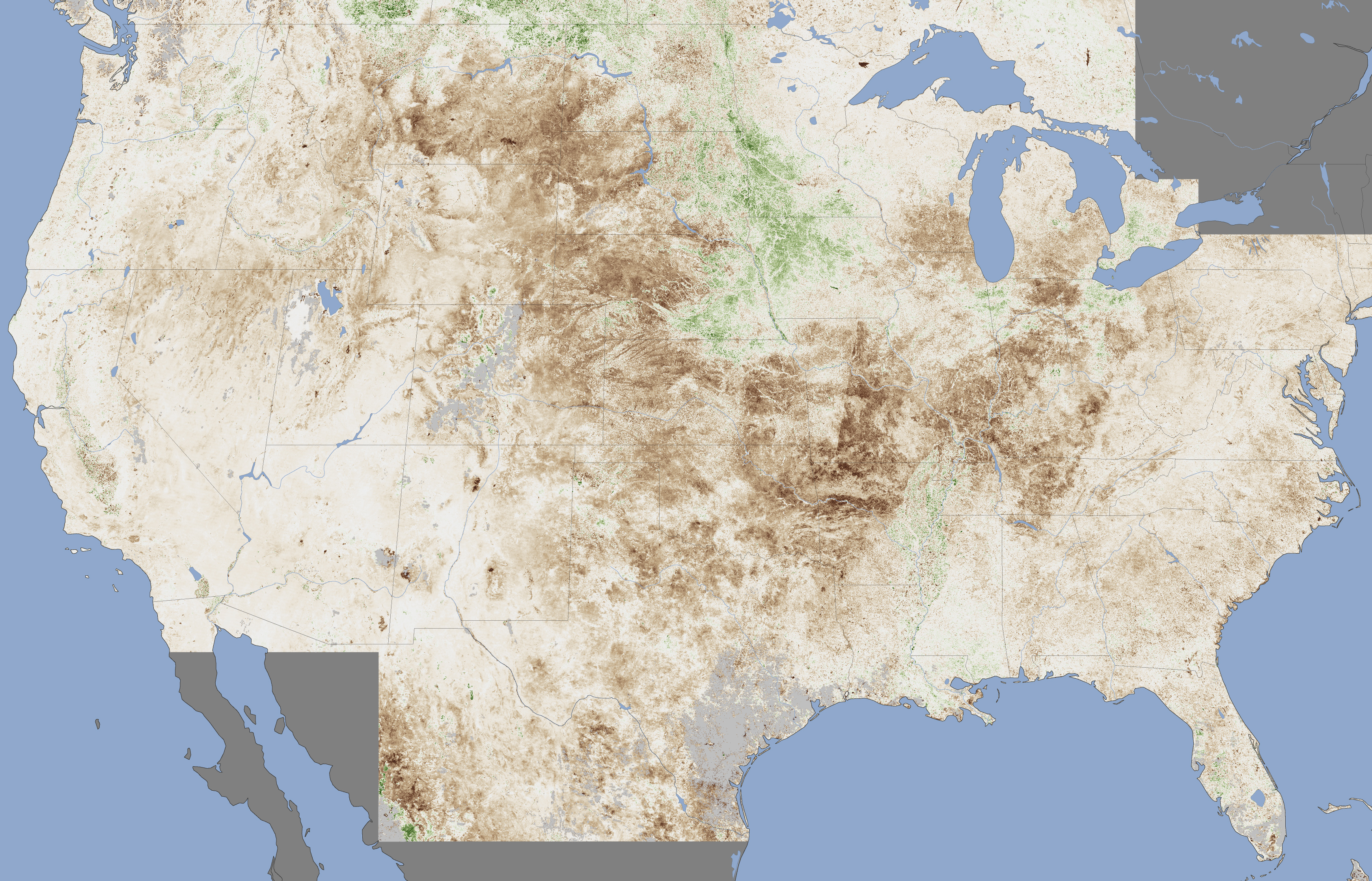
Farmers across the United States hoped for rain in July 2012 as a drought of historic proportions parched key commodity crops, including corn, soybeans, and wheat. On July 11, the United States Department of Agriculture announced that more than 1,000 counties in 26 states qualified as natural disaster areas—the largest total area ever declared a disaster zone by the agency.

The extent of the damage to crops is depicted in this vegetation anomaly map based on data from the Moderate Resolution Imaging Spectroradiometer (MODIS) on NASA’s Terra satellite. The map contrasts plant health in the central United States between June 25 and July 10, 2012, against the average conditions between 2002 and 2012. Brown areas show where plant growth was less vigorous than normal; cream colors depict normal levels of growth; and green indicates abnormally lush vegetation. Data was not available in the gray areas due to snow or cloud cover. The image is based on the Normalized Difference Vegetation Index (NDVI), a measure of how much plant leaves absorb visible light and reflect infrared light. Drought-stressed vegetation reflects more visible light and less infrared than healthy vegetation.

The most severe damage to crops appears to be centered on Missouri, Arkansas, Oklahoma, Texas, Kansas, Nebraska, and South Dakota. Crops in much of the upper Midwest—southern Wisconsin, Michigan, Indiana, southern Illinois, western Kentucky, and western Tennessee—also show signs of strain. States in the Mountain West that are in the midst of a busy wildfire season—Montana, Wyoming, and Colorado—have also experienced marked declines in the health of vegetation. The drought has been less severe in Iowa, a key corn-growing state.

This drought, like all extreme weather events, has its direct cause in a complex set of atmospheric conditions that produce short-term weather. However, weather occurs within the broader context of climate, and there’s widespread agreement among scientists that the climate is changing due to human activity.

According to a recent IPCC report on extreme weather, there is “medium confidence” that droughts have grown longer and more severe in some parts of the world since 1950, particularly in southern Europe and West Africa. However, the trends appear to be the reverse for droughts in central North America and northwestern Australia. Overall, the scientists who prepared the IPCC report assert a medium level of confidence in their ability to attribute observed changes in drought patterns to human activity.

References
Atlantic Wire. (2012, July 12). U.S. Declares the Largest National Disaster Area Ever Due to Drought. Accessed July 16, 2012.
Climate Central. (2012, July 13). Midwest to Mid-Atlantic Bracing for Onslaught of Heat. Accessed July 16, 2012.
NASA Earth Observatory. (2010, June 3). Global Warming.
U.S. Drought Monitor. (2012, July). U.S. Drought Monitor: July 10 (pdf). Accessed July 16, 2012.

Further Reading
Farm Futures. (2012, July 14). Satellite Imagery Reveals Widespread Farm Crop Stress. Accessed July 16, 2012.
NOAA. (2012). State of the Climate National Overview: June. Accessed July 16, 2012.
Peterson, T. (2012, July). Explaining Extreme Events of 2011 from a Climate Perspective. Bulletin of the American Meteorological Society.

NASA Earth Observatory image by Jesse Allen, Earth Observatory,using data provided by Inbal Reshef, Global Agricultural Monitoring Project. Caption by Adam Voiland.Instrument: Terra - MODIS

jueves, 14 de junio de 2012

Five million Brazilian farmers take on biotech giant Monsanto

ORIGINAL: Times Of India
Jun 12, 2012, 04.14PM IST

NEW DELHI: Five million Brazilian farmers have taken on US based biotech company Monsanto through a lawsuit demanding return of about 6.2 billion euros taken as royalties from them. The farmers are claiming that the powerful company has unfairly extracted these royalties from poor farmers because they were using seeds produced from crops grown from Monsanto's genetically engineered seeds, reports Merco Press.

In April this year, a judge in the southern Brazilian state of Rio Grande do Sul, ruled in favor of the farmers and ordered Monsanto to return royalties paid since 2004 or a minimum of $2 billion. The ruling said that the business practices of seed multinational Monsanto violate the rules of the Brazilian Cultivars Act (No. 9.456/97). Monsanto has appealed against the order and a federal court ruling on the case is now expected by 2014.

About 85% of Brazil's massive soyabean crop output is produced from genetically engineered seeds. Brazil exports about $24.1 billion worth of soyabeans annually, more than a quarter of its total agri-exports.

Farmers say that they are using seeds produced many generations after the initial crops from the genetically modified Monsanto seeds were grown. Farmers claim that Monsanto unfairly collects exorbitant profits every year worldwide on royalties from "renewal" seed harvests. Renewal crops are those that have been planted using seed from the previous year's harvest. Monsanto disagrees, demanding royalties from any crop generation produced from its genetically-engineered seed. Because the engineered seed is patented, Monsanto not only charges an initial royalty on the sale of the crop produced, but a continuing two per cent royalty on every subsequent crop, even if the farmer is using a later generation of seed.

The first transgenic soy seeds were illegally smuggled into Brazil from neighboring Argentina in 1998 and their use was banned and subject to prosecution until the last decade, according to the state-owned Brazilian Enterprise for Agricultural Research (EMBRAPA).The ban has since been lifted and now 85 percent of the country's soybean crop (25 million hectares or 62 million acres) is genetically modified, Alexandre Cattelan, an EMBRAPA researcher told Merco Press. Brazil is the world's second largest producer and exporter of soyabean. China is one of its biggest buyers.

"Monsanto gets paid when it sell the seeds. The law gives producers the right to multiply the seeds they buy and nowhere in the world is there a requirement to pay (again). Producers are in effect paying a private tax on production," Jane Berwanger, lawyer for the farmers told the media agencies. 

martes, 29 de mayo de 2012

A Last (Chemical) Gasp for Bees?

ORIGINAL: Yes Magazine
by Shannan Stoll
May 27, 2012 
Colony collapse disorder threatens food crops valued at $15 billion a year. New research says farm chemicals put our food system at risk.
(Photo by Brian Wolfe)
Newly published scientific evidence is bolstering calls for greater regulation of some of the world’s most widely used pesticides and genetically modified crops.

Earlier this year, three independent studies linked agricultural insecticides to colony collapse disorder, a phenomenon that leads honeybees to abandon their hives.

Beekeepers have reported alarming losses in their hives over the last six years. The USDA reports the loss in the United States was about 30 percent in the winter of 2010-2011.

Bees are crucial pollinators in the ecosystem. Their loss also impacts the estimated $15 billion worth of fruit and vegetable crops that are pollinated by bees in the United States.

The studies, conducted in the United States, France, and the United Kingdom, all pointed to neonicotinoids, a class of chemicals used widely in U.S. corn production, as likely contributors to colony collapse disorder. The findings challenged the EPA’s position—based on studies by Bayer CropScience, a major producer of the neonicotinoid clothianidin—that bees are only exposed to small, benign amounts of these insecticides.

The new studies found that bees are exposed to potentially lethal amounts of neonicotinoids in pollen and in dust churned up by farm equipment. They also found that exposure to neonicotinoids can reduce the number of queen bees and disorient worker bees.

An alliance of beekeepers and environmental groups filed a petition on March 21 asking the EPA to block the use of clothianidin in agricultural fields until the EPA conducts a sound scientific review of the chemicals.

Meanwhile, farm chemicals and the biotech industry have come under fire for the problem of pest resistance. Some weeds and bugs have become less susceptible or immune to the chemicals or biotechnology used to control them.

In March, national experts on corn pests published a letter to the EPA describing how rapidly rootworms are becoming resistant to the larvae-killing gene in Monsanto’s genetically engineered “Bt” corn. The letter warns that the EPA should move to regulate Bt corn—by requiring, for example, non-GM buffer zones—with “some sense of urgency.”

In a similarly alarming trend, Monsanto’s “Roundup Ready” soy and corn, which are genetically modified to tolerate the active ingredient in Roundup, are associated with the creation of “super weeds.” The widespread use of these crops has led farmers to vastly increased use of the herbicide, leading to the development of resistant weeds.

The agriculture industry has responded to Roundup’s failure by developing new crop varieties resistant to another pesticide/herbicide, 2,4-D. An ingredient of Agent Orange, 2,4-D is linked to birth defects, hormone disruption, and cancer. Last December, Dow AgroSciences LLC asked the U.S. Department of Agriculture to approve the new varieties for cultivation.

Shannan Stoll wrote this article for Making it Home, the Summer 2012 issue of YES! Magazine. 
Shannan Stoll is an intern at YES! Magazine