Mostrando entradas con la etiqueta Cadena Alimentaria. Mostrar todas las entradas

sábado, 28 de septiembre de 2013

Link between algae and MND

Cyanobacteria may cause certain neurodegenerative diseases such as the one affecting Stephen Hawking. Image: Mike Blanchard/Shutterstock
A recently identified link between a toxic amino acid found in blue-green algae and several motor neurone diseases could help researchers devise a therapy for the fatal conditions.
Blue-green algae (cyanobacteria), most often associated with nutrient runoff in coastal waters, produce a neurotoxic amino acid called β-methylamino-L-alanine, or BMAA.

Australian waterways regularly succumb to toxic algal blooms, the NSW’s Barwon-Darling River System suffering one of the world’s largest in the summer of 1991-92 when a bloom spread for over 1000 kilometres.

There has been increasing evidence of a link between motor neuron disease and the consumption of food or water contaminated by blue-green algae but it wasn’t clear how the algal toxin was damaging the central nervous system.

Now, University of Technology, Sydney (UTS) researchers led by Dr Ken Rodgers, in collaboration with leading ethno botanist Dr Paul Cox and researchers from the Institute of EthnoMedicine in Wyoming in the US, have discovered that BMAA mimics an amino acid called serine that is used to make human proteins. BMAA is mistakenly incorporated into human proteins in place of serine, resulting in damaged proteins which over time, build up to toxic levels and kill the cells.

The research findings are published in the journal PLOS ONE. The first author of the paper, Dr Rachael Dunlop, said for many years people had linked BMAA with an increased risk of motor neuron disease.

The missing piece of the puzzle was how this might occur. Finally, we have that piece,” said Dr Dunlop. “Common amongst all neurodegenerative diseases is the problem of clumps of proteins overloading cells and forcing them to ‘commit suicide’. This research reveals that BMAA can also trigger this process,

BMAA was originally identified in Guam after the indigenous people, the Chamorros, were found to suffer motor neurone disease up to 100 times more often than other people. The Chamorros used seeds from cycad palms to make flour, and regularly ate fruit bats, which also ate the seeds. Both these foodstuffs contained BMAA.

Since then, research has revealed increased incidences of MND in people who lived near lakes subject to frequent cyanobacterial blooms, among consumers of contaminated shellfish, and in soldiers deployed to the Gulf War between 1990-1991.

Over 90 per cent of motor neurone diseases have no known cause or cure. The diseases kill motor neurons in the brain and spinal cord, progressively paralysing the body.

Though MND is relatively rare, it has a high profile as a result of a number of high-profile people being affected including Professor Stephen Hawking.

The full paper can be found here.


ORIGINAL: Science Alert
University of Technology Sydney
Thursday, 26 September 2013

martes, 30 de octubre de 2012

Food may cause almost a third of greenhouse emissions -study

ORIGINAL: Reuters
By Environment Correspondent Alister Doyle
Oct 30, 2012
  • Food output makes up 19-29 pct of man-made greenhouse gas
  • Cuts needed, from fertilisers to transport -CGIAR study
  • Climate change may force shifts to alternative crops
OSLO, Oct 31 (Reuters) - Food production accounts for up to 29 percent of man-made greenhouse gases, twice the amount the United Nations has estimated comes from farming, a study published on Wednesday said.
Existing policies do not sufficiently encourage sustainable approaches to agriculture, or prepare the global agriculture sector for climate change. Photo: N. Palmer (CIAT)

Looking at emissions across the food system - including
  • forest clearance, 
  • fertiliser production and 
  • transport 
- rather than just farming itself - agriculture research organisation CGIAR said much more work was needed to cut climate change emissions from food.

Its report, "Climate Change and Food Systems", estimated food production was responsible for between 19 and 29 percent of mankind's total greenhouse emissions, far above U.N. estimates of 14 percent based on a narrower definition of farming.

"From a food point of view (the U.N. approach) doesn't make sense," said Bruce Campbell, who heads the CGIAR research programme on climate change, agriculture and food security.

Many countries could make big cost savings by cutting emissions, he said. "There are good economic reasons to improve efficiency in agriculture, not just to cut greenhouse gas emissions."

China, for instance, could sharply reduce emissions with more efficient manufacture of fertilisers. Britain could cut emissions by consuming lamb transported from more efficient farms in New Zealand rather than raising its own sheep.

Global changes in diet, shifting towards vegetarianism from meat, would also help. Growing crops to feed to cows, pigs or sheep takes up far more land and emits more greenhouse gases than producing crops for human consumption.

MAIZE, WHEAT, RICE
A separate report by the CGIAR climate programme indicated that climate change is likely to reduce yields of the three biggest crops judged by calorie production - maize, wheat and rice - in developing nations in coming decades.

That could force some farmers to make radical shifts to growing more heat-, flood- or drought-tolerant crops, according to the report, "Recalibrating Food Production in the Developing World".

More resilient crops including yam, barley, cowpea, millet, lentils, cassava and bananas could fill in the gaps caused by declining harvests of more sensitive crops, it said.

"The world's agricultural systems face an uphill struggle in feeding a projected nine to ten billion people by 2050. Climate change introduces a significant hurdle in this struggle," it said. The world population is now just above seven billion.

The study also said that global warming, blamed by a U.N. panel of climate experts mainly on the burning of fossil fuels, meant risks to food production far beyond fields.

"Every step of the food chain - from the seed to the farm to the cooking pot - is at risk," it said. Higher temperatures or floods could make it harder to store and transport food, for instance, meaning more outbreaks of food-borne illnesses. (Reporting By Alister Doyle, Environment Correspondent; Editing by Robin Pomeroy)

domingo, 28 de octubre de 2012

Meet The Man Who Just Geo-Hacked The Ocean

ORIGINAL: FastCoExist
WRITTEN BY: Scientific American

IMAGE: Waves via Shutterstock
Russ George recently dumped 120 tons of iron ore into the ocean to take the idea of geoengineering the ocean’s plankton to suck up carbon dioxide from theory to reality. He’s been both celebrated and vilified for his actions. Here is why he did it.
David Biello

This past July Russ George served as chief scientist on a cruise to fertilize the northeastern Pacific Ocean with iron--the latest in a long string of similar, and usually controversial, efforts he has led. He has been attempting to commercialize such ocean fertilization efforts for years, including setting up the failed company Planktos. In parallel, he has also been promoting plans to generate carbon credits[/url for companies and governments, allowing them to emit greenhouse gases in exchange for replanting carbon dioxide-absorbing forests from Canada to Europe.

The ocean fertilization experiment is similar. The idea is that by providing missing nutrients, a plankton bloom can be created. Such a bloom sucks up CO2 as it grows, like plants on land, and then, potentially, buries that carbon at sea as the tiny corpses sink to the bottom. But at the same time, George is hoping the bloom will trickle up the food chain and feed salmon, restoring their historic abundance. Of course, if the bloom is eaten, then animal metabolism will reemit the CO2, sending it back to the atmosphere and defeating the purpose of reducing CO2 emissions, as prior scientific studies have shown. A plankton bloom sucks up CO2 as it grows, like plants on land, and then, potentially, buries that carbon at sea as the tiny corpses sink to the bottom

George says he is convinced that iron fertilization can be a solution to global warming, and he’s pitched the idea to everyone from the Haida people of British Columbia to would-be "seasteaders" looking for a business proposition for their floating cities. Given the controversy surrounding George’s latest bid--which is billed as an attempt to restore salmon populations but also aims to earn saleable carbon credits--Scientific American spoke with him on October 19.

An edited transcript of the interview follows.

Scientific American: How did this Haida Salmon Restoration Corp. project start?

Russ George: This is a village project. They started it, they own it, they run it. It’s not the Russ George rogue geoengineering story.

You’ve seen the vile and vehement twisting of this story. You can probably imagine how I feel. I was the faith and trust and hopes and dreams of a village whose environment is dying, whose culture is dying because the salmon are dying. And now the world is saying they were duped.

So did the iron fertilization work?
We don’t know. A really famous scientist once told me: "Russ, keep in mind: you don’t know." The correct attitude is: "Data, speak to me." Do the work, get the data, let it speak to you and tell you what the facts might be. Don’t assume you have this prescient knowledge of how everything is.

But we do know that in 2008 when 450 million sockeye salmon left the Fraser River, the expectation was that fewer than one million would return. More and more baby salmon go to sea and fewer and fewer adult salmon return. But in August 2008 a volcano dusted ash, and the northeastern Pacific Ocean turned into a massive plankton bloom. The plankton bloom was of larger proportion than what we did in the area. So 40 million fish came home instead of a million. That offered some hope. Those fish don’t do fishy science, they do good science. Their physical bodies are data.

There have been three volcanic events in the last 100 years paired with record sockeye salmon runs. That’s pretty good data. Those fish don’t do fishy science, they do good science. Their physical bodies are data, you can track where they’ve been because of the discrete isotopic characteristics of different parts of the ocean.

But did it bury any carbon? Previous studies suggested that most of it will end up back in the atmosphere.
We don’t know that yet. I don’t agree with you that most of it will end up back in the atmosphere. Look at the [Victor] Smetacek paper [this year in Nature]. A significant amount of carbon ended up on the seafloor. Diatoms [a type of shelled algae] are big carbon sinkers because of their stony shells and powered buoyancy. When they run out of power they sink.

Tell me about the 120 metric tons of iron you dumped.
We didn’t choose the simplest form of iron and dump it in the ocean. We did a carefully thought through, planned process that asked, "What forms of iron does the ocean use today and historically? How might we determine what’s the right form or composition or method of preparation or method of distribution of the forms of iron that we know are effective?" So we had an experimental matrix that we believe will answer that and we have the data now.

Mother Nature blows dust in the wind, which carries fully reduced iron oxides. That’s the form of iron in dust in the wind. Upstart scientists, humans, say, "We can do better than Mother Nature. We won’t use that natural source of iron that nature uses; we’ll use commercial fertilizer. We’ll use iron sulfate because iron sulfate has greater solubility and greater biological availability."

We tested both. Our data will tell us. Do you get a different plankton bloom if you exactly mimic Mother Nature than if you exactly mimic some supplier of agricultural chemicals?

Where did you get the iron?
It’s an extremely commonly available material. Iron ore dust is in use everywhere. Australia sells 600 million tons of it to China [to make steel]. The amount of sweepings, the fugitive dust from the 600 million tons shipped from Australia to China is infinitely more than we used.

We’re not at liberty to divulge precise details of suppliers and such. Anybody associated with this project is viciously attacked.

Why did you pick the location you did?
Where could you do a more perfect experiment than in between a normal, natural similar phenomenon and an enormous unnatural absence? The best experimental design is to go in between two natural controls, which is where our bloom was placed. That’s why [the late marine biologist] John Martin picked west of the Galapagos, because those islands are a massive source of iron. Here’s a massive iron stimulated bloom that goes off to the west of the Galapagos for hundreds of miles and here’s the most iron-depleted ocean in the southeast Pacific.

The best place to do science on this and get knowledge is to put the bloom in between. See what natural iron-stimulated blooms produce and what the non-blooming ocean has. Test whether or not the characteristics of what you’ve created [are] different in any way to a natural system.

So what did you observe at sea?
Life appeared. The nightly migration of zooplankton from the thermocline [a layer of in the ocean that marks the transition from warmer surface waters to colder deep waters] to the surface, we saw that. Copepods, salps, all the little fish. We have thousands and thousands of biological samples now going under microscopes around the world to be identified and quantified. We didn’t have a ship with 58 scientists. We didn’t have a lab on board, and it’s not a great big ship with the stability to do microscopy on board. What we could do is work 24/7 and the Haida crew on the ship worked literally 24/7. Their job was to collect an unimaginably vast collection of samples.

We had instrumentation of every sort. Does Woods Hole [Oceanographic Institution] have two Slocum gliders? They may have one. The Canadian Institute for Ocean Science provided us with two gliders. We talked to [the National Oceanic and Atmospheric Administration] as the Haida Salmon Restoration Corp. and said our intention is to go out to the eddies, identify an eddy and there try to understand how it could be restored and replenished. They say they didn’t know what we were doing.This is world-class science done by one of the least likely suspects: a small, native peoples village.

We started by using ships of opportunity to collect water samples last December for months. This is not willy-nilly. This is not go out, throw iron in the water and stay there for as little as possible because the costs are so high. We were gathering baseline data months ahead. We sent gliders out long before the ship set sail to survey the whole region. We have baseline data for the whole region, on natural blooms and eddies that were blooming and weren’t blooming to get the full picture. That’s indicative of good, careful science planning

This is world-class science done by one of the least likely suspects: a small, native peoples village. That’s the charm of the story.
That’s kind of a preliminary glimpse. Now there is an incredible amount of data to plow through. The book has to be read and we’re trying to get to that job.

How long before you share the data or report some results?
We have 10,000 water samples to be analyzed for 20 different characteristics. The first few hundred samples we sent to a commercial lab to give us a glimpse to make a determination of the ultimate cost. We sent them three weeks ago and no peep out of them yet. It takes a long time and a lot of money.


From ScientificAmerican.com (find the original story here); reprinted with permission.

Scientific American is a trademark of Scientific American, Inc., used with permission.


lunes, 9 de julio de 2012

Cockroaches Good For Environment, Biologists Say

ORIGINAL: Huffington Post-Lifes Little Mysteries
By: Natalie Wolchover 
06/20/2012


The sight of a cockroach makes just about every American shudder. We fear a roach infestation inside the walls. We fear that our house is dirty enough to sustain them. We fear that a cockroach might scurry across our faces at night, or, under cover of darkness, eat flecks of toothpaste off our toothbrushes.

These fears drive us to kill, kill, kill, and wish death upon the whole genus. But what if — through some means more effective than a nuclear bomb — cockroaches really were wiped out? Could we then rest easy? Or do we, in fact, somehow need these monstrous vermin?

We put the question to Srini Kambhampati, professor and chair of the biology department at the University of Texas at Tyler, and a world expert on cockroaches. Turns out, the sudden disappearance of Earth's 5,000 to 10,000 cockroach species would have ramifications far beyond your filthy apartment. [Chocolate Allergies Linked to Cockroach Parts]

Worldwide, the insects are a significant food source for many birds and small insectivorous mammals, such as mice and rats. (Even humans eat them in some parts of the world.) None of these animals rely solely on cockroaches for food, Kambhampati said, so they probably wouldn't go extinct, but their numbers would drop. Parasitic wasps, which specialize in parasitizing cockroach eggs, do rely entirely on the cockroach. "These would almost certainly become extinct," Kambhampati told Life's Little Mysteries.

If you can't get very worked up about a dent in the rat population or the extinction of something called a parasitic wasp, consider this: A dearth of mice and rats would, in turn, impact the species that prey on them, including cats (both wild and domestic), coyotes, wolves and many reptiles, as well as eagles and other birds of prey. Many of those animals, we're quite fond of.

Furthermore, the disappearance of cockroaches would mess with something truly vital for us all, called the nitrogen cycle.

"Most cockroaches feed on decaying organic matter, which traps a lot of nitrogen," Kambhampati said. "Cockroach feeding has the effect of releasing that nitrogen (in their feces) which then gets into the soil and is used by plants. In other words, extinction of cockroaches would have a big impact on forest health and therefore indirectly on all the species that live there."

In short, we really, really need cockroach poop. 

Follow Natalie Wolchover on Twitter @nattyover. Follow Life's Little Mysteries on Twitter @llmysteries, then join us on Facebook.

Copyright 2012 Lifes Little Mysteries, a TechMediaNetwork company. All rights reserved. This material may not be published, broadcast, rewritten or redistributed.

viernes, 11 de mayo de 2012

Warm waters blamed for at least 5,000 pelican deaths on Peru's coast

ORIGINAL: CNN
By Marilia Brocchetto, CNN
May 12, 2012 -- Updated 0031 GMT (0831 HKT)

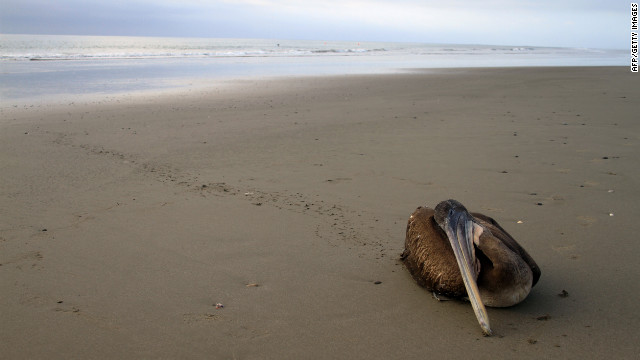
A dying pelican crawls away from the surf. Peruvian officials say warm water has affected the birds' food supply.
(CNN) -- Warm waters off Peru are to blame in the deaths of more than 5,000 marine birds on the coast, government authorities say.

The Peruvian National Center for the Study of El Niño reported earlier this week that since February the Peruvian coast has had an abundance of warm water as a result of marine currents throughout the world's oceans. The warm water has altered the marine ecosystem, it said.

The warm water has led fish such as anchovy and other species that live in surface waters to migrate to deeper water toward the south. As a result, pelicans and other birds that feed from the surface of the water died of starvation.

"If these oceanographic conditions persist, it is likely that its impact will spread to other areas of the (Peruvian) coast even during the fall, which could make the numbers increase and affect other marine species" said the report.

The ministry of environment said seafood is still safe to eat, and encouraged everyone to continue to support local fishermen, according to state-run Andina news agency.

"Marine resources are fully guaranteed, so we promote consumption and discard the speculation that some people or institutions disseminated irresponsibly," said the deputy minister for strategic development of natural resources, Gabriel Quijandria.
Andina reported that Quijandria also clarified the beach warning that had been issued by authorities last week.
"The health alert does not prohibit admission to the beaches, but people are advised to avoid contact with the remains of pelicans, dolphins and other animals that are stranded," he said.

Officials in Peru continue to search for the culprit in the death of almost 900 dolphins since the beginning of the year. The health ministry is awaiting final results from molecular analysis looking for the morbillivirus, which previously has been linked to dolphin deaths.

miércoles, 2 de mayo de 2012

Seawater key to early evolution

ORIGINAL: Cosmos Magazine
27 April 2012
by Anthony King

Evolutionary biologists have often pondered why life suddenly exploded into different forms 543 million years ago. Now, it seems seawater held the missing ingredient.

WHILE RIDING OVER THE Canadian Rockies in 1909, veteran geologist Charles Walcott discovered fossil gold among half-a-billion-year-old shale. These rocks contained evidence for all sorts of remarkable animals, and charted in great detail one of the enduring mysteries of evolution – the Cambrian explosion.

Trilobites were successful creatures during the Cambrian Explosion.
The Cambrian period began around 543 million years ago. Rocks from the time before that offer poor territory for any fossil hunter. There are few fossils and what is there is mostly microscopic or can be placed in the “could be a fossil” drawer. The Burgess Shale – around 505 million years old – belongs to a different era. Once you enter the Cambrian, you witness a sudden explosion of animals in the rocks. All sorts of exotic marine creatures appear, but also recognisable relatives of worms, arthropods and even vertebrates.

This sudden appearance of allied species troubled Charles Darwin, who could give no satisfactory answer to this “grave difficulty,” as he described it, in his book On the Origin of Species. Why would life suddenly proliferate? Where were their ancestors?

SCIENTISTS HAVE SINCE IDENTIFIED good candidates of early animal life before the Cambrian – from the Ediacaran Period. It gets its name for the Ediacara Hills in the Flinders Range of South Australia, where famous fossils from this time where found.

From that time, what we find consists mainly of evidence for soft-bodied organisms lying peacefully on algal mats; some it seems were grazers, while others were filter feeders, but many possibly just lived in symbiotic partnerships with the mats they were sitting on. Generally everything was quiet and peaceful, says palaeobiologist Peter van Roy of Ghent University in Belgium. So what happened to this tranquil, if dull world? What set off a period of innovation in shells, plates, spines and other skeletal elements?

Van Roy believes the entrance of a new profession into the food chains of these tranquil oceans – predation – had major repercussions. “If you introduce predators in such a system, these soft, docile creatures of course make an easy lunch. So animals need to protect themselves from predation.Creatures are pushed into developing defensive behaviors and other ways to protect themselves – this is where hard mineralised shells, exoskeletons and armour come into play.

The predators can counter this move by developing sturdy, possibly mineralised implements. “Prey, in turn, has to respond to these new challenges, so you end up with a classical arms race between prey and predators,” says Van Roy.

It had been hotly contested whether a slow build of genetic traits set the ball rolling or whether a trigger from outside lit the fuse for the explosion of diversity. The idea that factors within ecosystems were responsible gained the upper hand over the last decade or so. Now, though, US scientists have come along and upended the apple cart.

US SCIENTISTS REPORT evidence of what ignited the Cambrian explosion of life. The chemistry of the seawater changed dramatically, they say, supplying a glut of raw material for shells, armour, exoskeletons, levers and mineralised parts. In support of their hypothesis, geologists Shanan Peters of the University of Wisconsin and Robert Gaines of Pomona College, California, reported in the journal Nature that what happened is evident in the “Great Unconformity,” a puzzling and very substantial gap in the sedimentary – and hence fossil – record in many locations. In effect, the approximately 525 million year old Cambrian rocks rest on much older rocks.

It is better called the great non-conformity,” says Peters, “because it juxtaposes two different types of rocks.” The sequence was named by an explorer navigating the Grand Canyon for the first time. Here, near the base of the canyon, he noted a dramatic switch in rock type. Rocks below a line are crystalline and hard, formed within the Earth – igneous and metamorphic – while almost a mile of rocks above the line are layered sedimentary rocks deposited from the Cambrian on.

THE GREAT UNCONFORMITY records a transition from a world where the continental surfaces were being eroded and weathered over vast areas of the planet (below the line), to a world where the seas flooded back onto the continents and marine sediment once again began to accumulate. The pre-existing rocks broke down at the exposed surface over millennia, explains geologist Patrick Orr of University College Dublin, Ireland. It was primarily the residue that this produced that was flushed into the oceans as sea levels rose and flooded back onto the continents, he explains.

Peters and Gaines argue that the exposure and chemical weathering of these rocks released the materials which later fuelled the evolution of hard parts such as shells and armour.

Freshly exposed rock weathers chemically at rates more than three times faster than undisturbed soils, freeing up chloride, magnesium, iron, potassium, sodium, carbonate and calcium ions. Peters, and other geochemists, believe calcium levels may have been so high in the ocean that it posed a challenge for animal life, interfering with cellular functions. Converting ions of calcium into a mineral such as calcium carbonate, however, would put them out of harm’s way. Once you start precipitating a hard mineral in this scenario, evolution has something to work with.
We argue that biomineralisation didn’t evolve for claws and things like that; it evolved in response to a change in ocean chemistry,” says Peters.

Once there was an initial metabolic reason to make a biomineral, of course natural selection then could use it as a tool and that gets pushed rapidly by ecology. The functional capability afforded by biomineralisation gets picked up very quickly by natural selection as an advantage and that gives us the Cambrian explosion and the diversity and morphology that we see.
It is possible, argues Peters, that before the weathering of the continents the supply of chemicals was too low and so it was expensive to make biominerals. Once you have biominerals, it becomes possible and advantageous to evolve shells, eyes and other parts made of calcite and ultimately bones.

TRILOBITES FOR INSTANCE were among the most successful of early animals. These arthropods – in the same group as insects and crustaceans – had hard exoskeletons made of calcite (calcium carbonate) minerals along with the protein chitin. An array of trilobites roamed the seas and crawled along the seafloor, watching their Cambrian world through remarkably capable calcite eyes.

What they were looking out for were perhaps hunters such as Anomalocaris, the bizarre apex predator of the Cambrian seas. This is believed to be the proud owner of the amazingly complex 515 million year old eyes reported last year from the Emu Bay Shale of South Australia. Each eye consisted of at least 16,000 individual lenses, rivalling the best eyes in modern arthropods in terms of sight. Improving eyes among prey and predator is a sign of one-upmanship in an evolutionary arms race.

Van Roy agrees that biomineralisation could have been one of the changes that set off the Cambrian explosion, arming predators and prey. However, Nick Butterflied of the University of Cambrige doubts that changes in ocean alkalinity could have acted as a trigger for the Cambrian explosion.

BIOMINERALISING ORGANISMS, HE ARGUES, represent a trivial percentage of marine diversity and especially in the Cambrian. “The Cambrian explosion would have happened even in the absence of biomineralisation” he believes. His views offer a foretaste of the battle to come.

The explosive radiation of biomineralization organisms in the early Cambrian wasn’t just about calcification,” he says. “Skeletalisation had very little to do with ocean alkalinity and a lot to do with ecology.” Butterfield notes that carbonate biomineralisation was an innovation in the Ediacaran, well before the “great unconformity. The trigger he believes is the evolutionary appearance of animals, which sets of a cascade of unprecedented shifts in ecosystem function and expression – including biomineralisation.

The pendulum had swung toward intrinsic ecological factors as driving Cambrian evolution, such as predator-prey relationships, but this paper marks a clear wakeup call that environmental factors must be considered too as drivers of evolution, says Orr. Moreover, the time before the Cambrian teemed with creatures too, but without durable minerals these animals were ill-quipped to survive in forms that could be collected by palaeontologists, he explains.

To muddy the waters further, many experts doubt that a single event caused the Cambrian explosion. Suggestions as to what caused or at least contributed to the explosion include

  • an increase in the oxygen level in the atmosphere to a level that would sustain large and complex organisms, 
  • changes in oceanic microplankton
  • the development of visual organisms and 
  • the rapid continental movements leading to large methane releases.
In their recent Nature paper, the US researchers point out that an expansion of shallow sea areas coincided with the Cambrian explosion, offering bountiful conditions for life to thrive.

It is probably a combination of some of the various suggested mechanisms,” says Jim Jago, Cambrian expert at the University of South Australia. “It should also be remembered that the Cambrian ‘explosion’ took place over a period of at least 30 million years in the bottom part of the Cambrian.
It is likely that various biological and non-biological factors influenced each other, some possibly triggering others in some cascade, and possibly reinforcing each other, agrees Van Roy. “The Cambrian explosion is a complex event that cannot be explained by a single trigger. You have several factors – biotic and abiotic – influencing and potentially mutually reinforcing each other.” Such a complex set of pieces to an evolutionary puzzle, judged from a distance of 500 plus million years, offers fertile ground for lively debate for years to come.

jueves, 26 de abril de 2012

My secret life as plankton

ORIGINAL: TEDEducation

"...a tea spoon of sea water can contain more than a million living creatures..."

New videography techniques have opened up the oceans' microscopic ecosystem, revealing it to be both mesmerizingly beautiful and astoundingly complex. Marine biologist Tierney Thys teamed with Christian Sardet (CNRS/Tara Oceans), Noé Sardet and Sharif Mirshak to use footage from the Plankton Chronicles project to create a film designed to ignite wonder and curiosity about this hidden world that underpins our own food chain.

Check out "My secret life as plankton" for a fish-eye look at the unseen life teeming within each drop of the ocean's water. We spoke with producer and marine biologist Tierney Thys to get an inside perspective on creating the film. 


What inspired you to make this video?

I've been in natural history filmmaking for many years and have a deep love and respect for the ocean. I also believe strongly in the power of film to raise awareness and educate. The idea for an ocean series for TED Ed was originally suggested to me by Chris Anderson, curator of TED. We brainstormed on possible topics and it grew out from there.

Where did you get the idea to cast a fish as the narrator?

As a group, our little production team all brainstormed on how best to tell the story of plankton. We knew we wanted to start topside and then dive in to the strange world of plankton. We brainstormed up all sorts of places, and with Noé Sardet and Sharif Mirshak we agreed that we should start in a fish market and see where that took us. When I went to write the script, it was the fish that started speaking—I listened and wrote down what that lovely snapper said.

What message do you hope to convey to viewers with this video?

As we all know many of our food fishes are suffering greatly due to global overfishing, perverse subsidies and piracy on the high seas. We've lost 90 percent of our big fishes since the 1950s and the majority of our fisheries are over-exploited. I hope dearly to highlight in a fun and engaging way that every fish is much more than a simple slab of protein. Marine fishes lead amazing life in that wildest of places, our beautiful, fragile ocean. Food fishes have a huge diversity of life histories—I show only one—but there are literally thousands of amazing fish tales that could and hopefully will be told. I hope to put a face on the fishes so we are more conscious and respectful of what it is we are consuming and overexploiting at such breakneck speed.

Do you recall the first time you saw plankton under a microscope?

I first saw plankton under a scope when I was very little—perhaps age 4 or 5 or so. My parents had a lovely microscope when I was growing up. (Incidentally that is a great item to have in any house!) Swimming at the other end of that microscope's ocular I saw a whole spectacular world that was so unlike anything I'd ever seen on land. And when I could get that darn focus knob to work, I was hooked!

What’s your favorite species of plankton and why?

Oh, that is a tough one. I just adore all of them. The ctenophores are gorgeous. The pteropods and heteropods are supremely graceful. The phytoplankton are luminous and so vital to our survival. I must say I am utterly enchanted by diatoms—they never cease to amaze me. All the mind-blowing larvae that populate the seas are spectacular—in particular the urchin pluteus—what a rocket ship! The jellies—their diversity, size and beauty astound me. Phronima and its crazy maternal antics rivet me... In truth I can't choose a favorite! I love them all.

What are the Plankton Chronicles? 

The Plankton Chronicles project combines art and science, revealing the beauty and diversity of planktonic organisms. Plankton samples are collected and filmed at the Villefranche-sur-Mer Marine Station and on board the schooner, Tara, using dark field optics and macro lenses or microscopes equipped with HD SLR cameras. Christian Sardet from the Centre National de la Recherche Scientifique and Noe Sardet and Sharif Mirshak from Parafilms in Montreal initiated the project in the context of the Tara Oceans expedition. The Plankton Chronicles are sponsored by the Centre National de la Recherche Scientifique, the Pierre et Marie Curie University in Paris and the Groupement d'Interet Scientifique IBISA.

Thumbnail Image Credit: idua_japan, Flickr 

miércoles, 18 de abril de 2012

Gulf of Mexico seafood deformities alarm scientists

ORIGINAL: AlJazzera
Dahr Jamail Last Modified: 18 Apr 2012 03:16

Eyeless shrimp and fish with lesions are becoming common, with BP oil pollution believed to be the likely cause.


New Orleans, LA - "The fishermen have never seen anything like this," Dr Jim Cowan told Al Jazeera. "And in my 20 years working on red snapper, looking at somewhere between 20 and 30,000 fish, I've never seen anything like this either."

Dr Cowan, with Louisiana State University's Department of Oceanography and Coastal Sciences started hearing about fish with sores and lesions from fishermen in November 2010.

Cowan's findings replicate those of others living along vast areas of the Gulf Coast that have been impacted by BP's oil and dispersants.

Gulf of Mexico fishermen, scientists and seafood processors have told Al Jazeera they are finding disturbing numbers of mutated shrimp, crab and fish that they believe are deformed by chemicals released during BP's 2010 oil disaster.

Along with collapsing fisheries, signs of malignant impact on the regional ecosystem are ominous: horribly mutated shrimp, fish with oozing sores, underdeveloped blue crabs lacking claws, eyeless crabs and shrimp - and interviewees' fingers point towards BP's oil pollution disaster as being the cause.

Eyeless shrimp

Tracy Kuhns and her husband Mike Roberts, commercial fishers from Barataria, Louisiana, are finding eyeless shrimp.

"At the height of the last white shrimp season, in September, one of our friends caught 400 pounds of these," Kuhns told Al Jazeera while showing a sample of the eyeless shrimp.

According to Kuhns, at least 50 per cent of the shrimp caught in that period in Barataria Bay, a popular shrimping area that was heavily impacted by BP's oil and dispersants, were eyeless. Kuhns added: "Disturbingly, not only do the shrimp lack eyes, they even lack eye sockets."
Eyeless shrimp, from a catch of 400 pounds of eyeless shrimp, said to be caught September 22, 2011, in Barataria Bay, Louisiana [Erika Blumenfeld/Al Jazeera]
"Some shrimpers are catching these out in the open Gulf [of Mexico]," she added, "They are also catching them in Alabama and Mississippi. We are also finding eyeless crabs, crabs with their shells soft instead of hard, full grown crabs that are one-fifth their normal size, clawless crabs, and crabs with shells that don't have their usual spikes … they look like they've been burned off by chemicals."

On April 20, 2010, BP's Deepwater Horizon oilrig exploded, and began the release of at least 4.9 million barrels of oil. BP then used at least 1.9 million gallons of toxic Corexit dispersants to sink the oil.

Keath Ladner, a third generation seafood processor in Hancock County, Mississippi, is also disturbed by what he is seeing.

"I've seen the brown shrimp catch drop by two-thirds, and so far the white shrimp have been wiped out," Ladner told Al Jazeera. "The shrimp are immune compromised. We are finding shrimp with tumors on their heads, and are seeing this everyday."

While on a shrimp boat in Mobile Bay with Sidney Schwartz, the fourth-generation fisherman said that he had seen shrimp with defects on their gills, and "their shells missing around their gills and head".

"We've fished here all our lives and have never seen anything like this," he added.

Ladner has also seen crates of blue crabs, all of which were lacking at least one of their claws.

Darla Rooks, a lifelong fisherperson from Port Sulfur, Louisiana, told Al Jazeera she is finding crabs "with holes in their shells, shells with all the points burned off so all the spikes on their shells and claws are gone, misshapen shells, and crabs that are dying from within … they are still alive, but you open them up and they smell like they've been dead for a week".

Rooks is also finding eyeless shrimp, shrimp with abnormal growths, female shrimp with their babies still attached to them, and shrimp with oiled gills.

"We also seeing eyeless fish, and fish lacking even eye-sockets, and fish with lesions, fish without covers over their gills, and others with large pink masses hanging off their eyes and gills."

Rooks, who grew up fishing with her parents, said she had never seen such things in these waters, and her seafood catch last year was "ten per cent what it normally is".

"I've never seen this," he said, a statement Al Jazeera heard from every scientist, fisherman, and seafood processor we spoke with about the seafood deformities.

Given that the Gulf of Mexico provides more than 40 per cent of all the seafood caught in the continental US, this phenomenon does not bode well for the region, or the country.

BP's chemicals?

"The dispersants used in BP's draconian experiment contain solvents, such as petroleum distillates and 2-butoxyethanol. Solvents dissolve oil, grease, and rubber," Dr Riki Ott, a toxicologist, marine biologist and Exxon Valdez survivor told Al Jazeera. "It should be no surprise that solvents are also notoriously toxic to people, something the medical community has long known".

The dispersants are known to be mutagenic, a disturbing fact that could be evidenced in the seafood deformities. Shrimp, for example, have a life-cycle short enough that two to three generations have existed since BP's disaster began, giving the chemicals time to enter the genome.

Pathways of exposure to the dispersants are inhalation, ingestion, skin, and eye contact. Health impacts can include headaches, vomiting, diarrhea, abdominal pains, chest pains, respiratory system damage, skin sensitisation, hypertension, central nervous system depression, neurotoxic effects, cardiac arrhythmia and cardiovascular damage. They are also teratogenic - able to disturb the growth and development of an embryo or fetus - and carcinogenic.

Cowan believes chemicals named polycyclic aromatic hydrocarbons (PAHs), released from BP's submerged oil, are likely to blame for what he is finding, due to the fact that the fish with lesions he is finding are from "a wide spatial distribution that is spatially coordinated with oil from the Deepwater Horizon, both surface oil and subsurface oil. A lot of the oil that impacted Louisiana was also in subsurface plumes, and we think there is a lot of it remaining on the seafloor".

Marine scientist Samantha Joye of the University of Georgia published results of her submarine dives around the source area of BP's oil disaster in the Nature Geoscience journal.

Her evidence showed massive swathes of oil covering the seafloor, including photos of oil-covered bottom dwelling sea creatures.

While showing slides at an American Association for the Advancement of Science annual conference in Washington, Joye said: "This is Macondo oil on the bottom. These are dead organisms because of oil being deposited on their heads."

Dr Wilma Subra, a chemist and Macarthur Fellow, has conducted tests on seafood and sediment samples along the Gulf for chemicals present in BP's crude oil and toxic dispersants.

"Tests have shown significant levels of oil pollution in oysters and crabs along the Louisiana coastline," Subra told Al Jazeera. "We have also found high levels of hydrocarbons in the soil and vegetation."

According to the US Environmental Protection Agency, PAHs "are a group of semi-volatile organic compounds that are present in crude oil that has spent time in the ocean and eventually reaches shore, and can be formed when oil is burned".

"The fish are being exposed to PAHs, and I was able to find several references that list the same symptoms in fish after the Exxon Valdez spill, as well as other lab experiments," explained Cowan. "There was also a paper published by some LSU scientists that PAH exposure has effects on the genome."

The University of South Florida released the results of a survey whose findings corresponded with Cowan's: a two to five per cent infection rate in the same oil impact areas, and not just with red snapper, but with more than 20 species of fish with lesions. In many locations, 20 per cent of the fish had lesions, and later sampling expeditions found areas where, alarmingly, 50 per cent of the fish had them.

"I asked a NOAA [National Oceanic and Atmospheric Administration] sampler what percentage of fish they find with sores prior to 2010, and it's one tenth of one percent," Cowan said. "Which is what we found prior to 2010 as well. But nothing like we've seen with these secondary infections and at this high of rate since the spill."

"What we think is that it's attributable to chronic exposure to PAHs released in the process of weathering of oil on the seafloor," Cowan said. "There's no other thing we can use to explain this phenomenon. We've never seen anything like this before."

Official response

Questions raised by Al Jazeera's investigation remain largely unanswered.

Al Jazeera contacted the office of Louisiana governor Bobby Jindal, who provided a statement that said the state continues to test its waters for oil and dispersants, and that it is testing for PAHs.

"Gulf seafood has consistently tested lower than the safety thresholds established by the FDA for the levels of oil and dispersant contamination that would pose a risk to human health," the statement reads. "Louisiana seafood continues to go through extensive testing to ensure that seafood is safe for human consumption. More than 3,000 composite samples of seafood, sediment and water have been tested in Louisiana since the start of the spill."
Signs of the impact on the regional ecosystem are ominous: mutated shrimp, fish with oozing sores, underdeveloped blue crabs lacking claws, eyeless crabs and shrimp - and scientists and fishermen point fingers towards BP's oil as being the cause [Keath Ladner]
At the federal government level, the Food and Drug Administration and Environmental Protection Agency - both federal agencies which have powers in the this area - insisted Al Jazeera talk with the National Oceanic and Atmospheric Administration (NOAA)

NOAA won't comment to the media because its involvement in collecting information for an ongoing lawsuit against BP.

BP refused Al Jazeera's request to comment on this issue for a television interview, but provided a statement that read:

"Seafood from the Gulf of Mexico is among the most tested in the world, and, according to the FDA and NOAA, it is as safe now as it was before the accident."

BP claims that fish lesions are common, and that prior to the Deepwater Horizon accident there was documented evidence of lesions in the Gulf of Mexico caused by parasites and other agents.

The oil giant added: 

"As part of the Natural Resource Damage Assessment, which is led by state and federal trustees, we are investigating the extent of injury to natural resources due to the accident".

"BP is funding multiple lines of scientific investigation to evaluate potential damage to fish, and these include: extensive seafood testing programs by the Gulf states; fish population monitoring conducted by the Louisiana Department of Wildlife and Fisheries, Auburn University and others; habitat and water quality monitoring by NOAA; and toxicity tests on regional species. The state and federal Trustees will complete an injury assessment and the need for environmental restoration will be determined."

Before and after

But evidence of ongoing contamination continues to mount.

Crustacean biologist Darryl Felder, in the Department of Biology with the University of Louisiana at Lafayette is in a unique position.

Felder has been monitoring the vicinity of BP's blowout Macondo well both before and after the oil disaster began, because, as he told Al Jazeera, "the National Science Foundation was interested in these areas that are vulnerable due to all the drilling".

"So we have before and after samples to compare to," he added. "We have found seafood with lesions, missing appendages, and other abnormalities."

Felder also has samples of inshore crabs with lesions. "Right here in Grand Isle we see lesions that are eroding down through their shell. We just got these samples last Thursday and are studying them now, because we have no idea what else to link this to as far as a natural event."

According to Felder, there is an even higher incidence of shell disease with crabs in deeper waters.

"My fear is that these prior incidents of lesions might be traceable to microbes, and my questions are, did we alter microbial populations in the vicinity of the well by introducing this massive amount of petroleum and in so doing cause microbes to attack things other than oil?"

One hypothesis he has is that the waxy coatings around crab shells are being impaired by anthropogenic chemicals or microbes resulting from such chemicals.

"You create a site where a lesion can occur, and microbes attack. We see them with big black lesions, around where their appendages fall off, and all that is left is a big black ring."

Felder added that his team is continuing to document the incidents: "And from what we can tell, there is a far higher incidence we're finding after the spill."

"We are also seeing much lower diversity of crustaceans," he said. "We don't have the same number of species as we did before [the spill]."

[Continues below the slideshow]
Felder has tested his samples for oil, but not found many cases where hydrocarbon traces tested positive. Instead, he believes what he is seeing in the deepwater around BP's well is caused from the "huge amount" of drilling mud used during the effort to stop the gushing well.

"I was collecting deepwater shrimp with lesions on the side of their carapace. Under the lesions, the gills were black. The organ that propels the water through the gills, it too was jet-black. That impairs respiratory ability, and has a negative effect on them. It wasn't hydrocarbons, but is largely manganese precipitates, which is really odd. There was a tremendous amount of drilling mud pumped out with Macondo, so this could be a link."

Some drilling mud and oil well cement slurries used on oil extraction rigs contains up to 90 per cent by weight of manganomanganic (manganese) oxide particles.

Felder is also finding "odd staining" of animals that burrow into the mud that cause stain rings, and said: "It is consistently mineral deposits, possibly from microbial populations in [overly] high concentrations."

A direct link

Dr Andrew Whitehead, an associate professor of biology at Louisiana State University, co-authored the report Genomic and physiological footprint of the Deepwater Horizon oil spill on resident marsh fishes that was published in the journal Proceedings of the National Academy of Sciences in October 2011.

Whitehead's work is of critical importance, as it shows a direct link between BP's oil and the negative impacts on the Gulf's food web evidenced by studies on killifish before, during and after the oil disaster.

"What we found is a very clear, genome-wide signal, a very clear signal of exposure to the toxic components of oil that coincided with the timing and the locations of the oil," Whitehead told Al Jazeera during an interview in his lab.

According to Whitehead, the killifish is an important indicator species because they are the most abundant fish in the marshes, and are known to be the most important forage animal in their communities.

"That means that most of the large fish that we like to eat and that these are important fisheries for, actually feed on the killifish," he explained. "So if there were to be a big impact on those animals, then there would probably be a cascading effect throughout the food web. I can't think of a worse animal to knock out of the food chain than the killifish."

But we may well be witnessing the beginnings of this worst-case scenario.

Whitehead is predicting that there could be reproductive impacts on the fish, and since the killifish is a "keystone" species in the food web of the marsh, "Impacts on those species are more than likely going to propagate out and effect other species. What this shows is a very direct link from exposure to DWH oil and a clear biological effect. And a clear biological effect that could translate to population level long-term consequences."

Back on shore, troubled by what he had been seeing, Keath Ladner met with officials from the US Food and Drug Administration and asked them to promise that the government would protect him from litigation if someone was made sick from eating his seafood.

"They wouldn't do it," he said.

"I'm worried about the entire seafood industry of the Gulf being on the way out," he added grimly.

'Tar balls in their crab traps'

Ed Cake, a biological oceanographer, as well as a marine and oyster biologist, has "great concern" about the hundreds of dolphin deaths he has seen in the region since BP's disaster began, which he feels are likely directly related to the BP oil disaster.

"Adult dolphins' systems are picking up whatever is in the system out there, and we know the oil is out there and working its way up the food chain through the food web - and dolphins are at the top of that food chain."

Cake explained: "The chemicals then move into their lipids, fat, and then when they are pregnant, their young rely on this fat, and so it's no wonder dolphins are having developmental issues and still births."

Cake, who lives in Mississippi, added: "It has been more than 33 years since the 1979 Ixtoc-1 oil disaster in Mexico's Bay of Campeche, and the oysters, clams, and mangrove forests have still not recovered in their oiled habitats in seaside estuaries of the Yucatan Peninsula. It has been 23 years since the 1989 Exxon Valdez oil disaster in Alaska, and the herring fishery that failed in the wake of that disaster has still not returned."

Cake believes we are still in the short-term impact stage of BP's oil disaster.

"I will not be alive to see the Gulf of Mexico recover," said Cake, who is 72 years old. "Without funding and serious commitment, these things will not come back to pre-April 2010 levels for decades."

The physical signs of the disaster continue.

"We're continuing to pull up oil in our nets," Rooks said. "Think about losing everything that makes you happy, because that is exactly what happens when someone spills oil and sprays dispersants on it. People who live here know better than to swim in or eat what comes out of our waters."

Khuns and her husband told Al Jazeera that fishermen continue to regularly find tar balls in their crab traps, and hundreds of pounds of tar balls continue to be found on beaches across the region on a daily basis.

Meanwhile Cowan continues his work, and remains concerned about what he is finding.

"We've also seen a decrease in biodiversity in fisheries in certain areas. We believe we are now seeing another outbreak of incidence increasing, and this makes sense, since waters are starting to warm again, so bacterial infections are really starting to take off again. We think this is a problem that will persist for as long as the oil is stored on the seafloor."

Felder wants to continue his studies, but now is up against insufficient funding.

Regarding his funding, Cowan told Al Jazeera: "We are up against social and economic challenges that hamper our ability to get our information out, so the politics have been as daunting as the problem [we are studying] itself. But my funding is not coming from a source that requires me to be quiet."

Follow Dahr Jamail on Twitter: @DahrJamail


Read more about the scientists in this article, and their findings:

Dr Darryl Felder, Department of Biology, University of Louisiana, Lafayette. Runs a research lab that studies the biology of marine crustaceans. Dr Felder has been monitoring the seafloor in the vicinity of BP's blow-out Macondo oil-well both before and after the oil disaster began. He was studying samples from the seafloor in the Macondo area pre-spill via funding from the National Science Foundation, which provided him a grant to log the effects of all the drilling in the area. His funding now comes from the Gulf Research Initiative (GRI), which is funded by BP. Read his full biography here.

Dr Jim Cowan with Louisiana State University's Department of Oceanography and Coastal Sciences has been studying Gulf seafood, specifically red snapper, for more than 20 years. Funding is primarily via LSU, although LSU has also received funding via GRI. Read his full biography here.

Dr Andrew Whitehead, LSU, his lab conducts experiments and studies on Evolutionary and Ecological Genomics. He recently published "Genomic and physiological footprint of the Deepwater Horizon oil spill on resident marsh fishes" in the National Academy of Sciences. Much of his funding also comes from the Gulf Research Initiative. Read his full biography here.

Brief summary of scientists' findings/studies:

Felder: Studies carried out from January 2010 to present in BP's Macondo well area. Found abnormalities in shrimp post-spill, whereas pre-spill found none.

Cowan: Studies carried out from Nov 2010-present, from west Louisiana to west Florida, from coast to 250km out. Found lesions/sores/infections in 20 species of fish, as many as 50 per cent fish in some samples impacted. Pre spill levels were 1/10 of one per cent of fish.

Whitehead: Species such as the Gulf Killifish, in and around the Gulf of Mexico, will continue to be subject to negative effects of the BP oil spill disaster of 2010. The Killifish, which researchers consider a good indicator of water quality in the Gulf of Mexico, is showing signs that the oil spill is having a negative impact on its health. Tracked killifish for the first four months after spill across oil-impacted areas of Louisiana and Mississippi.