Mostrando entradas con la etiqueta Oxygen. Mostrar todas las entradas

martes, 28 de febrero de 2017

Nature’s water purifiers help clean up lakes

(Copyright: Floating Islands International)
More and more of our waterways are being starved of life through pollution. One simple, yet improbable, solution? Cover rafts in plants.

In the shallow waters of Gijon harbour, in northern Spain, swims scientists' latest weapon in the war against pollution.

Just five years ago, Fish Fry Lake was dying. The groundwater flowing into the lake situated 30 miles northeast of Billings, Montana, contained high levels of nitrogen and phosphorous, common ingredients in agricultural fertilisers and animal waste. The nitrogen and phosphorus had fostered an overgrowth of algae, which covered the lake and blocked sunlight from penetrating the surface. The deep water was a dead zone, devoid of oxygen and home to very little aquatic life.

The solution was as simple as it was improbable: cover rafts with plants, and set them afloat in the lake. Within a year-and-a-half, the algal blooms were gone. Water clarity improved. Oxygen levels rose. Today, the lake is home to a thriving community of fish, including black crappie, yellow perch and Yellowstone cutthroat trout.

The story of Fish Fry Lake demonstrates the power of mimicking wetlands to clean up dirty waterways. Wetlands are sometimes called nature’s own water purifiers: as dirty water moves through a sprawling marsh, the bacteria that cling to wetland plants, timber, rocks, and other debris consume and process some common water pollutants. Other contaminants get trapped in the mud and muck. As result of these and other processes, the water that eventually flows out of a wetland is much cleaner than the stream that came trickling in.

By creating floating treatment wetlands out of small, human-engineered rafts of vegetation, researchers and entrepreneurs hope to provide these same ecological services to small, polluted bodies of water that may be far from a natural marsh. “BioHaven floating islands are concentrated wetland systems that are essentially biomimicking nature’s wetland effect,” says Bruce Kania, the founder and research director of Floating Island International, the company behind the Fish Fry Lake rafts.
ORIGINAL: Floating Island International
Cleansing power
To construct a BioHaven island, the company starts with layers of mesh made from recycled plastic. They assemble this mesh into a floating raft – which can be as small as a home aquarium or nearly as large as a football field – and top it with soil and plants. They launch the island into a lake, pond, stream, or lagoon, anchoring it in place. Over time, the plants’ roots grow into and through the raft’s porous matrix, descending into the water below. At the same time, bacteria colonise the island, assembling into sticky, slimy sheets called biofilm that coat the floating matrix and the suspended plant roots.

This bacterial biofilm is the secret to a floating island’s cleansing power. Overgrowth of algae from nitrogen and phosphorus pollution can cause several problems, preventing sunlight from reaching subaquatic plants and starving a body of water of the oxygen needed to sustain fish populations and other animal life. A dead zone, like the one is Fish Fry Lake, is often the ultimate result. The biofilm bacteria consume nitrogen and phosphorous, however, and as polluted water flows through and around a floating island, the bacteria converts these contaminants into less harmful substances. Though the bacteria do the brunt of the work, the plant roots suspended from the floating island also play their part, absorbing some of the nitrogen and phosphorous through their roots.

In Fish Fry Lake, for instance, Floating Island International deployed several islands, which together covered almost 2% of the lake’s 6.5-acre (2.6-hectare) surface area. Over the course of four years, the islands helped reduce nitrogen concentrations by 95% and phosphorus concentrations by nearly 40%. Today, levels of dissolved oxygen are sixty times what they once were.

Clearer, cleaner, healthier
The system also mechanically filters out other pollutants, like metals and particulates. “The sticky biofilm essentially keeps the water clear because all the suspended solids tend to bond to it,” says Kania. Floating Island International, which has deployed more than 4,400 of their artificial wetland systems worldwide, has documented this effect in multiple case studies. For example, the concentrations of suspended solids, copper, lead, zinc, and oil and grease fell dramatically after a floating island was installed in a stormwater pond in Montana. Controlled laboratory studies and research by scientists not affiliated with the company have alsofound that floating treatment wetlands can reduce the levels of many common water pollutants.

Some scientists are now exploring how to optimise the design of floating islands – probing, for instance, which plants do the best job of removing pollutants. Gary Burtle, an aquaculture specialist at the University of Georgia, thinks we can get even more out of these artificial wetlands by seeding the rafts with plants that are of commercial value, such as lettuces and herbs. Burtle is screening a number of potential plant candidates – if he finds one that grows well on a floating island, we may soon see constructed wetland systems that “give us a little bit more return”, he says, producing saleable crops while purifying the water.

Meanwhile, the removal of contaminants not only improves the water itself, but also helps to foster a healthier ecosystem. Clearer water allows light to penetrate deeper, encouraging the growth of various aquatic plants, which produce oxygen and become part of the food chain, supporting larger populations of fish and other animals. “You end up with a waterway that can be abundant,” Kania says, “that can be verdant even at depth.” The organic debris that attaches itself to the underside of a floating island also becomes a source of food for fish and other aquatic organisms, and the island itself provides new habitat for birds.

The concept of how to get back to a healthy waterway,” Kania says, “is very simple: nature’s wetland effect.” All we have to do is simulate it.

ORIGINAL: BBC
Emily Anthes

lunes, 28 de diciembre de 2015

The Ideal Fuel

A nanomaterials chemist has figured out a good way to mimic leaves and turn water and carbon dioxide into things we need.
Peidong Yang
On a sunny day on the campus of the University of California, Berkeley, the peaceful rustling of eucalyptus trees belies the furious chemical activity happening inside every single leaf. Through photosynthesis, leaves use the energy in sunlight to turn water and carbon dioxide into substances that plants need, emitting only oxygen in the process. In a nearby lab, chemist Peidong Yang is building an artificial system that does the same, using arrays of nanowires coupled with engineered bacteria. If something like this is ever scaled up, it would churn out a better version of the fuels we use today—one that does not add to the total amount of carbon dioxide in the air.

Photosynthesis has been very difficult to imitate in the lab. In the 1970s, researchers at the University of Tokyo showed for the first time that a solar-powered device could do what plants do in the first step of photosynthesis: split water into hydrogen and oxygen. After an initial burst of activity, the field stalled. But it has been reborn in several labs thanks to a renewed focus on the energy problem and climate change—and because of the emergence of new technologies.

1. This small reactor filled with chemical precursors and water is heated in an oven to grow titanium dioxide nanowires.
2. Silicon ­nanowires are grown from gaseous ­precursors ­flowing through this ­reactor.
3. Silicon ­nanowires can also be grown on larger ­surfaces such as this wafer. It gets cut into pieces that serve as ­electrodes inside the device. 
4. Bacteria in this incubator will be seeded on an ­electrode to act as living catalysts.
Yang’s lab is improving on a basic design that was developed in the 1970s at the National Renewable Energy Laboratory. It has two light-sensitive electrodes coated with a catalyst—Yang is using nickel, which is inexpensive—that together split water into oxygen and hydrogen. In the original setup, the electrodes were flat, but Yang instead uses arrays of nanowires made from silicon and other semiconductors. Because the nanowires have 100 times the surface area of flat electrodes that could fit into the same space, they can hold more of the catalyst, greatly boosting the efficiency of the reaction.

However, splitting water is the easy half of photosynthesis. Plants go further, using the hydrogen from water in reactions that turn carbon from the air into complex molecules. Yang wants to do this too. After all, our planes and cars don’t run on hydrogen; they need gasoline and other chemically complex fuels.
5. Inside this device, light ­powers a reaction in which water and ­carbon dioxide are ­converted to fuel. Tubing allows the reaction’s side product—pure ­oxygen—to escape. 
6 and 7. Some bacteria in the system produce methane, which can be used directly as a fuel; others make acetate, which is fed to other genetically engineered bacteria to make fuels and plastics. Here, engineered E. colifeed on acetate.

8. Analytical tools including mass spectrometers are used to ­verify that the bacteria made the desired chemical. So far, the system is as efficient as natural photosynthesis.
To catalyze that part of the process, Yang relies on another technology that wasn’t around in the ’70s. He and colleagues have shown that genetically engineered bacteria nestled amid the nanowires function as “living catalysts.” They take up the hydrogen split from the water and combine it with carbon dioxide to make methane and other hydrocarbons that are needed for fuels or plastics. The bugs do this with natural enzymes that carry out a series of reactions chemists have not yet been able to master with synthetic catalysts.

Yang’s system currently matches the efficiency of photosynthesis, storing under 1 percent of the energy captured from sunlight in the form of chemical bonds. That’s not bad for a proof-of-concept demonstration, but making it more efficient and thus cost-effective will be essential.

Yang hopes to eventually switch to synthetic catalysts instead of bacteria, which are tricky to keep alive. But fully eliminating the bugs might not be necessary, given the urgent need for clean fuels. “If it has to be a hybrid approach, that’s okay,” he says.

ORIGINAL: MIT News
By Katherine Bourzac | Photographs by RC Rivera
December 22, 2015

martes, 17 de marzo de 2015

Carbon3D Unveils Breakthrough CLIP 3D Printing Technology, 25-100X Faster


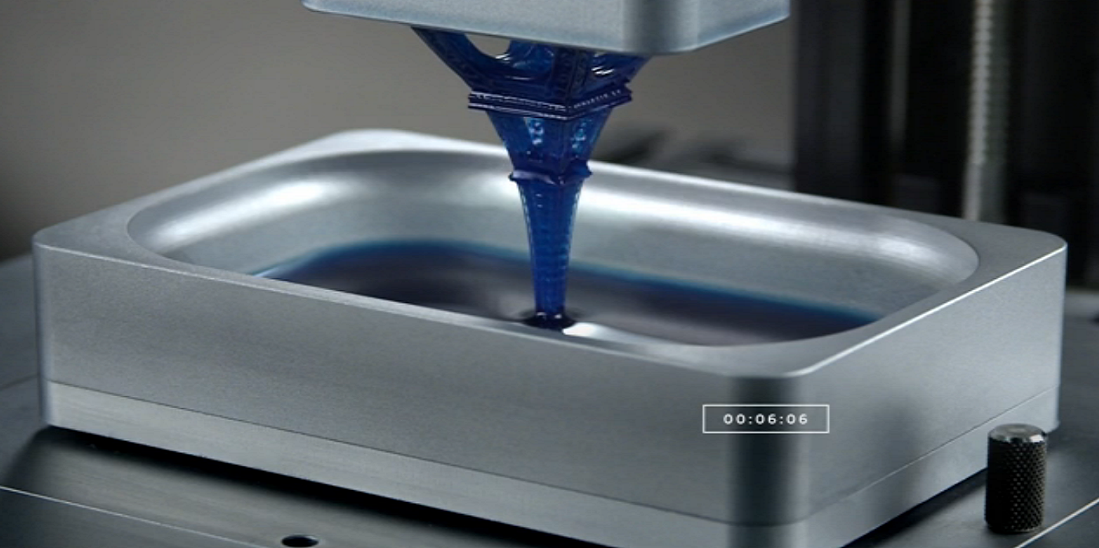
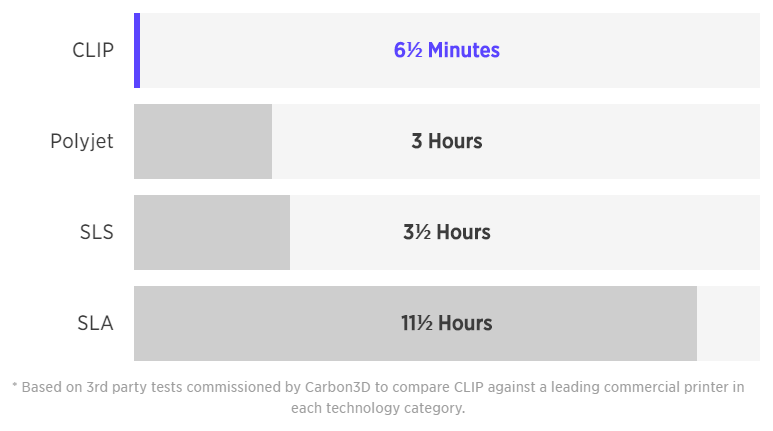
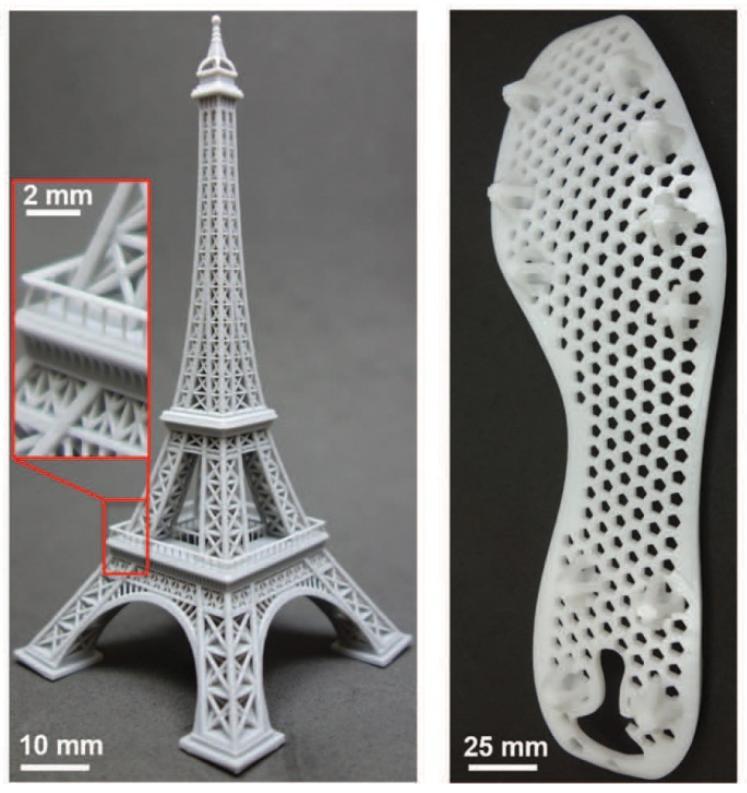
In what may be one of the biggest stories we have covered this year, a new company, Carbon3D has just emerged out of stealth mode, unveiling an entirely new breakthrough 3D printing process, which is anywhere between 25 and 100 times faster than what’s available on the market today.

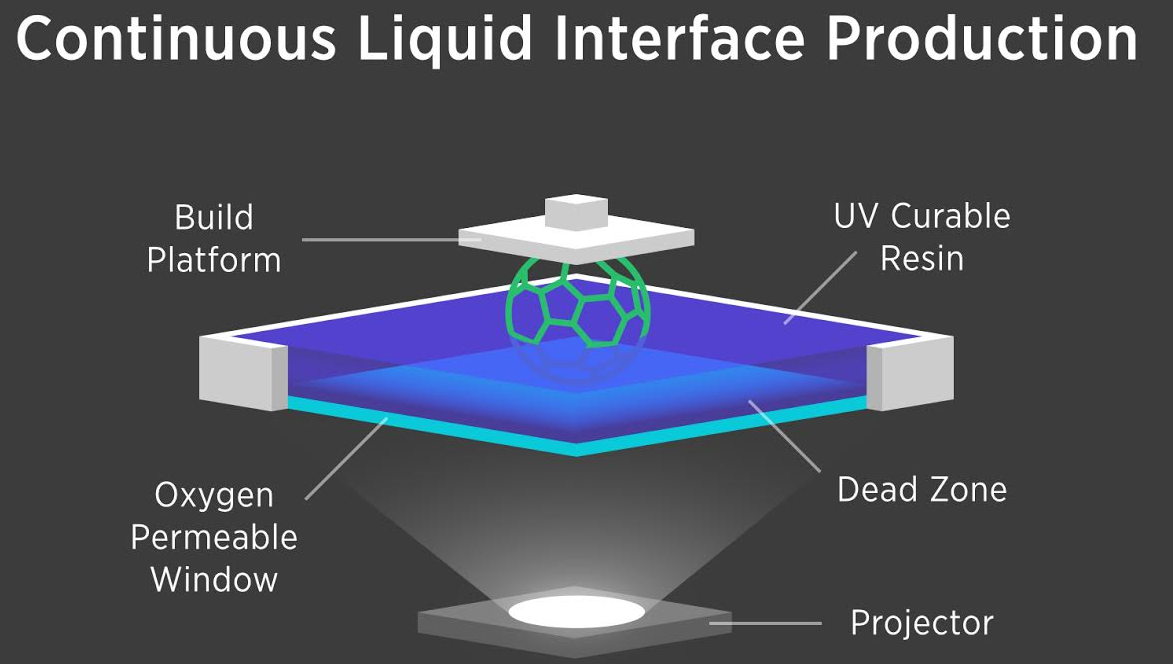
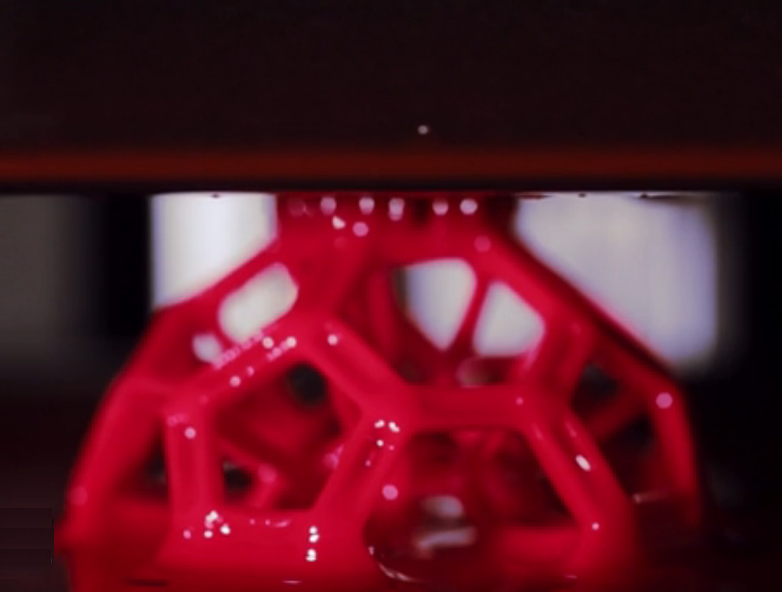
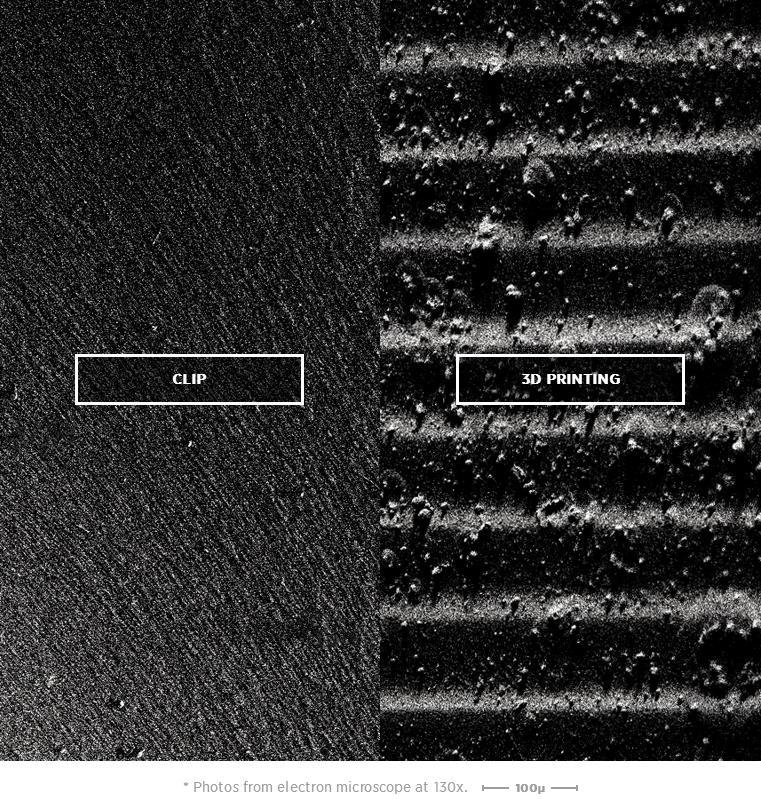
The privately-held Redwood City, California-based company, Carbon3D, was founded in 2013, and since then has been secretly perfecting a new 3D printing technology which promises to change the industry forever. The technology that the company calls Continuous Liquid Interface Production technology (CLIP) works by harnessing the power of light and oxygen to cure a photosensitive resin. Sounds an awful lot like Stereolithography (SLA) technology, doesn’t it? While it uses principles we see within a typical SLA process, where a laser or projector cures a photosensitive resin, Carbon3D’s CLIP process strays greatly from the technology that we are all used to seeing.

Instead of printing an object layer-by-layer, which leads to incredibly slow speeds as well as a weak overall structure similar to that of shale, this new process harnesses 

  • light as a way to cure the resin, and 
  • oxygen as an inhibiting agent, to print in true 3-dimensional fashion.

Current 3D printing technology has failed to deliver on its promise to revolutionize manufacturing,” said Dr. Joseph DeSimone, CEO and Co-Founder, Carbon3D. “Our CLIP technology offers 

  • the game-changing speed, 
  • consistent mechanical properties and 
  • choice of materials required for complex commercial quality parts.
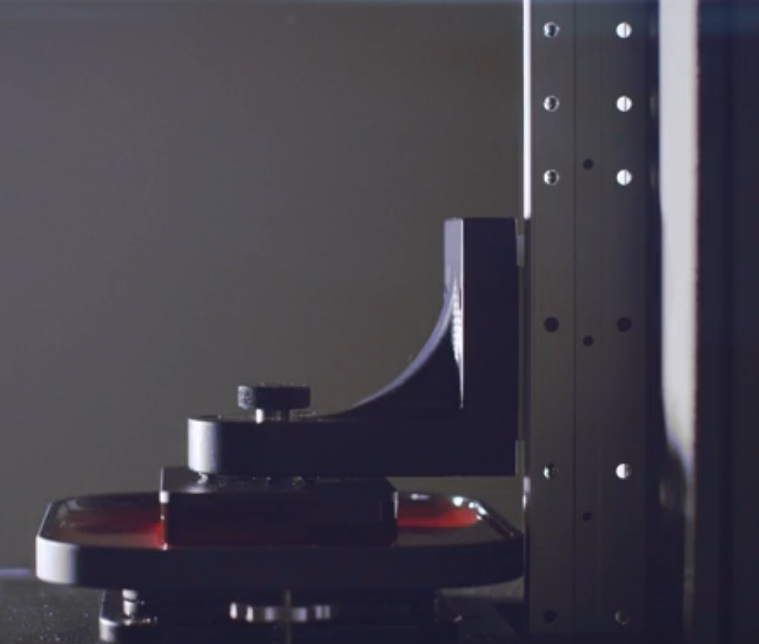
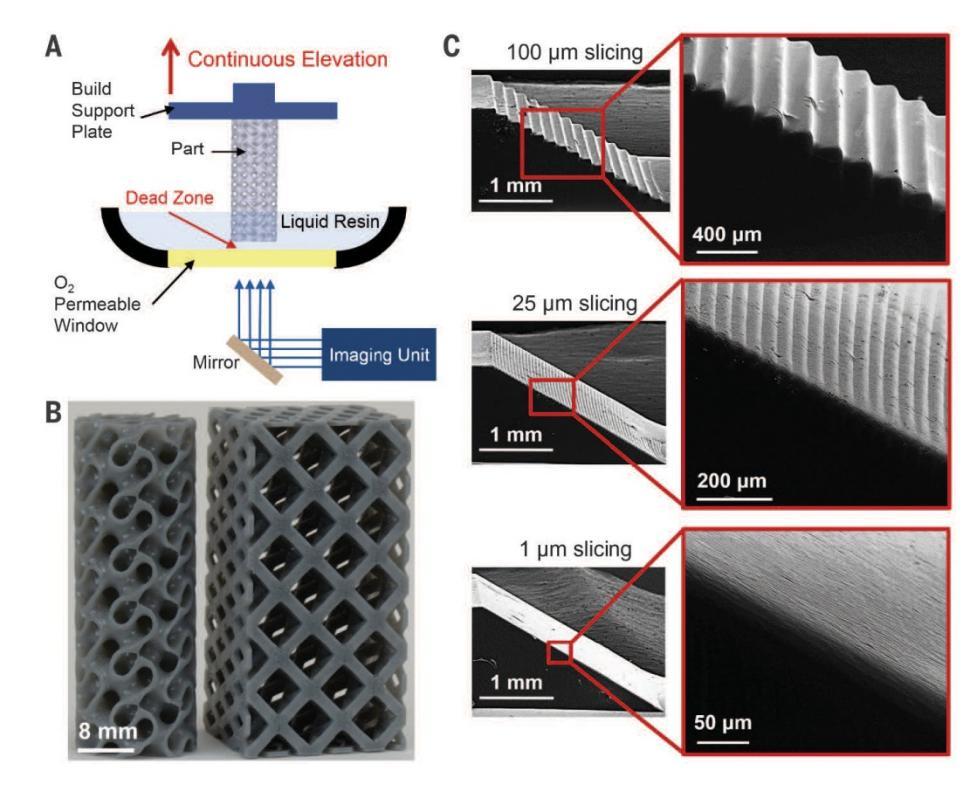
By bringing oxygen into the equation, a traditionally mechanical technique for 3D printing suddenly becomes a tunable photochemical process which rapidly decreases production times, removes the layering effect, and provides a technology which may just take 3D printing to the next level. The CLIP process relies on a special transparent and permeable window which allows both light and oxygen to get through. Think of it as a large contact lens. The machine then is able to control the exact amount of oxygen and when that oxygen is permitted into the resin pool. The oxygen thus acts to inhibit the resin from curing in certain areas as the light cures those areas not exposed to the oxygen. Thus the oxygen is able to create a ‘dead zone’ within the resin which is as small as tens of microns thick (about the diameter of 2-3 red blood cells). In this subsection of the resin, it is literally impossible for photopolymerization to take place. The machine will then produce a series of cross sectional images using UV light in a fashion similar to playing a movie.


For those of you who are thinking right now, “This company must be a fluke. After all, how could they have created such a breakthrough 3D printing technique but we’ve yet to hear a peep from them,” the next tidbit of information will certainly diminish your doubts.

Carbon3D has managed to partner with Sequoia Capital, one of the oldest and most successful venture capital firms on the planet, to lead their Series A round of financing in 2013, and with Silver Lake Kraftwerk for their Series B round. In total, they have raised $41 million to date, all practically under the radar.


If 3D printing hopes to break out of the prototyping niche it has been trapped in for decades, we need to find a disruptive technology that attacks the problem from a fresh perspective and addresses 3D printing’s fundamental weaknesses,” said Jim Goetz, Carbon3D board member and Sequoia partner. “When we met Joe and saw what his team had invented, it was immediately clear to us that 3D printing would never be the same.

The CLIP process was originally developed by the company’s CEO, Joseph DeSimone, along with his colleagues Professor Edward Samulski, and Dr. Alex Ermoshkin. It’s going to be very interesting to see just how this technology ultimately plays out, and when it may come to market. Now that the company is out of stealth mode, will the larger players within the space try acquiring them? Let’s hear your thoughts on this breaking story in the Carbon3D forum thread on 3DPB.com

(image source: sciencemag.org)

(image source: sciencemag.org)

clip6

ORIGINAL: 3D Print
BY BRIAN KRASSENSTEIN
MARCH 16, 2015