Mostrando entradas con la etiqueta e. coli. Mostrar todas las entradas

viernes, 4 de noviembre de 2016

A Conductor of Evolution’s Subtle Symphony

At first, the biologist Richard Lenski thought his long-term experiment on evolution might last for 2,000 generations. Nearly three decades and over 65,000 generations later, he’s still amazed by evolution’s “awesome inventiveness.”
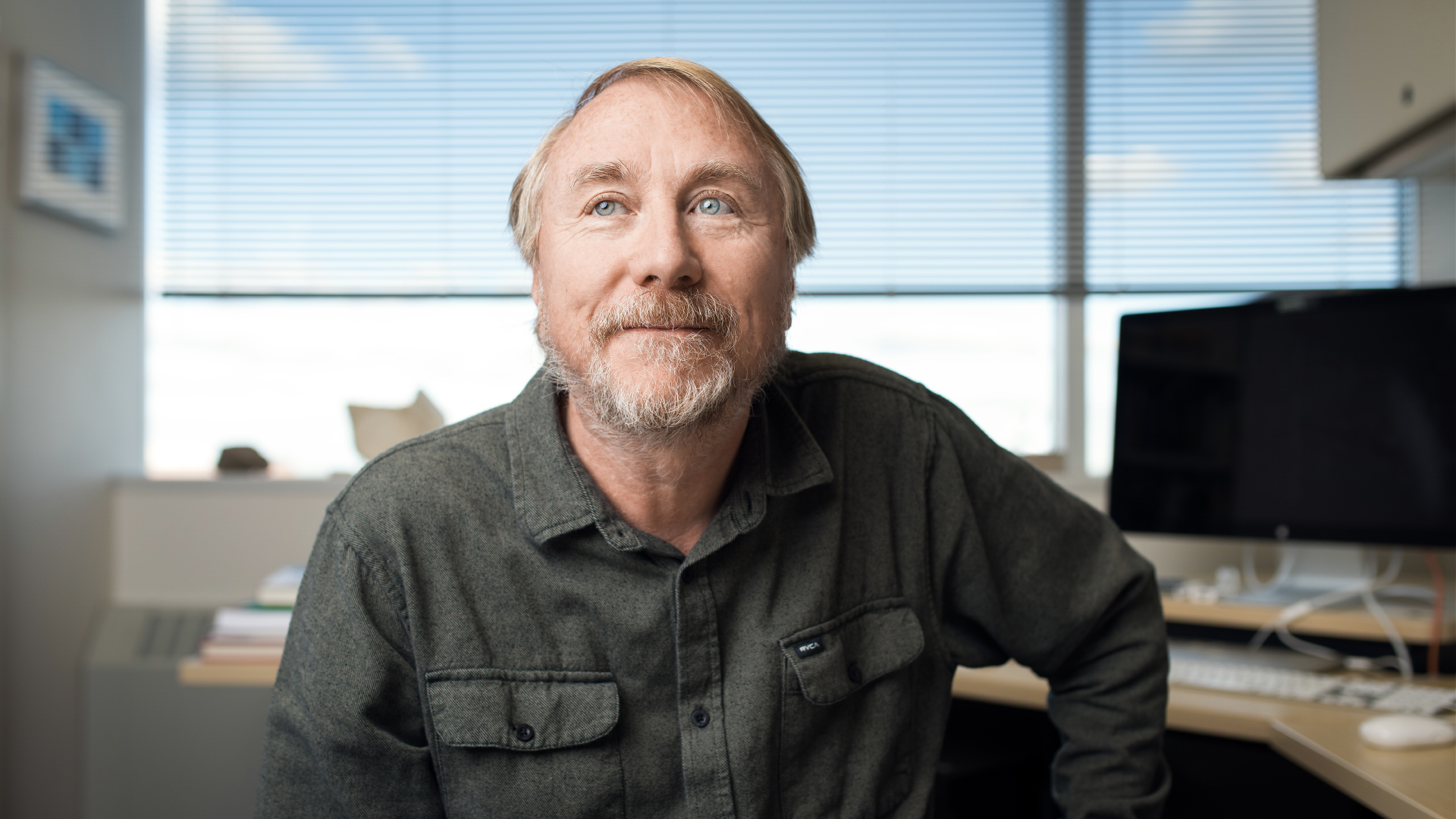
Logan Zillmer for Quanta Magazine
Early in his career, the decorated biologist Richard Lenski thought he might be forced to evolve. After his postdoctoral research grant was canceled, Lenski began to look tentatively at other options. With one child and a second on the way, Lenski attended a seminar about using specific types of data in an actuarial context — the same type of data he had worked with as a graduate student. Lenski collected a business card from the speaker, thinking he might be able to make use of his background in a new career.

But then, as it sometimes does — and I was very lucky — the tide turned,” Lenski told Quanta Magazine in his high-rise office at Michigan State University. “We got the grant renewed, and soon thereafter, I started getting faculty offers.

Lenski, a professor of microbial ecology at Michigan State, is best known for his work on what’s known as the long-term evolution experiment. The project, started in 1988, examines evolution in action. He and his lab members have been growing 12 populations of E. coli continuously for over 65,000 generations, tracking the development and mutations of the 12 separate strains.

The results have garnered attention and accolades — including a MacArthur “genius” grant, which Lenski received in 1996 — both for the enormity of the undertaking and for the intriguing findings the study has yielded. Most notably, in 2003, Lenski and his collaborators realized that one strain of E. coli had evolved the ability to use citrate as an energy source, something no previous population of E. coli was able to do.

Lenski is also interested in digital organisms, computer programs that have been designed to mimic the process of evolution. He was instrumental in the push to open the Beacon Center at Michigan State, which gives computer scientists and evolutionary biologists the opportunity to forge unique collaborations.

Quanta Magazine met with Lenski in his office to talk about his own evolving interests in the field of evolutionary biology — and about the time he almost pulled the plug on the long-term experiment. An edited and condensed version of the conversation follows.
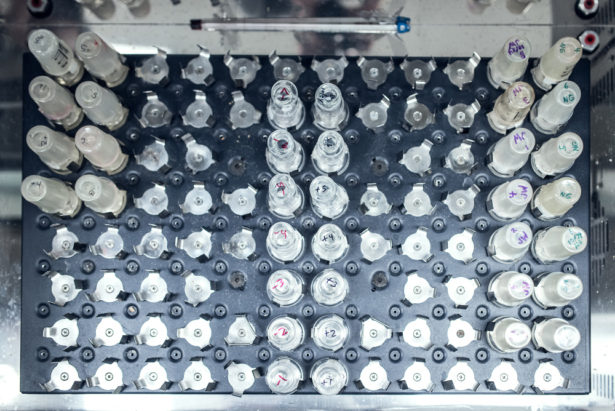
Logan Zillmer for Quanta Magazine. Vials containing the E. coli strains that make up the long-term evolution experiment.

QUANTA MAGAZINE: What sort of questions have been driving forces in your career?

RICHARD LENSKI: One question that has always intrigued me is about the reproducibility or repeatability of evolution. Stephen Jay Gould, the paleontologist and historian of science, posed this question: If we could rewind the tape of life on Earth, how similar or dissimilar would it be if we watched the whole process play out again? The long-term experiment that we do has allowed us to gather a lot of data about this question.

So is evolution repeatable?
Yes and no! I sometimes tell people it’s been a fascinating motivating question, but on one level, it is a terrible question, and one you would never tell a graduate student to go after. That’s because it is very open-ended, and it does not have a very clear-cut answer.

From the long-term experiment, we’ve seen

  • some really beautiful examples of things that are remarkably reproducible, and 
  • on the other hand some other crazy things where one population goes off and does things that are entirely different from the other 11 populations in the experiment.
How did you first come up with the idea for the long-term experiment?
I had been working already for several years on experimental evolution with bacteria, as well as viruses that infect bacteria. Those were fascinating, but everything became so complicated so quickly that I said, “Let’s reduce evolution down to its bare bones.In particular, I wanted to go after this question of reproducibility or repeatability of evolution. And if I wanted to be able to look at the reproducibility of evolution, I wanted a system that was very simple. When I started the long-term experiment, my original goal was that I would call it the long-term experiment when I got to 2,000 generations.

How long did that take you?
The actual running of the experiment was about 10 or 11 months, but by the time we had collected data, wrote it up, and got the paper published, it was more like two and a half years or so. By then the experiment had already passed 5,000 generations, and I realized we should keep it going.
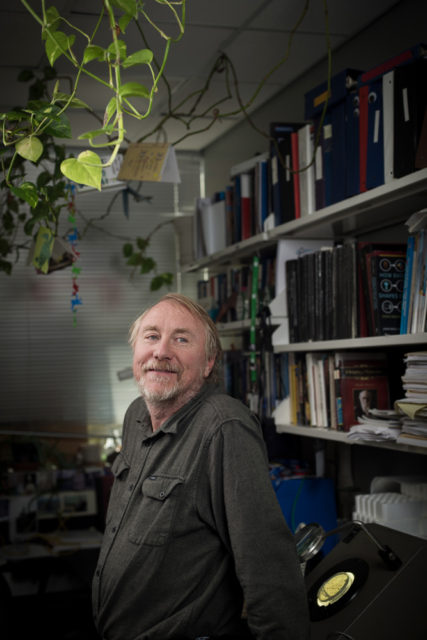
Logan Zillmer for Quanta Magazine. Richard Lenski in his office.

Did you anticipate the experiment going on for as long as it has?
No. No, I didn’t. There was a five-year period, maybe from the late ’90s into the early 2000s, where I thought about possibly stopping the experiment. This was for a couple of different reasons. One was that I was getting hooked on this other way of studying evolution, which involved looking at evolution in self-replicating computer programs, which was absolutely fascinating. Suddenly I saw this even shinier way of studying evolution, where it could go even more generations and do even more, seemingly neater, experiments.

How have your views on studying evolution via these digital organisms changed over time?
I had this sort of “puppy love” when I first learned about it. At first, it was just so extraordinarily interesting and exciting to be able to watch self-replicating programs, to be able to change their environments, and to watch evolution happen.

One of the really exciting things about digital evolution is that it shows that we think of evolution as being about stuff with blood and guts and DNA and RNA and proteins. But the idea of evolution really comes down to some very basic ideas of heredity, replication and competition. The philosopher of science Daniel Dennett has emphasized that we see evolution as this instantiation, this form of biological life, but the principles of it are much more general than that.

I would say that my latest directions of research have been primarily by way of talking with super-smart colleagues and serving on committees of graduate students who are using these systems. I’m less involved in designing experiments or formulating specific hypotheses, because that field has been moving extremely quickly. I feel I was very lucky to pick off some of the low-hanging fruit, but now I feel like I’m in there as a biologist, maybe criticizing hypotheses, suggesting controls that might be done in some experiments.

So your interest in digital organisms was one reason you considered shutting down the long-term experiment. What was the other?
At that point, the other thing that was a little frustrating about the long-term lines was that the rate at which the bacteria were changing was slowing down. The way I thought about it, it was almost as though evolution had stopped. I thought that this was just too simple an environment, and there wasn’t that much more for them to do.

So those two different things made me think about stopping the experiment. And I spoke to a few colleagues and they basically told me: You can’t do that. You shouldn’t do that. I talked with my wife, Madeleine, by the way, when I was getting very interested in these digital organisms — we were actually on sabbatical in France at that time — and I said, “Maybe I should call home and shut down the lab.” And she said, “I don’t think you should do that.

Why did your wife and your colleagues have that reaction?
The experiment had already been quite profitable in a scientific sense, providing very rich data about the dynamics of evolutionary change. It was more or less unique in the timescales it was probing. So I think it was very good advice they gave me. I don’t know whether I could have ever quite pulled the plug myself. I certainly was a bit frustrated and thinking about it — but anyhow, people said no!


Logan Zillmer for Quanta Magazine
Video: Lenski discusses how he has been surprised by evolution.

Did you get past the plateau where you said you felt like the organisms weren’t evolving that much?
That actually has been one of the really cool findings from the experiment. When I started the long-term experiment, I thought that the bacteria would quickly reach some sort of limit to their growth. It was only a few years ago that we began to realize that the bacteria would always be able to beat anything we had inferred in the past about what their hard limit might be. I realized that we’re just fundamentally not thinking about this the right way. Even in the simplest environment, there’s always the potential for organisms to do any step in their metabolism, or any step in their biochemistry, a little bit better. And natural selection, although it won’t get it right on any given step, will over the long term always be favoring these subtle improvements.

One line of bacteria evolved the ability to use citrate as a food source. Did that happen before or after you were thinking of shutting down the experiment?
That was one of the things that made me realize we wouldn’t shut down the experiment. In 2003, one lineage evolved the ability to use citrate. That became a game changer: realizing that even in this super simple environment, there were some major things for the bacteria to evolve and figure out.

I like to say that the bacteria would eat dinner every night without realizing there was this nice, lemony dessert right around the corner. And so far, even after 65,000 generations, only one of the 12 populations has figured out how to consume that citrate.

You also mentioned that certain populations within your experiment have developed mutations at a greater rate. What does that look like?
After over 60,000 generations, six out of the 12 populations have evolved to be hypermutable. They’ve evolved changes in their DNA repair and DNA metabolic processes that causes them to have new mutations somewhere on the order of 100 times the rate at which the ancestor [at the start of the experiment] did.
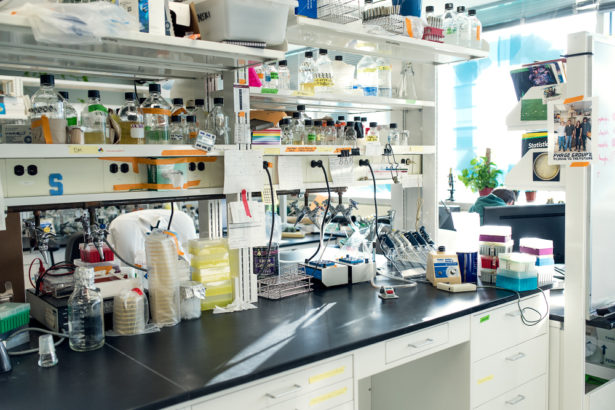
Logan Zillmer for Quanta Magazine. Lenski’s laboratory at Michigan State University.
It’s a very interesting process, because it’s both good and bad from the bacteria’s perspective. It’s bad because most mutations are harmful or at best neutral. Only the rare nugget in the mine is a beneficial mutation. The bacteria that have the higher mutation rate are a little bit more likely to discover one of those nuggets. But on the other hand, they’re also more likely to produce children and grandchildren with deleterious mutations.

Was the line that was able to consume citrate part of the group that had evolved to be hypermutable?
That’s a great question. The line that evolved the ability to use citrate did not have an elevated mutation rate. Interestingly, it became one of the ones with a higher mutation rate, but only after it evolved the ability to use citrate. It’s consistent with the benefit of the higher mutation rate — the additional capacity for exploration. The bacteria were actually quite poor at using citrate to begin with, so there were a lot of opportunities after they evolved the ability to use citrate to refine that ability.

How does the long-term experiment help you understand the evolution of life on a larger scale?
For me, one of the lessons of the long-term experiment has been how rich and interesting life can be, even in the dullest, simplest environment. The fact that evolution can generate this diversity, and discover doors left slightly ajar that it can push through, speaks to the awesome inventiveness of evolution. And if it can be so inventive and creative on this minuscule spatial and temporal scale, and in such a dull environment, it just creates more awe in me, when I think of how much more remarkable it is out in nature.

What most surprised you about this project?
That it’s still going on after all these years. One of my goals in life is to make sure that the experiment continues. I would like to raise an endowment to keep the experiment going on in perpetuity.

What’s your hope for the long-term experiment in the future?
My hope for the project is that it will yield many more surprises. For instance, two lineages have coexisted for 60,000 generations in one of the populations, where one of them is feeding off of the product that the other one is generating. I think it’s fascinating to wonder if, at some point, that might turn into something more like a predator-prey interaction. It’s certainly not outside the realm of possibilities. Whether it would ever happen, I don’t know.

It has also been a tremendous joy to work with students, postdocs and collaborators, and to see them grow and develop. That’s really the biggest joy for me of being a scientist. I like to tell people that I’m a bigamist. I have two families: 

  • I have my lab family and 
  • my biological family, and 
they both are incredibly wonderful.


Correction: This post was revised on November 3 to reflect that the citrate-using bacteria appeared in 2003, not 2008. The paper describing that change was published in 2008.

ORIGINAL: Quanta Magazine
By Stephanie Bucklin
November 3, 2016

martes, 5 de abril de 2016

A programming language for living cells

MIT biological engineers have devised a programming language that can be used to give new functions to E. coli bacteria.
Image: Janet Iwasa
New language lets researchers design novel biological circuits.
MIT biological engineers have created a programming language that allows them to rapidly design complex, DNA-encoded circuits that give new functions to living cells.

Using this language, anyone can write a program for the function they want, such as detecting and responding to certain environmental conditions. They can then generate a DNA sequence that will achieve it.

It is literally a programming language for bacteria,” says Christopher Voigt, an MIT professor of biological engineering. “You use a text-based language, just like you’re programming a computer. Then you take that text and you compile it and it turns it into a DNA sequence that you put into the cell, and the circuit runs inside the cell.

Voigt and colleagues at Boston University and the National Institute of Standards and Technology have used this language, which they describe in the April 1 issue of Science, to build circuits that can detect up to three inputs and respond in different ways. Future applications for this kind of programming include designing bacterial cells that can produce a cancer drug when they detect a tumor, or creating yeast cells that can halt their own fermentation process if too many toxic byproducts build up.

The researchers plan to make the user design interface available on the Web.

No experience needed
Over the past 15 years, biologists and engineers have designed many genetic parts, such as sensors, memory switches, and biological clocks, that can be combined to modify existing cell functions and add new ones.

However, designing each circuit is a laborious process that requires great expertise and often a lot of trial and error. “You have to have this really intimate knowledge of how those pieces are going to work and how they’re going to come together,” Voigt says.

Users of the new programming language, however, need no special knowledge of genetic engineering.

You could be completely naive as to how any of it works. That’s what’s really different about this,” Voigt says. “You could be a student in high school and go onto the Web-based server and type out the program you want, and it spits back the DNA sequence.

The language is based on Verilog, which is commonly used to program computer chips. To create a version of the language that would work for cells, the researchers designed computing elements such as logic gates and sensors that can be encoded in a bacterial cell’s DNA. The sensors can detect different compounds, such as oxygen or glucose, as well as light, temperature, acidity, and other environmental conditions. Users can also add their own sensors. “It’s very customizable,” Voigt says.

The biggest challenge, he says, was designing the 14 logic gates used in the circuits so that they wouldn’t interfere with each other once placed in the complex environment of a living cell.

In the current version of the programming language, these genetic parts are optimized for E. coli, but the researchers are working on expanding the language for other strains of bacteria, including Bacteroides, commonly found in the human gut, and Pseudomonas, which often lives in plant roots, as well as the yeast Saccharomyces cerevisiae. This would allow users to write a single program and then compile it for different organisms to get the right DNA sequence for each one.

Biological circuits
Using this language, the researchers programmed 60 circuits with different functions, and 45 of them worked correctly the first time they were tested. Many of the circuits were designed to measure one or more environmental conditions, such as oxygen level or glucose concentration, and respond accordingly. Another circuit was designed to rank three different inputs and then respond based on the priority of each one.

One of the new circuits is the largest biological circuit ever built, containing seven logic gates and about 12,000 base pairs of DNA.

Another advantage of this technique is its speed. Until now, “it would take years to build these types of circuits. Now you just hit the button and immediately get a DNA sequence to test,” Voigt says.

His team plans to work on several different applications using this approach: bacteria that can be swallowed to aid in digestion of lactose; bacteria that can live on plant roots and produce insecticide if they sense the plant is under attack; and yeast that can be engineered to shut off when they are producing too many toxic byproducts in a fermentation reactor.

The lead author of the Science paper is MIT graduate student Alec Nielsen. Other authors are former MIT postdoc Bryan Der, MIT postdoc Jonghyeon Shin, Boston University graduate student Prashant Vaidyanathan, Boston University associate professor Douglas Densmore, and National Institute of Standards and Technology researchers Vanya Paralanov, Elizabeth Strychalski, and David Ross.

ORIGINAL: MIT
Anne Trafton | MIT News Office 
March 31, 2016

miércoles, 16 de diciembre de 2015

Evelyn Witkin and the Road to DNA Enlightenment


Evelyn M. Witkin with her cat Jenny at home in Princeton, N.J. CreditLaura Pedrick for The New York Times
For decades Evelyn M. Witkin, professor emerita at Rutgers University, has been a towering figure in genetics. Recently she was awarded the Lasker Basic Medical Research Award for groundbreaking work into how DNA responds to damage, a process essential to all living organisms.

At 94, Dr. Witkin’s own DNA appears to be in excellent condition. We met at her townhouse not far from Princeton University. A condensed and edited version of that interview and a subsequent telephone conversation follows.

Q. When you were growing up in 1930s New York, what did you think you’d be doing with your life?
A. I thought I might become a biologist. Genetics wasn’t a separate field of study yet.

As an N.Y.U. undergraduate, I majored in biology; however, in my senior year, which was 1940, I joined a civil-rights protest. That changed the direction of my life.

Though N.Y.U. had blacks on sports teams, when the school went up against some universities in the South, they kept them home. Seven student leaders, myself included, circulated a petition protesting N.Y.U.’s acceptance of Southern racism. N.Y.U. responded by suspending us for three months. I could not graduate with my class. I lost the graduate assistantship they’d offered me for the following year.

DNA’s Defenses
Evelyn M. Witkin and Stephen J. Elledge received a Lasker award for insights into how cells respond to damaged DNA. 

So I went up to Columbia, walked into Theodosius Dobzhansky’s office and asked if I might study with him. He’d never had a female graduate student before and thought that would be pretty good, and he said, “Sure.

Why did you go to Dobzhansky, a founder of evolutionary genetics?
To be frank, it was because Professor Dobzhansky was Russian. I was interested in testing the theories of Trofim Lysenko, who asserted that genes didn’t exist. I thought Dobzhansky could read Lysenko in the original. Now, once I took Dobzhansky’s genetics class, I saw that Lysenko was a fraud or an ignoramus, or both.

One day in 1943, Professor Dobzhansky gave me an article by Salvador Luria and Max Delbruck proving for the first time that bacteria had genes. Reporting on it for Dobzhansky’s class, I jumped up and down with excitement. At the time, one of the big questions involved how genetic mutations occurred. Thanks to Luria and Delbruck, I now saw how we could use bacteria models to answer that.

So in the summer of 1944, Dobzhansky sent me to Cold Spring Harbor Laboratories, where he had connections and where they were pioneering bacterial genetics. I ended up staying until 1955.

Legend has it that on your first day there you made a significant discovery. True?
Yes. On my first day, my supervisor handed me a culture of E. coli bacteria, pointed to an ultraviolet lamp and said, “Go induce mutations.”

I took a million bacteria, placed them on petri dishes, and put them under ultraviolet lamps. When I came back the next morning, there was almost nothing left alive. The UV light doses apparently had been too strong. However, one petri dish had four colonies on it, which meant that four bacteria had survived what had killed everybody else.

At this point, I asked, “Why did they survive? Maybe a mutation made them resistant.

I next cultured and tested them. Sure enough, they could withstand 100 times more radiation than the parent strain. That created something of a splash among scientists at Cold Spring Harbor. It became the focus of my Ph.D. research and led to work that I and others did later on how DNA repairs itself.

What did you discover?
That DNA damage generates a signal that turns on a whole lot of other genes that are not active in the healthy cell. They don’t do anything unless the cell generates this S.O.S. signal. And when they are turned on, they make products that help cells survive. They repair damage.

Now, my co-winner of the Lasker Prize, Stephen Elledge, later picked up on what I found and applied it to higher organisms, including humans. It’s one connected story that couldn’t have been understood unless it had been worked out in bacteria first.

Your career began in a time when there were tremendous barriers against women entering the sciences. How were you able to do it?
I think it, in part, was because I had a lot of support from men.

My late husband, Herman Witkin, an experimental psychologist, was a real feminist. He believed my career was as important as his. For 10 years, he commuted four hours every day to his work in Brooklyn so that I could keep mine at Cold Spring Harbor. When our second child was an infant, he had a sabbatical. He wrote a book with the baby in his lap most of the time.

He loved being home with the children that year. He said he got so close to those kids and that it was the best thing ever.

Some time in the 1950s, Vannevar Bush, who’d headed the Carnegie Institution of Washington — Cold Spring Harbor’s laboratory was its department of genetics — sent his college-age granddaughter to talk to me about family and career. “The secret,” I told her, “is to have a husband like Herman Witkin and boss like Vannevar Bush.

How exactly was Bush helpful?
When I was pregnant with my first child, he came to my lab and said it was important to make scientific careers possible for women. What did I need? I told him, maternity leave and to return only part time. He said, “Done, and we’re not going to cut your salary because I know you’re going to do a full-time job.” That act alone made it possible for me to stay with my research.

Bush also was very supportive of Barbara McClintock. Before coming to Cold Spring Harbor, she’d had all the classical “women in science” experiences. She’d been a member of a graduate team at Cornell of three men. They got top-notch jobs as soon as they got their Ph.D.s. Barbara couldn’t.

She won the Nobel Prize for the work she did there. Were you friends?
Yes. She taught me to really get to know my bacteria. She had this belief that you had to have a feeling for the organism. I knew what she meant. You needed to get deep down with these bugs, get to know what goes on with them so that you could spot something unusual.

Why, in 1955, did you leave the research paradise that was Cold Spring Harbor?
Because it was bad for our family to have Herman commuting four hours daily. I moved my work to Downstate Medical Center in Brooklyn. Very early, I made a decision that if there was conflict between my work and family, the family came first.

In 1960 we both had sabbaticals to Paris. When François Jacob heard, he asked me to come work with him at the Pasteur. I turned him down because you don’t work with Jacob unless you use every cylinder you’ve got. My children were 8 and 11. They were going to be in a strange country, in a strange school. I couldn’t do it.

When the Nobel Prize in Chemistry was awarded this year, it went to researchers who had worked on DNA repair. Were you disappointed not to be included?
That’s an awkward question. I can imagine that readers who do not know me will not believe me, but I couldn’t have been disappointed because it never occurred to me that I would get a Lasker Award, let alone a Nobel.

ORIGINAL: NYTimes
By Claudia Dreifus
DEC. 14, 2015

jueves, 24 de septiembre de 2015

Chatting With Bacteria To Save The World

Top Image Source: Stocktrek Images/Getty
The most recent E. coli epidemic in the U.S. struck late last year, when 33 people in Arizona, California and Nevada suffered from abdominal cramps, nausea and diarrhea after eating grab-and-go chicken salads. For two patients, the infection produced toxic substances that killed their red blood cells, which then clogged and damaged the tiny blood vessels in their kidneys, crucial for filtering out waste products and regulating blood pressure. Since treatments like dialysis often lead to a full recovery, no one died; but the conditon can lead to potentially fatal kidney failure, or long-term kidney damage that may require medication or dietary changes to keep blood pressure low.
The next step is to use a microprocessor to convert the light pulses emitted by bacteria into speech.
Foodborne illnesses affect 48 million — or 1 in 6 — Americans, and kill 3,000 each year, according to CDC estimates. Usually a quick sniff test or glance at the expiration date can reveal whether or not a food item is past its prime. But it’s tricky with E. coli contamination, which is impossible to detect by smell, taste or appearance alone.

But what if an alarm system could alert us to contamination?
It’s a possibility, thanks to research led by Manuel Porcar, a synthetic biology researcher at the University of Valencia in Spain. His group engineered harmless strains of E. colibacteria to emit different colors of light depending on its environment, from temperature to pH.
What’s next?
Convert the light waves into actual speech. That means we could add these engineered bacteria to food packaging, and if they detect enivronmental conditions that indicate contamination, they can tell us — literally — to avoid eating the package’s contents.

It seems like science fiction,” Porcar says. “But it’s a simple idea, and it worked well.

Manuel Porcar. Source: Via Twitter
And food safety is just one application. For example, pharmacists can place a sample of a drug containing the engineered bacteria in a special machine outfitted with a microprocessor, so the bacteria can let them know whether they made the drug correctly by producing proteins that emit different colors of fluorescent light depending on the amount of a certain ingredient. Distillers can use the engineered bacteria in a similar way to determine whether their alcohol is ready to bottle.

The amount of light the bacteria emitted went up or down depending on their comfort level.

The project, published online in Letters in Applied Microbiology, was Porcar and his students’ entry to the 2012 International Genetically Engineered Machine (iGEM) competition, in which undergraduate student teams build biological systems from a library of DNA sequences that encode specific biological parts.

One of Porcar’s students asked a simple yet tantalizing question: Can we talk to bacteria through light pulses?

To find out, the team engineered four strains of E. coli to produce proteins that emit different colors and amounts of fluorescent light depending on environmental factors considered crucial for survival. They designed
  • one strain to glow cyan under low glucose conditions, 
  • another to glow red with increasing temperature, and 
  • a third to glow green with decreasing oxygen levels. Finally, they designed 
  • a fourth strain to fluoresce yellow under low-nitrogen conditions
Sure enough, when the researchers tweaked the environment in which the E. coli bacteria were growing, the amount of light they emitted went up or down depending on their comfort level. For example, exposing the heat-sensitive strain to pulses of increasing temperatures caused it to glow red more brightly each time.

Are bacteria happy, are they stressed, will they refuse to obey?
The next step is to use a microprocessor to convert vocal questions into light pulses that stimulate the engineered E. coli to produce fluorescent light-emitting proteins. Then the microprocessor would convert that light into vocal responses, depending on its wavelength. So if the microprocessor detects wavelengths that result in bright red light, “the machine would say, ‘I’m very warm. Please refresh me,’” Porcar explained.

So far, the researchers have designed a microprocessor that can convert speech into light pulses, and vice-versa, but they haven’t integrated it into a complete system. Porcar has no plans to continue the project and, as far he knows, no one else has taken up the charge. But Victor de Lorenzo, a microbiologist at the Spanish National Center for Biotechnology, is engineering cells to command each other to perform sophisticated computations. These cells can then serve as building blocks for circuits to perform even more complex tasks, such as cleaning up toxic metals.
Schematic drawing of the Microbial Thermoelectric Cell (Auto-CAD).All dimensions are given in mm. Source: PLOS ONE
Nonetheless, Porcar’s study — the first-ever attempt to communicate with bacteria — highlights the importance of regular “check-ins” with bacteria to optimize their performance. “On one hand, the domesticated biological object must follow predictably the orders of the master,” de Lorenzo says. “But we have thus far not cared about the other direction — how bacteria feel while responding to our orders. Are they happy, are they stressed, will they refuse to obey?

Today, Porcar is continuing to investigate bacteria’s potential. His group has developed a device that converts the heat that bacteria emit — for example, when they digest sugar during alcohol production — into electricity to power small electronics.

We might be unable to make bacteria behave exactly as we want by rational design.

But Porcar’s work also raises the controversial question of whether engineering principles can be applied to living systems— a central tenet of synthetic biology often trumpeted by the popular media. “The main reason is that, in my opinion, cells are not machines because they’re not designed,” he says. “They arise from natural selection and evolution.

If living systems really were machines, then each part should behave independently of each other. But Porcar thinks the opposite is true. A major limitation of the “talking bacteria” project was that growing different strains together failed to provide readouts of multiple environmental conditions; for example, the strain designed to sense oxygen could no longer do so.

Porcar is testing his hypothesis for this year’s iGEM entry. The results might vastly change the way scientists approach synthetic biology. “We might be unable to make bacteria behave exactly as we want by rational design,” he says. Porcar thinks “rational design plus some room for fine-tuning with natural selection” might be more effective.

Typically, scientists insert one specific DNA sequence — encoding an anti-malarial protein, for example — into bacteria, allowing them to replicate, forming clones. Procar instead suggests allowing bacteria to naturally accumulate mutations in their DNA over the course of a few weeks, perhaps with the help of UV radiation, generating different variants of the protein and growing them with the malaria-causing parasite to select which one works best.

Porcar is challenging and stretching the way we think of bacteria. More than just cogs in a machine, they’re living systems themselves, meaning that our best chance of benefiting from them may be working with them — and even asking them how they’re doing.

* Editor’s note: An earlier version of this article did not adequately credit a source, The New Scientist blog.

MELISSA PANDIKA

OZY AUTHOR

Melissa Pandika is a lab rat-turned-journalist with an eye to all things science, medicine and more. Likes distance running, snails, late-night Korean BBQ + R&B slow jams.

ORIGINAL: OZY
BY MELISSA PANDIKA
MAY 19 2014

martes, 26 de noviembre de 2013

World Map Installation uses E. Coli and Jellyfish Proteins to illuminate our population in 2100

A Buckminster Fuller-style Dymaxion Map
Terreform’s Bio City Map in full, one side
If you think about it, Buckminster Fuller’s Dymaxion Map is a perfect example of how reductive approaches to science may be necessary to resolve some of the world’s more pressing complications. To best understand the Earth as a total entity, Fuller suggested we go pre-Magellan, back to the days when the earth’s shape was physically unproven, by unravelling our beloved sphere to a flat, non-symmetrical surface. Like peeling an orange while keeping the peel intact.

Close up of Dymaxion Map
This is why it fits so well as a model for Terreform’s Bio City Lab – in ethos and in structure. Putting Fuller’s concept to practice, the New York-based design firm constructed a vertical plane of two-sided triangular pieces that model Earth’s surface, as if it were peeled directly off the mantle. Each side of the installation houses physical representations of data that snapshot a coming reality: by 2100, an anticipated 11 billion human bodies will be hustlin’ in all corners of the globe.


Instead of relying solely on computer algorithms or census trends, Terreform employs what it refers to as “bacteriography” to drive Bio City Lab’s glowing body. Strains of E. Coli and protein structures from sea anemones and jellyfish combine to bio-illuminate population fluctuations from now until 2100, ultimately mimicking the natural ebb-and-flow of urban densities with purely biological means.

Terreform’s website details why: “Bacteria in this constrained form and under the right conditions, behave almost identically to urban population patterns […] In many cases, they are as good as computational versions because they are the source which algorithms are derived from. In time, the mapping installation may illustrate patterns yet unobserved in typical digital models.


The protein structures are injected into the DNA of genetically modified E. Coli strains, which are then gathered in petri dishes and subjected to UV rays. These rays effectively flip a switch in the bacteria, resulting in a neon mesh of blues, greens, reds and yellows. Green glowing blotches indicate where we are now; red ones indicate what our numbers will look like in the coming century.

Opposite the petri dishes are mountainous 3D graphs detailing population peaks across 2100’s world.

As a result, the structure becomes both static and mutative: the rigid and plastic population graphs depict future projections, while the ongoing biological reactions depict the fluid, amorphous quality of population changes.

It also takes into account contemporary phenomena like megacities (urban areas with populations of more than 10 million) and instant cities (urban areas with an infrastructure erected in anticipation of a population, usually at the cusp of economic booms).


But instead of specifying which petri dishes or 3D graphs correlate with which cities, the Bio City Map is geographically indiscriminate. Current urban areas, countries, continents or even bodies of water remain unreferenced, so that the populationstatistics and data of each city come together to form a single, transcontinental urbanity. In turn, it becomes a city of cities.

Through this, the installation suggests that if we’re to tackle problems of saturated population density and their potential corollaries (water, energy, food, housing, etc. crises), we need to stop worrying about national or regional interest and look at the bigger global picture. Literally.


Bio City Map for Terreform’s Biological Urbanism at OCAD University, Toronto, Canada

Detail of population spike graph Terreform is an international contender when it comes to these things.
They’re one in a series of contemporary design firms looking to explore the romantic tendencies of futurism through experimental approaches to society building. Along with recent curations like Liam Young’s Future Perfect exhibition at the Lisbon Architecture Triennale (which we partially covered here) and the writings of William Meyers, they’re giving breath to the argument that creativity, technology, and biology must unite if we’re to effectively solve societal dilemmas down the road.

Each of these groups and creators recognize the need for cross-collaboration. It’s no longer just architects, just urbanists, or just engineers hashing out blueprints – it’s all of the above, plus a cadre of fiction authors, artists, futurists, mathematicians, and more. Which makes more than enough sense: how can you guide the growth of a society without soliciting the thoughts of those who grow its culture?

All photos courtesy of Terreform

ORIGINAL: Creators Project
By Johnny Magdaleno
Oct 22 2013

lunes, 18 de noviembre de 2013

El hombre que metió la evolución en un frasco

Richard Lenski (izqda) y Zachary Blount con las placas del experimento. (Imagen: Science)
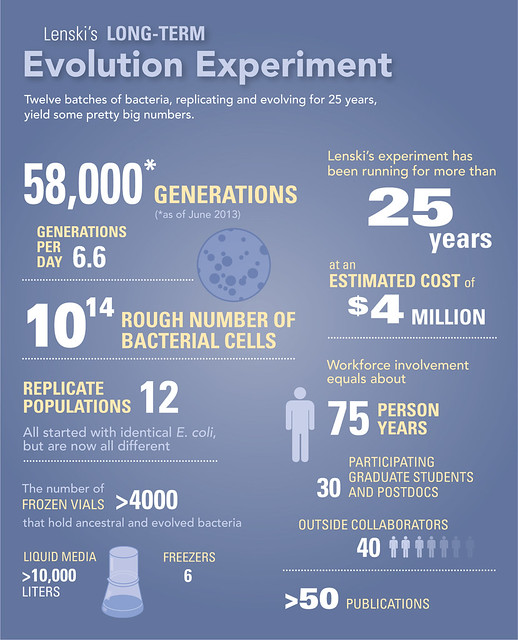
En el laboratorio de Richard Lenski, en la Universidad Estatal de Michigan, hay seis frigoríficos que contienen 58.000 generaciones de bacterias. Su experimento comenzó en el año 1988 con doce cultivos idénticos de Escherichia coli y, después de 25 años, las bacterias han seguido reproduciéndose y evolucionando. En el mantenimiento de estos cultivos, y las siguientes generaciones, se han invertido más de 4 millones de dólares y han participado un centenar de personas que han alimentado y cuidado a estos microorganismos día y noche, fines de semana incluidos. Cada poco tiempo las bacterias se multiplican y se coloca otra generación de E. coli en una nueva placa, en condiciones idénticas a las anteriores. Se calcula que se han reproducido a un ritmo de 6,6 generaciones nuevas cada día, el equivalente - si nos reprodujéramos al mismo ritmo - a un millón de años de evolución humana.

¿Y con qué motivo desarrollaría un experimento tan largo y tan costoso? Para observar, en tiempo real, si la evolución se detiene en algún momento. Para entenderlo mejor, hay que tener en cuenta la primera idea de Lenski. Si mantenía durante el tiempo los doce cultivos de bacterias en condiciones idénticas, pensó, cada grupo se adaptaría a su entorno paulatinamente hasta alcanzar un nivel de adaptación óptimo a partir del cual no podrían mejorar y la evolución, por decirlo de alguna manera, habría llegado a un límite. Pero no podía estar más equivocado.


Datos del experimento. Ilustración: Science


Aparte de las bacterias que están reproduciéndose en tiempo real, en los estantes de los seis frigoríficos del laboratorio uno puede encontrar muestras de distintos momentos evolutivos de las bacterias (congelaban una placa cada 75 días). De este modo, uno puede escoger entre los 4.000 viales y retroceder hasta el punto del tiempo evolutivo que desee: a la generación 10.000, a la 20.000 o a la de hace solo un año. Y se puede saber qué grupo de E. coli ha conseguido mejores adaptaciones y está más "evolucionado" mediante una sencilla prueba: se descongela una muestra antigua, se pone al lado de una actual y se comprueba cuál se reproduce más rápido. Aquellas que se reproducen antes tendrán más opciones de sobrevivir, de modo que están mejor adaptadas. "Podemos poner a competir a organismos que vivieron en diferentes momentos del tiempo", asegura Lenski, "de modo que las bacterias evolucionadas pueden competir cara a cara con sus ancestros".

Lo que han observado los científicos es que, pese a las sospechas iniciales de Lenski, la evolución es un proceso imparable que nunca se detiene, incluso cuando el ambiente permanece inalterado. Durante los 25 años del experimento, la adaptación de las bacterias ha mejorado en una media del 70%. Las nuevas generaciones de bacterias se reproducen 1,7 veces en el tiempo en que las bacterias originales se reproducen una vez, cuentan en Science. Durante las primeras pruebas, recuerda Lenski en NPR, las bacterias doblaban su población en alrededor de una hora. Pasadas 50.000 generaciones, las bacterias doblan su número en apenas 40 minutos. Y los científicos creen que las futuras generaciones lo harán incluso más rápido. "En alrededor de un millón de años", sostiene Lenski, "el ritmo con el que se multiplican por dos estará en torno a los 20 minutos".


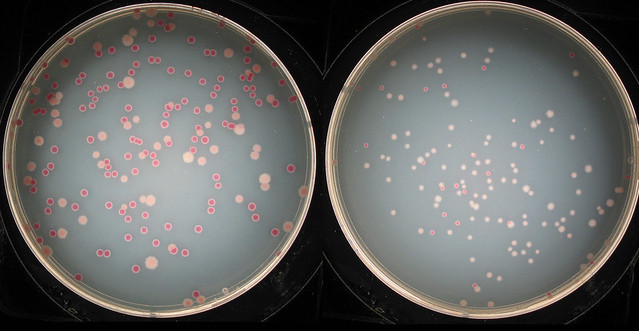
Dos cepas de bacterias E. coli compiten en una placa. Imagen: Michael Wiser.


El proceso, sin embargo, no es lineal. Las mejoras se producían al principio muy rápido y con el tiempo se han ralentizado, porque cada vez resulta más difícil mejorar. Además, algunas de las descendientes de las 12 cepas originales empezaron a progresar más rápido que otras y tomaron caminos evolutivos diferentes. Seis líneas, por ejemplo, desarrollaron un defecto en la reparación del ADN, pero en lugar de morir, el proceso dio lugar a un ritmo más rápido de mutaciones que el de sus compañeras. Hacia la generación 6.500, unos tres años después de empezar el experimento, dentro de uno de los frascos aparecieron dos tipos de E. coli diferentes: uno que formaba pequeñas colonias con células más pequeñas y otro que formaba colonias más grandes con bacterias más grandes. Los científicos esperaban que una acabara imponiéndose a la otra pero, para su sorpresa, ambas cepas han sobrevivido creando un ecosistema en el que la interacción entre ambas hace posible que ambas sigan adelante. "[Lenski] ha creado sus propias islas Galápagos", asegura Christopher Marx, microbiólogo de la Universidad de Harvard y uno de los investigadores que cuidó del experimento.

En otra ocasión, otra de las placas con E. coli se puso turbia debido a una acumulación inusualmente alta de bacterias y Lenski sospechó que se trataba de algún tipo de contaminación de la muestra. Tomaron del congelador un vial anterior de esa misma cepa y la reiniciaron desde otro punto, pero al cabo de tres semanas la placa se volvió a poner turbia. Cuando estudiaron la cepa Ara 3 - que así la habían bautizado - descubrieron que en lugar de alimentarse de glucosa, como las E. coli originales, habían evolucionado para alimentarse de citratos, un metabolismo que les permitía un ritmo de reproducción aún más alto.

"Este fue el suceso más importante de todo el experimento con E. coli", asegura el físico Christoph Adami. "Tener una nueva función compleja desarrollada aparentemente de la nada es muy destacable". Para ver qué había pasado volvieron a cultivar cepas anteriores y vieron que la adaptación para consumir citratos aparecía en 4 de los 72 cultivos. Finalmente, encontraron el minúsculo cambio genético que provocaba la aparición de las nuevas bacterias y que ponía encima de la mesa otra cuestión: cómo se forma una nueva especie. En biología, la definición de especie sigue sin estar muy clara, pero se considera que la prueba de fuego es que las dos especies no puedan tener descendencia común. Como esto no sucede con la reproducción asexual de las bacterias, la cosa se complica, y a lo más que han llegado es a mezclar los genomas y observar que se produce un nuevo tipo de bacteria menos adaptada.

En cualquier caso, como destacan en Science, el experimento de Lenski y las 12 cepas de E. coli ha servido para conocer mejor la evolución en tiempos más parecidos a los que ésta maneja: centenares de miles de generaciones. Estas primeras observaciones no son más que los primeros escarceos con el conocimiento de lo que sucede a nivel genético y un impulso, quizá, para que se pongan en marcha, y se mantengan, otros experimentos a largo plazo.

Referencias: The man who bottled evolution (Science) | Bacterial Competition In Lab Shows Evolution Never Stops (NPR)

Te puede interesar: En busca de las bacterias perdidas (Fogonazos)


ORIGINAL: Fogonazos
17 noviembre 2013

martes, 1 de octubre de 2013

KAIST announced a novel technology to produce gasoline by a metabolically-engineered microorganism

Metabolic Engineering of Escherichia coli for the Production of Short-chain Alkanes (gasoline) from Renewable Biomass

A major scientific breakthrough in the development of renewable energy sources and other important chemicals

The research team succeeded in producing 580 mg of gasoline per liter of cultured broth by converting in vivo generated fatty acids

For many decades, we have been relying on fossil resources to produce liquid fuels such as gasoline, diesel, and many industrial and consumer chemicals for daily use. However, increasing strains on natural resources as well as environmental issues including global warming have triggered a strong interest in developing sustainable ways to obtain fuels and chemicals.

Gasoline, the petroleum-derived product that is most widely used as a fuel for transportation, is a mixture of hydrocarbons, additives, and blending agents. The hydrocarbons, called alkanes, consist only of carbon and hydrogen atoms. Gasoline has a combination of straight-chain and branched-chain alkanes (hydrocarbons) consisted of 4-12 carbon atoms linked by direct carbon-carbon bonds.

Previously, through metabolic engineering of Escherichia coli (E. coli), there have been a few research results on the production of long-chain alkanes, which consist of 13-17 carbon atoms, suitable for replacing diesel. However, there has been no report on the microbial production of short-chain alkanes, a possible substitute for gasoline.

In the paper (entitled “Microbial Production of Short-chain Alkanes”) published online in Nature on September 29, a Korean research team led by Distinguished Professor Sang Yup Lee of the Department of Chemical and Biomolecular Engineering at the Korea Advanced Institute of Science and Technology (KAIST) reported, for the first time, the development of a novel strategy for microbial gasoline production through metabolic engineering of E. coli.

The research team engineered the fatty acid metabolism to provide the fatty acid derivatives that are shorter than normal intracellular fatty acid metabolites, and introduced a novel synthetic pathway for the biosynthesis of short-chain alkanes. This allowed the development of platform E. coli strain capable of producing gasoline for the first time. Furthermore, this platform strain, if desired, can be modified to produce other products such as short-chain fatty esters and short-chain fatty alcohols.

In this paper, the Korean researchers described detailed strategies for 
  1. screening of enzymes associated with the production of fatty acids, 
  2. engineering of enzymes and fatty acid biosynthetic pathways to concentrate carbon flux towards the short-chain fatty acid production, and 
  3. converting short-chain fatty acids to their corresponding alkanes (gasoline) by introducing a novel synthetic pathway and optimization of culture conditions. Furthermore, the research team showed the possibility of producing fatty esters and alcohols by introducing responsible enzymes into the same platform strain.

Professor Sang Yup Lee said, “It is only the beginning of the work towards sustainable production of gasoline. The titer is rather low due to the low metabolic flux towards the formation of short-chain fatty acids and their derivatives. We are currently working on increasing the titer, yield and productivity of bio-gasoline. Nonetheless, we are pleased to report, for the first time, the production of gasoline through the metabolic engineering of E. coli, which we hope will serve as a basis for the metabolic engineering of microorganisms to produce fuels and chemicals from renewable resources.

This research was supported by the Advanced Biomass Research and Development Center of Korea through the Global Frontier Research Program of the Ministry of Science, ICT and Future Planning (MSIP) through the National Research Foundation (NRF), Republic of Korea. Systems metabolic engineering work was supported by the Technology Development Program to Solve Climate Changes on Systems Metabolic Engineering for Biorefineries by MSIP through NRF.


ORIGINAL: KAIST
2013-09-3

sábado, 14 de septiembre de 2013

E. coli Bacteria Engineered to Kill Pathogens

ORIGINAL: Think Big
by Orion Jones
September 14, 2013

Photo credit: Shutterstock.com
What's the Latest Development?
In the fight against infectious disease, scientists have found an unlikely ally in E. coli, the bacterium infamous for making weekend barbecues and fast food meals into a serious health issue. But now, researchers at the Nanyang Technological University in Singapore have armed E. coli bacteria with a "seek and kill" system that targets cells of Pseudomonas aeruginosa, an invasive bacterium that causes pneumonia and other illnesses. "In preliminary tests with infected mice, the modified bacterium left a trail of dead P. aeruginosa in its wake."

What's the Big Idea?
While studies that document miracle medical procedures performed on mice will not necessarily benefit human populations, the researchers who modified the E. coli believe that the treatment will work effectively in humans. "Most conventional antibiotic treatments kill bacteria indiscriminately, taking out both pathogenic microbes and beneficial bacteria in the gut, for example. By contrast, [the researchers'] E. coli offers the possibility of a surgical strike." What's more, the E. coli could lie dormant in the gut, and activate only once its enemy makes an appearance.


Read it at Nature