Mostrando entradas con la etiqueta Demografía. Mostrar todas las entradas

martes, 26 de noviembre de 2013

World Map Installation uses E. Coli and Jellyfish Proteins to illuminate our population in 2100

A Buckminster Fuller-style Dymaxion Map
Terreform’s Bio City Map in full, one side
If you think about it, Buckminster Fuller’s Dymaxion Map is a perfect example of how reductive approaches to science may be necessary to resolve some of the world’s more pressing complications. To best understand the Earth as a total entity, Fuller suggested we go pre-Magellan, back to the days when the earth’s shape was physically unproven, by unravelling our beloved sphere to a flat, non-symmetrical surface. Like peeling an orange while keeping the peel intact.

Close up of Dymaxion Map
This is why it fits so well as a model for Terreform’s Bio City Lab – in ethos and in structure. Putting Fuller’s concept to practice, the New York-based design firm constructed a vertical plane of two-sided triangular pieces that model Earth’s surface, as if it were peeled directly off the mantle. Each side of the installation houses physical representations of data that snapshot a coming reality: by 2100, an anticipated 11 billion human bodies will be hustlin’ in all corners of the globe.


Instead of relying solely on computer algorithms or census trends, Terreform employs what it refers to as “bacteriography” to drive Bio City Lab’s glowing body. Strains of E. Coli and protein structures from sea anemones and jellyfish combine to bio-illuminate population fluctuations from now until 2100, ultimately mimicking the natural ebb-and-flow of urban densities with purely biological means.

Terreform’s website details why: “Bacteria in this constrained form and under the right conditions, behave almost identically to urban population patterns […] In many cases, they are as good as computational versions because they are the source which algorithms are derived from. In time, the mapping installation may illustrate patterns yet unobserved in typical digital models.


The protein structures are injected into the DNA of genetically modified E. Coli strains, which are then gathered in petri dishes and subjected to UV rays. These rays effectively flip a switch in the bacteria, resulting in a neon mesh of blues, greens, reds and yellows. Green glowing blotches indicate where we are now; red ones indicate what our numbers will look like in the coming century.

Opposite the petri dishes are mountainous 3D graphs detailing population peaks across 2100’s world.

As a result, the structure becomes both static and mutative: the rigid and plastic population graphs depict future projections, while the ongoing biological reactions depict the fluid, amorphous quality of population changes.

It also takes into account contemporary phenomena like megacities (urban areas with populations of more than 10 million) and instant cities (urban areas with an infrastructure erected in anticipation of a population, usually at the cusp of economic booms).


But instead of specifying which petri dishes or 3D graphs correlate with which cities, the Bio City Map is geographically indiscriminate. Current urban areas, countries, continents or even bodies of water remain unreferenced, so that the populationstatistics and data of each city come together to form a single, transcontinental urbanity. In turn, it becomes a city of cities.

Through this, the installation suggests that if we’re to tackle problems of saturated population density and their potential corollaries (water, energy, food, housing, etc. crises), we need to stop worrying about national or regional interest and look at the bigger global picture. Literally.


Bio City Map for Terreform’s Biological Urbanism at OCAD University, Toronto, Canada

Detail of population spike graph Terreform is an international contender when it comes to these things.
They’re one in a series of contemporary design firms looking to explore the romantic tendencies of futurism through experimental approaches to society building. Along with recent curations like Liam Young’s Future Perfect exhibition at the Lisbon Architecture Triennale (which we partially covered here) and the writings of William Meyers, they’re giving breath to the argument that creativity, technology, and biology must unite if we’re to effectively solve societal dilemmas down the road.

Each of these groups and creators recognize the need for cross-collaboration. It’s no longer just architects, just urbanists, or just engineers hashing out blueprints – it’s all of the above, plus a cadre of fiction authors, artists, futurists, mathematicians, and more. Which makes more than enough sense: how can you guide the growth of a society without soliciting the thoughts of those who grow its culture?

All photos courtesy of Terreform

ORIGINAL: Creators Project
By Johnny Magdaleno
Oct 22 2013

miércoles, 1 de agosto de 2012

Farming and biodiversity can coexist, say Stanford researchers

ORIGINAL: Stanford News
BY MAX MCCLURE

Although bird species disappear with intensive agriculture, research in Costa Rica shows that forest intermingled with cultivated land rescues biodiversity.

The Yellow-billed Cacique will likely persist and thrive in low-intensity agriculture.
Photo: 
Daniel Karp 
To keep up with projected demand, farming output will need to double in the next few decades. This inconvenient fact is bad news for the environment as a whole, and biodiversity in particular. Large-scale, high-intensity agricultural production, scientists say, dramatically reduces variation between bird communities of different areas.

But Stanford scientists say there may be a way to increase agricultural land without substantially impacting biodiversity.

A new paper by biology graduate student Daniel Karp, with Stanford biology professors and Stanford Woods Institute for the Environment fellows Gretchen Daily and Paul Ehrlich, shows that low-intensity tropical agriculture can maintain regional species differences at levels similar to those of intact forest. The study appears in today's issue of the journal Ecology Letters.

"It's one way of addressing a basic question," said Karp. "How can we feed people while preserving biodiversity?"

Animal farm
Karp was interested in "beta-diversity" – not the sheer number of species present in a region, but the differences between the sets of species that live in two different regions.

"The tropics have many more species total, which people know," said Karp. "But they also have a lot more beta-diversity," making Costa Rica an ideal place to study the ecological effects of agriculture.

The researchers found that "specialist" species that are adapted to particular food sources and environmental conditions disappear as land is converted to intensive agriculture. The process leaves the same population of "generalist" species in most converted lands, decreasing beta-diversity between formerly distinct regions.

"To a bird, high-intensity production is basically going to look the same no matter where it is," said Karp. "A melon plantation in the north of Costa Rica is going to look the same as a pineapple plantation in the south."

But agriculture on a small scale, or agriculture that leaves trees or other native species intermingled with crops, retains forest-like levels of beta-diversity.

The paper's data came from 10 years' worth of bird species monitoring from ornithologist Jim Zook, working with Daily and Stanford's Center for Conservation Biology. His unique transects through different plots of Costa Rican land – some forested, some under heavy agricultural use and some in between – and years of patient monitoring have provided insight into the impacts of alternative agricultural strategies.
Services rendered

In a previous paper from the team, Zook's data showed that careful stewardship may allow agriculture and biodiversity to coexist and suggested that preservation may not need to be an all-or-nothing proposition.

Farms, for instance, rely on birds for pollination, fruit dispersal and pest control. More generally, the presence of intact, biodiverse lands near a farm guarantees society certain natural benefits, including water purification and nutrient cycling.

"If these birds are locked up in a preserve far from humans, you're not going to get any of those services as a farmer," Karp said.

Costa Rica is already one of the first nations to adopt a "payments for ecosystem services," or PES, scheme. Acknowledging the value of keeping undeveloped land near agricultural areas, the policy compensates farmers for leaving part of their lands out of production. The new biodiversity finding offers further support for the practice, as Daily has addressed previously.

"Reducing pressure from population growth and consumption are crucial for achieving sustainability," Karp said. "But we also need to start thinking about making smarter societies – in which we can grow food and preserve ecosystem services and species at the same time."
Media Contact

Daniel Karp, Biology: dkarp@stanford.edu

Max McClure, Stanford News Service: (650) 725-6737, maxmc@stanford.edu

lunes, 7 de mayo de 2012

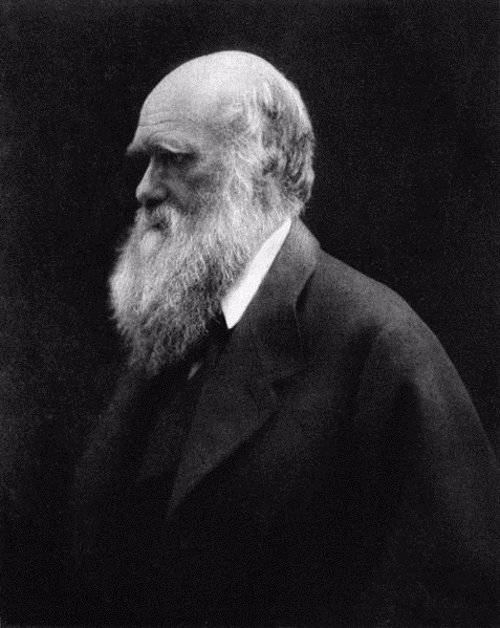
La selección darwiniana sigue influyendo en la evolución humana

ORIGINAL: Europapress.es

Foto: Julia Margaret Cameron
/ Wikimedia Commons
 
MADRID, 30 Abr. (EUROPA PRESS) -

Una nueva evidencia demuestra que los seres humanos están en constante evolución, y que la selección natural y sexual sigue teniendo lugar en nuestra especie. A pesar de los avances en la medicina y la tecnología, la reciente investigación ha revelado que los seres humanos siguen evolucionando, al igual que otras especies.

Para el estudio, un grupo internacional de científicos, que incluye a expertos de la Universidad de Sheffield, analizó los registros de la iglesia de unas 6.000 personas finlandesas, nacidas entre 1760 y 1849, para determinar si los cambios demográficos, culturales y tecnológicos de la revolución agrícola afectaron la selección natural y sexual en nuestra especie.

El líder del proyecto, el doctor Virpi Lummaa, declara que "los nuevos avances no han frenado la evolución de nuestra especie. Hemos demostrado que una selección significativa ha tenido lugar en poblaciones muy recientes, y es probable que siga teniendo lugar, por lo cual, los seres humanos continúan siendo afectados, tanto por la selección natural, como por la sexual". Los autores también observaron que los hombres y las mujeres no son iguales respecto a la selección darwiniana.

El investigador principal, el doctor Alexandre Courtiol, añade que "las características que aumentan el éxito de apareamiento de los hombres tienden a evolucionar más rápido que las de las mujeres. Esto se debe a que aparearse con un mayor número de individuos aumenta el éxito reproductivo, más en hombres que en mujeres. Sorprendentemente, sin embargo, la selección afecta a las personas ricas y pobres en la misma medida".

Los expertos necesitaban información detallada sobre un gran número de sujetos para poder estudiar la selección durante el ciclo de vida de los individuos: la supervivencia hasta la edad adulta, el éxito de apareamiento, y la fertilidad.

La genealogía es muy popular en Finlandia, y el país cuenta con algunos de los mejores datos disponibles para la investigación, gracias a los registros detallados de la iglesia, como nacimientos, defunciones, matrimonios y el estado de la riqueza. Según afirma Lummaa, "estos datos imparciales -ya que la selección natural y sexual actúa de manera diferente en diferentes clases de personas- permitieron estudiar cómo evoluciona la especie humana".