Mostrando entradas con la etiqueta Biocombustible. Mostrar todas las entradas

miércoles, 18 de diciembre de 2013

Algae to crude oil: Million-year natural process takes minutes in the lab

Process simplifies transformation of algae to oil, water and usable byproducts

RICHLAND, Wash. – Engineers have created a continuous chemical process that produces useful crude oil minutes after they pour in harvested algae — a verdant green paste with the consistency of pea soup.


The research by engineers at the Department of Energy's Pacific Northwest National Laboratory was reported recently in the journal Algal Research. A biofuels company, Utah-based Genifuel Corp., has licensed the technology and is working with an industrial partner to build a pilot plant using the technology.


Algae Slurry
In the PNNL process, a slurry of wet algae is pumped into the front end of a chemical reactor. Once the system is up and running, out comes crude oil in less than an hour, along with water and a byproduct stream of material containing phosphorus that can be recycled to grow more algae.

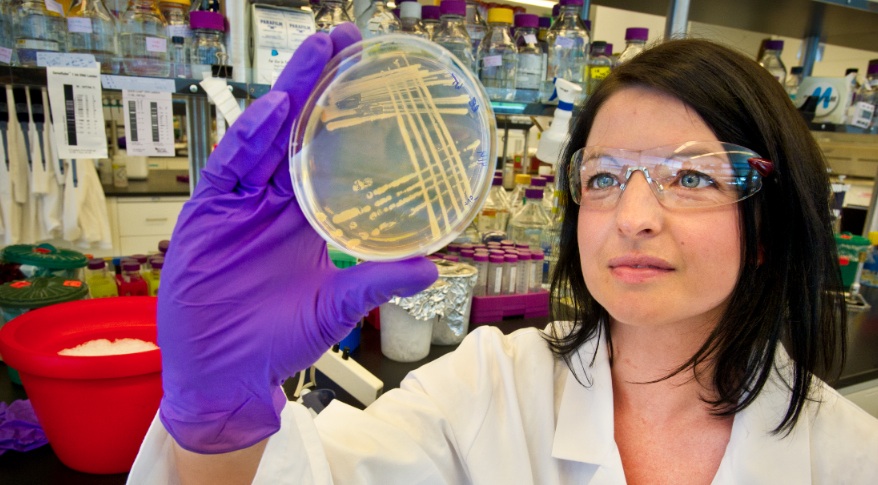
Pouring Algae. Laboratory manager Todd Hart pours algae into a bucket as he begins an experiment to convert the substance into biocrude oil.
With additional conventional refining, the crude algae oil is converted into aviation fuel, gasoline or diesel fuel. And the waste water is processed further, yielding burnable gas and substances like potassium and nitrogen, which, along with the cleansed water, can also be recycled to grow more algae.

While algae has long been considered a potential source of biofuel, and several companies have produced algae-based fuels on a research scale, the fuel is projected to be expensive. The PNNL technology harnesses algae's energy potential efficiently and incorporates a number of methods to reduce the cost of producing algae fuel.

"Cost is the big roadblock for algae-based fuel," said Douglas Elliott, the laboratory fellow who led the PNNL team's research. "We believe that the process we've created will help make algae biofuels much more economical."

PNNL scientists and engineers simplified the production of crude oil from algae by combining several chemical steps into one continuous process. The most important cost-saving step is that the process works with wet algae. Most current processes require the algae to be dried — a process that takes a lot of energy and is expensive. The new process works with an algae slurry that contains as much as 80 to 90 percent water.

"Not having to dry the algae is a big win in this process; that cuts the cost a great deal," said Elliott. "Then there are bonuses, like being able to extract usable gas from the water and then recycle the remaining water and nutrients to help grow more algae, which further reduces costs."

While a few other groups have tested similar processes to create biofuel from wet algae, most of that work is done one batch at a time. The PNNL system runs continuously, processing about 1.5 liters of algae slurry in the research reactor per hour. While that doesn't seem like much, it's much closer to the type of continuous system required for large-scale commercial production.

Algae feedstock

The PNNL system also eliminates another step required in today's most common algae-processing method: the need for complex processing with solvents like hexane to extract the energy-rich oils from the rest of the algae. Instead, the PNNL team works with the whole algae, subjecting it to very hot water under high pressure to tear apart the substance, converting most of the biomass into liquid and gas fuels.

The system runs at around 350 degrees Celsius (662 degrees Fahrenheit) at a pressure of around 3,000 PSI, combining processes known as hydrothermal liquefaction and catalytic hydrothermal gasification. Elliott says such a high-pressure system is not easy or cheap to build, which is one drawback to the technology, though the cost savings on the back end more than makes up for the investment.

"It's a bit like using a pressure cooker, only the pressures and temperatures we use are much higher," said Elliott. "In a sense, we are duplicating the process in the Earth that converted algae into oil over the course of millions of years. We're just doing it much, much faster."

The products of the process are:
  • Crude oil, which can be converted to aviation fuel, gasoline or diesel fuel. In the team's experiments, generally more than 50 percent of the algae's carbon is converted to energy in crude oil — sometimes as much as 70 percent.
  • Clean water, which can be re-used to grow more algae.
  • Fuel gas, which can be burned to make electricity or cleaned to make natural gas for vehicle fuel in the form of compressed natural gas.
  • Nutrients such as nitrogen, phosphorus, and potassium — the key nutrients for growing algae.

Elliott has worked on hydrothermal technology for nearly 40 years, applying it to a variety of substances, including wood chips and other substances. Because of the mix of earthy materials in his laboratory, and the constant chemical processing, he jokes that his laboratory sometimes smells "like a mix of dirty socks, rotten eggs and wood smoke" — an accurate assessment.

Genifuel Corp. has worked closely with Elliott's team since 2008, licensing the technology and working initially with PNNL through DOE's Technology Assistance Program to assess the technology.

"This has really been a fruitful collaboration for both Genifuel and PNNL," said James Oyler, president of Genifuel. "The hydrothermal liquefaction process that PNNL developed for biomass makes the conversion of algae to biofuel much more economical. Genifuel has been a partner to improve the technology and make it feasible for use in a commercial system.

"It's a formidable challenge, to make a biofuel that is cost-competitive with established petroleum-based fuels," Oyler added. "This is a huge step in the right direction."

The recent work is part of DOE's National Alliance for Advanced Biofuels & Bioproducts, or NAABB. This project was funded with American Recovery and Reinvestment Act funds by DOE's Office of Energy Efficiency and Renewable Energy. Both PNNL and Genifuel have been partners in the NAABB program.

In addition to Elliott, authors of the paper include Todd R. Hart, Andrew J. Schmidt, Gary G. Neuenschwander, Leslie J. Rotness, Mariefel V. Olarte, Alan H. Zacher, Karl O. Albrecht, Richard T. Hallen and Johnathan E. Holladay, all at PNNL.

Reference: Douglas C. Elliott, Todd R. Hart, Andrew J. Schmidt, Gary G. Neuenschwander, Leslie J. Rotness, Mariefel V. Olarte, Alan H. Zacher, Karl O. Albrecht, Richard T. Hallen and Johnathan E. Holladay, Process development for hydrothermal liquefaction of algae feedstocks in a continuous-flow reactor, Algal Research, Sept. 29, 2013, DOI: 10.1016/j.algal.2013.08.005.

Tags: Energy, Biomass, Biofuel, Green Energy

Interdisciplinary teams at Pacific Northwest National Laboratory address many of America's most pressing issues in energy, the environment and national security through advances in basic and applied science. Founded in 1965, PNNL employs 4,300 staff and has an annual budget of about $950 million. It is managed by Battelle for the U.S. Department of Energy. For more information, visit the PNNL News Center, or follow PNNL on Facebook, Google+, LinkedIn and Twitter.


ORIGINAL: PNLL
Tom Rickey, PNNL
December 17, 2013

lunes, 16 de diciembre de 2013

Microalgas para reducir CO2 del cemento, la investigación estrella de Argos

Camilo Restrepo, vicepresidente de innovación de Cementos Argos. Foto: Luis Eduardo Noriega
Medellín (Colombia), 13 dic (Colombia.inn).- Argos, la cementera líder en Colombia y con gran trayectoria internacional, está inmersa en una investigación sobre cultivo de microalgas para reducir las emisiones de dióxido de carbono (CO2) que genera la fabricación de cemento y así contribuir al cuidado del medioambiente con nuevos productos.

Esta investigación se sustenta, explicó a Colombia.inn, agencia operada por Efe, el ingeniero ambiental y vicepresidente de innovación de Argos, Camilo Restrepo, en que “las microalgas son tal vez 100 o 200 veces más eficientes que los árboles en la captura” de CO2.

Argos no sólo busca “generar riqueza económica”, según Restrepo, quien detalló que su enfoque de negocio es económico, social y ambiental, al apuntar que esos tres pilares “garantizan la verdadera sostenibilidad de la empresa a largo plazo”.

En una primera etapa, la compañía cementera creó una alianza con socios estratégicos que dio inicio al proceso de investigación, posteriormente la iniciativa logró, a través de una convocatoria de Colciencias, una exención de impuestos.


Tras esa “primera etapa”, indicó Restrepo, Argos invirtió unos 360 millones de pesos (189.473 dólares) para dotar al proyecto de mayor eficiencia en la búsqueda de “organismos capaces de capturar CO2 en concentraciones con características similares de las que salen de una fábrica de cemento”.

Para ello estableció una alianza con la Universidad EAFIT de Medellín.

El objetivo final es “acoplar este proceso de CO2 con microalgas a un proceso de fabricación de cemento en un futuro”, pero también generar con los microorganismos nuevos productos que “compensen el costo de la captura”.

De esta manera las microalgas se han convertido en un proyecto de emprendimiento viable, el cual, según el vicepresidente de innovación de la cementera, estiman tener listo en 2019.

Hacer rentable el proyecto depende de la posibilidad de elaborar productos resultantes como biomasa, Omega 3 y 6, utilizada en la alimentación de animales, o incluso, ” productos de alto valor agregado” como componentes para la industria cosmética.

Inclusive se puede llegar a producir biocombustible, remarcó el directivo de Argos, hecho a base de biomasa, un elemento residuo muy común en todos los procesos fotosintéticos.

Los cultivos de microalgas que desarrolla Argos pueden aplicarse en muchos campos de producción y para que esta iniciativa sea rentable la compañía espera continuar gozando de la exención de impuestos en contrapartida por la reducción de emisiones de CO2.

Entre los países en los que se desarrollan cultivos destinados a capturar dióxido de carbono están Alemania, España, Canadá y Estados Unidos, de donde Argos importa los microorganismos para sus investigaciones.

Restrepo dejó claro que “Colombia es uno de los países en el mundo más propicios para hacer temas relacionados con la captura de CO2 por parte de microalgas”, al contar con condiciones geográficas óptimas y “una ventaja comparativa”.

Y es que el dióxido de carbono es uno de los gases producidos a gran escala por múltiples actividades humanas, entre ellas la producción de cemento, que registra altas emisiones.

Argos ha participado en el Consejo Mundial para el Desarrollo Sostenible (CMDS) y en la iniciativa de sostenibilidad del cemento, que reúne propuestas para mejorar el desempleo ambiental de la industria del cemento. COLOMBIA.INN

ORIGINAL: Colombia-Inn

domingo, 8 de diciembre de 2013

How to Provide Easy Access to Urban Agriculture in Over Populated Cities


Since the industrial age’s passing through the last century, the migration toward cities has increased headlong and keeps on going. According to statistics, in 2050 more than 80 percent of the urban population will be living in the urban areas (World Bank 2013). Considering the peak oil prices and the unbearable cost of gasoline lately, that increases the price of everything we consume because it all must be transported to our cities, giving rise to urban agriculture .

Do we have to rethink our lifestyle to adapt to the new urban conditions and be able to deal with all these factors that would continue to cause more problems? 
The main issue of the population in general is to produce enough food for all. How to do it if we all want to live in the city?

Plantagon urban greenhouse vertical farm

Urban Agriculture: A potential solution
The solution is called a Plantscraper!
This is a building exclusively designed for growing crops exactly as in agricultural fields, but in an urban environment — vertically — floor after floor. The strategy provides access to fresh production inside the urban limits, cutting the need for long-distance transportation and decreasing the price and time for delivery. The idea is not new, but it is finally becoming real as the construction of the first Plantscraper has already started in Sweden, in the heart of the city of Linkoping. The “urban farm,” 17 stories in height, will provide the city with a natural “farm market” in the city by the end of next year, when it is expected to be completed.

Plantagon has designed 3 ways of integrating farming in the city
First, by making the facade a productive greenhouse. Plantagon has designed a six-meter-deep greenhouse wrapping the building facade. The technology consists of conveyors carrying pots with plants and rotating them regularly on 90 degrees, so that they receive sunlight on all sides. This kind of facade provides, at the same time, enough light in the office spaces inside, but also a good shade and regulates the temperature.

Another example involves integrating the urban farm into existing buildings. They call it the Parasite, as it looks like one attached to the structure.

A concept image of the “vertical farm” by Plantagon
The third example is what the team believes can in the future become a common part of cities and suburbs, just like big supermarkets are now, and it’s the one under construction in Sweden.

How Does Urban Agriculture Work?
The innovative architecture of the building allows sunlight to all parts of the spirally organized space, covered by a glass sphere. The designers from Plantagon have won a Silver Stevie Award for being “the most innovative company of the year” in Europe. They have invented a self-sufficient system, which uses leftover heat, organic waste, and carbon dioxide to produce Biofuel. They also use excess heat generated during cold periods.

The production in the Plantscarper in Linkoping will happen in pots, which will be fit into trays that will be irrigated by funnels. All the wastewater will be collected and reused. The amount of pesticides and fertilizer will easily be controlled by an automatic system and, in this way, soil pollution will be avoided. Once planted, the trays will be transported by a special elevator to the top of the helix, where they will start their journey down the spiral structure as they grow. When they reach the ground floor, they will be ready to be automatically harvested. It makes all-year-round production easy, efficient, and compact.

Why Plantscrapers?
The smallest model of the Plantscraper will be able to feed about 10,000 people per year and will cost about $10 million to $20 million. But the trick is that it will be paid for in production.
Plantagon rendering
The Plantscraper is not only a way to produce food in crowded urban areas; it is a possible solution to other urban life conditions nowadays. But it is also a good example of multifunctional use of a building, including the waste materials in the productions process.


Dec 5, 2013

martes, 1 de octubre de 2013

KAIST announced a novel technology to produce gasoline by a metabolically-engineered microorganism

Metabolic Engineering of Escherichia coli for the Production of Short-chain Alkanes (gasoline) from Renewable Biomass

A major scientific breakthrough in the development of renewable energy sources and other important chemicals

The research team succeeded in producing 580 mg of gasoline per liter of cultured broth by converting in vivo generated fatty acids

For many decades, we have been relying on fossil resources to produce liquid fuels such as gasoline, diesel, and many industrial and consumer chemicals for daily use. However, increasing strains on natural resources as well as environmental issues including global warming have triggered a strong interest in developing sustainable ways to obtain fuels and chemicals.

Gasoline, the petroleum-derived product that is most widely used as a fuel for transportation, is a mixture of hydrocarbons, additives, and blending agents. The hydrocarbons, called alkanes, consist only of carbon and hydrogen atoms. Gasoline has a combination of straight-chain and branched-chain alkanes (hydrocarbons) consisted of 4-12 carbon atoms linked by direct carbon-carbon bonds.

Previously, through metabolic engineering of Escherichia coli (E. coli), there have been a few research results on the production of long-chain alkanes, which consist of 13-17 carbon atoms, suitable for replacing diesel. However, there has been no report on the microbial production of short-chain alkanes, a possible substitute for gasoline.

In the paper (entitled “Microbial Production of Short-chain Alkanes”) published online in Nature on September 29, a Korean research team led by Distinguished Professor Sang Yup Lee of the Department of Chemical and Biomolecular Engineering at the Korea Advanced Institute of Science and Technology (KAIST) reported, for the first time, the development of a novel strategy for microbial gasoline production through metabolic engineering of E. coli.

The research team engineered the fatty acid metabolism to provide the fatty acid derivatives that are shorter than normal intracellular fatty acid metabolites, and introduced a novel synthetic pathway for the biosynthesis of short-chain alkanes. This allowed the development of platform E. coli strain capable of producing gasoline for the first time. Furthermore, this platform strain, if desired, can be modified to produce other products such as short-chain fatty esters and short-chain fatty alcohols.

In this paper, the Korean researchers described detailed strategies for 
  1. screening of enzymes associated with the production of fatty acids, 
  2. engineering of enzymes and fatty acid biosynthetic pathways to concentrate carbon flux towards the short-chain fatty acid production, and 
  3. converting short-chain fatty acids to their corresponding alkanes (gasoline) by introducing a novel synthetic pathway and optimization of culture conditions. Furthermore, the research team showed the possibility of producing fatty esters and alcohols by introducing responsible enzymes into the same platform strain.

Professor Sang Yup Lee said, “It is only the beginning of the work towards sustainable production of gasoline. The titer is rather low due to the low metabolic flux towards the formation of short-chain fatty acids and their derivatives. We are currently working on increasing the titer, yield and productivity of bio-gasoline. Nonetheless, we are pleased to report, for the first time, the production of gasoline through the metabolic engineering of E. coli, which we hope will serve as a basis for the metabolic engineering of microorganisms to produce fuels and chemicals from renewable resources.”

This research was supported by the Advanced Biomass Research and Development Center of Korea through the Global Frontier Research Program of the Ministry of Science, ICT and Future Planning (MSIP) through the National Research Foundation (NRF), Republic of Korea. Systems metabolic engineering work was supported by the Technology Development Program to Solve Climate Changes on Systems Metabolic Engineering for Biorefineries by MSIP through NRF.


ORIGINAL: KAIST
2013-09-3

lunes, 30 de septiembre de 2013

Por la protección de la Ciénaga de Ayapel

Investigadores de la Universidad de Antioquia desarrollaron un proyecto de extensión para elaborar biocombustible con plantas acuáticas de la Ciénaga de Ayapel. Los estudios mostraron que la región está bajo una gran amenaza ambiental y social.

Los investigadores recolectaron plantas en tres puntos distintos de la Ciénaga para determinar sus propiedades fisicoquímicas, térmicas, de humedad y de combustión.
En Ayapel, la mayoría de los habitantes viven de la Ciénaga: cazan, pescan, siembran; pero ésta ha sido maltratada durante años y los recursos se están agotando. La región solía ser boscosa, pero los árboles fueron quemados y talados para sembrar pastos y llenarlos de vacas. En sus aguas abundaban el sábalo, el bagre y el bocachico, pero con la sobreexplotación de su pesca han comenzado a escasear. Y, mientras el precio del arroz que se cultiva en sus tierras cae por los tratados de libre comercio, el precio del oro sube y con él la explotación minera ilegal.


La Ciénaga de Ayapel, en Córdoba, hace parte de la tierra inundada, del diluvio, como algunos llaman a la región de La Mojana en el Caribe colombiano, porque en ella desbordan los ríos Cauca, San Jorge y Magdalena, inundándola en épocas lluviosas.


Allí, investigadores de la Universidad de Antioquia durante diez años han realizado estudios y proyectos socioambientales para preservar los ecosistemas y mejorar las condiciones de la población, cuyas opciones de empleo, salud y educación son mínimas. En esa cruzada, su gran aliada ha sido la Corporación para el Desarrollo Integral de la Ciénaga de Ayapel – Corpoayapel.


“Hemos trabajado con la Universidad desde que se creó la Corporación en 2003, porque ha hecho los únicos estudios ambientales serios sobre la región”, afirmó Luz Estela Álvarez, directora ejecutiva de Corpoayapel.


El primero en llegar fue Néstor Aguirre, PhD, licenciado en biología y química. Pocos años después llegó Fabio Vélez, ingeniero sanitario y candidato a doctor. Juntos habían participado en la fundación del Grupo de Investigación Gestión y Modelación Ambiental —GAIA—, y actualmente pertenecen al Grupo de Investigación GeoLimna, ambos de la Facultad de Ingeniería de la Alma Mater.


Entre finales de 2012 y mediados de 2013, con tres estudiantes de ingeniería de materiales desarrollaron un proyecto apoyado por el Banco de Proyectos de la Vicerrectoría de Extensión para elaborar briquetas (biocombustibles) a partir de plantas acuáticas abundantes en la Ciénaga: Eichhornia heterosperma, Eichhornia azurea y Eichhornia crassipes, esta última considerada por la población como una especia invasora que crece rápidamente e impide la navegación, por ello la llaman tapón.

“En la zona rural no hay electricidad, la gente utiliza leña para cocinar y la obtienen principalmente del mangle dulce, un arbolito importante para el ecosistema, resistente a las inundaciones y criadero de alevinos. Su tala aumenta el problema ambiental de la zona, por ello queremos ofrecer otra alternativa”, explicó el ingeniero.


Recolectaron plantas en tres puntos distintos de la Ciénaga para determinar sus propiedades fisicoquímicas, térmicas, de humedad y de combustión; también emplearon cascarillas de arroz, para evitar que estos residuos sigan siendo arrojados al agua, contaminándola. “Encontramos que con una mezcla óptima entre las tres especies se puede elaborar un buen biocombustible. Además, el resultado puede aplicarse a plantas acuáticas de otras zonas”, explicó el investigador.

Una amenaza ambiental

Con los análisis de laboratorio también se identificó presencia de mercurio en las plantas tomadas de las tres zonas. Este hallazgo, sumado al de un proyecto anterior, en donde encontraron mercurio en el sedimento de la Ciénaga, podría significar que esta sustancia, residuo de la minería ilegal, está envenenando las aguas, penetrando y amenazando todo el ecosistema.

“Es necesario hacer estudios que determinen el impacto, en qué cantidades está entrando a la Ciénaga, cuál es la ruta que está siguiendo, si está llegando a la cadena trófica, si la gente ya se está contaminando”, expresó el investigador.

Con mercurio, las briquetas no podrían utilizarse como biocombustible. Entonces diseñaron un horno ecoeficiente, que además de llegar a altas temperaturas, mantener el calor y quemar con poco humo, también incorpora un proceso mediante el cual el mercurio puede separarse de las plantas contaminadas.


Con su construcción, la población podría hacer sus propias briquetas mediante un procedimiento sencillo que los investigadores describieron paso a paso en una cartilla. “La idea es que puedan venderlas y tener otra opción de ingresos, pues queremos contribuir a aliviar un poco sus problemas económicos y sociales”, indicó Vélez.

También diseñaron e instalaron un deshidratador solar, el cual aprovecha las condiciones climáticas de la zona, utilizando fuentes energéticas renovables y de bajo costo para el secado de las plantas; las cuales deben secarse y deshidratarse después de ser recolectadas, lavadas y cortadas; y antes de ser mezcladas y comprimidas en las briquetas.


“En el proyecto participaron madres cabeza de familia, gestores sociales, profesores y estudiantes de colegio. Ellos son fundamentales para recoger y difundir la conciencia ambiental. En eso nos apoyó el grupo DIDES de la Facultad de Educación de la Alma Mater, con una metodología llamada PRACCIS para transmitir el conocimiento a la comunidad”, contó el ingeniero.

Actualmente se llevan a cabo otras iniciativas en la zona conjuntamente entre diferentes grupos. Con el Grupo de Investigación en Gestión Ambiental —GIGA—, están sembrando una planta africana conocida como La Moringa, para usarla en potabilización de agua; también desarrollaron un concentrador de luz solar, llamado SODIS, sobre el cual se ubican botellas plásticas transparentes para que con la luz del sol se desinfecte el agua, acabando con la microbiota. Y, con el grupo GAIA, se ubicaron equipos climatológicos en la Ciénaga para monitorear temperatura, viento, humedad, radiación solar y lluvia, y relacionarlos con el cambio climático.

La creatividad al servicio de la sociedad
La experiencia y los resultados de este proyecto, el impacto de sus hallazgos para la comunidad de Ayapel y las nuevas propuestas para mitigar el daño ambiental en la Ciénaga, serán presentados por los investigadores y representantes de Corpoayapel como parte de la reprogramación del Encuentro de Extensión Universitaria 2013.


ORIGINAL: Universidad de Antioquia
por Diana Isabel Rivera - Vicerrectoría de Extensión
30 de Septiembre de 2013

sábado, 3 de agosto de 2013

Enzymes, ants and bio fuel - Audio Transcription

ORIGINAL: Univeristy of Wisconsin - Madison
Frank Aylward:, Research Fellow
Department of Bacteriology
UW-Madison College of Agricultural and Life Sciences
faylward@wisc.edu
Phone: (608) 265-0689

August 2nd, 2013

2:59 - Total Time
0:17 - New enzymes discovered
0:49 - What is and enzyme
1:01 - What makes this discovery different
1:27 - A set of entirely new enzymes
2:05 - Much like brewing beer
2:32 - A few years to go
2:49 - Lead out

Frank Aylward. Dept. of Bacteriology UW-Madison, 6145 Microbial Sciences 1550 Linden Dr., Madison, WI 53706. faylward (at) wisc.edu
TRANSCRIPT
Sevie Kenyon: Frank, can you introduce us to this new enzyme you found?

Frank Aylward: These enzymes are produced by a fungus cultivated by leafcutter ants. So the name of the fungus is Leucoagaricus gongylophorus, but it is cultivated by leafcutter ants in Central and South America. It’s essentially a mushroom, and it produces a lot of these enzymes, a lot of these proteins that are very useful for taking plant biomass and converting it into simple sugars. And we’re very interested in finding novel enzymes that can be used to degrade plant biomass and convert it into sugars.

Sevie Kenyon: Can you tell us what an enzyme is?

Frank Aylward: An enzyme is a protein that is a catalyst, and in this case, it will degrade plant biomass and convert it into a simple sugar.

Sevie Kenyon: And this enzyme you discovered, what makes it different?

Frank Aylward: Well these enzymes have never been identified before. So it’s a novel genome with novel enzymes that have not been characterized before. We think that the enzymes are particularly useful for the degradation of plant biomass because ants, leafcutter ants are extremely good at taking huge volumes of plant biomass and converting it into nutrients for themselves.

Sevie Kenyon: How many different kinds of enzymes are there?

Frank Aylward: We identified over two-hundred total. So we have a lot of enzymes that are sort of working towards a common goal. It’s like a team is working towards this common goal of winning a game. So with the enzymes, it’s very difficult to evaluate a specific enzyme individually because they all work together, they’re all synergistic. So that’s why we really think it’s interesting that we found this set of about two-hundred or so enzymes, because altogether they are degrading plant biomass very efficiently, and that’s why we’re really interested in the fungus- garden ecosystem itself.

Sevie Kenyon: Do you think these enzymes will come in buckets, and they’ll be dumped on corn stover? How might that look?

Frank Aylward: The actual fermentation process is probably going to be very similar to what you might expect at a brewery. In that respect, it’s not all that different than what many of us are very familiar with. I think this is a great example of how by analyzing ants, by looking at leafcutter ants in Panama, we’re actually able to come up with some enzymes which may have a tangible impact on our lives here in Wisconsin.

Sevie Kenyon: Frank, how long do you think it will be before we’re actually using these enzymes?

Frank Aylward: Well, you know it could be very soon, it could be a few years from now; it really depends on the future directions of this research. So I think the next step is to start testing these enzymes for the degradation of plant biomass, and you know how soon we can actually start using these enzymes for the production of bio fuel.

Sevie Kenyon: We’ve been visiting with Frank Aylward. Department of bacteriology, University of Wisconsin in the College of Agricultural and Life Sciences, Madison, Wisconsin, and I am Sevie Kenyon.

Podcast: Download (Duration: 2:59 — 2.7MB)

Aylward, F.O., Burnum-Johnson, K.E., Tringe, S.G., Teiling, C., Tremmel, D.M., Moeller, J.A., Scott, J.J., Barry, K.W., Piehowski, P.D., Nicora, C.D., Malfatti, S.A., Monroe, M.E., Purvine, P.O., Goodwin, L.A., Smith, R.D., Weinstock, G.M., Gerardo, N.M., Suen, G., Lipton, M.S., and C.R. Currie . Leucoagaricus gongylophorus produces diverse enzymes for the degradation of recalcitrant plant polymers in leaf-cutter ant fungus gardens. Applied and Environmental Microbiology. 2013, 79(12):3770-3778. , DOI: 10.1128/AEM.03833-12 

domingo, 28 de julio de 2013

A basis for biofuels: making a difference today

ORIGINAL: ScienceOmega
by Lars Peter Lindfors
15 July 2013


The number one priority is to develop a regulatory framework that offers the industry long-term continuity beyond 2020 in areas such as biomandated content.
Lars Peter Lindfors

A more level playing field is required if the true potential of biofuels is to be realised, argues Lars Peter Lindfors, Senior Vice President of Technology at Neste Oil Corporation…

Biofuels have already helped the world achieve a tangible reduction in emissions. As global CO2 emissions are forecast to rise by as much as 50 per cent over the next 25 years, however, the current state of play in the biofuel industry will need to see some major changes. Given the scale of the investments required, the industry needs a clear and unambiguous legislative framework, together with a consistent level of political commitment to that framework.

Achieving international consensus has always been a challenge, and it is perhaps, therefore, surprising that relatively few today question the importance of sustainability (particularly over the long term), or the need to combat critical phenomena such as global warming. It is only when one looks at what is being done in the short term and how policy is being implemented at national, regional, and international level that the cracks in this consensus become apparent. Good intentions are too often being muddied by conflicting decisions and even by that long-term bane of international trade, protectionism.

Nevertheless, the world has come a long way, especially since the original Kyoto Protocol. Numerous countries have adopted mandated bio-content requirements for traffic fuels, for example. Considerable technological progress has also been made, in terms of new refining processes, new types of feedstock, and completely new energy sources. While some of these developments will be important for society two or three decades from now, the ones that call for the most attention are those that can help us start making a difference today.


Making more of a difference today The European experience of biofuels, and advanced biofuels in particular, such as hydrotreated vegetable oil (HVO) – in other words pure hydrocarbons produced from renewable feedstock – are a good case in point. Biofuels offer the most direct route available today for reducing traffic-related emissions of CO2 and are already widely available. A recent report from the European Commission has estimated that the EU has cut this category of emissions by 25.5 million tons so far through using these fuels. They also have the potential to reduce many countries’ dependence on imported oil.

Compared to longer-term options such as LPG, electricity or hydrogen, biofuels do not call for the roll-out of a completely new level of expensive infrastructure and also sidestep the ‘chicken or egg’ dilemma that always goes with this type of investment in terms of which needs to come first: new infrastructure or new vehicles to use the energy that it will make available.

In fact, HVO takes this advantage much further – not only because it can be used in existing automotive and aircraft engines and fuel distribution systems, such as tanks and pipelines, without the need for any modifications, but because it can be used as a simple, drop-in component for the diesel pool with no blending limits, without compromising fuel quality. The technology also already exists to produce this type of fuel from a growing range of different inputs, including waste, residues, and other non-food materials, but the number of producers using it is still small.

Unfortunately, these types of advanced biofuels continue to face a number of challenges, not only in the EU but also in North America. Despite the introduction of the EU’s Renewable Energy Directive and Fuel Quality Directive, for example, a true internal market for biofuels has yet to emerge and a number of member states actively discriminate against advanced biofuels in favour of fuel produced by less advanced and significantly more limited FAME technology, for example. The US, for its part, has instituted separate requirements for domestic and imported biofuels that also put advanced biofuels at something of a competitive disadvantage.

In the case of Europe, some countries are yet to approve HVO as a biofuel or have imposed production quotas or restrictions on the feedstock that can be used to produce it. As a result of these and other trade barriers, it has been estimated that less than half of the total EU market for biofuels can as yet benefit from what HVO-based renewable diesel has to offer, severely undermining true competition in the process.

Biofuels offer the most direct route available today for reducing traffic-related emissions of CO2 and are already widely available.

What’s needed? The future success of the biofuels industry will depend on a number of factors and learning experiences. No easy challenge, it must be admitted, but a necessary one all the same.

The number one priority is to develop a regulatory framework that offers the industry long-term continuity beyond 2020 in areas such as biomandated content. The latter is a virtual necessity, given the fact that the raw materials required to produce biofuels are likely to remain more expensive than crude oil for the foreseeable future. Without this, industry will be unable – and ultimately unwilling – to make the type of investments needed, not only in capacity based on the best existing technology but also in new conversion technologies that can make use of a broad range of globally available feedstock.

Legislation also needs to become technology-neutral and focus on how best to achieve the objective benefits that biofuels can deliver, in terms of fuel quality and reduced emissions of CO2 and other exhaust pollutants. The marketplace will then be in a much better position to evaluate and choose the most competitive alternatives capable of delivering the results everybody is looking to achieve.

This shift to a more level playing field should also be accompanied by the elimination of protectionist measures and efforts to bring the global market for biofuels more in line with the oil market, and its market-driven efficiencies and liquidity. This is the way to make biofuels more competitive and less inherently expensive than they are at the moment. It will require harmonised definitions in areas such as waste and residues and the end of priority access to raw materials for some industries, together with effective policing to ensure that these changes are implemented fairly and equitably in practice.

With these types of developments, the biofuels industry will be much better placed to develop the technology needed to further promote society’s transition to new generations of biofuels, particularly those based on waste, residues and algae.


Lars Peter Lindfors

Senior Vice President, Technology
Neste Oil Corporation
www.nesteoil.com
Read more: http://www.scienceomega.com/article/1196/a-basis-for-biofuels#ixzz2aMZ2GfbE

miércoles, 24 de julio de 2013

Clean, Green High Performance Biofuels from Carbon Dioxide

ORIGINAL: LBL
Lynn Yarris (510) 486-5375 lcyarris@lbl.gov
July 24, 2013
Jana Mueller was the lead author on a paper reporting that the bacterium Ralstonia eutropha has been engineered to produce diesel fuel from carbon dioxide. (Photo by Roy Kaltschmidt)
Could there come a time in which the carbon dioxide emitted from natural gas or coal-burning power plants that warms the atmosphere and exacerbates global climate change is harvested and used to produce clean, green and renewable liquid transportation fuels? A pathway to that possibility has been opened by a team of researchers with the U.S. Department of Energy (DOE)’s Joint BioEnergy Institute (JBEI) who have engineered a microbe now being used to produce biodegradable plastic into a strain that can produce a high-performance advanced biofuel.

“We’ve shown that the bacterium Ralstonia eutropha growing with carbon dioxide and hydrogen gas is able to generate significant quantities of diesel-range methyl ketones,” says Harry Beller, a JBEI microbiologist who led this research, which was funded through DOE’s Advanced Research Projects Agency-Energy (ARPA-E) program. “This holds the promise of making carbon-neutral biofuels using non-photosynthetic, carbon-dioxide fixing bacteria as a less resource-intensive alternative to making these biofuels from cellulosic biomass.”

Beller, who directs the Biofuels Pathways department for JBEI’s Fuels Synthesis Division, and also is a Senior Scientist with Berkeley Lab’s Earth Sciences Division, led a previous study in which genetic engineering was used to develop a strain of the bacterium Escherichia coli (E. coli) that made methyl ketone compounds from the glucose in cellulosic biomass. Methyl ketones are naturally occurring aliphatic compounds now used in fragrances and flavorings. Beller and his JBEI colleagues have demonstrated that methyl ketones also have high diesel fuel ratings (cetane numbers), making them strong candidates as advanced biofuels.

“We’ve shown that, with the same set of genetic modifications, R. eutropha and E. coli can make comparable amounts of methyl ketones, but R. eutropha is making the ketones from carbon dioxide while E. coli is making them from glucose,” Beller says. “This shows that the methyl ketone pathway that we’ve designed is versatile and able to function well in bacterial hosts with substantially different metabolic lifestyles.”
Micrograph shows Ralstonia eutropha bacteria in culture. (Image courtesy of Christopher Brigham, MIT)
Current strategies for producing advanced biofuels that could replace gasoline, diesel or jet fuels in today’s engines and infrastructures are based on extracting fermentable sugars stored in the cellulosic biomass of green plants. Those sugars represent chemical energy that was converted from solar energy via photosynthesis and provide the carbon atoms needed to make fuels. R. eutropha is a common soil bacterium that can naturally use hydrogen rather than sunlight as an energy source for converting carbon dioxide into various organic compounds. However, native strains of R. eutropha do not produce detectable levels of methyl ketones and generate very low levels of the fatty acids that are precursors to methyl ketones.

“Since our engineered strains of R. eutropha can use fixed carbon dioxide to make methyl ketones, its biofuels don’t require many of the steps needed to convert cellulosic biomass into fuels, such as growing and harvesting the biofuel crop, digesting the lignocellulosic biomass, and enzymatically saccharifying the digested biomass to produce fermentable sugars,” Beller says. “The resources needed for these steps could therefore be eliminated if R. eutropha were used to make biofuels directly from carbon dioxide.”

Beller is the corresponding author of a paper in the journal AEM that describes this research titled “Engineering of Ralstonia eutropha H16 for Autotrophic and Heterotrophic Production of Methyl Ketones.” Co-authors are Jana Müller, Daniel MacEachran, Helcio Burd, Noppadon Sathitsuksanoh, Changhao Bi, Yi-Chun Yeh, Taek Soon Lee, Nathan Hillson, Swapnil Chhabra and Steven Singer.

For more about the Joint BioEnergy Institute (JBEI) go here

viernes, 19 de julio de 2013

Biofuels: How Research Has Evolved with Government Policy

ORIGINAL: OBR Review
17th July 2013

It has been more than 20 years since the UN framework convention on climate change was ratified by over 150 countries, and in 2008 the UK was the first to establish a legally binding climate change target; to cut greenhouse gases in the UK by 80% by 2050 (1990 baseline). [1] Arguably the most visible response to the daunting task has been the widespread adoption of a ‘Green Mindset,’ leading to more economical energy usage in the home, but there is still a greater need for more complex strategies to replace the non-renewable fossil fuels that power cars and industry. For example, energy consumers in the home contribute to just 15% of total UK carbon emissions, whereas fossil fuel consumption in the energy supply and transport sectors is responsible for an estimated 40% and 24% of the total, respectively (2012 figures). [2] It is in this respect that biofuels may prove a cleaner alternative.

Green Biotech research is now offering new opportunities to replace increments of petrol or diesel with bio-based fuels, the first generation of which has likely been a contributor to an estimated 19% reduction in UK carbon emissions between 1990-2012, as published by government earlier this year. With further advances in Green Biotechnology, it is anticipated that a new generation of biofuels could eventually replace petroleum-based fuels entirely.

First generation bio-based fuels: still a candidate for a cleaner climate? 
Field of Rapeseed
The production of new sustainable fuels has reverted to an age-old strategy, to use biomass, for energy generation. The process of burning wood for heat dates back to prehistory, now combustion of first generation fuels derived from crops such as corn or rapeseed has appeared in the transport energy production pipeline.

Ethanol, which can be chemically extracted from corn, was first established as a viable automotive fuel in the early 20th century. Two centuries earlier, Rudolf Diesel proposed pure vegetable oils could drive agricultural vehicles. The difference between then and now is that the greater need for greener fuels is driving improvements on the methodology, scale, and efficiency by which ethanol can be extracted from crops or vegetable oils and converted into fatty acid alkyl esters, i.e. modern biodiesel. Nonetheless, biodiesel is costly to produce, pushing further rises to energy prices, and to date, biofuels are mostly inferior in energy to petroleum-based fuels, which are chemically optimal for internal combustion. [3]

Despite their disadvantages, there is still a market for first generation biofuels, which is perhaps driven by an absence of other commercially available alternatives, and by UK government policy. For example, the Renewable Transport Fuels Obligation requires transport fuel suppliers to supplement conventional petrol or diesel with at least 5% renewable fuel.

The impetus to extrapolate the production of crop-derived fuel is however somewhat questionable economically; biofuel and food crop production rely on the same agriculturally available land. [4] In 1999, it had been estimated that agriculture already occupied nearly a third of global land surface, [5] and as the global population continues to grow, inevitably so too will demand for food and energy, intensifying competition for land space. It is hardly surprising that in January 2013, a EU proposal was announced to revise the ‘Renewable Energy Directive’, capping food crop-based biofuel supplements at 5% by 2020. [6]

Advanced bio-based fuels: microbes as candidates for fuel production

An exploration of unconventional hosts and previously unknown metabolic biology has yielded new possibilities for advanced bio-based fuels. Microbes that can feed off degraded wood, crop residues, grasses, and other plant waste are considered gold-dust for second generation biofuel research. By metabolising non-food plant feedstock, certain microbes can create ethanol fuel as a fermentation by-product of the natural biochemical pathway. [4]

Yeast has for eons produced ethanol from the break down of simple sugars in the creation of bread, beer and wine. Though alike to other traditional model organisms, Baker’s yeast lacks the specific glycosidase enzymes that metabolise complex cellulosic waste into fermentable, glucose-like sugars. Relationships between specific glycosidases and their cellulosic substrates are also often incompletely characterised, leaving less room to supply microbes with the optimal ‘missing’ enzymes. [7]

Studies of ‘unconventional’ organisms have laid down a framework for engineering a suitable host for microbial biofuel production. Through the action of specific glycosidases, the bacterium Clostridium cellulolyticum was found capable of producing low yields of ethanol from rice straw. [8] More unusually, in an American Chemical Society meeting this year, fungi present in the faeces of horses was highlighted as a potential treasure-trove of cellulase enzymes, which allow the fungi to flourish on lignin-rich grass and release fermentable sugars for horse digestion. [9] A DNA sequencing study on the Limnoriid wood borer has also revealed a transcriptome swamped with putative cellulose-degrading enzyme-encoding genes. [10]

Unconventional hosts are not easy to manipulate in industry, whereas engineering well-established hosts with newly characterised glycosidase-encoding genes may be the key to commercialising microbial fuel production. Processes that exploit yeast and E. coli are already scaled-up to provide populations with many products, such as food and antibiotics. Artificially adapting the glycosidase enzymes by mutagenesis or over-expression may also produce higher specific activities and higher ethanol yields. [4]

The work of University of Exeter-based Professor John Love may well prove a remarkable turning point demonstrating widespread potential in the microbe biofuel field. Ethanol is an incomparable replacement for energy-dense petroleum-based fuels. The existence of a carbon-neutral and exact substitute for fossil fuels is, in natural terms, unlikely. Using modern synthetic biology technologies, Professor Love’s research group, funded by Shell and the BBSRC, was able to manipulate E. coli bacteria to convert glucose to a near-chemical replica of conventional diesel. In a paper published by PNAS earlier this year, the group note further work will entail the synthesis of novel metabolic pathways to enable E. coli to metabolise non-food plant feedstock3.

Advanced bio-based fuels: a future commercial reality?
With biological advances, microbes may well have potential, but the cost of research into de-carbonising the planet must first be met should these few first solid steps into what could be a commercial reality be extended. To chase towards that 2050 UK target, research into a whole range of innovative solutions for large-scale carbon-neutral energy could be the most realistic way forward.

References
  1. GOV.UK. Reducing the UK’s greenhouse gas emissions by 80% by 2050. [online] (updated 13 June 2013) Available at: https://www.gov.uk/government/policies/reducing-the-uk-s-greenhouse-gas-emissions-by-80-by-2050 [Accessed 25 June 2013]
  2. GOV.UK Department of Energy and Climate Change, 2013. Statistical Release, 2012 UK Greenhouse Gas Emissions, Provisional Figures. [online] Available at: https://www.gov.uk/government/uploads/system/uploads/attachment_data/file/193414/280313_ghg_national_statistics_release_2012_provisional.pdf [Accessed 25 June 2013]
  3. Howard, T. P., Middelhaufe, S., Moore, K., Edner, C., Kolak, D.M., Taylor, G.N., Parker, D.A., Lee, R., Smirnoff, N., Aves, S. J., Love, J. (2013) ‘Synthesis of customized petroleum-replica fuel molecules by targeted modification of free fatty acid pools in Escherichia coli’, Proceedings of the National Academy of Sciences of the United States of America, 110 (19), pp. 7636-7641.
  4. Ruffing, A. M., 2013. Metabolic engineering of hydrocarbon biosynthesis for biofuel production. In: Z. Fang, ed. 2013. Liquid, gaseous and solid biofuels – conversion techniques. InTech. Ch.8
  5. Hurtt, C. G., Chini L. P., Froling, S., Betts, R. A., Feddema, J., Fischer, G., Fisk, J. P., Hibbard, K., Houghton, R. A., Janetos, A., Jones, C. D., Kindermann, G., Kinoshita, T., Goldewijk, K. K., Riahi, K., Shevliakova, E., Smith, S., Stehfest, E., Thomson, A., Thornton, P., van Vuuren, D. P., Wang, Y. P., 2011. Harmonization of land-use scenarios for the period 1500–2100: 600 years of global gridded annual land-use transitions, wood harvest, and resulting secondary lands. Climatic Change, 109, pp. 117-161.
  6. European Commission. Biofuels – Land Use Change. [online] Available at: http://ec.europa.eu/energy/renewables/biofuels/land_use_change_en.htm [Accessed June 27 2013]
  7. Yang, B., Dai, Z., Ding, S., Wyman, C.E., 2011. Enzymatic hydrolysis of cellulosic biomass. Biofuels, 2 (4), pp. 421-450.
  8. Williams, K., Zheng, Y., McGarvey, J., Fan, Z., Zhang, R., 2013. Ethanol and volatile fatty acid production from lignocellulose by Clostridium cellulolyticum. ISRN Biotechnology, 2013.
  9. American Chemical Society (ACS), 2013. Enzymes from horse feces could hold secrets to streamlining biofuel production. [online] Available at: http://www.acs.org/content/acs/en/pressroom/newsreleases/2013/april/enzymes-from-horse-feces-could-hold-secrets-to-streamlining-biofuel-production.html [Accessed 26 June 2013]
  10. King, A. J., Cragg, S. M., Li, Y., Dymond, J., Guille, M. J., Bowles, D. J., Bruce, N. C., Graham, I. A., McQueen-Mason, S. J., 2010. Molecular insight into lignocellulose digestion by a marine isopod in the absence of gut microbes. Proceedings of the National Academy of Sciences of the United States of America, 107 (12), pp. 5345-5350.


This post was written by: Ami Day View author bio

martes, 28 de mayo de 2013

Can plastic be made from algae?

ORIGINAL: Youris
by Thijs Westerbeek
27 May 2013

Photo: Antonio Guillén PROYECTO AGUA

Algae offer many advantages, for the production of precursor molecules used to produce plastics. But these solutions are still quite a long way away

Algae are an interesting natural resource because they proliferate quickly. They are not impinging on food production. And they need nothing but sunlight and a bit of waste water to grow on. Scientists working for the SPLASH research project, funded by the EU, are now addressing the challenge of making high-quality, affordable plastics from algae. They need to demonstrate that this new type of bioplastic —namely used to produce polyesters and polyolefins— can be of the same quality as traditional plastic. And they need to show whether it can be produced in an economically viable way.

“We need a new species of algae which not only produces the right kind of hydrocarbons and sugars, but also does it fast,” explains says Maria Barbosa, SPLASH’s scientific coordinator and a researcher at Wageningen UR Food & Biobased Research unit, in the Netherlands. She believes that genetic engineering can provide the solution to this problem. “Believe it or not, that’s the easy part,” she adds. But then “we need a way to ‘milk’ the new algae, to take the desired components from the broth without killing it,” she points out. However, this is the challenge that remains to be addressed.

Once the project produces the right kind of molecules in a credible amount, Barbosa deems it fairly straightforward to make high-quality plastics of any kind. The resulting plastic precursor, made of long chain hydrocarbons, will be chemically identical to naphtha—a raw material, or feedstock, that is already used in plastic production today so quality will be no issue. She and her team hope that within four years she will be in a position to present a piece of rope made from plastic fibers produced from algae.

Experts in the field expect that quality is not going to be a problem. “There is absolutely no reason why bio-based plastics should be of inferior quality,” says Krijn de Jong, professor of inorganic chemistry and catalysis at the University of Utrecht in the Netherlands. He and his team developed a ferro-nano catalyst which produces syngas--a fuel gas mixture consisting of hydrogen and carbon monoxide and -dioxide-- from wood waste. He add: “Syngas, just like naphtha, is an existing feedstock in the plastics industry.”

Other experts think algae-based bio plastics are interesting, but really far from practical application. “The idea itself is very nice, but first the perfect algae doesn’t exist yet, then nobody knows how to get these molecules out of the broth, and scaling this up to industrial levels is going to be very difficult” says Michael O’Donohue, research manager and deputy head of the Biocatalysis Team of CEPIA in Toulouse, France. He and his team are currently focusing on yeast as a microorganism for the production of the desired long chain hydrocarbons, to be used as precusors for bioplastics. “These yeast cells are really good at producing [the desired hydrocarbons]. The stuff is literally pouring out of the individual cells. That’s why we nicknamed them ‘obese cells,” notes O’Donohue, adding: “What’s more, the cells themselves are almost identical to baking yeast, and we already have the knowledge to modify it, to fine-tune it to perfection.”

Image credits to: Antonio Guillén

miércoles, 22 de mayo de 2013

‘El foco de Riopaila Castilla es la bioenergía’

ORIGINAL: Portafolio
Cristina Bustamante. Redacción Portafolio 
Mayo 21 de 2013
Djalma Teixeira De Lima Filho
Foto: Archivo Particular
Dos meses después de asumir el cargo, Djalma Teixeira De Lima Filho, presidente de la compañía, dice que la empresa busca redistribuir su negocio y pasar de ser una organización del sector azucarero a un gran jugador agroindustrial en el país.

El recientemente nombrado presidente de Riopaila Castilla, Djalma Teixeira de Lima Filho, dice que aunque el azúcar representa el 86 por ciento del negocio de la compañía, este porcentaje cambiará gracias a los proyectos que adelantan para la cogeneración eléctrica y destilación de etanol.

Según cifras de la Superintendencia de Sociedades, durante el 2012 la compañía reportó activos por 1 billón de pesos y obtuvo ingresos operacionales por 707.021 millones de pesos, lo cual representó una contracción del 8,5 por ciento frente al 2011.

¿Cómo fue el año pasado para la compañía?

Fue un año importante porque permitió la consolidación de la estrategia de crecimiento y fortalecimiento del negocio en el Valle del Cauca, al firmarse los contratos para la construcción de una destilería de alcohol carburante con capacidad de 400 mil litros por día y la planta de cogeneración de energía para 35 MW.

Pese a la caída en la producción sectorial de azúcar en 6 por ciento, logramos un crecimiento del 0,3 por ciento en la producción de azúcar.

Como nuevo presidente, ¿seguirá la misma línea que su antecesor? Sí. Mi idea es continuar con el plan de fortalecimiento y crecimiento del core business de la empresa. En complemento, queremos transformar Riopaila Castilla en un importante jugador del agronegocio, así como ya lo es en el sector azucarero.

¿Cuáles son sus proyectos para este año? Nuestro objetivo es reforzar la actuación en el core business de la empresa, que es el área de bioenergía. Para esto, tenemos dos proyectos: la destilería y la planta de cogeneración, ubicados en la Planta Riopaila, con una inversión de 120 millones de dólares.

Además, continuamos con la gestión rigurosa en la eficiencia y productividad, donde se han logrado importantes resultados financieros en los dos últimos años (alrededor de 16 mil millones de pesos en optimización de costos).

Adicionalmente, tenemos planeadas acciones que buscan volver a Riopaila Castilla un importante jugador en su core business, con una visión más amplia dentro del agronegocio, a través de nuestra actuación en la altillanura colombiana, donde vamos a direccionar esfuerzos en palma y granos, principalmente.

¿Cuánto han avanzado para la incursión en bioenergía? Ya tenemos los estudios técnicos y regulatorios, así como la estructuración financiera para poner en funcionamiento el proyecto. Además, se firmaron los contratos para adquisición de la nueva caldera y el turbogenerador. estamos trabajando para tener los dos proyectos en operación en el primer semestre del 2015.

¿Cómo se reparte ahora el negocio de la empresa? Las ventas de azúcar son el 86 por ciento del total, ecuación que se va a cambiar con la entrada de los proyectos de cogeneración y la destilería de etanol.

También queremos reforzar la venta de servicios, que representa 6 por ciento del total, pero que, por ser una de nuestras vocaciones naturales, pretendemos incrementar a lo largo de los próximos años.

¿Qué tan buen negocio es producir etanol en Colombia? Es muy importante por dos razones: la primera, es un aporte al ecosistema al utilizar energías renovables; la segunda, permite la diversificación del negocio azucarero, dándole una connotación más amplia de una organización de bioenergía.

Respecto a la cogeneración eléctrica, ¿es más rentable producir energía con bagazo o destinarlo a papel? El costo de oportunidad de la producción de papel a partir del bagazo será el potencial de generación de caja en la venta de energía. Obviamente, eso depende de algunas variables de mercado.

¿Cuánta energía van a producir y a quién se la piensan vender? 35 MW, de los cuales esperamos vender a la red eléctrica nacional 20 MW. La comercialización puede ser hecha dentro de algunos modelos, los cuales estamos evaluando.

Enfoque completamente local

¿Tienen proyectos de internacionalización?
En el corto plazo no. Nuestra prioridad está en el agronegocio nacional, en el fortalecimiento de nuestras relaciones con grupos de interés y la sostenibilidad de nuestras actividades.

Sin embargo, todas las oportunidades son evaluadas, considerando la visión de largo plazo.

¿Qué retos ven en Colombia?
Nuestra prioridad es el mercado nacional, con la generación de azúcares y derivados de mayores valores agregados, que nos permitan cumplir y, por qué no, superar, las expectativas de los clientes. Nuestros retos, frente a este asunto, consisten en la fidelización y preferencia de los hogares e industrias colombianas.

Adicional a ello, y por las características del negocio en Colombia, priorizamos las relaciones con los proveedores de caña, volviéndonos su mejor alternativa, a través de un concepto de mercadeo relacional COE (Cercanía, Oportunidad y Ejecución).

domingo, 28 de abril de 2013

The Week in News: Farmer Adaptation, Advancements in Algae, and More

ORIGINAL: Fuels America
15 APRIL 2013

Last week was full of news and activity in the world of renewable fuel. Now that the weekend has come and gone, here are a few of last week’s notable stories for you to dig into:
  • CNN.com wrote about Fred Yoder, a renewable fuel champion who was honored by President Obama last week for leading agricultural innovation in response to climate change.
  • USA Today covers NASCAR’s environmental initiatives, discussing their use of E15 gasoline.
  • Solazyme rolls out new technology that allows faster and more prolific production of oil from microalgae.
    New technology enables microalgae to produce oil, like these droplets, faster and in greater quantity. Credit: Los Alamos National Laboratory
  • National Farmers Union President Roger Johnson, RFA President and CEO Bob Dinneen and Growth Energy CEO Tom Buis hit home the benefits of renewable fuel for rural America in this op-ed that ran in the Daily Yonder.
  • E85 use is up 13% from 2010 to 2011 according to an analysis by the Energy Information Administration, showing that people are using more and more of the high ethanol blend.
  • Earth Techling covered a National Research Council report that says we can reduce GHG emissions by 80% by 2050, if we use more biofuel.
That’s all for now. Enjoy the your week!

miércoles, 3 de abril de 2013

Las cinco ciudades más ecológicas del mundo

ORIGINAL: KienYKe
Por: KIENYKE
marzo 31, 2013

La página web TreeHugger.com eligió las cinco ciudades más ecológicas del mundo con medios de transporte alternativos, voluntad política de sus gobernantes en recolección de basuras y cambio climático, barrios que funcionan con energía solar y planeación urbana con zonas verdes para sus ciudadanos.

Una ciudad ecológica proporciona la menor huella ecológica posible para sus residentes. Esto quiere decir que es respetuosa con el medio ambiente, en términos de uso de la tierra y reducción de las causas que contribuyen al calentamiento global. Estas son las ciudades más ecológicas del mundo:

Portland, Estados Unidos
Es la ciudad más verde de Estados Unidos, el país que más contamina en el mundo. Portland, en el estado de Oregon, al noroeste del país, con más de medio millón de habitantes es un ejemplo de una política medioambiental responsable. Esta ciudad se destaca por el trasporte sostenible con una línea de tranvías y autobuses que se alimentan con biodiesel, además de varios ciclorrutas y áreas verdes por toda la ciudad que en su mayoría se alimentan de energías renovables.

Friburgo, Alemania
Esta ciudad fue reconstruida después de la segunda guerra mundial, desde que se comenzó el diseño fue pensado con los principios del desarrollo sostenible, hay muchas zonas de la ciudad donde no se permiten los coches y es una de las más limpias del mundo. Los ciudadanos y el gobierno local tienen como objetivo reducir sus emisiones de CO2 aplicando una serie de políticas para obtener energía minimizando el impacto sobre el medio ambiente. El diseño urbanístico con 160 Kms de ciclovías, programas de energía solar, eficiencia energética y de transporte aplicado en Friburgo figuran entre los mejores de Europa. Cuenta, además, con un barrio solar con el concepto “energie-plus”, que quiere decir que produce más energía que la que consume, manteniendo un intercambio con la red eléctrica convencional.

Zermatt, Suiza
A 4 mil metros de altura y rodeado de montañas, la única forma de llegar a la ciudad es en tren, esta ciudad suiza tiene el privilegio de un centro urbano libre de coches. Los únicos vehículos que circulan son eléctricos. Es uno de los lugares turísticos para aficionados de la naturaleza, ideal para la práctica de deportes como el esquí, el senderismo y el montañismo.

Montreal, Canadá
El gobierno de Montreal es uno de los más comprometidos en la lucha contra el cambio climático, lo demuestran sus programas y estilo de vida de sus ciudadanos. El gobierno de Montreal ha creado la Campaña Internacional de Acción Climática (CAQ) para conseguir algunos de los propósitos ecologistas.

Austin, Estados Unidos
Esta ciudad cuenta con más de 200 parques y reservas, y su modelo de reciclaje es admirado en todo el mundo, todos dirigidos por Ecology Action, una organización que trabaja sin fines lucrativos. Festivales verdes y la Fiesta de los alimentos ecológicos se celebran en esta ciudad. Austin es el hogar de Whole Foods, que se ha convertido en un líder en la lucha contra el uso de los combustibles fósiles.