
Mostrando entradas con la etiqueta Graphene. Mostrar todas las entradas

domingo, 10 de septiembre de 2017

15 Really Good Things Happening in Science Right Now

3Dme Creative Studio/Shutterstock.com
Enough bad news, here's the good stuff.

There's no shortage of bad news in the media, but sometimes we spend so much time focussing on nuclear weapons and disappearing seas that we forget there are some incredible things happening in the world of science and technology.

To provide you with some much-needed hope for the future, we've put together a list of some of the best science news of 2017 so far.

1. African wild dogs communicate with each other in the most adorable way ever: sneezes
Scientists have observed African wild dogs in Botswana sneezing at each other in order to cast their vote on whether it's time to get up and go hunting. And, yes, we have video footage:

2. Vaccines have saved the lives of almost 20 million children in poor countries since 2001

3. We're about to cross the 'quantum supremacy' limit in computing
At the 4th International Conference on Quantum Technologies held in Moscow in July, a team of American and Russian researchers announced they'd successfully tested a record-breaking 51-qubit device, taking us closer than ever before to a functioning quantum computer.

4. Scientists might have finally discovered the trigger that kicks off autoimmune diseases
Autoimmune diseases occur when the body's immune system starts to attack itself, but despite being incredibly widespread, researchers haven't been able to nail down what triggers this strange reaction in the first place.

Now, scientists have identified a chain reaction that could potentially explain why our own bodies can turn against healthy cells, potentially transforming the way we look at autoimmune diseases and the way we treat them.

5. We're finally getting close to achieving sustainable nuclear fusion
Nuclear fusion could be the key to producing almost-unlimited energy with few byproducts other than saltwater, but researchers have long struggled to create a machine that could sustainably control such a powerful reaction.

But that's changing. At the end of 2015, Germany switched on a massive nuclear fusion reactor that's since successfully been able to contain a scorching hot blob of hydrogen plasma.
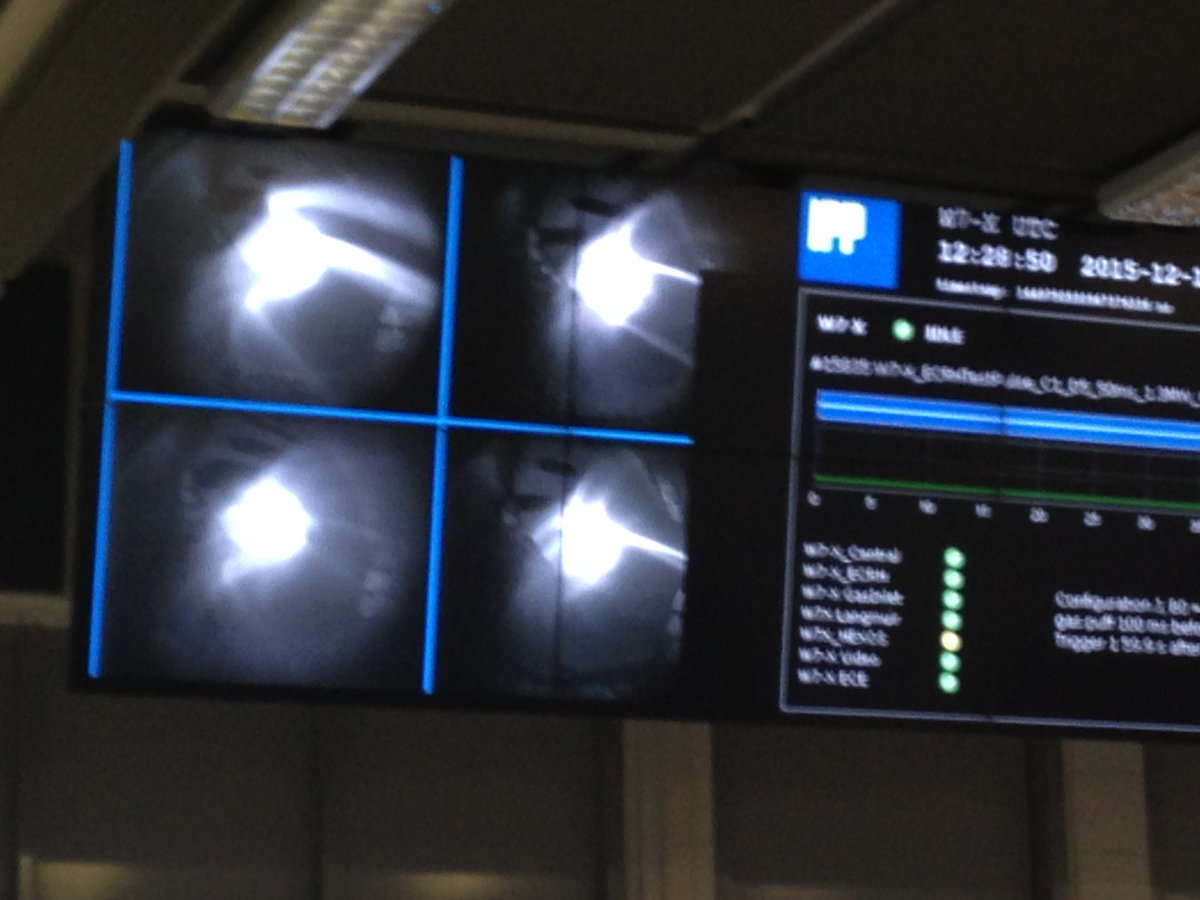


Das erste Plasma!!! / The first plasma!!! (js) #W7X


They're not the only ones, either, with South Korea and China both achieving record-breaking reactions in their own fusion machines. The UK has also switched on a revolutionary type of reactor that is now sustainably generating plasma within its core.

In fact, one MIT scientist has enthusiastically predicted that thanks to all these new advances, we should be able to get fusion energy on the grid by 2030.

6. Researchers are closer than ever before to having a drug that can treat autism symptoms
A small, but promising clinical trial in the US showed this year that a 100-year-old drug called suramin can measurably improve the symptoms of autism spectrum disorder (ASD) in children.

There's a lot more work to be done, but it's the first time we've been so close to having a drug that can potentially treat ASD symptoms. 

7. Scientists have discovered that crystals can be bent
Researchers have shown that crystals - which are traditionally brittle and inflexible - can be so flexible they can be bent repeatedly and even tied up in knots, overhauling our current understanding of the structures and challenging the very definition of a crystal.

The research opens up a whole new class of materials that could revolutionise electronics and technology.
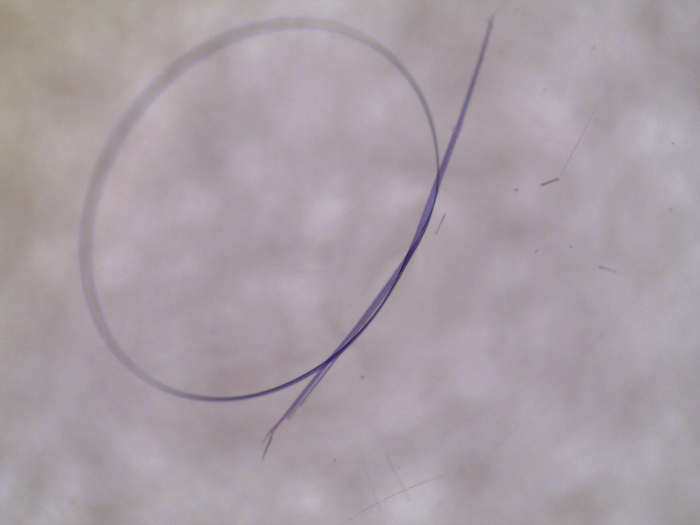
QUT

8. You no longer need to pay ridiculous amounts to access peer-reviewed science research
The scientific community is fighting back against crazy paywalls, with a new study showing that more than a quarter of all scientific papers are now available free online thanks to the Unpaywall app.

9. We're getting really close to eradicating the second disease from the planet
First, humans got rid of smallpox. Now we're on the verge of wiping out the Guinea Worm parasite, which is a living nightmare that painfully erupts from people's skin.

At the start of 2015 there were just 126 cases of Guinea Worm left on Earth, mostly thanks to an ingenious and cheap drinking straw filter that stops people from being contaminated via water. As of May this year, there were only nine recorded cases.
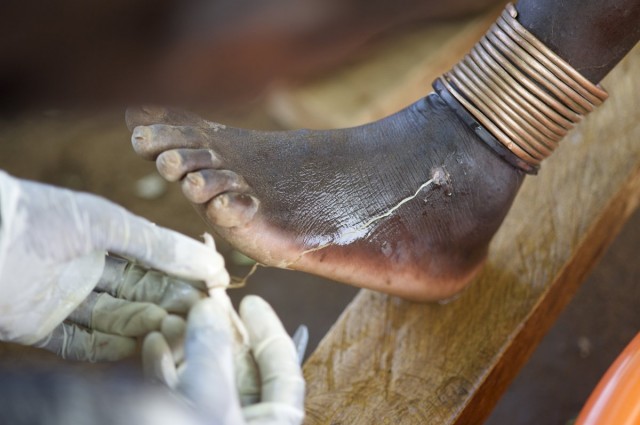
L. Grubb/The Carter Centre

10. Finally, schools around the US are pushing back their start times
After numerous studies showing US schools start so early that they're putting a health strain on students, schools around the country are finally beginning to take note and shift their start time from 8.00 am to 8.30 am. And it's working surprisingly well.

11. Scientists think they might be able to reverse Alzheimer's memory loss
Lost memories might not be gone forever. An enzyme that interferes with key memory-forming processes in people with Alzheimer's can now be specifically targeted thanks to the discovery of a protein that helps it do its dirty work, according to new research out of MIT.

12. You could win US$1 million by solving this chess puzzle
Generous scientists are offering a US$1 million prize to anybody who can solve a fiendishly complicated twist on a classic chess problem called the Queen's Puzzle.

The beauty of the challenge is you don't even really need to understand the rules of chess to take part, but the catch is that it's so complicated the researchers predict it could take thousands of years... still, no risk, no reward, right? 
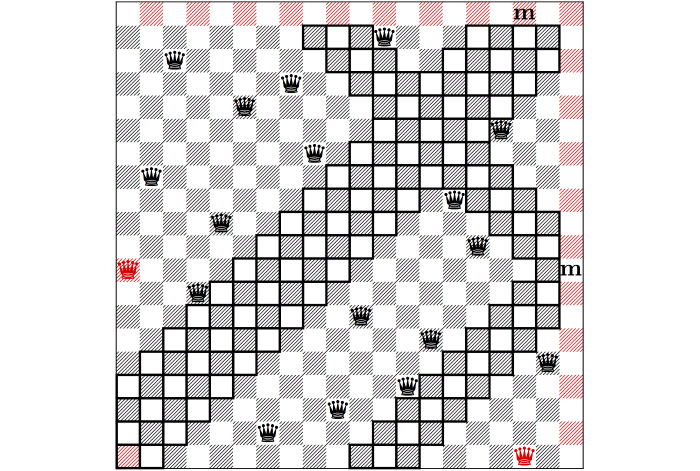

13. We've discovered a vitamin that could reduce the incidence of birth defects and miscarriages worldwide 
In what scientists are calling "the most important discovery for pregnant women since folate", a 12-year study has revealed that women could avoid miscarriages and birth defects by simply taking vitamin B3 during pregnancy.

So far, this effect has only been demonstrated in animal studies, but the results are extremely encouraging and human trials are imminent.

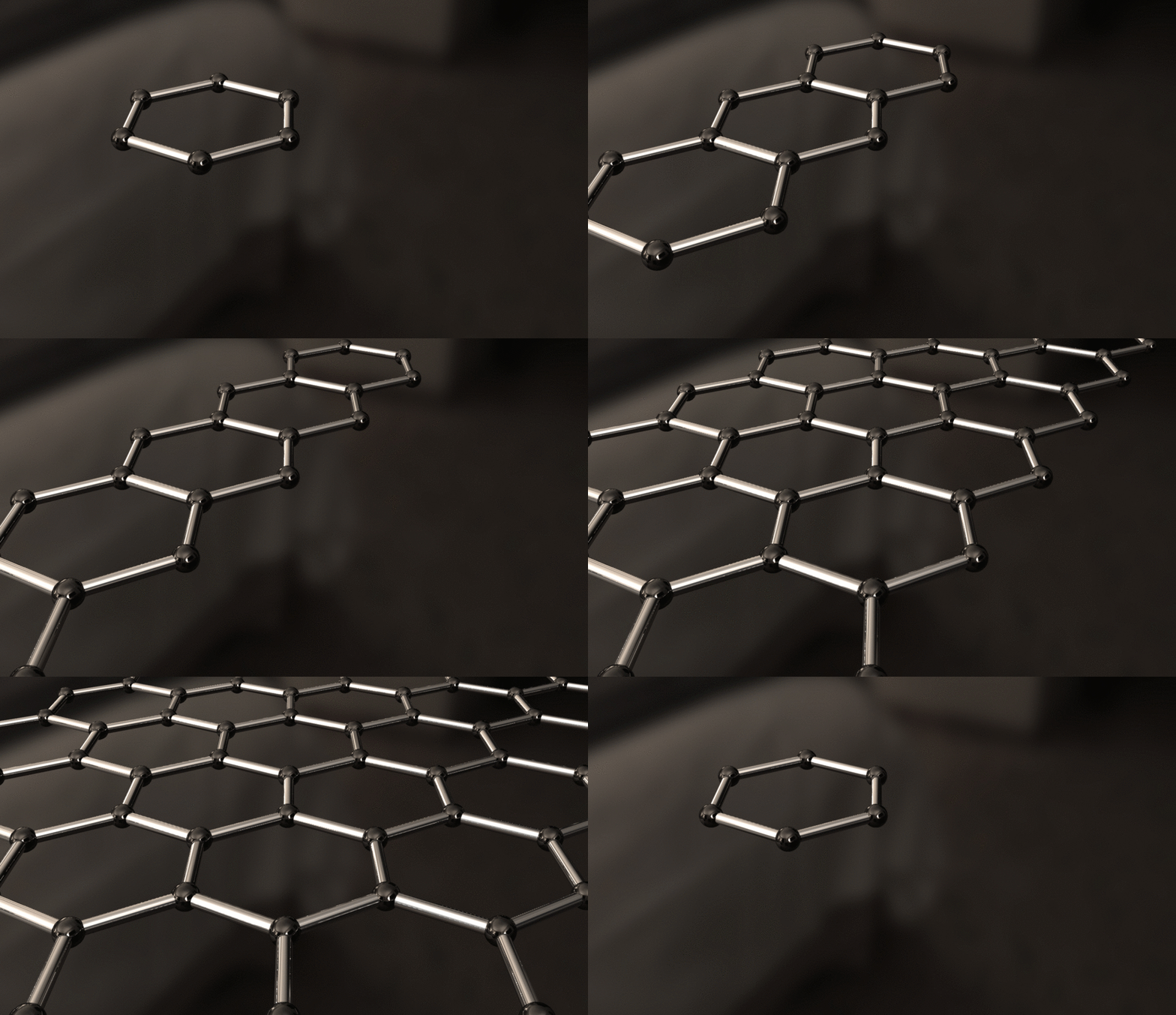
14. Graphene's superconductive abilities have finally been unlocked... 
At the start of this year, researchers finally unlocked the long-rumoured superconductive power of graphene, without having to dope the material.

Since then scientists have found even better ways of turning the wonder material into a superconductor, capable of shuttling electrons with zero resistance.

15. ...And researchers have shown electrons can flow through the material like liquid
Potentially even more impressive: researchers have shown that, through a new technique, electrons can actually flow through graphene like liquid, reaching limits physicists previously thought were impossible. This 'superballistic flow' could prove to be even more effective than superconductivity.

ORIGINAL IFLSCIENCE
FIONA MACDONALD
6 SEP 2017


We Recommend

jueves, 22 de septiembre de 2016

Fusing of Organic Molecules With Graphene Opens Up New Applications

 Photo: TUM A Model Molecule: Prof. Wilhelm Auwärter with a porphin-model.
 The hemoglobin-like molecule called porphyrin, which is responsible for making photosynthesis possible in plants and transporting oxygen in our blood, has been combined with graphene by researchers at the Technical University of Munich (TUM) in a new method that may make possible everything from molecular electronics to improved gas sensors.

While graphene’s properties—ranging from its electrical conductivity to its tensile strength—have made it desirable in a number of electronic applications, it still needs to be combined with so-called functional molecules to make it useful in applications such as photovoltaics and gas sensors. To date, the addition of these other functional molecules has been carried out through “wet chemistry,” which limits the amount of control possible over the properties of the resulting material.

However,  in a method described in the journal Nature Chemistry, the TUM researchers developed a highly controllable “dry” method based on exploiting the catalytic properties of a silver surface on which the graphene layer rested inside an ultra-high vacuum.

The benefit of this technique is that it preserves all the attractive properties of the porphyrins even after being combined with the graphene, most notably their intrinsic ability to have their electronic and magnetic properties tuned by the addition of different metal atoms. In terms of real-world devices, this means that these different metal atoms can bind with gas molecules to create effective gas sensors.

More generally, the method the TUM researchers have developed could be a breakthrough for how graphene is functionalized for a range of electronic applications.

The key to the importance of this research in terms of electronics is the complementary electronic structure in the graphene and the porphyrins,” said Wilhelm Auwärter, a professor at TUM who led the research, in an e-mail interview with IEEE Spectrum. “The porphyrins feature large electronic gaps, in contrast to graphene. The electronic, optical and magnetic properties of the porphyrins can be tuned by the choice of the metal center of the molecule.Electronic band gaps are critical to controlling how conductive a material is, and in turn, whether or not the material can be used in an electronic switch such as a transistor.

Auwärter further explains the electronic and magnetic properties of the porphyrins can also be modified by the attachment of gaseous ligands (like oxygen or nitric monoxide), This would allow, for example turning on and off the material’s mechanical response to a magnetic field. “Such functionalities are not inherent to the pristine graphene,” he added.

Auwärter also said that it should be possible to directly incorporate porphyrins into graphene nanoribbons. “In this way, one could achieve sequences of graphene ‘wires’ and porphyrin units. This should allow the engineering of an electronic gap in the hybrid structures,” he said.

While Auwärter believes that this manufacturing approach provides an avenue that could lead to new device designs for a range of electronic applications, he does concede that this is preliminary research that primarily serves as a starting off point.

We need to apply our protocol to well-defined graphene nanostructures, such as nanoribbons or nanographenes,” said Auwärter. “We need to place the hybrid structures on specific supports or to include them in layered materials and devices.”

In the future, to exploit this method for electronic applications, Auwärter points out that the hybrid material will need to be grown on insulating supports like hexagonal boron nitride.

While the electronic applications may still be somewhat far off, the novel protocol does offer an intriguing way forward for graphene-based electronics.
Learn More Technical University of Munichband gapgas sensorsgraphenegraphene nanoribbonsmolecular electronicsporphyrins

ORIGINAL: IEEE Spectrum
By Dexter Johnson
22 Sep 2016

miércoles, 7 de septiembre de 2016

Carbon Nanotube Transistors Finally Outperform Silicon

Photo: Stephanie Precourt/UW-Madison College of Engineering
Back in the 1990s, observers predicted that the single-walled carbon nanotube (SWCNT) would be the nanomaterial that pushed silicon aside and created a post-CMOS world where Moore’s Law could continue its march towards ever=smaller chip dimensions. All of that hope was swallowed up by inconsistencies between semiconducting and metallic SWCNTs and the vexing issue of trying to get them all to align on a wafer.

The introduction of graphene seemed to take the final bit of luster off of carbon nanotubes’ shine, but the material, which researchers have been using to make transistors for over 20 years, has experienced a renaissance of late.

Now, researchers at the University of Wisconsin-Madison (UW-Madison) have given SWCNTs a new boost in their resurgence by using them to make a transistor that outperforms state-of-the-art silicon transistors.

This achievement has been a dream of nanotechnology for the last 20 years,” said Michael Arnold, a professor at UW-Madison, in a press release. “Making carbon nanotube transistors that are better than silicon transistors is a big milestone,” Arnold added. “[It’s] a critical advance toward exploiting carbon nanotubes in logic, high-speed communications, and other semiconductor electronics technologies.

In research described in the journal Science Advances, the UW-Madison researchers were able to achieve a current that is 1.9 times as fast as that seen in silicon transistors. The measure of how rapidly the current that can travel through the channel between a transistor’s source and drain determines how fast the circuit is. The more current there is, the more quickly the gate of the next device in the circuit can be charged .

The key to getting the nanotubes to create such a fast transistor was a new process that employs polymers to sort between the metallic and semiconducting SWCNTs to create an ultra-high purity of solution.

We’ve identified specific conditions in which you can get rid of nearly all metallic nanotubes, [leaving] less than 0.01 percent metallic nanotubes [in a sample],” said Arnold.

The researchers had already tackled the problem of aligning and placing the nanotubes on a wafer two years ago when they developed a process they dubbed “floating evaporative self-assembly.” That technique uses a hydrophobic substrate and partially submerges it in water. Then the SWCNTs are deposited on its surface and the substrate removed vertically from the water.

In our research, we’ve shown that we can simultaneously overcome all of these challenges of working with nanotubes, and that has allowed us to create these groundbreaking carbon nanotube transistors that surpass silicon and gallium arsenide transistors,” said Arnold.

In the video below, Arnold provides a little primer on SWCNTs and what his group’s research with them could mean to the future of electronics.


In continuing research, the UW-Madison team will be aiming to replicate the manufacturability of silicon transistors. To date, they have managed to scale their alignment and deposition process to 1-inch-by-1-inch wafers; the longer-term goal is to bring this up to commercial scales.

Arnold added: “There has been a lot of hype about carbon nanotubes that hasn’t been realized, and that has kind of soured many people’s outlook. But we think the hype is deserved. It has just taken decades of work for the materials science to catch up and allow us to effectively harness these materials.

ORIGINAL: IEEE
By Dexter Johnson
6 Sep 2016

sábado, 9 de julio de 2016

Watch This Amazing 3D Bioprinter Make Artificial Bones From Scratch

Image credit: Aether
If 3D printing is already impacting manufacturing today, what breakthroughs could bioprinting — or printing any mix of organic and inorganic materials — achieve tomorrow? In a recent video, a basic prototype of the Aether 1 bioprinter is shown printing two bones connected by a tendon using six materials that include synthetic bone, conductive ink, stem cells and graphene oxide.

While bioprinted organs are still a long way off — this video offers a glimpse into that future.


According to Aether, the printer works with a wide range of materials — organic, non-organic and both — and is flexible about where those materials come from (instead of requiring anything proprietary). It can include 10 different materials in one print (way more than your average bioprinter) and is compatible with other tools like laser cutters and CNC routers. The printer’s universal tool mounts can even be used with pencils and paintbrushes—or whatever else — for making designs on canvas or other materials.

Such a range of possibilities begins to shift the limitations from the hardware to the imagination of the user. What really stands out in this video is the final product — fabricated bones seeded with two kinds of stem cells hooked together with tendons, transistors, and conductive wires. And this is only a test. What else will researchers and makers come up with?

Of course, if it’s not already obvious, their creation isn’t ready for implantation in anyone, though it does show off the machine’s versatility in an eye-catching way. And beyond versatility, the real selling point may be its price. Aether hopes to offer their printer for around $9,000 — while other bioprinters can cost up to $200,000. 

For such bold claims — can they deliver? The announcement and video is only the first in a series which, according to Aether, will show off even greater functionality. Similar price reductions in 3D printers (that don’t bioprint) have met challenges commercially. But falling prices are a key trend to keep track of in any digitally driven technology like 3D printing.

And it should be noted, there are other companies wading into bioprinting too.

An early player, Organovo is currently working with researchers to use 3D printed tissues to test drug toxicity, and last year, they announced a partnership with cosmetics giant L’Oréal to test beauty products on3D printed skin samples (and hopefully lessen reliance on animal testing). Meanwhile, BioBots is making a bioprinter about the same size and cost as Aether’s but with more focused use cases, like 3D printing tissues for research purposes.

We’ll have to wait for more substantial news to see just how all this fits together. This summer will see the first wave of Aether machines donated to universities and researchers while presale beta units are distributed to customers. By fall 2016, they hope to launch retail sales.

What would you use it for?


ORIGINAL: Singularity Hub

jueves, 21 de abril de 2016

Meet the Nanomachines That Could Drive a Medical Revolution


A group of physicists recently built the smallest engine ever created from just a single atom. Like any other engine it converts heat energy into movement — but it does so on a smaller scale than ever seen before. The atom is trapped in a cone of electromagnetic energy and lasers are used to heat it up and cool it down, which causes the atom to move back and forth in the cone like an engine piston.

The scientists from the University of Mainz in Germany who are behind the invention don’t have a particular use in mind for the engine. But it’s a good illustration of how we are increasingly able to replicate the everyday machines we rely on at a tiny scale. This is opening the way for some exciting possibilities in the future, particularly in the use of nanorobots in medicine, that could be sent into the body to release targeted drugs or even fight diseases such as cancer.

Nanotechnology deals with ultra-small objects equivalent to one billionth of a meter in size, which sounds an impossibly tiny scale at which to build machines. But size is relative to how close you are to an object. We can’t see things at the nanoscale with the naked eye, just as we can’t see the outer planets of the solar system. Yet if we zoom in — with a telescope for the planets or a powerful electron microscope for nano-objects — then we change the frame of reference and things look very different.

However, even after getting a closer look, we still can’t build machines at the nanoscale using conventional engineering tools. While regular machines, such as the internal combustion engines in most cars, operate according to the rules of physics laid out by Isaac Newton, things at the nanoscale follow the more complex laws of quantum mechanics. So we need different tools that take into account the quantum world in order to manipulate atoms and molecules in a way that uses them as building blocks for nanomachines. Here are four more tiny machines that could have a big impact.

1- Graphene engine for nanorobots
Researchers from Singapore have recently demonstrated a simple but nano-sized engine made from a highly elastic piece of graphene. Graphene is a two-dimensional sheet of carbon atoms that has exceptional mechanical strength. Inserting some chlorine and fluorine molecules into the graphene lattice and firing a laser at it causes the sheet to expand. Rapidly turning the laser on and off makes the graphene pump back and forth like the piston in an internal combustion engine.

The researchers think the graphene nano-engine could be used to power tiny robots, for example to attack cancer cells in the body. Or it could be used in a so-called “lab-on-a-chip” — a device that shrinks the functions of a chemistry lab into tiny package that can be used for rapid blood tests, among other things.

2- Frictionless nano-rotor
Molecular motor.
Image credit: 
Palma, C.-A.; Kühne, D.; Klappenberger, F.; Barth, J.V.; Technische Universität München


The rotors that produce movement in machines such as aircraft engines and fans all usually suffer from friction, which limits their performance. Nanotechnology can be used to create a motor from a single molecule, which can rotate without any friction. Normal rotors interact with the air according to Newton’s laws as they spin round and so experience friction. But, at the nanoscale, molecular rotors follow quantum law, meaning they don’t interact with the air in the same way and so friction doesn’t affect their performance.

Nature has actually already shown us that molecular motors are possible. Certain proteins can travel along a surface using a rotating mechanism that create movement from chemical energy. These motor proteins are what cause cells to contract and so are responsible for our muscle movements.

Researchers from Germany recently reported creating a molecular rotor by placing moving molecules inside a tiny hexagonal hole known as a nanopore in a thin piece of silver. The position and movement of the molecules meant they began to rotate around the hole like a rotor. Again, this form of nano-engine could be used to power a tiny robot around the body.

3- Controllable nano-rockets


A rocket is the fastest man-made vehicle that can freely travel across the universe. Several groups of researchers have recently constructed a high-speed, remote-controlled nanoscale version of a rocket by combining nanoparticles with biological molecules.

In one case, the body of the rocket was made from a polystyrene bead covered in gold and chromium. This was attached to multiple “catalytic engine” molecules using strands of DNA. When placed in a solution of hydrogen peroxide, the engine molecules caused a chemical reaction that produced oxygen bubbles, forcing the rocket to move in the opposite direction. Shining a beam of ultra-violet light on one side of the rocket causes the DNA to break apart, detaching the engines and changing the rocket’s direction of travel. The researchers hope to develop the rocket so it can be used in any environment, for example to deliver drugs to a target area of the body.

4- Magnetic nano-vehicles for carrying drugs

Magnetic nanoparticles. Image credit: Tapas Sen, author provided
My own research group is among those working on a simpler way to carry drugs through the body that is already being explored with magnetic nanoparticles. Drugs are injected into a magnetic shell structure that can expand in the presence of heat or light. This means that, once inserted into the body, they can be guided to the target area using magnets and then activated to expand and release their drug.

The technology is also being studied for medical imaging. Creating the nanoparticles to gather in certain tissues and then scanning the body with a magnetic resonance imaging (MRI) could help highlight problems such as diabetes.

Tapas Sen, Reader in Nanomaterials Chemistry, University of Central Lancashire

This article was originally published on The Conversation. Read the original article.

ORIGINAL: Singularity Hub

lunes, 7 de marzo de 2016

You can now 3D print the world's lightest material - graphene aerogel

Silica aerogel. Credit: NASA/JPL-Caltech
It's 7.5 times lighter than air, and a cubic metre of the stuff weighs just 160 grams. It's 12 percent lighter than the second lightest material in the world -aerographite - and you can balance a few cubic centimetres of the stuff on a dandelion head. Water is about 1,000 times as dense.

Yep, graphene aerogel is about as cool as it gets. And while silica aerogel (pictured above) is the most commonly used and studied type of aerogel, as of 2013, graphene aerogel has held the record of being the lightest material on Earth. And producing it is about to get a whole lot easier, because scientists have just figured out how to 3D print it

Nicknamed 'frozen smoke', aerogel looks like a gas - and certainly has the weight and density of a gas - but is actually a solid, and an incredibly flexible, conductive, compressible, and absorbent one at that.

Its strange and entirely unique properties have scientists exploring its potential in everything from invisibility cloaks to environmental clean-up - just 1 gram of aerogel can absorb up to 900 times its own weight in materials such as oil - so a cheap, efficient way of producing it is key to accelerating the process

Now, scientists from the State University of New York and Kansas State University describe how they’ve managed to produce it using a 3D printing technique that ensures that the whole process is automated, and every piece comes out uniform and perfect.

On its own, graphene is a two-dimensional, one-atom-thick layer of pure carbon atoms, tightly packed together in a hexagonal honeycomb lattice. To produce graphene aerogel, you basically have to freeze-dry layers of graphene and stack them into a three-dimensional structure.

aerogel, balancing on a flower. Credit: Zhejiang University
Graphene 
Figuring out how to marry graphene aerogel with 3D printing technology was no small feat, because the molecular structure that gives rise to all its incredible properties is the one thing that makes printing it extremely difficult.

"Typically, to 3D print aerogel, the core material is mixed with other ingredients, such as a polymer, so that it can be pushed out using inkjet printers. Once the structure is made, the polymer is removed by a chemical process. In the case of graphene aerogel, however, doing this destroys its delicate structure."

The solution? Graphene oxide - a form of graphene with molecular oxygen incorporated into it. By mixing this compound with water and laying it out over a surface cooled to -25°C, the researchers could instantaneously freeze individual layers of graphene, and construct the three-dimensional aerogel, scaffolded by ice.

As Rathi explains, once the construction process was complete, the ice 'scaffolds' were removed by using liquid nitrogen to freeze-dry the water right out of the ice without damaging the rest of the structure. 

"The material was then heated to remove oxygen atoms, which left only graphene in the aerogel," says Rathi. "The resulting solid had densities ranging from 0.5 kg per cubic metre to 10 kg per cubic metre. The lightest aerogel ever produced is about 0.16 kg per cubic metre (compared to 1,000 kg per cubic metre for water)."

You can watch the process below:


The team has published the technique in the journal Small, and they're now looking at how they can produce other types of aerogel, such as silica aerogel, using the same machine.

We honestly just want to get our hands on this technology because all we want to do now is see how many bricks we can stack on top of it. For science, of course.

ORIGINAL: Science Alert
BEC CREW
3 MAR 2016

jueves, 14 de enero de 2016

First ever pictures of single proteins thanks to graphene sheet

(Image credit: Jean-Nicolas Longchamp of the University of Zurich, Switzerland)
You’d think twice about snapping a selfie if the camera flash was bright enough to burn your skin off. Biologists face a similar problem when studying proteins under the microscope, as modern imaging techniques can destroy the molecules. Now graphene – the ultra-thin form of carbon – has come to the rescue, and delivered the very first pictures of a single protein.

Taking pictures of proteins lets us understand their structure and functions. This is important for treating diseases in which proteins go wrong, such as Alzheimer’s. But imaging methods such as X-ray crystallography or cryo-electron microscopy rely on averaging readings from millions of molecules, giving us a blurry view.

Averaging is needed because illuminating molecules with X-rays or high-energy electrons can damage the protein, meaning you may not get the full picture from a single image, and also because it’s tricky to keep a single molecule in one place long enough to take its picture. Now Jean-Nicolas Longchamp of the University of Zurich, Switzerland, and his colleagues have come up with a way to do just that.

They start by spraying a solution of the proteins on to a sheet of graphene, fixing the proteins in place. Then they place this under an electron holographic microscope, which uses interference patterns between electrons to produce an image.

Handy slide
This kind of instrument relies on low-energy electrons that don’t damage the protein. The snag is that they are also less able to penetrate through to the microscope’s detector. This is where graphene comes in handy. “In optical microscopy you have a glass slide. For our electron microscopy we had to find a substrate thin enough to have the electrons passing through,” says Longchamp.

The team tested their method on a range of protein molecules, all just a few nanometres in size, such as the haemoglobin found in red blood cells. The results agreed well with molecular models derived from X-ray crystallography (see image below), suggesting the images are accurate.
(Image credit: Jean-Nicolas Longchamp of the University of Zurich, Switzerland)
Now they plan to snap pictures of other molecules that can’t be imaged with existing techniques, and hope eventually to contribute to new medical treatments. “There are some diseases which are related to the wrong structure of certain proteins,” says Longchamp. “In the future, we could image the difference in the structure of a healthy person and a person who has a disease.”


ORIGINAL: New Scientist
8 January 2016

viernes, 27 de noviembre de 2015

Spiders Ingest Nanotubes, Then Weave Silk Reinforced with Carbon

uditha wickramanayaka/Flickr
Spiders sprayed with water containing carbon nanotubes and graphene flakes have produced the toughest fibers ever measured, say materials scientists.


Spider silk is one of the more extraordinary materials known to science. The protein fiber, spun by spiders to make webs, is stronger than almost anything that humans can make.

The dragline silk spiders use to make a web’s outer rim and spokes is amazing stuff. It matches high-grade alloy steel for tensile strength but is about a sixth as dense. It is also highly ductile, sometimes capable of stretching to five times its length.

This combination of strength and ductility makes spider silk extremely tough, matching the toughness of state-of-the-art carbon fibers such as Kevlar.

So it goes without saying that the ability to make spider silk even stronger and tougher would be a significant scientific coup. Which is why the work of Nicola Pugno at the University of Trento in Italy and a few pals is something of a jaw-dropper.

These guys have found a way to incorporate carbon nanotubes and graphene into spider silk and increase its strength and toughness beyond anything that has been possible before. The resulting material has properties such as 
  • fracture strength, 
  • Young’s modulus, and 
  • toughness modulus 
higher than anything ever measured.

The team’s approach is relatively straightforward. They started with 15 Pholcidae spiders, collected from the Italian countryside, which they kept in controlled conditions in their lab. They collected samples of dragline silk produced by these spiders as a reference.

The team then used a neat trick to introduce carbon nanotubes and graphene flakes into the spider silk. They simply sprayed the spiders with water containing the nanotubes or flakes and then measured the mechanical properties of the silk that the spiders produced.

For each strand of silk, they fixed the fiber between two C-shaped cardboard holders and placed it in a device that can measure the load on a fiber with a resolution of 15 nano-newtons and any fiber displacement with a resolution of 0.1 nanometers.

The results make for impressive reading. “We measure a fracture strength up to 5.4 GPa, a Young’s modulus up to 47.8 GPa and a toughness modulus up to 2.1 GPa,” say Pugno and co. “This is the highest toughness modulus for a fibre, surpassing synthetic polymeric high performance fibres (e.g. Kelvar49) and even the current toughest knotted fibers,” they say.

In other words, giving spiders water that is infused with carbon nanotubes makes them weave silk stronger than any known fiber.

The work raises some interesting questions. For a start, exactly how the spiders incorporate carbon nanotubes and graphene flakes into their silk is not clear. The team use spectroscopic methods to show that the carbon-based materials are present in the fiber but are unable to show exactly how.

One possibility is that the silk becomes coated with these carbon-based materials after it is spun. Pugno and co cannot rule this out but say it is unlikely because the resulting structure would not have the strength they measured. “Such external coating on the fibre surface is not expected to significantly contribute to the observed mechanical strengthening,” they say.

Instead, the team say it is more likely that the spiders ingest the water along with the carbon-based materials and these are then incorporated into the fiber as it is spun. So the nanotubes and graphene end up in the central part of each fibere where they can have the biggest impact on its strength.

The team have even simulated the resulting molecular structure and say that the mechanical properties are in good agreement with the experimental results.

There are challenges ahead, of course. Nobody has discovered an efficient way to harvest spider silk, although not for lack of trying. So an important future step will be the development of such a technique that can work on an industrial scale. That would open the way to widespread applications in everything from tissue repair to garment design.

This isn’t the first time that researchers have attempted to modify spider silk. Various groups have added metallic elements by placing the silk in the appropriate vapor. In this way they have significantly increased the strength and toughness of the silk, although never to the extent that Pugno and co have managed.

Which is why their work is impressive. The extraordinary properties of spider silk are the result of 400 million years of evolution. So such a significant improvement is clearly something special.

And the technique’s simplicity suggests that a similar approach could be used on other organisms. “This new reinforcing procedure could also be applied to other animals and plants, leading to a new class of bionic materials,” they say.

Ref: arxiv.org/abs/1504.06751 : Silk Reinforced With Graphene Or Carbon Nanotubes Spun By Spiders


May 6, 2015

lunes, 2 de enero de 2012

A Superfast DNA Sequencer Based on Motion Detection

Illustration: Alex Smolyanitsky/NIST

For more than 20 years, the practice of using a low-intensity electric current to pull long strands of DNA through nanometer-scale pores in a membraneand measure the electric field variations of the four nucleic acids—A, C, G, T—has been growing as the main approach for DNA sequencers. 

We’ve seen the development of this technology reach the point where U.K.-based Oxford Nanopore has been offering portable DNA sequencers based on this fundamental measurement principle for more than a year. Meanwhile, in the research labs, scientists have been tinkering with better materials for the membrane and have started to work with the “wonder materialgraphene to see what benefits it might provide in these types of devices.

Now researchers at the National Institute of Standards and Technology (NIST) may have changed the technology paradigm for DNA sequencers in their proposal for an entirely new material architecture that would represent the first DNA sequencer based on sensing motion in the membrane as the DNA thread passes through it.

In research described in the journal ACS Nano, the NIST researchers proposed a device in which a nanoscale ribbon of molybdenum disulfide is suspended over a metal electrode immersed in water. In this arrangement, the molybdenum disulfide acts as a kind of capacitor, storing an electrical charge. When a single strand of DNA is passed through a pore in the membrane, the membrane only flexes when a DNA base pairs up with and then separates from a complementary base affixed to the hole. It is this flexing that the motion sensor detects as an electrical signal.

In the paper, the NIST researchers performed numerical simulations of how fast and accurate this DNA sequencer could be, and they concluded that the membrane would be 79 to 86 percent accurate in identifying DNA bases in a single measurement at speeds up to about 70 million bases per second. It is this speed and accuracy that the NIST researchers see as a game changer.

It is the promise of true single-base resolution and the ability to reliably detect repeated DNA motifs at the rates of millions of bases per second,” said Alex Smolyanitsky, a NIST researcher and lead author, in an email interview with IEEE Spectrum. “An array of sensors described in our paper has the potential to accurately sequence DNA at speeds far greater than anything on the current market, while the device itself is envisioned to be portable and low-power.

In a head-to-head comparison with research darling du jour graphene, the benefits are clear.

The molybdenum disulfide is much less prone to ‘sticking’ to DNA, compared to graphene,” said Smolyanitsky. “Also, it is expected to be electrically conductive at room temperature.

Before a complete prototype is built, the NIST researchers will be working on chemical functionalization of the material. But there does seem to be an urgency to the research with a patent already being sought on the design.

We have immediate plans and expertise to work on the experimental aspects of this technology,” said Smolyanitsky. “In addition, we are open to forming early-stage partnerships with the industry.

DNA sequencing may be just be a starting application for this design with a wide variety of nanoelectromechanical system and device applications on the NIST researchers’ horizon.

ORIGINAL: IEEE Spectrum
By Dexter Johnson
29 Sep 2016