Mostrando entradas con la etiqueta Biohacking. Mostrar todas las entradas

sábado, 2 de noviembre de 2019

The scientists who are creating a bio-internet of things

The internet of things connects devices across the globe. Now researchers are considering how bacteria can join the network.
by Emerging Technology from the arXiv
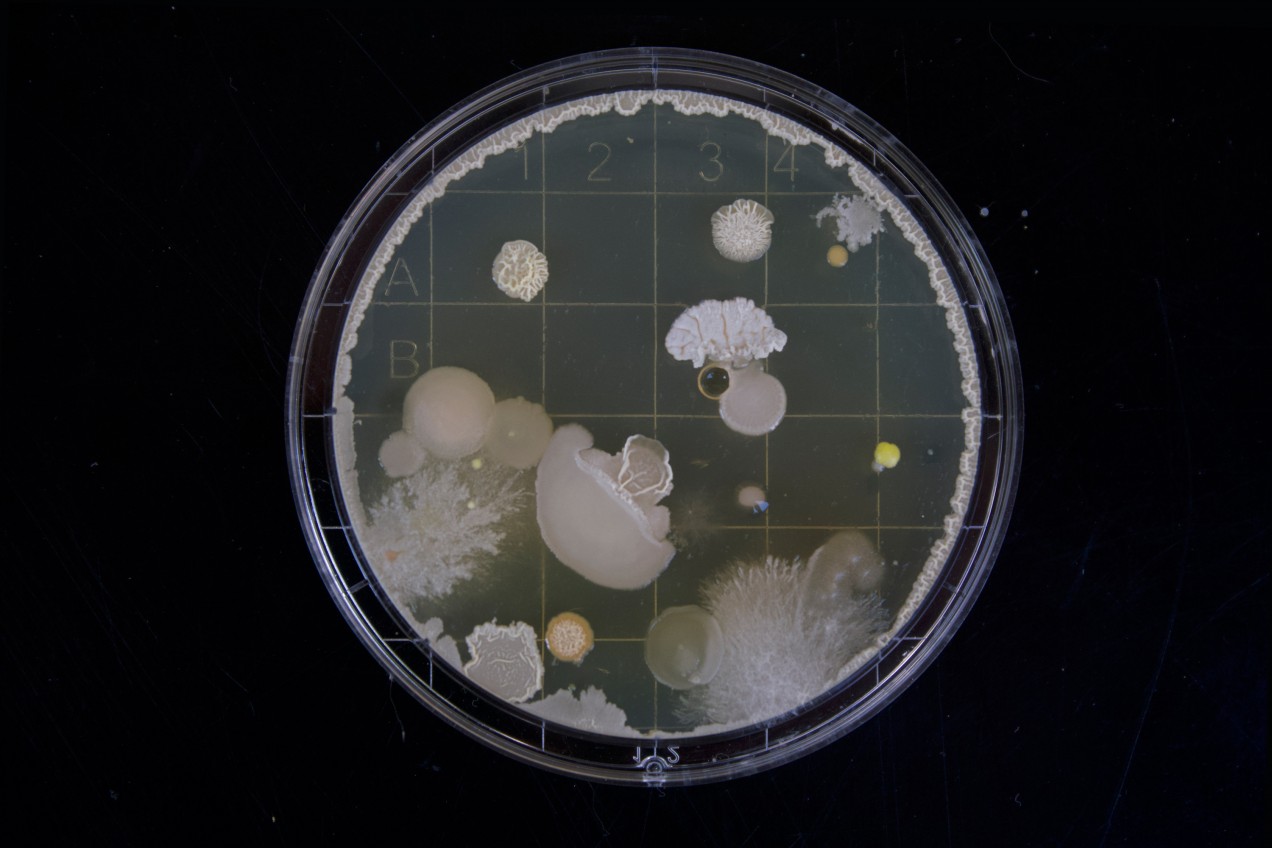

conceptual image of bacterial in a petri dish 
Imagine designing the perfect device for the internet of things. What functions must it have? For a start,  
  • it must be able to communicate, both with other devices and with its human overlords. 
  • It must be able to store and process information. 
  • And it must monitor its environment with a range of sensors. 
  • Finally, it will need some kind of built-in motor.
There is no shortage of devices that have many of these features. Most are based on widely available, low-cost devices such as Raspberry Pis, Arduino boards, and the like.

But another set of machines with similar functions is much more plentiful, say Raphael Kim and Stefan Poslad at Queen Mary University of London in the UK. They point out that bacteria communicate effectively and have built-in engines and sensors, as well as powerful information storage and processing architecture.

And that raises an interesting possibility, they say. Why not use bacteria to create a biological version of the internet of things? Today, in a call to action, they lay out some of the thinking and the technologies that could make this possible.

The way bacteria store and process information is an emerging area of research, much of it focused on the bacterial workhorse Escherichia coli. These (and other) bacteria store information in ring-shaped DNA structures called plasmids, which they transmit from one organism to the next in a process called conjugation.
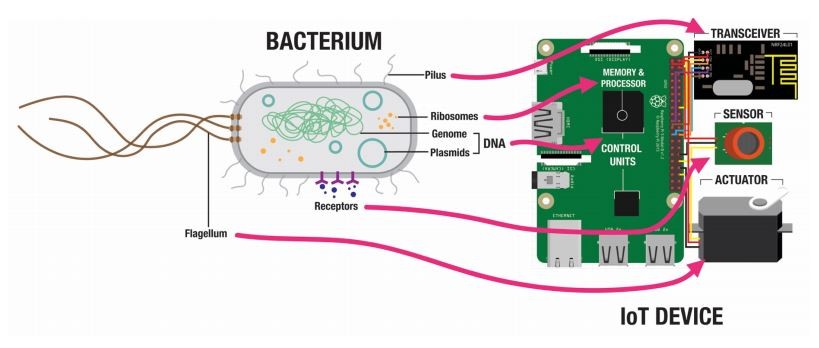
 Bacterial IoT


Last year, Federico Tavella at the University of Padua in Italy and colleagues built a circuit in which one strain of immotile E. coli transmitted a simple “Hello world” message to a motile strain, which carried the information to another location.

This kind of information transmission occurs all the time in the bacterial world, creating a fantastically complex network. But Tavella and co’s proof-of-principle experiment shows how it can be exploited to create a kind of bio-internet, say Kim and Poslad.

E. coli make a perfect medium for this network. They are motile—they have a built-in engine in the form of waving, thread-like appendages called flagella, which generate thrust. They have receptors in their cell walls that sense aspects of their environment—temperature, light, chemicals, etc. They store information in DNA and process it using ribosomes. And they are tiny, allowing them to exist in environments that human-made technologies have trouble accessing.

E. coli are relatively easy to manipulate and engineer as well. The grassroots movement of DIY biology is making biotechnology tools cheaper and more easily available. The Amino Lab, for example, is a genetic engineering kit for schoolchildren, allowing them to reprogram E. coli to glow in the dark, among other things.

This kind of biohacking is becoming relatively common and shows the remarkable potential of a bio-internet of things. Kim and Poslad talk about a wide range of possibilities. “Bacteria could be programmed and deployed in different surroundings, such as the sea and ‘smart cities’, to sense for toxins and pollutants, gather data, and undertake bioremediation processes,” they say.

Bacteria could even be reprogrammed to treat diseases. “Harbouring DNA that encode useful hormones, for instance, the bacteria can swim to a chosen destination within the human body, [and] produce and release the hormones when triggered by the microbe’s internal sensor,” they suggest.

Of course, there are various downsides. While genetic engineering makes possible all kinds of amusing experiments, darker possibilities give biosecurity experts sleepless nights. It’s not hard to imagine bacteria acting as vectors for various nasty diseases, for example.

It’s also easy to lose bacteria. One thing they do not have is the equivalent of GPS. So tracking them is hard. Indeed, it can be almost impossible to track the information they transmit once it is released into the wild.

And therein lies one of the problems with a biological internet of things. The conventional internet is a way of starting with a message at one point in space and re-creating it at another point chosen by the sender. It allows humans, and increasingly devices, to communicate with each other across the planet.

Kim and Poslad’s bio-internet, on the other hand, offers a way of creating and releasing a message but little in the way of controlling where it ends up. The bionetwork created by bacterial conjugation is so mind-bogglingly vast that information can spread more or less anywhere. Biologists have observed the process of conjugation transferring genetic material from bacteria to yeast, to plants, and even to mammalian cells.

Evolution plays a role too.
All living things are subject to its forces. No matter how benign a bacterium might seem, the process of evolution can wreak havoc via mutation and selection, with outcomes that are impossible to predict.

Then there is the problem of bad actors influencing this network. The conventional internet has attracted more than its fair share of individuals who release malware for nefarious purposes. The interest they might have in a biological internet of things is the stuff of nightmares.

Kim and Poslad acknowledge some of these issues, saying that creating a bacteria-based network presents fresh ethical issues. “Such challenges offer a rich area for discussion on the wider implication of bacteria driven Internet of Things systems,” they conclude with some understatement.

That’s a discussion worth having sooner rather than later.
Ref: arxiv.org/abs/1910.01974 : The Thing with E. coli: Highlighting Opportunities and Challenges of Integrating Bacteria in IoT and HCI.
By Michael Schiffer / unsplash
Nov 1, 2019

martes, 28 de febrero de 2017

Microfluidic LEGO bricks put biomedical research in the hands of the masses


3D printed master molds have been used to create microfluidic LEGO bricks that facilitate the study of liquid flow for medical research. The LEGO brick method is being explored by the Department of Biomedical Engineering at the University of California, Irvine, with findings published in the Journal of Micromechanics and Microengineering, January 2017.

What is microfluidics?
Microfluidics is the manipulation and study of sub-microscopic litres of liquid. In a device such as the University of California’s LEGO bricks, liquids are channelled through empty vessels spanning no more than 500 μm (microns, for comparison: a human hair is 50 μm in diameter).

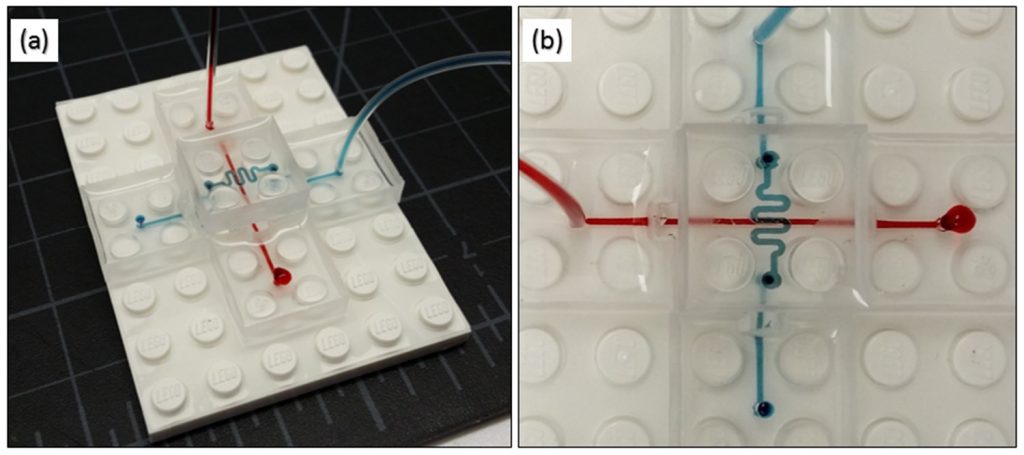
Testing the flow of liquids through the LEGO bricks with colored inks. Image via: Kevin Vittayarukskul and Abraham Phillip Lee

The way a liquid behaves during a flow, and when mixed with other nanoliquids tells researchers certain things about its biological behaviour, Microfludics can also be controlled in a way to produce autonomous movement, as in the example of Harvard University’s soft-robotic Octobot.


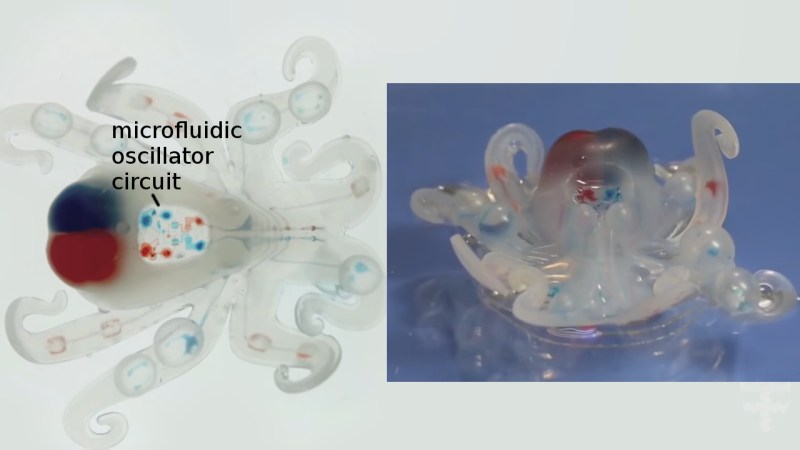
Moving .gif shows Harvard’s Octobot that harnesses microfluidic principles to move. Clip via: @NatureNews

In biomedical research microfluidic chips are used to conduct assays that test the reactions between substances, as in lab-on-a-chip technology. Using these devices is preferable to some traditional assay methods as the microscale parts consume less time and resources. California’s LEGO bricks seek to promote these qualities by providing more recognisable devices that are also capable of being mass produced.

Making the microfluidic LEGO bricks
Kevin Vittayarukskul and Professor Abraham Lee’s approach uses Autodesk’s AutoCAD software to first design blocks with an embedded microfluidic channel.

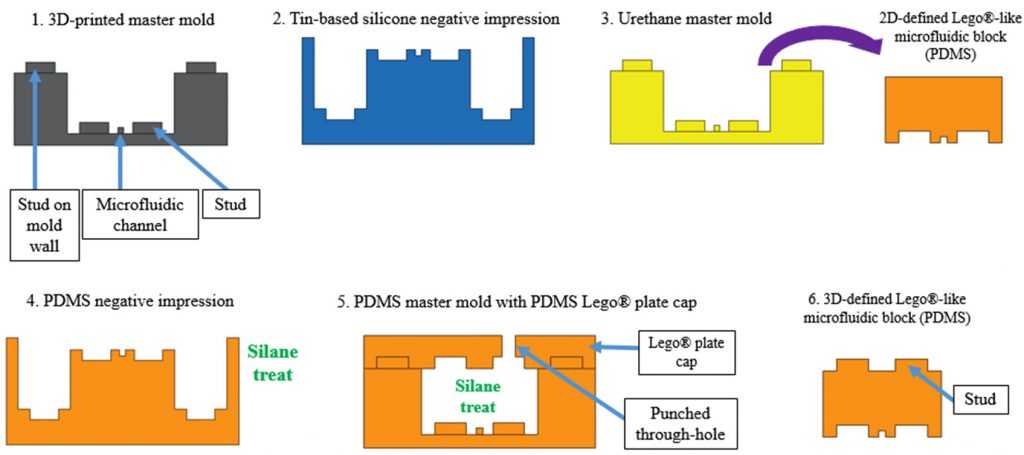
From this a mold is also designed, and then 3D printed on a Perfactory 3 Mini 3D printer by EnvisionTEC that uses the DLP method of vat polymerisation to cure the material. PDMS, (Polydimethylsiloxane) a silicone-based polymer is then used to cast the LEGO bricks.
Process of making the microfluidic LEGO mold. Image via: Kevin Vittayarukskul and Abraham Phillip Lee

The properties of PDMS make it naturally transparent and biocompatible, which is ideal for this kind of research. It is also known for its ability to exactly match the shape of a cast into which it is poured, meaning that none of the DLP 3D printed quality is lost on the final cast.

A microfluidic LEGO kit?
The advantages of being able to stack the microfluidic blocks is that researchers can combine even more channels into a single space. It also allows easy assembly of varying channels, i.e. one straight vessel in to a winding one.

Using a tried and tested building block such as a LEGO brick also means that it has great potential for mass-production. The case with medical research is that it often isn’t accessible by other scholars that could make use of the technology. But a microfluidic LEGO kit could be just the ticket to encourage future biomedical research.

Speaking to EE Times Europe A truly LEGO®-like modular microfluidics platform co-author Professor Abraham Lee explains:
The main goal of this project was to train and educate the next generation of microfluidic developers and researchers. By using actual LEGO’s as the building block and assembly platform, our hope was to attract students as early as young as high schoolers to be interested in the field, learn about microfluidics and stimulate their imagination for new products for applications over a very wide range.
Testing the flow of liquids through the LEGO bricks with colored inks. Image via: Kevin Vittayarukskul and Abraham Phillip Lee


A truly Lego®-like modular microfluidics platform
Kevin Vittayarukskul
and Abraham Phillip Lee
  • Published 24 January 2017 • © 2017 IOP Publishing Ltd
Journal of Micromechanics and Microengineering, Volume 27, Number 3
Author e-mails
Author affiliations
  • Department of Biomedical Engineering, University of California, Irvine, CA, USA
Dates
  • Received 11 October 2016
  • Accepted 15 December 2016
  • Published 24 January 2017
Citation
  • Kevin Vittayarukskul and Abraham Phillip Lee 2017 J. Micromech. Microeng. 27 035004  
DOI: https://doi.org/10.1088/1361-6439/aa53ed

ORIGINAL: 3DPrintingIndustry

Beau Jackson Writer based in London, originally from Yorkshire. Fan of lab-on-a-chip technology, microfluidics, scanning, tech-inspired art and 3D Benchy.
January 25, 2017
 

martes, 27 de septiembre de 2016

Yes, you really can make your own EpiPen for $30

Greg Friese/Flickr
Thank you, biohackers.

In the latest example of corporate greed in the pharmaceutical world, the US state of West Virginia announced today that it's investigating the makers of the EpiPen for Medicaid fraud - which means they think it's defrauded the US government healthcare system.

More specifically, it's accusing manufacturers Mylan of inflating the price of EpiPens by almost 500 percent since they purchased the life-saving device back in 2007

Since then, the cost of a single EpiPen has gone from around US$57 to $318 - a 461 percent increase. Which is pretty frustrating when you consider that many people with allergies need to keep the medication on them at all times in case of going into life-threatening anaphylaxis. Anaphylaxis can be triggered by anything from a bee sting to eating trace amounts of peanut.

In the face of the public backlash over their price rises, at the end of last month, Mylan announced they'd be releasing a generic version of the EpiPen that would cost only $150 per injection.

But industry insiders were quick to criticise this apparent act of goodwill, with pharmaceutical experts telling NBC News earlier this month that they estimated an EpiPen would only cost around $30 to make.

Now a bio-hacking collective called Four Thieves Vinegar has tested that claim out for themselves, and shown you really can engineer your own DIY EpiPen - which they called the "EpiPencil" - for around $35. And they claim it works as well as the $300 version - although we definitely don't recommend you try it at home.

The main difference between their version and the one you can buy at the pharmacy is that you have to measure out the correct dose of epinephrine before using the DIY version.

"We've gotten many requests to do something about the EpiPen, so we have,"says Michael Laufer, one of the founders of Four Thieves Vinegar, who has a PhD in mathematics from the City University of New York.

"We developed the EpiPencil, which is an epinephrine auto-injector built entirely from off-the-shelf parts, which can be assembled in a matter of minutes for just over $30."

EpiPens are designed as 'last resort' devices that are filled with epinephrine, an adrenaline drug that's more than 100 years old. The drug itself isn't patented, but what makes the EpiPen so attractive is the fact that its design lets pretty much anyone use it - which is handy in emergency situations.

So why haven't many other companies stepped up as competition and made an EpiPen equivalent to rival Mylan's? As Jamie Condliffe explains for MIT Technology Review, a big issue is the patent problem.

Mylan has the patent on the auto-injecting device up until 2025, and while it would be possible to build another type of model that does the same thing, it makes things a lot tricker.

"[There's] fear of creating a device that doesn’t work reliably, and a regulatory process that makes getting products to market incredibly difficult," writes Condliffe.

Four Thieves Vinegar has now published a video and fully downloadable instructions on how to make your own DIY EpiPencil at home. 

To be clear, we're definitely not recommending you go out and make your own EpiPen. The Four Thieves Vinegar version is not only totally unregulated, but it also hasn't been shown to reliably work for everyone - something that would require years of clinical trials and peer-reviewed papers.

"It's essential to remember that epinephrine auto-injectors are life-saving products, and it is critical that they are made to a high standard of quality so patients can rely on them to work safely and effectively," said US Food and Drug Administration spokesperson, Theresa Eisenman. 

But as an experiment to show that the EpiPen really can be created for around $30 - and with non-bulk parts at that - the Four Thieves Vinegar DIY version definitely makes its point. And hopefully it reminds people that they shouldn't have to pay ridiculous amounts for life-saving medicine.

"You know there are people who are just not buying an EpiPen because they can’t afford it," Laufer told The Parallax. "That’s unconscionable."


With West Virginia's new investigation and the public still pretty pissed off about the cost of EpiPens, it'll be interesting to see what happens next. Your move, Mylan.


Four Thieves Vinegar Biohacking Collective's Mantra: "Free Medicine for Everyone"


People are disenfranchised from access to medicine for various reasons. To circumvent these, we have developed a way for individuals to manufacture their own medications. We have designed an open-source automated lab reactor, which can be built with off-the-shelf parts, and can be set to synthesize different medications. This will save hundreds of thousands of lives.

The main reasons for people being disenfranchised from medicines are: price, legality, and lack of infrastructure. Medicines like Solvadi which costs $80,000 for a course of treatment, is beyond the reach of most people. Mifepristone and Misoprostal are unavailable in many places where abortion is illegal. Antiretroviral HIV treatments even when provided free, have no way of getting to remote locations in 3rd world countries.

The design will be published online, along with synthesis programs. The system will also have a forum system for users to communicate and contribute to the development of the system. With time, the system will become self-sustaining, much like other open source movements.

Original: Science Alert
FIONA MACDONALD
21 SEP 2016
Original: Four Thieves Vinegar.org

Soft Robot With Microfluidic Logic Circuit


Perhaps our future overlords won’t be made up of electrical circuits after all but will instead be soft-bodied like ourselves. However, their design will have its origins in electrical analogues, as with the Octobot.

The Octobot is the brainchild a team of Harvard University researchers who recently published an article about it in Nature. Its body is modeled on the octopus and is composed of all soft body parts that were made using a combination of 3D printing, molding and soft lithography. Two sets of arms on either side of the Octobot move, taking turns under the control of a soft oscillator circuit. You can see it in action in the video below.
Octobot mechanical and electrical analogue circuits (credit: Michael Wehner at al./Nature)

As shown in the diagram, the fuel is a liquid hydrogen peroxide (H2O2) which the oscillator gets from one of two fuel reservoirs and feeds into one of two reaction chambers. In the oscillator, pinch valves act like JFETs. When fuel from one reservoir is flowing into one reaction chamber, one of the pinch valves pinches off the flow of fuel to the other reaction chamber. It’s not clear how but somehow or other that fuel flow is then pinched off by another pinch valve as fuel then flows from the other reservoir to the other reaction chamber.

The reaction chamber contains a small amount of platinum as a catalyst which reacts with the hydrogen peroxide to release a much larger volume of oxygen gas into actuators in the arms. Those actuators expand like balloons causing the arms to move. The reaction chambers are the analogues of amplifiers. Other analogues are check valves for diodes, vent orifices for resistors as well as other chambers which appear to be capacitors.

This is a proof of concept and as yet the Octobot doesn’t walk but the team hopes to make one that can crawl, swim and interact with its environment. When it does we look forward to it joining this other soft-bodied bot modeled after a stingray. It looks like our overlords might all come from the sea.


Here’s you can see the Octobot in action.


And here’s another video from Harvard demonstrating the chemical reaction between hydrogen peroxide and platinum that produces oxygen. ("Powering the Octobot: A chemical reaction")


domingo, 16 de noviembre de 2014

3D Printing Using Genetically Modified Bacteria and Orange Juice

This post is coming to you live from the Elephant & Castle Mini Maker Faire being held today at the London College of Communication.


The JuicyPrint prototype—here the redder light indicates where the cellulose wouldn’t be growing, and the bluer light is where it would. In this case the 3d bio-printer would be printing an ‘H’ symbol.

While the field is still fairly quiet right now, biohacking is the next big thing. There’s a grown segment of the maker movement that is talking about it, but not just that, they’re getting on and doing it.

I talked to Ilya Levantis from the London Biohackspace about JuicyPrint a 3d printer that can be fed with fruit juice and used to print out useful shapes made of bacterial cellulose using a genetically engineered strain of cellulose producing bacteria.


The G. hansenii (Gluconacetobacter hansenii) bacteria that the London Biohackspace is using is a is able to grow on a wide range of things like fruit juice, tea or even brewing waste. Once completed, building objects with the new printer will require only a computer, and a local a trip to your local market for supplies.

The Elephant & Castle Mini Maker Faire was held at the London College of Communication from 10am till 6pm. Entry is free to children (under 16) and students, tickets are £5 otherwise and available on the door.

Alasdair Allan is a scientist, author, hacker, tinkerer and co-founder of a startup working on fixing the Internet of Things. He spends much of his time probing current trends in an attempt to determine which technologies are going to define our future.

ORIGINAL: Make
November 15th, 2014

miércoles, 30 de julio de 2014

Biohackers Are Growing Real Cheese In A Lab, No Cow Needed


If you're a vegan, cheese options are limited.


A team of Bay Area biohackers is trying to create a new option: real vegan cheese. That is, cheese derived from baker's yeast that has been modified to produce real milk proteins. Think of it as the cheese equivalent of lab-grown meat.


In order to get baker's yeast to produce milk proteins, the team scoured animal genomes to come up with milk-protein genetic sequences. Those sequences are then inserted into yeast, where it can produce milk protein.


Once the protein is purified, it needs to be mixed with a vegan milk-fat replacement, sugar (not lactose, so that the cheese will be edible by the lactose intolerant among us), and water to create vegan milk. Then the normal cheese-making process can commence.

The journey towards vegan cheese began a few years ago, when synthetic biologist Marc Juul started thinking about the genetic engineering possibilities. Now, Juul and a group of people from two Bay Area biohacker spaces, Counter Culture Labs and BioCurious, are trying to create a finished product in time for the International Genetically Engineered Machine competition--a global synthetic biology competition--in October. So far, they've raised over $16,000 on Indiegogo to do it.
 

The vegan cheese team does have a number of vegan and vegetarian members, as well as others passionate about the challenge and the prospect of having cheese that doesn't require the mistreatment of cows. "We're blessed in the Bay Area. There are lots of great cheeses produced north of San Francisco--small scale, organic, free-range, small cheese manufacturers. But that doesn’t hold for most cheese currently being made," says Patrik D'haeseleer, a computational biologist on the team.

In order to get baker's yeast to produce milk proteins, the team scoured animal genomes to come up with milk-protein genetic sequences. Those sequences are then inserted into yeast, where they can produce milk protein. Once the protein is purified, it needs to be mixed with a vegan milk-fat replacement, sugar (not lactose, so that the cheese will be edible by the lactose intolerant among us), and water to create vegan milk. Then the normal cheese-making process can commence. The team wants to start with a cheddar or gouda to satisfy vegan cravings for hard cheese.

"There are lots of naturally occurring cheese proteins that have naturally occurring [positive] health effects. We can pick and choose variants we want to use," says D'haeseleer. He stresses that the end product is GMO free. While the yeast is genetically modified, the purified proteins secreted by the yeast are not. Rennet used in traditional cheese is produced in a similar manner, using GMO E.coli bacteria.

Research is still in the early stages. By October, the team hopes to have four of the casein (milk) proteins produced and verified, along with the enzyme that attaches phosphate groups to these proteins. Ideally, the team would also like to demonstrate that it can coagulate the ingredients into cheese.

"At that point, we might have a small amount of what we might call cheese, on the order of grams or milligrams. Then we can start talking about how to scale it up," says D'haeseleer. "When it gets into the art and science of cheesemaking, we would probably collaborate with a real cheesemaker at that point. That's a whole different skillset."

In theory, they can make vegan cheese from any mammal's DNA--including humans and other mammals. If the team reaches its stretch goal of $20,000, it plans to create Narwhal cheese, working with researchers at the University of California, Santa Cruz on genetic sequencing and analysis.

All of the research is going up on a public wiki, but some of the team members may reportedly be interested in pursuing this full-time eventually. "10 years ago, this kind of science wouldn’t have been possible," says D'haeseleer. "For synthetic biology, it's gotten to the point where a team of biohackers like us can accomplish this."

ORIGINAL: FastCo Exist