Mostrando entradas con la etiqueta AI. Mostrar todas las entradas

lunes, 20 de agosto de 2018

You Should Know These 20 Technology Leaders Driving China's A.I. Revolution


China’s leading technology companies are on fire, heavily investing in artificial intelligence and building true global presences. McKinsey recently reported that academic and research institutions in the country publish more cited research papers than the US, UK, or any other global leader in AI, producing nearly 10,000 papers in 2015 alone.

Backed by strong government mandates and billions of dollars of both private and public investments, China is challenging the US for position of global AI leader. Fearful of competition, the US government is considering placing restrictions on Chinese investments in AI and technology in the United States. In many sectors, such as healthcare, China may already be ahead of America in applying AI to critical public issues.

You might recognize names like Andrew Ng, Sebastian Thrun, Geoffrey Hinton, or Yann LeCun as important figures in AI, but few Westerners can name the key leaders driving AI innovation in China and at Chinese companies globally. These executives, entrepreneurs, professors, and researchers helm the most important Chinese tech companies and research labs and are respected widely for their technical expertise and accomplishments.

We’ve researched and curated 20 of the most important figures in the Chinese AI landscape that you should know

1. KAI-FU LEE
Co-Founder of Sinovation Ventures, Former President of Google China

Kai-Fu Lee is a globally recognized technology leader with executive experience at Apple, Microsoft, and Google. He got his BS in Computer Science from Columbia University and his PhD from Carnegie Mellon. Lee established Google China prior to co-founding Sinovation Ventures, a venture capital firm actively funding technology and AI startups in the US and China.

With celebrity status in China and over 50 million followers on Chinese social networks, Lee has become an oracle in predicting trends in Chinese tech. Lee told CNBC recently that artificial intelligence is the “singular thing that will be larger than all of human tech revolutions added together, including electricity, the industrial revolution, internet, and mobile internet.

2. QI LU
Group President & COO, Baidu


Qi Lu was hired by Baidu to lead the company’s strategic efforts in AI and push forward integration and collaboration within the company. Every Baidu business unit, including AI teams working on autonomous driving, reports to Lu. A spokesperson from Baidu stated: “With Dr. Lu on board, we are confident that our strategy will be executed smoothly and Baidu will become a world-class technology company and global leader in AI.

Prior to joining Baidu, Lu was personally recruited by Steve Ballmer to join Microsoft where he eventually became EVP of the Applications & Services Group. Lu started his professional career in IBM’s research labs, before joining Yahoo and rising to EVP of the Search & Advertising Group. He completed a BS in Computer Science at Fudan University and was invited by Carnegie Mellon professor Edmund M. Clarke to pursue his PhD at CMU.


3. HAIFENG WANG
Head of AI Group, Baidu

After Andrew Ng’s departure from Baidu, Haifeng Wang took over as leader of the expanded AI Group (AIG), consisting of
  • Baidu’s Institute of Deep Learning, 
  • Big Data Lab, 
  • Silicon Valley AI Lab, 
  • Augmented Reality Lab, 
  • Natural Language Unit, 
  • AI Platform Unit, and 
  • a few other departments.
Wang’s technical specialty is natural language processing (NLP) and machine translation and he has authored over 100 academic papers in AI. He applies his expertise to Baidu’s efforts in
  • NLP, 
  • computer vision, 
  • speech recognition, 
  • knowledge graphs, 
  • personalized recommendations, and 
  • deep learning. 
Wang is also an adjunct professor at Harbin Institute of Technology where he received his BS, MS, and PhD degrees in Computer Science.

4. TONG ZHANG
Executive Director of AI Lab, Tencent


The battle for top AI talent is incredibly fierce. Tong Zhang was poached from Baidu by Tencent last year to lead Tencent’s newly established AI lab. Formerly he was head of Baidu’s Big Data Lab, worked at IBM and Yahoo, and was a professor at Rutgers University.

With a team of over 200 engineers, Zhang is focused on developing Tencent’s capabilities in machine learning, computer vision, speech recognition, and natural language processing and applying new AI technologies to the company’s vast array of popular consumer products like WeChat.

5. JINGREN ZHOU
Chief Scientist and Vice President of Alibaba Cloud, Alibaba


Alibaba Cloud launched in 2009 and is now Alibaba’s fastest growing business unit. Similar to Amazon Web Services (AWS), Alibaba Cloud, also called Aliyun, emerged out of the company’s need for enormous computing power to handle millions of online shopping transactions.

Jingren Zhou leads big data and AI research at Alibaba Cloud’s Institute of Data Science Technology (iDST). In this role, he drives Alibaba’s AI technologies in speech, natural language, image and video processing, and large-scale machine learning.

Prior to joining Alibaba, Zhou was an engineering manager at Microsoft in charge of developing the big data computation platform supporting Windows, Office, and Bing. He received his BS from the University of Science and Technology of China and his PhD in Computer Science from Columbia University.

6. XIAOFE HE
President, DiDi Research


DiDi Chuxing is the “Uber of China”, with over 50TB of real-time data and over 9 billion routes driven per day. DiDi Research, the “brains of Didi Chuxing”, is a machine learning research institute set up by the company to predict demand, reduce surge impact, and also develop self-driving car technology.

President Xiaofe He got his BS in Computer Science from Zhejiang University and PhD from University of Chicago. Prior to helming DiDi Research, he worked as a research scientist and President of Yahoo Research Labs and joined Zhejiang University as a professor focused on applying mathematics and data analysis to solve important problems in pattern recognition, multimedia, and computer vision.

7. YUANQING LIN
Head of Baidu Research, Baidu


As Head of Baidu Research, Yuanqin Lin manages Baidu’s research labs, which include the

Along with Wei Xu, he will be leading Baidu’s contributions to China’s government-funded National Engineering Laboratory of Deep Learning Technology that is co-helmed by Tsinghua & Beihang University.

Prior to Baidu, Lin was the head of Media Analytics at NEC Labs America where he led teams focusing on computer vision research for mobile search and driverless cars. Lin received his MS degree in Optical Engineering from Tsinghua University and his PhD in Electrical Engineering from University of Pennsylvania.

8. PINPIN ZHU
President & CTO, Xiaoi


Xiaoi is China’s leading platform for conversational AI, powering the majority of the country’s bot and virtual assistant experiences. Established in Shanghai in 2001, the company’s technologies are used by hundreds of medium to large enterprises, government entities, and over 500 million users collectively.

Pinpin Zhu’s numerous patents in the space – including ones for “Chatting Robot System” and “SMS Robot System” – drove Xiaoi’s technical dominance in conversational interfaces. In addition to running Xiaoi, Zhu is also a Doctor of Science at the Chinese Academy of Sciences, has been appointed to China National Information Technology Standardization Committee, and has received numerous awards and accolades for his contributions to the field.

9. WEI XU
Distinguished Scientist, Baidu


In a company full of highly credentialed scientists, researchers, and engineers, Wei Xu is the only one with the title “Distinguished Scientist”. He is highly respected for his technical chops within the company due to his work on PaddlePaddle, a deep learning toolkit which was open sourced in late 2016. In development for over three years, PaddlePaddle is used to power search rankings, targeted advertising, image classification, translation, and self-driving cars.

Xu received his Bachelor’s degree at Tsinghua University, his MS from Carnegie Mellon, and was previously a researcher at NEC Labs and Facebook before joining Baidu.

10. WANLI MIN
Principal Data Scientist, Alibaba


Wanli Min led the research and development of Alibaba Cloud’s (Aliyun) artificial intelligence system, named Little Ai. Ai has been deployed by Alibaba internally to support customer service and traffic pattern predictions for the company’s flagship e-commerce business. Min also used machine learning to predict the winner of a top-rated Chinese reality TV show called “I Am Singer” and helped city planners in Guangdong province optimize traffic lights in real-time to reduce congestion.

Min entered college at the age of 14 and received his Bachelors from the University of Science & Technology of China and a PhD in Statistics from the University of Chicago.

11. KUN JING
General Manager of Duer, Baidu


Duer is Baidu’s answer to Apple’s Siri, Amazon’s Alexa, Microsoft’s Cortana, and Google’s Assistant. The conversational AI platform powers virtual assistant capabilities in a number of devices, ranging from XiaoYu, China’s version of the Amazon Echo, to voice-activated smart televisions.

Kun Jing leads the Duer business unit. Prior to joining Baidu, Jing was Microsoft’s R&D Director and created Xiaoice, a popular chatbot that went viral on Tencent’s WeChat and Sina’s Weibo. Xiaoice has over 20 million registered users who interact with the bot an average of 60 times a month, earning it the rank of Weibo’s top influencer.

12. DONG YU
Deputy Director of AI Lab, Tencent


Hired as deputy head of Tencent’s AI Lab, Dong Yu co-runs the new lab with Tong Zhang and spearheads research in speech recognition and natural language understanding. Prior to joining Tencent, Yu was the principal researcher at Microsoft Research Institute’s Speech and Dialog Group, an adjunct professor at Zhejiang University, a visiting professor at University of Science and Technology of China, and a visiting researcher at Shanghai Jiao Tong University. He received a Bachelor’s in Electrical Engineering from Zhejiang University and a PhD in Computer Science from Idaho University.

“I’m excited to join AI Lab,” Yu shares. “Over the past decade, Tencent has accumulated abundant experience in application scenarios, developed a massive data bank, established powerful computing capabilities, and built an outstanding team of technology experts; all which have helped form the foundation of in-depth research and AI application at Tencent today.”

13. ADAM COATES
Director of Silicon Valley AI Lab, Baidu


Coates received his BS, MS, and PhD degrees in Computer Science from Stanford University and has worked on everything from computer vision for autonomous cars, deep learning for speech recognition, and machine learning for helicopter acrobatics. At Baidu, he worked on DeepSpeech, a speech recognition and transcription engine that performs as well as native Mandarin speakers, and DeepVoice, a text-to-speech synthesis engine that generates believable human-like audio.

Coates is particularly excited about putting AI in the hands of real-world consumers. When he was selected by MIT Technology Review as one of 35 Innovators Under 35 in 2015, he explained that “in rapidly developing economies like in China, there are many people who will be connecting to the Internet for the first time through a mobile phone. Having a way to interact with a device or get the answer to a question as easily as talking to a person is even more powerful to them. I think of Baidu’s customers as having a greater need for artificial intelligence than myself.

14. KAI YU
Founder & CEO, Horizon Robotics


Formerly head of Baidu’s Institute of Deep Learning, Kai Yu left Baidu to start Beijing-based startup Horizon Robotics. Funded by leading investors like Yuri Milner and Sequoia Capital, Yu’s mission is to become the “Android of Robotics,” a pervasive AI system that powers all of our smart devices. Unlike other Chinese tech giants which dominate in the cloud, Horizon aims to adapt AI to every piece of hardware in the physical world.
Horizon has launched two platforms to date: 
  • Anderson for smart homes and 
  • Hugo for smart driving. 
Anderson imbues home appliances with capabilities such as facial recognition and automatic ordering, while Hugo is an advanced driver assistance system that performs real-time pedestrian and object detection even in adverse weather conditions.

Yu received his BS and MS degrees in Electrical Engineering from Nanjing University and his PhD in Computer Science from Ludwig-Maximilians Universitat Munchen in Germany.

15. JING WANG
Former Senior Vice President of Engineering, Baidu


While at Baidu, Jing Wang managed over 5,000 engineers in numerous business units, including the ones he founded:
  • Mobile, 
  • Cloud Computing, 
  • Big Data, 
  • Cybersecurity, 
  • Baidu Research, and 
  • Autonomous Driving. 
He left the company shortly after Andrew Ng’s resignation to start his own self-driving car company, and is widely credited with driving forward Baidu’s progress in the space.

Prior to joining Baidu, Wang was Deputy Head of Google’s Shanghai engineering office as well as eBay China’s CTO and R&D general manager. He received his Bachelor’s from the University of Science & Technology of China and his Master’s in Computer Science from the Chinese Academy of Sciences.

16. BO ZHANG
Professor of Computer Science and Technology, Tsinghua University


As a professor at Tsinghua University, Bo Zhang’s research interests include AI, machine learning, pattern recognition, knowledge engineering, and robotics. His notable academic achievements include advances in robotic task and motion planning, probabilistic logic neural networks (PLN), and machine learning algorithms for image retrieval and classification and webpage structure mining.

Along with Baidu and Wei Li of Beihang University, Tsinghua was selected to co-lead the government-funded National Engineering Laboratory of Deep Learning. He is a member of the Chinese Academy of Sciences and received his Bachelor’s in Automatic Control from Tsinghua University.

17. HUA WU
Technical Chief of NLP Group, Baidu


Hua Wu contributed a number of technical breakthroughs in 
  • natural language processing (NLP), 
  • dialogue systems, and 
  • neural machine translation (NMT) 21
in her seven year tenure at Baidu. The New York Times hailed her research work in multi-task learning as “pathbreaking” and she was able to successfully deploy her invention at scale to hundreds of millions of users of Baidu’s translation products. Wu is also responsible for the technology behind Baidu’s conversational AI, Duer.

Wu received her PhD from the Chinese Academy of Sciences and co-chairs leading academic AI conferences such as ACL and IJCAI.

18. WEI LI
President and Professor of Computer Science, Beihang University


Along with Bo Zhang of Tsinghua University and senior executives from Baidu, Wei Li was selected to co-lead China’s National Engineering Laboratory of Deep Learning. He is a member of the Chinese Academy of Sciences and also president of Beihang University. Li has won numerous accolades and prizes for his technical contributions in artificial intelligence and network computing.

Li graduated from the Department of Mathematics and Mechanics of Beijing University and received his PhD in Computer Science from the University of Edinburgh.

19. HONGBIN ZHA
Professor of Machine Learning, Peking University 


China hopes to leap-frog the US and other Western countries by vast and fast investment in the AI industry,says Hongbin Zha, AI researcher and professor at Beijing’s Peking University. Zha directs the Key Lab of Machine Perception at Peking University and collaborates with Microsoft Research Asia alongside other AI leaders across the continent. His research interests include computer vision theory, virtual reality, and robotics.

He received his Bachelor’s degree in Electrical Engineering from Hefei University of Technology in China and his MS and PhD degrees in Electrical Engineering from Kyushu University in Japan.

20. YUNJI CHEN


In 2015, Yunji Chen was selected by MIT Technology Review as one of their top 35 Innovators Under 35. Described as “iconoclastic and cosmopolitan”, he was chosen for his work in designing specialized deep-learning processors which dramatically reduce the computational costs of large-scale machine learning. His dream is to enable even common cell phones to be “as powerful as Google Brain”.

Chen entered college at age 14 and completed his PhD with lightning speed by the age of 24. He’s now chief architect of the Godson-3C, a microprocessing chip that reduces energy requirements for computers to recognize objects and translate languages and is developing the Cambricon, a brain-inspired processor chip that models human nerve cells and synapses to facilitate deep learning. The research team is led by Chen and his younger brother, Tianshi Chen, two of the youngest professors at the Chinese Academy of Sciences.


ABOUT THE AUTHOR
Adelyn is the Head of Marketing at TOPBOTS. She's got a decade of experience growing billion-dollar companies like Eventbrite, NextDoor, and Amazon. Follow her on Twitter at @adelynzhou to learn how to accelerate your growth with AI.

ORIGINAL: TopBots
Jun 18, 2017

viernes, 10 de noviembre de 2017

The Fungus That Turns Ants Into Zombies Is More Diabolical Than We Realized

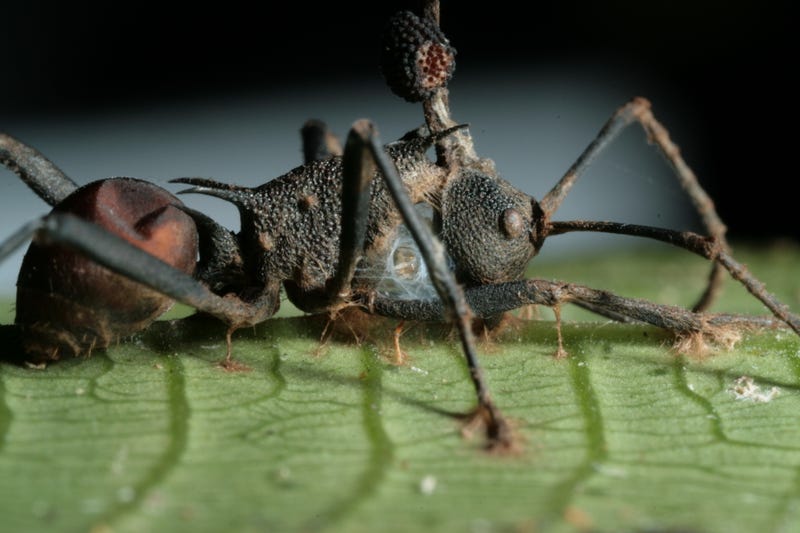
A dead spiny ant with fungal spores erupting out of its head. (Image: David Hughes/Penn State University)

Carpenter ants of the Brazilian rain forest have it rough. When one of these insects gets infected by a certain fungus, it turns into a so-called “zombie ant” and is no longer in control of its actions. Manipulated by the parasite, an infected ant will leave the cozy confines of its arboreal home and head to the forest floor—an area more suitable for fungal growth. After parking itself on the underside of a leaf, the zombified ant anchors itself into place by chomping down onto the foliage. This marks the victim’s final act. From here, the fungus continues to grow and fester inside the ant’s body, eventually piercing through the ant’s head and releasing its fungal spores. This entire process, from start to finish, can take upwards of ten agonizing days.“We found that a high percentage of the cells in a host were fungal cells,” said Hughes. “In essence, these manipulated animals were a fungus in ants’ clothing.

We’ve known about zombie ants for quite some time, but scientists have struggled to understand how the parasitic fungus, O. unilateralis (pronounced yu-ni-lat-er-al-iss), performs its puppeteering duties. This fungus is often referred to as a “brain parasite,” but new research published this week in Proceedings of the National Academy of Sciences shows that the brains of these zombie ants are left intact by the parasite, and that O. unilateralis is able to control the actions of its host by infiltrating and surrounding muscle fibers throughout the ant’s body. In effect, it’s converting an infected ant into an externalized version of itself. Zombie ants thus become part insect, part fungus. Awful, right?

To make this discovery, the scientist who first uncovered the zombie ant fungus, David Hughes from Penn State, launched a multidisciplinary effort that involved an international team of entomologists, geneticists, computer scientists, and microbiologists. The point of the study was to look at the cellular interactions between O. unilateralis and the carpenter ant host Camponotus castaneus during a critical stage of the parasite’s life cycle—that phase when the ant anchors itself onto the bottom of leaf with its powerful mandibles.
Ants infected with late stage O. unilateralis infection. (Image: David Hughes/PLOS ONE)

The fungus is known to secrete tissue-specific metabolites and cause changes in host gene expression as well as atrophy in the mandible muscles of its ant host,” said lead author Maridel Fredericksen, a doctoral candidate at the University of Basel Zoological Institute, Switzerland, in a statement. “The altered host behavior is an extended phenotype of the microbial parasite’s genes being expressed through the body of its host. But it’s unknown how the fungus coordinates these effects to manipulate the host’s behavior.

By referring to the parasite’s “extended phenotype,” Fredericksen is referring to the way that O. unilateralis is able to hijack an external entity, in this case the carpenter ant, and make it a literal extension of its physical self.

For the study, the researchers infected carpenter ants with either O. unilateralis or a less threatening, non-zombifying fungal pathogen known as Beauveria bassiana, which served as the control. By comparing the two different fungi, the researchers were able to discern the specific physiological effects of O. unilateralis on the ants.

Using electron microscopes, the researchers created 3D visualizations to determine location, abundance, and activity of the fungi inside the bodies of the ants. Slices of tissue were taken at a resolution of 50 nanometers, which were captured using a machine that could repeat the slicing and imaging process at a rate of 2,000 times over a 24-hour period. To parse this hideous amount of data, the researchers turned to artificial intelligence, whereby a machine-learning algorithm was taught to differentiate between fungal and ant cells. This allowed the researchers to determine how much of the insect was still ant, and how much of it was converted into the externalized fungus.
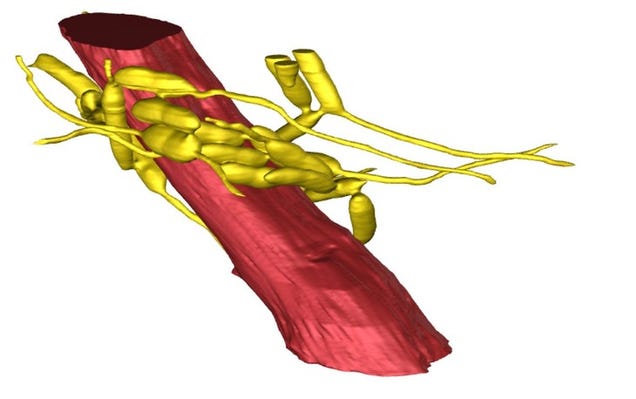
3D reconstruction of an ant mandible adductor muscle (red) surrounded by a network of fungal cells (yellow). (Image: Hughes Laboratory/Penn State)


The results were truly disturbing. Cells of O. unilateralis had proliferated throughout the entire ant’s body, from the head and thorax right down to the abdomen and legs. What’s more, these fungal cells were all interconnected, creating a kind of Borg-like, collective biological network that controlled the ants’ behavior.

We found that a high percentage of the cells in a host were fungal cells,” said Hughes in a statement. “In essence, these manipulated animals were a fungus in ants’ clothing.

But most surprising of all, the fungus hadn’t infiltrated the carpenter ants’ brains.

Normally in animals, behavior is controlled by the brain sending signals to the muscles, but our results suggest that the parasite is controlling host behavior peripherally,” explained Hughes. “Almost like a puppeteer pulls the strings to make a marionette move, the fungus controls the ant’s muscles to manipulate the host’s legs and mandibles.

As to how the fungus is able to navigate the ant towards the leaf, however, is still largely unknown. And in fact, that the fungus leaves the brain alone may provide a clue. Previous work showed that the fungus may be chemically altering the ants’ brains, leading Hughes’ team to speculate that the fungus needs to the ant to survive long enough to perform its final leaf-biting behavior. It’s also possible, however, that the fungus needs to leverage some of that existing ant brain power (and attendant sensorial capabilities) to “steer” the ant around the forest floor. Future research will be required to turn these theories into something more substantial.

This is an excellent example of how interdisciplinary research can drive our knowledge forward,” Charissa de Bekker, an entomologist at the University of Central Florida not affiliated with the new study, told Gizmodo. “The researchers used cutting-edge techniques to finally confirm something that we thought to be true but weren’t sure about: that the fungus O. unilateralis does not invade or damage the brain.

de Bekker says this work confirms that something much more intricate is going on, and that the fungus might be controlling the ant by secreting compounds that can work as neuromodulators. Data gleaned from the fungal genome points to this conclusion as well.

This means the fungus might produce a wealth of bioactive compounds that could be of interest in terms of novel drug discovery,” said de Bekker. “I am, thus, very excited about this work!

An authority on the zombie ant fungus herself, de Bekker also released new research this week. Her new study, published in PLOS One and co-authored with David Hughes and others, looked into the molecular clock of the Ophiocordyceps kimflemingiae fungus (a recently named species of the O. unilateralis complex) to see if the daily rhythms, and thus biological clocks, are an important aspect of the parasite-host interactions studied by biologists.

In addition to confirming that the fungus indeed has a molecular clock, we found that this results in the daily oscillation of certain genes,” de Bekker told Gizmodo. “While some of them are active during the day-time, others are active during the night-time. Interestingly, we found that the fungus especially activates genes encoding for secreted proteins during the night-time. These are the compounds that possibly interact with the host’s brain! The fungus, therefore, does not just release bioactive compounds to manipulate behavior, but there seems to be a precise timing to it as well.

There’s clearly still lots to learn about this insidious parasite and how it hijacks its insectoid hosts, but as these recent studies attest, we’re getting steadier closer to the answer—one that’s clearly disturbing in nature.

[Proceedings of the National Academy of Sciences, PLOS One
ORIGINAL: Gizmodo
By George Dvorsky

lunes, 12 de junio de 2017

Researchers take major step forward in Artificial Intelligence

The long-standing dream of using Artificial Intelligence (AI) to build an artificial brain has taken a significant step forward, as a team led by Professor Newton Howard from the University of Oxford has successfully prototyped a nanoscale, AI-powered, artificial brain in the form factor of a high-bandwidth neural implant.

Professor Newton Howard (pictured above and below) holding parts of the implant device
In collaboration with INTENT LTD, Qualcomm Corporation, Intel Corporation, Georgetown University and the Brain Sciences Foundation, Professor Howard’s Oxford Computational Neuroscience Lab in the Nuffield Department of Surgical Sciences has developed the proprietary algorithms and the optoelectronics required for the device. Rodents’ testing is on target to begin very soon.

This achievement caps over a decade of research by Professor Howard at MIT’s Synthetic Intelligence Lab and the University of Oxford, work that resulted in several issued US patents on the technologies and algorithms that power the device, 
  • the Fundamental Code Unit of the Brain (FCU)
  • the Brain Code (BC) and the Biological Co-Processor (BCP) 
are the latest advanced foundations for any eventual merger between biological intelligence and human intelligence. Ni2o (pronounced “Nitoo”) is the entity that Professor Howard licensed to further develop, market and promote these technologies.
The Biological Co-Processor is unique in that it uses advanced nanotechnology, optogenetics and deep machine learning to intelligently map internal events, such as neural spiking activity, to external physiological, linguistic and behavioral expression. The implant contains over a million carbon nanotubes, each of which is 10,000 times smaller than the width of a human hair. Carbon nanotubes provide a natural, high-bandwidth interface as they conduct heat, light and electricity instantaneously updating the neural laces. They adhere to neuronal constructs and even promote neural growth. Qualcomm team leader Rudy Beraha commented, 'Although the prototype unit shown today is tethered to external power, a commercial Brain Co-Processor unit will be wireless and inductively powered, enabling it to be administered with a minimally-invasive procedures.'


The device uses a combination of methods to write to the brain, including 
  • pulsed electricity
  • light and 
  • various molecules that simulate or inhibit the activation of specific neuronal groups
These can be targeted to stimulate a desired response, such as releasing chemicals in patients suffering from a neurological disorder or imbalance. The BCP is designed as a fully integrated system to use the brain’s own internal systems and chemistries to pattern and mimic healthy brain behavior, an approach that stands in stark contrast to the current state of the art, which is to simply apply mild electrocution to problematic regions of the brain. 

Therapeutic uses
The Biological Co-Processor promises to provide relief for millions of patients suffering from neurological, psychiatric and psychological disorders as well as degenerative diseases. Initial therapeutic uses will likely be for patients with traumatic brain injuries and neurodegenerative disorders, such as Alzheimer’s, as the BCP will strengthen the weak, shortening connections responsible for lost memories and skills. Once implanted, the device provides a closed-loop, self-learning platform able to both determine and administer the perfect balance of pharmaceutical, electroceutical, genomeceutical and optoceutical therapies.

Dr Richard Wirt, a Senior Fellow at Intel Corporation and Co-Founder of INTENT, the company’s partner of Ni2o bringing BCP to market, commented on the device, saying, 'In the immediate timeframe, this device will have many benefits for researchers, as it could be used to replicate an entire brain image, synchronously mapping internal and external expressions of human response. Over the long term, the potential therapeutic benefits are unlimited.'
The brain controls all organs and systems in the body, so the cure to nearly every disease resides there.- Professor Newton Howard
Rather than simply disrupting neural circuits, the machine learning systems within the BCP are designed to interpret these signals and intelligently read and write to the surrounding neurons. These capabilities could be used to reestablish any degenerative or trauma-induced damage and perhaps write these memories and skills to other, healthier areas of the brain. 

One day, these capabilities could also be used in healthy patients to radically augment human ability and proactively improve health. As Professor Howard points out: 'The brain controls all organs and systems in the body, so the cure to nearly every disease resides there.' Speaking more broadly, Professor Howard sees the merging of man with machine as our inevitable destiny, claiming it to be 'the next step on the blueprint that the author of it all built into our natural architecture.'

With the resurgence of neuroscience and AI enhancing machine learning, there has been renewed interest in brain implants. This past March, Elon Musk and Bryan Johnson independently announced that they are focusing and investing in for the brain/computer interface domain. 

When asked about these new competitors, Professor Howard said he is happy to see all these new startups and established names getting into the field - he only wonders what took them so long, stating: 'I would like to see us all working together, as we have already established a mathematical foundation and software framework to solve so many of the challenges they will be facing. We could all get there faster if we could work together - after all, the patient is the priority.'

© 2017 Nuffield Department of Surgical Sciences, John Radcliffe Hospital, Headington, Oxford, OX3 9DU

ORIGINAL: NDS Oxford
2 June 2017 

miércoles, 15 de marzo de 2017

The future of AI is neuromorphic. Meet the scientists building digital 'brains' for your phone

Neuromorphic chips are being designed to specifically mimic the human brain – and they could soon replace CPUs

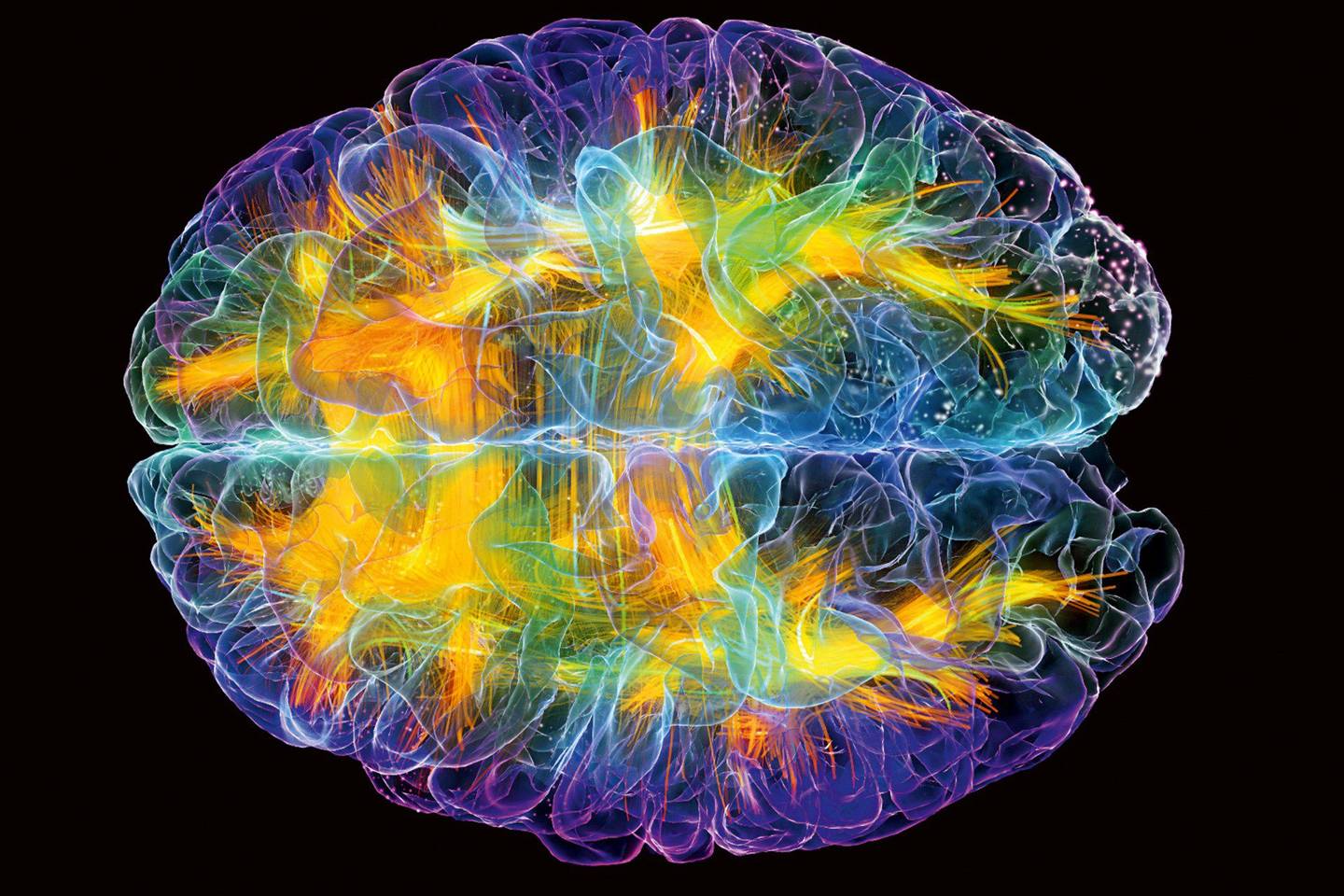
BRAIN ACTIVITY MAP
Neuroscape Lab
AI services like Apple’s Siri and others operate by sending your queries to faraway data centers, which send back responses. The reason they rely on cloud-based computing is that today’s electronics don’t come with enough computing power to run the processing-heavy algorithms needed for machine learning. The typical CPUs most smartphones use could never handle a system like Siri on the device. But Dr. Chris Eliasmith, a theoretical neuroscientist and co-CEO of Canadian AI startup Applied Brain Research, is confident that a new type of chip is about to change that.

Many have suggested Moore's law is ending and that means we won't get 'more compute' cheaper using the same methods,” Eliasmith says. He’s betting on the proliferation of ‘neuromorphics’ — a type of computer chip that is not yet widely known but already being developed by several major chip makers.

Traditional CPUs process instructions based on “clocked time” – information is transmitted at regular intervals, as if managed by a metronome. By packing in digital equivalents of neurons, neuromorphics communicate in parallel (and without the rigidity of clocked time) using “spikes” – bursts of electric current that can be sent whenever needed. Just like our own brains, the chip’s neurons communicate by processing incoming flows of electricity - each neuron able to determine from the incoming spike whether to send current out to the next neuron.

What makes this a big deal is that these chips require far less power to process AI algorithms. For example, one neuromorphic chip made by IBM contains five times as many transistors as a standard Intel processor, yet consumes only 70 milliwatts of power. An Intel processor would use anywhere from 35 to 140 watts, or up to 2000 times more power.

Eliasmith points out that neuromorphics aren’t new and that their designs have been around since the 80s. Back then, however, the designs required specific algorithms be baked directly into the chip. That meant you’d need one chip for detecting motion, and a different one for detecting sound. None of the chips acted as a general processor in the way that our own cortex does.

This was partly because there hasn’t been any way for programmers to design algorithms that can do much with a general purpose chip. So even as these brain-like chips were being developed, building algorithms for them has remained a challenge.

Eliasmith and his team are keenly focused on building tools that would allow a community of programmers to deploy AI algorithms on these new cortical chips.

Central to these efforts is Nengo, a compiler that developers can use to build their own algorithms for AI applications that will operate on general purpose neuromorphic hardware. Compilers are a software tool that programmers use to write code, and that translate that code into the complex instructions that get hardware to actually do something. What makes Nengo useful is its use of the familiar Python programming language – known for it’s intuitive syntax – and its ability to put the algorithms on many different hardware platforms, including neuromorphic chips. Pretty soon, anyone with an understanding of Python could be building sophisticated neural nets made for neuromorphic hardware.

Things like vision systems, speech systems, motion control, and adaptive robotic controllers have already been built with Nengo,Peter Suma, a trained computer scientist and the other CEO of Applied Brain Research, tells me.

Perhaps the most impressive system built using the compiler is Spaun, a project that in 2012 earned international praise for being the most complex brain model ever simulated on a computer. Spaun demonstrated that computers could be made to interact fluidly with the environment, and perform human-like cognitive tasks like recognizing images and controlling a robot arm that writes down what it’s sees. The machine wasn’t perfect, but it was a stunning demonstration that computers could one day blur the line between human and machine cognition. Recently, by using neuromorphics, most of Spaun has been run 9000x faster, using less energy than it would on conventional CPUs – and by the end of 2017, all of Spaun will be running on Neuromorphic hardware.


Eliasmith won NSERC’s John C. Polyani award for that project — Canada’s highest recognition for a breakthrough scientific achievement – and once Suma came across the research, the pair joined forces to commercialize these tools.

While Spaun shows us a way towards one day building fluidly intelligent reasoning systems, in the nearer term neuromorphics will enable many types of context aware AIs,” says Suma. Suma points out that while today’s AIs like Siri remain offline until explicitly called into action, we’ll soon have artificial agents that are ‘always on’ and ever-present in our lives.

Imagine a SIRI that listens and sees all of your conversations and interactions. You’ll be able to ask it for things like - "Who did I have that conversation about doing the launch for our new product in Tokyo?" or "What was that idea for my wife's birthday gift that Melissa suggested?,” he says.

When I raised concerns that some company might then have an uninterrupted window into even the most intimate parts of my life, I’m reminded that because the AI would be processed locally on the device, there’s no need for that information to touch a server owned by a big company. And for Eliasmith, this ‘always on’ component is a necessary step towards true machine cognition. “The most fundamental difference between most available AI systems of today and the biological intelligent systems we are used to, is the fact that the latter always operate in real-time. Bodies and brains are built to work with the physics of the world,” he says.

Already, major efforts across the IT industry are heating up to get their AI services into the hands of users. Companies like Apple, Facebook, Amazon, and even Samsung, are developing conversational assistants they hope will one day become digital helpers.

ORIGINAL: Wired
Monday 6 March 2017

miércoles, 1 de marzo de 2017

Google Unveils Neural Network with “Superhuman” Ability to Determine the Location of Almost Any Image

Guessing the location of a randomly chosen Street View image is hard, even for well-traveled humans. But Google’s latest artificial-intelligence machine manages it with relative ease.
Here’s a tricky task. Pick a photograph from the Web at random. Now try to work out where it was taken using only the image itself. If the image shows a famous building or landmark, such as the Eiffel Tower or Niagara Falls, the task is straightforward. But the job becomes significantly harder when the image lacks specific location cues or is taken indoors or shows a pet or food or some other detail.

Nevertheless, humans are surprisingly good at this task. To help, they bring to bear all kinds of knowledge about the world such as the type and language of signs on display, the types of vegetation, architectural styles, the direction of traffic, and so on. Humans spend a lifetime picking up these kinds of geolocation cues.

So it’s easy to think that machines would struggle with this task. And indeed, they have.

Today, that changes thanks to the work of Tobias Weyand, a computer vision specialist at Google, and a couple of pals. These guys have trained a deep-learning machine to work out the location of almost any photo using only the pixels it contains.

Their new machine significantly outperforms humans and can even use a clever trick to determine the location of indoor images and pictures of specific things such as pets, food, and so on that have no location cues.

Their approach is straightforward, at least in the world of machine learning. 
  • Weyand and co begin by dividing the world into a grid consisting of over 26,000 squares of varying size that depend on the number of images taken in that location.
    So big cities, which are the subjects of many images, have a more fine-grained grid structure than more remote regions where photographs are less common. Indeed, the Google team ignored areas like oceans and the polar regions, where few photographs have been taken.

  • Next, the team created a database of geolocated images from the Web and used the location data to determine the grid square in which each image was taken. This data set is huge, consisting of 126 million images along with their accompanying Exif location data.
  • Weyand and co used 91 million of these images to teach a powerful neural network to work out the grid location using only the image itself. Their idea is to input an image into this neural net and get as the output a particular grid location or a set of likely candidates. 
  • They then validated the neural network using the remaining 34 million images in the data set. 
  • Finally they tested the network—which they call PlaNet—in a number of different ways to see how well it works.
The results make for interesting reading. To measure the accuracy of their machine, they fed it 2.3 million geotagged images from Flickr to see whether it could correctly determine their location. “PlaNet is able to localize 3.6 percent of the images at street-level accuracy and 10.1 percent at city-level accuracy,” say Weyand and co. What’s more, the machine determines the country of origin in a further 28.4 percent of the photos and the continent in 48.0 percent of them.

That’s pretty good. But to show just how good, Weyand and co put PlaNet through its paces in a test against 10 well-traveled humans. For the test, they used an online game that presents a player with a random view taken from Google Street View and asks him or her to pinpoint its location on a map of the world.

Anyone can play at www.geoguessr.com. Give it a try—it’s a lot of fun and more tricky than it sounds.
GeoGuesser Screen Capture Example

Needless to say, PlaNet trounced the humans. “In total, PlaNet won 28 of the 50 rounds with a median localization error of 1131.7 km, while the median human localization error was 2320.75 km,” say Weyand and co. “[This] small-scale experiment shows that PlaNet reaches superhuman performance at the task of geolocating Street View scenes.

An interesting question is how PlaNet performs so well without being able to use the cues that humans rely on, such as vegetation, architectural style, and so on. But Weyand and co say they know why: "We think PlaNet has an advantage over humans because it has seen many more places than any human can ever visit and has learned subtle cues of different scenes that are even hard for a well-traveled human to distinguish.

They go further and use the machine to locate images that do not have location cues, such as those taken indoors or of specific items. This is possible when images are part of albums that have all been taken at the same place. The machine simply looks through other images in the album to work out where they were taken and assumes the more specific image was taken in the same place.

That’s impressive work that shows deep neural nets flexing their muscles once again. Perhaps more impressive still is that the model uses a relatively small amount of memory unlike other approaches that use gigabytes of the stuff. “Our model uses only 377 MB, which even fits into the memory of a smartphone,” say Weyand and co.

That’s a tantalizing idea—the power of a superhuman neural network on a smartphone. It surely won’t be long now!

Ref: arxiv.org/abs/1602.05314 : PlaNet—Photo Geolocation with Convolutional Neural Networks

ORIGINAL: TechnoplogyReview
by Emerging Technology from the arXiv
February 24, 2016

jueves, 23 de febrero de 2017

10 Breakthrough Technologies 2017


These technologies all have staying power. They will affect the economy and our politics, improve medicine, or influence our culture. Some are unfolding now; others will take a decade or more to develop. But you should know about all of them right now.
  1. Reversing Paralysis 
    Scientists are making remarkable progress at using brain implants to restore the freedom of movement that spinal cord injuries take away.
  2. Self-Driving Trucks Tractor-trailers without a human at the wheel will soon barrel onto highways near you. What will this mean for the nation’s 1.7 million truck drivers?
  3. Paying with Your Face
    Face-detecting systems in China now authorize payments, provide access to facilities, and track down criminals. Will other countries follow?
  4. Practical Quantum Computing
    Advances at Google, Intel, and several research groups indicate that computers with previously unimaginable power are finally within reach.
     
  5. The 360-Degree Selfie
    Inexpensive cameras that make spherical images are opening a new era in photography and changing the way people share stories.
     
  6. Hot Solar Cells
    By converting heat to focused beams of light, a new solar device could create cheap and continuous power.
     
  7. Gene Therapy 2.0
    Scientists have solved fundamental problems that were holding back cures for rare hereditary disorders. Next we’ll see if the same approach can take on cancer, heart disease, and other common illnesses.
  8. The Cell Atlas
    Biology’s next mega-project will find out what we’re really made of.
  9. Botnets of Things
    The relentless push to add connectivity to home gadgets is creating dangerous side effects that figure to get even worse.
  10. Reinforcement Learning
    By experimenting, computers are figuring out how to do things that no programmer could teach them.

sábado, 18 de febrero de 2017

AI Software Juggles Probabilities to Learn from Less Data

Gamalon has developed a technique that lets machines learn to recognize concepts in images or text much more efficiently.


An app developed by Gamalon recognizes objects after seeing a few examples. A learning program recognizes simpler concepts such as lines and rectangles.

Machine learning is becoming extremely powerful, but it requires extreme amounts of data.
You can, for instance, train a deep-learning algorithm to recognize a cat with a cat-fancier’s level of expertise, but you’ll need to feed it tens or even hundreds of thousands of images of felines, capturing a huge amount of variation in size, shape, texture, lighting, and orientation. It would be lot more efficient if, a bit like a person, an algorithm could develop an idea about what makes a cat a cat from fewer examples.

A Boston-based startup called Gamalon has developed technology that lets computers do this in some situations, and it is releasing two products Tuesday based on the approach.

If the underlying technique can be applied to many other tasks, then it could have a big impact. The ability to learn from less data could let robots explore and understand new environments very quickly, or allow computers to learn about your preferences without sharing your data.

Gamalon uses a technique that it calls Bayesian program synthesis to build algorithms capable of learning from fewer examples. Bayesian probability, named after the 18th century mathematician Thomas Bayes, provides a mathematical framework for refining predictions about the world based on experience. Gamalon’s system uses probabilistic programming—or code that deals in probabilities rather than specific variables—to build a predictive model that explains a particular data set. From just a few examples, a probabilistic program can determine, for instance, that it’s highly probable that cats have ears, whiskers, and tails. As further examples are provided, the code behind the model is rewritten, and the probabilities tweaked. This provides an efficient way to learn the salient knowledge from the data.

Probabilistic programming techniques have been around for a while. In 2015, for example, a team from MIT and NYU used probabilistic methods to have computers learn to recognize written characters and objects after seeing just one example (see “This AI Algorithm Learns Simple Tasks as Fast as We Do”). But the approach has mostly been an academic curiosity.

There are difficult computational challenges to overcome, because the program has to consider many different possible explanations, says Brenden Lake, a research fellow at NYU who led the 2015 work.

Still, in theory, Lake says, the approach has significant potential because it can automate aspects of developing a machine-learning model.Probabilistic programming will make machine learning much easier for researchers and practitioners,” Lake says. “It has the potential to take care of the difficult [programming] parts automatically.

There are certainly significant incentives to develop easier-to-use and less data-hungry machine-learning approaches. Machine learning currently involves acquiring a large raw data set, and often then labeling it manually. The learning is then done inside large data centers, using many computer processors churning away in parallel for hours or days. “There are only a few really large companies that can really afford to do this,” says Ben Vigoda, cofounder and CEO of Gamalon.

When Machines Have Ideas | Ben Vigoda | TEDxBoston
Our CEO, Ben Vigoda, gave a talk at TEDx Boston 2016 called “When Machines Have Ideas” that describes why building “stories” (i.e. Bayesian generative models) into machine intelligence systems can be very powerful.

In theory, Gamalon’s approach could make it a lot easier for someone to build and refine a machine-learning model, too. Perfecting a deep-learning algorithm requires a great deal of mathematical and machine-learning expertise. “There’s a black art to setting these systems up,” Vigoda says. With Gamalon’s approach, a programmer could train a model by feeding in significant examples.

Vigoda showed MIT Technology Review a demo with a drawing app that uses the technique. It is similar to the one released last year by Google, which uses deep learning to recognize the object a person is trying to sketch (see “Want to Understand AI? Try Sketching a Duck for a Neural Network”). But whereas Google’s app needs to see a sketch that matches the ones it has seen previously, Gamalon’s version uses a probabilistic program to recognize the key features of an object. For instance, one program understands that a triangle sitting atop a square is most likely a house. This means even if your sketch is very different from what it has seen before, providing it has those features, it will guess correctly.

The technique could have significant near-term commercial applications, too. The company’s first products use Bayesian program synthesis to recognize concepts in text.

One product, called Gamalon Structure, can extract concepts from raw text more efficiently than is normally possible. For example, it can take a manufacturer’s description of a television and determine what product is being described, the brand, the product name, the resolution, the size, and other features. Another product, Gamalon Match, is used to categorize the products and price in a store’s inventory. In each case, even when different acronyms or abbreviations are used for a product or feature, the system can quickly be trained to recognize them.

Vigoda believes the ability to learn will have other practical benefits.
  • A computer could learn about a user’s interests without requiring an impractical amount of data or hours of training. 
  • Personal data might not need to be shared with large companies, either, if machine learning can be done efficiently on a user’s smartphone or laptop
  • And a robot or a self-driving car could learn about a new obstacle without needing to see hundreds of thousands of examples.
February 14, 2017