Mostrando entradas con la etiqueta Microfluidics. Mostrar todas las entradas

martes, 28 de febrero de 2017

Microfluidic LEGO bricks put biomedical research in the hands of the masses


3D printed master molds have been used to create microfluidic LEGO bricks that facilitate the study of liquid flow for medical research. The LEGO brick method is being explored by the Department of Biomedical Engineering at the University of California, Irvine, with findings published in the Journal of Micromechanics and Microengineering, January 2017.

What is microfluidics?
Microfluidics is the manipulation and study of sub-microscopic litres of liquid. In a device such as the University of California’s LEGO bricks, liquids are channelled through empty vessels spanning no more than 500 μm (microns, for comparison: a human hair is 50 μm in diameter).
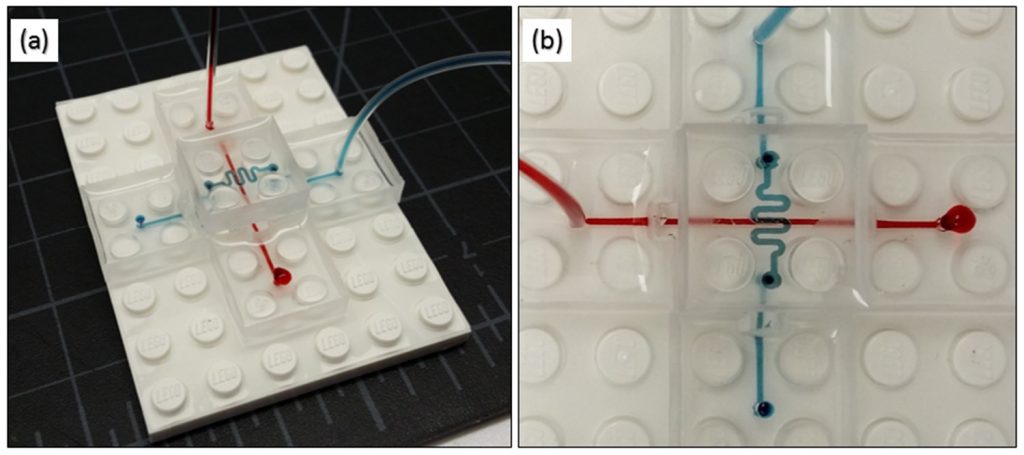
Testing the flow of liquids through the LEGO bricks with colored inks. Image via: Kevin Vittayarukskul and Abraham Phillip Lee

The way a liquid behaves during a flow, and when mixed with other nanoliquids tells researchers certain things about its biological behaviour, Microfludics can also be controlled in a way to produce autonomous movement, as in the example of Harvard University’s soft-robotic Octobot.


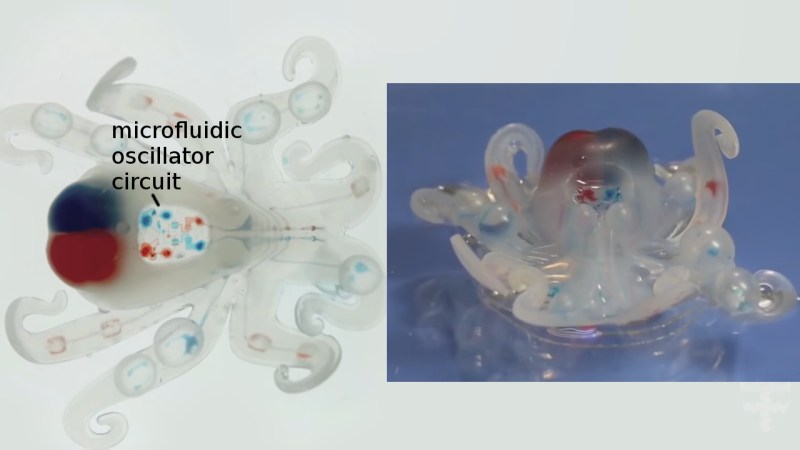
Moving .gif shows Harvard’s Octobot that harnesses microfluidic principles to move. Clip via: @NatureNews

In biomedical research microfluidic chips are used to conduct assays that test the reactions between substances, as in lab-on-a-chip technology. Using these devices is preferable to some traditional assay methods as the microscale parts consume less time and resources. California’s LEGO bricks seek to promote these qualities by providing more recognisable devices that are also capable of being mass produced.

Making the microfluidic LEGO bricks
Kevin Vittayarukskul and Professor Abraham Lee’s approach uses Autodesk’s AutoCAD software to first design blocks with an embedded microfluidic channel.

From this a mold is also designed, and then 3D printed on a Perfactory 3 Mini 3D printer by EnvisionTEC that uses the DLP method of vat polymerisation to cure the material. PDMS, (Polydimethylsiloxane) a silicone-based polymer is then used to cast the LEGO bricks.
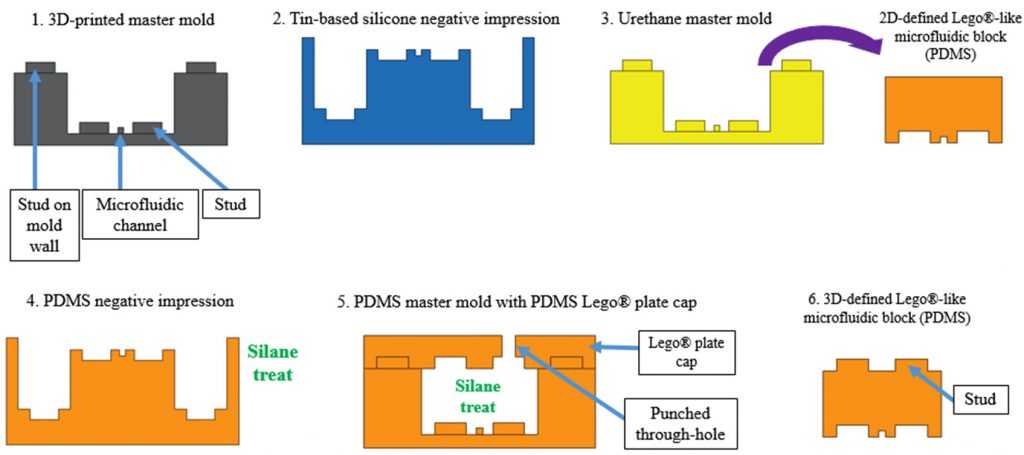
Process of making the microfluidic LEGO mold. Image via: Kevin Vittayarukskul and Abraham Phillip Lee

The properties of PDMS make it naturally transparent and biocompatible, which is ideal for this kind of research. It is also known for its ability to exactly match the shape of a cast into which it is poured, meaning that none of the DLP 3D printed quality is lost on the final cast.

A microfluidic LEGO kit?
The advantages of being able to stack the microfluidic blocks is that researchers can combine even more channels into a single space. It also allows easy assembly of varying channels, i.e. one straight vessel in to a winding one.

Using a tried and tested building block such as a LEGO brick also means that it has great potential for mass-production. The case with medical research is that it often isn’t accessible by other scholars that could make use of the technology. But a microfluidic LEGO kit could be just the ticket to encourage future biomedical research.

Speaking to EE Times Europe A truly LEGO®-like modular microfluidics platform co-author Professor Abraham Lee explains:
The main goal of this project was to train and educate the next generation of microfluidic developers and researchers. By using actual LEGO’s as the building block and assembly platform, our hope was to attract students as early as young as high schoolers to be interested in the field, learn about microfluidics and stimulate their imagination for new products for applications over a very wide range.
Testing the flow of liquids through the LEGO bricks with colored inks. Image via: Kevin Vittayarukskul and Abraham Phillip Lee


A truly Lego®-like modular microfluidics platform
Kevin Vittayarukskul
and Abraham Phillip Lee
  • Published 24 January 2017 • © 2017 IOP Publishing Ltd
Journal of Micromechanics and Microengineering, Volume 27, Number 3
Author e-mails
Author affiliations
  • Department of Biomedical Engineering, University of California, Irvine, CA, USA
Dates
  • Received 11 October 2016
  • Accepted 15 December 2016
  • Published 24 January 2017
Citation
  • Kevin Vittayarukskul and Abraham Phillip Lee 2017 J. Micromech. Microeng. 27 035004  
DOI: https://doi.org/10.1088/1361-6439/aa53ed

ORIGINAL: 3DPrintingIndustry

Beau Jackson Writer based in London, originally from Yorkshire. Fan of lab-on-a-chip technology, microfluidics, scanning, tech-inspired art and 3D Benchy.
January 25, 2017
 

miércoles, 21 de diciembre de 2016

Artificial leaf as mini-factory for drugs (for Medicine)

(Nanowerk News) To produce drugs sustainably and cheaply, anywhere you want. Whether in the middle of the jungle or even on Mars. A 'mini-factory' whereby sunlight can be captured to make chemical products. Inspired by the art of nature where leaves are able to collect enough sunlight to produce food, chemical engineers at Eindhoven University of Technology (TU/e) have presented such a scenario.

They describe their prototype reactor - consciously shaped as a leaf -in today's journal Angewandte Chemie ("A leaf-inspired luminescent solar concentrator for energy efficient continuous-flow photochemistry").

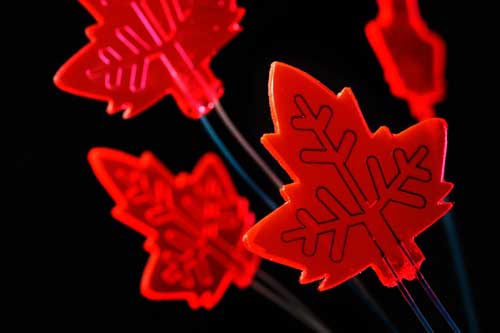
Even with the naked eye the amount of light captured by the 'mini-factories' is visible, lit up bright red. The 'veins' through the leaves are the thin channels through which liquid can be pumped. The start products enter the one channel, light causes the reactions and the end product comes out via the other channels. (Image: Bart van Overbeeke)
Using sunlight to make chemical products has long been a dream of many a chemical engineer. The problem is that the available sunlight generates too little energy to kick off reactions. However, nature is able to do this. Antenna molecules in leaves capture energy from sunlight and collect it in the reaction centers of the leaf where enough solar energy is present for the chemical reactions that give the plant its food (photosynthesis).

Light capture
The researchers came across relatively new materials, known as luminescent solar concentrators (LSC's), which are able to capture sunlight in a similar way. Special light-sensitive molecules in these materials capture a large amount of the incoming light that they then convert into a specific color that is conducted to the edges via light conductivity. These LSC's are often used in practice in combination with solar cells to boost the yield.

Thin channels
The researchers, led by Dr. Timothy Noël, combined the idea of an LSC with their knowledge of microchannels, incorporating very thin channels in a silicon rubber LSC through which a liquid can be pumped. In this way they were able to bring the incoming sunlight into contact with the molecules in the liquid with high enough intensity to generate chemical reactions.

Watch an animation of the artificial leaf.
Surpassed
While the reaction they chose serves as an initial example, the results surpassed all their expectations, and not only in the lab.
"Even an experiment on a cloudy day demonstrated that the chemical production was 40 percent higher than in a similar experiment without LSC material", says research leader Noël. "We still see plenty of possibilities for improvement. We now have a powerful tool at our disposal that enables the sustainable, sunlight-based production of valuable chemical products like drugs or crop protection agents."

Paracetamol on Mars
For the production of drugs there is certainly a lot of potential. The chemical reactions for producing drugs currently require toxic chemicals and a lot of energy in the form of fossil fuels. By using visible light the same reactions become sustainable, cheap and, in theory, countless times faster. But Noël believes it should not have to stop there.

"Using a reactor like this means you can make drugs anywhere, in principle, whether malaria drugs in the jungle or paracetamol on Mars. All you need is sunlight and this mini-factory."

Source: Eindhoven University of Technology


ORIGINAL: NanoWerk
Dec 21, 2016

martes, 27 de septiembre de 2016

Soft Robot With Microfluidic Logic Circuit


Perhaps our future overlords won’t be made up of electrical circuits after all but will instead be soft-bodied like ourselves. However, their design will have its origins in electrical analogues, as with the Octobot.

The Octobot is the brainchild a team of Harvard University researchers who recently published an article about it in Nature. Its body is modeled on the octopus and is composed of all soft body parts that were made using a combination of 3D printing, molding and soft lithography. Two sets of arms on either side of the Octobot move, taking turns under the control of a soft oscillator circuit. You can see it in action in the video below.
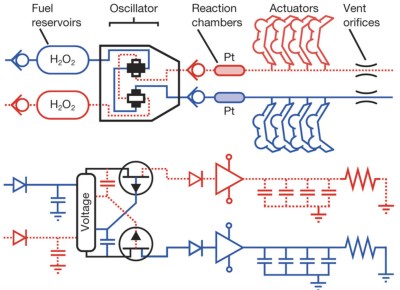
Octobot mechanical and electrical analogue circuits (credit: Michael Wehner at al./Nature)

As shown in the diagram, the fuel is a liquid hydrogen peroxide (H2O2) which the oscillator gets from one of two fuel reservoirs and feeds into one of two reaction chambers. In the oscillator, pinch valves act like JFETs. When fuel from one reservoir is flowing into one reaction chamber, one of the pinch valves pinches off the flow of fuel to the other reaction chamber. It’s not clear how but somehow or other that fuel flow is then pinched off by another pinch valve as fuel then flows from the other reservoir to the other reaction chamber.

The reaction chamber contains a small amount of platinum as a catalyst which reacts with the hydrogen peroxide to release a much larger volume of oxygen gas into actuators in the arms. Those actuators expand like balloons causing the arms to move. The reaction chambers are the analogues of amplifiers. Other analogues are check valves for diodes, vent orifices for resistors as well as other chambers which appear to be capacitors.

This is a proof of concept and as yet the Octobot doesn’t walk but the team hopes to make one that can crawl, swim and interact with its environment. When it does we look forward to it joining this other soft-bodied bot modeled after a stingray. It looks like our overlords might all come from the sea.


Here’s you can see the Octobot in action.


And here’s another video from Harvard demonstrating the chemical reaction between hydrogen peroxide and platinum that produces oxygen. ("Powering the Octobot: A chemical reaction")


martes, 2 de febrero de 2016

Acoustic tweezers manipulate cells with sound waves


An illustration of the surface acoustic wave generators, with the generated 3-D trapping nodes. The inset indicates a single particle within a 3-D trapping node, which can be manipulated independently along x, y, or z axes.
Technique could enable 3-D printing of cellular structures for tissue engineering.

Engineers at MIT, Penn State University, and Carnegie Mellon University have devised a way to manipulate cells in three dimensions using sound waves. These “acoustic tweezers” could make possible 3-D printing of cell structures for tissue engineering and other applications, the researchers say.

Designing tissue implants that can be used to treat human disease requires precisely recreating the natural tissue architecture, but so far it has proven difficult to develop a single method that can achieve that while keeping cells viable and functional.

The results presented in this paper provide a unique pathway to manipulate biological cells accurately and in three dimensions, without the need for any invasive contact, tagging, or biochemical labeling,” says Subra Suresh, president of Carnegie Mellon and former dean of engineering at MIT. “This approach could lead to new possibilities for research and applications in such areas as regenerative medicine, neuroscience, tissue engineering, biomanufacturing, and cancer metastasis.”

Suresh, Ming Dao, a principal research scientist in MIT’s Department of Materials Science and Engineering, and Tony Jun Huang, a professor of engineering science and mechanics at Penn State, are senior authors of a paper describing the device, published the week of Jan. 25. in the Proceedings of the National Academy of Sciences.

The paper’s lead author is Penn State graduate student Feng Guo. The team also includes Penn State researchers Zhangming Mao, Yuchao Chen, James Lata, Peng Li, Liqiang Ren, Jiayang Liu, Zhiwei Xie, and Jian Yang.

3-D control
The new acoustic tweezers are based on a microfluidic device that the researchers previously developed to manipulate cells in two dimensions. This device produces two acoustic standing waves, which are waves with a constant height. Where the two waves meet, they create a “pressure node” that can trap single cells. By altering the wavelength and another wave property known as the phase, the researchers can move the node and the cell trapped within it.

The research team previously used a similar approach to separate cancer cells from healthy cells, which could be useful for detecting rare tumor cells in a patient’s bloodstream and predicting whether the tumor will spread.

In the new study, the researchers added a third dimension of control: Once the cells are trapped in a horizontal plane, they can be moved up and down by altering the acoustic waves’ power, that is, the rate at which sound energy is emitted. Boosting the power allows the researchers to lift the cells from the surface in a type of “acoustic levitation,” then place them in a specific location, Dao says.

The researchers also developed equations that allow them to accurately predict how changes in the wavelength, phase, and acoustic power will affect cells’ positions.

We now have a good idea of what to expect and how to control the 3-D positioning of the acoustic waves and the pressure nodes, enabling validation of the method as well as system optimization,” Dao says.

“Innovative approach”
In this study, the researchers demonstrated their device on polystyrene particles as well as mouse fibroblast cells. They were able to move the cells, one at a time, into specific positions on a surface and create patterns. They could also stack cells on top of each other.

This is an exceptionally innovative approach of manipulating particles and single cells in 3-D in fluids,” says Taher Saif, a professor of mechanical science and engineering at the University of Illinois at Urbana-Champaign, who was not part of the research team. “Since acoustic energy is used for this manipulation, the approach is noninvasive and the cells maintain their viability. Overall, the method presented will be of significant interest for a broad community, from biologists to bioengineers.

The researchers have filed for a patent on the technology and plan to continue developing it for tissue engineering and other applications.

ORIGINAL: MIT News
Anne Trafton | MIT News Office 
January 25, 2016

viernes, 11 de diciembre de 2015

Scaling up synthetic-biology innovation

.
Gen9's BioFab platform synthesizes small DNA fragments on silicon chips and uses other technologies to build longer DNA constructs from those fragments. Done in a parallel, this produces hundreds to thousands of DNA constructs simultaneously. Shown here is an automated liquid-handling instrument that dispenses DNA onto the chips. Courtesy of Gen9
MIT professor’s startup makes synthesizing genes many times more cost effective.
Inside and outside of the classroom, MIT professor Joseph Jacobson has become a prominent figure in — and advocate for — the emerging field of synthetic biology.

As head of the Molecular Machines group at the MIT Media Lab, Jacobson’s work has focused on, among other things, developing technologies for the rapid fabrication of DNA molecules. In 2009, he spun out some of his work into .Gen9, which aims to boost synthetic-biology innovation by offering scientists more cost-effective tools and resources.
Headquartered in Cambridge, Massachusetts, Gen9 has developed a method for synthesizing DNA on silicon chips, which significantly cuts costs and accelerates the creation and testing of genes. Commercially available since 2013, the platform is now being used by dozens of scientists and commercial firms worldwide.
Synthetic biologists synthesize genes by combining strands of DNA. These new genes can be inserted into microorganisms such as yeast and bacteria. Using this approach, scientists can tinker with the cells’ metabolic pathways, enabling the microbes to perform new functions, including testing new antibodies, sensing chemicals in an environment, or creating biofuels.

But conventional gene-synthesizing methods can be time-consuming and costly. Chemical-based processes, for instance, cost roughly 20 cents per base pair — DNA’s key building block — and produce one strand of DNA at a time. This adds up in time and money when synthesizing genes comprising 100,000 base pairs.

Gen9’s chip-based DNA, however, drops the price to roughly 2 cents per base pair, Jacobson says. Additionally, hundreds of thousands of base pairs can be tested and compiled in parallel, as opposed to testing and compiling each pair individually through conventional methods.

This means faster testing and development of new pathways — which usually takes many years — for applications such as advanced therapeutics, and more effective enzymes for detergents, food processing, and biofuels, Jacobson says. “If you can build thousands of pathways on a chip in parallel, and can test them all at once, you get to a working metabolic pathway much faster,” he says.

Over the years, Jacobson and Gen9 have earned many awards and honors. In November, Jacobson was also inducted into the National Inventors Hall of Fame for co-inventing E Ink, the electronic ink used for Amazon’s Kindle e-reader display.

Scaling gene synthesizing Throughout the early-and mid-2000s, a few important pieces of research came together to allow for the scaling up of gene synthesis, which ultimately led to Gen9.

First, Jacobson and his students Chris Emig and Brian Chow began developing chips with thousands of “spots,” which each contained about 100 million copies of a different DNA sequence.

Then, Jacobson and another student, David Kong, created a process that used a certain enzyme as a catalyst to assemble those small DNA fragments into larger DNA strands inside microfluidics devices — “which was the first microfluidics assembly of DNA ever,” Jacobson says.

Despite the novelty, however, the process still wasn’t entirely cost effective. On average, it produced a 99 percent yield, meaning that about 1 percent of the base pairs didn’t match when constructing larger strands. That’s not so bad for making genes with 100 base pairs. “But if you want to make something that’s 10,000 or 100,000 bases long, that’s no good anymore,” Jacobson says.

Around 2004, Jacobson and then-postdoc Peter Carr, along with several other students, found a way to drastically increase yields by taking a cue from a natural error-correcting protein, Mut-S, which recognizes mismatches in DNA base pairing that occur when two DNA strands form a double helix. For synthetic DNA, the protein can detect and extract mismatches arising in base pairs synthesized on the chip, improving yields. In a paper published that year in Nucleic Acids Research, the researchers wrote that this process reduces the frequency of errors, from one in every 100 base pairs to around one in every 10,000.

With these innovations, Jacobson launched Gen9 with two co-founders: George Church of Harvard University, who was also working on synthesizing DNA on microchips, and Drew Endy of Stanford University, a world leader in synthetic-biology innovations.

Together with employees, they created a platform called BioFab and several other tools for synthetic biologists. Today, clients use an online portal to order gene sequences. Then Gen9 designs and fabricates those sequences on chips and delivers them to customers. Recently, the startup updated the portal to allow drag-and-drop capabilities and options for editing and storing gene sequences.

This allows users to “make these very extensive libraries that have been inaccessible previously,” Jacobson says.

Fueling big ideas

Many published studies have already used Gen9’s tools, several of which are posted to the startup’s website. Notable ones, Jacobson says, include designing proteins for therapeutics. In those cases, the researcher needs to make 10 million or 100 million versions of a protein, each comprising maybe 50,000 pieces of DNA, to see which ones work best.

Instead of making and testing DNA sequences one at a time with conventional methods, Gen9 lets researchers test hundreds of thousands of sequences at once on a chip. This should increase chances of finding the right protein, more quickly. “If you just have one shot you’re very unlikely to hit the target,” Jacobson says. “If you have thousands or tens of thousands of shots on a goal, you have a much better chance of success.

Currently, all the world’s synthetic-biology methods produce only about 300 million bases per year. About 10 of the chips Gen9 uses to make DNA can hold the same amount of content, Jacobson says. In principle, he says, the platform used to make Gen9’s chips — based on collaboration with manufacturing firm Agilent — could produce enough chips to cover about 200 billion bases. This is about the equivalent capacity of GenBank, an open-access database of DNA bases and gene sequences that has been constantly updated since the 1980s.

Such technology could soon be worth a pretty penny: According to a study published in November by MarketsandMarkets, a major marketing research firm, the market for synthesizing short DNA strands is expected to reach roughly $1.9 billion by 2020.

Still, Gen9 is pushing to drop costs for synthesis to under 1 cent per base pair, Jacobson says. Additionally, for the past few years, the startup has hosted an annual G-Prize Competition, which awards 1 million base pairs of DNA to researchers with creative synthetic-biology ideas. That’s a prize worth roughly $100,000.

The aim, Jacobson says, is to remove cost barriers for synthetic biologists to boost innovation. “People have lots of ideas but are unable to try out those ideas because of cost,” he says. “This encourages people to think about bigger and bigger ideas.”

ORIGINAL: .MIT News
Rob Matheson | MIT News Office
December 10, 2015

sábado, 21 de noviembre de 2015

'Chemical Laptop' Could Search for Signs of Life Outside Earth


Researchers took the Chemical Laptop to JPL's Mars Yard, where they placed the device on a test rover. This image shows the size comparison between the Chemical Laptop and a regular laptop.
Credits: NASA/JPL-Caltech

If you were looking for the signatures of life on another world, you would want to take something small and portable with you. That's the philosophy behind the "Chemical Laptop" being developed at NASA's Jet Propulsion Laboratory in Pasadena, California: a miniaturized laboratory that analyzes samples for materials associated with life.

"If this instrument were to be sent to space, it would be the most sensitive device of its kind to leave Earth, and the first to be able to look for both amino acids and fatty acids," said Jessica Creamer, a NASA postdoctoral fellow based at JPL.

Like a tricorder from "Star Trek," the Chemical Laptop is a miniaturized on-the-go laboratory, which researchers hope to send one day to another planetary body such as Mars or Europa. It is roughly the size of a regular computing laptop, but much thicker to make room for chemical analysis components inside. But unlike a tricorder, it has to ingest a sample to analyze it. 

"Our device is a chemical analyzer that can be reprogrammed like a laptop to perform different functions," said Fernanda Mora, a JPL technologist who is developing the instrument with JPL's Peter Willis, the project's principal investigator. "As on a regular laptop, we have different apps for different analyses like amino acids and fatty acids."

Amino acids are building blocks of proteins, while fatty acids are key components of cell membranes. Both are essential to life, but can also be found in non-life sources. The Chemical Laptop may be able to tell the difference.
JPL researchers Jessica Creamer, Fernanda Mora and Peter Willis (left to right) pose with the Chemical Laptop, a device designed to detect amino acids and fatty acids. At left is a near-identical copy of the Curiosity rover, which has been on Mars since 2012. Credits: NASA/JPL-Caltech
What it's looking for
Amino acids come in two types: Left-handed and right-handed. Like the left and right hands of a person, these amino acids are mirror images of each other but contain the same components. Some scientists hypothesize that life on Earth evolved to use just left-handed amino acids because that standard was adopted early in life's history, sort of like the way VHS became the standard for video instead of Betamax in the 1980s. It's possible that life on other worlds might use the right-handed kind. 

"If a test found a 50-50 mixture of left-handed and right-handed amino acids, we could conclude that the sample was probably not of biological origin," Creamer said. "But if we were to find an excess of either left or right, that would be the golden ticket. That would be the best evidence so far that life exists on other planets."

The analysis of amino acids is particularly challenging because the left- and right-handed versions are equal in size and electric charge. Even more challenging is developing a method that can look for all the amino acids in a single analysis.

When the laptop is set to look for fatty acids, scientists are most interested in the length of the acids' carbon chain. This is an indication of what organisms are or were present.

How it works
The battery-powered Chemical Laptop needs a liquid sample to analyze, which is more difficult to obtain on a planetary body such as Mars. The group collaborated with JPL's Luther Beegle to incorporate an "espresso machine" technology, in which the sample is put into a tube with liquid water and heated to above 212 degrees Fahrenheit (100 degrees Celsius). The water then comes out carrying the organic molecules with it. The Sample Analysis at Mars (SAM) instrument suite on NASA's Mars Curiosity rover utilizes a similar principle, but it uses heat without water.

Once the water sample is fed into the Chemical Laptop, the device prepares the sample by mixing it with a fluorescent dye, which attaches the dye to the amino acids or fatty acids. The sample then flows into a microchip inside the device, where the amino acids or fatty acids can be separated from one another. At the end of the separation channel is a detection laser. The dye allows researchers see a signal corresponding to the amino acids or fatty acids when they pass the laser.

Inside a "separation channel" of the microchip, there are already chemical additives that mix with the sample. Some of these species will only interact with right-handed amino acids, and some will only interact with the left-handed variety. These additives will change the relative amount of time the left and right-handed amino acids are in the separation channel, allowing scientists to determine the "handedness" of amino acids in the sample.

The Chemical Laptop, developed at JPL, analyzes liquid samples and detects amino acids and fatty acids. These are both chemicals that are essential to life.
Credits: NASA/JPL-Caltech
Testing for future uses
Last year the researchers did a field test at JPL's Mars Yard, where they placed the Chemical Laptop on a test rover.

"This was the first time we showed the instrument works outside of the laboratory setting. This is the first step toward demonstrating a totally portable and automated instrument that can operate in the field," said Mora.

For this test, the laptop analyzed a sample of "green rust," a mineral that absorbs organic molecules in its layers and may be significant in the origin of life, said JPL's Michael Russell, who helped provide the sample.

"One ultimate goal is to put a detector like this on a spacecraft such as a Mars rover, so for our first test outside the lab we literally did that," said Willis.

Since then, Mora has been working to improve the sensitivity of the Chemical Laptop so it can detect even smaller amounts of amino acids or fatty acids. Currently, the instrument can detect concentrations as low as parts per trillion. Mora is currently testing a new laser and detector technology.

Coming up is a test in the Atacama Desert in Chile, with collaboration from NASA's Ames Research Center, Moffett Field, California, through a grant from NASA's Planetary Science & Technology Through Analog Research (PSTAR) program.

"This could also be an especially useful tool for icy-worlds targets such as Enceladus and Europa. All you would need to do is melt a little bit of the ice, and you could sample it and analyze it directly," Creamer said.

The Chemical Laptop technology has applications for Earth, too. It could be used for environmental monitoring -- analyzing samples directly in the field, rather than taking them back to a laboratory. Uses for medicine could include testing whether the contents of drugs are legitimate or counterfeit. 

Creamer recently won an award for her work in this area at JPL's Postdoc Research Day Poster Session.

NASA's PICASSO program, part of the agency's Science Mission Directorate in Washington, supported this research. The California Institute of Technology in Pasadena manages JPL for NASA.


ORIGINAL: NASA
By Elizabeth Landau. NASA's Jet Propulsion Laboratory, Pasadena, Calif.
Nov. 16, 2015

Last Updated: Nov. 16, 2015
818-354-6425

Editor: Martin Perez


miércoles, 20 de mayo de 2015

Can We Identify Every Kind of Cell in the Body?

A microscopic quest to find out what we’re really made of.

WHY IT MATTERS
There is still no accurate atlas of human cell types.
A microfluidic device (at center) can carry out experiments on individual cells.
How many types of cells are there in the human body? Textbooks say a couple of hundred. But the true number is undoubtedly far larger.

Aviv Regev. Regev received her M.Sc. from Tel Aviv University, studying biology, computer science, and mathematics in the Interdisciplinary Program for the Fostering of Excellence. She received her Ph.D. in computational biology from Tel Aviv University. Photo: Broad Institute
Piece by piece, a new, more detailed catalogue of cell types is emerging from labs like that of Aviv Regev at the Broad Institute, in Cambridge, Massachusetts, which are applying recent advances in single-cell genomics to study individual cells at a speed and scale previously unthinkable.

The technology applied at the Broad uses fluidic systems to separate cells on microscopic conveyor belts and then submits them to detailed genetic analysis, at the rate of thousands per day. Scientists expect such technologies to find use in medical applications where small differences between cells have big consequences, including cell-based drug screens, stem-cell research, cancer treatment, and basic studies of how tissues develop.

Regev says she has been working with the new methods to classify cells in mouse retinas and human brain tumors, and she is finding cell types never seen before. “We don’t really know what we’re made of,” she says.

Other labs are racing to produce their own surveys and improve the underlying technology. Today a team led by Stephen Quake of Stanford University published its own survey of 466 individual brain cells, calling it “a first step” toward a comprehensive cellular atlas of the human brain.

Such surveys have only recently become possible, scientists say. “A couple of years ago, the challenge was to get any useful data from single cells,” says Sten Linnarsson, a single-cell biologist at the Karolinska Institute in Stockholm, Sweden. In March, Linnarsson’s group used the new techniques to map several thousand cells from a mouse’s brain, identifying 47 kinds, including some subtypes never seen before.

Historically, the best way to study a single cell was to look at it through a microscope. In cancer hospitals, that’s how pathologists decide if cells are cancerous or not: they stain them with dyes, some first introduced in the early 1900s, and consider their location and appearance. Current methods distinguish about 300 different types, says Richard Conroy, a research official at the National Institutes of Health.

Individual cells are captured and separated in bubbles of liquid, readying them for analysis.
The new technology works instead by cataloguing messenger RNA molecules inside a cell. These messages are the genetic material the nucleus sends out to make proteins. Linnarsson’s method attaches a unique molecular bar code to every RNA molecule in each cell. The result is a gene expression profile, amounting to a fingerprint of a cell that reflects its molecular activity rather than what it looks like.

Previously, cells were defined by one or two markers,” says Linnarsson. “Now we can say what is the full complement of genes expressed in those cells.

Although researchers determined how to accurately sequence RNA from a single cell a few years ago, it’s only more recently that clever innovations in chemistry and microfluidics have led to an explosion of data. A California company, Cellular Research, showed this year that it could sort cells into micro-wells and then measure the RNA of 3,000 separate cells at once, at the cost of few pennies a cell.

Scientists think the new single-cell methods could overturn previous research findings. That is because previous gene expression studies were based on tissue samples or blood specimens containing thousands, even millions, of cells. Studying such blended mixtures meant researchers were seeing averages, says Eric Lander, head of the Broad Institute.

Single-cell genomics has come of age in an unbelievable way in just the last 18 months,” Lander told an audience at the National Institutes of Health this year. “And once you realize we are at the point of doing individual cells, how could you ever put up with a fruit smoothie? It is just nuts to be doing genomics on smoothies.

Lander, one of the leaders of the Human Genome Project, says it may be time to turn pilot projects like those Regev is leading into a wider effort to create a definitive atlas—one cataloguing all human cell types by gene activity and tracking them from the embryo all the way to adulthood.

It’s a little premature to declare a national or international project until there’s been more piloting, but I think it’s an idea that’s very much in the air,” Lander said in a phone interview. “I think [in two years] we’re going to be in the position where it would be crazy not to have this information. If we had a periodic table of the cells, we would be able to figure out, so to speak, the atomic composition of any given sample.

Gene profiles might eventually be combined with other efforts to study single cells. Paul Allen, Microsoft’s cofounder, said last December he would be spending $100 million to create a new scientific institute, the Allen Institute for Cell Science It will study stem cells and video their behavior under microscopes as they develop into various cell types, with the ultimate goal of creating a massive animated model. Rick Horwitz, who leads that effort, says that it will serve as a kind of Google Earth for exploring a cell’s life cycle.


The eventual payoff of collecting all this data, says Garry Nolan, an immunologist at Stanford University, won’t be just a catalogue of cell types, but a deeper understanding of how cells work together. “The single-cell approach is a way station that needs to be understood on the way to understanding the greater system,” he says. “In 50 years, we’ll probably be measuring every molecule in the cell dynamically.

ORIGINAL: MIT Tech Review
May 18, 2015