Mostrando entradas con la etiqueta Medicine. Mostrar todas las entradas

miércoles, 21 de diciembre de 2016

Artificial leaf as mini-factory for drugs (for Medicine)

(Nanowerk News) To produce drugs sustainably and cheaply, anywhere you want. Whether in the middle of the jungle or even on Mars. A 'mini-factory' whereby sunlight can be captured to make chemical products. Inspired by the art of nature where leaves are able to collect enough sunlight to produce food, chemical engineers at Eindhoven University of Technology (TU/e) have presented such a scenario.

They describe their prototype reactor - consciously shaped as a leaf -in today's journal Angewandte Chemie ("A leaf-inspired luminescent solar concentrator for energy efficient continuous-flow photochemistry").

Even with the naked eye the amount of light captured by the 'mini-factories' is visible, lit up bright red. The 'veins' through the leaves are the thin channels through which liquid can be pumped. The start products enter the one channel, light causes the reactions and the end product comes out via the other channels. (Image: Bart van Overbeeke)
Using sunlight to make chemical products has long been a dream of many a chemical engineer. The problem is that the available sunlight generates too little energy to kick off reactions. However, nature is able to do this. Antenna molecules in leaves capture energy from sunlight and collect it in the reaction centers of the leaf where enough solar energy is present for the chemical reactions that give the plant its food (photosynthesis).

Light capture
The researchers came across relatively new materials, known as luminescent solar concentrators (LSC's), which are able to capture sunlight in a similar way. Special light-sensitive molecules in these materials capture a large amount of the incoming light that they then convert into a specific color that is conducted to the edges via light conductivity. These LSC's are often used in practice in combination with solar cells to boost the yield.

Thin channels
The researchers, led by Dr. Timothy Noël, combined the idea of an LSC with their knowledge of microchannels, incorporating very thin channels in a silicon rubber LSC through which a liquid can be pumped. In this way they were able to bring the incoming sunlight into contact with the molecules in the liquid with high enough intensity to generate chemical reactions.

Watch an animation of the artificial leaf.
Surpassed
While the reaction they chose serves as an initial example, the results surpassed all their expectations, and not only in the lab.
"Even an experiment on a cloudy day demonstrated that the chemical production was 40 percent higher than in a similar experiment without LSC material", says research leader Noël. "We still see plenty of possibilities for improvement. We now have a powerful tool at our disposal that enables the sustainable, sunlight-based production of valuable chemical products like drugs or crop protection agents."

Paracetamol on Mars
For the production of drugs there is certainly a lot of potential. The chemical reactions for producing drugs currently require toxic chemicals and a lot of energy in the form of fossil fuels. By using visible light the same reactions become sustainable, cheap and, in theory, countless times faster. But Noël believes it should not have to stop there.

"Using a reactor like this means you can make drugs anywhere, in principle, whether malaria drugs in the jungle or paracetamol on Mars. All you need is sunlight and this mini-factory."

Source: Eindhoven University of Technology


ORIGINAL: NanoWerk
Dec 21, 2016

sábado, 1 de octubre de 2016

The science world is freaking out over this 25-year-old's answer to antibiotic resistance

Could this be the end of superbugs?


A 25-year-old student has just come up with a way to fight drug-resistant superbugs without antibiotics.

The new approach has so far only been tested in the lab and on mice, but it could offer a potential solution to antibiotic resistance, which is now getting so bad that the United Nations recently declared it a "fundamental threat" to global health.

Antibiotic-resistant bacteria already kill around 700,000 people each year, but a recent study suggests that number could rise to around 10 million by 2050.

In addition to common hospital superbug, methicillin-resistant Staphylococcus aureus (MRSA), scientists are now also concerned that gonorrhoea is about to become resistant to all remaining drugs.

But Shu Lam, a 25-year-old PhD student at the University of Melbourne in Australia, has developed a star-shaped polymer that can kill six different superbug strains without antibiotics, simply by ripping apart their cell walls.

"We’ve discovered that [the polymers] actually target the bacteria and kill it in multiple ways," Lam told Nicola Smith from The Telegraph. "One method is by physically disrupting or breaking apart the cell wall of the bacteria. This creates a lot of stress on the bacteria and causes it to start killing itself."

The research has been published in Nature Microbiology, and according to Smith, it's already being hailed by scientists in the field as "a breakthrough that could change the face of modern medicine".

Before we get too carried away, it's still very early days. So far, Lam has only tested her star-shaped polymers on six strains of drug-resistant bacteria in the lab, and on one superbug in live mice.

But in all experiments, they've been able to kill their targeted bacteria - and generation after generation don't seem to develop resistance to the polymers.

The polymers - which they call SNAPPs, or structurally nanoengineered antimicrobial peptide polymers - work by directly attacking, penetrating, and then destabilising the cell membrane of bacteria.

Unlike antibiotics, which 'poison' bacteria, and can also affect healthy cells in the area, the SNAPPs that Lam has designed are so large that they don't seem to affect healthy cells at all. 

"With this polymerised peptide we are talking the difference in scale between a mouse and an elephant," Lam's supervisor, Greg Qiao, told Marcus Strom from the Sydney Morning Herald. "The large peptide molecules can't enter the [healthy] cells."

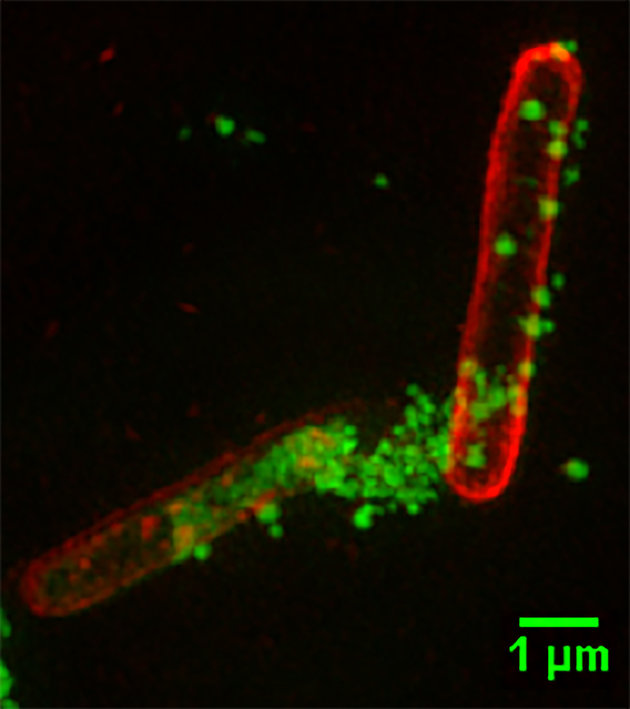
You can see the SNAPPs (green) surrounding and ripping apart bacterial cells below:
57d7b2081300002a0039b9da
University of Melbourne
While the results are positive so far, it's too early to get excited about what this could mean for humans, says Cyrille Boyer from the University of New South Wales in Australia, who wasn't involved in the research. 

"The main advantage seems to be they can kill bacteria more effectively and selectively [than other peptides]" Boyer told Strom, before adding that the team is a long way off clinical applications.

But what's awesome about the new project is that, while other teams are looking for new antibiotics, Lam has found a completely different approach. And it could make all the different in the coming 'post-antibiotic world'.

That's what she's hoping, anyway. 

"For a time, I had to come in at 4am in the morning to look after my mice and my cells," she told The Telegraph. "I wanted to be involved in some kind of research that would help solve problems ... I really hope that the polymers we are trying to develop here could eventually be a solution."

ORIGINAL: Science Alert
FIONA MACDONALD
26 SEP 2016

miércoles, 30 de diciembre de 2015

Steven Pinker interview: case against bioethocrats & CRISPR germline ban

CRISPR-Cas9 gene editing technology is red-hot right now.
It has great power for research in the lab and there are hypothetical transformative clinical applications of CRISPR too. The latter efforts could include experimental attempts at reversal of disease-causing mutations in one-cell embryos with the hope that they then grow into full-fledged, healthy human beings. Hypothetically CRISPR could also be used for pursuing human enhancement via germline genetic modification.

As a tool CRISPR is exciting and my own lab is using it for genetic studies, but from a technical perspective it’s not perfect. It can introduce a range of types of errors into the genome, with largely unknown biological consequences. To date, the first and only report of CRISPR-based modification of human embryos was arguably most notable for the problems encountered including genetic errors. However, suboptimal CRISPR methods were used so better design would almost certainly reduce risks of errors.

CRISPR raises a number of questions and has sparked many discussions. 
  • How should we handle a cutting edge biotechnology of this kind as a community of scientists? 
  • What if anything should be the appropriate role of others in such considerations including bioethicists? }
  • Should there be a temporary moratorium on clinical use of CRISPR? 
I tackled some of these issues in my own past piece Practical Plan for Managing Human Germline Genetic Modification. Others advocate for a more liberal perspective on the road to possible clinical use of CRISPR, focusing on the potential for great benefits.

Overall, this all might be summed up as follows: how do we balance the gas pedal and the brakes on CRISPR’s use in humans to aim for the greatest overall net benefit?

Steven Pinker
Professor Steven Pinker of Harvard has been one of the most outspoken advocates for more gas and less brakes here. Both in writing and in talks he has expressed the view that we should move forward without substantial impediments to CRISPR-Cas9. For instance, Pinker’s “get out of the wayeditorial last week in The Boston Globe on CRISPR was very critical of bioethics and advocated an expeditious path forward for the research without constraints. It sparked wide-ranging discussions and even some anger from bioethicists. Update: see also this brief reply to Pinker’s interview from noted bioethicist, Art Caplan.

A few days ago I reached out to Dr. Pinker to do an interview to learn more of the specifics about his views with a goal toward increasing dialogue. For instance, I wondered if he really felt that strongly about the harms caused by bioethics that were suggested in his editorial. I want to thank him for taking the time to provide such detailed answers that make the full depth of his views on these issues far clearer here than in the past.

Knoepfler. 1. Related to your talk at BEINGS and your more recent editorial, what do you see as the appropriate role for bioethics and bioethicists in the life sciences? “Get out of the way” seems rather absolute. Can you help us understand the nuances there in your view of bioethics if any?

Pinker: There’s a difference between ethics, on the one hand, and “bioethics” and “bioethicists,” on the other. Of course everything a scientist does—everything a human being does—ought to be ethically guided. But bioethics has become a professional guild that all too often impedes sound ethical concerns rather than advancing them. Many moral philosophers—the scholars who specialize in evaluating the soundness of ethical arguments—believe that mainstream bioethics commonly trades in confused claims based on emotion and woolly thinking (see these articles by Julian Savulescu,Sally Satel, and me for examples).

Take the very foundation of ethics. You’d think it would be an obvious ethical principle that life is better than death, health is better than disease, and vigor is better than disability. But, astonishingly, so-called bioethicists have repeatedly denied these truisms, either explicitly (in the case of the country’s former bioethicist-in-chief, Leon Kass, who argued that the desire to extend life is a sign of shallowness and immaturity), or implicitly, by fetishizing sweeping rubrics such as dignity, equity, social justice, sacredness, privacy, and consent at the expense of the health and lives of actual people.

It’s not just that many bioethicists practice bad moral philosophy. It’s that they are entangled in a conflict of interest. Institutionalized bioethics has become an academic and bureaucratic industry, and they need to rationalize their existence. You hardly need a bioethicist to tell you that it’s wrong to inject typhus into twins or to withhold antibiotics from syphilis patients. But to come up with an abstruse argument as to why a parent should be prohibited from saving the life of her infant by donating a part of her liver—for that you need a “bioethicist.”

Regarding my advice to “get out of the way,” the nuances were stated, albeit tersely, in the article. The first is that a truly ethical bioethics must weigh the benefits of any restriction on research against the harm that will be caused to the vast number of people who would benefit if the research proceeded expeditiously. Savulescu puts it starkly: “To delay by 1 year the development of a treatment that cures a lethal disease that kills 100,000 people per year is to be responsible for the deaths of those 100,000 people, even if you never see them.

The second is that a truly ethical bioethics should justify any restrictions on research with rigorous, defensible arguments about benefit and harm, not with moralistic grandstanding, science fiction dystopias, perverse analogies to Nazis and nuclear weapons, esoteric theories pulled out of the air, or freak-show scenarios like armies of cloned Hitlers, people selling their eyeballs on eBay, or warehouses of zombies to supply people with spare organs—all of which I’ve heard in these debates.

And as I wrote, no one questions the need to protect patients and research subjects from exploitation or harm. If there are flaws in the existing safeguards, as, for example, Alice Dreger argues, the safeguards should be fine-tuned or re-engineered. This is not the same as giving more power to the bioethocrats. A great deal of bioethical argumentation has nothing to do with protecting people. It rather cooks up reasons why consenting adults should be prohibited from doing things that help them or others while harming no one—a prominent example being recipient-solicited or incentivized organ and tissue donation. And establishment bioethics has caused preventable harm. Most infamous is the case of Jesse Gelsinger, the young man who died in a Phase-1 trial of gene therapy in 1999. Common sense would say that the experimental therapy should have been tested for safety on infants with a severe form of the disease who would have died anyway. But Arthur Caplan, the country’s most famous bioethicist, argued that the parents of such infants would be so consumed with grief that they could not truly give consent—the kind of paternalistic argument that is all too common in this field—and that an 18-year-old with a mild form of the disease, who technically could give consent, should be enrolled instead. A strained interpretation of the magic word “consent” was allowed to trump expected harm and benefit, and the result was tragedy.

Today mainstream bioethics gets in the way on a massive scale. The most obvious example is Institutional Review Boards. They are blatant abridgments of free speech, convenient weapons for fanatics to wield against people whose opinions they don’t like, and high-volume red-tape dispensers which bog down research while being unnecessary or even harmful to the protection of patients and research subjects. (See the Illinois White Paper and American Association of University Professors reports on IRB mission creep, David Hyman’s “The Pathologies of Institutional Review Boards,” and the new books The Ethics Police by Robert Klitzman and The Censor’s Hand by Carl Schneider). Regulations on confidentiality and consent to use data and tissues have also gone way overboard. The future of medicine hinges on the use of massive, open-access datasets to find signals in the noise. If every byte has to be multiply certified for consent and privacy, or even destroyed after a few years, no matter how inconsequential to the person who contributed it, then huge numbers of future patients will suffer or will fail to be helped by our faulty knowledge of the real effects of treatments.

There is, to be sure, an important role for bioethics. Satel puts it well: bioethicists at their best are “scholars who study the intellectual and social history of value controversies in medicine and biotechnology. They can teach us about the technical and cultural antecedents of modern debates and show us how to engage in disciplined moral inquiry. They are skilled at drawing conceptual maps of the dilemma at hand while enumerating various ways to resolve it.

Knoepfler. 2. Forgetting bioethicists entirely for the moment, prominent scientists such as Jennifer Doudna, David Baltimore, and others have publicly called in unambiguous terms for at least a temporary moratorium on clinical applications of human germline editing technology. Do you disagree or agree? Why?

Pinker: Disagree. The specific harms they warn against, such as inducing cancer, mutations, or birth defects in the unborn child are already ruled out by a plethora of existing regulations and norms. Obviously we shouldn’t mess around with embryos in ways that have a significant probability of producing a sick or deformed child with no compensating benefit. But why do we need a new, across-the-board ban on an entire method to rule out what’s already ruled out on the uncontroversial grounds of protecting individuals against foreseeable harm? The authors seem to be acquiescing to the yuck-factor that surrounds the very idea of germline modification, if for no other reason than to draw a firewall around their own research programs, which are restricted to the genetic modification of somatic cells. But scientists should work to dismantle irrational taboos, not indulge them.

First, the idea that there is some sacrosanct entity called “the human germline,” such that deliberately manipulating it would violate this sanctity, or restrict the freedom of future generations, or alter the species in unprecedented and frightening ways, is biological nonsense. No two people, not even monozygotic twins, have the same germline. Each of us introduces dozens of random mutations into our germlines, often multiplied by voluntary choices such as exposing ourselves to mutagens like tobacco smoke or fathering a child in middle age. And we affect the genetic makeup of our offspring, and the species, every time we choose to have unprotected sex with one partner rather than another. So even if it did come to pass that some people edited out disease genes, or (far less likely—see below) edited in enhancement genes, it would be a droplet in the maelstrom of naturally churning genomes.

Second, a ban or moratorium would only reinforce the pernicious aura of dread that surrounds genomic modifications. This is the dread that incites across-the-board opposition to genetically modified organisms and that underpins the bogus moral arguments against cytoplasmic donation for mitochondrial disease (the so-called three-parent babies—another case in which so-called bioethical concerns increase rather than decrease death and suffering). And the spurious ideal of germline sacredness could compromise the treatment of disease in other ways. Though lots of things went wrong in the Gelsinger case, one complication was the decision to administer massive doses of the viral vector directly to his liver, with the risk of lethal inflammation, rather than systemically, out of the fear that (God forbid!) it might introduce the needed gene into his sperm-forming cells. That’s probably not what killed Gelsinger, but it did kill a monkey in a safety trial, and this germlinophobia could certainly endanger gene-therapy patients in the future.

Third, germline editing could have direct benefits in a number of scenarios:

  • to parents with disease genes who don’t produce enough viable embryos for preimplantation genetic diagnosis (especially when more than one such gene is involved, which multiplies the number of necessary embryos); 
  • to parents who both are homozygous for some recessive disease gene (not far-fetched given how often people meet each other through support groups); if future data were to show that PGD babies have compromised longevity or health; and 
  • in other scenarios that perhaps we can’t imagine. 

For these reasons Savulescu, with Chris Gyngell, and Henry Miller with Drew Kershen argue that research on germline editing is not only morally permissible but morally imperative.

Knoepfler. 3. You appear relatively confident in future benefits of new biotechnology such as CRISPR to millions of people, but you seem very skeptical of the risk predictions that you described as “speculative harms”. What makes you so confident of benefit and at the same time so skeptical of risks? If us humans struggle generally at accurately predicting outcomes of biomedical science, why should there be a more accurate expectation of benefits as opposed to risks?

Pinker: No, this is wrong. Though it’s certain that the biomedical research enterprise as a whole will deliver benefits to billions of people, we can have no such confidence in particular technologies. That’s why we need a diversified research portfolio, without arbitrary bans. If you ban something, the probability that people will benefit is zero. If you don’t ban it, the probability is greater than zero.

As for the potential harms, they are far too nebulous to justify a ban or moratorium. Far from being confident in the power of gene editing, I’m on the record as being skeptical that we’ll ever see genetic enhancement of babies—the outcome that the prohibitionists and moratoristas dread and that many bioethicists blithely assume is inevitable. (For example, in 1999 Caplan announced that before the end of this century “We will see many children made by the artificial creation of embryos…This prediction is 100 percent certain.”) The prophesy of designer babies ought to be a relic of the early 1990s, when people thought there was “A Gene For” this or that talent. We now know that heritable psychological traits such as intelligence and personality are the product of hundreds or thousands of genes, each with a tiny effect, many of which may have harmful effects as well, such as an increased risk of neurological disease or cancer. With each enhancement gene providing a nugatory benefit and a non-negligible risk, and with the editing process itself imposing risks, it’s unlikely that today’s morbidly risk-averse helicopter parents will take a chance at enhancing a child—they won’t even feed their babies genetically modified applesauce! And that’s assuming that such a procedure ever got to the point of clearing conventional safety hurdles, which is far from likely. Add these risks to the fantastic expense and tribulation of IVF compared to good old-fashioned sex, and one should conclude that widespread genetic enhancement is too unlikely a possibility to worry about. And that’s assuming we should worry at all. There is, in addition, the argument (from Savulescu, the transhumanists, and others) that if enhancement were ever feasible it would be a good thing, not a bad thing—or at least a matter of individual freedom rather than government coercion.

Now, the story is different for editing out disease genes. There are more ways that a complex system can break down than that it can work better, and it’s easier to fix a defect than engineer in an improvement. Also, the benefits are very different for preventing death and disease (huge) than for implementing an enhancement (minor). So the possibility that germ-line editing might prevent disease in the future is well worth exploring.

Knoepfler. 4. Congress recently held a public hearing on human germline modification and is considering a legal provision to block editing of human embryos. What do you think of having such a hearing and the possibility of a restrictive legal provision? You said to bioethics, “get out of the way”. Should we scientists say the same thing to lawmakers? Why?

Knoepfler. 5. There is likely to be a NAS meeting sometime late this year on human germline modification by such technology as CRISPR-Cas9 and mitochondrial transfer (3-person IVF) in the spirit of the 1975 Asilomar meeting. Do you think this new meeting will achieve positive outcomes such as a white paper that appropriately has a vision for the future? What if the consensus is for a moratorium? Could you support that?

Pinker: I’ll answer these together. I think that scientists should reiterate the principle that no experiment should be permitted which imposes an unreasonable risk of an illness or birth defect on an individual. But no, I don’t think that scientists should support a ban or moratorium on germline genetic editing, for the reasons I set out in my answers to questions 2 and 3. Though the Asilomar recommendations have long been a source of self-congratulation among scientists, they were opposed by a number of geneticists at the time, who correctly argued that they were an overreaction which would needlessly encumber and delay important research. And the journalist Victor McElheny reminds us that the recommendations sowed a panic which came perilously close to shutting down some of the nation’s major laboratories, a danger he argues we are now in danger of repeating.

That having been said, I recognize that the political arena follows different rules than scientific and intellectual discourse. The scientists who lead major research institutions and deal with politicians and other public figures have to master the arts of compromise, tact, euphemism, and strategic deal-cutting. That’s how democracy works, and I’m grateful to the scientific leaders who carve out a space in which the rest of us can flourish. There are things they may believe but can’t say. But it’s important that someone says them, and that’s how I see my role in these debates.


ORIGINAL: Ipscell

viernes, 17 de julio de 2015

The Future of Synthetic Biology: Reading and Writing DNA Using Nanopores

Biology is nothing more than a computational system. Granted, it’s far more sophisticated than any other computer available to us today, but we’re slowly beginning to learn how to read and write DNA as we would with code. Thanks to a group of researcher fellows of the Institute of Electrical and Electronics Engineers (IEEE), we’ve now taken one extra step towards a future of synthetic biology.

Published on IEEE Access, researchers used nanopores – a tiny hole inside of a membrane that allows singular molecules of DNA to pass through – in order to read DNA and proteins, and subsequently write new DNA by inserting mini-genes into mammalian cells.

In conclusion, the future is brilliant, if you think small and do a bit more research. Nanopores can be used to both READ: detect and sequence DNA and sense proteins, and WRITE DNA into cells. These tools will provide methods to explore areas of biology either impractical to reach, or at least logistically intractable.” – IEEE Study

Photo Credit: IEEE / Genetic Literacy Project
Not only is this breakthrough research helping us better understand our own biology, but is equally bringing everyone else along for the ride. By simplifying the methodological ability to sequence single-cell DNA using nanopores, these researchers have provided molecular and sub-molecular analysis within reach for all bench-top scientists and clinical labs outside of the confines of genomics or spectrometry specialists.

But don’t jump off your seats just yet in celebration, because more research is needed for synthetic biology to make a significant impact.

Prospects for synthetic biology (and manufacturing) using nanopores to program cells (or micelles) and deliver materials are especially alluring. Chemical processing generally becomes more efficient in a microreactor because mass transport limitations are practically eliminated. However, the synthesis, so far, has been focused at a single cell or few nano-reactor level; it needs to be scaled up.” – IEEE Study

FUTURE IMPLICATIONS
The precision of molecular configuration of ions passing through the pores of membranes points to a future of tiny research making extremely large impacts on the health of society. The future of medicine will largely rely on our ability to read and write DNA like code in order to upgrade our bio-computational systems against fatal diseases. By using nanopores as a means of reading and writing DNA, we are steadily revealing the secrets of our own biology, consequently unlocking future possibilities of enhancing our longevity.


ORIGINAL: Serious Wonder
BY B.J. MURPHY

martes, 31 de marzo de 2015

NCATS Support Leads to Clinical Trial to Test Repurposed Cancer Treatment as Alzheimer's Therapy

In a mouse model of Alzheimer's disease, amyloid beta clusters (red) build up among neurons (green) in a memory-related area of the brain. (Strittmatter Laboratory, Yale University Photo/Adam Kaufman)
As Baby Boomers get older, the number of people with age-related conditions such as cancer and Alzheimer's disease continues to grow. Alzheimer's disease is the most common form of dementia, a group of disorders that cause progressive loss of memory and other mental processes. About 5 million Americans have Alzheimer's disease, and current drug therapies can only ease symptoms of the disease without stopping its progression. New treatments — so-called disease-modifying therapies — are needed to halt Alzheimer's by targeting its underlying mechanisms.

Blocking that path to therapeutic success is the costly, complex process of drug development. The average length of time from discovery of a therapeutic target to approval of a new drug is about 14 years. The failure rate during this process exceeds 95 percent.

NCATS is addressing these translational bottlenecks through programs such as the Discovering New Therapeutic Uses for Existing Molecules (New Therapeutic Uses) program. Launched in 2012, this initiative matches academic researchers with pharmaceutical industry assets that have undergone significant research and development to accelerate the process of finding new therapies.

Now, NCATS is celebrating one of the first promising results from the New Therapeutic Uses program: Center-supported scientists at Yale University School of Medicine have found that an experimental compound originally developed as a cancer therapy potentially could be used to treat Alzheimer's disease. The compound successfully reversed brain problems in mouse models of the condition, and now the researchers are testing it in humans. The results of the animal study were published for early view on March 21, 2015, in the Annals of Neurology. Read the NIH news release.

A NEW THERAPEUTIC TARGET
Back in 2012, Yale neurobiology researcher, neurologist and senior author of the animal study Stephen Strittmatter, M.D., Ph.D., and his colleagues found an important, missing piece of the Alzheimer's puzzle. They wanted to understand more completely the molecular events that occur in the brain to produce symptoms.
Two types of brain cells, microglia (red, left) and astrocytes (red, right), surround amyloid beta clusters (green) located in the brain of a mouse that exhibits Alzheimer's-like symptoms. Strittmatter Laboratory, Yale University Photo/Adam Kaufman
In Alzheimer's disease, abnormal clumps of amyloid beta protein build up in the brain. These protein clusters damage brain cells (neurons), eventually killing them. However, howamyloid beta harms cells has been unclear.

The Yale team discovered that aggregated amyloid beta activates a series of signals within neurons that leads to abnormal functioning and loss of synapses, which are the spaces between neurons that enable the cells to "talk" to each other and form memories. Central to this process is the activation of a protein called Fyn kinase through another molecule, cellular prion protein. These results suggested that a compound that blocks Fyn activity might represent a potential disease-modifying therapy for Alzheimer's.

THE POWER OF CROWDSOURCING
Around the time Strittmatter's Fyn finding emerged, NCATS launched the New Therapeutic Uses program and released a list of pharmaceutical industry assets, inviting scientists to pitch new ideas for diseases that might be treated with those assets. That 2012 list included a Fyn kinase inhibitor, saracatinib (AZD0530), developed by biopharmaceutical company AstraZeneca. Strittmatter, along with co-principal investigators Haakon Nygaard, M.D., Ph.D., and Christopher van Dyck, M.D., submitted a proposal to test the hypothesis that saracatinib could improve Alzheimer's-related brain abnormalities. The team received one of the first New Therapeutic Uses awards in June 2013.

"AstraZeneca developed saracatinib to treat cancer outside the brain, so nobody had thought to link it to Alzheimer's disease," Strittmatter said. "This connection — between our knowledge of Fyn kinase in the brain and AstraZeneca's information on this compound — would never have happened without the New Therapeutic Uses program."

A PROMISING EFFECT IN MICE
AstraZeneca scientists teamed with the Yale group, providing saracatinib for the mouse study and sharing knowledge and data gathered from previous studies.

"No one individual or group has complete knowledge of disease pathways and treatment targets," said Craig Wegner, Ph.D., Head, Boston Emerging Innovations Unit, Scientific Partnering & Alliances within AstraZeneca's Innovative Medicines and Early Development Biotech Unit. "This program successfully unites scientists from government, academia and industry and is a great example of how we are working together to push the boundaries of science."

The Yale team gave the experimental drug to mice with Alzheimer's-like symptoms, such as memory problems and age-related buildup of abnormal amyloid beta clusters, modeling the development of the disease in humans. After four weeks, the Alzheimer's mice showed complete reversal of spatial learning and memory loss. When the scientists examined the brains of the mice, they found that the characteristic synapse loss had been fully restored, providing a biological explanation for the memory improvement.

The treatment also reduced several other Alzheimer's-related biochemical changes in the mice and did not appear to be toxic. Although many experimental treatments have aimed to reduce abnormal amyloid beta buildup in the brain, this one is unique in that it targets the toxic effects of the protein clusters within a cell, appearing to protect it from damage.

The Yale research team also has completed a successful Phase 1b safety study of saracatinib in humans with Alzheimer's disease, showing that the compound reaches the brains of patients at levels similar to those beneficial in mice. The study results have been accepted for publication later in 2015. The data are encouraging, but the researchers cautioned that more human studies are needed to determine if saracatinib is an effective treatment for Alzheimer's.

AN ACCELERATED PATH TO THE CLINIC
Saracatinib's prior development and the Yale team's successful completion of animal and human studies enabled the compound to advance rapidly into a larger, multisite Phase 2a trial in Alzheimer's patients now ongoing. "The speed and efficiency with which this research has advanced has set new standards of excellence, enabling us to jointly push the boundaries of medical science," Wegner said.

Using the pre-negotiated NCATS template agreements, which were designed to streamline the legal and administrative process for research collaboration by multiple organizations, "really facilitated our collaboration with Yale, so scientists could be scientists," he added.

"Through this project, NCATS and AstraZeneca have provided us with an incredible shortcut in the drug development process and have accelerated the path to finding a more effective Alzheimer's disease treatment," Strittmatter said.

In the Phase 2a trial, 152 participants will receive saracatinib or placebo for one year. Researchers will assess safety, tolerability and effectiveness of the experimental drug, and they will use brain imaging to visualize the effect of saracatinib on synapse function — the same feature improved by the drug in mice. Study investigators currently are enrolling older adults with Alzheimer's disease to participate in the trial and expect to have results in about two years. Learn more about the trial via ClinicalTrials.gov or the study website .

Both human trials were funded by the New Therapeutic Uses program. The Phase 2a study will take place at multiple clinical sites as part of the Alzheimer's Disease Cooperative Study , an initiative for multisite studies sponsored by the National Institute on Aging (NIA) to facilitate the development and testing of new therapeutics for the condition. In addition to funding from NCATS, the NIH Common Fund, NIA, BrightFocus Foundation, Alzheimer's Association and Falk Medical Research Trust provided support for the animal study.

"The Yale team's awareness of this new Alzheimer's drug target, combined with AstraZeneca's drug development resources, allowed the rapid advancement of saracatinib to clinical testing, demonstrating the power of NCATS' New Therapeutics Uses crowdsourcing approach," said NCATS Director Christopher P. Austin, M.D. "By reengineering the drug development pipeline through projects like this, we can more quickly deliver new and better treatments to patients."

ORIGINAL: NCATS-NIH
March 2015

miércoles, 10 de diciembre de 2014

The Wonderful And Terrifying Implications of Computers That Can Learn | Jeremy Howard | TEDXBRUSSELS

Jeremy is the CEO of Enlitic, which uses recent advances in machine learning to make medical diagnostics faster, more accurate, and more accessible. The company's mission is to provide the tools that allow physicians to fully utilize the vast stores of medical data collected today, regardless of what form they are in - such as medical images, doctors' notes, and structured lab tests.

He is a serial entrepreneur, business strategist, developer, and educator. He is also the youngest faculty member at Singularity University, where he teaches data science, and is a Young Global Leader with the World Economic Forum. He advised Khosla Ventures as their Data Strategist, identifying the biggest opportunities for investing in data driven startups, and helping their portfolio companies build data driven businesses. Previously he was the President and Chief Scientist of Kaggle, a community and competition platform for over 150,000 data scientists. Before working at Kaggle, he was the top ranked participant in data science competitions globally, in 2010 and 2011. He founded two successful Australian startups (the email provider FastMail, and the insurance pricing algorithm company Optimal Decisions Group), both of which grew internationally and were sold to large international companies. He started his career in management consulting, working at the world’s most exclusive firms, including McKinsey & Co, and AT Kearney (becoming the youngest engagement manager world-wide, and building a new global practice in what is now called “Big Data”). He is also a keen student, for example developing a new system for learning Chinese, which he used to develop usable Chinese language skills in just one year. Jeremy has mentored and advised many startups, and is also an angel investor. He has contributed to a range of open source projects as a developer, and was a regular expert guest on Australia's most popular TV morning news program "Sunrise".


ORIGINAL: TEDxBrussels

viernes, 5 de diciembre de 2014

World's First Artificial Enzymes Created From Synthetic Genetic Material

photo credit: University of Liverpool Faculty of Health and Life Sciences, via Flickr. CC BY 2.0

Scientists have made a breakthrough in the field of synthetic biology by creating, for the first time, enzymes from artificial genetic material that does not exist in nature. This exciting new work not only offers new insights into the origins of life on Earth, but also has implications for our search for extraterrestrial life on other planets.

The foundations for this study were laid a couple of years ago when UK scientists created synthetic versions of DNA, the molecule that carries the genetic information of all living things on Earth, and its close chemical cousin, RNA. This synthetic genetic material was created using the same building blocks that are found in DNA and RNA, but the scientists strung them together with different molecules. These resulting synthetic molecules, which were dubbed ‘XNAs,’ or xeno nucleic acid, were found to be capable of storing and passing on genetic information.

Although it was widely believed that DNA and RNA, together with proteins, were the only molecules that could form enzymes, the same researchers have now demonstrated that it is possible to create synthetic enzymes using only these XNAs. These molecules, which have been named XNAzymes,’ were capable of chopping up and stitching together bits of RNA, just like natural enzymes. One of them was even capable of joining up fragments of XNA.

Enzymes, nature’s catalysts, are fundamental to life on Earth because almost all of the biochemical reactions taking place in cells are inefficient at ambient temperatures. Enzymes are therefore required to give reactions, such as synthesizing DNA or digesting food, a kick-start, allowing them to occur at rates sufficient for life to exist.

Although the majority of enzymes are proteins, some RNA molecules possess catalytic activity. It’s widely believed that the evolution of early pieces of genetic information, which may have been RNA, into self-replicating enzymes was likely a key event in the emergence of life on Earth. This work is therefore important because it recreates one of the earliest stages towards life. However, it also teases us with the possibility that life could evolve without DNA or RNA, which are widely regarded as the prerequisites for life.

Our work suggests that, in principle, there are a number of possible alternatives to nature’s molecules that will support the catalytic processes required for life,” said lead scientist Philip Holliger. “Life’s ‘choice’ of RNA and DNA may just be an accident of prehistoric chemistry.

Because it is possible to create genetic material and enzymes from building blocks that don’t occur naturally, this suggests that life could emerge from different molecular backbones on other planets. This could therefore “potentially widen the number of exoplanets that one could consider would be hospitable for some form of life,according to Holliger.

This work, the researchers say, could also lead to a new wave of treatments for a variety of diseases. As explained by Dr. Holliger, it may be possible to synthesize XNAs that are capable of chopping up pieces of RNA produced from cancer genes or fragments of viral RNA. And because the XNAs don’t occur naturally, it is unlikely that they will be recognized and destroyed by other enzymes in the body.


ORIGINAL: IFLScience
by Justine Alford
December 2, 2014