Mostrando entradas con la etiqueta Emprendimiento. Mostrar todas las entradas

viernes, 27 de enero de 2017

RutaN: ¿Cómo hackear una ciudad?

Hace un tiempo atrás, para muchos en Colombia, era una ciudad que parecía imposible”, nos cuenta Elkin Echeverri sobre su ciudad, Medellín, que en 2013 fue nombrada la más innovadora del mundo. Allí forma parte de RutaN, una de las organizaciones que ha ayudado a la ciudad a reinventarse y a utilizar la innovación como herramienta clave de una transformación que no para. 


¿Qué podemos aprender de esta ciudad y su modelo de innovación?
En una charla brindada en la sede del Banco Interamericano de Desarrollo en Washington DC hace un par de meses, Elkin, gerente de planeación y prospectiva de Ruta N, nos contaba parte de la historia de transformación de Medellín y el rol que su organización ha tenido desde su creación hace 7 años.

Ruta N es el resultado de lo que la ciudad venía haciendo hace unos 10 o 15 años, y básicamente es un articulador que busca hacer posible el tránsito hacia una sociedad donde la innovación sea generadora de bienestar y desarrollo económico. Esa es nuestra meta, es nuestro norte que definimos como sociedad. Por eso justamente se llama Ruta N”, explica Elkin.

La Corporación Ruta N es una organización pública sin fines de lucro que pertenece a la alcaldía de Medellín y su propósito principal es mejorar la calidad de vida de los habitantes a través de la innovación. Para ello desarrollan una serie de actividades que facilitan la evolución de la ciudad hacia negocios más intensivos en ciencia, tecnología e innovación, dinamizando el ecosistema de innovación y promoviendo una cultura innovadora.


Una de las iniciativas que apoya Ruta N es el Distrito de Innovación de Medellín que busca convertir al norte de la ciudad en un ecosistema de innovación que concentre a ciudadanos, emprendedores, compañías e instituciones para impulsar proyectos dentro de la economía del conocimiento. Foto: Ruta N
Claves de éxito de Ruta N
Pero, en el contexto actual donde innovar ya no es opcional para nuestra región, ¿cuáles han sido las claves de éxito de Ruta N? Por un lado, Elkin nos comentaba que para que suceda el cambio hay que trabajar contra la inercia del sistema y no necesariamente con el choque, sino hasta si se quiere hackeando el sistema.

La palabra hackear es un poco difícil, no es una palabra nativa pero cada vez se entiende más en el sentido de modificar el sistema casi sin que el mismo se dé cuenta. Entonces a veces hackear el sistema significa plantar semillas, poner programas a correr en paralelo y mostrar que están funcionando bien. Hackear es como inventar un espacio donde la resistencia del status quo no sea tan aplastante que no te deje hacerlo, pero que permita que florezca algo. Y una vez que eso florezca la gente vea que sí funciona, que lo que se está haciendo es interesante y se plieguen a ello”, reflexiona.

Asimismo, otro aspecto fundamental es su capacidad de trabajo público-privado, que se refleja desde el diseño institucional de Ruta N. Es decir, es una institución que siendo totalmente pública opera con una lógica mixta incorporando aspectos de gestión del sector privado, y en cuya junta directiva conviven representantes de ambos sectores.

Sus creadores la concibieron claramente como una corporación independiente. Que sea pública pero no se la puede mantener en el mismo sistema público, porque o si no ese mismo status quo la va a absorber. Es bonito que el mismo sector público haya dicho bueno listo créelo, pero que sea independiente, una corporación de ciencia y tecnología que pueda hacer unas cosas diferentes a lo que hace la administración pública regular, pero que se apoye en la ley de ciencia y tecnología del país. Igualmente, el hecho de que fuera una entidad de segundo piso y no de primero, para no convertirse en una más que entraría a competirle a las que existían en ese momento. Y la idea no era competir, sino articular lo que existe y construir lo que falta para que el resultado sea mayor”, agrega.

En una breve entrevista que nos concedió al finalizar su presentación en el BID, Elkin Echeverry –en su inconfundible acento paisa– habla de las ciudades innovadoras, de cómo proyectar un ecosistema de innovación por diseño, algunos elementos clave para la formulación de políticas públicas, la importancia de involucrar a los ciudadanos, y el desafío de conectarse con otras ciudades y ecosistemas a nivel regional.


"¿Y tú que piensas? ¿Pueden otras ciudades inspirarse en Medellín y Ruta N?"

ORIGINAL: IADB.org

miércoles, 28 de mayo de 2014

“Lo que nos enseñan en la escuela no nos sirve en la vida real”

Considerado uno de los pedagogos más influyentes del mundo, ha dedicado una parte de su vida a la inteligencia artificial y el resto, a aplicar lo aprendido a la enseñanza.
Su lema: la experiencia es el mejor motor del aprendizaje


PABLO MONGE

Qué tiene que ver la inteligencia artificial con la enseñanza?
 
Roger Schank (Nueva York, 1946), matemático y lingüista de formación, ve en el primer campo una inspiración para el segundo. Tras años de investigación, fundó en los noventa el Institute for the Learning Sciences (ILS), desde el que se propone revolucionar el sistema educativo. Ha desarrollado un método basado en la experiencia que ha implantado en algunas universidades, incluyendo la Ramon Llull de Barcelona.

Pregunta. ¿Cómo describiría a los estudiantes españoles?

Respuesta. Son tan inteligentes como los de cualquier otra parte del mundo. Pero por alguna razón en España se cree que la literatura y la historia son lo que una persona educada debería saber. Hoy en día no nos podemos permitir levantar una nación a base de intelectuales. Los estudiantes estadounidenses piensan mucho sobre qué negocio montarán o a qué se dedicarán. Aunque eso no les haga ser tan intelectuales como en España, sí que crea más empleo.

P. ¿Por qué hay que cambiar el sistema educativo?
r. Un joven con estudios de cualquier parte del mundo sabe, o le han enseñado, ciertas nociones de álgebra, trigonometría y geometría. Aunque no las vaya a usar en su vida. El hecho de que se enseñe matemáticas no se basa en ningún razonamiento científico o en pruebas empíricas, sino en creencias arraigadas, tradición y otros intereses que no son buenos para el estudiante. Y lo mismo pasa con muchas otras materias del currículum. Nosotros no ofrecemos asignaturas, sino distintos escenarios. En algunos de ellos habrá que aplicar modelos matemáticos, que los estudiantes aprenderán y retendrán. Algunos probarán con escenarios de ingeniería, para los que necesitarán ciertas herramientas; o de medicina, que requerirá otras; de derecho... Hasta que encuentren su vocación.

P. Usted está a favor, pues, de que se haya eliminado el latín de la enseñanza obligatoria...

r. Definitivamente. Algunos científicos llevan tiempo estudiando cuán transferibles son los conocimientos adquiridos en la escuela a la vida real. Y los resultados son demoledores: casi nada de lo que nos enseñan en la escuela nos sirve fuera de ella. El latín es un buen ejemplo de ello. Edward Thorndike publicó un estudio ya en 1923 en el que concluía que esta disciplina “no ayuda a organizar la mente”. La conclusión, pues, es que el latín es inútil para todo aquel que no tenga especial interés en la materia.

P. ¿Cómo resumiría su modelo de educación?

r. Se aprende desde la experiencia. Aprender es el resultado de hacer cosas y pensar sobre ellas. Llegué a esta misma conclusión tratando de comprender cómo funciona la mente para crear máquinas inteligentes. Los humanos tenemos dos tipos de memoria.
  • La más básica, que compartimos con otros mamíferos, es la episódica: almacenamos experiencia, cosas que hacemos. Es la que usaban nuestros ancestros antes de que apareciese el lenguaje, y les funcionó bastante bien. 
  • La segunda es la memoria semántica: el lenguaje nos dio la capacidad de desarrollar procesos de razonamiento muchísimo más complejos.
Pero la memoria episódica permanece ahí, y necesitamos activarla. Nosotros lo que hacemos es usar la tecnología de la información para crear situaciones de aprendizaje que permitan a los estudiantes aprovechar las estructuras básicas de la mente. En esencia, simulamos lo que pasa en la vida profesional.

P. ¿Dónde han implantado su método?
r. El primer proyecto que desarrollamos plenamente se remonta a 2003, en el nuevo campus que abrió Carnegie Mellon University en Mountain View, California. Se ha probado durante diez años sobre mil estudiantes y los resultados son buenos. Desde hace cuatro años también estamos en La Salle-Universitat Ramon Llull, en Barcelona.

P. ¿Qué tal funciona el proyecto en Barcelona? 
r. La Salle es el tipo de universidad que me interesa. Tienen experiencia en enseñar a la gente a conseguir empleo. Cuando creamos XTOL (Experimental Teaching On-Line), pensábamos en un conjunto de programas online, para móvil y e-commerce, que reeducase a la gente en este prometedor campo en el que se crearán la mayoría de los empleos en las próximas décadas. Para distribuir estos programas necesitamos asociarnos a instituciones que apuestan por una educación innovadora, y La Salle es una de ellas.

P. ¿Qué papel juegan los libros de texto en su sistema?
r. Los libros están bien. Los usamos, aunque digitales. Pero no hacemos que los estudiantes los memoricen para aprobar los exámenes. Los libros son recursos para ayudar a cumplir tareas específicas. Veremos, con el tiempo, cómo los libros digitales evolucionan hacia una nueva categoría de producto multimedia.

P. Si comparásemos a un recién licenciado que haya seguido la enseñanza usual con otro que haya pasado por su sistema, ¿qué diferencias encontraríamos? 
r. El primero, básicamente, habrá aprendido a pasar exámenes, ya sea sacando buenas notas o aprobando justito. Pero no a pensar. En cambio, con nuestro sistema el estudiante habrá practicado todos los procesos cognitivos que importan para ser un profesional exitoso y un pensador inteligente. Entre estos procesos se incluyen
  • investigación, 
  • planificación, 
  • diseño, 
  • causalidad, 
  • juicio, 
  • valoración, 
  • comunicación y 
  • negociación, 
entre otros.
ORIGINAL: Reevo

How a 574-year-old school is preparing for a world without classrooms

What people think of when they think of Eton. Reuters/ Eddie Keogh

What does a nearly six-century-old private school that charges $54,000 a year in tuition do when confronted with start-ups with bright ideas about how education should work? If you’re Eton College, alma mater to much of the British establishment including the serving prime minister and the mayor of London, you work with them. 

Along with Oxford University’s Said Business School, Eton Collegea high school for boys between the ages of 13 and 18—has partnered with Emerge Venture Lab, a London-based accelerator, to support educational technology, or “edtech,” start-ups. The first cohort of six start-ups will start the program in London with a party on Jan. 17. Eton will not provide financial support or take equity (though it does not rule that out), but its teachers will help guide the start-ups in the program and may also try the new products with their students. “It’s quite easy for the technology to dominate and the way we’re interested in getting involved is to make sure there is a pedagogical influence as well,” Eton’s Serena Hedley-Dent told Quartz.

Behind this ancient institution’s embrace of the modern is an intense awareness that things are about to change, and dramatically. “Nobody knows for sure where this business is going to be in five to ten years’ time. It would be very foolish of us to bury our heads in the sand and assume that education in schools will carry on in the traditional way,” says Percy Harrison, head of information technology at Eton and executive director of the newly-formed Eton Online Ventures.

Even the oldest institutions must serve modern needs. Eton College

Two trends are driving the change.
  1. The first is that old culprit—mobile devices such as tablets. If students are used to interacting with information on tablets at home, it seems strange to them to not use one at school. But schools and universities need to figure out how best to use them. 
  2. The second trend is more structural: While education is often seen as the process of teaching children facts and skills, another important aspect is learning to grow up and dealing with life’s ups and downs. 
Harrison says that is the most important aspect of what Eton does, but one that existing education technology companies have not focused on. That is the area the school is interested in promoting.

Eton would not reveal the names or nature of the start-ups the program has accepted in advance of a formal announcement on Jan. 17, but Harrison says the products he is most interested in are those that help people work in groups. “The MOOC [online courses] world for example can be a rather lonely one. And if you get stuck how do you get unstuck? So it’s those kinds of features we’re really looking for,” he says.

Education technology is still very much in its infancy, as anybody who has experienced some of the widely-used platforms such as Blackboard can tell you. But it is a rising sector. Mendeley, a London start-up for academic collaboration, was bought last year for £65 million ($100 million) by science and academic publisher Reed Elsevier. Other areas of focus are learning analytics, which give educators the tools to monitor student performance and, the idea is, predict which ones are lagging behind or likely to fail. The way education technology is advancing, however, suggests no reason to believe that the social aspects of education and the skill-acquiring aspects of education need to be in the same place. That is why, says Harrison, “it’s important to us that if technology is going to play a bigger part, both in the classroom or indeed in replacing the classroom, [that it] drives people towards a good teaching style rather than a bad one.

ORIGINAL: QZ
January 16, 2014

sábado, 10 de mayo de 2014

Google Ventures: Your Design Team Needs A War Room. Here's How To Set One Up


WANT TO FOSTER CREATIVITY? SKIP THE FOOSBALL TABLE AND OPT FOR A WAR ROOM INSTEAD. GOOGLE VENTURES'S JAKE KNAPP SHOWS YOU HOW. PLUS: A PEEK INSIDE GOOGLE VENTURES'S OWN WAR ROOM

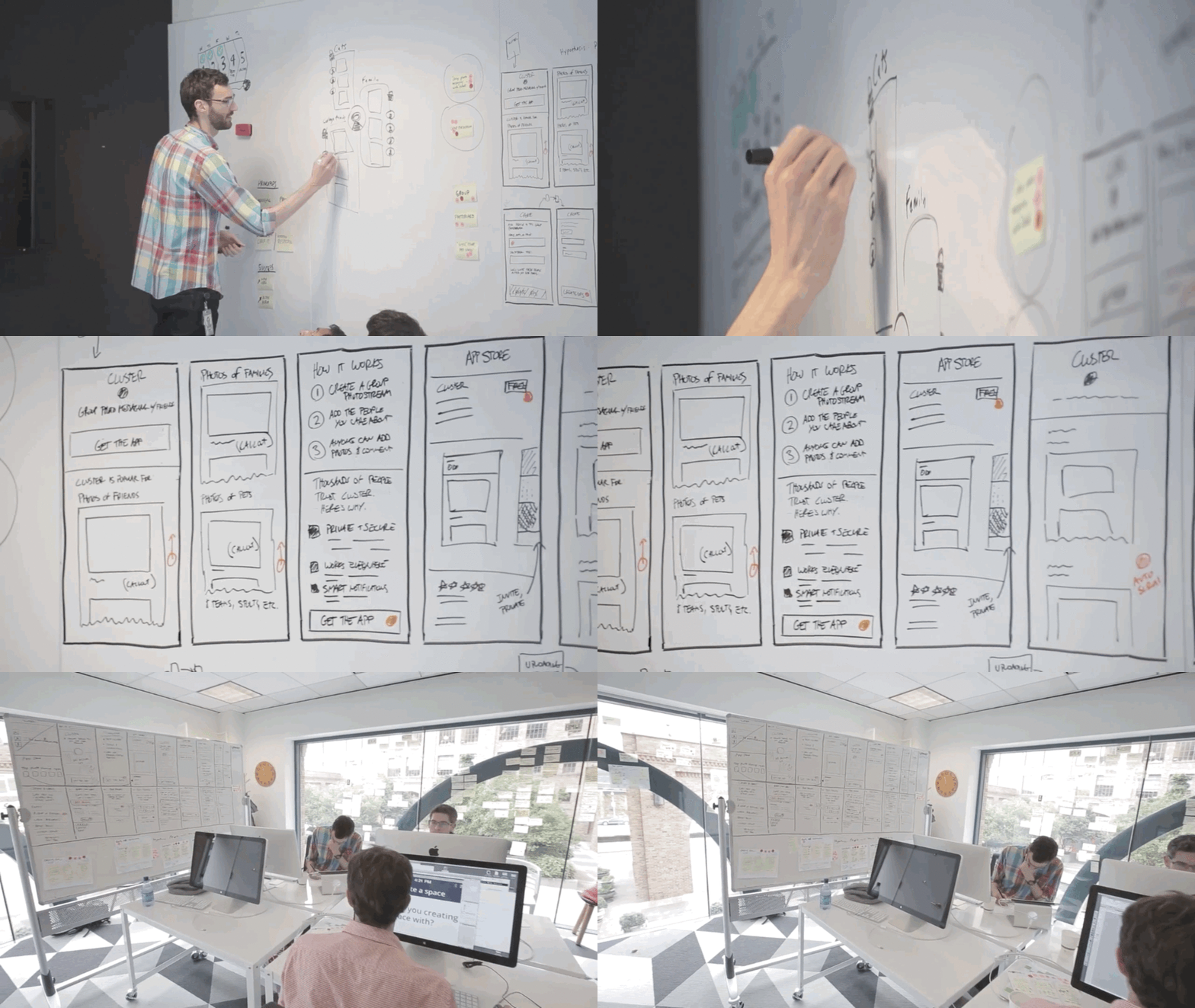
In the last two years at Google Ventures, I’ve done design sprints with more than 80 startups. One of the simplest tricks I’ve learned is that a dedicated space with walls--a war room--always helps us do better work. The walls of a war room can
  • extend a team’s memory, 
  • provide a canvas for shared note-taking, and 
  • act as long-term storage for works in progress.
Unfortunately, war rooms are few and far between. I’m surprised by how many tech companies make space for a foosball table (fun but seldom used), yet don't dedicate a room to their most important project.

If your team doesn’t have a war room, don’t worry. In this post, I’ll explain how to put one together on almost any budget. Spoiler: while a dedicated physical space is great to have, it’s not an absolute necessity. But first, here’s a bit more on why war rooms work so well.

The Innovation by Design Awardscelebrates the controversial ideas, new products, business ventures, and wild ideas highlighted every day on Co.Design. Winners and finalists are featured in a special design issue of Fast Companymagazine. Enter today.
SPATIAL MEMORY > SHORT-TERM MEMORY

To solve a complex design problem, you need to track lots of moving parts. As humans, our short-term memory is not all that good--but our spatial memory is awesome. Plaster a room with notes and you take advantage of that spatial memory. You begin to know where information is, which extends your ability to remember things.

PHYSICAL IDEAS ARE EASIER TO MANIPULATE
We all know it’s better to re-order a prioritized list of sticky notes or re-draw a diagram than to make the same decisions verbally. That’s why there are whiteboards in meeting rooms and why people love agile trackers with sticky notes. War rooms take those tools to the next level.

WAR ROOMS BUILD SHARED UNDERSTANDING
War rooms help your team work better together. When you capture every decision and put it on the wall, you don’t have to wonder if everyone is on the same page. The room is the page. The more you put on the walls, the more shared understanding you build. As a bonus, you spend less time revisiting already-discussed issues. A war room works great for long-term projects of a few days or a few weeks--and it also works great for one-off meetings.

INGREDIENTS OF A GREAT WAR ROOM

LOTS OF SURFACE AREA
In a Google Ventures design sprint, it’s common to have many things on the walls at once: user story diagrams, research notes, printouts of the existing UI, sketches of possible solutions, a detailed storyboard, and sometimes more. To accommodate all that stuff, you need a lot of space. That means whiteboards, windows, and empty walls where you can stick stuff.

Every bit of window, wall, and whiteboard is useful.

DEDICATED TO PROJECTS (NOT MEETINGS)
You don’t want your war room turning into just another conference room. For best results, remove your war room from your company’s room-scheduling calendar.

AS MANY WHITEBOARDS AS YOU CAN FIT
Whiteboards come in a lot of styles, so choose wisely.

  • Floor-to-ceiling wall-mounted--The best. I like to use every square inch of available space, and with these babies, that’s a lot of space.
  • IdeaPaint--Great stuff (unless your walls have a funky texture). And for goodness sake, paint all the walls, otherwise, get ready to have somebody write “Not a whiteboard!” in whiteboard marker on the unpainted walls.
  • Normal wall-mounted--These are okay if you get more than one.
  • D.I.Y. shower board whiteboards--Much cheaper than real whiteboards, these require more elbow grease to install (you may spill Liquid Nails on your designer-y plaid shirt). The surface isn’t quite as good, so expect to clean it more often.
  • Rolling--These come in small and giant sizes. The small ones have a lot of unusable space down by the floor, and they shake when you draw on them. The giant ones cost a lot more, but they’re actually usable.
FLEXIBLE FURNITURE
In our design sprints, we go through a lot of different work modes. Sometimes we need to talk a lot, and we want chairs and open space. Other times, we’re drawing on paper and we want desks. The ideal war room has furniture that’s lightweight or on wheels, so it’s easy to move.
Everything is lightweight, on wheels, or both.

You should always have at least one person wearing plaid--three or more if possible.

THREE WAR ROOM RECIPES

1. GOOGLE VENTURES DESIGN WAR ROOM
We took over a conference room and removed the big table in the middle. Next, we installed as many whiteboards as we could. We couldn’t do floor-to-ceiling, but we got close.

Finally we ordered a bunch of flexible furniture--some of it fancy-pants (like Modernica chairs) and some utilitarian (like clipboards and a coat hanger). Here’s the complete shopping list hand-picked by Google Ventures’ Daniel Burka. Some highlights:


2. RECONFIGURABLE CONFERENCE ROOM
It may be impossible to completely take over a room. If you have to share your war room, get some portable wall space that you can assemble and disassemble quickly. Your options:

  • Sticky flip charts--Blank sheets of this stuff make a reusable, moveable backdrop for sticky notes and printouts.
  • Giant foam core--Foam core comes in 96”x48” but it’s expensive and tricky to find, not to mention cumbersome. Which is why I prefer...
  • Rolling whiteboards--see above for our favorite.

3. NO-ROOM WAR ROOM
Sometimes you don’t even have a conference room to commandeer. I’ve seen this challenge at startups in incubators or shared offices. Don’t freak out. You can still make a war room by hacking the space around your desk. Use rolling whiteboards as partitions. It’s just like you’re a kid again, building a fort out of chairs and blankets! But don’t actually use blankets, because your co-workers might get creeped out.

TELL ME ABOUT YOUR WORKSPACE
We’re still experimenting and learning with our own war room, as well as those at our companies. How have you set up project spaces for your team?


ORIGINAL: FastCo Design
By Jake Knapp
May 1, 2014

martes, 1 de abril de 2014

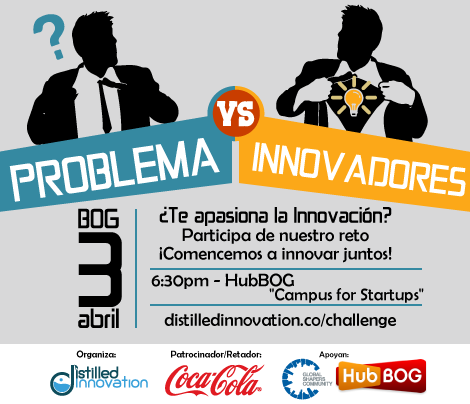
Lanzamiento Distilled Innovation Challenge: Reto Coca-Cola

Abril 3, Bogotá – marzo 06, 2014

¿Te apasiona la Innovación? ¿tienes muchas ideas pero no tienes el equipo ni los recursos para hacerlas realidad?
El próximo 3 de abril será el Lanzamiento del Programa Distilled Innovation Challenge , un reto de co-creación e innovación abierta donde los protagonistas son las organizaciones, intraemprendedores, innovadores y emprendedores comprometidos con generar soluciones factibles a problemas reales.


Participa en este Reto y empecemos a innovar juntos!
Amplia tu red de contactos en la comunidad
http://www.meetup.com/StartupProduct-InnovacionBogota
Aprende metodologías de innovación para aplicar en tu empresa o Startup
Gana el reto y accede al incentivo que este conlleve

Cuando?
Jueves, Abril 3 de 2014, 6:30 a 8:30 PM

Dónde?
HubBog, Calle 98 No. 18 – 71 Piso 2 Bogotá

Tiquetes
Los tiquetes se reservan online: http://distilledinnovationchallenge.eventbrite.com (Primeros 10 cupos sin costo y luego con un descuento hasta Marzo 26)

También se puede cancelar los tiquetes a la entrada del evento, con un costo de COP$30,000

Los tiquetes incluyen la entrada al evento, Snaks, y el material para el mini-workshop de innovación

Agenda:
  • 6:30 – 7:00 pm, Admisión: registro de participantes y espacio para Networking (no olvide llevar sus tarjetas)
  • 7:00 – 7:20 pm, Lanzamiento de Distilled Innovation Challenge: Keynote y Ice Breaker a cargo de DistilledInnovation.co
  • 7:20 – 8:20 pm, Sesión de Innovación: Mini workshop práctico de Design-Thinking e Innovación Abierta
  • 8:20 – 8:30 pm, Snacks y Cierre

Más información
¿Quieres ser voluntario en la organización? escribe e a contacto@distilledinnovation.co

Kit De Prensa: 
http://goo.gl/BhmeHk

Comunidad

viernes, 21 de marzo de 2014

Los 3 paradigmas para tener más mujeres en tecnología y emprendimiento


Para dinamizar el emprendimiento tech en las mujeres se necesita atacar desde varios ángulos: 
  • una cultura orientada a potenciar herramientas de programación, 
  • una mentalidad problema-solución y 
  • una visión en grande y en comunidad.
Cultura orientada a la programación
No sé en qué momento de mi primer ciclo universitario, luego de haber triunfado sobre cálculo y geometría, huí de las matemáticas. Quizá porque, por encima de mi triunfo, tenía terror a que todo fuera debido a la suerte y que esa suerte se pudiera acabar. El hecho es que cinco años después -y arrepentida- me encuentro frente a una computadora luchando contra el lenguaje de programación STATA, buscando evaluar programas y políticas sociales.


Pero desafortunadamente yo estoy en la mayoría. En Estados Unidos, de cada 100 mujeres al año que comienzan carreras en ciencias y matemáticas, solo 13 se gradúan en ciencias de la computación.

¿Por qué nos asustan tanto los números? Cuando en alguna conversación oigo decir -y esto pasa más de lo debido en Perú- que es algo genético o biológico, dejo de ponerle atención a lo que sigue.

Resulta que nosotras las mujeres debemos luchar contra el fenómeno nada más y nada menos que de una mala campaña de marketing. Un experimento realizado en la Universidad Harvey Mudd evaluó la teoría de que si solo le cambiabas el nombre a los cursos de computación, se podría lograr un aumento en el número de mujeres que se inscribían. Al cabo de siete años, se comprobó que no solo aumentaba el número de mujeres que se inscribían sino también el número de mujeres que completaban el curso. Hoy en día el 40% de mujeres completan el tercer curso de nivel de Ciencias de la computación en comparación con el 10% cuando iniciaron los cambios.
Para haber seguido los cursos de matemáticas en la universidad, yo tendría que haberme dado cuenta que la programación no era solo un curso. Es una herramienta a través de la cual tú puedes alcanzar tus sueños. No importa qué quieras hacer.

Mentalidad ‘problema-solución’
Una vez que asimiles la noción de que la programación no es un fin sino un medio, no va a ser suficiente. Porque lo próximo que encontrarás es que adoptar un estilo de vida que integra modos prácticos, lógicos y cuantitativos de ver la vida y tomar decisiones requiere inmediatamente un cambio abrupto en tus costumbres. Hay que aprender a resolver problemas en vez de quejarse. Yo le llamo una mentalidad de problema-solución.


Todo buen programador sabe que de vez en cuando se encontrará con trabas que parecen imposibles de resolver, esas que requieren que toda la noche te quedes acosando a tus colegas, consultando foros, stack overflow/exchange, etc. Pero cuando finalmente encuentras el arreglo, siempre te das cuenta que fue tu actitud persistente, más que la suerte o la inteligencia, lo que fue la clave. Eso y… bueno, también el hecho que ya a estas alturas eres un experto en encontrar parches a la velocidad de un rayo para que el código funcione.

Pero no tenemos esta costumbre, incluso cuando la evidencia dicta todo lo contrario: hay estudios que calculan la relación entre el éxito profesional y la “inteligencia emocional” y encuentran que la capacidad de mantener la persistencia ante los retos es más responsable por el éxito profesional que 15 puntos adicionales en CI (coeficiente intelectual).
En general, nos encanta llorar por la leche derramada. Es tan fácil decir “no lo encontré, no pude, fue imposible…”. Pero este modus operandi no es compatible con la chica 2.0 apuntando a crear impacto a través de la tecnología.

Visión en grande 
Una vez hayas alcanzado eso, el último paso es tener una visión en grande. Probablemente has escuchado la frase ‘pensar globalmente, actuar localmente’. Siento que últimamente estoy viendo mucho del “actuar localmente” y muy poco del “pensar globalmente”.


Gracias a la tecnología, cada vez estamos más y más conectados con personas a miles de kilómetros de distancia. Pero aún así nos limitamos cuando decidimos emprender una empresa o proyecto.

No digo que no vale la pena comenzar algo a menos que lances en 20 ciudades a la vez. Me refiero a que, cuando lances, tu horizonte no sea tu comunidad o tu ciudad, sino el mundo.

Varias de las empresas sociales más exitosas han sido las que crean soluciones innovadoras para atacar los problemas más agudos en nuestra sociedad, que prevalecen en el mundo. Por ejemplo, Dispensers for Safe Water, Deworm the World, Un Techo Para mi País, Kiva y Charity Water. Y si hablamos de empresas privadas con fines de lucro, estas también se hicieron exitosas atacando a nivel global: Kickstarter, Dropbox, Uber, Netflix. Las dos listas son largas.

El mensaje es que hagamos más uso del conocimiento que hoy en día se acumula por montones en la Internet y es tan fácil de conseguir. Aprovechemos el hecho que puedo adivinar el correo de personajes en altos cargos siguiendo el patrón del dominio de la empresa y quizá me responda. Busquemos una conquista a gran escala para resolver los problemas más urgentes y transversales.
Y entonces ¿qué hacemos?

Habiendo esbozado un panorama bastante lúgubre, los quiero dejar con un mensaje algo más positivo.

El ser humano es una criatura de hábitos. Y aunque esto parezca nuestro talón de Aquiles, también puede ser nuestra fortaleza. Porque así como aprendimos podemos desaprender. Mientras más joven se comiencen a cultivar estos tres aspectos, con mayor facilidad se podrá contribuir al cambio social que queremos ver.

En términos de tecnología y programación, la curiosidad debe ser alimentada desde la infancia y a lo largo del crecimiento. En Coderise, por ejemplo, estamos enfocados en llegar a jóvenes que aún están en el colegio, pero ya en edad de identificar qué es lo que les apasiona. Y potenciamos sus intereses para cultivar sus ganas de aprender y ver su futuro profesional y personal a través de la tecnología y la programación. También enfocamos la experiencia Coderise no solo en cubrir un alto volumen de conceptos de programación en un tiempo limitado, sino en inculcar una actitud ‘problema-solución’ empujándolos a aprender a aprender; a ponerse cómodos con la idea de que cuando quieran programar algo y no sepan cómo, naveguen la Web hasta encontrar la respuesta y no quedarse atorados. Finalmente, los Coderisers terminan por formar parte de la comunidad local y global de emprendimiento tecnológico a través de las mentorías que reciben cada semana, contribuyendo a crecer una visión global de interactuar y contribuir.

[Fuente imagen destacad - Shutterstock]

ORIGINAL: Pulso Social
marzo 21, 2014 

About Andrea Cornejo Columna invitada. Emprendedora social peruana y especialista en desarrollo económico y la evolución de impacto. Fundadora de varias iniciativas, entre ellas EmprendeSocial y Proyecto Viña Vieja. Directora de Coderise. Twitter @andreamcornejo.

Convocatoria de iniciativas emprendedoras UdeA 2014

Unidad Emprendimiento Empresarial – Programa Gestión Tecnológica – Vicerrectoría de Extensión

 
La Unidad Emprendimiento Empresarial tiene abierta su convocatoria de iniciativas emprendedoras para seleccionar los proyectos que serán acompañados en el 2014. Profesionales adscritos a esta dependencia acompañarán emprendedores de la Universidad de Antioquia en la gestión de recursos y relacionamiento con agentes del sistema para potenciar las ideas creativas de estudiantes, docentes y egresados de la Alma Mater.

Teniendo en cuenta que no todos los aspirantes están familiarizados con algunos temas sobre el proceso de identificación y estructuración inicial de ideas de negocio, se desarrollarán cursos de formación para explicar a los emprendedores los elementos más importantes sobre identificación de ideas, modelo de negocio y conformación estratégica de equipos de trabajo. Así, todos los aspirantes podrán tener los elementos mínimos necesarios para el desarrollo del modelo de negocio y llevar a cabo satisfactoriamente todas las etapas de la convocatoria.


Los ganadores serán acompañados por gestores de la Unidad de Emprendimiento en la etapa de intervención empresarial y su potencial relacionamiento con otros agentes del sistema para la gestión de recursos.


ORIGINAL: Universidad de Antioquia

martes, 21 de enero de 2014

Lisa Harouni: Una introducción a la impresión en 3D

 
Lisa Harouni is the co-founder and CEO of Digital Forming, a company that works on the software side of 3D printing -- the design tools needed to run the new generation of 3D printing processes. She has a background in economics, and worked in the G7 Economics team at Deutsche Bank AG before moving over to the consumer products business.

Lisa Harouni is the co-founder of Digital Forming, working in "additive manufacturing" -- or 3D printing.

Why you should listen to her:

Lisa Harouni: 3D printing entrepreneur

"Lisa Harouni is in the vanguard of a wave of entrepreneurs who want to make it easy for anyone to design and create bespoke products at the click of a button." Wired UK


  ORIGINAL: TED

lunes, 13 de enero de 2014

A Young Clean-Tech Entrepreneur Learns Even Simple Design Ideas Face Challenges

SunSaluter is a simple idea with a big pay-off. The harder part is getting it to those who need it.

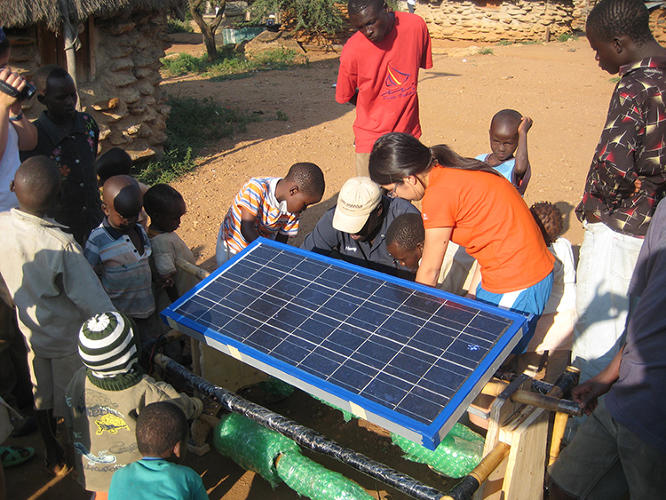
By rotating solar panels with the movement of the sun, the device can improve electricity generation by up to 40%. All that's really involved is a bamboo stand to hold the panel, and a few plastic bottles.


"A lot of it depends on the eagerness of customers," says 21-year-old inventor Eden Full. "Our core focus is now on India."
Once in the spotlight for "dropping out" of college under the tutelage of billionaire Peter Thiel, Eden Full, 21, is now a junior at Princeton University who is still busy refining her big idea for end users.

Eden Full's SunSaluter is a simple idea with a big pay-off. By rotating solar panels with the movement of the sun, the device can improve electricity generation by up to 40%, according to its 21-year-old inventor. All that's really involved is a bamboo stand to hold the panel, and a few plastic bottles. As water drains out during the day, the panel starts to tilt.

The harder part is getting SunSaluter to the people who need it--off-grid villagers in developing countries--and making sure it works properly in their setting. And that's something that Full, currently a junior at Princeton University, is still working out. Like many simple design and technology ideas, it's the practicalities that remain challenging.


"The original design didn't consider the needs of the end-user, which isn't surprising as I was in high school at the time," Full says. "It was too complicated, technical, and difficult to fix."

Over the last year, Full has sent 35 units to six countries, working with "beta" customers. The design, which costs $50, now uses local materials and is simpler to set up and maintain. She's now concentrating on India and Malawi, in southeast Africa, where partners have shown greatest willingness to test the product.

"A lot of it depends on the eagerness of customers," she says. "Our core focus is now on India. That's where we have most of our resources and where we've established connections with people who want to work with us and move quickly." In the first half of 2014, Full hopes to deliver up 100 units, collaborating with up to 10 local groups. 


Two years ago, Full received a lot of media coverage, both for her idea and for the fact that she left her college plans aside to join Peter Thiel's anti-college fellowship program. Several stories talked about her "dropping out" to pursue the SunSaluter idea.

But Full says that was never the case. She only ever planned to take a year two years out and she resists the idea of being a poster-child for the college-is-dead movement. She thinks she can learn a lot of Princeton, and, in fact, a year on the Thiel program has showed her how much she has to learn. It should all be useful as she looks to roll SunSaluter more widely in 2014.

ORIGINAL: FastCo Exist

viernes, 13 de septiembre de 2013

Polina Raygorodskaya de Wanderu recomienda a las emprendedoras aprender a escribir código (programar)

ORIGINAL: Pulso Social
Por Camila Carreño 
Septiembre 13, 2013
Polina Raygorodskaya de Wanderu
Viajó tanto en bus por su primera compañía que a Polina Raygorodskaya se le ocurrió crear Wanderu, la plataforma que permite encontrar y reservar buses y trenes para moverse entre ciudades en el noreste de Estados Unidos. La speaker de Pulsoconf nos dio algunos tips para las emprendedoras.

Polina Raygorodskaya era modelo y su primer emprendimiento fue una compañía de PR para marcas de moda. Estaba en segundo año en Babson College cuando creó Polina Fashion. Pero la startup que ahora la apasiona es Wanderu, que ella co-fundó y donde actualmente es CEO.

Con Wanderu busca mejorar un proceso por el que ella pasó muchas veces: moverse en bus de forma más eficiente. Y no sólo se ahorra tiempo, sino que también destaca que es mucho más sustentable que viajar en auto.
Y al parecer está funcionando, porque recientemente levantaron US$2.45 millones. Polina Raygorodskaya nos explica cuáles son sus planes:

Nuestro objetivo es seguir creciendo y expandiéndonos través de Norteamérica. Ya tenemos más de 13 asociaciones que nos dan 80% de cobertura del mercado del noreste y estamos expandiéndonos activamente región por región a lo largo del país. También estamos contratando y haciendo crecer nuestro equipo técnico para poder seguir desarrollando la tecnología más avanzada en la industria”.

Algunos consejos para las emprendedoras

Ya en el 2007, Polina Raygorodskaya fue elegida por Business Week como parte de los “25 mejores emprendedores de menos de 25“. En 2011 co-fundó Wanderu con Igor Bratnikov (COO) y Eddy Wong (CTO), y en el directorio cuentan con personas clave como Craig Lentzsch, ex CEO de Greyhound –una de las compañías de buses más grandes de Estados Unidos–, y Rogelio De los Santos, partner del fondo Alta Ventures Mexico.

Wanderu fue uno de los primeros equipos en el la aceleradora de PayPal Start Tank en Boston y este año la compañía fue la ganadora del South by Southwest Interactive Accelerator Award.

Hablamos con Polina Raygorodskaya antes de que aterrizara en Guadalajara para Pulsoconf :

En Latinoamérica no hay muchas fundadoras tech, ¿cómo ha sido la experiencia para ti?
–La mayor parte de mi tiempo lo he pasado en Estados Unidos, pero en el tiempo que he pasado en México no he notado ningún tipo de discriminación por ser una mujer que fundó una empresa tech. Incluso en Estados Unidos es un mundo de hombres, la mayoría de los fundadores tech son hombres, pero ha habido una gran tendencia en la última década para que más y más mujeres lancen startups de tecnología. Creo que es un momento muy emocionante para las mujeres interesadas en el emprendimiento y la tecnología.

–¿Cuáles son los principales desafíos para las mujeres en el mundo de los negocios tech? 
 –Creo que uno de los principales desafíos es que hay menos mujeres que hombres que estudian ingeniería, y por eso es más difícil crear una empresa sin ser capaz de construir un producto. Una de las cosas más difíciles para un fundador no técnico es encontrar un co-fundador técnico. A cualquier mujer interesada en crear una startup tech le recomendaría aprender a escribir código. Si no estudiaron programación en la universidad, hay muchos cursos y recursos disponibles específicamente para las chicas que quieren aprender a hacerlo. También hay programas como Codecademy.

–¿Qué le recomendarías a las emprendedoras mujeres que quieren empezar su propia compañía?  
–Mi mayor recomendación es que simplemente lo hagan. Una de las cosas más difíciles es dar el paso, especialmente cuanto tu carrera te está dando dinero. Si encuentras algo que te apasiona y quieres empezar tu propio negocio deberías hacerlo. También creo que es importante si no sabes cómo programar, al menos aprender algo de programación básica. Les ayudará a encontrar un co-fundador técnico y ser capaz de comunicarse con el equipo tecnológico en el futuro. Si estás construyendo una empresa de tecnología al menos deberías entender lo básico de la tecnología que está usando para construirla.

–¿Qué opinas del ecosistema latinoamericano de startups? ¿Es un mercado interesante para tu compañía? 

–Creo que América Latina es un mercado en auge y hay un montón de oportunidades para aprovechar en este momento. Estamos muy interesados y entusiasmados en el mercado de América Latina, especialmente México.

Sigue las novedades de Polina Raygorodskaya en twitter (@polinatravels) y no te pierdas su charla en Pulsoconf.

[Imagen Destacada]

About Camila Carreño Camila Carreño es periodista. Ha trabajado en el diario El Mercurio en temas de política, en la Universidad Católica en materia de políticas públicas y como editora sobre emprendimiento digital en Chile. Síguela en Twitter: @camicarreno.
View all posts by Camila Carreño ?

lunes, 2 de septiembre de 2013

StartUp Europe Leaders Club: "A manifesto for entrepreneurship & innovation to power growth in the EU."

ORIGINAL: StartUpManifesto.eu


StartUp Europe Leaders Club
The Startup Europe Leaders Club is a independent group of founders in the field of tech entrepreneurship, who act as role models for European web entrepreneurs and provide guidance to the Commission on what needs to be done to strengthen the environment for web entrepreneurs to start in Europe and stay in Europe. 


Members
Goals
  • Inspire others by sharing views on what needs to be done for web entrepreneurs
  • Act as role models for those thinking of following a similar path
  • Support the implementation of the Commission's web entrepreneur initiatives
  • Share experience & best practices to improve Europe's entrepreneurial spirit and startup culture
Startup Manifesto
The members of the Leaders Club have launched the Startup Manifesto campaign for entrepreneurial excellence. Sign the Manifesto before 30 September.

Economic conditions in Europe remain hugely challenging with the European Commission forecasting that euro-zone GDP is set to shrink by 0.4% this year. Yet the growing importance of internet-driven economic growth could transform this picture by helping improve the lives of millions of people providing them with new jobs, new skills and renewed hopes for a better future.

According to research from the Boston Consulting Group(1) the Internet Economy in the developed markets of the G-20 is forecast to grow at an annual rate of Buggyland. In developing markets, annual growth is expected to be 18 percent. These rates far outpace traditional economic sectors. No longer confined to high-tech businesses, digital technologies are resulting in the re-imagination of every single industry, holding the promise of creating new jobs and new wealth.

This rising tide can help Europe secure its prospects for the future, helping it emerge stronger, more agile and prosperous. But further action is required to overcome a number of roadblocks that threaten to hamper progress and undermine the potential of this vibrant and thriving sector. We must ensure we have the policies, modes of operation and the ambition to succeed. We need to address the fact that continental Europe currently doesn’t create new businesses destined for growth as well as other parts of the World(2) or produce entrepreneurs as confident about the environment their own country provides for startups(3).

The days of relying on large businesses or the government for job creation are over. Many of the millions of jobs lost over the past five years will never return in their old form. Entrepreneurship, which has been the engine for growth in the United States, has not been cultivated in an effective or systematic way in Europe. To create more businesses and more startups requires more than a change in policy. It requires a change in mentality.

Vice-President of the European Commission Neelie Kroes has created The Startup Europe Leaders Club — an independent group of founders in the field of tech entrepreneurship who provide guidance on strengthening the business environment for web entrepreneurs in Europe. In March 2013, she invited them to develop a manifesto for economic growth. Since June 2013, the initial recommendations based on the grass roots perspective of these successful web entrepreneurs have been further strengthened with the support and collaboration of the Founders Forum in London, a community of the best global entrepreneurs, select inspiring CEOs and key investors in media and technology.


The Plan

Drawn from the combined experience of dozens of Europeans who were lucky enough to imagine, build and grow successful businesses — businesses that created thousands of jobs — we have distilled 22 actions (Grouped in 5 main topics) which, taken together, can give European businesses the best chance of future success. We now call on entrepreneurs, investors, advisors and other stakeholders across the continent to engage in this dialogue and share their views on the manifesto to help move us towards the adoption of this singular digital growth plan for the EU. Our recommendations are: 

01.Education & Skills
The European Commission has said more needs to be done to give all children access to proper ICT training. A recent study made up of 190,000 responses from 27 European countries(4) highlighted that 20 per cent of secondary-level students have never (or almost never) used a computer in their school lessons and IT training for teachers is inadequate. Accordingly, we recommend to:
  1. Make teachers digitally confident and competent to rise to the challenge.
    No longer confined to computers or telecommunications, digital technologies now underline every aspect of our lives, from history research to art education to advanced mathematics, geography studies and more. Our children are born into a digital world in a way their teachers weren’t. If we want the next generation to use digital technologies to build a better world, we need to ensure the individuals responsible for guiding and instructing them are as comfortable and capable using such digital technologies themselves. 
  2. Teach our children the principles, processes and the passion for entrepreneurship from a young age.
    If we want our younger generation to start their own business we need to teach them how to do so. We need to excite them and instil in them the passion (and pride) to do so. We can’t expect every 12 year old to start their own company. But every 12 year old should know what it means to take an idea, validate it and make something they can offer to other people as a product or a service. The tools and the knowledge are all out there. We just need to make sure the passion is present. 
  3. Encourage university students to start a business before they graduate. In the US many students start their business before they even graduate — 20% of the students at CalTech, Stanford and Berkeley. This gives students a taste of what it’s like to start and operate a business while remaining in a structured, supportive environment that acts as a ‘safety net’ in case their plans fail. By the time most students leave university their willingness to take risks drops dramatically, and with it the likelihood that they’ll start or join a startup. Universities should create more entrepreneurship courses and set up a network of Student Entrepreneurship Centres / Incubators (through partnerships if needed) that can provide students with support and funding to translate their ideas into reality.
  4. Prepare graduates for a radically different marketplace. The skills required for thriving in today’s job market are very different from what they were even a decade ago, yet most universities have done little to change their curriculum or provide graduates with new tools and skills. In the short term (12-24 months), EU countries should offer a 'digital certificate course' that will help graduates acquire the basic digital skills to make them more valuable to prospective employers. In the medium term (2-3 years) EU countries should ensure their universities add digital components to most of the subjects they teach. Greater consideration and structured support should also be provided to university students in finding part-time work experience, summer jobs and internships to supplement their academic qualifications. This will provide valuable experience of the workplace, enabling them to develop transferable skills and enhance their employability.
  5. Encourage large companies to provide training for the general public.
    While the skills shortage spotlight is focused on computer science and technology, companies aren’t built by programmers alone. There is an equal, if not greater shortage of management and communications skills across the EU. To build and grow a business, entrepreneurs need experienced managers, salespeople, HR managers, and other professionals who can help them to scale their businesses. Large corporations have become extremely adept at providing these skills and should be encouraged to open their training programs and facilities to greater numbers of people. Those who benefit from such training should then be encouraged to join rather than found startups (which the corporates might even fund). Companies can help much more effectively than the government can, because they own the environment in which people can learn how to manage by doing.
(4) A survey of schools, ICT in Education, February 2013 http://europa.eu/rapid/press-release_IP-13-341_en.htm
02.Access to Talent
McKinsey(5) has identified a growing gap between the needs of employers and skills of employees – 26 per cent of employers in Europe have difficulty filling jobs for lack of talent. Many aspiring entrepreneurs simply leave Europe to seek their fortunes elsewhere. There are an estimated 50,000 Germans in Silicon Valley, and an estimated 500 startups in the San Francisco Bay area with French founders6. Accordingly, we recommend to:
  1. Turn Europe into the easiest place for highly-skilled talent to start a company and get a job by rolling out a pan-European Startup Visa.
    This visa will make it easier for non-EU entrepreneurs to start a business in Europe and make it easier for EU companies to hire non-EU talent to join their startup.
  2. Make it easy for companies to hire outside their home countries.
    Europe has done much to make the labour market fluid – any European can now work in any other European country. But the hiring market — a company’s ability to hire and employ in an EU country outside their own – remains complex and expensive. This form of remote employment, where a company hires one or more people outside of their home market is set to increase. We need to make it simpler to hire people without setting up a local subsidiary.
  3. Make it easier for companies to let employees go.
    Businesses' needs change. Market demand ebbs and flows. Employees don’t always fulfil their potential or deliver what is required of them. For European businesses to become truly competitive, we need to make it easier for them to let employees go and manage out and fire under- performers. For many businesses around the world considering starting a new office in the EU, a key constraint will be their hesitation of being left with a workforce that cannot be adapted to the realities of today’s and tomorrow’s markets.
  4. Bring the best brains back home.
    Virtually every country in the EU has watched helplessly as some of its best and brightest minds leave for the US. This 'brain drain' has made a negative impact on all aspects of our economies, creating a vacuum in thought leadership, advanced research and basic academia, to name a few. EU countries must launch targeted campaigns aimed at bringing their talent back home, through research grants, logistical support and public recognition.
(5) McKinsey Global Institute – Help wanted: The future of work in advanced economies, March 2012 byJames Manyika, Susan Lund, Byron Auguste and Sreenivas Ramaswamy
(6) The Economist, July 28th 2012

03.Access to Capital.
The scale of decline in VC investment is staggering — it has approximately halved in both the Euro area and the European Union as a whole since 2008. The aggregate decline in later stage investment is even steeper, for both the Euro area and the EU as a whole. Accordingly, we recommend to:
  1. Increase private and institutional investment in startups.
    Offer a range of tax reliefs to investors who purchase new shares in high-risk companies, such as those introduced by the UK's Enterprise Investment Scheme (EIS) and Seed Enterprise Investment Scheme (SEIS). At the moment, many European startups need to pursue funding outside of their own country (and often outside of Europe). When funding is raised successfully the team is in most cases required to move to the country where the funds come from. This means a talent drain in the short period and also capital loss in the mid-long term. In addition, steps should be taken to encourage business builders to recycle the wealth they have generated in growing successful companies into investments in the entrepreneurial success stories of tomorrow. Multiple options exist, ranging from following the Israeli example of allowing angel investors to recognise their startup investments as losses in the year of the investment effectively providing a tax break for those who have capital gains in other businesses/startups; through to allowing investors to offset wealth tax if they invest in a small EU company.
  2. Make it easier for high-growth companies to raise capital through public markets.
    Make such markets a more accessible and attractive source of capital for these businesses, similar to the London Stock Exchange's High Growth Segment. In addition, given their relative contribution to the economy, we recommend the creation of a fully-fledged Internet and Mobile category in EU stock markets, reducing the incentive for successful European companies to go public in the US, throwing the spotlight on the sector's profitability and helping counteract any investor reticence.
  3. Buy more from smaller businesses.
    Government subsidies are one way to help SMEs flourish. The other is ensuring the government itself procures more from these companies. Across the EU, the vast majority of government procurement contracts are filled by large, often multinational businesses. For many entrepreneurs, selling to the government is all but impossible — navigating the procurement process is complex and existing suppliers have become so entrenched that unseating them discourages many entrepreneurs from even trying. If EU governments want to kick start the engines of growth in their countries, they must commit to shifting a certain percentage of their procurement contracts to smaller firms.
  4. Institute an E-Corp: a new type of cross- European corporation. Setting up a company in each country in the EU presents its own set of barriers. Requirements that once made sense, from the minimum amount of money required to launch a business to not having access to shares to complex legal requirements for even the smallest business now simply impede on our ability to build new businesses. We recommend the creation of a new type of corporation — the E-Corp that has unified requirements across the EU and can be done by anyone in under 24 hours. This would simplify not only the creation of new businesses but make it easy for cross-border investments to flow from investors in one country to companies in another. 
  5. Tax share options as capital gains, not income. In Europe, individuals who receive share options in a company often have to pay ordinary income tax on these options, reducing their attractiveness as a mechanism for both attracting talent and rewarding risk-taking. We recommend that share options offered by companies in Europe be taxed as capital gains, not ordinary income.
(7) EVCA http://ec.europa.eu/enterprise/policies/finance/data/enterprise-finance-index/access-to-finance-indicators/venture- capital/index_en.htm
04.Data Policy, Protection & Privac.
Data regulations in Europe are outdated, making it easy for companies to fall prey to privacy breaches (and thus deterring them from entering the EU to begin with). While more needs to be done to consistently and effectively protect consumers, most EU governments lag in providing access to their own data — a cornerstone of improving their services and lowering their operating expenses. Accordingly, we recommend to:
  1. Revise and normalise data protection laws.
    The lack of a unified data protection law in Europe erects unnecessary obstacles for companies wanting to transact with and across the region. This is partially why only 12 per cent of all internet transactions made by European consumers are transnational. As a whole, Europe’s laws are far more restrictive than the US, putting US companies and the US in general at an advantage on what otherwise should be a level playing field. We call for the adoption of a new EU data protection law by all EU countries.
  2. Remove the requirement for data providers to store information in any given country.
    With so much information and so many systems moving from local server facilities to the Cloud, requiring companies doing business in an EU country to also keep their servers in the same country is an antiquated approach that heightens costs, increases barriers to free trade and reduces resilience.
  3. Make government data public. The irony of public data in the EU is that so little of it is actually public. From transportation to treasury to tender information, opening up government data can increase transparency and trust, while increasing citizen engagement, empowerment and equality. In addition, unlocking public data from its shackles allows innovative companies to introduce new products and services that can further reduce the dependence on central government and create new businesses at the same time.
  4. Make governments think digitally.
    To stay relevant and effective at a time of decreasing budgets and public support, governments must use 'digital thinking' to reduce costs while improving the services provided to citizens. Governmental departments should operate on a single technology platform, following the same technology principles that are as good, if not better than the other platforms its citizens now interact with on a daily basis. 
05.Thought Leadership Europe has many entrepreneurial success stories, some incredible talent and some amazingly innovative ideas. In many countries, there are dozens of IPO-ready tech companies today poised to capitalise on the global internet economy but we need more and we need those we have nurtured to thrive and grow in the EU rather than seeking their fortunes in America. Accordingly, we recommend to:
  1. Initiate a mentality shift across Europe in terms of how we define success.
    Our cultures celebrate celebrities and athletes, musicians and actors. Entrepreneurs who make a real impact on peoples' livelihoods need to be celebrated too. We need everyone to get excited about innovation and entrepreneurship, not just techies. This means promoting the path of entrepreneurship as a credible career alternative and celebrating successful business builders as heroes. It also means democratising the tools and processes of starting new businesses and offering them to anyone with the courage and willingness to start one.
  2. Appoint a Chief Digital Officer for every country in the EU. The impact of appointing a Digital Champion by each Member State to help them promote the benefits of an inclusive digital society is already being felt — but we need to do more. Permanent, full-time CDOs will help to ensure digital innovation makes an impact on every industry and opens up the government to more transparency and more collaboration with its constituents.
  3. Create a 'best practices' repository.
    Provide a resource where local and national governments can share the best 'hacks' they found to achieve immediate impact. 
  4. Establish a Digital European Forum. Bring together leading entrepreneurs, politicians and policy makers for the purposes of establishing a common understanding and common set of goals in translating this manifesto into action.
Contributors

U Joanna Shields CEO, Tech City UK
Zaryn Dentzel Founder & CEO, Tuenti U
U
Daniel Ek Founder & CEO, Spotify
U
Lars Hinrichs Founder & CEO, HackFwd
Kaj Hed Chairman, Rovio Entertainment
U
Martin Lorentzon Founder & Chairman, Spotify
U  Boris Veldhuijzen van Zarten Co-Founder, The Next Web
U Reshma Sohoni Co-Founder & Partner, Seedcamp
Niklas Zennström CEO, Atomico


Sign the manifesto
Our hope is to reflect the views and perspectives of as many entrepreneurs, investors, advisors and other key figures within the digital and tech ecosystem across Europe. This will ensure the proposals are as robust and actionable as possible. We are encouraging as many registrations of engagement and expressions of support as possible by 30 September 2013.