Mostrando entradas con la etiqueta Cooperación. Mostrar todas las entradas

sábado, 10 de mayo de 2014

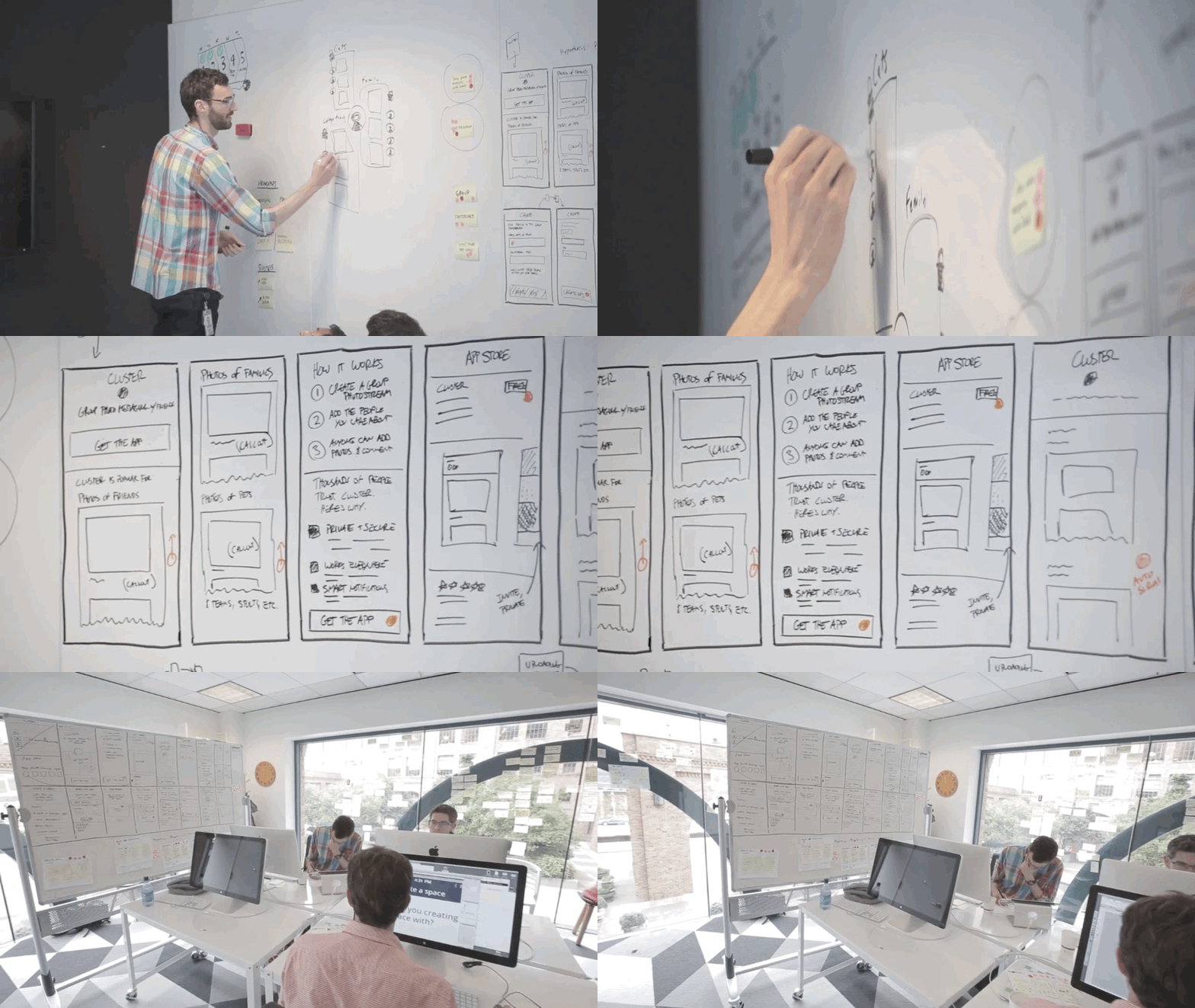
Google Ventures: Your Design Team Needs A War Room. Here's How To Set One Up


WANT TO FOSTER CREATIVITY? SKIP THE FOOSBALL TABLE AND OPT FOR A WAR ROOM INSTEAD. GOOGLE VENTURES'S JAKE KNAPP SHOWS YOU HOW. PLUS: A PEEK INSIDE GOOGLE VENTURES'S OWN WAR ROOM

In the last two years at Google Ventures, I’ve done design sprints with more than 80 startups. One of the simplest tricks I’ve learned is that a dedicated space with walls--a war room--always helps us do better work. The walls of a war room can
  • extend a team’s memory, 
  • provide a canvas for shared note-taking, and 
  • act as long-term storage for works in progress.
Unfortunately, war rooms are few and far between. I’m surprised by how many tech companies make space for a foosball table (fun but seldom used), yet don't dedicate a room to their most important project.

If your team doesn’t have a war room, don’t worry. In this post, I’ll explain how to put one together on almost any budget. Spoiler: while a dedicated physical space is great to have, it’s not an absolute necessity. But first, here’s a bit more on why war rooms work so well.

The Innovation by Design Awardscelebrates the controversial ideas, new products, business ventures, and wild ideas highlighted every day on Co.Design. Winners and finalists are featured in a special design issue of Fast Companymagazine. Enter today.
SPATIAL MEMORY > SHORT-TERM MEMORY

To solve a complex design problem, you need to track lots of moving parts. As humans, our short-term memory is not all that good--but our spatial memory is awesome. Plaster a room with notes and you take advantage of that spatial memory. You begin to know where information is, which extends your ability to remember things.

PHYSICAL IDEAS ARE EASIER TO MANIPULATE
We all know it’s better to re-order a prioritized list of sticky notes or re-draw a diagram than to make the same decisions verbally. That’s why there are whiteboards in meeting rooms and why people love agile trackers with sticky notes. War rooms take those tools to the next level.

WAR ROOMS BUILD SHARED UNDERSTANDING
War rooms help your team work better together. When you capture every decision and put it on the wall, you don’t have to wonder if everyone is on the same page. The room is the page. The more you put on the walls, the more shared understanding you build. As a bonus, you spend less time revisiting already-discussed issues. A war room works great for long-term projects of a few days or a few weeks--and it also works great for one-off meetings.

INGREDIENTS OF A GREAT WAR ROOM

LOTS OF SURFACE AREA
In a Google Ventures design sprint, it’s common to have many things on the walls at once: user story diagrams, research notes, printouts of the existing UI, sketches of possible solutions, a detailed storyboard, and sometimes more. To accommodate all that stuff, you need a lot of space. That means whiteboards, windows, and empty walls where you can stick stuff.

Every bit of window, wall, and whiteboard is useful.

DEDICATED TO PROJECTS (NOT MEETINGS)
You don’t want your war room turning into just another conference room. For best results, remove your war room from your company’s room-scheduling calendar.

AS MANY WHITEBOARDS AS YOU CAN FIT
Whiteboards come in a lot of styles, so choose wisely.

  • Floor-to-ceiling wall-mounted--The best. I like to use every square inch of available space, and with these babies, that’s a lot of space.
  • IdeaPaint--Great stuff (unless your walls have a funky texture). And for goodness sake, paint all the walls, otherwise, get ready to have somebody write “Not a whiteboard!” in whiteboard marker on the unpainted walls.
  • Normal wall-mounted--These are okay if you get more than one.
  • D.I.Y. shower board whiteboards--Much cheaper than real whiteboards, these require more elbow grease to install (you may spill Liquid Nails on your designer-y plaid shirt). The surface isn’t quite as good, so expect to clean it more often.
  • Rolling--These come in small and giant sizes. The small ones have a lot of unusable space down by the floor, and they shake when you draw on them. The giant ones cost a lot more, but they’re actually usable.
FLEXIBLE FURNITURE
In our design sprints, we go through a lot of different work modes. Sometimes we need to talk a lot, and we want chairs and open space. Other times, we’re drawing on paper and we want desks. The ideal war room has furniture that’s lightweight or on wheels, so it’s easy to move.
Everything is lightweight, on wheels, or both.

You should always have at least one person wearing plaid--three or more if possible.

THREE WAR ROOM RECIPES

1. GOOGLE VENTURES DESIGN WAR ROOM
We took over a conference room and removed the big table in the middle. Next, we installed as many whiteboards as we could. We couldn’t do floor-to-ceiling, but we got close.

Finally we ordered a bunch of flexible furniture--some of it fancy-pants (like Modernica chairs) and some utilitarian (like clipboards and a coat hanger). Here’s the complete shopping list hand-picked by Google Ventures’ Daniel Burka. Some highlights:


2. RECONFIGURABLE CONFERENCE ROOM
It may be impossible to completely take over a room. If you have to share your war room, get some portable wall space that you can assemble and disassemble quickly. Your options:

  • Sticky flip charts--Blank sheets of this stuff make a reusable, moveable backdrop for sticky notes and printouts.
  • Giant foam core--Foam core comes in 96”x48” but it’s expensive and tricky to find, not to mention cumbersome. Which is why I prefer...
  • Rolling whiteboards--see above for our favorite.

3. NO-ROOM WAR ROOM
Sometimes you don’t even have a conference room to commandeer. I’ve seen this challenge at startups in incubators or shared offices. Don’t freak out. You can still make a war room by hacking the space around your desk. Use rolling whiteboards as partitions. It’s just like you’re a kid again, building a fort out of chairs and blankets! But don’t actually use blankets, because your co-workers might get creeped out.

TELL ME ABOUT YOUR WORKSPACE
We’re still experimenting and learning with our own war room, as well as those at our companies. How have you set up project spaces for your team?


ORIGINAL: FastCo Design
By Jake Knapp
May 1, 2014

miércoles, 12 de marzo de 2014

Colombia and Germany consolidate international research partnerships

(c) Linde Storm
Colombia, formerly a dangerous Latin American country plagued by crisis, is now becoming an attractive location for international research partnerships. Cooperation between Colombia and Germany in a wide variety of disciplines is opening up promising prospects for researchers from both countries.

Kidnapping, drug wars and violations of human rights used to be the dominant news topics in the international media about Colombia. The South American country’s image as politically unstable and dangerous overshadowed the work of a vibrant research community and the success stories of existing international research partnerships. Rapid change has recently begun in Colombia, however.

Thus the Colombian research support organisation COLCIENCIAS was given ministry status at the beginning of 2009 and among other things manages the country’s national fund to finance science, technology and innovation, set up in the same year. The budget is primarily used to invest in support and priority subject programmes, for example in the environmental technology and biodiversity sector. In addition, since 2012, ten per cent of mining revenue has been channelled back annually into promoting research and innovation and is managed by COLCIENCIAS.

Research initiatives become international research partnerships
Some of the research partnerships between Colombia and Germany were set up several decades ago, but were often based on the initiative of individual researchers or departments. Much greater importance is now being placed on these research partnerships. Back at the end of the 1960s, for example, marine researchers from the University of Gießen teamed up with their Colombian colleagues to set up a research institute in Santa Marta in northern Colombia; CEMarin is now one of the world’s four centres of excellence funded by the German Federal Foreign Office as part of its Research and Academic Relations Initiative.

In the electrical engineering sector, a Memorandum of Understanding (MOU) was signed in 2012 between COLCIENCIAS and the German Research Foundation (DFG); the MOU focuses on joint research in the field of high-frequency technology. In addition to DFG, organisations such as the German Academic Exchange Service (DAAD), the Alexander von Humboldt Foundation and the German Federal Ministry of Education and Research (BMBF) have identified Colombia as a priority country in Latin America.

From Hegelian philosophy to high-frequency technology
Colombian and German researchers in particular are keen to forge closer links between universities and research institutes. ‘I am very interested in creating closer links between universities in Germany and my own university in Colombia,’ remarked María del Rosario Acosta from Bogotá, for example. ‘With the help of the Humboldt Foundation, I want to organise an international conference on philosophy (probably the philosophy of Georg W. F. Hegel) in the near future.’ After completing her university degree, María del Rosario Acosta obtained a doctorate in philosophy from the Universidad Nacional de Colombia in 2007 and now works as an extraordinary professor in the Department of Philosophy at Bogotá’s Universidad de los Andes. She has been working at the Cluster of Excellence on the Formation of Normative Orders at Frankfurt University since 2013 with a grant from the Alexander von Humboldt Foundation.

More exchange programmes for pioneering research partnerships 
María del Rosario Acosta is not only familiar with Colombia’s academic community, but has now also gained an in-depth knowledge of science and research in Germany too. She welcomes the positive changes that are taking place in Colombia and the growing international research partnerships. ‘Colombia’s university system is undergoing very important changes, particularly regarding graduate programmes (...) and also in relation to an increasing interest and quality in research. International cooperation is very important in both cases.’ Her own personal aim is to set up an exchange programme between the philosophy departments of the Universidad de los Andes and Frankfurt University, both for the faculties and for the students and postgraduates.

Colombia already has a new image among alumni
As far as exchange programmes are concerned, considerable achievements have already been made: Through the scholarship loan programme DAAD-COLFUTURO, for example, DAAD and the Colombian foundation COLFUTURO together provide full financial support for 50 Colombians studying for a Master’s degree in Germany. In addition, further candidates receive full funding through COLFUTURO.

German researchers who have already had the opportunity to participate in academic exchanges with Colombia have long since realised that the country’s negative image is a thing of the past. One student from Darmstadt summarised his experience as follows: ‘The first thing a lot of people think of in connection with the country is violence and civil war. Even though these times have now largely been overcome, hardly anyone talks about the positive aspects. That’s what I found so interesting about the country, and I have indeed seen a very different side to Colombia.’ (Source: Gate Germany – country profile on Colombia)

Regular meetings for alumni, debates with university representatives and the promotion of joint projects between Colombia and Germany are just some of the activities organised by Colombia’s two large alumni organisations Asprea and Aspa. As a future alumna of the Alexander von Humboldt Foundation, the option of cooperation within her field offers María del Rosario Acosta huge potential: ‘There is a vitality and a strong potential in the Colombian academic system. There is still a lot to be done, and this is also combined with the impetus and the will to do it.’


Interview about international research partnerships with Colombia in the Community

More information about international research partnerships is available in the Community Group on Study and Research, where you can read the complete interview with María del Rosario Acosta.


ORIGINAL: Alumni Portal  Deutschland
By Sabine Müller

lunes, 30 de diciembre de 2013

Ocean Sampling Day!


I've just learned that June 21st, 2014 is going to be the first-ever Ocean Sampling Day!

The Ocean Sampling Day (OSD) is a simultaneous sampling campaign of the world’s oceans and will take place on thesummer solstice (June 21st) in the year 2014. These cumulative samples, related in time, space and environmental parameters, will provide insights into fundamental rules describing microbial diversity and function and will contribute to the blue economy through the identification of novel, ocean-derived biotechnologies. We expect that these data will provide a reference data set for generations of experiments to follow in the coming decade. It could also function as starting point for regularly coordinated future OSDs.

This is exactly the type of work we hoped to prototype on our trip to the Sea of Cortez next week. It's also exactly the type of work we found out would be breaking the law. I think this is such a cool idea and project, and a great way to harness the power of the growing number of citizen explorers and scientists.


The Ocean Sampling day will take part on the 21st of June in 2014 and will be the biggest global effort in marine science that is carried out in one single day.
More information on: http://www.my-osd.org

ORIGINAL: Open ROV
by David Lang
December 30, 2013

domingo, 7 de abril de 2013

Even Einstein needed a helping hand

ORIGINAL: Marblar Muses

Even Einstein needed a helping hand. Image: Marblar Muses

At Marblar we absolutely refute the concept of a lone genius. The stereotype of a craggy-haired old scientist working around the clock in complete isolation is just for cartoons.

Take Albert Einstein for instance: another original Marblar. Some might say that the stereotype of a ridiculously smart but charmingly-awkward science professor evolved from him. And they’d have a point - his thought-experiments are the stuff of legend. He spent all of his days lost in lonely contemplation on the laws that govern the universe and relativity, right? WRONG!

It’s true that Einstein had an uncanny, almost superhuman ability to connect dots and see things in ways most of us can only dream of. But there was a time early in his life (when he was crafting his theory of general relativity) that Einstein was becoming increasingly frustrated that his perception of space-time curvature was requiring a better grasp of geometry. Quite frankly, Einstein was stumped.

So he reached out to a mathematician friend of his – Marcel Grossman. Grossman came with a fresh set of eyes and immediately referred the young Albert to an Austrian geometrician that had solved this exact problem (albeit in a different context) 50 years earlier! With the obstacle removed, Einstein’s torrent of creativity was free to push on with one of mankind’s greatest insights.

So it’s clear then, that even the smartest people can benefit from a fresh approach… That’s why we’re so excited about Marblar – we’re giving a heap of dormant science and technology a second chance, by welcoming the Marblar-verse into the equation. And as we see on Marblar every day, when you bring a bunch of brilliant people with diverse expertise together, the possibilities are endless. 

There’s no such thing as a lone genius – even Einstein needed a helping hand. Take a look at Marblar today to hook up with smart people building on each others’ ideas to move science forward!

Mehmet Fidanboylu is a PhD student at the King’s College London, and the co-founder of Marblar - a disruptive platform that seeks to crowdsource new ways to use cool science.

Follow Mem @mfidphd

Catch up with Marblar: @play_marbar & facebook.com/marblar

jueves, 14 de febrero de 2013

Could the sea be conscious? Research reveals how tiny plankton behave like a marine 'megamind'

ORIGINAL: Daily Mail
13 February 2013


U.S. researchers find that different forms of picoplankton react as one to environmental changes
Although as different as humans and fungi, the creatures' behaviour was linked

Findings could help researchers understand why some species are impossible to grow in isolation

Vastly different species of sea microbes work together to respond as one to their surroundings as if they have one 'megamind', new research has revealed.

U.S. researchers have discovered communities of infinitesimal creatures in our oceans react in unison to changes in their environment.

The links between them are not well understood, but findings suggest the creatures rely on each other to almost the same extent as the different cells in a human body.

Megamind: Despite the amazing diversity of marine microbes, a new research paper shows that many different groups work together to react in unison to their surroundings
As an example, if one set of the microbes were, say, creating energy through photosynthesis, which would then produce carbon dioxide, another set of microbes would somehow know and react - perhaps preparing to absorb the carbon dioxide.

The open sea contains an amazing diversity of extremely tiny organisms called picoplankton, which include relatively simple life forms such as marine bacteria, as well as more complicated organisms.

Microbiologists who study wild marine microbes, as opposed to the lab-grown variety, face enormous challenges in getting a clear picture of the daily activities of their subjects.

To take a look at these creatures in their natural habitat, researchers from the Massachusetts Institute of Technology and the Monterey Bay Aquarium Research Institute used a new method for collecting marine microbes.

They created a robotic sampling device which dangled beneath the waves to collect samples of one billion microbes every four hours.

Similar to fast photography that stops action, the robotic device 'fixed' each sample so that whatever genes the microbes were expressing at the moment of capture were preserved for later study.

After returning the samples to the lab, researchers used cutting-edge analysis techniques to figure out which genes within the microbes were actively being used at different times of day.

This involved sorting through millions of billions of fragments of genetic material and then assigning each fragment to a specific gene and a specific type of microbe.

In so doing they created a time-lapse montage of the daily labours of a range of microbial species over a two-day period.


A research vessel drifts near the buoy supporting the Environmental Sample Processor used to collect microbes for the experiment. Inset shows the yellow float with the ESP pressure housing suspended in the water

'A naturalist like Sir David Attenborough can follow a herd of elk and see how the elk’s behavior changes hour to hour, day to day and week to week,' said Edward DeLong, professor of environmental systems at MIT.

HOW RESEARCHERS 'FROZE TIME' TO MAKE THEIR FINDINGS
Using their robot microbe collecting device, researchers were able to gather samples of one billion microbes every four hours and keep them 'fixed' at the moment of collection.

This meant that whatever genes the microbes were expressing at the moment of capture were preserved for later study in the lab.

Microbes are extraordinarily sensitive to slight environmental changes, altering their gene expression rapidly in response to fluctuations in temperature, light, nutrient availability and other environmental variables.

Because of this, the genes they express tell a story about their habitat and their interactions with it.

In essence, changes in their gene expression provide information on the good times and the bad times they experience.

In a sense, each naturally occurring microbe is a living sensor and the researchers can read the sensors’ outputs by studying their gene expression.

By studying these environmental responses the MIT/MBARI team were able to make completely new findings about the behaviour of the creatures.

'But we haven’t been able to observe naturally occurring microbes with that kind of resolution until now.'

Professor DeLong, who is lead author of a paper in the Proceedings of the National Academy of Sciences detailing the research, added: 'We've essentially captured a day in the life of these microbes.

'As little as three years ago, I wouldn’t have even have considered it possible to get such a high resolution picture of microbial population dynamics and activity in the "real world".'

The montage showed photosynthetic microbes, which create the oxygen, energy and organic carbon used by the rest of the food web, ramped up their light-utilising activities in the morning and powered those down at night, just as their domestic brethren do in response to light and dark in the lab.

But the underwater scenes also showed something scientists had never seen before.

Non-photosynthetic, carbon-eating microbes of very different species displayed synchronised, rapidly varying metabolic gene expression - despite the fact that they came from groups as different as humans and fungi.

Some of the genes simultaneously expressed by different species shared the same function — for instance, genes associated with growth or respiration.

Others encoded very different functions, mirroring the varied metabolic capabilities of the disparate species.

'We've essentially captured a day in the life of these microbes': Researchers readying the robotic device connected to a buoy for its two-day sampling journey off the coast of California
The researchers hypothesised that all these microbes were reacting to the same environmental changes, but that different groups of microbes were responding in different ways.

Although the researchers cannot tell exactly which environmental changes the microbes were responding to, they suspect that the different groups of microbes were working together to obtain different types of food.

For example, some picoplankton could have been consuming large organic compounds such as proteins and fats. In the process, they could have produced simpler organic compounds, such as amino acids, which were then released into the surrounding seawater and consumed by other picoplankton.

'These results show a surprising amount of coordination between marine microbes,' said a spokesman for the Monterey Bay Aquarium Research Institute.

'They also suggest that, as in the food webs of larger organisms, many different groups of marine microbes rely on each other to survive on a day-to-day basis.

'This could help explain why so many species of marine microbes are difficult or impossible to grow by themselves in the lab.'

viernes, 30 de noviembre de 2012

La quinta edición de las Perspectivas del Medio Ambiente Mundial (GEO-5)

ORIGINAL: UNEP


El mundo sigue precipitándose por una pendiente no sostenible a pesar de los más de quinientos objetivos acordados a nivel internacional para respaldar la gestión sostenible del medio ambiente y mejorar el bienestar humano, según la nueva evaluación de gran alcance coordinada por el Programa de las Naciones para el Medio Ambiente (PNUMA).


La zona del gran delta del río Perla, al sureste de China, constituye la «megarregión» más grande del mundo con una población de aproximadamente 120 millones de personas (ONU, 2010). En los últimos veinte años, las poblaciones de las ciudades del delta Guangzhou y Shenzhen han alcanzado, cada una, los casi 10 millones de personas, mientras que Hong Kong, Foshan y Dongguan han crecido hasta alrededor de 5 millones cada una (ONU, 2009). Empiezan a desdibujarse las fronteras entre las ciudades para conformar una sola gran mancha urbana. En la zona central del delta que aparece en la imagen había poco más de 20 millones de personas a principios de la década de 1990, pero desde entonces la población se ha triplicado hasta alcanzar prácticamente 60 millones (SEDAC, 2010). Esta intensa urbanización ha causado la pérdida de tierras productivas y áreas naturales, además de otros problemas ambientales (Yan et al., 2009).


domingo, 25 de noviembre de 2012

While Germany Is Headed for 80% Renewable Energy, We (US)'re Getting Left in the Dust

ORIGINAL: AlterNet
November 21, 2012 |

Osha Gray Davidson discusses his new book "Clean Break," about the keys to Germany's success with renewables and why the U.S. is getting its butt kicked.
Photo Credit: © manfredxy/ Shutterstock.com
This article was published in partnership with GlobalPossibilities.org.

When you think of places with great potential for solar energy, what comes to mind? Maybe the American Southwest, perhaps the Middle East. What probably doesn’t come to mind is Germany — and yet Germany is leading a global revolution in renewable energy, with solar playing a key part.

In the U.S., we now get 6 percent of our energy from renewables, which is exactly where Germany was in 2000. And then it passed the Renewable Energy Act and jumpstarted a movement known as Energiewende. Twelve years later, Germany gets over 25 percent of its energy from renewables and it is surpassing all of its benchmarks to be 80 percent renewable-powered by 2050.

In his new book, Clean Break: The Story of Germany’s Energy Transformation and What Americans Can Learn From It, Osha Gray Davidson explains how Germany made such a significant leap. Here are some shocking numbers he breaks down in the book:
  • 25 percent of Germany’s electricity now comes from solar, wind and biomass. 
  • A third of the world’s installed solar capacity is found in Germany, a nation that gets roughly the same amount of sunlight as Alaska. 
  • A whopping 65 percent of the country’s total renewable power capacity is now owned by individuals, cooperatives and communities, leaving Germany’s once all-powerful utilities with just a sliver (6.5 percent) of this burgeoning sector.
AlterNet interviewed Davidson about his new book, and got his take on whether or not the U.S. can catch up to the green energy revolution.

Tara Lohan: You went to Germany interested in its clean energy revolution. Despite the research you’d done, were you surprised by what you found there?

Osha Gray Davidson: No matter how much I read about it beforehand, it couldn’t prepare me for what I saw. I write in the book about traveling by train from Hamburg in the north down to Freiburg in the very south. It was something like a five-hour train ride but there wasn’t more than 15 minutes that went by without seeing either wind turbines on the hills or farm fields or solar panels on roofs of houses, barns, anything that had a south-facing roof. Even knowing how much energy they get — now it is 26 percent — from renewables, it doesn’t prepare you for what’s it’s like to live or visit a society that is moving in a big way to renewable energy.

TL: Does hitting their goal of 80 percent renewable power by 2050 seem realistic?

OGD: The reason it does seem realistic to me is they started out in the year 2000 with 6 percent renewable power and they’ve had a series of targets and so far they’ve been surpassing the targets. In the year 2020 their target was 30 percent, they are so far along now that they’ve moved that target to 35 percent. Everyone I’ve talked to there across the political spectrum says that 35 percent renewable energy by 2030 is completely doable.

When you look at how much money they’re putting into this and how it’s designed, and it’s not universal support, but there is overwhelming support for this transformation throughout Germany. Knowing all that, yes, I can see them getting to 80 percent by 2050.

TL: What has been the key to their success so far?

OGD: A couple of things. One, they made a decision to do this and I think when a government and a population make a decision to do something and it’s widespread that changes a whole lot because it’s always a matter of political will, not technological will, that makes the difference. The support is key and the way that they got that support is they designed policies that would give everybody — all residents of Germany — a way to have skin in the game. Sixty-five percent of all renewable energy in Germany is owned by individuals and cooperatives and groups of small investors.

Germany gets unfairly tarred as doing this as a command-and-control program — the energy transformation — according to its critics, mostly in the United States, say it’s a socialist program, and nothing could be further from the truth. It is incredibly market-based, far more than our energy policies, to the extent that we actually have any.

Everybody in Germany has a chance to participate; they can become a utility essentially. If you want to put solar panels on your roof, or if you’re a renter and want to get together with a group of friends and invest in solar panels or a windmill or a windfarm or chuches ... I saw many churches in Germany covered in solar panels and found out they’ve lowered their electricity bills by a huge extent by taking part in this. Giving everyone the financial incentive in making this work is really key.

TL: It seems like such a big transformation in 12 years to go from big power corporations to so much smaller, more distributed, community-run energy sources.

OGD: Yeah and that is key, that it’s distributed rather than centralized. It’s disappointing in the United States that we don’t really have that conversation at all. It’s just assumed here that energy, whether it’s fossil fuel, nuclear or renewable, is going to be produced by a large utility.

In Germany, the large utilities — the Big Four, they’re called — they have about 6 percent renewable energy capacity. But that is by design. When the Renewable Energy Act was written and then passed in 2000, one of the keys was understanding that you have to give everybody an incentive. Even though Germans, to a greater extent than Americans, know that global warming is a huge problem and that it needs to be solved, that isn’t enough to make an energy transformation.

A lot of people here who understand it and know that climate change is a problem can’t really do much about it because even if they put solar panels up — what is that going to do — it’s one tiny piece of something. In Germany they know that they’re plugging into a much larger movement that is going to have an effect and beside from that, you do get a financial benefit; you earn money by putting solar panels on the roof.

To install a similar sized array on a rooftop in Germany costs half as much as it does in the States even though the hardware costs are all the same. It’s the process of putting it up that’s much cheaper — the soft costs. And then you earn money. As opposed to here, where the best you can do with net metering is lower your utility bill to zero. But there, beyond that, you can actually make some coin off of it. Anybody can.

TL: It must help if you’re making investments of tens of thousands of dollars that the overall political will is there and it’s not going to shift every time there is an election.

OGD: Exactly. And that’s another part of the policy design from the Renewable Energy Act that you’re guaranteed a certain price for the power you produce for 20 years. So businesses, including individuals, know exactly how long it will take them to recoup the costs and start earning money on it — and how much they’ll make for the next 20 years. A lot of small businesses are doing this because there is policy certainty. In the U.S. we’ve just seen here with the Wind Production Tax Credit, the fact that it’s going to expire here on December 31st unless Congress extends it, wind manufacturers have already laid off several hundred people in the United States because of that policy uncertainty.

TL: Do you think it’s possible in the United States, considering the strength of our energy lobby, to move toward more sources of distributed power?

OGD: I do, and it’s because when you talk to people in Germany and read about the history of this you realize the problems were not the same but were equivalent — people said "you’re crazy, you’re not going to achieve any of these goals." But this was really a bottom-up movement that forced politicians to get behind it, politicians from across the spectrum. So the center-right governing party now, Angel Merkel’s party, they are for the Energiewende. They are not doing it very effectively, they’re mismanaging it. But it’s fascinating, I just got used to in the United States if you see someone who has solar or wind you generally know politically where they’re going to be on the spectrum in the United States. In Germany you have absolutely no idea from someone’s involvement in renewable energy, where they are on the political spectrum.

TL: And they are making all these leaps with renewable energy while at the same time shutting down their nuclear facilities.

OGD: The whole anti-nuclear aspect is a big one in Germany because like Japan, they lived through a nuclear crisis with Chernobyl in 1986. In Germany there are still parts where you can’t harvest mushrooms because of the radioactive contamination from Chernobyl.

It was a big deal in Germany. The kids had to stay inside for days at a time and they didn’t know what was going to happen. As it turned out, the radioactivity was less in Germany than it was in some of the Scandinavian countries because of the wind patterns. And German farmers remember having to destroy a lot of crops because of contamination. So for them, moving to renewables made sense just as farmers wanting to protect their land and their crops and their way of life.

TL: What was the pushback in Germany when decisions were made to shut down the nuclear plants?

OGD: A little after 2000 there was an amendment to the Renewable Energy Act that was worked out in agreement with the nuclear power plant owners to phase out nuclear. It was going to be done in an orderly way that they could count on as these plants aged they would have to shut them down anyway. They were part of that — they weren’t just forced out until the Merkel government came in. This is what I mean by the mismanagement of it.

Her government extended the licenses of nuclear plants and there were huge demonstrations throughout Germany against that and then six months or so later was when Fukushima happened and lo and behold Angela Merkel turned anti-nuclear. So she went from extending the licenses and abrogating that plan they had with nuclear power companies to then all of a sudden essentially closing them down.

That’s caused a lot of problems in Germany and I think the critics of closing them down immediately have a really good point that she took offline low-carbon energy producers that were going to be phased out anyway.

TL: I’m wondering about the kinds of infrastructure that needs to be built or upgraded when you’re talking about generating energy from renewables. You wrote in the book about how they need $25 billion more for new power lines — where does that money come from? Who’s footing the bill?

OGD: Well, that’s the question. They’re still debating that and there is no easy answer. I certainly don’t want to give the impression that this transition is an easy one and a cost-free one — it’s just that not doing anything is far costlier. As several people there have pointed out, everyone is going to move to a renewable energy economy eventually, because they’re dependent on non-renewable fuels. Germany has a headstart by doing it early, but there are costs related to doing it early. Germans were paying more to install solar panels at the very beginning before the price got cut by mass production.

But Germany is way ahead in other ways including their export economy, and not just the solar panels which have been a problem in trying to keep up with China on that now. China’s manufacturing plants that make solar panels — those were bought from Germany — the plants themselves, all of that technology came from Germany. So they’re still reaping rewards.

And the extra cost that they’re paying, you have to look at where it is going and mostly it is to citizens of Germany — it’s creating jobs, over 300,000 jobs in renewable energy there. So the costs were higher but the money stayed within Germany and stayed within small towns. It’s being spent wisely and it’s helping the German economy. It’s not just a cost, it’s also a benefit.

TL: What did you think of their use of biomass? I know that can be a mixed bag when it comes to environmental impacts.

OGD: Yes, and there is debate on it in Germany. It is like most other forms of energy in that you can do it wrong or you can do it right. One big objection is using corn — growing corn, a food crop, and then burning it, using it for energy production. It drives up food costs and it’s probably not a good use of land. So that’s one example of using biomass in an unsustainable fashion.

But I saw some biomass projects that were using sustainably harvested wood from woodlots and just trimmings. I watched them trimming trees on the side of the road and the wood chips would be taken by this farmer to a community heating unit in this tiny town in the Black Forest, St. Peter, where they have this community heating project using sustainably harvested wood chips to heat over 200 houses and businesses and they’re cutting back on C02 emissions because it’s replacing oil burning furnaces. And it’s a cooperative, so all of the people who live there — the 200 homes — not only is the heat cheaper but they get any financial returns.

So biomass can be done in a sustainable way or it can not be.

TL: Was it frustrating at all for you to see all this progress in Germany and to think about where the conversation is at right now in the U.S. — where we barely speak about climate change and if we do we still have people insisting that we debate its existence?

OGD: I went back and forth on this when I was in Germany. I’d see all of this stuff — in Hamburg, the public transportation system, the whole built environment, which is a big part of the energy change. Ninety-nine percent of residents in Hamburg live within 300 meters of public transport. Germans own cars to a far lesser extent because they have such a great transportation system. The built environment is created for mass transportation and bikes and walking.

And yes, I was alternately frustrated that we didn’t have that and hopeful because I saw what was possible. In the States a lot of the discussion is about theory — what can we get — but it doesn’t have to be a theoretical conversation and that was what I took away from Germany. They are actually doing it and I do think that if they can do that then yes, we can do that here.

The main driver in Germany was citizens' groups who wanted out of nuclear power, that was one of the very first issues. Ursula Sladek was a school teacher and her husband was a village doctor when Chernobyl blew and all the radioactive fallout fell on their area, they were in one of the most heavily contaminated areas. Ursula didn’t want to be part of a nuclear society anymore and went to the utility which was a monopoly back then and said "we don’t want you to use nuclear anymore" — she had gotten a group of friends and neighbors together. And the utility said, "ha, we don’t care what you want."

From that, Ursula and this group in town now run the largest green cooperative in Germany and they have 180,000 households and business members of their little company in this tiny town in the Black Forest.

I always ask "What lessons can Americans learn?" And the overwhelming theme was, "just start going it, that’s what we did." And Ursula is such a great example of that. It took them 10 years in this David and Goliath battle with their utility. As she’s pointed out, “we didn’t shut down a single nuke plant, and that was all we were trying to do. But we’ve helped start a renewable energy revolution."

When I asked her about what we Americans could learn, she didn’t answer at first and she looked around at this office she was in, the headquarters with solar panels on the roof and she said, "This is something that is very American isn’t it? You Americans are people who say we can do it — we can do it ourselves."

She in fact was inspired by Jimmy Carter, a lot of the people who started the Energiewende in Germany, including Hans-Josef Fell who was the main author of the Renewable Energy Act, he was inspired by Jimmy Carter and the renewable energy revolution that he tried to start here in the U.S. by putting solar panels on the roof of the White House and funding solar projects throughout the country and wind projects. Fell said he looked around and saw pictures of all of that and wondered why they couldn’t have that in Germany. And now the situation is simply reversed.

We did start down that road, and when Reagan came in a decision was made to scuttle that and to go back to dependence on fossil fuels.

I think that if Americans now take a look at Germany and see what they’ve done and start doing that now here, yes, I think we can get to where Germany is and in fact the National Renewable Energy Laboratories in Colorado, the main government technology center for renewable energies, came out with a report this past year that said by the year 2050 the U.S. could be getting 80 percent of our power from renewables; by coincidence, that’s exactly what Germany’s goal is.

We obviously have the resources to do it. So I think it’s a matter of political will and also empowerment. A lot of Americans feel there is nothing they can do because of all these big companies — well, I don’t have much patience for that. The Germans could have said the same thing, but they rolled up their sleeves and started taking action at a local level and eventually that forced political leaders to respond.

So, we shouldn’t whine about it — we should get busy and do it.

Osha Gray Davidson's new book Clean Break: The Story of Germany’s Energy Transformation and What Americans Can Learn From It (InsideClimate News, 2012), is available as an e-book here.
Tara Lohan is a senior editor at AlterNet and editor of the new book Water Matters: Why We Need to Act Now to Save Our Most Critical Resource. You can follow her on Twitter @TaraLohan.

martes, 17 de abril de 2012

¿Quienes somos nosotros los humanos? (Invitación)

ORIGINAL: TheHumanProject.us


¿Qué debería hacer nuestra generación para avanzar en el proyecto humano?
Sabemos más. Estamos más conectados. Podemos pensar en grande. Podemos soñar en grande. Podemos movilizar a una escala sin precedentes. Así que vamos a hacerlo. Vamos a recorrer todo el camino.
Esta es una invitación.
Para cerrar nuestras mentes en torno a las grandes preguntas:
¿quiénes somos, los seres humanos? ¿Cómo debemos llegar a ser? ¿Hacia dónde nos dirigiremos después?
El comienzo de una conversación sobre el resto de nuestras vidas.

Dé rienda suelta a su mente. Imagine.
¿Qué podría ser más importante que encontrar nuestro lugar en el gran esquema de la existencia? 
¿Qué podría ser más emocionante que hacer avanzar el proyecto humano?
¿Quiénes somos?
Cómo nos vemos a nosotros mismos dando forma a nuestro futuro como especie. 
El proceso es sutil, pero su impacto es decisivo como un mazaso.
Veámonos como una especie creativa e iremos a lugares que nunca hemos estado. 
Veámonos como una especie fallida-y la única cosa que nos quedaría por hacer es ir silenciosamente hacia la obscuridad.
¿Hacia dónde nos dirigimos ahora?
Para lograr que todos lo pensamiento, esbozemos un cuadro a grandes rasgos:
  • Los retos que debemos incluir en nuestra visión.
  • Objetivos fundamentales para lograr nuestras mentes enfocadas.
  • Hitos para el año 2050 para que nos movamos hacia ellos.
  • Una instantánea de donde estamos ahora mismo.
El proyecto HUMANO (The HUMAN Project).
¿Qué pasa si lo tomamos literalmente? 
¿Qué pasaría si se tratara de un proyecto real? 
Un camino común a recorrer por nuestra generación. Aprende más rápido. Visita lugares. Hagamos nuestra parte. Contribuyamos a la ascensión de nuestra especie.
Has tu elección.

  • Elige ANEXO si deseas experimentar ideas, ver, oír, tocar. Hemos construido una aplicación para iPad y una para PC.
  • Elige LIBRO si te gusta la intimidad tranquila de la palabra escrita y la imagen estática.
  • Elige banda sonora si quieres llevar el espíritu del proyecto humano en tu camino.

viernes, 16 de marzo de 2012

The Genomic Standards Consortium

ORIGINAL: PLoS Biology


Dawn Field1*, Linda Amaral-Zettler2, Guy Cochrane3,James R. Cole4, Peter Dawyndt5, George M. Garrity6, Jack Gilbert7,8, Frank Oliver Glöckner9, Lynette Hirschman10,Ilene Karsch-Mizrachi11, Hans-Peter Klenk12, Rob Knight13,Renzo Kottmann9, Nikos Kyrpides14, Folker Meyer7,15,Inigo San Gil16, Susanna-Assunta Sansone17, Lynn M. Schriml18, Peter Sterk19, Tatiana Tatusova11, David W. Ussery20, Owen White18, John Wooley21

  1. Centre for Ecology & Hydrology, Maclean Building, Crowmarsh Gifford, Wallingford, Oxfordshire, United Kingdom, 
  2. The Josephine Bay Paul Center for Comparative Molecular Biology and Evolution, Marine Biological Laboratory, Woods Hole, Massachusetts, United States of America, 
  3. European Molecular Biology Laboratory (EMBL) Outstation, European Bioinformatics Institute (EBI), Wellcome Trust Genome Campus, Hinxton, Cambridge, United Kingdom, 
  4. Center for Microbial Ecology, Michigan State University, East Lansing, Michigan, United States of America, 
  5. Department of Applied Mathematics and Computer Science, Ghent University, Ghent, Belgium, 
  6. Department of Microbiology and Molecular Genetics, Michigan State University, East Lansing, Michigan, United States of America, 
  7. Argonne National Laboratory, Argonne, Illinois, United States of America, 
  8. Department of Ecology and Evolution, University of Chicago, Chicago, Illinois, United States of America, 
  9. Microbial Genomics Group, Max Planck Institute for Marine Microbiology and Jacobs University Bremen, Bremen, Germany, 
  10. Information Technology Center, The MITRE Corporation, Bedford, Massachusetts, United States of America, 
  11. National Center for Biotechnology Information, National Library of Medicine, National Institutes of Health, Bethesda, Maryland, United States of America, 
  12. DSMZ - German Collection of Microorganisms and Cell Cultures GmbH, Braunschweig, Germany, 
  13. Department of Chemistry and Biochemistry, University of Colorado, Boulder, Colorado, United States of America, 
  14. DOE Joint Genome Institute, Walnut Creek, California, United States of America, 
  15. Computation Institute, University of Chicago, Chicago, Illinois, United States of America, 
  16. LTER Network Office, Department of Biology, University of New Mexico, Albuquerque, New Mexico, United States of America, 
  17. University of Oxford, Oxford e-Research Centre, Oxford, United Kingdom, 
  18. Institute for Genome Sciences, University of Maryland School of Medicine, Baltimore, Maryland, United States of America, 
  19. Wellcome Trust Sanger Institute, Wellcome Trust Genome Campus, Hinxton, Cambridge, United Kingdom, 
  20. Center for Biological Sequence Analysis, The Technical University of Denmark, Lyngby, Denmark, 
  21. University of California San Diego, La Jolla, California, United States of America
Abstract

A vast and rich body of information has grown up as a result of the world's enthusiasm for 'omics technologies. Finding ways to describe and make available this information that maximise its usefulness has become a major effort across the 'omics world. At the heart of this effort is the Genomic Standards Consortium (GSC), an open-membership organization that drives community-based standardization activities, Here we provide a short history of the GSC, provide an overview of its range of current activities, and make a call for the scientific community to join forces to improve the quality and quantity of contextual information about our public collections of genomes, metagenomes, and marker gene sequences.

Citation: Field D, Amaral-Zettler L, Cochrane G, Cole JR, Dawyndt P, et al. (2011) The Genomic Standards Consortium. PLoS Biol 9(6): e1001088. doi:10.1371/journal.pbio.1001088

Published: June 21, 2011

Copyright: © 2011 Field et al. This is an open-access article distributed under the terms of the Creative Commons Attribution License, which permits unrestricted use, distribution, and reproduction in any medium, provided the original author and source are credited.

Funding: NERC International Opportunities Fund Award NE/3521773/1 and NE/E007325/1 (http://www.nerc.ac.uk/funding/) and National Science Foundation grant RCN4GSC, DBI-0840989 (http://www.nsf.gov/funding/). The funders had no role in study design, data collection and analysis, decision to publish, or preparation of the manuscript.

Competing interests: The authors have declared that no competing interests exist.

Abbreviations: GSC, Genomic Standards Consortium; MIxS, Minimum Information about any (x) Sequence

* E-mail: dfield@ceh.ac.uk

Introduction

We currently have thousands of genomes, hundreds of metagenomes, and tens of thousands of marker gene data sets in the public domain, and these numbers are rapidly increasing [1]. Next-generation sequencing technologies promise to further fill the public databases with a bounty of information unthinkable even a few years ago. Each data set represents an organism or community with a unique biological history, sampling location, environmental context, and set of biologically interesting traits. Hence, each of these data sets makes a unique contribution to the ongoing creation of our public online catalogue of life.

We are now witnessing the rapid democratization of access to sequencing capacity—an immense opportunity for the global community, if proper stewardship of these data keeps pace [2],[3]. This stewardship must include enriching public sequence databases with the biological context of these sequences (Box 1), which will in turn necessitate the adoption of a fresh attitude to reporting results, both in our papers and our submissions to the public databases. Large, well-contextualized genome, metagenome, and marker gene data sets (e.g., ribosomal gene surveys) provide ideal opportunities for comparison and contrasting using computational means to solve a wide range of questions in biology (including questions in medicine, physiology, developmental biology, biogeochemistry, evolution, ecology, etc.).
Box 1. When the Cost of a Bacterial Genome Sequence Is Almost Nothing, That Organism's Contextual Information Is Increasingly Valuable

Consider the scenario where a new E. coli sequence has been obtained from a futuristic handheld device (like a Star Trek tricorder) that generates the complete genome in seconds. While the genome sequence may only be slightly different from strains already in the public databases, the metadata associated with this bug is both unique and crucial. Where and when was the E. coliisolated? Was it transmitted as a food-borne pathogen? Did it hospitalize the patient from whom it was isolated? Was it part of a larger infectious outbreak? Knowledge that a pathogen was isolated from diseased patients or healthy controls will readily assist in intervention strategies derived from machine-readable data.
These data sets should be treated as part of a larger whole—a catalogue of life on earth—that will allow us to observe, as we sample in time and space, how life changes. A range of ongoing and proposed megasequencing projects also promise to make great inroads into this grand vision (i.e.,

How must we now change the way we think about these data sets to prepare to integrate and co-analyze these large suites of related and contrasting data? Clearly, these data must be stored in robust comprehensive electronic systems that link to specific environments, diseases, or physiological states such that these relationships are electronically retrievable. To achieve this goal we urgently need shared standards that are both easy to use and scientifically robust.

The Genomic Standards Consortium
The GSC was established in late 2005 [9],[10] to tackle the challenge of working towards better descriptions of genomes and metagenomes through community-level, consensus-driven solutions. The GSC's mission is to work towards 1) the implementation of new genomic standards, 2) methods of capturing and exchanging the information captured in these standards (metadata, or contextual data) and 3) harmonization of information collection and analysis efforts across the wider genomics community.

The GSC fulfils this mission by holding face-to-face meetings, forming working groups, and building consensus products that can be widely used in this community. Thus far, the GSC has created a standard, the Minimum Information about any (x) Sequence (MIxS), that includes three minimum information checklists for describing genomes, metagenomes, and environmental marker sequences (MIGS/MIMS/MIMARKS) upon submission to the public databases and publication [11],[12]. MIxS requires core information on habitat, geolocation, and sequencing methodology as well as fields specific to data type and a range of optional environmental packages to capture core measurements defining a broad range of habitats, including water, soil, and host-associated habitats. The International Nucleotide Sequence Database Collaboration (INSDC; DDBJ/EMBL/GenBank) has created a GSC “keyword” (MIxS) to mark the richer entries complying with this standard.

Other working groups are dedicated to
  1. the maintenance of an extensible markup language (GCDML) that provides a reference implementation of the MIxS checklists [13], 
  2. development of tools and software, 
  3. compliance and curation, and 
  4. biodiversity. 
Those requiring help complying with MIxS (curation support) should contact the compliance working group, and those requiring technical assistance in implementing/adopting these standards in software or database projects should contact the developer's working group (technical support). The developer and compliance groups work closely together, for example, to support compliance through a range of portals, including GOLD [1], MG-Rast[14], CAMERA [15], IMG/m [16], the RDP [17], SILVA [18], megx.net [19], and the ISA software suite[20]. The Biodiversity group works with communities to make sure that GSC standards evolve in harmony with standards for describing taxonomy and biodiversity.

The GSC has also stepped forward to create a journal designed to underpin the emerging field of standards development in the biological sciences [21]. The Standards in Genomic Sciences journal now serves as a formal voice for the GSC and supports the publication of standardized genome, metagenome, and pan-genome reports and other standards-supportive publications like Standard Operating Procedures (SOPs) [22] from the scientific community at large.

The GSC is now maturing into a hub for the coordination of large-scale projects. Two projects running under the GSC umbrella are the Microbial Earth Project, which calls for the coordinated sequencing of over 9,000 type strains (http://genome.jgi-psf.org/programs/bacte​ria-archaea/MEP/index.jsf), and the M5 project, which calls for the coordinated development of a next-generation computational infrastructure (http://gensc.org/gc_wiki/index.php/M5) [23].

The GSC also works closely with a range of related communities and helped drive the formation of the Environment Ontology [24], the Minimum Information for Biological and Biomedical Investigations (MIBBI) initiative [2], and most recently the BioSharing forum [3, 25].

A Call for Participation and Adoption

The Internet has resulted in a Cambrian explosion of productivity and data sharing through the adoption of a huge stack of agreed-upon protocols (standards) that allow many devices and programs to communicate to the transformative benefit of the everyday user [26]. Enabling access to user-generated content is key to harnessing the resources of a distributed community: Flickr has over 5 billion photographs uploaded, and Wikipedia has over 3.5 million English articles as of this writing. Standards for organizing sequence data will be similarly needed as sequencing instruments themselves, especially as these instruments are more and more commoditized and owned by individuals rather than institutions.

The tagline of the GSC is “Innovation through Collaboration”. For any standard to create a lasting impact requires substantial input from the wider scientific community, including adoption and support. The GSC urges researchers interested in pushing the boundaries of genomic science through collaboration to join and contribute expertise to building the GSC roadmap for the future. Membership in the GSC and all working groups is currently defined by participation. The GSC has a Board and several standing committees in addition to its working groups. For more information on the GSC, please see http://gensc.org/.

Conclusions
The GSC is working to become the authoritative working body in the area of genomics for the development and adoption of standards. We anticipate that the need for a collaborative body in which to build consensus at the community level and undertake large-scale projects will only increase with time, as in many ways the era of genomics is just beginning. In the future, sequence generation will only increase as access is further democratized. On one extreme, it will be like any other industrial commodity and will be outsourced into a global manufacturing marketplace. On the other, mid- to large-scale sequencing will be as locally accessible as a benchtop microscope or PCR machine is to a typical university researcher. Making these diverse streams of data accessible in a coherent framework will require new, standardized ways of describing, storing, and exchanging this information. The framework required to do this will involve acceptance of profound sociological and technological changes in how we do business in the genomic sciences.

Acknowledgments
The GSC acknowledges all participants in past GSC meetings for their thoughtful contributions. The GSC also acknowledges a range of funding sources for its past meetings, including NERC, NIEeS, NSF, the Gordon and Betty Moore Foundation and DOE. In particular, funding from NERC helped launch the GSC and allow essential infrastructure to be built. Funding from the NSF in the form of the Research Co-ordination Network (RCN4GSC) is supporting exchange visits of early career scientists and working group activities.

References
  1. Liolios K, Chen I. M, Mavromatis K, Tavernarakis N, Hugenholtz P, et al. (2010) The Genomes On Line Database (GOLD) in 2009: status of genomic and metagenomic projects and their associated metadata. Nucleic Acids Res 38: D346–D354. FIND THIS ARTICLE ONLINE
  2. Taylor C. F, Field D, Sansone S. A, Aerts J, Apweiler R, et al. (2008) Promoting coherent minimum reporting guidelines for biological and biomedical investigations: the MIBBI project. Nat Biotechnol 26: 889–896. FIND THIS ARTICLE ONLINE
  3. Field D, Sansone S. A, Collis A, Booth T, Dukes P, et al. (2009) 'Omics data sharing. Science 326: 234–236. FIND THIS ARTICLE ONLINE
  4. Wu D, Hugenholtz P, Mavromatis K, Pukall R, Dalin E, et al. (2009) A phylogeny-driven genomic encyclopaedia of Bacteria and Archaea. Nature 462: 1056–1060. FIND THIS ARTICLE ONLINE
  5. Turnbaugh P. J, Ley R. E, Hamady M, Fraser-Liggett C. M, Knight R, et al. (2007) The human microbiome project. Nature 449: 804–810. FIND THIS ARTICLE ONLINE
  6. Gilbert J, Meyer F, Jansson J, Gordon J, Pace N, et al. (2010) The Earth Microbiome Project: Meeting report of the “1st EMP meeting on sample selection and acquisition” at Argonne National Laboratory October 6th 2010. Stand Genomic Sci 3: 249–253. FIND THIS ARTICLE ONLINE
  7. (2009) Genome 10K: a proposal to obtain whole-genome sequence for 10,000 vertebrate species. J Hered 100: 659–674. FIND THIS ARTICLE ONLINE
  8. Rusch D. B, Halpern A. L, Sutton G, Heidelberg K. B, Williamson S, et al. (2007) The Sorcerer II Global Ocean Sampling expedition: northwest Atlantic through eastern tropical Pacific. PLoS Biol 5: e77. doi:10.1371/journal.pbio.0050077.
  9. Field D, Hughes J (2005) Cataloguing our current genome collection. Microbiology 151: 1016–1019. FIND THIS ARTICLE ONLINE
  10. Field D, Garrity G, Morrison N, Selengut J, Sterk P, et al. (2005) eGenomics: cataloguing our complete genome collection. Comp Funct Genomics 6: 363–368. FIND THIS ARTICLE ONLINE
  11. Field D, Garrity G, Gray T, Morrison N, Selengut J, et al. (2008) The minimum information about a genome sequence (MIGS) specification. Nat Biotechnol 26: 541–547. FIND THIS ARTICLE ONLINE
  12. Yilmaz P, Kottmann R, Field D, Knight R, Cole J. R, et al. (2011) The “Minimum Information about a MARKer gene Sequence” (MIMARKS) specification. Nat Biotechnol 29: 415–420. FIND THIS ARTICLE ONLINE
  13. Kottmann R, Gray T, Murphy S, Kagan L, Kravitz S, et al. (2008) A standard MIGS/MIMS compliant XML Schema: toward the development of the Genomic Contextual Data Markup Language (GCDML). OMICS 12: 115–121. FIND THIS ARTICLE ONLINE
  14. Meyer F, Paarmann D, D'Souza M, Olson R, Glass E. M, et al. (2008) The metagenomics RAST server - a public resource for the automatic phylogenetic and functional analysis of metagenomes. BMC Bioinformatics 9: 386. FIND THIS ARTICLE ONLINE
  15. Sun S, Chen J, Li W, Altinatas I, Lin A, et al. (2011) Community cyberinfrastructure for Advanced Microbial Ecology Research and Analysis: the CAMERA resource. Nucleic Acids Res 39: D546–D551.FIND THIS ARTICLE ONLINE
  16. Markowitz V. M, Chen I. M, Palaniappan K, Chu K, Szeto E, et al. (2010) The integrated microbial genomes system: an expanding comparative analysis resource. Nucleic Acids Res 38: D382–D390.FIND THIS ARTICLE ONLINE
  17. Cole J. R, Wang Q, Cardenas E, Fish J, Chai B, et al. (2009) The Ribosomal Database Project: improved alignments and new tools for rRNA analysis. Nucleic Acids Res 37: D141–D145. FIND THIS ARTICLE ONLINE
  18. Pruesse E, Quast C, Knittel K, Fuchs B. M, Ludwig W, et al. (2007) SILVA: a comprehensive online resource for quality checked and aligned ribosomal RNA sequence data compatible with ARB. Nucleic Acids Res 35: 7188–7196. FIND THIS ARTICLE ONLINE
  19. Kottmann R, Kostadinov I, Duhaime M. B, Buttigieg P. L, Yilmaz P, et al. (2010) Megx.net: integrated database resource for marine ecological genomics. Nucleic Acids Res 38: D391–395.FIND THIS ARTICLE ONLINE
  20. Rocca-Serra P, Brandizi M, Maguire E, Sklyar N, Taylor C, et al. (2010) ISA software suite: supporting standards-compliant experimental annotation and enabling curation at the community level. Bioinformatics 26: 2354–2356. FIND THIS ARTICLE ONLINE
  21. Garrity G. M, Field D, Kyrpides N, Hirschman L, Sansone S. A, et al. (2008) Toward a standards-compliant genomic and metagenomic publication record. OMICS 12: 157–160. FIND THIS ARTICLE ONLINE
  22. Angiuoli S. V, Gussman A, Klimke W, Cochrane G, Field D, et al. (2008) Toward an online repository of Standard Operating Procedures (SOPs) for (meta)genomic annotation. OMICS 12: 137–141.FIND THIS ARTICLE ONLINE
  23. (2009) Metagenomics versus Moore's law. Nat Meth 6: 623. FIND THIS ARTICLE ONLINE
  24. Morrison N, Wood A. J, Hancock D, Shah S, Hakes L, et al. (2006) Annotation of environmental OMICS data: application to the transcriptomics domain. OMICS 10: 172–178. FIND THIS ARTICLE ONLINE
  25. Field D, Sansone S, Delong E. F, Sterk P, Friedberg I, et al. (2010) Meeting report: BioSharing at ISMB 2010. Stand Genomic Sci 3: 254–258. FIND THIS ARTICLE ONLINE
  26. Berners-Lee T (22 November 2010) Long live the web: a call for continued open standards and neutrality. Scientific American. FIND THIS ARTICLE ONLINE