Mostrando entradas con la etiqueta Energía Nuclear. Mostrar todas las entradas

jueves, 6 de marzo de 2014

This 13-Year-Old Just Became the Youngest Person Ever to Build a Nuclear-Fusion Reactor

Remember that whole "The Effect of Carbonated Cola Beverages on Human Teeth" experiment you did for your Science Fair? Yeah.

It started with the Internet.
"One day," Jamie Edwards recalls, "I was looking on the Internet for radiation or other aspects of nuclear energy." (As one does.) Through that search, he came across the story of Taylor Wilson, an American who, in 2008, had become the youngest person ever to build a nuclear-fusion reactor. Wilson was 14 at the time.
"I looked at it," Edwards says, and "thought 'that looks cool' and decided to have a go."

Edwards is 13. He is a student at the Priory Academy in Lancashire, in the U.K. He loves science—so much so that, as he told the Lancashire Evening Post, he used to try and steal his older brother Danny’s science homework. So that he could do that work himself.

Edwards—a "young boffin," as the Post delightfully calls himbegan construction of his makeshift nuclear reactor back in October in a science lab at Priory. He also kept a blog tracking his progress in the work of reactor-building, cataloguing his collection of a diffusion pump and a control panel and other components of the device that would eventually smash some atoms.

This morning, all that work paid off. Edwards smashed two atoms of hydrogen together, creating helium. Yep: From a little science lab in a school in Lancashire, a 13-year-old created nuclear fusion.

"I can’t quite believe it," Edwards told the Post, of this accomplishment, adding that "all my friends think I am mad." But he's also a record-holder—and one who got his record in just under the wire. Edwards turns 14 on Sunday.

Via Lancashire Evening Post, hat tip Nicholas Slayton

ORIGINAL: The Atlantic
Mar 5 2014

jueves, 13 de febrero de 2014

Why Germany's Nuclear Phase Out is Leading to More Coal Burning


In September 2012 Germany's Environment Minister opened a new lignite power plant, arguing the following: “If one builds a new state-of-the-art lignite power plant to replace several older and much less efficient plants, then I feel this should also be acknowledged as a contribution to our climate protection efforts.

Peter Altmaier is not alone, recently the climate benefits of Germany's new and apparently ultra-efficient coal power plants have been extolled not only by manufacturers such as Siemens and power companies including RWE, but even some of the German nuclear phase out's most vocal proponents.

We are also now seeing increasing numbers of people suddenly noticing an uptick in coal power, and deciding it has little to do with Germany's decision to move away from nuclear energy. These arguments however require both an alternative arithmetic, and an alternative history. Here is why.

In the aftermath of Fukushima, Germany prematurely shut 8 nuclear power plants. Respect for arithmetic and the intelligence of my readers dictates that I do not explain why this should lead to an increase in carbon dioxide emissions. However, the relationship between Germany's nuclear phase out and the construction of new coal power plants deserves an explanation.

Between 2011 and 2015 Germany will open 10.7 GW of new coal fired power stations. This is more new coal coal capacity than was constructed in the entire two decades after the fall of the Berlin Wall. The expected annual electricity production of these power stations will far exceed that of existing solar panels and will be approximately the same as that of Germany's existing solar panels and wind turbines combined.

  • Solar panels and wind turbines however have expected life spans of no more than 25 years. 
  • Coal power plants typically last 50 years or longer
At best you could call the recent developments in Germany's electricity sector contradictory.

(Coal production: author's calculation based on 80% load factor projected by Pöyry. Wind and solar production from Fraunhofer ISE. )

These new power plants are sometimes blamed by nuclear proponents on the post-Fukushima decision to shut all nuclear power plants by 2022. This is a myth. Any large piece of infrastructure takes a long time to build, and Germany simply could not respond to Fukushima by building new coal power plants at this scale and speed. Investment decisions for these power plants were made in 2005-2008 (see table 2 here). In response supporters of the nuclear phase out claim this shows that construction of new coal power plants have nothing to do with Germany's decision to phase out nuclear energy. This however is historical revisionism.

A terse history lesson. In the year 2000 the government of Gerhard Schröder announced that all of Germany's nuclear power plants must close by 2022, and this was passed into law in 2002.. This policy was revised by Angela Merkel in September 2010 to extend the lives of nuclear power plants so that the phase out would occur by 2032. Then after Fukushima, Merkel wisely or opportunistically - take your pick - decided to revert largely to the earlier phase out plan, closing eight nuclear power plants immediately and ruling that all would close by 2022.

The policy to phase out nuclear power was vital to the decisions to build new coal power plants. Closing down a quarter of your electricity generation leaves a gap that must be filled by something, and Germany realised it would largely have to be filled by one thing: coal. This is more or less beyond doubt, because Germany's then Environment Minister Sigmar Gabriel said so. Gabriel, now Germany's Minister for Energy and Economics told climate scientist James Hansen that Germany had to build new coal power plants because of its nuclear phase out, and stated elsewhere that Germany would have to build 8 to 12 coal power plants to replace its nuclear fleet.

And this is exactly what he got. In the first half of this decade Germany will open 9 new coal power plants.

By Robert Wilson
Posted January 20, 2014

lunes, 2 de septiembre de 2013

Fukushima radiation levels '18 times higher' than thought

ORIGINAL: BBC 
1 September 2013
Japanese Economy Minister Toshimitsu Motegi inspected the site on Monday

Related Stories At the source of Fukushima's water Watch
Fukushima 'much worse' than reported
Q&A: Fukushima leak problems

Radiation levels around Japan's Fukushima nuclear plant are 18 times higher than previously thought, Japanese authorities have warned.

Last week the plant's operator reported radioactive water had leaked from a storage tank into the ground.

It now says readings taken near the leaking tank on Saturday showed radiation was high enough to prove lethal within four hours of exposure.

The plant was crippled by the 2011 earthquake and tsunami.

The Tokyo Electric Power Company (Tepco) had originally said the radiation emitted by the leaking water was around 100 millisieverts an hour.

However, the company said the equipment used to make that recording could only read measurements of up to 100 millisieverts.

The new recording, using a more sensitive device, showed a level of 1,800 millisieverts an hour.

The new reading will have direct implications for radiation doses received by workers who spent several days trying to stop the leak last week, the BBC's Rupert Wingfield-Hayes reports from Tokyo.

In addition, Tepco says it has discovered a leak on another pipe emitting radiation levels of 230 millisieverts an hour.

The plant has seen a series of water leaks and power failures.

The 2011 tsunami knocked out cooling systems to the reactors, three of which melted down.

The damage from the tsunami has necessitated the constant pumping of water to cool the reactors.

This is believed to be the fourth major leak from storage tanks at Fukushima since 2011 and the worst so far in terms of volume.

After the latest leak, Japan's nuclear-energy watchdog raised the incident level from one to three on the international scale measuring the severity of atomic accidents, which has a maximum of seven.

Experts have said the scale of water leakage may be worse than officials have admitted.


martes, 17 de julio de 2012

Antinuclear rally draws 170,000 people at central Tokyo park

ORIGINAL: Mainichi


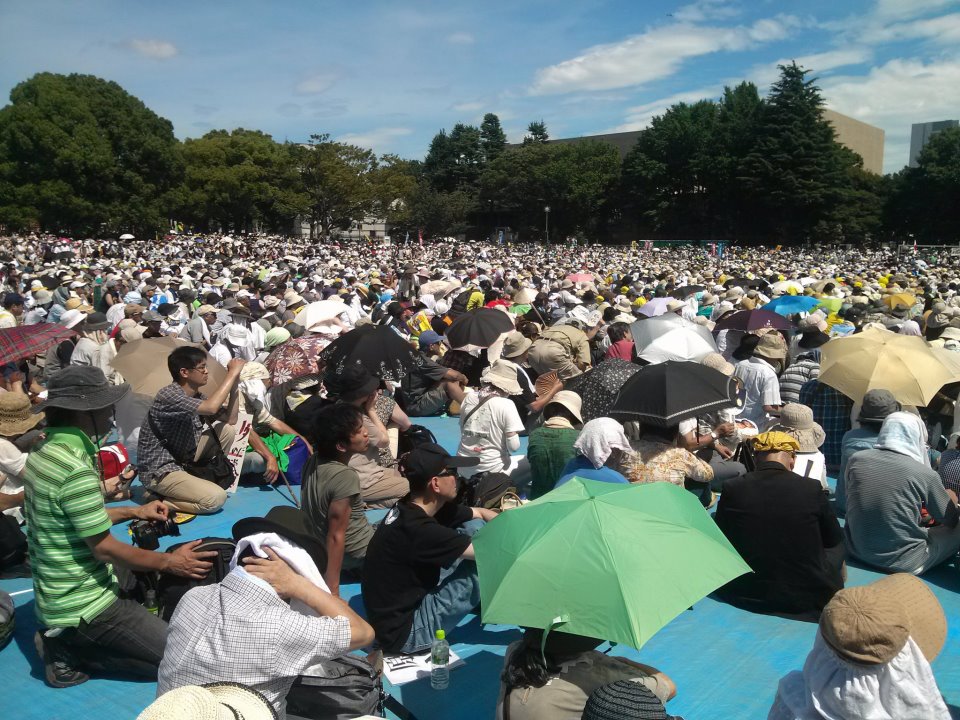
TOKYO (Kyodo) -- An anti-nuclear power plant rally called for by a group led by Nobel literature laureate Kenzaburo Oe and other celebrities drew a crowd of around 170,000 people Monday at Tokyo's Yoyogi Park, according to organizers.

At the assembly held under a scorching sun, dubbed "100,000 People's Assembly to say Goodbye to Nuclear Power Plants," journalist Satoshi Kamata said at the opening event, "We want to bring an end to nuclear power plants immediately."

Oe criticized the government's stance of trying to restart nuclear reactors when the Fukushima nuclear crisis has not yet fully been resolved. "I feel we're being insulted by the government" due to the recent rebooting of a reactor, a move he described as "a plot by the government."

The rally, which also featured live musical performances by Japanese singers, was part of the ongoing antinuclear campaign "10 Million People's Action to say Goodbye to Nuclear Power Plants" that has been conducted following the 2011 crisis at the Fukushima Daiichi Nuclear Power Plant.

The organizing group consists of the Japan Congress Against A- and H-Bombs, commonly known as Gensuikin, and other bodies.

According to the organizers, the event drew not only activists from civic groups but also numerous private citizens concerned about their future. The number of participants in the rally at Yoyogi Park was unparalleled for an event there, they said.
Anti-nuclear energy protesters march on a street in Tokyo Monday, July 16, 2012. Tens of thousands of people gathered at a Tokyo park, demanding “Sayonara,” or goodbye, to nuclear power as Japan prepares to restart yet another reactor, and expressed outrage over a report that blamed culture on the Fukushima disaster. (AP Photo/Koji Sasahara)
Kumiko Kobayashi, 59, from Tokyo's Meguro Ward brought her children and granddaughter in participating at an antinuclear protest for the first time. "The first priority is to halt nuclear power plants. I want the government and the general public to have a normal way of thinking and realize that," she said.

A 90-year-old novelist and Buddhist nun, Jakusho Setouchi, said she is skeptical about whether the government will listen to the people's wish to do away with nuclear power. "We nonetheless need to assemble. We're taxpayers. We can and should express our opinions," she said.

Economic commentator Katsuto Uchihashi and journalist Takashi Hirose were among others who spoke at the rally.

The participants took to the streets after the rally, marching about 3 kilometers near the park and chanting such slogans as "We don't need nuclear power plants," and "The government, stop deciding without public consent."

Oe and others have also been collecting signatures from 10 million people as part of the action. As of July 8, around 7.85 million people had offered their signatures and some have already been presented to Chief Cabinet Secretary Osamu Fujimura.

A weekly antinuclear rally has been held every Friday for months in front of the prime minister's residence in Tokyo and has been drawing an increasing number of people. Civic groups staging the event say a June 29 meet drew 200,000 people but the Metropolitan Police Department put the total count at around 17,000.

domingo, 27 de mayo de 2012

Germany sets new solar power record, institute says

ORIGINAL: Reuters
BERLIN | Sat May 26, 2012 2:02pm EDT

The solar power plant in Alt Daber near Wittstock (Germany) was commissioned at the end of 2011. With 67.8 MWp photovoltaic power it stands for one of the biggest solar power plants BELECTRIC has constructed. From Clean Technica
(Reuters) - German solar power plants produced a world record 22 gigawatts of electricity per hour - equal to 20 nuclear power stations at full capacity - through the midday hours on Friday and Saturday, the head of a renewable energy think tank said. 

The German government decided to abandon nuclear power after the Fukushima nuclear disaster last year, closing eight plants immediately and shutting down the remaining nine by 2022.

They will be replaced by renewable energy sources such as wind, solar and bio-mass.

Norbert Allnoch, director of the Institute of the Renewable Energy Industry (IWR) in Muenster, said the 22 gigawatts of solar power per hour fed into the national grid on Saturday met nearly 50 percent of the nation's midday electricity needs.

"Never before anywhere has a country produced as much photovoltaic electricity," Allnoch told Reuters. "Germany came close to the 20 gigawatt (GW) mark a few times in recent weeks. But this was the first time we made it over."

The record-breaking amount of solar power shows one of the world's leading industrial nations was able to meet a third of its electricity needs on a work day, Friday, and nearly half on Saturday when factories and offices were closed.

Government-mandated support for renewables has helped Germany became a world leader in renewable energy and the country gets about 20 percent of its overall annual electricity from those sources.

Germany has nearly as much installed solar power generation capacity as the rest of the world combined and gets about four percent of its overall annual electricity needs from the sun alone. It aims to cut its greenhouse gas emissions by 40 percent from 1990 levels by 2020.

SUNSHINE
Some critics say renewable energy is not reliable enough nor is there enough capacity to power major industrial nations. But Chancellor Angela Merkel has said Germany is eager to demonstrate that is indeed possible.

The jump above the 20 GW level was due to increased capacity this year and bright sunshine nationwide.

The 22 GW per hour figure is up from about 14 GW per hour a year ago. Germany added 7.5 GW of installed power generation capacity in 2012 and 1.8 GW more in the first quarter for a total of 26 GW capacity.

"This shows Germany is capable of meeting a large share of its electricity needs with solar power," Allnoch said. "It also shows Germany can do with fewer coal-burning power plants, gas-burning plants and nuclear plants."

Allnoch said the data is based on information from the European Energy Exchange (EEX), a bourse based in Leipzig.

The incentives through the state-mandated "feed-in-tariff" (FIT) are not without controversy, however. The FIT is the lifeblood for the industry until photovoltaic prices fall further to levels similar for conventional power production.

Utilities and consumer groups have complained the FIT for solar power adds about 2 cents per kilowatt/hour on top of electricity prices in Germany that are already among the highest in the world with consumers paying about 23 cents per kw/h.

German consumers pay about 4 billion euros ($5 billion) per year on top of their electricity bills for solar power, according to a 2012 report by the Environment Ministry.

Critics also complain growing levels of solar power make the national grid more less stable due to fluctuations in output.

Merkel's centre-right government has tried to accelerate cuts in the FIT, which has fallen by between 15 and 30 percent per year, to nearly 40 percent this year to levels below 20 cents per kw/h. But the upper house of parliament, the Bundesrat, has blocked it.

($1 = 0.7992 euros)

viernes, 25 de mayo de 2012

Petitions about Free Access to Tax Funded Research; Animal Abuse, Shut down Nuclear Reactors

Require free access over the Internet to scientific journal articles arising from taxpayer-funded research


We believe in the power of the Internet to foster innovation, research, and education. Requiring the published results of taxpayer-funded research to be posted on the Internet in human and machine readable form would provide access to patients and caregivers, students and their teachers, researchers, entrepreneurs, and other taxpayers who paid for the research. Expanding access would speed the research process and increase the return on our investment in scientific research.

The highly successful Public Access Policy of the National Institutes of Health proves that this can be done without disrupting the research process, and we urge President Obama to act now to implement open access policies for all federal agencies that fund scientific research.


Make all animal abuse a felony for every convicted case of abuse in all states.


The petition asks that animal cruelty laws be made stronger. We want all convicted cases to be felonies in every state in this country. We are their voice and every living being deserves to be treated humanely. I believe with this done it will also help with people who abuse children and women. No abuse is right and therefore should be prosecuted to the fullest.
Created: May 17, 2012


shut down ALL nuclear reactors 1 at a time, safety as the reason. Must be made to withstand Earthquakes / Tsunamis.


Recently, (May 5 2012) Japan has announced the SHUT DOWN of its final nuclear power plant.

The entire country is now operating free from nuclear power.

Here is the MSM news story confirmation released May 5, 2012:


This petition of redress to the Whitehouse, specifically to President Obama, is aimed to mimic the reduction, and eventual ELIMINATION of all nuclear power plants within the Continental United States of America.

The shutdown process: Close each nuclear plant when it comes up for safety review. The reason for shutdown will be for the plant to assure it is 100% earthquake / tsunami proof.

If the plant is not deemed 100% Earthquake / Tsunami proof, then it will be permanently closed

viernes, 4 de mayo de 2012

Japón enfrenta un apagón nuclear a partir de este fin de semana

ORIGINAL: BBC
Roland Buerk BBC, Japón

Planta nuclear de Kashiwazaki-Kariwa
Este fin de semana el último reactor de la planta de Kashiwazaki-Kariwa será apagado. En total son 54 reactores fuera de servicio en todo el país.


Este fin de semana será apagado para su mantenimiento el último reactor nuclear de Japón que está operativo.


Está ubicado en la planta atómica de Kashiwazaki-Kariwa, una instalación que fue construida cuando el archipiélago asiático creía profundamente en un futuro alimentado por la energía nuclear.


En esa planta termonuclear hay siete reactores en total que dan al mar y que se conectan a largos tendidos eléctricos que terminan en Tokio, muy lejos, al otro lado del país.


Estos reactores proveen hasta un quinto de las necesidades de la gran metrópolis y áreas adyacentes.


Dentro del centro de visitas hay un certificado del Libro de Récords Guinnes que confirma que es la mayor planta atómica generadora de energía en todo el mundo.


Por lo pronto, ahora no es algo más que una instalación sumamente costosa.


Gran empleador


En la sala de control principal, bajo un reloj, el medidor que indica la energía eléctrica producida muestra cero.


La planta Kashiwazaki-Kariwa está fuera de servicio y este reactor nuclear, el último de los 54 que existen en Japón, será completamente apagado este fin de semana.


Antes del terremoto y tsunami del 11 de marzo de 2011, la energía nuclear representaba el 30% de las necesidades eléctricas del país.


Ahora, la importación de gas natural licuado y petróleo se ha incrementado para compensar.


La ciudad de Kashiwazaki ahora enfrenta las mismas opciones de otras comunidades locales dependientes de plantas nucleares que están entre la necesidad de fuentes de trabajo y el temor de ser golpeados por un desastre, tal como el que afectó a los habitantes de Fukushima. La planta atómica es un gran empleador: hasta 10.000 personas, incluidos contratistas, trabajan allí cada día.

Hay limitadas oportunidades de empleo en áreas vecinas.

Reactor de la planta de Fukushima
Aún se desconocen las consecuencias a largo plazo que tendrá el accidente en la planta de Fukushima tras el tsunami de marzo de 2011.
No hay otras industrias importantes y la calle principal es ocupada casi en su totalidad por el centro comercial Tepco Plaza, siglas de la Tokyo Electric Power Company, el principal benefactor de la ciudad.

Confianza comprometida

"Hemos coexistido con la planta nuclear y dábamos como un hecho que era segura", dice el alcalde Hiroshi Aida.

"Sin embargo, con el accidente nos dimos cuenta que no era así. Por ello no podemos estar confiados en que la planta es absolutamente segura".

"Tenemos que pensar en eso como ciudadanos de esta ciudad. Esa es la mayor preocupación que tenemos. Nuestra confianza hacia el gobierno y hacia la gente que hace funcionar la planta se ha quebrado".

Shiro Arai, subgerente en la planta, asegura que la seguridad era el pilar fundamental de la instalación.

"El objetivo de la planta es generar energía eléctrica, pero nuestra compañía es responsable por la planta de Fukushima, donde ocurrió el accidente", indicó.

"Por encima de todo, lo más importante para una planta atómica es la seguridad. Es lo primero antes que operar la planta".

"Todos pensamos lo mismo".

El gobierno, consciente de los desafíos energéticos que enfrenta el país, ha estado trabajando sin descanso para lograr recuperar la confianza.

Hasta ahora las plantas nucleares han estado sometidas a una serie de pruebas, diseñadas para determinar su resistencia a desastres naturales como terremotos y tsunamis.

Altos funcionarios del gobierno han viajado incluso para mantener conversaciones con las autoridades locales sobre la manera de reiniciar las operaciones.

Sin embargo, no han podido evitar lo que pasará este fin de semana, que el último reactor nuclear quede fuera de servicio en la isla de Hokkaido para un mantenimiento de rutina antes de ser reactivado.

Japón quedará completamente sin energía nuclear por primera vez en 40 años.

Se necesita energía barata

Un dramático incremento de las importaciones de gas y otros combustibles fósiles ayudó el año pasado a colocar al país en el mayor déficit comercial.

Nunca antes la terminal de gas en la Bahía de Tokio estuvo tan ocupada.

Esto ha permitido que Japón evite apagones, pero a un alto precio: la electricidad para las empresas se ha vuelto extremadamente costosa.

"La economía japonesa depende de un inmenso y avanzado sector manufacturero que necesita energía barata", asegura Yu Nagatomi, del Instituto de Economía Energética de Japón.

"El sector industrial podría estar preocupado por el hecho de que la situación hace difícil producir sus materiales en el país, de manera doméstica. Podrían estar pensando que la mejor manera de seguir en el negocio es salir de Japón".

En la planta de Kashiwazaki-Kariwa están construyendo nuevas murallas en el mar, lo suficientemente grandes -aseguran- para contener un posible tsunami.

Sin embargo, los japoneses creían que la planta nuclear de Fukushima era segura, hasta que el tsunami la destruyó.

Akihiro Harko, uno de los trabajadores en la planta de Fukushima, quien luchó durante días para controlar la crisis tras el tsunami, afirmó que la lección tenía que aprenderse antes de recuperar la confianza.

"Durante 40 años hemos estado manejando nuestras plantas atómicas de forma segura. Creemos que ayudamos a surtir de energía al país".

"Pero hubo un lamentable accidente. Los operadores dentro y fuera del país necesitan aprender de él para operar las plantas de manera segura. Y si queremos que exista energía nuclear en Japón, creo que necesitamos discutirlo ampliamente en el futuro".

Convencer ahora a la gente no será fácil.


Los peores incidentes nucleares
  • Nivel 7: Chernobyl, Ucrania, 1986 - explosión e incendio en un reactor operativo, fuga radioactiva sobre miles de kilómetros cuadrados. 4.000 posibles casos de cáncer.
  • Nivel 7: Fukushima, 2011 - terremoto y tsunami dañan los reactores. Efectos a largo plazo desconocidos.
  • Nivel 6: Kyshtym, Rusia, 1957 - explosión en un tanque de desechos lleva a cientos de casos de cáncer y contaminación sobre cientos de kilómetros cuadrados.
  • Nivel 5: Windscale, Reino Unido, 1957 - incendio en un reactor operativo, contaminación en un área local. Posibles 240 casos de cáncer.
  • Nivel 5: Three Mile Island, EE.UU., 1979 - falla instrumental lleva a la fundición de un reactor. Daño severo al núcleo del reactor.


martes, 17 de abril de 2012

Japan to be without nuclear power after May 5

ORIGINAL: AsahiAJW
April 17, 2012
REUTERS
Oi nuclear power plant (The Asahi Shimbun)
Japan will within weeks have no nuclear power for the first time in more than 40 years, after the trade minister said two reactors idled after the Fukushima disaster would not be back online before the last one currently operating is shut down.

Trade Minister Yukio Edano signaled it would take at least several weeks before the government, keen to avoid a power crunch, can give a final go-ahead to restarts, meaning Japan is set on May 6 to mark its first nuclear power-free day since 1970.

"If we thoroughly go through the procedure, it would be (on or) after May 6 even if we could restart them," Edano told a news conference, adding that whether they can actually be brought back online is still up to ongoing discussions.

The crisis at the Fukushima No. 1 nuclear power plant, where a huge earthquake and tsunami in March 2011 triggered radiation leaks, has hammered public faith in nuclear power and prevented the restart of reactors shut down for regular maintenance checks, with all but one of 54 reactors now offline.

Nuclear power accounted for about 30 percent of Japan's electricity demand before the Fukushima crisis.

In discussing restarts of the No.3 and No.4 reactors at Kansai Electric's Oi nuclear power plant, in western Japan, the first to clear the government's technical review on resilience against a severe event, Tokyo has said it wants local backing even though it is not legally required.

The hosts of the Oi plant -- the governor of Fukui prefecture and mayor of Oi town, some 360 km (225 miles) southwest of Tokyo -- told Edano on April 14 that some conditions should be met before they can make a decision.

These included a safety review by an expert panel formed by the prefecture and backing from areas neighboring Fukui that are becoming increasingly vocal about possible radiation damage in the event of an accident at any of the 13 reactors in Fukui.

Exactly when Fukui Governor Issei Nishikawa and Oi Mayor Shinobu Tokioka will make decisions is unclear.

Members of the expert panel will be visiting the Oi plant on April 18 and are likely to meet several more times before they reach a conclusion, while the Fukui assembly may meet as early as next week to discuss whether they can back the restarts, Masao Sato, a member of the assembly, told Reuters.

Oi town told Reuters in March that it conditionally backed the restart. Fukui governor Nishikawa told Edano on April 14 that, while the government has addressed some of Fukui's concerns, more discussions were needed on safety. While a looming summertime power crunch is a headache throughout Japan, Kansai Electric's service region, including Japan's second biggest metropolitan area of Osaka, is particularly vulnerable as nuclear power met more than 40 percent of power needs prior to the Fukushima crisis.

Electricity generated by the Oi No.3 and 4 reactors accounted for around 1.8 percent of the total amount of electricity generated in Japan in the business year 2009/10, data from the trade ministry and the Federation of Electric Power Companies in Japan showed.

Edano said that the government may have to protectively come up with plans for rolling blackouts.

"We absolutely cannot let power go out suddenly," he said.

The governors of Shiga and Kyoto prefectures, bordering Fukui, on April 17 outlined recommendations for the central government on restarting reactors, including publicizing views from independent organizations on reactor safety.

The last time Japan saw a nuclear power-free period was the five days ended on May 4, 1970, when the two reactors then existing were both shut for maintenance, according to the Federation of Electric Power Companies of Japan.

viernes, 6 de abril de 2012

Según Jim Hansen, científico de la NASA: "el cambio climático es un problema moral a la par de la esclavitud"

ORIGINAL: The Guardian


El profesor Jim Hansen usa conferencia en Edimburgo, el Festival Internacional de Ciencia, para solicitar un impuesto en todo el mundo a todas las emisiones de carbono

viernes 06 de abril 2012 11.00 BST

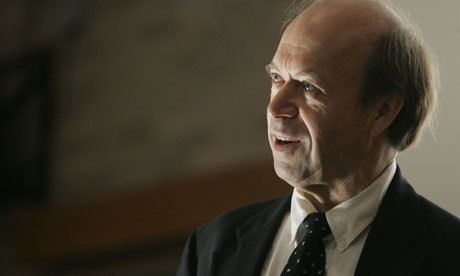
El profesor Jim Hansen: "Estamos entregando a las futuras generaciones un sistema climático que está potencialmente fuera de su control". Fotografía: Melanie Patterson / AP
Evitar consecuencias peores del cambio climático inducido por el hombre es un "gran problema moral" a la par de la esclavitud, de acuerdo con el líder de la NASA el científico el profesor Jim Hansen.

Argumenta que diciendo que las consecuencias costosas y destructivas para la sociedad en el futuro son una "injusticia de una generación a otra".

Hansen, que el próximo Martes será galardonado con la prestigiosa Medalla Edimburgo por su contribución a la ciencia, también solicitará en su discurso de aceptación un impuesto mundial sobre las emisiones de carbono.

En su conferencia, Hansen sostiene que el desafío que enfrentan las generaciones futuras del cambio climático es tan urgente que  es necesario un impuesto global con tarifa plana para forzar recortes inmediatos en el uso de combustibles fósiles. Antes de recibir el premio - que ya ha sido dado a Sir David Attenborough, el ecologista James Lovelock, y la economista Amartya Sen - Hansen dijo a The Guardian que los últimos modelos calimáticos han demostrado que el planeta estaba al borde de una emergencia. Él dijo que la humanidad se enfrenta a repetidas catástrofes naturales debid los fenómenos climáticos extremos que afectan a grandes áreas del planeta.

"La situación que estamos creando para los jóvenes y las generaciones futuras es que les estamos entregando un sistema climático que está potencialmente fuera de su control", dijo. "Estamos en una situación de emergencia: se puede ver lo que hay en el horizonte durante las próximas décadas, con los efectos que tendrá sobre los ecosistemas, el nivel del mar y extinción de especies."


El calentamiento global está producciendo en toda la superfice de la tierra incluyendo el fondo del océano un desbalance térmico "... equivalente a explotar 400.000 bombas atómicas como la de Hiroshima diariamente y continuamente todos los días del año..." (Charla en TED 2012)

domingo, 11 de marzo de 2012

Los misterios de Fukushima

ORIGINAL: RT
12 de marzo 2012 | 06:25

Foto: Google Earth
Cuando hace un año, Japón se vio golpeado por un terremoto enorme de magnitud 9 seguido de un devastador tsunami que destruyó gran parte de Fukushima en la Isla Honshu, pocas personas comprendieron en aquel momento que serían las explosiones de los reactores de la planta nuclear Dai-Ichi las que generarían verdadera preocupación global. No solo desde el punto de vista de la seguridad nuclear, sino también por haber indicios de serias derivaciones políticas de este accidente, que ha demostrado ser mucho más grave que el evento de Chernóbyl en la ex-URSS en 1986.

Ya se han registrado preocupantes niveles de radioactividad en distintas partes del Japón y en la región del Pacífico, a medida que la contaminación fue arrastrada por los vientos, el agua y penetró en suelos y napas de agua, afectando sembrados, localidades, alimentos, instalaciones industriales y sus productos de exportación. Las explosiones de la planta Dai-Ichi también descargaron toneladas de desechos radioactivos en el Océano. Luego de un año, aún prevalecen muchos puntos oscuros sobre este evento catastrófico
Foto: Google Earth

En un interesante artículo publicado en la revista estadounidense-japonesa 'Hyphen', titulado “El mundo se encuentra impotente ante la contaminación de Fukushima”, el ex-director general del 'The Japan Times Weekly' y consultor en materia de lucha contra los efectos de la radiación, Yoichi Shimatsu, explica que puede que detrás del desastre de Fukushima se oculten más cosas de lo que aparecen a primera vista.    

Por ejemplo, existen rumores que señalan un potencial encubrimiento al máximo nivel decidido a minimizar la verdadera gravedad de este desastre nuclear. En consonancia con los intereses del lobby favorable a la energía nuclear, la información y el debate sobre este caso han quedado mayormente paralizados. Sin embargo, la opinión pública japonesa y mundial manifiesta creciente preocupación ante la falta de información clara y oportuna, tanto de las autoridades japonesas como de entes internacionales acerca del verdadero alcance de la contaminación.

Fukushima es un ejemplo de masivo ocultamiento por los medios de difusión occidentales en torno al verdadero peligro para la población, especialmente en la zona del Pacífico Norte desde Japón hasta Norteamérica.

En su artículo, Shimatsu señala que “no se está debatiendo con precisión sobre los peligros a la salud pública mundial dado que los gobiernos se encontrarían imposibilitados ante la monstruosidad nuclear que han creado. Luego de asegurarle al mundo durante décadas que la energía nuclear no es peligrosa, ahora queda demostrado que las cosas no son así, tras los efectos inesperados luego del colapso de los reactores en marzo 2011, abriéndose así una caja de Pandora que supera la imaginación de los científicos de las grandes corporaciones y los ingenieros burócratas, quienes ahora solo reaccionan con un silencio confuso”.

Luego, señala que los desafíos incluyen “una creciente amenaza a la salud reproductiva humana consecuencia de la ingestión de isótopos radioactivos provenientes de alimentos, agua potable y la respiración, que resultarán en abortos masivos y una declinación poblacional en Japón, tendencia que podrá extenderse a nivel mundial”, y que incluiría “mutaciones de patógenos contagiosos tales como la gripe aviaria, dados los desordenes genéticos tanto en microorganismos como en especies portadoras que ocasionará, incluyendo en  animales domésticos y vida silvestre”.

Pero existen otros aspectos preocupantes provenientes de la catástrofe de Fukushima que estarían siendo silenciados. Por ejemplo, el entonces primer ministro japonés Naoto Kan jamás aclaró por qué razón impuso un hermetismo total en torno a las primeras reuniones de su gabinete de emergencia, ni porqué su gobierno ordenó al operador de Dai-Ichi, la Tokyo Electric Power Company (TEPCO) que no abandonara el reactor No.1 luego de las explosiones del 15 de marzo, que se supo fue para evitar reacciones en cadena, según indica una investigación realizada por la entidad Rebuild Japan Initiative Foundation.

Este tipo de secretismo de máximo nivel junto con el contenido peligrosamente elevado detectado en distintos lugares del isótopo Cesio-137 (y 134) como en la ciudad de Osaka a 600 kilómetros de distancia (niveles 100 veces mayores que los normales, según un informe del Instituto de Salud Pública de Osaka del 19 de mayo de 2011), señalarían que el reactor Fukushima No. 1 podría haber sido utilizado para reprocesar uranio de calidad militar.

De demostrarse la veracidad de esto, ello conformaría una clara violación por Japón del tratado de No Proliferación de Armas Nucleares, en cuyo caso se esperaría que la Agencia Internacional de Energía Atómica (AIEA) a cargo del japonés Yukiya Amano y los gobiernos de EE. UU. y Reino Unido, al menos investigarían y procurarían levantar el velo sobre estos puntos oscuros. Pero, no: pareciera que todos están demasiado ocupados en inventar pruebas sobre la inexistente amenaza nuclear iraní. La AIEA, en su postura muy favorable a los intereses de EE. UU., Reino Unido y sus aliados, apenas si ha prestado alguna atención a lo que ocurre en Fukushima.

Según fuentes anónimas dentro de la agencia de no proliferación de EE. UU., se sospecha de la existencia de uranio altamente radioactivo que correspondería a ojivas nucleares norteamericanas desmanteladas y almacenadas en piletones de combustible gastado en Fukushima, pudieron haberse encendido luego que el terremoto dejara fuera de servicio las bombas de agua.   La serie de detonaciones que ocurrió no permitió que los equipos de reparación pudieran acceder a los controles del núcleo del reactor, que eventualmente se derritió perforando sus cámaras de contención, lo que hizo que tomara contacto directo con el suelo debajo del mismo. Buena parte de ese material nuclear enriquecido provendría de los arsenales militares de EE. UU., según un acuerdo secreto del año 2006 entre los gobiernos de George W. Bush y Shinzo Abe de Japón.

Los operarios de emergencia en la planta también informaron que recientemente se le habría reinstalado al supuestamente vacio reactor No. 4 una nueva cobertura de acero por su constructor General Electric (GE). encontrándose totalmente cargado con nuevas varillas de combustible. A su vez, los dos reactores adicionales habrían sido utilizados para operaciones clandestinas de enriquecimiento de uranio previo a su extracción.

Según Shimatsu, las empresas Hitachi Electric y Honeywell estarían en sociedad para desarrollar un sistema de laser-plasma para extraer plutonio y uranio de alta pureza. Estas corporaciones, junto con la GE (EE. UU.), GEC (Reino Unido), y otras, operan en red y conforman un lobby favorable a la industria de la energía nuclear, cuyos principales nódulos a lo largo de las últimas seis décadas han incluido al Ministerio de Economía, Comercio e Industria del Japón –un verdadero estado dentro del Estado japonés– al Partido Demócrata Liberal y a los departamentos de Estado y de Defensa de EE. UU. Todos, a su vez, coordinados a través de altos directivos y funcionarios de gobierno que son miembros de la poderosa Comisión Trilateral de Rockefeller/Rothschild.

De comprobarse la existencia de algún tipo de colaboración encubierta en programas de armas nucleares entre Washington y Tokio, ello conformaría una violación abierta de tratados internacionales y del Tratado Estadounidense-Japonés de Seguridad por el cual Japón permite bases militares estadounidenses en su territorio a cambio de protección norteamericana bajo su “paraguas nuclear”.

En tal caso estaríamos ante otro caso de doble discurso por parte de las potencias occidentales en materia nuclear, lo que no habrá de sorprender toda vez que se tenga en cuenta el apoyo secreto que desde hace décadas brinda EE. UU. al desarrollo del programa militar nuclear de Israel, tolerando incluso que dicho Estado no firme el Tratado de No Proliferación de Armas Nucleares.

¿Qué misterios se ocultan detrás de Fukushima? ¿Qué secretos inconfesables ocultan GE, GEC, TEPCO, Hitachi, Honeywell y los gobiernos japonés y estadounidense en este tema? 

Pareciera que se necesita unir los puntos más apartados e improbables para formarnos una imagen correcta de esta realidad…

Adrian Salbuchi para RT en Español

Adrian Salbuchi es analista político, autor, conferencista y comentarista en radio y TV de Argentina. www.asalbuchi.com.ar

lunes, 5 de marzo de 2012

The Big Lie: One Year After Fukushima, Nuclear Cover Up Revealed

ORIGINAL: CommonDreams
March 5, 2012 by Common Dreams


As the first anniversary of the Fukushima Daiichi nuclear disaster arrives, the cover-up involving nuclear power is more extensive than ever.

The Big Lie was integral to the nuclear push from its start.

Monitoring radioactivity levels in Fukushima (Photo: Christian Slund/Reuters)Promoters of nuclear power discounted the seriousness of nuclear plant accidents, although government documents acknowledged the vast scale of catastrophe. As the Atomic Energy Commission’s “WASH-740 update,” done at Brookhaven National Laboratory in the 1960s, repeatedly states about a major nuclear plant accident: “The possible size of the area of such a disaster might be equal to that of the State of Pennsylvania.”
They pushed the “peaceful atom” although knowing that any nation with a nuclear plant would have the materiel from it (the plutonium produced as a byproduct) and trained personnel to make atomic weapons.

They downplayed the effects of radioactivity claiming it needed to reach a “threshold” to cause harm even as it became clear that any amount of radioactivity can injure and kill.

And nuclear power would be “too cheap to meter,” they insisted.

And on and on…

The realities of nuclear power have become ever more evident acutely so because of the disasters at Chernobyl and Fukushima.

But the Nuclear Big Lie continues bigger than ever.

In recent weeks, for example, there’s been the move to negate what has been the U.S. government’s benchmark analysis on the impacts of nuclear plant accidents. “Calculation Reactor Accident Consequences 2” (CRAC-2) was done for the U.S. Nuclear Regulatory Commission by the U.S. Department of Energy’s Sandia National Laboratories in 1982. It catalogues the impacts from a meltdown with a breach of containment at every nuclear plant in the U.S.

It divides the consequences into “Peak Early Fatalities,” “Peak Early Injuries,” “Peak Cancer Deaths” and “Scaled Costs” for property damage and the numbers are chilling.

For the Indian Point 3 nuclear plant north of New York City, for instance, it projects “Peak Early Fatalities” at 50,000, “Peak Early Injuries” at 167,000, “Peak Cancer Deaths” at 14,000 and “Scaled Costs” at $314 billion (in 1980 dollars).

The estimates turn out to be low considering the toll of the 1986 Chernobyl nuclear plant accident.

But in January, the NRC put out a report that it intends to replace CRAC-2 with that it titles the “State-of-the-Art Reactor Consequences Analyses” or SOARCA. SOARCA flatly dismisses the high casualty and damage figures of CRAC-2 (and the WASH-740 update before it). Using as models the Surry nuclear station in Virginia and the Peach Bottom facility in Pennsylvania, each with two nuclear plants, the NRC declared that the “risks of public health consequences from severe accidents” at a nuclear plant “are very small.

The “long-term risk” of a person dying from cancer from a nuclear plant accident is less than one-in-a billion, says SOARCA. This is because “successful implementation of existing mitigation measures can prevent reactor core damage or delay or reduce offsite releases of radioactive material.

Tell that to the people impacted by Chernobyl and Fukushima.

Cindy Folkers of the organization Beyond Nuclear declares that the “NRC should immediately withdraw its absurd SOARCA report and get about the business of protecting the public health, safety, and the environment its mandate rather than doing the nuclear power industry’s bidding.


Then there’s the attempt to cover up Fuksushima impacts.


"Health impacts from the radioactive materials released in the Fukushima Daiichi meltdowns will probably be too small to be easily measured,” began a New York Times piece by Matthew Wald last week. That was based on a Health Physics Society program at the National Press Club.