Mostrando entradas con la etiqueta Fotosíntesis. Mostrar todas las entradas

lunes, 20 de octubre de 2014

'Green' solar cell is made from plants

To make super cheap solar cells, MIT researchers look to commandeer the process of photosynthesis in plants.


In a mashup of biology and electronics, researchers said they've made progress in making low-cost solar cell from plants.

A paper published in Scientific Reports today describes an improved method for making electricity-producing "biophotovoltaics" without the sophisticated laboratory equipment previously needed. Researchers said custom-designed chemicals could be mixed with green plants, even grass clippings, to create a photovoltaic material by harnessing photosynthesis.

"Take that bag (of chemicals), mix it with anything green and paint it on the roof," said MIT researcher Andreas Mershin, who is one of the paper's co-authors, in a statement. He imagines that this sort of cheap solar cell could be used by people in developing countries who don't have the power grid to charge lamps or cell phones.

The advance represents a 10,000 percent efficiency improvement on previous plant-based solar cells, but these cells are far from being practical. Experimental solar cells made using this process only convert 0.1 percent of sunlight to electricity, which would need to improve tenfold to be practical, Mershin said.

Scientists for years have sought to make solar cells from the set of molecules within plant cells that do the work of photosynthesis, called photosystem-I. However, this material required specialized thin-film deposition and optical equipment. And the current produced was too low.

Related stories

Mershin was able to create a workable solar cell made using a combination of new materials that isolate the PS-I molecules and form an array of tiny zinc oxide nanowires, which carry the flow of current and provide a large surface area. These nanowires, which also provide structure for a multi-layered solar cell, can be grown at room temperature on a variety of flexible and inexpensive substrates, according to the paper.

"After many ears of research, we've managed to make the process of extracting this protein and stabilizing it and putting on a surface that is made in a way to allow for the photovoltaic effect to happen to be very easy," he said in a video provided by MIT.


In their paper, the researchers note a number of challenges to these "green" solar cells, including the durability and efficiency. But the initial performance tests for this new technique offers a promising route for further research, they said. "Commandeering this intricately organized photosynthetic nanocircuitry and re-wiring it to produce electricity carries the promise of inexpensive and environmentally friendly solar power," according to the paper.

ORIGINAL: CNet
February 2, 2012 7:52 AM PST

miércoles, 24 de septiembre de 2014

Hacked photosynthesis could boost crop yields

Algal enzyme can speed up rate at which plants make food.

chain45154/Moment/Getty

Rice is one of the crops that could increase their yields by converting solar energy more efficiently.

It is difficult to find fault with a process that can create food from sunlight, water and air, but for many plants, there is room for improvement. Researchers have taken an important step towards enhancing photosynthesis by engineering plants with enzymes from blue-green algae that speed up the process of converting carbon dioxide into sugars.

The results, published today in Nature1, surmount a daunting hurdle on the path to boosting plant yields — a goal that is taking on increasing importance as the world’s population grows.

“With the limited ability to increase land use for agriculture, there’s a huge interest in trying to improve yield across all the major crops,” says Steven Gutteridge, a research fellow at chemical firm DuPont’s crop-protection division in Newark, Delaware.

Researchers have long wanted to increase yields by targeting Rubisco, the enzyme responsible for converting carbon dioxide into sugar. Rubisco is possibly the most abundant protein on Earth, and can account for up to half of all the soluble protein found in a leaf.

But one reason for its abundance is its inefficiency: plants produce so much Rubisco in part to compensate for its slow catalysis. Some have estimated that tinkering with Rubisco and ways to boost the concentration of carbon dioxide around it could generate up to a 60% increase2 in the yields of crops such as rice and wheat.

Light speed
Plant geneticist Maureen Hanson of Cornell University in Ithaca, New York, and her colleagues decided to borrow a faster Rubisco from the cyanobacterium Synechococcus elongatus.

Related stories
Solar energy: Springtime for the artificial leaf
Experiment aims to steep rainforest in carbon dioxide
Life found deep under the sea

More related stories

A team including Hanson and plant physiologist Martin Parry of Rothamsted Research in Harpenden, UK, shuttled bacterial Rubisco genes into the genome of the chloroplast — the cellular organelle where photosynthesis takes place — in the tobacco plant (Nicotiana tabacum), a common model organism for genetic-engineering research. In some of the plants the researchers also added a bacterial protein that is thought to help Rubisco to fold properly. In others, they added a bacterial protein that structurally supports Rubisco.

Both lines of tobacco were able to use the bacterial Rubisco for photosynthesis, and both converted CO2 to sugar faster than normal tobacco1.

The work provides an important foundation for testing the hypothesis that a faster Rubisco can yield a more productive plant, says Donald Ort, a plant biologist at the University of Illinois at Urbana–Champaign. But Hanson is quick to note that her team will need to do more before that hypothesis has been proven.

Although the bacterial Rubisco works faster than the tobacco enzyme, it is also more prone to wasting energy by reacting with oxygen rather than CO2. Photosynthetic bacteria overcome this problem by creating specialized structures called carboxysomes, which enclose the enzyme and create a CO2-rich environment, discouraging wasteful reactions.

Without carboxysomes, Hanson’s engineered plants — which also express much less Rubisco than normal plants — must be grown in chambers that can maintain artificially high CO2 concentrations.

There is hope, however, that they may soon be weaned off this requirement. In June, Hanson’s team reported3 the creation of tobacco that could generate structures resembling bacterial carboxysomes. The next step, says Hanson, will be to try this experiment in plants that express the turbocharged bacterial Rubisco.

Ort says that it may be possible to generate tobacco plants with functional carboxysomes in the next five years. Naturedoi:10.1038/nature.2014.15949
Read the related Editorial and News & Views.

References

Lin, M. T., Occhialini, A., Andralojc, P. J., Parry, M. A. J. & Hanson, M. R. Nature http://dx.doi.org/10.1038/nature13776 (2014).
PubMed Show context

McGrath, J. M. & Long, S. P. Plant Physiol. 164, 2247–2261 (2014).
Article
PubMed
ISI
ChemPort Show context

Lin, M. T. et al. Plant J. 79, 1–12 (2014).
Article
PubMed
ISI
ChemPort Show context


ORIGINAL: Nature
By Heidi Ledford
17 September 2014

jueves, 31 de julio de 2014

RCA graduate develops an artificial leaf that’s capable of producing oxygen


http://newlaunches.com/wp-content/uploads/2014/07/silk-leaf-1.jpg
Human beings have long since been looking up at space, wondering when mankind will finally be technologically-advanced enough to colonize space. While staring heavenwards recently, we stumbled across this jaw-dropping development by Royal College of Art (RCA) graduate Julian Melchiorri. A synthetically developed leaf, this concept called the Silk Leaf Project, is capable of absorbing water and carbon dioxide to produce oxygen, just the way a real plant does! Quoting Melchiorri, “NASA is researching different ways to produce oxygen for long-distance space journeys to let us live in space. This material could allow us t0 explore space much further than we can now.”

silk-leaf-2 
The Silk Leaf Project was developed as part of the Royal College of Art’s Innovation Design Engineering course in collaboration with Tufts University silk lab. Made from chloroplasts suspended in a matrix made out of silk protein, the leaf “as an amazing property of stabilizing molecules.” Not unlike real plants, these leaves created by Melchiorri also require light and a small amount of water to produce oxygen. This is the first man-made biological leaf in the history of mankind and an idea as such could help us step beyond boundaries, in terms of technology and lifestyle. Melchiorri sure deserves a pat on his back for his brilliance!
silk-leaf-3silk-leaf-6silk-leaf-7
source
dezeen


ORIGINAL: Newlaunches

martes, 18 de marzo de 2014

Bionically Enhanced Chloroplasts Boost Photosynthesis and Spawn a New Field

Photo Credit: Bryce Vickmark Researchers use a near-infrared microscope to read the output of carbon nanotube sensors embedded in an Arabidopsis thaliana plant.

Consider for a moment the magical work done by chloroplasts. These are the plant organelles that absorb light from the sun, convert it into chemical energy and ultimately use it as a building block for synthesizing glucose, the primary source of fuel for both plants and animals. While their achievement has the appearance of alchemy, like every other organelle, these chloroplasts are but little machines. Now, it seems they're due for an upgrade.

In a paper published yesterday in the journal Nature Materials, chemical engineers at the Massachusetts Institute of Technology report that when injected with single-walled carbon nanotubes (SWNTs), chloroplasts can be coaxed to photosynthesize more efficiently than normal.

The first phase of photosynthesis, referred to commonly as the "light reactions," involves excitation of pigments and the subsequent transport of electrons between multiple photosystems. The researchers used this flow of electrons as a measurement for the rate of photosynthesis and found that when the nanotubes were present the flow increased by 49 percent.

Chlorophyll, the pigment normally found in chloroplasts, can only absorb a small fraction of the light entering a plant, most of which resides in the 400 to 500-nanometer and 600 to 700-nanometer range. Although the researchers cannot yet offer an explanation for why carbon nanotubes would enhance the efficiency of chloroplasts, the team theorizes that it may be due to a broadening of this range. SWNTs are known to absorb light in the ultraviolet, visible, and near-infrared spectra.

The MIT engineers write:

"Improving photosynthetic efficiency may require extending the range of solar light absorption, particularly in the near-infrared spectral range, which is able to penetrate deeper into living organisms."

They report having the most success with chloroplasts that had been removed from the plant. Under these circumstances, they were able to inject the nanotubes directly into the organelle. 

In a separate experiment, the researchers sought to find a way to deliver nanotubes into a living plant. In order to do this, they developed a new technique called lipid exchange envelope penetration. Basically, they applied the nanotubes to underside of the leaf via a watery solution which is absorbed through tiny pores called stomata. The transfer across the fatty membrane of the chloroplast was made possible by coating the carbon nanotubes in negatively charged DNA.


When they introduced machinery into a living plant in this way, the chloroplasts received slightly less of a boost, photosynthesizing only 30 percent more efficiently than normal. But this delivery technique may itself be counted as a breakthrough. 

With it, the researchers have tried packing plant cells with particles that protect it from the damaging effects of light exposure, and with another type of carbon nanotube that has been shown to be sensitive to nitric oxide. With such techniques, chemical engineers may one day develop plants that function as pollution detectors. 

Indeed the researchers are arguing that their work establishes an entire new field of research, one they're calling plant nanobionics.

ORIGINAL: IEEE Spectrum
By Morgen Peck
Posted 17 Mar 2014

lunes, 10 de marzo de 2014

Promising News for Solar Fuels from Berkeley Lab Researchers at JCAP


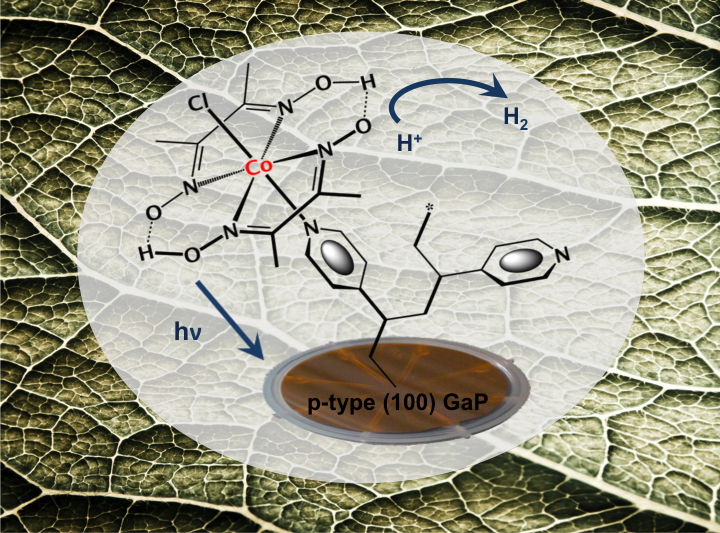
Interfacing the semiconductor gallium phosphide with a cobaloxime catalyst provides an inexpensive photocathode for bionic leaves that produce energy-dense fuels.

There’s promising news from the front on efforts to produce fuels through artificial photosynthesis. A new study by Berkeley Lab researchers at the Joint Center for Artificial Photosynthesis (JCAP) shows that nearly 90-percent of the electrons generated by a hybrid material designed to store solar energy in hydrogen are being stored in the target hydrogen molecules.

Gary Moore, a chemist and principal investigator with Berkeley Lab’s Physical Biosciences Division, led an efficiency analysis study of a unique photocathode material he and his research group have developed for catalyzing the production of hydrogen fuel from sunlight. This material, a hybrid formed from interfacing the semiconductor gallium phosphide with a molecular hydrogen-producing cobaloxime catalyst, has the potential to address one of the major challenges in the use of artificial photosynthesis to make renewable solar fuels.

“Ultimately the renewable energy problem is really a storage problem,” Moore says. “Given the intermittent availability of sunlight, we need a way of using the sun all night long. Storing solar energy in the chemical bonds of a fuel also provides the large power densities that are essential to modern transport systems. We’ve shown that our approach of coupling the absorption of visible light with the production of hydrogen in a single material puts photoexcited electrons where we need them to be, stored in chemical bonds.”

Moore is the corresponding author of a paper describing this research in the journal Physical Chemistry Chemical Physics titled “Energetics and efficiency analysis of a cobaloxime-modified semiconductor under simulated air mass 1.5 illumination.” Co-authors are Alexandra Krawicz and Diana Cedeno.

Bionic leaves that produce energy-dense fuels from nothing more than sunlight, water and atmosphere-warming carbon dioxide, with no byproducts other than oxygen, represent an ideal sustainable energy alternative to fossil fuels. However, realizing this artificial photosynthesis ideal will require a number of technological breakthroughs including high performance photocathodes that can catalyze fuel production from sunlight alone.

Last year, Moore and his research group at JCAP took an important step towards the photocathode goal with their gallium phosphide/cobaloxime hybrid. Gallium phosphide is an absorber of visible light, which enables it to produce significantly higher photocurrents than semiconductors that only absorb ultraviolet light. The cobaloxime catalyst is also Earth-abundant, meaning it is a relatively inexpensive replacement for the highly expensive precious metal catalysts, such as platinum, currently used in many solar-fuel generator prototypes.

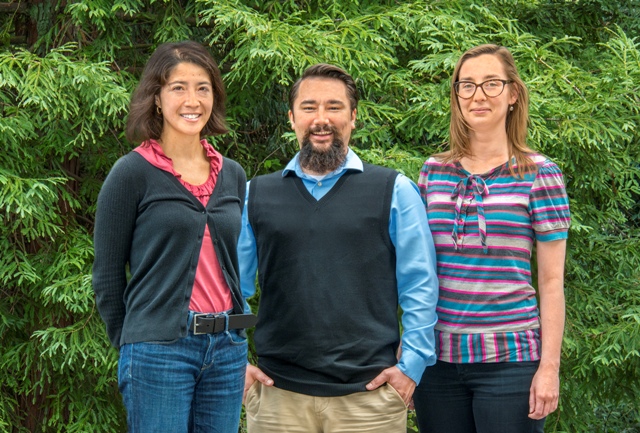
From left, Diana Cedeno, Gary Moore and Alexandra Krawicz of the Joint Center for Artificial Photosynthesis conducted an efficiency analysis study of a unique photocathode material designed to store solar energy in hydrogen molecules. (Photo by Roy Kaltschmidt)

“The novelty of our approach is the use of molecular catalytic components interfaced with visible-light absorbing semiconductors,” Moore says. “This creates opportunities to use discrete three-dimensional environments for directly photoactivating the multi-electron and multi-proton chemistry associated with the production of hydrogen and other fuels.”

The efficiency analysis performed by Moore and his colleagues also confirmed that the light-absorber component of their photocathode is a major bottleneck to obtaining higher current densities. Their results showed that of the total number of solar photons striking the hybrid-semiconductor surface, measured over the entire wavelength range of the solar spectrum (from 200 to 4,000 nanometers) only 1.5-percent gave rise to a photocurrent.

“This tells us that the use of light absorbers with improved spectral coverage of the sun is a good start to achieving further performance gains, but it is likely we will also have to develop faster and more efficient catalysts as well as new attachment chemistries. Our modular assembly method provides a viable strategy to testing promising combinations of new materials,” Moore says.

“Efficiency is not the only consideration that should go into evaluating materials for applications in solar-fuel generator technologies. Along with the durability and feasible scalability of components, the selectivity of photoactivating a targeted reaction is also critical. This is where molecular approaches offer significant opportunities, especially in catalyzing complex chemical transformations such as the reduction of carbon dioxide.”

JCAP, which has a northern branch in Berkeley and a southern branch on the campus of the California Institute of Technology (Caltech), was established in 2010 by the U.S. Department of Energy (DOE) as an Energy Innovation Hub. Operated as a partnership between Caltech and Berkeley Lab, JCAP is the largest research program in the United States dedicated to developing an artificial solar-fuel technology. It is funded through the DOE Office of Science.


(Video from: The Joint Center for Artificial Photosynthesis (JCAP) is the nation's largest research program dedicated to the development of an artificial solar-fuel generation technology. Established in 2010 as a U.S. Department of Energy (DOE) Energy Innovation Hub, JCAP aims to find a cost-effective method to produce fuels using only sunlight, water, and carbon dioxide as inputs.

JCAP brings together more than 140 top scientists and researchers from the California Institute of Technology and its lead partner, Berkeley Lab, along with collaborators from the SLAC National Accelerator Laboratory, and the University of California campuses at Irvine and San Diego.
http://solarfuelshub.org/index.html )

ORIGINAL:   Lawrence Berkeley Lab
March 07, 2014 Lynn Yarris (510) 486-5375  lcyarris@lbl.gov

jueves, 1 de agosto de 2013

Plants Grown With LED PAR Light Are Healthier?

ORIGINAL: Exposing The Truth
by Asura 
March 18, 2013

Grow Lights are an amazing addition to indoor growing that may sometimes be expensive and rack up one large electric bill! Though there are many different types of grow lights recommended by long time growers, we’ll go through some scientific research that will initially be controversial to many within industries using them. After learning about Aquaponics our team began to ask questions about what lights are best for growing plants, we were surprised with what we had found.


It turns out that the best type of light for plant growth is the tiny, efficient, cool running Light Emitting Diode! (LED for short) Why and how is this even possible? To answer this question one must learn what plants require to grow, specifically. Plants only feed on very few and very specific light spectrums, the most surprising part of this is that plants DO NOT take in any visible light spectrums whatsoever! Every grow light company which puts their stock into creating a bulb with a “more full visible spectrum than competitors” is utterly useless for growing plants and require far more electricity to power.

Other mistakes most commonly made when using grow lights is that more lumens, UV and heat will bring the outcome of better plants. More lumens, UV rays and heat coming from light sources are all counterproductive to plant growth, this causes plants to burn, dry up, require more water and use far more energy to remain alive rather than using energy for growth. Plant leaves and stalks do not need to be beamed upon with intense heat energy and radiation, more importantly it is the roots that must remain at a special temperature. During hours of light leaves collect radiation from spectrums that are invisible to the human eye while during hours of darkness they open stomata, best comparable to pores in human skin, to breathe, take note that only the roots of plants drink water and send it through the stems similar to a highway.


As illustrated in the pictures above and below, the two types of chlorophyll will ONLY absorb certain light spectrums known as Photosynthetically Active Radiation (PAR). Having a more full spectrum for plant growth is completely unnecessary, one chlorophyll type absorbs red light between the 630nm and 760nm light spectrum while the other absorbs blue light between 280nm and 460nm. The use of LED lights solves the problem of electricity being wasted on light spectrums that plants can not take in by allowing for each LED to beam very specific ranges of light. Many have recommended using 
  • 2/5ths of a red spectrum,  
  • 2/5ths of a blue spectrum and 
  • 1/5th UV spectrum 
to keep accepted light spectrums well balanced. Each type of plant may require more blue types or red types of light spectrum, it never hurts to perform more research on each specific plant’s requirements.


LED lights run at cool temperatures and don’t create anywhere near enough heat to be significant to plants or animals, yet for plant care it turns out that heat should be highly regulated and does not have to come from lights. As long as the temperature in a room is regulated then no heat is needed from lighting.

The Effects of Temperature On Plant Growth


The efficiency of LED lights in both specific spectrum abilities and low electricity requirements are certainly proving to be an innovative and sustainable solution to plant growth. The Growblu website contains a lot of informational PDFs to quickly and easily justify using LED lights rather than outdated bulb types.

How Light Spectrums Affect Plants

Pretty large forum of invaluable information
ICMag

miércoles, 17 de julio de 2013

Scientists date prehistoric bacterial invasions still present in today’s cells

ORIGINAL: Berkeley News
By Robert Sanders
June 19, 2013

BERKELEY —Long before Earth became lush, when life consisted of single-celled organisms afloat in a planet-wide sea, bacteria invaded the ancient ancestors of plants and animals and took up permanent residence. One bacterium eventually became the mitochondria that today power all plant and animal cells; another became the chloroplast that turns sunlight into energy in green plants.

These are chloroplasts visible in the cells of Plagiomnium affine, the many-fruited thyme moss. Photosynthesizing cyanobacteria invaded the earliest one-celled plants about 900 million years ago, eventually becoming chloroplasts that conferred on plants the ability to convert sunlight into energy and setting the stage for the diversification of plants. (Photo by Kristian Peters courtesy of Wikipedia)
A new analysis by two University of California, Berkeley, graduate students more precisely pinpoints when these life-changing invasions occurred, placing the origin of photosynthesis in plants hundreds of millions of years earlier than once thought.

“When you are talking about these really ancient events, scientists have estimated numbers that are all over the board,” said coauthor Patrick Shih. Estimates of the age of eukaryotes – cells with a nucleus that evolved into all of today’s plants and animals – range from 800 million years ago to 3 billion years ago.

“We came up with a novel way of decreasing the uncertainty and increasing our confidence in dating these events,” he said. The two researchers believe that their approach can help answer similar questions about the origins of ancient microscopic fossils.

Shih and colleague Nicholas Matzke, who will earn their Ph.Ds this summer in plant and microbial biology and integrative biology, respectively, employed fossil and genetic evidence to estimate the dates when bacteria set up shop as symbiotic organisms in the earliest one-celled eukaryotes. They concluded that a proteobacterium invaded eurkaryotes about 1.2 billion years ago, in line with earlier estimates.

They found that a cyanobacterium – which had already developed photosynthesis – invaded eukaryotes 900 million years ago, much later than some estimates, which are as high as 2 billion years ago.

A transmission electron microscope image of mitochondria in a lung cell. Some 1.2 billion years ago, proteobacteria invaded the one-celled ancestors of all plants and animals, giving these cells a powerhouse to fuel their proliferation in the ocean and on land. (Photo courtesy of Wikipedia.)
Previous estimates used hard-to-identify microbial fossils or ambiguous chemical markers in fossils to estimate the time when bacteria entered ancestral eurkaryotic cells, probably first as parasites and then as symbionts. Shih and Matzke realized that they could get better precision by studying today’s mitochondria and chloroplasts, which from their free-living days still retain genes that are evolutionarily related to genes currently present in plant and animal DNA.

“These genes, such as ATP synthase – a gene critical to the synthesis of the energy molecule ATP – were present in our single-celled ancestors and present now, and are really, really conserved,” Matzke said. “These go back to the last common ancestor of all living things, so it helps us constrain the tree of life.”

Since mitochrondrial, chloroplast and nuclear genes do not evolve at exactly the same rate, the researchers used Bayesian statistics to estimate the rate variation as well as how long ago the bacteria joined forces with eukaryotes. They improved their precision by focusing on plant and animal fossils that have more certain dates and identities than microbial fossils.

The paper appeared online on June 17 in advance of publication in the journal Proceedings of the National Academy of Sciences. Matzke also is a member of UC Berkeley’s Center for Theoretical Evolutionary Genomics.

MORE INFORMATION
Primary endosymbiosis events date to the later Proterozoic with cross-calibrated phylogenetic dating of duplicated ATPase proteins (PNAS Early Edition)
Nick Matzke’s laboratory web site

Categories: Environment, News, Press Release, Research, Science
Tags: animals, bacteria, biology, evolution, photosynthesis, plants

viernes, 12 de julio de 2013

Sun Catalytix completes $9.5 Million Series B Funding Round

Round Led by Tata Limited, with Continued Participation by Polaris Venture Partners; Dr. Ralf Speth, CEO of Jaguar Land Rover, to Join Board
Cambridge, Mass., October 7, 2010 - Sun Catalytix Corporation (Sun Catalytix), an energy storage and renewable fuels company, today announced the completion of its $9.5 million Series B Funding Round led by Tata Limited (Tata), with participation from existing investor Polaris Venture Partners as well as other investors. The funds raised in this financing will support continued development of the company’s breakthrough catalyst technology. Dr. Ralf Speth, CEO of Jaguar Land Rover, has joined the Sun Catalytix board as a representative of Tata.
“The funding secured in this round will enable Sun Catalytix to continue to move its technology forward and to deliver prototypes,” said MIT Professor and Sun Catalytix Founder Daniel Nocera. “We are delighted to have attracted Tata, a global and visionary company, as an investor and to have the continuing strong support of Polaris Venture Partners.”

The Sun Catalytix technology utilizes innovative catalysts made of earth - abundant elements that split water and generate hydrogen and oxygen from water and renewably - generated electricity in benign and simple operating conditions. By eliminating expensive precious metals and substantially reducing balance of plant costs, Sun Catalytix’ technology promises to enable the conversion of electrical, solar or wind energy to storable energy at transformative cost targets. Sun Catalytix systems target the generation of hydrogen from water at significantly lower costs for industrial applications, for energy storage, and for use as a renewable fuel through internal combustion engines or fuel cells.
About Tata 
Tata Limited, a Tata Sons’ subsidiary, was established in 1907. Tata companies operate in seven business sectors: communications and information technology, engineering, materials, services, energy, consumer products and chemicals. The total revenue of Tata companies is approximately $70 billion, and they employ around 360,000 people worldwide. The Tata name has been respected in India for 140 years for its adherence to strong values and business ethics. There are 28 publicly listed Tata enterprises with a combined market capitalization of over $90 billion, with 3.5 million shareholders.

Technological leadership and innovation is a critical factor for Tata companies as they chart a course for the future in the global marketplace with the objective of consistently delivering breakthrough products and services. The Tata Group views breakthrough technology as a key factor in achieving its goals of contributing to growth and development in the communities it operates in, and a low carbon future.

About Polaris Venture Partners
A U.S. venture capital firm with over $3 billion under management, Polaris invests in seed, early stage and growth equity businesses in the technology, life science, digital media, enertech and consumer sectors. Through a philosophy of lead investing and active, long - term partnering with entrepreneurs and management teams, Polaris has helped many companies achieve outstanding success. Among them are: Accordant Health Services, Acusphere, Advanced Inhalation Research (AIR), Akamai Technologies, Allaire Corporation, Alnylam Pharmaceuticals, American Superconductor, Archivas, Aspect Medical Systems, Avici Systems, Centra Software, Classifieds2000, Cubist Pharmaceuticals, Cushcraft Corporation, deCODE genetics, Exchange.com, GlycoFi, Matrics, Momenta Pharmaceuticals, Paradigm Genetics, Powersoft, Solidworks, TechTarget and TransForm Pharmaceuticals. www.polarisventures.com

For Further Information please contact:
Melissa Cohen
Metis Communications
Tel: +1 - 617 - 236 - 0500
Email: press@suncatalytix.com

Christabelle Noronha
Tata Sons Limited
Tel: +91 - 22 - 6657887
Email: chris@tata.com

Sampling MIT at the MIT Museum: Water Splitting

ORIGINAL: MIT

MIT Professor Daniel Nocera and his research team are in a race to make inexpensive energy from the sun and they want to do it soon. Using plant photosynthesis as their inspiration, this exhibit shows how they can now use the suns energy to split water into hydrogen and oxygen gases in a safe and simple way. 


Daniel Nocera describes new process for storing solar energy

In a revolutionary leap that could transform solar power from a marginal, boutique alternative into a mainstream energy source, MIT researchers have overcome a major barrier to large-scale solar power: storing energy for use when the sun doesn't shine.

domingo, 23 de junio de 2013

World’s first microalgae façade goes ‘live’

ORIGINAL: IBA-Hamburg 

25 Apr 2013

BIQ
Natural, efficient and unique: the BIQ is setting new standards as the first building in the world to have a bioreactor façade. Microalgae are cultivated in the glass elements that make up its “bio skin”. These are used to produce energy, and can also control light and provide shade. Inside, an innovative living concept is aimed at ensuring maximum design versatility for everyday life, and gives us a glimpse into urban life in the future. With its innovative living concept, futuristic exterior, and “intelligent” algae façade, the BIQ is a highlight of ”The Building Exhibition within the Building Exhibition”.


A Building with a Second Green Skin 
The sides of the building that face the sun have a second outer shell that is set into the façade itself. Microalgae – tiny plants, most no larger than bacteria – are produced within this shell. They enable the house to supply its own energy. The only thing that the algae have to do is simply to grow. They are continuously supplied with liquid nutrients and carbon dioxide via a separate water circuit running through the façade. With the aid of sunlight, the algae can photosynthesise and grow. This façade is the first of its kind in the world and makes use of the very latest energy and environmental technology.
 

Microalgae – a Smart Energy Solution 
The algae flourish and multiply in a regular cycle until they can be harvested. They are then separated from the rest of the algae and transferred as a thick pulp to the technical room of the BIQ. The little plants are then fermented in an external biogas plant, so that they can be used again to generate biogas. Algae are particularly well suited for this, as they produce up to five times as much biomass per hectare as terrestrial plants and contain many oils that can be used for energy.


An Energy Concept that Calls upon Natural Forces 
The BIQ has a holistic energy concept: it draws all of the energy needed to generate electricity and heat from renewable sources – fossil fuels remain untouched. It is able to generate energy using the algae biomass harvested from its own façade. Moreover, the façade collects energy by absorbing the light that is not used by the algae and generating heat, like in a solar thermal unit, which is then either used directly for hot water and heating, or can be cached in the ground using borehole heat exchangers — 80 metre-deep holes filled with brine. This remarkably sustainable energy concept is therefore capable of creating a cycle of solar thermal energy, geothermal energy, a condensing boiler, local heat, and the capture of biomass using the bio-reactor façade.


More than just a Shell: the BIQ Demonstrates what Tomorrow’s Façades can do
The BIQ building shows that in the future façades will be able to serve a number of different functions, and be much more than an aesthetic cladding to protect against rain and cold. While the northeast- and northwest-facing sides of the building have an elaborately decorated shell to draw the eye, the algae within the southwest and southeast façades produce biomass for renewable energy. In addition, the façade also serves the conventional purposes of insulating the building from sound, heat, and cold, and provides shade in bright sunlight. Spacious balconies give the residents sweeping views over the park, as well as the chance to see the natural power plant contained in the algae façade up close. However, visitors can also observe this film of matter as it grows. The greenness of the façade shows that the algae are breaking down the carbon dioxide and processing it through photosynthesis. This renewable form of energy production is thus visible from outside the building, and is an intentional part of the architectural concept.

Living on Demand
Inside, the BIQ reveals how we might live in the future. The ever greater interconnectedness between living and working and the increased demand for adaptable housing spaces means that there will be a call for versatile residential ground plans in the future. Two of the total of fifteen apartments to be housed in the BIQ do not have separate rooms, but rather enable the inhabitants to configure their living arrangements “on demand”. Depending on their needs, individual functions of the apartment – bathroom, kitchen, sleeping area – can be swapped about or combined to form a “neutral zone”. In this way, the necessities of everyday life determine the appearance of the apartment, and the versatile layout can be adapted to suit the residents and their daily lives at any given time.

lunes, 3 de junio de 2013

Infragram: the Infrared Plant Photography Project

ORIGINAL: KickStarter
by Public Lab
 
A simple, cheap infrared camera which can measure plant health -- for geek gardeners, farmers, and open source DIY scientists.
What could farmers, gardeners, students or environmental activists do with an infrared camera that costs as little as $35?

What is Infragram?

Infragram is a simple, affordable near-infrared camera produced by the Public Laboratory community in a series of collaborative experiments over the last few years. We originally developed this technology to monitor wetlands damages in the wake of the BP oil spill, but its simplicity of use and easy-to-modify open-source hardware & software makes it a useful tool for home gardeners, hikers, makers, farmers, amateur scientists, teachers, artists, and anyone curious about the secret lives of plants.


What can you do with Infragram?

Near-infrared photography has been a key tool for planning at the industrial and governmental level: it is used on airplanes and satellites by vineyards, large farms, and even NASA for sophisticated agricultural and ecological assessment. In contrast, Infragram allows average people to monitor their environment through verifiable, quantifiable, citizen-generated data. Just as photography was instrumental to the rise of credible print journalism, inexpensive, open-source data-collection technologies democratize and improve reporting about environmental impacts.

Start exploring your world today with Infragram!

How does it work? 

Photosynthesizing plants absorb most visible light (less green than red and blue, which is why they're green to our eyes!) but reflect near-infrared. When you take a picture with the Infragram, you get two separate images -- infrared and regular light -- and a false-color composite that shows you where there are big differences. Bright spots in the composite means lots of photosynthesis! (Learn more here)
We're able to get both channels in one by filtering out the red light, and reading infrared in its place using a piece of carefully chosen "superblue" filter (read more here). The images are later processed online -- combining the blue and infrared channels into an image map of photosynthesis (as shown above).
What you get

DIY Filter Pack: This is just a piece of "superblue" filter which you can use to turn your webcam or cheap point-and-shoot into an infrared camera. The filter allows you to take an infrared photo in the "red" channel of your camera, and a visible image in the "blue" channel. You'll also receive a white balance card and instructions on how install your filter -- it's pretty easy!

Infragram Webcam: This inexpensive but flexible reward is perfect for plugging directly into your laptop or integrating into other projects. It's also ideal for your Raspberry Pi, if you want to take it outdoors, do timelapse photography, or write scripts to control your camera. It ships as a bare circuit board with a USB cable - like an Arduino.

Infragram Point & Shoot: Just want a camera? This is a straightforward, if basic, point-and-shoot: you can simply take photos as you normally would, then upload them to our free and open-source web app to quickly and easily get a variety of composite images and analyses. To accomplish this, we're simply modifying existing cameras which we'll buy in bulk, using the "superblue" filter. This isn't an SLR or even a particularly fully featured camera -- it likely won't have an LCD screen and may be "rebranded" with a Public Lab sticker -- but it's the new filter we've put inside which counts.

The final configuration will depend on the # of backers, but it will likely use AAA batteries and a micro SD card. We're promising a minimum of 2 megapixel resolution, but should be able to do much better, especially if we get a lot of backers. Basically, the more money we raise, the better these cameras will get!

How you’ll develop your images

Whether you’re using our DIY filter with your own camera, the Infragram Webcam, or the Infragram Point & Shoot, you’ll be following the same, easy process to generate composite, infrared + visible images that will reveal new details of plant health and photosynthesis -- like in the photo above, taken out the window of a commercial airline flight!

1. Calibrate. In order to get the most meaningful data possible from your plant images, it’s a good idea to ‘calibrate’ your camera, taking into account the current lighting conditions (sunny vs. cloudy, indoors vs. outdoors) at the time that you’re taking your photos: this makes it much easier to compare ‘plant health’ images taken at different times, in different places, and by different cameras. To make this easy, we’ll likely be providing an additional ‘white balance card’ -- simply, a card that has a standard color -- in our kits. By recording an initial image that includes this card, you’ll be able to use our online software to “standardize” the colors in all of your images. If you don’t have a card, don’t worry -- there will also be opportunities to calibrate your imagery automagically later, using our analysis software, and the results might be just as good.

2. Take your snapshot. “Rhododendrons -- say cheese!” Using your own camera (modded with our DIY filter), the Infragram Webcam, or the Infragram Point & Shoot, you’ll record the scene of your choosing -- ideally, with some vegetation-y life forms in it. Take pictures of household plants, garden vegetables, trees -- we’ve grabbed a lot of useful agricultural imagery from cameras dangling from kites and balloons! The Public Lab website and mailing list are already full of examples and suggestions related to infrared photography, and it’s easy to start a discussion with community members about your ideas, or ask for advice.

3. Upload. After you’ve finished an image capture session, you’ll want to upload your images using the (free, open source) online software our community is developing. This will likely simply involve navigating to a particular URL and dragging-and-dropping your images onto a specified area of a webpage. Easy peasy.

4. Analyze. If you thought the prior steps were fun, this step is fun +1 . We’re planning on providing a suite of image analysis tools online, so that everyone from researchers to geek gardeners can analyze, tweak, modify, and re-analyze their imagery to their heart’s content, extracting useful information about plant health and biomass assessment along the way.

5. Share. And perhaps the most exciting aspect of all: your imagery, your work, and your insights can easily be shared with the rest of the Public Lab community via this online service, the Public Lab mailing lists, and wikis and research notes at http://publiclab.org. Develop a kite-based aerial imagery project with your friends; get advice from NDVI researchers in the community as to the best techniques for yielding useful information from your garden photos; create and collaborate on new methods and protocols around DIY infrared photography. Public Lab’s ‘share and share alike’, ‘open source’ learning community model is not only fun -- it’s a great way to make rapid progress on any project!
Prototypes

The Infragram has been in active development for over a year now; our first prototype was made over 2 years ago and was simply some custom filter material taped to a camera!

Others have used 2 aligned webcams, and many have been tested alongside custom Raspberry Pi controller code which auto-composites the imagery. Read more about the collaborative, open source development of this tool here: http://publiclab.org/tag/near-infrared-camera


The modification to the camera happens inside, out of sight, unlike in some of the above prototypes. The final version will be based on a mass-produced camera like the one below (one of our prototype mods), though we are waiting to see how many backers we get before settling on a final model. If we have enough backers, we'd love to do a fully custom enclosure as well!


Gallery

Here are some photos showing Infragram infrared composite images from various prototypes. You can find more images here.

Who are we?

Public Lab is a community of tinkerers and concerned citizens (supported by a nonprofit) which develops and applies open-source tools for environmental exploration and investigation. Our small nonprofit has run three successful Kickstarters--Grassroots Mapping the BP Oil Spill, Balloon Mapping Kits, and DIY Spectrometry.

Our community of contributors help each other problem solve and trouble shoot through online mailing lists and research notes, organized by region and topic. This allows community members to share research, and for the combined brain power of dozens of people to answer questions and innovate rather than relying on a traditional "customer service" model. Join the Public Lab infrared discussion list today to get started!

On this project, we've collaborated with a range of different groups to meet the diverse needs of gardeners, farmers, environmental activists, conservationists, and more. These include: Gulf Restoration Network, FarmHack, GreenStart, the Design Trust’s Five Borough Farm project, Belize Open Source, and others!
Public Lab Staff in Cocodrie, LA--January 2013

Risks and challenges  
Learn about accountability on Kickstarter

This is Public Lab’s fourth Kickstarter campaign; our experience with the previous three successful ones have taught us lots about everything from production to fulfillment and international shipping. We've already shipped functional prototypes for the camera (which was actually a reward in a previous campaign), and are confident that we’ll be able to turn out a great new design for larger scale production with your support.

Our main unknowns at this point are the final specs on the different cameras we'll produce -- such as maximum resolution, battery life, and housing, which we have plenty of options for, but for which we need to know final order quantities before finalizing design work and choosing a supplier. We're lucky to have a vibrant open source community behind the project at PublicLab.org -- one which you're encouraged to join to help move the project along by contributing your skills!

jueves, 30 de mayo de 2013

A Sea Slug Powered by the Sun

ORIGINAL: BiologyBiozine
December 1, 2008

Imagine that after eating a big salad, you were able to use the photosynthetic pigments in the lettuce to your advantage. Such is the case with Elysia chlorotica, and a few other unusual species of sea slugs. These unique animals are able to incorporate the photosynthetic components from the algae they eat into their own bodies—effectively becoming partially solar-powered.
The sea slug Elysia chlorotica uses the chloroplasts from the algae it eats to photosynthesize. (Photo Credit: Mary S.Tyler)
An Introduction to Elysia chlorotica

Elysia chlorotica is a species of sea slug that is found along the eastern coast of North America, from Nova Scotia to Florida. The sea slugs live in coastal salt marshes, tidal marshes, tidal pools, and shallow creeks. As a juvenile, E. chlorotica is reddish-brown in color. After feeding on the alga Vaucheria litorea, the sea slug turns a brilliant shade of green. Why does this dramatic change happen? As the sea slug digests the algae, it is able to retain the algae’s chloroplasts, or photosynthetic structures. These chloroplasts are sent to the surface of the sea slug’s body—where, curiously, they continue to photosynthesize.
Harnessing the Power of the Sun

Dr. Mary Rumpho, a professor of biochemistry at the University of Maine, studies E. chlorotica. Her research interests include learning how the sea slugs are able to photosynthesize by studying the relationship between the sea slugs and their algal food source. A second research project is focused on determining whether the large amount of mucous the soft-bodied sea slug produces as an anti-predator defense mechanism has any potential as an anti-cancer or anti-microbial medium.

Rumpho and her colleagues collected sea slugs from an intertidal marsh on Martha’s Vineyard (a large island located off the coast of Massachusetts). Although she had earlier found that the sea slugs were able to incorporate chloroplasts from the algae they ate into their bodies, it was not yet understood how the sea slugs were able to use the chloroplasts to photosynthesize on their own. The algal chloroplasts only contain enough DNA to encode about 10 percent of the proteins needed to photosynthesize; the remaining 90 percent of proteins are found within the algae’s nuclear DNA.
The alga Vaucheria litorea is the preferred food source of E. chlorotica.
(Photo Credit: Mary Rumpho-Kennedy)
In their experiment, Rumpho’s team first sequenced the DNA of the alga Vaucheria litorea. Their results confirmed that the alga’s chloroplasts would not be able to function properly on their own. Next, the scientists analyzed the DNA of the sea slugs. The scientists discovered that the sea slug’s DNA contained one of the vital algal genes necessary for photosynthesis to occur. The sequence of the gene was exactly the same as the algal version—evidence that the sea slug most likely “stole” the gene from its algal food source.

Mysteries Remain
Rumpho’s research showed that the sea slugs are able to use the chloroplasts because some of the alga’s genes become a part of the sea slug’s genome. How the genes are transferred from an alga to a sea slug is not entirely understood. One hypothesis is that genes from the alga are incorporated into the sea slug’s genome through a process called horizontal gene transfer. Although such a transfer of genes is common in bacteria (it’s the method behind bacterial antibiotic resistance), horizontal gene transfer is much less common in multicellular organisms. Horizontal gene transfer is an important mechanism of evolution. According to the theory of endosymbiosis, organelles such as mitochondria and chloroplasts began as separate prokaryotic organisms that were swallowed by different types of bacteria. Mitochondria developed from proteobacteria; chloroplasts developed from cyanobacteria (blue-green algae).

Another hypothesis is that the algal genes are transferred into the sea slug’s genome via a virus. However, though the scientists have identified viruses in the sea slugs, they have yet to find evidence that a virus is actually involved in gene transfer. As Rumpho and her colleagues learn more about the sea slug’s ability to photosynthesize, more questions arise. Currently, the scientists are studying how genes are expressed in specific cells, and they hope that these studies will help shine a light on the exact mechanism behind the gene transfer.

More to Explore


Trust me, I'm a "Biologist" added a new photo.


sábado, 25 de mayo de 2013

Scientists offer first definitive proof of bacteria-feeding behavior in green algae

ORIGINAL: RD Mag | Cell
05/23/2013
The green alga used in this study and shown here is from the genus Cymbomonas, which presumably resembles early ancestors of the group. The scale bar represents 10 micrometers. Credit: AMNH/E. Kim
A team of researchers has captured images of green alga consuming bacteria, offering a glimpse at how early organisms dating back more than 1 billion years may have acquired free-living photosynthetic cells. This acquisition is thought to have been a critical first step in the evolution of photosynthetic algae and land plants, which, in turn, contributed to the increase in oxygen levels in Earth's atmosphere and ocean and provided one of the conditions necessary for animal evolution.

In a paper that appears in the June 17 issue of Current Biology and is available online today, researchers identify a mechanism by which a green alga that resembles early ancestors of the group engulfs bacteria, providing conclusive evidence for a process that had been proposed but not definitely shown.

"This behavior had previously been suggested but we had not had clear microscopic evidence until this study," said Eunsoo Kim, assistant curator in the Museum's Division of Invertebrate Zoology and corresponding author on the paper. "These results offer important clues to an evolutionary event that fundamentally changed the trajectory of the evolution of not just photosynthetic algae and land plants, but also animals."

In green algae and land plants, photosynthesis, or the conversion of light into food, is carried out by a specialized cell structure known as a chloroplast. The origin of chloroplast is linked to endosymbiosis, a process in which a single-celled eukaryote—an organism whose cells contain a nucleus—captures a free-living photosynthetic cyanobacterium but does not digest it, allowing the photosynthetic cell to eventually evolve into a chloroplast. The specific feeding mechanisms for this process, however, have remained largely unknown until now.

In this study, researchers used transmission electron microscopy and feeding and staining experiments to take conclusive images showing how a basic green alga from the genus Cymbomonas feeds on bacteria. The alga draws bacterial cells into a tubular duct through a mouth-like opening and then transports these food particles into a large, acidic vacuole where digestion takes place. The complexity of this feeding system in photosynthetic modern alga suggests that this bacteria-feeding behavior, and the unique feeding apparatus to support it, descend from colorless ancestors of green algae and land plants and may have played important roles in the evolution of early photosynthetic eukaryotes, the precursors to plants like trees and shrubs that cover the Earth today.

Eunsoo Kim joined the Museum in 2012 as curator of the protist collection, which includes algae, protozoa, and fungus-like protists. A native of South Korea, Kim received her Ph.D. in botany from the University of Wisconsin-Madison and conducted postdoctoral research at Dalhousie University in Halifax, Nova Scotia. She works closely with associate curator Susan Perkins and curator Rob DeSalle as part of one of the first natural history museum microbial research programs.

Shinichiro Mauyama, currently a postdoctoral researcher at the Division of Environmental Photobiology at the National Institute for Basic Biology in Okazaki, Japan, is a co-author on this paper. In addition to Kim's laboratory at the Museum, this work was conducted in John Archibald's laboratory at Dalhousie University. Funding was provided by the American Museum of Natural History and Japan Society for the Promotion of Science.


Source: American Museum of Natural History

A Modern Descendant of Early Green Algal Phagotrophs

  To view the full text, please login as a subscribed user or purchase a subscription. Click here to view the full text on ScienceDirect.
Current Biology, 23 May 2013
Copyright © 2013 Elsevier Ltd All rights reserved.
10.1016/j.cub.2013.04.063

Authors

  • Highlights
  • We present microscopic evidence for phagocytosis in an early-diverging green alga
  • A nonphotosynthetic ancestor of plants possessed a distinct phagocytotic apparatus

Summary

Green algae, land plants, and other photosynthetic eukaryotes possess plastids, such as chloroplasts, which have evolved from cyanobacterial ancestors via endosymbiosis [1]. An early evolutionary merger between heterotrophic eukaryotes and cyanobacteria called primary endosymbiosis gave rise to the first photosynthetic eukaryotes. A series of plastid acquisitions involving engulfment of eukaryotic phototrophs, known as secondary or tertiary endosymbiosis, followed [2]. Through these repeated symbiotic events, photosynthesis spread across a number of eukaryotic lineages [2,3]. While the origin of eukaryotic photosynthesis was undoubtedly a fundamentally important evolutionary event in Earth’s history, without which much of the modern marine phytoplankton would not exist, the cellular processes that shaped this initial plastid genesis remain largely unknown. Here, we report ultrastructural evidence for bacterial phagocytosis in a primary plastid-bearing alga. This mixotrophic green alga utilizes a mouth-like opening, a tubular channel, and a large permanent vacuole to engulf, transport, and digest bacterial cells. This mode of phagocytosis, likely inherited from its plastid-lacking ancestor, differs from those displayed by many other eukaryotes, including animals, amoebas, and ciliates. These results provide insight into the key phagocytosis step during the origin of the first photosynthetic eukaryotes.