Mostrando entradas con la etiqueta Vehículo. Mostrar todas las entradas

martes, 18 de noviembre de 2014

Toyota Unveils Mirai Fuel Cell Vehicle With 300-Mile Range; Can it Kick-Start a Hydrogen Revolution?


A few months ago we gave you a hands-on first look at Toyota’s upcoming fuel cell vehicle – and today the automaker pulled out all the stops and unveiled the car’s official name, performance specs, interior, and pricing for the first time. The Toyota Mirai can travel 300 miles on a single tank of compressed hydrogen, it has 153 horsepower with 247 lb-ft of torque, and it can go from 0-60 mph in 9 seconds. The hydrogen car will be available in California in fall 2015 for under $45,000 after incentives, and it’s coming to the East Cost shortly thereafter. But the automaker is promising much more than a sleekly styled zero emission vehicle; Mirai translates to “the future” in Japanese, and Toyota’s goal is to pave the way to a hydrogen-based society. Read on for everything you need to know about the company’s first production fuel cell vehicle.


Why Hydrogen?
Toyota invited Inhabitat to the official debut of the Mirai in Newport Beach, California where Toyota Chairman Takeshi Uchiyamada answered the question “Why Hydrogen?” and presented his vision for a hydrogen-based society. Uchiyamada explained that hydrogen is the most abundant element in the universe, and there are many ways to produce it – including

  • natural gas, 
  • wind, 
  • solar, 
  • geothermal, and 
  • bio-waste. 
While we have obvious reservations about the use of natural gas, the technology does provide an effective means of storing excess solar and wind energy through electrolysis, which uses an electric current to split water into oxygen and hydrogen gas.

For transportation purposes, hydrogen tanks can store more energy in less space than batteries, and it only takes 5 minutes to fill a hydrogen tank at fueling station – compared to the hours it takes to charge many electric vehicles. As long as the source of the hydrogen is clean, hydrogen vehicles are 100% zero emission – their only byproducts are water and heat.


Mirai: The Next Prius?
Twenty years ago Toyota set to work imaging the future of personal transportation, and they came up with two solutions: hybrid gasoline-electric cars, and fuel cell vehicles. First came the Prius hybrid, whose name means “to go before” – according to Uchiyamada, the vehicle “paved the way by demonstrating the future of mobility would include electric motors.” The Prius launched in 1997 and over four generations it has become the world’s best selling hybrid car with over 4.2 million vehicles sold as of December 2013.

At the same time, Toyota has been developing a new technology that it believes will open the door to the future. Toyota began work on its fuel cell vehicle program 20 years ago, and since then they have managed to cut the cost of the technology by 95%. It helps that many of the components used in the Mirai are the exact same components used in Toyota hybrids – including regenerative braking systems, nickel metal-hydride batteries, and electric motors.


The new technology Toyota developed for the Mirai includes the vehicle’s 

  • fuel cell stack, 
  • its converter, and 
  • its hydrogen storage tanks. 
Toyota’s state of the art fuel cell has a max output of 114 kw, and its converter multiplies system voltage 3 times compared to previous units – this saves weight, space, and cost. The vehicle’s hydrogen tanks are made from ultra-durable woven carbon fiber, and they’re able to store compressed hydrogen fuel at 10,000 psi with a storage density of 5.7 weight %. The vehicle has been extensively crash tested and it performed admirably in all cases.

Toyota decided to make its first commercially available hydrogen vehicle a sedan for two reasons. First, they saw the challenge of packing a fuel cell system into a relatively compact vehicle as an opportunity – this forced them to work within constraints and develop a system that works on a small scale (but that can be scaled up to power utility vehicles, buses, and even airplanes). Second, they know that in order for the vehicle to start a revolution it had to be accessible and appealing to the mass market, and sedans are the largest segment of vehicles on the streets today.


Hydrogen infrastructure, pricing and launch
Perhaps the biggest issue with fuel cell vehicles is infrastructure – after all, what good is a hydrogen car if there’s no place nearby to fill it? Toyota is working closely with governments and hydrogen producers around the world to launch the Mirai in locations with established and growing fuel networks. The vehicle will hit the market next month in Japan, which currently has 17 hydrogen stations and will have over 100 stations by 2016. In fall of 2015 the Mirai will launch in California, which currently has 10 stations – although the California Energy Commission has awarded 200 million in funding to bring that number up to 20 stations by 2015 and 40 stations by 2016.

After that Toyota plans to roll out the Mirai on the East Coast, where a “hydrogen highway” is currently under construction that will link New York, New Jersey, Boston, Connecticut, and Rhode Island with 12 fueling stations. Toyota plans to launch 700 hydrogen vehicles worldwide next year (with roughly 200 available in California), and the company hopes to bring that figure up to 3,000 units by 2017.


Toyota Group Vice President of Strategic Planning Chris Hostetter pointed out that the location of stations is much more important than the actual number of stations. He went on to say that California could meet the needs of all its gasoline cars with just 15% of the current number of stations – as long as they were strategically placed. To this end, Toyota has teamed up with the University of California, Irvine to develop STREET – a computer model that shows the optimal locations for installing hydrogen stations to best serve the fledgling fuel cell vehicle movement.

And as for pricing? The Mirai will start at $57,500, and an estimated $13,000 in incentives will drop its price to under $45,000. It will also be available to lease at a cost of $499 per month for 36 months. According to Olle Persson of producer Aire Liquide, a kilo of hydrogen will cost about $10 – when you factor in the efficiency of hydrogen vehicles, that translates to the gas equivalent of $5 per gallon. Interestingly, the state of California is still working out systems to track hydrogen fuel pumps and accurately charge customers – until the standards are ironed out, Toyota said that Mirai drivers will be able to fill their vehicles free of charge.

Will the Mirai succeed?
It’s a risk – but so was the Prius. Both vehicles required a tremendous investment in R&D, and it took years before the market responded to the Prius and sales jumped. But if any automaker can make the hydrogen vehicle happen, Toyota can – they’ve developed in-house technology that easily scales and that will become cheaper with every generation, and they have the resources to bring the Mirai to the places where hydrogen infrastructure is flourishing. Let’s hope the greater US makes that list.


ORIGINAL: Inhabitat
by Mike Chino
11/17/14

jueves, 25 de septiembre de 2014

Beijing Hosts Debut of Formula E as Engines Whir Rather Than Roar


The first carbon free, fully-electric racing championship is held in Beijing. Video Credit 
By Jonah M. Kessel on Publish DateSeptember 13, 2014. Image CreditAdam Dean for The New York Times


BEIJING — The world’s first fully electric motor racing series, featuring battery-powered racecars that can accelerate from 0 to 60 miles per hour in three seconds, opened here Saturday.

Known as Formula E, this 10-stop international circuit is approved by the International Automobile Federation and aims to inspire developments in electric car technology and attract a new generation of fans.

The inaugural race, the Beijing ePrix, was unexpectedly dramatic. A crash at the last turn of the final lap involving the leading cars allowed the Brazilian driver Lucas di Grassi of the Audi Sport ABT team to win.

Nicolas Prost had long been in the lead when his car touched Nick Heidfeld’s. Heidfeld’s vehicle flew end over end and landed upside down in pieces. He emerged unscathed.

The Beijing ePrix took place in Olympic Park, site of the 2008 Olympics. The cars made 25 laps on the 3.44-kilometer course (about two miles), weaving between the Water Cube and Bird’s Nest.

Among the 75,000 people reportedly on site were a large number of local residents who were pleasantly surprised to find an international sporting event to attend as long as they paid the park entrance fee. 
Photo
Lucas Di Grassi of Audi Sport ABT won the first Formula E electric motor race on Saturday at the Olympic Park in Beijing.CreditAdam Dean for The New York Times

The series was the brainchild of the federation’s president, Jean Todt, and a Spanish businessman, Alejandro Agag, who came up with the idea in 2011.

We expect this championship to become the framework for research and development around the electric car, a key element for the future of our cities,” Agag told the event’s website.

The championship has strong backing — it took $100 million to get the project off the ground — and a number of Formula One veterans like Jarno Trulli strapped into racecars. Sir Richard Branson, the four-time Formula One champion Alain Prost and the actor Leonardo DiCaprio are among the team owners.

Unlike other racing series, Formula E schedules practice rounds, qualifying and races into a single day’s program instead of three, making it less disruptive to the host cities where the street circuits have been built.

To engage spectators, a gimmick called the FanBoost allows fans to vote for their favorite drivers; the top three get a chance to bump their car’s power for two and a half seconds.

We have 1.4 billion people,” said Steven Lu, chief executive of the China Racing team. “If even .0001 percent of them vote, that’d be enough to win.

The fan favorites proved to be di Grassi, Bruno Senna and Katherine Legge, one of two women in the 20-car race.

For the series, Michelin designed an 18-inch all-weather tire intended to last an entire race. Each Formula One car receives 52 tires per race weekend; Formula E cars receive 10.

All drivers drove a version of the Spark-Renault SRT_01E, equipped with a battery weighing nearly 800 pounds. It has enough power for 20 to 30 minutes of hard racing, so drivers switched cars midway through, substituting the poetry of Formula One pit stop tire changes for a hop into another vehicle.

Ho-Pin Tung, a Dutch driver of Chinese descent on the China Racing team, said that the best drivers in this series would be those who mastered the ability to manage the battery’s energy.

In race mode, we will be playing around with the power all the time,” he said. “We have six different engine mappings on the steering wheel, which we have to adjust while driving.

The local fans were disappointed by China Racing’s finish, as Tung placed placing 16th and his teammate Nelson Piquet Jr. placed eighth. What caught Tung by surprise the first time he drove the SRT_01E was the sound of the wind in his helmet.

It’s always there of course, but normally there’s a screaming loud engine behind you,” he said.

The electric car’s motor emits an 80-decibel whir, about the same as a garbage disposal, compared with Formula One cars that sound like jet engines.

I had no idea electric cars could be so fast,” said Wang Zhigang, 60, a Beijing native who had seen racing only on television. He added, however, that he would not buy one soon.

The government gives subsidies for them,” he said, “but there are just too few charging stations. What would you do if you ran out of battery here?

But China is seeking to put five million electric cars on the road by 2020 in an effort to cut pollution. Indeed, Lu, whose team played a crucial role in bringing the race to Beijing, said that the Chinese government was willing to host because it wanted to promote electric cars.

Speaking of government officials, Lu said: “They said: ‘Wow, this is really new. It’s a golden opportunity. Let’s do that.’

Stops on the Formula E circuit include Miami and Long Beach, Calif. The final race is in London in June.

A few years ago, few believed this series could come to fruition. Standing on a hastily built viewing platform, Lu was optimistic, saying, “It’s real, it’s fast, and it’s the future.

ORIGINAL: NY Times
By BECKY DAVIS
SEPT. 13, 2014

viernes, 12 de septiembre de 2014

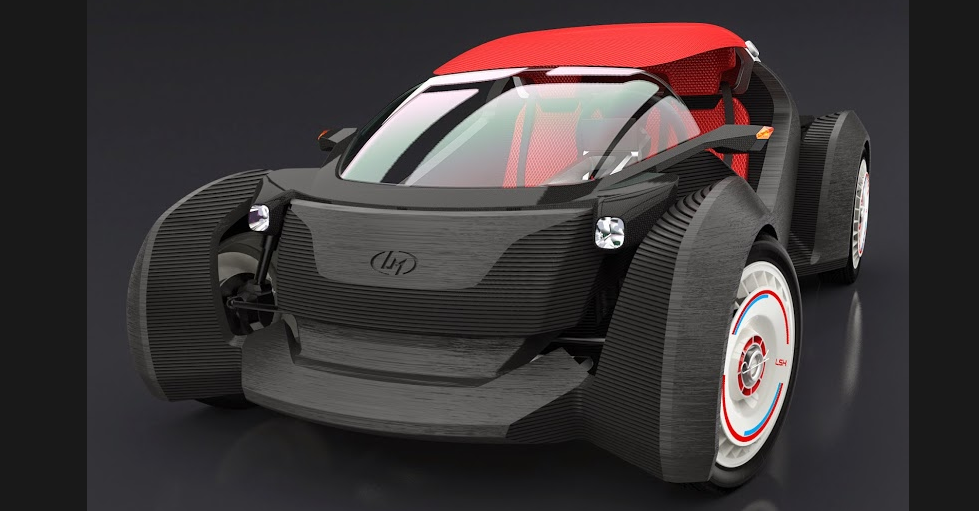
This Drivable Car Was Just 3D Printed In 44 Hours


At the International Manufacturing Technology Show in Chicago, Local Motors 3D printed a plastic car called the Strati in front of thousands of attendees.

Local Motors took the chassis, seats, door panels, and thousands of other components, and 3D printed all those parts into just one piece. The first phase of the process, completed on Tuesday, took just 44 hours. 

"A 3D printed car like ours will only have dozens of components," Local Motors engineer James Earle tells Business Insider. In the near future, he says, it could cost only about $7,000 to manufacture, perhaps the start of what will become a niche market for customized cars.

"You can make a vehicle for yourself that's basically a one-0ff, do the entire design," he says. "You could create custom-fit seats that conform to your shape, things like that, that you couldn't do with cars now."


ORIGINAL: Business Insider
By Will Wei.
SEP. 10, 2014

viernes, 14 de febrero de 2014

Taxis Eléctricos en Bogotá. (Avance)

QUÉ SON LOS TAXIS ELÉCTRICOS


¿De qué se trata el proyecto?

Consiste en la operación de un piloto de taxis con motores de tracción eléctrica (eTaxis), alimentados por baterías internas recargables. Fue autorizada mediante el Decreto 677 de 2011, con el cual la Administración Distrital expresó la necesidad de desarrollar instrumentos y herramientas que sustenten y favorezcan la posterior formulación de una política de movilidad eléctrica, dando pasos firmes en la modernización y adopción de tecnologías ecoeficientes en el transporte de Bogotá.


¿Cuantos eTaxis circularán?

Se autorizó la operación de máximo 50 vehículos eléctricos en el servicio taxi. Sin embargo, se espera iniciar el proyecto piloto con al menos el 20% de estos, y al corto plazo tener circulando los 50. Luego, en el mediano plazo y por fuera del proyecto, se espera una reposición de taxis de combustión por eTaxis, es decir que cualquier persona que hoy tenga un taxi de combustión en circulación podrá hacer uso de su derecho a reposición o cupo con un taxi eléctrico.

¿Quienes participan en la implementación de esta operación piloto?

El Distrito Capital, en cabeza de las Secretarías de Ambiente y de Movilidad, ha desarrollando el papel de coordinador, gestor y facilitador para la ejecución de acciones por parte del sector privado, que converjan en el inicio de la operación piloto de taxis eléctricos. Esto no sería posible sin la participación y esfuerzo de entidades como CODENSA, Fundación Clinton, Organización C40, IDRD, Praco Didacol, BYD y las empresas de Taxis, que hasta el momento son Taxatélite, Taxis Teleclub, Taxi Roxi Internacional y Radio Taxi Aeropuerto.

eTaxis = electric taxis


VENTAJAS, BENEFICIOS Y SOSTENIBILIDAD DE UN eTAXI


Ventajas de los vehículos eléctricos
Un vehículo totalmente eléctrico a baterías tiene una mayor eficiencia energética que los vehículos de combustión y no genera emisiones directas a la atmósfera. Esta tecnología no genera ruido en su operación, y al tener menos partes en movimiento los costos de mantenimiento se reducen. Además no requiere la utilización de aceites lubricantes (que una vez usados se convierten en residuos peligrosos).

Beneficios con la operación de taxis eléctricos

Por ahora, el mayor beneficio es conocer en condiciones reales el comportamiento de este tipo de vehículos, además de la experiencia en la instalación de la infraestructura de recarga; con esto arrancaría en la ciudad la masificación de la movilidad eléctrica y la disminución del uso de los combustibles fósiles. En el campo ambiental, cuando empiece la sustitución de vehículos de combustión por vehículos eléctricos, se obtendrán beneficios como la mejora en la calidad del aire, ya que estos vehículos no generan emisiones directas; se reducirán las emisiones de Gases de Efecto Invernadero (causantes del cambio climático); y disminuirán los residuos de aceites lubricantes usados (peligrosos) y las exigencias a los proveedores de tecnología en movilidad eléctrica para responsabilizarse de la retoma, reúso o reciclaje de elementos como las baterías y otros.

¿Qué tan sostenible es tener un eTaxi?
Las condiciones estudiadas entre la Administración Distrital, las empresas de taxis participantes, el proveedor de electricidad y demás entidades de apoyo, indican que el proyecto es sostenible y permite márgenes de utilidad razonables. Sin embargo no se puede garantizar el derecho a reposición una vez culmine el piloto, ya que el parque automotor de taxis se encuentra “congelado” (en cantidad), y los vehículos autorizados en este proyecto obedecen a un incremento temporal.

Los “peros” de los vehículos eléctricos
Al igual que toda tecnología nueva y más avanzada, la principal desventaja es el costo inicial, ya que estos vehículos cuestan entre 2 y 3 veces más que uno de combustión. Sin embargo, por ejemplo los eTaxis previstos para la operación piloto tienen un costo que ronda los 86 millones de pesos, en el que ya está incluido el beneficio arancelario; esto quiere decir que se requiere una mayor inversión inicial, pero los costos de operación y mantenimiento son mucho menores que los de un vehículo de combustión en el servicio taxi.

RECARGAS Y BATERÍAS DE ESTOS TAXIS


¿Dónde se recargarán las baterías de los eTaxis?
Los puntos o estaciones de recarga están siendo concretados con CODENSA, el IDRD, las Secretarías de Ambiente y de Movilidad y el sector privado. El objeto es completar progresivamente cuatro estaciones de recarga, con un total de 55 conectores, en puntos estratégicos. Mientras se realizan las intervenciones y las obras definitivas, que conllevan una serie de trámites de necesaria aplicación, el proyecto iniciará con dos estaciones de recarga con 17 conectores entre ambas.

¿Cuánto rodarán estos taxis con la batería cargada?
La autonomía que tienen prevista estos vehículos es de 250 kilómetros, cifra cercana al rodamiento de un taxi de combustión en un turno largo de trabajo. Estos 250 kilómetros se obtienen con la carga completa de la batería (100%), que tardará dos horas en cargarse si está vacía; preferiblemente se hará en horas de la noche, lo que depende del taxista. Se tiene la posibilidad de que con una hora adicional de recarga en el transcurso del día, se pueda obtener autonomía adicional de hasta 100 kilómetros más.

TAXISTAS Y CARRERAS DE LOS eTAXIS


¿Cuánto costará una carrera en un eTaxi?
Las tarifas de servicio son las mismas que aplican para un taxi de combustión en Bogotá.

¿Cómo un taxista puede hacer parte del piloto?

Un taxista puede participar en los sorteos de adjudicación de derechos, a través de la empresa de taxis a la que se encuentra afiliado. El postulante no debe contar con multas ni otras sanciones en el momento de la presentación de los documentos, mientras que la empresa debe ser persona jurídica habilitada en la prestación del servicio público de transporte terrestre automotor individual de pasajeros tipo taxi, y poseer al menos 50 vehículos con tarjeta de operación vigente a la fecha.
 

ORIGINAL: Secretaría de Medio Ambiente Bogotá


¿Cómo están operando los taxis eléctricos en Bogotá?
Se espera que antes de finalizar el año entren en circulación los 50 taxis eléctricos.
Foto: ARCHIVO PARTICULAR.

Conozca cuáles son los beneficios ambientales y cómo puede abordar estos vehículos en la ciudad.
Hace más de dos meses comenzaron a circular alrededor de 14 taxis eléctricos en Bogotá, de la marca China BYD –representada en Colombia por Praco Didacol– con el objetivo de generar beneficios en el medioambiente.

Este proyecto se viene realizando por el ‘plan piloto de movilidad eléctrica en el transporte público’, en el que se busca “lograr sustituir los vehículos de combustión por carros eléctricos”, explicó la Secretaría de Ambiente (SDA).

Los taxis eléctricos o ‘Biotaxis’ no requieren de cupo –para entrar en circulación– ni tampoco están sujetos al pico y placa,
por ser vehículos que no generan impacto negativo en la atmósfera (ayudan a reducir las emisiones de gases de efecto invernadero, causantes de calentamiento global) y además, no producen emisiones sonoras.

Según la SDA estos vehículos tienen una “batería de gama alta que les permite recorrer hasta 300 kilómetros por 2 horas de carga”, mientras que un taxi de combustión recorre 250 kilómetros con seis galones.

Por su parte, uno de los propietarios de estos carros dice que los conductores suelen tomar turnos de 5 a.m. a 9 p.m. para recargar la batería durante la noche y el mediodía.

Se espera que antes de finalizar el año entren en circulación los 50 taxis eléctricos propuestos desde el comienzo del plan piloto, pues ello ayudaría a generar una mejor “movilidad ambiental”.

¿Cómo abordar un ‘Biotaxi’?
Para solicitar un servicio debe comunicarse a ‘Taxatélite’ o ‘Taxi Roxi’, al número 2222222 o a ‘Taxis Teleclub’, al 5222222 (por ser las únicas empresas que acogieron este proyecto), pero no debe olvidar aclararle a la operadora que va a tomar un taxi eléctrico.

No olvide que también puede abordarlos en la calle y tenga presente que las tarifas del servicio son las mismas que se aplican para un taxi de combustión, en Bogotá.

MILENA TORRES

REDACCIÓN MI TIEMPO ZONA

ORIGINAL: El Tiempo
Por: MILENA TORRES |
07 de Noviembre del 2013


More Ciencia en Canoa

domingo, 15 de diciembre de 2013

IROS 2013: Aqua Hexapod Gets New Amphibious 'Ninja Legs'


RHex-type legged robots are great at getting around. Like, really, really, really great. They can walk and run on land, and a RHex-based hexapod called Aqua can swim in water as well, with just a simple change of legs from something rigid for walking to something flexible for swimming. Technically, this makes RHex amphibious, but in practice, it's more like the robot is amphibious if you've got a human around to swap its legs out. The problem is that it's impossible to make legs that are flexible enough for efficient swimming and simultaneously rigid enough for efficient walking. And when we say "impossible," we mean "impossible until someone figured out how to do it," which happened at IROS last month.

These new amphibious legs from McGill University roboticists—the creators of the Aqua robot—are called "Ninja legs," because the researchers figure that "the design resembles a spinning ninja star." I'm not sure I entirely get that, but it's a cool name anyway. Essentially, Ninja legs are flippers that can flex up to 120 degrees, each contained inside a carbon fiber and spring steel frame that are mounted on Aqua's rotary leg joints . On land, the frame works just fine as a leg, while in the water, the frame allows the flipper inside it to move freely, resulting in efficient swimming.

As is usually the case when you take two very different things and combine them into one thing, the Ninja legs involve some compromises. The most obvious disadvantage is perhaps complexity, and the efficiency for both walking and swimming decreases relative to legs that are designed and optimized specifically to perform one of those tasks. This decrease is not nearly as bad as might be expected, though. For walking gaits, the ninja legs require perhaps 15 to 20 percent more power to rotate at a given frequency, but they can also achieve higher stable speeds due to higher inherent compliance. And for swimming, the Ninja legs hit a sweet spot at a 2.5 hertz oscillation frequency and 50 degree oscillation amplitude where they produce nearly as much thrust as flippers can (35 N as opposed to 40 N). 

There is a lot more that can be done as far as figuring out whether the Ninja legs might do better with a completely different gait than a more traditional RHex configuration, so it's possible that they could get even more efficient. And there's also plenty of space for hardware optimization. The future work that we're most looking forward to, however, is some more field testing to see just what hexapods with Ninja legs are capable of.

"Ninja Legs: Amphibious One Degree of Freedom Robotic Legs," by Bir Bikram Dey, Sandeep Manjanna, and Gregory Dudek from the Centre for Intelligent Machines at McGill University, was presented last month at IROS 2013 in Tokyo, Japan.

ORIGINAL: IEEE Spectrum
By Evan Ackerman
Posted 9 Dec 2013

lunes, 23 de septiembre de 2013

CMU's Autonomous Car Doesn't Look like a Robot

ORIGINAL: IEEE Spectrum
By Evan Ackerman
Posted 9 Sep 2013 | 14:28 GMT


The future of automobile autonomy isn't going to involve cars covered in cameras and radar and lasers. It's going to be all invisible, and CMU is already there.
The 2011 Cadillac SRX in the picture above is an autonomous car. Carnegie Mellon University had it drive itself 33 miles last week on public roads, from from Cranberry, Pa. to Pittsburgh International Airport. At first glance, you probably wouldn't be able to tell that the car is self-driving, because self-driving cars looked like this just five years ago:
CMU's BOSS
That's CMU's BOSS competing in the DARPA Urban Challenge in 2007, with who knows how many sensors mounted all over it. And even Google's autonomous cars have that signature Velodyne LIDAR mounted on top of them:

Google's autonomous car

By contrast, CMU's SRX relies entirely on automotive-grade radars, lidars, and cameras. You can see them if you look closely in the picture at the top of this article (there's one above the windshield, for example), but you do have to look closely. Inside, there are some extra buttons and screens, but all of the computers are stuffed under the floor in the trunk. And despite the lack of giant and complicated and expensive sensor systems, the car is still able to achieve the level of autonomy that we all want it to, as CMU's Raj Rajkumar explains:


"This car is the holy grail of autonomous driving because it can do it all — from changing lanes on highways, driving in congested suburban traffic and navigating traffic lights."

In addition to controlling the steering, speed and braking, the autonomous systems also detect and avoid obstacles in the road, including traffic cones and barrels, as well as pedestrians and bicyclists, pausing until they are safely out of the way. The systems provide audible warnings of obstacles and communicate vehicle status to its passengers using a human-like voice.

It's unfortunate that while the technology for all of this is arguably mostly ready, society (socially and legally) just isn't yet. You can buy cars with adaptive cruise control and lane departure warnings, which could hypothetically let the car drive itself, at least under some specific circumstances. And despite the fact that even a bad autonomous (or semi-autonomous) car would still save lives overall, there's no legal infrastructure in place to make it possible for manufacturers to implement such technology without undue risk of being sued into oblivion the first time something goes wrong.

Via [ CMU ]

miércoles, 4 de septiembre de 2013

Bogotá Launches the Largest All-electric Taxi Fleet in South America

ORIGINAL: BYD
2013-9-3

BOGOTÁ, Colombia --Today BYD Co., Ltd., Codensa, Praco, Helm Bank, and ETC held a ceremony at Tercer Milenio Charging Station announcing and displaying all-electric e6 taxis to be put into service in the capital City of Colombia – Bogota. Dr. Gustavo Petro Urrero, Mayor of Bogota, Dr. Adriana Soto Carreño, Deputy Minister of the Department of the Environment and Sustainability, Dr. Néstor García Buitrago, District Secretary of Environment and other important guests were in attendance. The 45, e6 fleet vehicles were all part of that country’s new “BIOTAXIS Project” (page 38 in the linked report – authorized by Decree 677 of 2011).The purpose of this pilot is to replace conventional taxis with the electric taxis and show a visible benefit to investors due to the reduced operational cost of electric vehicles. Anybody who owns a combustion taxi in operation has the ability to replace it with an electric taxi now”, commented by Dr. Gustavo Petro Urrero, Mayor of Bogota.


Bogota’s “Decree 677 of 2011” clearly states the need for the city to develop instruments and tools to support and promote the development of electric transportation policy and has been promoted in conjunction with the Departments of the Environment and Sustainability, Commerce Ministry and the Finance Ministry. “The import duty of hybrid bus, truck and CNG vehicles will be reduced down to 5% from 15%, while the import duty of pure electric bus, truck, taxi and private cars will be entirely eliminated,” explained the Minister of the Department of the Environment and Sustainability. “It’s anticipated that 2,250 pure electric vehicles will benefit from this act in just 3 years.” According to a report from the World Bank in 2012, the economic loss caused by air pollution in Colombia is 570 million pesos (local currency) every year, and pollution from dirty petroleum transportation may have played a role in as many as 5,000 deaths in the country. Deputy Minister of the Department of the Environment and Sustainability, Dr. Adriana Soto Carreño mentioned, "We hope other cities would also introduce pure electric and hybrid electric vehicles into public transportation, to reduce particulate matter and pollution and improve public health."


The BYD e6 is a 5-passenger, long-range, pure electric utility vehicle powered by BYD’s core technology Iron-Phosphate battery. It is a crossover between a sedan and a SUV with superior interior space and additional 450L cargo space. The nominal range of e6 from a single charge is 300 km. Using BYD’s internally-developed bi-directional charging and discharging technology, the e6 can be fully charged in 2 hours (0-100%). With over 800 e6 vehicles running as public eTaxis today, the e6 fleets have an accumulated range of over 100 million km (as of Aug, 1st, 2013). They are operated two shifts for nearly 24 hours with mid-day supplemental charging required. Through electrifying the city’s public taxi fleet, BYD e6 is achieving reduced Green House Gas emissions and reducing public health care costs.

About BYD 
BYD Co., Ltd is a leading-edge provider of green energy technologies that specializes in the IT, automotive, and new energy industries. Being the world’s biggest rechargeable battery manufacturer, BYD also has the largest global market share for cell-phone chargers and keypads. BYD branched out into the auto business in 2003, and has kept a robust yearly growth rate successively. In 2008, Warren Buffett invested $232 million to take a 9.89% stake in BYD. Today, BYD is the fastest-growing Chinese auto company and a global pioneer in the field of new energy vehicles including Dual Mode Electric Models and Pure Electric Models.

Based on its core Fe Battery technology, BYD has worked out a Green City Solution, which aims to electrify urban public transportation systems by transitioning from gasoline and diesel buses and taxis to pure electric ones. In March 2012, BYD and Daimler AG officially announced the entirely new EV brand Denza in China.

In addition, BYD has also focused on the Research & Development and manufacturing of a wide range of new energy products, including energy storage system, solar energy products and LED lighting . For more information, please visit www.byd.com, www.bydeurope.com, www.facebook.com/bydcompany, or pr@byd.com.

Bogotá. Por fin, taxis eléctricos

ORIGINAL: El Espectador
Sep 02 - 2013
Desde mañana los ciudadanos podrán movilizarse en 50 vehículos que no necesitan de combustible fósil y no producen ruido.

Por fin arrancó en Bogotá el primer proyecto piloto de movilidad eléctrica en el transporte público. Desde mañana usted podrá subirse a alguno de los 50 taxis que no necesitan combustible fósil y no producen ruido, los cuales fueron entregados oficialmente ayer en la capital del país a sus nuevos conductores.

El cambio será rotundo para los taxistas de la ciudad que tendrán a cargo los vehículos. Antes con un vehículo tradicional podían recorrer 250 kilómetros con seis galones de combustible que costaban más de $50.000. Ahora podrán rodar 300 kilómetros con una recarga de energía de dos horas por la que tendrán que pagar $31.500.

Inicialmente, la recarga de los taxis, que por ahora tendrán colores blanco y azul, se hará en la estación subterránea del Parque Tercer Milenio, mientras el Distrito y la empresa de energía Codensa disponen el resto de puntos que estarán disponibles hacia finales del año en el Parque El Tunal, la calle 106 con carrera 17 y la Unidad Deportiva El Salitre.

Pero ¿cómo organizará su turno un conductor? 
José Parmenio Jiménez, uno de los propietarios de estos taxis, explica que él o la persona que conduzca su vehículo saldrá a las 5 de la mañana y terminará a las 9 de la noche. “La idea es que pueda hacer una recarga de una hora al mediodía y otra al finalizar el recorrido” para completar las dos horas, explica.

Conductores como José asumieron el riesgo de innovar con un vehículo que es costoso, pues su valor está alrededor de $88 millones, mientras uno que funciona con combustible fósil vale algo más de $30 millones. Sin embargo, Andrés Harker, director del programa de movilidad eléctrica de Codensa, dice que se trata de una inversión que con el tiempo se podrá recuperar, ya que además del ahorro en las recargas de energía, los vehículos no necesitan filtros ni aceites.

Los taxis eléctricos tampoco tendrán Pico y Placa, como parte de uno de los incentivos que acordó la administración distrital cuando decidió hacer parte de este proyecto con el apoyo de la Iniciativa Climática Clinton.

Ahora los taxistas de Bogotá están a la expectativa de los resultados de este programa piloto para saber si siguen en el negocio de la movilidad eléctrica. “Lo importante es que den la talla, porque no van a tener sino un conductor y ya no van a trabajar durante 24 horas”.

Para los usuarios, la tarifa seguirá siendo la misma e incluso, la Alcaldía Mayor no descarta posibles rebajas en la medida en que aumente la demanda del transporte público en la ciudad. En América Latina existen otros proyectos de taxis eléctricos, uno de ellos avanza en Ciudad de México, donde hay 20 vehículos que circulan en el centro histórico, y el otro funciona en Río de Janeiro con dos carros. En Shenzhen, China, funciona el programa de taxis eléctricos más grande, con 300 vehículos distribuidos por la compañía BDY, la misma que trajo los 50 de Bogotá.

Este miércoles en Londres se entregará el premio a las ciudades líderes en la lucha contra el cambio climático, donde la capital colombiana está dentro de las nominadas por el piloto de taxis eléctricos.

miércoles, 24 de julio de 2013

Why Does EV-Phobia Plague Most British Drivers?

by Paul Whytock in London Calling
Jul. 17, 2013

A majority of British drivers feel that there is insufficient infrastructure when it comes to re-charging electric vehicles

The immediate answer to that question could be they are just plain crazy and simply have no regard for the ecological advantages afforded by electric vehicles (EVs). But that’s not it. The reality is that 62% of Britain's drivers believe national infrastructure falls short in supporting EVs. The sense is that recharging, particularly on long journeys, could be haphazard. In fact, over 70% of drivers surveyed said they had never seen a public EV charger.
Well, they’re right. Let's face it, why would you buy a car that’s much more expensive than a petrol/diesel equivalent, yet becomes an inconvenience when it came to finding vacant charging points?

These reactions came from a survey conducted by Censuswide and Rexel, a distributor of electrical products and services for energy applications. Vehicle range anxiety was a common response throughout in the survey. In some regard, this reflects back to concerns about inadequate numbers of recharging facilities.

But what about the environmental issue? If the UK is to meet its agreed-upon carbon reduction target of at least 80% by 2050, the Government wants 1.7 million EVs to be operating on Britain’s roads by 2020 and 6.3 million by 2030.

However, the apparently EV-phobic attitude of drivers isn’t entirely their fault. The UK Government must shoulder some responsibility for not adequately publicizing certain facts about EV ownership.

For instance, the purchase-cost reluctance highlights a lack of awareness of the incentives available from the Government to encourage EV adoption, such as the plug-in car grant. The grant offers UK-based consumers and businesses 25% off the cost of a qualifying ultra-low emission car, up to a maximum of £5,000.

This is, of course, a positive move. Still, driver doubts remain when it comes to a national recharging infrastructure. There may be 3000 public charging points in the UK, but that’s nowhere near enough to meet demand, especially if the Government plans to reach its target of 1.7 million EV owners by 2020. That works out to one charging point for every 567 EVs…not a viable panacea when it comes to curing EV-phobia.

lunes, 8 de julio de 2013

Difference Engine: Born again

ORIGINAL: The Economist
by N.V. | LOS ANGELES
Jul 8th 2013, 8:39


NOT to belittle the success Tesla Motors has had with its Model S luxury electric car—outselling its petrol-powered equivalents since being launched last year—the prospects for battery-powered vehicles generally may never shine quite as bright again. Babbage believes their day in the sun is about to be eclipsed by, wait for it, the diesel engine.

Surely not that dirty, noisy, smelly, lumbering lump of a motor that was difficult to start in the winter? Certainly not. A whole new generation of sprightly diesels—developed over the past few years—bear no resemblance to your father’s clattering, oil-burner of an Oldsmobile. It is no exaggeration to say that, with its reputation for unreliability and anaemic performance, the Olds 4.3-litre diesel from the late 1970s single-handedly destroyed the reputation of diesel engines in America for decades to come. Quite possibly, it also contributed to Oldsmobile’s own demise.

Later this year, Americans will get their first chance to experience what a really advanced diesel is like—and why Europeans opt for diesels over hybrids, plug-in electrics and even petrol-powered cars. The leader of the new pack is the Mazda 6, completely redesigned for 2014, with the choice of either a 2.5-litre four-cylinder petrol engine or a 2.2-litre turbo-charged diesel. The diesel has 30% better fuel economy and provides oodles more pulling power. Good as the petrol version is, motorists who choose it over the diesel will miss out on a lot.

Mazda is not the only motor manufacturer with an advanced diesel in the works. Among others, Mitsubishi Motors has been selling cars with a new generation of 1.8-litre and 2.2-litre diesel engines in Europe since 2010. Hedging its bets on hybrids, ººº has also been testing several radically new diesel designs.

lunes, 22 de abril de 2013

Primavera, el primer vehículo solar colombiano

ORIGINAL: EAFIT
16 de abril de 2013


El Proyecto Primavera conjuga investigación y desarrollo en un espacio de interdisciplinariedad. Es el resultado de la alianza entre EPM y EAFIT.
Con el apoyo de EPM un grupo interdisciplinario de EAFIT construye, con ingeniería propia, el primer vehículo solar del país. Una apuesta a la movilidad sostenible.

En octubre participará en World Solar Challenge, competencia de 3.000 kilómetros por el desierto australiano en la que estarán las mejores universidades del mundo.

El bloque 19 y los talleres de EAFIT son, por estos días, los lugares donde se combinan el ingenio y el entusiasmo. Allí, en el espacio donde se reúnen gran parte de las ingenierías de la Institución, se diseña y construye Primavera, el primer vehículo solar de competición colombiano.
Add caption
Este desarrollo, que competirá en los 3.000 kilómetros que componen el World Solar Challenge en Australia, es el resultado de una iniciativa que mueve, no solo a quienes construyen y modelan cada una de las piezas del carro, sino también a la Universidad y a EPM, que le apostaron a un proyecto que se encuentra alineado con el programa de movilidad sostenible y de tecnologías energéticas eficientes.

Se trata de producir, almacenar y hacer un uso eficiente de la energía en su expresión más limpia: la energía solar. Sabemos que a partir de esta experiencia, en un país que cree en su futuro, seguiremos sumando esfuerzos para alcanzar la meta y entregar al mundo este aporte que refleja las capacidades de los colombianos”, dice Juan Esteban Calle Restrepo, gerente general de EPM.

El Proyecto Primavera es otra muestra de por qué Medellín fue elegida como la ciudad más innovadora del mundo, un lugar donde se piensan soluciones para mejorar el entorno, en este caso, la búsqueda de energías alternativas en beneficio de un planeta que así lo requiere.

La interdisciplinariedad es la característica principal del grupo que le da vida a Primavera. Son más de 40 estudiantes vinculados al proyecto, guiados por profesores de la Escuela de Ingeniería y por profesionales de la Subdirección de Investigación y Desarrollo de Negocios de Energía de EPM, quienes han puesto sus conocimientos en diseño, producción, procesos, mecánica y electrónica, al servicio de una innovación de Medellín para el mundo.
Add caption
Integración de saberes, de conocimientos y de ideas. En esos tres puntos se resume esta labor entre EAFIT y EPM. Una colaboración en la que la experiencia obtenida en el proceso, así como los resultados que puedan verse en un futuro próximo, será la mayor ganancia para todos los que han contribuido al florecimiento del Proyecto Primavera” expresa Juan Luis Mejía Arango, rector de EAFIT.

La carrera
El vehículo tendrá su prueba de fuego en la edición 12 del World Solar Challenge, una carrera de 3.000 kilómetros que atraviesa a Australia de norte a sur, entre las ciudades de Darwin y Adelaida.

La carrera de carros solares más larga del mundo se originó en la aventura del danés Hans Tholstrup, quien en 1984 recorrió el continente australiano en un vehículo solar de desarrollo propio y se demoró 20 días. En 1987 se oficializó la primera carrera y en 2013 participará el primer vehículo colombiano.

Serán 40 equipos participantes entre los que se destacan los de las universidades de Stanford y Michigan de Estados Unidos, Cambridge de Inglaterra, TU Delft de Holanda, y Tokai de Japón.

Jorge Barrera Velásquez, coordinador técnico del proyecto y quien fue miembro del equipo solar MIT que participó en 1999 en la competición, señala que “los más afortunados logran terminar en cinco o seis días, si lo logran, pues terminar la carrera es toda una hazaña de resistencia, estrategia y logística”.

Y es que los vehículos están expuestos a las altas temperaturas del desierto y al frío de la noche. También hay que tener en cuenta que se corre con tráfico vehicular normal, que hay animales en la vía y el ocasional Willy Willy, pequeño tornado australiano.

Pero el equipo eafitense está a la altura del reto y trabaja en la preparación de cada uno de los detalles, pues en el carro se integran componentes estándar de alto nivel competitivo y las piezas son hechas con tecnología propia.

Además de los desarrollos en innovación y el conocimiento que se crea alrededor del proyecto, Barrera Velásquez destaca la pasión de los estudiantes que integran Primavera, quienes desde ya le preguntan qué harán apenas concluya la carrera.

Este es un proyecto de desarrollo tecnológico que hace parte de la estrategia de Ciencia, Tecnología e Innovación del Grupo EPM, enfocada en desarrollos de alta tecnología en soluciones de energía y movilidad limpias y sostenibles, de alto impacto en la competitividad de la empresa, y la región”, anota Sergio Adolfo Montoya Mejía, subdirector de Investigación y Desarrollo del negocio Energía.

El cambio de mentalidad es uno de los mayores valores agregados del proceso, encontrar la solución a un obstáculo es la única alternativa y todo es susceptible de ser inventado. Por eso, la Universidad y EPM empiezan a pensar en la continuidad del proyecto, bien sea para participar en otras competiciones o incluso para formar un semillero de investigación. La iniciativa se encuentra abierta a la participación de la empresa privada.

Mayores informes para periodistas
Gilberto Osorio Gómez
Docente de la Escuela de Ingeniería
Teléfono: 574 2619500 Ext. 9086
Correo electrónico: gosoriog@eafit.edu.co

Unidad de Comunicaciones de EPM
Teléfonos: 574 3804418 y 574 3804404

Ricardo Mejía Gutiérrez
Docente de la Escuela de Ingeniería
Teléfono: 574 2619500 Ext. 9712
Correo electrónico: rmejiag@eafit.edu.co

Jorge Barrera Velásquez
Proyecto EPM – EAFIT Solar Car Team
Teléfono: 320 6771487
Correo electrónico: jbarre13@eafit.edu.co

domingo, 3 de marzo de 2013

The top 10 emerging technologies for 2013

(according The World Economic Forum)

Image: A wrist band created by means of 3D printing in Berlin REUTERS/Thomas Peter

New challenges need new technologies to tackle them. Here, the World Economic Forum’s Global Agenda Council on Emerging Technologies identifies the top 10 most promising technology trends that can help to deliver sustainable growth in decades to come as global population and material demands on the environment continue to grow rapidly. These are technologies that the Council considers have made development breakthroughs and are nearing large-scale deployment.
OnLine Electric Vehicles (OLEV)
Wireless technology can now deliver electric power to moving vehicles. In next-generation electric cars, pick-up coil sets under the vehicle floor receive power remotely via an electromagnetic field broadcast from cables installed under the road. The current also charges an onboard battery used to power the vehicle when it is out of range. As electricity is supplied externally, these vehicles need only a fifth of the battery capacity of a standard electric car, and can achieve transmission efficiencies of over 80%. Online electric vehicles are currently undergoing road tests in Seoul, South Korea.

3-D printing and remote manufacturing
Three-dimensional printing allows the creation of solid structures from a digital computer file, potentially revolutionizing the economics of manufacturing if objects can be printed remotely in the home or office. The process involves layers of material being deposited on top of each other in to create free-standing structures from the bottom up. Blueprints from computer-aided design are sliced into cross-section for print templates, allowing virtually created objects to be used as models for “hard copies” made from plastics, metal alloys or other materials.

Self-healing materials
One of the defining characteristics of living organisms is their inherent ability to repair physical damage. A growing trend in biomimicry is the creation of non-living structural materials that also have the capacity to heal themselves when cut, torn or cracked. Self-healing materials which can repair damage without external human intervention could give manufactured goods longer lifetimes and reduce the demand for raw materials, as well as improving the inherent safety of materials used in construction or to form the bodies of aircraft.

Energy-efficient water purification
Water scarcity is a worsening ecological problem in many parts of the world due to competing demands from agriculture, cities and other human uses. Where freshwater systems are over-used or exhausted, desalination from the sea offers near-unlimited water but a considerable use of energy – mostly from fossil fuels – to drive evaporation or reverse-osmosis systems. Emerging technologies offer the potential for significantly higher energy efficiency in desalination or purification of wastewater, potentially reducing energy consumption by 50% or more. Techniques such as forward-osmosis can additionally improve efficiency by utilizing low-grade heat from thermal power production or renewable heat produced by solar-thermal geothermal installations.

Carbon dioxide (CO2) conversion and use
Long-promised technologies for the capture and underground sequestration of carbon dioxide have yet to be proven commercially viable, even at the scale of a single large power station. New technologies that convert the unwanted CO2 into saleable goods can potentially address both the economic and energetic shortcomings of conventional CCS strategies. One of the most promising approaches uses biologically engineered photosynthetic bacteria to turn waste CO2 into liquid fuels or chemicals, in low-cost, modular solar converter systems. Individual systems are expected to reach hundreds of acres within two years. Being 10 to 100 times as productive per unit of land area, these systems address one of the main environmental constraints on biofuels from agricultural or algal feedstock, and could supply lower carbon fuels for automobiles, aviation or other big liquid-fuel users.

Enhanced nutrition to drive health at the molecular level
Even in developed countries millions of people suffer from malnutrition due to nutrient deficiencies in their diets. Now modern genomic techniques can determine at the gene sequence level the vast number of naturally consumed proteins which are important in the human diet. The proteins identified may have advantages over standard protein supplements in that they can supply a greater percentage of essential amino acids, and have improved solubility, taste, texture and nutritional characteristics. The large-scale production of pure human dietary proteins based on the application of biotechnology to molecular nutrition can deliver health benefits such as muscle development, managing diabetes or reducing obesity.

Remote sensing
The increasingly widespread use of sensors that allow often passive responses to external stimulae will continue to change the way we respond to the environment, particularly in the area of health. Examples include sensors that continually monitor bodily function – such as heart rate, blood oxygen and blood sugar levels – and, if necessary, trigger a medical response such as insulin provision. Advances rely on wireless communication between devices, low power-sensing technologies and, sometimes, active energy harvesting. Other examples include vehicle-to-vehicle sensing for improved safety on the road.

Precise drug delivery through nanoscale engineering
Pharmaceuticals that can be precisely delivered at the molecular level within or around a diseased cell offer unprecedented opportunities for more effective treatments while reducing unwanted side effects. Targeted nanoparticles that adhere to diseased tissue allow for the micro-scale delivery of potent therapeutic compounds while minimizing their impact on healthy tissue, and are now advancing in medical trials. After almost a decade of research, these new approaches are finally showing signs of clinical utility.

Organic electronics and photovoltaics
Organic electronics – a type of printed electronics – is the use of organic materials such as polymers to create electronic circuits and devices. In contrast to traditional (silicon-based) semiconductors that are fabricated with expensive photolithographic techniques, organic electronics can be printed using low-cost, scalable processes such as ink jet printing, making them extremely cheap compared with traditional electronics devices, both in terms of the cost per device and the capital equipment required to produce them. While organic electronics are currently unlikely to compete with silicon in terms of speed and density, they have the potential to provide a significant edge in cost and versatility. The cost implications of printed mass-produced solar photovoltaic collectors, for example, could accelerate the transition to renewable energy.

Fourth-generation reactors and nuclear-waste recycling
Current once-through nuclear power reactors use only 1% of the potential energy available in uranium, leaving the rest radioactively contaminated as nuclear “waste”. While the technical challenge of geological disposal is manageable, the political challenge of nuclear waste seriously limits the appeal of this zero-carbon and highly scalable energy technology. Spent-fuel recycling and breeding uranium-238 into new fissile material – known as Nuclear 2.0 – would extend already-mined uranium resources for centuries while dramatically reducing the volume and long-term toxicity of wastes, whose radioactivity will drop below the level of the original uranium ore on a timescale of centuries rather millennia. This makes geological disposal much less of a challenge (and arguably even unnecessary) and nuclear waste a minor environmental issue compared to hazardous wastes produced by other industries. Fourth-generation technologies, including liquid metal-cooled fast reactors, are now being deployed in several countries and are offered by established nuclear engineering companies.

This list has been compiled by the World Economic Forum’s Global Agenda Council on Emerging Technologies, of which David King is currently chair. For a full list of the Council’s members see here

Noubar Afeyan. Founder and Chairman Joule Unlimited
PhD in Biochemical Engineering, MIT. Since 2000, Co-Founder, Managing Partner and Chief Executive Officer, Flagship Ventures; concurrently, Senior Lecturer, MIT and Visiting Scholar, Wyss Institute for Biologically Inspired Engineering, Harvard University. Author, numerous scientific publications. Holder of several patents.


Sir David KingProfessor and Director Cambridge Kaspakas
Formerly: Head, Department of Chemistry, University of Cambridge; Master, Downing College, Cambridge; 2000-07, Chief Scientific Adviser, UK Government, widely considered responsible for persuading the UK Government to take a world leading position on climate change; 2008-12, Founding Director, Smith School of Enterprise and the Environment, University of Oxford. Currently: Senior Science Adviser, UBS; Director, Cambridge Kaspakas; Chancellor, University of Liverpool, UK; Member, President's Advisory Council, Government of Rwanda. Published around 500 papers on physical chemistry and science policy issues. Recipient of awards and honours including: knighted for contributions to science and science policy; Officier of the Legion of Honour, awarded by the French President.


Michael Grätzel. Professor,
Laboratory of Photonics and Interfaces
Ecole Polytechnique Fédérale de Lausanne (EPFL)
Doctorate in Natural Science, Technical University, Berlin. Professor, Ecole Polytechnique de Lausanne, directs Laboratory of Photonics and Interface; pioneered research on energy and electron transfer reactions in mesoscopic-materials and application in solar energy conversion systems, optoelectronic devices and lithium ion batteries; discovered new type of solar cell based on dye sensitized nanocrystalline semiconductor oxide particles. Author of over 800 peer-reviewed publications, two books and holder of more than 50 patents. Recipient of awards including: Balzan Prize; Galvani Medal; Faraday Medal; Harvey Prize; Gerischer Award; Dutch Havinga Award and Medal; International Prize, Japanese Society of Coordination Chemistry.


Nayef Al-RodhanSenior Member
St Antony's College, University of Oxford
Studies, Yale University, Mayo Clinic and Harvard University. Philosopher, neuroscientist and geostrategist (www.sustainable-history.com). Senior Member, St Antony's College, University of Oxford, UK; Director, Geopolitics of Globalisation and Transnational Security Programme, Geneva Centre for Security Policy, Geneva. Author of 21 books. Recipient of awards.


Hu Zhijian. Secretary-General of the CPC,
Chinese Academy of Science and Technology for Development
Ministry of Science and Technology of the People's Republic of China

Degree in Electronic Engineering, Shanghai Jiao Tong Univ.; postgraduate degree in Science and Mgmt, Fudan Univ.; Doctorate in Technological Innovation and Mgmt, Chinese Academy of Sciences. 1987-93, Teaching Assistant and Lecturer, Chinese Academy of Sciences; 1993-96, Assistant Consultant, State Commission of Science Technology of China; 1996-98, Assistant Consultant, State Leading Group for Science and Tech. With the Ministry of Science and Technology: 1998-2001, Divisional Director, and 2001-08, Deputy Director-General, Department of Policy, Regulations and Reform; 2008-09, Counsel of the General Office; since 2009, current position. Since 2010, Deputy Director, research and drafting group of the 12th National Five-Year Plan for Science and Technology Development.


Clare Grey. Fellow of the Royal Society and
Professor of Chemistry.
University of Cambridge
BA and 1991, DPhil in Chemistry, Oxford University. 1992-93, Visiting Scientist, DuPont CR&D, Wilmington, Delaware; 1994, Assistant, 1997, Associate and 2001, Full Professor, Stony Brook University (SBU). Geoffrey Moorhouse-Gibson Professor of Chemistry, Cambridge University. Since moving to Cambridge in 2009, maintains a part-time position at SBU as Associate Director, Northeastern Chemical Energy Storage Center, a US DOE Energy Frontier Research Center. Research interests: development of structure-function correlations for materials for use in energy storage and conversion.


James Wilsdon. Professor of Science and Democracy 
University of Sussex
2001-08, Head of Science and Innovation, Demos (UK think tank) and Director, Atlas of Ideas project, which explored changing global geography of science and innovation; 2008-11, Director, Science Policy, Royal Society, the UK's national academy of science. Currently, Professor of Science and Democracy, Science Policy Research Unit (SPRU), University of Sussex, UK. Author on science policy, innovation and emerging technologies.


Andrew D. Maynard.
Director, Risk Science Center 
University of Michigan
BSc, Birmingham University, UK; PhD, Cambridge University. Formerly, Co-Chairman, Nanotechnology Health and Environment Implications working group, US National Nanotechnology Initiative. Interim Chair, Environmental Health Sciences Dept. Member of the Advisory Board: Centre for Environmental Impacts of Nanotechnology; NISE Net; C&E News; nanotech advisory group to President's Council of Advisors on Science and Technology. Member of the Advisory Panel: National Academies of Science; Council of Canadian Academies; US EPA. Director, Risk Science Center, University of Michigan. Author. International speaker and commentator on emerging technologies.


Mark Lynas. Freelance Writer on Climate Change 
2009, Adviser on Climate Change to the President of the Maldives; was in the Maldives' effort to be the first carbon neutral country on Earth by 2020, and its role in the international climate change process. Visiting Research Associate, School of Geography and the Environment, Oxford University. Author of: High Tide: News from a warming world (2004); Six Degrees: Our future on a hotter planet (2007; translated into 22 languages; also a TV series by National Geographic); The God Species: How the Planet Can Survive the Age of Humans (2011; also available in Swedish, Dutch and other languages). Frequent speaker on climate change science and policy, focusing in particular on how carbon neutral targets can break the international logjam on climate mitigation, and how emissions reduction should be seen as an opportunity not a sacrifice.

Tim Harper. Chief Executive Officer and President Cientifica
Technology entrepreneur. Founder, Cientifica. Co-Founder, Nanosight, a nanoparticle visualization and sizing company. Adviser to universities, European Commission, large companies and national governments, including Austria and Singapore. Founder and former Executive Director, European NanoBusiness Association. Frequent public speaker and media commentator on nanotechnologies. Author of articles published in: Nanotechnology; Nature; Microscopy and Analysis. Co-Author, Nanotechnology Opportunity Report. Expertise: nanotechnologies, entrepreneurship, venture capital, technology transfer, government policy, regulation of technologies.

Jeffrey Carbeck. Chief Technology Officer MC10
1990, BSE, University of Michigan; 1996-98, postdoctoral research, Harvard; 1996, PhD, MIT. 1998-2006, Faculty, Dept of Chemical Engineering, Princeton; concurrently, Director, Program in Engineering Biology and Member, Princeton Institute for the Science and Technology of Materials (PRISM). 2006: Chief Scientist, Nano-Terra and Co-Founder and CTO, Arsenal Medical (spun-off into 480 Biomedical). 2009: Clean Energy Fellow, New England Clean Energy Council and founding CTO, MC10. Currently, Subject Matter Expert, Deloitte Consulting, expertise in advanced materials and process technologies. Member: Advisory Board, Department of Materials Science and Engineering and National Advisory Board for Technology Transfer, University of Michigan. Author of over 30 articles; co-inventor on over 25 patents and patent applications. Recipient of numerous awards and honours, including: named one of 40 outstanding professionals under the age of 40, Boston Business Journal.


Kiyoshi Matsuda. Chief Innovation Officer, Corporate Strategy Office 
Mitsubishi Chemical Holdings Corporation
BSc, University of Tokyo; MSc, MIT. Since 1977, with Mitsubishi Chemical including: 10 years' engineering experience in fine chemicals operation; Research Engineer; Director, Central Research Centre; currently, engaged in new business development and strategic planning of sustainable development. Chair, Capacity Building Task Force, ICCA CP&H.


Javier Garcia-Martinez. Founder and Director 
Rive Technology
Professor of Chemistry and Director, Nanotechnology Molecular Laboratory, University of Alicante, Spain. Co-Founder, Rive Technology, a clean energy company, commercializing advanced catalyst technology. Holder of 15 patents. Author on nanomaterials, catalysis and energy, including: Nanotechnology for the Energy Challenge (2010); The Chemical Element: Chemistry's Contribution to our Global Future (2011). Recipient, the Europa Medal and the TR 35 Award, MIT's Technology Review magazine.


Angela Belcher. Professor of Materials Science and
Engineering and Biological Engineering 
Massachusetts Institute of Technology (MIT)
1991, BA in Creative Studies and 1997, PhD in Chemistry, University of California, Santa Barbara. Materials Chemist, with experience in the fields of biomaterials, biomolecular materials, organic-inorganic interfaces and solid state chemistry. Expertise: understanding and using the process by which nature makes materials in order to design novel hybrid organic-inorganic electronic and magnetic materials on new length scales. Recipient of awards: Du Pont Young Investigators Award (1999); Presidential Early Career Award in Science and Engineering (2000).


Julia R. Greer. Assistant Professor of Materials Science and Mechanics 
California Institute of Technology (Caltech)
1997, SB in Chemical Engineering with minor in Advanced Music Performance, Massachusetts Institute of Technology; 2005, PhD in Materials Science, Stanford University. 2000-03, Integration Engineer, mask micro-fabrication facility, Intel Corporation. 2005-07, Post-Doctoral Fellow, Palo Alto Research Center, studied flexible electronics. 2007, joined Division of Engineering and Applied Sciences, California Institute of Technology. Key focus of research on development of innovative experimental approaches to assess mechanical properties and deformation mechanisms in nano structures. Recipient of numerous awards.